

Evasion of Immune Surveillance in Low Oxygen Environments Enhances Candida albicans Virulence
Open accessThe DOI matches its Crossref record; 61 of the 61 references it cites were found in a registry or an index.
Abstract
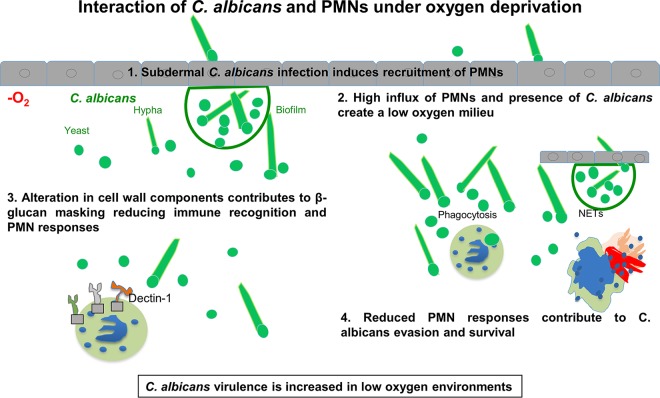
Successful human colonizers have evolved mechanisms to bypass immune surveillance. Infiltration of PMNs to the site of infection led to the generation of a low oxygen niche. Exposure to low oxygen levels induced fungal cell wall masking, which in turn hindered pathogen sensing and antifungal responses by PMNs. The cell wall masking effect was prolonged by increasing lactate amounts produced by neutrophil metabolism under oxygen deprivation. In an invertebrate infection model, C. albicans was able to kill infected C. elegans nematodes within 2 days under low oxygen conditions, whereas the majority of uninfected controls and infected worms under normoxic conditions survived. These results suggest that C. albicans benefited from low oxygen niches to increase virulence. The interplay of C. albicans with innate immune cells under these conditions contributed to the overall outcome of infection. Adaption to low oxygen levels was in addition beneficial for C. albicans by reducing susceptibility to selected antifungal drugs. Hence, immunomodulation of host cells under low oxygen conditions could provide a valuable approach to improve current antifungal therapies.
Overview
The claims and statistics of this paper haven’t been checked yet.
Free: it reads the open-access text and checks the first 5 claims that cite a source we can check. Create a free account to check every claim.
Integrity signals
Registry
Cites
Statistics
Figures
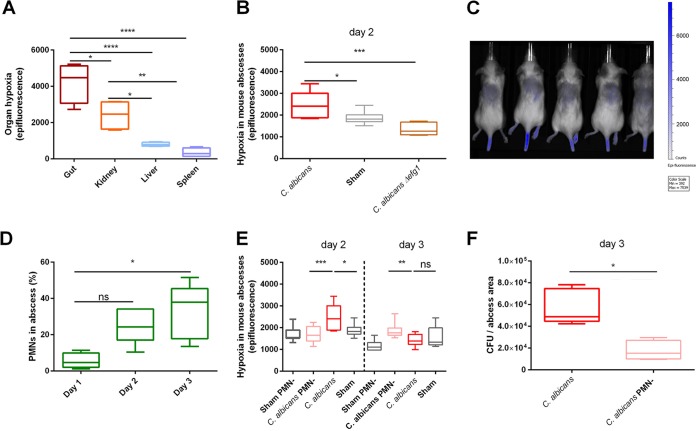
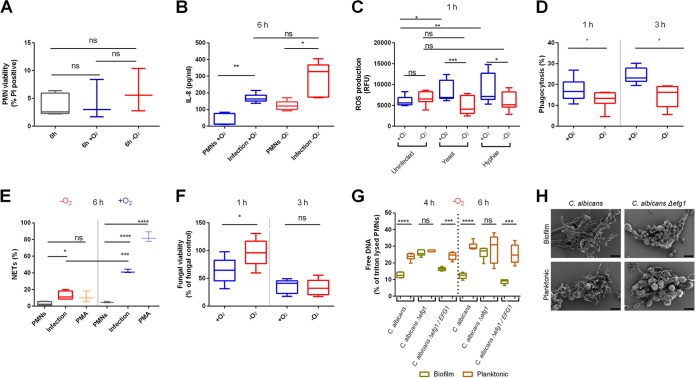
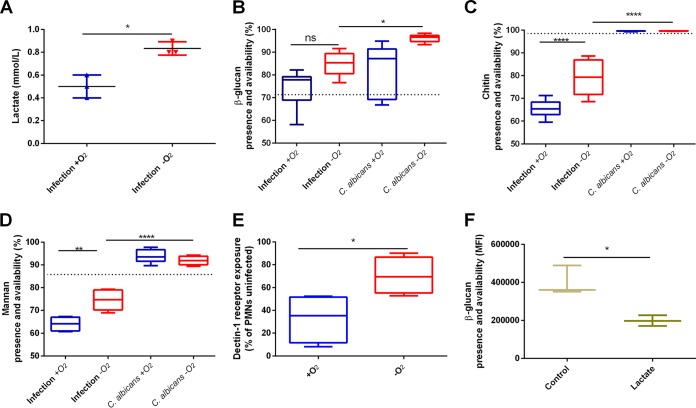
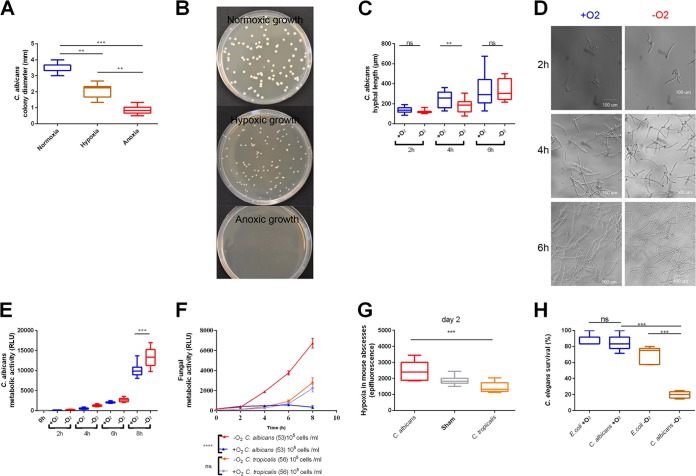
Verification
Claims the paper makes
The claims and statistics of this paper haven’t been checked yet.
Free: it reads the open-access text and checks the first 5 claims that cite a source we can check. Create a free account to check every claim.
Claims other papers make about this one
Each is checked against this paper’s own text: does it say what the citing paper says it does?
The cited source says what the claim attributes to it.
In the citing paper
“However, two recent studies clearly indicated that hypoxic conditions led to alterations in the cell wall that mask C. albicans from host responses (61, 62).”
From Inhibition of Classical and Alternative Modes of Respiration in Candida albicans Leads to Cell Wall Remodeling and Increased Macrophage Recognition (2019) · cites this paper as [61]
Self-check
Percentages, sums and reported differences re-computed from the paper’s own numbers.
The self-check needs the paper’s full text.
Citations
Cites
Neutrophil recruitment and function in health and inflammation
Kolaczkowska, E., & Kubes, P. (2013) · Nature Reviews Immunology · doi:10.1038/nri3399 · Cited by 5,472 · cited 1×
“Anoxia reduced C. albicans phagocytosis and killing by PMNs. PMNs perform four main activities when encountering pathogens: respiratory burst, phagocytosis, degranulation, and the release of extracellular traps (neutrophil extracellular traps [NETs]) (25).”
Nonfilamentous C. albicans Mutants Are Avirulent
Lo, H.-J., Köhler, J. R., DiDomenico, B., Loebenberg, D., Cacciapuoti, A., & Fink, G. R. (1997) · Cell · doi:10.1016/s0092-8674(00)80358-x · Cited by 1,809 · cited 1×
“albicans (32), was only transiently affected (Fig.”
Why is the partial oxygen pressure of human tissues a crucial parameter? Small molecules and hypoxia
Carreau, A., Hafny‐Rahbi, B. E., Matejuk, A., Grillon, C., & Kieda, C. (2011) · Journal of Cellular and Molecular Medicine · doi:10.1111/j.1582-4934.2011.01258.x · Cited by 1,246
Dectin-1 is required for β-glucan recognition and control of fungal infection
Taylor, P. R., Tsoni, S. V., Willment, J. A., Dennehy, K. M., Rosas, M., Findon, H., Haynes, K., Steele, C., Botto, M., Gordon, S., et al. (2007) · Nature Immunology · doi:10.1038/ni1408 · Cited by 1,161 · cited 1×
“To test whether altered chitin and mannan levels contributed to an indirect fungal masking of (cid:2) -glucan, we stained for the Dectin-1 receptor, the C-type lectin receptor involved in (cid:2) -glucan recognition (30).”
Microtiter Dish Biofilm Formation Assay
O'Toole, G. A. (2011) · Journal of Visualized Experiments · doi:10.3791/2437 · Cited by 1,108 · cited 1×
“Biofilm quantification was performed using the crystal violet method (61).”
Use of Ly6G-specific monoclonal antibody to deplete neutrophils in mice
Daley, J. M., Thomay, A. A., Connolly, M. D., Reichner, J. S., & Albina, J. E. (2008) · Journal of Leukocyte Biology · doi:10.1189/jlb.0407247 · Cited by 1,046 · cited 1×
“To determine the role of PMNs in the generation of hypoxia, we depleted PMNs prior to infection using an anti-mouse Ly6G antibody, an immunoglobulin commonly applied to deplete this cell type (23, 24).”
Regulation of Immunity and Inflammation by Hypoxia in Immunological Niches
Taylor, C. T., & Colgan, S. P. (2017) · Nature reviews. Immunology · doi:10.1038/nri.2017.103 · Cited by 713 · cited 1×
“Upon infection, low oxygen conditions arise under which immune cells, similarly to microbes, must maintain functionality to restore homeostasis (14, 15).”
Adaptive prediction of environmental changes by microorganisms
Mitchell, A., Romano, G. H., Groisman, B., Yona, A., Dekel, E., Kupiec, M., Dahan, O., & Pilpel, Y. (2009) · Nature · doi:10.1038/nature08112 · Cited by 581 · cited 1×
“In conclusion, adaptation to hypoxia and anoxia appears to be a good example of adaptive prediction in C. albicans (57).”
Hypoxia: an alarm signal during intestinal inflammation
Colgan, S. P., & Taylor, C. T. (2010) · Nature Reviews Gastroenterology & Hepatology · doi:10.1038/nrgastro.2010.39 · Cited by 461 · cited 1×
“Niches commensally colonized by C. albicans vary considerably in oxygen levels (17, 18).”
Ramage, G., VandeWalle, K., López-Ribot, J. L., & Wickes, B. L. (2002) · FEMS Microbiology Letters · doi:10.1016/s0378-1097(02)00853-4 · Cited by 334 · cited 1×
“EFG1 is important for biofilm and hypoxia regulation (12, 21, 22).”
Wisplinghoff, H., Ebbers, J., Geurtz, L., Stefanik, D., Major, Y., Edmond, M. B., Wenzel, R. P., & Seifert, H. (2014) · International Journal of Antimicrobial Agents · doi:10.1016/j.ijantimicag.2013.09.005 · Cited by 293 · cited 1×
“In line with this, recent literature described C. tropicalis as a robust species with virulence attributes similar to those of C. albicans (51–53).”
Lactate signalling regulates fungal β-glucan masking and immune evasion
Ballou, E. R., Avelar, G. M., Childers, D. S., Mackie, J., Bain, J. M., Wagener, J., Kastora, S. L., Panea, M. D., Hardison, S. E., Walker, L. A., et al. (2016) · Nature Microbiology · doi:10.1038/nmicrobiol.2016.238 · Cited by 269 · cited 3×
“Since lactate signaling regulates fungal -glucan exposure, we investigated whether the presence of lactate in supernatants harvested from PMNs incubated under anoxic conditions would be sufficient to cause -glucan masking (29).”
BackgroundInfluentialPujol, N., Zugasti, O., Wong, D., Couillault, C., Kurz, C. L., Schulenburg, H., & Ewbank, J. J. (2008) · PLoS Pathogens · doi:10.1371/journal.ppat.1000105 · Cited by 255 · cited 1×
“Nevertheless, besides hampering PMN responses, low oxygen levels might diminish other forms of innate immune responses (56).”
From commensal to pathogen: stage- and tissue-specific gene expression of Candida albicans
Hube, B. (2004) · Current Opinion in Microbiology · doi:10.1016/j.mib.2004.06.003 · Cited by 239 · cited 1×
“As these different niches vary considerably in environmental conditions and microbiotic composition (7, 8), C. albicans has developed different metabolic strategies and growth forms, such as biofilm formation, which allow establishing perseverance and antifungal resistance (9–11).”
Frequently asked questions in hypoxia research
Wenger, R., Kurtcuoglu, V., Scholz, C., Marti, H., & Hoogewijs, D. (2015) · Hypoxia · doi:10.2147/hp.s92198 · Cited by 223
Fox, E. P., Cowley, E. S., Nobile, C. J., Hartooni, N., Newman, D. K., & Johnson, A. D. (2014) · Current Biology · doi:10.1016/j.cub.2014.08.057 · Cited by 207 · cited 1×
“Growing as a biofilm, C. albicans can support the growth of anaerobic bacteria in dental pockets (38).”
Dubois, L., Lieuwes, N. G., Maresca, A., Thiry, A., Supuran, C. T., Scozzafava, A., Wouters, B. G., & Lambin, P. (2009) · Radiotherapy and Oncology · doi:10.1016/j.radonc.2009.06.019 · Cited by 198 · cited 1×
“The reagent was successfully applied to study hypoxic processes in tumors and recently also to evaluate the onset of hypoxia during experimental pulmonary Aspergillus fumigatus infection (19, 20).”
Loesche, W. J., Gusberti, F., Mettraux, G., Higgins, T., & Syed, S. (1983) · Infection and Immunity · doi:10.1128/iai.42.2.659-667.1983 · Cited by 195
Setiadi, E. R., Doedt, T., Cottier, F., Noffz, C., & Ernst, J. F. (2006) · Journal of Molecular Biology · doi:10.1016/j.jmb.2006.06.040 · Cited by 182 · cited 1×
“In good agreement with this notion, fungal adaptation to low oxygen seems to be linked to fungal pathogenesis, since null mutants of hypoxia regulators, such as EFG1 , display attenuated virulence (11, 48, 49).”
EFG1 is a major regulator of cell wall dynamics in Candida albicans as revealed by DNA microarrays
Sohn, K., Urban, C., Brunner, H., & Rupp, S. (2003) · Molecular Microbiology · doi:10.1046/j.1365-2958.2003.03300.x · Cited by 181 · cited 1×
“EFG1 is important for biofilm and hypoxia regulation (12, 21, 22).”
Self-citationHypoxia and Fungal Pathogenesis: To Air or Not To Air?
Grahl, N., Shepardson, K. M., Chung, D., & Cramer, R. A. (2012) · Eukaryotic Cell · doi:10.1128/ec.00031-12 · Cited by 179 · cited 1×
“In good agreement with this notion, fungal adaptation to low oxygen seems to be linked to fungal pathogenesis, since null mutants of hypoxia regulators, such as EFG1 , display attenuated virulence (11, 48, 49).”
Hill, D. R., Huang, S., Nagy, M. S., Yadagiri, V. K., Fields, C., Mukherjee, D., Bons, B., Dedhia, P. H., Chin, A. M., Tsai, Y.-H., et al. (2017) · eLife · doi:10.7554/elife.29132 · Cited by 175
In Vivo Pathogenicity of Eight Medically Relevant Candida Species in an Animal Model
Arendrup, M., Horn, T., & Frimodt-Møller, N. (2002) · Infection · doi:10.1007/s15010-002-2131-0 · Cited by 168
Johansson, A. (2011) · Toxins · doi:10.3390/toxins3030242 · Cited by 167 · cited 1×
“Microbes like A. actinomycetemcomitans have therefore developed strategies to disarm PMN responses, such as by the release of leukotoxin (40).”
Extracellular neutrophil traps in periodontitis
Vitkov, L., Klappacher, M., Hannig, M., & Krautgartner, W. D. (2009) · Journal of Periodontal Research · doi:10.1111/j.1600-0765.2008.01175.x · Cited by 154 · cited 1×
“Immune responses in these niches are orchestrated by PMNs (39).”
Broad Oxygen Tolerance in the Nematode Caenorhabditis Elegans
Voorhies, W. A. V., & Ward, S. (2000) · Journal of Experimental Biology · doi:10.1242/jeb.203.16.2467 · Cited by 152
Candida albicans Infection of Caenorhabditis elegans Induces Antifungal Immune Defenses
Pukkila-Worley, R., Ausubel, F. M., & Mylonakis, E. (2011) · PLoS Pathogens · doi:10.1371/journal.ppat.1002074 · Cited by 152 · cited 2×
“Five worms per well were then distributed on 24-well plates with NGM agar with 40 M 5-fluoro-2=-deoxyuridine (FUDR) (Sigma) to prevent progeny production (55).”
Fungal recognition is mediated by the association of dectin-1 and galectin-3 in macrophages
Esteban, A., Popp, M. W., Vyas, V. K., Strijbis, K., Ploegh, H. L., & Fink, G. R. (2011) · Proceedings of the National Academy of Sciences · doi:10.1073/pnas.1111415108 · Cited by 149 · cited 1×
“Upon binding of ligand (cid:2) -glucan, Dectin-1 on PMNs is internalized for the activation of downstream signaling pathways and thus no longer exposed at the cell surface (31).”
McGovern, N. N., Cowburn, A. S., Porter, L., Walmsley, S. R., Summers, C., Thompson, A. A. R., Anwar, S., Willcocks, L. C., Whyte, M. K. B., Condliffe, A. M., et al. (2011) · The Journal of Immunology · doi:10.4049/jimmunol.1002213 · Cited by 148 · cited 1×
“In addition, it has been shown that hypoxia hampers bacterial killing by PMNs (43).”
Bonhomme, J., Chauvel, M., Goyard, S., Roux, P., Rossignol, T., & d'Enfert, C. (2011) · Molecular Microbiology · doi:10.1111/j.1365-2958.2011.07626.x · Cited by 144
Risk Factors for Candida tropicalis Fungemia in Patients with Cancer
Kontoyiannis, D. P., Vaziri, I., Hanna, H. A., Boktour, M., Thornby, J., Hachem, R., Bodey, G. P., & Raad, I. I. (2001) · Clinical Infectious Diseases · doi:10.1086/323812 · Cited by 143 · cited 1×
“albicans infections are not clearly associated with neutropenia (54).”
Canabarro, A., Valle, C., Farias, M. R., Santos, F. B., Lazera, M., & Wanke, B. (2013) · Journal of Periodontal Research · doi:10.1111/jre.12022 · Cited by 140 · cited 1×
“Dental pockets are such low oxygen zones where disease severity can be increased with the presence of C. albicans (37).”
Johnson, C. J., Cabezas-Olcoz, J., Kernien, J. F., Wang, S. X., Beebe, D. J., Huttenlocher, A., Ansari, H., & Nett, J. E. (2016) · PLOS Pathogens · doi:10.1371/journal.ppat.1005884 · Cited by 133 · cited 2×
“Biofilm formation in C. albicans was determined similarly to the previously described method (44) with minor modifications.”
Regulation of the Hypoxic Response in Candida albicans
Synnott, J. M., Guida, A., Mulhern-Haughey, S., Higgins, D. G., & Butler, G. (2010) · Eukaryotic Cell · doi:10.1128/ec.00159-10 · Cited by 132 · cited 2×
“In good agreement with this notion, fungal adaptation to low oxygen seems to be linked to fungal pathogenesis, since null mutants of hypoxia regulators, such as EFG1 , display attenuated virulence (11, 48, 49).”
Zeitouni, N. E., Chotikatum, S., von Köckritz-Blickwede, M., & Naim, H. Y. (2016) · Molecular and Cellular Pediatrics · doi:10.1186/s40348-016-0041-y · Cited by 132 · cited 1×
“Niches commensally colonized by C. albicans vary considerably in oxygen levels (17, 18).”
Kowalski, C. H., Beattie, S. R., Fuller, K. K., McGurk, E. A., Tang, Y.-W., Hohl, T. M., Obar, J. J., & Cramer, R. A. (2016) · mBio · doi:10.1128/mbio.01515-16 · Cited by 123 · cited 1×
“Interestingly, establishing hypoxia during initial colonization or infection is a strategy used by other microbes with a successful outcome (14, 46, 47).”
Porman, A. M., Alby, K., Hirakawa, M. P., & Bennett, R. J. (2011) · Proceedings of the National Academy of Sciences · doi:10.1073/pnas.1112076109 · Cited by 118
Hypoxia-Induced Inflammation in the Lung
Fröhlich, S., Boylan, J. F., & McLoughlin, P. (2013) · American Journal of Respiratory Cell and Molecular Biology · doi:10.1165/rcmb.2012-0137tr · Cited by 115
A feast for Candida: Metabolic plasticity confers an edge for virulence
Miramón, P., & Lorenz, M. C. (2017) · PLOS Pathogens · doi:10.1371/journal.ppat.1006144 · Cited by 106 · cited 1×
“Hypoxia and carbon source availability are known to influence the cell wall composition (28).”
Hypoxic Adaptation by Efg1 Regulates Biofilm Formation by Candida albicans
Stichternoth, C., & Ernst, J. F. (2009) · Applied and Environmental Microbiology · doi:10.1128/aem.00098-09 · Cited by 93 · cited 2×
“Interestingly, some genes important for biofilm formation are also essential for hypoxia adaptation in Candida species (12, 13).”
Correlation between Biofilm Formation and the Hypoxic Response in Candida parapsilosis
Rossignol, T., Ding, C., Guida, A., d'Enfert, C., Higgins, D. G., & Butler, G. (2009) · Eukaryotic Cell · doi:10.1128/ec.00350-08 · Cited by 91 · cited 1×
“Interestingly, some genes important for biofilm formation are also essential for hypoxia adaptation in Candida species (12, 13).”
Lee, E. K. S., Gillrie, M. R., Li, L., Arnason, J. W., Kim, J. H., Babes, L., Lou, Y., Sanati-Nezhad, A., Kyei, S. K., Kelly, M. M., et al. (2018) · Cell Host & Microbe · doi:10.1016/j.chom.2017.11.009 · Cited by 89 · cited 1×
“PMN extravasation coupled with the proliferation of other immune cells and the activation of oxygen-consuming enzymes fuel the creation of environments with decreasing oxygen levels (16).”
Thompson, A. A. R., Dickinson, R. S., Murphy, F. A., Thomson, J. P., Marriott, H. M., Tavares, A., Willson, J. A., Williams, L., Lewis, A., Mirchandani, A. S., et al. (2017) · Science Immunology · doi:10.1126/sciimmunol.aal2861 · Cited by 84 · cited 2×
“Upon infection, low oxygen conditions arise under which immune cells, similarly to microbes, must maintain functionality to restore homeostasis (14, 15).”
Anoxia and glucose supplementation preserve neutrophil viability and function
Monceaux, V., Chiche-Lapierre, C., Chaput, C., Witko-Sarsat, V., Prevost, M.-C., Taylor, C. T., Ungeheuer, M.-N., Sansonetti, P. J., & Marteyn, B. S. (2016) · Blood · doi:10.1182/blood-2015-11-680918 · Cited by 77 · cited 1×
“S3D), confirming the results of a previous report (42).”
Opportunistic pathogen Candida albicans elicits a temporal response in primary human mast cells
Lopes, J. P., Stylianou, M., Nilsson, G., & Urban, C. F. (2015) · Scientific Reports · doi:10.1038/srep12287 · Cited by 75 · cited 2×
“quantifying ATP levels, similarly as previously described (26, 33).”
Self-citationAntifungal Application of Nonantifungal Drugs
Stylianou, M., Kulesskiy, E., Lopes, J. P., Granlund, M., Wennerberg, K., & Urban, C. F. (2014) · Antimicrobial Agents and Chemotherapy · doi:10.1128/aac.01087-13 · Cited by 71 · cited 1×
“We also analyzed the metabolic activity of C. albicans in anoxic and normoxic conditions by quantifying ATP levels, similarly as previously described (26, 33).”
Self-citationFungal adaptation to the mammalian host: it is a new world, after all
Cooney, N. M., & Klein, B. S. (2008) · Current Opinion in Microbiology · doi:10.1016/j.mib.2008.09.018 · Cited by 68 · cited 3×
“ROS production of PMNs was quantified by use of oxidative stress dye CMH(2)CFDA (Thermo Fisher Scientific).”
Regulation of hypoxia adaptation: an overlooked virulence attribute of pathogenic fungi?
Grahl, N., & Cramer, R. A. (2010) · Medical Mycology · doi:10.3109/13693780902947342 · Cited by 59
Johansson, A., Hänström, L., & Kalfas, S. (2000) · Oral Microbiology and Immunology · doi:10.1034/j.1399-302x.2000.150402.x · Cited by 54 · cited 2×
“actinomycetemcomitans HK 1651 as described elsewhere (27).”
Simons, E. R. (2010) · Current Protocols in Cytometry · doi:10.1002/0471142956.cy0931s51 · Cited by 49
Characterization of Virulence-Related Phenotypes in Candida Species of the CUG Clade
Priest, S. J., & Lorenz, M. C. (2015) · Eukaryotic Cell · doi:10.1128/ec.00062-15 · Cited by 48 · cited 1×
“In line with this, recent literature described C. tropicalis as a robust species with virulence attributes similar to those of C. albicans (51–53).”
Stable Redox-Cycling Nitroxide Tempol Inhibits NET Formation
Hosseinzadeh, A., Messer, P. K., & Urban, C. F. (2012) · Frontiers in Immunology · doi:10.3389/fimmu.2012.00391 · Cited by 43 · cited 2×
“PMNs were isolated from venous blood as previously described (59).”
Self-citationRevsbech, N. P., Thamdrup, B., Dalsgaard, T., & Canfield, D. E. (2010) · Methods in enzymology on CD-ROM/Methods in enzymology · doi:10.1016/b978-0-12-381294-0.00014-6 · Cited by 41 · cited 1×
“To ensure oxygen-free pellets, we measured oxygen levels in cell pellets and solutions using a miniaturized low-range oxygen sensor (58) (STOX; Unisense).”
Gresnigt, M. S., Rekiki, A., Rasid, O., Savers, A., Jouvion, G., Dannaoui, E., Parlato, M., Fitting, C., Brock, M., Cavaillon, J.-M., et al. (2016) · Scientific Reports · doi:10.1038/srep26490 · Cited by 41 · cited 1×
“The reagent was successfully applied to study hypoxic processes in tumors and recently also to evaluate the onset of hypoxia during experimental pulmonary Aspergillus fumigatus infection (19, 20).”
Caenorhabditis elegans-based Model Systems for Antifungal Drug Discovery
Anastassopoulou, C. G., Fuchs, B. B., & Mylonakis, E. E. (2011) · Current Pharmaceutical Design · doi:10.2174/138161211795703753 · Cited by 39 · cited 1×
“Several publications report that Caenorhabditis elegans can tolerate both anoxic and hypoxic environments (34–36).”
Yersinia pseudotuberculosis Efficiently Escapes Polymorphonuclear Neutrophils during Early Infection
Westermark, L., Fahlgren, A., & Fällman, M. (2013) · Infection and Immunity · doi:10.1128/iai.01634-13 · Cited by 39 · cited 1×
“To determine the role of PMNs in the generation of hypoxia, we depleted PMNs prior to infection using an anti-mouse Ly6G antibody, an immunoglobulin commonly applied to deplete this cell type (23, 24).”
Metabolic adaptation of intracellular bacteria and fungi to macrophages
Sprenger, M., Kasper, L., Hensel, M., & Hube, B. (2017) · International Journal of Medical Microbiology · doi:10.1016/j.ijmm.2017.11.001 · Cited by 39 · cited 1×
“Some of these adaptations involve adjusting to nutrient quality or scarcity and adjusting to stresses, such as different oxygen levels (1, 2).”
Byrd, A. S., O'Brien, X. M., Laforce-Nesbitt, S. S., Parisi, V. E., Hirakawa, M. P., Bliss, J. M., & Reichner, J. S. (2016) · Journal of Infectious Diseases · doi:10.1093/infdis/jiv435 · Cited by 38 · cited 1×
“Of note, performing infections in anoxic environments allowed us to confirm ROS-independent mechanisms of NET induction (45).”
The Origin and Function of Anti-Fungal Peptides in C. elegans: Open Questions
Pujol, N., Davis, P. A., & Ewbank, J. J. (2012) · Frontiers in Immunology · doi:10.3389/fimmu.2012.00237 · Cited by 32
Skin infections are eliminated by cooperation of the fibrinolytic and innate immune systems
Santus, W., Barresi, S., Mingozzi, F., Broggi, A., Orlandi, I., Stamerra, G., Vai, M., Martorana, A. M., Polissi, A., Köhler, J. R., et al. (2017) · Science Immunology · doi:10.1126/sciimmunol.aan2725 · Cited by 28 · cited 1×
“In a subdermal abscess model of C. albicans infection in mice, granulocytes are the main immune cell type present (41).”
Commensal to Pathogen Transition of Candida albicans
Niemiec, M. J., Kapitan, M., Polke, M., & Jacobsen, I. D. (2017) · Elsevier eBooks · doi:10.1016/b978-0-12-809633-8.12077-1 · Cited by 9
Cited by
Pathogenesis and virulence of Candida albicans
Lopes, J. P., & Lionakis, M. S. (2022) · Virulence · doi:10.1080/21505594.2021.2019950 · Cited by 477
Self-citationArchitecture of the dynamic fungal cell wall
Gow, N. A. R., & Lenardon, M. D. (2023) · Nature Reviews Microbiology · doi:10.1038/s41579-022-00796-9 · Cited by 447
d'Enfert, C., Kaune, A.-K., Alaban, L.-R., Chakraborty, S., Cole, N., Delavy, M., Kosmala, D., Marsaux, B., Fróis-Martins, R., Morelli, M., et al. (2021) · FEMS Microbiology Reviews · doi:10.1093/femsre/fuaa060 · Cited by 347
Design, optimization, and nanotechnology of antimicrobial peptides: From exploration to applications
Tan, P., Fu, H., & Ma, X. (2021) · Nano Today · doi:10.1016/j.nantod.2021.101229 · Cited by 351
Big data in IBD: big progress for clinical practice
Seyed Tabib, N. S., Madgwick, M., Sudhakar, P., Verstockt, B., Korcsmaros, T., & Vermeire, S. (2020) · Gut · doi:10.1136/gutjnl-2019-320065 · Cited by 223
Metadata
- Authors
- Lopes, J. P., Stylianou, M., Backman, E., Holmberg, S., Jass, J., Claesson, R., & Urban, C. F.
- Affiliations
- Umeå Centre for Microbial Research (SE)
- Örebro University (SE)
- Umeå University (SE)
- Corresponding author
- Urban, Constantin F.
- ORCID
- Venue
- mBio
- Publisher
- American Society for Microbiology
- Published
- 2018-12-21
- Volume
- 9
- Issue
- 6
- ISSN
- 2150-7511 (ISSN-L)
- 2161-2129
- PMC
- PMC6222133
- OpenAlex
- W2899987879
- Cited by
- 88
- References
- 61
- Citations by year
- 2026: 6 · 2025: 4 · 2024: 11 · 2023: 5 · 2022: 17 · 2021: 11 · 2020: 15 · 2019: 17 · 2018: 2
- FWCI
- 8.51
- Type
- journal article
- Language
- en
- Open access
- gold
- doi.org
- Licence
- cc-by
- creativecommons.org/licenses/by/4.0/ (vor)
- journals.asm.org/non-commercial-tdm-license (tdm)
- Locations
- mBio (publishedVersion, cc-by)
- Europe PMC (PubMed Central) (publishedVersion, cc-by)
- PubMed Central (publishedVersion, cc-by)
- PubMed (publishedVersion)
- DiVA at Umeå University (Umeå University) (submittedVersion, other-oa)
- DOAJ (DOAJ: Directory of Open Access Journals) (submittedVersion, cc-by-sa)
- DOAJ (DOAJ: Directory of Open Access Journals) (submittedVersion)
- Funders
- J. C. Kempes Minnes Stipendiefondstiftelserna
- Arneska Foundation
- Vetenskapsrådet (VR-2014-02281, VR-2017-01681)
- Kempestiftelserna (SMK-1453)
- Helge Ax:son Johnsons Stiftelse
- Stiftelsen för Kunskaps- och Kompetensutveckling (20140180)
- Topics
- Health Sciences › Medicine › Infectious Diseases › Antifungal resistance and susceptibility
- Life Sciences › Biochemistry, Genetics and Molecular Biology › Molecular Biology › Fungal and yeast genetics research
- Health Sciences › Medicine › Infectious Diseases › Fungal Infections and Studies
- Keywords
- Candida albicans, low oxygen environment, immune evasion, neutrophils, fungal virulence, lactate, antifungal resistance, innate immunity, immunomodulation, antifungal therapy
- MeSH terms
- Dectin-1, Anaerobiosis, Animals, Candida albicans, Cell Wall, Female, Humans, Neutrophils, Oxygen, Phagocytosis, Skin, Virulence, Neutrophil Infiltration, Lectins, C-Type, beta-Glucans, Mice, Immune Evasion, Extracellular Traps
About these checks
Registry, retraction, Cites and statistics results are computed, not judged, with one exception: a printed reference that no index lists is read once by a model before it counts as a citation error. Claims are extracted by a model and kept only when their quote appears verbatim in the text; each cited source is then checked, with a model’s help, for whether it says what the claim relies on. Those verdicts can be wrong — read the claim’s quote and the cited source before relying on one.
Statistics and arithmetic are recomputed, not judged.
Confidence bands are shown only for fields calibrated on our annotated test set. None is calibrated yet, so no band is shown.
What counts as a claim ›How we measure confidence ›How we check this ›
Are you an author, or do you see a problem with this page? Request a review
Data sources
Bibliographic data: Semantic Scholar, OpenAlex, Crossref.
Contains information from the Semantic Scholar Academic Graph Datasets, made available under the ODC Attribution License (ODC-BY 1.0).
Semantic Scholar’s data is described in: Kinney, R., et al. (2023). The Semantic Scholar Open Data Platform. arXiv:2301.10140.
