

Evasion of Immune Surveillance in Low Oxygen Environments Enhances Candida albicans Virulence
Open accessThe DOI matches its Crossref record; 61 of the 61 references it cites were found in a registry or an index.
Abstract
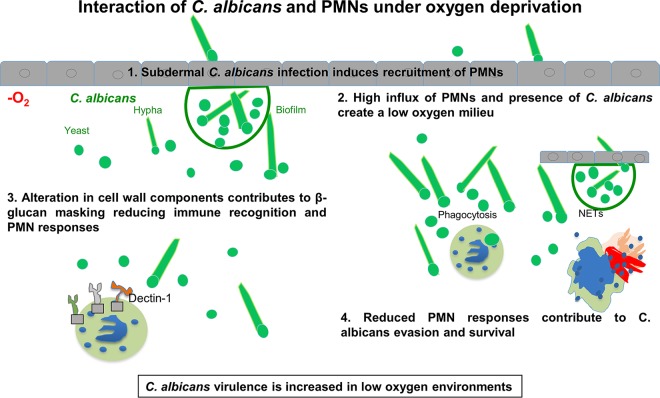
Successful human colonizers have evolved mechanisms to bypass immune surveillance. Infiltration of PMNs to the site of infection led to the generation of a low oxygen niche. Exposure to low oxygen levels induced fungal cell wall masking, which in turn hindered pathogen sensing and antifungal responses by PMNs. The cell wall masking effect was prolonged by increasing lactate amounts produced by neutrophil metabolism under oxygen deprivation. In an invertebrate infection model, C. albicans was able to kill infected C. elegans nematodes within 2 days under low oxygen conditions, whereas the majority of uninfected controls and infected worms under normoxic conditions survived. These results suggest that C. albicans benefited from low oxygen niches to increase virulence. The interplay of C. albicans with innate immune cells under these conditions contributed to the overall outcome of infection. Adaption to low oxygen levels was in addition beneficial for C. albicans by reducing susceptibility to selected antifungal drugs. Hence, immunomodulation of host cells under low oxygen conditions could provide a valuable approach to improve current antifungal therapies.
Overview
The claims and statistics of this paper haven’t been checked yet.
Free: it reads the open-access text and checks the first 5 claims that cite a source we can check. Create a free account to check every claim.
Integrity signals
Registry
Cites
Statistics
Figures
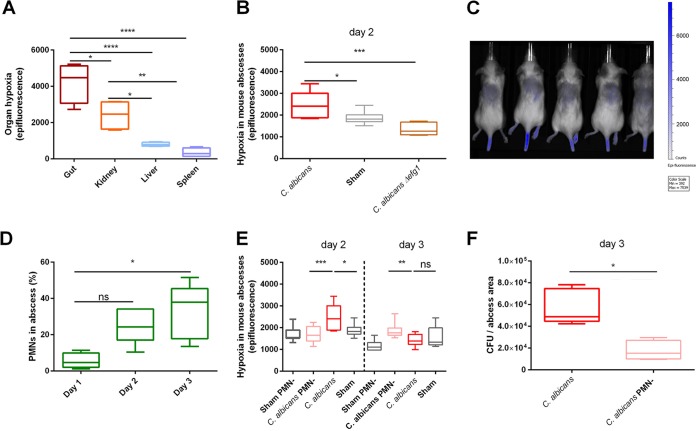
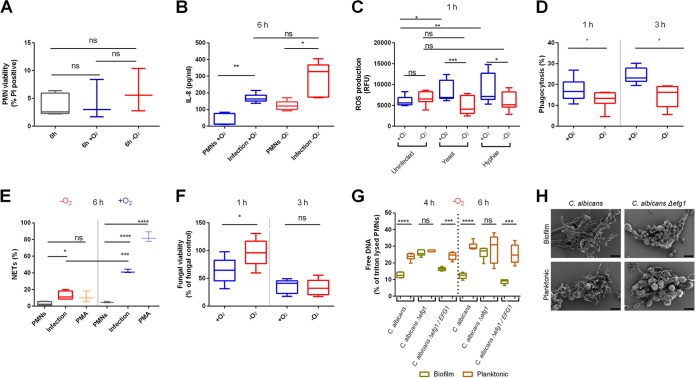
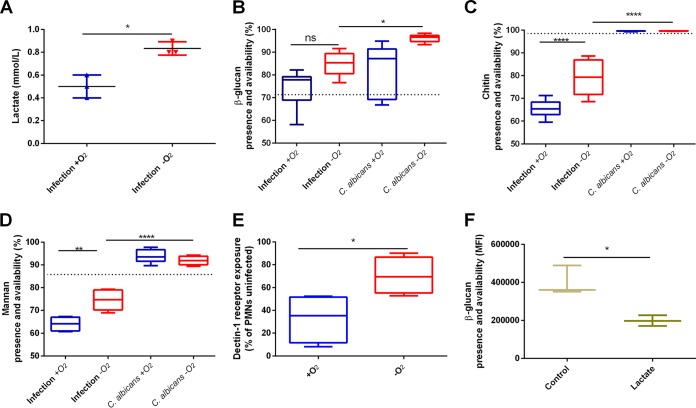
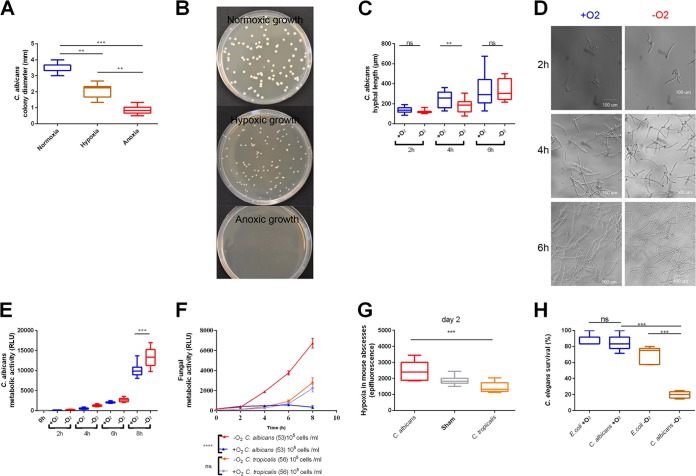
Verification
Claims the paper makes
The claims and statistics of this paper haven’t been checked yet.
Free: it reads the open-access text and checks the first 5 claims that cite a source we can check. Create a free account to check every claim.
Claims other papers make about this one
Each is checked against this paper’s own text: does it say what the citing paper says it does?
The cited source says what the claim attributes to it.
In the citing paper
“However, two recent studies clearly indicated that hypoxic conditions led to alterations in the cell wall that mask C. albicans from host responses (61, 62).”
From Inhibition of Classical and Alternative Modes of Respiration in Candida albicans Leads to Cell Wall Remodeling and Increased Macrophage Recognition (2019) · cites this paper as [61]
Self-check
Percentages, sums and reported differences re-computed from the paper’s own numbers.
The self-check needs the paper’s full text.
Citations
Cites
Neutrophil recruitment and function in health and inflammation
Kolaczkowska, E., & Kubes, P. (2013) · Nature Reviews Immunology · doi:10.1038/nri3399 · Cited by 5,472 · cited 1×
“Anoxia reduced C. albicans phagocytosis and killing by PMNs. PMNs perform four main activities when encountering pathogens: respiratory burst, phagocytosis, degranulation, and the release of extracellular traps (neutrophil extracellular traps [NETs]) (25).”
Nonfilamentous C. albicans Mutants Are Avirulent
Lo, H.-J., Köhler, J. R., DiDomenico, B., Loebenberg, D., Cacciapuoti, A., & Fink, G. R. (1997) · Cell · doi:10.1016/s0092-8674(00)80358-x · Cited by 1,809 · cited 1×
“albicans (32), was only transiently affected (Fig.”
Why is the partial oxygen pressure of human tissues a crucial parameter? Small molecules and hypoxia
Carreau, A., Hafny‐Rahbi, B. E., Matejuk, A., Grillon, C., & Kieda, C. (2011) · Journal of Cellular and Molecular Medicine · doi:10.1111/j.1582-4934.2011.01258.x · Cited by 1,246
Dectin-1 is required for β-glucan recognition and control of fungal infection
Taylor, P. R., Tsoni, S. V., Willment, J. A., Dennehy, K. M., Rosas, M., Findon, H., Haynes, K., Steele, C., Botto, M., Gordon, S., et al. (2007) · Nature Immunology · doi:10.1038/ni1408 · Cited by 1,161 · cited 1×
“To test whether altered chitin and mannan levels contributed to an indirect fungal masking of (cid:2) -glucan, we stained for the Dectin-1 receptor, the C-type lectin receptor involved in (cid:2) -glucan recognition (30).”
Microtiter Dish Biofilm Formation Assay
O'Toole, G. A. (2011) · Journal of Visualized Experiments · doi:10.3791/2437 · Cited by 1,108 · cited 1×
“Biofilm quantification was performed using the crystal violet method (61).”
Use of Ly6G-specific monoclonal antibody to deplete neutrophils in mice
Daley, J. M., Thomay, A. A., Connolly, M. D., Reichner, J. S., & Albina, J. E. (2008) · Journal of Leukocyte Biology · doi:10.1189/jlb.0407247 · Cited by 1,046 · cited 1×
“To determine the role of PMNs in the generation of hypoxia, we depleted PMNs prior to infection using an anti-mouse Ly6G antibody, an immunoglobulin commonly applied to deplete this cell type (23, 24).”
Regulation of Immunity and Inflammation by Hypoxia in Immunological Niches
Taylor, C. T., & Colgan, S. P. (2017) · Nature reviews. Immunology · doi:10.1038/nri.2017.103 · Cited by 713 · cited 1×
“Upon infection, low oxygen conditions arise under which immune cells, similarly to microbes, must maintain functionality to restore homeostasis (14, 15).”
Adaptive prediction of environmental changes by microorganisms
Mitchell, A., Romano, G. H., Groisman, B., Yona, A., Dekel, E., Kupiec, M., Dahan, O., & Pilpel, Y. (2009) · Nature · doi:10.1038/nature08112 · Cited by 581 · cited 1×
“In conclusion, adaptation to hypoxia and anoxia appears to be a good example of adaptive prediction in C. albicans (57).”
Hypoxia: an alarm signal during intestinal inflammation
Colgan, S. P., & Taylor, C. T. (2010) · Nature Reviews Gastroenterology & Hepatology · doi:10.1038/nrgastro.2010.39 · Cited by 461 · cited 1×
“Niches commensally colonized by C. albicans vary considerably in oxygen levels (17, 18).”
Ramage, G., VandeWalle, K., López-Ribot, J. L., & Wickes, B. L. (2002) · FEMS Microbiology Letters · doi:10.1016/s0378-1097(02)00853-4 · Cited by 334 · cited 1×
“EFG1 is important for biofilm and hypoxia regulation (12, 21, 22).”
Cited by
Pathogenesis and virulence of Candida albicans
Lopes, J. P., & Lionakis, M. S. (2022) · Virulence · doi:10.1080/21505594.2021.2019950 · Cited by 477
Self-citationArchitecture of the dynamic fungal cell wall
Gow, N. A. R., & Lenardon, M. D. (2023) · Nature Reviews Microbiology · doi:10.1038/s41579-022-00796-9 · Cited by 447
d'Enfert, C., Kaune, A.-K., Alaban, L.-R., Chakraborty, S., Cole, N., Delavy, M., Kosmala, D., Marsaux, B., Fróis-Martins, R., Morelli, M., et al. (2021) · FEMS Microbiology Reviews · doi:10.1093/femsre/fuaa060 · Cited by 347
Design, optimization, and nanotechnology of antimicrobial peptides: From exploration to applications
Tan, P., Fu, H., & Ma, X. (2021) · Nano Today · doi:10.1016/j.nantod.2021.101229 · Cited by 351
Big data in IBD: big progress for clinical practice
Seyed Tabib, N. S., Madgwick, M., Sudhakar, P., Verstockt, B., Korcsmaros, T., & Vermeire, S. (2020) · Gut · doi:10.1136/gutjnl-2019-320065 · Cited by 223
The pathobiology of human fungal infections
Brown, G. D., Ballou, E. R., Bates, S., Bignell, E., Borman, A. M., Brand, A., Brown, A. J. P., Coelho, C., Cook, P. C., Farrer, R. A., et al. (2024) · Nature Reviews Microbiology · doi:10.1038/s41579-024-01062-w · Cited by 210
“77).”
From Jekyll to Hyde: The Yeast–Hyphal Transition of Candida albicans
Chow, E. W. L., Pang, L. M., & Wang, Y. (2021) · Pathogens · doi:10.3390/pathogens10070859 · Cited by 178
Virulence and Pathogenicity Properties of Aggregatibacter actinomycetemcomitans
Belibasakis, G. N., Maula, T., Bao, K., Lindholm, M., Bostancı, N., Oscarsson, J., Ihalin, R., & Johansson, A. (2019) · Pathogens · doi:10.3390/pathogens8040222 · Cited by 153
“Interestingly, net-like structures can also be released from the LtxA-exposed neutrophils under anaerobic conditions and contain citrullinated proteins with sequence homology to proteins found in inflamed joints [16,17].”
BackgroundPradhan, A., Avelar, G. M., Bain, J. M., Childers, D. S., Larcombe, D. E., Netea, M. G., Shekhova, E., Munro, C. A., Brown, G. D., Erwig, L. P., et al. (2018) · mBio · doi:10.1128/mbio.01318-18 · Cited by 133
“view is supported by the accompanying paper (101), which shows that oxygen depri-”
Adapting to survive: How Candida overcomes host-imposed constraints during human colonization
Alves, R., Barata-Antunes, C., Casal, M., Brown, A. J. P., Van Dijck, P., & Paiva, S. (2020) · PLOS Pathogens · doi:10.1371/journal.ppat.1008478 · Cited by 122
“tropicalis is not able to induce β-glucan masking in response to hypoxia, and this species is more susceptible to PMN attack [88].”
BackgroundInfluentialNon-canonical signalling mediates changes in fungal cell wall PAMPs that drive immune evasion
Pradhan, A., Avelar, G. M., Bain, J. M., Childers, D., Pelletier, C., Larcombe, D. E., Shekhova, E., Netea, M. G., Brown, G. D., Erwig, L., et al. (2019) · Nature Communications · doi:10.1038/s41467-019-13298-9 · Cited by 119
Zeise, K. D., Woods, R. J., & Huffnagle, G. B. (2021) · Clinical Microbiology Reviews · doi:10.1128/cmr.00323-20 · Cited by 97
Divergent Approaches to Virulence in C. albicans and C. glabrata: Two Sides of the Same Coin
Galocha, M., Pais, P., Cavalheiro, M., Pereira, D., Viana, R., & Teixeira, M. C. (2019) · International Journal of Molecular Sciences · doi:10.3390/ijms20092345 · Cited by 105
“Interestingly, β-glucan masking was prolonged by the build-up of lactate levels produced by PMNs [169].”
BackgroundInfluentialKumwenda, P., Cottier, F., Hendry, A. C., Kneafsey, D., Keevan, B., Gallagher, H., Tsai, H.-J., & Hall, R. A. (2022) · Cell Reports · doi:10.1016/j.celrep.2021.110183 · Cited by 104
“Recently, remodeling of the cell wall in response to adaptation to host environments has been shown to regulate the host-pathogen interaction (Wheeler and Fink, 2006; Wheeler et al., 2008; Hall, 2015; Ballou et al., 2016; Hopke et al., 2016; Sherrington et al., 2017; Lopes et al., 2018; Pericolini et al., 2018; Pradha…”
BackgroundThe origin of extracellular DNA in bacterial biofilm infections in vivo
Alhede, M., Alhede, M., Qvortrup, K., Kragh, K. N., Jensen, P. Ø., Stewart, P. S., & Bjarnsholt, T. (2020) · Pathogens and Disease · doi:10.1093/femspd/ftaa018 · Cited by 75
Nature of β-1,3-Glucan-Exposing Features on Candida albicans Cell Wall and Their Modulation
de Assis, L. J., Bain, J. M., Liddle, C., Leaves, I., Hacker, C., Peres da Silva, R., Yuecel, R., Bebes, A., Stead, D., Childers, D. S., et al. (2022) · mBio · doi:10.1128/mbio.02605-22 · Cited by 65
“Reduced b-1,3-glucan exposure correlates with enhanced fungal colonization of the gastrointestinal tract (35) and elevated fungal burdens in subdermal abscesses (97).”
BackgroundMetabolic Adaptations During Staphylococcus aureus and Candida albicans Co-Infection
Eichelberger, K. R., & Cassat, J. E. (2021) · Frontiers in Immunology · doi:10.3389/fimmu.2021.797550 · Cited by 67
The battle for oxygen during bacterial and fungal infections
André, A. C., Laborde, M., & Marteyn, B. (2022) · Trends in Microbiology · doi:10.1016/j.tim.2022.01.002 · Cited by 73
Cottier, F., Sherrington, S., Cockerill, S., del Olmo Toledo, V., Kissane, S., Tournu, H., Orsini, L., Palmer, G. E., Pérez, J. C., & Hall, R. A. (2019) · mBio · doi:10.1128/mbio.02347-19 · Cited by 63
Lactate cross-talk in host–pathogen interactions
Llibre, A., Grudzinska, F. S., O’Shea, M. K., Duffy, D., Thickett, D. R., Mauro, C., & Scott, A. (2021) · Biochemical Journal · doi:10.1042/bcj20210263 · Cited by 65
Duvenage, L., Walker, L. A., Bojarczuk, A., Johnston, S. A., MacCallum, D. M., Munro, C. A., & Gourlay, C. W. (2019) · mBio · doi:10.1128/mbio.02535-18 · Cited by 61
“However, two recent studies clearly indicated that hypoxic conditions led to alterations in the cell wall that mask C. albicans from host responses (61, 62).”
Hypoxia: A Double-Edged Sword During Fungal Pathogenesis?
Chung, H., & Lee, Y. (2020) · Frontiers in Microbiology · doi:10.3389/fmicb.2020.01920 · Cited by 61
Face/Off: The Interchangeable Side of Candida Albicans
Cottier, F., & Hall, R. A. (2020) · Frontiers in Cellular and Infection Microbiology · doi:10.3389/fcimb.2019.00471 · Cited by 61
Seelbinder, B., Lohinai, Z., Vazquez-Uribe, R., Brunke, S., Chen, X., Mirhakkak, M. H., Lopez-Escalera, S., Döme, B., Megyesfalvi, Z., Berta, J., et al. (2023) · Nature Communications · doi:10.1038/s41467-023-38058-8 · Cited by 55
Rehaume, L. M., Matigian, N., Mehdi, A. M., Lachner, N., Bowerman, K. L., Daly, J. N., Cao, K. L., Hugenholtz, P., & Thomas, R. (2019) · Annals of the Rheumatic Diseases · doi:10.1136/annrheumdis-2018-214381 · Cited by 59
pH-Responsive Antimicrobial Peptide with Selective Killing Activity for Bacterial Abscess Therapy
Wang, Z., Li, Q., Li, J., Shang, L., Li, J., Chou, S., Lyu, Y., & Shan, A. (2022) · Journal of Medicinal Chemistry · doi:10.1021/acs.jmedchem.1c01485 · Cited by 53
Black, B., Lee, C., Horianopoulos, L. C., Jung, W. H., & Kronstad, J. W. (2021) · PLOS Pathogens · doi:10.1371/journal.ppat.1009661 · Cited by 51
The emerging role of neutrophil extracellular traps in fungal infection
Liang, C.-T., Lian, N., & Li, M. (2022) · Frontiers in Cellular and Infection Microbiology · doi:10.3389/fcimb.2022.900895 · Cited by 51
“albicans cell wall masking, which prevents b-glucan from being recognized by neutrophil receptors (Lopes et al., 2018).”
BackgroundMemory in Fungal Pathogens Promotes Immune Evasion, Colonisation, and Infection
Brown, A. J. P., Gow, N. A. R., Warris, A., & Brown, G. D. (2019) · Trends in Microbiology · doi:10.1016/j.tim.2018.11.001 · Cited by 43
“Hypoxia is imposed at infection sites through fungal-dependent neutrophil recruitment, which then leads to β-glucan masking and immune evasion [78].”
BackgroundBurgain, A., Pic, É., Markey, L., Tebbji, F., Kumamoto, C. A., & Sellam, A. (2019) · PLoS Pathogens · doi:10.1371/journal.ppat.1007823 · Cited by 49
“albicans, hypoxic environment stimulates the invasive filamentous growth and the fitness inside the host [4,6,7].”
BackgroundMetabolic Reprogramming in the Opportunistic Yeast Candida albicans in Response to Hypoxia
Burgain, A., Tebbji, F., Khemiri, I., & Sellam, A. (2020) · mSphere · doi:10.1128/msphere.00913-19 · Cited by 49
“albicans cells reduce the exposition of their cell wall -glucans as a strategy to conceal cell wall pathogen-associated molecular patterns (PAMPs) to mitigate recognition by detectin-1 and uptake by phagocytes (18, 19).”
BackgroundInflammatory cytokine signalling in vulvovaginal candidiasis: a hot mess driving immunopathology
Cheng, K. O., Montaño, D. E., Zelante, T., Dietschmann, A., & Gresnigt, M. S. (2024) · Oxford Open Immunology · doi:10.1093/oxfimm/iqae010 · Cited by 43
Souza, J. G. S., Costa, R. C., Sampaio, A. A., Abdo, V. L., NAGAY, B. E., Castro, N., Retamal‐Valdes, B., Shibli, J. A., Feres, M., Barão, V. A. R., et al. (2022) · iScience · doi:10.1016/j.isci.2022.103994 · Cited by 45
“…accumulation, leading to increased microbial loads, dysbiosis, and virulence; (5) Analogy from other situations in which under oxygen deprivation, such as subgingival implant sites, C. albicans shows an increased virulence promoting microbial infection (Lopes et al., 2018) (Figures 5A-5E).”
BackgroundAnticipatory Stress Responses and Immune Evasion in Fungal Pathogens
Pradhan, A., Ma, Q., de Assis, L. J., Leaves, I., Larcombe, D. E., Rondon, A. V. R., Nev, O. A., & Brown, A. J. P. (2020) · Trends in Microbiology · doi:10.1016/j.tim.2020.09.010 · Cited by 46
Thoughts on the evolution of Core Environmental Responses in yeasts
Brown, A. J. P., Larcombe, D. E., & Pradhan, A. (2020) · Fungal Biology · doi:10.1016/j.funbio.2020.01.003 · Cited by 33
Dependence on Dectin-1 Varies With Multiple Candida Species
Thompson, A., Griffiths, J. S., Walker, L. A., da Fonseca, D. M., Lee, K. K., Taylor, P. R., Gow, N. A. R., & Orr, S. J. (2019) · Frontiers in Microbiology · doi:10.3389/fmicb.2019.01800 · Cited by 31
“In addition, β1,3-glucan, chitin and/or mannan exposure can be affected by the addition of neutrophils and/or normoxic versus anoxic culture conditions (Lopes et al., 2018).”
BackgroundChilders, D. S., Avelar, G. M., Bain, J. M., Larcombe, D. E., Pradhan, A., Budge, S., Heaney, H., & Brown, A. J. P. (2019) · Current topics in microbiology and immunology · doi:10.1007/82_2019_182 · Cited by 36
Weerasinghe, H., Stölting, H., Rose, A. J., & Traven, A. (2024) · Microbiology and Molecular Biology Reviews · doi:10.1128/mmbr.00171-22 · Cited by 31
“Neutrophils also use glycolysis when challenged with C. albicans (21, 112), as do oral and liver epithelial cells (113, 114), showing that this type of metabolic shift is not limited to immune cells but also occurs in other host cell types that play important roles in antifungal defenses.”
InfluentialSelisana, S. M. G., Chen, X., Mahfudhoh, E., Bowolaksono, A., Rozaliyani, A., Orihara, K., & Kajiwara, S. (2024) · Medical Microbiology and Immunology · doi:10.1007/s00430-024-00795-y · Cited by 27
“Hypoxia is an important condition observed in the lower gastrointestinal tract and inflamed tissues [ 32].”
BackgroundResultChen, T., Wagner, A. S., & Reynolds, T. B. (2022) · Frontiers in Fungal Biology · doi:10.3389/ffunb.2022.842501 · Cited by 25
“Furthermore, neutrophils within a hypoxic/anoxic environment also actively produce and release large amounts of lactate in vitro, and this has been proposed to work synergistically with the hypoxic response to further induce masking in C. albicans (Lopes et al., 2018).”
BackgroundLiu, J., Li, Q., Wang, C., Shao, J., Wang, T., Wu, D., Ma, K., Yan, G., & Yin, D. (2020) · Biofouling · doi:10.1080/08927014.2020.1759559 · Cited by 27
“When under stress, such as exposure to antifungal drugs, it will initiate cell wall remodeling by unmasking b-glucan and/or chitin, which are two of the crucial pathogen-associated molecular patterns (PAMP) (Ene et al. 2012; Morschh€auser et al. 2016; Sherrington et al. 2017; Guirao-Abad et al. 2018; Lopes et al. 2018…”
BackgroundMechanisms controlling bacterial infection in myeloid cells under hypoxic conditions
Hayek, I., Schatz, V., Bogdan, C., Jantsch, J., & Lührmann, A. (2020) · Cellular and Molecular Life Sciences · doi:10.1007/s00018-020-03684-8 · Cited by 27
Avelar, G. M., Dambuza, I. M., Ricci, L., Yuecel, R., Mackenzie, K. S., Childers, D. S., Bain, J. M., Pradhan, A., Larcombe, D. E., Netea, M. G., et al. (2022) · The Cell Surface · doi:10.1016/j.tcsw.2022.100084 · Cited by 26
Shchukarev, A., Backman, E., Watts, S., Salentinig, S., Urban, C. F., & Ramstedt, M. (2021) · Frontiers in Chemistry · doi:10.3389/fchem.2021.666853 · Cited by 25
“, in temperature, pH, oxygen, and nutrient levels (Lopes et al., 2018; Cottier and Hall, 2020).”
BackgroundSelf-citationRecent Advances in Understanding the Human Fungal Pathogen Hypoxia Response in Disease Progression
Puerner, C. T. S., Vellanki, S., Strauch, J. L., & Cramer, R. A. (2023) · Annual Review of Microbiology · doi:10.1146/annurev-micro-032521-021745 · Cited by 23
“In apparent contrast to A. fumigatus, C. albicans low-oxygen exposure leads to a decrease in β -glucan exposure and cell wall thinning, resulting in immune system evasion due to lack of PAMP (pathogen-associated molecular pattern) exposure (21, 83, 102).”
BackgroundMethodResultPrins, F. M., Hidding, I. J., Klaassen, M. A. Y., Collij, V., Schultheiss, J. P. D., Venema, W. T. U., Bangma, A., Aardema, J. B., Jansen, B. H., Mares, W. G. N., et al. (2024) · Gut Microbes · doi:10.1080/19490976.2024.2391505 · Cited by 23
Ahamefule, C. S., Ezeuduji, B. C., Ogbonna, J. C., Moneke, A. N., Ike, A. C., Jin, C., Wang, B., & Fang, W. (2021) · Frontiers in Cellular and Infection Microbiology · doi:10.3389/fcimb.2021.751947 · Cited by 22
“…Song et al., 2019), transcription factors (Jain et al., 2013; Hans et al., 2019a), and environmental and nutrient factors (Hammond et al., 2013; Lopes et al., 2018; Hans et al., 2019b; Wong et al., 2019) have been identified in a C. elegans model to strengthen our understanding of the in vivo…”
BackgroundPost-transcriptional control of fungal cell wall synthesis
Hall, R. A., & Wallace, E. W. J. (2022) · The Cell Surface · doi:10.1016/j.tcsw.2022.100074 · Cited by 24
Mitochondrial Control of Fungal Cell Walls: Models and Relevance in Fungal Pathogens
Koch, B., & Traven, A. (2019) · Current Topics in Microbiology and Immunology · doi:10.1007/82_2019_183 · Cited by 19
Higa, B., Cintra, B. S., Alvarez, C., Ribeiro, A. B., Ferreira, J. C., Tavares, D. C., Enriquez, V., Martinez, L. R., & Pires, R. H. (2022) · Medical Mycology · doi:10.1093/mmy/myac055 · Cited by 19
de Castro, R. J. A., Marina, C. L., Sturny-Leclère, A., Hoffmann, C., Bürgel, P. H., Wong, S. S. W., Aimanianda, V., Varet, H., Agrawal, R., Bocca, A. L., et al. (2023) · PLoS Pathogens · doi:10.1371/journal.ppat.1011841 · Cited by 22
Hameed, S., Hans, S., Singh, S., Dhiman, R., Monasky, R. C., Pandey, R. P., Thangamani, S., & Fatima, Z. (2021) · Pathogens · doi:10.3390/pathogens10080942 · Cited by 20
Characterising phagocytes and measuring phagocytosis from live Galleria mellonella larvae
Campbell, J. S., Pearce, J. C., Bebes, A., Pradhan, A., Yuecel, R., Brown, A. J. P., & Wakefield, J. G. (2024) · Virulence · doi:10.1080/21505594.2024.2313413 · Cited by 17
Pasman, R., Krom, B. P., Zaat, S. A. J., & Brul, S. (2022) · Frontiers in Oral Health · doi:10.3389/froh.2022.851786 · Cited by 16
Cryptococcus neoformans Induces MCP-1 Release and Delays the Death of Human Mast Cells
Lopes, J. P., Stylianou, M., Backman, E., Holmberg, S. M., Ekoff, M., Nilsson, G. P., & Urban, C. F. (2019) · Frontiers in Cellular and Infection Microbiology · doi:10.3389/fcimb.2019.00289 · Cited by 16
“Interestingly, in a previous study, we measured the response of MCs to C. albicans and detected a very different pattern of cytokine release (Lopes et al., 2018).”
BackgroundResultSelf-citationA CO 2 sensing module modulates β-1,3-glucan exposure in Candida albicans
Avelar, G. M., Pradhan, A., Ma, Q., Hickey, E., Leaves, I., Liddle, C., Rodriguez Rondon, A. V., Kaune, A.-K., Shaw, S., Maufrais, C., et al. (2024) · mBio · doi:10.1128/mbio.01898-23 · Cited by 15
“…module contributes to an anticipatory protective response that, together with the inherent phenotypic variability in β-1,3-glucan exposure displayed by C. albicans (bet hedging), allows this fungus to evade immune recognition and the resultant antifungal immune responses (32–34, 38, 39, 66).”
BackgroundChen, M., Cheng, T., Xu, C., Pan, M., Wu, J., Wang, T., Wu, D., Yan, G., Wang, C., & Shao, J. (2022) · Virulence · doi:10.1080/21505594.2022.2035066 · Cited by 16
“a pathogen associated molecular pattern (PAMP) that could be recognized by dectin-1 on the surface of immune cells [69,70].”
BackgroundAutophagy in periodontal disease: Evidence from a literature review
Lorenzo‐Pouso, A. I., Castelo‐Baz, P., Pérez‐Sayáns, M., Lim, J. C.-S., & Leira, Y. (2019) · Archives of Oral Biology · doi:10.1016/j.archoralbio.2019.03.029 · Cited by 14
Shankar, M., Uwamahoro, N., Backman, E., Holmberg, S. M., Niemiec, M. J., Roth, J., Vogl, T., & Urban, C. F. (2021) · Frontiers in Immunology · doi:10.3389/fimmu.2021.553911 · Cited by 16
Self-citationUnweaving the NET: Microbial strategies for neutrophil extracellular trap evasion
Janssen, L., Muller, H. S., & Martins, V. D. P. (2022) · Microbial Pathogenesis · doi:10.1016/j.micpath.2022.105728 · Cited by 15
A Quantitative Systems Pharmacology Model for the Key Interleukins Involved in Crohn's Disease
Balbas‐Martinez, V., Asín‐Prieto, E., Parra-Guillen, Z. P., & Trocóniz, I. F. (2019) · Journal of Pharmacology and Experimental Therapeutics · doi:10.1124/jpet.119.260539 · Cited by 12
Ma, Q., Pradhan, A., Leaves, I., Hickey, E., Roselletti, E., Dambuza, I. M., Larcombe, D. E., de Assis, L. J., Wilson, D., Erwig, L. P., et al. (2024) · The Cell Surface · doi:10.1016/j.tcsw.2024.100128 · Cited by 12
“Furthermore, hypoxia-induced β -1,3-glucan masking appears to attenuate antifungal immunity during infection (Lopes et al., 2018) and lactate exposure enhances the virulence of C. albicans in a murine model of disseminated candidiasis (Ene et al., 2012).”
Liu, J., Dong, Y., Wang, N., Ma, S., Lu, C., & Liu, Y. (2019) · Veterinary Research · doi:10.1186/s13567-019-0683-6 · Cited by 11
“Oxygen is a constantly changing environmental parameter in bacterial infections [47].”
BackgroundTranscriptomic insights into Candida albicans adaptation to an anaerobic environment
Zeise, K. D., Erb‐Downward, J. R., & Huffnagle, G. B. (2025) · Microbiology Spectrum · doi:10.1128/spectrum.03024-24 · Cited by 8
“Notably, hypoxia has been shown to induce β-glucan masking in SC5314 and several other isolates spanning four different C. albicans clades, which render them less susceptible to killing by phagocytes (3, 4).”
Protein kinase A signaling regulates immune evasion by shaving and concealing fungal β-1,3-glucan
Pradhan, A., Nev, O. A., Leaves, I., Nev, O. A., Ma, Q., Milne, G., Patterson, G., Netea, M. G., Erwig, L. P., Farrer, R. A., et al. (2025) · Proceedings of the National Academy of Sciences · doi:10.1073/pnas.2423864122 · Cited by 7
“Indeed, β-1,3 - glucan masking appears to enhance colonization of the large intestine ( 38 ) and attenuates immune responses against the fungus in vitro and in vivo ( 9 , 16 – 18 ).”
Sun, Q., Dong, B., Yang, D., Yu, J., Ren, T., Wang, T., Yang, L., Lü, Y., & Su, C. (2022) · Molecular Microbiology · doi:10.1111/mmi.15015 · Cited by 7
Rastogi, S. K., van Wijlick, L., Ror, S., Lee, K. K., Román, E., Agarwal, P., Manzoor, N., Gow, N. A. R., Plá, J., Ernst, J. F., et al. (2019) · Cellular Microbiology · doi:10.1111/cmi.13140 · Cited by 9
“albicans is able to impede its clearance by evading recognition by the polymorphonuclear leukocytes, pointing to the contribution of hypoxic niches in enhancing virulence (Lopes et al., 2018; Pradhan et al., 2018).”
BackgroundChallenges posed by fungi to host immunity: Mechanisms of immune evasion
Gu, Y., Wang, H., Wang, Y.-S., Wang, L., & Jia, X.-M. (2026) · hLife · doi:10.1016/j.hlife.2025.12.008 · Cited by 5
Commensal to Pathogen Transition of Candida albicans
Jacobsen, I. D., Niemiec, M. J., Kapitan, M., & Polke, M. (2020) · Elsevier eBooks · doi:10.1016/b978-0-12-809633-8.21281-8 · Cited by 6
Hickey, E., Leaves, I., Pradhan, A., Ma, Q., Yuecel, R., Gow, N. A. R., Brown, G. D., & Brown, A. J. P. (2025) · Current Microbiology · doi:10.1007/s00284-025-04400-0 · Cited by 4
“These phenotypes influence immune recognition and virulence [86–88].”
Jadoa, I. H., & Muhsen, T. A. A. (2024) · Journal of Biotechnology Research Center · doi:10.24126/jobrc.2024.18.2.728 · Cited by 3
Visualizing Hypoxia in a Murine Model of Candida albicans Infection Using in vivo Biofluorencence
Lopes, J. P., & Urban, C. F. (2019) · BIO-PROTOCOL · doi:10.21769/bioprotoc.3326 · Cited by 2
“In turn, C. albicans exploits this environmental shift to avoid immune recognition by changing cell wall composition leading to masking of recognized entities (Lopes et al., 2018).”
BackgroundSelf-citationAggregatibacter actinomycetemcomitans- A periodontopathogen
Ashwath, B., Vadhana, A., Anitha, V., & Shanmugam, M. (2021) · IP International Journal of Periodontology and Implantology · doi:10.18231/j.ijpi.2021.011 · Cited by 2
Sati, A. O. M., Abdelmoneim, A. H., Dawoud, E. D., Abdelhameed, T. A., Abdelrahman, F. A. B., Saad, K. A. H., Abduallah, R. B. A., Mustafa, M. M. E. S., Sidahmed, T. A., Elhassan, R. M., et al. (2019) · bioRxiv (Cold Spring Harbor Laboratory) · doi:10.1101/758920 · Cited by 3
Xu, R., Chen, Y., Yang, Y., Wang, C., Wu, D., & Wang, T. (2026) · Journal of Ethnopharmacology · doi:10.1016/j.jep.2026.121413 · Cited by 1
α-Glucosidase-driven metabolism as a potential therapeutic vulnerability in Candida albicans
Mitra, J., Sajeevan, A., Sujith, S., Paramasivam, S., Shanmugam, K., & Solomon, A. P. (2026) · Frontiers in Microbiology · doi:10.3389/fmicb.2026.1812644 · Cited by 2
Severe Hypoxia Reduces Adenylyl Cyclase 6 Expression and Function in Bronchial Epithelial Cells
Cunnington, R. H., Singh, N., Shafizadeh, M., Hanrahan, J. W., Dakshinamurti, S., & Chelikani, P. (2026) · FASEB BioAdvances · doi:10.1096/fba.2025-00309 · Cited by 1
“Candida albicans has been shown to respond to short term hypoxia with increased metabolite secretion of compounds including tyrosol and mevalonate (a precursor to farnesol biosynthesis) [81] and increased virulence [82].”
Mucormycosis in COVID-19 Patients
Puri, S. S., Mishra, J., Trisal, M., Mandal, A. K., & Dubey, S. (2022) · Acta Medica International · doi:10.4103/amit.amit_66_22 · Cited by 1
Invasive pulmonary fungal diseases: Towards formulation-optimized targeted therapeutic strategies
Pan, L., Zhang, X., Yang, B., He, Z., Sun, M., Sun, J., & Wang, W. (2025) · Nano Research · doi:10.26599/nr.2025.94908114 · Cited by 1
mSphere of Influence: Positive Research Culture Enables Excellence and Innovation
Ballou, E. R. (2020) · mSphere · doi:10.1128/msphere.00948-19
The interaction of Candida albicans with C-type lectin receptors
Cheng, L., Li, P., La, D. K., Xing, Z., & Liao, C. (2023) · Perioperative Precision Medicine · doi:10.61189/863627autews
Neutrophils proteoglycofili (PGF) degrade Shigella virulence factors and inhibit bacterial growth
André, A. C. (2021) · theses.fr (ABES) · doi:10.70675/ba0bb29aza397z4013z8822z097d6c036de7
Pathogenesis of Uveitis in Humans
Forrester, J. V., Kuffová, L., & Dick, A. D. (2024) · Elsevier eBooks · doi:10.1016/b978-0-443-13820-1.00080-3
Understanding Fungi-Host Dynamics: The Role of Immuno Suppression and Real-World Clinical Scenario
Mazhar, S. S., Panche, A. N., Mohiuddin, I. M., Deshmukh, R., & Harke, S. N. (2025) · Current Fungal Infection Reports · doi:10.1007/s12281-025-00514-x
“It is worth noting, though, that β-glucan masking has been shown to facilitate C. albicans colonisation in vivo, and that certain antifungal treatments can affect protective immune responses against the fungus by increasing β-glucan exposure at the C. albicans cell surface [47].”
Burgain, A. (2020) · Corpus Université Laval (Université Laval)
Charlet, R. (2022) · theses.fr (ABES) · doi:10.70675/11b08f90z8d0dz43efz96ffzf2527c076034
Fonctions et biosynthèse des β-1,6-glucanes de la paroi cellulaire chez Candida albicans
Bekirian, C. (2024) · theses.fr (ABES) · doi:10.70675/b1028289z0c26z4acaz8f96z18e5c0c94464
Beyond roughness: Lateral surface architecture drives Candida albicans virulence on denture polymers
Montoya, C., Agrawal, C., Solanki, V., Dikin, D. A., Sousanieh, M., Su, F., & Orrego, S. (2026) · Dental Materials · doi:10.1016/j.dental.2026.04.030
The prebiotic inulin affects virulence factor expression in Candida albicans
Hickey, E., Pradhan, A., Ma, Q., Leaves, I., Philip-Brookes, A., Duggan, S., Harvey, J. A., Dambuza, I. M., Cherek, P., Yuecel, R., et al. (2026) · mBio · doi:10.1128/mbio.03851-25
Luna-Carrera, A., Rodriguez-Flores, L., Moreno‐Méndez, E., Mancera, E., & DeLuna, A. (2026) · bioRxiv (Cold Spring Harbor Laboratory) · doi:10.64898/2026.09.16.751890
“…may also be relevant during host association, where fungal cells encounter nutrient limitation (Pountain et al., 2021; Rai et al., 2024), immune-mediated pressures(Miramón et al., 2023), and antimicrobial or physicochemical stress (Arastehfar et al., 2023; Lopes et al., 2018; Pierre et al., 2023).”
Metadata
- Authors
- Lopes, J. P., Stylianou, M., Backman, E., Holmberg, S., Jass, J., Claesson, R., & Urban, C. F.
- Affiliations
- Umeå Centre for Microbial Research (SE)
- Örebro University (SE)
- Umeå University (SE)
- Corresponding author
- Urban, Constantin F.
- ORCID
- Venue
- mBio
- Publisher
- American Society for Microbiology
- Published
- 2018-12-21
- Volume
- 9
- Issue
- 6
- ISSN
- 2150-7511 (ISSN-L)
- 2161-2129
- PMC
- PMC6222133
- OpenAlex
- W2899987879
- Cited by
- 88
- References
- 61
- Citations by year
- 2026: 6 · 2025: 4 · 2024: 11 · 2023: 5 · 2022: 17 · 2021: 11 · 2020: 15 · 2019: 17 · 2018: 2
- FWCI
- 8.51
- Type
- journal article
- Language
- en
- Open access
- gold
- doi.org
- Licence
- cc-by
- creativecommons.org/licenses/by/4.0/ (vor)
- journals.asm.org/non-commercial-tdm-license (tdm)
- Locations
- mBio (publishedVersion, cc-by)
- Europe PMC (PubMed Central) (publishedVersion, cc-by)
- PubMed Central (publishedVersion, cc-by)
- PubMed (publishedVersion)
- DiVA at Umeå University (Umeå University) (submittedVersion, other-oa)
- DOAJ (DOAJ: Directory of Open Access Journals) (submittedVersion, cc-by-sa)
- DOAJ (DOAJ: Directory of Open Access Journals) (submittedVersion)
- Funders
- J. C. Kempes Minnes Stipendiefondstiftelserna
- Arneska Foundation
- Vetenskapsrådet (VR-2014-02281, VR-2017-01681)
- Kempestiftelserna (SMK-1453)
- Helge Ax:son Johnsons Stiftelse
- Stiftelsen för Kunskaps- och Kompetensutveckling (20140180)
- Topics
- Health Sciences › Medicine › Infectious Diseases › Antifungal resistance and susceptibility
- Life Sciences › Biochemistry, Genetics and Molecular Biology › Molecular Biology › Fungal and yeast genetics research
- Health Sciences › Medicine › Infectious Diseases › Fungal Infections and Studies
- Keywords
- Candida albicans, low oxygen environment, immune evasion, neutrophils, fungal virulence, lactate, antifungal resistance, innate immunity, immunomodulation, antifungal therapy
- MeSH terms
- Dectin-1, Anaerobiosis, Animals, Candida albicans, Cell Wall, Female, Humans, Neutrophils, Oxygen, Phagocytosis, Skin, Virulence, Neutrophil Infiltration, Lectins, C-Type, beta-Glucans, Mice, Immune Evasion, Extracellular Traps
About these checks
Registry, retraction, Cites and statistics results are computed, not judged, with one exception: a printed reference that no index lists is read once by a model before it counts as a citation error. Claims are extracted by a model and kept only when their quote appears verbatim in the text; each cited source is then checked, with a model’s help, for whether it says what the claim relies on. Those verdicts can be wrong — read the claim’s quote and the cited source before relying on one.
Statistics and arithmetic are recomputed, not judged.
Confidence bands are shown only for fields calibrated on our annotated test set. None is calibrated yet, so no band is shown.
What counts as a claim ›How we measure confidence ›How we check this ›
Are you an author, or do you see a problem with this page? Request a review
Data sources
Bibliographic data: Semantic Scholar, OpenAlex, Crossref.
Contains information from the Semantic Scholar Academic Graph Datasets, made available under the ODC Attribution License (ODC-BY 1.0).
Semantic Scholar’s data is described in: Kinney, R., et al. (2023). The Semantic Scholar Open Data Platform. arXiv:2301.10140.
