

Trojan Horse Transit Contributes to Blood-Brain Barrier Crossing of a Eukaryotic Pathogen
Open accessThe DOI matches its Crossref record; 66 of the 66 references it cites were found in a registry or an index.
Abstract
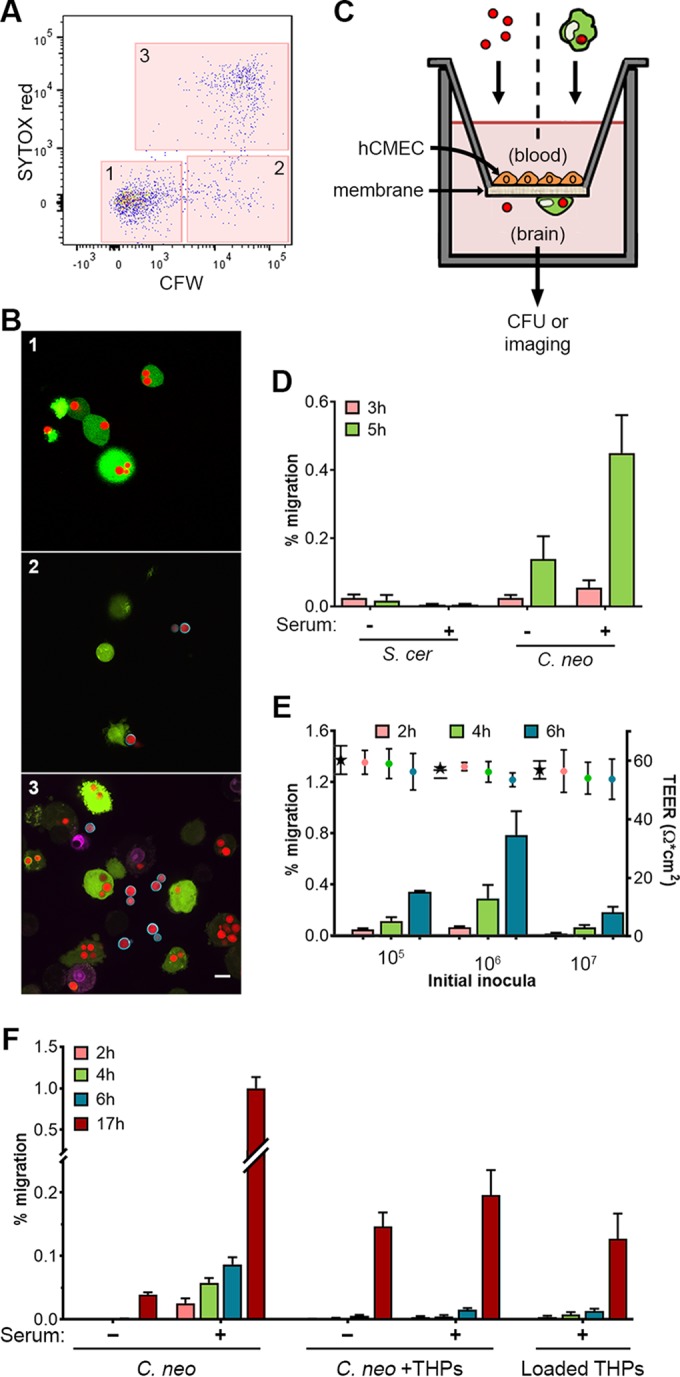
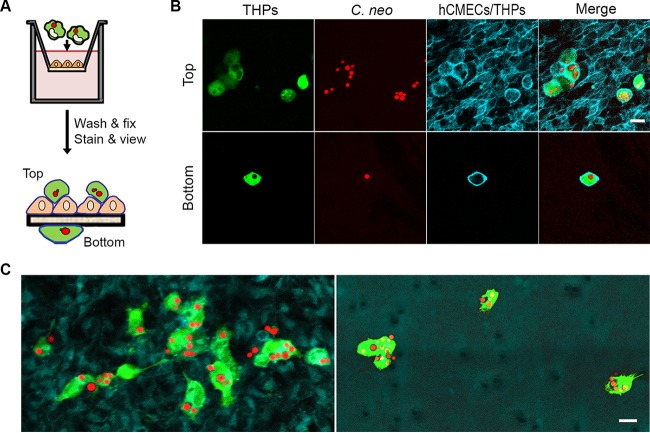
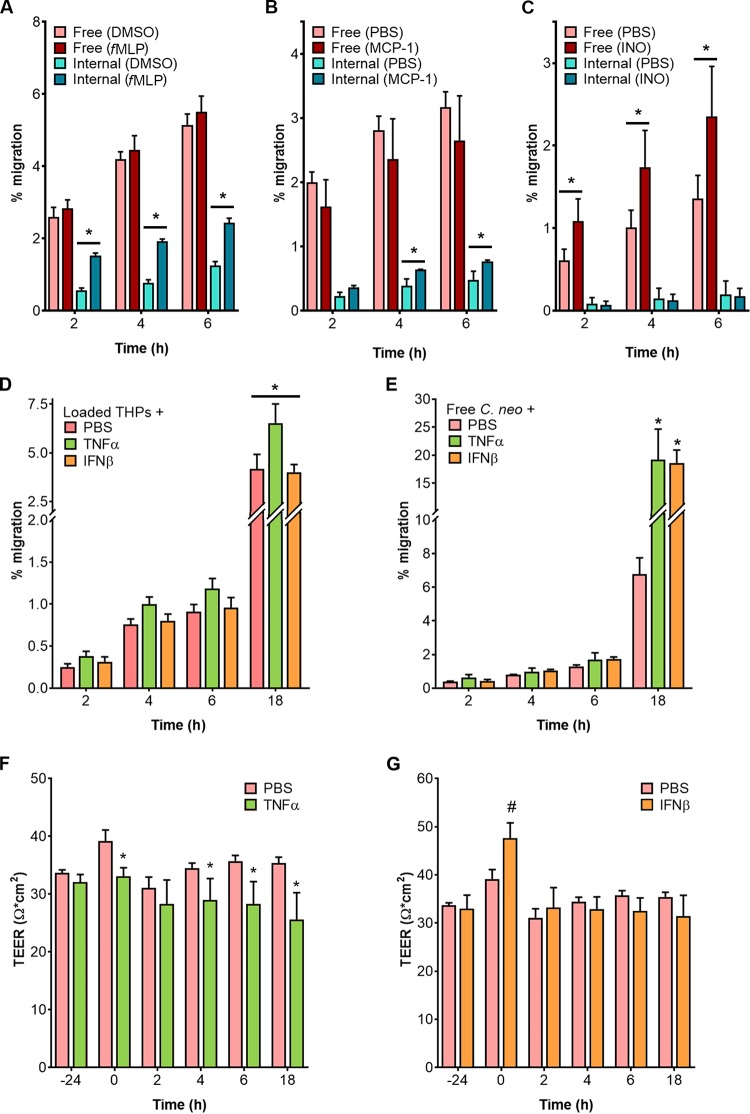
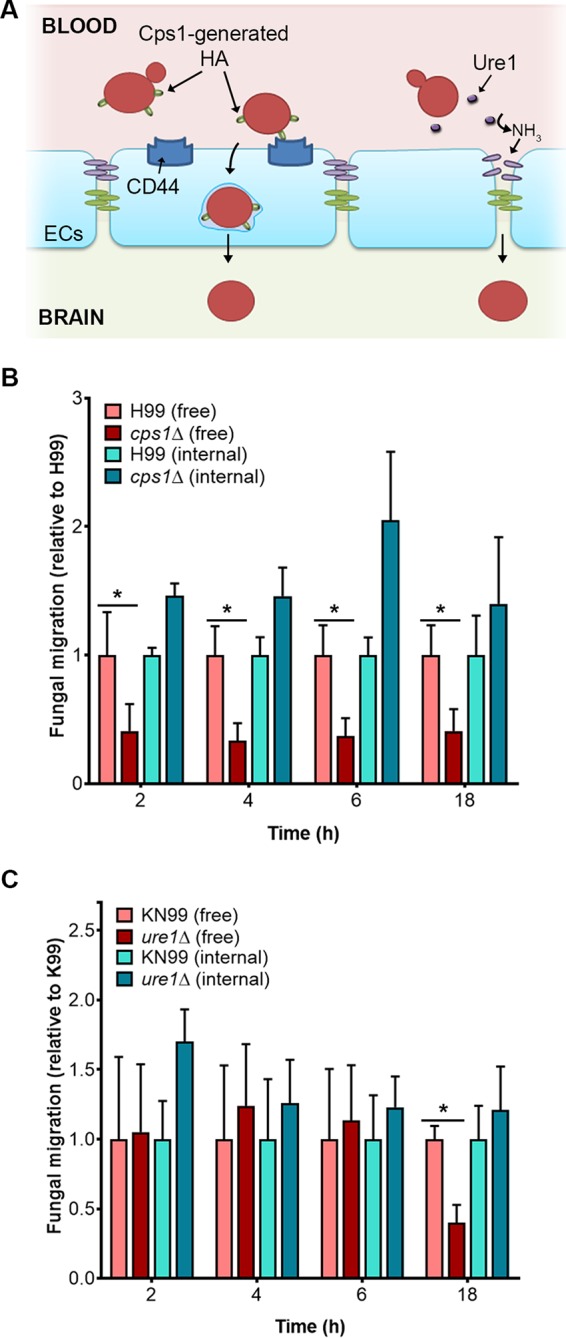
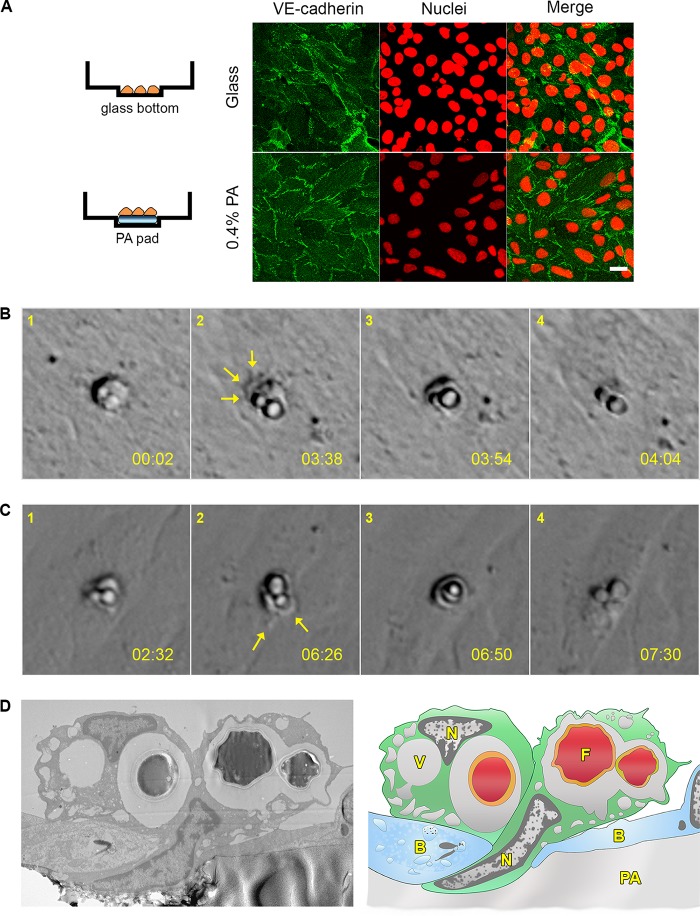
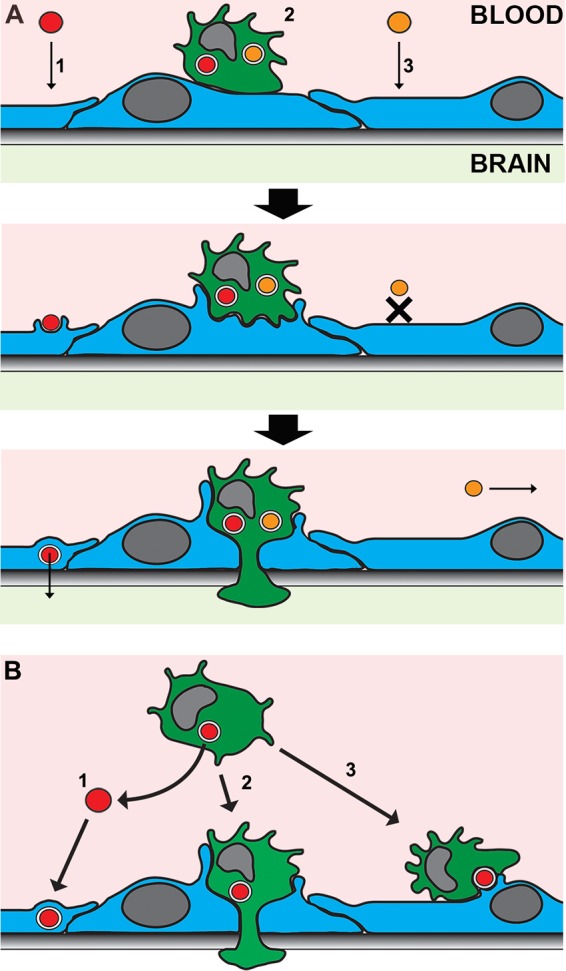
The blood-brain barrier (BBB) protects the central nervous system (CNS) by restricting the passage of molecules and microorganisms. Despite this barrier, however, the fungal pathogen Cryptococcus neoformans invades the brain, causing a meningoencephalitis that is estimated to kill over 600,000 people annually. Cryptococcal infection begins in the lung, and experimental evidence suggests that host phagocytes play a role in subsequent dissemination, although this role remains ill defined. Additionally, the disparate experimental approaches that have been used to probe various potential routes of BBB transit make it impossible to assess their relative contributions, confounding any integrated understanding of cryptococcal brain entry. Here we used an in vitro model BBB to show that a “Trojan horse” mechanism contributes significantly to fungal barrier crossing and that host factors regulate this process independently of free fungal transit. We also, for the first time, directly imaged C. neoformans -containing phagocytes crossing the BBB, showing that they do so via transendothelial pores. Finally, we found that Trojan horse crossing enables CNS entry of fungal mutants that cannot otherwise traverse the BBB, and we demonstrate additional intercellular interactions that may contribute to brain entry. Our work elucidates the mechanism of cryptococcal brain invasion and offers approaches to study other neuropathogens. IMPORTANCE The fungal pathogen Cryptococcus neoformans invades the brain, causing a meningoencephalitis that kills hundreds of thousands of people each year. One route that has been proposed for this brain entry is a Trojan horse mechanism, whereby the fungus crosses the blood-brain barrier (BBB) as a passenger inside host phagocytes. Although indirect experimental evidence supports this intriguing mechanism, it has never been directly visualized. Here we directly image Trojan horse transit and show that it is regulated independently of free fungal entry, contributes to cryptococcal BBB crossing, and allows mutant fungi that cannot enter alone to invade the brain.
Overview
The claims and statistics of this paper haven’t been checked yet.
Free: it reads the open-access text and checks the first 5 claims that cite a source we can check. Create a free account to check every claim.
Integrity signals
Registry
Cites
Statistics
Figures
Verification
Claims the paper makes
The claims and statistics of this paper haven’t been checked yet.
Free: it reads the open-access text and checks the first 5 claims that cite a source we can check. Create a free account to check every claim.
Claims other papers make about this one
Each is checked against this paper’s own text: does it say what the citing paper says it does?
The source backs part of the claim, not all of it — or backs it for a different population, condition or comparison.
In the citing paper
“These pathways involves the entry of free yeast through a damaged or weakened BBB, and are supported by reports that accumulation of C. neoformans in the brain results in severe damage to endothelial cells as well as tight junction alterations [60, 121, 136].”
From Mechanisms of fungal dissemination (2021) · cites this paper as [121]
Experimental — accuracy not yet measuredThe cited source says what the claim attributes to it.
In the citing paper
“In contrast, paracellular transmigration (between endothelial cells) likely represents a small percentage of Trojan horse crossing as transendothelial electrical resistance (TEER) values remained stable during in vitro assays, indicating little to no disruption of endothelial tight junctions [121].”
From Mechanisms of fungal dissemination (2021) · cites this paper as [121]
In the citing paper
“Interestingly, transcellular transmigration (through endothelial cells) of monocytes harboring C. neoformans, is the major pathway for Trojan horse crossing [121].”
From Mechanisms of fungal dissemination (2021) · cites this paper as [121]
Self-check
Percentages, sums and reported differences re-computed from the paper’s own numbers.
The self-check needs the paper’s full text.
Citations
Cites
Hidden Killers: Human Fungal Infections
Brown, G. D., Denning, D. W., Gow, N. A. R., Levitz, S. M., Netea, M. G., & White, T. C. (2012) · Science Translational Medicine · doi:10.1126/scitranslmed.3004404 · Cited by 4,284 · cited 3×
“Phagocytes can bring the fungus to the CNS internally and then exit the phagocyte by nonlytic exocytosis and cross the BBB as free yeast by transcytosis (1).”
BackgroundSystematic Genetic Analysis with Ordered Arrays of Yeast Deletion Mutants
Tong, A. H. Y., Evangelista, M., Parsons, A. B., Xu, H., Bader, G. D., Pagé, N., Robinson, M., Raghibizadeh, S., Hogue, C. W. V., Bussey, H., et al. (2001) · Science · doi:10.1126/science.1065810 · Cited by 2,138 · cited 2×
“cerevisiae strain BY4741 (64), provided by Michael Brent, was transformed with an integrative plasmid expressing cytoplasmic mCherry (from Addgene).”
MethodPark, B. J., Wannemuehler, K. A., Marston, B. J., Govender, N., Pappas, P. G., & Chiller, T. M. (2009) · AIDS · doi:10.1097/qad.0b013e328322ffac · Cited by 2,014 · cited 3×
“(B) Loaded phagocytes potentially contribute to brain invasion by pathways that do not involve true Trojan horse transit (2).”
BackgroundPreparation of Hydrogel Substrates with Tunable Mechanical Properties
Tse, J. R., & Engler, A. J. (2010) · Current Protocols in Cell Biology · doi:10.1002/0471143030.cb1016s47 · Cited by 1,070 · cited 2×
“ties of in vivo tissues (46), and monitored the monolayers by phase-contrast microscopy”
MethodThe hCMEC/D3 cell line as a model of the human blood brain barrier
Weksler, B., Romero, I. A., & Couraud, P.-O. (2013) · Fluids and Barriers of the CNS · doi:10.1186/2045-8118-10-16 · Cited by 753 · cited 2×
“endocytosis (22), and professional phagocytes (THPs).”
MethodSystematic Genetic Analysis of Virulence in the Human Fungal Pathogen Cryptococcus neoformans
Liu, O. W., Chun, C. D., Chow, E. D., Chen, C., Madhani, H. D., & Noble, S. M. (2008) · Cell · doi:10.1016/j.cell.2008.07.046 · Cited by 443
Anatomy and physiology of the blood-brain barrier
Serlin, Y., Shelef, I., Knyazer, B., & Friedman, A. (2015) · Seminars in Cell & Developmental Biology · doi:10.1016/j.semcdb.2015.01.002 · Cited by 397 · cited 1×
“barrier (BBB), which protects the CNS from chemical and infectious damage (5).”
BackgroundSexual Cycle of Cryptococcus neoformans var. grubii and Virulence of Congenic a and α Isolates
Nielsen, K., Cox, G. M., Wang, P., Toffaletti, D. L., Perfect, J. R., & Heitman, J. (2003) · Infection and Immunity · doi:10.1128/iai.71.9.4831-4841.2003 · Cited by 382
Evidence of a Role for Monocytes in Dissemination and Brain Invasion by Cryptococcus neoformans
Charlier, C., Nielsen, K., Daou, S., Brigitte, M., Chretien, F., & Dromer, F. (2009) · Infection and Immunity · doi:10.1128/iai.01065-08 · Cited by 362 · cited 2×
“neoformans uses a Trojan horse mechanism to traverse the BBB is primarily derived from indirect studies in vivo, including histological observation of fungi within phagocytes in brain microvasculature and parenchyma (18) and adoptive transfer experiments using infected macrophages (14, 16).”
BackgroundOlszewski, M. A., Noverr, M. C., Chen, G.-H., Toews, G. B., Cox, G. M., Perfect, J. R., & Huffnagle, G. B. (2004) · The American Journal of Pathology · doi:10.1016/s0002-9440(10)63734-0 · Cited by 289 · cited 1×
“neoformans brain invasion in vivo (11, 12).”
Cited by
Items 201–238 of 238
A Rational Design to Maximize Genome Editing Using Directed Nanostructures
Fotoran, W. L. (2018) · Current Trends in Biomedical Engineering & Biosciences · doi:10.19080/ctbeb.2018.12.555843 · Cited by 1
Dissemination of Cryptococcus neoformans via localised proliferation and blockage of blood vesselsPreprint
Gibson, J. F., Evans, R. J., Bojarczuk, A., Hotham, R., Lagendijk, A. K., Hogan, B. M., Ingham, P. W., Renshaw, S. A., & Johnston, S. A. (2017) · bioRxiv (Cold Spring Harbor Laboratory) · doi:10.1101/184200 · Cited by 2
Wiggins, D. A., Griggs, J. B., England, A., Callison, E. N., Kamel, C. H., Hasan, C. A., Davis, A. T., Chappell, M. E., Conner, K. N., Olive, A. J., et al. (2025) · bioRxiv (Cold Spring Harbor Laboratory) · doi:10.1101/2025.11.28.690224 · Cited by 1
Rudman, J., Marriott, H. M., Carlin, L. M., & Johnston, S. A. (2019) · bioRxiv (Cold Spring Harbor Laboratory) · doi:10.1101/679274
“Combined, there is strong evidence that alveolar macrophages are the ‘villain’ in cryptococcosis, providing a protective niche while aiding cryptococcal dissemination via a ‘Trojan horse' mechanism (39).”
BackgroundGibson, J. F., Bojarczuk, A., Evans, R. J., Kamuyango, A., Hotham, R., Lagendijk, A. K., Hogan, B. M., Ingham, P. W., Renshaw, S. A., & Johnston, S. A. (2020) · bioRxiv (Cold Spring Harbor Laboratory) · doi:10.1101/2020.03.17.995571
Siagian, F. E. (2021) · International Blood Research & Reviews · doi:10.9734/ibrr/2021/v12i130144
Vomocytosis of Cryptococcus neoformans cells from murine, bone marrow-derived dendritic cellsPreprint
Pacifici, N. J., Cruz‐Acuña, M., Diener, A., Senthil, N., Han, H., & Lewis, J. S. (2022) · bioRxiv (Cold Spring Harbor Laboratory) · doi:10.1101/2022.03.28.486165
Cowen, L. E., & Polvi, E. J. (2020) · Faculty Opinions – Post-Publication Peer Review of the Biomedical Literature · doi:10.3410/f.737633112.793573927
Lee, H. H., Carmichael, D. J., Ríbeiro, V., Parisi, D. N., Munzen, M. E., Hamed, M. F., Kaur, E., Mishra, A., Patel, J., Rooklin, R. B., et al. (2022) · bioRxiv (Cold Spring Harbor Laboratory) · doi:10.1101/2022.10.24.513461
Bivona, D. A., Bonomo, C., Bonacci, P. G., Mirabile, A., Privitera, G. F., Caruso, G., Caraci, F., Musso, N., Bongiorno, D., & Stefani, S. (2023) · Preprints.org · doi:10.20944/preprints202303.0461.v1
Ball, B., Sukumaran, A., Pladwig, S., Kazi, S., Chan, N., Modrakova, M., & Geddes‐McAlister, J. (2023) · bioRxiv (Cold Spring Harbor Laboratory) · doi:10.1101/2023.04.03.535320
Coccidioides posadasii and SARS-CoV-2 Co-infection in the K18-hACE2 Transgenic Mouse ModelPreprint
Kollath, D. R., Grill, F. J., Itogawa, A. N., Fabio-Braga, A. P., Morales, M. M., Shepardson, K. M., Bryant, M. L., Yi, J., Ramsey, M. L., Luberto, E. T., et al. (2023) · Research Square · doi:10.21203/rs.3.rs-3377321/v1
A novel glycosyltransferase organizes fungal glycogen and cell wall glucansPreprint
Loza, L., & Doering, T. L. (2023) · bioRxiv (Cold Spring Harbor Laboratory) · doi:10.1101/2023.10.24.563850
Self-citationAn Image Processing Algorithm for Facile and Reproducible Quantification of Vomocytosis
Senthil, N., Pacifici, N. J., Cruz‐Acuña, M., Diener, A., Han, H., & Lewis, J. S. (2023) · Chemical & Biomedical Imaging · doi:10.1021/cbmi.3c00102
Okurut, S., Boulware, D. R., Manabe, Y. C., Tugume, L., Skipper, C. P., Ssebambulidde, K., Rhein, J., Musubire, A. K., Akampurira, A., Okafor, E. C., et al. (2024) · medRxiv · doi:10.1101/2024.05.29.24308130
Influence of the agrochemical benomyl on Cryptococcus gattii-plant interaction in vitro and in vivo
Dornelas, J. C. M., Paixão, V. M., do Carmo, P. H. F., da Costa, M. C., Gomes, E. C. Q., de Resende, M. A., & Santos, D. A. (2024) · Brazilian Journal of Microbiology · doi:10.1007/s42770-024-01440-9
“…greater capacity to proliferate within macrophages tend to cross the blood-brain barrier through the Trojan horse mechanism, resulting in cryptococcal meningitis [52], as from N. benthamiana was higher on the 7th dpi, with a reduction over time, as previously demonstrated for C. gattii L27/01 [17].”
A deep cut into early cryptococcal pathogenesis
Davis, J. M. (2024) · mBio · doi:10.1128/mbio.00657-24 · Cited by 1
Kollath, D. R., Grill, F. J., Itogawa, A. N., Fabio-Braga, A. P., Morales, M. M., Shepardson, K. M., Bryant, M. L., Yi, J., Ramsey, M. L., Luberto, E. T., et al. (2024) · Communications Medicine · doi:10.1038/s43856-024-00610-y
“Other viruses such as In fl uenza and Human Respiratory Syncytial Virus are also worth exploring in the context ofaconcurrentinfectionwith Coccidioides ,astheseareseasonalvirusesthat infect a substantial proportion of the population every year 66,67 .”
Pathogens Driving Central Nervous System Immunopathology
Drevets, D. A., Laman, J. D., & Leenen, P. J. M. (2024) · Elsevier eBooks · doi:10.1016/b978-0-128-24465-4.00073-9
The routes and mechanisms of microbial translocation to the central nervous system
Spencer, C. T. (2024) · Elsevier eBooks · doi:10.1016/b978-0-443-19130-5.00006-x
Diabetes mellitus é um fator de pré-disposição para infecções fúngicas sistêmicas
Machado, K., Ramos, P. G. C., dos Santos, I. T. N., de Souza, G. D. S., de Castro, M. C., & Martinez, C. G. (2025) · Caderno Pedagógico · doi:10.54033/cadpedv22n2-010
Molecular mechanism of host-yeast interactions and prevention by nanoformulation approaches
Oshika, & Bari, V. K. (2025) · Microbial Pathogenesis · doi:10.1016/j.micpath.2025.107663
Microbial Translocation of the Blood-Brain Barrier
Spencer, C. T., Muniz, M. G. R., Silva, V., & Saenz, S. (2025) · Neuromethods · doi:10.1007/978-1-0716-4474-4_10
Moafi, M., Zafari, R., Rabiee, K., Ebrahimi, M. J., Seyedmirzaei, H., & Khaboushan, A. S. (2025) · Surgical Neurology International · doi:10.25259/sni_337_2025
“[16,68,78,89] Innate immune response and neuroinflammation e innate immune system is considered the first line of defense against microorganisms and foreign bodies.”
Ross, R. L., Arias-Parbul, K., Douglass, Z. M., Adams, K. L., & Santiago-Tirado, F. H. (2025) · bioRxiv (Cold Spring Harbor Laboratory) · doi:10.1101/2025.07.17.665466
Self-citationHansakon, A., Phucharoenrak, P., Trachootham, D., Kaewrattana, S., Jeerawattanawart, S., Tangchang, W., Chayakulkeeree, M., Angkasekwinai, N., & Angkasekwinai, P. (2025) · Virulence · doi:10.1080/21505594.2025.2591455
“For transendothelial analysis of cryp-tococcal invasion, the culture medium from the abluminal compartment of the insert (in a 24-well plate) was collected, serially diluted, and plated on SDA to determine CFU following incubation at 30 °C for 48 hours [25,35].”
Colonization of the central nervous system as a key factor in the Cryptococcus gattii pathogenicity
de Freitas, G. J. C., Gouveia‐Eufrásio, L., Emídio, E. C. P., Peres, N. T. A., & Santos, D. A. (2025) · Virulence · doi:10.1080/21505594.2025.2594289
“The first is supported by the observation that hypervirulent strains exhibited increased survival within macrophages, indicating that the “Trojan horse” pathway may play a crucial role in this transmigration [52–54].”
Potton, A. M., Kalinina, I. M., Catania, S., Corzo-León, D., & Ballou, E. R. (2026) · bioRxiv (Cold Spring Harbor Laboratory) · doi:10.64898/2026.01.16.699923
Ross, R. L., Arias-Parbul, K., Douglass, Z. M., Adams, K. L., & Santiago-Tirado, F. H. (2026) · mSphere · doi:10.1128/msphere.00838-25 · Cited by 1
Self-citationBasal ganglia cryptococcomas presenting as parkinsonism in an immunocompetent patient
Ruíz, L. L. P., Arévalo-Carvajal, P. F., Agudelo, L. G., & Arias-Mariño, D. (2026) · IDCases · doi:10.1016/j.idcr.2026.e02592
“CNS invasion occurs through transcellular traversal, paracellular migration, and a phagocyte-mediated “ Trojan horse ” mechanism, all supported by experimental and translational data [5,13].”
Yao, W., Chen, M., Ren, H., Luo, Q., Wang, X., Akhtar, M., Bhutta, Z. A., Peng, L., Nawaz, M. Y., Hasan, M. M., et al. (2026) · Transboundary and Emerging Diseases · doi:10.1155/tbed/1603643
“Certain pathogens utilize the Trojan horse mechanism to evade the host immune response and gain access to the host CNS by hitching a ride on host immune cells [55].”
Yu, S.-R., Jang, Y.-B., Choi, J. T., & Bahn, Y. (2026) · Current Opinion in Microbiology · doi:10.1016/j.mib.2026.102802 · Cited by 1
Calegari-Alves, Y. P., Cardozo, L. C., Beys‐da‐Silva, W. O., & Santi, L. (2026) · ACS Omega · doi:10.1021/acsomega.6c04202
Lai, F., Dong, X., Zhao, E., Zhou, Y., Zhao, Z., Liang, Y., Zhou, Y., Xiang, X., Xia, L., Wang, Q., et al. (2026) · Pathogens · doi:10.3390/pathogens15090902
Virulence factors of Cryptococcus neoformans and Cryptococcus gattii : two sides of the same coin
de Jesus, D. F. F., Brujas, L. D., Barreto, T. L., da Costa, L. S., Spadari, C. D. C., & Ishida, K. (2026) · Future Microbiology · doi:10.1080/17460913.2026.2722813 · Cited by 1
Ortiz‐Prado, E., Vásconez-González, J., Cuenca, K. A., Núñez-Loor, F., Acosta-Muñoz, M. C., Mesias, D. A., Villarreal-Burbano, K. B., Arias-Intriago, M., & Izquierdo‐Condoy, J. S. (2026) · Tropical Medicine and Infectious Disease · doi:10.3390/tropicalmed11100279
“In addition, the phagocytosed capsular component glucuronoxylomannan (GXM) can induce macrophage apoptosis via the Fas/FasL pathway and inhibit subsequent immune activation [64,65].”
Potton, A. M., Kalinina, I. M., Brown, G. D., Makarova, M., Catania, S., Corzo-León, D., & Ballou, E. R. (2026) · PLoS Biology · doi:10.1371/journal.pbio.3004031
Ahmad, S., & Aftab, M. N. (2026) · Future Virology · doi:10.1080/17460794.2026.2753016
Metadata
- Authors
- Santiago-Tirado, F. H., Onken, M. D., Cooper, J. A., Klein, R. S., & Doering, T. L.
- Affiliations
- Washington University in St. Louis (US)
- Corresponding author
- Doering, Tamara L.
- Venue
- mBio
- Publisher
- American Society for Microbiology
- Published
- 2017-03-08
- Volume
- 8
- Issue
- 1
- ISSN
- 2150-7511 (ISSN-L)
- 2161-2129
- PMC
- PMC5285505
- OpenAlex
- W2584228215
- Cited by
- 238
- References
- 66
- Citations by year
- 2026: 18 · 2025: 27 · 2024: 29 · 2023: 34 · 2022: 24 · 2021: 26 · 2020: 29 · 2019: 16 · 2018: 19 · 2017: 16
- FWCI
- 17.13
- Type
- journal article
- Language
- en
- Open access
- gold
- doi.org
- Licence
- cc-by
- creativecommons.org/licenses/by/4.0/ (vor)
- journals.asm.org/non-commercial-tdm-license (tdm)
- Locations
- mBio (publishedVersion, cc-by)
- PubMed Central (publishedVersion, cc-by)
- PubMed (publishedVersion)
- Digital Commons@Becker (Washington University School of Medicine) (submittedVersion)
- DOAJ (DOAJ: Directory of Open Access Journals) (submittedVersion, cc-by-sa)
- DOAJ (DOAJ: Directory of Open Access Journals) (submittedVersion)
- Funders
- Barnes Jewish Hospital Foundation (WUCCI Clinical Investigator Award)
- HHS | National Institutes of Health (GM118171, GM38542, AI114549, AI078795, AI102882, AI007172)
- Burroughs Wellcome Fund (Postdoctoral Enrichment Program Award)
- Topics
- Health Sciences › Medicine › Infectious Diseases › Fungal Infections and Studies
- Life Sciences › Neuroscience › Neurology › Barrier Structure and Function Studies
- Life Sciences › Immunology and Microbiology › Microbiology › Bacterial Infections and Vaccines
- Keywords
- Cryptococcus neoformans, blood-brain barrier, Trojan horse mechanism, phagocytes, meningoencephalitis, in vitro blood-brain barrier model, fungal dispersal, central nervous system infection
- MeSH terms
- Blood-Brain Barrier, Cryptococcus neoformans, Humans, Models, Biological, Models, Theoretical, Phagocytes, Immune Evasion
About these checks
Registry, retraction, Cites and statistics results are computed, not judged, with one exception: a printed reference that no index lists is read once by a model before it counts as a citation error. Claims are extracted by a model and kept only when their quote appears verbatim in the text; each cited source is then checked, with a model’s help, for whether it says what the claim relies on. Those verdicts can be wrong — read the claim’s quote and the cited source before relying on one.
Statistics and arithmetic are recomputed, not judged.
Confidence bands are shown only for fields calibrated on our annotated test set. None is calibrated yet, so no band is shown.
What counts as a claim ›How we measure confidence ›How we check this ›
Are you an author, or do you see a problem with this page? Request a review
Data sources
Bibliographic data: Semantic Scholar, OpenAlex, Crossref.
Contains information from the Semantic Scholar Academic Graph Datasets, made available under the ODC Attribution License (ODC-BY 1.0).
Semantic Scholar’s data is described in: Kinney, R., et al. (2023). The Semantic Scholar Open Data Platform. arXiv:2301.10140.
