

Trojan Horse Transit Contributes to Blood-Brain Barrier Crossing of a Eukaryotic Pathogen
Open accessThe DOI matches its Crossref record; 66 of the 66 references it cites were found in a registry or an index.
Abstract
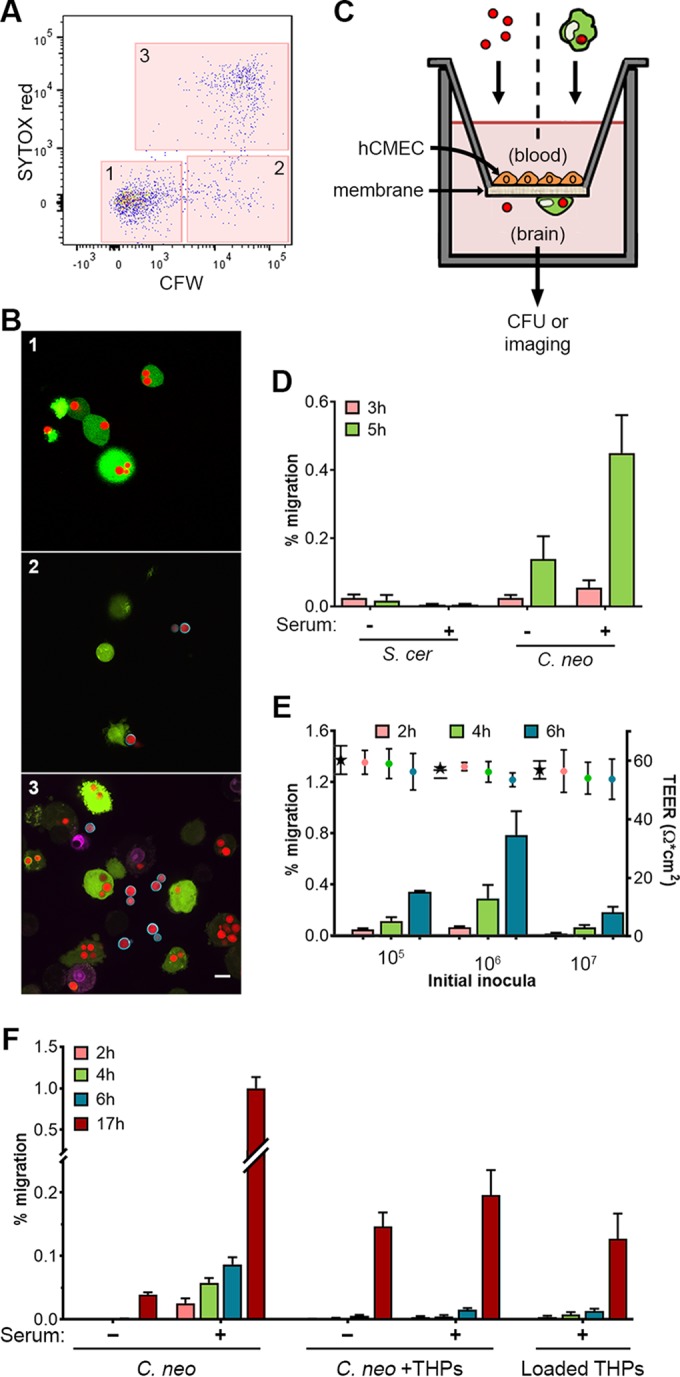
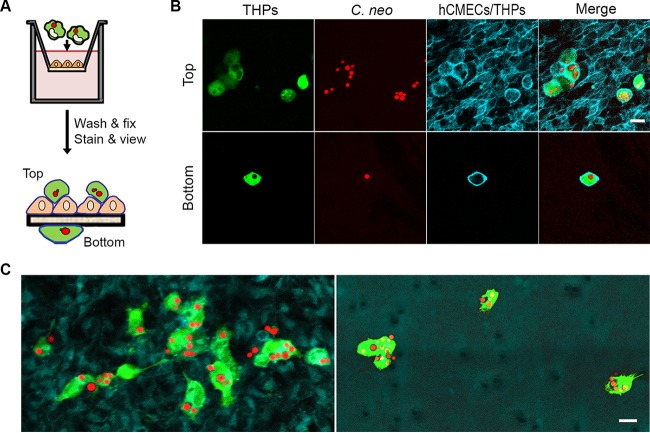
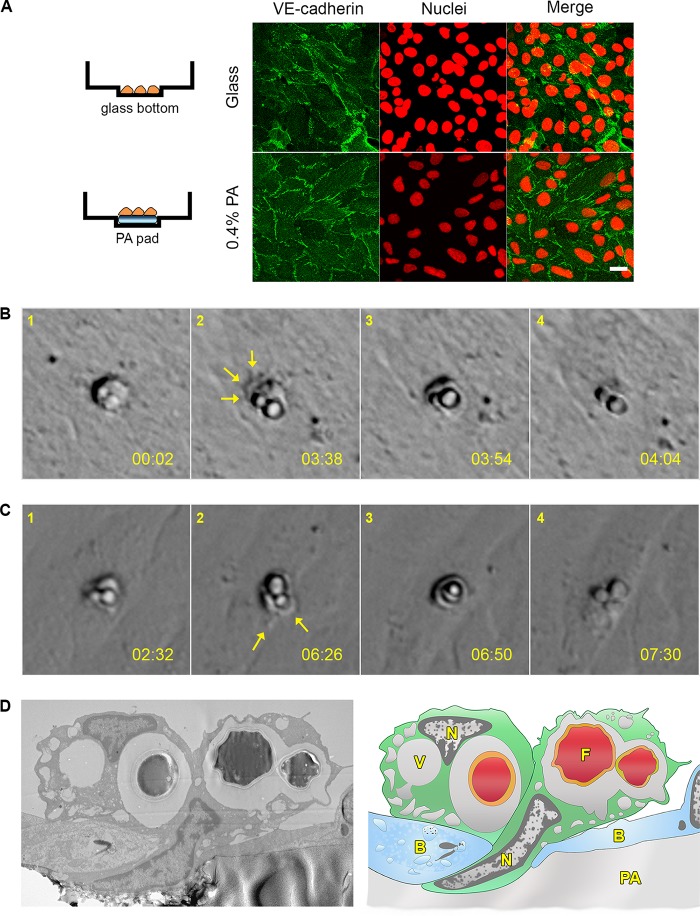
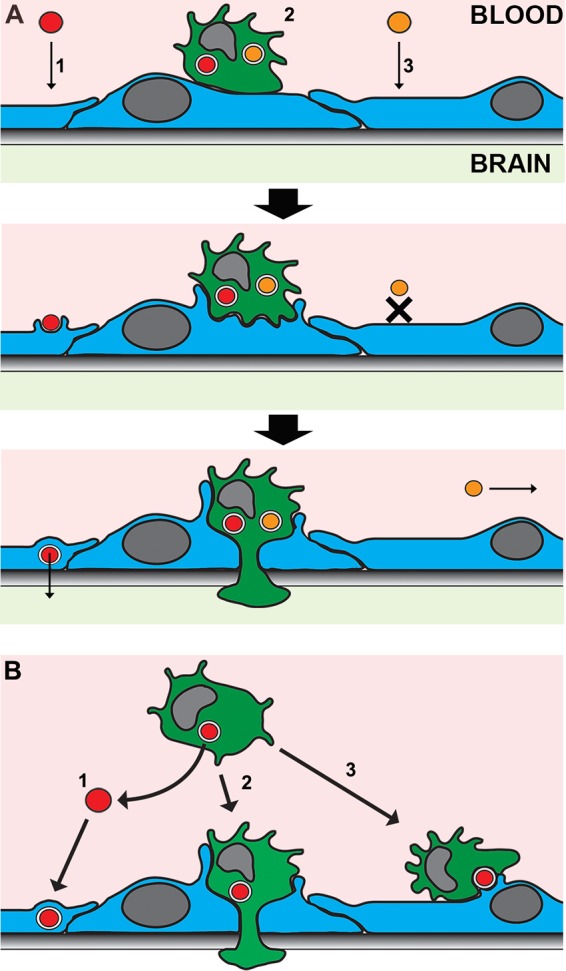
The blood-brain barrier (BBB) protects the central nervous system (CNS) by restricting the passage of molecules and microorganisms. Despite this barrier, however, the fungal pathogen Cryptococcus neoformans invades the brain, causing a meningoencephalitis that is estimated to kill over 600,000 people annually. Cryptococcal infection begins in the lung, and experimental evidence suggests that host phagocytes play a role in subsequent dissemination, although this role remains ill defined. Additionally, the disparate experimental approaches that have been used to probe various potential routes of BBB transit make it impossible to assess their relative contributions, confounding any integrated understanding of cryptococcal brain entry. Here we used an in vitro model BBB to show that a “Trojan horse” mechanism contributes significantly to fungal barrier crossing and that host factors regulate this process independently of free fungal transit. We also, for the first time, directly imaged C. neoformans -containing phagocytes crossing the BBB, showing that they do so via transendothelial pores. Finally, we found that Trojan horse crossing enables CNS entry of fungal mutants that cannot otherwise traverse the BBB, and we demonstrate additional intercellular interactions that may contribute to brain entry. Our work elucidates the mechanism of cryptococcal brain invasion and offers approaches to study other neuropathogens. IMPORTANCE The fungal pathogen Cryptococcus neoformans invades the brain, causing a meningoencephalitis that kills hundreds of thousands of people each year. One route that has been proposed for this brain entry is a Trojan horse mechanism, whereby the fungus crosses the blood-brain barrier (BBB) as a passenger inside host phagocytes. Although indirect experimental evidence supports this intriguing mechanism, it has never been directly visualized. Here we directly image Trojan horse transit and show that it is regulated independently of free fungal entry, contributes to cryptococcal BBB crossing, and allows mutant fungi that cannot enter alone to invade the brain.
Overview
The claims and statistics of this paper haven’t been checked yet.
Free: it reads the open-access text and checks the first 5 claims that cite a source we can check. Create a free account to check every claim.
Integrity signals
Registry
Cites
Statistics
Figures
Verification
Claims the paper makes
The claims and statistics of this paper haven’t been checked yet.
Free: it reads the open-access text and checks the first 5 claims that cite a source we can check. Create a free account to check every claim.
Claims other papers make about this one
Each is checked against this paper’s own text: does it say what the citing paper says it does?
The source backs part of the claim, not all of it — or backs it for a different population, condition or comparison.
In the citing paper
“These pathways involves the entry of free yeast through a damaged or weakened BBB, and are supported by reports that accumulation of C. neoformans in the brain results in severe damage to endothelial cells as well as tight junction alterations [60, 121, 136].”
From Mechanisms of fungal dissemination (2021) · cites this paper as [121]
Experimental — accuracy not yet measuredThe cited source says what the claim attributes to it.
In the citing paper
“In contrast, paracellular transmigration (between endothelial cells) likely represents a small percentage of Trojan horse crossing as transendothelial electrical resistance (TEER) values remained stable during in vitro assays, indicating little to no disruption of endothelial tight junctions [121].”
From Mechanisms of fungal dissemination (2021) · cites this paper as [121]
In the citing paper
“Interestingly, transcellular transmigration (through endothelial cells) of monocytes harboring C. neoformans, is the major pathway for Trojan horse crossing [121].”
From Mechanisms of fungal dissemination (2021) · cites this paper as [121]
Self-check
Percentages, sums and reported differences re-computed from the paper’s own numbers.
The self-check needs the paper’s full text.
Citations
Cites
Hidden Killers: Human Fungal Infections
Brown, G. D., Denning, D. W., Gow, N. A. R., Levitz, S. M., Netea, M. G., & White, T. C. (2012) · Science Translational Medicine · doi:10.1126/scitranslmed.3004404 · Cited by 4,284 · cited 3×
“Phagocytes can bring the fungus to the CNS internally and then exit the phagocyte by nonlytic exocytosis and cross the BBB as free yeast by transcytosis (1).”
BackgroundSystematic Genetic Analysis with Ordered Arrays of Yeast Deletion Mutants
Tong, A. H. Y., Evangelista, M., Parsons, A. B., Xu, H., Bader, G. D., Pagé, N., Robinson, M., Raghibizadeh, S., Hogue, C. W. V., Bussey, H., et al. (2001) · Science · doi:10.1126/science.1065810 · Cited by 2,138 · cited 2×
“cerevisiae strain BY4741 (64), provided by Michael Brent, was transformed with an integrative plasmid expressing cytoplasmic mCherry (from Addgene).”
MethodPark, B. J., Wannemuehler, K. A., Marston, B. J., Govender, N., Pappas, P. G., & Chiller, T. M. (2009) · AIDS · doi:10.1097/qad.0b013e328322ffac · Cited by 2,014 · cited 3×
“(B) Loaded phagocytes potentially contribute to brain invasion by pathways that do not involve true Trojan horse transit (2).”
BackgroundPreparation of Hydrogel Substrates with Tunable Mechanical Properties
Tse, J. R., & Engler, A. J. (2010) · Current Protocols in Cell Biology · doi:10.1002/0471143030.cb1016s47 · Cited by 1,070 · cited 2×
“ties of in vivo tissues (46), and monitored the monolayers by phase-contrast microscopy”
MethodThe hCMEC/D3 cell line as a model of the human blood brain barrier
Weksler, B., Romero, I. A., & Couraud, P.-O. (2013) · Fluids and Barriers of the CNS · doi:10.1186/2045-8118-10-16 · Cited by 753 · cited 2×
“endocytosis (22), and professional phagocytes (THPs).”
MethodSystematic Genetic Analysis of Virulence in the Human Fungal Pathogen Cryptococcus neoformans
Liu, O. W., Chun, C. D., Chow, E. D., Chen, C., Madhani, H. D., & Noble, S. M. (2008) · Cell · doi:10.1016/j.cell.2008.07.046 · Cited by 443
Anatomy and physiology of the blood-brain barrier
Serlin, Y., Shelef, I., Knyazer, B., & Friedman, A. (2015) · Seminars in Cell & Developmental Biology · doi:10.1016/j.semcdb.2015.01.002 · Cited by 397 · cited 1×
“barrier (BBB), which protects the CNS from chemical and infectious damage (5).”
BackgroundSexual Cycle of Cryptococcus neoformans var. grubii and Virulence of Congenic a and α Isolates
Nielsen, K., Cox, G. M., Wang, P., Toffaletti, D. L., Perfect, J. R., & Heitman, J. (2003) · Infection and Immunity · doi:10.1128/iai.71.9.4831-4841.2003 · Cited by 382
Evidence of a Role for Monocytes in Dissemination and Brain Invasion by Cryptococcus neoformans
Charlier, C., Nielsen, K., Daou, S., Brigitte, M., Chretien, F., & Dromer, F. (2009) · Infection and Immunity · doi:10.1128/iai.01065-08 · Cited by 362 · cited 2×
“neoformans uses a Trojan horse mechanism to traverse the BBB is primarily derived from indirect studies in vivo, including histological observation of fungi within phagocytes in brain microvasculature and parenchyma (18) and adoptive transfer experiments using infected macrophages (14, 16).”
BackgroundOlszewski, M. A., Noverr, M. C., Chen, G.-H., Toews, G. B., Cox, G. M., Perfect, J. R., & Huffnagle, G. B. (2004) · The American Journal of Pathology · doi:10.1016/s0002-9440(10)63734-0 · Cited by 289 · cited 1×
“neoformans brain invasion in vivo (11, 12).”
Chang, Y. C., Stins, M. F., McCaffery, M. J., Miller, G. F., Pare, D. R., Dam, T., Paul-Satyasee, M., Kim, K. S., & Kwon-Chung, K. J. (2004) · Infection and Immunity · doi:10.1128/iai.72.9.4985-4995.2004 · Cited by 278
The blood–brain barrier endothelium: a target for pro-inflammatory cytokines
Rochfort, K. D., & Cummins, P. M. (2015) · Biochemical Society Transactions · doi:10.1042/bst20140319 · Cited by 245 · cited 1×
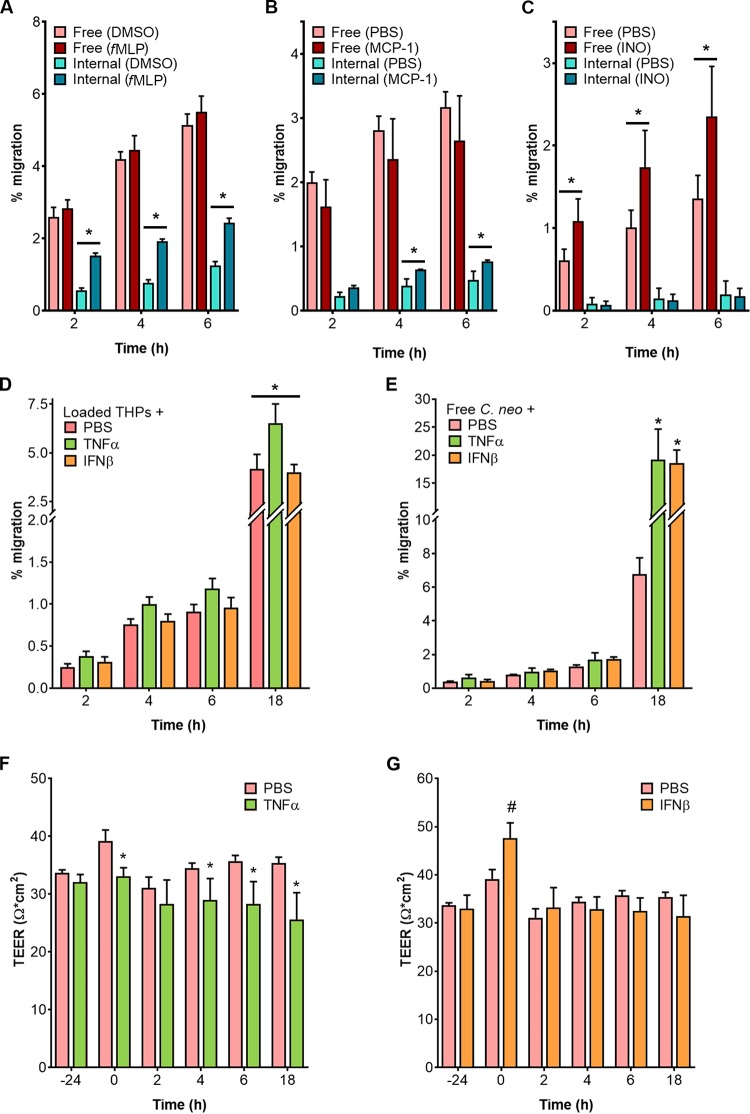
“These mediators also regulate BBB permeability, especially in response to viral infections (36, 37): TNF- increases barrier permeability, while IFN- decreases it.”
BackgroundShi, M., Li, S. S., Zheng, C., Jones, G. J., Kim, K. S., Zhou, H., Kubes, P., & Mody, C. H. (2010) · Journal of Clinical Investigation · doi:10.1172/jci41963 · Cited by 222 · cited 1×
“neoformans brain invasion in vivo (11, 12).”
Charlier, C., Chrétien, F., Baudrimont, M., Mordelet, E., Lortholary, O., & Dromer, F. (2005) · The American Journal of Pathology · doi:10.1016/s0002-9440(10)62265-1 · Cited by 215
The Trojan horse: survival tactics of pathogenic mycobacteria in macrophages
Nguyen, L., & Pieters, J. (2005) · Trends in Cell Biology · doi:10.1016/j.tcb.2005.03.009 · Cited by 206
Pathogenesis of Cerebral Cryptococcus neoformans Infection after Fungemia
Chrétien, F., Lortholary, O., Kansau, I., Neuville, S., Gray, F., & Dromer, F. (2002) · The Journal of Infectious Diseases · doi:10.1086/341564 · Cited by 201
Cryptococcus neoformans: historical curiosity to modern pathogen
Srikanta, D., Santiago-Tirado, F. H., & Doering, T. L. (2014) · Yeast · doi:10.1002/yea.2997 · Cited by 200 · cited 2×
“Similarly, high levels of TNF- , which stimulated both Trojan horse and free fungus traversal, correlate with infecting strains that have high levels of capsule shedding (4).”
BackgroundSelf-citationMechanisms for transcellular diapedesis: probing and pathfinding by `invadosome-like protrusions'
Carman, C. V. (2009) · Journal of Cell Science · doi:10.1242/jcs.047522 · Cited by 198 · cited 1×
“Due to the presence of extremely tight junctions in brain endothelia, transendothelial pore transit accounts for up to 90% of cellular crossing of the BBB, in contrast to other endothelia, where most crossing occurs paracellularly (56).”
BackgroundKonradt, C., Ueno, N., Christian, D. A., Delong, J. H., Pritchard, G. H., Herz, J., Bzik, D. J., Koshy, A. A., McGavern, D. B., Lodoen, M. B., et al. (2016) · Nature Microbiology · doi:10.1038/nmicrobiol.2016.1 · Cited by 193 · cited 1×
“Any intracellular pathogen that can survive within phagocytes can potentially exploit them as Trojan horses for dissemination or delivery into target organs, although some may use other mechanisms, as suggested recently for Toxoplasma gondii (60).”
BackgroundChen, S. H. M., Stins, M. F., Huang, S.-H., Chen, Y. H., Kwon-Chung, K. J., Chang, Y., Kim, K. S., Suzuki, K., & Jong, A. Y. (2003) · Journal of Medical Microbiology · doi:10.1099/jmm.0.05230-0 · Cited by 189
Bojarczuk, A., Miller, K. A., Hotham, R., Lewis, A., Ogryzko, N. V., Kamuyango, A. A., Frost, H., Gibson, R. H., Stillman, E., May, R. C., et al. (2016) · Scientific Reports · doi:10.1038/srep21489 · Cited by 170 · cited 1×
“Although Trojan horse crossing was more frequent (36% of recorded events) than nonlytic exocytosis or direct transfer (26% or 3%, respectively) in our system, the latter mechanisms may contribute to brain entry in vivo (19, 57).”
BackgroundSantangelo, R., Zoellner, H., Sorrell, T., Wilson, C., Donald, C., Djordjevic, J., Shounan, Y., & Wright, L. (2004) · Infection and Immunity · doi:10.1128/iai.72.4.2229-2239.2004 · Cited by 169 · cited 2×
“neoformans uses a Trojan horse mechanism to traverse the BBB is primarily derived from indirect studies in vivo, including histological observation of fungi within phagocytes in brain microvasculature and parenchyma (18) and adoptive transfer experiments using infected macrophages (14, 16).”
BackgroundParadoxical Immune Responses in Non-HIV Cryptococcal Meningitis
Panackal, A. A., Wuest, S. C., Lin, Y.-C., Wu, T., Zhang, N., Kosa, P., Komori, M., Blake, A., Browne, S. K., Rosen, L. B., et al. (2015) · PLOS Pathogens · doi:10.1371/journal.ppat.1004884 · Cited by 162
Kawakami, K., Kinjo, Y., Uezu, K., Yara, S., Miyagi, K., Koguchi, Y., Nakayama, T., Taniguchi, M., & Saito, A. (2001) · The Journal of Immunology · doi:10.4049/jimmunol.167.11.6525 · Cited by 160
Intracellular transport of Toxoplasma gondii through the blood–brain barrier
Lachenmaier, S. M., Deli, M. A., Meissner, M., & Liesenfeld, O. (2011) · Journal of Neuroimmunology · doi:10.1016/j.jneuroim.2010.10.029 · Cited by 156
Ngamskulrungroj, P., Chang, Y., Sionov, E., & Kwon-Chung, K. J. (2012) · mBio · doi:10.1128/mbio.00103-12 · Cited by 152
Nicola, A. M., Robertson, E. J., Albuquerque, P., Derengowski, L. D. S., & Casadevall, A. (2011) · mBio · doi:10.1128/mbio.00167-11 · Cited by 135 · cited 2×
“Although Trojan horse crossing was more frequent (36% of recorded events) than nonlytic exocytosis or direct transfer (26% or 3%, respectively) in our system, the latter mechanisms may contribute to brain entry in vivo (19, 57).”
BackgroundAlvarez, M., & Casadevall, A. (2007) · BMC Immunology · doi:10.1186/1471-2172-8-16 · Cited by 131 · cited 1×
“which has been reported to occur between macrophages (49, 50).”
BackgroundDaniels, B. P., Cruz-Orengo, L., Pasieka, T. J., Couraud, P.-O., Romero, I. A., Weksler, B., Cooper, J. A., Doering, T. L., & Klein, R. S. (2013) · Journal of Neuroscience Methods · doi:10.1016/j.jneumeth.2012.10.001 · Cited by 128 · cited 1×
“We generated model BBB (BBBM) by seeding the human cerebral microvascular endothelial cell line hCMEC/D3 (22, 23) on top of permeable inserts in transwell plates (Fig.”
MethodSelf-citationKechichian, T. B., Shea, J., & Del Poeta, M. (2007) · Infection and Immunity · doi:10.1128/iai.00587-07 · Cited by 128
Vu, K., Weksler, B., Romero, I., Couraud, P.-O., & Gelli, A. (2009) · Eukaryotic Cell · doi:10.1128/ec.00240-09 · Cited by 124
Cryptococcal polysaccharides bind to CD18 on human neutrophils
Dong, Z. M., & Murphy, J. W. (1997) · Infection and Immunity · doi:10.1128/iai.65.2.557-563.1997 · Cited by 119
Cryptococcus: from human pathogen to model yeast
Boulware, D. R. (2011) · The Lancet Infectious Diseases · doi:10.1016/s1473-3099(11)70140-2 · Cited by 118
Sorrell, T. C., Juillard, P.-G., Djordjevic, J. T., Kaufman-Francis, K., Dietmann, A., Milonig, A., Combes, V., & Grau, G. E. R. (2016) · Microbes and Infection · doi:10.1016/j.micinf.2015.08.017 · Cited by 113 · cited 2×
“neoformans and related species colonize the brain (17, 51, 52).”
BackgroundJong, A., Wu, C.-H., Shackleford, G. M., Kwon-Chung, K. J., Chang, Y. C., Chen, H.-M., Ouyang, Y., & Huang, S.-H. (2008) · Cellular Microbiology · doi:10.1111/j.1462-5822.2008.01128.x · Cited by 112 · cited 1×
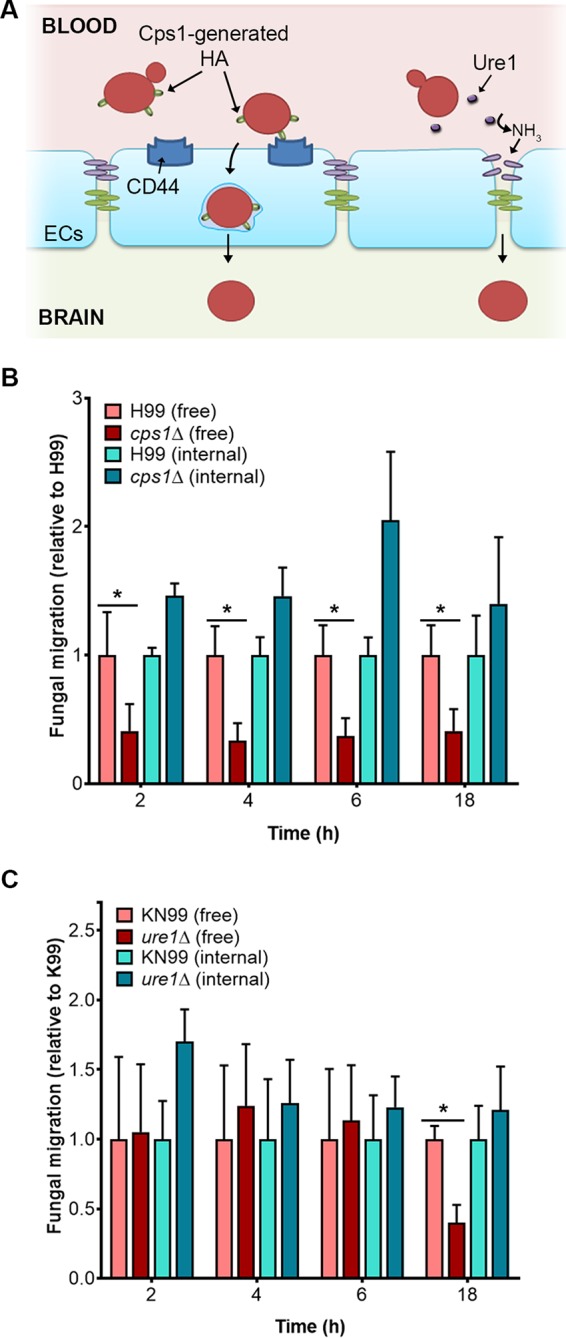
“HA has been implicated in fungal binding to the CD44 surface receptor on hCMECs, which triggers endocytosis and subsequent barrier traversal via a transcellular mechanism (8, 38) (Fig.”
BackgroundTrojan Horse Effect: Phagocyte-Mediated Streptococcus iniae Infection of Fish
Zlotkin, A., Chilmonczyk, S., Eyngor, M., Hurvitz, A., Ghittino, C., & Eldar, A. (2003) · Infection and Immunity · doi:10.1128/iai.71.5.2318-2325.2003 · Cited by 112
Factors Required for Activation of Urease as a Virulence Determinant in Cryptococcus neoformans
Singh, A., Panting, R. J., Varma, A., Saijo, T., Waldron, K. J., Jong, A., Ngamskulrungroj, P., Chang, Y. C., Rutherford, J. C., & Kwon-Chung, K. J. (2013) · mBio · doi:10.1128/mbio.00220-13 · Cited by 108 · cited 1×
“4C), although only at late time points, consistent with previous in vivo results (39).”
ResultCryptococcus and Phagocytes: Complex Interactions that Influence Disease Outcome
Leopold Wager, C. M., Hole, C. R., Wozniak, K. L., & Wormley, F. L. (2016) · Frontiers in Microbiology · doi:10.3389/fmicb.2016.00105 · Cited by 105 · cited 1×
“neutrophils and dendritic cells, which help control cryptococcal infection (32).”
BackgroundFlaviviruses are neurotropic, but how do they invade the CNS?
Neal, J. (2014) · Journal of Infection · doi:10.1016/j.jinf.2014.05.010 · Cited by 102
Jong, A., Wu, C.-H., Gonzales-Gomez, I., Kwon-Chung, K. J., Chang, Y. C., Tseng, H.-K., Cho, W.-L., & Huang, S.-H. (2012) · Journal of Biological Chemistry · doi:10.1074/jbc.m112.353375 · Cited by 100 · cited 1×
“Although independent transmigration of these mutant fungi is reduced ~50% compared to that of wild-type fungi in vitro, wild-type infections of CD44 / mice show a smaller reduction in brain burden and a minimal effect on virulence (58).”
BackgroundWozniak, K. L., Ravi, S., Macias, S., Young, M. L., Olszewski, M. A., Steele, C., & Wormley, F. L. (2009) · PLoS ONE · doi:10.1371/journal.pone.0006854 · Cited by 99 · cited 1×
“Th1 cytokines, including tumor necrosis factor alpha (TNF- ), are critical for protective immunity and clearance of cryptococcal infection in mice (34).”
BackgroundDirect cell-to-cell spread of a pathogenic yeast
Ma, H., Croudace, J. E., Lammas, D. A., & May, R. C. (2007) · BMC Immunology · doi:10.1186/1471-2172-8-15 · Cited by 96 · cited 1×
“which has been reported to occur between macrophages (49, 50).”
BackgroundCatch me if you can: phagocytosis and killing avoidance by Cryptococcus neoformans
García-Rodas, R., & Zaragoza, O. (2012) · FEMS Immunology & Medical Microbiology · doi:10.1111/j.1574-695x.2011.00871.x · Cited by 94
Join-Lambert, O. F., Ezine, S., Le Monnier, A., Jaubert, F., Okabe, M., Berche, P., & Kayal, S. (2004) · Cellular Microbiology · doi:10.1111/j.1462-5822.2004.00444.x · Cited by 94
Liu, T.-B., Kim, J.-C., Wang, Y., Toffaletti, D. L., Eugenin, E., Perfect, J. R., Kim, K. J., & Xue, C. (2013) · PLoS Pathogens · doi:10.1371/journal.ppat.1003247 · Cited by 89
The regulation of transendothelial migration: new knowledge and new questions
Müller, W. A. (2015) · Cardiovascular Research · doi:10.1093/cvr/cvv145 · Cited by 89
Limitations of the hCMEC/D3 cell line as a model for Aβ clearance by the human blood‐brain barrier
Biemans, E. A. L. M., Jäkel, L., de Waal, R. M. W., Kuiperij, H. B., & Verbeek, M. M. (2017) · Journal of Neuroscience Research · doi:10.1002/jnr.23964 · Cited by 84 · cited 1×
“These results were similar to what was found in a recent study, although even those barriers were reported to still maintain integrity with respect to large molecules (65).”
ResultChang, Y. C., Jong, A., Huang, S., Zerfas, P., & Kwon-Chung, K. J. (2006) · Infection and Immunity · doi:10.1128/iai.00089-06 · Cited by 76 · cited 1×
“HA has been implicated in fungal binding to the CD44 surface receptor on hCMECs, which triggers endocytosis and subsequent barrier traversal via a transcellular mechanism (8, 38) (Fig.”
BackgroundMaruvada, R., Zhu, L., Pearce, D., Zheng, Y., Perfect, J., Kwon-Chung, K. J., & Kim, K. S. (2012) · Cellular Microbiology · doi:10.1111/j.1462-5822.2012.01819.x · Cited by 75
Vu, K., Eigenheer, R. A., Phinney, B. S., & Gelli, A. (2013) · Infection and Immunity · doi:10.1128/iai.00554-13 · Cited by 73 · cited 1×
“Both in vivo and in vitro studies have suggested that endothelial damage occurs late in cryptococcal infection (13, 54).”
BackgroundBarchiesi, F., Cogliati, M., Esposto, M. C., Spreghini, E., Schimizzi, A. M., Wickes, B. L., Scalise, G., & Viviani, M. A. (2004) · Journal of Infection · doi:10.1016/j.jinf.2004.07.013 · Cited by 70 · cited 1×
“neoformans and related species colonize the brain (17, 51, 52).”
BackgroundHuang, S.-H., Long, M., Wu, C.-H., Kwon-Chung, K. J., Chang, Y. C., Chi, F., Lee, S., & Jong, A. (2011) · Journal of Biological Chemistry · doi:10.1074/jbc.m111.219378 · Cited by 69
Guillot, L., Carroll, S. F., Homer, R., & Qureshi, S. T. (2008) · Infection and Immunity · doi:10.1128/iai.00341-08 · Cited by 68
Cytosolic Replication of Group A Streptococcus in Human Macrophages
O’Neill, A. M., Thurston, T. L. M., & Holden, D. W. (2016) · mBio · doi:10.1128/mbio.00020-16 · Cited by 67
Santiago-Tirado, F. H., Peng, T., Yang, M., Hang, H. C., & Doering, T. L. (2015) · PLOS Pathogens · doi:10.1371/journal.ppat.1004908 · Cited by 66
Self-citationMora, D. J., Fortunato, L. R., Andrade-Silva, L. E., Paim, K. F., Rocha, I. H., Vasconcelos, R. R., Silva-Teixeira, D. N., Nascentes, G. A. N., & Silva-Vergara, M. L. (2015) · PLoS ONE · doi:10.1371/journal.pone.0120297 · Cited by 53 · cited 1×
“TNF- and type I interferons (IFNs), such as IFN- , have been implicated in the control of cryptococcal meningitis in mice and humans (24, 35).”
BackgroundDaniels, B. P., & Klein, R. S. (2015) · PLOS Pathogens · doi:10.1371/journal.ppat.1005096 · Cited by 42 · cited 1×
“These mediators also regulate BBB permeability, especially in response to viral infections (36, 37): TNF- increases barrier permeability, while IFN- decreases it.”
BackgroundSelf-citationZhang, M., Sun, D., Liu, G., Wu, H., Zhou, H., & Shi, M. (2016) · Journal of Leukocyte Biology · doi:10.1189/jlb.4ab0715-281r · Cited by 42 · cited 1×
“Finally, it has been suggested that free fungi adherent to the luminal side of brain microvasculature may be removed by neutrophils (55), a process that would reduce their transit but would not occur in our system.”
BackgroundOnken, M. D., Mooren, O. L., Mukherjee, S., Shahan, S. T., Li, J., & Cooper, J. A. (2014) · Cytoskeleton · doi:10.1002/cm.21203 · Cited by 41 · cited 1×
“PA pads were prepared in 35-mm-diameter glassbottomed dishes as previously described (66), coated with 50 g/ml rat collagen, and used as the substrates for hCMEC monolayers that reproduce the physical properties of in vivo tissues (46).”
MethodSelf-citationHe, W., Casadevall, A., Lee, S. C., & Goldman, D. L. (2003) · Infection and Immunity · doi:10.1128/iai.71.2.930-936.2003 · Cited by 37
Type I IFN Induction via Poly-ICLC Protects Mice against Cryptococcosis
Sionov, E., Mayer-Barber, K. D., Chang, Y. C., Kauffman, K. D., Eckhaus, M. A., Salazar, A. M., Barber, D. L., & Kwon-Chung, K. J. (2015) · PLOS Pathogens · doi:10.1371/journal.ppat.1005040 · Cited by 34 · cited 1×
“TNF- and type I interferons (IFNs), such as IFN- , have been implicated in the control of cryptococcal meningitis in mice and humans (24, 35).”
BackgroundKozel, T. R., Pfrommer, G. S., & Redelman, D. D. (1987) · PubMed Central · Cited by 31
Sabiiti, W., & May, R. C. (2012) · PLoS ONE · doi:10.1371/journal.pone.0035455 · Cited by 31 · cited 2×
“manner, consistent with earlier results (20, 21); this was enhanced by the presence of”
MethodResultHuman Immune Response Varies by the Degree of Relative Cryptococcal Antigen Shedding
Boulware, D. R., von Hohenberg, M., Rolfes, M. A. R., Bahr, N. C., Rhein, J., Akampurira, A., Williams, D. A., Taseera, K., Schutz, C., McDonald, T. R., et al. (2015) · Open Forum Infectious Diseases · doi:10.1093/ofid/ofv194 · Cited by 23
Samantaray, S., Correia, J., Garelnabi, M., Voelz, K., May, R. C., & Hall, R. A. (2016) · International Journal of Antimicrobial Agents · doi:10.1016/j.ijantimicag.2016.04.018 · Cited by 22 · cited 1×
“These findings highlight the need to consider internalized fungi in assessments of antifungal agents and the potential value of identifying compounds that inhibit intracellular replication of cryptococci, as in a recent screen (59).”
BackgroundCharacterization of an Anticryptococcal Protein Isolated from Human Serum
Sridhar, S., Ahluwalia, M., Brummer, E., & Stevens, D. A. (2000) · Infection and Immunity · doi:10.1128/iai.68.6.3787-3791.2000 · Cited by 20 · cited 1×
“Both in vivo and in vitro studies have suggested that endothelial damage occurs late in cryptococcal infection (13, 54).”
Background
Cited by
CNS Infection and Immune Privilege
Forrester, J. V., McMenamin, P. G., & Dando, S. J. (2018) · Nature Reviews Neuroscience · doi:10.1038/s41583-018-0070-8 · Cited by 313
Basic principles of the virulence of Cryptococcus
Zaragoza, O. (2019) · Virulence · doi:10.1080/21505594.2019.1614383 · Cited by 249
“type strains, supporting the role of the Trojan Horse mechanism in cryptococcal dissemination [174].”
BackgroundMethodProtective and Pathological Immunity during Central Nervous System Infections
Klein, R. S., & Hunter, C. A. (2017) · Immunity · doi:10.1016/j.immuni.2017.06.012 · Cited by 175
“(C) Para-cellular route whereby the breakdown of the tight junctions allows access of infected cells or extracellular pathogens to access the peri-vascular unit (Santiago-Tirado et al., 2017; Shi et al., 2010; Vu et al., 2013).”
BackgroundSelf-citationKim, J., Lee, K.-T., Lee, J. S., Shin, J., Cui, B., Yang, K., Choi, Y. S., Choi, N., Lee, S. H., Lee, J.-H., et al. (2021) · Nature Biomedical Engineering · doi:10.1038/s41551-021-00743-8 · Cited by 172
Fu, M. S., Coelho, C., De Leon-Rodriguez, C. M., Rossi, D. C. P., Camacho, E., Jung, E. H., Kulkarni, M., & Casadevall, A. (2018) · PLOS Pathogens · doi:10.1371/journal.ppat.1007144 · Cited by 138
Metadata
- Authors
- Santiago-Tirado, F. H., Onken, M. D., Cooper, J. A., Klein, R. S., & Doering, T. L.
- Affiliations
- Washington University in St. Louis (US)
- Corresponding author
- Doering, Tamara L.
- Venue
- mBio
- Publisher
- American Society for Microbiology
- Published
- 2017-03-08
- Volume
- 8
- Issue
- 1
- ISSN
- 2150-7511 (ISSN-L)
- 2161-2129
- PMC
- PMC5285505
- OpenAlex
- W2584228215
- Cited by
- 238
- References
- 66
- Citations by year
- 2026: 18 · 2025: 27 · 2024: 29 · 2023: 34 · 2022: 24 · 2021: 26 · 2020: 29 · 2019: 16 · 2018: 19 · 2017: 16
- FWCI
- 17.13
- Type
- journal article
- Language
- en
- Open access
- gold
- doi.org
- Licence
- cc-by
- creativecommons.org/licenses/by/4.0/ (vor)
- journals.asm.org/non-commercial-tdm-license (tdm)
- Locations
- mBio (publishedVersion, cc-by)
- PubMed Central (publishedVersion, cc-by)
- PubMed (publishedVersion)
- Digital Commons@Becker (Washington University School of Medicine) (submittedVersion)
- DOAJ (DOAJ: Directory of Open Access Journals) (submittedVersion, cc-by-sa)
- DOAJ (DOAJ: Directory of Open Access Journals) (submittedVersion)
- Funders
- Barnes Jewish Hospital Foundation (WUCCI Clinical Investigator Award)
- HHS | National Institutes of Health (GM118171, GM38542, AI114549, AI078795, AI102882, AI007172)
- Burroughs Wellcome Fund (Postdoctoral Enrichment Program Award)
- Topics
- Health Sciences › Medicine › Infectious Diseases › Fungal Infections and Studies
- Life Sciences › Neuroscience › Neurology › Barrier Structure and Function Studies
- Life Sciences › Immunology and Microbiology › Microbiology › Bacterial Infections and Vaccines
- Keywords
- Cryptococcus neoformans, blood-brain barrier, Trojan horse mechanism, phagocytes, meningoencephalitis, in vitro blood-brain barrier model, fungal dispersal, central nervous system infection
- MeSH terms
- Blood-Brain Barrier, Cryptococcus neoformans, Humans, Models, Biological, Models, Theoretical, Phagocytes, Immune Evasion
About these checks
Registry, retraction, Cites and statistics results are computed, not judged, with one exception: a printed reference that no index lists is read once by a model before it counts as a citation error. Claims are extracted by a model and kept only when their quote appears verbatim in the text; each cited source is then checked, with a model’s help, for whether it says what the claim relies on. Those verdicts can be wrong — read the claim’s quote and the cited source before relying on one.
Statistics and arithmetic are recomputed, not judged.
Confidence bands are shown only for fields calibrated on our annotated test set. None is calibrated yet, so no band is shown.
What counts as a claim ›How we measure confidence ›How we check this ›
Are you an author, or do you see a problem with this page? Request a review
Data sources
Bibliographic data: Semantic Scholar, OpenAlex, Crossref.
Contains information from the Semantic Scholar Academic Graph Datasets, made available under the ODC Attribution License (ODC-BY 1.0).
Semantic Scholar’s data is described in: Kinney, R., et al. (2023). The Semantic Scholar Open Data Platform. arXiv:2301.10140.
