

The DOI matches its Crossref record; 71 of the 71 references it cites were found in a registry or an index.
ATP-Dependent Persister Formation in Escherichia coli
Open accessAbstract
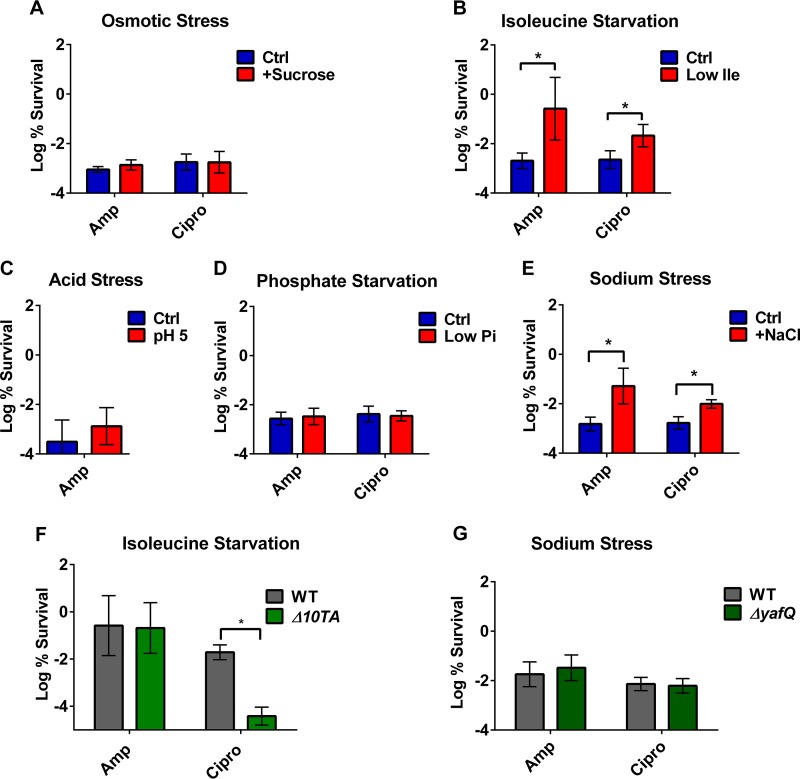
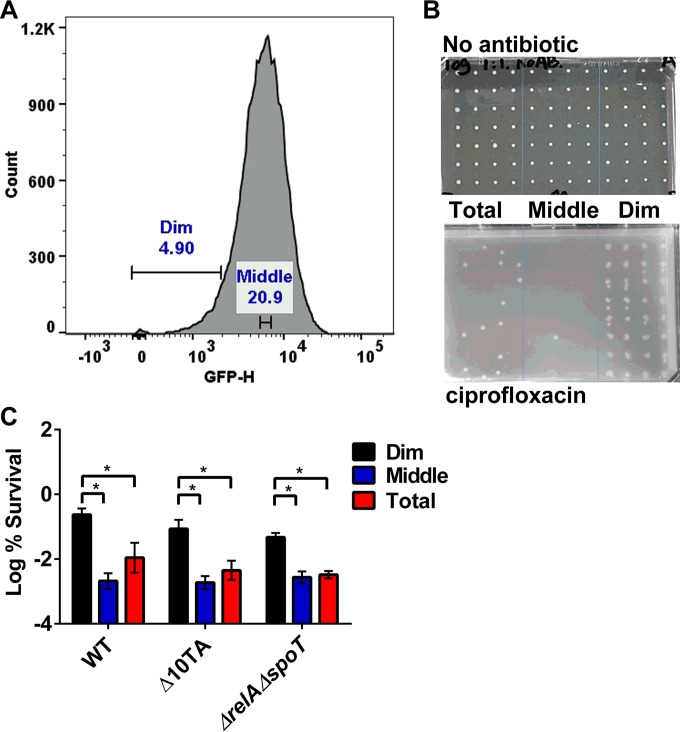
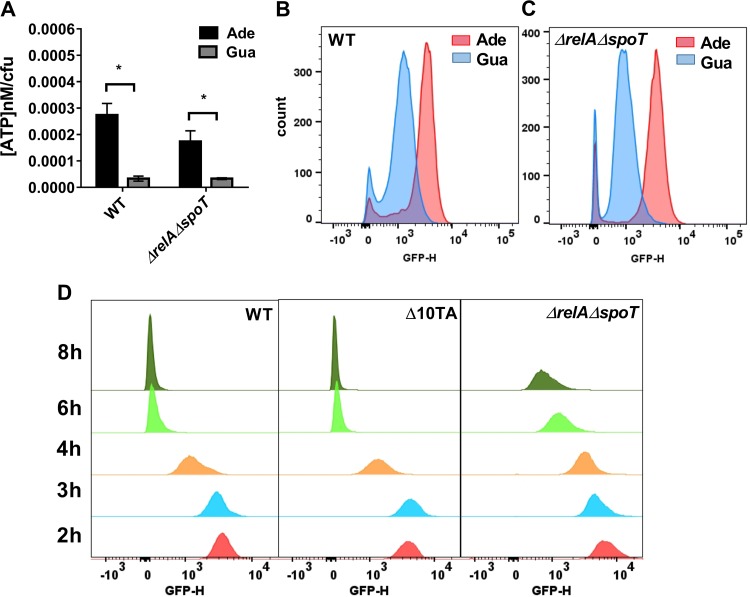
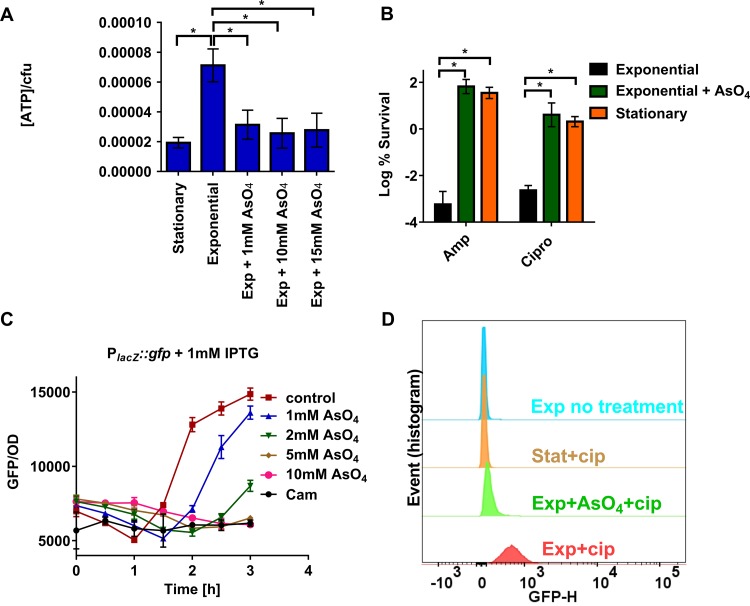
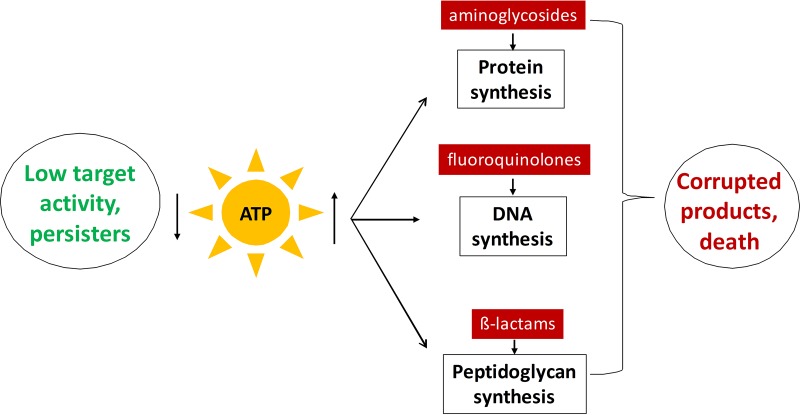
Persisters are dormant variants that form a subpopulation of cells tolerant to antibiotics. Persisters are largely responsible for the recalcitrance of chronic infections to therapy. In Escherichia coli , one widely accepted model of persister formation holds that stochastic accumulation of ppGpp causes activation of the Lon protease that degrades antitoxins; active toxins then inhibit translation, resulting in dormant, drug-tolerant persisters. We found that various stresses induce toxin-antitoxin (TA) expression but that induction of TAs does not necessarily increase persisters. The 16S rRNA promoter rrnB P1 was proposed to be a persister reporter and an indicator of toxin activation regulated by ppGpp. Using fluorescence-activated cell sorting (FACS), we confirmed the enrichment for persisters in the fraction of rrnB P1 -gfp dim cells; however, this is independent of toxin-antitoxins. rrnB P1 is coregulated by ppGpp and ATP. We show that rrnB P1 can report persisters in a relA / spoT deletion background, suggesting that rrnB P1 is a persister marker responding to ATP. Consistent with this finding, decreasing the level of ATP by arsenate treatment causes drug tolerance. Lowering ATP slows translation and prevents the formation of DNA double-strand breaks upon fluoroquinolone treatment. We conclude that variation in ATP levels leads to persister formation by decreasing the activity of antibiotic targets. IMPORTANCE Persisters are a subpopulation of antibiotic-tolerant cells responsible for the recalcitrance of chronic infections. Our current understanding of persister formation is primarily based on studies of E. coli . The activation of toxin-antitoxin systems by ppGpp has become a widely accepted model for persister formation. In this study, we found that stress-induced activation of mRNA interferase-type toxins does not necessarily cause persister formation. We also found that the persister marker rrnB P1 reports persister cells because it detects a drop in cellular ATP levels. Consistent with this, lowering the ATP level decreases antibiotic target activity and, thus, leads to persister formation. We conclude that stochastic variation in ATP is the main mechanism of persister formation. A decrease in ATP provides a satisfactory explanation for the drug tolerance of persisters, since bactericidal antibiotics act by corrupting energy-dependent targets.
Overview
The claims and statistics of this paper haven’t been checked yet.
Run the check — free, no account needed. It reads the open-access text and checks the sources it cites.
Integrity signals
Registry
Cites
Statistics
Figures
Verification
Claims the paper makes
The claims and statistics of this paper haven’t been checked yet.
Run the check — free, no account needed. It reads the open-access text and checks the sources it cites.
Claims other papers make about this one
Each is checked against this paper’s own text: does it say what the citing paper says it does?
The source backs part of the claim, not all of it — or backs it for a different population, condition or comparison.
In the citing paper
“It has been well studied that dormant state reduces the exposure of antibiotic targets and helps bacterial cells tolerate a variety of antibiotics, a process linked to the toxin-antitoxin system [18,54].”
From Antifungal persistence: Clinical relevance and mechanisms (2025) · cites this paper as [54]
Experimental — accuracy not yet measured
Self-check
Percentages, sums and reported differences re-computed from the paper’s own numbers.
The self-check needs the paper’s full text.
Citations
Cites
2 retracted
RETRACTED: Bacterial persistence by RNA endonucleases
Maisonneuve, E., Shakespeare, L. J., Jørgensen, M. G., & Gerdes, K. (2011) · Proceedings of the National Academy of Sciences · doi:10.1073/pnas.1100186108 · Cited by 473
RetractedMaisonneuve, E., Castro-Camargo, M., & Gerdes, K. (2013) · Cell · doi:10.1016/j.cell.2013.07.048 · Cited by 439
RetractedBacterial Persistence as a Phenotypic Switch
Balaban, N. Q., Merrin, J., Chait, R., Kowalik, L., & Leibler, S. (2004) · Science · doi:10.1126/science.1099390 · Cited by 2,952
Lewis, K. (2010) · Annual Review of Microbiology · doi:10.1146/annurev.micro.112408.134306 · Cited by 1,858
Self-citationIntracellular Bacterial Biofilm-Like Pods in Urinary Tract Infections
Anderson, G. G., Palermo, J. J., Schilling, J. D., Roth, R. A., Heuser, J., & Hultgren, S. J. (2003) · Science · doi:10.1126/science.1084550 · Cited by 1,175
Persister cells and tolerance to antimicrobials
Keren, I., Kaldalu, N., Spoering, A. L., Wang, Y., & Lewis, K. (2003) · FEMS Microbiology Letters · doi:10.1016/s0378-1097(03)00856-5 · Cited by 1,094
Self-citationProkaryotic toxin–antitoxin stress response loci
Gerdes, K., Christensen, S. K., & Løbner‐Olesen, A. (2005) · Nature Reviews Microbiology · doi:10.1038/nrmicro1147 · Cited by 1,033
Active Starvation Responses Mediate Antibiotic Tolerance in Biofilms and Nutrient-Limited Bacteria
Nguyen, D. M., Joshi-Datar, A., Lepine, F. L., Bauerle, E., Olakanmi, O., Beer, K. D., McKay, G. A., Siehnel, R., Schafhauser, J., Wang, Y., et al. (2011) · Science · doi:10.1126/science.1211037 · Cited by 1,008
The RpoS-Mediated General Stress Response in Escherichia coli
Battesti, A., Majdalani, N., & Gottesman, S. (2010) · Annual Review of Microbiology · doi:10.1146/annurev-micro-090110-102946 · Cited by 922
Specialized Persister Cells and the Mechanism of Multidrug Tolerance in Escherichia coli
Keren, I., Shah, D., Spoering, A. L., Kaldalu, N., & Lewis, K. (2004) · Journal of Bacteriology · doi:10.1128/jb.186.24.8172-8180.2004 · Cited by 848
Self-citation
Research works printed but not linked: 1
- 10.1016/j.cell.2013.07.048 · DOI
Cited by
Sorted by citations
Items 301–400 of 499
Lin, K., Lo, C.-C., Chou, M.-C., Yeh, T.-H., Chen, K., Liao, W.-Y., & Lo, H. (2019) · Microbial Drug Resistance · doi:10.1089/mdr.2019.0118 · Cited by 7
Seo, J., Na, I. Y., & Ko, K. S. (2023) · Current Microbiology · doi:10.1007/s00284-023-03551-2 · Cited by 7
Netupitant Exhibits Potent Activity on Mycobacterium tuberculosis Persisters
Eldesouky, H. E., Jones, R. M., Gleason, N., Mohammed, S., 邢恩明, Li, P.-K., & Sherman, D. R. (2025) · ACS Infectious Diseases · doi:10.1021/acsinfecdis.5c00298 · Cited by 7
Outsourcing of energetically costly amino acids at the origin of animals
Kasalo, N., Domazet-Lošo, M., & Domazet‐Lošo, T. (2026) · Nature Communications · doi:10.1038/s41467-026-68724-6 · Cited by 7
Yamamoto, N., Ohno, Y., & Tsuneda, S. (2022) · Microbiology and Immunology · doi:10.1111/1348-0421.12970 · Cited by 7
LaGree, T. J., Byrd, B. A., Quelle, R. M., Schofield, S. L., & Mok, W. W. K. (2023) · Antimicrobial Agents and Chemotherapy · doi:10.1128/aac.01639-22 · Cited by 7
The top 100 cited studies on bacterial persisters: A bibliometric analysis
Ju, Y., Long, H., Zhao, P., Xu, P., Sun, L., Bao, Y., Yu, P., & Zhang, Y. (2022) · Frontiers in Pharmacology · doi:10.3389/fphar.2022.1001861 · Cited by 8
Genetic Determinants of Persistence in Escherichia coli
Wilmaerts, D., Herpels, P., Michiels, J. J., & Verstraeten, N. (2019) · Springer eBooks · doi:10.1007/978-3-030-25241-0_7 · Cited by 7
Persister Formation Driven by TisB-Dependent Membrane Depolarization
Berghoff, B. A., & Wagner, E. G. H. (2019) · Springer eBooks · doi:10.1007/978-3-030-25241-0_5 · Cited by 7
Stress induces the transcription of toxin-antitoxin systems but does not activate toxinPreprint
LeRoux, M., Culviner, P. H., Liu, Y. J., Littlehale, M. L., & Laub, M. T. (2020) · bioRxiv (Cold Spring Harbor Laboratory) · doi:10.1101/2020.03.02.972737 · Cited by 7
Involvement of ArlI, ArlJ, and CirA in archaeal type IV pilin-mediated motility regulation
Chatterjee, P., Garcia, M. A., Cote, J. A., Yun, K., Legerme, G. P., Habib, R., Tripepi, M., Young, C., Kulp, D., Dyall-Smith, M., et al. (2024) · Journal of Bacteriology · doi:10.1128/jb.00089-24 · Cited by 7
Yuan, S., Liu, B., Quan, Y., Gao, S., Zuo, J., Jin, W., Shen, Y., Li, Y., Wang, Y., & Wang, Y. (2025) · Microbiological Research · doi:10.1016/j.micres.2025.128157 · Cited by 6
Braetz, S., Nordholt, N., Nerlich, A. G., Schreiber, F., Tedin, K., & Fulde, M. (2025) · PLoS Pathogens · doi:10.1371/journal.ppat.1013498 · Cited by 6
Fletcher, J. R., Hansen, L. A., Hoyser, J. R., Hanna, A. E., Martinez, R., Freeman, C. D., Thorns, N., Penningroth, M. R., Villarreal, A. R., Vogt, G. A., et al. (2025) · mBio · doi:10.1128/mbio.01392-25 · Cited by 6
Oxygen and Metabolism: Digesting Determinants of Antibiotic Susceptibility in the Gut
Heinzinger, L. R., Johnson, A., Wurster, J. I., Nilson, R., Penumutchu, S., & Belenky, P. A. (2020) · iScience · doi:10.1016/j.isci.2020.101875 · Cited by 6
Grucela, P. K., & Zhang, Y. E. (2023) · Microbial Cell · doi:10.15698/mic2023.11.808 · Cited by 6
Lomakina, G. Y., & Угарова, Н. Н. (2022) · Photochemistry and Photobiology · doi:10.1111/php.13606 · Cited by 6
Ciprofloxacin-induced persister-cells in Campylobacter jejuni
Ovsepian, A., Larsen, M., Vegge, C. S., & Ingmer, H. (2020) · Microbiology · doi:10.1099/mic.0.000953 · Cited by 6
Jiao, Y., Yang, A., Yu, X., Yu, J., Zhang, J., Jiang, L., Liu, Y., Liu, Y., Zhu, H., & Zhang, X. (2025) · Food Microbiology · doi:10.1016/j.fm.2025.104888 · Cited by 5
Li, Y., Zhu, F., Manna, A. C., Chen, L., Jiang, J., Hong, J.-I., Proctor, R. A., Bayer, A. S., Cheung, A. L., & Xiong, Y. Q. (2023) · Microbiology Spectrum · doi:10.1128/spectrum.00600-23 · Cited by 5
Unraveling CRP/cAMP-mediated metabolic regulation in Escherichia coli persister cells
Ngo, H. G., Mohiuddin, S. G., Ananda, A., & Orman, M. A. (2025) · eLife · doi:10.7554/elife.99735.3 · Cited by 5
Metabolic Stress Induced by Quercetin Enhances Dormancy and Persistence in Staphylococcus aureus
Kim, D.-Y., & Kim, T. (2025) · Antibiotics · doi:10.3390/antibiotics14050424 · Cited by 5
Молекулярные механизмы ненаследуемой толерантности к антибиотикам у бактерий и архей
Khlebodarova, T. M., & Likhoshvai, V. A. (2019) · Molecular Biology · doi:10.1134/s0026898419040050 · Cited by 5
Queiroz, P. A., Meneguello, J. E., Silva, B. R., Caleffi-Ferracioli, K. R., Scodro, R. B. D. L., Cardoso, R. F., Marchiosi, R., & Siqueira, V. L. D. (2021) · Future Microbiology · doi:10.2217/fmb-2021-0005 · Cited by 5
Dual Inhibition of Mycobacterium tuberculosis and the Host TGFBR1 by an Anilinoquinazoline
Nandakumar, M., Ollodart, A. R., Fleck, N. D., Kapadia, N. R., Frando, A., Boradia, V. M., Smith, J. L., Chen, J., Zuercher, W. J., Willson, T. M., et al. (2023) · Journal of Medicinal Chemistry · doi:10.1021/acs.jmedchem.3c01273 · Cited by 5
Lepe, B. A., Zheng, C. R., Leddy, O. K., Allsup, B. L., Solomon, S. L., & Bryson, B. D. (2024) · Microbiology Spectrum · doi:10.1128/spectrum.02277-24 · Cited by 5
Behera, S., & Pattnaik, S. (2019) · Biocatalysis and Agricultural Biotechnology · doi:10.1016/j.bcab.2019.101401 · Cited by 5
Homology Model of a Catalytically Competent Bifunctional Rel Protein
Civera, M., & Sattin, S. (2021) · Frontiers in Molecular Biosciences · doi:10.3389/fmolb.2021.628596 · Cited by 5
The Chlamydia -related Waddlia chondrophila encodes functional type II toxin-antitoxin systems
Ardissone, S., & Greub, G. (2024) · Applied and Environmental Microbiology · doi:10.1128/aem.00681-23 · Cited by 5
Toxin-Antitoxin Systems and Persistence
Fraikin, N., Goormaghtigh, F., & Melderen, L. V. (2019) · Springer eBooks · doi:10.1007/978-3-030-25241-0_8 · Cited by 5
ATP burst is the dominant driver of antibiotic lethality in Mycobacterium smegmatisPreprint
Lodhiya, T., Palande, A., Veeram, A., Larrouy-Maumus, G. J., Beste, D. J. V., & Mukherjee, R. (2025) · eLife · doi:10.7554/elife.99656.3 · Cited by 5
Eco-evolutionary dynamics of pathogen immune-escape: deriving a population-level phylodynamic curve
Nielsen, B. F., Saad-Roy, C. M., Metcalf, C. J. E., Viboud, C. G., & Grenfell, B. T. (2025) · Journal of The Royal Society Interface · doi:10.1098/rsif.2024.0675 · Cited by 4
Disruption of sulfur transferase complex increases bacterial intramacrophage persistence
Tang, H., Wang, Z., Li, C., Yu, J., Huang, W., Zhou, T., Zhang, C., Wen, B., Wang, C., Zhu, X., et al. (2025) · PLoS Pathogens · doi:10.1371/journal.ppat.1013136 · Cited by 4
Type IX class utilizing cell signals for organizing toxin–antitoxin systems
Seo, E., Hwang, H., Kim, Y., & Wood, T. K. (2026) · Trends in Microbiology · doi:10.1016/j.tim.2026.03.004 · Cited by 4
Ye, M., Chen, H., Liu, C., Ren, A.-J., Yang, H., & Wang, S.-S. (2022) · Journal of Applied Microbiology · doi:10.1111/jam.15718 · Cited by 4
Maciąg-Dorszyńska, M., Olszewski, P., Karczewska, M., & Boss, L. (2025) · Frontiers in Microbiology · doi:10.3389/fmicb.2024.1528825 · Cited by 4
Antibiotic Persisters and Relapsing Salmonella enterica Infections
Hill, P. W. S., & Hélaine, S. (2019) · Springer eBooks · doi:10.1007/978-3-030-25241-0_2 · Cited by 4
Polynucleotide Phosphorylase Mediates a New Mechanism of Persister Formation in Escherichia coli
Wu, N., Zhang, Y., Zhang, S., Yuan, Y., Liu, S., Xu, T., Cui, P., Zhang, Y., & Zhang, Y. (2022) · Microbiology Spectrum · doi:10.1128/spectrum.01546-22 · Cited by 4
Membrane Proteins as a Regulator for Antibiotic Persistence in Gram-Negative Bacteria
Yee, J. X., Kim, J., & Yeom, J. (2023) · The Journal of Microbiology · doi:10.1007/s12275-023-00024-w · Cited by 4
A 5+1 assemble-to-activate mechanism of the Lon proteolytic machine
Li, S., Hsieh, K., Kuo, C.-I., Lin, T.-C., Lee, S.-H., Chen, Y.-R., Wang, C.-H., Ho, M., Ting, S., Zhang, K., et al. (2023) · Nature Communications · doi:10.1038/s41467-023-43035-2 · Cited by 4
A novel approach to Caudoviricetes taxonomy utilising whole proteome structure-structure comparisonPreprint
Smith, L. A., Schmidt, T., Tolstoy, I., Skvortsov, T., Hill, C., & Shkoporov, A. N. (2025) · bioRxiv (Cold Spring Harbor Laboratory) · doi:10.1101/2025.08.06.668922 · Cited by 4
ATP burst is the dominant driver of antibiotic lethality in Mycobacterium smegmatis
Lodhiya, T., Palande, A., Veeram, A., Larrouy-Maumus, G. J., Beste, D. J. V., & Mukherjee, R. (2024) · eLife · doi:10.7554/elife.99656 · Cited by 6
March, V. F. A., Zwyer, M., Loiseau, C., Brites, D., Goig, G. A., Bouaouina, S., Doetsch, A., Reinhard, M., Kalkan, S., Gagneux, S., et al. (2025) · Antimicrobial Agents and Chemotherapy · doi:10.1128/aac.00996-25 · Cited by 4
Anderson, S. E., Mack, I. E., & Levin, P. A. (2025) · Journal of Bacteriology · doi:10.1128/jb.00242-25 · Cited by 3
Miyahara, Y., Signorino‐Gelo, F., Lonchampt, N. E. M., Murima, P., McKinney, J. D., & Dhar, N. (2026) · npj Antimicrobials and Resistance · doi:10.1038/s44259-025-00180-6 · Cited by 3
Liu, J., Li, Y., Liu, H., Yan, S., Jia, H., Yang, Y., Hu, W., Wang, J., Li, W. F., Xue, H., et al. (2026) · Microbiology Spectrum · doi:10.1128/spectrum.01868-25 · Cited by 3
Kim, T. (2026) · Antibiotics · doi:10.3390/antibiotics15060526 · Cited by 5
Kumari, J., Uthaman, A., Bose, S., Kundu, A., Sharma, V., Dutta, S., Dhar, A., Roy, S., Srinivasan, R., Pande, S., et al. (2025) · The EMBO Journal · doi:10.1038/s44318-025-00529-7 · Cited by 3
Låstad, S. B., & Mitarai, N. (2025) · Physical review. E · doi:10.1103/lyfw-zn4j · Cited by 3
Sheng, Z., Luo, J., Gong, A., Wang, H., Bo, S., Wang, N., Li, G., Luo, J., Liu, B., Fu, Y., et al. (2025) · The Innovation Life · doi:10.59717/j.xinn-life.2025.100154 · Cited by 3
Ahator, S. D., Hegstad, K., Lentz, C. S., & Johannessen, M. (2024) · mSystems · doi:10.1128/msystems.00179-24 · Cited by 3
Future Prospective of Omics-System Biology to Control AMR: Recommendations and Directions
Bartelo, N., Mishra, S. K., Singh, P. R., Padmanarayana, M., & Soni, V. (2024) · Springer eBooks · doi:10.1007/978-3-031-65986-7_13 · Cited by 3
Hamami, E., Huo, W., Neal, K., Neisewander, I., Shivangi, Freundlich, J. S., Geisinger, E., & Isberg, R. R. (2026) · mBio · doi:10.1128/mbio.00902-26 · Cited by 3
Curry, E. C., Hart, R. G., Habtu, D. Y., & Chamberlain, N. R. (2021) · Journal of Medical Microbiology · doi:10.1099/jmm.0.001392 · Cited by 3
Monitoring Persister Resuscitation with Flow Cytometry
Mohiuddin, S. G., & Orman, M. A. (2021) · Methods in molecular biology · doi:10.1007/978-1-0716-1621-5_14 · Cited by 3
Molecular Mechanisms of Non-Inherited Antibiotic Tolerance in Bacteria and Archaea
Khlebodarova, T. M., & Likhoshvai, V. A. (2019) · Molecular Biology · doi:10.1134/s0026893319040058 · Cited by 3
ATP dependence of decision-making capacity in a fine-grained model of gene regulatory networks
Kumar, R., & Johnston, I. G. (2024) · Journal of The Royal Society Interface · doi:10.1098/rsif.2024.0246 · Cited by 3
Cañas-Duarte, S. J., Sun, L., Pérez-López, M. I., Herrfurth, C., Contreras, L. M., Feußner, I., Leidy, C., Paulsson, J., Riaño‐Pachón, D. M., Pedraza, J. M., et al. (2026) · PLoS ONE · doi:10.1371/journal.pone.0351161 · Cited by 3
Quorum Sensing Systems and Persistence
Fernández-García, L., Blasco, L., Trastoy, R., García‐Contreras, R., Wood, T. K., & Tomás, M. (2018) · Springer eBooks · doi:10.1007/978-981-13-2429-1_3 · Cited by 3
Thorfinnsdottir, L. B., Bø, G. H., Booth, J. A., & Bruheim, P. (2023) · Frontiers in Microbiology · doi:10.3389/fmicb.2023.1149978 · Cited by 3
Existence of log-phase Escherichia coli persisters and lasting memory of a starvation pulsePreprint
Svenningsen, M. S., Svenningsen, S. L., Sørensen, M. A., & Mitarai, N. (2020) · bioRxiv (Cold Spring Harbor Laboratory) · doi:10.1101/2020.09.17.301598 · Cited by 3
Blee, J. A., Gorochowski, T. E., & Hauert, S. (2024) · Journal of The Royal Society Interface · doi:10.1098/rsif.2024.0078 · Cited by 3
Xiang, W., Xiong, J., Wang, H.-Y., Cai, T., Shi, P., Zhao, Q., Tang, J., & Cai, Y. (2024) · Frontiers in Microbiology · doi:10.3389/fmicb.2024.1505841 · Cited by 3
Xie, M., Chen, K., Heng, H., Chan, E. W., & Chen, S. (2024) · Microbiological Research · doi:10.1016/j.micres.2024.128006 · Cited by 2
McCormack, A., Hobbs, J. K., Johnston, P. R., & Coote, P. J. (2025) · Antibiotics · doi:10.3390/antibiotics14050507 · Cited by 2
Using BONCAT to dissect the proteome of S. aureus persisters
Matlalcuatzi, E. D. C. G., Bakkum, T., Thomas, P. S., Hacker, S. M., Florea, B. I., Vriesendorp, B., Rozen, D. E., & van Kasteren, S. I. (2025) · mSphere · doi:10.1128/msphere.00431-25 · Cited by 2
Shin, Y., Kim, S. J., Seo, J., Kim, I., Chang, J., Kim, M., Park, W. J., & Lee, W. (2026) · Ecotoxicology and Environmental Safety · doi:10.1016/j.ecoenv.2025.119642 · Cited by 2
Rubio, T. P., Nedden, T. Z., Zedek, S., Raoux‐Barbot, D., Cottineau, C., Belot, L., Raynaud, C., Oms, T., Rodriguez-Vilallobos, H., Jurėnas, D., et al. (2026) · Communications Biology · doi:10.1038/s42003-026-09883-6 · Cited by 3
Mei, Z., Cai, Y., Huang, J., Zhao, K., Zhang, Z., Yu, D., Lu, S., Lai, Z., Wood, T. K., & Fu, X. (2026) · mLife · doi:10.1002/mlf2.70072 · Cited by 2
Beagle, S. D., & Levin, P. A. (2026) · mBio · doi:10.1128/mbio.00092-26 · Cited by 2
Bai, J., Han, L., Cheng, X., Fu, H., Zhang, X., He, H., & Wang, J. (2026) · Frontiers in Microbiology · doi:10.3389/fmicb.2026.1842301 · Cited by 2
The Pharmacology of Bacterial Persistence: From Antibiotic Tolerance to Antimicrobial Resistance
Caroleo, M. C., Pisano, M., Cione, E., Scumaci, D., Cai, T., Gallelli, L., & Leo, A. (2026) · Antibiotics · doi:10.3390/antibiotics15070691 · Cited by 1
Artificial intelligence catalyzes antimicrobial peptide design
Liu, Y., Hu, J., Zhang, N., Bai, Y., Yao, Y., & Chen, G. (2026) · Synthetic and Systems Biotechnology · doi:10.1016/j.synbio.2026.05.019 · Cited by 2
Microbial biofilms and some aspects of anti-inflammatory drug use
Rumynska, T. M., Hural, A. R., Konechnyi, Y., Vynnytska, R. B., Lozynskyi, A., Salyha, Y. T., Kornіychuk, O., & Lesyk, R. (2021) · Biopolymers and Cell · doi:10.7124/bc.000a57 · Cited by 2
Zaidi, S., Aswal, M., Kumar, M., Rashid, F., & Khan, A. U. (2022) · Journal of Medical Microbiology · doi:10.1099/jmm.0.001572 · Cited by 2
Zhu, H., Xiang, W., Cai, T., Zhang, M., & Wang, H.-Y. (2024) · Frontiers in Microbiology · doi:10.3389/fmicb.2024.1402319 · Cited by 2
Lomakina, G. Y., Kaminskaya, S. S., & Угарова, Н. Н. (2024) · Биофизика · doi:10.31857/s0006302924030138 · Cited by 2
Relevance of charged and polar amino acids for functionality of membrane toxin TisB
Leinberger, F. H., & Berghoff, B. A. (2024) · Scientific Reports · doi:10.1038/s41598-024-73879-7 · Cited by 2
Lomakina, G. Y., Kaminskaya, S. S., & Угарова, Н. Н. (2024) · BIOPHYSICS · doi:10.1134/s0006350924700556 · Cited by 2
Impact of biofilms on healthcare settings and management strategies
Bayatlı, N., Malkawi, A. S., Malkawi, A., Khaled, K., Alrabadi, N., Ovenseri, A. C., Alhajj, L., Sarayrih, L. A., & Elnefaily, S. E. (2025) · Reviews in Medical Microbiology · doi:10.1097/mrm.0000000000000425 · Cited by 2
Optimizing synthetic cystic fibrosis sputum media for growth of non-typeable Haemophilus influenzae
Silva, P. D. C., Hill, D. J., & Harrison, F. (2025) · Access Microbiology · doi:10.1099/acmi.0.000979.v3 · Cited by 2
Inhibition of protein synthesis eradicates persister cells of V. cholerae
Paranjape, S. S., & Shashidhar, R. (2019) · 3 Biotech · doi:10.1007/s13205-019-1916-0 · Cited by 2
Micheva‐Viteva, S., & Hong‐Geller, E. (2019) · Journal of Cellular Immunology · doi:10.33696/immunology.2.011 · Cited by 2
Coumarin: A Renowned Moiety for Gram-Negative Escherichia coli – a Review
Sivaperuman, A., Natarajan, R., Ravi, R., Subramanian, A., & Angamuthu, P. (2023) · Pharmaceutical Chemistry Journal · doi:10.1007/s11094-024-03033-0 · Cited by 2
Frequent and asymmetric cell division in endosymbiotic bacteria of cockroaches
Noda, T., Mizutani, M., Harumoto, T., Katsuno, T., Koga, R., & Fukatsu, T. (2024) · Applied and Environmental Microbiology · doi:10.1128/aem.01466-24 · Cited by 2
Nawn, D., Hassan, S. S., Sil, M., Ghosh, A., Goswami, A., & Uversky, V. N. (2025) · International Journal of Biological Macromolecules · doi:10.1016/j.ijbiomac.2025.142766 · Cited by 2
Bacteriophages for the Treatment of Biofilm-Associated Infections
Cameron, D. R., Valente, L. G., Pitton, M., Prazak, J., & Que, Y. (2022) · Springer series on biofilms · doi:10.1007/978-3-031-10992-8_8 · Cited by 2
Antimicrobial Drug Discovery Against Persisters
Kim, W., Escobar, I. E., Fuchs, B. B., & Mylonakis, E. E. (2019) · Springer eBooks · doi:10.1007/978-3-030-25241-0_12 · Cited by 2
Thomson, M., Nunta, K., Cheyne, A., liu, Y., Garza-Garcı́a, A., & Larrouy-Maumus, G. J. (2020) · bioRxiv (Cold Spring Harbor Laboratory) · doi:10.1101/2020.08.26.267864 · Cited by 2
Pseudomonas can survive bacteriocin-mediated killing via a persistence-like mechanismPreprint
Kandel, P. P., Baltrus, D. A., & Hockett, K. L. (2019) · bioRxiv (Cold Spring Harbor Laboratory) · doi:10.1101/719799 · Cited by 2
Radlinski, L. C., Rowe, S. E., Brzozowski, R., Wilkinson, A. D., Huang, R., Eswara, P. J., & Conlon, B. P. (2019) · SSRN Electronic Journal · doi:10.2139/ssrn.3389379 · Cited by 2
Self-citationCoenzyme A depletion causes antibiotic tolerance in Pseudomonas aeruginosaPreprint
Manfredi, P., Santi, I., Maffei, E., Gonzalez, H. A. H., Conroy, S., Lezan, E., Ahrné, E., Thürkauf, N., van Vliet, S., Zamboni, N., et al. (2025) · bioRxiv (Cold Spring Harbor Laboratory) · doi:10.1101/2025.10.24.684135 · Cited by 2
Al-Hadban, W., Ali, M. A., & Kandala, N. J. (2022) · Iraqi Journal of Science · doi:10.24996/ijs.2022.63.5.7 · Cited by 1
Eun, H.-J., Jang, S., Park, J., Lee, J., Lee, E., Lee, E., & Lee, B. (2025) · Drug Resistance Updates · doi:10.1016/j.drup.2025.101210 · Cited by 1
Resilience and Adaptability of Biofilm
Das, M., Santra, S., Mukherjee, S., Khamaru, D., Das, S., & Banerjee, R. (2025) · Springer eBooks · doi:10.1007/978-3-031-85205-3_5 · Cited by 1
Antibiotic resistance and development of alternative therapies
Thakur, D., Kaniska, & Kumar, L. (2025) · Elsevier eBooks · doi:10.1016/b978-0-443-22300-6.00030-9 · Cited by 1
Gourlie, R., McDonald, M. C., Hafez, M., & Aboukhaddour, R. (2026) · Molecular Plant-Microbe Interactions · doi:10.1094/mpmi-01-26-0003-r · Cited by 1
Functional diversity and molecular interactions of small membrane proteins in bacteria
Yuan, J., Koch, H., & Berghoff, B. A. (2025) · microLife · doi:10.1093/femsml/uqaf035 · Cited by 3
Robertson, A. J., Kerr, B., & Feder, A. F. (2025) · Nature Ecology & Evolution · doi:10.1038/s41559-025-02926-x · Cited by 1
Múnera-Jaramillo, J., López, G.-D., Suesca, E., Ibáñez, E., Cifuentes, A., Carazzone, C., Leidy, C., & Manrique-Moreno, M. (2026) · Biochimica et Biophysica Acta (BBA) - Biomembranes · doi:10.1016/j.bbamem.2026.184542 · Cited by 1
Metadata
- Authors
- Shan, Y., Brown Gandt, A., Rowe, S. E., Deisinger, J. P., Conlon, B. P., & Lewis, K.
- Affiliations
- Northeastern University (US)
- Department of Biology, Antimicrobial Discovery Center, Northeastern University, Boston, Massachusetts, USA
- Corresponding author
- Lewis, Kim
- Venue
- mBio
- Publisher
- American Society for Microbiology
- Published
- 2017-03-08
- Volume
- 8
- Issue
- 1
- ISSN
- 2150-7511 (ISSN-L)
- 2161-2129
- PMC
- PMC5296605
- OpenAlex
- W2586386056
- Cited by
- 508
- References
- 71
- Citations by year
- 2026: 55 · 2025: 61 · 2024: 47 · 2023: 42 · 2022: 54 · 2021: 61 · 2020: 56 · 2019: 69 · 2018: 37 · 2017: 26
- FWCI
- 34.04
- Type
- journal article
- Language
- en
- Open access
- gold
- doi.org
- Licence
- Locations
- mBio (publishedVersion, cc-by)
- Europe PMC (PubMed Central) (publishedVersion, cc-by)
- PubMed Central (publishedVersion, cc-by)
- PubMed (publishedVersion)
- Carolina Digital Repository (University of North Carolina at Chapel Hill) (submittedVersion)
- DOAJ (DOAJ: Directory of Open Access Journals) (submittedVersion, cc-by-sa)
- DOAJ (DOAJ: Directory of Open Access Journals) (submittedVersion)
- UNC Libraries
- Funders
- DH | National Institute for Health Research (R01AI110578)
- Charles A. King Trust (Fellowship)
- Topics
- Life Sciences › Biochemistry, Genetics and Molecular Biology › Genetics › Bacterial Genetics and Biotechnology
- Health Sciences › Medicine › Infectious Diseases › Antimicrobial Resistance in Staphylococcus
- Life Sciences › Biochemistry, Genetics and Molecular Biology › Molecular Biology › Bacterial biofilms and quorum sensing
- Keywords
- persister cells, antibiotic tolerance, Escherichia coli, ATP levels, toxin-antitoxin systems, ppGpp, Lon protease, arsenate, protein synthesis inhibition, DNA double-strand breaks, fluoroquinolones, chronic infection
- MeSH terms
- Adenosine Triphosphate, Drug Tolerance, Escherichia coli, Gene Expression Regulation, Bacterial, Microbial Viability
About these checks
Registry, retraction, Cites and statistics results are computed, not judged, with one exception: a printed reference that no index lists is read once by a model before it counts as a citation error. Claims are extracted by a model and kept only when their quote appears verbatim in the text; each cited source is then checked, with a model’s help, for whether it says what the claim relies on. Those verdicts can be wrong — read the claim’s quote and the cited source before relying on one.
Statistics and arithmetic are recomputed, not judged.
Confidence bands are shown only for fields calibrated on our annotated test set. None is calibrated yet, so no band is shown.
What counts as a claim ›How we measure confidence ›How we check this ›
Are you an author, or do you see a problem with this page? Request a review
