

The DOI matches its Crossref record; 71 of the 71 references it cites were found in a registry or an index.
ATP-Dependent Persister Formation in Escherichia coli
Open accessAbstract
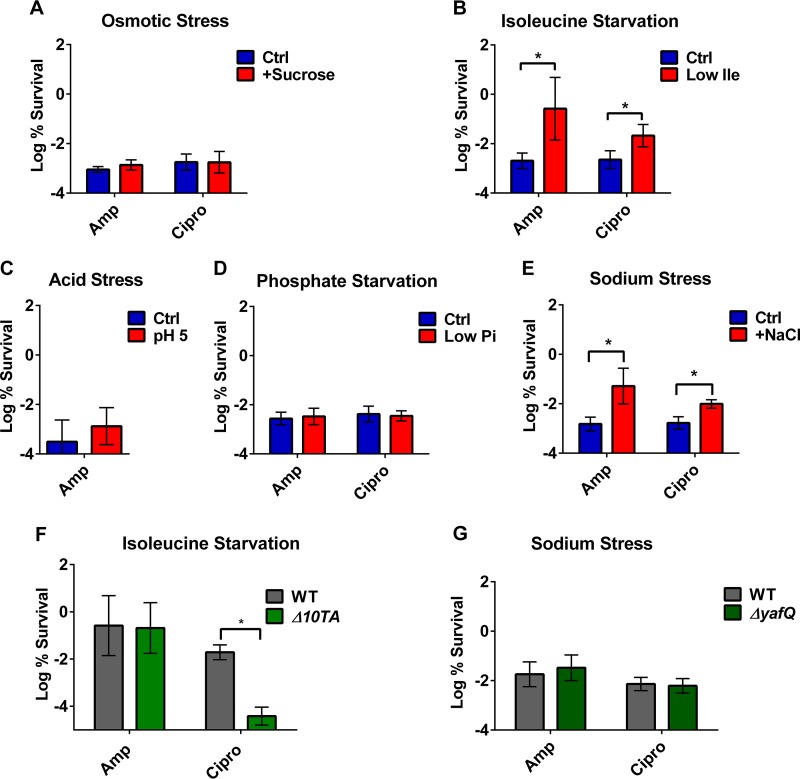
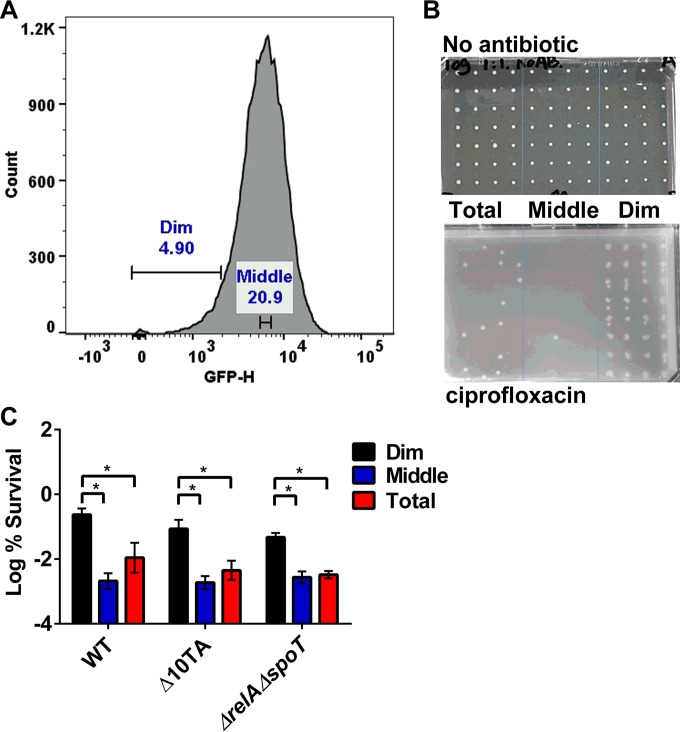
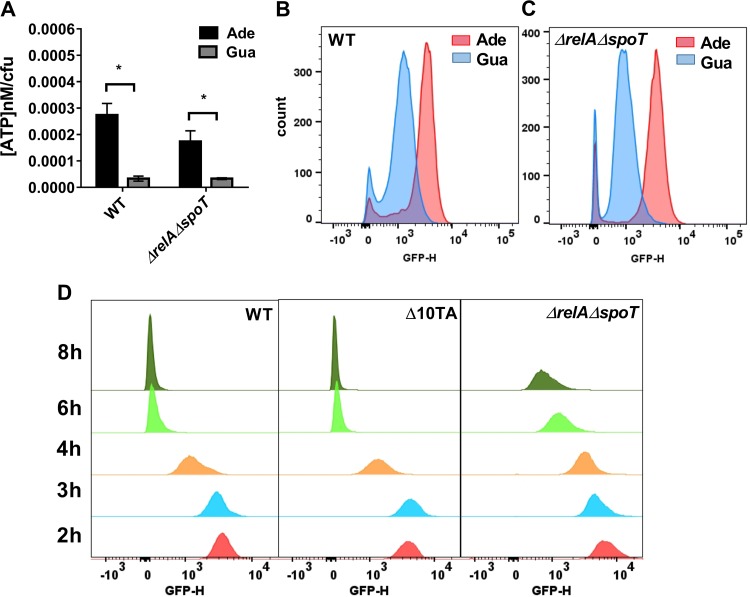
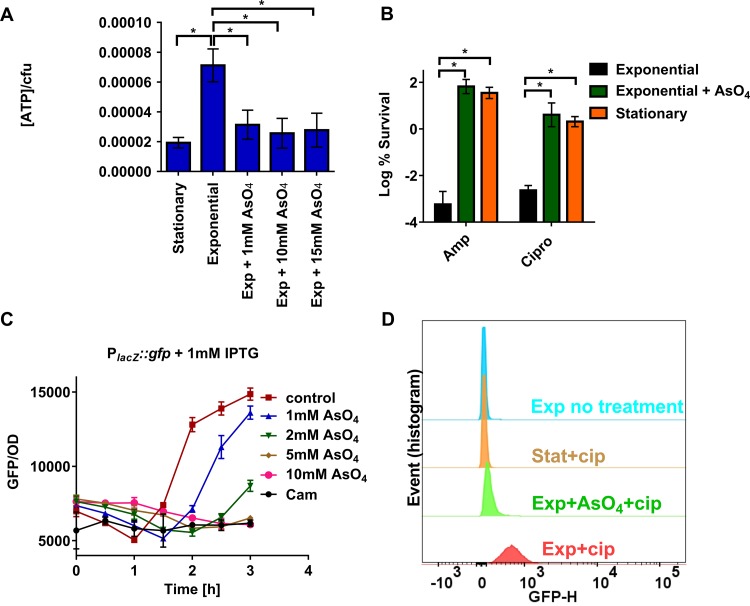
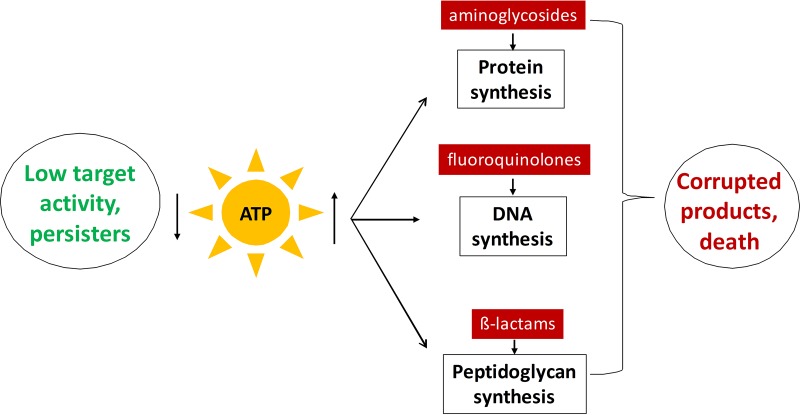
Persisters are dormant variants that form a subpopulation of cells tolerant to antibiotics. Persisters are largely responsible for the recalcitrance of chronic infections to therapy. In Escherichia coli , one widely accepted model of persister formation holds that stochastic accumulation of ppGpp causes activation of the Lon protease that degrades antitoxins; active toxins then inhibit translation, resulting in dormant, drug-tolerant persisters. We found that various stresses induce toxin-antitoxin (TA) expression but that induction of TAs does not necessarily increase persisters. The 16S rRNA promoter rrnB P1 was proposed to be a persister reporter and an indicator of toxin activation regulated by ppGpp. Using fluorescence-activated cell sorting (FACS), we confirmed the enrichment for persisters in the fraction of rrnB P1 -gfp dim cells; however, this is independent of toxin-antitoxins. rrnB P1 is coregulated by ppGpp and ATP. We show that rrnB P1 can report persisters in a relA / spoT deletion background, suggesting that rrnB P1 is a persister marker responding to ATP. Consistent with this finding, decreasing the level of ATP by arsenate treatment causes drug tolerance. Lowering ATP slows translation and prevents the formation of DNA double-strand breaks upon fluoroquinolone treatment. We conclude that variation in ATP levels leads to persister formation by decreasing the activity of antibiotic targets. IMPORTANCE Persisters are a subpopulation of antibiotic-tolerant cells responsible for the recalcitrance of chronic infections. Our current understanding of persister formation is primarily based on studies of E. coli . The activation of toxin-antitoxin systems by ppGpp has become a widely accepted model for persister formation. In this study, we found that stress-induced activation of mRNA interferase-type toxins does not necessarily cause persister formation. We also found that the persister marker rrnB P1 reports persister cells because it detects a drop in cellular ATP levels. Consistent with this, lowering the ATP level decreases antibiotic target activity and, thus, leads to persister formation. We conclude that stochastic variation in ATP is the main mechanism of persister formation. A decrease in ATP provides a satisfactory explanation for the drug tolerance of persisters, since bactericidal antibiotics act by corrupting energy-dependent targets.
Overview
The claims and statistics of this paper haven’t been checked yet.
Run the check — free, no account needed. It reads the open-access text and checks the sources it cites.
Integrity signals
Registry
Cites
Statistics
Figures
Verification
Claims the paper makes
The claims and statistics of this paper haven’t been checked yet.
Run the check — free, no account needed. It reads the open-access text and checks the sources it cites.
Claims other papers make about this one
Each is checked against this paper’s own text: does it say what the citing paper says it does?
The source backs part of the claim, not all of it — or backs it for a different population, condition or comparison.
In the citing paper
“It has been well studied that dormant state reduces the exposure of antibiotic targets and helps bacterial cells tolerate a variety of antibiotics, a process linked to the toxin-antitoxin system [18,54].”
From Antifungal persistence: Clinical relevance and mechanisms (2025) · cites this paper as [54]
Experimental — accuracy not yet measured
Self-check
Percentages, sums and reported differences re-computed from the paper’s own numbers.
The self-check needs the paper’s full text.
Citations
Cites
2 retracted
RETRACTED: Bacterial persistence by RNA endonucleases
Maisonneuve, E., Shakespeare, L. J., Jørgensen, M. G., & Gerdes, K. (2011) · Proceedings of the National Academy of Sciences · doi:10.1073/pnas.1100186108 · Cited by 473
RetractedMaisonneuve, E., Castro-Camargo, M., & Gerdes, K. (2013) · Cell · doi:10.1016/j.cell.2013.07.048 · Cited by 439
RetractedBacterial Persistence as a Phenotypic Switch
Balaban, N. Q., Merrin, J., Chait, R., Kowalik, L., & Leibler, S. (2004) · Science · doi:10.1126/science.1099390 · Cited by 2,952
Lewis, K. (2010) · Annual Review of Microbiology · doi:10.1146/annurev.micro.112408.134306 · Cited by 1,858
Self-citationIntracellular Bacterial Biofilm-Like Pods in Urinary Tract Infections
Anderson, G. G., Palermo, J. J., Schilling, J. D., Roth, R. A., Heuser, J., & Hultgren, S. J. (2003) · Science · doi:10.1126/science.1084550 · Cited by 1,175
Persister cells and tolerance to antimicrobials
Keren, I., Kaldalu, N., Spoering, A. L., Wang, Y., & Lewis, K. (2003) · FEMS Microbiology Letters · doi:10.1016/s0378-1097(03)00856-5 · Cited by 1,094
Self-citationProkaryotic toxin–antitoxin stress response loci
Gerdes, K., Christensen, S. K., & Løbner‐Olesen, A. (2005) · Nature Reviews Microbiology · doi:10.1038/nrmicro1147 · Cited by 1,033
Active Starvation Responses Mediate Antibiotic Tolerance in Biofilms and Nutrient-Limited Bacteria
Nguyen, D. M., Joshi-Datar, A., Lepine, F. L., Bauerle, E., Olakanmi, O., Beer, K. D., McKay, G. A., Siehnel, R., Schafhauser, J., Wang, Y., et al. (2011) · Science · doi:10.1126/science.1211037 · Cited by 1,008
The RpoS-Mediated General Stress Response in Escherichia coli
Battesti, A., Majdalani, N., & Gottesman, S. (2010) · Annual Review of Microbiology · doi:10.1146/annurev-micro-090110-102946 · Cited by 922
Specialized Persister Cells and the Mechanism of Multidrug Tolerance in Escherichia coli
Keren, I., Shah, D., Spoering, A. L., Kaldalu, N., & Lewis, K. (2004) · Journal of Bacteriology · doi:10.1128/jb.186.24.8172-8180.2004 · Cited by 848
Self-citation
Research works printed but not linked: 1
- 10.1016/j.cell.2013.07.048 · DOI
Cited by
Sorted by citations
Items 401–499 of 499
Narzary, J., Mohiuddin, S. G., Massahi, A., & Orman, M. A. (2026) · Microbiology Spectrum · doi:10.1128/spectrum.00277-26 · Cited by 1
Paradoxical Th1 activation and CTLA-4 regulation is beneficial during latent cryptococcosis
Ding, M., Drnevich, J. M., Yoder, J. M., Dang, E. V., & Nielsen, K. (2026) · mBio · doi:10.1128/mbio.01528-26 · Cited by 1
Zhang, F., Yang, L., Wang, X., Lu, B., & Cao, B. (2026) · 中国科学通报:英文版 · doi:10.1016/j.scib.2026.08.028 · Cited by 1
On the curvature and relaxation of microtubule plus-end tips
Skóra, T., Wu, J., Beckett, D., Xue, W., Voth, G. A., & Bidone, T. C. (2026) · Biophysical Journal · doi:10.1016/j.bpj.2025.07.003 · Cited by 1
Coarse-grained model of serial dilution dynamics in synthetic human gut microbiome
Mahajan, T., & Maslov, S. (2025) · PLoS Computational Biology · doi:10.1371/journal.pcbi.1013222 · Cited by 1
A bacterial toxin-antitoxin system involved in an unusual response to genotoxic stress
Lin, J. D., Nicholson, B. L., & Ensminger, A. W. (2025) · EMBO Reports · doi:10.1038/s44319-025-00545-y · Cited by 1
Vijayalakshmi, P., Alfaiz, F. A., Vijayakumar, R., Desai, D., & Selvaraj, C. (2025) · Microbial Pathogenesis · doi:10.1016/j.micpath.2025.108173 · Cited by 1
Sarangi, M. K., Kar, S. K., Singh, L. P., Das, S., ADHIKARI, S. N. R., Singh, A., Parashar, T., Joshi, M. D., & Mishra, N. (2026) · Peptide Science · doi:10.1002/pep2.70023 · Cited by 1
Kriel, N. L., Coetzee, J. L., Mouton, J., & Sampson, S. L. (2026) · Scientific Reports · doi:10.1038/s41598-026-39941-2 · Cited by 1
Energy expenditure and cellular activity underlie antibiotic tolerance of Pseudomonas aeruginosa
Gates, M. F., & Lewis, K. (2026) · mBio · doi:10.1128/mbio.03968-25 · Cited by 1
Self-citationZhu, W., Nong, Y., Su, J., Yang, J., Ma, L.-N., Xue, Y., Wang, D., Niu, J., Drlica, K., & Zhao, X. (2026) · mLife · doi:10.1002/mlf2.70059 · Cited by 1
Braetz, S., Karp, M., Nerlich, A., & Fulde, M. (2026) · Scientific Reports · doi:10.1038/s41598-026-47552-0 · Cited by 1
Rai, A., Sutanto, E., Ghimire, P., Wangchuk, S., Drukpa, T., Alam, M. S., Ghanchi, N. K., Awab, P. D. G. R., Rumaseb, A., Trimarsanto, H., et al. (2026) · The Journal of Infectious Diseases · doi:10.1093/infdis/jiag268 · Cited by 1
Yousuf, S., Misba, M., & Bhat, S. Y. (2026) · Frontiers in Cellular and Infection Microbiology · doi:10.3389/fcimb.2026.1852766 · Cited by 1
Dicks, L. M. T., Pohl, C. H., & Botha, A. (2026) · Current Issues in Molecular Biology · doi:10.3390/cimb48080777 · Cited by 1
Persisters running out of energy
Toit, A. D. (2017) · Nature Reviews Microbiology · doi:10.1038/nrmicro.2017.19 · Cited by 1
Multiomics Integration of Tuberculosis Pathogenesis
Lee, J. J., Sell, P., & Eoh, H. (2023) · Integrated science · doi:10.1007/978-3-031-15955-8_45 · Cited by 1
Amino acids can deplete ATP and impair nitric oxide detoxification by Escherichia coli
Wan, X., Chou, W. K., & Brynildsen, M. P. (2023) · Free Radical Biology and Medicine · doi:10.1016/j.freeradbiomed.2023.05.016 · Cited by 1
Zahid, A. L. N., Wang, K.-C., Thomsen, L. E., Meier, S., & Jensen, P. R. (2025) · Analytical Methods · doi:10.1039/d4ay02023e · Cited by 1
Molecular and Systems Biology Approaches for Analyzing Drug-Tolerant Bacterial Persister Cells
Duan, X., Fu, Y., & Yang, L. (2020) · Sustainable agriculture reviews · doi:10.1007/978-3-030-53024-2_5 · Cited by 1
Ghazaei, C. (2022) · International journal of basic science in medicine · doi:10.34172/ijbsm.2022.09 · Cited by 2
Mainou, E., Berendam, S. J., Obregon-Perko, V., Uffman, E. A., Phan, C. T., Shaw, G. M., Bar, K. J., Kumar, M. R., Fray, E. J., Siliciano, J. D., et al. (2026) · Viruses · doi:10.3390/v18101076 · Cited by 1
Disruption of the MreB elongasome is overcome by mutations in the TCA cyclePreprint
Barton, B., Grinnell, A., & Morgenstein, R. M. (2020) · bioRxiv (Cold Spring Harbor Laboratory) · doi:10.1101/2020.06.18.160713 · Cited by 1
Dynamic Adaptation in Extant Porins Facilitates Antibiotic Tolerance in Energetic Escherichia coliPreprint
Mukhopadhyay, S., Bishayi, R., Shaji, A., Lee, A. H., Gupta, R., Mohajeri, M., Katiyar, A., McKee, B., Schmitz, I. R., Shin, R., et al. (2024) · bioRxiv (Cold Spring Harbor Laboratory) · doi:10.1101/2024.03.07.583920 · Cited by 1
Unraveling CRP/cAMP-Mediated Metabolic Regulation In Escherichia coli Persister CellsPreprint
Ngo, H. G., Mohiuddin, S. G., Ananda, A., & Orman, M. A. (2024) · eLife · doi:10.7554/elife.99735.1 · Cited by 1
ATP burst is the dominant driver of antibiotic lethality in MycobacteriaPreprint
Lodhiya, T., Palande, A., Veeram, A., Larrouy-Maumus, G. J., Beste, D. J. V., & Mukherjee, R. (2024) · eLife · doi:10.7554/elife.99656.1 · Cited by 1
Estimating the rate of sexual reproduction and the inbreeding rate in LeishmaniaPreprint
Nicoll, A. G., Kilford, H., Grace, C. A., Reis-Cunha, J. L., Jeffares, D. C., & Constable, G. W. A. (2024) · bioRxiv (Cold Spring Harbor Laboratory) · doi:10.1101/2024.10.15.618469 · Cited by 1
Unraveling CRP/cAMP-mediated metabolic regulation in Escherichia coli persister cellsPreprint
Ngo, H. G., Mohiuddin, S. G., Ananda, A., & Orman, M. A. (2025) · eLife · doi:10.7554/elife.99735.2 · Cited by 1
Motility Functions as an Essential Defense in the Bacterial Persister LifecyclePreprint
Xiong, Y., Fang, X., & Wang, J. (2025) · bioRxiv (Cold Spring Harbor Laboratory) · doi:10.64898/2025.12.17.694804 · Cited by 1
Stress induces the transcription of toxin-antitoxin systems but does not activate toxinPreprint
LeRoux, M. (2021) · bioRxiv (Cold Spring Harbor Laboratory) · doi:10.17632/yy7nxps3np · Cited by 1
- Self-citation
The New Versus Old Target Debate for Drug Discovery
Erwin, A. L. (2018) · Springer eBooks · doi:10.1007/978-3-319-78538-7_18
Bacterial longevity requires protein synthesis and a stringent response
Yin, L., Ma, H., Nakayasu, E. S., Payne, S. H., Morris, D. R., & Harwood, C. S. (2019) · doi:10.1101/628826
Han, J., Liu, Z., Xu, T., Shi, W., Xu, X., Wang, S., Ji, L., Xu, Y., Peng, Q., Li, W., et al. (2019) · bioRxiv (Cold Spring Harbor Laboratory) · doi:10.1101/861500
Wu, X. (2020) · The Atrium (University of Guelph)
На пересечении биоэнергетики и открытия антибиотиков
Льюис, К. (2020) · Biochemistry (Moscow) · doi:10.31857/s0320972520120015
Yang, J., Xiang, B., Wang, W., Rao, S., Cao, R., Xiao, S., Cui, X., Huang, Y., & Ye, L. (2021) · Research Square · doi:10.21203/rs.3.rs-493339/v1
Motter, K. (2021) · Aquila Digital Community (University of Southern Mississippi)
Starvation Elicits PspA-Dependent Phenotypic Antibiotic Tolerance in Escherichia ColiPreprint
Wang, M., Chan, E. W., Wong, M. H. Y., & Chen, S. (2018) · SSRN Electronic Journal · doi:10.2139/ssrn.3155553
Acute Sensitivity of V. cholerae to Phosphate Starvation: A Possible Case of Futile Metabolism
Paranjape, S. S., & Shashidhar, R. (2022) · Current Microbiology · doi:10.1007/s00284-021-02726-z
Dhar, N. (2021) · Faculty Opinions – Post-Publication Peer Review of the Biomedical Literature · doi:10.3410/f.739102040.793585429
Evaluation of Escherichia coli hydrogenases in persistencePreprint
Shekhar, C., Kai, T., Wood, T. K., & Maeda, T. (2022) · Research Square · doi:10.21203/rs.3.rs-1402538/v1
Peptides with Therapeutic Potential against Acinetobacter baumanii Infections
Rangel, K., & De-Simone, S. G. (2022) · IntechOpen eBooks · doi:10.5772/intechopen.100389
Faculty Opinions recommendation of Antibiotic efficacy-context matters.
Bumann, D. (2019) · Faculty Opinions – Post-Publication Peer Review of the Biomedical Literature · doi:10.3410/f.732012428.793566048
Nielsen, J. (2019) · Faculty Opinions – Post-Publication Peer Review of the Biomedical Literature · doi:10.3410/f.735729556.793560891
Zalis, E. A. (2019) · doi:10.17760/d20316321
Faculty Opinions recommendation of ATP-Dependent Persister Formation in Escherichia coli.
Bumann, D. (2019) · Faculty Opinions – Post-Publication Peer Review of the Biomedical Literature · doi:10.3410/f.727286675.793566037
Persisters of Escherichia coli
Nicolau, S. E. (2021) · doi:10.17760/d20423509
Fox, G. (2022) · Digital Repository Service (Northeastern University) · doi:10.17760/d20474674
Membrane Effects of Antimicrobial Peptides
Wang, X. (2023) · doi:10.33540/2009
Alarmones as bacterial persistence factor
Sidorov, R. Y., & Ткаченко, А. Г. (2023) · Вестник Пермского университета. Серия: Биология · doi:10.17072/1994-9952-2023-4-356-366
ATP burst is the dominant driver of antibiotic lethality in MycobacteriaPreprint
Lodhiya, T., Palande, A., Veeram, A., Larrouy-Maumus, G. J., Beste, D. J. V., & Mukherjee, R. (2024) · eLife · doi:10.7554/elife.99656.2
Kumar, R., & Johnston, I. G. (2024) · bioRxiv (Cold Spring Harbor Laboratory) · doi:10.1101/2024.11.30.626137
Potential Risks and Challenges of Bacterial Persistence in Food Safety
Dawan, J., Kim, J., Liao, X., Ding, T., & Ahn, J. (2025) · Food Reviews International · doi:10.1080/87559129.2025.2453622
Fondi, M., Riccardi, C., Patti, F. D., Vaccaro, F., Coscione, F., Mengoni, A., & Perrin, E. (2025) · Communications Biology · doi:10.1038/s42003-025-08566-y
The pH gradient contributes to persistence in Mycobacterium tuberculosisPreprint
Sherman, D. R., Eldesouky, H. E., Adams, K. N., Brache, J. K., Aguila, L. K. T., Garcia, M., Xing, E., & Li, P. (2025) · Research Square · doi:10.21203/rs.3.rs-7466214/v1
The pH gradient contributes to persistence in Mycobacterium tuberculosisPreprint
Eldesouky, H. E., Adams, K. N., Brache, J. K., Aguila, L. K. T., Garcia, M., Xing, E., Li, P., & Sherman, D. R. (2025) · bioRxiv (Cold Spring Harbor Laboratory) · doi:10.1101/2025.09.12.675885
Wildlife Provisioning Selects for Higher Pathogen Virulence in Hosts with Incomplete Immunity
Walsman, J. M., Fleming-Davies, A. E., Hall, R. J., & Hawley, D. M. (2025) · The American Naturalist · doi:10.1086/738726
Doblin: inferring dominant clonal lineages from high-resolution DNA barcoding time series
Gencel, M., Gagné-Leroux, D., & Serohijos, A. W. R. (2025) · Bioinformatics · doi:10.1093/bioinformatics/btaf555
Deng, Y., Beahm, D. R., Ionov, S., & Sarpeshkar, R. (2021) · Figshare · doi:10.6084/m9.figshare.14608768
Deng, Y., Beahm, D. R., Ionov, S., & Sarpeshkar, R. (2021) · Figshare · doi:10.6084/m9.figshare.14608774
Deng, Y., Beahm, D. R., Ionov, S., & Sarpeshkar, R. (2021) · Figshare · doi:10.6084/m9.figshare.14608777
Deng, Y., Beahm, D. R., Ionov, S., & Sarpeshkar, R. (2021) · Figshare · doi:10.6084/m9.figshare.14608771
Deng, Y., Beahm, D. R., Ionov, S., & Sarpeshkar, R. (2021) · Figshare · doi:10.6084/m9.figshare.14608810
Peng, J., Triplett, L. R., & Sundin, G. W. (2021) · Figshare · doi:10.6084/m9.figshare.13632569
Unveiling microbial stress survival—acclimation mechanisms and its implications
Sharma, A. D. (2025) · Elsevier eBooks · doi:10.1016/b978-0-443-27622-4.00005-5
Giusti, A., Salzano, D., di Bernardo, M., & Gorochowski, T. E. (2026) · Journal of The Royal Society Interface · doi:10.1098/rsif.2025.0780
Rodriguez-Sanchez, G. T. T., Rogers, D. W., & Rainey, P. B. (2026) · bioRxiv (Cold Spring Harbor Laboratory) · doi:10.64898/2026.01.27.702051
Wang, W., Jia, H. L., Wang, Y., Bai, Q., Liu, R., Sun, T., Yue, Y., Wang, X., Zhao, Y., Liu, X., et al. (2026) · bioRxiv (Cold Spring Harbor Laboratory) · doi:10.64898/2026.02.09.704795
Fan, J., Xu, D., Wang, Z., Fu, Y., Su, X., Hu, S., & Shen, C. (2026) · Water Research X · doi:10.1016/j.wroa.2026.100530
Bacterial persisters: from mechanism modules to target prioritization and inhibitor development
Chen, Z., Zhang, R., Dai, R., Zhou, Q., Pan, Y., & Huang, L. (2026) · Microbial Pathogenesis · doi:10.1016/j.micpath.2026.108472
Chauhan, P., & Bruggeman, F. J. (2026) · FEMS Microbiology Letters · doi:10.1093/femsle/fnag048
Pheromone cCF10 Enhances Persister Formation in Enterococcus faecalis via Transcriptomic Changes
Qian, J., Yang, X., Li, R., Zhang, M., Hao, R., He, Q., Xu, L., Shen, Z., Wang, J., Sun, F., et al. (2026) · Microorganisms · doi:10.3390/microorganisms14050960
Acetate promotes nutritional adaptation in Escherichia coliPreprint
Devlin, L., Oudard, V., Barthe, M., Gosselin‐Monplaisir, T., Dupin, J.-B., Condamine, F., Baudry, J., Cocaign‐Bousquet, M., Millard, P., & Enjalbert, B. (2026) · bioRxiv (Cold Spring Harbor Laboratory) · doi:10.64898/2026.05.05.722864
Ganguli, D., Chakraborty, S., Dasgupta, S., Sahoo, S. R., Bhattacharya, D., Dey, S., Pal, A., Gachhui, R., & Das, S. (2026) · bioRxiv (Cold Spring Harbor Laboratory) · doi:10.64898/2026.05.12.724561
Selection bias in microbial mutation accumulation studies and the impact of colony growth
Grosse-Sommer, J. M., & Hadfield, J. D. (2026) · Genetics · doi:10.1093/genetics/iyag263
Aerocavin Is an Antibiotic with Potent and Specific Anti-Neisserial Activity
Pishchany, G., Fryling, K. E., Vasukuttan, V., Shin, Y., Mortimer, T. D., Grad, Y. H., & Clardy, J. (2026) · ACS Infectious Diseases · doi:10.1021/acsinfecdis.6c00197
Alves, Â., Pombinho, R., & Cabanes, D. (2026) · Frontiers in Microbiology · doi:10.3389/fmicb.2026.1832970
Targeting the FtsH protease unmasks a universal vulnerability to antimicrobial peptoids
Tun, Z. M. M., Sørensen, K., Moore, E., Chen, J., Nielsen, J. E., Lin, J. S., Maria, P. L. S., Bekale, L. A., & Barron, A. E. (2026) · International Journal of Biological Macromolecules · doi:10.1016/j.ijbiomac.2026.153238
Qin, M., He, Y., Zhou, Y., Zhang, P., Guo, L., Li, C., & Zhang, S. (2026) · Current Research in Microbial Sciences · doi:10.1016/j.crmicr.2026.100644
Sun, R., Tian, Y., Xue, S., Cui, Y., Zhao, Y., Li, S. Y., Yuan, J., Zhang, X., & Zhang, C. (2026) · Journal of Hazardous Materials · doi:10.1016/j.jhazmat.2026.143000
Xu, Q., Fan, L.-Y., Wu, J.-Y., Zhang, T., Cao, Z.-Y., Zhang, B., Su, Y., & Fei, J. (2026) · Journal of Proteome Research · doi:10.1021/acs.jproteome.6c00131
屈欢, Yang, E., Li, Z., & Li, Y. (2026) · European Journal of Plant Pathology · doi:10.1007/s10658-026-03266-7
The bacterial pH gradient contributes to persistence in Mycobacterium tuberculosis
Eldesouky, H. E., Adams, K. N., Brache, J. K., Aguila, L. K. T., Garcia, M., Xing, E., Li, P., & Sherman, D. R. (2026) · mBio · doi:10.1128/mbio.01692-26
Stojowska‐Swędrzyńska, K., Kuczyńska‐Wiśnik, D., & Laskowska, E. (2026) · Pathogens · doi:10.3390/pathogens15090964
Li, J., Li, M., Yan, Y., Wang, S., Yang, Q., Ma, J., Qi, Y., Zhou, W., & Yang, B. (2026) · Food Research International · doi:10.1016/j.foodres.2026.120850
Seregina, T. A., Shakulov, R. S., Sklyarova, S. A., & Mironov, A. S. (2026) · Cells · doi:10.3390/cells15191740
Thermal Shifts Dominate Single‐Gene Responses to Transcription‐Targeting Antibiotics
Jagadeesan, R., Arsh, A. M., Chauhan, V., Dash, S., Ravaria, P., & Ribeiro, A. S. (2026) · Advanced Science · doi:10.1002/advs.77965
Heteroresistance tolerance and persistence in antibiotic treatment failure
Ombasic, A., & Messaoudi, F. A. (2026) · Folia Microbiologica · doi:10.1007/s12223-026-01612-0
Lin, Y., Wu, Q., Guo, Q., Xu, X., Gu, H., Wu, Y., Meng, L., & Ye, G. (2026) · Rice · doi:10.1186/s12284-026-00963-z
Metabolic Pathways as Targets for Antimicrobial Therapy
Mishra, S., Rosenn, E. H., & Soni, V. (2026) · Springer eBooks · doi:10.1007/978-3-032-30306-6_11
mGem: Antibiotic tolerance across the growth-rate continuum in chronic human infections
Roberts, B., Brown, S. P., Diggle, S. P., & Whiteley, M. (2026) · mBio · doi:10.1128/mbio.01926-26
BindingDB Entry 50020492: Dual Inhibition of
BindingDB (2024) · UC San Diego · doi:10.7270/q2ks6x08
Metadata
- Authors
- Shan, Y., Brown Gandt, A., Rowe, S. E., Deisinger, J. P., Conlon, B. P., & Lewis, K.
- Affiliations
- Northeastern University (US)
- Department of Biology, Antimicrobial Discovery Center, Northeastern University, Boston, Massachusetts, USA
- Corresponding author
- Lewis, Kim
- Venue
- mBio
- Publisher
- American Society for Microbiology
- Published
- 2017-03-08
- Volume
- 8
- Issue
- 1
- ISSN
- 2150-7511 (ISSN-L)
- 2161-2129
- PMC
- PMC5296605
- OpenAlex
- W2586386056
- Cited by
- 508
- References
- 71
- Citations by year
- 2026: 55 · 2025: 61 · 2024: 47 · 2023: 42 · 2022: 54 · 2021: 61 · 2020: 56 · 2019: 69 · 2018: 37 · 2017: 26
- FWCI
- 34.04
- Type
- journal article
- Language
- en
- Open access
- gold
- doi.org
- Licence
- Locations
- mBio (publishedVersion, cc-by)
- Europe PMC (PubMed Central) (publishedVersion, cc-by)
- PubMed Central (publishedVersion, cc-by)
- PubMed (publishedVersion)
- Carolina Digital Repository (University of North Carolina at Chapel Hill) (submittedVersion)
- DOAJ (DOAJ: Directory of Open Access Journals) (submittedVersion, cc-by-sa)
- DOAJ (DOAJ: Directory of Open Access Journals) (submittedVersion)
- UNC Libraries
- Funders
- DH | National Institute for Health Research (R01AI110578)
- Charles A. King Trust (Fellowship)
- Topics
- Life Sciences › Biochemistry, Genetics and Molecular Biology › Genetics › Bacterial Genetics and Biotechnology
- Health Sciences › Medicine › Infectious Diseases › Antimicrobial Resistance in Staphylococcus
- Life Sciences › Biochemistry, Genetics and Molecular Biology › Molecular Biology › Bacterial biofilms and quorum sensing
- Keywords
- persister cells, antibiotic tolerance, Escherichia coli, ATP levels, toxin-antitoxin systems, ppGpp, Lon protease, arsenate, protein synthesis inhibition, DNA double-strand breaks, fluoroquinolones, chronic infection
- MeSH terms
- Adenosine Triphosphate, Drug Tolerance, Escherichia coli, Gene Expression Regulation, Bacterial, Microbial Viability
About these checks
Registry, retraction, Cites and statistics results are computed, not judged, with one exception: a printed reference that no index lists is read once by a model before it counts as a citation error. Claims are extracted by a model and kept only when their quote appears verbatim in the text; each cited source is then checked, with a model’s help, for whether it says what the claim relies on. Those verdicts can be wrong — read the claim’s quote and the cited source before relying on one.
Statistics and arithmetic are recomputed, not judged.
Confidence bands are shown only for fields calibrated on our annotated test set. None is calibrated yet, so no band is shown.
What counts as a claim ›How we measure confidence ›How we check this ›
Are you an author, or do you see a problem with this page? Request a review
