

The DOI matches its Crossref record; 45 of the 45 references it cites were found in a registry or an index.
Bacterial Topography of the Healthy Human Lower Respiratory Tract
Open accessAbstract
ABSTRACT Although culture-independent techniques have refuted lung sterility in health, controversy about contamination during bronchoscope passage through the upper respiratory tract (URT) has impeded research progress. We sought to establish whether bronchoscopic sampling accurately reflects the lung microbiome in health and to distinguish between two proposed routes of authentic microbial immigration, (i) dispersion along contiguous respiratory mucosa and (ii) subclinical microaspiration. During bronchoscopy of eight adult volunteers without lung disease, we performed seven protected specimen brushings (PSB) and bilateral bronchoalveolar lavages (BALs) per subject. We amplified, sequenced, and analyzed the bacterial 16S rRNA gene V4 regions by using the Illumina MiSeq platform. Rigorous attention was paid to eliminate potential sources of error or contamination, including a randomized processing order and the inclusion and analysis of exhaustive procedural and sequencing control specimens. Indices of mouth-lung immigration (mouth-lung community similarity, bacterial burden, and community richness) were all significantly greater in airway and alveolar specimens than in bronchoscope contamination control specimens, indicating minimal evidence of pharyngeal contamination. Ecological indices of mouth-lung immigration peaked at or near the carina, as predicted for a primary immigration route of microaspiration. Bacterial burden, diversity, and mouth-lung similarity were greater in BAL than PSB samples, reflecting differences in the sampled surface areas. (This study has been registered at ClinicalTrials.gov under registration no. NCT02392182.) IMPORTANCE This study defines the bacterial topography of the healthy human respiratory tract and provides ecological evidence that bacteria enter the lungs in health primarily by microaspiration, with potential contribution in some subjects by direct dispersal along contiguous mucosa. By demonstrating that contamination contributes negligibly to microbial communities in bronchoscopically acquired specimens, we validate the use of bronchoscopy to investigate the lung microbiome.
Overview
The claims and statistics of this paper haven’t been checked yet.
Run the check — free, no account needed. It reads the open-access text and checks the sources it cites.
Integrity signals
Registry
Cites
Statistics
Figures
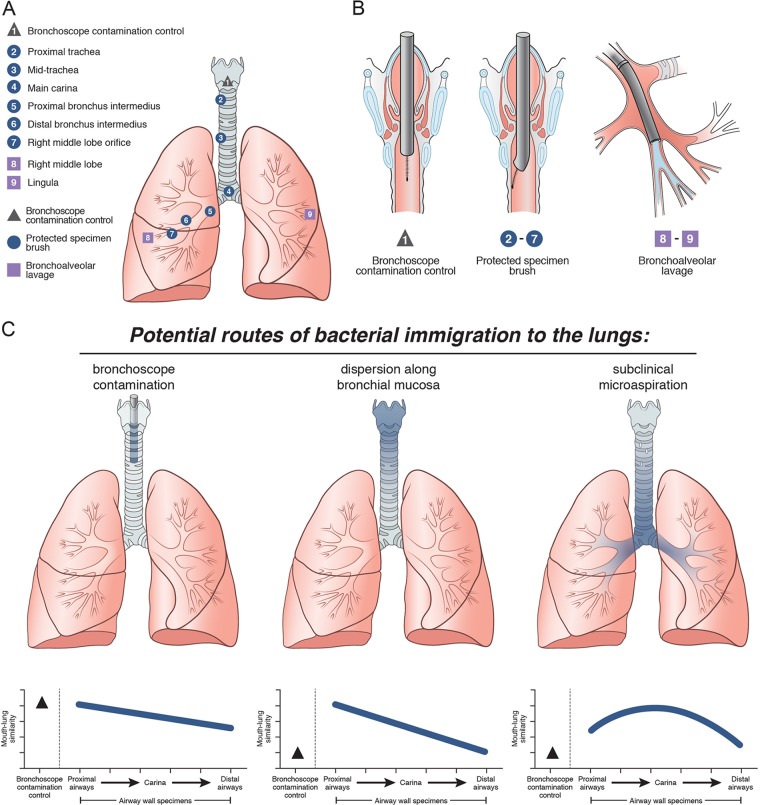
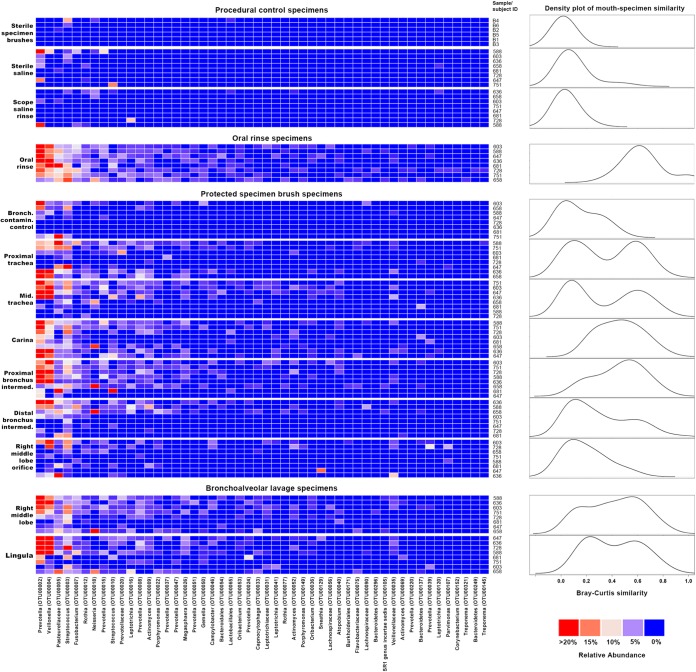
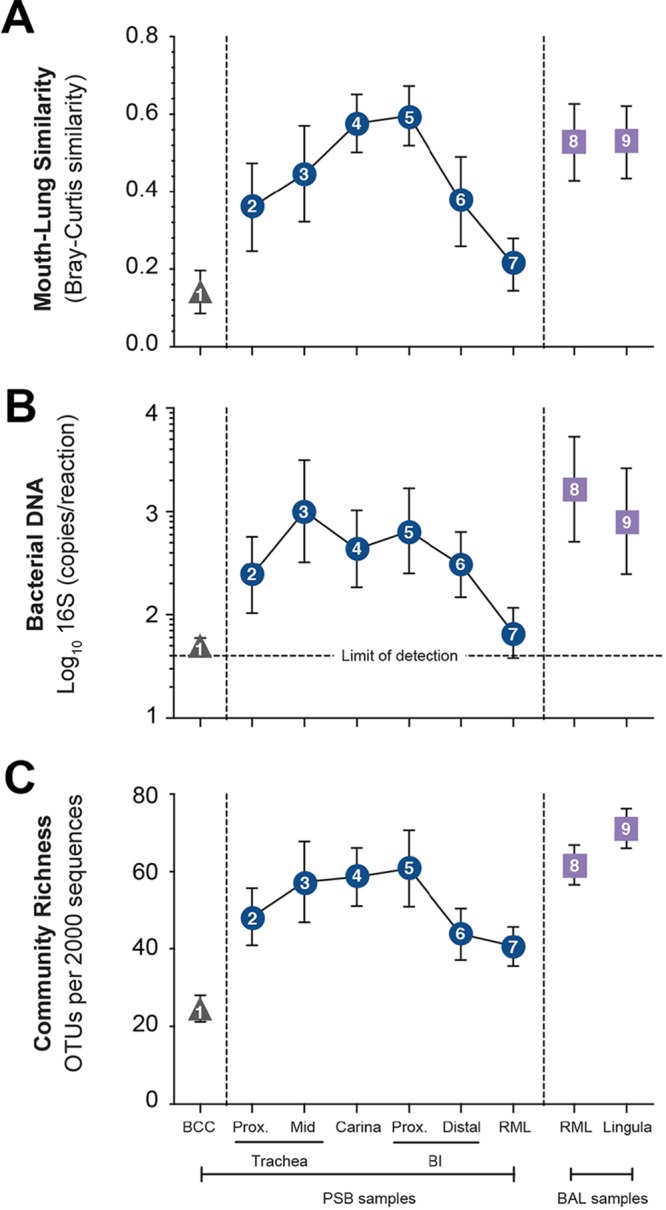
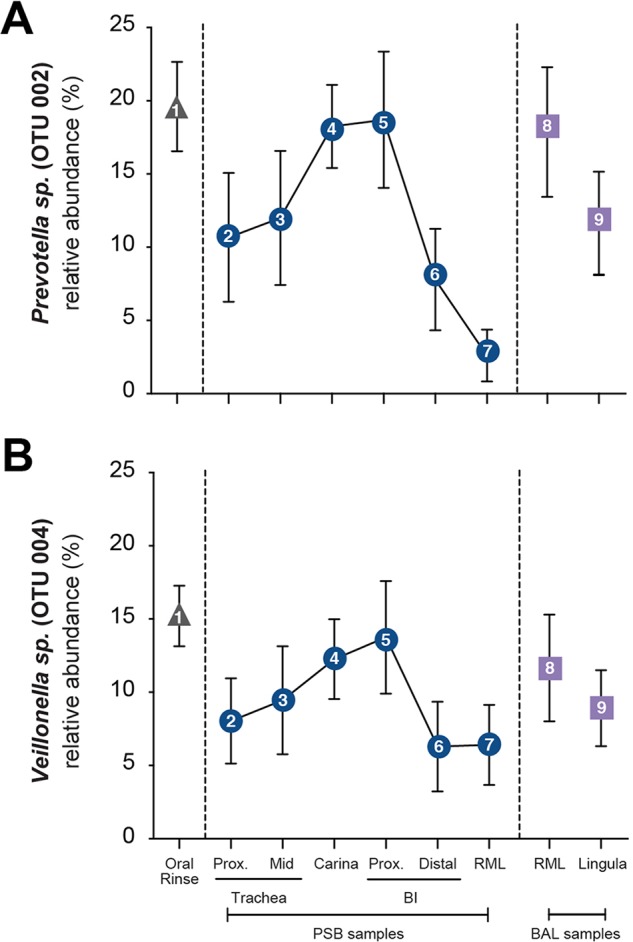
Verification
Claims the paper makes
The claims and statistics of this paper haven’t been checked yet.
Run the check — free, no account needed. It reads the open-access text and checks the sources it cites.
Claims other papers make about this one
Each is checked against this paper’s own text: does it say what the citing paper says it does?
In the citing paper
“In healthy individuals, the microbial community richness (i.e., the total number of bacterial taxa) is lower in the LRT than that in the URT”
From Respiratory viral infection-induced microbiome alterations and secondary bacterial pneumonia. (2018) · cites this paper as [74]
Self-check
Percentages, sums and reported differences re-computed from the paper’s own numbers.
The self-check needs the paper’s full text.
Citations
Cites
R: A Language and Environment for Statistical Computing
R Core Team (2000) · doi:10.32614/r.manuals · Cited by 355,893
A new look at the statistical model identification
Akaike, H. (1974) · IEEE Transactions on Automatic Control · doi:10.1109/tac.1974.1100705 · Cited by 51,879
Schloss, P. D., Westcott, S. L., Ryabin, T., Hall, J. R., Hartmann, M., Hollister, E. B., Lesniewski, R. A., Oakley, B. B., Parks, D. H., Robinson, C. J., et al. (2009) · Applied and Environmental Microbiology · doi:10.1128/aem.01541-09 · Cited by 19,549
Complex heatmaps reveal patterns and correlations in multidimensional genomic data
Gu, Z., Eils, R., & Schlesner, M. (2016) · Bioinformatics · doi:10.1093/bioinformatics/btw313 · Cited by 10,037
Global patterns of 16S rRNA diversity at a depth of millions of sequences per sample
Caporaso, J. G., Lauber, C. L., Walters, W. A., Berg-Lyons, D., Lozupone, C., Turnbaugh, P. J., Fierer, N., & Knight, R. D. (2010) · Proceedings of the National Academy of Sciences · doi:10.1073/pnas.1000080107 · Cited by 9,944
Kozich, J. J., Westcott, S. L., Baxter, N. T., Highlander, S. K., & Schloss, P. D. (2013) · Applied and Environmental Microbiology · doi:10.1128/aem.01043-13 · Cited by 7,246
Vegan : community ecology package. R package version 1.17-9
Oksanen, J. (2007) · Medical Entomology and Zoology · Cited by 6,549
(1980) · Annals of Internal Medicine · doi:10.7326/0003-4819-92-3-460_4 · Cited by 4,593
Reagent and laboratory contamination can critically impact sequence-based microbiome analyses
Salter, S. J., Cox, M. J., Turek, E. M., Calus, S. T., Cookson, W. O., Moffatt, M. F., Turner, P., Parkhill, J., Loman, N. J., & Walker, A. W. (2014) · BMC Biology · doi:10.1186/s12915-014-0087-z · Cited by 3,463
Disordered Microbial Communities in Asthmatic Airways
Hilty, M., Burke, C. M., Pedro, H., Cárdenas, P., Bush, A., Bossley, C. J., Davies, J. C., Ervine, A., Poulter, L. W., Pachter, L. S., et al. (2010) · PLoS ONE · doi:10.1371/journal.pone.0008578 · Cited by 1,874
Cited by
Sorted by citations
The Role of Lung and Gut Microbiota in the Pathology of Asthma
Barcik, W., Boutin, R. C. T., Sokołowska, M., & Finlay, B. B. (2020) · Immunity · doi:10.1016/j.immuni.2020.01.007 · Cited by 636
The dynamic lung microbiome in health and disease
Natalini, J. G., Singh, S., & Segal, L. N. (2022) · Nature Reviews Microbiology · doi:10.1038/s41579-022-00821-x · Cited by 546
Analysis of Gut Microbiota in Patients with Parkinson’s Disease
Petrov, V. A., Saltykova, I. V., Zhukova, I. A., Alifirova, V. M., Zhukova, N. G., Dorofeeva, Y. B., Tyakht, A. V., Kovarsky, B. A., Alekseev, D. G., Kostryukova, E. S., et al. (2017) · Bulletin of Experimental Biology and Medicine · doi:10.1007/s10517-017-3700-7 · Cited by 487
Respiratory viral infection-induced microbiome alterations and secondary bacterial pneumonia.
Hanada, S., Pirzadeh, M., Carver, K. Y., & Deng, J. C. (2018) · Frontiers in Immunology · doi:10.3389/fimmu.2018.02640 · Cited by 495
Functional effects of the microbiota in chronic respiratory disease
Budden, K. F., Shukla, S. D., Rehman, S. F., Bowerman, K. L., Keely, S., Hugenholtz, P., Armstrong-James, D. P. H., Adcock, I. M., Chotirmall, S. H., Chung, K. F., et al. (2019) · The Lancet Respiratory Medicine · doi:10.1016/s2213-2600(18)30510-1 · Cited by 453
The role of the lung microbiota and the gut–lung axis in respiratory infectious diseases
Dumas, A., Bernard, L., Poquet, Y., Lugo-Villarino, G., & Neyrolles, O. (2018) · Cellular Microbiology · doi:10.1111/cmi.12966 · Cited by 444
Lung microbiome: new insights into the pathogenesis of respiratory diseases
Li, R., Li, J., & Zhou, X. (2024) · Signal Transduction and Targeted Therapy · doi:10.1038/s41392-023-01722-y · Cited by 483
Langelier, C., Kalantar, K. L., Moazed, F., Wilson, M. R., Crawford, E. D., Deiss, T., Belzer, A., Bolourchi, S., Caldera, S., Fung, M., et al. (2018) · Proceedings of the National Academy of Sciences · doi:10.1073/pnas.1809700115 · Cited by 411
Diet, Microbiota and Gut-Lung Connection
Anand, S., & Mande, S. S. (2018) · Frontiers in Microbiology · doi:10.3389/fmicb.2018.02147 · Cited by 423
Pathogenesis of pneumonia and acute lung injury
Long, M. E., Mallampalli, R. K., & Horowitz, J. C. (2022) · Clinical Science · doi:10.1042/cs20210879 · Cited by 418
Lung Microbiota Predict Clinical Outcomes in Critically Ill Patients
Dickson, R. P., Schultz, M. J., van der Poll, T., Schouten, L. R. A., Falkowski, N. R., Luth, J. E., Sjoding, M. W., Brown, C. A., Chanderraj, R., Huffnagle, G. B., et al. (2020) · American Journal of Respiratory and Critical Care Medicine · doi:10.1164/rccm.201907-1487oc · Cited by 369
Self-citationThe role of the microbiota in infectious diseases
Libertucci, J., & Young, V. B. (2018) · Nature Microbiology · doi:10.1038/s41564-018-0278-4 · Cited by 370
Commensal Fungi in Health and Disease
Limon, J. J., Skalski, J. H., & Underhill, D. M. (2017) · Cell Host & Microbe · doi:10.1016/j.chom.2017.07.002 · Cited by 336
Lower Airway Dysbiosis Affects Lung Cancer Progression
Tsay, J.-C. J., Wu, B. G., Sulaiman, I., Gershner, K., Schluger, R., Li, Y., Yie, T.-A., Meyn, P., Olsen, E., Perez, L., et al. (2021) · Cancer Discovery · doi:10.1158/2159-8290.cd-20-0263 · Cited by 322
At the Root: Defining and Halting Progression of Early Chronic Obstructive Pulmonary Disease
Martínez, F. J., Han, M. K., Allinson, J. P., Barr, R. G., Boucher, R. C., Calverley, P. M. A., Celli, B. R., Christenson, S. A., Crystal, R. G., Fagerås, M., et al. (2018) · American Journal of Respiratory and Critical Care Medicine · doi:10.1164/rccm.201710-2028pp · Cited by 290
Self-citationYildiz, S., Mazel-Sanchez, B., Kandasamy, M., Manicassamy, B., & Schmolke, M. (2018) · Microbiome · doi:10.1186/s40168-017-0386-z · Cited by 264
Theis, K. R., Romero, R. J., Winters, A. D., Greenberg, J. M., Gomez‐Lopez, N., Alhousseini, A., Bieda, J., Maymon, E., Pacora, P., Fettweis, J. M., et al. (2019) · American Journal of Obstetrics and Gynecology · doi:10.1016/j.ajog.2018.10.018 · Cited by 264
Dickson, R. P., Erb‐Downward, J. R., Falkowski, N. R., Hunter, E. M., Ashley, S. L., & Huffnagle, G. B. (2018) · American Journal of Respiratory and Critical Care Medicine · doi:10.1164/rccm.201711-2180oc · Cited by 256
Self-citationLiu, H., Tao, L., Zhang, J., Zhu, Y., Zheng, Y., Liu, D., Zhou, M., Ke, H., Shi, M., & Qu, J. (2018) · International Journal of Cancer · doi:10.1002/ijc.31098 · Cited by 235
The human microbiome in disease and pathology
Manos, J. (2022) · Apmis · doi:10.1111/apm.13225 · Cited by 252
Man, W. H., van Houten, M. A., Mérelle, M. E., Vlieger, A. M., Chu, M. L. J. N., Jansen, N. J. G., Sanders, E. A. M., & Bogaert, D. (2019) · The Lancet Respiratory Medicine · doi:10.1016/s2213-2600(18)30449-1 · Cited by 217
The potential application of probiotics and prebiotics for the prevention and treatment of COVID-19
Olaimat, A. N., Aolymat, I., Al‐Holy, M., Ayyash, M. M., Abughoush, M. H., Al‐Nabulsi, A. A., Osaili, T. M. I., Apostolopoulos, V., Liu, S., & Shah, N. P. (2020) · npj Science of Food · doi:10.1038/s41538-020-00078-9 · Cited by 222
The lung microbiome in health and disease
Moffatt, M. F., & Cookson, W. (2017) · Clinical Medicine · doi:10.7861/clinmedicine.17-6-525 · Cited by 213
The lung microbiome: progress and promise
Whiteside, S. A., McGinniss, J. E., & Collman, R. G. (2021) · Journal of Clinical Investigation · doi:10.1172/jci150473 · Cited by 203
Methods in Lung Microbiome Research
Carney, S. M., Clemente, J. C., Cox, M. J., Dickson, R. P., Huang, Y. J., Kitsios, G. D., Kloepfer, K. M., Leung, J. M., LeVan, T. D., Molyneaux, P. L., et al. (2019) · American Journal of Respiratory Cell and Molecular Biology · doi:10.1165/rcmb.2019-0273tr · Cited by 201
Self-citationThe Human Respiratory System and its Microbiome at a Glimpse
Santacroce, L., Charitos, I. A., Ballini, A., Inchingolo, F., Luperto, P., Nitto, E. D., & Topi, S. (2020) · Biology · doi:10.3390/biology9100318 · Cited by 203
Oral-lung microbiome interactions in lung diseases.
Mammen, M. J., Scannapieco, F. A., & Sethi, S. (2020) · Periodontology 2000 · doi:10.1111/prd.12301 · Cited by 179
Poh, T. Y., Ali, N. A. B. M., Aogáin, M. M., Kathawala, M. H., Setyawati, M. I., Ng, K. W., & Chotirmall, S. H. (2018) · Particle and Fibre Toxicology · doi:10.1186/s12989-018-0282-0 · Cited by 176
Ashley, S. L., Sjoding, M. W., Popova, A. P., Cui, T. X., Hoostal, M. J., Schmidt, T. M., Branton, W. R., Dieterle, M. G., Falkowski, N. R., Baker, J. M., et al. (2020) · Science Translational Medicine · doi:10.1126/scitranslmed.aau9959 · Cited by 170
Self-citationMuhlebach, M. S., Zorn, B., Esther, C. R., Hatch, J., Murray, C. P. J., Turkovic, L., Ranganathan, S., Boucher, R. C., Stick, S. M., & Wolfgang, M. C. (2018) · PLoS Pathogens · doi:10.1371/journal.ppat.1006798 · Cited by 170
The lung tissue microbiota of mild and moderate chronic obstructive pulmonary disease
Pragman, A. A., Lyu, T., Baller, J. A., Gould, T. J., Kelly, R. F., Reilly, C. S., Isaacson, R. E., & Wendt, C. H. (2018) · Microbiome · doi:10.1186/s40168-017-0381-4 · Cited by 150
Early Life Microbiota and Respiratory Tract Infections
Piters, W. A. A. D. S., Binkowska, J. M., & Bogaert, D. (2020) · Cell Host & Microbe · doi:10.1016/j.chom.2020.07.004 · Cited by 156
The gut–airway microbiome axis in health and respiratory diseases
Özçam, M., & Lynch, S. V. (2024) · Nature Reviews Microbiology · doi:10.1038/s41579-024-01048-8 · Cited by 164
Microbiome dysbiosis in lung cancer: from composition to therapy
Liu, N., Ma, Q., Ge, Y., Yi, C., Wei, L., Tan, J.-C., Chu, Q., Li, J., Zhang, P., & Wang, H. (2020) · npj Precision Oncology · doi:10.1038/s41698-020-00138-z · Cited by 148
Ramsheh, M. Y., Haldar, K., Esteve‐Codina, A., Purser, L., Richardson, M., Müller–Quernheim, J., Greulich, T., Nowiński, A., Barta, I., Stendardo, M., et al. (2021) · The Lancet Microbe · doi:10.1016/s2666-5247(21)00035-5 · Cited by 139
Wu, B. G., Sulaiman, I., Tsay, J.-C. J., Perez, L., Franca, B., Li, Y., Wang, J., Gonzalez, A. N., El-Ashmawy, M., Carpenito, J., et al. (2020) · American Journal of Respiratory and Critical Care Medicine · doi:10.1164/rccm.202005-1596oc · Cited by 137
Dumas, A., Corral, D., Colom, A., Levillain, F., Peixoto, A., Hudrisier, D., Poquet, Y., & Neyrolles, O. (2018) · Frontiers in Immunology · doi:10.3389/fimmu.2018.02656 · Cited by 133
Bacterial-Host Interactions: Physiology and Pathophysiology of Respiratory Infection
Håkansson, A., Orihuela, C. J., & Bogaert, D. (2018) · Physiological Reviews · doi:10.1152/physrev.00040.2016 · Cited by 129
Byrd, K. M., & Gulati, A. (2021) · Frontiers in Immunology · doi:10.3389/fimmu.2021.620124 · Cited by 123
Ran, Z., An, Y., Zhou, J., Yang, H. J., Zhang, Y., Yang, J., Wang, L., Li, X., Lu, D., Zhong, J. S., et al. (2020) · Environmental Pollution · doi:10.1016/j.envpol.2020.115987 · Cited by 118
Bacterial biogeography of adult airways in atopic asthma
Durack, J., Huang, Y. J., Nariya, S., Christian, L. S., Ansel, K. M., Beigelman, A., Castro, M., Dyer, A., Israel, E., Kraft, M., et al. (2018) · Microbiome · doi:10.1186/s40168-018-0487-3 · Cited by 118
Evaluation of the airway microbiome in nontuberculous mycobacteria disease
Sulaiman, I., Wu, B. G., Li, Y., Scott, A. S., Malecha, P. W., Scaglione, B. D., Wang, J., Basavaraj, A., Chung, S., Bantis, K., et al. (2018) · European Respiratory Journal · doi:10.1183/13993003.00810-2018 · Cited by 112
Yang, L., Haidar, G., Zia, H., Nettles, R., Qin, S., Wang, X., Shah, F. A., Rapport, S. F., Charalampous, T., Methé, B. A., et al. (2019) · Respiratory Research · doi:10.1186/s12931-019-1218-4 · Cited by 114
Kell, D. B., & Pretorius, E. (2018) · Biological reviews/Biological reviews of the Cambridge Philosophical Society · doi:10.1111/brv.12407 · Cited by 117
Su, Y.-C., Jalalvand, F., Thegerström, J., & Riesbeck, K. (2018) · Frontiers in Immunology · doi:10.3389/fimmu.2018.02530 · Cited by 114
Pathophysiological role of respiratory dysbiosis in hospital-acquired pneumonia
Roquilly, A., Torres, A., Villadangos, J. A., Netea, M. G., Dickson, R. P., Becher, B., & Asehnoune, K. (2019) · The Lancet Respiratory Medicine · doi:10.1016/s2213-2600(19)30140-7 · Cited by 121
Self-citationThe microbiota in pneumonia: From protection to predisposition
Thibeault, C., Suttorp, N., & Opitz, B. (2021) · Science Translational Medicine · doi:10.1126/scitranslmed.aba0501 · Cited by 111
BTS clinical statement on aspiration pneumonia
Simpson, A. J., Allen, J.-L., Chatwin, M., Crawford, H., Elverson, J., Ewan, V. C., Forton, J. T., McMullan, R., Plevris, J. N., Renton, K., et al. (2023) · Thorax · doi:10.1136/thorax-2022-219699 · Cited by 110
Topography of the respiratory tract bacterial microbiota in cattle
McMullen, C., Alexander, T. W., Léguillette, R., Workentine, M. L., & Timsit, E. (2020) · Microbiome · doi:10.1186/s40168-020-00869-y · Cited by 113
Akkermansia muciniphila in neuropsychiatric disorders: friend or foe?
Lei, W., Cheng, Y., Gao, J., Liu, X., Shao, L., Kong, Q., Zheng, N., Ling, Z., & Hu, W. (2023) · Frontiers in Cellular and Infection Microbiology · doi:10.3389/fcimb.2023.1224155 · Cited by 104
Durack, J., Christian, L. S., Nariya, S., Gonzalez, J. R., Bhakta, N. R., Ansel, K. M., Beigelman, A., Castro, M., Dyer, A., Israel, E., et al. (2020) · Journal of Allergy and Clinical Immunology · doi:10.1016/j.jaci.2020.03.028 · Cited by 97
Microbial dysbiosis and mortality during mechanical ventilation: a prospective observational study
for the PROSPECT Investigators, Lamarche, D., Canadian Critical Care Trials Group, Canadian Critical Care Translational Biology Group, Johnstone, J., Zytaruk, N. L., Clarke, F. J., Hand, L. E., Loukov, D., Szamosi, J. C., et al. (2018) · Respiratory Research · doi:10.1186/s12931-018-0950-5 · Cited by 100
Horn, K. J., Schopper, M. A., Drigot, Z., & Clark, S. E. (2022) · Nature Communications · doi:10.1038/s41467-022-31074-0 · Cited by 97
The Lung Microbiome and Its Role in Pneumonia
Wu, B. G., & Segal, L. N. (2018) · Clinics in Chest Medicine · doi:10.1016/j.ccm.2018.07.003 · Cited by 92
Kyo, M., Nishioka, K., Nakaya, T., Kida, Y., Tanabe, Y., Ohshimo, S., & Shime, N. (2019) · Respiratory Research · doi:10.1186/s12931-019-1203-y · Cited by 93
Healy, C. M., Muñoz‐Wolf, N., Strydom, J., Faherty, L., Williams, N. C., Kenny, S., Donnelly, S. C., & Cloonan, S. M. (2021) · Respiratory Research · doi:10.1186/s12931-021-01722-y · Cited by 90
Combs, M. P., Wheeler, D., Luth, J. E., Falkowski, N. R., Walker, N., Erb‐Downward, J. R., Lama, V. N., & Dickson, R. P. (2021) · The Lancet Respiratory Medicine · doi:10.1016/s2213-2600(20)30405-7 · Cited by 89
Self-citationTherapeutic Targeting of the Respiratory Microbiome
Chotirmall, S. H., Bogaert, D., Chalmers, J. D., Cox, M. J., Hansbro, P. M., Huang, Y. J., Molyneaux, P. L., O’Dwyer, D. N., Pragman, A. A., Rogers, G. B., et al. (2022) · American Journal of Respiratory and Critical Care Medicine · doi:10.1164/rccm.202112-2704pp · Cited by 91
Self-citationFilho, F. S. L., Takiguchi, H., Akata, K., Won, S., Moon, J.-Y., Kim, H. K., Cho, Y., Yamasaki, K., Milne, S. B., Yang, J., et al. (2021) · American Journal of Respiratory and Critical Care Medicine · doi:10.1164/rccm.202102-0289oc · Cited by 87
Robust airway microbiome signatures in acute respiratory failure and hospital-acquired pneumonia
Montassier, E., Kitsios, G. D., Radder, J. E., Bastard, Q. L., Kelly, B. J., Panzer, A. R., Lynch, S. V., Calfee, C. S., Dickson, R. P., & Roquilly, A. (2023) · Nature Medicine · doi:10.1038/s41591-023-02617-9 · Cited by 88
Self-citationNeisseria species as pathobionts in bronchiectasis
Li, L., Aogáin, M. M., Xu, T., Jaggi, T. K., Chan, L., Qu, J., Wei, L., Liao, S., Cheng, H. S., Keir, H. R., et al. (2022) · Cell Host & Microbe · doi:10.1016/j.chom.2022.08.005 · Cited by 84
Kitsios, G. D., Fitch, A. C., Manatakis, D. V., Rapport, S. F., Li, K., Qin, S., Huwe, J., Zhang, Y., Doi, Y., Evankovich, J. W., et al. (2018) · Frontiers in Microbiology · doi:10.3389/fmicb.2018.01413 · Cited by 80
Nasopharyngeal Microbial Communities of Patients Infected With SARS-CoV-2 That Developed COVID-19
Ventero, M. P., Cuadrat, R. R. C., Vidal, I., Andrade, B. G. N., Molina-Pardines, C., Haro-Moreno, J. M., Coutinho, F. H., Merino, E., Regitano, L. C. D. A., Silveira, C. B., et al. (2021) · Frontiers in Microbiology · doi:10.3389/fmicb.2021.637430 · Cited by 81
Facciponte, D. N., Bough, M. W., Seidler, D., Carroll, J. L., Ashare, A., Andrew, A. S., Tsongalis, G. J., Vaickus, L. J., Henegan, P. L., Butt, T. H., et al. (2018) · The Science of The Total Environment · doi:10.1016/j.scitotenv.2018.07.226 · Cited by 81
The importance of airway and lung microbiome in the critically ill
Martín‐Loeches, I., Dickson, R. P., Torres, A., Hanberger, H., Lipman, J., Antonelli, M. M., PASCALE, G. D., Bozza, F. A., Vincent, J., Murthy, S., et al. (2020) · Critical Care · doi:10.1186/s13054-020-03219-4 · Cited by 81
Self-citationThe human lung microbiome—A hidden link between microbes and human health and diseases
Yi, X., Gao, J., & Wang, Z. (2022) · iMeta · doi:10.1002/imt2.33 · Cited by 79
Anterior Nares Diversity and Pathobionts Represent Sinus Microbiome in Chronic Rhinosinusitis
Boeck, I. D., Wittouck, S., Martens, K., Claes, J., Jorissen, M., Steelant, B., van den Broek, M. F. L., Seys, S., Hellings, P. W., Vanderveken, O. M., et al. (2019) · mSphere · doi:10.1128/msphere.00532-19 · Cited by 79
Role of Gut Microbiome in COVID-19: An Insight Into Pathogenesis and Therapeutic Potential
Hussain, I., Cher, G. L. Y., Abid, M. A., & Abid, M. B. (2021) · Frontiers in Immunology · doi:10.3389/fimmu.2021.765965 · Cited by 75
Role of Lung Microbiome in Innate Immune Response Associated With Chronic Lung Diseases
Paudel, K. R., Dharwal, V., Patel, V. K., Galvão, I., Wadhwa, R., Malyla, V., Shen, S., Budden, K. F., Hansbro, N. G., Vaughan, A., et al. (2020) · Frontiers in Medicine · doi:10.3389/fmed.2020.00554 · Cited by 75
Jorth, P. A., Ehsan, Z., Rezayat, A., Caldwell, E., Pope, C. E., Brewington, J. J., Goss, C. H., Benscoter, D. T., Clancy, J. P., & Singh, P. K. (2019) · Cell Reports · doi:10.1016/j.celrep.2019.03.086 · Cited by 73
Invernizzi, R., Barnett, J. L., Rawal, B., Nair, A., Ghai, P., Kingston, S., Chua, F., Wu, Z., Wells, A. U., Renzoni, E., et al. (2020) · European Respiratory Journal · doi:10.1183/13993003.01519-2019 · Cited by 74
Respiratory microbiome in mechanically ventilated patients: a narrative review
Fromentin, M., Ricard, J.-D., & Roux, D. (2021) · Intensive Care Medicine · doi:10.1007/s00134-020-06338-2 · Cited by 76
Das, S., Bernasconi, E., Koutsokera, A., Wurlod, D.-A., Tripathi, V., Bonilla‐Rosso, G., Aubert, J., Derkenne, M.-F., Mercier, L., Pattaroni, C., et al. (2021) · Nature Communications · doi:10.1038/s41467-021-22344-4 · Cited by 75
The Lung Microbiome and Pneumonia
Pettigrew, M. M., Tanner, W. D., & Harris, A. D. (2020) · The Journal of Infectious Diseases · doi:10.1093/infdis/jiaa702 · Cited by 73
More of the Gut in the Lung: How Two Microbiomes Meet in ARDS.
Mukherjee, S., & Hanidziar, D. (2018) · Europe PMC (PubMed Central) · Cited by 70
Microbiota and Immunity during Respiratory Infections: Lung and Gut Affair
Marrella, V., Nicchiotti, F., & Cassani, B. (2024) · International Journal of Molecular Sciences · doi:10.3390/ijms25074051 · Cited by 72
Understanding respiratory microbiome–immune system interactions in health and disease
Simone, S. K. D., Rudloff, I., Nold‐Petry, C. A., Forster, S. C., & Nold, M. F. (2023) · Science Translational Medicine · doi:10.1126/scitranslmed.abq5126 · Cited by 62
Past, Present, and Future Research on the Lung Microbiome in Inflammatory Airway Disease
Caverly, L. J., Huang, Y. J., & Sze, M. A. (2019) · CHEST Journal · doi:10.1016/j.chest.2019.05.011 · Cited by 61
Hérivaux, A., Willis, J. R., Mercier, T., Lagrou, K., Gonçalves, S. M., Gonçales, R. A., Maertens, J. A., Carvalho, A., Gabaldón, T., & Cunha, C. (2021) · Thorax · doi:10.1136/thoraxjnl-2020-216179 · Cited by 63
The Lung Microbiome in Idiopathic Pulmonary Fibrosis: A Promising Approach for Targeted Therapies
Fastrès, A., Felice, F., Roels, É., Moermans, C., Corhay, J.-L., Bureau, F., Louis, R. E., Clercx, C., & Guiot, J. (2017) · International Journal of Molecular Sciences · doi:10.3390/ijms18122735 · Cited by 63
Effects of smoking on the lower respiratory tract microbiome in mice
Zhang, R., Chen, L., Cao, L., Li, K., Huang, Y. H., Luan, X.-Q., & Li, G. (2018) · Respiratory Research · doi:10.1186/s12931-018-0959-9 · Cited by 60
Langelier, C., Kalantar, K., Moazed, F., Wilson, M. R., Crawford, E. D., Deiss, T. J., Belzer, A., Bolourchi, S., Caldera, S., Fung, M., et al. (2019) · American Journal of Physiology-Lung Cellular and Molecular Physiology · doi:10.1152/ajplung.00476.2018 · Cited by 61
Microbiome dysbiosis and epigenetic modulations in lung cancer: From pathogenesis to therapy
Khan, F. H., Bhat, B. A., Sheikh, B. A., Tariq, L., Padmanabhan, R., Verma, J. P., Shukla, A. C., Dowlati, A., & Abbas, A. (2021) · Seminars in Cancer Biology · doi:10.1016/j.semcancer.2021.07.005 · Cited by 59
Laboratory contamination in airway microbiome studies
Drengenes, C., Wiker, H. G., Kalananthan, T., Nordeide, E., Eagan, T., & Nielsen, R. (2019) · BMC Microbiology · doi:10.1186/s12866-019-1560-1 · Cited by 60
Phage therapy for pulmonary infections: lessons from clinical experiences and key considerations
Mitropoulou, G., Koutsokera, A., Csajka, C., Blanchon, S., Sauty, A., Brunet, J.-F., von Garnier, C., Resch, G., & Guery, B. P. (2022) · European Respiratory Review · doi:10.1183/16000617.0121-2022 · Cited by 57
The Lung Microbiome: A New Frontier for Lung and Brain Disease
Chen, J., Li, T., Ye, C., Zhong, J., Huang, J., Ke, Y., & Sun, H. (2023) · International Journal of Molecular Sciences · doi:10.3390/ijms24032170 · Cited by 56
Wu, X., Chen, J., Xu, M., Zhu, D., Wang, X., Chen, Y., Wu, J., Cui, C., Zhang, W., & Yu, L. (2017) · Journal of Oral Microbiology · doi:10.1080/20002297.2017.1324725 · Cited by 56
Critical Relevance of Stochastic Effects on Low-Bacterial-Biomass 16S rRNA Gene Analysis
Erb‐Downward, J. R., Falkowski, N. R., D’Souza, J. C., McCloskey, L., McDonald, R. A., Brown, C. A., Shedden, K., Dickson, R. P., Freeman, C. M., Stringer, K. A., et al. (2020) · mBio · doi:10.1128/mbio.00258-20 · Cited by 55
Self-citationThe porcine respiratory microbiome: recent insights and future challenges
Pirolo, M., Espinosa‐Gongora, C., Bogaert, D., & Guardabassi, L. (2021) · Animal Microbiome · doi:10.1186/s42523-020-00070-4 · Cited by 54
Pulvirenti, G., Parisi, G. F., Giallongo, A., Papale, M. R., Manti, S., Savasta, S., Licari, A., Marseglia, G. L., & Leonardi, S. (2019) · Frontiers in Pediatrics · doi:10.3389/fped.2019.00393 · Cited by 54
Baker, J. M., Hinkle, K. J., McDonald, R. A., Brown, C. A., Falkowski, N. R., Huffnagle, G. B., & Dickson, R. P. (2021) · Microbiome · doi:10.1186/s40168-021-01055-4 · Cited by 54
Self-citationDifferent responses of the oral, nasal and lung microbiomes to cigarette smoke
Pfeiffer, S., Herzmann, C., Gaede, K. I., Kovacevic, D., Krauss‐Etschmann, S., & Schloter, M. (2021) · Thorax · doi:10.1136/thoraxjnl-2020-216153 · Cited by 53
Kitsios, G. D., Sayed, K., Fitch, A. C., Yang, H., Britton, N., Shah, F. A., Bain, W., Evankovich, J. W., Qin, S., Wang, X., et al. (2024) · Nature Communications · doi:10.1038/s41467-024-48819-8 · Cited by 52
Invernizzi, R., & Molyneaux, P. L. (2019) · European Respiratory Review · doi:10.1183/16000617.0045-2019 · Cited by 56
Sputum microbiome profiling in COPD: beyond singular pathogen detection
Ditz, B., Christenson, S. A., Rossen, J. W. A., Brightling, C. E., Kerstjens, H. A. M., van den Berge, M., & Faiz, A. (2020) · Thorax · doi:10.1136/thoraxjnl-2019-214168 · Cited by 55
The chemistry of gut microbiome in health and diseases
Lau, A., Tan, L. T., Mutalib, N. A., Wong, S. H., Letchumanan, V., & Lee, L. (2021) · Progress In Microbes & Molecular Biology · doi:10.36877/pmmb.a0000175 · Cited by 55
The lung microbiome in lung transplantation
McGinniss, J. E., Whiteside, S. A., Simón‐Soro, Á., Diamond, J. M., Christie, J. D., Bushman, F. D., & Collman, R. G. (2021) · The Journal of Heart and Lung Transplantation · doi:10.1016/j.healun.2021.04.014 · Cited by 53
Immunomodulatory Properties of Vitamin D in the Intestinal and Respiratory Systems
Hamza, F. N., Daher, S., Fakhoury, H. M. A., Grant, W. B., Kvietys, P. R., & AlKattan, K. M. (2023) · Nutrients · doi:10.3390/nu15071696 · Cited by 58
Microbiome in interstitial lung disease
Salisbury, M. L., Han, M. K., Dickson, R. P., & Molyneaux, P. L. (2017) · Current Opinion in Pulmonary Medicine · doi:10.1097/mcp.0000000000000399 · Cited by 53
Self-citationHost-microbe interactions in the pathogenesis and clinical course of sarcoidosis
Inaoka, P. T., Shono, M., Kamada, M., & Espinoza, J. L. (2019) · Journal of Biomedical Science · doi:10.1186/s12929-019-0537-6 · Cited by 51
Metadata
- Authors
- Dickson, R. P., Erb-Downward, J. R., Freeman, C. M., McCloskey, L., Falkowski, N. R., Huffnagle, G. B., & Curtis, J. L.
- Affiliations
- Michigan Medicine (US)
- Division of Pulmonary and Critical Care Medicine, Department of Internal Medicine, University of Michigan Health System, Ann Arbor, Michigan, USA
- VA Ann Arbor Healthcare System (US)
- University of Michigan (US)
- Corresponding author
- Curtis, Jeffrey L.
- Venue
- mBio
- Publisher
- American Society for Microbiology
- Published
- 2017-03-08
- Volume
- 8
- Issue
- 1
- ISSN
- 2150-7511 (ISSN-L)
- 2161-2129
- PMC
- PMC5312084
- OpenAlex
- W2588100341
- Cited by
- 548
- References
- 45
- Citations by year
- 2026: 46 · 2025: 60 · 2024: 101 · 2023: 48 · 2022: 68 · 2021: 64 · 2020: 55 · 2019: 40 · 2018: 48 · 2017: 18
- FWCI
- 17.99
- Type
- journal article
- Language
- en
- Open access
- gold
- doi.org
- Licence
- Locations
- mBio (publishedVersion, cc-by)
- Europe PMC (PubMed Central) (publishedVersion, cc-by)
- PubMed Central (publishedVersion, cc-by)
- PubMed (publishedVersion)
- DOAJ (DOAJ: Directory of Open Access Journals) (submittedVersion, cc-by-sa)
- DOAJ (DOAJ: Directory of Open Access Journals) (submittedVersion)
- Funders
- HHS | National Institutes of Health (UL1 TR000433, K23 HL130641, U01 HL098961, R01 HL114447)
- U.S. Department of Veterans Affairs (I01 BX001389, I01 CX000911)
- Topics
- Life Sciences › Biochemistry, Genetics and Molecular Biology › Molecular Biology › Gut microbiota and health
- Health Sciences › Dentistry › Periodontics › Oral microbiology and periodontitis research
- Health Sciences › Medicine › Critical Care and Intensive Care Medicine › Nosocomial Infections in ICU
- Keywords
- lung microbiome, lower respiratory tract, bronchoscopic sampling, bronchoalveolar lavage, microaspiration, 16S rRNA gene sequencing
- MeSH terms
- Adult, Aged, Bacteria, Bronchoalveolar Lavage Fluid, Bronchoscopy, DNA, Bacterial, Female, Humans, Lung, Male, Middle Aged, Mouth, RNA, Ribosomal, 16S, Sequence Analysis, DNA, Bronchoalveolar Lavage, Metagenome, Microbiota, Healthy Volunteers
About these checks
Registry, retraction, Cites and statistics results are computed, not judged, with one exception: a printed reference that no index lists is read once by a model before it counts as a citation error. Claims are extracted by a model and kept only when their quote appears verbatim in the text; each cited source is then checked, with a model’s help, for whether it says what the claim relies on. Those verdicts can be wrong — read the claim’s quote and the cited source before relying on one.
Statistics and arithmetic are recomputed, not judged.
Confidence bands are shown only for fields calibrated on our annotated test set. None is calibrated yet, so no band is shown.
What counts as a claim ›How we measure confidence ›How we check this ›
Are you an author, or do you see a problem with this page? Request a review
