

The DOI matches its Crossref record; 74 of the 75 references it cites were found in a registry or an index.
A Prospective Metagenomic and Metabolomic Analysis of the Impact of Exercise and/or Whey Protein Supplementation on the Gut Microbiome of Sedentary Adults
Open accessAbstract
The gut microbiota of humans is a critical component of functional development and subsequent health. It is important to understand the lifestyle and dietary factors that affect the gut microbiome and what impact these factors may have. Animal studies suggest that exercise can directly affect the gut microbiota, and elite athletes demonstrate unique beneficial and diverse gut microbiome characteristics. These characteristics are associated with levels of protein consumption and levels of physical activity. The results of this study show that increasing the fitness levels of physically inactive humans leads to modest but detectable changes in gut microbiota characteristics. For the first time, we show that regular whey protein intake leads to significant alterations to the composition of the gut virome.
Overview
The claims and statistics of this paper haven’t been checked yet.
Run the check — free, no account needed. It reads the open-access text and checks the sources it cites.
Integrity signals
Registry
Cites
Statistics
Figures
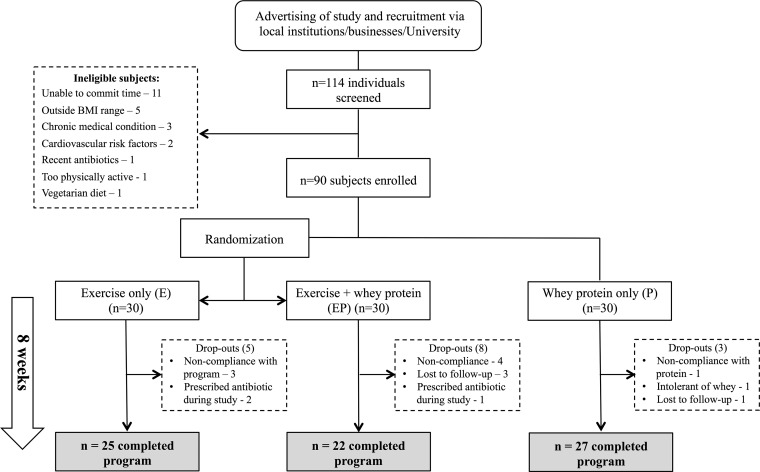
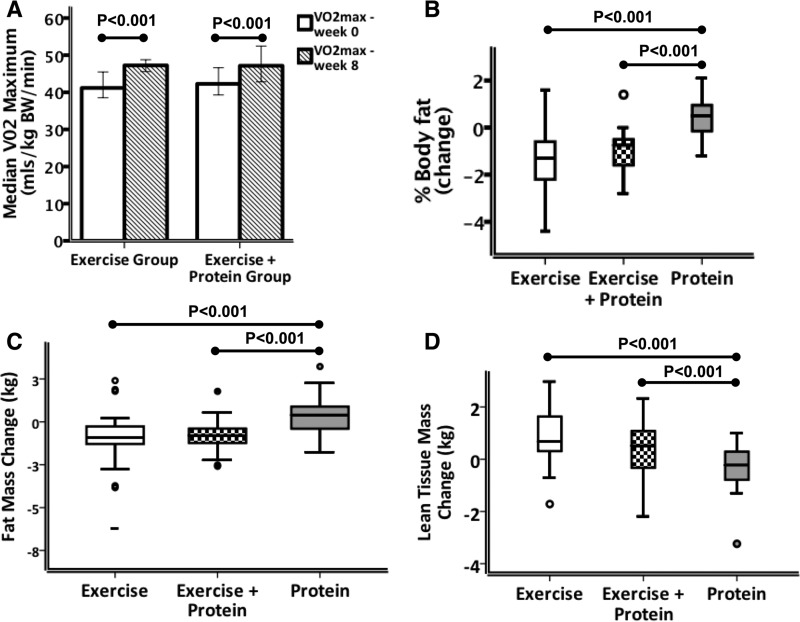
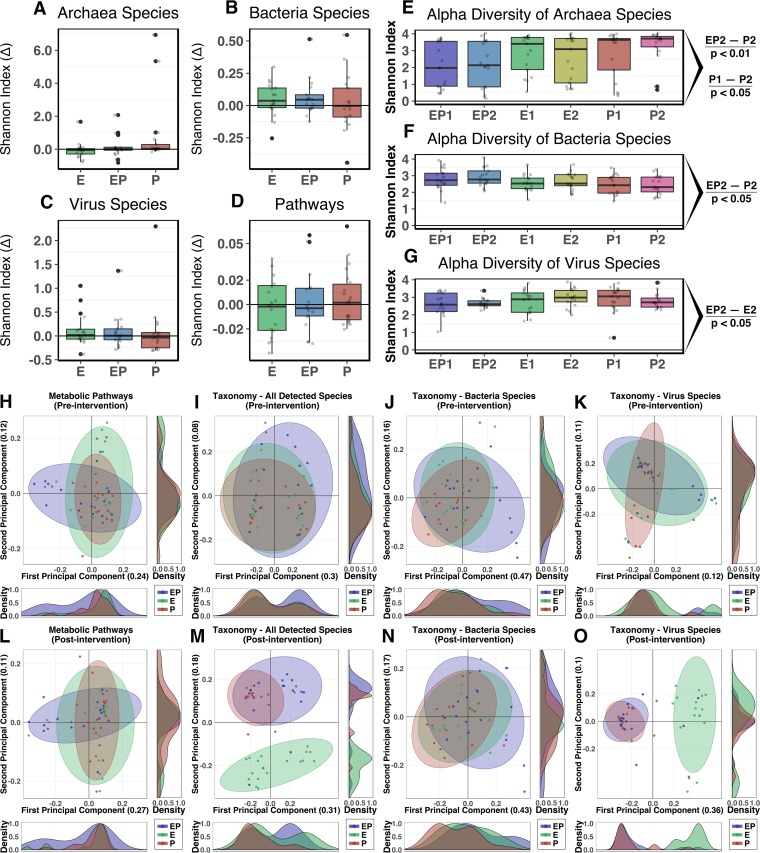
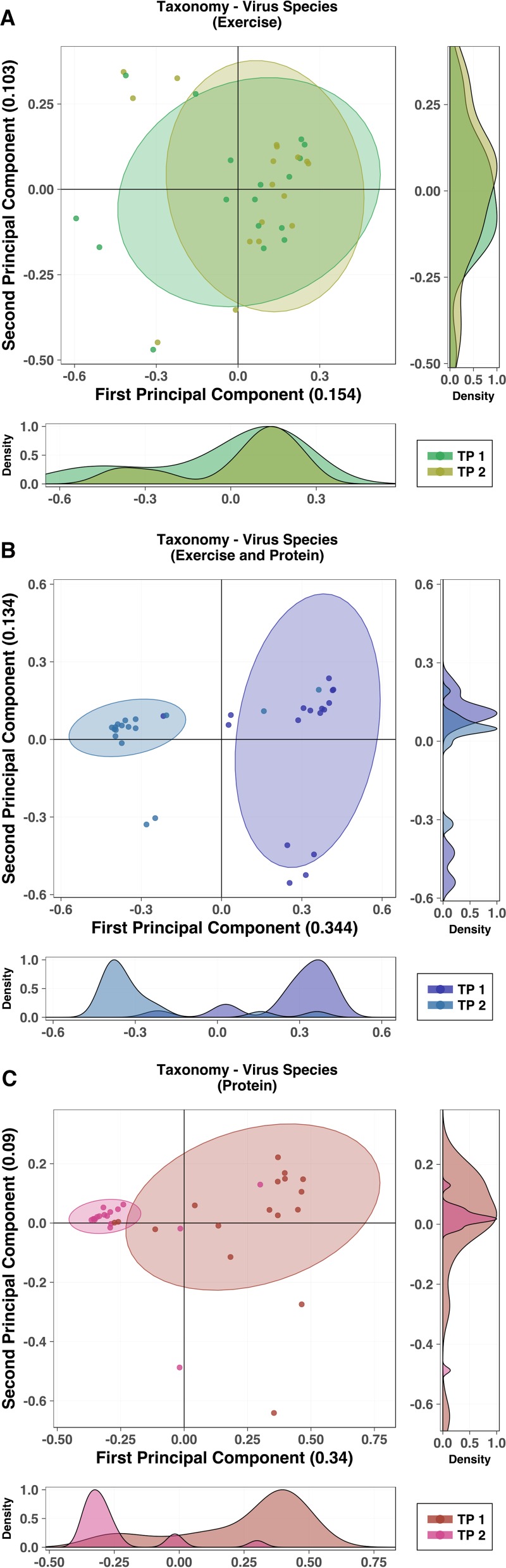
Verification
Claims the paper makes
The claims and statistics of this paper haven’t been checked yet.
Run the check — free, no account needed. It reads the open-access text and checks the sources it cites.
Claims other papers make about this one
Each is checked against this paper’s own text: does it say what the citing paper says it does?
The cited source says what the claim attributes to it.
In the citing paper
“A combined aerobic and resistance training exercise regime led to modest alterations in the composition and activity of the gut microbiota of the sedentary individuals.”
From The Microbiota-Gut-Brain Axis (2019) · cites this paper as Cronin et al., 2018
In the citing paper
“Another study reported that combined eight-weeks aerobic and resistance exercise induced modest shifts in gut metagenomes despite no changes in the diversity of taxa or metabolic pathways (Cronin et al., 2018).”
From Six-Week Endurance Exercise Alters Gut Metagenome That Is not Reflected in Systemic Metabolism in Over-weight Women (2018) · cites this paper as Cronin et al., 2018
In the citing paper
“In contrast to our study, after eight-weeks of non-guided, combined aerobic and resistance exercise, Cronin et al. failed to detect significant changes in the gut microbiota composition or functions.”
From Six-Week Endurance Exercise Alters Gut Metagenome That Is not Reflected in Systemic Metabolism in Over-weight Women (2018) · cites this paper as Cronin et al., 2018
In the citing paper
“Nevertheless, a prolonged protein supplementation did not affect the gut microbiome (Cronin et al., 2018) and therefore the real effect of reduced protein intake can be questioned.”
From Six-Week Endurance Exercise Alters Gut Metagenome That Is not Reflected in Systemic Metabolism in Over-weight Women (2018) · cites this paper as Cronin et al., 2018
In the citing paper
“But interestingly, contradictory findings from the human exercise interventions have been recently presented (Allen et al., 2017; Cronin et al., 2018).”
From Six-Week Endurance Exercise Alters Gut Metagenome That Is not Reflected in Systemic Metabolism in Over-weight Women (2018) · cites this paper as Cronin et al., 2018
In the citing paper
“Nevertheless, a prolonged protein supplementation did not affect the gut microbiome (Cronin et al., 2018)”
From Six-Week Endurance Exercise Alters Gut Metagenome That Is not Reflected in Systemic Metabolism in Over-weight Women (2018) · cites this paper as Cronin et al., 2018
In the citing paper
“Interestingly, exercise was associated with reduced levels of phenylacetylglycine and trimethylamine N-oxide (TMAO) in urine.”
From Influence of the Gut Microbiome, Diet, and Environment on Risk of Colorectal Cancer (2020) · cites this paper as [114]
In the citing paper
“In the second study, 8 weeks of mixed aerobic and resistance exercise training improved cardiorespiratory fitness and body composition, but did not produce significant changes in the fecal microbiome114 or metabolites.”
From Influence of the Gut Microbiome, Diet, and Environment on Risk of Colorectal Cancer (2020) · cites this paper as [114]
In the citing paper
“Individuals in the whey protein supplementation-only group experienced a significant increase in the beta diversity of the gut virome.”
From The athletic gut microbiota (2020) · cites this paper as [199]
In the citing paper
“all bacteriophages (bacteria-targeting viruses) increased in the groups receiving whey protein were present in high relative abundance within the whey protein supplement.”
From The athletic gut microbiota (2020) · cites this paper as [199]
In the citing paper
“this change was mirrored in the combined exercise and protein supplementation group, suggesting a robust positive effect of whey protein on the taxonomic richness of the gut virome.”
From The athletic gut microbiota (2020) · cites this paper as [199]
Self-check
Percentages, sums and reported differences re-computed from the paper’s own numbers.
The self-check needs the paper’s full text.
Citations
Cites
Controlling the False Discovery Rate: A Practical and Powerful Approach to Multiple Testing
Benjamini, Y., & Hochberg, Y. (1995) · Journal of the Royal Statistical Society Series B: Statistical Methodology · doi:10.1111/j.2517-6161.1995.tb02031.x · Cited by 109,482
vegan: Community Ecology Package
Oksanen, J., Simpson, G. L., Blanchet, F. G., Kindt, R., Legendre, P., Minchin, P. R., O’Hara, R. B., Sólymos, P., Stevens, M. H. H., Szöcs, E., et al. (2001) · doi:10.32614/cran.package.vegan · Cited by 27,099
International physical activity questionnaire: 12-country reliability and validity
CRAIG, C. L., MARSHALL, A. L., SJ??STR??M, M., BAUMAN, A. E., BOOTH, M. L., AINSWORTH, B. E., PRATT, M., EKELUND, U., YNGVE, A., SALLIS, J. F., et al. (2003) · Medicine & Science in Sports & Exercise · doi:10.1249/01.mss.0000078924.61453.fb · Cited by 21,619
(2014) · Medical Entomology and Zoology · Cited by 9,400
The ade4 Package: Implementing the Duality Diagram for Ecologists
Dray, S., & Dufour, A. (2007) · Journal of Statistical Software · doi:10.18637/jss.v022.i04 · Cited by 6,740
2011 Compendium of Physical Activities: A Second Update of Codes and MET Values
AINSWORTH, B. E., HASKELL, W. L., HERRMANN, S. D., MECKES, N., BASSETT, D. R., TUDOR-LOCKE, C., GREER, J. L., VEZINA, J., WHITT-GLOVER, M. C., & LEON, A. S. (2011) · Medicine & Science in Sports & Exercise · doi:10.1249/mss.0b013e31821ece12 · Cited by 6,317
Gut flora metabolism of phosphatidylcholine promotes cardiovascular disease
Wang, Z., Klipfell, E., Bennett, B. J., Koeth, R., Levison, B. S., DuGar, B., Feldstein, A. E., Britt, E. B., Fu, X., Chung, Y.-M., et al. (2011) · Nature · doi:10.1038/nature09922 · Cited by 5,597
Kraken: ultrafast metagenomic sequence classification using exact alignments
Wood, D. E., & Salzberg, S. L. (2014) · Genome Biology · doi:10.1186/gb-2014-15-3-r46 · Cited by 4,521
Intestinal microbiota metabolism of l-carnitine, a nutrient in red meat, promotes atherosclerosis
Koeth, R. A., Wang, Z., Levison, B. S., Buffa, J. A., Org, E., Sheehy, B. T., Britt, E. B., Fu, X., Wu, Y., Li, L., et al. (2013) · Nature Medicine · doi:10.1038/nm.3145 · Cited by 4,386
Reproducibility and validity of a semiquantitative food frequency questionnaire
WILLETT, W. C., SAMPSON, L., STAMPFER, M. J., ROSNER, B., BAIN, C., WITSCHI, J., HENNEKENS, C. H., & SPEIZER, F. E. (1985) · American Journal of Epidemiology · doi:10.1093/oxfordjournals.aje.a114086 · Cited by 4,274
Cited by
Sorted by citations
Cryan, J. F., O'Riordan, K. J., Cowan, C. S. M., Sandhu, K. V., Bastiaanssen, T. F. S., Boehme, M., Codagnone, M. G., Cussotto, S., Fulling, C., Golubeva, A. V., et al. (2019) · Physiological Reviews · doi:10.1152/physrev.00018.2018 · Cited by 5,286
Influence of the Gut Microbiome, Diet, and Environment on Risk of Colorectal Cancer
Song, M., Chan, A. T., & Sun, J. (2020) · Gastroenterology · doi:10.1053/j.gastro.2019.06.048 · Cited by 752
Mailing, L. J., Allen, J. M., Buford, T. W., Fields, C. J., & Woods, J. A. (2019) · Exercise and Sport Sciences Reviews · doi:10.1249/jes.0000000000000183 · Cited by 521
Mohr, A. E., Jäger, R., Carpenter, K. C., Kerksick, C. M., Purpura, M., Townsend, J. R., West, N. P., Black, K., Gleeson, M., Pyne, D. B., et al. (2020) · Journal of the International Society of Sports Nutrition · doi:10.1186/s12970-020-00353-w · Cited by 378
“Cronin et al., 2018, Ireland [199] Sedentary overweight/obese males and females, n = 90, 18–40 years Randomized controlled trial, parallel group design Metagenomic whole genome shotgun Groups: • Protein-only; 30 g protein (24 g whey) • Exercise-only; Combined aerobic and resistance 8 weeks •…”
BackgroundInterplay Between Exercise and Gut Microbiome in the Context of Human Health and Performance
Clauss, M., Gérard, P., Mosca, A., & Leclerc, M. (2021) · Frontiers in Nutrition · doi:10.3389/fnut.2021.637010 · Cited by 308
Metadata
- Authors
- Cronin, O., Barton, W., Skuse, P., Penney, N. C., Garcia-Perez, I., Murphy, E. F., Woods, T., Nugent, H., Fanning, A., Melgar, S., Falvey, E. C., Holmes, E., Cotter, P. D., O’Sullivan, O., Molloy, M. G., & Shanahan, F.
- Affiliations
- National University of Ireland (IE)
- Teagasc - The Irish Agriculture and Food Development Authority (IE)
- Imperial College London (GB)
- Section of Biomolecular Medicine, Division of Computational Systems Medicine, Department of Surgery and Cancer, Imperial College London, London, United Kingdom
- Alimentary Health (Ireland) (IE)
- Department of Medicine, National University of Ireland, Cork, Ireland
- APC Microbiome Ireland, National University of Ireland, Cork, Ireland
- Corresponding author
- Cronin, Owen
- ORCID
- Venue
- mSystems
- Publisher
- American Society for Microbiology
- Published
- 2018-06-26
- Volume
- 3
- Issue
- 3
- ISSN
- 2379-5077 (ISSN-L)
- PMC
- PMC5915698
- OpenAlex
- W2802946611
- Cited by
- 232
- References
- 75
- Citations by year
- 2026: 24 · 2025: 24 · 2024: 36 · 2023: 33 · 2022: 35 · 2021: 31 · 2020: 23 · 2019: 22 · 2018: 4
- FWCI
- 7.12
- Type
- journal article
- Language
- en
- Open access
- gold
- doi.org
- Licence
- Locations
- mSystems (publishedVersion, cc-by)
- Europe PMC (PubMed Central) (publishedVersion, cc-by)
- PubMed Central (publishedVersion, cc-by)
- PubMed (publishedVersion)
- Cork Open Research Archive (University College Cork, Ireland) (submittedVersion, cc-by)
- DOAJ (DOAJ: Directory of Open Access Journals) (submittedVersion, cc-by-sa)
- DOAJ (DOAJ: Directory of Open Access Journals) (submittedVersion)
- Spiral (Imperial College London) (submittedVersion, other-oa)
- T-Stór (Teagasc) (submittedVersion, cc-by-nc-sa)
- Funders
- Irish Centre for Arthritis Research and Education (N/A)
- Science Foundation Ireland (SFI/12/RC/2273, SFI/11/PI/1137, SFI/13/SIRG/2160)
- Diabetes Research & Wellness Foundation (Sutherland-Earl Clinical Research Fellowship 2015)
- Topics
- Life Sciences › Biochemistry, Genetics and Molecular Biology › Molecular Biology › Gut microbiota and health
- Life Sciences › Agricultural and Biological Sciences › Food Science › Probiotics and Fermented Foods
- Health Sciences › Medicine › Gastroenterology › Gastrointestinal motility and disorders
- Keywords
- gut microbiota, physical activity, whey protein supplementation, gut virome, sedentary adults, physical inactivity, microbiota composition, metabolomics
About these checks
Registry, retraction, Cites and statistics results are computed, not judged, with one exception: a printed reference that no index lists is read once by a model before it counts as a citation error. Claims are extracted by a model and kept only when their quote appears verbatim in the text; each cited source is then checked, with a model’s help, for whether it says what the claim relies on. Those verdicts can be wrong — read the claim’s quote and the cited source before relying on one.
Statistics and arithmetic are recomputed, not judged.
Confidence bands are shown only for fields calibrated on our annotated test set. None is calibrated yet, so no band is shown.
What counts as a claim ›How we measure confidence ›How we check this ›
Are you an author, or do you see a problem with this page? Request a review
