

Therapeutic interleukin-6 blockade reverses transforming growth factor-beta pathway activation in dermal fibroblasts: insights from the faSScinate clinical trial in systemic sclerosis
Open accessThe DOI matches its Crossref record; 41 of the 42 references it cites were found in a registry or an index.
Abstract
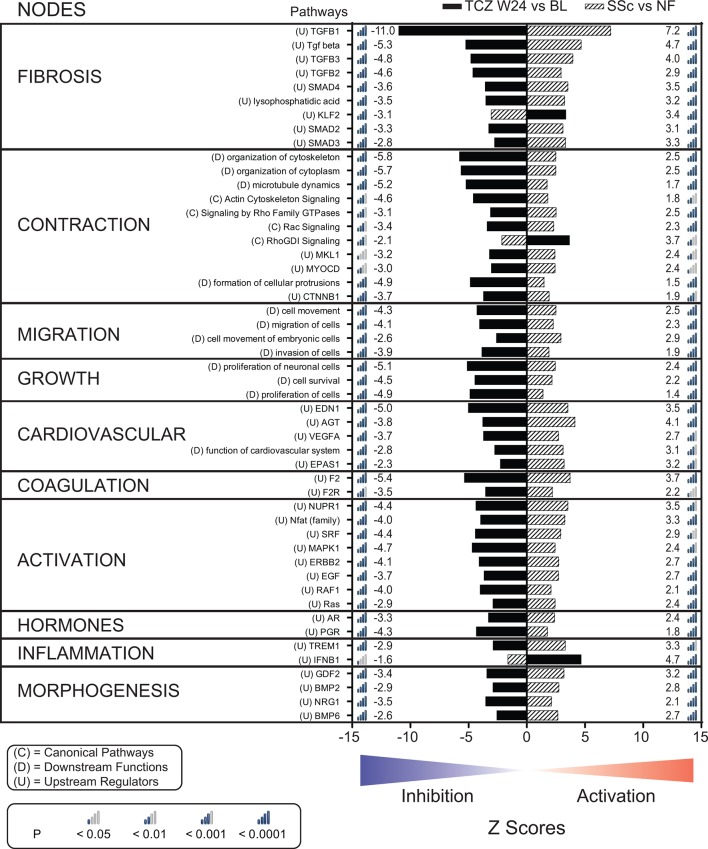
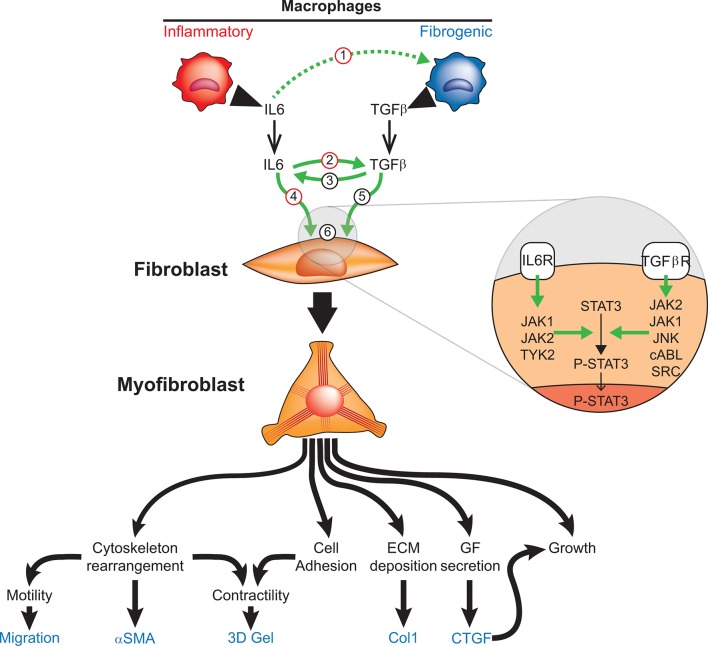
OBJECTIVES: Skin fibrosis mediated by activated dermal fibroblasts is a hallmark of systemic sclerosis (SSc), especially in the subset of patients with diffuse disease. Transforming growth factor-beta (TGFβ) and interleukin-6 (IL-6) are key candidate mediators in SSc. Our aim was to elucidate the specific effect of IL-6 pathway blockade on the biology of SSc fibroblasts in vivo by using samples from a unique clinical experiment-the faSScinate study-in which patients with SSc were treated for 24 weeks with tocilizumab (TCZ), an IL-6 receptor-α inhibitor. METHODS: We analysed the molecular, functional and genomic characteristics of explant fibroblasts cultured from matched skin biopsy samples collected at baseline and at week 24 from 12 patients receiving placebo (n=6) or TCZ (n=6) and compared these with matched healthy control fibroblast strains. RESULTS: The hallmark functional and molecular-activated phenotype was defined in SSc samples and was stable over 24 weeks in placebo-treated cases. RNA sequencing analysis robustly defined key dysregulated pathways likely to drive SSc fibroblast activation in vivo. Treatment with TCZ for 24 weeks profoundly altered the biological characteristics of explant dermal fibroblasts by normalising functional properties and reversing gene expression profiles dominated by TGFβ-regulated genes and molecular pathways. CONCLUSIONS: We demonstrated the exceptional value of using explant dermal fibroblast cultures from a well-designed trial in SSc to provide a molecular framework linking IL-6 to key profibrotic pathways. The profound impact of IL-6R blockade on the activated fibroblast phenotype highlights the potential of IL-6 as a therapeutic target in SSc and other fibrotic diseases. TRIAL REGISTRATION NUMBER: NCT01532869; Post-results.
Overview
The claims and statistics of this paper haven’t been checked yet.
Free: it reads the open-access text and checks the first 5 claims that cite a source we can check. Create a free account to check every claim.
Integrity signals
Registry
Cites
Statistics
Figures
Verification
Claims the paper makes
The claims and statistics of this paper haven’t been checked yet.
Free: it reads the open-access text and checks the first 5 claims that cite a source we can check. Create a free account to check every claim.
Claims other papers make about this one
Each is checked against this paper’s own text: does it say what the citing paper says it does?
In the citing paper
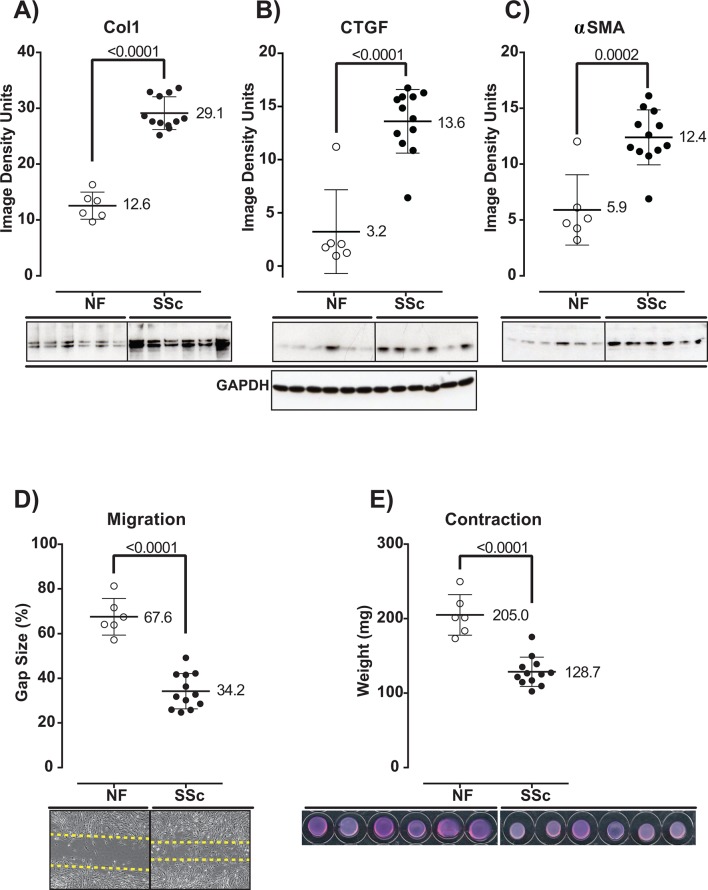
“Furthermore, in vitro, (myo)fibroblasts obtained from SSc patients produce more extracellular matrix molecules such as collagen type I than those of healthy controls, and their migratory and contractile properties are also increased (19, 98).”
From Unraveling SSc Pathophysiology; The Myofibroblast (2018) · cites this paper as [98]
In the citing paper
“Tocilizumab is a humanized antibody directed against the IL-6 receptor and currently enrolled in a phase III trial for SSc therapy (98).”
From Unraveling SSc Pathophysiology; The Myofibroblast (2018) · cites this paper as [98]
In the citing paper
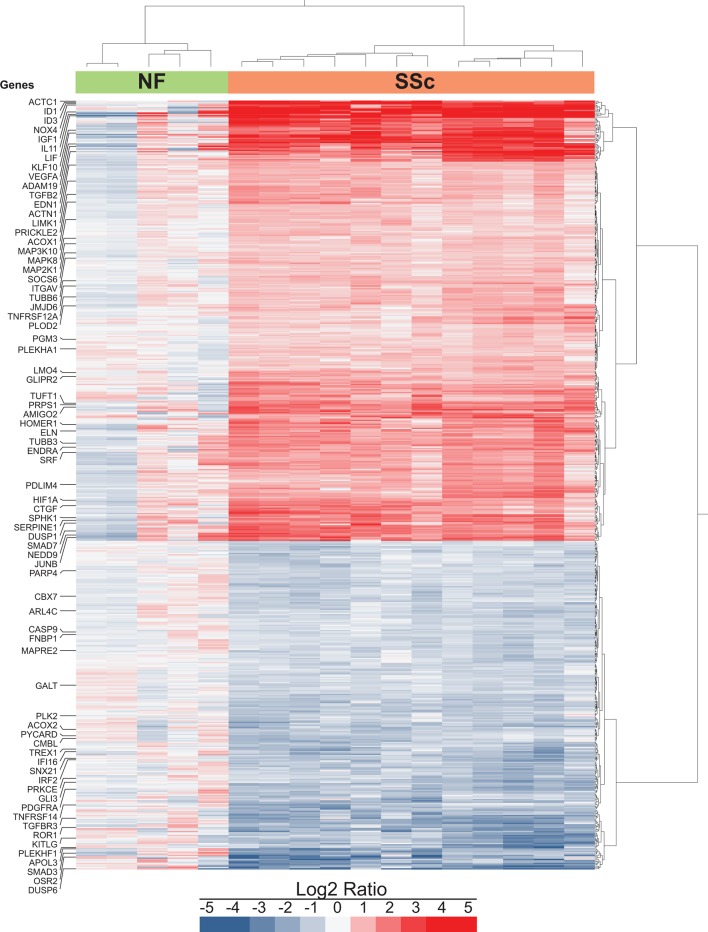
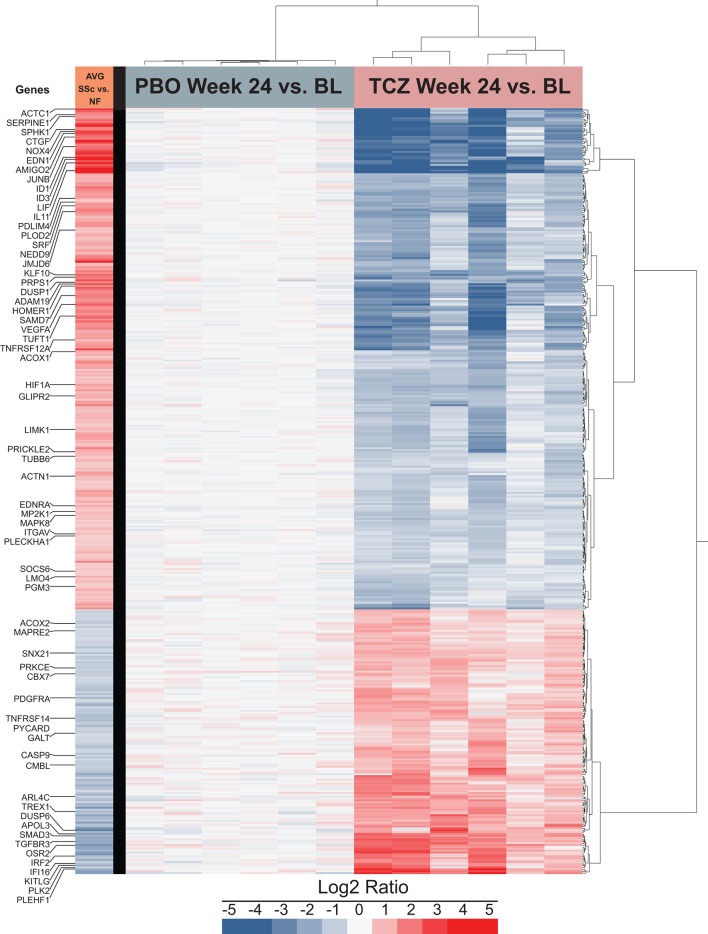
“Strikingly, many TGFβ signaling related genes, together with cell contractility pathways, were downregulated to a level similar to normal expression levels (98).”
From Unraveling SSc Pathophysiology; The Myofibroblast (2018) · cites this paper as [98]
In the citing paper
“Furthermore, a large effect between the tocilizumab and placebo treated groups was observed on gene expression profile; in the placebo group, gene expression was not significantly altered over 24 weeks, whereas in the tocilizumab treated group 2,136 genes were significantly differentially expressed.”
From Unraveling SSc Pathophysiology; The Myofibroblast (2018) · cites this paper as [98]
In the citing paper
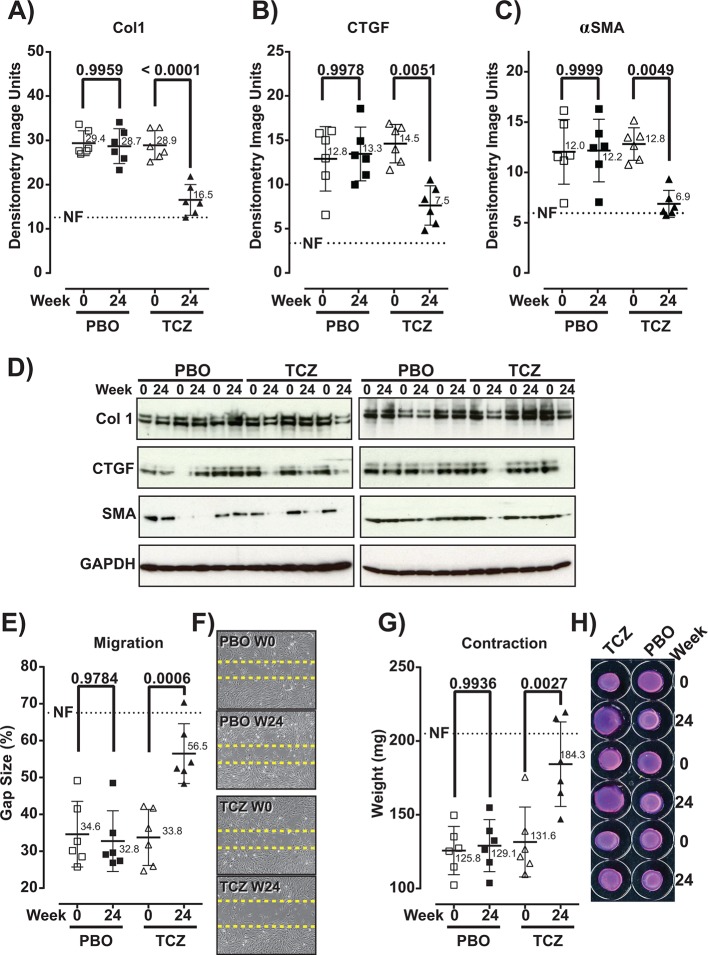
“Treatment with tocilizumab for 24 weeks decreased fibroblast protein production, migration and contractility compared to baseline (98).”
From Unraveling SSc Pathophysiology; The Myofibroblast (2018) · cites this paper as [98]
Self-check
Percentages, sums and reported differences re-computed from the paper’s own numbers.
The self-check needs the paper’s full text.
Citations
Cites
Smad-dependent and Smad-independent pathways in TGF-β family signalling
Derynck, R., & Zhang, Y. E. (2003) · Nature · doi:10.1038/nature02006 · Cited by 5,373
Davenport, A. P., Hyndman, K. A., Dhaun, N., Southan, C., Kohan, D. E., Pollock, J. S., Pollock, D. M., Webb, D. J., & Maguire, J. J. (2016) · Pharmacological Reviews · doi:10.1124/pr.115.011833 · Cited by 772
Khanna, D., Denton, C. P., Jahreis, A., van Laar, J. M., Frech, T. M., Anderson, M. E., Baron, M., Chung, L., Fierlbeck, G., Lakshminarayanan, S., et al. (2016) · The Lancet · doi:10.1016/s0140-6736(16)00232-4 · Cited by 683
Self-citationEdlund, S., Landström, M., Heldin, C.-H., & Aspenström, P. (2002) · Molecular Biology of the Cell · doi:10.1091/mbc.01-08-0398 · Cited by 418
Shi-Wen, X., Chen, Y., Denton, C. P., Eastwood, M., Renzoni, E. A., Bou-Gharios, G., Pearson, J. D., Dashwood, M., du Bois, R. M., Black, C. M., et al. (2004) · Molecular Biology of the Cell · doi:10.1091/mbc.e03-12-0902 · Cited by 356
Self-citationChakraborty, D., Šumová, B., Mallano, T., Chen, C.-W., Distler, A., Bergmann, C., Ludolph, I., Horch, R. E., Gelse, K., Ramming, A., et al. (2017) · Nature Communications · doi:10.1038/s41467-017-01236-6 · Cited by 356
Ma, F., Li, Y., Jia, L., Han, Y., Cheng, J., Li, H., Qi, Y., & Du, J. (2012) · PLoS ONE · doi:10.1371/journal.pone.0035144 · Cited by 271
Fibroblast heterogeneity and its implications for engineering organotypic skin models in vitro
Sriram, G., Bigliardi, P. L., & Bigliardi-Qi, M. (2015) · European Journal of Cell Biology · doi:10.1016/j.ejcb.2015.08.001 · Cited by 269
De Lauretis, A., Sestini, P., Pantelidis, P., Hoyles, R., Hansell, D. M., Goh, N. S. L., Zappala, C. J., Visca, D., Maher, T. M., Denton, C. P., et al. (2013) · The Journal of Rheumatology · doi:10.3899/jrheum.120725 · Cited by 263
Self-citationO'Reilly, S., Ciechomska, M., Cant, R., & van Laar, J. M. (2014) · Journal of Biological Chemistry · doi:10.1074/jbc.m113.545822 · Cited by 258
Fibroblast-matrix interactions in wound healing and fibrosis
Eckes, B., Zigrino, P., Kessler, D., Holtkötter, O., Shephard, P., Mauch, C., & Krieg, T. (2000) · Matrix Biology · doi:10.1016/s0945-053x(00)00077-9 · Cited by 238
Denton, C. P., & Abraham, D. J. (2001) · Current Opinion in Rheumatology · doi:10.1097/00002281-200111000-00010 · Cited by 223
Self-citationClinical and pathological significance of interleukin 6 overexpression in systemic sclerosis
Khan, K., Xu, S., Nihtyanova, S., Derrett-Smith, E., Abraham, D., Denton, C. P., & Ong, V. H. (2012) · Annals of the Rheumatic Diseases · doi:10.1136/annrheumdis-2011-200955 · Cited by 219
Self-citationBSR and BHPR guideline for the treatment of systemic sclerosis
Denton, C. P., Hughes, M., Gak, N., Vila, J., Buch, M. H., Chakravarty, K., Fligelstone, K., Gompels, L. L., Griffiths, B., Herrick, A. L., et al. (2016) · Rheumatology · doi:10.1093/rheumatology/kew224 · Cited by 215
Self-citationShand, L., Lunt, M., Nihtyanova, S., Hoseini, M., Silman, A., Black, C. M., & Denton, C. P. (2007) · Arthritis & Rheumatism · doi:10.1002/art.22721 · Cited by 206
Self-citationConnective tissue synthesis by scleroderma skin fibroblasts in cell culture
Leroy, E. C. (1972) · The Journal of Experimental Medicine · doi:10.1084/jem.135.6.1351 · Cited by 201 · cited 2×
“28 By linking the ex vivo data to promising clinical responses in a PBO-controlled trial of TCZ, our results also elucidate new and important mechanisms by which TCZ may exert an antifibrotic effect and build on data from whole-skin gene expression analysis from the faSScinate phase 2 study.”
BackgroundTGF-β regulates Nox4, MnSOD and catalase expression, and IL-6 release in airway smooth muscle cells
Michaeloudes, C., Sukkar, M. B., Khorasani, N. M., Bhavsar, P. K., & Chung, K. F. (2011) · American Journal of Physiology-Lung Cellular and Molecular Physiology · doi:10.1152/ajplung.00134.2010 · Cited by 196
Scleroderma pathogenesis: a pivotal role for fibroblasts as effector cells
Gilbane, A. J., Denton, C. P., & Holmes, A. M. (2013) · Arthritis Research & Therapy · doi:10.1186/ar4230 · Cited by 196 · cited 1×
“4 Fibroblasts play a central role in the biology of the disease 5 by interacting with endothelial cells 6 and leucocytes 7 in a complex biological network involving cytokines and adhesion molecules, 8 resulting in excess deposition of extra-cellular matrix proteins and in tissue stiffening.”
BackgroundSelf-citationMechanisms and consequences of fibrosis in systemic sclerosis
Denton, C. P., Black, C. M., & Abraham, D. J. (2006) · Nature Clinical Practice Rheumatology · doi:10.1038/ncprheum0115 · Cited by 181
Self-citationSargent, J. L., Milano, A., Bhattacharyya, S., Varga, J., Connolly, M. K., Chang, H. Y., & Whitfield, M. L. (2010) · Journal of Investigative Dermatology · doi:10.1038/jid.2009.318 · Cited by 149
Wang, J., Zhao, L., Pan, X., Chen, N., Chen, J., Gong, Q., Feng, S., Yan, J., Zhang, Y., & Zhang, S.-H. (2016) · Laboratory Investigation · doi:10.1038/labinvest.2016.65 · Cited by 129
Gene expression profiling reveals novel TGFβ targets in adult lung fibroblasts
Renzoni, E. A., Abraham, D. J., Howat, S., Shi-Wen, X., Sestini, P., Bou-Gharios, G., Wells, A. U., Veeraraghavan, S., Nicholson, A. G., Denton, C. P., et al. (2004) · Respiratory Research · doi:10.1186/1465-9921-5-24 · Cited by 127
Self-citationKawaguchi, Y., Takagi, K., Hara, M., Fukasawa, C., Sugiura, T., Nishimagi, E., Harigai, M., & Kamatani, N. (2004) · Arthritis & Rheumatism · doi:10.1002/art.11364 · Cited by 120
Maurer, B., Distler, A., Suliman, Y. A., Gay, R. E., Michel, B. A., Gay, S., Distler, J. H. W., & Distler, O. (2013) · Annals of the Rheumatic Diseases · doi:10.1136/annrheumdis-2013-203535 · Cited by 113
Increased production of interleukin 6 and interleukin 8 in scleroderma fibroblasts.
Kadono, T., Kikuchi, K., Ihn, H., Takehara, K., & Tamaki, K. (1998) · PubMed · Cited by 107
Curcumin-Induced Apoptosis in Scleroderma Lung Fibroblasts
Tourkina, E., Göőz, P., Oates, J. C., Ludwicka, A., Silver, R. M., & Hoffman, S. (2004) · American Journal of Respiratory Cell and Molecular Biology · doi:10.1165/rcmb.2003-0354oc · Cited by 104
Interleukin‐6: a new therapeutic target in systemic sclerosis?
O'Reilly, S., Cant, R., Ciechomska, M., & van Laar, J. M. (2013) · Clinical & Translational Immunology · doi:10.1038/cti.2013.2 · Cited by 97
Transforming growth factor-beta in systemic sclerosis scleroderma
Varga, J. (2009) · Frontiers in Bioscience · doi:10.2741/s22 · Cited by 96
Elias, J. A., Lentz, V, & Cummings, P. J. (1991) · The Journal of Immunology · doi:10.4049/jimmunol.146.10.3437 · Cited by 84
Johnson, M. E., Mahoney, J. M., Taroni, J., Sargent, J. L., Marmarelis, E. L., Wu, M.-R., Varga, J., Hinchcliff, M., & Whitfield, M. L. (2015) · PLoS ONE · doi:10.1371/journal.pone.0114017 · Cited by 83
Desallais, L., Avouac, J., Fréchet, M., Elhai, M., Ratsimandresy, R., Montes, M., Mouhsine, H., Do, H., Zagury, J.-F., & Allanore, Y. (2014) · Arthritis Research & Therapy · doi:10.1186/ar4672 · Cited by 81
Denton, C. P., Shiwen, X., Sutton, A., Abraham, D., Black, C. M., & Pearson, J. D. (1998) · Clinical & Experimental Immunology · doi:10.1046/j.1365-2249.1998.00721.x · Cited by 79
Self-citationAbnormalities of adhesion molecules and chemokines in scleroderma
Sato, S. (1999) · Current Opinion in Rheumatology · doi:10.1097/00002281-199911000-00010 · Cited by 79
Rosiglitazone alleviates the persistent fibrotic phenotype of lesional skin scleroderma fibroblasts
Shiwen, X., Eastwood, M., Stratton, R. J., Denton, C. P., Leask, A., & Abraham, D. (2009) · Rheumatology · doi:10.1093/rheumatology/kep371 · Cited by 68
Self-citationRac Inhibition Reverses the Phenotype of Fibrotic Fibroblasts
Shiwen, X., Liu, S., Eastwood, M., Sonnylal, S., Denton, C. P., Abraham, D., & Leask, A. (2009) · PLoS ONE · doi:10.1371/journal.pone.0007438 · Cited by 59
Self-citationIncreased production of interleukin-6 and interleukin-8 in scleroderma fibroblasts
Kadono, T., Kikuchi, K., Ihn, H., & Tamaki, K. (1998) · Journal of Dermatological Science · doi:10.1016/s0923-1811(98)84143-1 · Cited by 40
Tissue angiotensin generation and regulation of vascular tone
Cockcroft, J. R., O’Kane, K. P. J., & Webb, D. J. (1995) · Pharmacology & Therapeutics · doi:10.1016/0163-7258(94)00062-8 · Cited by 31
Scleroderma fibroblast phenotype is modulated by endothelial cell co-culture.
Denton, C. P., Xu, S., Welsh, K. I., Pearson, J. D., & Black, C. M. (1996) · PubMed · Cited by 21
Self-citationWhat did we learn by studying scleroderma fibroblasts?
Trojanowska, M. (2004) · PubMed · Cited by 19
Hinchcliff, M., Huang, C. C., Ishida, W., Fang, F., Lee, J. J., Jafari, N., Wilkes, M. C., Bhattacharyya, S., Leof, E. B., & Varga, J. (2012) · PubMed · Cited by 16
Tan, A. B.-S., Kreß, S., Castro, L., Sheppard, A. M., & Raghunath, M. (2013) · Fibrogenesis & Tissue Repair · doi:10.1186/1755-1536-6-12 · Cited by 12
Cited by
Tocilizumab in systemic sclerosis: a randomised, double-blind, placebo-controlled, phase 3 trial
Khanna, D., Lin, C. J. F., Furst, D. E., Goldin, J., Kim, G., Kuwana, M., Allanore, Y., Matucci-Cerinic, M., Distler, O., Shima, Y., et al. (2020) · The Lancet Respiratory Medicine · doi:10.1016/s2213-2600(20)30318-0 · Cited by 662
Self-citationThe Role of IL-6 in Skin Fibrosis and Cutaneous Wound Healing
Johnson, B. Z., Stevenson, A. W., Prêle, C. M., Fear, M. W., & Wood, F. M. (2020) · Biomedicines · doi:10.3390/biomedicines8050101 · Cited by 529
Fibroblast-macrophage reciprocal interactions in health, fibrosis, and cancer
Buechler, M. B., Fu, W., & Turley, S. J. (2021) · Immunity · doi:10.1016/j.immuni.2021.04.021 · Cited by 494
Tissue macrophages: origin, heterogenity, biological functions, diseases and therapeutic targets
Guan, F., Wang, R., Yi, Z., Luo, P., Liu, W., Xie, Y., Liu, Z., Xia, Z., Zhang, H., & Cheng, Q. (2025) · Signal Transduction and Targeted Therapy · doi:10.1038/s41392-025-02124-y · Cited by 371
Nanomaterials for Nanotheranostics: Tuning Their Properties According to Disease Needs
Wong, X. Y., Sena-Torralba, A., Álvarez-Diduk, R., Muthoosamy, K., & Merkoçi, A. (2020) · ACS Nano · doi:10.1021/acsnano.9b08133 · Cited by 363
Metadata
- Authors
- Denton, C. P., Ong, V. H., Xu, S., Chen-Harris, H., Modrusan, Z., Lafyatis, R., Khanna, D., Jahreis, A., Siegel, J., & Sornasse, T.
- Affiliations
- The Royal Free Hospital (GB)
- Genentech (US)
- University of Pittsburgh Medical Center (US)
- University of Michigan (US)
- Corresponding author
- Denton, Christopher P
- ORCID
- Venue
- Annals of the Rheumatic Diseases
- Publisher
- Elsevier BV
- Published
- 2018-09
- Volume
- 77
- Issue
- 9
- Pages
- 1362-1371
- ISSN
- 0003-4967 (ISSN-L)
- PMC
- PMC6104680
- OpenAlex
- W2806476436
- Semantic Scholar
- 75d87faa8802af2d36ca93c39e393d96c07e52a6
- Cited by
- 166
- References
- 42
- Citations by year
- 2026: 15 · 2025: 14 · 2024: 17 · 2023: 35 · 2022: 18 · 2021: 29 · 2020: 22 · 2019: 13 · 2018: 3
- FWCI
- 12.74
- Type
- journal article
- Language
- en
- Open access
- hybrid
- doi.org
- Licence
- cc-by-nc
- www.elsevier.com/tdm/userlicense/1.0/ (tdm)
- www.elsevier.com/legal/tdmrep-license (tdm)
- creativecommons.org/licenses/by-nc/4.0/ (vor)
- Locations
- Annals of the Rheumatic Diseases (publishedVersion, cc-by-nc)
- Europe PMC (PubMed Central) (publishedVersion, other-oa)
- PubMed Central (publishedVersion, cc-by-nc)
- PubMed (publishedVersion)
- UCL Discovery (University College London) (submittedVersion)
- HighWire Press Open Archive (submittedVersion)
- Funders
- F. Hoffmann-La Roche
- Topics
- Health Sciences › Medicine › Rheumatology › Systemic Sclerosis and Related Diseases
- Life Sciences › Biochemistry, Genetics and Molecular Biology › Molecular Biology › TGF-β signaling in diseases
- Life Sciences › Biochemistry, Genetics and Molecular Biology › Genetics › Connective tissue disorders research
- Keywords
- systemic sclerosis, interleukin-6, IL-6 receptor inhibition, tocilizumab, TGF-beta, dermal fibroblasts, skin fibrosis, fibroblast activation, gene expression profiling, therapeutic target
- MeSH terms
- Adult, Biopsy, Cells, Cultured, Double-Blind Method, Female, Fibroblasts, Fibrosis, Gene Expression Regulation, Humans, Immunosuppressive Agents, Male, Middle Aged, Scleroderma, Systemic, Skin, Signal Transduction, Interleukin-6, Transforming Growth Factor beta, Receptors, Interleukin-6, Molecular Targeted Therapy, Antibodies, Monoclonal, Humanized
About these checks
Registry, retraction, Cites and statistics results are computed, not judged, with one exception: a printed reference that no index lists is read once by a model before it counts as a citation error. Claims are extracted by a model and kept only when their quote appears verbatim in the text; each cited source is then checked, with a model’s help, for whether it says what the claim relies on. Those verdicts can be wrong — read the claim’s quote and the cited source before relying on one.
Statistics and arithmetic are recomputed, not judged.
Confidence bands are shown only for fields calibrated on our annotated test set. None is calibrated yet, so no band is shown.
What counts as a claim ›How we measure confidence ›How we check this ›
Are you an author, or do you see a problem with this page? Request a review
Data sources
Bibliographic data: Semantic Scholar, OpenAlex, Crossref.
Contains information from the Semantic Scholar Academic Graph Datasets, made available under the ODC Attribution License (ODC-BY 1.0).
Semantic Scholar’s data is described in: Kinney, R., et al. (2023). The Semantic Scholar Open Data Platform. arXiv:2301.10140.
