

Physical activity as a protective factor for dementia and Alzheimer's disease: systematic review, meta-analysis and quality assessment of cohort and case-control studies
Open accessThe DOI matches its Crossref record; 98 of the 98 references it cites were found in a registry or an index.
Abstract
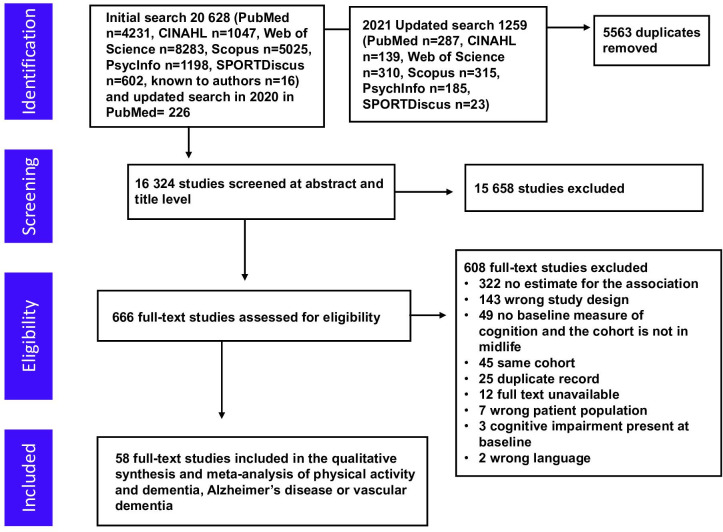
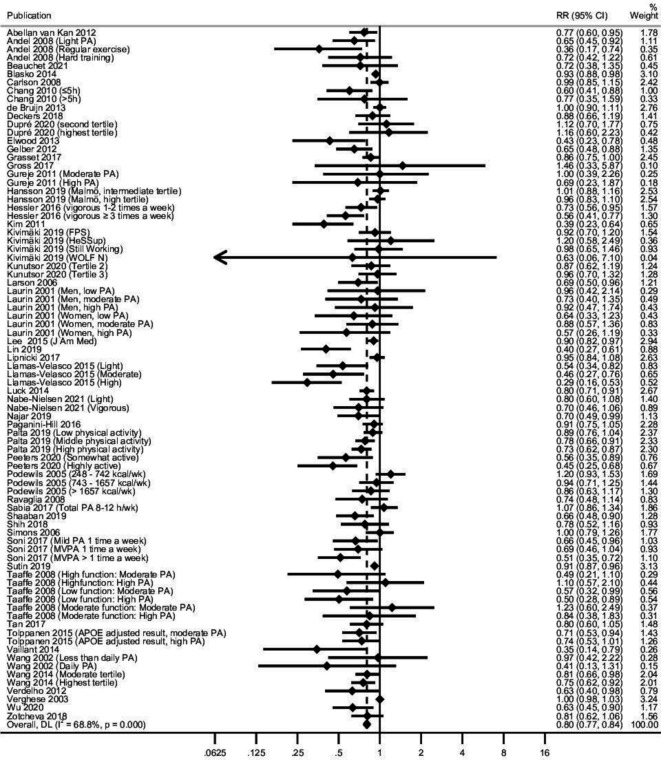
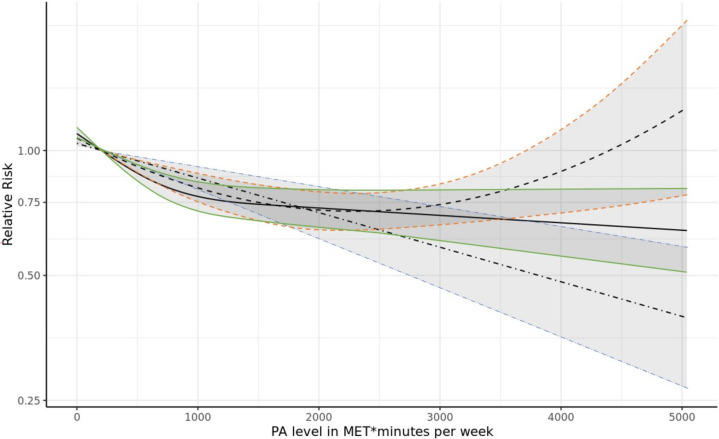
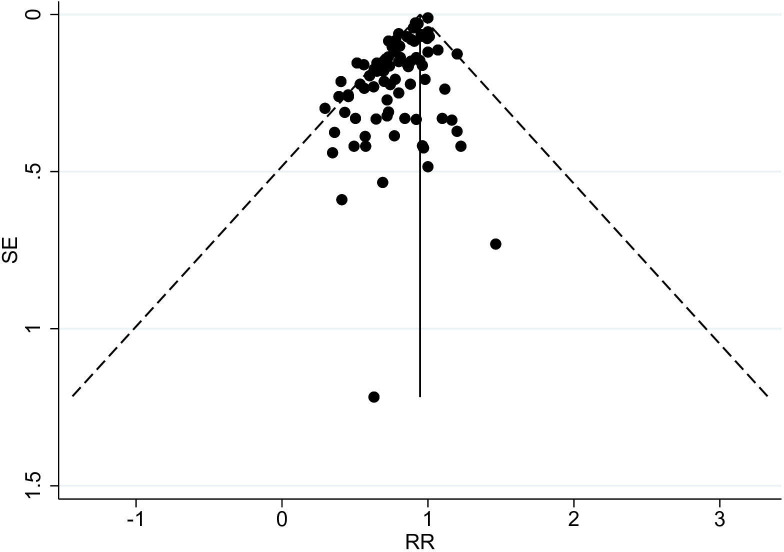
Objective: Physical activity (PA) is associated with a decreased incidence of dementia, but much of the evidence comes from short follow-ups prone to reverse causation. This meta-analysis investigates the effect of study length on the association. Design: A systematic review and meta-analysis. Pooled effect sizes, dose–response analysis and funnel plots were used to synthesise the results. Data sources: CINAHL (last search 19 October 2021), PsycInfo, Scopus, PubMed, Web of Science (21 October 2021) and SPORTDiscus (26 October 2021). Eligibility criteria: Studies of adults with a prospective follow-up of at least 1 year, a valid cognitive measure or cohort in mid-life at baseline and an estimate of the association between baseline PA and follow-up all-cause dementia, Alzheimer’s disease or vascular dementia were included (n=58). Results: PA was associated with a decreased risk of all-cause dementia (pooled relative risk 0.80, 95% CI 0.77 to 0.84, n=257 983), Alzheimer’s disease (0.86, 95% CI 0.80 to 0.93, n=128 261) and vascular dementia (0.79, 95% CI 0.66 to 0.95, n=33 870), even in longer follow-ups (≥20 years) for all-cause dementia and Alzheimer’s disease. Neither baseline age, follow-up length nor study quality significantly moderated the associations. Dose–response meta-analyses revealed significant linear, spline and quadratic trends within estimates for all-cause dementia incidence, but only a significant spline trend for Alzheimer’s disease. Funnel plots showed possible publication bias for all-cause dementia and Alzheimer’s disease. Conclusion: PA was associated with lower incidence of all-cause dementia and Alzheimer’s disease, even in longer follow-ups, supporting PA as a modifiable protective lifestyle factor, even after reducing the effects of reverse causation.
Overview
The claims and statistics of this paper haven’t been checked yet.
Free: it reads the open-access text and checks the first 5 claims that cite a source we can check. Create a free account to check every claim.
Integrity signals
Registry
Cites
Statistics
Figures
Verification
Claims the paper makes
The claims and statistics of this paper haven’t been checked yet.
Free: it reads the open-access text and checks the first 5 claims that cite a source we can check. Create a free account to check every claim.
Claims other papers make about this one
Each is checked against this paper’s own text: does it say what the citing paper says it does?
The source backs part of the claim, not all of it — or backs it for a different population, condition or comparison.
In the citing paper
“A systematic review and meta-analysis of 58 studies exploring the link between physical activity and dementia, found that physical activity was associated with a decreased risk of all-cause dementia (RR 0.80, 0.77 to 0.84, n=257,983) and dementia types in short and longer followups ≥20 years, and at all ages. (165)”
From Dementia prevention, intervention, and care: 2024 report of the Lancet standing Commission (2024) · cites this paper as [165]
Experimental — accuracy not yet measuredThe cited source says what the claim attributes to it.
In the citing paper
“Physical activity and exercise benefits apply to conditions characterized by very distinct pathophysiology, such as Alzheimer’s disease [629], cancer [628], heart disease [630], and pneumonia/other infections [631,632].”
From Global consensus on optimal exercise recommendations for enhancing healthy longevity in older adults (ICFSR) (2025) · cites this paper as [629]
The cited source says what the claim attributes to it.
In the citing paper
“Physical activity and exercise benefits apply to conditions characterized by very distinct pathophysiology, such as Alzheimer’s disease [629], cancer [628], heart disease [630], and pneumonia/other infections [631,632].”
From Global consensus on optimal exercise recommendations for enhancing healthy longevity in older adults (ICFSR) (2025) · cites this paper as [629]
Self-check
Percentages, sums and reported differences re-computed from the paper’s own numbers.
The self-check needs the paper’s full text.
Citations
Cites
1 retracted
Dementia prevention, intervention, and care: 2020 report of the Lancet Commission
Livingston, G., Huntley, J., Sommerlad, A., Ames, D., Ballard, C., Banerjee, S., Brayne, C., Burns, A., Cohen-Mansfield, J., Cooper, C., et al. (2020) · The Lancet · doi:10.1016/s0140-6736(20)30367-6 · Cited by 10,430
RetractedPreferred Reporting Items for Systematic Reviews and Meta-Analyses: the PRISMA statement
Moher, D., Liberati, A., Tetzlaff, J., Altman, D. G., & for the PRISMA Group (2009) · BMJ · doi:10.1136/bmj.b2535 · Cited by 83,823
Preferred Reporting Items for Systematic Reviews and Meta-Analyses: The PRISMA Statement
Moher, D., Liberati, A., Tetzlaff, J., Altman, D. G., & The PRISMA Group (2009) · PLoS Medicine · doi:10.1371/journal.pmed.1000097 · Cited by 64,042
Wang, G., Ma, R., Qiao, G., Wada, K., Aizawa, Y., & Satoh, T. (2015) · Integrative Medicine International · doi:10.1159/000368408 · Cited by 18,657
Borenstein, M., Hedges, L. V., Higgins, J. P. T., & Rothstein, H. R. (2009) · doi:10.1002/9780470743386 · Cited by 14,225
World Health Organization 2020 guidelines on physical activity and sedentary behaviour
Bull, F. C., Al-Ansari, S. S., Biddle, S., Borodulin, K., Buman, M. P., Cardon, G., Carty, C., Chaput, J.-P., Chastin, S., Chou, R., et al. (2020) · British Journal of Sports Medicine · doi:10.1136/bjsports-2020-102955 · Cited by 11,657
Jack, C. R., Knopman, D. S., Jagust, W. J., Petersen, R. C., Weiner, M. W., Aisen, P. S., Shaw, L. M., Vemuri, P., Wiste, H. J., Weigand, S. D., et al. (2013) · The Lancet Neurology · doi:10.1016/s1474-4422(12)70291-0 · Cited by 4,396
Zhang, J., & Yu, K. F. (1998) · JAMA · doi:10.1001/jama.280.19.1690 · Cited by 4,138
(2015) · HAL · Cited by 2,238
Leisure Activities and the Risk of Dementia in the Elderly
Verghese, J., Lipton, R. B., Katz, M. J., Hall, C. B., Derby, C. A., Kuslansky, G., Ambrose, A. F., Sliwinski, M., & Buschke, H. (2003) · New England Journal of Medicine · doi:10.1056/nejmoa022252 · Cited by 1,961
Cited by
Items 101–200 of 439
Perimenopausal Physical Activity and Dementia Risk: A Systematic Review
Simmons, N., Ruiz, M. R., & Ronca, F. (2024) · International Journal of Sports Medicine · doi:10.1055/a-2307-8122 · Cited by 12
Association of 24-Hour movement behavior and cognitive function in older Taiwanese adults
Lai, T., Chang, C.-C., Hsueh, M., Koohsari, M. J., Shibata, A., Liao, Y., & Oka, K. (2024) · Geriatric Nursing · doi:10.1016/j.gerinurse.2024.06.028 · Cited by 11
Change in Cardiorespiratory Fitness and Risk of Depression, Anxiety, and Cerebrovascular Disease
Wiklund, C. A., Lindwall, M., Ekblom, Ö. B., Nyberg, J., Åberg, M., Paulsson, S. Å., & Ekblom‐Bak, E. (2024) · American Journal of Preventive Medicine · doi:10.1016/j.amepre.2024.07.012 · Cited by 11
“44 − 47 Studies on CRF in the context of cerebrovascular conditions are scarce; however, in some studies, 48 − 50 but not all, 51 physical activity has been linked to decreased risk of cerebrovascular disease.”
BackgroundMoored, K., Desjardins, M. R., Crane, B. M., Donahue, P. T., Richards, E. A., Hirsch, J. A., Lovasi, G. S., Rosso, A. L., Garg, P. K., Shields, T. M., et al. (2024) · Alzheimer s & Dementia · doi:10.1002/alz.14387 · Cited by 10
Davies, L. E., Sinclair, D. R., Todd, C. J., Hanratty, B., Matthews, F. E., & Kingston, A. (2025) · The Lancet Healthy Longevity · doi:10.1016/j.lanhl.2025.100700 · Cited by 12
Tang, L., Yu, X., Qiu, C., Lu, Y. T., Wang, Y., Liu, F., & Zhu, X. (2025) · International Journal of Behavioral Nutrition and Physical Activity · doi:10.1186/s12966-025-01759-y · Cited by 11
“There is scarce evidence investigating the association between PHD and cognitive decline across PA, despite PA as a significant protective factor in reducing dementia and AD risk [41, 42].”
Decaix, T., Bonnin, C., Götze, K., François, V., Petit, C., Rivière, C., Greffard, S., Cognat, E., Hugon, J., Paquet, C., et al. (2025) · The Journal of Frailty & Aging · doi:10.1016/j.tjfa.2025.100069 · Cited by 16
“Finally, a recent review and meta-analysis suggested that physically active subjects had a 20 % risk reduction of incidence of AD and associated disorders compared to inactive individuals [16].”
Harnessing exercise for brain health: BDNF, neuroplasticity & well-being
Tutakhail, A., Diarra, F., Coudoré, F., Mendez‐David, I., & David, D. J. P. (2025) · L Encéphale · doi:10.1016/j.encep.2025.08.006 · Cited by 14
Croff, R. L., Aron, S., Wachana, A., Fuller, P., Mattek, N., Towns, J., & Kaye, J. A. (2024) · The Gerontologist · doi:10.1093/geront/gnae019 · Cited by 11
Cavalcante, B. R., Falck, R. S., & Liu-Ambrose, T. Y. L. (2023) · The journal of nutrition health & aging · doi:10.1007/s12603-023-2023-9 · Cited by 11
Szabo‐Reed, A. N., & Key, M. N. (2025) · Nutrients · doi:10.3390/nu17111804 · Cited by 14
“In contrast, the effects of other exercise modalities, including resistance and mind–body exercises, are not yet supported by the available evidence.”
Migeot, J., Araya-Ríos, D., Montecinos, M., Báez, S., Behrens, M. I., Castañer, O., Cruzat, J., Delgado, C., Jong-Bambagioni, D. D., Duran-Aniotz, C. A., et al. (2025) · Neuroscience · doi:10.1016/j.neuroscience.2025.10.043 · Cited by 9
Ye, Y., Wu, K., Xu, F., Li, H., Li, X., Hu, P., & Cheng, H. (2024) · Journal of Neurology · doi:10.1007/s00415-024-12830-2 · Cited by 8
Associations between physical inactivity and dementia prevalence: ecological study using global data
Lloyd-Hazlegreaves, P., Hayes, L., & Pearce, M. S. (2023) · Public Health · doi:10.1016/j.puhe.2023.10.011 · Cited by 8
The impact of exercise on Alzheimer’s disease progression
Paillard, T., Blain, H., & Bernard, P. L. (2024) · Expert Review of Neurotherapeutics · doi:10.1080/14737175.2024.2319766 · Cited by 10
Impacts of adapted dance on mood and physical function among persons living with Alzheimer's disease
Bennett, C. G., Guttmann, R. P., Hackney, M. E., Amin, R., & Weaver, S. (2024) · Journal of Alzheimer s Disease · doi:10.1177/13872877241298529 · Cited by 8
“9,10 Agitation accompanied with declines in physical function may lead to greater dependence on caregivers and increase caregiver burden.”
Carrarini, C., Caraglia, N., Quaranta, D., Vecchio, F., Miraglia, F., Giuffrè, G. M., Pappalettera, C., Cacciotti, A., Nucci, L., Vanacore, N., et al. (2025) · European Journal of Neurology · doi:10.1111/ene.16591 · Cited by 7
Wilson, S., Beswick, E., Morrell, R., Bhogal, S., Tolley, C. L., Whitfield, T. J., Wing, K., Ardle, R. M., Hassan, N., Walker, Z., et al. (2025) · BMC Digital Health · doi:10.1186/s44247-025-00191-3 · Cited by 9
“As a higher activity level is known to be a modifiable protective lifestyle factor in reducing the risk of developing a dementia-causing disease [66], and high blood pressure increases an individual’s risk of developing dementia causing diseases [67], further research is needed to explore the…”
Berardi, N., & Sale, A. (2025) · Brain and Environment · doi:10.1016/j.braen.2025.100010 · Cited by 10
Ergothioneine and exercise: A match made in (cognitive) heaven?
Wazny, V. K., Grgić, J., Valenzuela, P. L., Feng, L., & Maier, A. B. (2025) · Ageing Research Reviews · doi:10.1016/j.arr.2025.102993 · Cited by 7
Physical activity, sedentary behavior and pancreatitis risk: Mendelian randomization study
Ling, R. J., Liang, J., Mo, S., Qi, J., Fu, X., & Tian, Y. (2023) · PLoS ONE · doi:10.1371/journal.pone.0287810 · Cited by 7
The impact of modifiable health metrics on mortality for older adults with low cognitive function
Wang, W., Sun, P., Lv, T., & Li, M. (2024) · Frontiers in Public Health · doi:10.3389/fpubh.2024.1304876 · Cited by 9
“Besides, an increasing body of evidence suggests that the presence of ideal health metrics during mid-life has an impact on later life cognition (36).”
BackgroundMind the Metabolic Gap: Bridging Migraine and Alzheimer's disease through Brain Insulin Resistance
Moro, L. D., Pirovano, E., & Rota, E. (2024) · Aging and Disease · doi:10.14336/ad.2024.0351 · Cited by 12
“Two other meta-analyses [247, 248] of prospective studies on physical activity reported that it reduces the risk of dementia and AD in a dose-response fashion [247, 248].”
Szuhany, K. L., Sullivan, A. J., Gills, J. L., & Kredlow, M. A. (2024) · Journal of Behavioral Medicine · doi:10.1007/s10865-024-00532-z · Cited by 13
“Exercise, alternatively, may reduce risk of Alzheimer’s disease (e.g., Iso-Markku et al., 2022).”
Management of patients with cognitive impairment in old age
Гришина, Д. А., Борисовна, Л. А., & Sokolov, E. A. (2024) · Neurology neuropsychiatry Psychosomatics · doi:10.14412/2074-2711-2024-6-118-124 · Cited by 9
Grasset, L., Bis, J. C., Frenzel, S., Kojis, D. J., Simino, J. M., Yaqub, A., Beiser, A., Berr, C., Bressler, J., Bülow, R., et al. (2025) · Alzheimer s & Dementia · doi:10.1002/alz.70148 · Cited by 8
Lee, B. C., Choe, Y. M., Suh, G., Choi, I.-G., Kim, H. S., Hwang, J., Yi, D., & Kim, J. W. (2023) · Frontiers in Aging Neuroscience · doi:10.3389/fnagi.2023.1184609 · Cited by 7
“A systematic review and meta-analysis showed that physical activity was associated with lower incidence of AD, with a significant spline trend for AD in dose response meta-analyses (Iso-Markku et al., 2022).”
BackgroundBaril, A., Beiser, A., DeCarli, C. S., Himali, D., Sanchez, E., Cavuoto, M. G., Redline, S. S., Gottlieb, D. J., Seshadri, S. S., Pase, M. P., et al. (2022) · SLEEP · doi:10.1093/sleep/zsac185 · Cited by 7
Luo, J., Huang, Y., Gao, G., Chien, C.-W., & Tung, T. (2025) · BMC Psychiatry · doi:10.1186/s12888-025-06887-0 · Cited by 9
“Although, physical activity (PA), as a modifiable protective lifestyle factor, is associated with lower incidence of dementia an Alzheimer’s disease (AD) [11–13].”
Wu, J.-Y., Li, Y., Zhang, D., Gao, P., Fu, Y., Zhang, W., Feng, J., Zhang, Y.-R., Cheng, W., & Yu, J. (2025) · Molecular Psychiatry · doi:10.1038/s41380-025-03268-7 · Cited by 6
Li, J., Brenner, M., Pierides, I., Wessner, B., Franzke, B., Strasser, E.-M., Waldherr, S., Wagner, K., & Weckwerth, W. (2025) · npj Systems Biology and Applications · doi:10.1038/s41540-025-00580-4 · Cited by 6
“65 – 0.80) 75,76 .”
InfluentialLi, G., Li, S., & Zhou, W. (2025) · Frontiers in Aging Neuroscience · doi:10.3389/fnagi.2025.1617690 · Cited by 8
The therapeutic potential of early exercise in Alzheimer's disease: Focus on the brain-spleen axis
Wang, T., Feng, L., & Tian, Z. (2025) · Ageing Research Reviews · doi:10.1016/j.arr.2025.102980 · Cited by 6
Acute effects of lactate infusion on metabolism, AD biomarkers, and cognition: The LEAN study
Kemna, R. E., Kueck, P. J., Blankenship, A. E., John, C. S., Johnson, C. N., Green, Z. D., Mayfield, H. D., Yoksh, L., Johnson, L. A., Thyfault, J. P., et al. (2025) · Alzheimer s & Dementia · doi:10.1002/alz.70984 · Cited by 8
Zhang, F., Zhao, J., Zhang, Y., Tian, Z., Li, J., Lü, Q., Wang, W., Hong, T., Shan, Z., Yan, L., et al. (2026) · Journal of sport and health science/Journal of Sport and Health Science · doi:10.1016/j.jshs.2026.101124 · Cited by 10
“Overall, PA is associated with a lower incidence of all-cause dementia and Alzheimer’s disease, even over longer follow-up periods, suggesting that PA is a modifiable protective lifestyle factor 94,95 (B).”
Lavretsky, H., Khalsa, S. S., Oughli, H. A., Ibáñez, A. M., Cruzat, J. C., Edwards, E., NEWHOUSE, P. A., Bassetti, C. L., Bègue, I., Winkler, A. S., et al. (2026) · Neuropsychopharmacology · doi:10.1038/s41386-026-02332-2 · Cited by 11
Health Behavior Change to Mitigate Dementia Risk: An Updated Review
Sanborn, V. E., Davis, J. D., & Korthauer, L. E. (2024) · Current Geriatrics Reports · doi:10.1007/s13670-024-00421-y · Cited by 7
“In fact, one meta-analysis including a combined 420,000 participants showed reduced incidence of AD, vascular dementia, and all-cause dementia for persons who engaged in consistent PA, with engagement in intense PA conferring greater protection [28].”
Lu, H., Wang, H., Li, C., Meng, X., Zheng, D., Wu, L., & Wang, Y. (2024) · The EPMA Journal · doi:10.1007/s13167-024-00382-4 · Cited by 7
Beveridge, J., Sheth, P., Thakkar, S., Silverglate, B., & Grossberg, G. T. (2024) · Expert Review of Neurotherapeutics · doi:10.1080/14737175.2024.2445015 · Cited by 8
“Another systematic review and meta-analysis in 2022 concluded that physical activity was associated with lower incidence of AD and all-cause dementia, even in longer follow-ups [50].”
Almeida, O. P. (2025) · Current Opinion in Psychiatry · doi:10.1097/yco.0000000000001001 · Cited by 7
Arayıcı, M. E., & Köse, A. (2025) · Journal of Epidemiology and Global Health · doi:10.1007/s44197-025-00435-5 · Cited by 7
“Large meta-analyses show that greater physical activity is linked to lower incidence of both all-cause dementia and AD, supporting exercise as a modifiable protective factor for brain health [ 36].”
Junger, A. L., Romeiro, A. M. D. S., Noll, M. A., de Oliveira, C. M., & Silveira, É. A. (2023) · BMJ Open · doi:10.1136/bmjopen-2023-074420 · Cited by 6
“12 16 Studies have revealed that physical activity can help protect against dementia and cognitive decline in old age.”
BackgroundYe, M., Yuan, A. H., Yang, Q. Q., Li, Q., Li, F. Y., & Wei, Y. (2024) · PLoS ONE · doi:10.1371/journal.pone.0296662 · Cited by 6
Maintaining Brain Health: An Imperative for Successful Aging and Business Performance
Imboden, M. T. (2024) · American Journal of Health Promotion · doi:10.1177/08901171241232042 · Cited by 6
Tsang, C. T., Choi, S. E., Bucci, T., Lau, A. C. W., Ren, Q. W., Huang, J., Wu, M., Gu, W., Guo, R., Zhang, J.-R., et al. (2025) · Alzheimer s & Dementia · doi:10.1002/alz.70716 · Cited by 5
Wang, R., Chen, Y., Teopiz, K. M., McIntyre, R. S., & Cao, B. (2025) · BMC Medicine · doi:10.1186/s12916-025-04298-2 · Cited by 10
“…for multiple confounding factors, certain variables relevant to cognitive function—such as dietary patterns [101], physical activity levels [86], social support networks [115], and sleep quality [116]—were not consistently available across the included cohorts due to limitations in data…”
Hu, M., Zhang, K., Su, K., Tian, Q., Shen, H., & Deng, H. (2024) · Psychiatry Research · doi:10.1016/j.psychres.2024.115875 · Cited by 7
Training muscles to keep the aging brain fit
Burtscher, J., & Burtscher, M. (2024) · Journal of sport and health science/Journal of Sport and Health Science · doi:10.1016/j.jshs.2024.04.006 · Cited by 8
Du, L., Li, T., Xue, X., He, Q., Pan, Y., Chen, S., & Zhang, X. (2024) · General Hospital Psychiatry · doi:10.1016/j.genhosppsych.2024.09.003 · Cited by 5
Hotterbeex, P., Cardon, G., Beeckman, M., Latomme, J., Fias, W., Puyenbroeck, S. V., CHASTIN, S. F. M., & van Uffelen, J. G. Z. (2025) · The Gerontologist · doi:10.1093/geront/gnaf043 · Cited by 7
Mitchell, J. J., Hamer, M., James, S., Norris, T., Jefferis, B. J. M. H., Wannamethee, S. G., & Blodgett, J. M. (2025) · American Journal of Epidemiology · doi:10.1093/aje/kwaf144 · Cited by 6
“4,48 The few studies directly examining the underlying reciprocity of cognitive function and PA relationship to date report differing conclusions, 14,15,22 revealing either no reciprocity, 15 or a weak but reciprocal relationship.”
Zhou, Y., Liao, J., & Wu, Y. (2025) · Alzheimer s & Dementia · doi:10.1002/alz.70542 · Cited by 5
Lerfald, M., Lydersen, S., Zotcheva, E., Nilsen, T. I. L., Eldholm, R. S., Martínez‐Velilla, N., Selbæk, G., & Ernstsen, L. (2023) · European Review of Aging and Physical Activity · doi:10.1186/s11556-023-00328-1 · Cited by 6
“It should be noted that PA were classified into two relatively broad categories, that might mask possible dose–response associations with dementia, particularly in light of evidence showing that even light PA can reduce dementia risk [7, 17].”
BackgroundPhysical Activity Inclusion in Dementia-Friendly Communities: A Mixed Methods Study
Hadley, R., Mathie, E., Pike, E. C. J., & Goodman, C. M. (2024) · Journal of Aging and Physical Activity · doi:10.1123/japa.2022-0371 · Cited by 5
Lerfald, M., Allore, H. G., Nilsen, T. I. L., Eldholm, R. S., Martínez‐Velilla, N., Selbæk, G., & Ernstsen, L. (2024) · The Journals of Gerontology Series A · doi:10.1093/gerona/glae161 · Cited by 5
“Both physical activity (15) and cardiorespiratory fitness (6,16) have been associated with reduced dementia risk.”
BackgroundFranco, M., Facchini, L., Sacerdote, C., Masala, G., Manfredi, L., Dansero, L., Bendinelli, B., Assedi, M., Vitale, V., Pala, V. M., et al. (2024) · BMJ Open Sport & Exercise Medicine · doi:10.1136/bmjsem-2024-001957 · Cited by 7
Sun, N., Wang, Y., Cai, H., Xi, J., Hao, Y., Lu, C., & Liu, G. (2025) · Journal of Affective Disorders · doi:10.1016/j.jad.2025.120099 · Cited by 6
Dingle, S. E., Milte, C. M., Daly, R. M., & Torres, S. J. (2023) · Journal of Alzheimer s Disease · doi:10.3233/jad-230176 · Cited by 6
Goulart, T. O. (2024) · Digital Library of Theses and Dissertations (Universidade de São Paulo) · doi:10.11606/t.17.2024.tde-29102024-160742 · Cited by 9
Hedberg, L., Kumar, A., Skott, P., Smedberg, J., Seiger, Å., Sandborgh‐Englund, G., Nordin, L. E., Kåreholt, I., Tzortzakakis, A., Westman, E., et al. (2023) · Journal of Oral Rehabilitation · doi:10.1111/joor.13584 · Cited by 4
Belojević, G. (2024) · Noise and Health · doi:10.4103/nah.nah_162_24 · Cited by 5
“…[5] depression, [6] hearing loss, [7] unhealthy lifestyle, involving smoking, excessive alcohol consumption, and cognitive inactivity in late life, [8] unhealthy diet, [9] physical inactivity, [10] insufficient sleep, [11] hypertension, [12] head injury, [13] and various environmental factors.”
Wang, J., Zhang, J., Zhu, Y., Ma, X., Wang, Y., Liu, K., Li, Z., Wang, J., Liang, R., He, S., et al. (2025) · Journal of Affective Disorders · doi:10.1016/j.jad.2025.03.115 · Cited by 4
Chronic physical activity and the prevention of Alzheimer's disease
Etnier, J. L., Wessinger, C. M., Herrera, B. M., & Kayser, K. C. (2025) · Psychology of sport and exercise · doi:10.1016/j.psychsport.2025.102875 · Cited by 4
Wang, Y., Liu, D., Wang, H., Wang, M., Ruan, W., Han, Y., & Han, Y. (2025) · Frontiers in Public Health · doi:10.3389/fpubh.2025.1603627 · Cited by 7
Lifestyle Composite and Resilience to Alzheimer's Disease Pathology in Down Syndrome
Schworer, E., Zammit, M., Handen, B., Piro-Gambetti, B., Jenkins, M. R., Brothers, C. E., Okonkwo, O., Hom, C., Ances, B., Christian, B., et al. (2025) · Journal of Applied Research in Intellectual Disabilities · doi:10.1111/jar.70109 · Cited by 4
Objective physical activity and Alzheimer's disease burden in the population‐based Rotterdam Study
Ho, P. T. N., Vernooij, M. W., Voortman, T., Rodríguez‐Ayllón, M., & Neitzel, J. (2025) · Alzheimer s & Dementia · doi:10.1002/alz.70655 · Cited by 4
“3 To investigate this, the current study examined the relationship between physical activity and early AD biomarkers.”
Belviranlı, M., Okudan, N., & Sezer, T. (2025) · Archives of Gerontology and Geriatrics · doi:10.1016/j.archger.2025.106078 · Cited by 6
Colombo, G., Minta, K., Thrash, T., Grübel, J., Wiener, J. M., Avraamides, M. N., Taylor, W. R., Hölscher, C., & Schinazi, V. R. (2026) · Behavior Research Methods · doi:10.3758/s13428-026-02998-y · Cited by 6
“While sustained physical activity has been found to protect against cognitive impairment (Iso-Markku et al., 2022), the results are mixed (Greendale et al., 2021; Wilson et al., 2002), and cognitive impairment can instead be the cause of a reduction in physical activity.”
Younis, M., Vints, W. A. J., & Bautmans, I. (2026) · Neuroscience & Biobehavioral Reviews · doi:10.1016/j.neubiorev.2026.106815 · Cited by 5
Petrov, W., Ślebioda, D., Kozińska, R. B., Kukla, K., Petrov, P., Sroka, M., Tesyna, J., Puźniak, G., Kudliński, M., Rejda, T., et al. (2026) · International Journal of Molecular Sciences · doi:10.3390/ijms27135733 · Cited by 6
“In the early stages of AD, when mild cognitive impairment (MCI) is present, lifestyle and dietary modifications, such as increased physical activity and adherence to a Mediterranean diet, have been effective in reducing symptoms and significantly improving AD biomarkers [17–19].”
Hwang, J., Choe, Y. M., Suh, G., Lee, B. C., Choi, I.-G., Lee, J. H., Kim, H. S., Kim, S. G., Yi, D., & Kim, J. W. (2023) · Scientific Reports · doi:10.1038/s41598-023-35234-0 · Cited by 6
Xia, J., Wang, J., Zhao, N., Zhang, Q., & Xu, B. (2024) · Heliyon · doi:10.1016/j.heliyon.2024.e38458 · Cited by 5
“As a result, there is an increasing focus on non-pharmacological approaches, specifically physical activity, as potential means to alleviate cognitive decline and enhance the quality of life for individuals with AD [1,2].”
BackgroundPrediction of Alzheimer's Dementia Using Soft Voting Ensemble Learning with Machine Learning
Rudini, E., & Ernawan, F. (2025) · IJACI International Journal of Advanced Computing and Informatics · doi:10.71129/ijaci.v1.i1.pp48-55 · Cited by 4
“This should provide an adequate background and general context for the work, explaining its significance, and Alzheimer's is the leading cause of dementia, a syndrome characterized by memory or thinking impairment severe enough to interfere with daily activities [1].”
Shibukawa, T., Fujiyoshi, A., Moniruzzaman, M., Miyagawa, N., Kadota, A., Kondo, K., Saito, Y., Kadowaki, S., Hisamatsu, T., Yano, Y., et al. (2024) · Preventive Medicine Reports · doi:10.1016/j.pmedr.2024.102615 · Cited by 5
Feter, N., Mielke, G. I., da Cunha, L. L., Leite, J. S., Dumith, S. C., & Rombaldi, A. J. (2022) · Psychiatry Research · doi:10.1016/j.psychres.2022.114865 · Cited by 4
Physical Activity and Brain Health: Integrating the Evidence Base into Workplace Health Promotion
Whitsel, L. P., Ablah, E. A., Pronk, N. P., Anderson, R. E., Imboden, M. T., & Hosking, M. (2024) · American Journal of Health Promotion · doi:10.1177/08901171241232042d · Cited by 4
“18 Further, research has pointed to an inverse dose-response relationship between physical activity and dementia when assessing both mid-life physical activity levels 19 and physical activity levels in older age.”
BackgroundEffect of happiness and positive emotions on dementia
Asuku, A. O., Ogungbangbe, G. O., & Olajide, T. S. (2025) · Progress in brain research · doi:10.1016/bs.pbr.2025.03.001 · Cited by 3
Hao, Z., Du, J., Ding, X., Shi, Y., & Wang, Z. (2025) · Ageing Research Reviews · doi:10.1016/j.arr.2025.102800 · Cited by 3
Song, J., Yang, T., Liu, L., Ju, P., Wang, X., Yang, L., & Leng, M. (2025) · Frontiers in Public Health · doi:10.3389/fpubh.2025.1604019 · Cited by 4
Kröger, B., Wang, H., Ekblom, Ö. B., Wu, J., Westerlund, H., Kivimäki, M., & Wang, R. (2025) · Communications Medicine · doi:10.1038/s43856-025-01130-z · Cited by 6
Dementia Risk and Gender Equality: Global Insights Into Social Determinants
You, W. (2025) · Nursing and Health Sciences · doi:10.1111/nhs.70230 · Cited by 6
Li, G., Liu, Y., Liu, C., & Chen, A. (2025) · Applied Psychology Health and Well-Being · doi:10.1111/aphw.70079 · Cited by 3
Hao, G., Guenzel, N., & Michaud, T. L. (2025) · Preventive Medicine · doi:10.1016/j.ypmed.2025.108424 · Cited by 3
Kimmeswenger, I., Gaider, M., Doppelmayer, K., Ley, J. P., & Lieder, B. (2025) · Nutrition & Metabolism · doi:10.1186/s12986-025-01050-8 · Cited by 3
Okeke, I. U., Omwenke, I. W., Gideon, T. V., Momoh, P. O., Ofoegbu, C. J., & Mathew, P. (2025) · European Journal of Medical and Health Research · doi:10.59324/ejmhr.2026.4(1).01 · Cited by 3
Li, G., Liu, C., & Chen, A. C. A. (2026) · European Review of Aging and Physical Activity · doi:10.1186/s11556-025-00398-3 · Cited by 7
“Epidemiological studies indicate that higher physical activity levels are linked to improved cognitive function in aging [42] and a lower risk of dementia [43].”
Schickedanz, H. B., Safaeipour, C., Sherzai, D., & Sherzai, A. Z. (2026) · American Journal of Lifestyle Medicine · doi:10.1177/15598276261417271 · Cited by 5
Chai, G.-S., Gao, T.-L., Bi, S.-G., Mao, Y.-M., Yang, L., Wang, F.-Z., Chen, J., Wu, J.-J., Gong, J., Geng, S., et al. (2026) · Alzheimer s Research & Therapy · doi:10.1186/s13195-026-01983-z · Cited by 3
Domain-specific physical activity levels and risk of dementia: a systematic review and meta-analysis
Feter, N., Iso‐Markku, P., Markarian, T., Luong, D. M., Gunnink, J., Schröder, N., Caputo, E. L., Feter, J. S., Nanda, A., Hourihan, S., et al. (2026) · The Lancet Public Health · doi:10.1016/s2468-2667(26)00142-8 · Cited by 4
“4,5 This emphasis overlooks global behavioural patterns: leisure-time activity represents only 12% of total physical activity worldwide, whereas occupational and household activities (52”
Self-citationPrincipais fatores de risco modificáveis para a demência de Alzheimer
Barbara, L. X. S., GAMA, C. C. D. C., Flores, A. L. R., Oliveira, B. M. D., Abreu, G. E. O., Silva, I. V. K. D. A. E., Batalha, L. H. E. M., Pantuzza, M. F., de Abreu, M. E. M., & de Alvarenga, J. C. (2024) · Revista Eletrônica Acervo Saúde · doi:10.25248/reas.e14785.2024 · Cited by 3
Hotterbeex, P., Beeckman, M., Marent, P.-J., Latomme, J., Block, F. D., Baets, L. D., CHASTIN, S. F. M., Cardon, G., & van Uffelen, J. G. Z. (2024) · Journal of Aging Research · doi:10.1155/2024/2438067 · Cited by 4
“For example, a recent systematic review and meta-analysis of 58 observational studies showed that higher PA levels are associated with a 20% decrease in the risk of dementia (pooled relative risk � 0.80; 95% CI [0.77–0.84]) when compared with a reference or inactive group [14].”
BackgroundInfluentialNabe‐Nielsen, K., Garde, A. H., Gyntelberg, F., Hansen, Å. M., Prescott, E., Laursen, P., & Holtermann, A. (2024) · Scandinavian Journal of Medicine and Science in Sports · doi:10.1111/sms.14730 · Cited by 4
“Women with higher levels of LTPA did not have a lower dementia risk, which contradicts overall existing evidence [21, 46].”
Maltagliati, S., Aslan, D. H., Sayre, M. K., Bharadwaj, P. K., Ally, M., Lai, M. H. C., Wilcox, R. R., Klimentidis, Y. C., Alexander, G. E., & Raichlen, D. A. (2025) · The Journals of Gerontology Series B · doi:10.1093/geronb/gbaf071 · Cited by 3
Zlatar, Z. Z., Greenwood-Hickman, M. A., Lujan, L. N. M., Cooper, J., Flórez-Acevedo, S., Márquez, D. X., Aceves, R. G., Vargas, A. P., & Rosenberg, D. E. (2025) · JMIR Formative Research · doi:10.2196/65489 · Cited by 6
“Regular physical activity (PA) is associated with improved cognitive function [20,21], reduced neurodegeneration [22], higher cerebral blood flow [23], and a lower risk of ADRD [24,25].”
Minimum physical activities protective against Alzheimer’s disease in late life: a systematic review
Sakazaki, A., Lui, A., Muhammad, H., Vu, C., le Roux, A., Lacayo, P., & Murakami, S. (2025) · Journal of Osteopathic Medicine · doi:10.1515/jom-2025-0065 · Cited by 3
Association between household size and risk of incident dementia in the UK Biobank study
Cong, C., Li, P., Qiao, Y., Li, Y., Yang, J., Zhao, L., Zhu, X., Tian, S., Cao, S.-S., Liu, J., et al. (2024) · Scientific Reports · doi:10.1038/s41598-024-61102-6 · Cited by 5
“Thirdly, we only included dementia events that occurred at least 5 years after baseline to minimize the influence of reverse causation as suggested by previous studies 26–28 .”
Psychologists’ Role in Promoting Brain Health Equity in an Aging and Increasingly Diverse Society
Dotson, V. M., & Levy, S.-A. T. (2024) · Journal of Health Service Psychology · doi:10.1007/s42843-024-00112-4 · Cited by 3
“For example, several studies have shown that exercise is effective in not only preventing but also treating depression (Hu et al., 2020; Noetel et al., 2024) and reducing the risk of dementia (Iso-Markku et al., 2022).”
Wang, N., Xu, H., West, J. S., Østbye, T., Wu, B., Xian, Y., & Dupre, M. E. (2023) · Archives of Gerontology and Geriatrics · doi:10.1016/j.archger.2023.105126 · Cited by 3
Harnessing Passive Pulsatile Shear Stress for Alzheimer’s Disease Prevention and Intervention
Adams, J. A., Uryash, A., & Lopez, J. R. (2024) · Journal of Alzheimer s Disease · doi:10.3233/jad-231010 · Cited by 3
Interplay between orthopedic interventions and dementia: Dementia risk after total knee replacement
Chang, H., Tsai, R., Li, C.-P., Liao, W., Wu, C., Chen, S., & Gau, S. (2024) · Alzheimer s & Dementia · doi:10.1002/alz.14107 · Cited by 4
Metadata
- Authors
- Iso-Markku, P., Kujala, U. M., Knittle, K., Polet, J., Vuoksimaa, E., & Waller, K.
- Affiliations
- University of Jyväskylä (FI)
- University of Helsinki (FI)
- Venue
- British Journal of Sports Medicine
- Publisher
- BMJ
- Published
- 2022-03-17
- Volume
- 56
- Issue
- 12
- Pages
- 701-709
- ISSN
- 0306-3674 (ISSN-L)
- 1473-0480
- PMC
- PMC9163715
- OpenAlex
- W4221092313
- Semantic Scholar
- ce0eb19745b12fb042fa00aab1a6473a09e6f59b
- Cited by
- 423
- References
- 97
- Citations by year
- 2026: 94 · 2025: 121 · 2024: 141 · 2023: 57 · 2022: 10
- FWCI
- 14.11
- Type
- journal article
- Language
- en
- Open access
- hybrid
- doi.org
- Locations
- British Journal of Sports Medicine (publishedVersion, cc-by)
- PubMed Central (publishedVersion, cc-by)
- PubMed (publishedVersion)
- Jyväskylä University Digital Archive (University of Jyväskylä) (submittedVersion, cc-by)
- Työväentutkimus Vuosikirja (submittedVersion)
- Funders
- HUS Diagnostic Center
- Academy of Finland (314639, 320109)
- Juho Vainion Säätiö
- Topics
- Health Sciences › Medicine › Psychiatry and Mental health › Dementia and Cognitive Impairment Research
- Health Sciences › Medicine › Public Health, Environmental and Occupational Health › Physical Activity and Health
- Life Sciences › Neuroscience › Cellular and Molecular Neuroscience › Alzheimer's disease research and treatments
- Keywords
- physical activity, dementia, Alzheimer's disease, vascular dementia, all-cause dementia, follow-up duration, reverse causality, dose-response relationship, cognitive decline
- MeSH terms
- Alzheimer Disease, Humans, Prospective Studies, Dementia, Vascular, Exercise, Disease Progression, Protective Factors
About these checks
Registry, retraction, Cites and statistics results are computed, not judged, with one exception: a printed reference that no index lists is read once by a model before it counts as a citation error. Claims are extracted by a model and kept only when their quote appears verbatim in the text; each cited source is then checked, with a model’s help, for whether it says what the claim relies on. Those verdicts can be wrong — read the claim’s quote and the cited source before relying on one.
Statistics and arithmetic are recomputed, not judged.
Confidence bands are shown only for fields calibrated on our annotated test set. None is calibrated yet, so no band is shown.
What counts as a claim ›How we measure confidence ›How we check this ›
Are you an author, or do you see a problem with this page? Request a review
Data sources
Bibliographic data: Semantic Scholar, OpenAlex, Crossref.
Contains information from the Semantic Scholar Academic Graph Datasets, made available under the ODC Attribution License (ODC-BY 1.0).
Semantic Scholar’s data is described in: Kinney, R., et al. (2023). The Semantic Scholar Open Data Platform. arXiv:2301.10140.
