

Physical activity as a protective factor for dementia and Alzheimer's disease: systematic review, meta-analysis and quality assessment of cohort and case-control studies
Open accessThe DOI matches its Crossref record; 98 of the 98 references it cites were found in a registry or an index.
Abstract
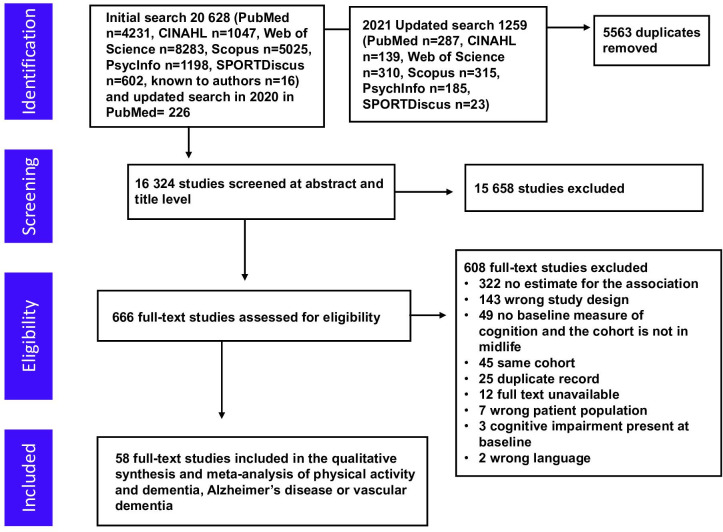
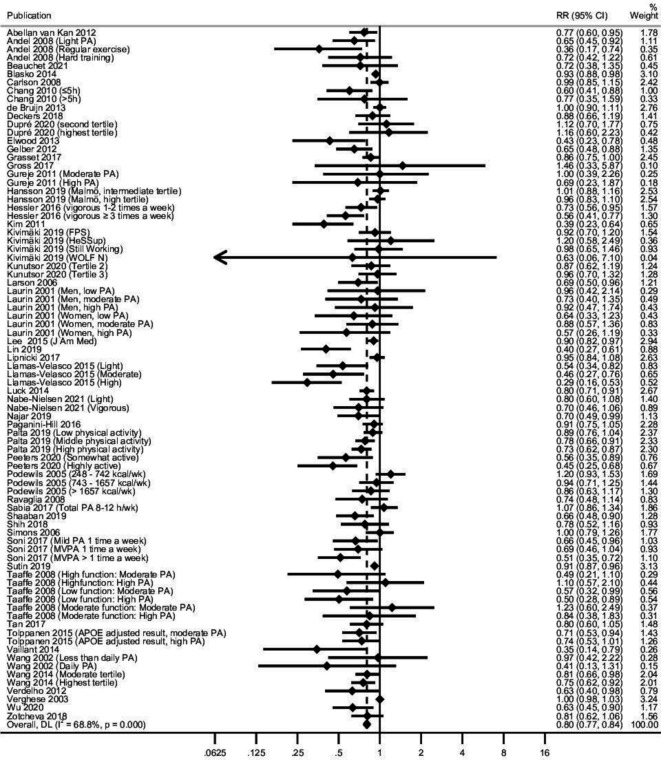
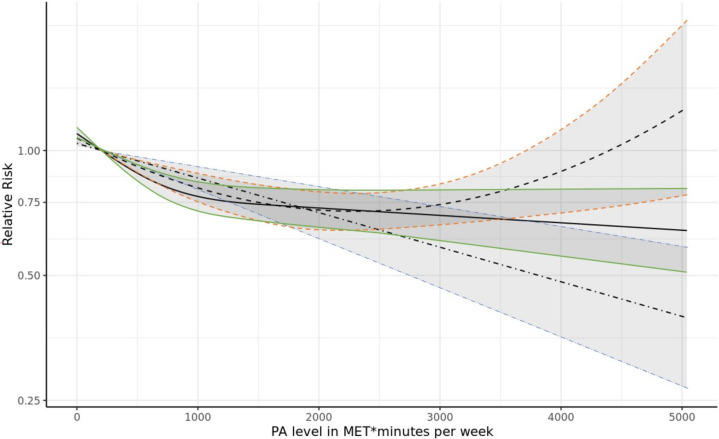
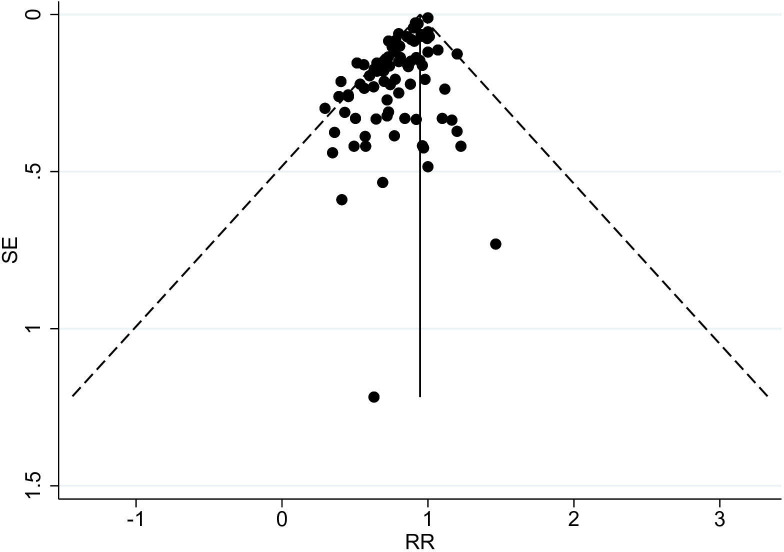
Objective: Physical activity (PA) is associated with a decreased incidence of dementia, but much of the evidence comes from short follow-ups prone to reverse causation. This meta-analysis investigates the effect of study length on the association. Design: A systematic review and meta-analysis. Pooled effect sizes, dose–response analysis and funnel plots were used to synthesise the results. Data sources: CINAHL (last search 19 October 2021), PsycInfo, Scopus, PubMed, Web of Science (21 October 2021) and SPORTDiscus (26 October 2021). Eligibility criteria: Studies of adults with a prospective follow-up of at least 1 year, a valid cognitive measure or cohort in mid-life at baseline and an estimate of the association between baseline PA and follow-up all-cause dementia, Alzheimer’s disease or vascular dementia were included (n=58). Results: PA was associated with a decreased risk of all-cause dementia (pooled relative risk 0.80, 95% CI 0.77 to 0.84, n=257 983), Alzheimer’s disease (0.86, 95% CI 0.80 to 0.93, n=128 261) and vascular dementia (0.79, 95% CI 0.66 to 0.95, n=33 870), even in longer follow-ups (≥20 years) for all-cause dementia and Alzheimer’s disease. Neither baseline age, follow-up length nor study quality significantly moderated the associations. Dose–response meta-analyses revealed significant linear, spline and quadratic trends within estimates for all-cause dementia incidence, but only a significant spline trend for Alzheimer’s disease. Funnel plots showed possible publication bias for all-cause dementia and Alzheimer’s disease. Conclusion: PA was associated with lower incidence of all-cause dementia and Alzheimer’s disease, even in longer follow-ups, supporting PA as a modifiable protective lifestyle factor, even after reducing the effects of reverse causation.
Overview
The claims and statistics of this paper haven’t been checked yet.
Free: it reads the open-access text and checks the first 5 claims that cite a source we can check. Create a free account to check every claim.
Integrity signals
Registry
Cites
Statistics
Figures
Verification
Claims the paper makes
The claims and statistics of this paper haven’t been checked yet.
Free: it reads the open-access text and checks the first 5 claims that cite a source we can check. Create a free account to check every claim.
Claims other papers make about this one
Each is checked against this paper’s own text: does it say what the citing paper says it does?
The source backs part of the claim, not all of it — or backs it for a different population, condition or comparison.
In the citing paper
“A systematic review and meta-analysis of 58 studies exploring the link between physical activity and dementia, found that physical activity was associated with a decreased risk of all-cause dementia (RR 0.80, 0.77 to 0.84, n=257,983) and dementia types in short and longer followups ≥20 years, and at all ages. (165)”
From Dementia prevention, intervention, and care: 2024 report of the Lancet standing Commission (2024) · cites this paper as [165]
Experimental — accuracy not yet measuredThe cited source says what the claim attributes to it.
In the citing paper
“Physical activity and exercise benefits apply to conditions characterized by very distinct pathophysiology, such as Alzheimer’s disease [629], cancer [628], heart disease [630], and pneumonia/other infections [631,632].”
From Global consensus on optimal exercise recommendations for enhancing healthy longevity in older adults (ICFSR) (2025) · cites this paper as [629]
The cited source says what the claim attributes to it.
In the citing paper
“Physical activity and exercise benefits apply to conditions characterized by very distinct pathophysiology, such as Alzheimer’s disease [629], cancer [628], heart disease [630], and pneumonia/other infections [631,632].”
From Global consensus on optimal exercise recommendations for enhancing healthy longevity in older adults (ICFSR) (2025) · cites this paper as [629]
Self-check
Percentages, sums and reported differences re-computed from the paper’s own numbers.
The self-check needs the paper’s full text.
Citations
Cites
1 retracted
Dementia prevention, intervention, and care: 2020 report of the Lancet Commission
Livingston, G., Huntley, J., Sommerlad, A., Ames, D., Ballard, C., Banerjee, S., Brayne, C., Burns, A., Cohen-Mansfield, J., Cooper, C., et al. (2020) · The Lancet · doi:10.1016/s0140-6736(20)30367-6 · Cited by 10,430
RetractedPreferred Reporting Items for Systematic Reviews and Meta-Analyses: the PRISMA statement
Moher, D., Liberati, A., Tetzlaff, J., Altman, D. G., & for the PRISMA Group (2009) · BMJ · doi:10.1136/bmj.b2535 · Cited by 83,823
Preferred Reporting Items for Systematic Reviews and Meta-Analyses: The PRISMA Statement
Moher, D., Liberati, A., Tetzlaff, J., Altman, D. G., & The PRISMA Group (2009) · PLoS Medicine · doi:10.1371/journal.pmed.1000097 · Cited by 64,042
Wang, G., Ma, R., Qiao, G., Wada, K., Aizawa, Y., & Satoh, T. (2015) · Integrative Medicine International · doi:10.1159/000368408 · Cited by 18,657
Borenstein, M., Hedges, L. V., Higgins, J. P. T., & Rothstein, H. R. (2009) · doi:10.1002/9780470743386 · Cited by 14,225
World Health Organization 2020 guidelines on physical activity and sedentary behaviour
Bull, F. C., Al-Ansari, S. S., Biddle, S., Borodulin, K., Buman, M. P., Cardon, G., Carty, C., Chaput, J.-P., Chastin, S., Chou, R., et al. (2020) · British Journal of Sports Medicine · doi:10.1136/bjsports-2020-102955 · Cited by 11,657
Jack, C. R., Knopman, D. S., Jagust, W. J., Petersen, R. C., Weiner, M. W., Aisen, P. S., Shaw, L. M., Vemuri, P., Wiste, H. J., Weigand, S. D., et al. (2013) · The Lancet Neurology · doi:10.1016/s1474-4422(12)70291-0 · Cited by 4,396
Zhang, J., & Yu, K. F. (1998) · JAMA · doi:10.1001/jama.280.19.1690 · Cited by 4,138
(2015) · HAL · Cited by 2,238
Leisure Activities and the Risk of Dementia in the Elderly
Verghese, J., Lipton, R. B., Katz, M. J., Hall, C. B., Derby, C. A., Kuslansky, G., Ambrose, A. F., Sliwinski, M., & Buschke, H. (2003) · New England Journal of Medicine · doi:10.1056/nejmoa022252 · Cited by 1,961
Cited by
Items 201–300 of 439
Risks of Exercise in Older Adults
Watso, J. C., & Vondrasek, J. D. (2024) · Springer eBooks · doi:10.1007/978-3-031-52928-3_3 · Cited by 4
Marmamula, S., Kumbham, T. R., Ehrlich, J. R., Alladi, S., Bloom, D. E., & Friedman, D. S. (2024) · BMJ Open · doi:10.1136/bmjopen-2024-084348 · Cited by 3
Chew, J. L., Tan, C. H., Chew, P., Ng, K. P., Ali, N., & Lim, W. S. (2024) · European Geriatric Medicine · doi:10.1007/s41999-024-01040-8 · Cited by 3
Li, F., Harmer, P., Eckstrom, E., & Winters‐Stone, K. M. (2024) · JAMA Network Open · doi:10.1001/jamanetworkopen.2024.50457 · Cited by 4
Niu, J., Liu, X., Wang, X., Gao, F., Yu, P., Zhou, Q., & Wang, Q. (2025) · BMC Anesthesiology · doi:10.1186/s12871-025-02968-5 · Cited by 2
“Research on the muscle-brain axis has burgeoned in recent years, with substantial evidence suggesting that regular physical activity can delay the onset of Alzheimer’s disease (AD) and dementia [9].”
Lee, S. K., Han, M., Park, S., Park, S. J., Song, J., Kim, H. J., Kim, J., Lee, H., Shin, H., Kim, K. H., et al. (2025) · Cancer Research and Treatment · doi:10.4143/crt.2024.901 · Cited by 4
“…participants also confirmed that PA reduced the risk of all-cause dementia by 20% (pooled relative risk [RR], 0.80; 95% CI, 0.77 to 0.84), AD by 14% (RR, 0.86; 95% CI, 0.80 to 0.93), and VaD by 21% (RR, 0.79; 95% CI, 0.66 to 0.95), with significant dose-response trends for all-cause dementia [24].”
InfluentialCohen, M. L., Buren, K. V., Myers, M. J., Ellison, J. M., Martens, C. R., & Lanzi, A. M. (2025) · Journal of Geriatric Psychiatry and Neurology · doi:10.1177/08919887251339591 · Cited by 2
“28,29 Participants were encouraged to engage in 150 minutes per week of moderate physical activity and strength training twice a week for 45 minutes.”
Kumagai, S., Park, H., Chen, S., & Yamasaki, T. (2025) · Brain Sciences · doi:10.3390/brainsci15070682 · Cited by 7
Physical activity mediates age differences in cognition among Tsimane forager-horticulturalists
Imms, P. E., Chaudhari, N. N., Cummings, D. K., Rodríguez, D. E., Barisano, G., Hooper, P. L., Sayre, M. K., Seabright, E., Thompson, R. C., Sutherland, M. L., et al. (2025) · The Journals of Gerontology Series A · doi:10.1093/gerona/glaf163 · Cited by 2
Wallenwein, L. A., Schmidt, S. N. L., Barzyk, P., Bieleke, M., Schüler, J., Grüber, M., & Mier, D. U. (2025) · Cerebral Cortex · doi:10.1093/cercor/bhaf228 · Cited by 2
Lopes, J. M., Bertuccio, P., Vecchio, R., Vigezzi, G. P., Blandi, L., & Odone, A. (2025) · Neurology International · doi:10.3390/neurolint17100172 · Cited by 2
Chen, X., Su, K., Chen, C., Yang, Y., Chen, X., Liu, S., Yi, J., Zhuang, J., Yang, H., & He, F. (2025) · Journal of the American Heart Association · doi:10.1161/jaha.125.043830 · Cited by 3
“8–10 In addition, associations have been found between physical activity and hypertension, 11 diabetes, 12 dementia, 13 and depression.”
Feter, N., Duncan, B. B., de Paula, D., dos Reis, R. C. P., Griep, R. H., Feter, J., Alexander, G. E., Raichlen, D. A., & Schmidt, M. I. (2025) · Journal of Physical Activity and Health · doi:10.1123/jpah.2025-0481 · Cited by 2
Wang, X., Tian, S., Xiao, H., Chen, C., Ning, F., & Lin, Y. (2025) · Scientific Reports · doi:10.1038/s41598-025-30756-1 · Cited by 2
“In a large meta-analysis, including 58 cohort and case-control studies and 420,114 individuals, higher physical activity levels were associated with lower incidence of all-cause dementia and Alzheimer’s disease 13 .”
Feng, L., Zou, L., Wen, X., Zhang, L., Zhao, Y., Ren, W., Wang, T., Chen, J., Wang, X., & Tian, Z. (2025) · Journal of sport and health science/Journal of Sport and Health Science · doi:10.1016/j.jshs.2025.101118 · Cited by 3
“34 Regular exercise is conducive to the reduction in circulating A b levels and a delay in cognitive decline and the pathological progression of AD.”
Gupta, A., Gupta, Y., Garg, V., Rajan, R., Vishnu, V. Y., & Tandon, N. (2026) · Advances in Therapy · doi:10.1007/s12325-026-03549-9 · Cited by 2
“…by a systematic review and meta-analysis (58 studies, n = 257,983), which reported decreased risk of all-cause dementia (RR 0.80, 95% CI 0.77–0.84), Alzheimer’s disease (RR 0.86, 95% CI 0.80–0.93) and vascular dementia (RR 0.79, 95% CI 0.66–0.95) over a follow-up of at least 10 years [30].”
InfluentialLeońska‐Duniec, A. (2026) · Genes · doi:10.3390/genes17040474 · Cited by 2
Physical activity, falls, and dementia risk in adults aged ≥ 60: evidence from three cohorts
Yang, J., Zhang, M., Hou, M., Liu, H., & Fan, H. (2026) · International Journal of Behavioral Nutrition and Physical Activity · doi:10.1186/s12966-026-01926-9 · Cited by 2
“Physical activity is well established as a key protective factor against both dementia and falls [11–13].”
Stable neuronal representations underlie cognitive resilience to Alzheimer's disease pathology
Chen, K., Pineau, E., Koletar, M. M., Trevisiol, A., He, J., Hill, M., Goubran, M., Sled, J. G., McLaurin, J., & Stefanovic, B. (2026) · Alzheimer s & Dementia · doi:10.1002/alz.71570 · Cited by 4
“…ofreversallearning(reversallearningtrials1–6),assessinghowrapidly the animal adapted to the new escape location; and (3) AUC of latency across the last two days of reversal learning (reversal learning trials 7–10), evaluating consistency in cognitive flexibility and executive function (Figure 2C).”
Lafer, B., Neves, L. M., Vancampfort, D., Stubbs, B., Gonzalez-Pinto, A., Nierenberg, A. A., Olagunju, A. T., Goldstein, B. I., Vieta, E., Koning, E., et al. (2026) · Bipolar Disorders · doi:10.1111/bdi.70164 · Cited by 2
Gholamalishahi, S., Hosseini, S. A., Ettorre, E., Mannocci, A., Okechukwu, C. E., Keshavarz, M. J., & Torre, G. L. (2023) · Journal of Clinical Medicine · doi:10.3390/jcm12237327 · Cited by 3
Chang, Y.-K., Etnier, J. L., Li, R., Chen, Y.-C., Hung, C.-S., Chen, F., Chen, C., & Chu, C. (2024) · Psychology of sport and exercise · doi:10.1016/j.psychsport.2024.102748 · Cited by 2
Wong, R., Mikhailova, T., Hudson, D., Park, S., & Guo, S. (2025) · Journal of Aging and Health · doi:10.1177/08982643241308938 · Cited by 3
“It has been shown that exercise significantly lowers the risk of developing dementia and mild cognitive impairment (Ahlskog et al., 2011; Iso-Markku et al., 2022).”
Feter, N., Caputo, E. L., Leite, J. S., Delpino, F. M., Cassuriaga, J., da Silva, C. N., da Silva, M. C., Reichert, F. F., & Rombaldi, A. J. (2023) · Dementia & Neuropsychologia · doi:10.1590/1980-5764-dn-2022-0072 · Cited by 3
Barreto, P. D. S. (2023) · Journal of Aging Research and Lifestyle · doi:10.14283/jarlife.2023.5 · Cited by 6
PROGRAM AKTIVITAS FISIK UNTUK MENURUNKAN RISIKO DEMENSIA PADA LANSIA
Fatria, I. (2023) · SELAPARANG Jurnal Pengabdian Masyarakat Berkemajuan · doi:10.31764/jpmb.v7i1.13823 · Cited by 2
“Beberapa mekanisme yang berpotensi untuk mencegah demensia melalui aktivitas fisik diantaranya meningkatkan aliran darah ke otak, menurunnya produksi β-amyloid, peningkatan pembuangan β-amyloid, proses antioksidan dan inflamasi di otak (Iso-Markku et al., 2022).”
BackgroundA Dual-Task Paradigm Combining Physical and Cognitive Training in Mice: Application to Aging
Attoh-Mensah, E., Huret, A., Léger, M., Loggia, G., Née, G., Largillière, S., Zuba, D., Chavoix, C., Schumann‐Bard, P., & Fréret, T. (2024) · Aging and Disease · doi:10.14336/ad.2024.0207-1 · Cited by 5
Falck, R. S., Cosco, T. D., Wister, A., & Best, J. R. (2024) · Maturitas · doi:10.1016/j.maturitas.2024.108088 · Cited by 3
Ding, H., Brown, S., Paquette, D. R., Orwig, T. A., Spartano, N. L., & Lin, H. (2025) · Journal of Medical Internet Research · doi:10.2196/72946 · Cited by 3
“Several biological mechanisms have been suggested to explain the neuroprotective effects of physical activity, including reduction in β-amyloid accumulation, enhancement of cerebral blood flow and vascular integrity, and modulation of oxidative stress and neuroinflammation [58,59].”
Nurhayanti, N., Fadillah, Q., & Pratama, I. H. (2025) · Syntax Literate Jurnal Ilmiah Indonesia · doi:10.36418/syntax-literate.v10i11.62493 · Cited by 2
Ramos‐Henderson, M., Soto‐Añari, M., Herrera‐Pino, J., Porto, M. F., Camargo, L., Hesse, H., †, R. F., Quispe-Ayala, C., de la Cadena, C. G., Mendoza-Ruvalcaba, N. M., et al. (2023) · Alzheimer s & Dementia Diagnosis Assessment & Disease Monitoring · doi:10.1002/dad2.12427 · Cited by 4
Grenier, J. (2023) · MSK – Muskuloskelettale Physiotherapie · doi:10.1055/a-2107-6071 · Cited by 2
“[102] Iso-Markku P, Kujala UM, Knittle K et al.”
BackgroundExercise to prevent stroke and dementia—World Stroke Day 2024
Markus, H. S. (2024) · International Journal of Stroke · doi:10.1177/17474930241291618 · Cited by 2
Rodríguez-Espinosa, N., Miguel, A. M., Rodríguez-Pérez, M. D. C., Almeida-González, D., & de León, A. C. (2023) · Frontiers in Nutrition · doi:10.3389/fnut.2023.1106629 · Cited by 3
Lopes, M. A., Stoppe, A., Neto, Y. C., & d’Orsi, E. (2024) · Aging Medicine · doi:10.1002/agm2.12362 · Cited by 1
“While physical activity already has a considerable amount of good evidence in observational and experimental studies, both reducing the incidence of dementia 41,42 and improving cognition in dementia cases, 43 internet use and community-group practice need to be further investigated and understood.”
BackgroundLiteracia para a saúde e qualidade de vida: estudo transversal
Nunciaroni, A. T., Siqueira, C. L., Pontes, C. M., & Martins, R. A. D. S. (2025) · Revista de Enfermagem da UFSM · doi:10.5902/2179769289774 · Cited by 1
Huang, X., Li, C., Tao, G., Zhong, Y., Li, J., Chen, T., & Shen, J. (2025) · Frontiers in Public Health · doi:10.3389/fpubh.2025.1640089 · Cited by 1
Prinelli, F., Noale, M., Conti, S., Ravelli, A., Sergi, G., Maggi, S., Ceolin, C., Brennan, L., de Groot, C. P. G. M., McEvoy, C. T., et al. (2025) · Social Psychiatry and Psychiatric Epidemiology · doi:10.1007/s00127-025-02993-2 · Cited by 1
Fisher, D. W., Fisher, J. R., Urfer, S. R., Tran, N., Kerr, K. F., & Darvas, M. (2026) · GeroScience · doi:10.1007/s11357-025-02083-w · Cited by 2
“In humans, there are reciprocal relationships between motor activity and cognitive decline, whereby subtle reduction in measures like gait speed can be early signs of cognitive decline and progression to dementia [58], while increased cardiovascular fitness can also help prevent dementia [59].”
Psychedelics and longevity: implications for lifespan, healthspan and functional aging
Haden, M., Woods, B., Woods, T., & Tupper, K. W. (2026) · Longevity · doi:10.1080/30653495.2026.2696224 · Cited by 1
Yiannis, T., Macpherson, H., Scott, D. S., Callisaya, M. L., Gourlay, C., Maddison, R., Gvozdenko, E., & Jansons, P. (2026) · Health Expectations · doi:10.1111/hex.70783 · Cited by 1
Verdelho, A., Correia, M. A., Gonçalves‐Pereira, M., Madureira, S., Vilela, P. F., Santos, A. C., Rodrigues, M., Borges, M., Ferro, J. M., & Clara, S. (2024) · Journal of Alzheimer s Disease · doi:10.3233/jad-240246 · Cited by 2
“2 , 6 , 12 Physical activity has been associated with improvement of synaptic function, antioxidant capacity and reduced inflamma-tory markers, as well as increased cerebral perfusion and vascular endothelial function.”
Berger, K., Baurecht, H., Stein, M. J., Heise, J.-K., Castell, S., Weißer, L., Schikowski, T., Kuss, O., Lieb, W., Micolajczyk, R., et al. (2024) · BMJ Open Sport & Exercise Medicine · doi:10.1136/bmjsem-2024-002228 · Cited by 3
Physical activity: a neglected therapy for dementia
Feter, N., Feter, J., Silva, G. S., Schmidt, M. I., & Rombaldi, A. J. (2024) · Cadernos de Saúde Pública · doi:10.1590/0102-311xen216123 · Cited by 1
“A robust body of literature has established an association between physical activity and reduced risk of cognitive decline and dementia 9,10,11,12,13,14,15 .”
BackgroundPinto, G. M. D. S., Crepalde, L. O. D. S., Scalli, A. C. A. M., de Oliveira, M. P. B., Furtado, G. E., Brito‐Costa, S., Guimarães, N. S., & Cezar, N. O. D. C. (2025) · Journal of Alzheimer s Disease · doi:10.1177/13872877241304603 · Cited by 1
“46,47 da Silva Pinto et al. Although the meta-analyses showed that elderly women with AD tend to have lower body fat percentage and BMI values, this fi nding requires careful interpretation.”
Hussein, K., Kistler-Fischbacher, M., Mattle, M., Molino, C. D. G. R. C., Tsai, L., Kressig, R. W., Orav, E. J., Sliva, J. A. P. D., Vellas, B. J., Rizzoli, R., et al. (2025) · The journal of nutrition health & aging · doi:10.1016/j.jnha.2025.100528 · Cited by 2
Increasing Access to Physical Activity Opportunities for Patients: A Review
Nguyen, C., Abbott-Frey, A., Gallegos, A. D. A., Kaufman, M. W., Noordsy, D. L., Oppezzo, M., & Fredericson, M. (2025) · American Journal of Lifestyle Medicine · doi:10.1177/15598276251348174 · Cited by 1
Ptomey, L. T., Helsel, B. C., Washburn, R. A., Montgomery, R. N., Krebill, R., Danon, J. C., Sherman, J. R., Forsha, D. E., Bodde, A. E., Szabo‐Reed, A. N., et al. (2025) · Alzheimer s & Dementia Translational Research & Clinical Interventions · doi:10.1002/trc2.70115 · Cited by 2
Zhang, Y., Chen, B., Hébert, E. T., DeFina, L. F., Leonard, D., Barlow, C. E., Pavlovic, A., & Kohl, H. W. (2025) · Journal of Activity Sedentary and Sleep Behaviors · doi:10.1186/s44167-025-00079-7 · Cited by 1
“Extensive research has suggested that physical activity (PA) and exercise protect against cognitive decline and dementia [1–4].”
O’Brien, B. J., Evans, S., Worn, R. L., Lavender, A. P., Bell, L. R., & Cover, T. (2025) · Medical Hypotheses · doi:10.1016/j.mehy.2025.111725 · Cited by 1
Bau, J., Götz, S., Loerbroks, A., & Pischke, C. R. (2025) · BMC Public Health · doi:10.1186/s12889-025-23739-4 · Cited by 1
“…Regular physical activity (PA) is crucial for maintaining health and preventing chronic non-communicable diseases [1], such as type 2 diabetes [2], certain cancers [3] or cardiovascular diseases [4], but also mental disorders, such as depression [5] or cognitive impairments, such as dementia [6].”
Hoepel, S. J. W., Ikram, M. K., Ikram, M. A., Voortman, T., & Luik, A. I. (2025) · Journal of Sleep Research · doi:10.1111/jsr.70166 · Cited by 2
“This is in line with results from several meta-analyses (e.g (Feter, Leite, et al. 2023; Iso-Markku et al. 2022; Zhang et al. 2023).) and previous cross-sectional compositional studies assessing cognition as an outcome (Feter, de Paula, et al. 2023; Dumuid et al. 2022; Hyodo et al. 2022; Wu et al.…”
Iso‐Markku, P., Buchholz, E. J., Tu, X. M., Gillespie, N. A., Reynolds, C. A., Lyons, M. J., Kremen, W. S., & Franz, C. E. (2025) · Alzheimer s & Dementia Diagnosis Assessment & Disease Monitoring · doi:10.1002/dad2.70169 · Cited by 4
Self-citationMartina, S. E., Gultom, R., Sinaga, J., & Hia, A. (2025) · Contagion Scientific Periodical Journal of Public Health and Coastal Health · doi:10.30829/contagion.v7i2.24189 · Cited by 1
Iso‐Markku, P., Drouard, G., Farrahi, V., Varjonen, A., Vähä‐Ypyä, H., Vasankari, T. J., Kaprio, J. A., Vuoksimaa, E., & Aaltonen, S. (2026) · The Journals of Gerontology Series B · doi:10.1093/geronb/gbag065 · Cited by 1
“Earlier evidence shows that cognitive reserve, for which education serves as a proxy, moderates the association between lifestyles and cognitive aging so that cognitive reserve protects against deteriorative effects of unfavorable lifestyles (Franz et al., 2021; Iso-Markku et al., 2022a).”
InfluentialSelf-citationCycling and cognition in middle-aged and older adults: A scoping review
Walker, K. L., Gaudreault, A., Prince, S. A., Goldfield, G. S., Taler, V., Taljaard, M., Winters, M., & Kristjansson, E. (2025) · Journal of Cycling and Micromobility Research · doi:10.1016/j.jcmr.2025.100092 · Cited by 2
Sleiay, M., Almohammad, T. Y., Sleiay, B., Sadeq, D., Salibie, N., Alkarkoukly, M., Alsleba, A. A., Albalkhi, S., Alchalabi, E., Kilooh, T., et al. (2025) · Medicine · doi:10.1097/md.0000000000045045 · Cited by 1
“[1,6] As one of the most prevalent neurodegenerative conditions globally, AD underscores the necessity of raising public awareness and scientific understanding.”
Tang, L., Pan, X., Wang, Y., Qiu, C., Yu, X., Liu, F., Wang, L., & Zhu, X. (2025) · BMC Geriatrics · doi:10.1186/s12877-025-06827-3 · Cited by 1
“Higher levels of PA are hypothesized to modulate this risk directly by mitigating chronic inflammation, slowing brain aging, and promoting beneficial structural adaptations within the brain [13, 14].”
Chen, L., Chen, C., Hong, Y., Yin, X., Liu, Z., Lu, Y., Chen, Z., Tan, Y., Fu-rong, L., Li, Y., et al. (2025) · BMC Public Health · doi:10.1186/s12889-025-25305-4 · Cited by 1
“The association of physical activity with dementia is also inconsistent [38, 39].”
Ellis, K. A., Lai, R., Curran, E. M., Southam, J. A., Moorhead, R. A., Cox, K. L., Mancuso, S. G., Westphal, A., Chong, T. W. H., Rego, T. W. H., et al. (2026) · JMIR Aging · doi:10.2196/80040 · Cited by 1
“Low physical activity (PA) levels are an established modifiable risk factor for dementia [1-3].”
Ichige, M. H. A., Silva, P. R. S., & Greve, J. M. D. (2026) · Clinics · doi:10.1016/j.clinsp.2026.100896 · Cited by 2
Shannon, O. M., Griffiths, A., Matu, J., Cronin, K., Bridgeman, K., Booi, L., Farina, F. R., & Gregory, S. (2026) · Journal of Public Health · doi:10.1007/s10389-026-02735-x · Cited by 1
Han, Y., Geng, L., Wang, M., Wang, Y., & Wang, H. (2026) · BMC Geriatrics · doi:10.1186/s12877-026-07403-z · Cited by 1
“…and meta-analysis including 49 observational cohort studies with 257,983 participants demonstrated that higher self-reported PAL was associated with significantly lower odds or hazard of any type of dementia, Alzheimer’s disease, or vascular dementia, exhibiting a dose-gradient response [31].”
Burma, J. S., Nel, J. H., Cheung, H., Hofforth, D., Zala, D., Hayden, A., Ronksley, P. E., Carty, C. L., Chang, M., Gross, A. L., et al. (2026) · Frontiers in Neuroendocrinology · doi:10.1016/j.yfrne.2026.101250 · Cited by 2
Zhao, Y., Luo, G., Huang, C., Chen, Z., Wei, Y., Chen, Q., Wang, F., Gan, Y., & Yin, X. (2026) · The Journal of Prevention of Alzheimer s Disease · doi:10.1016/j.tjpad.2026.100564 · Cited by 1
“The selection and classification of interventions were informed by previously published reviews in the field of Alzheimer ’ s disease and cognitive interventions [21 – 24].”
Davis, C. H., Chok, J. M., Jariwala, N., Paiko, L., Ma, L., Humber, M. B., Beaudreau, S. A., & Gould, C. E. (2026) · Journal of Behavioral Medicine · doi:10.1007/s10865-026-00677-z · Cited by 1
“For instance, physical inactivity is associated with increased risk of dementia, regardless of age (Iso-Markku et al., 2022).”
Atherosclerosis and dementia - causal aspects and preventive potential
Rasmussen, I. J., Luo, J., Rasmussen, K. L., Kjeldsen, E. W., Schneider, L. S., Sandau, N., Thomassen, J. Q., & Frikke‐Schmidt, R. (2026) · Atherosclerosis · doi:10.1016/j.atherosclerosis.2026.120745 · Cited by 2
Yang, L., Yuan, Z., & Chen, X. (2026) · Frontiers in Nutrition · doi:10.3389/fnut.2026.1797113 · Cited by 1
Savelieff, M. G., Bennett, D., Jensen, T. S., & Feldman, E. L. (2026) · Annals of Neurology · doi:10.1002/ana.78289 · Cited by 1
“Lifestyle habits or interventions, such as exercise, 116,117 dietary regimens, 118,119 and bariatric weight-loss surgery, 120,121 might exert salutary effects to improve, stabilize, or prevent both early PN 116,118,120 and CI.”
The effects of physical exercise on brain reserves and cognitive longevity
Grigoryeva, V. N., & Mashkovich, K. A. (2026) · Neurology Bulletin · doi:10.17816/nb683106 · Cited by 1
Qadi, N., AlDakheel, A., & Shosha, E. (2026) · Life · doi:10.3390/life16081289 · Cited by 1
Guimarães, M. H. D. (2024) · doi:10.22533/at.ed.98924160110 · Cited by 1
Andrade, C. (2024) · The Journal of Clinical Psychiatry · doi:10.4088/jcp.24f15270 · Cited by 3
Lacerda, C., Gasparini, S. R. D. F. D., Tiradentes, R. V., BARBOSA, L. S., Moreira, A. C. S., & Sopeletto, S. C. (2024) · Revista Ibero-Americana de Humanidades, Ciências e Educação · doi:10.51891/rease.v10i5.14270 · Cited by 2
Silva, G. F. S. A., Melo, A. C. G. B., Dantas, E. K. D. O., Pereira, V. S. V., & Netto, I. P. M. (2024) · Brazilian Journal of Health Review · doi:10.34119/bjhrv7n3-260 · Cited by 2
Keast, S., Broatch, J. R., Chung, S., Dixon, R., Dongol, R., Emerson, L., Hayes, A., Iuliano, S., Levinger, I., Lin, X., et al. (2024) · Research in Social and Administrative Pharmacy · doi:10.1016/j.sapharm.2024.07.005 · Cited by 1
Kuwayama, S., Tarraf, W., González, K. A., Márquez, F., & González, H. M. (2024) · Innovation in Aging · doi:10.1093/geroni/igae092 · Cited by 2
“ADRD risks are also shaped by behaviors, including smoking, physical activity, and alcohol consumption patterns (7,8), and psychological traits, such as conscientiousness and a positive outlook on life (9,10).”
Yamakita, M., Tsuji, T., Kanamori, S., Saito, J., Kai, Y., Tani, Y., Fujiwara, T., Kondo, N., & Kondo, K. (2025) · Public Health · doi:10.1016/j.puhe.2025.03.033 · Cited by 1
Psychiatry meets neurodegeneration – A collaborative approach to dementia prevention
Kurz, C., Haupt, M., Auer, S., Lautenschlager, N. T., & Kurz, A. (2025) · The Journal of Prevention of Alzheimer s Disease · doi:10.1016/j.tjpad.2025.100317 · Cited by 2
Rosa, M., Graça, M. C., Duarte, M. G., Martins, N., Sanches, L., Silva, E., Ferreira, L., & Seixas, A. (2023) · Advances in Rehabilitation · doi:10.5114/areh.2023.133963 · Cited by 1
“Specifically in people with dementia, physical activity has been associated with a lower incidence of all-cause dementia, and resistance exercise has been linked to slower cognitive impairment [17,18].”
BackgroundGarcía, M. B. P., & Carrión, S. A. Á. (2023) · MIGRATION LETTERS · doi:10.59670/ml.v20is4.4604 · Cited by 1
“Physiotherapists should conduct individual assessments and tailor treatment plans according to the specific needs and characteristics of each patient, considering factors such as age, gender, and duration of illness (13,14).”
BackgroundMethodTulloh, L. E. (2025) · British Journal of Sports Medicine · doi:10.1136/bjsports-2025-110217 · Cited by 3
Nakata, Y. (2022) · Journal of Epidemiology · doi:10.2188/jea.je20220148
The Case For Including Neuroprotective Factors in Sporadic Creutzfeldt-Jakob QuestionnairesPreprint
Reed, R. (2023) · Preprints.org · doi:10.20944/preprints202302.0461.v1
Bethell, H. J. N., & Brodie, D. A. (2023) · CABI eBooks · doi:10.1079/9781800621855.0020
ATIVIDADE FÍSICA E DESORDENS DE SAÚDE MENTAL: PREVENÇÃO, CUIDADO E TRATAMENTO
Honorio, D. D., de Miranda, I., & de Lima, F. D. (2023) · Editora Científica Digital eBooks · doi:10.37885/231014698
FONOAUDIOLOGIA E VOZ CANTADA: ANÁLISE BIBLIOMÉTRICA
Adriano, M. C. D. O., Tavares, R. D. S. C. R., de Oliveira, F. M., da Silva, C. B., & Vasconcellos, R. P. M. (2024) · doi:10.22533/at.ed.9892416017
NOTIFICAÇÕES DE FARMACOVIGILÂNCIA SEGUNDO O VIGMED NO BRASIL
Praxedes, M. F. D. S. (2024) · doi:10.22533/at.ed.98924160114
FORMAS DE PREVENÇÃO E ATUAÇÃO DA ENFERMAGEM NA DOENÇA DE ALZHEIMER
Ricci, A. P., Rodrigues, S. A., & Pereira, C. M. (2024) · doi:10.22533/at.ed.9892416019
IMPORTÂNCIA DO ENFERMEIRO NA ASSISTÊNCIA AO PRÉ-NATAL DE BAIXO RISCO
da Silva, T. E. S., & Dias, D. A. S. (2024) · doi:10.22533/at.ed.9892416012
AÇÕES DO PROFISSIONAL ENFERMEIRO FRENTE AO NEONATO PORTADOR DE MIELOMENINGOCELE
Rodrigues, V. U. D. A., dos Santos, C. O., & Nobre, L. L. (2024) · doi:10.22533/at.ed.9892416011
Health research: current challenges and future perspectives
Praxedes, M. F. D. S. (2024) · doi:10.22533/at.ed.989241601
ESTRATÉGIAS PROFILÁTICAS DO HIV: PROFILAXIAS PRÉ-EXPOSIÇÃO (PREP) E PÓS EXPOSIÇÃO (PEP)
Filho, J. F. D. A., & Lima, C. G. (2024) · doi:10.22533/at.ed.98924160111
HÉRNIA DE HIATO: UMA ABORDAGEM ABRANGENTE SOBRE SUAS CAUSAS, SINTOMAS E TRATAMENTOS
Campanha, K., Geraldo, J. G., Carvalho, J. C. M., de Almeida, S. S., Santos, R. C. N., Cavalini, E. D. C., Gomes, M. C. C., Cabellino, L. F., Vimercati, J. O., & Moreira, J. B. (2024) · doi:10.22533/at.ed.98924160112
RELEVÂNCIA DA PUERICULTURA PARA O DIAGNÓSTICO PRECOCE DO TRANSTORNO DO ESPECTRO AUTISTA
Chalita, A. P. N., Sartorio, M. M. M., Paiva, J. T. D. S. E., Sobrinho, J. D. A., & Luiz, D. F. (2024) · doi:10.22533/at.ed.9892416013
OXICODONA NO TRATAMENTO PALIATIVO ONCOLÓGICO: SEGURANÇA E EFICÁCIA
Ferreira, P. H. L., de Oliveira, Y. G. L., & Neto, J. G. P. (2024) · doi:10.22533/at.ed.9892416015
A QUALIDADE DE VIDA DA MULHER COM CANCRO DA MAMA
Rodrigues, T. M. P., Gomes, B. P., & Prazeres, V. M. P. (2024) · doi:10.22533/at.ed.9892416014
RELAÇÃO ENTRE OS RESULTADOS DA MEMÓRIA DE TRABALHO FONOLÓGICA E DA ESCALA DE DEPRESSÃO GERIÁTRICA
Ferreira, A. M. F. N., Guedes-Granzotti, R. B., Duarte, J. L., Comerlatto, M. P. D. S., Comerlatto, A. A., dos Santos, T., & da Silva, K. (2024) · doi:10.22533/at.ed.9892416018
Soares, A. A., da Rosa, B. D., Cardoso, P. L. D. S., Cavallieri, G. V., do Nascimento, J. G., Forte, G., Silva, D. T. D. R. E., & Rossi, R. C. (2024) · doi:10.22533/at.ed.98924160113
Barbosa, C. K. S., Pessôa, V. M. A., de Vasconcelos, T. C. L., & Neto, J. G. P. (2024) · doi:10.22533/at.ed.9892416016
Metadata
- Authors
- Iso-Markku, P., Kujala, U. M., Knittle, K., Polet, J., Vuoksimaa, E., & Waller, K.
- Affiliations
- University of Jyväskylä (FI)
- University of Helsinki (FI)
- Venue
- British Journal of Sports Medicine
- Publisher
- BMJ
- Published
- 2022-03-17
- Volume
- 56
- Issue
- 12
- Pages
- 701-709
- ISSN
- 0306-3674 (ISSN-L)
- 1473-0480
- PMC
- PMC9163715
- OpenAlex
- W4221092313
- Semantic Scholar
- ce0eb19745b12fb042fa00aab1a6473a09e6f59b
- Cited by
- 423
- References
- 97
- Citations by year
- 2026: 94 · 2025: 121 · 2024: 141 · 2023: 57 · 2022: 10
- FWCI
- 14.11
- Type
- journal article
- Language
- en
- Open access
- hybrid
- doi.org
- Locations
- British Journal of Sports Medicine (publishedVersion, cc-by)
- PubMed Central (publishedVersion, cc-by)
- PubMed (publishedVersion)
- Jyväskylä University Digital Archive (University of Jyväskylä) (submittedVersion, cc-by)
- Työväentutkimus Vuosikirja (submittedVersion)
- Funders
- HUS Diagnostic Center
- Academy of Finland (314639, 320109)
- Juho Vainion Säätiö
- Topics
- Health Sciences › Medicine › Psychiatry and Mental health › Dementia and Cognitive Impairment Research
- Health Sciences › Medicine › Public Health, Environmental and Occupational Health › Physical Activity and Health
- Life Sciences › Neuroscience › Cellular and Molecular Neuroscience › Alzheimer's disease research and treatments
- Keywords
- physical activity, dementia, Alzheimer's disease, vascular dementia, all-cause dementia, follow-up duration, reverse causality, dose-response relationship, cognitive decline
- MeSH terms
- Alzheimer Disease, Humans, Prospective Studies, Dementia, Vascular, Exercise, Disease Progression, Protective Factors
About these checks
Registry, retraction, Cites and statistics results are computed, not judged, with one exception: a printed reference that no index lists is read once by a model before it counts as a citation error. Claims are extracted by a model and kept only when their quote appears verbatim in the text; each cited source is then checked, with a model’s help, for whether it says what the claim relies on. Those verdicts can be wrong — read the claim’s quote and the cited source before relying on one.
Statistics and arithmetic are recomputed, not judged.
Confidence bands are shown only for fields calibrated on our annotated test set. None is calibrated yet, so no band is shown.
What counts as a claim ›How we measure confidence ›How we check this ›
Are you an author, or do you see a problem with this page? Request a review
Data sources
Bibliographic data: Semantic Scholar, OpenAlex, Crossref.
Contains information from the Semantic Scholar Academic Graph Datasets, made available under the ODC Attribution License (ODC-BY 1.0).
Semantic Scholar’s data is described in: Kinney, R., et al. (2023). The Semantic Scholar Open Data Platform. arXiv:2301.10140.
