

Physical activity as a protective factor for dementia and Alzheimer's disease: systematic review, meta-analysis and quality assessment of cohort and case-control studies
Open accessThe DOI matches its Crossref record; 98 of the 98 references it cites were found in a registry or an index.
Abstract
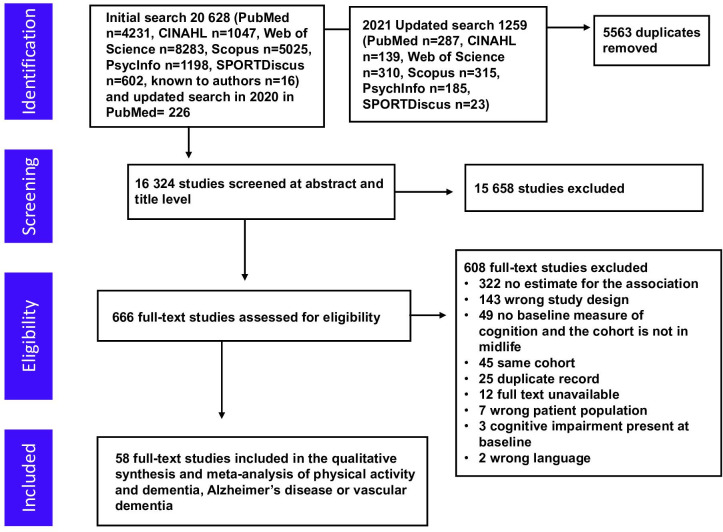
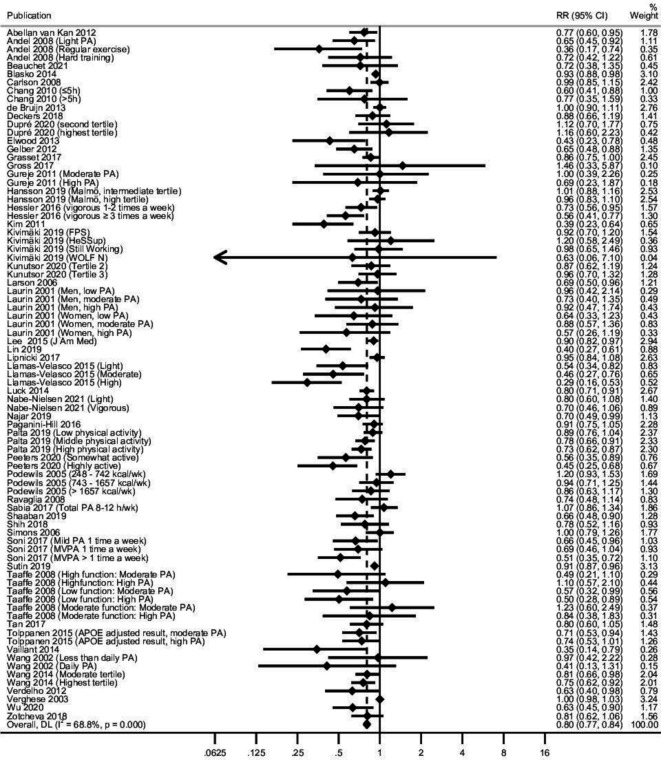
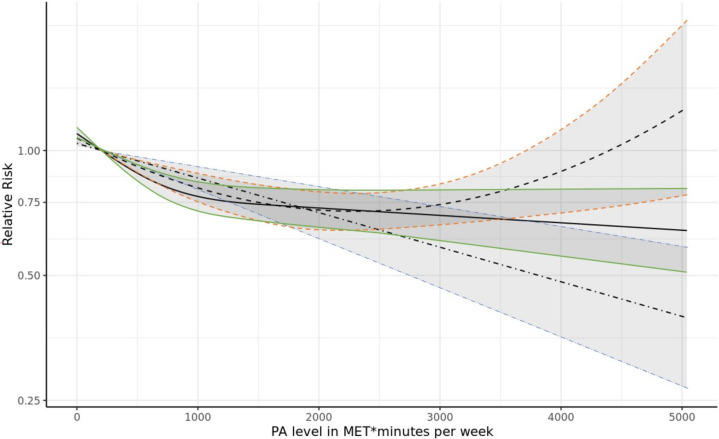
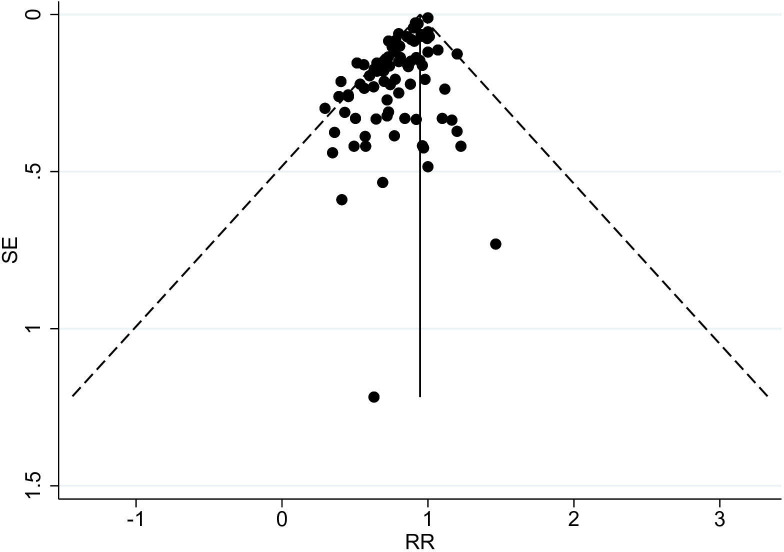
Objective: Physical activity (PA) is associated with a decreased incidence of dementia, but much of the evidence comes from short follow-ups prone to reverse causation. This meta-analysis investigates the effect of study length on the association. Design: A systematic review and meta-analysis. Pooled effect sizes, dose–response analysis and funnel plots were used to synthesise the results. Data sources: CINAHL (last search 19 October 2021), PsycInfo, Scopus, PubMed, Web of Science (21 October 2021) and SPORTDiscus (26 October 2021). Eligibility criteria: Studies of adults with a prospective follow-up of at least 1 year, a valid cognitive measure or cohort in mid-life at baseline and an estimate of the association between baseline PA and follow-up all-cause dementia, Alzheimer’s disease or vascular dementia were included (n=58). Results: PA was associated with a decreased risk of all-cause dementia (pooled relative risk 0.80, 95% CI 0.77 to 0.84, n=257 983), Alzheimer’s disease (0.86, 95% CI 0.80 to 0.93, n=128 261) and vascular dementia (0.79, 95% CI 0.66 to 0.95, n=33 870), even in longer follow-ups (≥20 years) for all-cause dementia and Alzheimer’s disease. Neither baseline age, follow-up length nor study quality significantly moderated the associations. Dose–response meta-analyses revealed significant linear, spline and quadratic trends within estimates for all-cause dementia incidence, but only a significant spline trend for Alzheimer’s disease. Funnel plots showed possible publication bias for all-cause dementia and Alzheimer’s disease. Conclusion: PA was associated with lower incidence of all-cause dementia and Alzheimer’s disease, even in longer follow-ups, supporting PA as a modifiable protective lifestyle factor, even after reducing the effects of reverse causation.
Overview
The claims and statistics of this paper haven’t been checked yet.
Free: it reads the open-access text and checks the first 5 claims that cite a source we can check. Create a free account to check every claim.
Integrity signals
Registry
Cites
Statistics
Figures
Verification
Claims the paper makes
The claims and statistics of this paper haven’t been checked yet.
Free: it reads the open-access text and checks the first 5 claims that cite a source we can check. Create a free account to check every claim.
Claims other papers make about this one
Each is checked against this paper’s own text: does it say what the citing paper says it does?
The source backs part of the claim, not all of it — or backs it for a different population, condition or comparison.
In the citing paper
“A systematic review and meta-analysis of 58 studies exploring the link between physical activity and dementia, found that physical activity was associated with a decreased risk of all-cause dementia (RR 0.80, 0.77 to 0.84, n=257,983) and dementia types in short and longer followups ≥20 years, and at all ages. (165)”
From Dementia prevention, intervention, and care: 2024 report of the Lancet standing Commission (2024) · cites this paper as [165]
Experimental — accuracy not yet measuredThe cited source says what the claim attributes to it.
In the citing paper
“Physical activity and exercise benefits apply to conditions characterized by very distinct pathophysiology, such as Alzheimer’s disease [629], cancer [628], heart disease [630], and pneumonia/other infections [631,632].”
From Global consensus on optimal exercise recommendations for enhancing healthy longevity in older adults (ICFSR) (2025) · cites this paper as [629]
The cited source says what the claim attributes to it.
In the citing paper
“Physical activity and exercise benefits apply to conditions characterized by very distinct pathophysiology, such as Alzheimer’s disease [629], cancer [628], heart disease [630], and pneumonia/other infections [631,632].”
From Global consensus on optimal exercise recommendations for enhancing healthy longevity in older adults (ICFSR) (2025) · cites this paper as [629]
Self-check
Percentages, sums and reported differences re-computed from the paper’s own numbers.
The self-check needs the paper’s full text.
Citations
Cites
1 retracted
Dementia prevention, intervention, and care: 2020 report of the Lancet Commission
Livingston, G., Huntley, J., Sommerlad, A., Ames, D., Ballard, C., Banerjee, S., Brayne, C., Burns, A., Cohen-Mansfield, J., Cooper, C., et al. (2020) · The Lancet · doi:10.1016/s0140-6736(20)30367-6 · Cited by 10,430
RetractedPreferred Reporting Items for Systematic Reviews and Meta-Analyses: the PRISMA statement
Moher, D., Liberati, A., Tetzlaff, J., Altman, D. G., & for the PRISMA Group (2009) · BMJ · doi:10.1136/bmj.b2535 · Cited by 83,823
Preferred Reporting Items for Systematic Reviews and Meta-Analyses: The PRISMA Statement
Moher, D., Liberati, A., Tetzlaff, J., Altman, D. G., & The PRISMA Group (2009) · PLoS Medicine · doi:10.1371/journal.pmed.1000097 · Cited by 64,042
Wang, G., Ma, R., Qiao, G., Wada, K., Aizawa, Y., & Satoh, T. (2015) · Integrative Medicine International · doi:10.1159/000368408 · Cited by 18,657
Borenstein, M., Hedges, L. V., Higgins, J. P. T., & Rothstein, H. R. (2009) · doi:10.1002/9780470743386 · Cited by 14,225
World Health Organization 2020 guidelines on physical activity and sedentary behaviour
Bull, F. C., Al-Ansari, S. S., Biddle, S., Borodulin, K., Buman, M. P., Cardon, G., Carty, C., Chaput, J.-P., Chastin, S., Chou, R., et al. (2020) · British Journal of Sports Medicine · doi:10.1136/bjsports-2020-102955 · Cited by 11,657
Jack, C. R., Knopman, D. S., Jagust, W. J., Petersen, R. C., Weiner, M. W., Aisen, P. S., Shaw, L. M., Vemuri, P., Wiste, H. J., Weigand, S. D., et al. (2013) · The Lancet Neurology · doi:10.1016/s1474-4422(12)70291-0 · Cited by 4,396
Zhang, J., & Yu, K. F. (1998) · JAMA · doi:10.1001/jama.280.19.1690 · Cited by 4,138
(2015) · HAL · Cited by 2,238
Leisure Activities and the Risk of Dementia in the Elderly
Verghese, J., Lipton, R. B., Katz, M. J., Hall, C. B., Derby, C. A., Kuslansky, G., Ambrose, A. F., Sliwinski, M., & Buschke, H. (2003) · New England Journal of Medicine · doi:10.1056/nejmoa022252 · Cited by 1,961
Cited by
Dementia prevention, intervention, and care: 2024 report of the Lancet standing Commission
Livingston, G., Huntley, J., Liu, K. Y., Costafreda, S. G., Selbæk, G., Alladi, S., Ames, D., Banerjee, S., Burns, A., Brayne, C., et al. (2024) · The Lancet · doi:10.1016/s0140-6736(24)01296-0 · Cited by 3,860
Patricios, J. S., Schneider, K. J., Dvorak, J., Ahmed, O. H., Blauwet, C., Cantu, R. C., Davis, G. A., Echemendia, R. J., Makdissi, M., McNamee, M., et al. (2023) · British Journal of Sports Medicine · doi:10.1136/bjsports-2023-106898 · Cited by 1,193
Izquierdo, M., de Souto Barreto, P., Arai, H., Bischoff-Ferrari, H. A., Cadore, E. L., Cesari, M., Chen, L.-K., Coen, P. M., Courneya, K. S., Duque, G., et al. (2025) · The Journal of nutrition, health and aging · doi:10.1016/j.jnha.2024.100401 · Cited by 273
Physical Activity and Cognitive Decline Among Older Adults: A Systematic Review and Meta-Analysis
Iso-Markku, P., Aaltonen, S., Kujala, U. M., Halme, H.-L., Phipps, D., Knittle, K., Vuoksimaa, E., & Waller, K. (2024) · JAMA Network Open · doi:10.1001/jamanetworkopen.2023.54285 · Cited by 227
Self-citationNeuroprotective mechanisms of exercise and the importance of fitness for healthy brain ageing
Tari, A. R., Walker, T. L., Huuha, A. M., Sando, S. B., & Wisloff, U. (2025) · The Lancet · doi:10.1016/s0140-6736(25)00184-9 · Cited by 159
Alzheimer’s Disease: Exploring the Landscape of Cognitive Decline
Tenchov, R., Sasso, J. M., & Zhou, Q. A. (2024) · ACS Chemical Neuroscience · doi:10.1021/acschemneuro.4c00339 · Cited by 170
Chen, C., & Nakagawa, S. (2023) · Ageing Research Reviews · doi:10.1016/j.arr.2023.101868 · Cited by 194
Iverson, G. L., Castellani, R. J., Cassidy, J. D., Schneider, G. M., Schneider, K., Echemendía, R. J., Bailes, J. E., Hayden, A., Koerte, I. K., Manley, G. T., et al. (2023) · British Journal of Sports Medicine · doi:10.1136/bjsports-2023-106890 · Cited by 151
Physical exercise, cognition, and brain health in aging
Boa Sorte Silva, N. C., Barha, C. K., Erickson, K. I., Kramer, A. F., & Liu-Ambrose, T. (2024) · Trends in Neurosciences · doi:10.1016/j.tins.2024.04.004 · Cited by 119
Dose–response associations, physical activity intensity and mortality risk: A narrative review
Ekelund, U., Sánchez-Lastra, M. A., Dalene, K. E., & Tarp, J. (2023) · Journal of sport and health science/Journal of Sport and Health Science · doi:10.1016/j.jshs.2023.09.006 · Cited by 113
“5 (cid:1) 7 The beneficial effects of physical activity also extend to mental health conditions and some neurological disorders (e.g., more active individuals have a lower risk for depression 8 and for dementia and Alzheimer’s disease 9 ).”
BackgroundVeronese, N., Soysal, P., Demurtas, J., Solmi, M., Bruyère, O., Christodoulou, N., Ramalho, R., Fusar‐Poli, P., Lappas, A. S., Pinto, D., et al. (2023) · European Geriatric Medicine · doi:10.1007/s41999-023-00858-y · Cited by 106
“However, the low quality of the studies included, the high heterogeneity, and the presence of publication bias must be acknowledged as important limitations [25].”
BackgroundMethodInfluentialQiang, Y., Deng, Y., Zhang, Y.-R., Wang, H.-F., Zhang, W., Dong, Q., Feng, J., Cheng, W., & Yu, J. (2023) · Alzheimer s & Dementia · doi:10.1002/alz.13088 · Cited by 92
Accelerometer-derived ‘weekend warrior’ physical activity pattern and brain health
Min, J., Cao, Z., Duan, T., Wang, Y., & Xu, C. (2024) · Nature Aging · doi:10.1038/s43587-024-00688-y · Cited by 79
“Existing evidence suggests that PA is associated with lower risks of neurological and psychiatric conditions, including dementia, stroke, Parkinson’s disease (PD), depressive disorders and anxiety disorders 1–4 .”
Tan, S., Chen, W., Kong, G., Wei, L., & Xie, Y. (2023) · Frontiers in Aging Neuroscience · doi:10.3389/fnagi.2023.1305790 · Cited by 72
Yang, Z., Hotterbeex, P., Marent, P.-J., Cerin, E., Thomis, M. A., & van Uffelen, J. G. Z. (2024) · Ageing Research Reviews · doi:10.1016/j.arr.2024.102283 · Cited by 72
Biomarkers of aging: from molecules and surrogates to physiology and function
Furrer, R., & Handschin, C. (2025) · Physiological Reviews · doi:10.1152/physrev.00045.2024 · Cited by 74
Modifiable cardiovascular risk factors and genetics for targeted prevention of dementia
Rasmussen, I. J., & Frikke‐Schmidt, R. (2023) · European Heart Journal · doi:10.1093/eurheartj/ehad293 · Cited by 61
“A strong association between diabetes and increased risk of dementia is reported in several meta-analyses with relative risks in the range of 1.47–1.7378–80 for all-cause dementia, 1.33–1.564,79–82 for AD, and 2.27–2.3879,80 for VD.”
BackgroundMethodInfluentialThe impact of physical exercise on neuroinflammation mechanism in Alzheimer’s disease
Hu, J., Huang, B., & Chen, K. (2024) · Frontiers in Aging Neuroscience · doi:10.3389/fnagi.2024.1444716 · Cited by 59
Exercise-related physical activity relates to brain volumes in 10,125 individuals
Raji, C. A., Meysami, S., Hashemi, S., Garg, S., Akbari, N., Ahmed, G., Chodakiewitz, Y. G., Nguyen, T. D., Niotis, K., Merrill, D. A., et al. (2024) · Journal of Alzheimer's Disease · doi:10.3233/jad-230740 · Cited by 48
Liang, S., Liu, H., Wang, X., Lin, H., Zheng, L., Zhang, Y., Peng, L., Huang, S., & Chen, L. (2025) · Brain Research Bulletin · doi:10.1016/j.brainresbull.2025.111263 · Cited by 53
Abdolmaleky, H. M., & Zhou, J. (2023) · Nutrients · doi:10.3390/nu15153456 · Cited by 49
Reparaz-Escudero, I., Izquierdo, M., Bischoff-Ferrari, H. A., Martínez-Lage, P., & Sáez de Asteasu, M. L. (2024) · Ageing Research Reviews · doi:10.1016/j.arr.2024.102463 · Cited by 45
Zhang, X., Li, Q., Cong, W., Mu, S., Zhan, R., Zhong, S., Zhao, M., Zhao, C., Kang, K., & Zhou, Z. (2023) · Ageing Research Reviews · doi:10.1016/j.arr.2023.102127 · Cited by 61
Association between physical activity and body posture: a systematic review and meta-analysis
Salsali, M., Sheikhhoseini, R., Sayyadi, P., Hides, J. A., Dadfar, M., & Piri, H. (2023) · BMC Public Health · doi:10.1186/s12889-023-16617-4 · Cited by 69
“It is well accepted that engaging in PA has significant health advantages [4], such as reducing mortality risks [5], improving psychological well-being [6] and mental health [7], lowering blood pressure [8], and improving the survival of cancer patients [9].”
Biskupiak, Z., Ha, V. V., Rohaj, A., & Bulaj, G. W. (2024) · Journal of Clinical Medicine · doi:10.3390/jcm13020403 · Cited by 52
Zhang, B., Huang, X., Wang, X., Chen, X., Zheng, C., Shao, W., Wang, G., & Zhang, W. (2022) · Scientific Reports · doi:10.1038/s41598-022-17207-x · Cited by 44
Sports and Immunity, from the recreational to the elite athlete
Baskerville, R., Castell, L. M., & Bermon, S. (2024) · Infectious Diseases Now · doi:10.1016/j.idnow.2024.104893 · Cited by 50
Noradrenergic neuromodulation in ageing and disease
Krohn, F., Lancini, E., Ludwig, M., Leiman, M., Guruprasath, G., Haag, L., Panczyszyn, J., Düzel, E., Hämmerer, D., & Betts, M. J. (2023) · Neuroscience & Biobehavioral Reviews · doi:10.1016/j.neubiorev.2023.105311 · Cited by 42
Morella, I., Negro, M., Dossena, M., Brambilla, R., & D’Antona, G. (2023) · Neuropharmacology · doi:10.1016/j.neuropharm.2023.109718 · Cited by 37
“A recent metanalysis of human studies found that physical activity was associated with decreased risk of all-cause dementia and AD, even in long follow-up studies (>20 years), thus supporting the role of physical exercise as protective lifestyle factor (Iso-Markku et al., 2022).”
Zhang, M., Liang, Z., Tian, L., Han, Y., Jiang, X., Li, Y., Su, Z., & Liu, T. (2024) · Archives of Physical Medicine and Rehabilitation · doi:10.1016/j.apmr.2024.06.005 · Cited by 41
Zhang, Y., Fu, Y., Guan, X., Wang, C., Fu, M., Xiao, Y., Hong, S., Zhou, Y., Liu, C., Zhong, G., et al. (2024) · Environment International · doi:10.1016/j.envint.2024.108870 · Cited by 36
Senff, J. R., Tack, R. W. P., Mallick, A., Gutiérrez-Martínez, L., Duskin, J. A., Kimball, T. N., Tan, B. Y., Chemali, Z. N., Newhouse, A. L., Kourkoulis, C. E., et al. (2025) · Journal of Neurology Neurosurgery & Psychiatry · doi:10.1136/jnnp-2024-334925 · Cited by 43
Wang, X., Zhang, J., Chen, C., Lu, Z., Zhang, D., & Li, S. (2023) · Frontiers in Aging Neuroscience · doi:10.3389/fnagi.2023.1168892 · Cited by 40
“A few studies have shown that there is no non-linear association between PA and cognitive function (Iso-Markku et al., 2022).”
BackgroundResultHerold, F., Zou, L., Theobald, P., Manser, P., Falck, R. S., Yu, Q., Liu-Ambrose, T. Y. L., Hillman, C. H., Kramer, A. F., Erickson, K. I., et al. (2025) · European Journal of Applied Physiology · doi:10.1007/s00421-025-05858-3 · Cited by 43
Strain, T., Dempsey, P. C., Wijndaele, K., Sharp, S. J., Kerrison, N. D., Gonzales, T. I., Li, C., Wheeler, E., Langenberg, C., Brage, S., et al. (2023) · Diabetes Care · doi:10.2337/dc22-1467 · Cited by 35
Physical Activity, Alzheimer Plasma Biomarkers, and Cognition
Kim, S. A., Shin, D., Ham, H., Kim, Y., Gu, Y., Kim, H. J., Na, D. L., Zetterberg, H., Blennow, K., Seo, S. W., et al. (2025) · JAMA Network Open · doi:10.1001/jamanetworkopen.2025.0096 · Cited by 34
Xiao, W., Yang, Y., Bai, L., Yang, P., Li, R., Yang, D., Li, F., Quan, L., Liang, Q., Yan, Y., et al. (2025) · Journal of Neuroinflammation · doi:10.1186/s12974-025-03493-5 · Cited by 36
López‐Bueno, R., Yang, L., Stamatakis, E., & Cruz, B. D. P. (2023) · The Lancet Healthy Longevity · doi:10.1016/s2666-7568(23)00212-x · Cited by 30
Causal cardiovascular risk factors for dementia: insights from observational and genetic studies
Kjeldsen, E. W., & Frikke‐Schmidt, R. (2024) · Cardiovascular Research · doi:10.1093/cvr/cvae235 · Cited by 39
“134 Another meta-analysis of cohort studies observed a linear dose–response relationship between physical activity levels and lower risk of all-cause dementia and AD.”
Feter, N., de Paula, D., dos Reis, R. C. P., Matos, S. M. A., Barreto, S. M., Duncan, B. B., & Schmidt, M. I. (2023) · Innovation in Aging · doi:10.1093/geroni/igad030 · Cited by 34
“The literature provides substantial evidence for protection by physical activity, especially MVPA, and appropriate duration of sleep against cognitive impairment and dementia (Fratiglioni et al., 2020; Huang et al., 2022; Iso-Markku et al., 2022; Lo et al., 2016).”
BackgroundEstrogen Receptors: A New Frontier in Alzheimer’s Disease Therapy
Cipriano, G. L., Mazzon, E., & Anchesi, I. (2024) · International Journal of Molecular Sciences · doi:10.3390/ijms25169077 · Cited by 27
“Yet , other factors like insulin pathway dysregulation also play a significant role in increasing AD risk, highlighting the complexity of the disease’s etiology [17,18].”
BackgroundZhong, Q., Zhou, R., Huang, Y., Chen, H.-W., Liu, H., Huang, Z., Yuan, Z., Wu, K., Cao, B., Liu, K., et al. (2023) · International Journal of Behavioral Nutrition and Physical Activity · doi:10.1186/s12966-023-01464-8 · Cited by 29
Xu, F.-Q., & Shi, J. (2025) · Journal of Alzheimer s Disease · doi:10.1177/13872877241307404 · Cited by 29
“7 Despite over a century of research, effective disease-modifying therapies remain elusive, largely due to the complex and multifactorial nature of the disease.”
Kalaria, R. N., Akinyemi, R., Paddick, S., & Ihara, M. (2023) · Expert Review of Neurotherapeutics · doi:10.1080/14737175.2023.2273393 · Cited by 30
Liu, M., Gan, X., Ye, Z., Zhang, Y., He, P., Zhou, C., Yang, S., Zhang, Y., & Qin, X. (2023) · npj Digital Medicine · doi:10.1038/s41746-023-00969-7 · Cited by 27
Levinger, P., Goh, A., Dunn, J., Katite, J., Paudel, R., Onofrio, A., Batchelor, F., Panisset, M. G., & Hill, K. (2023) · BMC Geriatrics · doi:10.1186/s12877-023-04132-5 · Cited by 26
Physical activity intervention for the prevention of neurological diseases
Kantawala, B., Ramadan, N., Hassan, Y., Fawaz, V., Mugisha, N., Nazir, A., Wojtara, M. S., & Uwishema, O. (2023) · Health Science Reports · doi:10.1002/hsr2.1524 · Cited by 22
Papatsimpas, V., Vrouva, S., Papathanasiou, G., Papadopoulou, Μ., Bouzineki, C., Kanellopoulou, S., Moutafi, D., & Bakalidou, D. (2023) · Brain Sciences · doi:10.3390/brainsci13071112 · Cited by 27
Arabic Translation and Psychometric Testing of the Physical Activity Index
Assaf, M., Hallit, R. R., Fawaz, M. A., Malaeb, D. N., Khatib, S. E., Fekih‐Romdhane, F., Obeïd, S., & Hallit, S. R. (2026) · Lifestyle Medicine · doi:10.1002/lim2.70052 · Cited by 21
Xu, Y.-X., Zhou, Y., Huang, Y., Yu, Y., Li, J.-Y., Huang, W.-J., Wan, Y., Tao, F., & Sun, Y. (2022) · Environmental Pollution · doi:10.1016/j.envpol.2022.120117 · Cited by 22
Gáll, Z., Boros, B., Kelemen, K., Urkon, M., Zolcseak, I., Márton, K., & Kolcsár, M. (2024) · Frontiers in Pharmacology · doi:10.3389/fphar.2024.1447757 · Cited by 24
Blum, S., & Conen, D. (2022) · Canadian Journal of Cardiology · doi:10.1016/j.cjca.2022.10.013 · Cited by 27
Prediction of Alzheimer’s Disease by a Novel Image-Based Representation of Gene Expression
Kalkan, H., Akkaya, U. M., Gültekin, G. İ., & Sánchez‐Pérez, A. M. (2022) · Genes · doi:10.3390/genes13081406 · Cited by 21
“Accumulated evidence from preclinical [10] and clinical trials have demonstrated that early intervention with multimodal intervention (exercise, diet, and cognitive training) [11,12] and/or probiotics [13] can satisfactorily delay the progress from mild cognitive”
BackgroundWang, T., Arnold, M., Huynh, K., Weinisch, P., Giles, C., Mellett, N. A., Duong, T., Marella, B., Nho, K. T., Livera, A. M. D., et al. (2025) · EBioMedicine · doi:10.1016/j.ebiom.2025.105826 · Cited by 22
The contribution of being physically active to successful aging
Piccardi, L., Pecchinenda, A., Palmiero, M., Giancola, M., Boccia, M., Giannini, A. M., & Guariglia, C. (2023) · Frontiers in Human Neuroscience · doi:10.3389/fnhum.2023.1274151 · Cited by 22
Transcranial Direct Current Stimulation to Ameliorate Post-Stroke Cognitive Impairment
Sloane, K. L., & Hamilton, R. H. (2024) · Brain Sciences · doi:10.3390/brainsci14060614 · Cited by 25
“Physical activity, particularly aerobic exercise, has been associated with a reduced risk of dementia in older adults [18] and similarly in individuals with stroke-related cognitive impairment; the therapeutic effects of exercise have been identified, but the durability of these effects are not yet…”
Andrews, M., Cheema, B. S., & Siette, J. (2024) · Archives of Gerontology and Geriatrics · doi:10.1016/j.archger.2024.105535 · Cited by 20
Handgrip strength, physical activity and incident mild cognitive impairment and dementia
Werneck, A. O., Araújo, R. H. D. O., da Silva, D. R. P., & Vancampfort, D. (2023) · Maturitas · doi:10.1016/j.maturitas.2023.107789 · Cited by 18
Gao, Y., Zhang, Z., Song, J., Gan, T., Lin, Y., Hu, M., & Wu, X. (2024) · International Journal of Nursing Studies · doi:10.1016/j.ijnurstu.2024.104781 · Cited by 17
Martins, V. F., Peyré‐Tartaruga, L. A., Haas, A. N., Kanitz, A. C., Martinez, F. G., & Gonçalves, A. K. (2024) · Scientific Reports · doi:10.1038/s41598-024-58497-7 · Cited by 28
“…suggests that cardiorespiratory fitness may be related to a reduced risk of age-related cognitive decline and neurodegenerative diseases such as Alzheimer’s disease, as older adults with better cardiorespiratory fitness demonstrated a lower likelihood of developing dementia over time 22,23 .”
BackgroundWang, M., Fan, C., Han, Y., Wang, Y., Cai, H., Zhong, W., Yang, X., Wang, Z., Wang, H., & Han, Y. (2025) · Frontiers in Public Health · doi:10.3389/fpubh.2025.1529969 · Cited by 25
Shin, W.-Y., Kang, E. S., Oh, Y. H., Sha, M., Xia, Q., Jeong, S., & Cho, Y. (2025) · BMC Gastroenterology · doi:10.1186/s12876-025-03814-1 · Cited by 17
“The covariates were selected based on previous studies that examined their effects on the risk of dementia [27– 31].”
Feter, N., Leite, J. S., da Silva, L. S., Cassuriaga, J., de Paula, D., Lopes, G. W., Hallal, P. R. C., Lee, I.-M. M., & Rombaldi, A. J. (2023) · Alzheimer s & Dementia · doi:10.1002/alz.13417 · Cited by 18
Dzwiza-Ohlsen, E. N., & Kempermann, G. (2023) · Frontiers in Psychology · doi:10.3389/fpsyg.2023.1174424 · Cited by 19
“, 2022) and “successful” cognitive aging in particular (Iso-Markku et al., 2022).”
BackgroundRen, J., & Xiao, H. (2023) · Life · doi:10.3390/life13122285 · Cited by 22
Ribeiro, I. C., Teixeira, C. V. L., de Rezende, T. J. R., de Campos, B. M., Silva, G. B., Uchida, M. C., Magalhães, T. N. C., Pimentel‐Silva, L. R., Aventurato, Í. K., Gonçalves, B. M. V., et al. (2025) · GeroScience · doi:10.1007/s11357-024-01483-8 · Cited by 17
Physical activity trajectories and cognitive function: A national cohort study
Hu, M., Liu, S., Shen, Y., Cao, Z., Gao, Y., Feng, H., Xiao, L. D., & Deng, H. (2022) · Mental health and physical activity · doi:10.1016/j.mhpa.2022.100482 · Cited by 16
Barros‐Aragão, F. G. Q., Januszkiewicz, E., Hunter, T., Silva, N. D. M. L. E., & Felice, F. G. D. (2025) · Frontiers in Neuroendocrinology · doi:10.1016/j.yfrne.2025.101189 · Cited by 18
Barisch‐Fritz, B., Bezold, J., Scharpf, A., Trautwein, S., Krell‐Roesch, J., & Wöll, A. (2022) · Frontiers in Physiology · doi:10.3389/fphys.2022.921105 · Cited by 17
Dou, J., Zhang, H., Fu, X., Yang, Y., & Gao, X. (2024) · Aging & Mental Health · doi:10.1080/13607863.2024.2379427 · Cited by 14
“…limitations, it is essential to consider non-pharmacological treatments (NPTs) such as non-invasive brain stimulation (Polanía et al., 2018; Teselink et al., 2021), physical exercise (Iso-Markku et al., 2022; López-Ortiz et al., 2021) and cognitive therapy (Hill et al., 2017; Wang et al., 2022).”
Wei, J., Lohman, M. C., Brown, M. J., Hardin, J. W., Xu, H., Yang, C., Merchant, A. T., Miller, M. C., & Friedman, D. B. (2024) · Journal of the American Geriatrics Society · doi:10.1111/jgs.19109 · Cited by 20
Hopper, S., Wister, A., Cosco, T. D., & Best, J. R. (2024) · Psychosomatic Medicine · doi:10.1097/psy.0000000000001271 · Cited by 14
Makino, K., Raina, P. S., Griffith, L. E., Lee, S., Harada, K., Katayama, O., Tomida, K., Morikawa, M., Yamaguchi, R., Nishijima, C., et al. (2024) · Journal of the American Medical Directors Association · doi:10.1016/j.jamda.2023.12.006 · Cited by 19
Shadyab, A. H., Aslanyan, V., Jacobs, D. M., Salmon, D. P., Morrison, R. H., Katula, J. A., Jin, S., Thomas, R. G., LaCroix, A. Z., Pa, J., et al. (2025) · Alzheimer s & Dementia · doi:10.1002/alz.70118 · Cited by 13
Exercise as a therapeutic intervention for long-lasting and chronic diseases
Febbraio, M. A., & Pedersen, B. K. (2026) · Cell Metabolism · doi:10.1016/j.cmet.2026.02.017 · Cited by 12
Association of physical activity with dementia and cognitive decline in UK Biobank
Huang, X., Tan, C. S., Kandiah, N., & Hilal, S. (2023) · Alzheimer s & Dementia Diagnosis Assessment & Disease Monitoring · doi:10.1002/dad2.12476 · Cited by 19
Zhao, S., Zhang, J., Chen, Y., Cui, X., Liu, H., Yan, Y., Sun, Y., Yong-xiu, Q., & Liu, Y. (2023) · Journal of Pharmaceutical and Biomedical Analysis · doi:10.1016/j.jpba.2023.115717 · Cited by 13
Biomarker Responses to Acute Exercise and Relationship with Brain Blood Flow
Morris, J. K., Kueck, P. J., Kemna, R. E., Green, Z. D., John, C. S., Winter, M. K., Billinger, S. A., & Vidoni, E. D. (2023) · Journal of Alzheimer s Disease · doi:10.3233/jad-230766 · Cited by 12
“Recentmeta-analyseshaveshownthatexerciseand physical activity are beneficial to the brain and may reduce risk for cognitive decline and dementia [1, 2].”
Pedrero‐Chamizo, R., Zhuang, K., Juarez, A., Janabi, M., Jagust, W. J., & Landau, S. M. (2024) · Journal of science and medicine in sport · doi:10.1016/j.jsams.2024.03.012 · Cited by 13
Exercise Physiology: A Review of Established Concepts and Current Questions
Matthews, M. J., Kanungo, S., Baker, R. J., & Kenter, K. (2024) · Physiologia · doi:10.3390/physiologia4020011 · Cited by 21
Kazibwe, R., Schaich, C. L., Muhammad, A. I., Epiu, I., Namutebi, J. H., Chevli, P. A., Kazibwe, J., Hughes, T. M., Rikhi, R. R., Shapiro, M. D., et al. (2024) · Alzheimer s & Dementia · doi:10.1002/alz.13887 · Cited by 14
“21,22 9 In this analysis, we characterized the frequency of VPA associated with a lower risk of future cognitive impairment.”
Ye, M., Yang, Q., Zhang, L., Song, H., Fu, Q., Qian, J., Xie, H., & Yuan, A. (2024) · Frontiers in Neurology · doi:10.3389/fneur.2024.1394499 · Cited by 12
Zheng, X., Liu, J., Wang, S., Xiao, Y., Jiang, Q., Li, C., & Shang, H. (2024) · Parkinsonism & Related Disorders · doi:10.1016/j.parkreldis.2024.107125 · Cited by 13
Zhao, J., Ke, Z., Huang, R., Wen, X., Liu, W., Wang, S., Zhang, X. D., Zhuang, X., Pan, L., & Liao, L. (2024) · European Review of Aging and Physical Activity · doi:10.1186/s11556-024-00359-2 · Cited by 15
“…and meta-analysis revealed that physical activity is associated with a lower incidence of all-cause dementia and Alzheimer’s disease, even at longer follow-ups, suggesting that physical activity is a modifiable protective lifestyle factor, even after reducing the effects of reverse causation [47].”
BackgroundRodríguez–Serrano, L. M., Sánchez, M. W., Torre, L. D. L., Pérez-Elvira, R., & Chávez–Hernández, M. E. (2024) · Life · doi:10.3390/life14040440 · Cited by 14
Glover, S., Hill, C., McGuinness, B., McKnight, A. J., & Hunter, R. F. (2024) · Cities & Health · doi:10.1080/23748834.2024.2335707 · Cited by 16
Associations between brain structure and dual decline in gait and cognition
Karunarathna, S., Breslin, M. C., Alty, J., Beare, R. J., Collyer, T. A., Srikanth, V. K., McDonald, J. S., & Callisaya, M. L. (2024) · Neurobiology of Aging · doi:10.1016/j.neurobiolaging.2024.08.004 · Cited by 13
Zhao, X., Wu, X., Ma, T., Xiao, J., Chen, X., Tang, M., Zhang, L., Zhang, T., Fan, M., Liao, J., et al. (2025) · International Journal of Behavioral Nutrition and Physical Activity · doi:10.1186/s12966-024-01691-7 · Cited by 12
Physical activity changes during midlife link to brain integrity and amyloid burden
Akinci, M., Dominguez, P. A., Palpatzis, E., Shekari, M., García-Prat, M., Deulofeu, C., Fauria, K., García‐Aymerich, J., Gispert, J. D., Suárez‐Calvet, M., et al. (2025) · Alzheimer s & Dementia · doi:10.1002/alz.70007 · Cited by 13
“11 Midlife is also a critical period during which significant age-related and pathological brain changes may occur, 17 particularlyinindividualsatriskofdevelopingAD.”
Dong, X., Bai, M., Qian, J., Xiao, J., Zhang, S., Hou, X., & Zhou, C. (2025) · Alzheimer s & Dementia · doi:10.1002/alz.70785 · Cited by 11
“12 Several studies have demonstrated that PA can strengthen brain structures associated with cognitive function by promoting the expression of brain-derived neurotrophic factor (BDNF) to improve neuronal signaling in the hippocampus and cortex 13 and by increasing cerebral vasodilation and blood…”
The Potential of a Stratified Approach to Drug Repurposing in Alzheimer’s Disease
Anderson, C., Bucholc, M., McClean, P. L., & Zhang, S. (2023) · Biomolecules · doi:10.3390/biom14010011 · Cited by 16
“Physical inactivity is also considered to be a risk factor for AD, with multiple studies identifying regular exercise as an easily modifiable way to reduce the likelihood of developing dementia or AD [77–79].”
BackgroundKerr, N. R., Mossman, C. W., Chou, C., Bunten, J., Kelty, T. J., Childs, T. E., Rector, R. S., Arnold, W. D., Grisanti, L. A., Du, X., et al. (2024) · Journal of Applied Physiology · doi:10.1152/japplphysiol.00234.2024 · Cited by 12
Pucci, I. M., Aguiar, A. F., Pucci, R. M., Casonatto, J., & Borghi, S. M. (2024) · Experimental Brain Research · doi:10.1007/s00221-024-06821-y · Cited by 13
“Over the past 28 years, studies have proposed exercise as a protective approach to preventing AD (Yoshitake et al. 1995; Ravaglia et al. 2008; Elwood et al. 2013; Iso-Markku et al. 2022).”
Fang, W., Fan, S., Zheng, H., Fang, Z., You, Y., Yin, B., Li, B., & Ye, X. (2025) · Humanities and Social Sciences Communications · doi:10.1057/s41599-025-05155-6 · Cited by 12
“…mental health and inactivity, this connection often creates a harmful loop — worsening depression, weakening the body, and increasing fall risk (Iso-Markku et al. 2022; Militello et al. 2024), AI holds a great chance in tackling these issues by encouraging physical activity(Yang et al. 2025).”
The burden of mild cognitive impairment attributable to physical inactivity in Colombia
O’Donovan, G., Lee, I.-M. M., Hamer, M., García-Garro, P. A., Duran-Aniotz, C. A., Ibáñez, A. M., Sarmiento, O. L., & Hessel, P. (2022) · European Review of Aging and Physical Activity · doi:10.1186/s11556-022-00307-y · Cited by 11
“Evidence from high-income countries shows that physical activity is associated with reduced risk of dementia even in studies with more than 20 years of follow-up, which suggests that the association is not simply due to reverse causation [44].”
BackgroundWu, Z., Wang, Y., Zhang, Y., Bennell, K. L., White, D. K., Shen, L., Ren, W., Wei, J., Zeng, C., & Lei, G. (2023) · JMIR Public Health and Surveillance · doi:10.2196/40650 · Cited by 17
“Physical activity has been crucial for preventing and treating multiple chronic health conditions [1,2] and premature mortality [3,4], while the number of daily steps is a primary proxy measure for physical activity [5].”
Hao, Z., Liu, K., Zhou, L., & Chen, P. (2023) · Frontiers in Physiology · doi:10.3389/fphys.2023.1193031 · Cited by 11
“, 2022), Second, prospective observational studies suggest that the benefits of regular exercise for AD are not limited to the treatment of AD, but rather to the prevention of AD, and that physical inactivity is often considered a predisposing factor for AD (Guure et al., 2017; Iso-Markku et al., 2022).”
BackgroundFeter, N., de Paula, D., dos Reis, R. C. P., Raichlen, D. A., Patrão, A. L., Barreto, S. M., Suemoto, C. K., Duncan, B. B., & Schmidt, M. I. (2024) · Diabetes Care · doi:10.2337/dc23-1524 · Cited by 14
Jehu, D. A., Pottayil, F., Dong, Y., Zhu, H., Sams, R., & Young, L. (2024) · Journal of Alzheimer s Disease · doi:10.3233/jad-230594 · Cited by 11
Kress, G. T., Popa, E. S., Merrill, D. A., Bramen, J. E., & Siddarth, P. (2024) · Neuroreport · doi:10.1097/wnr.0000000000002037 · Cited by 11
Metadata
- Authors
- Iso-Markku, P., Kujala, U. M., Knittle, K., Polet, J., Vuoksimaa, E., & Waller, K.
- Affiliations
- University of Jyväskylä (FI)
- University of Helsinki (FI)
- Venue
- British Journal of Sports Medicine
- Publisher
- BMJ
- Published
- 2022-03-17
- Volume
- 56
- Issue
- 12
- Pages
- 701-709
- ISSN
- 0306-3674 (ISSN-L)
- 1473-0480
- PMC
- PMC9163715
- OpenAlex
- W4221092313
- Cited by
- 423
- References
- 97
- Citations by year
- 2026: 94 · 2025: 121 · 2024: 141 · 2023: 57 · 2022: 10
- FWCI
- 14.11
- Type
- journal article
- Language
- en
- Open access
- hybrid
- doi.org
- Locations
- British Journal of Sports Medicine (publishedVersion, cc-by)
- PubMed Central (publishedVersion, cc-by)
- PubMed (publishedVersion)
- Jyväskylä University Digital Archive (University of Jyväskylä) (submittedVersion, cc-by)
- Työväentutkimus Vuosikirja (submittedVersion)
- Funders
- HUS Diagnostic Center
- Academy of Finland (314639, 320109)
- Juho Vainion Säätiö
- Topics
- Health Sciences › Medicine › Psychiatry and Mental health › Dementia and Cognitive Impairment Research
- Health Sciences › Medicine › Public Health, Environmental and Occupational Health › Physical Activity and Health
- Life Sciences › Neuroscience › Cellular and Molecular Neuroscience › Alzheimer's disease research and treatments
- Keywords
- physical activity, dementia, Alzheimer's disease, vascular dementia, all-cause dementia, follow-up duration, reverse causality, dose-response relationship, cognitive decline
- MeSH terms
- Alzheimer Disease, Humans, Prospective Studies, Dementia, Vascular, Exercise, Disease Progression, Protective Factors
About these checks
Registry, retraction, Cites and statistics results are computed, not judged, with one exception: a printed reference that no index lists is read once by a model before it counts as a citation error. Claims are extracted by a model and kept only when their quote appears verbatim in the text; each cited source is then checked, with a model’s help, for whether it says what the claim relies on. Those verdicts can be wrong — read the claim’s quote and the cited source before relying on one.
Statistics and arithmetic are recomputed, not judged.
Confidence bands are shown only for fields calibrated on our annotated test set. None is calibrated yet, so no band is shown.
What counts as a claim ›How we measure confidence ›How we check this ›
Are you an author, or do you see a problem with this page? Request a review
Data sources
Bibliographic data: Semantic Scholar, OpenAlex, Crossref.
Contains information from the Semantic Scholar Academic Graph Datasets, made available under the ODC Attribution License (ODC-BY 1.0).
Semantic Scholar’s data is described in: Kinney, R., et al. (2023). The Semantic Scholar Open Data Platform. arXiv:2301.10140.
