

The DOI matches its Crossref record; 59 of the 60 references it cites were found in a registry or an index.
Fruit consumption and risk of type 2 diabetes: results from three prospective longitudinal cohort studies
Open accessAbstract
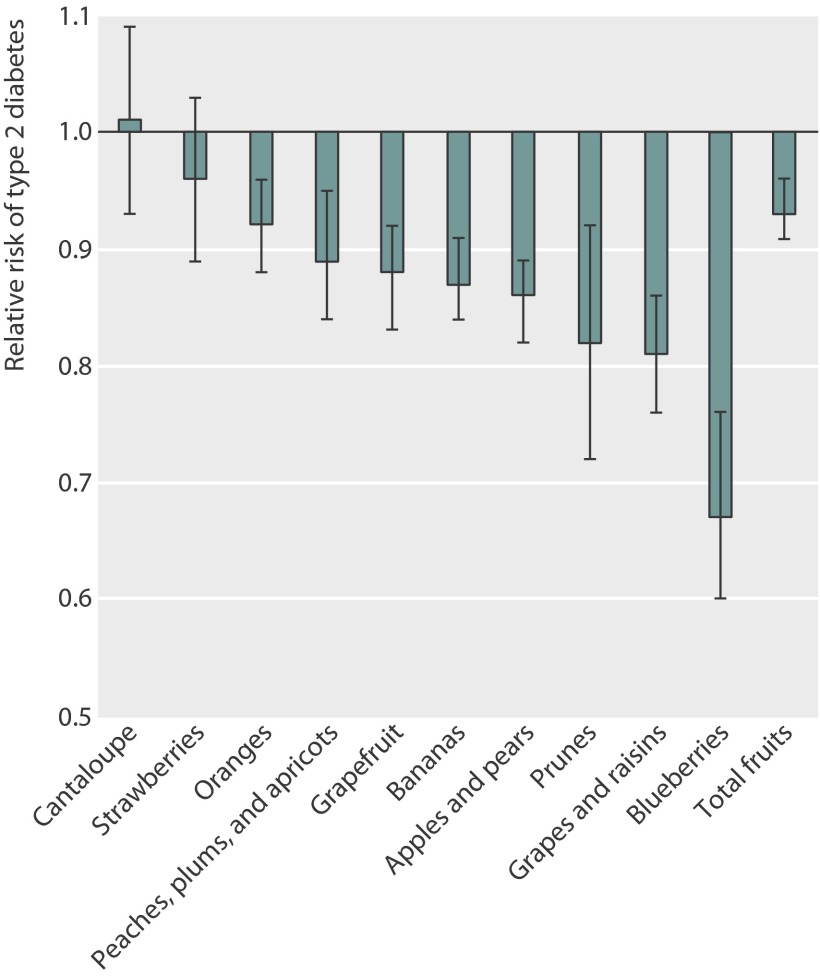
OBJECTIVE: To determine whether individual fruits are differentially associated with risk of type 2 diabetes. DESIGN: Prospective longitudinal cohort study. SETTING: Health professionals in the United States. PARTICIPANTS: 66,105 women from the Nurses' Health Study (1984-2008), 85,104 women from the Nurses' Health Study II (1991-2009), and 36,173 men from the Health Professionals Follow-up Study (1986-2008) who were free of major chronic diseases at baseline in these studies. MAIN OUTCOME MEASURE: Incident cases of type 2 diabetes, identified through self report and confirmed by supplementary questionnaires. RESULTS: During 3,464,641 person years of follow-up, 12,198 participants developed type 2 diabetes. After adjustment for personal, lifestyle, and dietary risk factors of diabetes, the pooled hazard ratio of type 2 diabetes for every three servings/week of total whole fruit consumption was 0.98 (95% confidence interval 0.97 [corrected] to 0.99). With mutual adjustment of individual fruits, the pooled hazard ratios of type 2 diabetes for every three servings/week were 0.74 (0.66 to 0.83) for blueberries, 0.88 (0.83 to 0.93) for grapes and raisins, 0.89 (0.79 to 1.01) for prunes, 0.93 (0.90 to 0.96) for apples and pears, 0.95 (0.91 to 0.98) for bananas, 0.95 (0.91 to 0.99) for grapefruit, 0.97 (0.92 to 1.02) for peaches, plums, and apricots, 0.99 (0.95 to 1.03) for oranges, 1.03 (0.96 to 1.10) for strawberries, and 1.10 (1.02 to 1.18) for cantaloupe. The pooled hazard ratio for the same increment in fruit juice consumption was 1.08 (1.05 to 1.11). The associations with risk of type 2 diabetes differed significantly among individual fruits (P<0.001 in all cohorts). CONCLUSION: Our findings suggest the presence of heterogeneity in the associations between individual fruit consumption and risk of type 2 diabetes. Greater consumption of specific whole fruits, particularly blueberries, grapes, and apples, is significantly associated with a lower risk of type 2 diabetes, whereas greater consumption of fruit juice is associated with a higher risk.
Overview
The claims and statistics of this paper haven’t been checked yet.
Run the check — free, no account needed. It reads the open-access text and checks the sources it cites.
Integrity signals
Registry
Cites
Statistics
Figures
Verification
Claims the paper makes
The claims and statistics of this paper haven’t been checked yet.
Run the check — free, no account needed. It reads the open-access text and checks the sources it cites.
Claims other papers make about this one
Each is checked against this paper’s own text: does it say what the citing paper says it does?
The check wasn’t confident either way, so it gives no verdict — never disputed.
In the citing paper
“Ezetimibe or a PCSK9 inhibitor as add‐on to statin therapy is shown to reduce the incidence of CVD in patients with diabetes and hyper‐LDL‐cholesterolemia 29 , 30 , 31 , 32 , 33 , 34 , 35 , 36 (grade B: 88% agreement).”
From Japanese clinical practice guideline for diabetes 2019 (2020) · cites this paper as [29]
Experimental — accuracy not yet measured
Self-check
Percentages, sums and reported differences re-computed from the paper’s own numbers.
The self-check needs the paper’s full text.
Citations
Cites
Report of the Expert Committee on the Diagnosis and Classification of Diabetes Mellitus
The Expert Committee on the Diagnosis and Classification of Diabetes Mellitus* (2002) · Diabetes Care · doi:10.2337/diacare.25.2007.s5 · Cited by 10,325
Report of the Expert Committee on the Diagnosis and Classification of Diabetes Mellitus
The Expert Committee on the Diagnosis and Classification of Diabetes Mellitus (1997) · Diabetes Care · doi:10.2337/diacare.20.7.1183 · Cited by 6,220
Classification and diagnosis of diabetes mellitus and other categories of glucose intolerance.
National Diabetes Data Group (1979) · Diabetes · doi:10.2337/diab.28.12.1039 · Cited by 4,909
Resveratrol improves health and survival of mice on a high-calorie diet
Baur, J. A., Pearson, K. J., Price, N. L., Jamieson, H. A., Lerin, C., Kalra, A., Prabhu, V. V., Allard, J. S., Lopez-Lluch, G., Lewis, K., et al. (2006) · Nature · doi:10.1038/nature05354 · Cited by 4,290
Alternative Dietary Indices Both Strongly Predict Risk of Chronic Disease
Chiuve, S. E., Fung, T. T., Rimm, E. B., Hu, F. B., McCullough, M. L., Wang, M., Stampfer, M. J., & Willett, W. C. (2012) · The Journal of Nutrition · doi:10.3945/jn.111.157222 · Cited by 1,951
Self-citationDietary Fiber, Glycemic Load, and Risk of Non—insulin-dependent Diabetes Mellitus in Women
Salmerón, J. (1997) · JAMA: The Journal of the American Medical Association · doi:10.1001/jama.1997.03540300040031 · Cited by 1,804
Flavonoid intake and risk of chronic diseases
Knekt, P., Kumpulainen, J. T., Järvinen, R., Rissanen, H. A., Heliövaara, M., Reunanen, A., Hakulinen, T., & Aromaa, A. (2002) · American Journal of Clinical Nutrition · doi:10.1093/ajcn/76.3.560 · Cited by 1,765
Dietary Fiber, Glycemic Load, and Risk of NIDDM in Men
Salmerón, J., Ascherio, A., Rimm, E. B., Colditz, G. A., Spiegelman, D., Jenkins, D. J., Stampfer, M. J., Wing, A. L., & Willett, W. C. (1997) · Diabetes Care · doi:10.2337/diacare.20.4.545 · Cited by 1,426
Self-citationTimmers, S., Konings, E., Bilet, L., Houtkooper, R. H., van de Weijer, T., Goossens, G. H., Hoeks, J., van der Krieken, S., Ryu, D., Kersten, S., et al. (2011) · Cell Metabolism · doi:10.1016/j.cmet.2011.10.002 · Cited by 1,320
USDA National Nutrient Database for Standard Reference, Release 22
(2018) · Cited by 1,284
Cited by
Sorted by citations
Items 101–200 of 543
Kim, J., Kim, H., & Giovannucci, E. L. (2021) · Clinical Nutrition · doi:10.1016/j.clnu.2021.10.013 · Cited by 71
Dried Fruits: Bioactives, Effects on Gut Microbiota, and Possible Health Benefits—An Update
Alasalvar, C., Chang, S. K., Kris‐Etherton, P. M., Sullivan, V. K., Petersen, K. H., Guasch‐Ferré, M., & Jenkins, D. J. A. (2023) · Nutrients · doi:10.3390/nu15071611 · Cited by 70
Ceuppens, S., Johannessen, G. S., Allende, A., Tondo, E. C., El-Tahan, F., Sampers, I., Jacxsens, L., & Uyttendaele, M. (2015) · International Journal of Environmental Research and Public Health · doi:10.3390/ijerph120809809 · Cited by 70
Slagter, S. N., Corpeleijn, E., van der Klauw, M. M., Sijtsma, A., Swart-Busscher, L. G., Perenboom, C. W. M., de Vries, J. H. M., Feskens, E. J. M., Wolffenbuttel, B. H. R., Kromhout, D., et al. (2018) · Nutrition Journal · doi:10.1186/s12937-018-0319-0 · Cited by 70
Intake of Dietary Fiber, Fruits, and Vegetables and Risk of Diverticulitis
Ma, W., Nguyen, L. H., Song, M., Jovani, M., Liu, P., Cao, Y., Tam, I., Wu, K., Giovannucci, E. L., Strate, L. L., et al. (2019) · The American Journal of Gastroenterology · doi:10.14309/ajg.0000000000000363 · Cited by 71
McMullin, S., Njogu, K., Wekesa, B., Gachuiri, A., Ngethe, E., Stadlmayr, B., Jamnadass, R., & Kehlenbeck, K. (2019) · Food Security · doi:10.1007/s12571-019-00970-7 · Cited by 78
Xing, W., Gao, W., Zhao, Z., Xu, X., Bu, H., Su, H., Mao, G., & Chen, J. (2023) · Journal of Translational Medicine · doi:10.1186/s12967-023-04321-1 · Cited by 70
Blueberry Supplementation in Midlife for Dementia Risk Reduction
Krikorian, R., Skelton, M. R., Summer, S. S., Shidler, M. D., & Sullivan, P. G. (2022) · Nutrients · doi:10.3390/nu14081619 · Cited by 76
Cheng, D. M., Pogrebnyak, N., Kuhn, P. E., Krueger, C. G., Johnson, W. D., & Raskin, I. (2014) · PLoS ONE · doi:10.1371/journal.pone.0091571 · Cited by 68
The Effects of Blueberry Phytochemicals on Cell Models of Inflammation and Oxidative Stress
Lavefve, L., Howard, L. R., Adams, S. H., & Baum, J. (2021) · Advances in Nutrition · doi:10.1093/advances/nmab137 · Cited by 71
Lee, J., Kubik, M. Y., & Fulkerson, J. A. (2019) · Journal of the Academy of Nutrition and Dietetics · doi:10.1016/j.jand.2019.03.004 · Cited by 55
Doherty, A., Wall, A. M., Khaldi, N., & Kussmann, M. (2021) · Frontiers in Genetics · doi:10.3389/fgene.2021.768979 · Cited by 68
Food structure is critical for optimal health
Wahlqvist, M. L. (2015) · Food & Function · doi:10.1039/c5fo01285f · Cited by 71
Pineda-Vadillo, C., Nau, F., Guérin-Dubiard, C., Jardin, J., Lechevalier-Datin, V., Sanz‐Buenhombre, M., Guadarrama, A., Tóth, T., Csavajda, É., Hingyi, H., et al. (2016) · Food Chemistry · doi:10.1016/j.foodchem.2016.07.049 · Cited by 69
Guo, X., Yang, B., Tang, J., Jiang, J., & Li, D. (2017) · Food & Function · doi:10.1039/c6fo01378c · Cited by 67
Cook, M. D., & Willems, M. E. T. (2018) · International Journal of Sport Nutrition and Exercise Metabolism · doi:10.1123/ijsnem.2018-0088 · Cited by 64
Cheng, D. M., Pogrebnyak, N., Kuhn, P. E., Poulev, A., Waterman, C., Rojas‐Silva, P., Johnson, W. D., & Raskin, I. (2014) · Nutrition · doi:10.1016/j.nut.2014.02.022 · Cited by 64
Whole food approach for type 2 diabetes prevention
Xi, P., & Liu, R. H. (2016) · Molecular Nutrition & Food Research · doi:10.1002/mnfr.201500963 · Cited by 63
Use of biomarkers to assess fruit and vegetable intake
Woodside, J. V., Draper, J., Lloyd, A., & McKinley, M. C. (2017) · Proceedings of The Nutrition Society · doi:10.1017/s0029665117000325 · Cited by 64
Diet and prevention of type 2 diabetes mellitus: beyond weight loss and exercise
Palacios, O. M., Kramer, M. W., & Maki, K. C. (2018) · Expert Review of Endocrinology & Metabolism · doi:10.1080/17446651.2019.1554430 · Cited by 66
The Contribution of Dietary Fructose to Non-alcoholic Fatty Liver Disease
Yu, S., Li, C., Ji, G., & Zhang, L. (2021) · Frontiers in Pharmacology · doi:10.3389/fphar.2021.783393 · Cited by 66
Polyphenols Rich Diets and Risk of Type 2 Diabetes
Porto, A. D., Cavarape, A., Colussi, G., Casarsa, V., Catena, C., & Sechi, L. A. (2021) · Nutrients · doi:10.3390/nu13051445 · Cited by 64
Pairing nuts and dried fruit for cardiometabolic health
Carughi, A., Feeney, M. J., Kris‐Etherton, P. M., Fulgoni, V. L. I., Kendall, C. W. C., Bulló, M., & Webb, D. (2015) · Nutrition Journal · doi:10.1186/s12937-016-0142-4 · Cited by 61
Hu, Y., Chiu, Y., Hauser, R. B., Chavarro, J. E., & Sun, Q. (2016) · Environment International · doi:10.1016/j.envint.2016.04.028 · Cited by 61
Self-citationBlueberries in focus: Exploring the phytochemical potentials and therapeutic applications
Ashique, S., Mukherjee, T., Mohanty, S., Garg, A., Mishra, N., Kaushik, M., Bhowmick, M., Chattaraj, B., Mohanto, S., Srivastava, S., et al. (2024) · Journal of Agriculture and Food Research · doi:10.1016/j.jafr.2024.101300 · Cited by 65
Zhang, W., Ohira, T., Abe, M., Kamiya, K., Yamashita, S., Yasumura, S., Ohtsuru, A., Maeda, M., Harigane, M., Horikoshi, N., et al. (2016) · Journal of Epidemiology · doi:10.1016/j.je.2016.08.002 · Cited by 58
Protein Intake and Mortality in Older Adults With Chronic Kidney Disease
Carballo‐Casla, A., Avesani, C. M., Beridze, G., Ortolá, R., García‐Esquinas, E., López-Garcı́a, E., Dai, L., Dunk, M. M., Stenvinkel, P., Lindholm, B., et al. (2024) · JAMA Network Open · doi:10.1001/jamanetworkopen.2024.26577 · Cited by 60
Fruit intake decreases risk of incident type 2 diabetes: an updated meta-analysis
Li, S., Miao, S., Huang, Y., Liu, Z., Tian, H., Yin, X., Tang, W., Steffen, L. M., & Xi, B. (2014) · Endocrine · doi:10.1007/s12020-014-0351-6 · Cited by 60
Pinto, E. P., Perin, E. C., Schott, I. B., Rodrigues, R. D. S., Lucchetta, L., Manfroi, V., & Rombaldi, C. V. (2016) · Postharvest Biology and Technology · doi:10.1016/j.postharvbio.2016.05.015 · Cited by 57
Polyphenol-rich foods and risk of gestational diabetes: a systematic review and meta-analysis
Pham, N. M., Vuong, V., & Lee, A. H. (2018) · European Journal of Clinical Nutrition · doi:10.1038/s41430-018-0218-7 · Cited by 57
Noorwali, E. A., Hardie, L. J., & Cade, J. E. (2019) · Nutrients · doi:10.3390/nu11061382 · Cited by 58
Role of Flavonoids in the Interactions among Obesity, Inflammation, and Autophagy
García‐Barrado, M. J., Osma, M. D. C. I., García, E. P., Carrero, S., Blanco, E. J., Carretero‐Hernández, M., & Carretero, J. (2020) · Pharmaceuticals · doi:10.3390/ph13110342 · Cited by 59
Olmo‐Cunillera, A., Escobar‐Avello, D., Pérez, A. J., Marhuenda‐Muñoz, M., Lamuela-Raventós, R. M., & Vallverdú‐Queralt, A. (2019) · Nutrients · doi:10.3390/nu12010054 · Cited by 57
Ogura, K., Ogura, M., Shoji, T., Sato, Y., Tahara, Y., Yamano, G., Sato, H., Sugizaki, K., Fujita, N., Tatsuoka, H., et al. (2016) · Journal of Agricultural and Food Chemistry · doi:10.1021/acs.jafc.6b03424 · Cited by 55
Wang, B., Liu, K., Mi, M., & Wang, J. (2014) · PLoS ONE · doi:10.1371/journal.pone.0095323 · Cited by 53
Diabetes Risk Reduction Diet and Survival after Breast Cancer Diagnosis
Wang, T., Farvid, M. S., Kang, J. H., Holmes, M. D., ROSNER, B. A., Tamimi, R. M., Willett, W. C., & Eliassen, A. H. (2021) · Cancer Research · doi:10.1158/0008-5472.can-21-0256 · Cited by 53
Self-citationDietary flavonoid intake at midlife and healthy aging in women
Samieri, C., Sun, Q., Townsend, M. K., Rimm, E. B., & Grodstein, F. (2014) · American Journal of Clinical Nutrition · doi:10.3945/ajcn.114.085605 · Cited by 57
Self-citationBlueberries’ Impact on Insulin Resistance and Glucose Intolerance
Stull, A. J. (2016) · Antioxidants · doi:10.3390/antiox5040044 · Cited by 60
Nutrient sensing pathways as therapeutic targets for healthy ageing
Aiello, A., Accardi, G., Candore, G., Gambino, C. M., Mirisola, M. G., Taormina, G., Virruso, C., & Caruso, C. (2017) · Expert Opinion on Therapeutic Targets · doi:10.1080/14728222.2017.1294684 · Cited by 52
Shoji, T., Yamada, M., Miura, T., Nagashima, K., Ogura, K., Inagaki, N., & Maeda‐Yamamoto, M. (2017) · Diabetes Research and Clinical Practice · doi:10.1016/j.diabres.2017.03.028 · Cited by 51
Ramli, N. S., Brown, L., Patimah, I., & Rahmat, A. B. (2014) · BMC Complementary and Alternative Medicine · doi:10.1186/1472-6882-14-189 · Cited by 51
Enkhmaa, B., Surampudi, P. N., Anuurad, E., & Berglund, L. (2015) · Europe PMC (PubMed Central) · Cited by 50
Zhao, H., Zhang, Y., Shu, L., Song, G., & Ma, H. (2019) · Drug Design Development and Therapy · doi:10.2147/dddt.s203833 · Cited by 51
Prospective study of a diabetes risk reduction diet and the risk of breast cancer
Kang, J. H., Peng, C., Rhee, J. J., Farvid, M. S., Willett, W. C., Hu, F. B., ROSNER, B. A., Tamimi, R. M., & Eliassen, A. H. (2020) · American Journal of Clinical Nutrition · doi:10.1093/ajcn/nqaa268 · Cited by 53
Self-citationLafarga, T., Ruiz-Aguirre, I., Abadías, M., Viñas, İ., Bobo, G., & Aguiló‐Aguayo, I. (2018) · Food and Bioprocess Technology · doi:10.1007/s11947-018-2191-5 · Cited by 52
Lazo-Porras, M., Bernabé‐Ortiz, A., Ruíz-Alejos, A., Smeeth, L. L., Gilman, R. H., Checkley, W., Málaga, G., & Miranda, J. J. (2019) · Diabetes Research and Clinical Practice · doi:10.1016/j.diabres.2019.107829 · Cited by 53
Johnson, M. H., Wallig, M. A., Luna‐Vital, D. A., & de Mejía, E. G. (2016) · The Journal of Nutritional Biochemistry · doi:10.1016/j.jnutbio.2015.12.013 · Cited by 51
New Insights into the Role of Nutrition in CVD Prevention
Sala‐Vila, A., Estruch, R., & Ros, E. (2015) · Current Cardiology Reports · doi:10.1007/s11886-015-0583-y · Cited by 54
Verburgh, K. (2014) · Aging Cell · doi:10.1111/acel.12284 · Cited by 51
Oral health and risk of colorectal cancer: results from three cohort studies and a meta-analysis
Ren, H., Luu, H. N., Cai, H., Xiang, Y., Steinwandel, M. D., Gao, Y., Hargreaves, M. K., Zheng, W., Blot, W. J., Long, J., et al. (2016) · Annals of Oncology · doi:10.1093/annonc/mdw172 · Cited by 47
Are Fruit Juices Just as Unhealthy as Sugar-Sweetened Beverages?
Guasch‐Ferré, M., & Hu, F. B. (2019) · JAMA Network Open · doi:10.1001/jamanetworkopen.2019.3109 · Cited by 47
Self-citationSaxe-Custack, A., LaChance, J., & Hanna‐Attisha, M. (2019) · Nutrients · doi:10.3390/nu12010025 · Cited by 50
Jia, X., Zhong, L., Song, Y., Hu, Y., Wang, G., & Sun, S. (2016) · Primary Care Diabetes · doi:10.1016/j.pcd.2015.12.004 · Cited by 46
Fruit juice: just another sugary drink?
Gill, J. M. R., & Sattar, N. A. (2014) · The Lancet Diabetes & Endocrinology · doi:10.1016/s2213-8587(14)70013-0 · Cited by 46
Banaś, A., Korus, A., & Korus, J. (2018) · Journal of Food Quality · doi:10.1155/2018/1646894 · Cited by 46
Farvid, M. S., Holmes, M. D., Chen, W. Y., ROSNER, B. A., Tamimi, R. M., Willett, W. C., & Eliassen, A. H. (2020) · Cancer Research · doi:10.1158/0008-5472.can-18-3515 · Cited by 45
Self-citationPitts, S. J., Moran, N. E., Wu, Q., Harnack, L., Craft, N. E., Hanchard, N. A., Bell, R. A., Moe, S. G., Johnson, N., Obasohan, J., et al. (2021) · Journal of Nutrition · doi:10.1093/jn/nxab349 · Cited by 48
Apple Phenolic Extracts Strongly Inhibit α-Glucosidase Activity
Raphaelli, C. D. O., Pereira, E. D. S., Camargo, T. M., Vinholes, J. R., Rombaldi, C. V., Vizzotto, M., & Nora, L. (2019) · Plant Foods for Human Nutrition · doi:10.1007/s11130-019-00757-3 · Cited by 43
Higher Habitual Flavonoid Intakes Are Associated with a Lower Incidence of Diabetes
Bondonno, N. P., Dalgaard, F., Murray, K., Davey, R. J., Bondonno, C. P., Cassidy, A., Lewis, J. R., Kyrø, C., Gislason, G., Scalbert, A., et al. (2021) · Journal of Nutrition · doi:10.1093/jn/nxab269 · Cited by 49
The Role of Nutraceutical Containing Polyphenols in Diabetes Prevention
Fernandes, I., Oliveira, J., Pinho, A. C. O., & Carvalho, E. (2022) · Metabolites · doi:10.3390/metabo12020184 · Cited by 44
Association between fruit and vegetable intake and risk for glioma: A meta-analysis
Li, Y. (2014) · Nutrition · doi:10.1016/j.nut.2014.03.027 · Cited by 42
Schultz, A., Barbosa‐da‐Silva, S., Águila, M. B., & Mandarim‐de‐Lacerda, C. A. (2015) · Food & Function · doi:10.1039/c5fo00251f · Cited by 42
Fruit and Vegetable Intake and Risk of Posttransplantation Diabetes in Renal Transplant Recipients
Neto, A. W. G., Osté, M. C. J., Sotomayor, C. G., van den Berg, E., Geleijnse, J. M., Gans, R. O. B., Bakker, S. J. L., & Navis, G. (2019) · Diabetes Care · doi:10.2337/dc19-0224 · Cited by 42
Omotayo, A. O., Ndhlovu, P. T., Tshwene, S. C., & Aremu, A. O. (2020) · Plants · doi:10.3390/plants9080953 · Cited by 41
Stacey, N., Tugendhaft, A., & Hofman, K. J. (2017) · Preventive Medicine · doi:10.1016/j.ypmed.2017.05.026 · Cited by 46
Hofe, C. R., Feng, L., Zephyr, D., Stromberg, A. J., Hennig, B., & Gaetke, L. M. (2014) · Nutrition Research · doi:10.1016/j.nutres.2014.02.001 · Cited by 41
The state of the science on the health benefits of blueberries: a perspective
Stull, A. J., Cassidy, A., Djoussé, L., Johnson, S. A., Krikorian, R., Lampe, J. W., Mukamal, K. J., Nieman, D. C., Starr, K. N. P., Rasmussen, H. E., et al. (2024) · Frontiers in Nutrition · doi:10.3389/fnut.2024.1415737 · Cited by 47
Higher intake of phytochemical-rich foods is inversely related to prediabetes: A case-control study
Sotoudeh, G., Abshirini, M., Mahaki, B., Bagheri, F., Siassi, F., & Koohdani, F. (2018) · International Journal of Preventive Medicine · doi:10.4103/ijpvm.ijpvm_145_18 · Cited by 38
Healthful Plant-Based Diet and Incidence of Type 2 Diabetes in Asian Population
Kim, J., & Giovannucci, E. L. (2022) · Nutrients · doi:10.3390/nu14153078 · Cited by 46
Molecular Genetics of Abnormal Redox Homeostasis in Type 2 Diabetes Mellitus
Azarova, I. E., Polonikov, A., & Klyosova, E. Y. (2023) · International Journal of Molecular Sciences · doi:10.3390/ijms24054738 · Cited by 39
Baharzadeh, E., Siassi, F., Qorbani, M., Koohdani, F., Pak, N., & Sotoudeh, G. (2018) · Annals of General Psychiatry · doi:10.1186/s12991-018-0216-0 · Cited by 39
Thompson, A. S., Jennings, A., Bondonno, N. P., Tresserra‐Rimbau, A., Parmenter, B. H., Hill, C., Perez‐Cornago, A., Kuhn, T. E., & Cassidy, A. (2024) · Nutrition and Diabetes · doi:10.1038/s41387-024-00288-0 · Cited by 36
Associations Between Fruit Intake and Risk of Diabetes in the AusDiab Cohort
Bondonno, N. P., Davey, R. J., Murray, K., Radavelli‐Bagatini, S., Bondonno, C. P., Blekkenhorst, L. C., Sim, M., Magliano, D. J., Daly, R. M., Shaw, J. E., et al. (2021) · The Journal of Clinical Endocrinology & Metabolism · doi:10.1210/clinem/dgab335 · Cited by 39
Hägele, F. A., Büsing, F., Nas, A., Aschoff, J. K., Gnädinger, L., Schweiggert, R. M., Carle, R., & Bosy‐Westphal, A. (2018) · Nutrition and Diabetes · doi:10.1038/s41387-018-0031-3 · Cited by 35
Turner‐McGrievy, G. M., Davidson, C. R., & Wilcox, S. (2013) · Appetite · doi:10.1016/j.appet.2013.11.008 · Cited by 37
Anthocyanin’s as marker for selection of buckwheat plants with high rutin content
Sytar, O., Kosyan, A. M., Taran, N. Y., & Smetanska, I. (2014) · Gesunde Pflanzen · doi:10.1007/s10343-014-0331-z · Cited by 34
O’Neil, C. E., Nicklas, T. A., & Fulgoni, V. L. I. (2015) · Nutrition Journal · doi:10.1186/s12937-015-0040-1 · Cited by 34
Fareed, M., Salam, N., Khoja, A. T., Mahmoud, M. A., & Ahamed, M. M. U. (2017) · International Journal of Medical Research & Health Sciences · Cited by 32
Visvanathan, R., & Williamson, G. (2021) · Trends in Food Science & Technology · doi:10.1016/j.tifs.2021.06.038 · Cited by 33
Blueberry as an Attractive Functional Fruit to Prevent (Pre)Diabetes Progression
Nunes, S., Vieira, P., Gomes, P., Viana, S., & Reis, F. (2021) · Antioxidants · doi:10.3390/antiox10081162 · Cited by 33
Anthocyanins’ effects on diabetes mellitus and islet transplantation
Liu, Y., Wang, Q., Wu, K., Sun, Z., Tang, Z., Li, X., & Zhang, B. (2022) · Critical Reviews in Food Science and Nutrition · doi:10.1080/10408398.2022.2098464 · Cited by 37
Alperet, D. J., Butler, L. M., Koh, W., Yuan, J., & van Dam, R. M. (2017) · American Journal of Clinical Nutrition · doi:10.3945/ajcn.116.147090 · Cited by 38
Auerbach, B. J., Littman, A. J., Tinker, L. F., Larson, J. C., Krieger, J. W., Young, B. A., & Neuhouser, M. L. (2017) · Preventive Medicine · doi:10.1016/j.ypmed.2017.08.031 · Cited by 35
Gbadamosi, M. A., & Tlou, B. (2020) · BMC Public Health · doi:10.1186/s12889-020-08816-0 · Cited by 38
Lee, K. W., & Shin, D. (2020) · Nutrition Journal · doi:10.1186/s12937-020-00653-6 · Cited by 32
Mihaylova, D. S., Desseva, I., Popova, A. T., Dincheva, I. N., Vrancheva, R. Z., Lante, A., & Krastanov, A. I. (2021) · Molecules · doi:10.3390/molecules26144183 · Cited by 32
Barouti, A. A., Tynelius, P., Lager, A., & Björklund, A. (2022) · European Journal of Nutrition · doi:10.1007/s00394-022-02871-6 · Cited by 34
Genetic and Phytochemical Characterization of Lettuce Flavonoid Biosynthesis Mutants
Gurdon, C., Poulev, A., Armas, I., Satorov, S., Tsai, M., & Raskin, I. (2019) · Scientific Reports · doi:10.1038/s41598-019-39287-y · Cited by 31
Sullivan, V. K., Na, M., Proctor, D. N., Kris‐Etherton, P. M., & Petersen, K. S. (2020) · Journal of the Academy of Nutrition and Dietetics · doi:10.1016/j.jand.2020.08.085 · Cited by 32
Huang, W., Lu, Y., Xu, M., Huang, J., Su, Y., & Zhang, C. (2017) · Scientific Reports · doi:10.1038/srep43620 · Cited by 33
Celli, G. B., Brooks, M. S., & Ghanem, A. (2016) · Food Hydrocolloids · doi:10.1016/j.foodhyd.2016.04.022 · Cited by 33
Charoenwoodhipong, P., Zuelch, M. L., Keen, C. L., Hackman, R. M., & Holt, R. R. (2024) · Critical Reviews in Food Science and Nutrition · doi:10.1080/10408398.2024.2398634 · Cited by 34
Hábito Alimentar de Idosos Diabéticos e não Diabéticos: Vigitel, Brasil, 2016
de Assumpção, D., Ruiz, A. M. P., Borim, F. S. A., Neri, A. L., Malta, D. C., & Francisco, P. M. S. B. (2022) · Arquivos Brasileiros de Cardiologia · doi:10.36660/abc.20201204 · Cited by 29
Flavan‐3‐ol/Procyanidin Metabolomics in Rat Urine Using HPLC‐Quadrupole TOF/MS
Masumoto, S., Aoki, S., Miura, T., & Shoji, T. (2018) · Molecular Nutrition & Food Research · doi:10.1002/mnfr.201700867 · Cited by 26
Decreasing Vitamin C Intake, Low Serum Vitamin C Level and Risk for US Adults with Diabetes
Sun, H., Karp, J. D., Sun, K. M., & Weaver, C. M. (2022) · Nutrients · doi:10.3390/nu14193902 · Cited by 26
Sobolev, A. P., Ciampa, A., Ingallina, C., Mannina, L., Capitani, D., Ernesti, I., Maggi, E., Businaro, R., Ben, M. D., Engel, P., et al. (2019) · Metabolites · doi:10.3390/metabo9070138 · Cited by 26
Dimopoulou, M., Vareltzis, P. K., Floros, S., Androutsos, O., Bargiota, Α., & Gortzi, O. (2023) · Foods · doi:10.3390/foods12142702 · Cited by 32
The impact of taxing sugar-sweetened beverages on diabetes: a critical review
Peñalvo, J. L. (2024) · Diabetologia · doi:10.1007/s00125-023-06064-6 · Cited by 29
Substitution of meat and fish with vegetables or potatoes and risk of myocardial infarction
Würtz, A. M. L., Hansen, M. D., Tjønneland, A. M., Rimm, E. B., Schmidt, E. B., Overvad, K., & Jakobsen, M. U. (2016) · British Journal Of Nutrition · doi:10.1017/s0007114516003500 · Cited by 25
Zhou, X., Chen, R., Zhong, C., Wu, J., Li, X., Li, Q., Cui, W., Yi, N., Xiao, M., Yin, H., et al. (2018) · Nutrition · doi:10.1016/j.nut.2018.09.022 · Cited by 26
Metadata
- Authors
- Muraki, I., Imamura, F., Manson, J. E., Hu, F. B., Willett, W. C., van Dam, R. M., & Sun, Q.
- Affiliations
- Harvard University (US)
- University of Cambridge (GB)
- Brigham and Women's Hospital (US)
- Corresponding author
- Sun, Q.
- Venue
- BMJ
- Publisher
- BMJ
- Published
- 2013-08-28
- Volume
- 347
- Issue
- aug28 1
- Pages
- f5001-f5001
- ISSN
- 1756-1833 (ISSN-L)
- PMC
- PMC3978819
- OpenAlex
- W2010234625
- Cited by
- 544
- References
- 60
- Citations by year
- 2026: 20 · 2025: 33 · 2024: 40 · 2023: 32 · 2022: 54 · 2021: 50 · 2020: 57 · 2019: 40 · 2018: 37 · 2017: 35 · 2016: 51 · 2015: 46 · 2014: 42 · 2013: 7
- FWCI
- 6.94
- Type
- journal article
- Language
- en
- Update notices
- correction (2013-12-04)
- Open access
- hybrid
- doi.org
- Licence
- cc-by-nc
- Locations
- BMJ (publishedVersion, cc-by-nc)
- Europe PMC (PubMed Central) (publishedVersion, cc-by-nc)
- PubMed Central (publishedVersion, cc-by-nc)
- PubMed (publishedVersion)
- Digital Access to Scholarship at Harvard (DASH) (Harvard University) (submittedVersion, cc-by)
- National University of Singapore (submittedVersion)
- Funders
- Medical Research Council (MC_UU_12015/5)
- National Heart, Lung, and Blood Institute (R00HL098459)
- National Cancer Institute (CA-167552, CA-87969, CA-55075, P01CA087969, CA50385, UM1CA176726, CA176726, P01CA055075, R01CA050385, UM1CA167552)
- National Institute of Diabetes and Digestive and Kidney Diseases (R01DK058845, DK-082486, R01DK082486, DK58845, T32DK007703)
- Topics
- Health Sciences › Medicine › Public Health, Environmental and Occupational Health › Nutritional Studies and Diet
- Health Sciences › Medicine › Endocrinology, Diabetes and Metabolism › Diet, Metabolism, and Disease
- Health Sciences › Medicine › Biochemistry (medical) › Phytochemicals and Antioxidant Activities
- Keywords
- type 2 diabetes, fruit consumption, whole fruit, fruit juice, blueberry, prunes, banana, grapefruit, strawberry, cantaloupe, dietary risk factors, Nurses' Health Study, Health Professionals Follow-up Study, prospective cohort, pooled hazard ratio, diabetes prevention
- MeSH terms
- Beverages, Diabetes Mellitus, Type 2, Diet, Epidemiologic Methods, Female, Fruit, Humans, Male, Middle Aged, Prospective Studies, Risk Factors, Body Mass Index
About these checks
Registry, retraction, Cites and statistics results are computed, not judged, with one exception: a printed reference that no index lists is read once by a model before it counts as a citation error. Claims are extracted by a model and kept only when their quote appears verbatim in the text; each cited source is then checked, with a model’s help, for whether it says what the claim relies on. Those verdicts can be wrong — read the claim’s quote and the cited source before relying on one.
Statistics and arithmetic are recomputed, not judged.
Confidence bands are shown only for fields calibrated on our annotated test set. None is calibrated yet, so no band is shown.
What counts as a claim ›How we measure confidence ›How we check this ›
Are you an author, or do you see a problem with this page? Request a review
