

The DOI matches its Crossref record; 37 of the 37 references it cites were found in a registry or an index.
Association of ideal cardiovascular health at age 50 with incidence of dementia: 25 year follow-up of Whitehall II cohort study
Open accessAbstract
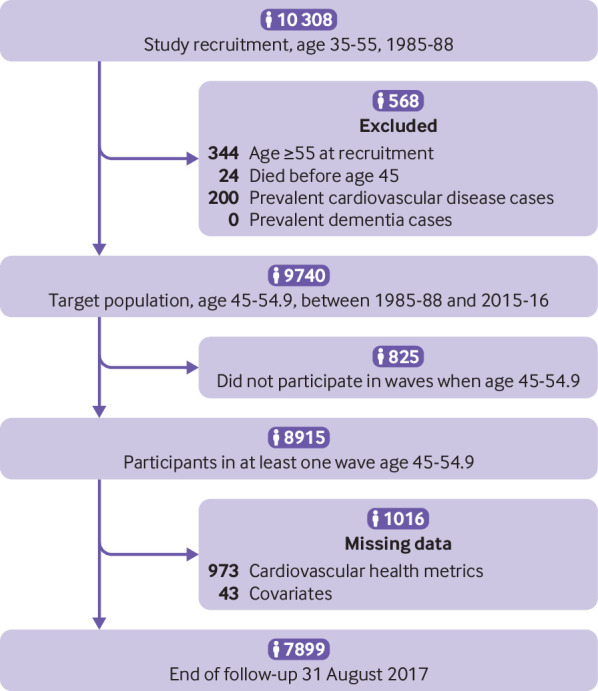
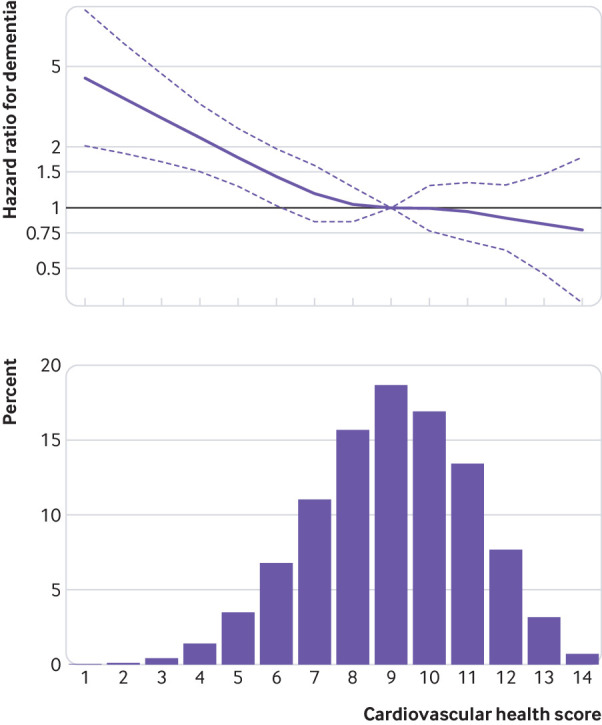
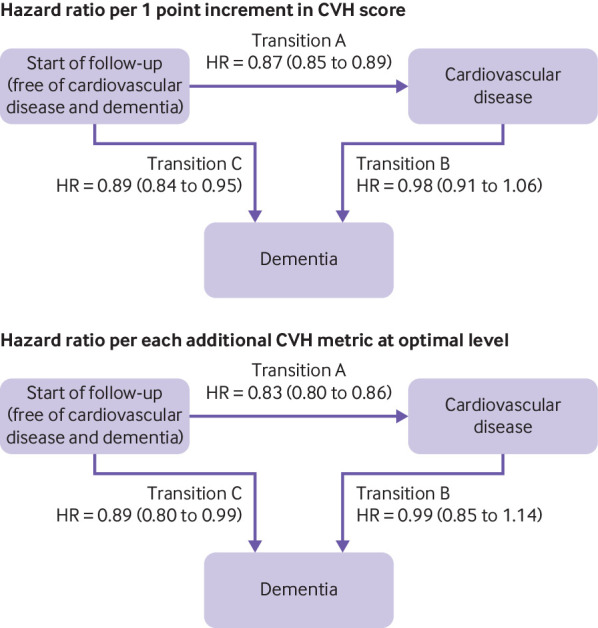
Objectives: To examine the association between the Life Simple 7 cardiovascular health score at age 50 and incidence of dementia. Design: Prospective cohort study. Setting: Civil service departments in London (Whitehall II study; study inception 1985-88). Participants: 7899 participants with data on the cardiovascular health score at age 50. Exposures: The cardiovascular health score included four behavioural (smoking, diet, physical activity, body mass index) and three biological (fasting glucose, blood cholesterol, blood pressure) metrics, coded on a three point scale (0, 1, 2). The cardiovascular health score was the sum of seven metrics (score range 0-14) and was categorised into poor (scores 0-6), intermediate (7-11), and optimal (12-14) cardiovascular health. Main outcome measure: Incident dementia, identified through linkage to hospital, mental health services, and mortality registers until 2017. Results: 347 incident cases of dementia were recorded over a median follow-up of 24.7 years. Compared with an incidence rate of dementia of 3.2 (95% confidence interval 2.5 to 4.0) per 1000 person years among the group with poor cardiovascular health, the absolute rate differences per 1000 person years were −1.5 (95% confidence interval −2.3 to −0.7) for the group with intermediate cardiovascular health and −1.9 (−2.8 to −1.1) for the group with optimal cardiovascular health. Higher cardiovascular health score was associated with a lower risk of dementia (hazard ratio 0.89 (0.85 to 0.95) per 1 point increment in the cardiovascular health score). Similar associations with dementia were observed for the behavioural and biological subscales (hazard ratios per 1 point increment in the subscores 0.87 (0.81 to 0.93) and 0.91 (0.83 to 1.00), respectively). The association between cardiovascular health at age 50 and dementia was also seen in people who remained free of cardiovascular disease over the follow-up (hazard ratio 0.89 (0.84 to 0.95) per 1 point increment in the cardiovascular health score). Conclusion: Adherence to the Life Simple 7 ideal cardiovascular health recommendations in midlife was associated with a lower risk of dementia later in life.
Overview
The claims and statistics of this paper haven’t been checked yet.
Run the check — free, no account needed. It reads the open-access text and checks the sources it cites.
Integrity signals
Registry
Cites
Statistics
Figures
Verification
Claims the paper makes
The claims and statistics of this paper haven’t been checked yet.
Run the check — free, no account needed. It reads the open-access text and checks the sources it cites.
Claims other papers make about this one
Each is checked against this paper’s own text: does it say what the citing paper says it does?
The cited source says what the claim attributes to it.
In the citing paper
“better scores on this index are associated with lower dementia risk.”
From Dementia prevention, intervention, and care: 2024 report of the Lancet standing Commission (2024) · cites this paper as [149]
Self-check
Percentages, sums and reported differences re-computed from the paper’s own numbers.
The self-check needs the paper’s full text.
Citations
Cites
Regression Modeling Strategies
Harrell, F. E. (2001) · Springer series in statistics · doi:10.1007/978-1-4757-3462-1 · Cited by 9,270
MR signal abnormalities at 1.5 T in Alzheimer's dementia and normal aging
Fazekas, F., Chawluk, J. B., Alavi, A. A., Hurtig, H. I., & Zimmerman, R. A. (1987) · American Journal of Roentgenology · doi:10.2214/ajr.149.2.351 · Cited by 5,327
Lloyd-Jones, D. M., Hong, Y., Labarthe, D., Mozaffarian, D., Appel, L. J., Van Horn, L., Greenlund, K., Daniels, S., Nichol, G., Tomaselli, G. F., et al. (2010) · Circulation · doi:10.1161/circulationaha.109.192703 · Cited by 4,750
Jack, C. R., Knopman, D. S., Jagust, W. J., Petersen, R. C., Weiner, M. W., Aisen, P. S., Shaw, L. M., Vemuri, P., Wiste, H. J., Weigand, S. D., et al. (2013) · The Lancet Neurology · doi:10.1016/s1474-4422(12)70291-0 · Cited by 4,396
Gorelick, P. B., Scuteri, A., Black, S. E., DeCarli, C., Greenberg, S. M., Iadecola, C., Launer, L. J., Laurent, S., Lopez, O. L., Nyenhuis, D., et al. (2011) · Stroke · doi:10.1161/str.0b013e3182299496 · Cited by 3,811
Health inequalities among British civil servants: the Whitehall II study
Marmot, M. G., Stansfeld, S. A., Patel, C., North, F. M., Head, J. A., White, I. R., Brunner, E. J., Feeney, A., Marmot, M. G., & Smith, G. D. (1991) · The Lancet · doi:10.1016/0140-6736(91)93068-k · Cited by 3,571
Scheltens, P., Leys, D., Barkhof, F., Huglo, D. G., Weinstein, H. C., Vermersch, P., Kuiper, M. A., Steinling, M., Wolters, E. C., & Valk, J. (1992) · Journal of Neurology Neurosurgery & Psychiatry · doi:10.1136/jnnp.55.10.967 · Cited by 1,811
Defeating Alzheimer's disease and other dementias: a priority for European science and society
Winblad, B., Amouyel, P., Andrieu, S., Ballard, C., Brayne, C., Brodaty, H., Cedazo-Minguez, A., Dubois, B., Edvardsson, D., Feldman, H., et al. (2016) · The Lancet Neurology · doi:10.1016/s1474-4422(16)00062-4 · Cited by 1,676
Lifestyle interventions to prevent cognitive impairment, dementia and Alzheimer disease
Kivipelto, M., Mangialasche, F., & Ngandu, T. (2018) · Nature Reviews Neurology · doi:10.1038/s41582-018-0070-3 · Cited by 1,173
Why Representativeness Should Be Avoided
Rothman, K. J., Gallacher, J. E., & Hatch, E. E. (2013) · International Journal of Epidemiology · doi:10.1093/ije/dys223 · Cited by 861
Cited by
Sorted by citations
Dementia prevention, intervention, and care: 2020 report of the Lancet Commission
Livingston, G., Huntley, J., Sommerlad, A., Ames, D., Ballard, C., Banerjee, S., Brayne, C., Burns, A., Cohen-Mansfield, J., Cooper, C., et al. (2020) · The Lancet · doi:10.1016/s0140-6736(20)30367-6 · Cited by 10,430
RetractedHeart Disease and Stroke Statistics—2023 Update: A Report From the American Heart Association
Tsao, C. W., Aday, A. W., Almarzooq, Z. I., Anderson, C. A. M., Arora, P., Avery, C. L., Baker-Smith, C. M., Beaton, A. Z., Boehme, A. K., Buxton, A. E., et al. (2023) · Circulation · doi:10.1161/cir.0000000000001123 · Cited by 8,300
Heart Disease and Stroke Statistics—2022 Update: A Report From the American Heart Association
Tsao, C. W., Aday, A. W., Almarzooq, Z. I., Alonso, A., Beaton, A. Z., Bittencourt, M. S., Boehme, A. K., Buxton, A. E., Carson, A. P., Commodore-Mensah, Y., et al. (2022) · Circulation · doi:10.1161/cir.0000000000001052 · Cited by 5,987
Heart Disease and Stroke Statistics—2021 Update: A Report From the American Heart Association
Virani, S. S., Alonso, A., Aparicio, H. J., Benjamin, E. J., Bittencourt, M. S., Callaway, C. W., Carson, A. P., Chamberlain, A. M., Cheng, S., Delling, F. N., et al. (2021) · Circulation · doi:10.1161/cir.0000000000000950 · Cited by 5,784
Dementia prevention, intervention, and care: 2024 report of the Lancet standing Commission
Livingston, G., Huntley, J., Liu, K. Y., Costafreda, S. G., Selbæk, G., Alladi, S., Ames, D., Banerjee, S., Burns, A., Brayne, C., et al. (2024) · The Lancet · doi:10.1016/s0140-6736(24)01296-0 · Cited by 3,860
Self-citationMartin, S. S., Aday, A. W., Almarzooq, Z. I., Anderson, C. A. M., Arora, P., Avery, C. L., Baker-Smith, C. M., Barone Gibbs, B., Beaton, A. Z., Boehme, A. K., et al. (2024) · Circulation · doi:10.1161/cir.0000000000001209 · Cited by 2,800
Martin, S. S., Aday, A. W., Allen, N. B., Almarzooq, Z., Anderson, C. A. M., Arora, P. K., Avery, C. L., Baker-Smith, C. M., Bansal, N., Beaton, A., et al. (2025) · Circulation · doi:10.1161/cir.0000000000001303 · Cited by 1,284
Yin, F. (2023) · The FEBS Journal · doi:10.1111/febs.16344 · Cited by 441
Neuroprotective effect of SGLT2 inhibitors.
Pawlos, A., Broncel, M., Woźniak, E., & Gorzelak-Pabiś, P. (2021) · Molecules · doi:10.3390/molecules26237213 · Cited by 304
Safiri, S., Jolfayi, A. G., Fazlollahi, A., Morsali, S., Sarkesh, A., Sorkhabi, A. D., Golabi, B., Aletaha, R., Asghari, K. M., Hamidi, S., et al. (2024) · Frontiers in Medicine · doi:10.3389/fmed.2024.1474043 · Cited by 273
Early and Supernormal Vascular Aging
Bruno, R. M., Nilsson, P. M., Engström, G., Wadström, B. N., Empana, J. P., Boutouyrie, P., & Laurent, S. (2020) · Hypertension · doi:10.1161/hypertensionaha.120.14971 · Cited by 185
Self-citationGharbi‐Meliani, A., Dugravot, A., Sabia, S., Régy, M., Fayossé, A., Schnitzler, A., Mika Kivimaki, B., Singh‐Manoux, A., & Dumurgier, J. (2021) · Alzheimer s Research & Therapy · doi:10.1186/s13195-020-00740-0 · Cited by 204
Self-citationWang, X., Ma, H., Li, X., Heianza, Y., Manson, J. E., Franco, O. H., & Qi, L. (2023) · JAMA Internal Medicine · doi:10.1001/jamainternmed.2023.0015 · Cited by 184
Cardiovascular Health and Life Expectancy Among Adults in the United States
Ma, H., Wang, X., Xue, Q., Li, X., Liang, Z., Heianza, Y., Franco, O. H., & Qi, L. (2023) · Circulation · doi:10.1161/circulationaha.122.062457 · Cited by 172
Malik, R., Georgakis, M. K., Neitzel, J., Rannikmäe, K., Ewers, M., Seshadri, S. S., Sudlow, C. L. M., & Dichgans, M. (2021) · Alzheimer s & Dementia · doi:10.1002/alz.12320 · Cited by 172
Prediction of brain age and cognitive age: quantifying brain and cognitive maintenance in aging
Anatürk, M., Kaufmann, T., Cole, J. H., Suri, S., Griffanti, L., Zsoldos, E., Filippini, N., Singh‐Manoux, A., Kivimäki, M., Westlye, L. T., et al. (2021) · Human Brain Mapping · doi:10.1002/hbm.25316 · Cited by 132
Self-citationHassen, C. B., Fayossé, A., Landré, B., Raggi, M., Bloomberg, M., Sabia, S., & Singh‐Manoux, A. (2022) · BMJ · doi:10.1136/bmj-2021-068005 · Cited by 135
Self-citationShared Risk Factors between Dementia and Atherosclerotic Cardiovascular Disease
Nordestgaard, L. T., Christoffersen, M., & Frikke‐Schmidt, R. (2022) · International Journal of Molecular Sciences · doi:10.3390/ijms23179777 · Cited by 128
Yassine, H. N., Samieri, C., Livingston, G., Glass, K., Wagner, M., Tangney, C., Plassman, B. L., Ikram, M. A., Voigt, R. M., Gu, Y., et al. (2022) · The Lancet Healthy Longevity · doi:10.1016/s2666-7568(22)00120-9 · Cited by 116
Solomon, A., Stephen, R., Altomare, D., Carrera, E., Frisoni, G. B., Kulmala, J., Molinuevo, J. L., Nilsson, P. M., Ngandu, T., Ribaldi, F., et al. (2021) · Alzheimer s Research & Therapy · doi:10.1186/s13195-021-00875-8 · Cited by 86
Elovainio, M., Lahti, J., Pirinen, M., Pulkki-Råback, L., Malmberg, A., Lipsanen, J., Virtanen, M., Kivimäki, M., & Hakulinen, C. (2022) · BMJ Open · doi:10.1136/bmjopen-2021-053936 · Cited by 85
Wee, J., Sukudom, S., Bhat, S., Marklund, M., Peiris, N. J., Hoyos, C. M., Patel, S., Naismith, S. L., Dwivedi, G., & Misra, A. (2023) · Alzheimer's & Dementia: Diagnosis, Assessment & Disease Monitoring · doi:10.1002/dad2.12395 · Cited by 82
Global incidence of young‐onset dementia: A systematic review and meta‐analysis
Hendriks, S., Peetoom, K. K. B., Bakker, C., Koopmans, R. T. C. M., van der Flier, W. M., Papma, J. M., Verhey, F. R. J., Young‐Onset Dementia Epidemiology Study Group, de Vugt, M. E., & Köhler, S. (2022) · Alzheimer s & Dementia · doi:10.1002/alz.12695 · Cited by 86
Remembering your A, B, C's: Alzheimer's disease and ABCA1
Lewandowski, C. T., Laham, M. S., & Thatcher, G. R. J. (2022) · Acta Pharmaceutica Sinica B · doi:10.1016/j.apsb.2022.01.011 · Cited by 76
Liang, Y., Ngandu, T., Laatikainen, T., Soininen, H. S., Tuomilehto, J., Kivipelto, M., & Qiu, C. (2020) · PLoS Medicine · doi:10.1371/journal.pmed.1003474 · Cited by 73
Pillai, J. A., Bena, J., Bekris, L. M., Kodur, N., Kasumov, T., Leverenz, J. B., Kashyap, S. R., & Initiative, O. B. O. T. A. D. N. (2023) · Alzheimer s Research & Therapy · doi:10.1186/s13195-023-01203-y · Cited by 72
Shang, X., Hill, E., Zhu, Z., Liu, J., Ge, Z., Wang, W., & He, M. (2021) · Hypertension · doi:10.1161/hypertensionaha.121.17608 · Cited by 70
Zhou, R., Chen, H.-W., Li, F., Zhong, Q., Huang, Y., & Wu, X. (2023) · Journal of the American Medical Directors Association · doi:10.1016/j.jamda.2023.05.023 · Cited by 69
Diets to promote healthy brain ageing
Charisis, S., Yannakoulia, M., & Scarmeas, N. (2024) · Nature Reviews Neurology · doi:10.1038/s41582-024-01036-9 · Cited by 66
van Gennip, A. C. E., Stehouwer, C. D. A., van Boxtel, M. P. J., Verhey, F. R. J., Koster, A., Kroon, A. A., Köhler, S., van Greevenbroek, M. M. J., Wesselius, A., Eussen, S. J. P. M., et al. (2021) · Diabetes Care · doi:10.2337/dc21-0149 · Cited by 58
Self-citationSubclinical Atherosclerosis and Brain Metabolism in Middle-Aged Individuals
Cortés‐Canteli, M., Gispert, J. D., Salvadó, G., Toribio‐Fernández, R., Tristão‐Pereira, C., Falcón, C., Oliva, B., Mendiguren, J. M., Fernández‐Friera, L., Sanz, J., et al. (2021) · Journal of the American College of Cardiology · doi:10.1016/j.jacc.2020.12.027 · Cited by 57
Guo, J., Brickman, A. M., Manly, J. J., Reitz, C., Schupf, N., Mayeux, R. P., & Gu, Y. (2021) · Alzheimer's & Dementia · doi:10.1002/alz.12359 · Cited by 56
Bott, N. T., Hall, A., Madero, E. N., Glenn, J. M., Fuseya, N., Gills, J. L., & Gray, M. (2019) · Nutrients · doi:10.3390/nu11092258 · Cited by 58
Wei, J., Wang, L., Kulshreshtha, A., & Xu, H. (2022) · Journal of the American Heart Association · doi:10.1161/jaha.121.022959 · Cited by 54
Fard, M. T., Savage, K. M., & Stough, C. K. K. (2022) · Psychoneuroendocrinology · doi:10.1016/j.psyneuen.2022.105870 · Cited by 56
Wu, J., Xiong, Y., Xia, X., Orsini, N., Qiu, C., Kivipelto, M., Rizzuto, D., & Wang, R. (2022) · Ageing Research Reviews · doi:10.1016/j.arr.2022.101788 · Cited by 53
Risk Factors, Lifestyle Behaviors, and Vascular Brain Health
Gottesman, R. F., & Seshadri, S. S. (2022) · Stroke · doi:10.1161/strokeaha.121.032610 · Cited by 53
Han, X., Jiang, Z., Li, Y., Wang, Y., Liang, Y., Dong, Y., Tang, S. H., Du, Y., & Qiu, C. (2021) · BMC Geriatrics · doi:10.1186/s12877-021-02116-x · Cited by 51
Further understanding of ideal cardiovascular health score metrics and cardiovascular disease
Michos, E. D., & Khan, S. S. (2021) · Expert Review of Cardiovascular Therapy · doi:10.1080/14779072.2021.1937127 · Cited by 47
Xu, C., Zhang, P., & Cao, Z. (2022) · EClinicalMedicine · doi:10.1016/j.eclinm.2022.101329 · Cited by 43
A new dawn of preventing dementia by preventing cerebrovascular diseases
Pan, Y., Li, H., Wardlaw, J. M., & Wang, Y. (2020) · BMJ · doi:10.1136/bmj.m3692 · Cited by 37
Petermann-Rocha, F. E., Deo, S. V., Lyall, D. M., Orkaby, A. R., Quinn, T. J., Sattar, N. A., Celis-Morales, C. A., Pell, J. P., & Ho, F. K. W. (2023) · Current Problems in Cardiology · doi:10.1016/j.cpcardiol.2023.101934 · Cited by 41
Burnet, N. G., Mackay, R. I., Smith, E., Chadwick, A. L., Whitfield, G. A., Thomson, D. J., Lowe, M., Kirkby, N. F., Crellin, A. M., & Kirkby, K. J. (2019) · British Journal of Radiology · doi:10.1259/bjr.20190873 · Cited by 41
Tin, A., Bressler, J., Simino, J., Sullivan, K. J., Mei, H., Windham, B. G., Griswold, M., Gottesman, R. F., Boerwinkle, E., Fornage, M., et al. (2022) · Neurology · doi:10.1212/wnl.0000000000200520 · Cited by 33
Zhang, J., Na, X., Li, Z., Ji, J. S., Li, G., Hai-bing, Y., Yang, Y., Tan, Y., Zhang, J., Xi, M., et al. (2024) · BMC Medicine · doi:10.1186/s12916-024-03357-4 · Cited by 34
Age at cardiovascular disease onset, dementia risk, and the role of lifestyle factors
van Gennip, A. C. E., van Sloten, T. T., Fayossé, A., Sabia, S., & Singh‐Manoux, A. (2023) · Alzheimer s & Dementia · doi:10.1002/alz.13562 · Cited by 33
Self-citationEffect of Long-Term Opioid Use on Dementia Risk in Patients with Chronic Pain
Sun, M., Chen, W., Wu, S., & Zhang, J. (2022) · Journal of the American Medical Directors Association · doi:10.1016/j.jamda.2023.06.035 · Cited by 33
Špeh, A., Wang, R., Winblad, B. G., Kramberger, M. G., Bäckman, L., Qiu, C., & Laukka, E. J. (2021) · Journal of Alzheimer s Disease · doi:10.3233/jad-210280 · Cited by 31
Geethadevi, G. M., Quinn, T. J., George, J., Anstey, K. J., Bell, J. S., Sarwar, M. R., & Cross, A. J. (2023) · Cochrane Database of Systematic Reviews · doi:10.1002/14651858.cd014885.pub2 · Cited by 30
Houghton, J. S. M., Nickinson, A., Bridgwood, B. M., Nduwayo, S., Pepper, C., Rayt, H. S., Gray, L. J., Haunton, V. J., & Sayers, R. D. (2021) · European Journal of Vascular and Endovascular Surgery · doi:10.1016/j.ejvs.2020.12.016 · Cited by 29
Gong, J., Harris, K., Hackett, M. L., Peters, S. A. E., Brodaty, H., Cooper, M. E., Hamet, P., Harrap, S. B., Mancia, G., MacMahon, S. W., et al. (2021) · Diabetes Obesity and Metabolism · doi:10.1111/dom.14391 · Cited by 31
van der Heide, F. C. T., Valeri, L., Dugravot, A., Danilevicz, I. M., Landré, B., Mika Kivimaki, B., Sabia, S., & Singh‐Manoux, A. (2024) · EClinicalMedicine · doi:10.1016/j.eclinm.2024.102539 · Cited by 28
Self-citationContador, I., Buch-Vicente, B., del Ser, T., Velasco, S. L., Villarejo‐Galende, A., Benito‐León, J., & Bermejo‐Pareja, F. (2024) · Journal of Clinical Medicine · doi:10.3390/jcm13144100 · Cited by 31
Endurance and gait speed relationships with mild cognitive impairment and dementia
Windham, B. G., Parker, S. B., Zhu, X., Gabriel, K. P., Palta, P., Sullivan, K., Parker, K. G., Knopman, D. S., Gottesman, R. F., Griswold, M. E., et al. (2022) · Alzheimer s & Dementia Diagnosis Assessment & Disease Monitoring · doi:10.1002/dad2.12281 · Cited by 27
Do neprilysin inhibitors walk the line? Heart ameliorative but brain threatening!
Poorgolizadeh, E., Moghadam, F. H., Dormiani, K., Rezaei, N., & Nasr‐Esfahani, M. H. (2021) · European Journal of Pharmacology · doi:10.1016/j.ejphar.2021.173851 · Cited by 27
Kontari, P., Fife‐Schaw, C., & Smith, K. J. (2022) · The Journals of Gerontology Series A · doi:10.1093/gerona/glac240 · Cited by 28
Alzheimer’s disease: current status and perspective
Liu, W., Gauthier, S. G., & Jia, J. (2022) · 中国科学通报:英文版 · doi:10.1016/j.scib.2022.12.006 · Cited by 25
Lee, M., Hughes, T. M., George, K. M., Griswold, M. E., Sedaghat, S., Simino, J. M., & Lutsey, P. L. (2021) · The Journals of Gerontology Series A · doi:10.1093/gerona/glab299 · Cited by 22
Haeger, A., Costa, A. S., Romanzetti, S., Kilders, A., Trautwein, C., Haberl, L., Beulertz, M., Hildebrand, F., Schulz, J. B., & Reetz, K. (2020) · Alzheimer s & Dementia Translational Research & Clinical Interventions · doi:10.1002/trc2.12032 · Cited by 24
Shannon, O. M., Lee, V. Y., Bundy, R., Gillings, R., Jennings, A., Stephan, B. C. M., Hornberger, M., Balanos, G. M., Paddick, S., Hanson, S., et al. (2021) · BMJ Open · doi:10.1136/bmjopen-2020-042823 · Cited by 22
Learning From Older Adults to Promote Independent Physical Activity Using Mobile Health (mHealth)
Nebeker, C., & Zlatar, Z. Z. (2021) · Frontiers in Public Health · doi:10.3389/fpubh.2021.703910 · Cited by 25
Gao, B., Song, S., & Guo, J. (2022) · Psychiatry Research · doi:10.1016/j.psychres.2022.115046 · Cited by 24
Zlatar, Z. Z., Campbell, L. M., Tang, B., Gabin, S., Heaton, A., Higgins, M., Swendsen, J. D., Moore, D. J., & Moore, R. C. (2022) · JMIR mhealth and uhealth · doi:10.2196/33747 · Cited by 22
Faria, A. C. R. D. A., Dall'Agnol, J. F., Gouveia, A. M., de Paiva, C. I., Segalla, V. C., & Baena, C. P. (2022) · Diabetology & Metabolic Syndrome · doi:10.1186/s13098-022-00872-3 · Cited by 25
Associations of Life’s Simple 7 With Cerebral Small Vessel Disease
Liu, D., Cai, X., Yang, Y., Wang, S., Yao, D., Mei, L., Jing, J., Li, S., Yan, H., Meng, X., et al. (2022) · Stroke · doi:10.1161/strokeaha.122.038838 · Cited by 21
He, Q., Wang, W., Zhang, Y., Yang, X., Tao, C., Ma, L., You, C., Ma, J., & Jiang, Y. (2025) · Translational Psychiatry · doi:10.1038/s41398-025-03275-w · Cited by 20
Zhao, Y., Ou, Y., Ma, Y., Huang, Y., Bi, Y., Tan, L., & Yu, J. (2022) · Alzheimer s Research & Therapy · doi:10.1186/s13195-022-01019-2 · Cited by 20
Binder, N., Balmford, J., & Schumacher, M. C. (2019) · European Journal of Epidemiology · doi:10.1007/s10654-019-00567-6 · Cited by 23
Consumption of ultra-processed foods and risk for Alzheimer’s disease: a systematic review
Claudino, P. A., Bueno, N. B., Piloneto, S., Halaiko, D. A., de Sousa, L. P. A., Maia, C. H. B. J., & Netto, B. D. M. (2024) · Frontiers in Nutrition · doi:10.3389/fnut.2023.1288749 · Cited by 26
Association of cardiovascular health with the risk of dementia in older adults
Cho, S., Yang, P., Kim, D., You, S. C., Sung, J., Jang, E., Yu, H. T., Kim, T., Pak, H., Lee, M., et al. (2022) · Scientific Reports · doi:10.1038/s41598-022-20072-3 · Cited by 22
Sattui, S. E., Rajan, M., Lieber, S. B., Lui, G. E., Sterling, M. R., Curtis, J. R., Mandl, L. A., & Navarro-Millán, I. Y. (2021) · Seminars in Arthritis and Rheumatism · doi:10.1016/j.semarthrit.2020.09.022 · Cited by 21
Park, S., Lee, S., Choi, E., Lee, H., Chung, J., Choi, J., Han, M., Ahn, H., Kwon, S., Lee, S., et al. (2022) · Journal of the American Heart Association · doi:10.1161/jaha.121.023739 · Cited by 18
Association of change in cardiovascular risk factors with incident dementia
Sedaghat, S., Lutsey, P. L., Ji, Y., Empana, J. P., Sorond, F. A., Hughes, T. M., Mosley, T. H., Gottesman, R. F., Knopman, D. S., Walker, K. A., et al. (2022) · Alzheimer s & Dementia · doi:10.1002/alz.12818 · Cited by 18
Self-citationAssociation between Life’s Essential 8 and cognitive function: insights from NHANES 2011–2014
Liang, K., & Zhang, X. (2024) · Frontiers in Aging Neuroscience · doi:10.3389/fnagi.2024.1386498 · Cited by 19
Gao, Y., Zhang, Z., Song, J., Gan, T., Lin, Y., Hu, M., & Wu, X. (2024) · International Journal of Nursing Studies · doi:10.1016/j.ijnurstu.2024.104781 · Cited by 17
Zhang, Y. Q., Gao, D., Gao, Y., Li, J., Li, C., Pan, Y., Wang, Y., Zhang, J., Zheng, F., & Xie, W. (2024) · Journal of Internal Medicine · doi:10.1111/joim.13787 · Cited by 16
Nixon, S. J., & Lewis, B. (2019) · International review of neurobiology · doi:10.1016/bs.irn.2019.10.016 · Cited by 18
Brush, C. J., Bocchine, A. J., Olson, R. L., Ude, A. A., Dhillon, S. K., & Alderman, B. L. (2020) · International Journal of Psychophysiology · doi:10.1016/j.ijpsycho.2020.05.007 · Cited by 15
Secular Trends in Cardiovascular Health in US Adults (from NHANES 2007 to 2018)
Zhu, Z., Bundy, J. D., Mills, K. T., Bazzano, L., Kelly, T. N., Zhang, Y., Chen, J., & He, J. (2021) · The American Journal of Cardiology · doi:10.1016/j.amjcard.2021.08.025 · Cited by 14
Möllers, T., Stocker, H. R., Perna, L., Rujescu, D., Holleczek, B., Schöttker, B., & Brenner, H. (2022) · Age and Ageing · doi:10.1093/ageing/afac113 · Cited by 14
Secondary Prevention of Dementia: Combining Risk Factors and Scalable Screening Technology
Ojakäär, T., & Koychev, I. G. (2021) · Frontiers in Neurology · doi:10.3389/fneur.2021.772836 · Cited by 12
Birth Cohorts and Cognitive Reserve Influence Cognitive Performances in Older Adults
Turcotte, V., Initiative, A. D. N., Potvin, O., Dadar, M., Hudon, C., & Duchesne, S. (2021) · Journal of Alzheimer s Disease · doi:10.3233/jad-215044 · Cited by 15
Brain, J., Tully, P. J., Turnbull, D. A., Tang, E. Y. H., Greene, L., Beach, S., Siervo, M., & Stephan, B. C. M. (2022) · PLoS ONE · doi:10.1371/journal.pone.0271611 · Cited by 14
Wang, Q., Zhou, C., Dong, C., Zhang, J., Xie, Z., Sun, H., Fu, C., Hao, W., & Zhu, D. (2023) · Nutrients · doi:10.3390/nu15102412 · Cited by 12
Ideal Cardiovascular Health in Racially and Ethnically Diverse People with Serious Mental Illness
Hawes, M. R., Roth, K. B., Wang, X., Stefancic, A., Weatherly, C., & Cabassa, L. J. (2020) · Journal of Health Care for the Poor and Underserved · doi:10.1353/hpu.2020.0126 · Cited by 12
Lifestyle, biological, and genetic factors related to brain iron accumulation across adulthood
Gustavsson, J., Ištvánfyová, Z. W., Papenberg, G., Falahati, F., Laukka, E. J., Lehtisalo, J., Mangialasche, F., & Kalpouzos, G. (2024) · Neurobiology of Aging · doi:10.1016/j.neurobiolaging.2024.09.004 · Cited by 11
Vascular risk factor associations with subjective cognitive decline and mild behavioural impairment
Guan, D. X., Aundhakar, A., Farias, S. T., Ballard, C. G., Creese, B., Corbett, A., Pickering, E., Roach, P., Smith, E. E., & Ismail, Z. (2025) · Brain Communications · doi:10.1093/braincomms/fcaf163 · Cited by 12
Huang, J., Xin, Z., Cao, Q., He, R., Hou, T., Ding, Y., Lu, J., Wang, T., Zhao, Z., Xu, Y., et al. (2023) · Nutrition Metabolism and Cardiovascular Diseases · doi:10.1016/j.numecd.2023.09.018 · Cited by 10
Moreira, A. D., Gomes, C. S., Machado, Í. E., Malta, D. C., & Felisbino-Mendes, M. S. (2020) · Ciência & Saúde Coletiva · doi:10.1590/1413-812320202511.31442020 · Cited by 10
Xia, X., Qiu, C., Rizzuto, D., Grande, G., Laukka, E. J., Fratiglioni, L., Guo, J., & Vetrano, D. L. (2023) · Journal of Internal Medicine · doi:10.1111/joim.13657 · Cited by 10
Ideal vascular health and cognitive performance in the Brazilian Longitudinal Study of Adult Health
Suemoto, C. K., Szlejf, C., Santos, I. S., Brunoni, A. R., Goulart, A. C., Bertola, L., Bittencourt, M. S., Viana, M. C., Barreto, S. M., Lotufo, P. A., et al. (2020) · European Journal of Neurology · doi:10.1111/ene.14532 · Cited by 10
Zhu, W., Tang, H., Zhang, H., Rajamohan, H. R., Huang, S., Ma, X., Chaudhari, A., Madaan, D., Almahmoud, E., Chopra, S., et al. (2024) · medRxiv · doi:10.1101/2024.04.26.24306180 · Cited by 11
Toyli, A., Shaik, A., Chen, Z., Chen, Q., Sha, Q., & Zhou, W. (2025) · Frontiers in Cardiovascular Medicine · doi:10.3389/fcvm.2025.1685461 · Cited by 10
The Construction of a Multidomain Risk Model of Alzheimer’s Disease and Related Dementias
Akushevich, I. V., Yashkin, A. P., Ukraintseva, S. V., Yashin, A. I., & Kravchenko, J. S. (2023) · Journal of Alzheimer s Disease · doi:10.3233/jad-221292 · Cited by 10
Cao, Y., Zhu, G., Feng, C., Chen, J., Gan, W., Ma, Y., Hu, Y., Dhana, K., Voortman, T., Shen, J., et al. (2021) · General Psychiatry · doi:10.1136/gpsych-2023-101209 · Cited by 9
Li, Y., Laukka, E. J., Dekhtyar, S., Papenberg, G., Špeh, A., Fratiglioni, L., Kalpouzos, G., & Qiu, C. (2022) · Neurology · doi:10.1212/wnl.0000000000201346 · Cited by 9
Fan, D., Chen, X., Fa, W., Liang, X., Han, X., Wang, Y., Cong, L., Liang, Y., Welmer, A., Hou, T., et al. (2023) · Archives of Gerontology and Geriatrics · doi:10.1016/j.archger.2023.104963 · Cited by 9
Healthy lifestyles for dementia prevention
Sabia, S., & Singh‐Manoux, A. (2023) · BMJ · doi:10.1136/bmj.p117 · Cited by 9
Self-citationYang, M., Liu, Y., Hu, X., Ren, D., Yang, Q., Mao, J., & Chen, J. (2023) · Frontiers in Aging Neuroscience · doi:10.3389/fnagi.2023.1203920 · Cited by 8
Leroi, I., Peel, C., Rebecca, D., Dunne, R. A., Louise, E., Mahesh, G., Krishnaswami, V., Jane, L., Helen, M., Jane, P., et al. (2020) · Journal of Neurodegenerative Disorders · doi:10.36959/459/600 · Cited by 6
Metadata
- Authors
- Sabia, S., Fayosse, A., Dumurgier, J., Schnitzler, A., Empana, J.-P., Ebmeier, K. P., Dugravot, A., Kivimäki, M., & Singh-Manoux, A.
- Affiliations
- Inserm (FR)
- University of Oxford (GB)
- ORCID
- Venue
- BMJ
- Publisher
- BMJ
- Published
- 2019-08-07
- Volume
- 366
- Pages
- l4414
- ISSN
- 1756-1833 (ISSN-L)
- 0959-8138
- PMC
- PMC6664261
- OpenAlex
- W2966774490
- Cited by
- 205
- References
- 37
- Citations by year
- 2026: 7 · 2025: 20 · 2024: 39 · 2023: 31 · 2022: 50 · 2021: 34 · 2020: 16 · 2019: 7
- FWCI
- 21.31
- Type
- journal article
- Language
- en
- Open access
- hybrid
- doi.org
- Licence
- Locations
- BMJ (publishedVersion, cc-by)
- Europe PMC (PubMed Central) (publishedVersion, cc-by)
- PubMed Central (publishedVersion, cc-by)
- PubMed (publishedVersion)
- UCL Discovery (University College London) (submittedVersion)
- Työväentutkimus Vuosikirja (submittedVersion)
- HighWire Press Open Archive (submittedVersion)
- Funders
- British Heart Foundation (RG/16/11/32334, PG/11/63/29011, RG/13/2/30098)
- NordForsk (75021)
- Medical Research Council (MR/K013351/1, MR/S011676/1, MR/R024227/1)
- Economic and Social Research Council (ES/J023299/1)
- National Institute on Aging (R01AG034454, RF1AG062553, R01AG056477)
- National Heart, Lung, and Blood Institute (R01HL036310)
- Topics
- Health Sciences › Medicine › Psychiatry and Mental health › Dementia and Cognitive Impairment Research
- Health Sciences › Medicine › Cardiology and Cardiovascular Medicine › Cardiovascular Health and Risk Factors
- Health Sciences › Medicine › Public Health, Environmental and Occupational Health › Nutritional Studies and Diet
- Keywords
- dementia incidence, cardiovascular health score, smoking, diet, physical activity, body mass index, fasting blood glucose, serum cholesterol, blood pressure, dementia risk
- MeSH terms
- Healthy Lifestyle, Adult, Aged, Cardiovascular Diseases, Dementia, Female, Follow-Up Studies, Health Status, Humans, Longitudinal Studies, Male, Middle Aged, Prospective Studies, Risk Factors, Incidence
About these checks
Registry, retraction, Cites and statistics results are computed, not judged, with one exception: a printed reference that no index lists is read once by a model before it counts as a citation error. Claims are extracted by a model and kept only when their quote appears verbatim in the text; each cited source is then checked, with a model’s help, for whether it says what the claim relies on. Those verdicts can be wrong — read the claim’s quote and the cited source before relying on one.
Statistics and arithmetic are recomputed, not judged.
Confidence bands are shown only for fields calibrated on our annotated test set. None is calibrated yet, so no band is shown.
What counts as a claim ›How we measure confidence ›How we check this ›
Are you an author, or do you see a problem with this page? Request a review
