

The association between diabetes mellitus and incident infections: a systematic review and meta-analysis of observational studies
Open accessThe DOI matches its Crossref record; 55 of the 55 references it cites were found in a registry or an index.
Abstract
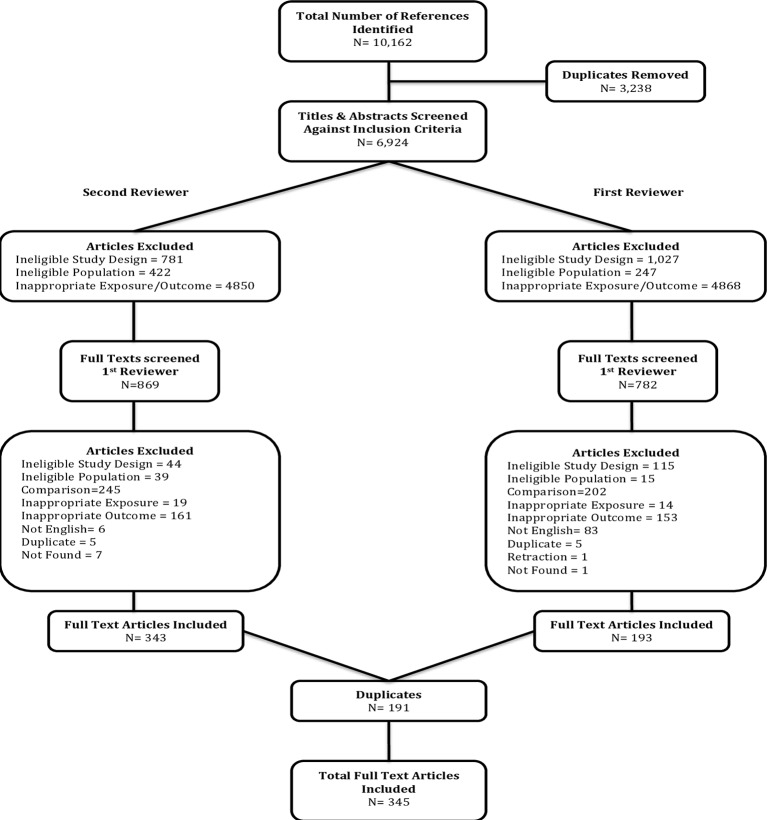
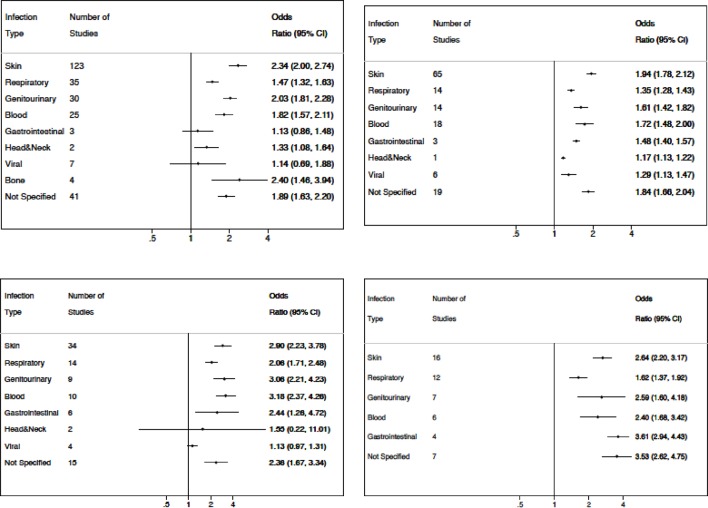
Objective: To quantify the association between diabetes and the risk of incident infections by conducting a systematic review and meta-analysis. Research design and methods: Two reviewers independently screened articles identified from PubMed, EMBASE, Cochrane Library, IPA, and Web of Science databases. Cohort studies (CS) or case–control studies (CCS) evaluating the incidence of infections in adults with diabetes were included. Infections were classified as: skin and soft tissue, respiratory, blood, genitourinary, head and neck, gastrointestinal, bone, viral, and non-specified infections. Study quality was assessed using the Newcastle-Ottawa Quality Assessment Scale. Summary crude and adjusted OR with 95% CIs were calculated using random effects models, stratified by study design. Heterogeneity was measured using the I 2 statistic and explored using subgroup analyses. Results: A total of 345 (243 CS and 102 CCS) studies were included. Combining adjusted results from all CS, diabetes was associated with an increased incidence of skin (OR 1.94, 95% CI 1.78 to 2.12), respiratory (OR 1.35, 95% CI 1.28 to 1.43), blood (OR 1.72, 95% CI 1.48 to 2.00), genitourinary (OR 1.61, 95% CI 1.42 to 1.82), head and neck (OR 1.17, 95% CI 1.13 to 1.22), gastrointestinal (OR 1.48, 95% CI 1.40 to 1.57), viral (OR 1.29, 95% CI 1.13 to 1.46), and non-specified (OR 1.84, 95% CI 1.66 to 2.04) infections. A stronger association was observed among CCS: skin (OR 2.64, 95% CI 2.20 to 3.17), respiratory (OR 1.62, 95% CI 1.37 to 1.92), blood (OR 2.40, 95% CI 1.68 to 3.42), genitourinary (OR 2.59, 95% CI 1.60 to 4.17), gastrointestinal (OR 3.61, 95% CI 2.94 to 4.43), and non-specified (OR 3.53, 95% CI 2.62 to 4.75). Conclusion: Diabetes is associated with an increased risk of multiple types of infections. A high degree of heterogeneity was observed; however, subgroup analysis decreased the amount of heterogeneity within most groups. Results were generally consistent across types of infections.
Overview
The claims and statistics of this paper haven’t been checked yet.
Free: it reads the open-access text and checks the first 5 claims that cite a source we can check. Create a free account to check every claim.
Integrity signals
Registry
Cites
Statistics
Figures
Verification
Claims the paper makes
The claims and statistics of this paper haven’t been checked yet.
Free: it reads the open-access text and checks the first 5 claims that cite a source we can check. Create a free account to check every claim.
Claims other papers make about this one
Each is checked against this paper’s own text: does it say what the citing paper says it does?
The check wasn’t confident either way, so it gives no verdict — never disputed.
In the citing paper
“Contrary to preliminary cohort-level evidence suggesting that exogenous insulin may be associated with an increased cancer risk,1820 particularly glargine”
From American Association of Clinical Endocrinology Clinical Practice Guideline: Developing a Diabetes Mellitus Comprehensive Care Plan-2022 Update. (2022) · cites this paper as [1820]
Experimental — accuracy not yet measured
Self-check
Percentages, sums and reported differences re-computed from the paper’s own numbers.
The self-check needs the paper’s full text.
Citations
Cites
Preferred Reporting Items for Systematic Reviews and Meta-Analyses: the PRISMA statement
Moher, D., Liberati, A., Tetzlaff, J., Altman, D. G., & for the PRISMA Group (2009) · BMJ · doi:10.1136/bmj.b2535 · Cited by 83,823
Preferred reporting items for systematic reviews and meta-analyses: the PRISMA Statement.
(2009) · PubMed Central · Cited by 44,859
Dermyshi, E., Wang, Y., Yan, C., Hong, W., Qiu, G., Gong, X., & Zhang, T. (2017) · Neonatology · doi:10.1159/000454668 · Cited by 24,451
Meta-analysis of Observational Studies in Epidemiology<SUBTITLE>A Proposal for Reporting</SUBTITLE>
Stroup, D. F. (2000) · JAMA · doi:10.1001/jama.283.15.2008 · Cited by 20,623
Preferred Reporting Items for Systematic Reviews and Meta-Analyses: The PRISMA Statement
Moher, D., Liberati, A., Tetzlaff, J., & Altman, D. G. (2009) · Journal of Clinical Epidemiology · doi:10.1016/j.jclinepi.2009.06.005 · Cited by 19,575
Sontrop, J. M., Dixon, S. N., Garg, A. X., Buendia-Jimenez, I., Dohein, O., Huang, S.-H. S., & Clark, W. F. (2013) · American Journal of Nephrology · doi:10.1159/000350377 · Cited by 5,871
Diabetes Mellitus, Fasting Glucose, and Risk of Cause-Specific Death
The Emerging Risk Factors Collaboration (2011) · New England Journal of Medicine · doi:10.1056/nejmoa1008862 · Cited by 2,726
Periodontal Disease: The sixth complication of diabetes mellitus
Löe, H. (1993) · Diabetes Care · doi:10.2337/diacare.16.1.329 · Cited by 1,580 · cited 1×
“45–47 The contributing factors involve higher salivary glucose, low salivary pH, microangiopathy, and abnormal collagen metabolism.”
BackgroundMortality and causes of death in the WHO Multinational Study of Vascular Disease in Diabetes
and the WHO Multinational Study Group, Morrish, N. J., Wang, S.-L., Stevens, L. K., Fuller, J. H., & Keen, H. (2001) · Diabetologia · doi:10.1007/pl00002934 · Cited by 1,288
Okura, Y., Urban, L. H., Mahoney, D. W., Jacobsen, S. J., & Rodeheffer, R. J. (2004) · Journal of Clinical Epidemiology · doi:10.1016/j.jclinepi.2004.04.005 · Cited by 1,234 · cited 1×
“50 In addition, misclassification of patients with diabetes who did not know that they had the disease to the referent group of participants without diabetes is highly likely given that 46% of the estimated prevalence of diabetes is in people with undiagnosed disease.”
Background
Research works printed but not linked: 2
- International Diabetes federation atlas sixth edition. http://www.idf.org/diabetesatlas/update-2014.
- Morrison A, Moulton K, Clark M, et al English language restriction when conducting systematic reviews-based meta-analyses: systematic review of published studies. Canadian Agency for Drugs and Technologies in Health 2009.
Cited by
Blonde, L., Umpierrez, G. E., Reddy, S. S., McGill, J. B., Berga, S. L., Bush, M., Chandrasekaran, S., DeFronzo, R. A., Einhorn, D., Galindo, R. J., et al. (2022) · Endocrine Practice · doi:10.1016/j.eprac.2022.08.002 · Cited by 507
Lack of nutritional immunity in diabetic skin infections promotes Staphylococcus aureus virulence
Thurlow, L. R., Stephens, A. C., Hurley, K. E., & Richardson, A. R. (2020) · Science Advances · doi:10.1126/sciadv.abc5569 · Cited by 116
Denis, D., Seta, V., Regnier-Rosencher, E., Kramkimel, N., Chanal, J., Avril, M.-F., & Dupin, N. (2018) · Journal of the European Academy of Dermatology and Venereology · doi:10.1111/jdv.14831 · Cited by 67
Pathogen manipulation of host metabolism: A common strategy for immune evasion
Freyberg, Z., & Harvill, E. T. (2017) · PLoS Pathogens · doi:10.1371/journal.ppat.1006669 · Cited by 63
Barmanray, R., Cheuk, N., Fourlanos, S., Greenberg, P. B., Colman, P. G., & Worth, L. J. (2022) · BMJ Open Diabetes Research & Care · doi:10.1136/bmjdrc-2022-002880 · Cited by 60
COVID-19 and diabetes: What does the clinician need to know?
Papadokostaki, E., Tentolouris, N., & Liberopoulos, E. N. (2020) · Primary care diabetes · doi:10.1016/j.pcd.2020.06.010 · Cited by 60
Koliaki, C. C., Tentolouris, A., Eleftheriadou, I., Melidonis, A. J., Dimitriadis, G., & Tentolouris, N. (2020) · Journal of Clinical Medicine · doi:10.3390/jcm9072288 · Cited by 62
Fang, M., Ishigami, J., Echouffo-Tcheugui, J. B., Lutsey, P. L., Pankow, J. S., & Selvin, E. (2021) · Diabetologia · doi:10.1007/s00125-021-05522-3 · Cited by 47
Thomson, K. H., Berry, R., Robinson, T., Brown, H., Bambra, C. L., & Todd, A. (2020) · BMC Public Health · doi:10.1186/s12889-020-09227-x · Cited by 53
Hassan, R. S. E. E., Osman, S. O. S., Aabdeen, M. A. S., Mohamed, W. E. A., Hassan, R. S. E. E., & Mohamed, S. O. O. (2020) · Patient Safety in Surgery · doi:10.1186/s13037-020-00272-4 · Cited by 46
Brunetti, V. C., Ayele, H. T., Yu, O. H. Y., Ernst, P., & Filion, K. B. (2021) · CMAJ Open · doi:10.9778/cmajo.20200013 · Cited by 44
Donnan, J. R., Grandy, C., Chibrikov, E., Marra, C. A., Aubrey‐Bassler, K., Johnston, K., Swab, M., Haché, J., Curnew, D., Nguyen, H. V., et al. (2018) · CMAJ Open · doi:10.9778/cmajo.20180111 · Cited by 42
Self-citationMetabolism Shapes Immune Responses to Staphylococcus aureus
Arumugam, P., & Kielian, T. (2024) · Journal of Innate Immunity · doi:10.1159/000535482 · Cited by 35
Kumar, R., Kumar, R., Perswani, P., Taimur, M., Shah, A. H., & Shaukat, F. (2019) · Cureus · doi:10.7759/cureus.5464 · Cited by 36
“Diabetic patients have more than twice the tendency of developing genitourinary tract infections [1].”
BackgroundConsiderations for people with diabetes during the Coronavirus Disease (COVID-19) pandemic
Sacks, L. J., Pham, C. T., Fleming, N., Neoh, S. L., & Ekinci, E. I. (2020) · Diabetes Research and Clinical Practice · doi:10.1016/j.diabres.2020.108296 · Cited by 37
“Diabetes, particularly in patients aged 70 years or older, has been strongly associated with an increased risk of infection and complications [7,8].”
Deadly Companions: COVID-19 and Diabetes in Mexico
Singer, M. C. (2020) · Medical Anthropology · doi:10.1080/01459740.2020.1805742 · Cited by 42
“Research on the relationship between diabetes and infections (Abu-Ashour et al. 2017) shows that diabetes is associated with an increased incidence of infection, most commonly of the skin, respiratory system, and blood.”
BackgroundGagnon, M.-È., Sirois, C., Simard, M., Roux, B., & Plante, C. (2020) · Primary care diabetes · doi:10.1016/j.pcd.2020.03.003 · Cited by 39
Yefet, E., Bejerano, A., Iskander, R., Kimhi, T. Z., & Nachum, Z. (2023) · Microorganisms · doi:10.3390/microorganisms11081956 · Cited by 44
The importance of physical activity in management of type 2 diabetes and COVID-19
Seidu, S., Khunti, K., Yates, T. E., Almaqhawi, A., Davies, M. J., & Sargeant, J. A. (2021) · Therapeutic Advances in Endocrinology and Metabolism · doi:10.1177/20420188211054686 · Cited by 34
Sohail, M. U., Mashood, F., Oberbach, A., Chennakkandathil, S., & Schmidt, F. (2022) · Frontiers in Microbiology · doi:10.3389/fmicb.2022.1042362 · Cited by 38
“Blood, skin, urine, and respiratory tract infections are common in diabetic patients that may cause irreversible organ loss or death (Abu-Ashour et al., 2017).”
BackgroundLi, D., Yuan, L., Wang, T., Rong, Y., Li, C., You, M., Liu, Y., Wang, Y., & Chen, C. (2024) · Clinical Neurology and Neurosurgery · doi:10.1016/j.clineuro.2024.108593 · Cited by 27
Kumar, A., Teslova, T., Taub, E. M., Miller, J. D., & Lukin, D. J. (2020) · Digestive Diseases and Sciences · doi:10.1007/s10620-020-06439-4 · Cited by 31
Lontchi‐Yimagou, E., Feutseu, C., Kenmoe, S., Zune, A. L. D., Ekali, S. F. K., Nguewa, J. L., Choukem, S. P., Mbanya, J. C., Gautier, J., & Sobngwi, E. (2021) · Scientific Reports · doi:10.1038/s41598-021-88598-6 · Cited by 33
The diagnosis, treatment, and prevention of recurrent urinary tract infection
Schmiemann, G., Kranz, J., Mandraka, F., Schubert, S., Wagenlehner, F. R. A., & Gágyor, I. (2024) · Deutsches Ärzteblatt international · doi:10.3238/arztebl.m2024.0068 · Cited by 25
Gamble, J., Donnan, J. R., Chibrikov, E., Twells, L., Midodzi, W. K., & Majumdar, S. R. (2018) · Scientific Reports · doi:10.1038/s41598-018-33483-y · Cited by 26
Self-citationReinholdt, K., Thomsen, L. T., Munk, C., Dehlendorff, C., Aalborg, G. L., Carstensen, B., Jørgensen, M. E., & Kjær, S. K. (2020) · International Journal of Cancer · doi:10.1002/ijc.33365 · Cited by 26
Risk of infections in non‐alcoholic fatty liver disease: A nationwide population‐based cohort study
Shang, Y., Widman, L., Ebrahimi, F., Ludvigsson, J. F., Hagström, H., & Wester, A. (2023) · Liver International · doi:10.1111/liv.15680 · Cited by 24
Ruiz, P. L., Bakken, I. J., Håberg, S. E., Tapia, G., Hauge, S. H., Birkeland, K. I., Gulseth, H. L., & Stene, L. C. (2019) · Journal of Internal Medicine · doi:10.1111/joim.12984 · Cited by 23
Characteristics and outcome of spontaneous bacterial meningitis in patients with diabetes mellitus
Pomar, V., Benito, N., Mauri, A., Coll, P., Gurguí, M., & Domingo, P. (2020) · BMC Infectious Diseases · doi:10.1186/s12879-020-05023-5 · Cited by 26
Yue, C., Zhang, C., Ying, C., & Jiang, H. (2022) · Frontiers in Endocrinology · doi:10.3389/fendo.2022.972963 · Cited by 21
Angriman, F., Lawler, P. R., Shah, B. R., Martin, C. M., Scales, D. C., & the Sepsis Canada Network (2023) · Critical Care · doi:10.1186/s13054-023-04586-4 · Cited by 22
Wetmore, J. B., Li, S., Ton, T. G. N., Peng, Y., Hansen, M. K., Neslusan, C. A., Riley, R. J., Liu, J., & Gilbertson, D. T. (2019) · BMC Endocrine Disorders · doi:10.1186/s12902-019-0417-9 · Cited by 21
Signing, A. T., Marbou, W. J. T., Beng, V. P., & Kuete, V. (2020) · Cureus · doi:10.7759/cureus.9345 · Cited by 17
Anti-Hyperglycemic Agents in the Adjuvant Treatment of Sepsis: Improving Intestinal Barrier Function
Wang, Y., Li, J., Wang, D., Jin, K., Hui, J., & Xu, H. (2022) · Drug Design Development and Therapy · doi:10.2147/dddt.s360348 · Cited by 18
Viral infection and host immune response in diabetes
Joshi, G., Das, A., Verma, G., & Guchhait, P. (2023) · IUBMB Life · doi:10.1002/iub.2794 · Cited by 22
Oumer, O., Metaferia, Y., & Gebretsadik, D. (2022) · SAGE Open Medicine · doi:10.1177/20503121221139149 · Cited by 14
Hus, I., Szymczyk, A., Mańko, J., & Drozd-Sokolowska, J. E. (2023) · Biology · doi:10.3390/biology12040545 · Cited by 17
Diabetes mellitus and multiple myeloma; common features of two distinct entities
Tentolouris, A., Ntanasis‐Stathopoulos, I., Eleftheriadou, I., Malandrakis, P., Tzeravini, E., & Gavriatopoulou, M. (2022) · Diabetes/Metabolism Research and Reviews · doi:10.1002/dmrr.3535 · Cited by 16
“Presence of hyperglycemia and DM might increase the risk for several types of infections in patients with MM.(60) A retrospective”
BackgroundDiabetes mellitus: Lessons from COVID-19 for monkeypox infection
Ruiz‐Pacheco, J. A., Díaz, L., Arreola-Torres, R., Fonseca-Coronado, S., & Gómez-Navarro, B. (2023) · Primary care diabetes · doi:10.1016/j.pcd.2023.01.008 · Cited by 15
Zhou, L., Guo, S., Dong, Z., Liu, P., Shi, W., Shen, L., & Yin, J. (2023) · Materials Today Advances · doi:10.1016/j.mtadv.2023.100458 · Cited by 15
Castellani, D., Brocca, C., Stefano, V. D., Mazzon, G., Celia, A., Bosio, A., Bertello, G., ALESSANDRIA, E., Cormio, L., Ratnayake, R., et al. (2024) · Journal of Endourology · doi:10.1089/end.2024.0182 · Cited by 12
“20 The elevated risk of urinary tract infections in patients with diabetes may be attributed to several unique mechanisms.”
Shahsavari, S., Bakht, M., Sadeghi, H., Rahimi, S., Movahed, F., Chegini, V., & Khoei, S. G. (2024) · Archives of Razi Institute · doi:10.32592/ari.2024.79.1.92 · Cited by 11
New‐Onset Diabetes in Children during COVID‐19: Clinical Case Report
Aabdi, M., Aarab, A., Es-Saad, O., Malki, K., Bkiyar, H., & Housni, B. (2021) · Case Reports in Endocrinology · doi:10.1155/2021/6654019 · Cited by 11
Glycaemic status, insulin resistance, and risk of infection-related mortality: a cohort study
Cheong, H. S., Chang, Y., Kim, Y., Joo, E., Kwon, M., Wild, S. H., Byrne, C. D., & Ryu, S. (2023) · European Journal of Endocrinology · doi:10.1093/ejendo/lvad011 · Cited by 12
López‐de‐Andrés, A., Jiménez‐García, R., Hernández‐Barrera, V., de Miguel‐Díez, J., de Miguel-Yanes, J. M., Hernández, D. M., Carabantes-Alarcón, D., Zamorano‐León, J. J., & Noriega, C. (2022) · Cardiovascular Diabetology · doi:10.1186/s12933-022-01633-2 · Cited by 9
“Cellular immunity and phagocytic function tend to be impaired in persons with diabetes, thus predisposing them to severe infections [1, 35].”
BackgroundAngriman, F., Saoraya, J., Lawler, P. R., Shah, B. R., Martin, C. M., Scales, D. C., & on behalf of the Sepsis Canada Network (2024) · Critical Care Explorations · doi:10.1097/cce.0000000000001085 · Cited by 13
Murrin, E. M., Saad, A. F., SULLIVAN, S. A., & Miodovnik, M. (2024) · American Journal of Perinatology · doi:10.1055/a-2489-4539 · Cited by 11
“60 Hyperglycemia has also been shown to impact neutrophil and monocyte dysfunction 60 ; long-standing diabetes alters cell-mediated immunity.”
January, S. E., Dubrawka, C. A., Progar, K., Kurwicki, K., & Santos, R. D. (2024) · Pharmacotherapy The Journal of Human Pharmacology and Drug Therapy · doi:10.1002/phar.4608 · Cited by 7
Kyono, Y., Endo, F., Shimbo, M., Ohwaki, K., & Hattori, K. (2021) · LUTS Lower Urinary Tract Symptoms · doi:10.1111/luts.12380 · Cited by 7
Vogel, G., Cuénod, A., Mouchet, R., Strauss, A., Daubenberger, C., Pflüger, V., & Portevin, D. (2017) · Stem Cell Research · doi:10.1016/j.scr.2017.11.013 · Cited by 7
Managing people with diabetes during the cancer palliation in the era of simultaneous care
Ferrari, P., Giardini, A., Negri, E. M., Villani, G., & Preti, P. (2017) · Diabetes Research and Clinical Practice · doi:10.1016/j.diabres.2017.12.010 · Cited by 8
Munipalli, S. B., Mounika, M. R., Aisha, J., & Yenugu, S. (2019) · Andrologia · doi:10.1111/and.13437 · Cited by 7
López‐de‐Andrés, A., López‐Herránz, M., Hernández‐Barrera, V., de Miguel‐Díez, J., de Miguel-Yanes, J. M., Carabantes-Alarcón, D., Albaladejo‐Vicente, R., Villanueva-Orbáiz, R., & Jimenez-Garcia, R. (2021) · International Journal of Environmental Research and Public Health · doi:10.3390/ijerph182312645 · Cited by 7
“Our findings agree with those reported elsewhere, namely, that patients with diabetes have a worse risk profile than patients without diabetes [7].”
BackgroundResultEvaluation of HPV, smear and colposcopy results in patients with diabetes
ÇAKIR, A. T., Sel, G., Balcı, S., Harma, M., & Harma, M. I. (2021) · Diabetes & Metabolic Syndrome Clinical Research & Reviews · doi:10.1016/j.dsx.2021.102335 · Cited by 7
López‐de‐Andrés, A., Jimenez-Garcia, R., Hernández‐Barrera, V., de Miguel‐Díez, J., de Miguel-Yanes, J. M., Carabantes-Alarcón, D., Zamorano‐León, J. J., Rojo, S. S., & López‐Herránz, M. (2021) · Journal of Clinical Medicine · doi:10.3390/jcm10173975 · Cited by 7
“People with type 2 diabetes mellitus (T2DM) are at greater risk of infections, showing worse infection outcomes than those without diabetes [1].”
BackgroundType-2 diabetes mellitus enhances Klebsiella pneumoniae pathogenesisPreprint
Todd, K., Gunter, K. B., Bowen, J. M., Holmes, C. L., Tilston‐Lunel, N. L., & Vornhagen, J. (2024) · bioRxiv (Cold Spring Harbor Laboratory) · doi:10.1101/2024.05.31.596766 · Cited by 11
Tsumura, M., Makihara, S., Nishikori, A., Gion, Y., Morito, T., Miyamoto, S., Naito, T., Uraguchi, K., Oka, A., Tachibana, T., et al. (2022) · Diagnostics · doi:10.3390/diagnostics12020454 · Cited by 6
Woldaregay, A. Z., Launonen, I. K., Årsand, E., Albers, D. J., Holubová, A., & Hartvigsen, G. (2020) · Journal of Medical Internet Research · doi:10.2196/18911 · Cited by 11
Comparative risk of infection of medications used for type 2 diabetes
Zapata-Bravo, E., Douros, A., Yu, O. H. Y., & Filion, K. B. (2024) · Expert Opinion on Drug Safety · doi:10.1080/14740338.2024.2401024 · Cited by 5
“However, the magnitude of association was variable, heterogeneity between studies was high, and the extent of the available evidence was vastly different for certain infections [6].”
Syndemics of the sea: Adverse disease interactions and the stressors of fisher livelihoods
Singer, M. C. (2023) · Fish and Fisheries · doi:10.1111/faf.12803 · Cited by 5
Isobe, N., Oda, T., Yamaguchi, T., Kamei, Y., Tsumuraya, T., Yuri, A., Nakasone, A., Asao, K., & Matsuda, S. (2025) · Neurology and Therapy · doi:10.1007/s40120-025-00794-y · Cited by 5
van Meurs, S., Hopman, J., Hubens, G., Komen, N., Hendriks, J. M. H., Ysebaert, D., Nellensteijn, D. R., & Plaeke, P. (2024) · Acta chirurgica Belgica · doi:10.1080/00015458.2024.2397177 · Cited by 7
“Diabetes and bad glycemic control are typically linked with a higher incidence of infections [47].”
The Second Wave of COVID-19: Clinical Pharmacy Services During a Field Hospital Operation
Mazzone, J., Shannon, K., Rovelli, R. J., Kabbani, R., Amaral, A., & Gilchrist, N. A. (2021) · Hospital Pharmacy · doi:10.1177/00185787211032361 · Cited by 5
Gajjar, S., Haq, M. A., Shah, R., Mandani, K., Banerjee, S., Sinha, S., Haque, M., & Kumar, S. (2023) · Journal of Applied Pharmaceutical Science · doi:10.7324/japs.2023.147406 · Cited by 6
Wang, J., Xiang, P., Zhao, E., Liu, L., Liu, Y., Liang, L.-J., Cui, Y., & Fang, B. (2025) · World Journal of Surgical Oncology · doi:10.1186/s12957-025-03982-0 · Cited by 5
“Previous research has indicated that antidiabetic medication reduces the conversion rate of MGUS to MM, but its influence on MM progression remains unclear [31].”
Cormio, A., Ratnayake, R., Castellani, D., Palma, G. D. D., Fiorella, R., Sciancalepore, F., Auciello, M., Albino, G., Falagario, U. G., Carrieri, G., et al. (2025) · World Journal of Urology · doi:10.1007/s00345-025-06060-y · Cited by 3
“A recent meta-analysis of 345 studies demonstrated that diabetes was linked to an increased risk of various infections, with a particularly strong association with urinary infections (OR 2.59) [18 ].”
InfluentialHasan, H. M., & Salloom, D. F. (2021) · Medico-Legal Update · doi:10.37506/mlu.v21i2.2754 · Cited by 6
“Moreover, hyperglycemia frequently impairs coagulation, fibrin action, body fat and endothelium function (9).”
BackgroundRajkumar, R. P. (2023) · Diseases · doi:10.3390/diseases11030116 · Cited by 4
“It is also possible that MDD may be linked to LRI through shared risk or vulnerability factors, such as substance abuse, socioeconomic disadvantage, comorbid medical conditions such as diabetes mellitus, or exposure to environmental pollutants [134–136].”
Epidemiology and Pathogenesis of Type 1 Diabetes
Stene, L. C., & Lernmark, Å. (2023) · Springer eBooks · doi:10.1007/978-3-031-20999-4_2 · Cited by 4
Gallo, M., Lasagna, A., Renzelli, V., Morviducci, L., Cortellini, A., Monami, M., Marino, G., Gori, S., Verzè, M., Ragni, A., et al. (2025) · Journal of Endocrinological Investigation · doi:10.1007/s40618-025-02586-5 · Cited by 4
“Subjects with diabetes are also more vulnerable to infec - tious diseases (e.g., skin and soft tissue infections, pneu - monia, urinary tract infections, and sepsis) compared to the general population, with a higher risk of hospitalization, longer hospital stay, and severe complications [ 7– 10].”
Dinatale, B., González, F. B., Bottasso, O., & Pérez, A. R. (2026) · Seminars in Immunology · doi:10.1016/j.smim.2026.102028 · Cited by 2
Shen, Y., Xu, X., Meng, S., Qin, M., Li, H., Chu, D.-J., & Zheng, C. (2021) · International Journal of General Medicine · doi:10.2147/ijgm.s331082 · Cited by 2
“People with an increased blood glucose level face a greater risk of infections.(7) However, the biological mechanism was not elaborated.”
BackgroundArtificial intelligence in critically ill diabetic patients: current status and future prospects
Juneja, D., Gupta, A., & Singh, O. (2022) · Artificial Intelligence in Gastroenterology · doi:10.35712/aig.v3.i2.66 · Cited by 3
Pool, K., Hemmat, G. J., & Dorschner, R. A. (2024) · PLoS ONE · doi:10.1371/journal.pone.0310810 · Cited by 2
Jang, J., Park, S., & Chun, B. C. (2025) · BMC Public Health · doi:10.1186/s12889-025-24171-4 · Cited by 2
Elmoheen, A. M., Nazal, A. F., Zubaidi, O., Siddiqui, U., & Alhatou, M. I. (2021) · Qatar medical journal · doi:10.5339/qmj.2021.19 · Cited by 3
“The pain specialist clinician should discuss with the patients the known risks and realistic benefits of such treatment within 1–4 weeks of starting opioid therapy.(144) For neuropathic pain, antiepileptic drugs, SNRIs, and TCAs are typically recommended as the first-line treatment.”
BackgroundKondo, T., Hagihara, M., Esaka, Y., Yamamoto, T., Uno, B., Yamagishi, Y., & Mikamo, H. (2019) · Japanese Journal of Infectious Diseases · doi:10.7883/yoken.jjid.2019.457 · Cited by 2
Cigarette Smoking and Risk of Infection-Related Mortality: A Cohort Study
Cheong, H. S., Chang, Y., Joo, E., & Ryu, S. (2021) · Nicotine & Tobacco Research · doi:10.1093/ntr/ntab169 · Cited by 3
The association of diabetes and the human papillomavirus: a nationwide population‑based cohort study
ALETI, S., ULRICH, M. T., Ghozy, S. A., & NAYAK, S. S. (2021) · Minerva Endocrinology · doi:10.23736/s2724-6507.21.03539-9 · Cited by 2
An insight to the diabetic ketoacidosis and lactic acidosis among the SARS-COV2 infected individuals
Al-Sa'idy, H. A. H., Al‐Snafi, A. E., & Alyousif, B. (2022) · Magna Scientia Advanced Biology and Pharmacy · doi:10.30574/msabp.2022.6.1.0071 · Cited by 1
Vita, E. D., Limongi, F., Veronese, N., Gennaro, F. D., Saracino, A., & Maggi, S. (2024) · Diseases · doi:10.3390/diseases12080187 · Cited by 2
“Diabetes, which represents one of the principal causes of morbidity and death in the world [1], is associated with a higher risk of developing various types of infections [2], as well as of hospitalization and infection-related mortality [3].”
BackgroundTrichophyton mentagrophytes delays wound healing in ob/ob mice
Aruga, K., Takehara, K., & Kametaka, S. (2024) · International Wound Journal · doi:10.1111/iwj.70118 · Cited by 1
Dei-Dzeha, M. S., Dayie, N. T. K. D., Atiase, Y., Baah, B. B., Tetteh‐Quarcoo, P. B., Osei, M., Semevor, G. O., Okyere, I., Kotey, F. C. N., & Donkor, E. S. (2024) · BMC Research Notes · doi:10.1186/s13104-024-07003-3 · Cited by 2
Budin, M., Sandiford, N. A., Gehrke, T. A., & Çıtak, M. (2025) · International Orthopaedics · doi:10.1007/s00264-025-06513-4 · Cited by 2
“Additionally, diabetes mellitus elevates the risk for infec - tions in the gastrointestinal system, the origin responsible for a haematogenous seeding leading to a PJI [ 3, 28].”
Nazneen, S., Ibarra-Mejia, G., Mahmud, S., Ojo, B. D., Khanjani, N., Jeon, S., Gill, T. E., Hossain, M. M., & Duarte‐Gardea, M. (2026) · Reviews on Environmental Health · doi:10.1515/reveh-2025-0157 · Cited by 1
“Two independent reviewers (SN and FH) conducted the quality assessment of all the included studies using the Newcastle – Ottawa Scale (NOS), as outlined by Abu-Ashour et al. (2017) [49].”
Stefanski, A., Dorner, T. E., & Kneitz, C. (2023) · Zeitschrift für Rheumatologie · doi:10.1007/s00393-023-01408-4 · Cited by 1
Radical Surgical Approach to Chronic Suppurative Osteomyelitis: Case Report
Vargas-Rojas, D. C., Rodriguez-Flores, A., Villalobos, D. M., Chumpitaz-Cerrate, V., & Rimache, L. K. C. (2023) · Odovtos - International Journal of Dental Sciences · doi:10.15517/ijds.2023.57037 · Cited by 1
“(10) in a retrospective cohort study found that patients with type 2 diabetes mellitus had a higher mortality rate related to infection [1.92 (95% CI: 1.75 to 2.10)].”
BackgroundInfluentialStec, M., Suleja, A., Kuczmik, W., Mroskowiak, A., Migacz, M., & Holecki, M. T. (2023) · Annales Academiae Medicae Silesiensis · doi:10.18794/aams/166423 · Cited by 1
“According to meta-analyses and the SABRE prospective population-based study, DM is associated with double the risk of coronary heart disease, ischemic stroke and death attributed to other vascular causes [7,8] with significantly higher mortality in South Asians and African Caribbeans.”
MethodHumoral response after breakthrough SARS-CoV-2 infection in type 2 diabetes mellitus patients
Michalski, A., Góralczyk, M., Brzozowski, M., Dworzański, J., Drop, B., Stępień, E., & Polz‐Dacewicz, M. (2023) · Current Issues in Pharmacy and Medical Sciences · doi:10.2478/cipms-2023-0038 · Cited by 1
Kristensen, F., Domazet, S. L., Nielsen, J. S., Stidsen, J. V., Højlund, K., Beck‐Nielsen, H., Vestergaard, P., Jessen, N., Olsen, M. H., Hansen, T. F., et al. (2024) · Diabetologia · doi:10.1007/s00125-024-06342-x · Cited by 1
“Despite strong evidence of a 1.5-to twofold elevated risk of many different infections in individuals with type 2 diabetes compared with the general population [2, 4, 5, 7, 8], the exact mechanisms underlying this association remain poorly understood.”
InfluentialREVIEW ABOUT DIABETES MELLITUS AND URINARY TRACT INFECTIONS
Qusay, I., QASIM, M. J., & Falih, I. Q. (2020) · Southern Brazilian Journal of Chemistry · doi:10.48141/sbjchem.v28.n29.2020.02_qasim_pgs_07_16.pdf · Cited by 1
Le diabète altère-t-il vraiment les défenses immunitaires ? Polynucléaires neutrophiles et diabète
Mohamedi, N., Batteux, F., & Larger, É. (2020) · Médecine des Maladies Métaboliques · doi:10.1016/j.mmm.2019.12.018 · Cited by 2
An Unusual Case of Sternoclavicular Joint Infection and Lung Abscess
Silvestre, C. R., Cordeiro, R., Duarte, D., Ferreira, H., Cardoso, C., Falcão, T., & Domingos, A. C. (2020) · Open Journal of Respiratory Diseases · doi:10.4236/ojrd.2020.102005
Simonsen, J. R. (2021) · Helda - University of Helsinki Institutional Repository
COVID-19 Is A Contributing Risk Factor For Development Of DKA In Typei DM.Preprint
ElBakry, N. M., Mohamed, A., & Fadl, Y. (2022) · Research Square · doi:10.21203/rs.3.rs-1374347/v1
Rajendran, J., Ramya, S. R., Anandhalakshmi, S., & Kanungo, R. (2023) · Journal of Current Research in Scientific Medicine · doi:10.4103/jcrsm.jcrsm_57_22
Vaccini e diabete: un legame da rafforzare nell’anno del centenario dalla scoperta dell’insulina
Peruzzi, O., Pratesi, A., Silverii, G. A., Dicembrini, I., & Diabete”, A. N. D. G. I. S.-A.-S. “. E. (2023) · L Endocrinologo · doi:10.1007/s40619-023-01359-7
“li e degli apparati respiratorio e genito-urinario), con una prognosi caratterizzata da maggior rischio di complicanze [1, 2].”
BackgroundSandra, A. R., & Vijayan, K. N. (2023) · Kerala Surgical Journal · doi:10.4103/ksj.ksj_11_23
Infectious Diseases in Patients with Diabetes Mellitus: Literature Review
Skryabina, A. A. (2024) · Medicina · doi:10.29234/2308-9113-2024-12-1-37-52
Metadata
- Authors
- Abu-Ashour, W., Twells, L., Valcour, J., Randell, A., Donnan, J., Howse, P., & Gamble, J.-M.
- Affiliations
- Memorial University of Newfoundland (CA)
- Corresponding author
- Gamble, John-Michael
- ORCID
- Venue
- BMJ Open Diabetes Research & Care
- Publisher
- BMJ
- Published
- 2017-05
- Volume
- 5
- Issue
- 1
- Pages
- e000336
- ISSN
- 2052-4897 (ISSN-L)
- PMC
- PMC5530269
- OpenAlex
- W2616886176
- Cited by
- 113
- References
- 55
- Citations by year
- 2026: 7 · 2025: 11 · 2024: 19 · 2023: 20 · 2022: 12 · 2021: 16 · 2020: 17 · 2019: 5 · 2018: 3 · 2017: 3
- FWCI
- 1.12
- Type
- journal article
- Language
- en
- Open access
- gold
- doi.org
- Licence
- cc-by-nc
- Locations
- BMJ Open Diabetes Research & Care (publishedVersion, cc-by-nc)
- PubMed Central (publishedVersion, cc-by-nc)
- PubMed (publishedVersion)
- Funders
- Canadian Diabetes Association
- Canadian Institutes of Health Research
- Topics
- Health Sciences › Medicine › Endocrinology, Diabetes and Metabolism › Diabetic Foot Ulcer Assessment and Management
- Health Sciences › Medicine › Endocrinology, Diabetes and Metabolism › Diabetes Management and Research
- Health Sciences › Medicine › Endocrinology, Diabetes and Metabolism › Diabetes, Cardiovascular Risks, and Lipoproteins
- Keywords
- diabetes mellitus, infection risk, skin and soft tissue infections, respiratory infections, bloodstream infection, genitourinary infections, head and neck infections, gastrointestinal infections, viral infection, infection incidence
About these checks
Registry, retraction, Cites and statistics results are computed, not judged, with one exception: a printed reference that no index lists is read once by a model before it counts as a citation error. Claims are extracted by a model and kept only when their quote appears verbatim in the text; each cited source is then checked, with a model’s help, for whether it says what the claim relies on. Those verdicts can be wrong — read the claim’s quote and the cited source before relying on one.
Statistics and arithmetic are recomputed, not judged.
Confidence bands are shown only for fields calibrated on our annotated test set. None is calibrated yet, so no band is shown.
What counts as a claim ›How we measure confidence ›How we check this ›
Are you an author, or do you see a problem with this page? Request a review
Data sources
Bibliographic data: Semantic Scholar, OpenAlex, Crossref.
Contains information from the Semantic Scholar Academic Graph Datasets, made available under the ODC Attribution License (ODC-BY 1.0).
Semantic Scholar’s data is described in: Kinney, R., et al. (2023). The Semantic Scholar Open Data Platform. arXiv:2301.10140.
