

Efficacy and safety of flash glucose monitoring in patients with type 1 and type 2 diabetes: a systematic review and meta-analysis
Open accessThe DOI matches its Crossref record; 51 of the 53 references it cites were found in a registry or an index.
Abstract
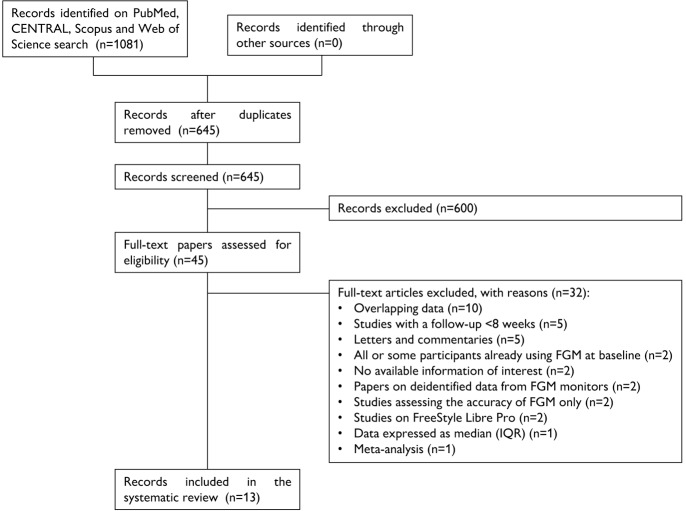
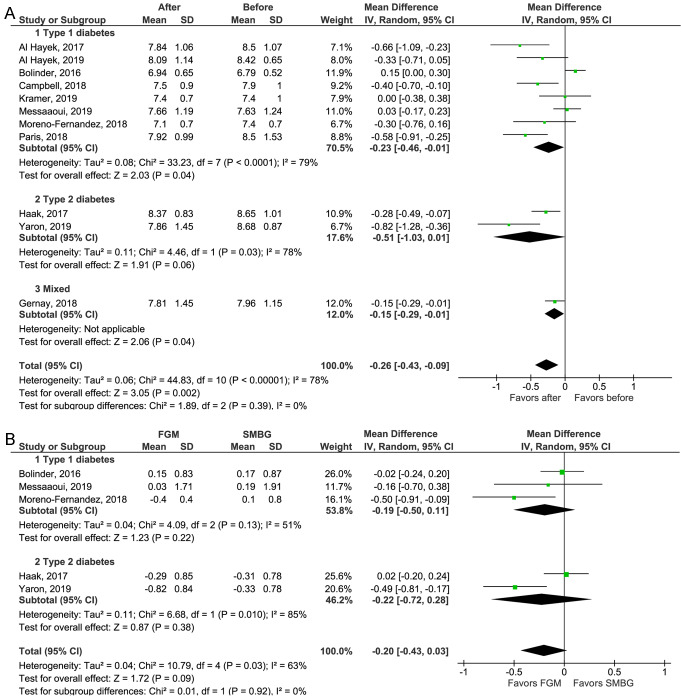
Introduction: Flash glucose monitoring (FGM) is a factory-calibrated sensor-based technology for the measurement of interstitial glucose. We performed a systematic review and meta-analysis to assess its efficacy and safety in patients with type 1 and type 2 diabetes. Research design and methods: PubMed, CENTRAL, Scopus and Web of Science were searched in July 2019. Twelve studies with a follow-up longer than 8 weeks, evaluating 2173 patients on prandial insulin, multiple daily insulin injections or continuous subcutaneous insulin infusion were included. The following data were extracted: HbA1c, time in range, time above 180 mg/dL, time below 70 mg/dL, frequency of hypoglycemic events, number of self-monitoring of blood glucose (SMBG) measurements, total daily insulin dose, patient-reported outcomes, adverse events, and discontinuation rate. A comparison with SMBG was conducted. Results: FGM use was associated with a reduction in HbA1c (−0.26% (−3 mmol/mol); p=0.002) from baseline to the last available follow-up, which correlated with HbA1c levels at baseline (−0.4% (−4 mmol/mol) for each 1.0% (11 mmol/mol) of HbA1c above 7.2% (55 mmol/mol)). Also, a decrease in time below 70 mg/dL was found (−0.60 hours/day; p=0.04). Favorable findings in patient-reported outcomes and no device-related serious adverse events were reported. When compared with SMBG, FGM was characterized by no statistically different change in HbA1c (p=0.09), with lower number of SMBG measurements per day (−3.76 n/day; p<0.001) and risk of discontinuation (relative risk=0.42; p=0.001). A limited number of studies, with a heterogeneous design and usually with a short-term follow-up and without specific training, were found. Conclusions: The present review provides evidence for the use of FGM as an effective strategy for the management of diabetes.
Overview
The claims and statistics of this paper haven’t been checked yet.
Free: it reads the open-access text and checks the first 5 claims that cite a source we can check. Create a free account to check every claim.
Integrity signals
Registry
Cites
Statistics
Figures
Verification
Claims the paper makes
The claims and statistics of this paper haven’t been checked yet.
Free: it reads the open-access text and checks the first 5 claims that cite a source we can check. Create a free account to check every claim.
Claims other papers make about this one
Each is checked against this paper’s own text: does it say what the citing paper says it does?
The source backs part of the claim, not all of it — or backs it for a different population, condition or comparison.
In the citing paper
“A systematic review of RCTs in adults with type 1 or type 2 diabetes suggested that is-CGM may reduce HbA 1c in those with type 1 diabetes or insulin-treated type 2 diabetes (166), while another systematic review of studies (primarily in type 1 diabetes) with randomized or cohort designs suggested a small (0.26%) but statistically significant reduction in HbA 1c (167).”
From Guidelines and Recommendations for Laboratory Analysis in the Diagnosis and Management of Diabetes Mellitus (2023) · cites this paper as [167]
Experimental — accuracy not yet measured
Self-check
Percentages, sums and reported differences re-computed from the paper’s own numbers.
The self-check needs the paper’s full text.
Citations
Cites
The Cochrane Collaboration's tool for assessing risk of bias in randomised trials
Higgins, J. P. T., Altman, D. G., Gotzsche, P. C., Juni, P., Moher, D., Oxman, A. D., Savovic, J., Schulz, K. F., Weeks, L., Sterne, J. A. C., et al. (2011) · BMJ · doi:10.1136/bmj.d5928 · Cited by 33,817
Liberati, A., Altman, D. G., Tetzlaff, J., Mulrow, C., Gøtzsche, P. C., Ioannidis, J. P. A., Clarke, M., Devereaux, P. J., Kleijnen, J., & Moher, D. (2009) · PLoS Medicine · doi:10.1371/journal.pmed.1000100 · Cited by 28,164
Liberati, A., Altman, D. G., Tetzlaff, J., Mulrow, C., Gotzsche, P. C., Ioannidis, J. P. A., Clarke, M., Devereaux, P. J., Kleijnen, J., & Moher, D. (2009) · BMJ · doi:10.1136/bmj.b2700 · Cited by 17,648
Battelino, T., Danne, T., Bergenstal, R. M., Amiel, S. A., Beck, R., Biester, T., Bosi, E., Buckingham, B. A., Cefalu, W. T., Close, K. L., et al. (2019) · Diabetes Care · doi:10.2337/dci19-0028 · Cited by 4,237
International consensus on use of continuous glucose monitoring
Danne, T., Nimri, R., Battelino, T., Bergenstal, R. M., Close, K. L., DeVries, J. H., Garg, S., Heinemann, L., Hirsch, I., Amiel, S. A., et al. (2017) · Diabetes Care · doi:10.2337/dc17-1600 · Cited by 2,069
Choosing effect measures and computing estimates of effect
Higgins, J. P., Li, T., & Deeks, J. J. (2019) · Cochrane Handbook for Systematic Reviews of Interventions · doi:10.1002/9781119536604.ch6 · Cited by 977 · cited 1×
“46 In the absence of this information in several studies and to include the largest number of studies, we estimated the data using an unpaired statistic, as stated.”
Bolinder, J., Antuna, R., Geelhoed-Duijvestijn, P., Kröger, J., & Weitgasser, R. (2016) · The Lancet · doi:10.1016/s0140-6736(16)31535-5 · Cited by 893 · cited 1×
“For example, concerning the time above 180 mg/dL in patients with type 1 diabetes, FGM showed discordant findings in ref 7 and 16; however, the HbA1c at baseline in these studies was also significantly different (6.8±0.5% vs 7.9±1.0%, respectively; p<0.01).”
Influential6. Glycemic Targets: Standards of Medical Care in Diabetes—2020
American Diabetes Association (2020) · Diabetes Care · doi:10.2337/dc20-s006 · Cited by 744
Haak, T., Hanaire, H., Ajjan, R., Hermanns, N., Riveline, J.-P., & Rayman, G. (2017) · Diabetes Therapy · doi:10.1007/s13300-016-0223-6 · Cited by 623
Pickup, J. C., Freeman, S. C., & Sutton, A. J. (2011) · BMJ · doi:10.1136/bmj.d3805 · Cited by 541 · cited 1×
“25 26 Thus, we performed a meta-regression accordingly and found FGM to be associated with a reduction in HbA1c of −0.4% for 1.0% of HbA1c over 7.2% (−4 mmol/mol for each 11 mmol/ mol of HbA1c over 55 mmol/mol) (online supplementary figure S1).”
Influential
Cited by
Sacks, D. B., Arnold, M., Bakris, G. L., Bruns, D. E., Horvath, A. R., Lernmark, Å., Metzger, B. E., Nathan, D. M., & Kirkman, M. S. (2023) · Diabetes Care · doi:10.2337/dci23-0036 · Cited by 351
7. Diabetes Technology: Standards of Medical Care in Diabetes—2021
American Diabetes Association (2021) · Diabetes Care · doi:10.2337/dc21-s007 · Cited by 202
“26%) in people with type 1 and type 2 diabetes, but there was no difference in time in range or hypoglycemic episodes (83).”
BackgroundContinuous glucose monitoring in adults with type 2 diabetes: a systematic review and meta-analysis
Jancev, M., Vissers, T. A. C. M., Visseren, F. L. J., van Bon, A. C., Serné, E. H., DeVries, J. H., de Valk, H. W., & van Sloten, T. T. (2024) · Diabetologia · doi:10.1007/s00125-024-06107-6 · Cited by 191
Sacks, D. B., Arnold, M. A., Bakris, G. L., Bruns, D. E., Horvath, A. R., Lernmark, Å., Metzger, B. E., Nathan, D. M., & Kirkman, M. S. (2023) · Clinical Chemistry · doi:10.1093/clinchem/hvad080 · Cited by 208
Seidu, S., Kunutsor, S. K., Ajjan, R. A., & Choudhary, P. (2024) · Diabetes Care · doi:10.2337/dc23-1520 · Cited by 124
Elbalshy, M., Haszard, J., Smith, H., Kuroko, S., Galland, B., Oliver, N., Shah, V., de Bock, M. I., & Wheeler, B. J. (2022) · Diabetic Medicine · doi:10.1111/dme.14854 · Cited by 104
Technology in the management of type 2 diabetes: Present status and future prospects
DALY, A. B., & Hovorka, R. (2021) · Diabetes Obesity and Metabolism · doi:10.1111/dom.14418 · Cited by 109
“…shown high user satisfaction due to fewer finger pricks, ease of use and ease of insertion of the device.30–33 A number of RCTs and a meta-analysis by Castellana et al (2020) showed improvements in HbA1c and reduced time in hypoglycaemia with the use of flash glucose monitoring compared to SMBG…”
MethodDi Molfetta, S., Di Gioia, L., Caruso, I., Cignarelli, A., Green, S. C., Natale, P., Strippoli, G. F. M., Sorice, G. P., Perrini, S., Natalicchio, A., et al. (2024) · Diabetes/Metabolism Research and Reviews · doi:10.1002/dmrr.3842 · Cited by 76
Self-citationCarlson, A. L., Daniel, T. D., DeSantis, A., Jabbour, S., Karslioglu French, E., Kruger, D., Miller, E., Ozer, K., & Elliott, T. (2022) · BMJ Open Diabetes Research & Care · doi:10.1136/bmjdrc-2021-002590 · Cited by 69
Choe, H. J., Rhee, E.-J., Won, J. C., Park, K. S., Lee, W.-Y., & Cho, Y. M. (2022) · Diabetes Care · doi:10.2337/dc22-0764 · Cited by 59
“Divergent outcomes have been reported in CGM studies involving participants on intensive insulin regimen (8,17,18).”
BackgroundElliott, T., Beca, S., Beharry, R., Tsoukas, M. A., Zarruk, A., & Abitbol, A. (2021) · Diabetes and Vascular Disease Research · doi:10.1177/14791641211021374 · Cited by 49
Kong, A. P. S., Lim, S. K., Yoo, S.-H., Ji, L., Chen, L., Bao, Y., Yeoh, E. C. K., Chan, S.-P., Wang, C., Mohan, V., et al. (2023) · Diabetes Research and Clinical Practice · doi:10.1016/j.diabres.2023.110718 · Cited by 49
Aggarwal, A., Pathak, S., & Goyal, R. (2022) · Diabetes Research and Clinical Practice · doi:10.1016/j.diabres.2022.109825 · Cited by 55
Tan, Y. Y., Suan, E., Koh, G. C. H., Suhairi, S. B., & Tyagi, S. (2024) · Archives of Public Health · doi:10.1186/s13690-024-01459-2 · Cited by 35
Blood Glucose Monitoring in Adults and Children with Diabetes: Update 2021
CHENG, A. Y. Y., Feig, D. S., Ho, J., Siemens, R. L., BAJAJ, H. S., Gilbert, J. D., Houlden, R. L., Kim, J., MacKay, D., Rabi, D. M., et al. (2021) · Canadian Journal of Diabetes · doi:10.1016/j.jcjd.2021.07.003 · Cited by 41
Molfetta, S. D., Caruso, I., Cignarelli, A., Natalicchio, A., Perrini, S., Laviola, L., & Giorgino, F. (2023) · Diabetes Obesity and Metabolism · doi:10.1111/dom.14981 · Cited by 36
“overall well-being, treatment satisfaction, and fear of hypoglycaemia, in both randomized clinical trials (RCTs) and real-world studies, as compared to self-monitored blood glucose (SMBG).(2,3) Indeed, personal CGM is cur-”
Self-citationLuzi, L., Carruba, M. O., Crialesi, R., Empoli, S. D., Dagani, R., Lovati, E., Nicolucci, A., Berra, C., Cipponeri, E., Vaccaro, C. M., et al. (2021) · Acta Diabetologica · doi:10.1007/s00592-021-01700-2 · Cited by 32
“Cases were identified among adult people (> 18 years old) both type 1 [4] and type 2 diabetes [16] already in possession of Flash Glucose Monitoring Device (FGM), from at least 1 year, and on insulin therapy.”
ResultInfluentialLameijer, A., Fokkert, M. J., Edens, M. A., Gans, R. O. B., Bilo, H. J. G., & van Dijk, P. R. (2021) · BMJ Open Diabetes Research & Care · doi:10.1136/bmjdrc-2021-002124 · Cited by 32
Kang, H. S., Park, H. R., Kim, C., & Singh‐Carlson, S. (2022) · The Science of Diabetes Self-Management and Care · doi:10.1177/26350106221116899 · Cited by 31
“The interviews identified 3 main themes: (1) navigating glucose level fluctuations, (2) reframing diabetes self-care and improved quality of life, and (3) improvements for the device and service quality (Table 1).”
BackgroundMethodInfluentialZhou, Y., Sardana, D., Kuroko, S., Haszard, J. J., de Block, M. I., Weng, J., Jefferies, C., & Wheeler, B. J. (2024) · Diabetic Medicine · doi:10.1111/dme.15280 · Cited by 25
Isitt, J. J., Roze, S., Tilden, D., Arora, N., Palmer, A. J., Jones, T. W., Rentoul, D., & Lynch, P. M. (2022) · Diabetic Medicine · doi:10.1111/dme.14831 · Cited by 25
Bosi, E., Gregori, G., Cruciani, G., Irace, C., Pozzilli, P., & Buzzetti, R. (2021) · Diabetes Research and Clinical Practice · doi:10.1016/j.diabres.2021.109172 · Cited by 22
“[11] Castellana M, Parisi C, Di Molfetta S, Di Gioia L, Natalicchio A, Perrini S, et al.”
BackgroundZou, Y. L., Zhao, S., Li, G., & Zhang, C. (2022) · Journal of General Internal Medicine · doi:10.1007/s11606-022-07864-z · Cited by 27
Miller, E. M., & Midyett, L. K. (2021) · Diabetes Technology & Therapeutics · doi:10.1089/dia.2021.0192 · Cited by 26
Hayek, A. A., Robert, A. A., & Dawish, M. A. A. (2021) · Diabetes & Metabolic Syndrome Clinical Research & Reviews · doi:10.1016/j.dsx.2021.02.027 · Cited by 20
Moreno-Fernández, J., Sastre, J., Pinés, P. J., Calderón-Vicente, D., Gargallo, J., & Muñoz‐Rodríguez, J. R. (2023) · Endocrinología Diabetes y Nutrición (English ed ) · doi:10.1016/j.endien.2023.03.013 · Cited by 14
Charleer, S., Block, C. E. M. D., Bolsens, N., Huffel, L. V., Nobels, F. R. E., Mathieu, C., & Gillard, P. (2023) · Diabetes Technology & Therapeutics · doi:10.1089/dia.2022.0452 · Cited by 15
Ridder, F. D., Braspenning, R., Ordóñez, J., Klarenbeek, G., Lauwers, P., Ledeganck, K. J., Delbeke, D., & Block, C. E. M. D. (2024) · PLoS ONE · doi:10.1371/journal.pone.0301041 · Cited by 13
Liang, B., Koye, D. N., Hachem, M., Zafari, N., Braat, S., & Ekinci, E. I. (2022) · Frontiers in Clinical Diabetes and Healthcare · doi:10.3389/fcdhc.2022.849725 · Cited by 13
Molfetta, S. D., Rossi, A., Assaloni, R., Cherubini, V., Consoli, A., Bartolo, P. D., Guardasole, V., Laurenzi, A., Lombardo, F., Maffeis, C., et al. (2022) · Diabetes Research and Clinical Practice · doi:10.1016/j.diabres.2022.109867 · Cited by 14
Gao, Y., Zhou, M., Xu, X., & Chen, W. Y. (2022) · Journal of Diabetes and its Complications · doi:10.1016/j.jdiacomp.2022.108314 · Cited by 13
Al Hayek, A., Al Dawish, M., & El Jammal, M. (2021) · Cureus · doi:10.7759/cureus.16007 · Cited by 11
“In a recent meta-analysis of the safety and efficacy of flash glucose monitoring by Castellana et al (2020), which included RCTs as well as prospective and retrospective cohort studies of both type 1 diabetes and T2D, the technology was deemed an effective strategy in diabetes management [21].”
MethodAlvarez, S. D., Fellas, A., Santos, D., Sculley, D., Wynne, K., Acharya, S., Navathe, P. D., Gironès, X., & Coda, A. (2023) · JMIR Diabetes · doi:10.2196/42389 · Cited by 11
Hazenbroek, M., Pengel, L. H. M., Sassen, S. D. T., Massey, E. K., Reinders, M. E. J., de Winter, B. C. M., & Hesselink, D. A. (2024) · British Journal of Clinical Pharmacology · doi:10.1111/bcp.16121 · Cited by 9
“54,55 Moreover, there is evidence regarding the safety and efficacy of self-monitoring or self-managing (dosing their own medication) among patients on oral anticoagulation (vitamin K antagonists).”
Alarcón, P. P., Felgueroso, C. A., Ares, J., Morales-Sánchez, P., Goitia, C. L., Escobedo, R. R., Rodríguez‐Rodero, S., Delgado, E., & Torre, E. L. M. (2022) · Endocrinología Diabetes y Nutrición (English ed ) · doi:10.1016/j.endien.2022.08.001 · Cited by 10
Sousa, C., Neves, J. S., Dias, C. C., & Sampaio, R. (2022) · Endocrine · doi:10.1007/s12020-022-03288-1 · Cited by 12
Pastor, A. G., Quesada, J., Soler-Martínez, M., Carratalá‐Munuera, C., & Pomares, F. (2024) · Primary care diabetes · doi:10.1016/j.pcd.2024.04.003 · Cited by 9
Accuracy of Flash Glucose Monitoring in Hemodialysis Patients With and Without Diabetes Mellitus
Weber, M. R., Diebold, M., Wiesli, P., & Kistler, A. D. (2022) · Experimental and Clinical Endocrinology & Diabetes · doi:10.1055/a-1978-0226 · Cited by 8
“In recent years, new devices have been introduced to measure in - terstitial glucose levels either continuously (continuous glucose monitoring, CGM) or on-demand (flash glucose monitoring, FGM) using a transcutaneous sensor [5–8].”
Addendum 1: Forum for Injection Technique and Therapy Expert Recommendations, India
Kalra, S., Unnikrishnan, A., KUMAR, K. M. P., Sahay, R. K., Chandalia, H. B., Saboo, B., Sundaram, A., Kesavadev, J., Shukla, R., WANGNOO, S. K., et al. (2022) · Diabetes Therapy · doi:10.1007/s13300-022-01332-x · Cited by 8
“HbA1c does not pick up intra- or inter-day variability [29], does not reflect postprandial values [29] and is an unreliable measure in patients with anaemia [29, 33], haemoglobinopathies [30, 33] or iron deficiency [31, 33], pregnancy [32, 33] and severe kidney disease [33], which are linked with a higher risk of acut…”
BackgroundAlsaif, M., Farhat, A. A. K., Blumer, Z., & Barham, L. (2024) · Health Economics Review · doi:10.1186/s13561-024-00505-7 · Cited by 7
“The CGM device is applied to the patient’s arm, providing interstitial glucose readings on demand for up to 14 days, in some devices [6].”
BackgroundMethodInfluentialCutruzzolà, A., Parise, M., Scavelli, F. B., Fiorentino, R., Luca, S. D., Molfetta, S. D., Gnasso, A., & Irace, C. (2024) · Nutrition Metabolism and Cardiovascular Diseases · doi:10.1016/j.numecd.2024.06.013 · Cited by 6
Criteria for Personalised Choice of a Continuous Glucose Monitoring System: An Expert Opinion
Molfetta, S. D., Rossi, A., Boscari, F., Irace, C., Laviola, L., & Bruttomesso, D. (2024) · Diabetes Therapy · doi:10.1007/s13300-024-01654-y · Cited by 7
Self-citationMolfetta, S. D., Rossi, A., Gesuita, R., Faragalli, A., Cutruzzolà, A., Irace, C., Minuto, N., Pitocco, D., Cardella, F., Arnaldi, C., et al. (2024) · Acta Diabetologica · doi:10.1007/s00592-024-02381-3 · Cited by 7
Self-citationJensen, M. H., Cichosz, S. L., Gustenhoff, P., Nikontovic, A., Hejlesen, O. K., & Vestergaard, P. (2022) · PLoS ONE · doi:10.1371/journal.pone.0274626 · Cited by 7
Moreno-Fernández, J., Sastre, J., Pinés, P. J., Calderón-Vicente, D., Gargallo, J., & Muñoz‐Rodríguez, J. R. (2023) · Endocrinología Diabetes y Nutrición · doi:10.1016/j.endinu.2022.12.003 · Cited by 11
Botelho, M. S., Galendi, J. S. C., Novo, M. A. F. M., & Nogueira, V. D. S. N. (2025) · Diabetology & Metabolic Syndrome · doi:10.1186/s13098-025-01935-x · Cited by 5
“There are at least six published systematic reviews on this topic [63–68], but none of them met the eligibility criteria for this review.”
Exploring the significance of phase angle in diabetes management: a narrative review
Rahbardar, M. G., Ferns, G. A., & Ghayour‐Mobarhan, M. (2025) · Diabetology International · doi:10.1007/s13340-024-00790-x · Cited by 6
Marçalo, J., Oliveira, A., Nunes, P. A., & do Vale, S. (2021) · BMJ Case Reports · doi:10.1136/bcr-2020-240489 · Cited by 5
Myśliwiec, M., Czupryniak, L., Gellert, R., Jankowski, P., Mastalerz–Migas, A., Rękas, M., Strojek, K., & Walczak, M. (2025) · Diabetes Therapy · doi:10.1007/s13300-025-01769-w · Cited by 4
Medina, A. M. G., Yepes, C. A., Duarte-Osorio, A., Henao, D. C., Jaramillo-Parra, P., Stephens-Leal, I., García-Morales, O. M. P., Rubio, C., Salej-Durán, V., Monroy, G., et al. (2022) · Acta Médica Colombiana · doi:10.36104/amc.2022.2239 · Cited by 5
Diamond, K. (2023) · Journal of the American Association of Nurse Practitioners · doi:10.1097/jxx.0000000000000831 · Cited by 6
An overview of the FreeStyle Libre monitoring system for individuals with type 1 and type 2 diabetes
Molfetta, S. D., Cutruzzolà, A., Gnasso, A., & Irace, C. (2025) · Expert Review of Medical Devices · doi:10.1080/17434440.2025.2489494 · Cited by 4
“In another meta-analysis including only peer-reviewed articles, Castellana et al. found a −0.26% change ( p = 0.002) in HbA1c from baseline to the last available follow-up, with an incremental reduction of 0.4% for each 1.0% of base-line HbA1c above 7.2% [44].”
InfluentialLiu, Y., Yu, J., Ma, C., He, S., Ping, F., Zhang, H., Li, W., Xu, L., Xiao, X., & Li, Y. (2021) · Annals of Translational Medicine · doi:10.21037/atm-20-6344 · Cited by 5
“Mounting evidence from randomized clinical trials and real-world studies demonstrated that patients with T1D benefited from FGM use in various aspects including improvement of HbA1c (8), reduction of GV and hypoglycemia (9), as well as enhancement in treatment satisfaction and mental well-being (10).”
BackgroundFlash Glucose Monitoring Systems in Pediatric Populations With Diabetes
Young, C. J., & Grobelna, A. (2021) · Canadian Journal of Health Technologies · doi:10.51731/cjht.2021.60 · Cited by 4
Li, Y., Cao, B., Chen, Q., Du, M., Yan, M., Chen, Y., Wei, H., Wu, X., Cui, Y. P., & Liu, F. (2022) · Pediatric Diabetes · doi:10.1111/pedi.13368 · Cited by 5
Comparing glucose monitoring methods: efficiency insights in a simulated hospital setting
Davasgaium, A., Robbins, T., Leca, B. M., Epure, A., Sankar, S., & Randeva, H. S. (2025) · Frontiers in Clinical Diabetes and Healthcare · doi:10.3389/fcdhc.2025.1517161 · Cited by 3
Rapport and ethics in a digital world: impact on individuals
Andrikopoulou, E., Thwaites, T., & Vos, R. D. (2023) · European Respiratory Society eBooks · doi:10.1183/2312508x.10001223 · Cited by 5
Zooming In, Then Out: Why We Must Apply Human-Centered Design to Transform Diabetes Technology
Chao, E. C. (2023) · Journal of Diabetes Science and Technology · doi:10.1177/19322968231213665 · Cited by 3
Takaike, H., Miura, J., Hoshina, S., Takagi, S., Takita, M., Mochizuki, S., & Babazono, T. (2023) · Diabetes Research and Clinical Practice · doi:10.1016/j.diabres.2023.110890 · Cited by 2
Pujante, P., Felgueroso, C. A., Ares, J., Morales-Sánchez, P., Lambert, C., Escobedo, R. R., Rodríguez‐Rodero, S., Delgado, E., & Torre, E. L. M. (2022) · Endocrinología Diabetes y Nutrición · doi:10.1016/j.endinu.2021.10.008 · Cited by 3
Trends in Time in Range–Related Publications and Clinical Trials: A Bibliometric Review
Patel, P. M., Abaniel, R. M., Dogra, N., Lo, C. B., Frazzitta, M. A., & Virdi, N. S. (2023) · Diabetes Spectrum · doi:10.2337/ds22-0085 · Cited by 4
Sehgal, S., Boucsein, A., Styles, S. E., Palmer, O., Paul, R. G., Crocket, H. R., de Bock, M. I., & Wheeler, B. J. (2023) · Diabetic Medicine · doi:10.1111/dme.15168 · Cited by 3
Understanding Continuous Glucose Monitoring
Murray-Bachmann, R., Pendyaia, R., Cichosz, T., Yeung, E., & Fishman, S. L. (2024) · Contemporary Endocrinology · doi:10.1007/978-3-031-75352-7_3 · Cited by 1
Alabdulkarim, H. A., Al-Shraim, M., Motahari-Nezhad, H., Fgaier, M., Péntek, M., Gulàcsi, L., Aldahash, R., & Zrubka, Z. (2026) · Journal of Diabetes Science and Technology · doi:10.1177/19322968261445111 · Cited by 1
Swiss Diabetes and Technology recommendations
Gastaldi, G., Bally, L., Burckhardt, M., Gamarra, E., Hauschild, M., Konrad, D., Lehmann, R., Piazza, C. D., Savet, M., Schwitzgebel, V., et al. (2025) · Swiss Medical Weekly · doi:10.57187/s.4632 · Cited by 2
Continuous Glucose Monitoring in Type 2 Diabetes and Beyond: A Review
Dower, J. A., Johansson, M., CAMP, A. W., Montori, V. M., & Lipska, K. J. (2026) · JAMA Internal Medicine · doi:10.1001/jamainternmed.2026.2772 · Cited by 2
Il monitoraggio in continuo della glicemia: stato dell’arte
Irace, C., & Molfetta, S. D. (2022) · il Diabete · doi:10.30682/ildia2204g · Cited by 1
Continuous glucose monitoring in diabetes
Moe, S. S., Kolber, M. R., & Falk, J. (2023) · Canadian Family Physician · doi:10.46747/cfp.6906406 · Cited by 3
Patient and nursing experience of flash glucose monitoring following kidney transplantation
Shaban, A. A., Minas, K., Sunderland, A., Isard, T., Chan, D. T., Lim, W. H., & Chakera, A. (2023) · Nephrology · doi:10.1111/nep.14196 · Cited by 1
“In addition, the FGM provides users with an indicator of the rate of change of glucose levels (arrow icon on the reader) that could highlight to clinicians if further hyperglycaemia is predicted enabling more regular assessment.(18) Physiological differences between interstitial and capillary glucose measurements are…”
BackgroundMethodGonzález‐Pacheco, H., Rivero‐Santana, A., Ramallo‐Fariña, Y., Valcárcel‐Nazco, C., Álvarez‐Pérez, Y., García‐Pérez, L., Bello, M. Á. G., Perestelo‐Pérez, L., & Serrano‐Aguilar, P. (2023) · BMJ Open · doi:10.1136/bmjopen-2022-071334 · Cited by 2
Protección penal de la intimidad de los usuarios de sistemas informáticos e internet0
Recio, F. G. (2007) · Estudios jurídicos
Sinha, A. P., Singhal, M., Gupta, M., & Joshi, A. (2021) · doi:10.2196/preprints.35154
Wathig, M. E. (2020) · Scientific Journal of King Faisal University Basic and Applied Sciences · doi:10.37575/b/vet/2101
Lutula, J., Lamine, F., Andrey, M., Galfetti, L., & Wojtusciszyn, A. (2022) · JMIG · doi:10.53738/revmed.2022.18.784.1116 · Cited by 4
Sinha, A. P., Singhal, M., Gupta, M., & Joshi, A. (2022) · Research Square · doi:10.21203/rs.3.rs-1778802/v1 · Cited by 2
Nielsen, I. R., Priergaard, M. K., & Kofoed‐Enevoldsen, A. (2022) · Endocrinology Diabetes & Metabolism · doi:10.1002/edm2.366
Trends in Time in Range–Related Publications and Clinical Trials: A Bibliometric Review
Patel, P. M., Abaniel, R. M., Dogra, N., Lo, C. B., Frazzitta, M. A., & Virdi, N. S. (2023) · doi:10.2337/figshare.22714573
Lameijer, A. (2024) · University of Groningen research database (University of Groningen / Centre for Information Technology) · doi:10.33612/diss.1021051970
Review: continue glucosemonitoring bij volwassenen met type 2-diabetes
Jancev, M., & van Sloten, T. T. (2025) · Nederlands Tijdschrift voor Diabetologie · doi:10.1007/s12467-025-1590-2
Getting Started with Continuous Glucose Monitoring: From Guidelines to Implementation
(2024) · The Singapore Family Physician · doi:10.33591/sfp.50.6.u2
Digital Technology in the Management and Prevention of Diabetes, volume II
(2025) · Frontiers research topics · doi:10.3389/978-2-8325-7053-1
Elias, M. N., Allin, S. M., Yang, J. C., Chiu, M., Shah, B. R., Wu, F., & Gomes, T. (2025) · Canadian Journal of Diabetes · doi:10.1016/j.jcjd.2025.12.001
Alsaif, M., Farhat, A., Blumer, Z., & Barham, L. (2024) · Figshare · doi:10.6084/m9.figshare.25762903
Pazos-Couselo, M., Izquierdo, V., Martínez, M. M., Romero, F. J. G., Muñoz‐Rodríguez, J. R., Fernández‐Pombo, A., & Moreno-Fernández, J. (2026) · Worldviews on Evidence-Based Nursing · doi:10.1111/wvn.70139 · Cited by 2
“…studies have shown that isCGM is a useful tool for improving quality of life and glycemic control in people with T1D (Bolinder et al. 2016; Castellana et al. 2020; Charleer et al. 2020; Deshmukh et al. 2020; Gordon et al. 2020; Lameijer et al. 2021; Nathanson et al. 2021; Pease et al.…”
Menduni, M., Parravano, M., Ylli, D., Russo, B., Costanzo, E., Varano, M., Simonelli, I., Cianfarani, S., Chioma, L., Patera, P. I., et al. (2026) · Scientific Reports · doi:10.1038/s41598-026-53313-w
“Also, for DPN, Pinto et al. found an association with GV and this complication 36 .”
Saiyed, M., James, S., Eigenmann, C. A., Haynes, A., Oettingen, J. E. V., Ogle, G. D., & Saboo, B. (2026) · BMJ Paediatrics Open · doi:10.1136/bmjpo-2026-004606
Immigration Status and Time to Accessing Publicly Funded Flash Glucose Monitoring Systems
Elias, M. N., Allin, S. M., Yang, J., Chiu, M., Shah, B. R., Wu, F., & Gomes, T. (2026) · JAMA Network Open · doi:10.1001/jamanetworkopen.2026.16141
Pastor, A. G., Pomares, F., & Quesada, J. A. (2026) · Primary care diabetes · doi:10.1016/j.pcd.2026.07.014
Metadata
- Authors
- Castellana, M., Parisi, C., Di Molfetta, S., Di Gioia, L., Natalicchio, A., Perrini, S., Cignarelli, A., Laviola, L., & Giorgino, F.
- Affiliations
- University of Bari Aldo Moro (IT)
- Department of Emergency and Organ Transplantation, University of Bari, Bari, Puglia, Italy
- Corresponding author
- Giorgino, Francesco
- ORCID
- Venue
- BMJ Open Diabetes Research & Care
- Publisher
- BMJ
- Published
- 2020-06
- Volume
- 8
- Issue
- 1
- Pages
- e001092
- ISSN
- 2052-4897 (ISSN-L)
- PMC
- PMC7265013
- OpenAlex
- W3031454518
- Semantic Scholar
- 9811ea1d23ef17f58a9442d9c1d366f5ea858327
- Cited by
- 84
- References
- 53
- Citations by year
- 2026: 6 · 2025: 7 · 2024: 14 · 2023: 19 · 2022: 22 · 2021: 13 · 2020: 2
- FWCI
- 2.14
- Type
- journal article
- Language
- en
- Open access
- gold
- doi.org
- Licence
- Locations
- BMJ Open Diabetes Research & Care (publishedVersion, cc-by-nc)
- PubMed Central (publishedVersion, cc-by-nc)
- PubMed (publishedVersion)
- CINECA IRIS Institutional Research Information System (University of Bari Aldo Moro) (submittedVersion, other-oa)
- Topics
- Health Sciences › Medicine › Endocrinology, Diabetes and Metabolism › Diabetes Management and Research
- Health Sciences › Medicine › Endocrinology, Diabetes and Metabolism › Diabetes Treatment and Management
- Health Sciences › Medicine › Endocrinology, Diabetes and Metabolism › Diabetes Management and Education
- Keywords
- flash glucose monitoring, type 1 diabetes, type 2 diabetes, glycemic control, HbA1c, hypoglycemia, time in range, self-monitoring of blood glucose, continuous glucose monitoring, insulin therapy, device safety, patient-reported outcomes
- MeSH terms
- Blood Glucose, Diabetes Mellitus, Type 1, Diabetes Mellitus, Type 2, Glucose, Humans, Blood Glucose Self-Monitoring
About these checks
Registry, retraction, Cites and statistics results are computed, not judged, with one exception: a printed reference that no index lists is read once by a model before it counts as a citation error. Claims are extracted by a model and kept only when their quote appears verbatim in the text; each cited source is then checked, with a model’s help, for whether it says what the claim relies on. Those verdicts can be wrong — read the claim’s quote and the cited source before relying on one.
Statistics and arithmetic are recomputed, not judged.
Confidence bands are shown only for fields calibrated on our annotated test set. None is calibrated yet, so no band is shown.
What counts as a claim ›How we measure confidence ›How we check this ›
Are you an author, or do you see a problem with this page? Request a review
Data sources
Bibliographic data: Semantic Scholar, OpenAlex, Crossref.
Contains information from the Semantic Scholar Academic Graph Datasets, made available under the ODC Attribution License (ODC-BY 1.0).
Semantic Scholar’s data is described in: Kinney, R., et al. (2023). The Semantic Scholar Open Data Platform. arXiv:2301.10140.
