

Effectiveness of synchronous teleconsultation for patients with type 2 diabetes mellitus: a systematic review and meta-analysis
Open accessThe DOI matches its Crossref record; 45 of the 45 references it cites were found in a registry or an index; 9 of the 26 sources its claims cite were checked for support.
Abstract
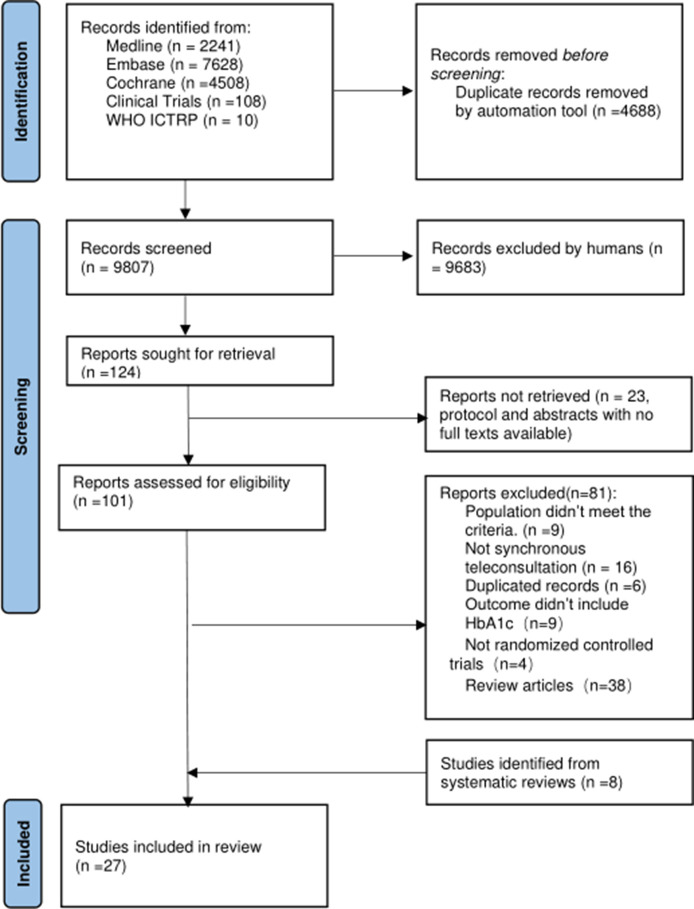
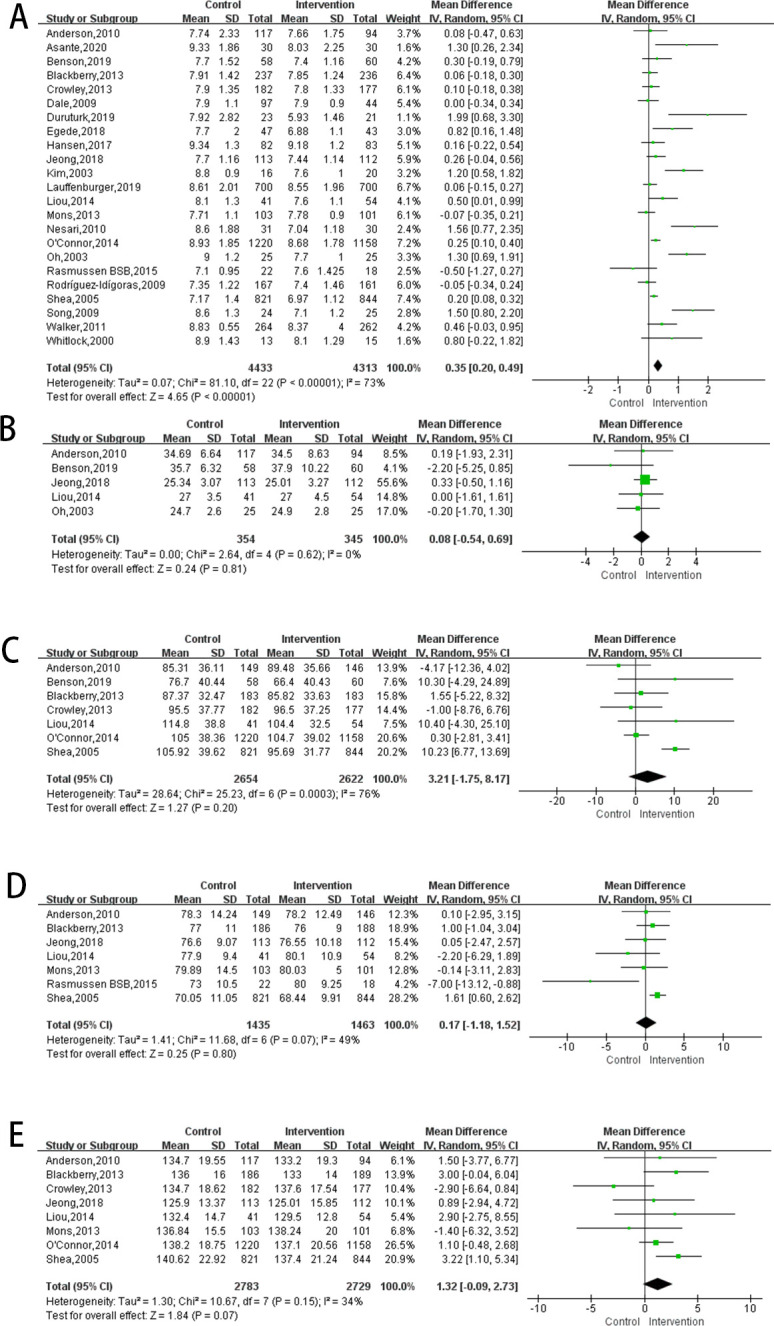
The popularity of teleconsultation during the COVID-19 pandemic enabled increased accessibility for individuals with type 2 diabetes mellitus (T2DM). However, previous studies did not distinguish between synchronous and asynchronous teleconsultation. We evaluated the effectiveness of synchronous teleconsultation for patients with T2DM. We searched Medline, Embase, Cochrane Central Register of Controlled Trials, Cochrane Library and Cochrane Database of Systematic Reviews, ClinicalTrials.gov, and the WHO International Clinical Trials Registry Platform databases from inception to July 2021. All included studies were randomized controlled trials of synchronous teleconsultation for adults with T2DM compared with usual care. Reviewers independently extracted data and used the Cochrane tool to evaluate risk of bias. Meta-analyses were conducted using random-effects models. A pooled mean difference for both HbA1c (%) and body mass index (BMI) (kg/m 2), systolic blood pressure (SBP) (mm Hg), diastolic blood pressure (DBP) (mm Hg), and low density lipoprotein cholesterol (LDL-cholesterol) (mg/dL) were calculated. Patient-reported outcomes, such as depression, medication adherence, and quality of life, were also assessed. A total of 9807 abstracts were identified and 27 trials were included. Synchronous teleconsultation significantly resulted in greater decrease in HbA1c compared with usual care group (n=8746, 0.35, 95% CI 0.20 to 0.49, I 2=73%, p<0.001). No significant effects on BMI (n=699, 0.08 kg/m 2, 95% CI −0.54 to 0.69), SBP (n=5512, 1.32 mm Hg, 95% CI -0.09 to 2.73), DBP (n=2898, 0.17 mm Hg, 95% CI −1.18 to 1.52), or LDL-cholesterol (n=5276, 3.21 mg/dL, 95% CI −1.75 to 8.17) were found. The effect of teleconsultation in improving patient-reported outcomes was uncertain. Thus, synchronous teleconsultation could be an alternative to usual care. Systematic review registration is PROSPERO CRD42021267019.
Overview
CoChat Summary
TL;DR
This systematic review and meta-analysis found that synchronous teleconsultation for adults with type 2 diabetes produced a modestly greater HbA1c reduction than usual care, but did not significantly improve BMI, blood pressure, or LDL-cholesterol. Patient-reported outcomes were uncertain, and the authors conclude synchronous teleconsultation could be an alternative to usual care.
Key findings
- Among 27 included RCTs (10,019 patients), synchronous teleconsultation significantly reduced HbA1c versus usual care: mean difference 0.35% (95% CI 0.20 to 0.49; I²=73%; p<0.001; n=8746 in the abstract).
- No significant effects were found for BMI (0.08 kg/m², 95% CI −0.54 to 0.69; n=699), SBP (1.32 mm Hg, 95% CI −0.09 to 2.73; n=5512), DBP (0.17 mm Hg, 95% CI −1.18 to 1.52; n=2898), or LDL-cholesterol (3.21 mg/dL, 95% CI −1.75 to 8.17; n=5276).
- HbA1c reduction was larger with at least monthly teleconsultation (mean difference 0.67, 95% CI 0.40 to 0.94; I²=79%; p<0.01) than with less than monthly contact (mean difference 0.10, 95% CI −0.04 to 0.24; I²=18%; p=0.30), with a significant subgroup difference (p<0.01).
- Provider type (p=0.29) and teleconsultation medium (p=0.79) did not significantly differ in HbA1c subgroup analyses. Patient-reported outcomes were uncertain: depression showed no group differences in 2 studies, quality of life showed no differences in 2 studies, and medication adherence showed significant differences in 3 of 4 studies.
Methods
- Systematic review and random-effects meta-analysis following PRISMA, registered as PROSPERO CRD42021267019; searches covered Medline, Embase, CENTRAL, Cochrane Library, Cochrane Database of Systematic Reviews, ClinicalTrials.gov, and WHO ICTRP from inception to July 2021.
- Eligible studies were RCTs of adults ≥18 years with T2DM receiving synchronous teleconsultation delivered by health professionals versus usual care; asynchronous teleconsultation and controls using telemedicine were excluded.
- From 9807 unique abstracts, 27 trials were included; 23 had sufficient non-overlapping HbA1c data for meta-analysis. Reviewers independently extracted data and assessed risk of bias with the Cochrane tool.
Limitations
- The paper states that included trials were primarily from socially and economically developed areas, limiting generalizability; heterogeneity was significant and not fully explained by prespecified subgroup analyses; and blinding participants or healthcare professionals was impossible, introducing potential bias.
- The paper also notes that most interventions focused on HbA1c with less attention to BMI, blood pressure, and lipids, and that secondary outcomes used heterogeneous questionnaires, preventing direct between-study comparisons.
- Evident from the text: 9 of 27 trials had high risk of bias, and the significant heterogeneity (e.g., I²=73% for HbA1c) means pooled estimates should be interpreted cautiously for individual patients.
Model-written summary. Check it against the paper before relying on it.
Integrity signals
Registry
Cites
Statistics
Figures
Verification
Claims the paper makes
5 Valid · 2 Not valid · 13 Not checked · 55 Own results and interpretations
Some cited sources support this claim and some don’t — read each source’s verdict below.
In the paper
“Thus, teleconsultation is a complex intervention, and the heterogeneity of the studies included in this meta-analysis is significant, as previous meta-analyses have also demonstrated.4 6 8”
§ Effectiveness of synchronous teleconsultation for patients with type 2 diabetes mellitus: a systematic review and meta-analysis > Discussion
What the sources say
- Supportedcites [4] Lee SWH, Chan CKY, Chua SS, et al. Comparative effectiveness of telemedicine strategies on type 2 diabetes management: a systematic review and network meta-analysis. Sci Rep 2017; 7: 12680. 10.1038/s41598-017-12987-z 28978949 PMC5627243 source
The Discussion (page not provided) reports a high level of clinical heterogeneity among studies in Lee et al.’s review and describes heterogeneity in its results as high. This supports the citing sentence’s attribution that a previous meta-analysis also found substantial heterogeneity; it does not establish the heterogeneity of the citing authors’ own studies. (LLM, conf=0.91)
- Supportedcites [6] Verhoeven F, Tanja-Dijkstra K, Nijland N, et al. Asynchronous and synchronous teleconsultation for diabetes care: a systematic literature review. J Diabetes Sci Technol 2010; 4: 666– 84. 10.1177/193229681000400323 20513335 PMC2901046 source
In “Improved Clinical Values” (page not supplied), this earlier meta-analysis reports significant statistical heterogeneity among its pooled randomized trials (χ² = 96.46, P < 0.001). “Statistical Methods” also says clinical heterogeneity between studies was expected. (LLM, conf=0.92)
- Disputedcites [8] Verhoeven F, van Gemert-Pijnen L, Dijkstra K, et al. The contribution of teleconsultation and videoconferencing to diabetes care: a systematic literature review. J Med Internet Res 2007; 9: e37. 10.2196/jmir.9.5.e37 18093904 PMC2270420 sourceExperimental — accuracy not yet measured
In Results, ‘Studies on the Effects of Teleconsultation’ (page unavailable), the cited review reports no significant statistical heterogeneity among its pooled RCTs (P = .33), contrary to the claim that previous meta-analyses demonstrated significant heterogeneity. Its Methods note that clinical heterogeneity was expected, but that is not a finding of significant statistical heterogeneity. (LLM, conf=0.87)
Checked by a reasoning model — may be wrong.
boosted- Asserted: passes — The authors put it forward as true.
- Checkable: passes — It can be checked against evidence.
- Load-bearing: passes — The paper’s conclusions depend on it.
- Based: passes — The paper gives a reason why it holds.
- Supported
The cited sources support only part of this claim — read each source’s verdict below.
In the paper
“Two studies reported on depression.14 16 There were no group differences found in these two studies.”
§ Effectiveness of synchronous teleconsultation for patients with type 2 diabetes mellitus: a systematic review and meta-analysis > Results > Effectiveness of synchronous teleconsultation on patient-reported outcomes
What the sources say
- Partly supportedcites [14] Anderson DR, Christison-Lagay J, Villagra V, et al. Managing the space between visits: a randomized trial of disease management for diabetes in a community health center. J Gen Intern Med 2010; 25: 1116– 22. 10.1007/s11606-010-1419-5 20556536 PMC2955486 sourceExperimental — accuracy not yet measured
The baseline characteristics table (DISCUSSION; page unavailable) reports similar depression prevalence in the intervention and control groups, and Subgroup Analyses reports no significant interaction between depression status and the intervention. But depression was analyzed as a baseline characteristic and moderator of HbA1c, not as a depression outcome; the paper does not report whether the groups differed in depression after treatment. (LLM, conf=0.78)
- Supportedcites [16] Blackberry ID, Furler JS, Best JD, et al. Effectiveness of general practice based, practice nurse led telephone coaching on glycaemic control of type 2 diabetes: the patient engagement and coaching for health (peach) pragmatic cluster randomised controlled trial. BMJ 2013; 347: f5272. 10.1136/bmj.f5272 24048296 PMC3776648 source
The Results table reports major depressive syndrome (PHQ-9) for both study groups at follow-up, with a between-group P value of 0.83. The Results text also states that none of the other psychosocial outcomes differed by study group. This supports the claim for the cited PEACH trial; this paper does not establish the result for the other cited study. (LLM, conf=0.93)
plain- Asserted: passes — The authors put it forward as true.
- Checkable: passes — It can be checked against evidence.
- Load-bearing: unclear — It is unclear whether the paper’s conclusions depend on it.
- Based: passes — The paper gives a reason why it holds.
- Partly supported
Every source the paper cites for this claim was checked and supports it.
In the paper
“one study did not find any between-group difference.28”
§ Effectiveness of synchronous teleconsultation for patients with type 2 diabetes mellitus: a systematic review and meta-analysis > Results > Effectiveness of synchronous teleconsultation on patient-reported outcomes
What the sources say
- Supportedcites [28] Lauffenburger JC, Ghazinouri R, Jan S, et al. Impact of a novel pharmacist-delivered behavioral intervention for patients with poorly-controlled diabetes: the enhancing outcomes through goal assessment and generating engagement in diabetes mellitus (ENGAGE-DM) pragmatic randomized trial. PLoS One 2019; 14: e0214754. 10.1371/journal.pone.0214754 30939143 PMC6445420 source
The Results > Quantitative findings section (p. of passage [1]) states that mean follow-up adherence was 66.2% (SD 32.7) in usual care versus 67.5% (SD 31.6) in the intervention arm, 'resulting in no significant between-group differences (1.25%, 95%CI: -2.2%, 4.7%)'. Table 3 (secondary outcomes) likewise shows no difference in PDC (adjusted -0.16%, 95%CI -3.41 to +3.08) or in the proportion achieving optimal adherence (OR 0.92, 95%CI 0.72-1.17), and Methods confirms medication adherence was a prespecified secondary outcome. The Discussion even attributes the null adherence result partly to already-high baseline adherence. (LLM, conf=0.90)
plain- Asserted: passes — The authors put it forward as true.
- Checkable: passes — It can be checked against evidence.
- Load-bearing: unclear — It is unclear whether the paper’s conclusions depend on it.
- Based: passes — The paper gives a reason why it holds.
- Supported
The sources with a verdict support this claim; the rest weren’t checked yet, have no full text we could read, or their verdicts aren’t rated yet.
In the paper
“Two studies reported on quality of life.16 18 Both studies found no difference between groups.”
§ Effectiveness of synchronous teleconsultation for patients with type 2 diabetes mellitus: a systematic review and meta-analysis > Results > Effectiveness of synchronous teleconsultation on patient-reported outcomes
What the sources say
- Supportedcites [16] Blackberry ID, Furler JS, Best JD, et al. Effectiveness of general practice based, practice nurse led telephone coaching on glycaemic control of type 2 diabetes: the patient engagement and coaching for health (peach) pragmatic cluster randomised controlled trial. BMJ 2013; 347: f5272. 10.1136/bmj.f5272 24048296 PMC3776648 source
The PEACH trial reported a quality of life outcome (table 2, Results, psychosocial section): adjusted difference in mean change 0.02 (95% CI −0.01 to 0.05), P=0.16, i.e. no difference between intervention and control groups at 18 months. The narrative Results subsection 'Biochemical, clinical, and psychosocial outcomes' states that none of the other clinical or psychosocial outcomes differed by study group, consistent with the claim. Our copy supports only the 'reported quality of life and found no difference' part attributed to this source; the counting of two such studies is the citing paper's own synthesis. (LLM, conf=0.90)
- Not checked yetcites [18] Hansen CR, Perrild H, Koefoed BG, et al. Video consultations as add-on to standard care among patients with type 2 diabetes not responding to standard regimens: a randomized controlled trial. Eur J Endocrinol 2017; 176: 727– 36. 10.1530/EJE-16-0811 28325823 source
plain- Asserted: passes — The authors put it forward as true.
- Checkable: passes — It can be checked against evidence.
- Load-bearing: unclear — It is unclear whether the paper’s conclusions depend on it.
- Based: passes — The paper gives a reason why it holds.
- Supported
None of the sources cited for this claim have been checked yet.
In the paper
“Three studies found significant differences between groups,15 21 27”
§ Effectiveness of synchronous teleconsultation for patients with type 2 diabetes mellitus: a systematic review and meta-analysis > Results > Effectiveness of synchronous teleconsultation on patient-reported outcomes
What the sources say
- Not checked yetcites [15] Asante E, Bam V, Diji A-A, et al. Pilot mobile phone intervention in promoting type 2 diabetes management in an urban area in ghana: a randomized controlled trial. Diabetes Educ 2020; 46: 455– 64. 10.1177/0145721720954070 32998649 source
- Not checked yetcites [21] Nesari M, Zakerimoghadam M, Rajab A, et al. Effect of telephone follow-up on adherence to a diabetes therapeutic regimen. Jpn J Nurs Sci 2010; 7: 121– 8. 10.1111/j.1742-7924.2010.00146.x 21092015 source
- Not checked yetcites [27] Jeong JY, Jeon J-H, Bae K-H, et al. Smart care based on telemonitoring and telemedicine for type 2 diabetes care: multi-center randomized controlled trial. Telemed J E Health 2018; 24: 604– 13. 10.1089/tmj.2017.0203 29341843 source
plain- Asserted: passes — The authors put it forward as true.
- Checkable: passes — It can be checked against evidence.
- Load-bearing: unclear — It is unclear whether the paper’s conclusions depend on it.
- Based: passes — The paper gives a reason why it holds.
39 more claims
Create a free account to see all 75 claims and to verify the 17 references still open.
- Probably not a substantial claim. 26
- It may state two separate claims as one. 11
- The quote only partly states this claim. 1
Claims other papers make about this one
Each is checked against this paper’s own text: does it say what the citing paper says it does?
The source backs part of the claim, not all of it — or backs it for a different population, condition or comparison.
In the citing paper
“Existing reviews often focus on specific types of telemedicine tools [19-21], settings [22], or providers [23], which limit generalizability across broader diabetes care contexts.”
From Clinical Improvements From Telemedicine Interventions for Managing Type 2 Diabetes Compared With Usual Care: Systematic Review, Meta-Analysis, and Meta-Regression (2026) · cites this paper as [20]
Experimental — accuracy not yet measured
Self-check
Percentages, sums and reported differences re-computed from the paper’s own numbers.
Each contradiction between two passages listed here was confirmed by an independent check.
Rated minor: it would not touch a result — a value no result rests on, a p-value that stays on the same side of the significance level, or a conflict that is clerical, resolved elsewhere in the paper, or outside its own findings.
In the paper
§ Effectiveness of synchronous teleconsultation for patients with type 2 diabetes mellitus: a systematic review and meta-analysis > Results > Study characteristics
“Shea et al, 200523”
§ Effectiveness of synchronous teleconsultation for patients with type 2 diabetes mellitus: a systematic review and meta-analysis > References
“J Am Med Inform Assoc 2006; 13: 40– 1.”
Rated minor: it would not touch a result — a value no result rests on, a p-value that stays on the same side of the significance level, or a conflict that is clerical, resolved elsewhere in the paper, or outside its own findings.
In the paper
§ Effectiveness of synchronous teleconsultation for patients with type 2 diabetes mellitus: a systematic review and meta-analysis > Results > Study characteristics
“All included trials were individual RCTs.”
§ Effectiveness of synchronous teleconsultation for patients with type 2 diabetes mellitus: a systematic review and meta-analysis > References
“Effectiveness of general practice based, practice nurse led telephone coaching on glycaemic control of type 2 diabetes: the patient engagement and coaching for health (peach) pragmatic cluster randomised controlled trial.”
Citations
Cites
Preferred Reporting Items for Systematic Reviews and Meta-Analyses: the PRISMA statement
Moher, D., Liberati, A., Tetzlaff, J., Altman, D. G., & for the PRISMA Group (2009) · BMJ · doi:10.1136/bmj.b2535 · Cited by 83,823
Preferred Reporting Items for Systematic Reviews and Meta-Analyses: The PRISMA Statement
Moher, D., Liberati, A., Tetzlaff, J., Altman, D. G., & The PRISMA Group (2009) · PLoS Medicine · doi:10.1371/journal.pmed.1000097 · Cited by 64,042
The Cochrane Collaboration's tool for assessing risk of bias in randomised trials
Higgins, J. P. T., Altman, D. G., Gotzsche, P. C., Juni, P., Moher, D., Oxman, A. D., Savovic, J., Schulz, K. F., Weeks, L., Sterne, J. A. C., et al. (2011) · BMJ · doi:10.1136/bmj.d5928 · Cited by 33,817
Dermyshi, E., Wang, Y., Yan, C., Hong, W., Qiu, G., Gong, X., & Zhang, T. (2017) · Neonatology · doi:10.1159/000454668 · Cited by 24,451
Wang, G., Ma, R., Qiao, G., Wada, K., Aizawa, Y., & Satoh, T. (2015) · Integrative Medicine International · doi:10.1159/000368408 · Cited by 18,657
Developing and evaluating complex interventions: the new Medical Research Council guidance
Craig, P., Dieppe, P., Macintyre, S., Michie, S., Nazareth, I., & Petticrew, M. (2008) · BMJ · doi:10.1136/bmj.a1655 · Cited by 10,995
The global burden of diabetes and its complications: an emerging pandemic
Susan van, D., Beulens, J. W. J., Yvonne T. van der, S., Grobbee, D. E., & Nealb, B. (2010) · European Journal of Cardiovascular Prevention & Rehabilitation · doi:10.1097/01.hjr.0000368191.86614.5a · Cited by 874
Shea, S., Weinstock, R. S., Starren, J., Teresi, J., Palmas, W., Field, L., Morin, P., Goland, R., Izquierdo, R. E., Wolff, L. T., et al. (2006) · Journal of the American Medical Informatics Association · doi:10.1197/jamia.m1917 · Cited by 312
Verhoeven, F., van Gemert-Pijnen, L., Dijkstra, K., Nijland, N., Seydel, E., & Steehouder, M. (2007) · Journal of Medical Internet Research · doi:10.2196/jmir.9.5.e37 · Cited by 252
Asynchronous and synchronous teleconsultation for diabetes care: A systematic literature review
Verhoeven, F., Tanja-Dijkstra, K., Nijland, N., Eysenbach, G., & van Gemert-Pijnen, L. (2010) · Journal of Diabetes Science and Technology · doi:10.1177/193229681000400323 · Cited by 247
ElSayed, N. A., Aleppo, G., Aroda, V. R., Bannuru, R. R., Brown, F. M., Bruemmer, D., Collins, B. S., Cusi, K., Hilliard, M. E., Isaacs, D., et al. (2023) · Diabetes Care · doi:10.2337/dc23-s004 · Cited by 222
Zhai, Y.-K., Zhu, W.-J., Cai, Y.-L., Sun, D.-X., & Zhao, J. (2014) · Medicine · doi:10.1097/md.0000000000000312 · Cited by 221
Lee, S. W. H., Chan, C. K. Y., Chua, S. S., & Chaiyakunapruk, N. (2017) · Scientific Reports · doi:10.1038/s41598-017-12987-z · Cited by 200
Results of a Successful Telephonic Intervention to Improve Diabetes Control in Urban Adults
Walker, E. A., Shmukler, C., Ullman, R., Blanco, E., Scollan-Koliopoulus, M., & Cohen, H. W. (2011) · Diabetes Care · doi:10.2337/dc10-1005 · Cited by 164
Adherence to diabetes control recommendations: impact of nurse telephone calls
Kim, H., & Oh, J. (2003) · Journal of Advanced Nursing · doi:10.1046/j.1365-2648.2003.02800.x · Cited by 163
Dale, J. R., Caramlau, I. O., Sturt, J. A., Friede, T., & Walker, R. (2008) · Patient Education and Counseling · doi:10.1016/j.pec.2008.09.014 · Cited by 145
Telemedicine Improved Diabetic Management
Whitlock, W. L., Brown, A., Moore, K., Pavliscsak, H., Dingbaum, A., Lacefield, D., Buker, K., & Xenakis, S. (2000) · Military Medicine · doi:10.1093/milmed/165.8.579 · Cited by 133
Telephone counseling for physical activity and diet in primary care patients
Eakin, E., Reeves, M., Lawler, S., Graves, N., Oldenburg, B., Del Mar, C., Wilke, K., Winkler, E., & Barnett, A. (2009) · American Journal of Preventive Medicine · doi:10.1016/j.amepre.2008.09.042 · Cited by 126
Blackberry, I. D., Furler, J. S., Best, J. D., Chondros, P., Vale, M., Walker, C., Dunning, T., Segal, L., Dunbar, J., Audehm, R., et al. (2013) · BMJ · doi:10.1136/bmj.f5272 · Cited by 113
Rasmussen, B. S. B., Froekjaer, J., Bjerregaard, M. R., Lauritsen, J., Hangaard, J., Henriksen, C. W., Halekoh, U., & Yderstraede, K. B. (2015) · Diabetes Care · doi:10.2337/dc15-0332 · Cited by 107
Effect of telephone follow‐up on adherence to a diabetes therapeutic regimen
NESARI, M., ZAKERIMOGHADAM, M., RAJAB, A., BASSAMPOUR, S., & FAGHIHZADEH, S. (2010) · Japan Journal of Nursing Science · doi:10.1111/j.1742-7924.2010.00146.x · Cited by 104
Eakin, E. G., Winkler, E. A., Dunstan, D. W., Healy, G. N., Owen, N., Marshall, A. M., Graves, N., & Reeves, M. M. (2014) · Diabetes Care · doi:10.2337/dc13-2427 · Cited by 83
Duruturk, N., & Özköslü, M. A. (2019) · Primary Care Diabetes · doi:10.1016/j.pcd.2019.03.007 · Cited by 80
Telemedicine Influence on the Follow-Up of Type 2 Diabetes Patients
Rodríguez-Idígoras, M. I., Sepúlveda-Muñoz, J., Sánchez-Garrido-Escudero, R., Martínez-González, J. L., Escolar-Castelló, J. L., Paniagua-Gómez, I. M., Bernal-López, R., Fuentes-Simón, M. V., & Garófano-Serrano, D. (2009) · Diabetes Technology & Therapeutics · doi:10.1089/dia.2008.0114 · Cited by 79
Crowley, M. J., Powers, B. J., Olsen, M. K., Grubber, J. M., Koropchak, C. M., Rose, C., Gentry, P., Bowlby, L. A., Trujillo, G., Maciejewski, M. L., et al. (2013) · American Heart Journal · doi:10.1016/j.ahj.2013.04.004 · Cited by 78
Benson, G. A., Sidebottom, A., Hayes, J., Miedema, M. D., Boucher, J., Vacquier, M., Sillah, A., Gamam, S., & VanWormer, J. J. (2019) · Journal of the Academy of Nutrition and Dietetics · doi:10.1016/j.jand.2018.11.013 · Cited by 74
A Telephone-Delivered Intervention to Improve Glycemic Control in Type 2 Diabetic Patients
Oh, J. A., Kim, H. S., Yoon, K. H., & Choi, E. S. (2003) · Yonsei Medical Journal · doi:10.3349/ymj.2003.44.1.1 · Cited by 67
Anderson, D. R., Christison-Lagay, J., Villagra, V., Liu, H., & Dziura, J. (2010) · Journal of General Internal Medicine · doi:10.1007/s11606-010-1419-5 · Cited by 64
Jeong, J. Y., Jeon, J.-H., Bae, K.-H., Choi, Y.-K., Park, K.-G., Kim, J.-G., Won, K. C., Cha, B. S., Ahn, C. W., Kim, D. W., et al. (2018) · Telemedicine and e-Health · doi:10.1089/tmj.2017.0203 · Cited by 63
O’Connor, P. J., Schmittdiel, J. A., Pathak, R. D., Harris, R. I., Newton, K. M., Ohnsorg, K. A., Heisler, M., Sterrett, A. T., Xu, S., Dyer, W. T., et al. (2014) · Diabetes Care · doi:10.2337/dc14-0596 · Cited by 61
Rasmussen, O. W., Lauszus, F., & Loekke, M. (2016) · Journal of Telemedicine and Telecare · doi:10.1177/1357633x15608984 · Cited by 59
Hansen, C. R., Perrild, H., Koefoed, B. G., & Zander, M. (2017) · European Journal of Endocrinology · doi:10.1530/eje-16-0811 · Cited by 53
Lauffenburger, J. C., Ghazinouri, R., Jan, S., Makanji, S., Ferro, C. A., Lewey, J., Wittbrodt, E., Lee, J., Haff, N., Fontanet, C. P., et al. (2019) · PLOS ONE · doi:10.1371/journal.pone.0214754 · Cited by 50
Asante, E., Bam, V., Diji, A. K.-A., Lomotey, A. Y., Owusu Boateng, A., Sarfo-Kantanka, O., Oparebea Ansah, E., & Adjei, D. (2020) · The Diabetes Educator · doi:10.1177/0145721720954070 · Cited by 46
Song, M. S., & Kim, H. (2009) · Applied Nursing Research · doi:10.1016/j.apnr.2007.05.004 · Cited by 43
Mons, U., Raum, E., Krämer, H. U., Rüter, G., Rothenbacher, D., Rosemann, T., Szecsenyi, J., & Brenner, H. (2013) · PLoS ONE · doi:10.1371/journal.pone.0077954 · Cited by 39
Eberle, C., & Stichling, S. (2021) · Journal of Medical Internet Research · doi:10.2196/23252 · Cited by 38
Literature Review of Type 2 Diabetes Management and Health Literacy
Alsaedi, R., & McKeirnan, K. (2021) · Diabetes Spectrum · doi:10.2337/ds21-0014 · Cited by 38
Liou, J.-K., Soon, M.-S., Chen, C.-H., Huang, T.-F., Chen, Y.-P., Yeh, Y.-P., Chang, C.-J., Kuo, S.-J., & Hsieh, M.-C. (2014) · Telemedicine and e-Health · doi:10.1089/tmj.2013.0037 · Cited by 37
Mabeza, R. M. S., Maynard, K., & Tarn, D. M. (2022) · BMC Primary Care · doi:10.1186/s12875-022-01662-6 · Cited by 34
Telemedicine in the treatment of diabetic pregnancy
Fallucca, F., DiBiase, N., Sabbatini, A., Borrello, E., Sciullo, E., & Napoli, A. (1996) · Practical Diabetes International · doi:10.1002/pdi.1960130407 · Cited by 32
Dalley, D., Rahman, R., & Ivaldi, A. (2021) · Qualitative Health Research · doi:10.1177/1049732320942346 · Cited by 31
Egede, L. E., Walker, R. J., Payne, E. H., Knapp, R. G., Acierno, R., & Frueh, B. C. (2018) · Journal of Telemedicine and Telecare · doi:10.1177/1357633x17730419 · Cited by 26
Han, X., Chen, W., Gao, Z., Lv, X., Sun, Y., Yang, X., & Shan, H. (2021) · Annals of Palliative Medicine · doi:10.21037/apm-21-3626 · Cited by 24
Huizinga, M. M., Gebretsadik, T. S., Ulen, C. G., Shintani, A., Michon, S., Shackleford, L., Wolff, K., Brown, A. W., Rothman, R. L., & Elasy, T. A. (2010) · Diabetologia · doi:10.1007/s00125-010-1658-3 · Cited by 13
Cited by
Alfarwan, N., Hodkinson, A., Panagioti, M., Hassan, L., & Kontopantelis, E. (2024) · Diabetic Medicine · doi:10.1111/dme.15343 · Cited by 28
“44 This might be because most of the interventions focused on reducing HbA1c with much less attention on weight, BMI, LDL-cholesterol, HDL-cholesterol and total cholesterol, thereby resulting in poor intervention effects.”
Video consultation in general practice during COVID-19: a register-based study in Denmark
Kirk, U. B., Vestergaard, C. H., Bech, B. H., Christensen, M. B., Kallestrup, P., & Huibers, L. (2024) · BJGP Open · doi:10.3399/bjgpo.2023.0208 · Cited by 20
“However, video seems to be considered a valid alternative for particular patient groups, such as those with mental health issues 33 and those in need of palliative care, 34 as well as for certain contact types such as chronic care management 35,36 and specialist consultation.”
BackgroundAldakhil, R., Greenfield, G., Lammila-Escalera, E., Laranjo, L., Hayhoe, B. W. J., Majeed, A., & Neves, A. L. (2025) · Journal of Diabetes Science and Technology · doi:10.1177/19322968251316585 · Cited by 8
“Similarly, a review by Zhang et al 20 conducted a meta-analysis of VC and found no significant effect on systolic blood pressure, diastolic blood pressure, or body mass index Access to care Lack to of access to care due to doctor shortage is a significant factor of virtual care in rural areas.”
InfluentialJiang, S., Gao, X., Diao, H., Zhang, Y., Lu, G., Liu, X., & Li, Y. (2026) · JMIR mHealth and uHealth · doi:10.2196/70429 · Cited by 6
“This highlights the need for a more comprehensive and inclusive systematic review that synthesizes findings across various contexts [20,22,24].”
Ashour, A., & Elkhawaga, G. (2026) · Journal of the Egyptian Public Health Association · doi:10.1186/s42506-025-00203-0 · Cited by 6
“It may be a useful alternative to usual care for diabetes management [8].”
Metadata
- Authors
- Zhang, J., Ji, X., Xie, J., Lin, K., Yao, M., & Chi, C.
- Affiliations
- Peking University First Hospital (CN)
- First Affiliated Hospital of Shantou University Medical College (CN)
- Nanfang Hospital (CN)
- Corresponding author
- Chi, Chunhua
- Venue
- BMJ Open Diabetes Research & Care
- Publisher
- BMJ
- Published
- 2023-02
- Volume
- 11
- Issue
- 1
- Pages
- e003180
- ISSN
- 2052-4897 (ISSN-L)
- PMC
- PMC9950897
- OpenAlex
- W4321639006
- Cited by
- 22
- References
- 45
- Citations by year
- 2026: 5 · 2025: 11 · 2024: 5 · 2023: 1
- FWCI
- 1.09
- Type
- journal article
- Language
- en
- Open access
- gold
- doi.org
- Licence
- Locations
- BMJ Open Diabetes Research & Care (publishedVersion, cc-by-nc)
- PubMed Central (publishedVersion, cc-by-nc)
- PubMed (publishedVersion)
- DOAJ (DOAJ: Directory of Open Access Journals) (submittedVersion, cc-by-sa)
- Funders
- Peking University (Peking University Baidu Fund 2019BD018)
- Topics
- Health Sciences › Medicine › Public Health, Environmental and Occupational Health › Telemedicine and Telehealth Implementation
- Health Sciences › Medicine › Endocrinology, Diabetes and Metabolism › Diabetes Management and Education
- Health Sciences › Medicine › Endocrinology, Diabetes and Metabolism › Diabetes Management and Research
- Keywords
- type 2 diabetes, telemedicine, HbA1c, glycemic control, blood pressure, LDL cholesterol, body mass index, patient-reported outcomes, medication adherence, quality of life, depression, usual care comparison, COVID-19 pandemic, remote patient monitoring, digital health interventions, risk of bias, risk of bias assessment
- MeSH terms
- COVID-19, Adult, Diabetes Mellitus, Type 2, Glycated Hemoglobin, Humans, Cholesterol, LDL, Quality of Life, Randomized Controlled Trials as Topic, Remote Consultation, Pandemics
About these checks
Registry, retraction, Cites and statistics results are computed, not judged, with one exception: a printed reference that no index lists is read once by a model before it counts as a citation error. Claims are extracted by a model and kept only when their quote appears verbatim in the text; each cited source is then checked, with a model’s help, for whether it says what the claim relies on. Those verdicts can be wrong — read the claim’s quote and the cited source before relying on one.
The claim verdicts this report counts are experimental: their accuracy is not yet measured.
A language model drew the claims from the paper on 2026-09-30, under version 3 of the claim definition (model deepseek-v4.1-flash, prompt extract-v3).
A second model labelled each claim on 2026-09-30 (model jev-1.13-20260917, definition revision gold-guideline-v0.2).
Cited sources are checked with a language model’s help (gpt-6-sol and qwen3.8-omni-flash).
Statistics and arithmetic are recomputed, not judged.
Confidence bands are shown only for fields calibrated on our annotated test set. None is calibrated yet, so no band is shown.
What counts as a claim ›How we measure confidence ›How we check this ›
Are you an author, or do you see a problem with this page? Request a review
Data sources
Bibliographic data: Semantic Scholar, OpenAlex, Crossref.
Contains information from the Semantic Scholar Academic Graph Datasets, made available under the ODC Attribution License (ODC-BY 1.0).
Semantic Scholar’s data is described in: Kinney, R., et al. (2023). The Semantic Scholar Open Data Platform. arXiv:2301.10140.
