

Determinants of adherence to antiretroviral therapy among HIV-positive adults in sub-Saharan Africa: a systematic review
Open accessThe DOI matches its Crossref record; 193 of the 204 references it cites were found in a registry or an index; 3 of the 7 sources its claims cite were checked for support.
Abstract
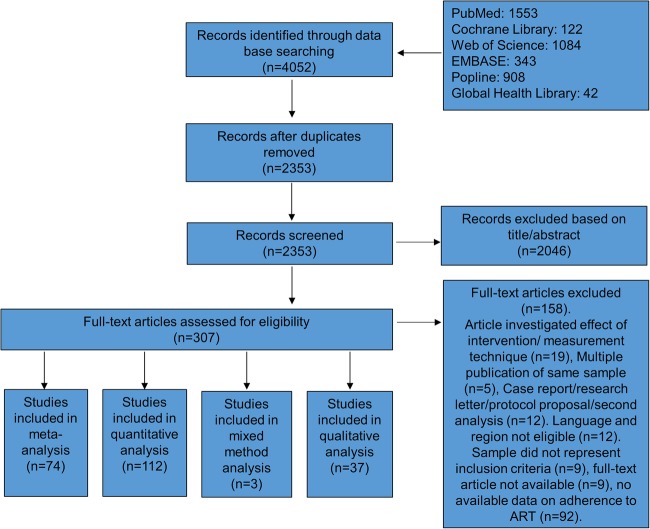
OBJECTIVE: The rapid scale up of antiretroviral treatment (ART) in sub-Saharan Africa (SSA) has resulted in an increased focus on patient adherence. Non-adherence can lead to drug-resistant HIV caused by failure to achieve maximal viral suppression. Optimal treatment requires the identification of patients at high risk of suboptimal adherence and targeted interventions. The aim of this review was to identify and summarise determinants of adherence to ART among HIV-positive adults. DESIGN: Systematic review of adherence to ART in SSA from January 2002 to October 2014. METHODS: A systematic search was performed in 6 databases (PubMed, Cochrane Library, EMBASE, Web of Science, Popline, Global Health Library) for qualitative and quantitative articles. Risk of bias was assessed. A meta-analysis was conducted for pooled estimates of effect size on adherence determinants. RESULTS: Of the 4052 articles screened, 146 were included for final analysis, reporting on determinants of 161 922 HIV patients with an average adherence score of 72.9%. Main determinants of non-adherence were use of alcohol, male gender, use of traditional/herbal medicine, dissatisfaction with healthcare facility and healthcare workers, depression, discrimination and stigmatisation, and poor social support. Promoters of adherence included counselling and education interventions, memory aids, and active disclosure among people living with HIV. Determinants of health status had conflicting influence on adherence. CONCLUSIONS: The sociodemographic, psychosocial, health status, treatment-related and intervention-related determinants are interlinked and contribute to optimal adherence. Clinics providing ART in SSA should therefore design targeted interventions addressing these determinants to optimise health outcomes.
Overview
CoChat Summary
## TL;DR
This systematic review of studies from sub-Saharan Africa found that ART adherence is shaped by interlinked sociodemographic, psychosocial, treatment-related, health-status, and intervention-related factors. Across 146 included articles on 161,922 patients, the most consistent barriers were alcohol use, male gender, traditional/herbal medicine use, poor patient–provider experiences, depression, discrimination/stigma, and poor social support.
## Key findings
- Of 4,052 articles screened, 146 were included in the final analysis; these reported on 161,922 HIV patients and an average adherence score of 72.9% (using the paper’s 95% adherence definition). The average adherence rate was also reported as 52.5% when adherence was defined as 100%.
- Main determinants of non-adherence were alcohol use, male gender, use of traditional/herbal medicine, dissatisfaction with healthcare facilities and healthcare workers, depression, discrimination and stigmatisation, and poor social support.
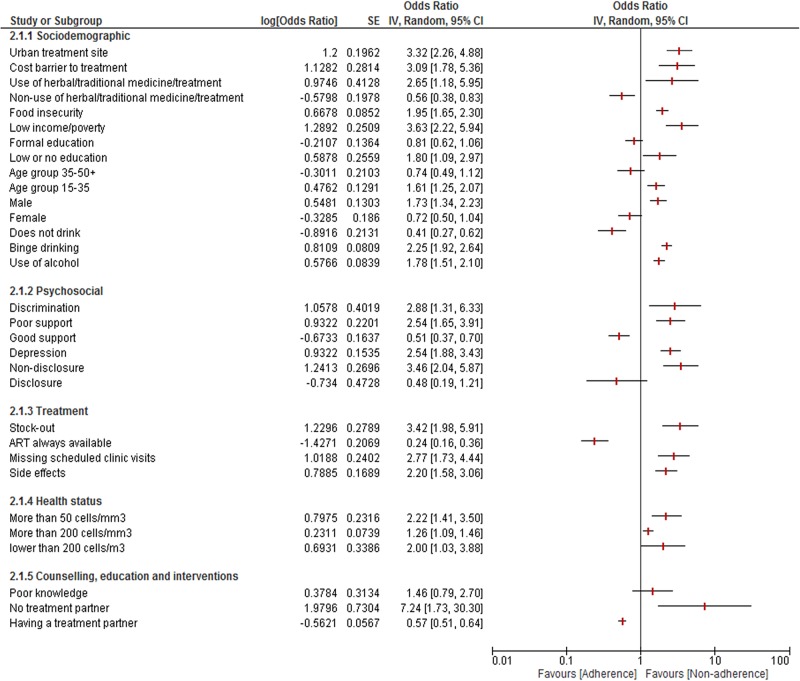
- Meta-analysis found non-adherence was associated with alcohol use (OR=1.78; 95% CI 1.51 to 2.09), binge drinking (OR=2.25; 95% CI 1.92 to 2.65), male gender (OR=1.73; 95% CI 1.34 to 2.23), younger age 15–35 years (OR=1.61; 95% CI 1.25 to 2.06), and use of herbal/traditional medicine/treatment (OR=2.65; 95% CI 1.18 to 5.95).
- Promoters of adherence included reliable ART availability (OR=0.24; 95% CI 0.16 to 0.37), good social support (OR=0.51; 95% CI 0.37 to 0.71), having a treatment partner (OR=0.57; 95% CI 0.51 to 0.64), and counselling/education, memory aids, and active disclosure.
## Methods
- Systematic review conducted per PRISMA and the Cochrane Handbook, with protocol registered in PROSPERO (CRD42014014476); search covered January 2002 to 27 October 2014.
- Searched 6 databases: PubMed/MEDLINE, Cochrane Library, EMBASE, Web of Science, POPLINE, and Global Health Library; included qualitative, quantitative, and mixed-methods studies of HIV-positive adults (≥15 years) receiving ART in sub-Saharan Africa.
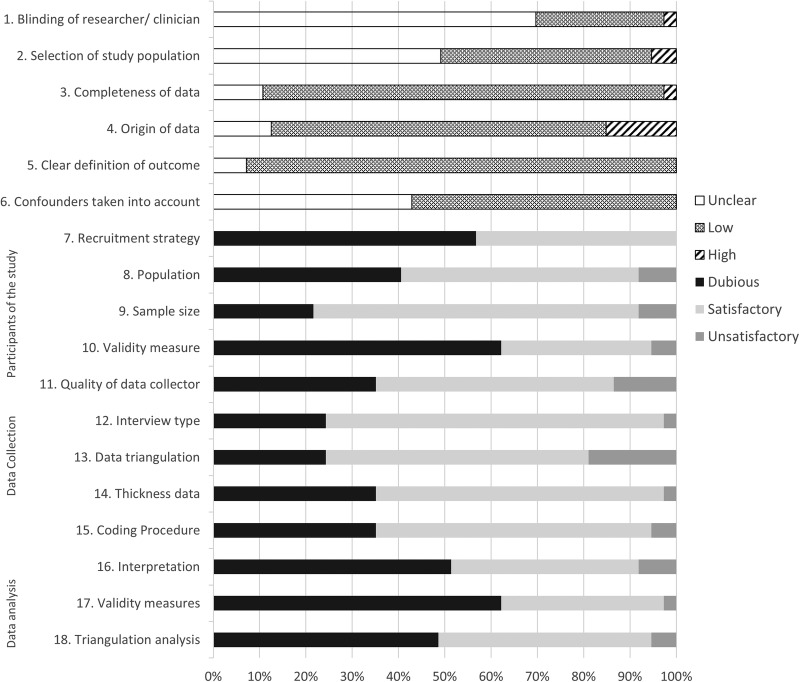
- Risk of bias was assessed separately for quantitative and qualitative studies; meta-analysis pooled effect sizes (ORs/RRs) for determinants reported in at least two studies, with heterogeneity assessed using I².
## Limitations
- The paper states that inference is limited by the quality of the underlying studies, including limited consideration of confounders; it also notes that data extraction was done mostly by one reviewer, which could have introduced bias.
- The paper states there was significant heterogeneity in adherence definitions, participant inclusion criteria, and adherence measurement methods across studies, and no gold standard measure was used.
- Evident from the text: not all included studies were suitable for meta-analysis because some lacked complete risk estimates, so several determinants were summarized narratively rather than quantitatively.
Model-written summary. Check it against the paper before relying on it.
Integrity signals
Registry
Cites
Statistics
Figures
Verification
Claims the paper makes
2 Valid · 1 Not valid · 29 Not checked · 40 Own results and interpretations
The cited sources support only part of this claim — read each source’s verdict below.
In the paper
“Studies on ART adherence showed that predictors and risk factors differ per region of the world, necessitating context-specific development of non-adherence profiles.9 10”
§ Determinants of adherence to antiretroviral therapy among HIV-positive adults in sub-Saharan Africa: a systematic review > Introduction
What the sources say
- Partly supportedcites [9] Ware NC, Idoko J, Kaaya S Explaining adherence success in sub-Saharan Africa: an ethnographic study. PLoS Med 2009; 6: e11 10.1371/journal.pmed.1000011 19175285 PMC2631046 sourceExperimental — accuracy not yet measured
The Discussion contrasts economic obstacles and social relationships in sub-Saharan Africa with an individual-level account of adherence in North America, and describes a theory of differences between resource-poor and resource-rich settings. This supports context-dependent influences on adherence, but the paper does not establish that predictors and risk factors differ across regions of the world generally. The call for context-specific non-adherence profiles is the citing authors’ inference, not a finding reported in this paper. (LLM, conf=0.83)
- Not checked — no full text of the sourcecites [10] Mills EJ, Nachega JB, Buchan I Adherence to antiretroviral therapy in sub-Saharan Africa and North America: a meta-analysis. JAMA 2006; 296: 679– 90. 10.1001/jama.296.6.679 16896111 source
plainstates an association- Asserted: passes — The authors put it forward as true.
- Checkable: passes — It can be checked against evidence.
- Load-bearing: passes — The paper’s conclusions depend on it.
- Based: passes — The paper gives a reason why it holds.
- Partly supported
Every source the paper cites for this claim was checked and supports it.
In the paper
“For a comprehensive overview, both qualitative and quantitative studies were included,12 as qualitative studies may identify key themes not found, described or discussed in larger quantitative studies.”
§ Determinants of adherence to antiretroviral therapy among HIV-positive adults in sub-Saharan Africa: a systematic review > Introduction
What the sources say
- Supportedcites [12] Mills E, Nachega J, Bangsberg D Adherence to HAART: a systematic review of developed and developing nation patient-reported barriers and facilitators. PLoS Med 2006; 3: 2039– 64. PMC1637123 17121449 source
The Discussion reports that the review identified key themes in qualitative studies that larger quantitative studies had not examined. The Results give examples of barriers and facilitators described in qualitative studies but absent from the quantitative studies. (LLM, conf=0.94)
hedgedstates a possible cause- Asserted: passes — The authors put it forward as true.
- Checkable: passes — It can be checked against evidence.
- Load-bearing: passes — The paper’s conclusions depend on it.
- Based: passes — The paper gives a reason why it holds.
- Supported
None of the sources cited for this claim have been checked yet.
In the paper
“Lower levels of education corresponded with non-adherence,42 45 52 53 56 57 and higher adherence was observed among patients with formal education.58–60”
§ Determinants of adherence to antiretroviral therapy among HIV-positive adults in sub-Saharan Africa: a systematic review > Results > Determinants of (non-)adherence
plainstates an association- Asserted: passes — The authors put it forward as true.
- Checkable: passes — It can be checked against evidence.
- Load-bearing: unclear — It is unclear whether the paper’s conclusions depend on it.
- Based: passes — The paper gives a reason why it holds.
None of the sources cited for this claim have been checked yet.
In the paper
“low or no education (OR=1.80; 95% CI 1.09 to 2.98; I2=81%),30 75 78 93 97 114 118”
§ Determinants of adherence to antiretroviral therapy among HIV-positive adults in sub-Saharan Africa: a systematic review > Results > Sociodemographic and socioeconomic factors
plainstates an association- Asserted: passes — The authors put it forward as true.
- Checkable: passes — It can be checked against evidence.
- Load-bearing: passes — The paper’s conclusions depend on it.
- Based: passes — The paper gives a reason why it holds.
51 more claims
Create a free account to see all 72 claims and every source verdict.
- Probably not a substantial claim. 11
- It may state two separate claims as one. 6
Claims other papers make about this one
Each is checked against this paper’s own text: does it say what the citing paper says it does?
The source backs part of the claim, not all of it — or backs it for a different population, condition or comparison.
In the citing paper
“We used the Center for Adherence Support Evaluation (CASE) adherence index [33, 34], a scale that has been widely used in sub-Saharan Africa to measure adherence to ART [34–36].”
From Associations Between Patterns of Alcohol Use and Viral Load Suppression Amongst Women Living with HIV in South Africa (2021) · cites this paper as [35]
Experimental — accuracy not yet measuredThe cited source says what the claim attributes to it.
In the citing paper
“However, failure to disclose one’s HIV status has been associated with poor adherence to ART [43].”
From Echoes of old HIV paradigms: reassessing the problem of engaging men in HIV testing and treatment through women’s perspectives (2017) · cites this paper as [43]
Citations
Cites
Preferred Reporting Items for Systematic Reviews and Meta-Analyses: the PRISMA statement
Moher, D., Liberati, A., Tetzlaff, J., Altman, D. G., & for the PRISMA Group (2009) · BMJ · doi:10.1136/bmj.b2535 · Cited by 83,823
Preferred Reporting Items for Systematic Reviews and Meta-Analyses: The PRISMA Statement
Moher, D., Liberati, A., Tetzlaff, J., Altman, D. G., & The PRISMA Group (2009) · PLoS Medicine · doi:10.1371/journal.pmed.1000097 · Cited by 64,042
Wang, G., Ma, R., Qiao, G., Wada, K., Aizawa, Y., & Satoh, T. (2015) · Integrative Medicine International · doi:10.1159/000368408 · Cited by 18,657
Suñé, P., Suñé, J. M., & Montoro, J. B. (2013) · PLoS ONE · doi:10.1371/journal.pone.0054583 · Cited by 1,687
A Selected Core Microbiome Drives the Early Stages of Three Popular Italian Cheese Manufactures
De Filippis, F., La Storia, A., Stellato, G., Gatti, M., & Ercolini, D. (2014) · PLoS ONE · doi:10.1371/journal.pone.0089680 · Cited by 1,398
Adherence to Antiretroviral Therapy in Sub-Saharan Africa and North America: A Meta-analysis
Mills, E. J., Nachega, J. B., Buchan, I., Orbinski, J., Attaran, A., Singh, S., Rachlis, B., Wu, P., Cooper, C., Thabane, L., et al. (2006) · JAMA · doi:10.1001/jama.296.6.679 · Cited by 899 · cited 1×
“9 10 This will enable healthcare providers to offer tailored care for patients at risk of non-adherence.”
BackgroundMills, E. J., Nachega, J. B., Bangsberg, D. R., Singh, S., Rachlis, B., Wu, P., Wilson, K., Buchan, I., Gill, C. J., & Cooper, C. (2006) · PLoS Medicine · doi:10.1371/journal.pmed.0030438 · Cited by 818 · cited 1×
“satisfaction with a healthcare provider may be more important in SSA countries with a low and medium Human Development Index,(11) as well as issues of access to healthcare, impact of financial constraints, and disruption of services and medication distribution.(12) A strength of this systematic review is our mixed-”
BackgroundPreferred Reporting Items for Systematic Reviews and Meta-Analyses
Vrabel, M. (2015) · Oncology Nursing Forum · doi:10.1188/15.onf.552-554 · Cited by 669
Humby, F., Bombardieri, M., Manzo, A., Kelly, S., Blades, M. C., Kirkham, B., Spencer, J., & Pitzalis, C. (2009) · PLoS Medicine · doi:10.1371/journal.pmed.0060001 · Cited by 537
Hunger, waiting time and transport costs: Time to confront challenges to ART adherence in Africa
Hardon, A. P., Akurut, D., Comoro, C., Ekezie, C., Irunde, H. F., Gerrits, T., Kglatwane, J., Kinsman, J., Kwasa, R., Maridadi, J., et al. (2007) · AIDS Care · doi:10.1080/09540120701244943 · Cited by 497
Research works printed but not linked: 5
- Deeks JJ Chapter 9: Analysing data and undertaking. Cochrane Handbook for Systematic Reviews of Interventions Version 510 (updated March 2011) 2011: 1– 43.
- Erah P, Arute J Adherence of HIV/AIDS patients to antiretroviral therapy in a tertiary health facility in Benin City. Afr J Pharm Pharmacol 2008; 2: 145– 52.
- Sow P, Toure K, Coume M Predictors of ART adherence among HIV infected individuals in Dakar, Senegal. J Med Med Sci 2012; 3: 212– 16.
- 10.1186/1742-6405-7-1 · DOI
- 10.1016/S0033-3182(10)70661-7 · doi:10.1016/s0033-3182(10)70661-7
Cited by
An Overview of the Recent Advances in Antimicrobial Resistance
Oliveira, M., Antunes, W., Mota, S., Madureira-Carvalho, Á., Dinis-Oliveira, R. J., & Dias da Silva, D. (2024) · Microorganisms · doi:10.3390/microorganisms12091920 · Cited by 285
Medication nonadherence: health impact, prevalence, correlates and interventions
Stewart, S.-J., Moon, Z., & Horne, R. (2022) · Psychology and Health · doi:10.1080/08870446.2022.2144923 · Cited by 232
“…that the more severe illness symptoms or disability are, the more adherent a patient is likely to be (Brandes et al., 2009; Costello et al., 2008; Heestermans et al., 2016), other studies (Khdour et al., 2012; lee et al., 2018) and reviews (Broekmans et al., 2009; Jackson et al., 2010)…”
BackgroundVelloza, J., Kemp, C. G., Aunon, F. M., Ramaiya, M. K., Creegan, E., & Simoni, J. M. (2020) · AIDS and Behavior · doi:10.1007/s10461-019-02716-0 · Cited by 145
Okonji, E. F., Mukumbang, F. C., Orth, Z., Vickerman-Delport, S. A., & van Wyk, B. E. (2020) · BMC Public Health · doi:10.1186/s12889-020-09717-y · Cited by 168
Desta, A. A., Woldearegay, T. W., Futwi, N., Gebrehiwot, G. T., Gebru, G. G., Berhe, A. A., & Godefay, H. (2020) · BMC Infectious Diseases · doi:10.1186/s12879-019-4732-6 · Cited by 118
Dorward, J., Lessells, R. J., Drain, P. K., et al. (2018) · The Lancet HIV · doi:10.1016/s2352-3018(18)30093-6 · Cited by 111
The case for an HIV cure and how to get there
Dybul, M., Attoye, T., Baptiste, S., Cherutich, P., Dabis, F., Deeks, S. G., Dieffenbach, C., Doehle, B., Goodenow, M. M., Jiang, A., et al. (2021) · The Lancet HIV · doi:10.1016/s2352-3018(20)30232-0 · Cited by 98
Medication adherence to antiretroviral therapy among newly treated people living with HIV
Yang, Y. P., Luo, D., Chen, X., Huang, Z., Wang, M., & Xiao, S. (2018) · BMC Public Health · doi:10.1186/s12889-018-5731-z · Cited by 113
Damulira, C., Mukasa, M. N., Byansi, W., Nabunya, P., Kivumbi, A., Namatovu, P., Namuwonge, F., Dvalishvili, D., Bahar, O. S., & Ssewamala, F. M. (2019) · Vulnerable Children and Youth Studies · doi:10.1080/17450128.2019.1576960 · Cited by 106
Hailu, G. G., Hagos, D., Kahsay, A., Wasihun, A. G., & Dejene, T. A. (2018) · PLoS ONE · doi:10.1371/journal.pone.0196259 · Cited by 106
van Wyk, B. E., & Davids, L.-A. C. (2019) · Southern African Journal of HIV Medicine · doi:10.4102/sajhivmed.v20i1.1002 · Cited by 100
Conroy, A., Leddy, A., Johnson, M., Ngubane, T., van Rooyen, H., & Darbes, L. (2017) · Culture, Health & Sexuality · doi:10.1080/13691058.2017.1309460 · Cited by 81
“At the individual level, psychosocial and behavioural factors such as negative beliefs about HIV treatment, alcohol use and depression have been associated with suboptimal adherence (Dahab et al. 2008; Heestermans et al. 2016; Kagee et al. 2011; Nakimuli-Mpungu et al. 2012; Nozaki et al. 2013).”
BackgroundInfluentialDessie, G., Wagnew, F., Mulugeta, H., Amare, D., Jara, D., Leshargie, C. T., Negesse, A., Rayasam, S. D. G., & Burrowes, S. (2019) · BMC Infectious Diseases · doi:10.1186/s12879-019-4148-3 · Cited by 93
“handful of articles that examined the effect of disclosure specifically [6].”
BackgroundFahey, C. A., Njau, P., Katabaro, E., Mfaume, R. S., Ulenga, N. K., Mwenda, N., Bradshaw, P. T., Dow, W. H., PADIAN, N. S., Jewell, N. P., et al. (2020) · The Lancet HIV · doi:10.1016/s2352-3018(20)30230-7 · Cited by 78
Sileo, K. M., Fielding-Miller, R. K., Dworkin, S. L., & Fleming, P. J. (2019) · AIDS Care · doi:10.1080/09540121.2019.1595509 · Cited by 78
Mukumbang, F. C., Mwale, J. C., & van Wyk, B. E. (2017) · AIDS Research and Treatment · doi:10.1155/2017/7356362 · Cited by 90
Holmes, C. B., Sikazwe, I. T., Sikombe, K., Eshun‐Wilson, I., Czaicki, N. L., Beres, L. K., Mukamba, N., Simbeza, S., Bolton‐Moore, C., Hantuba, C., et al. (2018) · PLoS Medicine · doi:10.1371/journal.pmed.1002489 · Cited by 73
“Therefore, effective support for adherence that is attuned to mitigating threats to adherence over time remains a crucial issue [24].”
BackgroundNabunya, P., Bahar, O. S., Chen, B., Dvalishvili, D., Damulira, C., & Ssewamala, F. M. (2020) · BMC Public Health · doi:10.1186/s12889-020-8361-1 · Cited by 87
“Observable ART adherence levels depend on a range of factors, [10] including self-efficacy i.”
BackgroundMapping age- and sex-specific HIV prevalence in adults in sub-Saharan Africa, 2000–2018
Haeuser, E., Serfes, A. L., Cork, M. A., Yang, M., Abbastabar, H., Abhilash, E. S., Adabi, M., Adebayo, O., Adekanmbi, V., Adeyinka, D. A., et al. (2022) · BMC Medicine · doi:10.1186/s12916-022-02639-z · Cited by 80
“determinants of HIV infection and mortality [60, 61].”
Haberer, J. E., Bwana, B. M., Orrell, C., Asiimwe, S. B., Amanyire, G., Musinguzi, N., Siedner, M. J., Matthews, L. T., Tsai, A. C., Katz, I. T., et al. (2019) · Journal of the International AIDS Society · doi:10.1002/jia2.25232 · Cited by 60
Madhombiro, M., Musekiwa, A., January, J., Chingono, A., Abas, M., & Seedat, S. (2019) · Systematic Reviews · doi:10.1186/s13643-019-1176-4 · Cited by 57
Katirayi, L., Chadambuka, A., Muchedzi, A., Ahimbisibwe, A., Musarandega, R., Woelk, G., Tylleskar, T., & Moland, K. M. (2017) · Reproductive Health · doi:10.1186/s12978-017-0387-1 · Cited by 56
“However, failure to disclose one’s HIV status has been associated with poor adherence to ART [43].”
BackgroundChamberlin, S., Mphande, M., Phiri, K., Kalande, P., & Dovel, K. L. (2021) · AIDS and Behavior · doi:10.1007/s10461-021-03427-1 · Cited by 57
Fernandez, C., & van Halsema, C. L. (2019) · HIV/AIDS - Research and Palliative Care · doi:10.2147/hiv.s184642 · Cited by 67
Rouleau, G., Richard, L., Côté, J., Gagnon, M., & Pelletier, J. (2019) · Journal of the Association of Nurses in AIDS Care · doi:10.1097/jnc.0000000000000103 · Cited by 36
Kalichman, S. C., Mathews, C., Banas, E., & Kalichman, M. O. (2018) · International Journal of STD & AIDS · doi:10.1177/0956462418813047 · Cited by 47
Myers, B., Lombard, C., Joska, J. A., Abdullah, F., Naledi, T., Lund, C., Petersen Williams, P., Stein, D. J., & Sorsdahl, K. R. (2021) · AIDS and Behavior · doi:10.1007/s10461-021-03263-3 · Cited by 47
Damulak, P. P., Ismail, S., Manaf, R. A., Said, S. M., & Agbaji, O. O. (2021) · International Journal of Environmental Research and Public Health · doi:10.3390/ijerph18052477 · Cited by 62
Global research output on HIV/AIDS–related medication adherence from 1980 to 2017
Sweileh, W. M. (2018) · BMC Health Services Research · doi:10.1186/s12913-018-3568-x · Cited by 54
“Such importance is due to the crucial role of adherence in improving survival of infected people and minimizing the spread of infection given that medication adherence varies with different societies and different world regions [23, 24].”
BackgroundMethodAddo, M. K., Aboagye, R. G., & Tarkang, E. E. (2022) · IJID Regions · doi:10.1016/j.ijregi.2022.04.009 · Cited by 56
Conroy, A. A., McKenna, S. A., Comfort, M. L., Darbes, L. A., Tan, J. Y., & Mkandawire, J. (2018) · Social Science & Medicine · doi:10.1016/j.socscimed.2018.08.006 · Cited by 46
Jones, H., Floyd, S., Stangl, A. L., Bond, V. A., Hoddinott, G., Pliakas, T., Bwalya, J., Mandla, N., Moore, A. T., Donnell, D. J., et al. (2020) · Tropical Medicine & International Health · doi:10.1111/tmi.13473 · Cited by 51
“Yet, this disparity limits the generalisability of our findings to men, who in previous research have shown worse ART adherence than women [15, 37].”
ResultYou, W., Comins, C. A., Jarrett, B. A., Young, K., Guddera, V., Phetlhu, D. R., Mulumba, N., Mcingana, M., Hausler, H., Baral, S., et al. (2020) · mHealth · doi:10.21037/mhealth.2019.12.07 · Cited by 40
Soomro, N., Fitzgerald, G., Seeley, J., Schatz, E. J., Nachega, J. B., & Negin, J. (2018) · AIDS and Behavior · doi:10.1007/s10461-018-2196-0 · Cited by 44
Ajong, A. B., Njotang, P. N., Nghoniji, N. E., Essi, M. J., Yakum, M. N., Agbor, V. N., & Kenfack, B. (2018) · Globalization and Health · doi:10.1186/s12992-018-0374-5 · Cited by 39
Hing, M., Hoffman, R. M., Seleman, J., Chibwana, F., Kahn, D. G., & Moucheraud, C. (2019) · Health Policy and Planning · doi:10.1093/heapol/czz112 · Cited by 48
“Although a robust body of research explores the determinants of ART adherence (Watt et al., 2009; Heestermans et al., 2016; De Kok et al., 2018), few published studies have investigated factors affecting adherence to NCD medications for people in low-income countries, and even fewer have explored the unique challenges…”
BackgroundMerrill, K. G., Campbell, J. C., Decker, M. R., McGready, J., Burke, V. M., Mwansa, J. K., Miti, S., Frimpong, C., Kennedy, C. E., & Denison, J. A. (2020) · AIDS and Behavior · doi:10.1007/s10461-020-02958-3 · Cited by 41
The end of AIDS? HIV and the new landscape of illness in rural South Africa
Mojola, S. A., Angotti, N., Denardo, D., Schatz, E. J., & Olivé, F. X. G. (2020) · Global Public Health · doi:10.1080/17441692.2020.1851743 · Cited by 35
“In these ways, stigma and stigmarelated discrimination can be significant barriers to HIV treatment (Katz et al. 2013; Sweeney and Vanable 2016; Heestermans et al. 2016) and can contribute to AIDS-related deaths.”
BackgroundAbdulai, M. A., Mevissen, F. E. F., Ruiter, R. A. C., Owusu‐Agyei, S., Asante, K. P., & Bos, A. E. R. (2021) · Journal of Community & Applied Social Psychology · doi:10.1002/casp.2551 · Cited by 39
Gizamba, J. M., Davies, J., Africa, C., Choo-Kang, C., Goedecke, J. H., Madlala, H. P., Lambert, E. V., Rae, D. E., Myer, L., Luke, A. H., et al. (2023) · BMC Infectious Diseases · doi:10.1186/s12879-023-08736-5 · Cited by 38
“Currently HIV has become a manageable chronic condition due to the success and scale-up of antiretroviral therapy (ART) and South Africa has been reported to have the largest ART program globally, with approximately 4.6 million people on treatment [2–6].”
BackgroundInfluentialChetty, T., Newell, M., Thorne, C., & Coutsoudis, A. (2017) · Tropical Medicine & International Health · doi:10.1111/tmi.13001 · Cited by 38
“Age at first antenatal visit, median (IQR), years 31 (27-35) 30 (27-34) 32 (29-36) <0.”
InfluentialMohamud, A. K., Mohamud, A. A., Mohamud, A. A., & Dirie, N. I. (2023) · BMC Psychiatry · doi:10.1186/s12888-023-04723-x · Cited by 36
Belus, J. M., Rose, A. L., Andersen, L. S., Ciya, N., Joska, J. A., MYERS, B. J., Safren, S. A., & Magidson, J. F. (2020) · Cognitive and Behavioral Practice · doi:10.1016/j.cbpra.2020.10.003 · Cited by 34
Fahey, C. A., Wei, L., Njau, P., Shabani, S., Kwilasa, S., Maokola, W. M., Packel, L. J., Zheng, Z., Wang, J., & McCoy, S. I. (2022) · PLOS Global Public Health · doi:10.1371/journal.pgph.0000720 · Cited by 32
“Especially in sub-Saharan Africa, lifelong retention in HIV care is continually threatened by myriad barriers such as stigma, food insecurity, negative clinic experiences, anticipated or actual side effects, misinformation, “treatment fatigue,” and poverty [2].”
BackgroundMelku, M., Abebe, G., Teketel, A., Asrie, F., Yalew, A., Biadgo, B., Kassa, E., Damtie, D., & Anlay, D. Z. (2020) · Environmental Health and Preventive Medicine · doi:10.1186/s12199-020-00881-6 · Cited by 32
Mukumbang, F. C., Ndlovu, S., & van Wyk, B. E. (2021) · Qualitative Health Research · doi:10.1177/10497323211050371 · Cited by 34
“In addition to these health systems barriers, individual-level factors such as forgetfulness and use of herbal remedies, faith healing, and alcohol use have also been reported in the literature (Azia et al., 2016; Heestermans et al., 2016).”
BackgroundMabunda, K., Ngamasana, E. L., Babalola, J. O., Zunza, M., & Nyasulu, P. S. (2019) · Pan African Medical Journal · doi:10.11604/pamj.2019.32.37.17722 · Cited by 42
“Most research reports that patients who use reminders to take medication were more likely to have better adherence than those who did not use any reminders [16, 34, 35].”
BackgroundHendricks, L., Eshun‐Wilson, I., & Rohwer, A. C. (2021) · Systematic Reviews · doi:10.1186/s13643-021-01582-z · Cited by 41
“For adults, findings for linkage, were aggregated from one high-quality review [65], three medium-quality review [43, 46, 55], and eleven low-quality reviews [42, 44, 45, 49, 50, 53, 54, 58, 60, 64, 66].”
BackgroundEndalamaw, A., Assimamaw, N. T., Eshetie, S., Ambachew, S., & Habtewold, T. D. (2018) · AIDS and Behavior · doi:10.1007/s10461-018-2152-z · Cited by 30
“National [39, 40] and international [41–44] systematic review and meta-analysis have been conducted among the adult population.”
BackgroundMeasuring patient engagement with HIV care in sub‐Saharan Africa: a scoping study
Keene, C., Ragunathan, A., Euvrard, J., English, M., McKnight, J., Orrell, C., & the InCARE Stakeholder Group (2022) · Journal of the International AIDS Society · doi:10.1002/jia2.26025 · Cited by 27
Moucheraud, C., Stern, A. F., Ahearn, C., Ismail, A., Nsubuga-Nyombi, T., Ngonyani, M. M., Mvungi, J., & Ssensamba, J. T. (2019) · AIDS Patient Care and STDs · doi:10.1089/apc.2019.0053 · Cited by 29
Lowery, A. D., Brown, L. K., & Tarantino, N. (2020) · Aids Reviews · doi:10.24875/aidsrev.20000101 · Cited by 26
Bruns, C. (2021) · Global Health Science and Practice · doi:10.9745/ghsp-d-21-00239 · Cited by 25
Madhombiro, M., Dube, B., Dube, M., Zunza, M., Chibanda, D., Rusakaniko, S., & Seedat, S. (2019) · Addiction Science & Clinical Practice · doi:10.1186/s13722-019-0143-7 · Cited by 25
Hodgins, C., Stannah, J., Kuchukhidze, S., Zembe, L., Eaton, J. W., Boily, M., & Maheu‐Giroux, M. (2022) · PLoS Medicine · doi:10.1371/journal.pmed.1003861 · Cited by 22
Pillay, T., Cornell, M., Fox, M. P., Euvrard, J., Fatti, G., Technau, K., Sipambo, N., Prozesky, H. W., Eley, B., Tanser, F. C., et al. (2019) · Antiviral Therapy · doi:10.3851/imp3371 · Cited by 29
Mathenjwa, T., Adeagbo, O., Zuma, T., Dikgale, K., Zeitlin, A., Matthews, P., Seeley, J., Wyke, S., Tanser, F. C., Shahmanesh, M., et al. (2020) · JMIR mhealth and uhealth · doi:10.2196/17549 · Cited by 29
“First, we drew on systematic reviews conducted on barriers and facilitators to testing and linkage to care and searched for additional studies in South Africa or elsewhere in sub-Saharan Africa (Multimedia Appendix 1 [1,31-43]).”
MethodKalichman, S. C., Mathews, C., Banas, E., & Kalichman, M. O. (2019) · AIDS Care · doi:10.1080/09540121.2019.1587357 · Cited by 25
Ayeni, O., O’Neil, D. S., Pumpalova, Y. S., Chen, W. C., Nietz, S., Phakathi, B., Buccimazza, I., Čačala, S., Stopforth, L. W., Farrow, H. A., et al. (2022) · International Journal of Cancer · doi:10.1002/ijc.33981 · Cited by 25
“A nationwide study in Korea found that a cancer diagnosis was a risk factor for low ART adherence, and, among PLWH in SSA, increasing pill burden decreased ART adherence.(33,34) WLWH may also experience greater myelosuppression, and therefore more dose reductions or delays, than others from cytotoxic chemotherapy.”
BackgroundRaberahona, M., Zinara, L., Andriamamonjisoa, J. A., Andriananja, V., Andrianasolo, R. L., Rakotoarivelo, R. A., & Randria, M. J. D. D. (2019) · BMC Health Services Research · doi:10.1186/s12913-019-4173-3 · Cited by 32
Daniels, J., Struthers, H. E., Lane, T., Maleke, K., McIntyre, J. A., & Coates, T. J. (2018) · AIDS Care · doi:10.1080/09540121.2018.1475626 · Cited by 27
Ajuna, N., Tumusiime, B., Amanya, J., Awori, S., Rukundo, G. Z., & Asiimwe, J. B. (2021) · HIV/AIDS - Research and Palliative Care · doi:10.2147/hiv.s328643 · Cited by 28
Fourie, C. M. T., Roux, S. B., Smith, W. T., Schutte, A. E., Breet, Y., Mels, C. M. C., Gafane-Matemane, L. F., Lammertyn, L., Uys, L., Burger, A., et al. (2020) · BMC Infectious Diseases · doi:10.1186/s12879-020-05173-6 · Cited by 24
Horter, S., Wringe, A., Thabede, Z., Dlamini, V., Kerschberger, B., Pasipamire, M., Lukhele, N., Rusch, B., & Seeley, J. (2019) · Journal of the International AIDS Society · doi:10.1002/jia2.25220 · Cited by 24
“There is extensive research examining adherence to ART in African settings under previous treatment guidelines, highlighting the individual, social and structural factors influencing engagement with treatment and care among PLHIV [9-11].”
BackgroundHibstie, Y. T., Kibret, G. D., Talie, A., et al. (2020) · PLoS ONE · doi:10.1371/journal.pone.0239013 · Cited by 21
“The common reasons for poor ART adherence among people living with HIV are the use of traditional/herbal medicine, dissatisfaction with healthcare services, depression, discrimination and stigmatization, and poor social support [37].”
BackgroundDesta, A. A., Kidane, K. M., Woldegebriel, A. G., et al. (2020) · Patient Preference and Adherence · doi:10.2147/ppa.s268395 · Cited by 21
Brittain, K., Gomba, Y., Noholoza, S., Pellowski, J. A., Mellins, C. A., Bekker, L., Kagee, A., Remien, R. H., Abrams, E. J., & Myer, L. (2022) · AIDS Care · doi:10.1080/09540121.2022.2121957 · Cited by 28
“…against HIV-related stigma (George et al., 2015), nondisclosure may lead to poor ART outcomes (Turan et al., 2017) through lower levels of social support as well as secrecy around engagement in HIV care and ART use (Heestermans et al., 2016; Omonaiye et al., 2018; Vyavaharkar et al., 2010).”
BackgroundCardoso, T. S., Costa, J. D. O., Reis, E. A., Silveira, M. R., Bonolo, P. D. F., dos Santos, S. F., & Ceccato, M. D. G. B. (2019) · Cadernos de Saúde Pública · doi:10.1590/0102-311x00115518 · Cited by 27
Adu, C., Mensah, K. A., Ahinkorah, B. O., Osei, D., Tetteh, A. W., & Seidu, A. (2022) · AIDS Research and Therapy · doi:10.1186/s12981-022-00474-z · Cited by 23
“This study, on the other hand, contradicts prior study conducted in SSA, which found that living in a city encourages non-adherence to medication [40].”
ResultBoadu, I., Manu, A., Aryeetey, R., Kesse, K. A., Abdulai, M., Acheampong, E., & Akparibo, R. (2023) · PLOS Global Public Health · doi:10.1371/journal.pgph.0002448 · Cited by 34
“Our finding of 70% adherence rate is similar to the average adherence score of 72.9% reported by Heestermans et al. [55] in their review study in sub-Saharan Africa.”
ResultInfluentialSocial Support and Quality of Life Among People Living With HIV/AIDS (PLWHA) in Ghana
Birore, C. M. S., Wu, L., Abrefa‐Gyan, T., & Lewis, M. W. (2021) · Journal of Family Issues · doi:10.1177/0192513x211030046 · Cited by 27
“Other studies by Heestermans et al. (2016) in sub-Saharan Africa and Sun, Qu, Lu, and Wang (2014) in China found poor social support to be associated with non-adherence to HIV-ART and higher levels of social support to be associated with reduced anxiety and depression among PLWHA, respectively.”
ResultWiginton, J. M., Mathur, S., Gottert, A., Pilgrim, N. A., & Pulerwitz, J. (2022) · Frontiers in Public Health · doi:10.3389/fpubh.2022.861431 · Cited by 22
“Men’s accounts suggest providers utilized a supportive-directive counseling style consisting of three components, described alone or in combination: (1) empathic support and encouragement, especially at the time of diagnosis, (2) directive counseling, in which providers directly suggested that participants complete a…”
BackgroundKatirayi, L., Maphosa, T., Chilikutali, L., Chamanga, R. K., Petersson, J., Khatib, S., Munthali, B., Nyirenda, R. K., Matiya, E., Nyirenda, L., et al. (2023) · BMC Public Health · doi:10.1186/s12889-023-17384-y · Cited by 22
“A systematic review exploring the determinants of adherence to ART among HIV-positive adults in sub-Saharan Africa also reported the use of traditional/herbal medicine to be a significant determinant for non-adherence to ART [26].”
BackgroundFuge, T. G., Tsourtos, G., & Miller, E. R. (2022) · AIDS Research and Therapy · doi:10.1186/s12981-022-00429-4 · Cited by 30
“ART : Antiretroviral therapy; ARV: Antiretroviral; AOR: Adjusted odds ratio; CD4: Cluster of differentiation-4; Chi2: Chi-square; CI: Confidence interval: COR: Crude odds ratio; DOT: Directed observed therapy; ILWH: Inmates living with HIV; MARPS: Most at risk groups; MCAR : Missing completely at random; MPR: Medicati…”
BackgroundInfluentialMusinguzi, N., Castillo‐Mancilla, J., Morrow, M., Byakwaga, H., MaWhinney, S., Burdo, T. H., Boum, Y., Muzoora, C. K., Bwana, B. M., Siedner, M. J., et al. (2019) · JAIDS Journal of Acquired Immune Deficiency Syndromes · doi:10.1097/qai.0000000000002148 · Cited by 20
Shamu, T., Chimbetete, C., Egger, M., et al. (2021) · PLoS ONE · doi:10.1371/journal.pone.0253000 · Cited by 19
“Loss of partners and friends may lead to social isolation, depression and poor adherence to medicines [29].”
BackgroundArmstrong, R., White, A. C., Chinyamuchiko, P., et al. (2019) · Globalization and Health · doi:10.1186/s12992-019-0475-9 · Cited by 19
Bardon, A., Simoni, J. M., Layman, L. M., et al. (2020) · AIDS Research and Therapy · doi:10.1186/s12981-020-00308-w · Cited by 19
Eholié, S. P., Moh, R., Benalychérif, A., Gabillard, D., Ello, F. N., Messou, E., Zoungrana, J., Diallo, I., Diallo, M., Bado, G., et al. (2019) · The Lancet HIV · doi:10.1016/s2352-3018(19)30228-0 · Cited by 26
Conroy, A. A., Ruark, A. H., Mulauzi, N., Mkandawire, J., Darbes, L. A., Hahn, J. A., Neilands, T. B., Tebbetts, S., & Ssewamala, F. M. (2024) · Social Science & Medicine · doi:10.1016/j.socscimed.2024.117407 · Cited by 20
Manalu, S. B. P. S., Navarro, A. P., Fairhead, C., & Hill, A. M. (2025) · Journal of Antimicrobial Chemotherapy · doi:10.1093/jac/dkae480 · Cited by 24
Kalichman, S. C., Mathews, C., El-Krab, R., Banas, E., & Kalichman, M. O. (2021) · Journal of Behavioral Medicine · doi:10.1007/s10865-021-00212-2 · Cited by 17
Using Social Networks to Understand and Overcome Implementation Barriers in the Global HIV Response
Harling, G., & Tsai, A. C. (2019) · JAIDS Journal of Acquired Immune Deficiency Syndromes · doi:10.1097/qai.0000000000002203 · Cited by 21
Ntamatungiro, A. J., Kagura, J., Weisser, M., et al. (2022) · Journal of Antimicrobial Chemotherapy · doi:10.1093/jac/dkac338 · Cited by 17
Kalichman, S. C., Mathews, C., Banas, E., & Kalichman, M. O. (2018) · Global Public Health · doi:10.1080/17441692.2018.1552307 · Cited by 18
“Concealing cART is a barrier to social support, one of the most potent facilitators of cART adherence (Heestermans et al., 2016).”
BackgroundRubens, M., Saxena, A., Ramamoorthy, V., McCoy, V. H., Beck‐Sagué, C. M., Jean-Gilles, M. M., George, F., Shehadeh, N., & Dévieux, J. G. (2018) · Journal of the Association of Nurses in AIDS Care · doi:10.1016/j.jana.2018.02.002 · Cited by 21
Audet, C. M., Pettapiece-Phillips, M. J., Tian, Y., Shepherd, B. E., Vermund, S. H., & Salato, J. (2022) · PLoS ONE · doi:10.1371/journal.pone.0270565 · Cited by 18
“Like PLHIV throughout SSA, our participants reported multiple factors that negatively influenced their ability to remain adherent to treatment, including drug side effects, a lack of food, HIV stigma, and a lack of social support [26,36,85,87].”
BackgroundWachamo, D., & Bonja, F. (2020) · HIV/AIDS - Research and Palliative Care · doi:10.2147/hiv.s265274 · Cited by 16
Manne‐Goehler, J., Kakuhikire, B., Abaasabyoona, S., Bärnighausen, T., Okello, S., Tsai, A. C., & Siedner, M. J. (2018) · AIDS and Behavior · doi:10.1007/s10461-018-2273-4 · Cited by 19
Heylen, E., Chandy, S., Shamsundar, R., Nair, S., Ravi Kumar, B. N., & Ekstrand, M. L. (2021) · AIDS Care · doi:10.1080/09540121.2020.1742862 · Cited by 16
“Healthcare- and ART-related barriers include using traditional medicine (Heestermans et al., 2016), dissatisfaction with healthcare facility/workers (Heestermans et al.”
BackgroundResultInfluentialEjigu, M., Waktole, Z. D., Mulatu, B., et al. (2020) · HIV/AIDS - Research and Palliative Care · doi:10.2147/hiv.s239995 · Cited by 16
“Also, a systematic review conducted in sub-Saharan Africa showed the use of memory aids is promoters of ART adherence.(19) This showed that using the reminder helps them to memorize the time of taking the drug.”
BackgroundMASIANO, S. P., Yu, X., Tembo, T. A., Wetzel, E., Mphande, M., Khama, I., Mkandawire, A., Chitani, M., Liwimbi, O., Udedi, M. M., et al. (2022) · Journal of Affective Disorders · doi:10.1016/j.jad.2022.06.028 · Cited by 16
Cuinhane, C. E., Roelens, K., Vanroelen, C., Quive, S. A., & Coene, G. (2018) · BMC Women s Health · doi:10.1186/s12905-018-0644-7 · Cited by 28
Laher, A. E., Richards, G. A., Paruk, F., & Venter, F. (2021) · South African Medical Journal · doi:10.7196/samj.2021.v111i8.15604 · Cited by 15
“Among studies that reported on sex differences, 11 reported better adherence among females, while 6 reported better adherence among males.[32] It is not surprising that virological failure was significantly more prevalent among ART non-adherent study participants (84.”
BackgroundComfort, A. B., Asiimwe, S. B., Amanyire, G., Orrell, C., Moody, J. W., Musinguzi, N., Bwana, M., Bangsberg, D. R., Haberer, J. E., Tsai, A. C., et al. (2024) · SSM - Population Health · doi:10.1016/j.ssmph.2023.101593 · Cited by 15
“Social support has been a crucial determinant of high ART adherence (Campbell et al., 2020; Heestermans et al., 2016; Kagee et al., 2011; Katz et al., 2013).”
BackgroundResultSefah, I. A., Mensah, F., Kurdi, A. B., et al. (2022) · Hospital Practice · doi:10.1080/21548331.2022.2045132 · Cited by 15
“These identified factors support previous studies that have demonstrated these as promoters of patient retention on treatment and consequently viral suppression in resourcelimited settings [18,25,35,53].”
BackgroundResultCarney, B., Daniels, C. L., Xu, X., Sunil, T., Ganesan, A., Blaylock, J. M., Kronmann, K., Schofield, C. M., Lalani, T., Agan, B. K., et al. (2021) · AIDS Research and Therapy · doi:10.1186/s12981-021-00350-2 · Cited by 17
“Such perceived barriers may result in higher levels of healthcare mistrust than other racial groups, especially in the setting of concurrent psychosocial stressors as previously studied in this specific population (Heestermans et al 2016).”
BackgroundNutor, J. J., Gyamerah, A. O., Alhassan, R. K., Duah, H. O., Thompson, R., Wilson, N., Harris, O., Gutierrez, J., Hoffmann, T. J., Getahun, M., et al. (2023) · AIDS Research and Therapy · doi:10.1186/s12981-023-00538-8 · Cited by 20
“Despite these mounting evidence in other SSA countries, little or none is known in Ghana about the influence of depression and social support on HIV treatment outcomes among PLWH in Ghana.”
BackgroundResultInfluentialOkonji, E. F., van Wyk, B. E., & Mukumbang, F. C. (2022) · Pan African Medical Journal · doi:10.11604/pamj.2022.41.166.31985 · Cited by 19
“ART when insufficient food is available increased hunger [11].”
Background
Metadata
- Authors
- Heestermans, T., Browne, J. L., Aitken, S. C., Vervoort, S. C., & Klipstein-Grobusch, K.
- Affiliations
- University Medical Center Utrecht (NL)
- Julius Global Health, Julius Center for Health Sciences and Primary Care, University Medical Center Utrecht, Utrecht, The Netherlands
- Corresponding author
- Browne, Joyce L
- Venue
- BMJ Global Health
- Publisher
- BMJ
- Published
- 2016-12
- Volume
- 1
- Issue
- 4
- Pages
- e000125
- ISSN
- 2059-7908 (ISSN-L)
- PMC
- PMC5321378
- OpenAlex
- W2562073418
- Cited by
- 348
- References
- 204
- Citations by year
- 2026: 22 · 2025: 40 · 2024: 39 · 2023: 43 · 2022: 40 · 2021: 49 · 2020: 41 · 2019: 37 · 2018: 29 · 2017: 7 · 2016: 1
- FWCI
- 3.79
- Type
- journal article
- Language
- en
- Open access
- gold
- doi.org
- Locations
- BMJ Global Health (publishedVersion)
- Europe PMC (PubMed Central) (publishedVersion, other-oa)
- PubMed Central (publishedVersion, cc-by-nc)
- PubMed (publishedVersion)
- Utrecht University Repository (Utrecht University) (submittedVersion, other-oa)
- Topics
- Health Sciences › Medicine › Infectious Diseases › HIV/AIDS Research and Interventions
- Health Sciences › Medicine › Family Practice › Medication Adherence and Compliance
- Health Sciences › Medicine › Infectious Diseases › HIV/AIDS drug development and treatment
- Keywords
- antiretroviral therapy adherence, HIV, sub-Saharan Africa, predictors of adherence, alcohol consumption, depression, stigma and discrimination, social support, memory aids, HIV status disclosure, treatment satisfaction, drug resistance, viral suppression
About these checks
Registry, retraction, Cites and statistics results are computed, not judged, with one exception: a printed reference that no index lists is read once by a model before it counts as a citation error. Claims are extracted by a model and kept only when their quote appears verbatim in the text; each cited source is then checked, with a model’s help, for whether it says what the claim relies on. Those verdicts can be wrong — read the claim’s quote and the cited source before relying on one.
The claim verdicts this report counts are experimental: their accuracy is not yet measured.
A language model drew the claims from the paper on 2026-10-10, under version 3 of the claim definition (model deepseek-v4.1-flash, prompt extract-v3).
A second model labelled each claim on 2026-10-10 (model jev-1.13-20260917, definition revision gold-guideline-v0.2).
Cited sources are checked with a language model’s help (gpt-6-sol).
Statistics and arithmetic are recomputed, not judged.
Confidence bands are shown only for fields calibrated on our annotated test set. None is calibrated yet, so no band is shown.
What counts as a claim ›How we measure confidence ›How we check this ›
Are you an author, or do you see a problem with this page? Request a review
Data sources
Bibliographic data: Semantic Scholar, OpenAlex, Crossref.
Contains information from the Semantic Scholar Academic Graph Datasets, made available under the ODC Attribution License (ODC-BY 1.0).
Semantic Scholar’s data is described in: Kinney, R., et al. (2023). The Semantic Scholar Open Data Platform. arXiv:2301.10140.
