

Determinants of adherence to antiretroviral therapy among HIV-positive adults in sub-Saharan Africa: a systematic review
Open accessThe DOI matches its Crossref record; 193 of the 204 references it cites were found in a registry or an index; 3 of the 7 sources its claims cite were checked for support.
Abstract
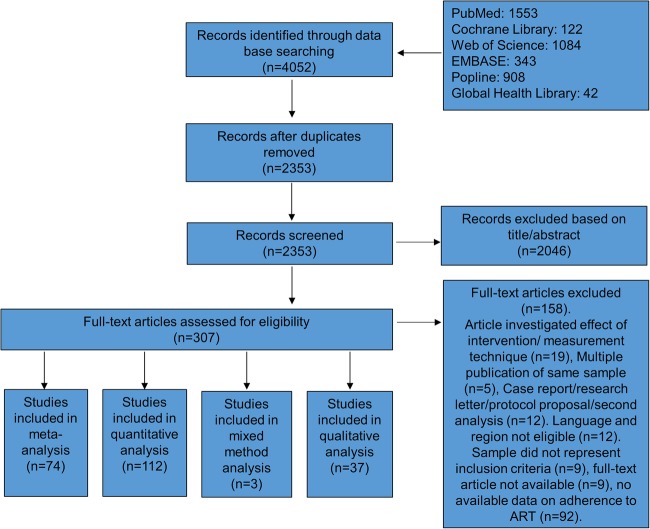
OBJECTIVE: The rapid scale up of antiretroviral treatment (ART) in sub-Saharan Africa (SSA) has resulted in an increased focus on patient adherence. Non-adherence can lead to drug-resistant HIV caused by failure to achieve maximal viral suppression. Optimal treatment requires the identification of patients at high risk of suboptimal adherence and targeted interventions. The aim of this review was to identify and summarise determinants of adherence to ART among HIV-positive adults. DESIGN: Systematic review of adherence to ART in SSA from January 2002 to October 2014. METHODS: A systematic search was performed in 6 databases (PubMed, Cochrane Library, EMBASE, Web of Science, Popline, Global Health Library) for qualitative and quantitative articles. Risk of bias was assessed. A meta-analysis was conducted for pooled estimates of effect size on adherence determinants. RESULTS: Of the 4052 articles screened, 146 were included for final analysis, reporting on determinants of 161 922 HIV patients with an average adherence score of 72.9%. Main determinants of non-adherence were use of alcohol, male gender, use of traditional/herbal medicine, dissatisfaction with healthcare facility and healthcare workers, depression, discrimination and stigmatisation, and poor social support. Promoters of adherence included counselling and education interventions, memory aids, and active disclosure among people living with HIV. Determinants of health status had conflicting influence on adherence. CONCLUSIONS: The sociodemographic, psychosocial, health status, treatment-related and intervention-related determinants are interlinked and contribute to optimal adherence. Clinics providing ART in SSA should therefore design targeted interventions addressing these determinants to optimise health outcomes.
Overview
CoChat Summary
## TL;DR
This systematic review of studies from sub-Saharan Africa found that ART adherence is shaped by interlinked sociodemographic, psychosocial, treatment-related, health-status, and intervention-related factors. Across 146 included articles on 161,922 patients, the most consistent barriers were alcohol use, male gender, traditional/herbal medicine use, poor patient–provider experiences, depression, discrimination/stigma, and poor social support.
## Key findings
- Of 4,052 articles screened, 146 were included in the final analysis; these reported on 161,922 HIV patients and an average adherence score of 72.9% (using the paper’s 95% adherence definition). The average adherence rate was also reported as 52.5% when adherence was defined as 100%.
- Main determinants of non-adherence were alcohol use, male gender, use of traditional/herbal medicine, dissatisfaction with healthcare facilities and healthcare workers, depression, discrimination and stigmatisation, and poor social support.
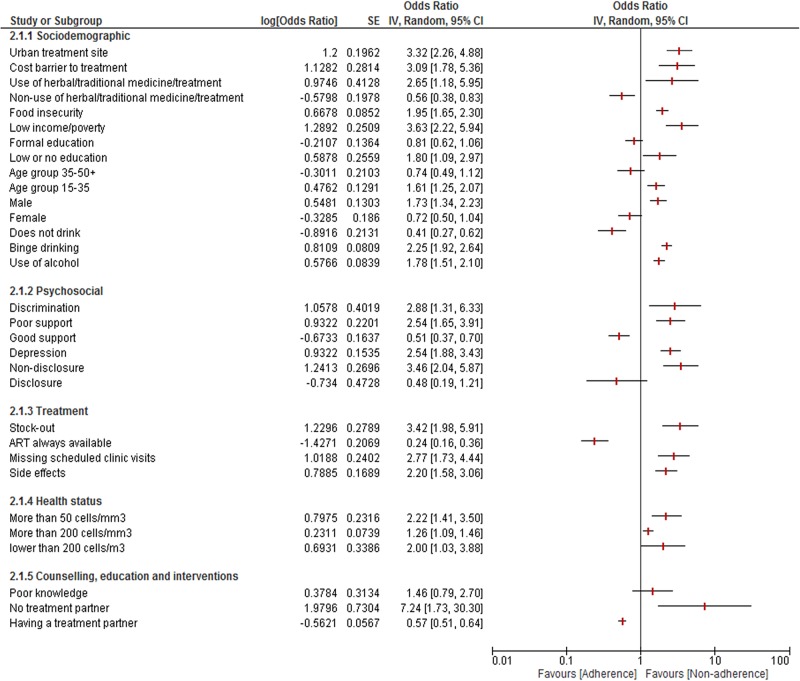
- Meta-analysis found non-adherence was associated with alcohol use (OR=1.78; 95% CI 1.51 to 2.09), binge drinking (OR=2.25; 95% CI 1.92 to 2.65), male gender (OR=1.73; 95% CI 1.34 to 2.23), younger age 15–35 years (OR=1.61; 95% CI 1.25 to 2.06), and use of herbal/traditional medicine/treatment (OR=2.65; 95% CI 1.18 to 5.95).
- Promoters of adherence included reliable ART availability (OR=0.24; 95% CI 0.16 to 0.37), good social support (OR=0.51; 95% CI 0.37 to 0.71), having a treatment partner (OR=0.57; 95% CI 0.51 to 0.64), and counselling/education, memory aids, and active disclosure.
## Methods
- Systematic review conducted per PRISMA and the Cochrane Handbook, with protocol registered in PROSPERO (CRD42014014476); search covered January 2002 to 27 October 2014.
- Searched 6 databases: PubMed/MEDLINE, Cochrane Library, EMBASE, Web of Science, POPLINE, and Global Health Library; included qualitative, quantitative, and mixed-methods studies of HIV-positive adults (≥15 years) receiving ART in sub-Saharan Africa.
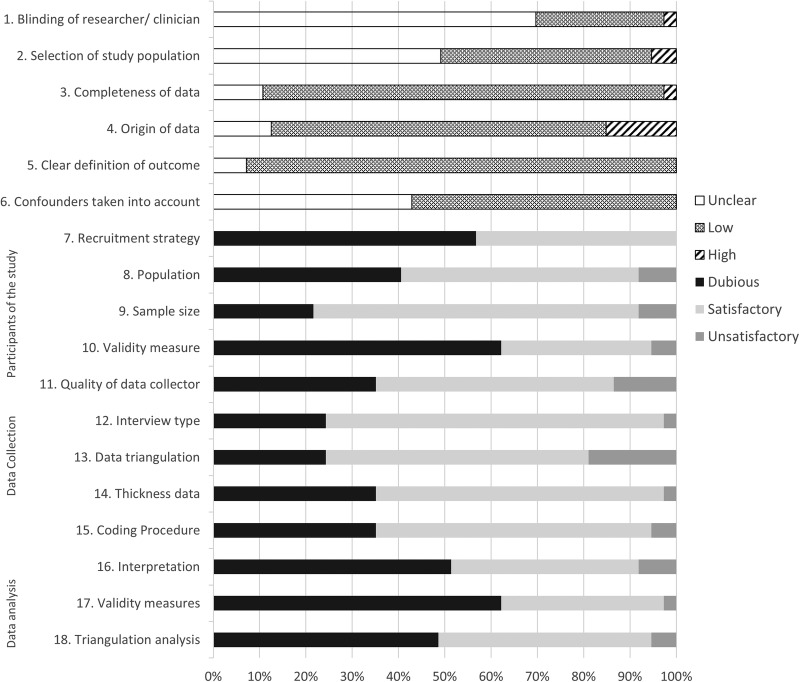
- Risk of bias was assessed separately for quantitative and qualitative studies; meta-analysis pooled effect sizes (ORs/RRs) for determinants reported in at least two studies, with heterogeneity assessed using I².
## Limitations
- The paper states that inference is limited by the quality of the underlying studies, including limited consideration of confounders; it also notes that data extraction was done mostly by one reviewer, which could have introduced bias.
- The paper states there was significant heterogeneity in adherence definitions, participant inclusion criteria, and adherence measurement methods across studies, and no gold standard measure was used.
- Evident from the text: not all included studies were suitable for meta-analysis because some lacked complete risk estimates, so several determinants were summarized narratively rather than quantitatively.
Model-written summary. Check it against the paper before relying on it.
Integrity signals
Registry
Cites
Statistics
Figures
Verification
Claims the paper makes
2 Valid · 1 Not valid · 29 Not checked · 40 Own results and interpretations
The cited sources support only part of this claim — read each source’s verdict below.
In the paper
“Studies on ART adherence showed that predictors and risk factors differ per region of the world, necessitating context-specific development of non-adherence profiles.9 10”
§ Determinants of adherence to antiretroviral therapy among HIV-positive adults in sub-Saharan Africa: a systematic review > Introduction
What the sources say
- Partly supportedcites [9] Ware NC, Idoko J, Kaaya S Explaining adherence success in sub-Saharan Africa: an ethnographic study. PLoS Med 2009; 6: e11 10.1371/journal.pmed.1000011 19175285 PMC2631046 sourceExperimental — accuracy not yet measured
The Discussion contrasts economic obstacles and social relationships in sub-Saharan Africa with an individual-level account of adherence in North America, and describes a theory of differences between resource-poor and resource-rich settings. This supports context-dependent influences on adherence, but the paper does not establish that predictors and risk factors differ across regions of the world generally. The call for context-specific non-adherence profiles is the citing authors’ inference, not a finding reported in this paper. (LLM, conf=0.83)
- Not checked — no full text of the sourcecites [10] Mills EJ, Nachega JB, Buchan I Adherence to antiretroviral therapy in sub-Saharan Africa and North America: a meta-analysis. JAMA 2006; 296: 679– 90. 10.1001/jama.296.6.679 16896111 source
plainstates an association- Asserted: passes — The authors put it forward as true.
- Checkable: passes — It can be checked against evidence.
- Load-bearing: passes — The paper’s conclusions depend on it.
- Based: passes — The paper gives a reason why it holds.
- Partly supported
Every source the paper cites for this claim was checked and supports it.
In the paper
“For a comprehensive overview, both qualitative and quantitative studies were included,12 as qualitative studies may identify key themes not found, described or discussed in larger quantitative studies.”
§ Determinants of adherence to antiretroviral therapy among HIV-positive adults in sub-Saharan Africa: a systematic review > Introduction
What the sources say
- Supportedcites [12] Mills E, Nachega J, Bangsberg D Adherence to HAART: a systematic review of developed and developing nation patient-reported barriers and facilitators. PLoS Med 2006; 3: 2039– 64. PMC1637123 17121449 source
The Discussion reports that the review identified key themes in qualitative studies that larger quantitative studies had not examined. The Results give examples of barriers and facilitators described in qualitative studies but absent from the quantitative studies. (LLM, conf=0.94)
hedgedstates a possible cause- Asserted: passes — The authors put it forward as true.
- Checkable: passes — It can be checked against evidence.
- Load-bearing: passes — The paper’s conclusions depend on it.
- Based: passes — The paper gives a reason why it holds.
- Supported
None of the sources cited for this claim have been checked yet.
In the paper
“Lower levels of education corresponded with non-adherence,42 45 52 53 56 57 and higher adherence was observed among patients with formal education.58–60”
§ Determinants of adherence to antiretroviral therapy among HIV-positive adults in sub-Saharan Africa: a systematic review > Results > Determinants of (non-)adherence
plainstates an association- Asserted: passes — The authors put it forward as true.
- Checkable: passes — It can be checked against evidence.
- Load-bearing: unclear — It is unclear whether the paper’s conclusions depend on it.
- Based: passes — The paper gives a reason why it holds.
None of the sources cited for this claim have been checked yet.
In the paper
“low or no education (OR=1.80; 95% CI 1.09 to 2.98; I2=81%),30 75 78 93 97 114 118”
§ Determinants of adherence to antiretroviral therapy among HIV-positive adults in sub-Saharan Africa: a systematic review > Results > Sociodemographic and socioeconomic factors
plainstates an association- Asserted: passes — The authors put it forward as true.
- Checkable: passes — It can be checked against evidence.
- Load-bearing: passes — The paper’s conclusions depend on it.
- Based: passes — The paper gives a reason why it holds.
51 more claims
Create a free account to see all 72 claims and every source verdict.
- Probably not a substantial claim. 11
- It may state two separate claims as one. 6
Claims other papers make about this one
Each is checked against this paper’s own text: does it say what the citing paper says it does?
The source backs part of the claim, not all of it — or backs it for a different population, condition or comparison.
In the citing paper
“We used the Center for Adherence Support Evaluation (CASE) adherence index [33, 34], a scale that has been widely used in sub-Saharan Africa to measure adherence to ART [34–36].”
From Associations Between Patterns of Alcohol Use and Viral Load Suppression Amongst Women Living with HIV in South Africa (2021) · cites this paper as [35]
Experimental — accuracy not yet measuredThe cited source says what the claim attributes to it.
In the citing paper
“However, failure to disclose one’s HIV status has been associated with poor adherence to ART [43].”
From Echoes of old HIV paradigms: reassessing the problem of engaging men in HIV testing and treatment through women’s perspectives (2017) · cites this paper as [43]
Citations
Cites
Preferred Reporting Items for Systematic Reviews and Meta-Analyses: the PRISMA statement
Moher, D., Liberati, A., Tetzlaff, J., Altman, D. G., & for the PRISMA Group (2009) · BMJ · doi:10.1136/bmj.b2535 · Cited by 83,823
Preferred Reporting Items for Systematic Reviews and Meta-Analyses: The PRISMA Statement
Moher, D., Liberati, A., Tetzlaff, J., Altman, D. G., & The PRISMA Group (2009) · PLoS Medicine · doi:10.1371/journal.pmed.1000097 · Cited by 64,042
Wang, G., Ma, R., Qiao, G., Wada, K., Aizawa, Y., & Satoh, T. (2015) · Integrative Medicine International · doi:10.1159/000368408 · Cited by 18,657
Suñé, P., Suñé, J. M., & Montoro, J. B. (2013) · PLoS ONE · doi:10.1371/journal.pone.0054583 · Cited by 1,687
A Selected Core Microbiome Drives the Early Stages of Three Popular Italian Cheese Manufactures
De Filippis, F., La Storia, A., Stellato, G., Gatti, M., & Ercolini, D. (2014) · PLoS ONE · doi:10.1371/journal.pone.0089680 · Cited by 1,398
Adherence to Antiretroviral Therapy in Sub-Saharan Africa and North America: A Meta-analysis
Mills, E. J., Nachega, J. B., Buchan, I., Orbinski, J., Attaran, A., Singh, S., Rachlis, B., Wu, P., Cooper, C., Thabane, L., et al. (2006) · JAMA · doi:10.1001/jama.296.6.679 · Cited by 899 · cited 1×
“9 10 This will enable healthcare providers to offer tailored care for patients at risk of non-adherence.”
BackgroundMills, E. J., Nachega, J. B., Bangsberg, D. R., Singh, S., Rachlis, B., Wu, P., Wilson, K., Buchan, I., Gill, C. J., & Cooper, C. (2006) · PLoS Medicine · doi:10.1371/journal.pmed.0030438 · Cited by 818 · cited 1×
“satisfaction with a healthcare provider may be more important in SSA countries with a low and medium Human Development Index,(11) as well as issues of access to healthcare, impact of financial constraints, and disruption of services and medication distribution.(12) A strength of this systematic review is our mixed-”
BackgroundPreferred Reporting Items for Systematic Reviews and Meta-Analyses
Vrabel, M. (2015) · Oncology Nursing Forum · doi:10.1188/15.onf.552-554 · Cited by 669
Humby, F., Bombardieri, M., Manzo, A., Kelly, S., Blades, M. C., Kirkham, B., Spencer, J., & Pitzalis, C. (2009) · PLoS Medicine · doi:10.1371/journal.pmed.0060001 · Cited by 537
Hunger, waiting time and transport costs: Time to confront challenges to ART adherence in Africa
Hardon, A. P., Akurut, D., Comoro, C., Ekezie, C., Irunde, H. F., Gerrits, T., Kglatwane, J., Kinsman, J., Kwasa, R., Maridadi, J., et al. (2007) · AIDS Care · doi:10.1080/09540120701244943 · Cited by 497
Slobbe, L., Doorduijn, J. K., Lugtenburg, P. J., el Barzouhi, A., Boersma, E., van Leeuwen, W. B., & Rijnders, B. J. A. (2010) · PLoS ONE · doi:10.1371/journal.pone.0010840 · Cited by 490
Barriers to Antiretroviral Adherence for Patients Living with HIV Infection and AIDS in Botswana
Weiser, S., Wolfe, W., Bangsberg, D., Thior, I., Gilbert, P., Makhema, J., Kebaabetswe, P., Dickenson, D., Mompati, K., Essex, M., et al. (2003) · JAIDS Journal of Acquired Immune Deficiency Syndromes · doi:10.1097/00126334-200311010-00004 · Cited by 473
Knobel, H., Alonso, J., Casado, J. L., Collazos, J., González, J., Ruiz, I., Kindelan, J. M., Carmona, A., Juega, J., & Ocampo, A. (2002) · AIDS · doi:10.1097/00002030-200203080-00012 · Cited by 472 · cited 1×
“Future studies should consider seeking consensus for the optimal tool to assess adherence, building on the available assessment of methods 166 – 168 and considering practical limitations for application in SSA settings.”
BackgroundNachega, J. B., Hislop, M., Nguyen, H., Dowdy, D. W., Chaisson, R. E., Regensberg, L., Cotton, M., & Maartens, G. (2009) · JAIDS Journal of Acquired Immune Deficiency Syndromes · doi:10.1097/qai.0b013e318199072e · Cited by 449
Walsh, J. C., Mandalia, S., & Gazzard, B. G. (2002) · AIDS · doi:10.1097/00002030-200201250-00017 · Cited by 443
Explaining Adherence Success in Sub-Saharan Africa: An Ethnographic Study
Ware, N. C., Idoko, J., Kaaya, S., Biraro, I. A., Wyatt, M. A., Agbaji, O., Chalamilla, G., & Bangsberg, D. R. (2009) · PLoS Medicine · doi:10.1371/journal.pmed.1000011 · Cited by 437 · cited 1×
“context-specific development of non-adherence profiles.(9) 10 This will enable healthcare providers to offer tailored care for patients at risk of non-adherence.”
BackgroundLangebeek, N., Gisolf, E. H., REISS, P. C., Vervoort, S. C. J. M., Hafsteinsdøttir, T. B., Richter, C., Sprangers, M. A. G., & Nieuwkerk, P. T. (2014) · BMC Medicine · doi:10.1186/preaccept-1453408941291432 · Cited by 405
Self-citationLangebeek, N., Gisolf, E. H., Reiss, P., Vervoort, S. C., Hafsteinsdóttir, T. B., Richter, C., Sprangers, M. A., & Nieuwkerk, P. T. (2014) · BMC Medicine · doi:10.1186/s12916-014-0142-1 · Cited by 394 · cited 5×
“Langebeek et al 11 performed a meta-analysis on predictors of adherence globally, and Mills et al 12 compared developed and developing countries.”
InfluentialSelf-citationTuller, D. M., Bangsberg, D. R., Senkungu, J., Ware, N. C., Emenyonu, N., & Weiser, S. D. (2010) · AIDS and Behavior · doi:10.1007/s10461-009-9533-2 · Cited by 380
Adherence is not a barrier to successful antiretroviral therapy in South Africa
Orrell, C., Bangsberg, D. R., Badri, M., & Wood, R. (2003) · AIDS · doi:10.1097/00002030-200306130-00011 · Cited by 341 · cited 1×
“Other predictors reported to be associated with (non-) adherence were: distance to clinic,(29) 37 41 52 84 85 111 121 having children,(88) 93 106 110 114–116 122 geographical area,(45) 58 96 117 123 marital status,(41) 53 58 61 64 65 68 104 number of sexual partners,(47) 124 travelling,(33) 71 105 109 110 forgetting t…”
BackgroundMeasuring Adherence to Antiretroviral Therapy in a Diverse Population Using a Visual Analogue Scale
Giordano, T. P., Guzman, D., Clark, R., Charlebois, E. D., & Bangsberg, D. R. (2004) · HIV Clinical Trials · doi:10.1310/jfxh-g3x2-eym6-d6ug · Cited by 337
Nakimuli-Mpungu, E., Bass, J. K., Alexandre, P., Mills, E. J., Musisi, S., Ram, M., Katabira, E., & Nachega, J. B. (2012) · AIDS and Behavior · doi:10.1007/s10461-011-0087-8 · Cited by 337 · cited 1×
“For these reasons, a thorough understanding of determinants of adherence to ART are paramount.(8) Studies on ART adherence showed that predictors and”
BackgroundFood Insecurity as a Barrier to Sustained Antiretroviral Therapy Adherence in Uganda
Weiser, S. D., Tuller, D. M., Frongillo, E. A., Senkungu, J., Mukiibi, N., & Bangsberg, D. R. (2010) · PLoS ONE · doi:10.1371/journal.pone.0010340 · Cited by 321
(1996) · American Journal of Public Health · doi:10.2105/ajph.86.7.948 · Cited by 314
Groeneveld, I. F., Proper, K. I., van der Beek, A. J., van Duivenbooden, C., & van Mechelen, W. (2008) · BMC Public Health · doi:10.1186/1471-2458-8-1 · Cited by 299
Owusu-Dabo, E., McNeill, A., Lewis, S., Gilmore, A., & Britton, J. (2010) · BMC Public Health · doi:10.1186/1471-2458-10-1 · Cited by 289
Oyugi, J. H., Byakika-Tusiime, J., Charlebois, E. D., Kityo, C., Mugerwa, R., Mugyenyi, P., & Bangsberg, D. R. (2004) · JAIDS Journal of Acquired Immune Deficiency Syndromes · doi:10.1097/00126334-200408150-00014 · Cited by 282 · cited 1×
“Future studies should consider seeking consensus for the optimal tool to assess adherence, building on the available assessment of methods 166 – 168 and considering practical limitations for application in SSA settings.”
BackgroundOyugi, J. H., Byakika-Tusiime, J., Ragland, K., Laeyendecker, O., Mugerwa, R., Kityo, C., Mugyenyi, P., Quinn, T. C., & Bangsberg, D. R. (2007) · AIDS · doi:10.1097/qad.0b013e32802e6bfa · Cited by 263
Sanne, I., Orrell, C., Fox, M. P., Conradie, F., Ive, P., Zeinecker, J., Cornell, M., Heiberg, C., Ingram, C., Panchia, R., et al. (2010) · The Lancet · doi:10.1016/s0140-6736(10)60894-x · Cited by 248 · cited 1×
“services, and task shifting from doctors and nurses to counsellors or community health workers.(179) 180 In conclusion, determinants of (non)-adherence in”
BackgroundAmberbir, A., Woldemichael, K., Getachew, S., Girma, B., & Deribe, K. (2008) · BMC Public Health · doi:10.1186/1471-2458-8-265 · Cited by 232
Antiretroviral treatment adherence among HIV patients in KwaZulu-Natal, South Africa
Peltzer, K., Friend-du Preez, N., Ramlagan, S., & Anderson, J. (2010) · BMC Public Health · doi:10.1186/1471-2458-10-111 · Cited by 220
Dental service patterns among private and public adult patients in Australia
Brennan, D. S., Luzzi, L., & Roberts-Thomson, K. F. (2008) · BMC Health Services Research · doi:10.1186/1472-6963-8-1 · Cited by 210
Bezabhe, W. M., Chalmers, L., Bereznicki, L. R., Peterson, G. M., Bimirew, M. A., & Kassie, D. M. (2014) · PLoS ONE · doi:10.1371/journal.pone.0097353 · Cited by 207
Dowshen, N., Kuhns, L. M., Johnson, A., Holoyda, B. J., & Garofalo, R. (2012) · Journal of Medical Internet Research · doi:10.2196/jmir.2015 · Cited by 203 · cited 1×
“Interventions focussed on younger patients include personalised, interactive and daily SMS reminders.(177) Group-based counselling intervention for depression can potentially increase adherence.”
BackgroundAdherence to HIV antiretroviral therapy in HIV+ Ugandan patients purchasing therapy
Byakika-Tusiime, J., Oyugi, J. H., Tumwikirize, W. A., Katabira, E. T., Mugyenyi, P. N., & Bangsberg, D. R. (2005) · International Journal of STD & AIDS · doi:10.1258/0956462052932548 · Cited by 199
Ramadhani, H. O., Thielman, N. M., Landman, K. Z., Ndosi, E. M., Gao, F., Kirchherr, J. L., Shah, R., Shao, H. J., Morpeth, S. C., McNeill, J. D., et al. (2007) · Clinical Infectious Diseases · doi:10.1086/522991 · Cited by 197
Assessment of core capacities for the International Health Regulations (IHR[2005]) – Uganda, 2009
Wamala, J. F., Okot, C., Makumbi, I., Natseri, N., Kisakye, A., Nanyunja, M., Bakamutumaho, B., Lutwama, J. J., Sreedharan, R., Xing, J., et al. (2010) · BMC Public Health · doi:10.1186/1471-2458-10-s1-s9 · Cited by 188
Preventing HIV Antiretroviral Resistance through Better Monitoring of Treatment Adherence
Bangsberg, D. R. (2008) · The Journal of Infectious Diseases · doi:10.1086/533415 · Cited by 183 · cited 2×
“Non-adherence is the most common reason for treat-ment failure, 5 with potential risk to develop drug resistance through suboptimal viral suppression.”
BackgroundNachega, J. B., Knowlton, A. R., Deluca, A., Schoeman, J. H., Watkinson, L., Efron, A., Chaisson, R. E., & Maartens, G. (2006) · JAIDS Journal of Acquired Immune Deficiency Syndromes · doi:10.1097/01.qai.0000248349.25630.3d · Cited by 181
Adherence to HAART and its principal determinants in a cohort of Senegalese adults
Lanièce, I., Ciss, M., Desclaux, A., Diop, K., Mbodj, F., Ndiaye, B., Sylla, O., Delaporte, E., & Ndoye, I. (2003) · AIDS · doi:10.1097/00002030-200317003-00014 · Cited by 178
Murray, L. K., Semrau, K., McCurley, E., Thea, D. M., Scott, N., Mwiya, M., Kankasa, C., Bass, J., & Bolton, P. (2009) · AIDS Care · doi:10.1080/09540120802032643 · Cited by 176
Weiser, S. D., Palar, K., Frongillo, E. A., Tsai, A. C., Kumbakumba, E., dePee, S., Hunt, P. W., Ragland, K., Martin, J., & Bangsberg, D. R. (2014) · AIDS · doi:10.1097/01.aids.0000433238.93986.35 · Cited by 174 · cited 1×
“avoid aggravated (gastrointestinal) side effects, or because taking ART when insufficient food is available increased hunger.(31) 49 53 59 64 65 67 69 71 72 78 82 83 85 95 102 105 107 109 110 115 118–120”
Petersen, I., Hanass Hancock, J., Bhana, A., & Govender, K. (2014) · Journal of Affective Disorders · doi:10.1016/j.jad.2014.02.013 · Cited by 166 · cited 1×
“Group-based counselling intervention for depression can potentially increase adherence.(178) Other important interventions focus on improving quality of healthcare delivered in a system usually underfunded and overstretched.”
BackgroundSanjobo, N., Frich, J. C., & Fretheim, A. (2008) · SAHARA-J: Journal of Social Aspects of HIV/AIDS · doi:10.1080/17290376.2008.9724912 · Cited by 164
Charurat, M. E., Oyegunle, M., Benjamin, R. H., Habib, A. G., Eze, E. U., Ele, P. U., Ibanga, I., Ajayi, S. O., Eng, M., Mondal, P. K., et al. (2010) · PLoS ONE · doi:10.1371/journal.pone.0010584 · Cited by 162
Beyeza‐Kashesya, J., Kaharuza, F. M., Mirembe, F. M., Neema, S., Ekström, A. M., & Kulane, A. (2009) · PubMed Central · Cited by 162
Bemelmans, M., Van Den Akker, T., Ford, N., Philips, M., Zachariah, R., Harries, A., Schouten, E., Hermann, K., Mwagomba, B., & Massaquoi, M. (2010) · Tropical Medicine & International Health · doi:10.1111/j.1365-3156.2010.02649.x · Cited by 160
Adherence in antiretroviral therapy: a review of qualitative studies
Vervoort, S. C., Borleffs, J. C., Hoepelman, A. I., & Grypdonck, M. H. (2007) · AIDS · doi:10.1097/qad.0b013e328011cb20 · Cited by 160 · cited 2×
“14 Qualitative studies Qualitative articles were scored on their risk of bias using a previously developed approach by Vervoort et al 20 focussing on (1) participants of the study: nature of sample, recruitment strategy, population, sample size; (2) data collections: validity measurements, quality of data collector, i…”
MethodSelf-citationDahab, M., Charalambous, S., Hamilton, R., Fielding, K., Kielmann, K., Churchyard, G. J., & Grant, A. D. (2008) · BMC Public Health · doi:10.1186/1471-2458-8-63 · Cited by 158 · cited 4×
“33 44 47 82–85 88 90 92 101 102 108–110 113 115–117 119 129 144 However, some studies noted that improved health could result in nonadherence if people believed to have been cured.(33) 38 84 105 110 120 122 130 138 Studies assessing adherence in relation to participant’s CD4 cell count were conflicting.”
BackgroundInfluentialEvaluation of antiretroviral therapy results in a resource‐poor setting in Blantyre, Malawi
Van Oosterhout, J. J., Bodasing, N., Kumwenda, J. J., Nyirenda, C., Mallewa, J., Cleary, P. R., De Baar, M. P., Schuurman, R., Burger, D. M., & Zijlstra, E. E. (2005) · Tropical Medicine & International Health · doi:10.1111/j.1365-3156.2005.01409.x · Cited by 149
Lyimo, R. A., Stutterheim, S. E., Hospers, H. J., de Glee, T., van der Ven, A. J. A. M., & de Bruin, M. (2014) · AIDS Patient Care and STDs · doi:10.1089/apc.2013.0306 · Cited by 144
Ngarina, M., Popenoe, R., Kilewo, C., Biberfeld, G., & Ekström, A. M. (2013) · BMC Public Health · doi:10.1186/1471-2458-13-450 · Cited by 144
Social support and medication adherence in HIV disease in KwaZulu-Natal, South Africa
Ncama, B. P., McInerney, P. A., Bhengu, B. R., Corless, I. B., Wantland, D. J., Nicholas, P. K., McGibbon, C. A., & Davis, S. (2008) · International Journal of Nursing Studies · doi:10.1016/j.ijnurstu.2008.06.006 · Cited by 142
Determinants of non-adherence to subsidized anti-retroviral treatment in southeast Nigeria
Uzochukwu, B. S. C., Onwujekwe, O. E., Onoka, A. C., Okoli, C. I., Uguru, N. P., & Chukwuogo, O. (2009) · Health Policy and Planning · doi:10.1093/heapol/czp006 · Cited by 141 · cited 1×
“However, some articles reported the opposite.(41) 61–63 Alcohol use increased the risk of non-adherence.”
BackgroundIron Deposition and Ferritin Heavy Chain (Fth) Localization in Rodent Teeth
Wen, X., & Paine, M. L. (2013) · BMC Research Notes · doi:10.1186/1756-0500-6-1 · Cited by 139
Musumari, P. M., Wouters, E., Kayembe, P. K., Nzita, M. K., Mbikayi, S. M., Suguimoto, S. P., Techasrivichien, T., Lukhele, B. W., El-saaidi, C., Piot, P. K., et al. (2014) · PLoS ONE · doi:10.1371/journal.pone.0085327 · Cited by 134 · cited 1×
“65 103 145 Psychological distress was not related to ART adherence.(72) 73”
BackgroundBoyer, S., Clerc‐Urmès, I., Bonono, C.-R., Marcellin, F., Bilé, P. C., & Ventelou, B. (2011) · Social Science & Medicine · doi:10.1016/j.socscimed.2011.02.030 · Cited by 130
Do, N. T., Phiri, K., Bussmann, H., Gaolathe, T., Marlink, R. G., & Wester, C. W. (2010) · AIDS Research and Human Retroviruses · doi:10.1089/aid.2009.0222 · Cited by 126
Chi, B. H., Cantrell, R. A., Zulu, I., Mulenga, L., Levy, J., Tambatamba, B. C., Reid, S. E., Mwango, A., Mwinga, A., Bulterys, M., et al. (2009) · International Journal of Epidemiology · doi:10.1093/ije/dyp004 · Cited by 125 · cited 1×
“29 69 85 102 105 109 110 125 144 Having a treatment partner or clinic buddy was observed to be associated with adherence.(32) 85 112 114 139 144 156 Receiving support by non-governmental organisation/ government and adherence self-efficacy(122) were also reported determinants of adherence.”
BackgroundNam, S. L., Fielding, K., Avalos, A., Dickinson, D., Gaolathe, T., & Geissler, P. W. (2008) · Social Science & Medicine · doi:10.1016/j.socscimed.2008.03.042 · Cited by 123
Rougemont, M., Stoll, B., Elia, N., & Ngang, P. (2009) · AIDS Research and Therapy · doi:10.1186/1742-6405-6-21 · Cited by 121
Abaasa, A. M., Todd, J., Ekoru, K., Kalyango, J. N., Levin, J., Odeke, E., & Karamagi, C. A. (2008) · BMC Health Services Research · doi:10.1186/1472-6963-8-241 · Cited by 118 · cited 1×
“50).(153) Figure 3 Forrest plot meta-analysis for determinants of non-adherence to ART.”
BackgroundDecroo, T., Koole, O., Remartínez, D., dos Santos, N., Dezembro, S., Joffrisse, M., Rasschaert, F., Biot, M., & Laga, M. (2014) · Tropical Medicine & International Health · doi:10.1111/tmi.12278 · Cited by 118 · cited 1×
“visits to crowded clinics, travel costs and/or time off work, a support group of several other persons receiving ART could be helpful whereby the group members take turns collecting medications.(173) 174 For the strongest individual predictor of (non-)adherence, alcohol use, a number of interventions have been identif…”
BackgroundPenn, C., Watermeyer, J., & Evans, M. (2011) · Patient Education and Counseling · doi:10.1016/j.pec.2011.02.018 · Cited by 117 · cited 2×
“33 Other determinants affecting both adherence and non-adherence were cognitive impairment,(73) 128 143 internalised stigma,(43) 68 73 82 known use of ART and/or HIV status of others,(47) 49 69 72 134 139 psychological distress,(72) 150 trauma,(109) 142 151 masculinity,(85) 122 152 sharing medication,(35) 94 lack of c…”
BackgroundReliability of a Medication Adherence Measure in an Outpatient Setting
Krousel-Wood, M. A., Jannu, A., Ré, R. N., Muntner, P., & DeSalvo, K. B. (2005) · The American Journal of the Medical Sciences · doi:10.1097/00000441-200509000-00006 · Cited by 111
Watt, M. H., Maman, S., Earp, J. A., Eng, E., Setel, P. W., Golin, C. E., & Jacobson, M. (2009) · Social Science & Medicine · doi:10.1016/j.socscimed.2009.02.037 · Cited by 109
Ford, N. P., Darder, M., Spelman, T. D., Maclean, E., Mills, E. J., & Boulle, A. (2010) · PLoS ONE · doi:10.1371/journal.pone.0010460 · Cited by 107
HIV and the Risk of Direct Obstetric Complications: A Systematic Review and Meta-Analysis
Calvert, C., & Ronsmans, C. (2013) · PLoS ONE · doi:10.1371/journal.pone.0074848 · Cited by 99
Unge, C., Södergård, B., Marrone, G., Thorson, A. E., Lukhwaro, A., Carter, J. Y., Ilako, F., & Ekström, A. M. (2010) · PLoS ONE · doi:10.1371/journal.pone.0013613 · Cited by 98
Barriers to antiretroviral therapy adherence in rural Mozambique
Groh, K., Audet, C. M., Baptista, A., Sidat, M., Vergara, A. E., Vermund, S. H., & Moon, T. D. (2011) · BMC Public Health · doi:10.1186/1471-2458-11-650 · Cited by 98
Talam, N., Gatongi, P., Rotich, J., et al. (2008) · PubMed · Cited by 97
Talam, N., Gatongi, P., Rotich, J., & Kimaiyo, S. (2008) · East African Journal of Public Health · doi:10.4314/eajph.v5i2.38981 · Cited by 97
Tiyou, A., Belachew, T., Alemseged, F., & Biadgilign, S. (2010) · AIDS Research and Therapy · doi:10.1186/1742-6405-7-39 · Cited by 95
Naidoo, P., Peltzer, K., Louw, J., Matseke, G., Mchunu, G., & Tutshana, B. (2013) · BMC Public Health · doi:10.1186/1471-2458-13-396 · Cited by 94 · cited 3×
“Given the increased accessibility of ART in SSA, optimising adherence will improve the health of millions of people living with HIV.”
BackgroundInfluentialFactors associated with non-adherence to highly active antiretroviral therapy in Nairobi, Kenya
Wakibi, S. N., Ng’ang’a, Z., & Mbugua, G. G. (2011) · AIDS Research and Therapy · doi:10.1186/1742-6405-8-43 · Cited by 91 · cited 2×
“strength and increased ability to manage side effects.(29) 56 64 124 Reasons for increased non-adherence could be the experience of no instant consequences for”
Diabaté, S., Alary, M., & Kanga, C. (2007) · AIDS · doi:10.1097/qad.0b013e3282a5667b · Cited by 91
Musumari, P. M., Feldman, M. D., Techasrivichien, T., Wouters, E., Ono-Kihara, M., & Kihara, M. (2013) · AIDS Care · doi:10.1080/09540121.2013.764391 · Cited by 90 · cited 1×
“HIV over conventional medical approaches observed increased non-adherence.(71) 82 93 Employment showed conflicting outcomes; non-”
BackgroundGoldman, J. D., Cantrell, R. A., Mulenga, L., Tambatamba, B. C., Reid, S. E., Levy, J., Limbada, M., Taylor, A., Saag, M. S., Vermund, S. H., et al. (2008) · AIDS Research and Human Retroviruses · doi:10.1089/aid.2008.0035 · Cited by 89
Grant, L., Logie, D., Masura, M., Gorman, D., & Murray, S. A. (2008) · AIDS Care · doi:10.1080/09540120701854634 · Cited by 88
Elul, B., Basinga, P., Nuwagaba-Biribonwoha, H., Saito, S., Horowitz, D., Nash, D., Mugabo, J., Mugisha, V., Rugigana, E., Nkunda, R., et al. (2013) · PLoS ONE · doi:10.1371/journal.pone.0053586 · Cited by 87 · cited 4×
“reported to increase and decrease adherence to ARTs.(23) 25 32 37 38 96 137 153 Adherence to ART could be decreased when a patient”
BackgroundInfluentialGraham, S. M., Mugo, P. M., Gichuru, E., Thiong’o, A. N., Macharia, M., Okuku, H. S., van der Elst, E., Price, M. A., Muraguri, N., & Sanders, E. J. (2013) · AIDS and Behavior · doi:10.1007/s10461-013-0445-9 · Cited by 87 · cited 1×
“28 41 52–54 Among men who had sex with men lower adherence was reported.(55) Lower levels of education corresponded with nonadherence,(42) 45 52 53 56 57 and higher adherence was observed among patients with formal education.”
BackgroundFatiregun, A. A., Olowookere, S. A., Akinyemi, J. O., Bamgboye, A. E., & Osagbemi, G. K. (2008) · The Journal of Infection in Developing Countries · doi:10.3855/jidc.199 · Cited by 84
Factors associated with self-reported adherence to antiretroviral therapy in a Tanzanian setting
Watt, M. H., Maman, S., Golin, C. E., Earp, J. A., Eng, E., Bangdiwala, S. I., & Jacobson, M. (2010) · AIDS Care · doi:10.1080/09540120903193708 · Cited by 84
Skovdal, M., Campbell, C., Nyamukapa, C., & Gregson, S. (2011) · Journal of the International AIDS Society · doi:10.1186/1758-2652-14-29 · Cited by 84
Whetten, K., Shirey, K., Pence, B. W., Yao, J., Thielman, N., Whetten, R., Adams, J., Agala, B., Ostermann, J., O'Donnell, K., et al. (2013) · PLoS ONE · doi:10.1371/journal.pone.0074771 · Cited by 80
Kisenyi, R. N., Muliira, J. K., & Ayebare, E. O. (2011) · Journal of Religion and Health · doi:10.1007/s10943-011-9473-9 · Cited by 80
HIV-1 transgene expression in rats causes oxidant stress and alveolar epithelial barrier dysfunction
Lassiter, C., Fan, X., Joshi, P. C., Jacob, B., Sutliff, R. L., Jones, D. P., Koval, M. H., & Guidot, D. M. (2009) · AIDS Research and Therapy · doi:10.1186/1742-6405-6-1 · Cited by 80
Nel, A., & Kagee, A. (2013) · AIDS Care · doi:10.1080/09540121.2012.748867 · Cited by 79
Skovdal, M., Campbell, C., Nhongo, K., Nyamukapa, C., & Gregson, S. (2011) · The International Journal of Health Planning and Management · doi:10.1002/hpm.1082 · Cited by 77 · cited 2×
“33 67 78 Men may use alcohol to deny the reality of being HIV-positive.”
BackgroundPredictors of Adherence to Antiretroviral Therapy in Rural Zambia
Carlucci, J. G., Kamanga, A., Sheneberger, R., Shepherd, B. E., Jenkins, C. A., Spurrier, J., & Vermund, S. H. (2008) · JAIDS Journal of Acquired Immune Deficiency Syndromes · doi:10.1097/qai.0b013e318165dc25 · Cited by 75
Antiretroviral Adherence in Rural Zambia: The First Year of Treatment Availability
Birbeck, G. L., Chomba, E., Kvalsund, M., Bradbury, R., Mang’ombe, C., Malama, K., Kaile, T., Byers, P. A., & _, _. (2009) · The American Journal of Tropical Medicine and Hygiene · doi:10.4269/ajtmh.2009.80.669 · Cited by 74
Birbeck, G. L., Kvalsund, M. P., Byers, P. A., Bradbury, R. S., Mang’ombe, C., Organek, N., Kaile, T., Sinyama, A. M., Sinyangwe, S. S., Malama, K., et al. (2011) · American Journal of Tropical Medicine and Hygiene · doi:10.4269/ajtmh.2011.11-0187 · Cited by 74
Memiah, P. T. N., Shumba, C. S., Etienne‐Mesubi, M., Agbor, S., Hossain, M. B., Komba, P., Niyang, P. M., & Biadgilign, S. (2013) · Journal of the International Association of Providers of AIDS Care (JIAPAC) · doi:10.1177/2325957413503368 · Cited by 74 · cited 2×
“as ‘ready to die’ and ‘loss of hope of ever getting better’.(25) 43 71 73 77 82 87 94 105 113 120 140 142 146–149 Further factors strongly influencing adherence include coming to”
BackgroundSasaki, Y., Kakimoto, K., Dube, C., Sikazwe, I. T., Moyo, C., Syakantu, G., Komada, K., Miyano, S., Ishikawa, N., Kita, K., et al. (2012) · Annals of Clinical Microbiology and Antimicrobials · doi:10.1186/1476-0711-11-34 · Cited by 74
Mitiku, H. D., Abdosh, T., & Teklemariam, Z. (2013) · ISRN AIDS · doi:10.1155/2013/960954 · Cited by 70
Patients’ Adherence to Anti‐Retroviral Therapy in Botswana
Kip, E., Ehlers, V. J., & Van Der Wal, D. M. (2009) · Journal of Nursing Scholarship · doi:10.1111/j.1547-5069.2009.01266.x · Cited by 69
Eholié, S.-P., Tanon, A., Polneau, S., Ouiminga, M., Djadji, A., Kangah-Koffi, C., Diakité, N., Anglaret, X., Kakou, A., & Bissagnené, E. (2007) · JAIDS Journal of Acquired Immune Deficiency Syndromes · doi:10.1097/qai.0b013e31805d8ad0 · Cited by 69
Morojele, N. K., Kekwaletswe, C. T., & Nkosi, S. (2013) · AIDS and Behavior · doi:10.1007/s10461-013-0583-0 · Cited by 69
Obirikorang, C., Selleh, P. K., Abledu, J. K., & Fofie, C. O. (2013) · ISRN AIDS · doi:10.1155/2013/873939 · Cited by 68 · cited 1×
“71; I(2)=0%).(129) 140 141 Determinants predictive for non-adherence were: nondisclosure to others (OR=3.”
BackgroundEtienne, M., Hossain, M., Redfield, R., Stafford, K., & Amoroso, A. (2010) · Journal of the International Association of Physicians in AIDS Care · doi:10.1177/1545109710361383 · Cited by 67
Marcellin, F., Boyer, S., Protopopescu, C., Dia, A., Ongolo‐Zogo, P., Koulla‐Shiro, S., Abega, S., Abé, C., Moatti, J., Spire, B., et al. (2008) · Tropical Medicine & International Health · doi:10.1111/j.1365-3156.2008.02170.x · Cited by 66 · cited 1×
“90; I(2)=0%).(42) 48 Other determinants associated with non-adherence were side effects (OR=2.”
BackgroundA Qualitative Assessment of a Community Antiretroviral Therapy Group Model in Tete, Mozambique
Rasschaert, F., Telfer, B., Lessitala, F., Decroo, T., Remartinez, D., Biot, M., Candrinho, B., Mbofana, F., & Van Damme, W. (2014) · PLoS ONE · doi:10.1371/journal.pone.0091544 · Cited by 66
Alcohol use and non‐adherence to antiretroviral therapy in HIV‐infected patients in West Africa
Jaquet, A., Ekouevi, D. K., Bashi, J., Aboubakrine, M., Messou, E., Maiga, M., Traore, H. A., Zannou, M. D., Guehi, C., Ba‐Gomis, F. O., et al. (2010) · Addiction · doi:10.1111/j.1360-0443.2010.02978.x · Cited by 66
Lyimo, R. A., de Bruin, M., van den Boogaard, J., Hospers, H. J., van der Ven, A., & Mushi, D. (2012) · BMC Public Health · doi:10.1186/1471-2458-12-716 · Cited by 65 · cited 1×
“terms and acceptance of illness, for example, people with a desire to live and take care of children, and fear of returning to pre-ART health state.(67) 82 84 94 110 116 122 144 Conversely, difficulty in coming to terms and lack of belief in existence of HIV, and not feeling sick were barriers to adherence.”
BackgroundBhat, V. G., Ramburuth, M., Singh, M., Titi, O., Antony, A., Chiya, L., Irusen, E. M., Mtyapi, P. P., Mofoka, M. E., Zibeke, A., et al. (2010) · European Journal of Clinical Microbiology & Infectious Diseases · doi:10.1007/s10096-010-0949-4 · Cited by 65
Belenky, N., Cole, S. R., Pence, B. W., Itemba, D., Maro, V. P., & Whetten, K. (2014) · PLoS ONE · doi:10.1371/journal.pone.0095469 · Cited by 64
Tadesse, W. T., Mekonnen, A. B., Tesfaye, W. H., & Tadesse, Y. (2014) · BMC Pharmacology and Toxicology · doi:10.1186/2050-6511-15-32 · Cited by 64
Wabe, N., & Kebede, A. (2012) · North American Journal of Medical Sciences · doi:10.4103/1947-2714.93376 · Cited by 64
Lubinga, S. J., Kintu, A., Atuhaire, J., & Asiimwe, S. B. (2012) · AIDS Care · doi:10.1080/09540121.2011.648600 · Cited by 63
Adherence to ART in PLWHA and Yirgalem Hospital, South Ethiopia
Markos, E., Worku, A., & Davey, G. (2009) · Ethiopian Journal of Health Development · doi:10.4314/ejhd.v22i2.10068 · Cited by 62
Peltzer, K., Friend-du Preez, N., Ramlagan, S., Fomundam, H., Anderson, J., & Chanetsa, L. (2011) · African Journal of Traditional, Complementary and Alternative Medicines · doi:10.4314/ajtcam.v8i4.1 · Cited by 61
Bajunirwe, F., Arts, E. J., Tisch, D. J., King, C. H., Debanne, S. M., & Sethi, A. K. (2009) · Journal of the International Association of Physicians in AIDS Care · doi:10.1177/1545109709332470 · Cited by 61
Senkomago, V., Guwatudde, D. Y., Breda, M., & Khoshnood, K. (2011) · AIDS Care · doi:10.1080/09540121.2011.564112 · Cited by 58
Depression and patterns of self-reported adherence to antiretroviral therapy in Rwanda
Wroe, E. B., Hedt‐Gauthier, B., Franke, M. F., Nsanzimana, S., Turinimana, J. B., & Drobac, P. C. (2014) · International Journal of STD & AIDS · doi:10.1177/0956462414535206 · Cited by 58
Oku, A. O., Owoaje, E., Ige, O. K., & Oyo-Ita, A. E. (2013) · BMC Infectious Diseases · doi:10.1186/1471-2334-13-401 · Cited by 57
Kalichman, S. C., Cherry, C., White, D., Jones, M., Kalichman, M. O., Detorio, M. A., Caliendo, A. M., & Schinazi, R. F. (2012) · AIDS Research and Therapy · doi:10.1186/1742-6405-9-1 · Cited by 56
Exploring antiretroviral treatment adherence in an urban setting in South Africa
Goudge, J., & Ngoma, B. (2011) · Journal of Public Health Policy · doi:10.1057/jphp.2011.22 · Cited by 56
Voices on adherence to ART in Ethiopia and Uganda: a matter of choice or simply not an option?
Gusdal, A. K., Obua, C., Andualem, T., Wahlström, R., Tomson, G. B., Peterson, S., Ekström, A. M., Thorson, A. E., Chalker, J. C., Fochsen, G., et al. (2009) · AIDS Care · doi:10.1080/09540120902883119 · Cited by 56
Beyene, K. A., Gedif, T., Gebre‐Mariam, T., & Engidawork, E. (2009) · Pharmacoepidemiology and Drug Safety · doi:10.1002/pds.1814 · Cited by 56
Muyingo, S. K., Walker, A. S., Reid, A., Munderi, P., Gibb, D. M., Ssali, F., Levin, J., Katabira, E., Gilks, C., & Todd, J. (2008) · JAIDS Journal of Acquired Immune Deficiency Syndromes · doi:10.1097/qai.0b013e31817dc3fd · Cited by 54
Watt, M. H., Maman, S., Jacobson, M. Z., Laiser, J., & John, M. (2009) · AIDS Patient Care and STDs · doi:10.1089/apc.2008.0195 · Cited by 54
Browne, J. L., Schrier, V. J. M. M., Grobbee, D. E., Peters, S. A. E., & Klipstein‐Grobusch, K. (2015) · JAIDS Journal of Acquired Immune Deficiency Syndromes · doi:10.1097/qai.0000000000000686 · Cited by 53
Self-citationOkoror, T. A., Falade, C. O., Olorunlana, A., Walker, E. M., & Okareh, O. T. (2013) · AIDS Patient Care and STDs · doi:10.1089/apc.2012.0150 · Cited by 53
Adherence to Antiretroviral Medication Among HIV-Positive Patients in Thailand
Maneesriwongul, W., Tulathong, S., Fennie, K., & Williams, A. B. (2006) · JAIDS Journal of Acquired Immune Deficiency Syndromes · doi:10.1097/01.qai.0000248346.79888.78 · Cited by 50
Bastard, M., Fall, M. B. K., Lanièce, I., Taverne, B., Desclaux, A., Écochard, R., Sow, P. S., Delaporte, É., & Étard, J.-F. (2011) · JAIDS Journal of Acquired Immune Deficiency Syndromes · doi:10.1097/qai.0b013e318211b43b · Cited by 50
Nachega, J. B., Maimouna, Nyasulu, Nguyen, Lowenthal, Gross, & Mills, E. J. (2013) · Patient Preference and Adherence · doi:10.2147/ppa.s47628 · Cited by 49
Challenges for Scaling up ART in a Resource-Limited Setting: A Retrospective Study in Kibera, Kenya
Unge, C., Södergård, B., Ekström, A. M., Carter, J., Waweru, M., Ilako, F., Ragnarsson, A., & Thorson, A. (2009) · JAIDS Journal of Acquired Immune Deficiency Syndromes · doi:10.1097/qai.0b013e318194618e · Cited by 49
Adewuya, A. O., Afolabi, M. O., Ola, B. A., Ogundele, O. A., Ajibare, A. O., Oladipo, B. F., & Fakande, I. (2010) · Psychosomatics · doi:10.1176/appi.psy.51.1.68 · Cited by 49
Nakimuli‐Mpungu, E., Mutamba, B. B., Othengo, M., & Musisi, S. (2009) · African Health Sciences · Cited by 48
A 84‐month follow up of adherence to HAART in a cohort of adult Senegalese patients
Étard, J.-F., Lanièce, I., Fall, M. B. K., Cilote, V., Blazejewski, L., Diop, K., Desclaux, A., Écochard, R., Ndoye, I., Delaporte, É., et al. (2007) · Tropical Medicine & International Health · doi:10.1111/j.1365-3156.2007.01910.x · Cited by 48
Kekwaletswe, C., & Morojele, N. (2014) · Patient Preference and Adherence · doi:10.2147/ppa.s55547 · Cited by 47
Another look at Emergency Department HIV screening in practice: no need to revise expectations
Brown, J., Magnus, M., Czarnogosrki, M., & Lee, V. (2010) · AIDS Research and Therapy · doi:10.1186/1742-6405-7-1 · Cited by 47
Pefura-Yone, E. W., Soh, E., Kengne, A. P., Balkissou, A. D., & Kuaban, C. (2013) · Journal of Infection and Public Health · doi:10.1016/j.jiph.2013.02.003 · Cited by 46
Factors Influencing Adherence to Antiretroviral Medication in Ilorin, Nigeria
Salami, A. K., Fadeyi, A., Ogunmodede, J. A., & Desalu, O. O. (2010) · Journal of the International Association of Physicians in AIDS Care · doi:10.1177/1545109710368722 · Cited by 44
Adherence to Antiretroviral Therapy in Jinja, Uganda: A Six-Year Follow-Up Study
Mbonye, M. K., Seeley, J., Ssembajja, F., Birungi, J., & Jaffar, S. S. (2013) · PLoS ONE · doi:10.1371/journal.pone.0078243 · Cited by 44 · cited 1×
“non-adherence and risk behaviour like smoking and use of alcohol.(69) A proposed concept for adherence support interventions to reduce the consequences of duration of”
BackgroundMissed Doses and Missed Appointments: Adherence to ART among Adult Patients in Uganda
Shumba, C. S., Atuhaire, L., Imakit, R., Atukunda, R., & Memiah, P. T. N. (2013) · ISRN AIDS · doi:10.1155/2013/270914 · Cited by 44
Olisah, V., Baiyewu, O., & Sheikh, T. L. (2010) · African Journal of Psychiatry · doi:10.4314/ajpsy.v13i4.61876 · Cited by 44
Personal Factors Influencing Patients' Adherence to ART in Addis Ababa, Ethiopia
Negash, T. G., & Ehlers, V. J. (2013) · Journal of the Association of Nurses in AIDS Care · doi:10.1016/j.jana.2012.11.004 · Cited by 44 · cited 1×
“36; I(2)=73%).(43) 65 103 145 Psychological distress was not related to ART adherence.”
BackgroundRoux, P., Kouanfack, C., Cohen, J., Marcellin, F., Boyer, S., Delaporte, E., Carrieri, P., Laurent, C., & Spire, B. (2011) · JAIDS Journal of Acquired Immune Deficiency Syndromes · doi:10.1097/qai.0b013e318222b5c2 · Cited by 43
Mbuagbaw, L. C. E., Thabane, L., Ongolo‐Zogo, P., Yondo, D., Noorduyn, S. G., Smieja, M., & Dolovich, L. R. (2012) · AIDS Research and Therapy · doi:10.1186/1742-6405-9-37 · Cited by 43
(1948) · International Journal of Clinical Practice · doi:10.1111/j.1742-1241.1948.tb01457.x · Cited by 42
Medley, A., Seth, P., Pathak, S., Howard, A. A., DeLuca, N., Matiko, E., Mwinyi, A., Katuta, F., Sheriff, M., Makyao, N., et al. (2014) · AIDS Care · doi:10.1080/09540121.2014.911809 · Cited by 41
Social factors affecting ART adherence in rural settings in Zambia
Nozaki, I., Dube, C., Kakimoto, K., Yamada, N., & Simpungwe, J. (2011) · AIDS Care · doi:10.1080/09540121.2010.542121 · Cited by 41
Nakimuli‐Mpungu, E., Mojtabai, R., Alexandre, P. K., Musisi, S., Katabira, E. T., Nachega, J. B., Treisman, G. J., & Bass, J. (2012) · Journal of Affective Disorders · doi:10.1016/j.jad.2012.08.002 · Cited by 41
Tessema, B., Biadglegne, F., Mulu, A., et al. (2010) · AIDS Research and Therapy · doi:10.1186/1742-6405-7-2 · Cited by 41
Dahab, M., Charalambous, S., Karstaedt, A., Fielding, K., Hamilton, R., Grange, L. L., Churchyard, G., & Grant, A. D. (2010) · BMC Public Health · doi:10.1186/1471-2458-10-430 · Cited by 39 · cited 1×
“adherence.(4) 22 26 32 41 50 61 68 69 75 77 84 85 90 91 122 125 131 137 138 Disclosing one’s”
Maqutu, D., Zewotir, T. T., North, D., Naidoo, K., & Grobler, A. C. (2010) · African Journal of AIDS Research · doi:10.2989/16085906.2010.517478 · Cited by 38
Thielman, N. M., Ostermann, J., Whetten, K., Whetten, R., Itemba, D., Maro, V. P., Pence, B. W., & Reddy, E. A. (2013) · JAIDS Journal of Acquired Immune Deficiency Syndromes · doi:10.1097/01.qai.0000437619.23031.83 · Cited by 38
Treatment partners and adherence to HAART in Central Mozambique
Stubbs, B. A., Micek, M. A., Pfeiffer, J. T., Montoya, P., & Gloyd, S. S. (2009) · AIDS Care · doi:10.1080/09540120902814395 · Cited by 36
Nyanzi-Wakholi, B., Lara, A. M., Watera, C., et al. (2009) · AIDS Care · doi:10.1080/09540120802657498 · Cited by 36
Literacy, education and adherence to antiretroviral therapy in The Gambia
Hegazi, A., Bailey, R. L., Ahadzie, B., Alabi, A. S., & Peterson, K. (2010) · AIDS Care · doi:10.1080/09540121003693514 · Cited by 36
Aspeling, H. E., & van Wyk, N. C. (2008) · International Journal of Nursing Practice · doi:10.1111/j.1440-172x.2007.00659.x · Cited by 36
Tagutanazvo, O. B., Nolte, A. G. W., & Temane, A. (2019) · Health SA Gesondheid · doi:10.4102/hsag.v24i0.1088 · Cited by 35
Oku, A. O., Owoaje, E., Oku, O. O., & Monjok, E. M. (2014) · PubMed · Cited by 33
Ekwunife, O. I., Oreh, N. C., & Ubaka, C. M. (2012) · International Journal of Pharmacy Practice · doi:10.1111/j.2042-7174.2012.00204.x · Cited by 33
Afolabi, M. O., Ijadunola, K. T., Fatusi, A. O., et al. (2009) · African Journal of Primary Health Care & Family Medicine · doi:10.4102/phcfm.v1i1.6 · Cited by 33
Malangu, N. (2008) · South African Family Practice · doi:10.1080/20786204.2008.10873763 · Cited by 32 · cited 1×
“94 109 113 122 129 The following determinants predicted non-adherence to a lesser extent: body mass index,(26) 95 154 TB,(50) 73 74 WHO clinical stage,(26) 56 75 CDC staging criteria,(133) haemoglobin,(32) immune reconstitution inflammatory syndrome event(81) and viral load.(95) Counselling and education interventions…”
BackgroundVyankandondera, J., Mitchell, K. R., Asiimwe‐Kateera, B., Boer, K. R., Mutwa, P. R., Balinda, J. P., van Straten, M., Reiss, P., & van de Wijgert, J. H. H. M. (2013) · AIDS Care · doi:10.1080/09540121.2013.779626 · Cited by 32 · cited 9×
“boxes were observed to be associated with adherence,(44) 88 109 110 113 114 119 140 155 likewise implementation of ART in daily routines; not being able to do so was associated with non-adherence.(3) 29 69 85 102 105 109 110 125 144 Having a treatment partner or clinic buddy was observed to be associated with adherenc…”
BackgroundInfluentialMuya, A., Geldsetzer, P., Hertzmark, E., Ezeamama, A. E., Kawawa, H., Hawkins, C., Sando, D. M., Chalamilla, G., Fawzi, W. W., & Spiegelman, D. L. (2014) · Journal of the International Association of Providers of AIDS Care (JIAPAC) · doi:10.1177/2325957414539193 · Cited by 31
Patient factors impacting antiretroviral drug adherence in a Nigerian tertiary hospital.
Falang, K. D., Akubaka, P., & Jimam, N. (2012) · PubMed Central · doi:10.4103/0976-500x.95511 · Cited by 30
Garang, P. G., Adome, R. O., & Kalyango, J. N. (2009) · AIDS Patient Care and STDs · doi:10.1089/apc.2009.0073 · Cited by 29 · cited 1×
“including rudeness, condemnation and fatigue.(7) 30 33 59 65–67 78 79 83–85 88 94 101 109 113 116 122 131 Health facility determinants associated with nonadherence included experiencing no privacy at the facility, due to crowded pharmacies, consultations with multiple patients and lost files.”
BackgroundAdherence to Anti Retroviral Therapy (ART) During Muslim Ramadan Fasting
Habib, A. G., Shepherd, J. C., Eng, M., et al. (2008) · AIDS and Behavior · doi:10.1007/s10461-008-9412-2 · Cited by 29
Omosanya, O. E., Elegbede, O. T., Agboola, S. M., et al. (2013) · Journal of the International Association of Providers of AIDS Care (JIAPAC) · doi:10.1177/2325957413475482 · Cited by 29
Mûnene, E., & Ekman, B. (2014) · AIDS Care · doi:10.1080/09540121.2014.963020 · Cited by 29
Kagee, A., Nöthling, J., & Coetzee, B. (2012) · South African Family Practice · doi:10.1080/20786204.2012.10874289 · Cited by 29
Tasks and Strategies of Self-Management of Living with Antiretroviral Therapy in Uganda
Martin, F., Kiwanuka, T., Kawuma, R., Zalwango, F., & Seeley, J. (2013) · AIDS Patient Care and STDs · doi:10.1089/apc.2013.0254 · Cited by 29
Rasmussen, D. N., Te, D., Rodkjær, L. Ø., Oliveira, I., Medina, C., Barfod, T. S., Laursen, A. L., Aaby, P., Sodemann, M., & Wejse, C. M. (2013) · African Journal of AIDS Research · doi:10.2989/16085906.2013.815405 · Cited by 28
Bhengu, B. R., Ncama, B. P., McInerney, P. A., Wantland, D. J., Nicholas, P. K., Corless, I. B., McGibbon, C. A., Davis, S., Nicholas, T. P., & Ros, A. V. (2009) · Applied Nursing Research · doi:10.1016/j.apnr.2009.01.001 · Cited by 28
Decline in locomotor functions over time in HIV-infected patients
Dorfman, D. H., & Saag, M. S. (2014) · AIDS · doi:10.1097/qad.0000000000000302 · Cited by 27
Ascertaining Baseline Levels of Antiretroviral Therapy Adherence in Uganda: A Multimethod Approach
Kunutsor, S., Evans, M., Thoulass, J., Walley, J., Katabira, E., Newell, J. N., Muchuro, S., Balidawa, H., Namagala, E., & Ikoona, E. (2010) · JAIDS Journal of Acquired Immune Deficiency Syndromes · doi:10.1097/qai.0b013e3181e255ec · Cited by 27
al, M. E. (2003) · AIDS · doi:10.1097/00002030-200317004-00014 · Cited by 27
Nwauche, C., Erhabor, O., Ejele, O. A., et al. (2008) · African Journal of Health Sciences · doi:10.4314/ajhs.v13i3.30831 · Cited by 26
Narratives of Ugandan Women Adhering to HIV/AIDS Medication
Matovu, S., la Cour, K., & Hemmingsson, H. (2012) · Occupational Therapy International · doi:10.1002/oti.1330 · Cited by 25
The charms and challenges of antiretroviral therapy in Uganda: the DART experience
Wakholi, B. N., Lara, A. M., Munderi, P., Gilks, C. F., & on behalf of the DART Trial Team (2011) · AIDS Care · doi:10.1080/09540121.2011.596518 · Cited by 22
Tumwine, C., Neema, S., & Wagner, G. J. (2012) · Religions · doi:10.3390/rel3030817 · Cited by 22
van Griensven, J., Zachariah, R., Mugabo, J., & Reid, T. (2010) · Transactions of the Royal Society of Tropical Medicine and Hygiene · doi:10.1016/j.trstmh.2010.08.016 · Cited by 21
Ross, A. J., Aung, M., Campbell, L., & Ogunbanjo, G. A. (2011) · African Journal of Primary Health Care & Family Medicine · doi:10.4102/phcfm.v3i1.196 · Cited by 20
Adherence to highly active antiretroviral therapy (HAAT) at a Federal Medical Centre.
Shaahu, V., Lawoyin, T. O., & Ao, S. (2008) · PubMed · Cited by 20
Older Adults Accessing HIV Care and Treatment and Adherence in the IeDEA Central Africa Cohort
Newman, J. E., Iriondo‐Perez, J., Hemingway‐Foday, J., Freeman, A., Akam, W., Balimba, A., Kalenga, L., Mbaya, M., Molu, B. M., Mukumbi, H., et al. (2012) · AIDS Research and Treatment · doi:10.1155/2012/725713 · Cited by 20
Self-reported adherence to HAART in South-Eastern Nigeria is related to patients' use of pill box
Ukwe, C. V., Ekwunife, O. I., Udeogaranya, P. O., & Iwuamadi, U. I. (2010) · SAHARA-J Journal of Social Aspects of HIV/AIDS · doi:10.1080/17290376.2010.9724950 · Cited by 19
Impact of immune reconstitution inflammatory syndrome on antiretroviral therapy adherence
Nachega, J. B., Morroni, C., Ram, Efron, Chaisson, R. E., Goliath, R. T., & Maartens, G. (2012) · Patient Preference and Adherence · doi:10.2147/ppa.s38897 · Cited by 19
Abah, I. O., Ojeh, V. B., Musa, J., Ugoagwu, P., Agaba, P. A., Agbaji, O. O., & Okonkwo, P. (2014) · Journal of the International Association of Providers of AIDS Care (JIAPAC) · doi:10.1177/2325957414539197 · Cited by 19
Idindili, B., Jullu, B. S., Mugusi, F. M., et al. (2012) · Tanzania journal of health research/Tanzania Journal of Health Research · doi:10.4314/thrb.v14i3.6 · Cited by 16
Aboubacrine, S. A., Niamba, P., Boileau, C., et al. (2007) · International Journal of STD & AIDS · doi:10.1258/095646207782212243 · Cited by 16
Maqutu, D., & Zewotir, T. T. (2011) · AIDS Care · doi:10.1080/09540121.2011.565028 · Cited by 15
Correlates of highly active antiretroviral therapy adherence among urban Ethiopian clients
Alemu, H., Mariam, D. H., TSUI, A. O., & Shewaamare, A. (2011) · African Journal of AIDS Research · doi:10.2989/16085906.2011.626297 · Cited by 14 · cited 1×
“Eleven reported better adherence for women,(31) 42–51 but six reported the opposite.(22) 28 41 52–54 Among men who had sex with men lower adherence was reported.”
BackgroundBhagwanjee, A., Govender, K., Akintola, O., Petersen, I., George, G., Johnstone, L., & Naidoo, K. (2011) · African Journal of AIDS Research · doi:10.2989/16085906.2011.637737 · Cited by 13
Antiretroviral Therapy in Zambia: Do Partners on ART Enhance Adherence?
Jones, D. L., Cook, R., Spence, A., Weiss, S. M., & Chitalu, N. W. (2014) · Journal of the International Association of Providers of AIDS Care (JIAPAC) · doi:10.1177/2325957414553843 · Cited by 12
Kelly, J. D., Hubenthal, E. A., Lurton, G., Empson, S. F., Barrie, M. B., Kargbo, B., Wagner, G. J., & Giordano, T. P. (2013) · International Journal of STD & AIDS · doi:10.1177/0956462413487327 · Cited by 11 · cited 1×
“172 Clinical implications Our comprehensive overview of determinants that affect (non-)adherence could be of great use to optimise ART clinical service and adherence support within the current healthcare systems.”
BackgroundBrinkley‐Rubinstein, L., Chadwick, C. N., & Graci, M. (2013) · AIDS Care · doi:10.1080/09540121.2013.793270 · Cited by 11
Audu, B., Morgan, R. F., & Rutter, P. M. (2013) · AIDS Care · doi:10.1080/09540121.2013.819410 · Cited by 10
Mayanja, B. N., Ekoru, K., Namugenyi, H., Lubega, R., & Mugisha, J. O. (2013) · BMC Research Notes · doi:10.1186/1756-0500-6-187 · Cited by 7
Peltzer, K., Phaswana-Mafuya, N. R., & Petros, G. (2009) · Journal of Psychology in Africa · doi:10.1080/14330237.2009.10820287 · Cited by 4
Research works printed but not linked: 5
- Deeks JJ Chapter 9: Analysing data and undertaking. Cochrane Handbook for Systematic Reviews of Interventions Version 510 (updated March 2011) 2011: 1– 43.
- Erah P, Arute J Adherence of HIV/AIDS patients to antiretroviral therapy in a tertiary health facility in Benin City. Afr J Pharm Pharmacol 2008; 2: 145– 52.
- Sow P, Toure K, Coume M Predictors of ART adherence among HIV infected individuals in Dakar, Senegal. J Med Med Sci 2012; 3: 212– 16.
- 10.1186/1742-6405-7-1 · DOI
- 10.1016/S0033-3182(10)70661-7 · doi:10.1016/s0033-3182(10)70661-7
Cited by
An Overview of the Recent Advances in Antimicrobial Resistance
Oliveira, M., Antunes, W., Mota, S., Madureira-Carvalho, Á., Dinis-Oliveira, R. J., & Dias da Silva, D. (2024) · Microorganisms · doi:10.3390/microorganisms12091920 · Cited by 285
Medication nonadherence: health impact, prevalence, correlates and interventions
Stewart, S.-J., Moon, Z., & Horne, R. (2022) · Psychology and Health · doi:10.1080/08870446.2022.2144923 · Cited by 232
“…that the more severe illness symptoms or disability are, the more adherent a patient is likely to be (Brandes et al., 2009; Costello et al., 2008; Heestermans et al., 2016), other studies (Khdour et al., 2012; lee et al., 2018) and reviews (Broekmans et al., 2009; Jackson et al., 2010)…”
BackgroundVelloza, J., Kemp, C. G., Aunon, F. M., Ramaiya, M. K., Creegan, E., & Simoni, J. M. (2020) · AIDS and Behavior · doi:10.1007/s10461-019-02716-0 · Cited by 145
Okonji, E. F., Mukumbang, F. C., Orth, Z., Vickerman-Delport, S. A., & van Wyk, B. E. (2020) · BMC Public Health · doi:10.1186/s12889-020-09717-y · Cited by 168
Desta, A. A., Woldearegay, T. W., Futwi, N., Gebrehiwot, G. T., Gebru, G. G., Berhe, A. A., & Godefay, H. (2020) · BMC Infectious Diseases · doi:10.1186/s12879-019-4732-6 · Cited by 118
Metadata
- Authors
- Heestermans, T., Browne, J. L., Aitken, S. C., Vervoort, S. C., & Klipstein-Grobusch, K.
- Affiliations
- University Medical Center Utrecht (NL)
- Julius Global Health, Julius Center for Health Sciences and Primary Care, University Medical Center Utrecht, Utrecht, The Netherlands
- Corresponding author
- Browne, Joyce L
- Venue
- BMJ Global Health
- Publisher
- BMJ
- Published
- 2016-12
- Volume
- 1
- Issue
- 4
- Pages
- e000125
- ISSN
- 2059-7908 (ISSN-L)
- PMC
- PMC5321378
- OpenAlex
- W2562073418
- Cited by
- 348
- References
- 204
- Citations by year
- 2026: 22 · 2025: 40 · 2024: 39 · 2023: 43 · 2022: 40 · 2021: 49 · 2020: 41 · 2019: 37 · 2018: 29 · 2017: 7 · 2016: 1
- FWCI
- 3.79
- Type
- journal article
- Language
- en
- Open access
- gold
- doi.org
- Locations
- BMJ Global Health (publishedVersion)
- Europe PMC (PubMed Central) (publishedVersion, other-oa)
- PubMed Central (publishedVersion, cc-by-nc)
- PubMed (publishedVersion)
- Utrecht University Repository (Utrecht University) (submittedVersion, other-oa)
- Topics
- Health Sciences › Medicine › Infectious Diseases › HIV/AIDS Research and Interventions
- Health Sciences › Medicine › Family Practice › Medication Adherence and Compliance
- Health Sciences › Medicine › Infectious Diseases › HIV/AIDS drug development and treatment
- Keywords
- antiretroviral therapy adherence, HIV, sub-Saharan Africa, predictors of adherence, alcohol consumption, depression, stigma and discrimination, social support, memory aids, HIV status disclosure, treatment satisfaction, drug resistance, viral suppression
About these checks
Registry, retraction, Cites and statistics results are computed, not judged, with one exception: a printed reference that no index lists is read once by a model before it counts as a citation error. Claims are extracted by a model and kept only when their quote appears verbatim in the text; each cited source is then checked, with a model’s help, for whether it says what the claim relies on. Those verdicts can be wrong — read the claim’s quote and the cited source before relying on one.
The claim verdicts this report counts are experimental: their accuracy is not yet measured.
A language model drew the claims from the paper on 2026-10-10, under version 3 of the claim definition (model deepseek-v4.1-flash, prompt extract-v3).
A second model labelled each claim on 2026-10-10 (model jev-1.13-20260917, definition revision gold-guideline-v0.2).
Cited sources are checked with a language model’s help (gpt-6-sol).
Statistics and arithmetic are recomputed, not judged.
Confidence bands are shown only for fields calibrated on our annotated test set. None is calibrated yet, so no band is shown.
What counts as a claim ›How we measure confidence ›How we check this ›
Are you an author, or do you see a problem with this page? Request a review
Data sources
Bibliographic data: Semantic Scholar, OpenAlex, Crossref.
Contains information from the Semantic Scholar Academic Graph Datasets, made available under the ODC Attribution License (ODC-BY 1.0).
Semantic Scholar’s data is described in: Kinney, R., et al. (2023). The Semantic Scholar Open Data Platform. arXiv:2301.10140.
