

Determinants of adherence to antiretroviral therapy among HIV-positive adults in sub-Saharan Africa: a systematic review
Open accessThe DOI matches its Crossref record; 193 of the 204 references it cites were found in a registry or an index; 3 of the 7 sources its claims cite were checked for support.
Abstract
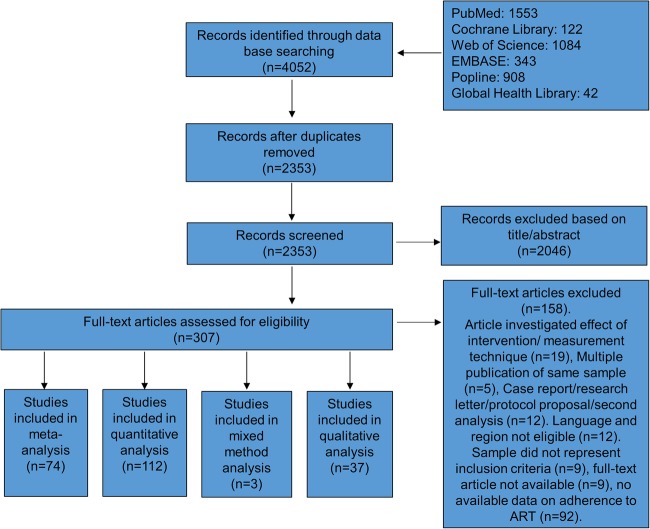
OBJECTIVE: The rapid scale up of antiretroviral treatment (ART) in sub-Saharan Africa (SSA) has resulted in an increased focus on patient adherence. Non-adherence can lead to drug-resistant HIV caused by failure to achieve maximal viral suppression. Optimal treatment requires the identification of patients at high risk of suboptimal adherence and targeted interventions. The aim of this review was to identify and summarise determinants of adherence to ART among HIV-positive adults. DESIGN: Systematic review of adherence to ART in SSA from January 2002 to October 2014. METHODS: A systematic search was performed in 6 databases (PubMed, Cochrane Library, EMBASE, Web of Science, Popline, Global Health Library) for qualitative and quantitative articles. Risk of bias was assessed. A meta-analysis was conducted for pooled estimates of effect size on adherence determinants. RESULTS: Of the 4052 articles screened, 146 were included for final analysis, reporting on determinants of 161 922 HIV patients with an average adherence score of 72.9%. Main determinants of non-adherence were use of alcohol, male gender, use of traditional/herbal medicine, dissatisfaction with healthcare facility and healthcare workers, depression, discrimination and stigmatisation, and poor social support. Promoters of adherence included counselling and education interventions, memory aids, and active disclosure among people living with HIV. Determinants of health status had conflicting influence on adherence. CONCLUSIONS: The sociodemographic, psychosocial, health status, treatment-related and intervention-related determinants are interlinked and contribute to optimal adherence. Clinics providing ART in SSA should therefore design targeted interventions addressing these determinants to optimise health outcomes.
Overview
CoChat Summary
## TL;DR
This systematic review of studies from sub-Saharan Africa found that ART adherence is shaped by interlinked sociodemographic, psychosocial, treatment-related, health-status, and intervention-related factors. Across 146 included articles on 161,922 patients, the most consistent barriers were alcohol use, male gender, traditional/herbal medicine use, poor patient–provider experiences, depression, discrimination/stigma, and poor social support.
## Key findings
- Of 4,052 articles screened, 146 were included in the final analysis; these reported on 161,922 HIV patients and an average adherence score of 72.9% (using the paper’s 95% adherence definition). The average adherence rate was also reported as 52.5% when adherence was defined as 100%.
- Main determinants of non-adherence were alcohol use, male gender, use of traditional/herbal medicine, dissatisfaction with healthcare facilities and healthcare workers, depression, discrimination and stigmatisation, and poor social support.
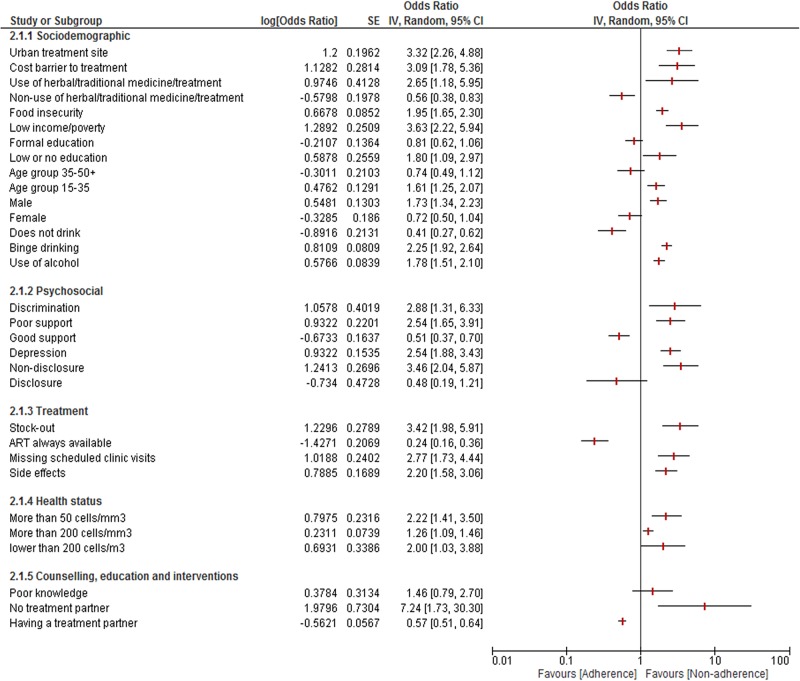
- Meta-analysis found non-adherence was associated with alcohol use (OR=1.78; 95% CI 1.51 to 2.09), binge drinking (OR=2.25; 95% CI 1.92 to 2.65), male gender (OR=1.73; 95% CI 1.34 to 2.23), younger age 15–35 years (OR=1.61; 95% CI 1.25 to 2.06), and use of herbal/traditional medicine/treatment (OR=2.65; 95% CI 1.18 to 5.95).
- Promoters of adherence included reliable ART availability (OR=0.24; 95% CI 0.16 to 0.37), good social support (OR=0.51; 95% CI 0.37 to 0.71), having a treatment partner (OR=0.57; 95% CI 0.51 to 0.64), and counselling/education, memory aids, and active disclosure.
## Methods
- Systematic review conducted per PRISMA and the Cochrane Handbook, with protocol registered in PROSPERO (CRD42014014476); search covered January 2002 to 27 October 2014.
- Searched 6 databases: PubMed/MEDLINE, Cochrane Library, EMBASE, Web of Science, POPLINE, and Global Health Library; included qualitative, quantitative, and mixed-methods studies of HIV-positive adults (≥15 years) receiving ART in sub-Saharan Africa.
- Risk of bias was assessed separately for quantitative and qualitative studies; meta-analysis pooled effect sizes (ORs/RRs) for determinants reported in at least two studies, with heterogeneity assessed using I².
## Limitations
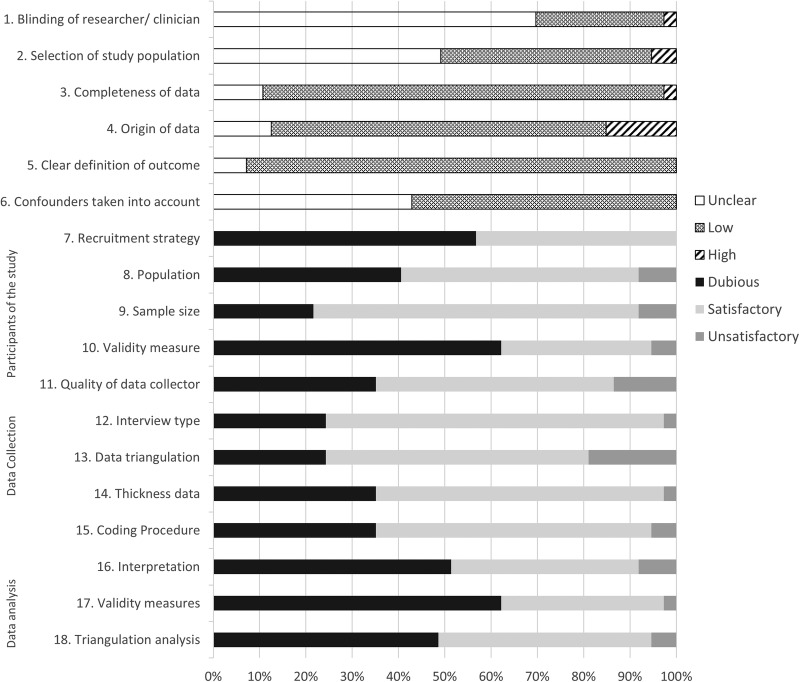
- The paper states that inference is limited by the quality of the underlying studies, including limited consideration of confounders; it also notes that data extraction was done mostly by one reviewer, which could have introduced bias.
- The paper states there was significant heterogeneity in adherence definitions, participant inclusion criteria, and adherence measurement methods across studies, and no gold standard measure was used.
- Evident from the text: not all included studies were suitable for meta-analysis because some lacked complete risk estimates, so several determinants were summarized narratively rather than quantitatively.
Model-written summary. Check it against the paper before relying on it.
Integrity signals
Registry
Cites
Statistics
Figures
Verification
Claims the paper makes
2 Valid · 1 Not valid · 29 Not checked · 40 Own results and interpretations
The cited sources support only part of this claim — read each source’s verdict below.
In the paper
“Studies on ART adherence showed that predictors and risk factors differ per region of the world, necessitating context-specific development of non-adherence profiles.9 10”
§ Determinants of adherence to antiretroviral therapy among HIV-positive adults in sub-Saharan Africa: a systematic review > Introduction
What the sources say
- Partly supportedcites [9] Ware NC, Idoko J, Kaaya S Explaining adherence success in sub-Saharan Africa: an ethnographic study. PLoS Med 2009; 6: e11 10.1371/journal.pmed.1000011 19175285 PMC2631046 sourceExperimental — accuracy not yet measured
The Discussion contrasts economic obstacles and social relationships in sub-Saharan Africa with an individual-level account of adherence in North America, and describes a theory of differences between resource-poor and resource-rich settings. This supports context-dependent influences on adherence, but the paper does not establish that predictors and risk factors differ across regions of the world generally. The call for context-specific non-adherence profiles is the citing authors’ inference, not a finding reported in this paper. (LLM, conf=0.83)
- Not checked — no full text of the sourcecites [10] Mills EJ, Nachega JB, Buchan I Adherence to antiretroviral therapy in sub-Saharan Africa and North America: a meta-analysis. JAMA 2006; 296: 679– 90. 10.1001/jama.296.6.679 16896111 source
plainstates an association- Asserted: passes — The authors put it forward as true.
- Checkable: passes — It can be checked against evidence.
- Load-bearing: passes — The paper’s conclusions depend on it.
- Based: passes — The paper gives a reason why it holds.
- Partly supported
Every source the paper cites for this claim was checked and supports it.
In the paper
“For a comprehensive overview, both qualitative and quantitative studies were included,12 as qualitative studies may identify key themes not found, described or discussed in larger quantitative studies.”
§ Determinants of adherence to antiretroviral therapy among HIV-positive adults in sub-Saharan Africa: a systematic review > Introduction
What the sources say
- Supportedcites [12] Mills E, Nachega J, Bangsberg D Adherence to HAART: a systematic review of developed and developing nation patient-reported barriers and facilitators. PLoS Med 2006; 3: 2039– 64. PMC1637123 17121449 source
The Discussion reports that the review identified key themes in qualitative studies that larger quantitative studies had not examined. The Results give examples of barriers and facilitators described in qualitative studies but absent from the quantitative studies. (LLM, conf=0.94)
hedgedstates a possible cause- Asserted: passes — The authors put it forward as true.
- Checkable: passes — It can be checked against evidence.
- Load-bearing: passes — The paper’s conclusions depend on it.
- Based: passes — The paper gives a reason why it holds.
- Supported
None of the sources cited for this claim have been checked yet.
In the paper
“Lower levels of education corresponded with non-adherence,42 45 52 53 56 57 and higher adherence was observed among patients with formal education.58–60”
§ Determinants of adherence to antiretroviral therapy among HIV-positive adults in sub-Saharan Africa: a systematic review > Results > Determinants of (non-)adherence
plainstates an association- Asserted: passes — The authors put it forward as true.
- Checkable: passes — It can be checked against evidence.
- Load-bearing: unclear — It is unclear whether the paper’s conclusions depend on it.
- Based: passes — The paper gives a reason why it holds.
None of the sources cited for this claim have been checked yet.
In the paper
“low or no education (OR=1.80; 95% CI 1.09 to 2.98; I2=81%),30 75 78 93 97 114 118”
§ Determinants of adherence to antiretroviral therapy among HIV-positive adults in sub-Saharan Africa: a systematic review > Results > Sociodemographic and socioeconomic factors
plainstates an association- Asserted: passes — The authors put it forward as true.
- Checkable: passes — It can be checked against evidence.
- Load-bearing: passes — The paper’s conclusions depend on it.
- Based: passes — The paper gives a reason why it holds.
51 more claims
Create a free account to see all 72 claims and every source verdict.
- Probably not a substantial claim. 11
- It may state two separate claims as one. 6
Claims other papers make about this one
Each is checked against this paper’s own text: does it say what the citing paper says it does?
The source backs part of the claim, not all of it — or backs it for a different population, condition or comparison.
In the citing paper
“We used the Center for Adherence Support Evaluation (CASE) adherence index [33, 34], a scale that has been widely used in sub-Saharan Africa to measure adherence to ART [34–36].”
From Associations Between Patterns of Alcohol Use and Viral Load Suppression Amongst Women Living with HIV in South Africa (2021) · cites this paper as [35]
Experimental — accuracy not yet measuredThe cited source says what the claim attributes to it.
In the citing paper
“However, failure to disclose one’s HIV status has been associated with poor adherence to ART [43].”
From Echoes of old HIV paradigms: reassessing the problem of engaging men in HIV testing and treatment through women’s perspectives (2017) · cites this paper as [43]
Citations
Cites
Preferred Reporting Items for Systematic Reviews and Meta-Analyses: the PRISMA statement
Moher, D., Liberati, A., Tetzlaff, J., Altman, D. G., & for the PRISMA Group (2009) · BMJ · doi:10.1136/bmj.b2535 · Cited by 83,823
Preferred Reporting Items for Systematic Reviews and Meta-Analyses: The PRISMA Statement
Moher, D., Liberati, A., Tetzlaff, J., Altman, D. G., & The PRISMA Group (2009) · PLoS Medicine · doi:10.1371/journal.pmed.1000097 · Cited by 64,042
Wang, G., Ma, R., Qiao, G., Wada, K., Aizawa, Y., & Satoh, T. (2015) · Integrative Medicine International · doi:10.1159/000368408 · Cited by 18,657
Suñé, P., Suñé, J. M., & Montoro, J. B. (2013) · PLoS ONE · doi:10.1371/journal.pone.0054583 · Cited by 1,687
A Selected Core Microbiome Drives the Early Stages of Three Popular Italian Cheese Manufactures
De Filippis, F., La Storia, A., Stellato, G., Gatti, M., & Ercolini, D. (2014) · PLoS ONE · doi:10.1371/journal.pone.0089680 · Cited by 1,398
Adherence to Antiretroviral Therapy in Sub-Saharan Africa and North America: A Meta-analysis
Mills, E. J., Nachega, J. B., Buchan, I., Orbinski, J., Attaran, A., Singh, S., Rachlis, B., Wu, P., Cooper, C., Thabane, L., et al. (2006) · JAMA · doi:10.1001/jama.296.6.679 · Cited by 899 · cited 1×
“9 10 This will enable healthcare providers to offer tailored care for patients at risk of non-adherence.”
BackgroundMills, E. J., Nachega, J. B., Bangsberg, D. R., Singh, S., Rachlis, B., Wu, P., Wilson, K., Buchan, I., Gill, C. J., & Cooper, C. (2006) · PLoS Medicine · doi:10.1371/journal.pmed.0030438 · Cited by 818 · cited 1×
“satisfaction with a healthcare provider may be more important in SSA countries with a low and medium Human Development Index,(11) as well as issues of access to healthcare, impact of financial constraints, and disruption of services and medication distribution.(12) A strength of this systematic review is our mixed-”
BackgroundPreferred Reporting Items for Systematic Reviews and Meta-Analyses
Vrabel, M. (2015) · Oncology Nursing Forum · doi:10.1188/15.onf.552-554 · Cited by 669
Humby, F., Bombardieri, M., Manzo, A., Kelly, S., Blades, M. C., Kirkham, B., Spencer, J., & Pitzalis, C. (2009) · PLoS Medicine · doi:10.1371/journal.pmed.0060001 · Cited by 537
Hunger, waiting time and transport costs: Time to confront challenges to ART adherence in Africa
Hardon, A. P., Akurut, D., Comoro, C., Ekezie, C., Irunde, H. F., Gerrits, T., Kglatwane, J., Kinsman, J., Kwasa, R., Maridadi, J., et al. (2007) · AIDS Care · doi:10.1080/09540120701244943 · Cited by 497
Research works printed but not linked: 5
- Deeks JJ Chapter 9: Analysing data and undertaking. Cochrane Handbook for Systematic Reviews of Interventions Version 510 (updated March 2011) 2011: 1– 43.
- Erah P, Arute J Adherence of HIV/AIDS patients to antiretroviral therapy in a tertiary health facility in Benin City. Afr J Pharm Pharmacol 2008; 2: 145– 52.
- Sow P, Toure K, Coume M Predictors of ART adherence among HIV infected individuals in Dakar, Senegal. J Med Med Sci 2012; 3: 212– 16.
- 10.1186/1742-6405-7-1 · DOI
- 10.1016/S0033-3182(10)70661-7 · doi:10.1016/s0033-3182(10)70661-7
Cited by
Items 201–300 of 358
Sex Trade and Health Care Utilization Among People Living with HIV/AIDS
Urada, L. A., Smith, L. R., Yore, J. B., Triplett, D. P., Hucks‐Ortiz, C., & Raj, A. (2018) · AIDS and Behavior · doi:10.1007/s10461-018-2131-4 · Cited by 4
Badru, O. A., Edeh, J. C., Okonkwo, R. I., Bain, L. E., & Adeagbo, O. (2025) · AIDS Research and Treatment · doi:10.1155/arat/5757907 · Cited by 6
“%) to adhere to ART [32].”
Nemomsa, G., & Azath, M. (2021) · Journal of Healthcare Engineering · doi:10.1155/2021/1161923 · Cited by 4
“A study [13] from Sub-Saharan Africa states that they follow up adherence to treat the HIV patients.”
BackgroundBantie, B., Gebeyehu, N. A., Adella, G. A., Kassie, G. A., Mengstie, M. A., Abebe, E. C., Seid, M. A., Gesese, M. M., Tegegne, K. D., Anley, D. T., et al. (2024) · Scientific Reports · doi:10.1038/s41598-024-53701-0 · Cited by 8
“Furthermore, HIV-positive adults who were unemployed had poor adherence to ART, which increased the likelihood of acquiring opportunistic infections and viral replications 44 .”
BackgroundThe Burden of Pretreatment HIV Drug Resistance in Trinidad and Tobago
Gbadamosi, S. O., Boyce, G., Trepka, M. J., et al. (2023) · AIDS Research and Human Retroviruses · doi:10.1089/aid.2022.0155 · Cited by 4
“It is also likely that pharmacological dosages and medication adherence, which is influenced by a combination of multifaceted factors (behavioral, social, and structural), 32 could have an effect on viral suppression.”
Tesfay, S., Ayele, F., Fissahaye, B., et al. (2024) · Frontiers in Public Health · doi:10.3389/fpubh.2024.1363903 · Cited by 4
Croome, N., Potter, L., Bere, T. C., Nyamayaro, P. C., Machando, D., Hughes, L. D., Chibanda, D., Abas, M., & Kidia, K. K. (2020) · Journal of Global Health Reports · doi:10.29392/001c.18083 · Cited by 5
Determinants of antiretroviral therapy adherence among transgender women in South Africa
van der Merwe, L. L. A., Moyo, I., & Mavhandu‐Mudzusi, A. H. (2024) · South African Family Practice · doi:10.4102/safp.v66i1.5869 · Cited by 7
Dreyer, A. J., Nightingale, S., Andersen, L. S., Lee, J. S., Gouse, H., Safren, S. A., O’Cleirigh, C., Thomas, K. G. F., & Joska, J. (2023) · AIDS and Behavior · doi:10.1007/s10461-023-03992-7 · Cited by 3
“This finding is consistent with other South African studies suggesting that women have better ART adherence than men [36, 38, 86].”
ResultAghedo, O. G. (2024) · Public Health Open Access · doi:10.23880/phoa-16000270 · Cited by 3
Gini, J., Amara, A., Penchala, S. D., Back, D. J., Else, L., Egan, D., Chiong, J., Harri, B. I., Kabilis, E. D., Pama, P. P., et al. (2018) · International Journal of STD & AIDS · doi:10.1177/0956462418809749 · Cited by 4
Perngmark, P., Sahawiriyasin, O., & Holroyd, E. A. (2023) · Belitung Nursing Journal · doi:10.33546/bnj.2426 · Cited by 3
“ART non-adherence is the most common reason for treatment failure, with the potential risk of developing drug resistance through suboptimal viral suppression (Heestermans et al., 2016; Iacob et al., 2017).”
BackgroundResultInfluentialMkandawire, J., Ssewamala, F. M., Hahn, J. A., Mulauzi, N., Neilands, T. B., Tebbetts, S., Darbes, L. A., Brown, D. S., & Conroy, A. A. (2025) · BMJ Open · doi:10.1136/bmjopen-2024-097247 · Cited by 3
Darbes, L. A., Ayadi, A. M. E., Gilvydis, J. M., Morris, J. L., Raphela, E., Naidoo, E., Grignon, J. S., Barnhart, S., & Lippman, S. A. (2023) · AIDS and Behavior · doi:10.1007/s10461-023-04102-3 · Cited by 3
“Broadly speaking, men in SSA have been found to have worse adherence to ART [19], but less depression, compared to women [20].”
ResultMetta, E. O., Yonathan, W., & Leshabari, M. T. (2021) · International Journal of HIV/AIDS Prevention Education and Behavioural Science · doi:10.11648/j.ijhpebs.20210701.12 · Cited by 2
MASIANO, S. P., Tembo, T. A., Yu, X., Wetzel, E., Mphande, M., Chitani, M., Mkandawire, A., Khama, I., Mazenga, A. C., Abrams, E. J., et al. (2023) · Therapeutic Advances in Infectious Disease · doi:10.1177/20499361221148875 · Cited by 3
Spectrum and trends of cancer among HIV patients in Southwestern Uganda
Atwine, R., Mitala, Y., Birungi, A., et al. (2025) · PLoS ONE · doi:10.1371/journal.pone.0317222 · Cited by 3
Keene, C., Jennings, L., Källström-Ståhlgren, C.-O., Katz, I. T., Sabin, L., Schreuder, C., Singh, Y., Orrell, C., & Amico, K. R. (2025) · AIDS and Behavior · doi:10.1007/s10461-025-04867-9 · Cited by 11
Salimu, S. N., Taylor, M., Spencer, S. A., Nyirenda, D., Desmond, N., & Morton, B. (2024) · medRxiv · doi:10.1101/2024.09.27.24314469 · Cited by 3
Touré, A. F., Cissé, D., Kadio, K. J. J. O., et al. (2018) · Revue d Épidémiologie et de Santé Publique · doi:10.1016/j.respe.2018.04.057 · Cited by 3
Lancaster, K. E., Remch, M., Dzudié, A., Ajeh, R. A., Adedimeji, A., Nash, D., Anastos, K., Yotebieng, M., Yone-Pefura, E. W., Nsame, D., et al. (2021) · International Journal of Drug Policy · doi:10.1016/j.drugpo.2021.103431 · Cited by 3
Adherence to Taking ARV Drugs in Adolescents with HIV/AIDS
Nuraidah, N., & Wanda, D. (2022) · Jurnal Kesehatan Masyarakat · doi:10.15294/kemas.v17i3.23220 · Cited by 9
Sarna, A., Singh, R. J., Schensul, J. J., Gaikwad, S. S., Joshi, K., Malye, R., Mahapatra, B., Ha, T., & Schensul, S. L. (2020) · International Journal of STD & AIDS · doi:10.1177/0956462420921731 · Cited by 3
“Of these, the presence of alcohol and depression are consistently associated with poorer adherence across studies.(6,27,29) Alcohol use is common among PLHIV and the deleterious effects of alcohol consumption on ART adherence and treatment interruptions (TIs) are well known.”
BackgroundKidie, A. A., Serunjogi, D., Demeke, S. M., Ayal, B. G., Mwombeki, I., Mahenge, B., Namugumya, R., Gooden, T. E., Kasujja, F. X., & Mkhoi, M. L. (2026) · Frontiers in Public Health · doi:10.3389/fpubh.2026.1778334 · Cited by 3
“Within a syndemic context, depression may both arise from and intensify co-occurring psychosocial stressors, generating reinforcing feedback loops that heighten vulnerability to poor HIV outcomes (ART adherence and viral suppression) (60, 61).”
Abdulai, M. A. (2023) · Research Publications (Maastricht University) · doi:10.26481/dis.20230710ma · Cited by 3
Sow, M., Sylla, K., Cissé, D., et al. (2019) · Advances in Infectious Diseases · doi:10.4236/aid.2019.93018 · Cited by 2
Martin, M. A., Blenkinsop, A., Moffa, M., Reynolds, S. J., Nalugoda, F. K., Quinn, T. C., Kigozi, G., Ssekubugu, R., Gupta, R. K., Grayson, N. E., et al. (2025) · medRxiv · doi:10.1101/2025.09.01.25334862 · Cited by 2
Gyamerah, A. O., Marr, A., Maleke, K., Manyuchi, A. E., Mirzazadeh, A., Radebe, O., Lane, T., Puren, A. J., Steward, W. T., Struthers, H. E., et al. (2024) · PLOS Global Public Health · doi:10.1371/journal.pgph.0003271 · Cited by 3
“Younger age, substance abuse, and lack of social support have been reported as barriers to engagement in care and viral suppression for PLHIV [10–13].”
BackgroundAgyeman‐Yeboah, J., Ricks, E. J., Williams, M., et al. (2022) · Journal of Advanced Nursing · doi:10.1111/jan.15245 · Cited by 2
Mohamud, A. K., Garba, B., Dirie, N. I., Inchon, P., Nur, M. A. S., Mohamoud, J. H., & Ahmed, M. M. (2025) · PLoS ONE · doi:10.1371/journal.pone.0320983 · Cited by 7
“An average of 72.9% of ART adherence is reported in sub-Saharan Africa [5].”
InfluentialHIV/AIDS Transmission based on the SI Infectious Disease Model
Zhou, S. (2024) · International Conference on Integrated Circuits and Communication Systems (ICICACS) · doi:10.1109/icicacs60521.2024.10498358 · Cited by 2
“Jiang J, in study[9], examined the impact of implantation of immunocompromised mice with reactivation of HIV-1 latent virus after inactive CD4+ T cells.”
BackgroundSidjabat, F. N., Arrumasari, B. L., Ratnanggana, N. P. P. A., et al. (2021) · Journal Of The Indonesian Medical Association · doi:10.47830/jinma-vol.71.3-2021-420 · Cited by 2
Onwuamah, C. K., Okpokwu, J., Audu, R., Imade, G., Meloni, S., Okwuraiwe, A. P., Chebu, P., Musa, A. Z., Chaplin, B., Dalhatu, I., et al. (2020) · BMC Microbiology · doi:10.1186/s12866-020-1706-1 · Cited by 2
Salimu, S. N., Taylor, M., Spencer, S. A., Nyirenda, D., Desmond, N., & Morton, B. (2025) · PLOS Global Public Health · doi:10.1371/journal.pgph.0003836 · Cited by 11
“A systematic review on determinants of HIV treatment adherence in SSA reports that adherence is linked to patient perceptions towards improved health outcomes [66].”
dos Santos, É. E. P., Ribeiro, A. C., de Paula, C. C., & Padoin, S. M. D. M. (2020) · Research Society and Development · doi:10.33448/rsd-v9i7.4254 · Cited by 2
“…eficácia nesse tratamento, os jovens infectados apresentam outras demandas como ir às consultas periodicamente, realizar exames laboratoriais, cuidar de maneira mais rigorosa da saúde para preservar sua imunidade, sendo necessário reorganizarem sua vida pessoal e social (Heestermans et al., 2016).”
BackgroundVo, L. T., Phan, D. Q., Quang, B. V. K., Vo, L. Y., Nguyen, H. T. M., Gyan, A., Nguyen, H. T. N., & Huỳnh, G. (2025) · Asian Pacific Journal of Tropical Medicine · doi:10.4103/apjtm.apjtm_32_25 · Cited by 4
Mageras, A., Brazier, E., Niyongabo, T., Murenzi, G., Sinayobye, J. D., Adedimeji, A., Twizere, C., Kelvin, E. A., Anastos, K., Nash, D., et al. (2021) · International Journal of STD & AIDS · doi:10.1177/0956462420983783 · Cited by 2
“We focused on these characteristics because age and urban versus rural residence are correlated with retention in HIV care and with treatment outcomes and mortality in subSaharan Africa.26–30 Further, studies have found associations between sex and uptake of HIV care and services,31,32 medication adherence,33 and HIV…”
MethodHickman, J.-H., Swartz, A., Sicwebu, N., Stek, C. J., Masimini, N., & Nöstlinger, C. (2024) · PLoS ONE · doi:10.1371/journal.pone.0275554 · Cited by 6
“Alcohol consumption may act as a coping strategy in two ways: for its self-medicating suppressant effects [55], and as a link to the social experience of consuming alcohol with peers that in the past produced a sense of well-being and belonging [52].”
BackgroundFoláyan, M. O., Zúñiga, R. A. A., Aly, N. M., Ellakany, P., Idigbe, I. E., Jafer, M. A., Lawal, F. B., Khalid, Z., Lusher, J. M., Virtanen, J. I., et al. (2023) · BMC Research Notes · doi:10.1186/s13104-023-06363-6 · Cited by 3
“…were excluded from analyses; Confounding variables considered included age at last birthday [28, 29], sex at birth (male, female, intersex, no response) [30, 31] educational status (No formal education, primary level, secondary level and tertiary level) and self-report of depression [32, 33].”
BackgroundThe relationship between alcohol consumption and risk of HIV in married men in Sub-Saharan Africa
König, L., Williams, P. P., Shuper, P. A., & Probst, C. (2023) · AIDS · doi:10.1097/qad.0000000000003815 · Cited by 2
Pengpid, S., Veld, D. H. I. ‘., & Peltzer, K. (2019) · Journal of Psychology in Africa · doi:10.1080/14330237.2019.1616421 · Cited by 2
Shrestha, S., Badri, K. C., Shrestha, Y., et al. (2021) · Pharmaceutical Sciences Asia · doi:10.29090/psa.2021.01.19.051 · Cited by 2
Kajubi, P., Parkes-Ratanshi, R. M., Twimukye, A., Naggirinya, A. B., Nabaggala, M. S., Kiragga, A. N., Castelnuovo, B., & King, R. L. (2022) · JMIR Formative Research · doi:10.2196/36829 · Cited by 4
“Consequently, these factors cause poor adherence to therapy, resulting in treatment failure and the development of viral resistance to antiretroviral medications [6,11,12].”
BackgroundThahir, S., Morgan, C., Ngimbi, P., et al. (2024) · Journal of the Pediatric Infectious Diseases Society · doi:10.1093/jpids/piae081 · Cited by 2
Tarkang, E. E., Manu, E., Aku, F. Y., Komesuor, J., Charles-Unadike, V. O., Khuzwayo, N., & Anaman-Torgbor, J. A. (2025) · PLoS ONE · doi:10.1371/journal.pone.0333695 · Cited by 4
“Also, long distances to ART facilities significantly contribute to treatment interruption among people living with HIV [66].”
Kaiser, J. L., Trowbridge, E., Vian, T., Haberer, J. E., Paudel, R., DeMaria, J., Orrell, C., Jennings, L., Gifford, A. L., Halim, N., et al. (2025) · AIDS and Behavior · doi:10.1007/s10461-025-04959-6 · Cited by 2
“…attitudes, and training [18]; counseling strategies [19]; quality of care, including safeguards for privacy and confidentiality [ 20]; and ART regimen [21, 22]), the availability and cost of transport to a clinic [2, 21], food insecurity [2, 23, 24], and gender inequity [25–28], among others.”
InfluentialShrestha, A., Poudel, L., Adhikari, B., Bhandari, S., Shrestha, R., Kunwar, R. S., Pandey, L. R., Man Bahadur, K. C., Wilson, E. C., & Deuba, K. (2025) · Public Health in Practice · doi:10.1016/j.puhip.2025.100634 · Cited by 3
Ramlagan (2019) · Research Publications (Maastricht University) · doi:10.26481/dis.20191203sr · Cited by 1
Chamberlin, S., Mphande, M., Kalande, P., Phiri, K., & Dovel, K. L. (2025) · SSM - Qualitative Research in Health · doi:10.1016/j.ssmqr.2025.100599 · Cited by 1
“Our qualitative findings are consistent with other work that finds that education and chronic HIV care management are independent from one another (Chamberlin, 2022; Heestermans et al., 2016).”
Nwosu, K. O. S., Kalaiwo, A., Ng’ambi, W. F., Estill, J. A. M., Omo-Emmanuel, U. K., Emmanuel, G. O., & Keiser, O. (2024) · PLoS ONE · doi:10.1371/journal.pone.0304487 · Cited by 1
Anderle, R. V. R., Rubio, F. A., Scaff, P., Bertoni, A. P. S., Ordoñez, J. A., Lua, I., Barreix, G., Naidoo, M., Macinko, J. A., de Souza, L. E. P. F., et al. (2025) · BMJ Global Health · doi:10.1136/bmjgh-2024-017726 · Cited by 3
“These dynamics were influenced by the SDH of income, education, sex and race.”
Indriastuti, N. A., & Ayuningtyas, R. (2021) · Open Access Macedonian Journal of Medical Sciences · doi:10.3889/oamjms.2021.5803 · Cited by 1
“189 AIM: This study aims to identify discriminatory behavior in PLWHA toward adherence to ART in Yogyakarta.”
BackgroundInfluentialOgola, B., Matume, N. D., Tebit, D. M., et al. (2024) · PLoS ONE · doi:10.1371/journal.pone.0307519 · Cited by 1
Assefa, S., & Dulla, D. (2020) · International Journal of Pregnancy & Child Birth · doi:10.15406/ipcb.2020.06.00206 · Cited by 1
Sidiropoulos, S., Emmanouil-Kalos, A., Chouzouris, M., Xenos, P., & Vozikis, A. (2025) · Healthcare · doi:10.3390/healthcare13141716 · Cited by 4
“According to Heestermans et al. [9], patient “refusal” to follow scheduled treatments is a frequent phenomenon in the region.”
InfluentialGabillard, D., Ntakpé, J.-B., Chaix, M., et al. (2021) · Journal of Antimicrobial Chemotherapy · doi:10.1093/jac/dkab225 · Cited by 1
Alhassan, A., Odonkor, F. O., Ofori, G. O., Nabe, B., Gunu, A. I., Craymah, J. P., Nortey, A. N., Doe, P. F., Asiedu, C., & Amoadu, M. (2026) · Discover Public Health · doi:10.1186/s12982-026-02255-9 · Cited by 1
“…therapy adherence rarely operate independently; rather, socioeconomic deprivation, food insecurity, transportation difficulties, and limited healthcare access frequently intensify psychosocial challenges such as stigma, emotional distress, fear of disclosure, and treatment fatigue [14, 16].”
InfluentialRochat, T., Dube, S., Herbst, K., et al. (2021) · Research Square · doi:10.21203/rs.3.rs-383359/v1 · Cited by 1
Soneja, M., Aggarwal, A., Kodan, P., & Gupta, N. R. (2021) · Oxford Medical Case Reports · doi:10.1093/omcr/omaa147 · Cited by 1
“It is also essential to empowering the patient about their rights [8,9].”
BackgroundWachamo, D., & Bonja, F. (2019) · doi:10.21203/rs.2.17125/v2 · Cited by 1
“4%) is living with the deadly virus, account for nearly 70% of the global burden of HIV [3, 4].”
BackgroundOwhonda, G. C., & Luke, A. (2022) · International Journal of Community Medicine and Public Health · doi:10.18203/2394-6040.ijcmph20222228 · Cited by 1
Wachamo, D., & Bonja, F. (2019) · doi:10.21203/rs.2.17125/v1 · Cited by 1
“4%) is living with the deadly virus, account for nearly 70% of the global burden of HIV [3, 4].”
BackgroundMoholola, M., Rees, K., Motsoane, N., Kgopong, N., & Mutyambizi, C. (2025) · PLoS ONE · doi:10.1371/journal.pone.0317015 · Cited by 1
Brittain, K., Brown, K. L., Phillips, T. K., Zerbe, A., Pellowski, J. A., Remien, R. H., Mellins, C. A., Abrams, E. J., & Myer, L. (2023) · AIDS and Behavior · doi:10.1007/s10461-023-04097-x · Cited by 1
“Contextual factors known to be associated with poor ART outcomes include an individual’s background characteristics such as poverty [18–20], and internal contextual factors include mental health problems such as depression or psychological distress [18, 21, 22] as well as alcohol use [19, 21–24].”
BackgroundGutin, S. A., Mulauzi, N., Jere, J., Sungani, C. W., Tebbetts, S., Ruark, A. H., Mkandawire, J., & Conroy, A. A. (2025) · PLoS ONE · doi:10.1371/journal.pone.0331202 · Cited by 6
DesLauriers, N. R., Sambai, B., Mbogo, L., Ludwig-Barron, N., Kingston, H., Chohan, B. H., Gitau, E., Sinkele, W., Masyuko, S. J., Herbeck, J. T., et al. (2023) · AIDS and Behavior · doi:10.1007/s10461-023-04113-0 · Cited by 2
“This is consistent with several systematic reviews which have found that alcohol is reliably associated with lower ART uptake and/or adherence among PLWH, including in sub-Saharan Africa [17, 18, 45].”
ResultBarros, C. R. D. S., Matsuda, E. M., da Rocha, A. B. M., Lopes, G. I. S. L., Campos, N. C., Brígido, L. F. D. M., Bassichetto, K. C., & Veras, M. A. D. S. M. (2024) · Epidemiologia e Serviços de Saúde · doi:10.1590/s2237-96222024v33e2024412.especial.en · Cited by 1
Bradley, K., Pellowski, J. A., Schatz, E. J., Githaiga, J. N., Kannemeyer, N., & Knight, L. (2025) · AIDS Care · doi:10.1080/09540121.2025.2600651 · Cited by 1
“…an inhibitor to engagement in care for OPLWH because HIV remains highly stig-matised, and evidence indicates that it is a barrier in general adult populations (Croome et al., 2017; Har-greaves et al., 2018; Heestermans et al., 2016; Kalichman et al., 2019; Katz et al., 2013; Soomro et al., 2019).”
HIV-positive men as a key population for fighting HIVDR in Africa
Herrmann, J. C., Lushaba, J., Michielsen, L., et al. (2018) · Transdisciplinary Insights · doi:10.11116/tdi2018.2.3 · Cited by 1
Jongen, V. W., Boyd, A. C., Carrieri, P., Schat, N., Lowe, S. H., van Zoest, R. A., van Vonderen, M. G. A., Lammers, J., Verhagen, M. D., van Sighem, A., et al. (2025) · The Lancet Regional Health - Europe · doi:10.1016/j.lanepe.2025.101508 · Cited by 3
Metekie, A. B. (2023) · Indian Journal of Health Studies · doi:10.56490/ijhs.2023.5104
Immunological and Virological Failure among Individuals on Highly-Active Antiretroviral Therapy
Negash, H., Berhe, B., & Gebregergis, M. W. (2022) · IntechOpen eBooks · doi:10.5772/intechopen.98593 · Cited by 2
Odhiambo, F., Onyango, R., Lewis-Kulzer, J., et al. (2025) · PLOS Global Public Health · doi:10.1371/journal.pgph.0004481 · Cited by 1
“Poor retention in HIV care and treatment programs has been identified as the most common reason for treatment failure among PLHIV on ART [14,15].”
Ating’ah, L. O., Odek, A. W., & Ochieng, D. (2024) · African Journal of Empirical Research · doi:10.51867/ajernet.5.4.20 · Cited by 1
“The consistency between the study's findings and Heestermans et al. (2016) work reveals the pivotal role that information access plays in determining the uptake of HIV/AIDS healthcare.”
BackgroundInfluentialMotivational Interviewing for antiretroviral therapy adherence in Nigeria: A feasibility study
Kayode, O. L. (2018) · Anglia Ruskin Research Online (Anglia Ruskin University) · Cited by 1
Chimbetete, C., Mudzviti, T., & Shamu, T. (2020) · Southern African Journal of HIV Medicine · doi:10.4102/sajhivmed.v21i1.1164 · Cited by 1
Ochieng, M., Kikuvi, G. M., & Mokaya, D. (2021) · International Journal of Health Sciences and Research · doi:10.52403/ijhsr.20211219 · Cited by 1
“(2) In order to achieve optimum treatment outcomes, an adherence rate of 95% is required.”
BackgroundResultInfluentialA bad migrant: An autoethnographic case study of racism in Australian HIV care
Istiko, S. N. (2024) · Health An Interdisciplinary Journal for the Social Study of Health Illness and Medicine · doi:10.1177/13634593241306578 · Cited by 1
“Recent reviews have emphasised the need to attend to multiple determinants of adherence beyond the individual patient-related factors (Heestermans et al., 2016; Hugtenburg et al., 2013).”
Morgan, C., Thahir, S., Ngimbi, P., Mwandagalirwa, K., Ntambua, S., Matondo, J., Tabala, M., Nlombi, C. M., Kaba, D. K., Yotebieng, M., et al. (2023) · medRxiv · doi:10.1101/2023.03.30.23287808 · Cited by 3
“(39–41) Beliefs, misguided or not, can affect adherence,(42) but are generally found to be less effective than improved knowledge in the disease process and therapy.(43,44) A critical misguided belief observed in this study was that the treatment would cure the women of HBV.”
BackgroundEssien, E. J., & Mgbere, O. O. (2025) · International Journal of Maternal and Child Health and AIDS · doi:10.25259/ijma_50_2024 · Cited by 1
“13] Nonadherent patients are prone to having a weakened immune system and increased morbidity and mortality.”
Thiam, M., Badiane, A. S., Diallo, M. B., Faye, A., Diouf, N., Sene, M., Dieye, N., Sow, H. O., Thioub, D., Diouf, M. D., et al. (2026) · Pharmacology & Pharmacy · doi:10.4236/pp.2026.179016
Tindikali, P. T., & Mpambije, C. J. (2026) · Global Social Welfare · doi:10.1007/s40609-026-00437-6
The Utilization of Voluntary Counseling and Testing by Women of Reproductive Age in West Papua
Widiyanti, M., Adiningsih, S., Pramestiyani, M., Fitrianingtyas, R., & Rampa, E. (2023) · Jurnal Kesehatan Masyarakat · doi:10.15294/kemas.v18i3.34942 · Cited by 2
“Married people suffering from HIV tend to have positive attitudes that could affect the accessibility, and adherence to ARV therapy (Heestermans et al., 2016).”
BackgroundWoldasemayat, L. A., Jiru, B. I., & Edossa, Z. K. (2020) · Research Square · doi:10.21203/rs.3.rs-108419/v1
“It was not found to be associated with ART adherence status in studies conducted in Aksum, Mekelle Northern Ethiopia and same study in Addis Ababa (21,17,20) and another systematic review on adolescent in sub-Saharan Africa reported as there were no association between caregivers employment status and adherence status…”
ResultN’Takpé, J. B. (2021) · theses.fr (ABES) · doi:10.70675/6b8c3d20z5fc3z402bzb1e7z63c94870762b
Choden, P., Dukpa, T., Wangmo, T., & Wangchuk, W. (2023) · Bhutan Health Journal · doi:10.47811/bhj.156
Bello, S. (2017) · Bulletin of Pharmaceutical Research · doi:10.21276/bpr.2017.7.2.3
“In North America, adherence level was reported to be 55% while 72.9% was reported in sub-Saharan Africa (Reda and Biadgilign, 2012; Heestermans et al 2016).”
BackgroundInfluentialMapping medication adherence tools in Africa: a scoping review
Muchanga, I. J., Midão, L., Mazuze, A. N., Melo, D., Alcântara, L., Figueiredo, T., Costa, E., & Sousa‐Pinto, B. (2026) · BMJ Open · doi:10.1136/bmjopen-2025-112898
Christensen, A. J., Omann, L. R., Carlsson, J. M., Baluku, J. B., Kirk, O., Kallestrup, P., & Kraef, C. (2025) · HIV Medicine · doi:10.1111/hiv.70139
“This supports existing concerns that substance use and hazardous alcohol use undermine adherence to ART and TB treatment, thereby increasing the risk of relapse, reinfection and drug resistance [7, 8, 14, 43 – 45].”
Susceptibility Test Methods: Viruses
Pinsky, B. A. (2023) · ClinMicroNow · doi:10.1002/9781683674849.mcm0116
Susceptibility Test Methods: Viruses
Pinsky, B. A. (2023) · ClinMicroNow · doi:10.1002/9781683670438.mcm0116
Assele, D. D., Mohammed, Y. E., Ganta, A. G., Darebo, T. D., & Demelash, S. (2026) · PLoS ONE · doi:10.1371/journal.pone.0358352
“…partner violence; economic factors, including food insecurity, transport costs, and income instability; structural and programmatic barriers such as resource allocation, accessibility of health care settings, and service interruptions due to factors like war, and COVID-19 pandemic [15,17,18,67–69].”
Adeleye, K. K., Owolabi, E. O., Adeniyi, O. V., Okunlola, D. A., & Ajayi, A. I. (2024) · African Journal of AIDS Research · doi:10.2989/16085906.2024.2337763
“A systematic review found that alcohol consumption was associated with non-adherence to antiretroviral therapy (Heestermans et al., 2016).”
Poudyal, A., Thapa, A., & Sikkema, K. J. (2026) · AIDS and Behavior · doi:10.1007/s10461-026-05108-3 · Cited by 1
Damtie, Y., Nigatu, D., Tadese, F., et al. (2019) · Research Square · doi:10.21203/rs.2.13576/v1
“The questionnaire composed of socio-demographic factors, medication-related factors, health care related factors, disease characteristics and psychosocial and behavioral factors that have taken from similar literatures (5,15,16).”
BackgroundSoto, G. N. A. (2023) · Universidad Privada San Juan Bautista · doi:10.59590/upsjb/fcs.med.hum/tesis/4444
Tezera, T., Wolde, B., Endeshaw, M., et al. (2023) · Science Journal of Public Health · doi:10.11648/j.sjph.20231102.12
“[48].”
Abdul-Samed, F. G., Haruna, U., Alimatu, A., et al. (2026) · Exploration of Medicine · doi:10.37349/emed.2026.1001417
Metadata
- Authors
- Heestermans, T., Browne, J. L., Aitken, S. C., Vervoort, S. C., & Klipstein-Grobusch, K.
- Affiliations
- University Medical Center Utrecht (NL)
- Julius Global Health, Julius Center for Health Sciences and Primary Care, University Medical Center Utrecht, Utrecht, The Netherlands
- Corresponding author
- Browne, Joyce L
- Venue
- BMJ Global Health
- Publisher
- BMJ
- Published
- 2016-12
- Volume
- 1
- Issue
- 4
- Pages
- e000125
- ISSN
- 2059-7908 (ISSN-L)
- PMC
- PMC5321378
- OpenAlex
- W2562073418
- Cited by
- 348
- References
- 204
- Citations by year
- 2026: 22 · 2025: 40 · 2024: 39 · 2023: 43 · 2022: 40 · 2021: 49 · 2020: 41 · 2019: 37 · 2018: 29 · 2017: 7 · 2016: 1
- FWCI
- 3.79
- Type
- journal article
- Language
- en
- Open access
- gold
- doi.org
- Locations
- BMJ Global Health (publishedVersion)
- Europe PMC (PubMed Central) (publishedVersion, other-oa)
- PubMed Central (publishedVersion, cc-by-nc)
- PubMed (publishedVersion)
- Utrecht University Repository (Utrecht University) (submittedVersion, other-oa)
- Topics
- Health Sciences › Medicine › Infectious Diseases › HIV/AIDS Research and Interventions
- Health Sciences › Medicine › Family Practice › Medication Adherence and Compliance
- Health Sciences › Medicine › Infectious Diseases › HIV/AIDS drug development and treatment
- Keywords
- antiretroviral therapy adherence, HIV, sub-Saharan Africa, predictors of adherence, alcohol consumption, depression, stigma and discrimination, social support, memory aids, HIV status disclosure, treatment satisfaction, drug resistance, viral suppression
About these checks
Registry, retraction, Cites and statistics results are computed, not judged, with one exception: a printed reference that no index lists is read once by a model before it counts as a citation error. Claims are extracted by a model and kept only when their quote appears verbatim in the text; each cited source is then checked, with a model’s help, for whether it says what the claim relies on. Those verdicts can be wrong — read the claim’s quote and the cited source before relying on one.
The claim verdicts this report counts are experimental: their accuracy is not yet measured.
A language model drew the claims from the paper on 2026-10-10, under version 3 of the claim definition (model deepseek-v4.1-flash, prompt extract-v3).
A second model labelled each claim on 2026-10-10 (model jev-1.13-20260917, definition revision gold-guideline-v0.2).
Cited sources are checked with a language model’s help (gpt-6-sol).
Statistics and arithmetic are recomputed, not judged.
Confidence bands are shown only for fields calibrated on our annotated test set. None is calibrated yet, so no band is shown.
What counts as a claim ›How we measure confidence ›How we check this ›
Are you an author, or do you see a problem with this page? Request a review
Data sources
Bibliographic data: Semantic Scholar, OpenAlex, Crossref.
Contains information from the Semantic Scholar Academic Graph Datasets, made available under the ODC Attribution License (ODC-BY 1.0).
Semantic Scholar’s data is described in: Kinney, R., et al. (2023). The Semantic Scholar Open Data Platform. arXiv:2301.10140.
