

Corticosteroids and risk of gastrointestinal bleeding: a systematic review and meta-analysis
Open accessThe DOI matches its Crossref record; 28 of the 28 references it cites were found in a registry or an index.
Abstract
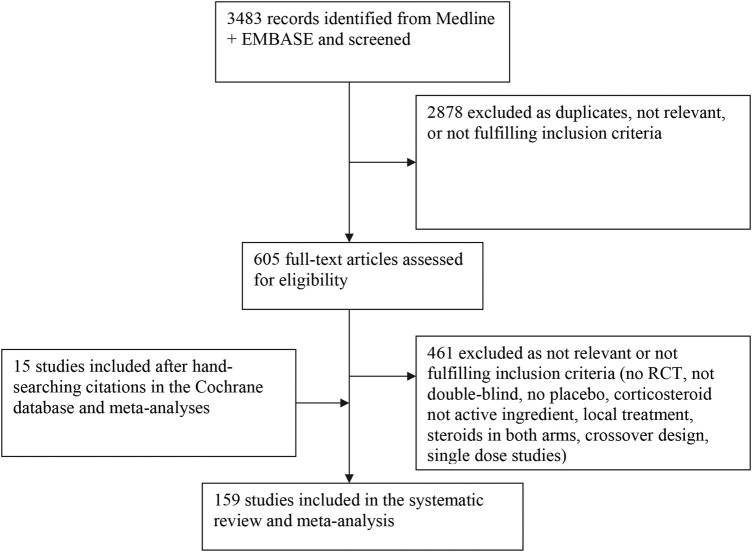
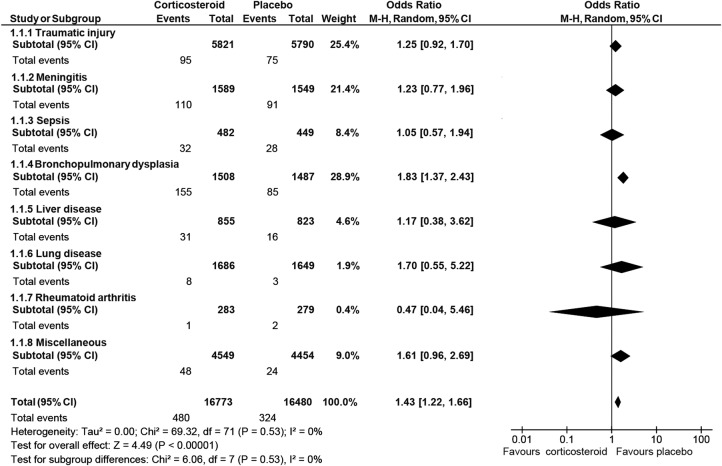
Objective: To assess whether corticosteroids are associated with increased risk of gastrointestinal bleeding or perforation. Design: Systematic review and meta-analysis of randomised, double-blind, controlled trials comparing a corticosteroid to placebo for any medical condition or in healthy participants. Studies with steroids given either locally, as a single dose, or in crossover studies were excluded. Data sources: Literature search using MEDLINE, EMBASE and Cochrane Database of Systematic Reviews between 1983 and 22 May 2013. Outcome measure: Outcome measures were the occurrence of gastrointestinal bleeding or perforation. Predefined subgroup analyses were carried out for disease severity, use of non-steroidal anti-inflammatory drugs (NSAIDs) or gastroprotective drugs, and history of peptic ulcer. Results: 159 studies (N=33 253) were included. In total, 804 (2.4%) patients had a gastrointestinal bleeding or perforation (2.9% and 2.0% for corticosteroids and placebo). Corticosteroids increased the risk of gastrointestinal bleeding or perforation by 40% (OR 1.43, 95% CI 1.22 to 1.66). The risk was increased for hospitalised patients (OR 1.42, 95% CI 1.22 to 1.66). For patients in ambulatory care, the increased risk was not statistically significant (OR 1.63, 95% CI 0.42 to 6.34). Only 11 gastrointestinal bleeds or perforations occurred among 8651 patients in ambulatory care (0.13%). Increased risk was still present in subgroup analyses (studies with NSAID use excluded; OR 1.44, 95% CI 1.20 to 1.71, peptic ulcer as an exclusion criterion excluded; OR 1.47, 95% CI 1.21 to 1.78, and use of gastroprotective drugs excluded; OR 1.42, 95% CI 1.21 to 1.67). Conclusions: Corticosteroid use was associated with increased risk of gastrointestinal bleeding and perforation. The increased risk was statistically significant for hospitalised patients only. For patients in ambulatory care, the total occurrence of bleeding or perforation was very low, and the increased risk was not statistically significant.
Overview
The claims and statistics of this paper haven’t been checked yet.
Free: it reads the open-access text and checks the first 5 claims that cite a source we can check. Create a free account to check every claim.
Integrity signals
Registry
Cites
Statistics
Figures
Verification
Claims the paper makes
The claims and statistics of this paper haven’t been checked yet.
Free: it reads the open-access text and checks the first 5 claims that cite a source we can check. Create a free account to check every claim.
Claims other papers make about this one
Each is checked against this paper’s own text: does it say what the citing paper says it does?
In the citing paper
“Despite the wide application, systemic immune suppression may cause Treg suppression and multiple adverse effects, including intestinal complications, muscle pain ,and headaches, which has brought other strategies to light [107, 226–228].”
From Immunogenicity of Recombinant Adeno-Associated Virus (AAV) Vectors for Gene Transfer (2023) · cites this paper as [226]
Self-check
Percentages, sums and reported differences re-computed from the paper’s own numbers.
The self-check needs the paper’s full text.
Citations
Cites
(1958) · Journal of the American Pharmaceutical Association (Scientific ed.) · doi:10.1002/jps.3030470133 · Cited by 2,489
The Hazards of Scoring the Quality of Clinical Trials for Meta-analysis
Jüni, P. (1999) · JAMA · doi:10.1001/jama.282.11.1054 · Cited by 1,981
Summary of product characteristics
(2013) · Pharmaceutical Medicine · doi:10.1093/med/9780199609147.003.0027 · Cited by 1,905
Risk Factors for Gastrointestinal Bleeding in Critically Ill Patients
Cook, D. J., Fuller, H. D., Guyatt, G. H., Marshall, J. C., Leasa, D., Hall, R., Winton, T. L., Rutledge, F., Todd, T., Roy, P., et al. (1994) · New England Journal of Medicine · doi:10.1056/nejm199402103300601 · Cited by 1,010
Corticosteroids for acute bacterial meningitis
Brouwer, M. C., McIntyre, P., Prasad, K., & van de Beek, D. (2015) · Cochrane Database of Systematic Reviews · doi:10.1002/14651858.cd004405.pub5 · Cited by 809
Corticosteroid Use and Peptic Ulcer Disease: Role of Nonsteroidal Anti-inflammatory Drugs
Piper, J. M., Ray, W. A., Daugherty, J. R., & Griffin, M. R. (1991) · Annals of Internal Medicine · doi:10.7326/0003-4819-114-9-735 · Cited by 608
Risk Factors for Gastrointestinal Bleeding in Critically Ill Patients
COOK, D. J., FULLER, H. D., MARSHALL, J. C., LEASA, D., HALL, R., WINTON, T., RUTLEDGE, F., TODD, T. J. R., ROY, P., LACROIX, J., et al. (1994) · Survey of Anesthesiology · doi:10.1097/00132586-199412000-00065 · Cited by 469
Association of Adrenocorticosteroid Therapy and Peptic-Ulcer Disease
Messer, J., Reitman, D., Sacks, H. S., Smith, H., & Chalmers, T. C. (1983) · New England Journal of Medicine · doi:10.1056/nejm198307073090105 · Cited by 422
Nonassociation of Adrenocorticosteroid Therapy and Peptic Ulcer
Conn, H. O., & Blitzer, B. L. (1976) · New England Journal of Medicine · doi:10.1056/nejm197602262940905 · Cited by 353
Corticosteroids and peptic ulcer: meta‐analysis of adverse events during steroid therapy
CONN, H. O., & POYNARD, T. (1994) · Journal of Internal Medicine · doi:10.1111/j.1365-2796.1994.tb00855.x · Cited by 312
Cited by
for the SIF-AIGO-FIMMG Group, Scarpignato, C., on behalf of the Italian Society of Pharmacology, T. I. A. O. H. G., Gatta, L., Zullo, A., & Blandizzi, C. (2016) · BMC Medicine · doi:10.1186/s12916-016-0718-z · Cited by 469
“A more recent systematic review and meta-analysis of 159 studies, appeared between 1983 and 2013, on GI bleeding and perforation in corticosteroid users [260], found that corticosteroid therapy may increase the risk of GI events (OR = 1.”
BackgroundRandomized, controlled trial of TNF-α antagonist in CTL-mediated severe cutaneous adverse reactions
Wang, C.-W., Yang, L.-Y., Chen, C.-B., Ho, H.-C., Hung, S.-I., Yang, C.-H., Chang, C.-J., Su, S.-C., Hui, R. C.-Y., Chin, S.-W., et al. (2018) · Journal of Clinical Investigation · doi:10.1172/jci93349 · Cited by 289
“However, systemic corticosteroids have been known to be associated with an increased risk of GI hemorrhage (37, 44).”
BackgroundPrevention and management of glucocorticoid-induced side effects: A comprehensive review
Caplan, A., Fett, N., Rosenbach, M., Werth, V. P., & Micheletti, R. G. (2017) · Journal of the American Academy of Dermatology · doi:10.1016/j.jaad.2016.02.1241 · Cited by 168
Immunogenicity of Recombinant Adeno-Associated Virus (AAV) Vectors for Gene Transfer
Arjomandnejad, M., Dasgupta, I., Flotte, T. R., & Keeler, A. M. (2023) · BioDrugs · doi:10.1007/s40259-023-00585-7 · Cited by 159
Prevention and management of glucocorticoid-induced side effects: A comprehensive review
Caplan, A. S., Fett, N. M., Rosenbach, M. A., Werth, V. P., & Micheletti, R. G. (2016) · Journal of the American Academy of Dermatology · doi:10.1016/j.jaad.2016.01.062 · Cited by 178
Use of proton-pump inhibitors among adults: a Danish nationwide drug utilization study
Pottegård, A., Broe, A., Hallas, J., de Muckadell, O. B. S., Lassen, A. T., & Lødrup, A. B. (2016) · Therapeutic Advances in Gastroenterology · doi:10.1177/1756283x16650156 · Cited by 151
Jonat, B., Gorelik, M., Boneparth, A. D., Geneslaw, A. S., Zachariah, P., Shah, A. M., Broglie, L. A., Duran, J., Morel, K. D., Zorrilla, M. J. M., et al. (2020) · Pediatric Critical Care Medicine · doi:10.1097/pcc.0000000000002598 · Cited by 148
The neurocritical care of tuberculous meningitis
Donovan, J., Figaji, A., Imran, D., Phu, N. H., Rohlwink, U. K., & Thwaites, G. E. (2019) · The Lancet Neurology · doi:10.1016/s1474-4422(19)30154-1 · Cited by 134
Kim, Y., Jo, S.-H., Kim, W. H., & Kweon, O. (2015) · Stem Cell Research & Therapy · doi:10.1186/s13287-015-0236-5 · Cited by 125
“result in fatal conditions such as gastrointestinal perforation, anemia, secondary infection, and sepsis if left untreated [15, 16].”
Peptic Ulcer Disease: A Review
Vakil, N. B. (2024) · JAMA · doi:10.1001/jama.2024.19094 · Cited by 192
Campo, G. C., Pavasini, R., Malagù, M., Mascetti, S., Biscaglia, S., Ceconi, C., Papi, A. A., & Contoli, M. (2015) · Cardiovascular Drugs and Therapy · doi:10.1007/s10557-014-6569-y · Cited by 124
“66 in a recently published systematic review and metaanalysis) [65].”
BackgroundPrevention and management of glucocorticoid-induced side effects: A comprehensive review
Caplan, A. S., Fett, N. M., Rosenbach, M. A., Werth, V. P., & Micheletti, R. G. (2016) · Journal of the American Academy of Dermatology · doi:10.1016/j.jaad.2016.02.1239 · Cited by 117
“Finally, a metaanalysis comparing glucocorticoid use to placebo found an increased risk of bleeding or perforation limited to hospitalized patients only.(8)”
BackgroundVieira, C. P., Rosario, I. L. D. S., Lelis, C. A., Rekowsky, B. S. D. S., de Carvalho, A. P. A., do Rosário, D. K. A., Elias, T. A., da Costa, M. P., Foguel, D., & Conte‐Júnior, C. A. (2021) · Oxidative Medicine and Cellular Longevity · doi:10.1155/2021/9081738 · Cited by 125
Practical Management of Bevacizumab-Related Toxicities in Glioblastoma
Brandes, A. A., Bartolotti, M., Tosoni, A., Poggi, R., & Franceschi, E. (2015) · The Oncologist · doi:10.1634/theoncologist.2014-0330 · Cited by 103
The transcriptional program, functional heterogeneity, and clinical targeting of mast cells
Cildir, G., Pant, H., Lopez, A. F., & Tergaonkar, V. (2017) · The Journal of Experimental Medicine · doi:10.1084/jem.20170910 · Cited by 98
Interactions between central nervous system and peripheral metabolic organs
Zeng, W., Yang, F., Shen, W. L., Zhan, C., Zheng, P., & Hu, J. (2022) · Science China Life Sciences · doi:10.1007/s11427-021-2103-5 · Cited by 110
“Indeed, a meta-analysis exhibited that corticosteroid use increased the risk of gastrointestinal bleeding and perforation in hospitalized patients (Narum et al., 2014).”
BackgroundAssociation of Oral Corticosteroid Bursts With Severe Adverse Events in Children
Yao, T., Wang, J., Chang, S., Chang, Y., Tsai, Y.-F., Wu, A. C., Huang, J., & Tsai, H. (2021) · Archives of Pediatrics and Adolescent Medicine · doi:10.1001/jamapediatrics.2021.0433 · Cited by 93
Wallerstedt, S. M., Fastbom, J., Linke, J., & Vitols, S. (2016) · Pharmacoepidemiology and Drug Safety · doi:10.1002/pds.4135 · Cited by 78
Numico, G., Fusco, V., Franco, P., & Roila, F. (2017) · Critical Reviews in Oncology/Hematology · doi:10.1016/j.critrevonc.2017.01.014 · Cited by 74
“randomized placebo-controlled trials (Narum et al., 2014).”
BackgroundNiikura, R., Yasunaga, H., Yamada, A., Matsui, H., Fushimi, K., Hirata, Y., & Koike, K. (2016) · Gastrointestinal Endoscopy · doi:10.1016/j.gie.2016.05.013 · Cited by 70
The risk of lower gastrointestinal bleeding in low‐dose aspirin users
Chen, W., Lin, K.-H., Huang, Y., Tsai, T., Sun, W., Chuah, S., Wu, D., & Hsu, P. (2017) · Alimentary Pharmacology & Therapeutics · doi:10.1111/apt.14079 · Cited by 69
“Nevertheless, a recent large meta-analysis revealed that steroid use is associated with an increased risk of GIB.(16) Furthermore, steroids increased the risk of UGIB in low-dose ASA users.”
BackgroundLloyd, M. A., Karahalios, A., Janus, E., Skinner, E., Haines, T., Silva, A. D., Lowe, S., Shackell, M., Ko, S., Desmond, L., et al. (2019) · JAMA Internal Medicine · doi:10.1001/jamainternmed.2019.1438 · Cited by 54
Complications of Corticosteroid Therapy: A Comprehensive Literature Review
Koshi, E. J., Young, K., Mostales, J. C., Vo, K. B., & Burgess, L. P. A. (2022) · Journal of Pharmacy Technology · doi:10.1177/87551225221116266 · Cited by 72
“Acne Kannan et al6,a 56 — Adipose tissue distribution Fardet et al1 61-69 — AVN Bauer et al7 — [Cumulative dose <430 mg] RR 0 (0-5) [Cumulative dose 440-1290 mg] RR 6 (1-43) [Cumulative dose >1290 mg] RR Undefined (26-infinity) AVN Sing et al16 — [VHD compared with LTHD] 7.”
BackgroundEfraij, K. A., JOHNSON, K., Wiebe, D., Sadatsafavi, M., & FitzGerald, J. M. (2018) · Journal of Asthma · doi:10.1080/02770903.2018.1539100 · Cited by 54
Okubo, Y., Kotowsky, N., Gao, R., Saito, K., & Morita, A. (2021) · The Journal of Dermatology · doi:10.1111/1346-8138.16084 · Cited by 57
Noetzlin, S., Bréville, G., Seebach, J. D., & Gastaldi, G. (2022) · Swiss Medical Weekly · doi:10.4414/smw.2022.w30088 · Cited by 70
“66), but not ambulatory patients , when paediatric patients were excluded [38].”
BackgroundMorita, A., Kotowsky, N., Gao, R., Shimizu, R., & Okubo, Y. (2021) · The Journal of Dermatology · doi:10.1111/1346-8138.16022 · Cited by 54
Andrawes, M., Andrawes, W., Das, A., & Siau, K. (2025) · Medicina · doi:10.3390/medicina61091569 · Cited by 104
“…recommends PPIs for patients on long-term corticosteroids with additional GI risk factors, and the European League Against Rheumatism (EULAR) recommends gastropro-tection with PPIs for patients on long term corticosteroids, especially when combined with NSAIDs or other risk factors [4,28,47,48].”
Tseng, C., Chen, Y., Huang, C., Luo, J., Peng, Y., Huang, D.-F., Hou, M., Lin, H., & Lee, F. (2015) · Alimentary Pharmacology & Therapeutics · doi:10.1111/apt.13298 · Cited by 53
“conducted a meta-analysis of 159 clinical trials and showed that steroid increased the risk of peptic ulcer bleeding in hospitalised patients.(14) In animal studies, dexamethasone, one kind of glucocorticoid, was found to damage the stomach only when used concurrently with a cyclooxygenase (COX)-1 inhibitor(15); gastr…”
MethodDuchatel, R. J., Mannan, A., Woldu, A. S., Hawtrey, T. J., Hindley, P. A., Douglas, A. M., Jackson, E. R., Findlay, I. J., Germon, Z. P., Staudt, D. E., et al. (2021) · Neuro-Oncology Advances · doi:10.1093/noajnl/vdab169 · Cited by 50
“25 Addressing these side effects, DIPG patients are commonly prescribed proton pump inhibitors (PPIs), such as omeprazole, to inhibit acid secretion, increasing intragastric pH and thus limiting acid-related adverse effects of corticosteroid therapy.”
Association between atopic disease and anemia in pediatrics: a cross-sectional study
Rhew, K., & Oh, J. M. (2019) · BMC Pediatrics · doi:10.1186/s12887-019-1836-5 · Cited by 57
Long-term toxicity of fluoroquinolones: a comprehensive review
Hussen, N. H., Qadr, S. H., Rahman, H. S., Hamalaw, Y. Y., Kareem, P. S. S., & Hamza, B. A. (2023) · Drug and Chemical Toxicology · doi:10.1080/01480545.2023.2240036 · Cited by 54
“NSAiDs, aspirin, and corticosteroids routinely given as pain relievers have been related to an enhanced risk of Git perforation (Narum et al. 2014). it has not been studied how FQs can cause this deadly condition, but it is believed that FQs can decrease the upregulation of type i collagen fibrils…”
Leong, K., Lau, T., Stewart, V., & Canetti, E. F. D. (2021) · Otolaryngology · doi:10.1177/0194599820982910 · Cited by 43
Treatment of Juvenile Dermatomyositis: An Update
Papadopoulou, C., & Wedderburn, L. R. (2017) · Pediatric Drugs · doi:10.1007/s40272-017-0240-6 · Cited by 43
Confidence, Likelihood, Probability: Statistical Inference with Confidence Distributions
Schweder, T., & Hjort, N. L. (2016) · Cambridge University Press eBooks · doi:10.1017/cbo9781139046671 · Cited by 179
The medicinal uses, toxicities and anti-inflammatory activity of Polyalthia species (Annonaceae)
Yao, L. J., Jalil, J., Attiq, A., Hui, C. C., & Zakaria, N. A. (2018) · Journal of Ethnopharmacology · doi:10.1016/j.jep.2018.10.001 · Cited by 48
Surgical management of peptic ulcer disease
Wang, A., Yerxa, J., Agarwal, S., Turner, M. C., Schroder, V. T., Youngwirth, L. M., Lagoo‐Deenadayalan, S. A., & Pappas, T. N. (2020) · Current Problems in Surgery · doi:10.1016/j.cpsurg.2019.100728 · Cited by 50
Side Effects of Glucocorticoids
ALAN, İ. S., & Alan, B. (2018) · InTech eBooks · doi:10.5772/intechopen.72019 · Cited by 43
Analysis of risk factors for colonic diverticular bleeding and recurrence
Taki, M., Oshima, T., Tozawa, K., Taniguchi, Y., Tomita, T., Ohda, Y., Fukui, H., Watari, J., & Miwa, H. (2017) · Medicine · doi:10.1097/md.0000000000008090 · Cited by 39
Zhang, J., Ge, P., Liu, J., Luo, Y., Guo, H., Zhang, G., Xu, C., & Chen, H. (2023) · International Journal of Molecular Sciences · doi:10.3390/ijms241512138 · Cited by 47
Butler, E., Møller, M. H., Cook, O., Granholm, A., Penketh, J., Rygård, S. L., Åneman, A., & Perner, A. (2019) · Intensive Care Medicine · doi:10.1007/s00134-019-05754-3 · Cited by 37
“66) was observed amongst the hospitalised adult and paediatric patients [28].”
BackgroundAso, K., Izumi, M., Sugimura, N., Okanoue, Y., Kamimoto, Y., Yokoyama, M., & Ikeuchi, M. (2018) · Knee Surgery Sports Traumatology Arthroscopy · doi:10.1007/s00167-018-5322-7 · Cited by 36
Updated treatment strategies for intestinal Behçet’s disease
Park, Y. E., & Cheon, J. H. (2017) · The Korean Journal of Internal Medicine · doi:10.3904/kjim.2017.377 · Cited by 34
Who Needs Gastroprotection in 2020?
Kanno, T., & Moayyedi, P. (2020) · Current Treatment Options in Gastroenterology · doi:10.1007/s11938-020-00316-9 · Cited by 38
Autoren, & Collaborators: (2023) · Zeitschrift für Gastroenterologie · doi:10.1055/a-1975-0414 · Cited by 33
Immunosuppressive drugs and the gastrointestinal tract in renal transplant patients
Tielemans, M. M., van Boekel, G. A. J., van Gelder, T., Tjwa, E. T. T. L., & Hilbrands, L. B. (2018) · Transplantation Reviews · doi:10.1016/j.trre.2018.11.001 · Cited by 31
Kelddal, S., Hvas, A., Grove, E. L., & Birn, H. (2022) · BMC Nephrology · doi:10.1186/s12882-022-02929-x · Cited by 29
“Corticosteroid treatment is known to increase the risk of thromboembolic events as well as the risk of gastrointestinal bleeding in the general population [24, 25].”
BackgroundSepsis and Adrenal Insufficiency
Fowler, C., Raoof, N. D., & Pastores, S. M. (2023) · Journal of Intensive Care Medicine · doi:10.1177/08850666231183396 · Cited by 34
“66 More importantly, at the commonly prescribed dose of gluco-corticoids for septic shock, no major trials have established a direct link between steroid use and increased risk of GI bleeding.”
BackgroundImpact of chronic steroid use on outcomes of colorectal surgery
Moghadamyeghaneh, Z., Hanna, M. H., Blondet, J. J., Carmichael, J. C., Mills, S., Pigazzi, A., & Stamos, M. J. (2015) · The American Journal of Surgery · doi:10.1016/j.amjsurg.2015.07.002 · Cited by 30
Drug-Associated Gastropathy: Diagnostic Criteria
Bordin, D. S., Livzan, M. A., Gaus, O. V., Mozgovoi, S. I., & Lanas, Á. (2023) · Diagnostics · doi:10.3390/diagnostics13132220 · Cited by 47
Guidelines on optimizing the use of proton pump inhibitors: PPI stewardship
Dutta, A. K., Jain, A. K., Jearth, V., Mahajan, R., Panigrahi, M. K., Sharma, V., Goenka, M. K., Kochhar, R. K., Makharia, G. K., Reddy, D. N., et al. (2023) · Indian Journal of Gastroenterology · doi:10.1007/s12664-023-01428-7 · Cited by 42
Holinger, M., Früh, B., Stoll, P., Graage, R., Wirth, S., Bruckmaier, R. M., Prunier, A., Kreuzer, M., & Hillmann, E. (2018) · Physiology & Behavior · doi:10.1016/j.physbeh.2018.07.019 · Cited by 31
Jagpal, A., & Curtis, J. R. (2018) · Drug Safety · doi:10.1007/s40264-018-0639-1 · Cited by 29
Physiological and Pharmacological Effects of Glucocorticoids on the Gastrointestinal Tract
Filaretova, L. P., Podvigina, T. T., & Yarushkina, N. I. (2020) · Current Pharmaceutical Design · doi:10.2174/1381612826666200521142746 · Cited by 28
Beverages in Rheumatoid Arthritis: What to Prefer or to Avoid
Dey, M., Cutolo, M., & Nikiphorou, E. (2020) · Nutrients · doi:10.3390/nu12103155 · Cited by 35
ACVIM consensus statement on the treatment of immune thrombocytopenia in dogs and cats
LeVine, D. N., Goggs, R. A. N., Kohn, B., Mackin, A. J., Kidd, L. B., Garden, O. A., Brooks, M. B., Eldermire, E., Abrams‐Ogg, A. C. G., Appleman, E. H., et al. (2024) · Journal of Veterinary Internal Medicine · doi:10.1111/jvim.17079 · Cited by 24
“123”
Vestergaard, S. V., Birn, H., Darvalics, B., Nitsch, D., Sørensen, H. T., & Christiansen, C. F. (2021) · The American Journal of Medicine · doi:10.1016/j.amjmed.2021.11.018 · Cited by 24
Glucocorticoid Treatment Strategies in Liver Failure
Ye, C., Li, W., Li, L., & Zhang, K. (2022) · Frontiers in Immunology · doi:10.3389/fimmu.2022.846091 · Cited by 35
Çelebi, Ö. Ö., Song, S. A., Santeerapharp, A., Choksawad, K., & Franco, R. A. (2020) · European Archives of Oto-Rhino-Laryngology · doi:10.1007/s00405-020-06371-3 · Cited by 26
The Incidence and Mortality Impact of Gastrointestinal Bleeding in Hospitalized COVID-19 Patients
Makker, J. S., Mantri, N., Patel, H. K., Abbas, H., Baiomi, A., Sun, H., Choi, Y., Chilimuri, S. S., & Nayudu, S. K. (2021) · Clinical and Experimental Gastroenterology · doi:10.2147/ceg.s318149 · Cited by 25
Kim, K. N., Lariviere, M. J., MacDuffie, E., White, C. A., Jordan-Luft, M. M., Anderson, E. M., Ziegler, M., Radcliff, J. A., & Jones, J. (2022) · Practical Radiation Oncology · doi:10.1016/j.prro.2022.07.003 · Cited by 26
Lambert, C., Maitland, H. S., & Ghanima, W. (2023) · European Journal Of Haematology · doi:10.1111/ejh.14154 · Cited by 23
Confronting COVID-19: Issues in Hemophilia and Congenital Bleeding Disorders
Coppola, A., Tagliaferri, A., Rivolta, G. F., Quintavalle, G., & Franchini, M. (2020) · Seminars in Thrombosis and Hemostasis · doi:10.1055/s-0040-1712961 · Cited by 23
Drug–Drug Interactions in Vestibular Diseases, Clinical Problems, and Medico-Legal Implications
Mizio, G. D., Marcianò, G., Palleria, C., Muraca, L., Rania, V., Roberti, R., Spaziano, G., Piscopo, A., Ciconte, V., Nunno, N. R. D., et al. (2021) · International Journal of Environmental Research and Public Health · doi:10.3390/ijerph182412936 · Cited by 28
Rebuilding trust in proton pump inhibitor therapy
Turshudzhyan, A., Samuel, S. B., Tawfik, A., & Tadros, M. S. (2022) · World Journal of Gastroenterology · doi:10.3748/wjg.v28.i24.2667 · Cited by 27
Yang, L., Sato, M., Saito‐Abe, M., Miyaji, Y., Shimada, M., Sato, C., Nishizato, M., Kumasaka, N., Mezawa, H., Yamamoto‐Hanada, K., et al. (2022) · Nutrients · doi:10.3390/nu14204335 · Cited by 30
“Corticosteroids further contribute to anemia by increasing the odds of gastrointestinal bleeding [29].”
BackgroundRisk factors for epistaxis in patients followed in general practices in Germany
Seidel, D. U., Jacob, L., Kostev, K., & Sesterhenn, A. M. (2017) · Rhinology Journal · doi:10.4193/rhin17.105 · Cited by 22
“The negative impact of such drugs on bleeding was later corroborated in another clinical context, as corticosteroids were associated with an increased risk of gastrointestinal bleeding ((30)).”
Thanhaeuser, M., Lindtner-Kreindler, C., Berger, A., & Haiden, N. (2019) · Early Human Development · doi:10.1016/j.earlhumdev.2019.104836 · Cited by 22
Dalal, N., Dores, G. M., Curtis, R. E., Linet, M. S., & Morton, L. M. (2020) · British Journal of Haematology · doi:10.1111/bjh.16492 · Cited by 21
Westergren, T., Narum, S., & Klemp, M. (2022) · Basic & Clinical Pharmacology & Toxicology · doi:10.1111/bcpt.13791 · Cited by 25
Self-citationKASL clinical practice guidelines for management of autoimmune hepatitis 2022
(2023) · Clinical and Molecular Hepatology · doi:10.3350/cmh.2023.0087 · Cited by 28
Henoch-Schönlein purpura with acute pancreatitis: analysis of 13 cases
Zhang, Q., Guo, Q., Gui, M., Ren, Z., Hu, B., Lü, L., & Deng, F. (2018) · BMC Pediatrics · doi:10.1186/s12887-018-1142-7 · Cited by 21
Clinical and Endoscopic Outcomes in COVID-19 Patients With Gastrointestinal Bleeding
Ashktorab, H., Russo, T., Oskrochi, G., Latella, G., Massironi, S., Luca, M. D., Chirumamilla, L. G., Laiyemo, A. O., & Brim, H. (2022) · Gastro Hep Advances · doi:10.1016/j.gastha.2022.02.021 · Cited by 21
“Steroids ’ use was positively associated with GIB, a fi nding consistent with the previous study by Narum et al. 37 Interestingly, among all the patients who exhibited GIB and/ or underwent endoscopy, only 6% required an endoscopic treatment.”
ResultSystemic corticosteroids for management of COVID-19: Saving lives or causing harm?
FakhriRavari, A., Jin, S., Kachouei, F. H., Le, D., & Lopez, M. (2021) · International Journal of Immunopathology and Pharmacology · doi:10.1177/20587384211063976 · Cited by 21
“The evidence is insufficient to conclude that corticosteroids are associated with GI bleeding or perforation.(79) The risk of bleeding due to the sole initiation of corticosteroids seems low in the critical care setting and concomitant gastric protection is unnecessary for patients whose only indication is the use of…”
BackgroundPharmacologic Therapies for Rheumatologic and Autoimmune Conditions
Bays, A. M., & Gardner, G. C. (2016) · Medical Clinics of North America · doi:10.1016/j.mcna.2016.03.001 · Cited by 20
Update on the Medical Management of Gastrointestinal Behçet’s Disease
Lopalco, G., Rigante, D., Venerito, V., Fabiani, C., Franceschini, R., Barone, M., Lapadula, G., Galeazzi, M., Frediani, B., Iannone, F., et al. (2017) · Mediators of Inflammation · doi:10.1155/2017/1460491 · Cited by 20
Associations between drugs and small‐bowel mucosal bleeding: Multicenter capsule‐endoscopy study
Niikura, R., Yamada, A., Maki, K., Nakamura, M., Watabe, H., Fujishiro, M., Oka, S., Esaki, M., Fujimori, S., Nakajima, A., et al. (2017) · Digestive Endoscopy · doi:10.1111/den.12922 · Cited by 20
Litou, C., Effinger, A., Kostewicz, E. S., Box, K. J., Fotaki, N., & Dressman, J. (2019) · Journal of Pharmacy and Pharmacology · doi:10.1111/jphp.12983 · Cited by 28
“Impairment of membrane integrity can cause side effects such as gastrointestinal bleeding and bowel perforation.([263]) The corticosteroids can also affect active transport mechanisms such as bile salt reuptake and exo-transport.”
BackgroundHolt, A., Blanche, P., Zareini, B., Rasmussen, P. V., Strange, J. E., Rajan, D., Jensen, M. H., El‐Sheikh, M., Schjerning, A.-M., Schou, M., et al. (2021) · Heart · doi:10.1136/heartjnl-2021-319503 · Cited by 21
Reinau, D., Schwenkglenks, M. M., Früh, M., Signorell, A., Blozik, E., & Meier, C. R. (2018) · Drug Safety · doi:10.1007/s40264-018-0645-3 · Cited by 19
“At least among non-hospitalised patients, the incidence of PUB whilst receiving therapy with GCs appears to be very low [3, 14].”
BackgroundResultMiyagawa, I., Nakano, K., Iwata, S., Nakayamada, S., Saito, K., Hanami, K., Fukuyo, S., Kubo, S., Kawabe, A., Miyazaki, Y., et al. (2019) · Arthritis Research & Therapy · doi:10.1186/s13075-019-1933-8 · Cited by 19
Yu, P., Hu, C.-F., Liu, J., Chung, C., Chen, Y., Sun, C., & Chien, W. (2020) · BMC Pediatrics · doi:10.1186/s12887-020-1962-0 · Cited by 19
“On the other hand, medicine such as nonsteroidal anti-inflammatory drugs (NSAIDs) and steroid are both well-known for causing gastrointestinal mucosal damage [23, 24].”
BackgroundSobolewska, J., Działach, Ł., Kuca, P., & Witek, P. (2024) · Frontiers in Endocrinology · doi:10.3389/fendo.2024.1473151 · Cited by 23
Genovese, T., Siracusa, R., D’Amico, R., Cordaro, M., Peritore, A. F., Gugliandolo, E., Crupi, R., Salinaro, A. T., Raffone, E., Impellizzeri, D., et al. (2021) · International Journal of Molecular Sciences · doi:10.3390/ijms22115998 · Cited by 19
“Addionally, our study demonstrated that the low doses tested did not show any gastrointestinal side effects, which are among the main side effects of FT [17,18] and DM [64,65].”
BackgroundHysa, E., Vojinovic, T., Gotelli, E., Alessandri, E., Pizzorni, C., Paolino, S., Sulli, A., Smith, V. M., & Cutolo, M. (2023) · Reumatologia/Rheumatology · doi:10.5114/reum/170845 · Cited by 19
Geraldes, C., Roque, A. I., Sarmento‐Ribeiro, A. B., Neves, M. L., Ionita, A., Gerivaz, R., Tomé, A., Afonso, S., Silveira, M. P., Sousa, P., et al. (2024) · Frontiers in Oncology · doi:10.3389/fonc.2024.1282300 · Cited by 18
Ismail, N., Jordan, K. P., Kadam, U. T., Edwards, J., Kinnaird, T. D., & Mamas, M. A. (2019) · Journal of the American Heart Association · doi:10.1161/jaha.119.013679 · Cited by 21
“Steroids may delay peptic ulcer healing,(39) thus increasing the risk of perforation and bleeding complications.(40) The association of COPD with bleeding events should be explored further to confirm the result of our study.”
ResultHajj, W. E., Quentin, V., D'Hautefeuille, G. B., Vandamme, H., Berger, C., Moussaoui, M. R., Berete, A., Louvel, D., Bertolino, J. G., Cuillerier, E., et al. (2021) · United European Gastroenterology Journal · doi:10.1002/ueg2.12096 · Cited by 16
Gastroduodenal Ulceration in Small Animals: Part 1. Pathophysiology and Epidemiology
Daure, E., Ross, L. A., & Webster, C. R. L. (2016) · Journal of the American Animal Hospital Association · doi:10.5326/jaaha-ms-6635 · Cited by 24
Yu, Z., Zhu, H., Chen, H., Zhu, L., & Liao, X. (2023) · Journal of Pharmacy & Pharmaceutical Sciences · doi:10.3389/jpps.2023.11235 · Cited by 18
Fischbach, W., Bornschein, J., Hoffmann, J., Koletzko, S., Link, A., Macke, L., Malfertheiner, P., Schütte, K., Selgrad, D.-M., Suerbaum, S., et al. (2024) · Zeitschrift für Gastroenterologie · doi:10.1055/a-2181-2225 · Cited by 28
White, S., Carrillo, O., Cheung, Z. B., Ranson, W. A., & Cho, S. K.-W. (2019) · World Neurosurgery · doi:10.1016/j.wneu.2019.02.048 · Cited by 17
Zinc Toxicosis in a Boxer Dog Secondary to Ingestion of Holiday Garland
Bischoff, K. L., Chiapella, A. M., Weisman, J., Crofton, L. M., & Hillebrandt, J. R. (2017) · Journal of Medical Toxicology · doi:10.1007/s13181-017-0602-z · Cited by 15
A Review of Pathophysiology, Molecular Mechanisms, and Omics Approaches of Spinal Cord Injury
Patel, M., Deng, A. J., Hasoon, J. J., Wahezi, S. E., & Abd-Elsayed, A. A. (2025) · International Journal of Molecular Sciences · doi:10.3390/ijms26167895 · Cited by 15
“The limitation was partly proposed due to insufficient evidence supporting clinical benefit and the risk of side effects, including increased risk of infection and gastrointestinal bleeding [66–68].”
McFarland, D. C., Merchant, D., Khandai, A. C., Mojtahedzadeh, M., Ghosn, O., Hirst, J. M., Amonoo, H. L., Chopra, D., Niazi, S. K., Brandstetter, J., et al. (2023) · Current Psychiatry Reports · doi:10.1007/s11920-023-01411-1 · Cited by 15
Grymonprez, M., Capiau, A., Steurbaut, S., Boussery, K., Mehuys, E., Somers, A., Petrović, M., de Backer, T. L., & Lahousse, L. (2023) · Cardiovascular Drugs and Therapy · doi:10.1007/s10557-023-07521-5 · Cited by 19
“However, due to the inhibition of prostaglandin synthesis, they are also known to increase the risk of gastrointestinal bleeding [47].”
Bliźniak, F., Chęciński, M. A., Chęcińska, K., Lubecka, K., Kamińska, M., Szuta, M., Chlubek, D., & Sikora, M. (2024) · Journal of Clinical Medicine · doi:10.3390/jcm13144056 · Cited by 14
Abdel‐Emam, R. A., Ali, M. F., Hassan, A. S., & Abd-ellatief, R. B. (2024) · Journal of Pharmaceutical Investigation · doi:10.1007/s40005-024-00686-7 · Cited by 14
Hsu, S.-C., Chang, S.-S., Lee, M.-T. G., Lee, S.-H., Tsai, Y., Lin, S.-C., Chen, S., Weng, Y.-C., Porta, L., Wu, J.-Y., et al. (2017) · PLoS ONE · doi:10.1371/journal.pone.0183813 · Cited by 14
Nantsupawat, T., Soontrapa, S., Nantsupawat, N., Sotello, D., Klomjit, S., Adabağ, S., & Perez‐Verdia, A. (2017) · Journal of Arrhythmia · doi:10.1002/joa3.12015 · Cited by 14
“One study showed corticosteroids as a risk factor for GIB or perforation.(26) In our study, concurrent steroid use demonstrated a trend toward increased risk of GIB, although not statistically significant.”
Background
Metadata
- Authors
- Narum, S., Westergren, T., & Klemp, M.
- Affiliations
- Oslo University Hospital (NO)
- University of Oslo (NO)
- Corresponding author
- Narum, Sigrid
- Venue
- BMJ Open
- Publisher
- BMJ
- Published
- 2014-05
- Volume
- 4
- Issue
- 5
- Pages
- e004587
- ISSN
- 2044-6055 (ISSN-L)
- PMC
- PMC4025450
- OpenAlex
- W2110984144
- Cited by
- 327
- References
- 28
- Citations by year
- 2026: 26 · 2025: 36 · 2024: 38 · 2023: 33 · 2022: 36 · 2021: 28 · 2020: 22 · 2019: 30 · 2018: 27 · 2017: 22 · 2016: 17 · 2015: 11 · 2014: 1
- FWCI
- 2.78
- Type
- journal article
- Language
- en
- Open access
- gold
- doi.org
- Licence
- cc-by-nc
- Locations
- BMJ Open (publishedVersion, cc-by-nc)
- Europe PMC (PubMed Central) (publishedVersion, other-oa)
- PubMed Central (publishedVersion, cc-by-nc)
- PubMed (publishedVersion)
- HighWire Press Open Archive (submittedVersion)
- NORA - Norwegian Open Research Archives (submittedVersion, cc-by-nc)
- NORA - Norwegian Open Research Archives (submittedVersion, other-oa)
- Topics
- Health Sciences › Medicine › Gastroenterology › Gastrointestinal Bleeding Diagnosis and Treatment
- Health Sciences › Medicine › Pharmacology (medical) › Inflammatory mediators and NSAID effects
- Life Sciences › Pharmacology, Toxicology and Pharmaceutics › Toxicology › Pharmacovigilance and Adverse Drug Reactions
- Keywords
- corticosteroids, gastrointestinal bleeding, gastrointestinal perforation, adverse drug reactions, peptic ulcer, NSAID use, gastroprotective drugs, hospitalized patients, outpatient care, drug safety, placebo comparison, healthy volunteers
- MeSH terms
- Adrenal Cortex Hormones, Gastrointestinal Hemorrhage, Humans, Intestinal Perforation, Stomach Rupture, Randomized Controlled Trials as Topic, Risk Assessment
About these checks
Registry, retraction, Cites and statistics results are computed, not judged, with one exception: a printed reference that no index lists is read once by a model before it counts as a citation error. Claims are extracted by a model and kept only when their quote appears verbatim in the text; each cited source is then checked, with a model’s help, for whether it says what the claim relies on. Those verdicts can be wrong — read the claim’s quote and the cited source before relying on one.
Statistics and arithmetic are recomputed, not judged.
Confidence bands are shown only for fields calibrated on our annotated test set. None is calibrated yet, so no band is shown.
What counts as a claim ›How we measure confidence ›How we check this ›
Are you an author, or do you see a problem with this page? Request a review
Data sources
Bibliographic data: Semantic Scholar, OpenAlex, Crossref.
Contains information from the Semantic Scholar Academic Graph Datasets, made available under the ODC Attribution License (ODC-BY 1.0).
Semantic Scholar’s data is described in: Kinney, R., et al. (2023). The Semantic Scholar Open Data Platform. arXiv:2301.10140.
