

Corticosteroids and risk of gastrointestinal bleeding: a systematic review and meta-analysis
Open accessThe DOI matches its Crossref record; 28 of the 28 references it cites were found in a registry or an index.
Abstract
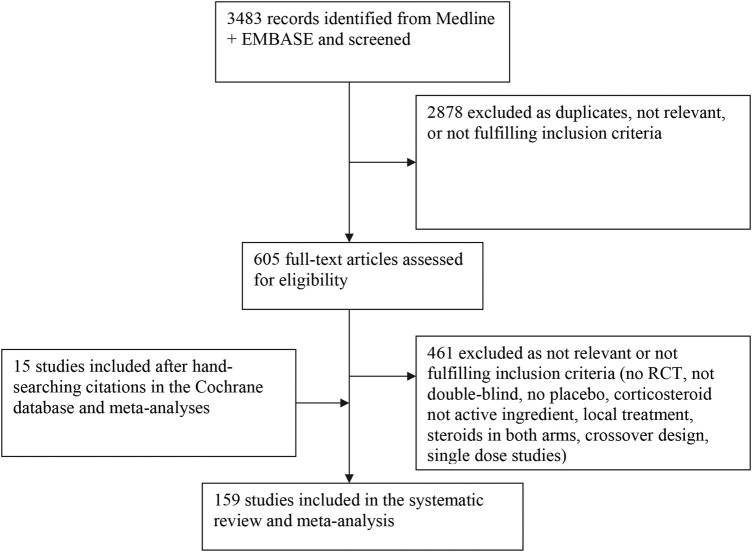
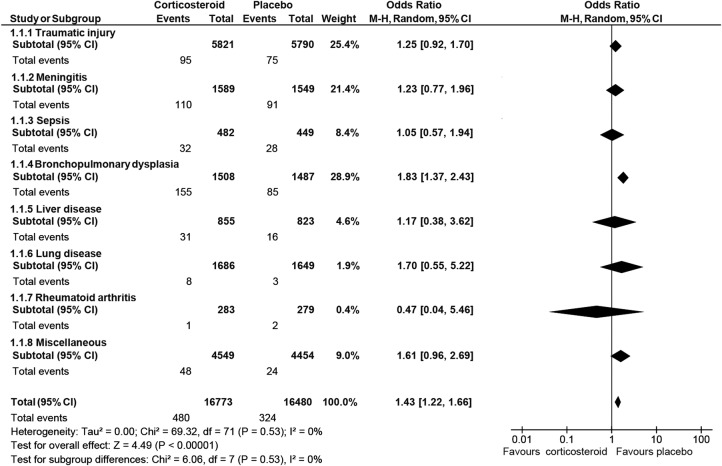
Objective: To assess whether corticosteroids are associated with increased risk of gastrointestinal bleeding or perforation. Design: Systematic review and meta-analysis of randomised, double-blind, controlled trials comparing a corticosteroid to placebo for any medical condition or in healthy participants. Studies with steroids given either locally, as a single dose, or in crossover studies were excluded. Data sources: Literature search using MEDLINE, EMBASE and Cochrane Database of Systematic Reviews between 1983 and 22 May 2013. Outcome measure: Outcome measures were the occurrence of gastrointestinal bleeding or perforation. Predefined subgroup analyses were carried out for disease severity, use of non-steroidal anti-inflammatory drugs (NSAIDs) or gastroprotective drugs, and history of peptic ulcer. Results: 159 studies (N=33 253) were included. In total, 804 (2.4%) patients had a gastrointestinal bleeding or perforation (2.9% and 2.0% for corticosteroids and placebo). Corticosteroids increased the risk of gastrointestinal bleeding or perforation by 40% (OR 1.43, 95% CI 1.22 to 1.66). The risk was increased for hospitalised patients (OR 1.42, 95% CI 1.22 to 1.66). For patients in ambulatory care, the increased risk was not statistically significant (OR 1.63, 95% CI 0.42 to 6.34). Only 11 gastrointestinal bleeds or perforations occurred among 8651 patients in ambulatory care (0.13%). Increased risk was still present in subgroup analyses (studies with NSAID use excluded; OR 1.44, 95% CI 1.20 to 1.71, peptic ulcer as an exclusion criterion excluded; OR 1.47, 95% CI 1.21 to 1.78, and use of gastroprotective drugs excluded; OR 1.42, 95% CI 1.21 to 1.67). Conclusions: Corticosteroid use was associated with increased risk of gastrointestinal bleeding and perforation. The increased risk was statistically significant for hospitalised patients only. For patients in ambulatory care, the total occurrence of bleeding or perforation was very low, and the increased risk was not statistically significant.
Overview
The claims and statistics of this paper haven’t been checked yet.
Free: it reads the open-access text and checks the first 5 claims that cite a source we can check. Create a free account to check every claim.
Integrity signals
Registry
Cites
Statistics
Figures
Verification
Claims the paper makes
The claims and statistics of this paper haven’t been checked yet.
Free: it reads the open-access text and checks the first 5 claims that cite a source we can check. Create a free account to check every claim.
Claims other papers make about this one
Each is checked against this paper’s own text: does it say what the citing paper says it does?
In the citing paper
“Despite the wide application, systemic immune suppression may cause Treg suppression and multiple adverse effects, including intestinal complications, muscle pain ,and headaches, which has brought other strategies to light [107, 226–228].”
From Immunogenicity of Recombinant Adeno-Associated Virus (AAV) Vectors for Gene Transfer (2023) · cites this paper as [226]
Self-check
Percentages, sums and reported differences re-computed from the paper’s own numbers.
The self-check needs the paper’s full text.
Citations
Cites
(1958) · Journal of the American Pharmaceutical Association (Scientific ed.) · doi:10.1002/jps.3030470133 · Cited by 2,489
The Hazards of Scoring the Quality of Clinical Trials for Meta-analysis
Jüni, P. (1999) · JAMA · doi:10.1001/jama.282.11.1054 · Cited by 1,981
Summary of product characteristics
(2013) · Pharmaceutical Medicine · doi:10.1093/med/9780199609147.003.0027 · Cited by 1,905
Risk Factors for Gastrointestinal Bleeding in Critically Ill Patients
Cook, D. J., Fuller, H. D., Guyatt, G. H., Marshall, J. C., Leasa, D., Hall, R., Winton, T. L., Rutledge, F., Todd, T., Roy, P., et al. (1994) · New England Journal of Medicine · doi:10.1056/nejm199402103300601 · Cited by 1,010
Corticosteroids for acute bacterial meningitis
Brouwer, M. C., McIntyre, P., Prasad, K., & van de Beek, D. (2015) · Cochrane Database of Systematic Reviews · doi:10.1002/14651858.cd004405.pub5 · Cited by 809
Corticosteroid Use and Peptic Ulcer Disease: Role of Nonsteroidal Anti-inflammatory Drugs
Piper, J. M., Ray, W. A., Daugherty, J. R., & Griffin, M. R. (1991) · Annals of Internal Medicine · doi:10.7326/0003-4819-114-9-735 · Cited by 608
Risk Factors for Gastrointestinal Bleeding in Critically Ill Patients
COOK, D. J., FULLER, H. D., MARSHALL, J. C., LEASA, D., HALL, R., WINTON, T., RUTLEDGE, F., TODD, T. J. R., ROY, P., LACROIX, J., et al. (1994) · Survey of Anesthesiology · doi:10.1097/00132586-199412000-00065 · Cited by 469
Association of Adrenocorticosteroid Therapy and Peptic-Ulcer Disease
Messer, J., Reitman, D., Sacks, H. S., Smith, H., & Chalmers, T. C. (1983) · New England Journal of Medicine · doi:10.1056/nejm198307073090105 · Cited by 422
Nonassociation of Adrenocorticosteroid Therapy and Peptic Ulcer
Conn, H. O., & Blitzer, B. L. (1976) · New England Journal of Medicine · doi:10.1056/nejm197602262940905 · Cited by 353
Corticosteroids and peptic ulcer: meta‐analysis of adverse events during steroid therapy
CONN, H. O., & POYNARD, T. (1994) · Journal of Internal Medicine · doi:10.1111/j.1365-2796.1994.tb00855.x · Cited by 312
Cited by
Items 101–200 of 327
Treatment of Myasthenia Gravis
Kaminski, H. J. (2018) · Springer eBooks · doi:10.1007/978-3-319-73585-6_11 · Cited by 15
Rak, M. B., Moyers, T. D., Price, J. M., & Whittemore, J. C. (2023) · Journal of Veterinary Internal Medicine · doi:10.1111/jvim.16672 · Cited by 14
Kondo, Y., Hatta, W., Koike, T., Takahashi, Y., Saito, M., Kanno, T., Asanuma, K., Asano, N., Imatani, A., & Masamune, A. (2018) · Digestive Diseases and Sciences · doi:10.1007/s10620-018-5209-y · Cited by 13
Advances in Management of Intestinal Behçet’s Disease: A Perspective From Gastroenterologists
Cheon, J. H. (2020) · Journal of Rheumatic Diseases · doi:10.4078/jrd.2021.28.1.4 · Cited by 18
“because they increase the risk of gastrointestinal bleeding and perforation [51].”
BackgroundNarrative Review: Glucocorticoids in Alcoholic Hepatitis—Benefits, Side Effects, and Mechanisms
Lü, H. (2022) · Journal of Xenobiotics · doi:10.3390/jox12040019 · Cited by 14
“At high doses, the activation of GR by GCs in extrahepatic tissues promotes alcohol consumption and psychiatric problems [61,62], adipose lipolysis [63], intestinal BA reabsorption and gastrointestinal (GI) bleeding [64,65], and muscle wasting [66].”
BackgroundKumar, S. S., Arvind, S., & Umpierrez, A. P. (2023) · Journal of Hospital Medicine · doi:10.1002/jhm.13095 · Cited by 16
Martins, R. R., Silva, L. T., Bessa, G. G., & Lopes, F. M. (2018) · Saudi Pharmaceutical Journal · doi:10.1016/j.jsps.2018.07.003 · Cited by 18
Thohan, V., Shi, Y., Rappelt, M. W., Yousefzai, R., Sulemanjee, N., Hastings, T. E., Cheema, O. M., Downey, F. X., & Crouch, J. D. (2019) · Journal of Cardiac Surgery · doi:10.1111/jocs.14062 · Cited by 13
Safe Use of Corticosteroids in Non-Infectious Uveitis
Belletti, M., Izquierdo-Escámez, R., Tornero, C., Olivas-Vergara, O., Peiteado, D., & Carreño, E. (2025) · Journal of Inflammation Research · doi:10.2147/jir.s540821 · Cited by 17
Kim, S., Chaudhary, P. K., & Kim, S. (2023) · Animals · doi:10.3390/ani13081299 · Cited by 19
“In contrast, glucocorticoids have also been known to cause bleeding disorders in the uterus and gastrointestinal tract [58,60].”
BackgroundAdvances in anti-inflammatory treatment of sepsis-associated acute respiratory distress syndrome
Zhang, N., Zhang, H., Li, Y., & Fu, Q. (2025) · Inflammation Research · doi:10.1007/s00011-025-02043-2 · Cited by 15
Immunosuppressive agents are associated with peptic ulcer bleeding
Tomizawa, M., Shinozaki, F., Hasegawa, R., Shirai, Y., Motoyoshi, Y., Sugiyama, T., Yamamoto, S., & Ishige, N. (2017) · Experimental and Therapeutic Medicine · doi:10.3892/etm.2017.4214 · Cited by 11
“In previous studies, NSAIDs and corticosteroids were rated to not pose any risk for peptic ulcer bleeding (28,29).”
Impact of Dosing and Duration of Dexamethasone on Serious Corticosteroid-Related Adverse Events
An, A. W., Chen, X., Urbauer, D. L., Bruera, E. D., & Hui, D. (2023) · Journal of Pain and Symptom Management · doi:10.1016/j.jpainsymman.2023.09.021 · Cited by 14
Bonovas, S., Lytras, T., & Nikolopoulos, G. K. (2015) · European Journal of Epidemiology · doi:10.1007/s10654-015-0015-8 · Cited by 11
“As a result, this criterion is increasingly used in the literature, with researchers considering studies providing spontaneous reporting of AEs (passive surveillance) as of higher risk of bias than studies actively monitoring for drug AEs [5–8].”
BackgroundKim, S. H., Han, K., Kang, G., Lee, S., Park, C.-M., Cho, J. H., Choi, J. W., Park, S.-J., Kang, M., Kim, T. J., et al. (2021) · Journal of Personalized Medicine · doi:10.3390/jpm11111222 · Cited by 14
Prasoppokakorn, T., Kullavanijaya, P., & Pittayanon, R. (2022) · BMC Gastroenterology · doi:10.1186/s12876-022-02568-4 · Cited by 11
“Two systematic reviews revealed that corticosteroids increased the incidence of GI bleeding, especially in critically ill patients [9, 10].”
BackgroundРазуваева, Я. Г., Алексеевна, Т. А., Salchak, S. M., & Olennikov, D. N. (2023) · Applied Sciences · doi:10.3390/app13179653 · Cited by 11
Gastrointestinal bleeding in critically ill immunocompromised patients
Catano, J., Sacleux, S., Gornet, J., Camus, M., Bigé, N., Saliba, F., Azoulay, É., Dumas, G., & Zafrani, L. (2021) · Annals of Intensive Care · doi:10.1186/s13613-021-00913-6 · Cited by 11
“In a previous systematic review with meta-analysis of trials including both ambulatory and hospitalized patients, an increased incidence of GIB of any severity was observed with corticosteroids [18].”
BackgroundMassive gastrointestinal hemorrhage caused by Henoch-Schoenlein purpura
Wang, S., Tang, H., Du, W., & Ding, Y. (2021) · Medicine · doi:10.1097/md.0000000000028240 · Cited by 11
“In contrast, some studies have demonstrated([10]) that corticosteroids may increase the risk of bowel perforation by increasing gastric acid and pepsin secretion and reducing gastrointestinal mucosal resistance, which may induce or exacerbate gastric and duodenal ulcers, and may further cause gastrointestinal bleeding…”
Pan, L., & Hu, J. (2024) · Experimental and Therapeutic Medicine · doi:10.3892/etm.2024.12448 · Cited by 11
“Therefore, outcomes of TBI in patients who receive anticoagulation therapy are potentially complicated by the need for the reversal of anticoagulation, timely surgical interventions and potential complications from hemorrhagic progression (6).”
BackgroundResultLenzen, H., Musmann, E., Kottas, M., Schönemeier, B., Köhnlein, T., Manns, M. P., & Lankisch, T. O. (2016) · European Journal of Gastroenterology & Hepatology · doi:10.1097/meg.0000000000000752 · Cited by 10
Sochet, A. A., Son, S., Ryan, K. S., Roddy, M. R., Barrie, E., Wilsey, M. J., McKinley, S. D., & Nakagawa, T. A. (2019) · Journal of Asthma · doi:10.1080/02770903.2019.1614617 · Cited by 11
“(12) performed a systematic review and meta-analysis of the risk of upper GI bleeding from corticosteroid exposure including over 33 000 adults with overall incidence of acute GI bleeding noted in 2.”
BackgroundPark, C., Keam, B., Yoon, S. H., Ock, C.-Y., Choi, S. M., Kim, M., Park, Y. S., Kim, T. M., Oh, D., Kim, D., et al. (2019) · ESMO Open · doi:10.1136/esmoopen-2019-000575 · Cited by 10
Proton pump inhibitors are still overprescribed for hospitalized children
Arnoux, A., Bailhache, M., Tétard, C., Rebouissoux, L., Clouzeau, H., Lamireau, T., & Enaud, R. (2022) · Archives de Pédiatrie · doi:10.1016/j.arcped.2022.02.004 · Cited by 11
Medications and Vocal Function
Bock, J. M. (2019) · Otolaryngologic Clinics of North America · doi:10.1016/j.otc.2019.03.013 · Cited by 13
Checklists to guide the supportive and critical care of tuberculous meningitis
Donovan, J., Rohlwink, U. K., Tucker, E. W., Hiep, N. T. T., Thwaites, G. E., & Figaji, A. (2019) · Wellcome Open Research · doi:10.12688/wellcomeopenres.15512.1 · Cited by 11
Sendrasoa, F. A., Ranaivo, I. M., Raherivelo, A. J., Rabenja, F. R., & Ramarozatovo, L. S. (2021) · Clinical Cosmetic and Investigational Dermatology · doi:10.2147/ccid.s332201 · Cited by 14
Shaulov, A., Avivi, I. M., Cohen, Y. C., Duek, A., Leiba, M., & Gatt, M. E. (2017) · Amyloid · doi:10.1080/13506129.2017.1416350 · Cited by 9
“Administration of steroids was suggested to significantly increase risk of GI perforation [65], which is in line with the fact that most of our patients received steroids at the time of perforation.”
ResultTroelsen, F. S., Farkas, D. K., Erichsen, R., & Sørensen, H. T. (2020) · BMJ Open Gastroenterology · doi:10.1136/bmjgast-2020-000453 · Cited by 9
Kneiber, D., Kowalski, E. H., Kridin, K., Yale, M., Grando, S. A., & Amber, K. T. (2019) · Journal of the European Academy of Dermatology and Venereology · doi:10.1111/jdv.15731 · Cited by 9
Shi, M. A., Pungwe, P., Comer, L. L., Balakrishnan, M., Lee, T.-H. “., Cholankeril, G. T., Patidar, K. R., Flores, A. G., Shah, V. H., Bataller, R. A., et al. (2025) · Hepatology · doi:10.1097/hep.0000000000001237 · Cited by 8
A fatal case of malignant atrophic papulosis in a pediatric patient
Schaefer, L., Muskardin, T. W., Tillema, J., Wieland, C. N., & Tollefson, M. M. (2021) · Pediatric Dermatology · doi:10.1111/pde.14878 · Cited by 8
Checklists to guide the supportive and critical care of tuberculous meningitis
Donovan, J., Rohlwink, U. K., Tucker, E. W., Hiep, N. T. T., Thwaites, G. E., & Figaji, A. (2020) · Wellcome Open Research · doi:10.12688/wellcomeopenres.15512.2 · Cited by 11
Lee, Y., Chiou, C.-C., Wang, J., Yang, Y., Tung, S.-H., & Hsieh, S. (2019) · Medicine · doi:10.1097/md.0000000000018163 · Cited by 8
“Overall, the use of corticosteroids may increase the risk of gastrointestinal perforation by 40%.([25]) In our patient, acute onset of abdominal pain with intestinal perforation occurred during the process of steroid tapering.”
BackgroundRisk factors for major gastrointestinal bleeding in the general population in Finland
Vora, P., Herrera, R., Pietilä, A., Mansmann, U., Brobert, G., Peltonen, M., & Salomaa, V. V. (2022) · World Journal of Gastroenterology · doi:10.3748/wjg.v28.i18.2008 · Cited by 9
Arthritic Conditions Affecting the Temporomandibular Joint
Mercuri, L. G., & Abramowicz, S. (2017) · Springer eBooks · doi:10.1007/978-3-319-28100-1_32-1 · Cited by 8
“ting, and prophylactic proton pump inhibitors should be considered (Narum et al. 2014).”
BackgroundLiu, P., Li, G., Yang, Q., Cao, K., & Wang, J. (2025) · BMC Pharmacology and Toxicology · doi:10.1186/s40360-025-00871-w · Cited by 10
“Other studies have reported more on the relationship between glucocorticoids and gastrointestinal complications [10, 11, 15–17].”
Clinical Effect of Systemic Steroids in Patients with Cirrhosis and Septic Shock
Serafim, L. P., Simonetto, D. A., Anderson, A. L., Choi, D. H., Weister, T. J., Hanson, A. C., Kamath, P. S., Gajic, O., & de Moraes, A. G. (2021) · Shock · doi:10.1097/shk.0000000000001822 · Cited by 7
“This finding goes against previously published data associating an increase in gastrointestinal bleeding events in hospitalized patients who received steroids (21).”
ResultInappropriate Prescribing of Proton Pump Inhibitors in Children: Insights from a Survey
Yadav, R., Bolia, R. K., & Bhat, N. K. (2021) · The Indian Journal of Pediatrics · doi:10.1007/s12098-021-03854-x · Cited by 7
“13%) in an ambulatory setting obviating the need for routine prophylaxis [4].”
BackgroundMedicolegal Considerations Regarding Steroid Use in Otolaryngology: A Review of the Literature
Young, K., Koshi, E. J., Mostales, J. C., Saha, B., & Burgess, L. P. A. (2021) · Annals of Otology Rhinology & Laryngology · doi:10.1177/00034894211026737 · Cited by 8
Silaghi, A. M., Gașpar, B. S., Epistatu, D., Bălan, D. G., Păunică, I., Dumitriu, A. S., Păunica, S., Socea, B., & Constantin, V. D. (2022) · Journal of Mind and Medical Sciences · doi:10.22543/2392-7674.1363 · Cited by 9
Clinical Backgrounds and Outcomes of Elderly Japanese Patients with Gastrointestinal Bleeding
Iwatsuka, K., Gotoda, T., Kono, S., Suzuki, S., Kuwata, N. Y., Kusano, C., Sugimoto, K., Itoi, T., & Moriyasu, F. (2016) · Internal Medicine · doi:10.2169/internalmedicine.55.5396 · Cited by 7
“, antithrombotic drugs, non-steroidal anti-inflammatory drugs (NSAIDs), corticosteroids] (17-22), and the presence of pre-existing comorbidities (23-26).”
BackgroundJung, J. H. (2015) · World Journal of Gastroenterology · doi:10.3748/wjg.v21.i48.13518 · Cited by 7
Stress Ulcer Prophylaxis for Critical Asthma
Roberts, A. R., Roddy, M. R., Wilsey, M. J., McKinley, S. D., Teppa, B., & Sochet, A. A. (2022) · PEDIATRICS · doi:10.1542/peds.2021-054527 · Cited by 8
Güresir, Á., Coch, C., Heine, A., Mass, E., Lampmann, T., Vatter, H., Velten, M., Schmitz, M., Güresir, E., & Wach, J. (2022) · Frontiers in Neurology · doi:10.3389/fneur.2022.884231 · Cited by 10
Revisiting the use of steroids in oncology
Prasath, S., Prakash, H. S., Swamy, A. M., Jayalingappa, K., Kapoor, M., Sundriyal, D., Sehrawat, A., & Nath, U. K. (2025) · Medical Oncology · doi:10.1007/s12032-025-03214-1 · Cited by 7
“Gastrointestinal effects include an increased risk of gastri - tis, ulcers, and GI bleeding, particularly when GCs are used concurrently with non-steroidal anti-inflammatory drugs [61].”
Butler, E., Møller, M. H., Cook, O., Granholm, A., Penketh, J., Rygård, S. L., Åneman, A., & Perner, A. (2018) · Acta Anaesthesiologica Scandinavica · doi:10.1111/aas.13159 · Cited by 7
Wang, Y., Fahy, C., & Lü, H. (2024) · Liver Research · doi:10.1016/j.livres.2024.06.001 · Cited by 6
Soubra, L., & Issa, M. (2019) · International Journal of Pharmacy Practice · doi:10.1111/ijpp.12537 · Cited by 8
Do Patients Benefit from a Trial of Corticosteroids at the End of Life?
Yennurajalingam, S., & Bruera, E. D. (2022) · Current Treatment Options in Oncology · doi:10.1007/s11864-022-00977-x · Cited by 7
Ramayanam, N. R., Amarnath, R. N., Ramasamy, M., & Vijayakumar, T. M. (2023) · Journal of Applied Pharmaceutical Science · doi:10.7324/japs.2023.90044 · Cited by 9
Long-term treatment with low dose glucocorticoids in Rheumatoid Arthritis: New tricks of an old drug
Nikas, S. P. (2018) · Mediterranean Journal of Rheumatology · doi:10.31138/mjr.29.1.13 · Cited by 7
Is there a role for proton pump inhibitor prophylaxis in haematology patients?
Leitinger, E., Hui, L., & Grigg, A. (2019) · Internal Medicine Journal · doi:10.1111/imj.14241 · Cited by 6
Six, M., Morin, C., & Fardet, L. (2019) · La Revue de Médecine Interne · doi:10.1016/j.revmed.2018.10.388 · Cited by 6
Adverse Effects of Steroid Therapy in Sudden Sensorineural Hearing Loss: A Scoping Review
Achanta, M., Kasetti, P., Fortune-Ely, M., Ross, T., Magos, T., & Manjaly, J. (2025) · Clinical Otolaryngology · doi:10.1111/coa.14339 · Cited by 8
“A review by Narum et al. (2014) suggests that outpatient OST is not associated with an increased risk of gastrointestinal bleeding [44].”
Brito-Dellan, N., Franco-Vega, M. C., Ruiz, J. I., Lu, M., Sahar, H. N., Rajapakse, P., Lin, H. Y., Peterson, C. B., Leal-Alviarez, D., Altay, H., et al. (2024) · Supportive Care in Cancer · doi:10.1007/s00520-024-08867-8 · Cited by 5
“A systematic review of 159 studies involving 33,253 patients showed that using glucocorticoids increased the risk of GI bleeding and perforation [20].”
Waqar, U., Ali, I. F. M., Farooqui, I. M., Ahmad, S., Chaudhry, A. A., Angez, M., Ziauddin, A., & Shamim, M. S. (2023) · Brain and Spine · doi:10.1016/j.bas.2023.101725 · Cited by 6
“These may include inhibited platelet aggregation, decreased fibrinogen levels, and increased antithrombin III levels and partial thrombin times (Narum et al., 2014).”
BackgroundAntiedematogenic activity of the indole derivative N-salicyloyltryptamine in animal models
Neto, B. P. D. S., Gomes, B. D. S., Cunha, F. V. M., Arcanjo, D. D. R., Gutierrez, S. J. C., Souza, M. F. V., Almeida, F. R. D. C., & Oliveira, F. D. A. (2018) · Anais da Academia Brasileira de Ciências · doi:10.1590/0001-3765201720160502 · Cited by 8
A retrospective study on potential drug interactions: A single center experience
Korucu, F. C., Şenyiğit, E., Köstek, O., Demircan, N. C., Erdoğan, B., Uzunoğlu, S., & Çiçin, İ. (2018) · Journal of Oncological Sciences · doi:10.1016/j.jons.2018.06.001 · Cited by 5
Toxicity of glucocorticosteroids in autoimmune blistering diseases
Temel, A. B., & Murrell, D. F. (2019) · Mucosa · doi:10.33204/mucosa.607952 · Cited by 5
Combining information across diverse sources: The II‐CC‐FF paradigm
Cunen, C., & Hjort, N. L. (2021) · Scandinavian Journal of Statistics · doi:10.1111/sjos.12530 · Cited by 9
Sims, C. A., Golenbiewski, J., Eudy, A. M., Allen, N. B., & Clowse, M. E. B. (2022) · JCR Journal of Clinical Rheumatology · doi:10.1097/rhu.0000000000001917 · Cited by 5
Hsia, N., Tsai, Y., Lin, C., & Chiang, C.-C. (2018) · PLoS ONE · doi:10.1371/journal.pone.0207193 · Cited by 5
Dubinsky, S., Thawer, A., McLeod, A. G., McFarlane, T., & Emmenegger, U. (2019) · Supportive Care in Cancer · doi:10.1007/s00520-019-04816-y · Cited by 6
Gut Microbiota in IBD: The Beneficial and Adverse Effects of Diet and Medication
Juhl, A. E., Westfall, M., Jensen, B. H., & Mirsepasi‐Lauridsen, H. C. (2025) · Nutrients · doi:10.3390/nu18010009 · Cited by 7
“…by corticosteroid therapy are described in Table 2 and include metabolic and endocrine [113], musculoskeletal [114], immunosuppression and risk of infections [115], neuropsychiatric [116], gastrointestinal disorders [117], dermatologic disorders [118], and adrenal disorders [119] side effects.”
Butt, N., Usmani, M. T., Mehak, N., Mughal, S., Arisar, F. A. Q., Mohiuddin, G., & Khan, G. (2024) · World Journal of Gastrointestinal Pharmacology and Therapeutics · doi:10.4292/wjgpt.v15.i3.92305 · Cited by 4
Acton, E. K., Hennessy, S., Gelfand, M. A., Leonard, C. E., Bilker, W. B., Shu, D., Willis, A. W., & Kasner, S. E. (2024) · Clinical Pharmacology & Therapeutics · doi:10.1002/cpt.3310 · Cited by 4
Hajj, W. E., Nahon, S., Fares, E., Quentin, V., Grasset, D., Arpurt, J., Skinazi, F., Vitte, R.-L., Costes, L., Remy, A., et al. (2024) · Digestive Diseases and Sciences · doi:10.1007/s10620-024-08663-8 · Cited by 4
“While there are conflicting data about the risk of PUD under corticosteroids [23], our results illustrated a significantly increased rate of bleeding ulcers in high risk patients using this medication in comparison with their counterparts in the low-risk group.”
InfluentialAnti, N. A. O., Gheorghe, C. P., Deming, D. D., Adeoye, O. O., Zhang, L., & Mata‐Greenwood, E. (2025) · Frontiers in Endocrinology · doi:10.3389/fendo.2025.1587891 · Cited by 6
“Conversely, PCS has been associated with gastrointestinal perforation, a rare but potentially life-threatening condition (11, 194).”
Yao, Y., Ba, T., Bao, B., Zhang, S., & Kong, L. (2024) · Journal of Intensive Care Medicine · doi:10.1177/08850666241252048 · Cited by 6
“37,38 Our fi ndings, therefore, bridge a crucial gap in literature and provide a more nuanced understanding of UGIB risks across different patient demographics in the ICU setting.”
Piplani, S., Jelic, V., Johnson, A., Shah, U., Kolli, S. T., Kong, S. S., Tanasijevic, N., Bejugam, V. R., Goguri, S. R., Mogga, P., et al. (2024) · Mediterranean Journal of Rheumatology · doi:10.31138/mjr.230324.pca · Cited by 4
“32 Additionally, it is crucial to differen - tiate between upper and lower GI bleeding, which have different causes and treatments.”
BackgroundVelasco, N., Imtiaz, T., Shah, A. A., & Koulaouzidis, A. (2016) · BMJ Case Reports · doi:10.1136/bcr-2016-215513 · Cited by 4
Jejunal perforation complicating dermatomyositis
Lee, D., Jeong, W., Hyun, C. L., & Kim, J. (2019) · International Journal of Surgery Case Reports · doi:10.1016/j.ijscr.2019.04.010 · Cited by 4
Supportive Medical Management of Brain Metastases Patients Including Treatment Complications
Pan, P., Donovan, L. E., & Magge, R. (2020) · Springer eBooks · doi:10.1007/978-3-030-43740-4_4 · Cited by 4
Iwano, H., Sato, T., Ishii, Y., Niki, S., Sawaya, R., Tamakawa, S., & Yamada, M. (2022) · DEN Open · doi:10.1002/deo2.157 · Cited by 4
Dongre, K., Schmid, Y., Nussbaum, L., Winterhalder, C., Bassetti, S., Holbro, A., Degen, L. P., & Taegtmeyer, A. B. (2022) · Global Cardiology Science and Practice · doi:10.21542/gcsp.2022.21 · Cited by 7
“, NSAID, steroids) [12] [13], interacting drugs [14, 15], older age [16], renal impairment [16], and a history of GIB [17].”
BackgroundMcCaffrey, N., Cheah, S. L., Luckett, T., Phillips, J. L., Agar, M. R., Davidson, P. M., Boyle, F. M., Shaw, T. J., Currow, D. C., & Lovell, M. R. (2023) · PLoS ONE · doi:10.1371/journal.pone.0282465 · Cited by 6
Induction of hemodialysis with an arteriovenous fistula in a patient with hemophilia A
Ishii, H., Miyoshi, C., Hirai, K., Morino, J., Minato, S., Kaneko, S., Yanai, K., Matsuyama, M., Kitano, T., Shindo, M., et al. (2020) · CEN Case Reports · doi:10.1007/s13730-020-00461-1 · Cited by 4
Acute appendicitis presenting as pneumoperitoneum in a teenage boy undergoing chemotherapy
Wong, C. W. Y., Chung, B., Lan, L. C. L., & Wong, K. K. (2015) · BMJ Case Reports · doi:10.1136/bcr-2015-210347 · Cited by 4
Sakai, Y., Nagamine, Y., Yokose, M., Yokoyama, N., Yoshida, T., Kashiwagi, S., Takaki, S., & Goto, T. (2023) · Burns Open · doi:10.1016/j.burnso.2023.09.001 · Cited by 4
Development of novel liver-targeting glucocorticoid prodrugs
Wang, Y., Guo, D., Winkler, R., Lei, X., Wang, X., Messina, J. M., Luo, J., & Lü, H. (2023) · Medicine in Drug Discovery · doi:10.1016/j.medidd.2023.100172 · Cited by 3
“Activation of GR in extrahepatic tissues can promote alcohol consumption and psychiatric problems [25,26], adipose lipolysis [27], intestinal reabsorption of bile acid (BA) and cholestasis, gastrointestinal bleeding [28,29], and wasting of skeletal muscle [30].”
BackgroundMehta, N. D., Laitman, A. P., Brookfield, R. B., & Harris, L. A. (2025) · Journal of Clinical Gastroenterology · doi:10.1097/mcg.0000000000002185 · Cited by 4
Лазебник, Л. Б., Alekseenko, S. A., Белова, Г. В., Vyuchnova, E. S., Kashkina, E. I., Kokorin, K. V. A., Козлова, И. В., Мирончев, О. В., Onuchina, E. V., Pakhomova, I. G., et al. (2024) · Экспериментальная и клиническая гастроэнтерология · doi:10.31146/1682-8658-ecg-232-12-146-166 · Cited by 4
Sada, P. R., Mazzolai, L., Braester, A., Ballaz, A., Madridano, O., Accassat, S., Fernández‐Reyes, J. L., López‐Sáez, J. B., Díaz‐Pedroche, M. D. C., Monréal, M., et al. (2022) · British Journal of Haematology · doi:10.1111/bjh.18124 · Cited by 3
“Systemic lupus 72 (47) 71 (46) 32 (21) 100 (65) 13 (8.”
Gómez-Lumbreras, A., Tan, M. S., Moorman‐Bishir, K., Ilham, S., & Malone, D. C. (2022) · Journal of Cardiovascular Pharmacology · doi:10.1097/fjc.0000000000001347 · Cited by 3
Tran, E., & Ledbetter, L. E. (2023) · Journal of Thrombosis and Thrombolysis · doi:10.1007/s11239-023-02778-x · Cited by 3
Bezerra, M. M. M. D. A., Andrade, I. C. D. F., Silva, J. C. D. D. M., Costa, A. C. S., da Silva, R. R. C., Vasconcelos, L. R. S., Barreto, M. D. F. C. T., Pereira, L. M. M. B., & Rocha, S. W. S. (2024) · Cytokine · doi:10.1016/j.cyto.2024.156541 · Cited by 3
The Use of Proton Pump Inhibitors in Patients with Liver Cirrhosis: Real Life Experience
Spitz, R. E., Popa, S., Grad, S., Dumitrascu, D. L., Ismaiel, A., & Blaga, T. S. (2024) · Journal of Clinical Medicine · doi:10.3390/jcm13175155 · Cited by 5
Gómez-Lumbreras, A., Brendle, M., Moorman‐Bishir, K., Tan, M. S., & Malone, D. C. (2024) · Clinical Cardiology · doi:10.1002/clc.70023 · Cited by 6
“A meta ‐ analysis found risk of GI bleeding when on corticosteroids excluding previous peptic ulcer disease or concomitant exposure to aspirin or NSAIDs [17].”
BackgroundIkeno, M., Abe, S., Kurahashi, H., Takasu, M., Shimizu, T., & Okumura, A. (2016) · Brain and Development · doi:10.1016/j.braindev.2016.10.014 · Cited by 3
Amber, K. T., & Grando, S. A. (2018) · International Journal of Dermatology · doi:10.1111/ijd.14190 · Cited by 3
Ahmed, A., Ali, H., Galan, M. A., Jiang, J.-G., & Lingiah, V. A. (2020) · Cureus · doi:10.7759/cureus.11808 · Cited by 3
“A systematic review and meta-analysis examining corticosteroid use and the risk of GI bleeding concluded that corticosteroid therapy may increase the odds ratio for GI bleeding by up to 40% in hospitalized patients, as well as increasing the risk of bowel perforation [19].”
BackgroundCorticosteroid effectiveness among hospitalised COVID-19 patients in Malaysia
Kori, N., Islahudin, F. H., Rahim, M. Y. Z. A., Periyasamy, P. R., Shah, N. M., Hatah, E., & Lau, C. L. (2022) · The Journal of Infection in Developing Countries · doi:10.3855/jidc.16039 · Cited by 3
Gastric perforation through a hiatus hernia into the left lung in an 84-year-old woman
Fitzpatrick, D., & Longondjo, M. (2019) · BMJ Case Reports · doi:10.1136/bcr-2018-227956 · Cited by 3
The Clinician’s Guide to Proton-Pump Inhibitor Discontinuation
Wiens, E. J., Kovaltchouk, U., Koomson, A., & Targownik, L. E. (2019) · Journal of Clinical Gastroenterology · doi:10.1097/mcg.0000000000001243 · Cited by 3
Corticosteroids can be used to treat alcoholic hepatitis after a recent upper gastrointestinal bleed
Morgan, T. R. M. (2014) · Journal of Hepatology · doi:10.1016/j.jhep.2014.12.021 · Cited by 4
“First, corticosteroids mildly increase the risk of UGI bleeding, especially in patients with liver disease [4].”
BackgroundShiraishi, C., Kato, H., & Iwamoto, T. (2025) · Infection and Drug Resistance · doi:10.2147/idr.s543864 · Cited by 2
Riess, S., Lei, S., Huang, L., O’Loughlin, R., & Hiscock, H. (2018) · Journal of Paediatrics and Child Health · doi:10.1111/jpc.14287 · Cited by 2
COVID-19 Infection Related Bowel Perforation
Alnabwani, D., Ganta, N., Kochhar, S., Bommu, V. J. L., Hassan, B., Blake, M., Delaluz, G. E., & Cheriyath, P. (2022) · Cureus · doi:10.7759/cureus.21830 · Cited by 2
“While these factors can lead to the weakening of the gastrointestinal wall, it is also important to understand the role immunosuppressive or anti-inflammatory agents may have in an impairing inflammatory response [2], as they reduce systemic inflammation before it overwhelmingly results in multiorgan dysfunction [6].”
BackgroundClinical Features of Gastroduodenal Ulcers in Kidney Transplant Patients
Kondo, M., Torisu, T., Ihara, Y., Kawasaki, K., Umeno, J., Kawatoko, S., Tsuchimoto, A., Nakano, T., Okabe, Y., & Kitazono, T. (2023) · Internal Medicine · doi:10.2169/internalmedicine.1508-22 · Cited by 2
“The risk of developing peptic ulcers due to corticosteroid is controversial (2, 18), and the risks associated with tacrolims have not been adequately studied (19).”
Background
Metadata
- Authors
- Narum, S., Westergren, T., & Klemp, M.
- Affiliations
- Oslo University Hospital (NO)
- University of Oslo (NO)
- Corresponding author
- Narum, Sigrid
- Venue
- BMJ Open
- Publisher
- BMJ
- Published
- 2014-05
- Volume
- 4
- Issue
- 5
- Pages
- e004587
- ISSN
- 2044-6055 (ISSN-L)
- PMC
- PMC4025450
- OpenAlex
- W2110984144
- Cited by
- 327
- References
- 28
- Citations by year
- 2026: 26 · 2025: 36 · 2024: 38 · 2023: 33 · 2022: 36 · 2021: 28 · 2020: 22 · 2019: 30 · 2018: 27 · 2017: 22 · 2016: 17 · 2015: 11 · 2014: 1
- FWCI
- 2.78
- Type
- journal article
- Language
- en
- Open access
- gold
- doi.org
- Licence
- cc-by-nc
- Locations
- BMJ Open (publishedVersion, cc-by-nc)
- Europe PMC (PubMed Central) (publishedVersion, other-oa)
- PubMed Central (publishedVersion, cc-by-nc)
- PubMed (publishedVersion)
- HighWire Press Open Archive (submittedVersion)
- NORA - Norwegian Open Research Archives (submittedVersion, cc-by-nc)
- NORA - Norwegian Open Research Archives (submittedVersion, other-oa)
- Topics
- Health Sciences › Medicine › Gastroenterology › Gastrointestinal Bleeding Diagnosis and Treatment
- Health Sciences › Medicine › Pharmacology (medical) › Inflammatory mediators and NSAID effects
- Life Sciences › Pharmacology, Toxicology and Pharmaceutics › Toxicology › Pharmacovigilance and Adverse Drug Reactions
- Keywords
- corticosteroids, gastrointestinal bleeding, gastrointestinal perforation, adverse drug reactions, peptic ulcer, NSAID use, gastroprotective drugs, hospitalized patients, outpatient care, drug safety, placebo comparison, healthy volunteers
- MeSH terms
- Adrenal Cortex Hormones, Gastrointestinal Hemorrhage, Humans, Intestinal Perforation, Stomach Rupture, Randomized Controlled Trials as Topic, Risk Assessment
About these checks
Registry, retraction, Cites and statistics results are computed, not judged, with one exception: a printed reference that no index lists is read once by a model before it counts as a citation error. Claims are extracted by a model and kept only when their quote appears verbatim in the text; each cited source is then checked, with a model’s help, for whether it says what the claim relies on. Those verdicts can be wrong — read the claim’s quote and the cited source before relying on one.
Statistics and arithmetic are recomputed, not judged.
Confidence bands are shown only for fields calibrated on our annotated test set. None is calibrated yet, so no band is shown.
What counts as a claim ›How we measure confidence ›How we check this ›
Are you an author, or do you see a problem with this page? Request a review
Data sources
Bibliographic data: Semantic Scholar, OpenAlex, Crossref.
Contains information from the Semantic Scholar Academic Graph Datasets, made available under the ODC Attribution License (ODC-BY 1.0).
Semantic Scholar’s data is described in: Kinney, R., et al. (2023). The Semantic Scholar Open Data Platform. arXiv:2301.10140.
