

Corticosteroids and risk of gastrointestinal bleeding: a systematic review and meta-analysis
Open accessThe DOI matches its Crossref record; 28 of the 28 references it cites were found in a registry or an index.
Abstract
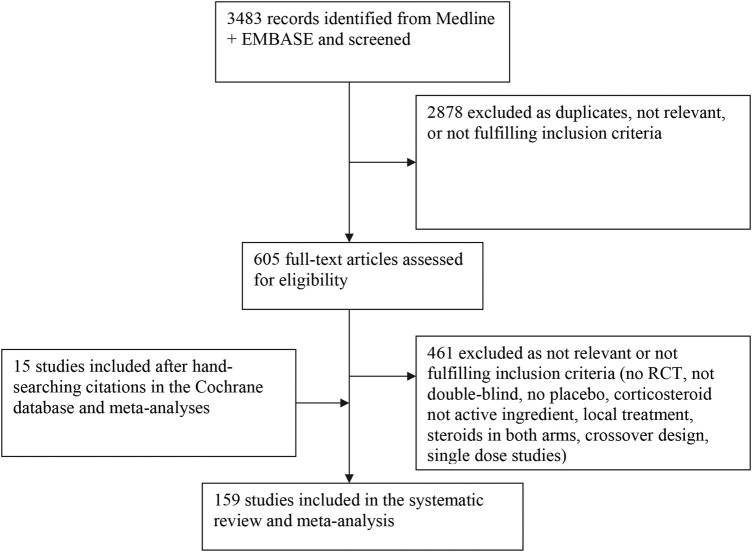
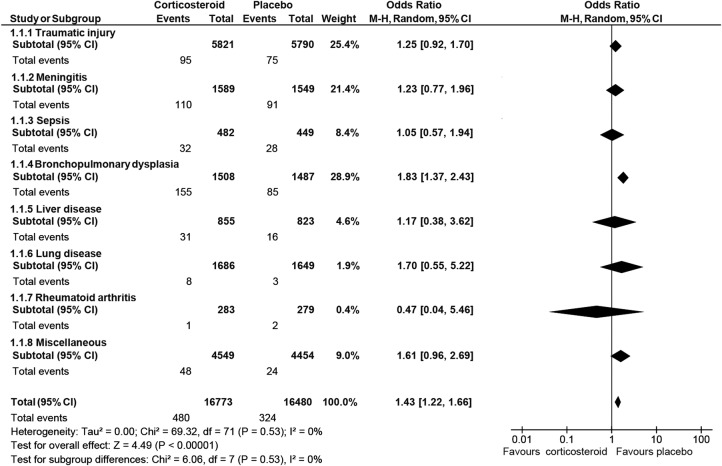
Objective: To assess whether corticosteroids are associated with increased risk of gastrointestinal bleeding or perforation. Design: Systematic review and meta-analysis of randomised, double-blind, controlled trials comparing a corticosteroid to placebo for any medical condition or in healthy participants. Studies with steroids given either locally, as a single dose, or in crossover studies were excluded. Data sources: Literature search using MEDLINE, EMBASE and Cochrane Database of Systematic Reviews between 1983 and 22 May 2013. Outcome measure: Outcome measures were the occurrence of gastrointestinal bleeding or perforation. Predefined subgroup analyses were carried out for disease severity, use of non-steroidal anti-inflammatory drugs (NSAIDs) or gastroprotective drugs, and history of peptic ulcer. Results: 159 studies (N=33 253) were included. In total, 804 (2.4%) patients had a gastrointestinal bleeding or perforation (2.9% and 2.0% for corticosteroids and placebo). Corticosteroids increased the risk of gastrointestinal bleeding or perforation by 40% (OR 1.43, 95% CI 1.22 to 1.66). The risk was increased for hospitalised patients (OR 1.42, 95% CI 1.22 to 1.66). For patients in ambulatory care, the increased risk was not statistically significant (OR 1.63, 95% CI 0.42 to 6.34). Only 11 gastrointestinal bleeds or perforations occurred among 8651 patients in ambulatory care (0.13%). Increased risk was still present in subgroup analyses (studies with NSAID use excluded; OR 1.44, 95% CI 1.20 to 1.71, peptic ulcer as an exclusion criterion excluded; OR 1.47, 95% CI 1.21 to 1.78, and use of gastroprotective drugs excluded; OR 1.42, 95% CI 1.21 to 1.67). Conclusions: Corticosteroid use was associated with increased risk of gastrointestinal bleeding and perforation. The increased risk was statistically significant for hospitalised patients only. For patients in ambulatory care, the total occurrence of bleeding or perforation was very low, and the increased risk was not statistically significant.
Overview
The claims and statistics of this paper haven’t been checked yet.
Free: it reads the open-access text and checks the first 5 claims that cite a source we can check. Create a free account to check every claim.
Integrity signals
Registry
Cites
Statistics
Figures
Verification
Claims the paper makes
The claims and statistics of this paper haven’t been checked yet.
Free: it reads the open-access text and checks the first 5 claims that cite a source we can check. Create a free account to check every claim.
Claims other papers make about this one
Each is checked against this paper’s own text: does it say what the citing paper says it does?
In the citing paper
“Despite the wide application, systemic immune suppression may cause Treg suppression and multiple adverse effects, including intestinal complications, muscle pain ,and headaches, which has brought other strategies to light [107, 226–228].”
From Immunogenicity of Recombinant Adeno-Associated Virus (AAV) Vectors for Gene Transfer (2023) · cites this paper as [226]
Self-check
Percentages, sums and reported differences re-computed from the paper’s own numbers.
The self-check needs the paper’s full text.
Citations
Cites
(1958) · Journal of the American Pharmaceutical Association (Scientific ed.) · doi:10.1002/jps.3030470133 · Cited by 2,489
The Hazards of Scoring the Quality of Clinical Trials for Meta-analysis
Jüni, P. (1999) · JAMA · doi:10.1001/jama.282.11.1054 · Cited by 1,981
Summary of product characteristics
(2013) · Pharmaceutical Medicine · doi:10.1093/med/9780199609147.003.0027 · Cited by 1,905
Risk Factors for Gastrointestinal Bleeding in Critically Ill Patients
Cook, D. J., Fuller, H. D., Guyatt, G. H., Marshall, J. C., Leasa, D., Hall, R., Winton, T. L., Rutledge, F., Todd, T., Roy, P., et al. (1994) · New England Journal of Medicine · doi:10.1056/nejm199402103300601 · Cited by 1,010
Corticosteroids for acute bacterial meningitis
Brouwer, M. C., McIntyre, P., Prasad, K., & van de Beek, D. (2015) · Cochrane Database of Systematic Reviews · doi:10.1002/14651858.cd004405.pub5 · Cited by 809
Corticosteroid Use and Peptic Ulcer Disease: Role of Nonsteroidal Anti-inflammatory Drugs
Piper, J. M., Ray, W. A., Daugherty, J. R., & Griffin, M. R. (1991) · Annals of Internal Medicine · doi:10.7326/0003-4819-114-9-735 · Cited by 608
Risk Factors for Gastrointestinal Bleeding in Critically Ill Patients
COOK, D. J., FULLER, H. D., MARSHALL, J. C., LEASA, D., HALL, R., WINTON, T., RUTLEDGE, F., TODD, T. J. R., ROY, P., LACROIX, J., et al. (1994) · Survey of Anesthesiology · doi:10.1097/00132586-199412000-00065 · Cited by 469
Association of Adrenocorticosteroid Therapy and Peptic-Ulcer Disease
Messer, J., Reitman, D., Sacks, H. S., Smith, H., & Chalmers, T. C. (1983) · New England Journal of Medicine · doi:10.1056/nejm198307073090105 · Cited by 422
Nonassociation of Adrenocorticosteroid Therapy and Peptic Ulcer
Conn, H. O., & Blitzer, B. L. (1976) · New England Journal of Medicine · doi:10.1056/nejm197602262940905 · Cited by 353
Corticosteroids and peptic ulcer: meta‐analysis of adverse events during steroid therapy
CONN, H. O., & POYNARD, T. (1994) · Journal of Internal Medicine · doi:10.1111/j.1365-2796.1994.tb00855.x · Cited by 312
Cited by
Items 201–300 of 327
Beaty, W., Elnadoury, O., Fridman, D., Louie, E., & Lubinsky, A. S. (2023) · Journal of Infection and Chemotherapy · doi:10.1016/j.jiac.2023.05.002 · Cited by 2
Prevalence and Risk Factors of Iron Deficiency Anemia in Children with Atopic Dermatitis
Serbes, M., & Kazancı, E. G. (2024) · Journal of Dr Behcet Uz Children s Hospital · doi:10.4274/jbuch.galenos.2024.68693 · Cited by 5
Fujiwara, M., Ikesue, H., Yamaoka, K., Uchida, M., Uesawa, Y., Muroi, N., & Shimizu, T. (2024) · In Vivo · doi:10.21873/invivo.13841 · Cited by 3
“PSL has been shown to inhibit prostaglandin production and it is associated with the development of steroidal gastric ulcers (21).”
Safety of steroids in severe community-acquired pneumonia
Piedepalumbo, F. V., Motos, A., Blasi, F., & Torres, A. (2025) · European Respiratory Review · doi:10.1183/16000617.0131-2024 · Cited by 6
“This rise in glucose level was only transient, did not affect the clinical outcome and did not prolong hospital stay [17, 43].”
Shu, C. P., Nwegbu, C., Ginette, D. Y. A., & Brown, J. A. (2025) · International Journal of Surgery Case Reports · doi:10.1016/j.ijscr.2025.110942 · Cited by 2
“The use of corticosteroids is associated with gastrointestinal bleeding and perforation, and concurrent use of both NSAIDs and steroids is related to gastroduodenal perforation [4,13].”
Interactions of Drugs for Liver Diseases
Mudrovčić, M., Jukić, L. V., Ogresta, D., & Grgurević, I. (2024) · Clinical gastroenterology · doi:10.1007/978-3-031-69800-2_30 · Cited by 3
Lee, M. Y., Heo, K., Shin, J., & Lee, J. (2025) · Cardiovascular Drugs and Therapy · doi:10.1007/s10557-025-07702-4 · Cited by 4
“Co-medications with the potential to elevate GI bleeding risk, including non-selective NSAIDs, cyclooxygenase-2 inhibitors, corticosteroids, and selective serotonin reuptake inhibitors were adjusted if used for more than seven cumulative days within the first 30 days following cohort entry [33–35].”
Westergren, T., Narum, S., & Klemp, M. (2017) · Journal of Clinical Epidemiology · doi:10.1016/j.jclinepi.2017.10.018 · Cited by 3
“Two recommendations (3 and 8) were modified to include gastrointestinal adverse events only, to reflect whether the study specified assessments of adverse gastrointestinal effects associated with study treatment, as this was the adverse effect addressed in the meta-analysis [14].”
BackgroundInfluentialSelf-citationDermato-pharmacology in Older Patients
Lai, O., & Endo, J. O. (2015) · Springer eBooks · doi:10.1007/978-3-319-18380-0_1 · Cited by 3
Eastman, P., & Le, B. H. C. (2015) · Internal Medicine Journal · doi:10.1111/imj.12922 · Cited by 2
Finding the Dieulafoy’s Lesion: A Case of Recurrent Rectal Bleeding in an Immunosuppressed Patient
Hudspath, C. B., Russell, D. M., Eum, K. S., Guess, J. M., Bunin, J. L., & Goldwire, F. (2019) · Case Reports in Gastrointestinal Medicine · doi:10.1155/2019/9402968 · Cited by 2
Severe bleeding from a duodenal ulcer after orthognathic surgery: a case report
Pham, M., Dunlop, N., Pham, L., & Turvey, T. A. (2019) · International Journal of Oral and Maxillofacial Surgery · doi:10.1016/j.ijom.2019.10.021 · Cited by 2
Arthritic Conditions Affecting the Temporomandibular Joint
Mercuri, L. G., & Abramowicz, S. (2019) · Springer eBooks · doi:10.1007/978-3-319-72303-7_32 · Cited by 2
Arthritic Conditions Affecting the Temporomandibular Joint
Mercuri, L. G., & Abramowicz, S. (2017) · Springer eBooks · doi:10.1007/978-3-319-28100-1_32-2 · Cited by 2
Puchon, E., Göböová, M., Vano, I., Fazekaš, T., Javorova-Rihova, Z., & Kuželová, M. (2020) · European Geriatric Medicine · doi:10.1007/s41999-020-00380-5 · Cited by 3
Chong, Y. B., Chai, C., & Lieu, A. (2020) · Interdisciplinary Neurosurgery · doi:10.1016/j.inat.2020.100984 · Cited by 2
Xu, H., Sang, S., Yao, H., Herghelegiu, A. I., Lu, H., Yurkovich, J. T., & Yang, L. (2021) · bioRxiv (Cold Spring Harbor Laboratory) · doi:10.1101/2021.07.02.450937 · Cited by 4
Jejunal Diverticular Bleeding on Long‐Term Aspirin and Short‐Term Corticosteroid Therapy
Angelopoulos, N., Beattie, W., & Yeoh, S. W. (2024) · Case Reports in Gastrointestinal Medicine · doi:10.1155/crgm/8875482 · Cited by 1
“Corticosteroids are known to increase the risk of gastro-intestinal bleeding; however, we did not identify any case reports linking their use to jejunal diverticular bleeding [19].”
Sephien, A., Lozano, M., Prince, S.-P. A., Dayto, D. C., Minton, C., Kumar, A., Nerella, N. K., & Shah, G. (2024) · Southern Medical Journal · doi:10.14423/smj.0000000000001760 · Cited by 1
Aldiabat, M., Aleyadeh, W., Muzammil, T. S., Adewuyi, K., Alahmad, M., Jabri, A., Alhuneafat, L., Kilani, Y., Alsakarneh, S., & Bilal, M. (2024) · Current Medical Science · doi:10.1007/s11596-024-2838-6 · Cited by 1
“…of steroids in this patient cohort, which may independently increase the GIB risk in hospitalized patients, as supported by a pre-pandemic study indicating a 40% increase in GIB risk for hospitalized patients receiving corticosteroids for any medical condition (OR 1.43, 95% CI 1.22 to 1.66) [29] .”
InfluentialShahbar, A. N., Noor, A., Hakami, A. Y., Alhazmi, A. Y., Albeirouti, B. T., Althubaiti, R., Alolasi, K. O., Almazmumi, M., Alhamdan, F. A., Albariqi, R. A., et al. (2025) · Journal of Clinical Medicine · doi:10.3390/jcm14082752 · Cited by 1
A Multicenter Study of Acute Abdomen in Children With Acute Lymphoblastic Leukemia: CCCG ‐ ALL ‐2015
Gan, W., Zhang, W., Cai, J., Zhu, X., Yu, J., Xiao, P., Gao, J., Fang, Y., Liang, C., Li, X., et al. (2025) · Cancer Medicine · doi:10.1002/cam4.71090 · Cited by 1
“All these result in atypical presentations or asymptomatic cases of acute abdomen, complicating early clinical diagnosis and treatment [20–22].”
Murakami, K., Arai, J., Ihara, S., Tsuchida, Y., Tsuchiya, H., Tsuboi, M., Kurokawa, K., Suzuki, N., Kinoshita, H., Hayakawa, Y., et al. (2025) · Digestion · doi:10.1159/000548559 · Cited by 2
Total Joint Arthroplasty in Solid Organ Transplant Patients
Khury, F., Ruff, G. L., Sarfraz, A., & Schwarzkopf, R. M. (2025) · Orthopedic Clinics of North America · doi:10.1016/j.ocl.2025.08.002 · Cited by 1
Jensen, M. E. J., Kierulf-Lassen, C., Gregersen, M., & Foss, C. H. (2025) · European Geriatric Medicine · doi:10.1007/s41999-025-01345-2 · Cited by 1
The Role of Steroids in the Treatment of Tuberculosis
Yassin, A. (2026) · Infectious diseases · doi:10.5772/intechopen.1014024 · Cited by 2
Klinger, T., Müller, K., Graf, R., Augustin, M., & Hagenström, K. (2026) · Dermatology and Therapy · doi:10.1007/s13555-026-01829-4 · Cited by 1
Tsenteradze, T., Pontecorvo, A. A., & Elli, E. F. (2026) · Obesity Surgery · doi:10.1007/s11695-026-08810-2 · Cited by 1
“We specifically examined rates of marginal ulcers and bleeding complications following SG-RYGB conversion [20].”
Wu, C.-H., Lee, J., Hwang, D., Wei, C.-Y., Li, S.-Y., & Tsai, J. (2026) · Frontiers in Immunology · doi:10.3389/fimmu.2026.1838232 · Cited by 1
“The episode of diverticulitis with microperforation and radiologic pneumoperitoneum following extended steroid exposure likely re fl ects cumulative gastrointestinal toxicity and impaired healing capacity associated with corticosteroids (12).”
NSAR, Coxibe und Steroide: Wann und wie sollten Magen und Darm geschützt werden?
Gross, M. (2017) · Aktuelle Rheumatologie · doi:10.1055/s-0043-110009 · Cited by 1
“Das Risiko für gastrointestinale Blutungen lag unter Glukokortikoiden bei 2,9 %, unter Plazebo bei 2,0 %.”
InfluentialRisk of gastrointestinal bleeding with concomitant NOAC and glucocorticoid treatment
(2022) · Drug and Therapeutics Bulletin · doi:10.1136/dtb.2022.000015 · Cited by 1
Organ Toxicity by Immunosuppressive Drugs in Solid Organ Transplantation
Dugbartey, G. J., & Şener, A. (2022) · Springer eBooks · doi:10.1007/978-3-031-12398-6_15 · Cited by 1
Shahrami, B., Biglari, M., Kaveh-Ahangaran, R., Rad, S., Hadjibabaie, M., & Vaezi, M. (2023) · European Journal of Cancer Care · doi:10.1155/2023/6650915 · Cited by 2
“…such as intestinal obstruction and QTprolongation with some of the 5-HT3 receptor antagonists [24, 25], neutropenia with aprepitant [26], and gastrointestinal and hyperglycemic efects of dexamethasone [27–31], as well as poor emesis control, increase in hospitalization costs, and nursing workload.”
Carvajal-Gutiérrez, W., Cisneros-Cisneros, M. A., Calixto, O.-J., Meneses-Toro, M. A., Rueda, A., Vega-Báez, M. A., Álvarez-Vargas, D. A., Uscategui-Ruiz, A. C., Romero‐Sánchez, C., & Bello-Gualtero, J. M. (2024) · Current Rheumatology Reviews · doi:10.2174/0115733971290285240207080745 · Cited by 2
Milic, T., Shah, K., Mitra, A. R., & Stabler, S. N. (2024) · Journal of Intensive Care Medicine · doi:10.1177/08850666241287514 · Cited by 1
“4,5 Whether or not immunosuppression by IL-6 inhibitors leads to an increase in secondary infections in COVID-19 patients is still not clear in the literature.”
Udovičić, M., Grizelj, D., & Falak, H. (2024) · Clinical gastroenterology · doi:10.1007/978-3-031-69800-2_20 · Cited by 1
Impact of Immunosuppressive Drugs on Patients With Percutaneous Left Atrial Appendage Occlusion
Togashi, D., Ellis, C. R., Yoneda, Z. T., Gregory, J. G., Uetake, S., Alahwany, S. H., Baker, M., & Kanagasundram, A. N. (2025) · Journal of Cardiovascular Electrophysiology · doi:10.1111/jce.70080 · Cited by 1
Tube digestif et traitements anti-inflammatoires (AINS, corticoïdes)
Bannwarth, B., Truchetet, M., & Kostine, M. (2016) · Revue du Rhumatisme Monographies · doi:10.1016/j.monrhu.2016.03.007 · Cited by 1
Stress Ulcer Prophylaxis in the Critically Ill Oncology Population
Collins, R. D. (2018) · Springer eBooks · doi:10.1007/978-3-319-74698-2_28-1 · Cited by 1
Zribi, K., Khrouf, F., Triki, E. Z., & Zribi, S. A. (2019) · Therapies · doi:10.1016/j.therap.2019.04.004 · Cited by 1
S3455 Non-Survivable GI Bleed in a Patient on Chronic Steroid Therapy
Aijazi, M., Bhatti, W., Afzal, R. M., Kohli, R., Ahuja, A. C., Tholany, J., & Pezzone, M. A. (2020) · The American Journal of Gastroenterology · doi:10.14309/01.ajg.0000715868.13211.5d · Cited by 1
Applications of Corticosteroid Therapy in Inflammatory Rheumatic Diseases
Mușetescu, A. E., Criveanu, C., Bobirca, A. V., Florescu, A., Bumbea, A. M., & BOBIRCA, F. T. (2021) · IntechOpen eBooks · doi:10.5772/intechopen.98720 · Cited by 4
Adipose Tissue and Cancer Cachexia: What Nurses Need to Know
McClement, S. (2021) · Asia-Pacific Journal of Oncology Nursing · doi:10.4103/apjon.apjon-2134 · Cited by 1
Treatment of SARS-CoV-2 (COVID-19): A safety perspective
Davis, J. S., Umeh, U. S., & Saba, R. (2021) · World Journal of Pharmacology · doi:10.5497/wjp.v10.i1.1 · Cited by 1
Stress Ulcer Prophylaxis in the Critically Ill Oncology Population
Collins, R. D. (2019) · Springer eBooks · doi:10.1007/978-3-319-74588-6_28 · Cited by 1
Voss, A., Smits, E., Swart, K. M. A., Михайловна, Б. Я., Brobert, G., Suzart‐Woischnik, K., Herings, R. M. C., Schink, T., & Haug, U. (2023) · Drugs - Real World Outcomes · doi:10.1007/s40801-022-00350-2 · Cited by 1
“On the other hand, we observed a substantial increase in baseline use of oral corticosteroids, which are known to increase the risk of gastrointestinal bleeding, in the Netherlands but not in Germany [13].”
BackgroundIrrational proton pump inhibitor use during corticosteroid therapy
Agarwal, R., & Baid, R. (2018) · The Egyptian Journal of Internal Medicine · doi:10.4103/ejim.ejim_2_18 · Cited by 1
Yao, T.-C., Huang, Y.-W., Chang, S.-M., Tsai, S.-Y., Wu, A. C., & Tsai, H.-J. (2020) · Annals of Internal Medicine · doi:10.7326/m20-0432
Yaxley, J. (2015) · Journal of Advances in Medicine and Medical Research · doi:10.9734/bjmmr/2015/19580
Basso, P. J. (2016) · Digital Library of Theses and Dissertations (Universidade de São Paulo) · doi:10.11606/d.17.2016.tde-01102015-122551
Hamasaki, S., Kunii, N., Makita, Y., Arimoto, S., Kitani, R., Suzuki, T., Yamasaki, K., Yonekura, S., Chazono, H., Sakurai, D., et al. (2017) · Practica oto-rhino-laryngologica Suppl · doi:10.5631/jibirinsuppl.148.86
Muranaka, T. (2016) · Clinical Medical Reviews and Case Reports · doi:10.23937/2378-3656/1410088 · Cited by 1
“It was reported that corticosteroid use is associated with increased risk of gastrointestinal bleeding and perforation, thus corticosteroid use may have caused intestinal perforation [7].”
BackgroundSaito, S., Nagashima, T., Matsubara, D., Fukushima, N., Iwamoto, M., Minota, S., Horie, H., Hosoya, Y., Lefor, A. K., & Sata, N. (2017) · International Surgery · doi:10.9738/intsurg-d-16-00160.1
Do stop me now: gastric acid-reducing drugs following renal transplantation
Held, I., & Pyart, R. (2018) · Journal of Kidney Care · doi:10.12968/jokc.2018.3.1.6
Al-Ibadi, I. N. A. (2017) · University of Salford Institutional Repository (University of Salford)
Živanović, D., & Rakanović, D. (2018) · Hospital Pharmacology - International Multidisciplinary Journal · doi:10.5937/hpimj1802661z
“Finally, corticosteroid therapy can cause one more health problem: the association between high doses of corticosteroids and peptic ulcer is well known [70].”
BackgroundGastrolesività e steroidi: miti e realtà
Giancola, G., & Arnaldi, G. (2019) · L Endocrinologo · doi:10.1007/s40619-019-00584-3
Safety, Tolerability, and Use of Steroids
Wolpert, F., & Roth, P. (2019) · Springer eBooks · doi:10.1007/978-3-030-23417-1_10
Complicaciones gastroduodenales de los tratamientos farmacológicos
Baroja, D. A., Domper-Arnal, M. J., & Homedes, C. S. (2020) · Medicine - Programa de Formación Médica Continuada Acreditado · doi:10.1016/j.med.2020.01.014
Saha, P., Pal, P., Habeeb, A., Sarkar, S. D., Das, S., & Jagwani, H. (2021) · Indian Journal of Case Reports · doi:10.32677/ijcr.2021.v07.i07.015
“It was previously believed that steroid administration in HSP-related pancreatitis can worsen the outcome with patients developing gastrointestinal bleeding and perforation [2,8].”
BackgroundRamien, M. (2020) · Faculty Opinions – Post-Publication Peer Review of the Biomedical Literature · doi:10.3410/f.732604709.793576500
Ibe, Y., Ishigo, T., Fujii, S., Fujiya, Y., Kuronuma, K., Tsugawa, T., Takahashi, S., & Fukudo, M. (2022) · Journal of Infection and Chemotherapy · doi:10.1016/j.jiac.2022.03.007
“In addition to the above, thrombosis and gastrointestinal disorders have also been reported [29]; thus, we need to exercise caution regarding these adverse events during dexamethasone treatment for COVID-19.”
Endokrines System und Immunmodulation
(2022) · Elsevier eBooks · doi:10.1016/b978-3-437-23673-0.00008-2
Ogasawara, S., Chiba, T., Ooka, Y., Yokosuka, O., & Kato, N. (2018) · Hepatology · doi:10.1002/hep.30110
Hamasaki, S., Kunii, N., Makita, Y., Arimoto, S., Kitani, R., Suzuki, T., Yamasaki, K., Yonekura, S., Chazono, H., Sakurai, D., et al. (2016) · Practica Oto-Rhino-Laryngologica · doi:10.5631/jibirin.109.803
Endokrines System und Immunmodulation
(2018) · Elsevier eBooks · doi:10.1016/b978-3-437-23672-3.00008-1
Prasoppokakorn, T., Kullavanijaya, P., & Pittayanon, R. (2022) · Research Square · doi:10.21203/rs.3.rs-1785199/v1
Gastrointestinal Bleeding In COVID-19 Infection: A case-control study
Polat, E., URKMEZ, F. Y., Aktan, A. H., & İnanç, İ. H. (2022) · Medical Records · doi:10.37990/medr.1112986
Pemphigus for the Inpatient Dermatologist
Cole, C., & Amber, K. T. (2022) · Current Dermatology Reports · doi:10.1007/s13671-022-00369-2
“Patients on steroids are 40% more likely to develop GI bleeding and/or ulcers, even at doses as low as 5–15 mg/day [149, 150].”
BackgroundNadeem, R. N., Bon, I., Algohary, D., Khan, M. K., Gundawar, N., Abdullah, M., Sharma, E., Elzeiny, M. G. M. A., Mahmoud, M., Elhoufi, A. M., et al. (2022) · The Journal of Critical Care Medicine · doi:10.2478/jccm-2022-0025
“Patients treated with higher doses are more likely to develop myopathy [14], gastrointestinal bleeding [15], electrolytes disturbances, poor wound healing [16] and psychosis [17] that may increase morbidity and prolong need for MV, ICU and hospital stay.”
BackgroundPrevention of Adverse Outcomes and Treatment Side Effects in Patients with Neuromuscular Disorders
Grover, K. M., & Sripathi, N. (2022) · Seminars in Neurology · doi:10.1055/s-0042-1758779
Intensive care therapy during the pandemic in 2020 and beyond: Mnemonics can help
Damnjanović, B., Stanisavljević, J., Šijan, Đ., Rović, I., Jovanović, N., & Milenković, M. (2022) · Serbian Journal of Anesthesia and Intensive Therapy · doi:10.5937/sjait2206095d
Early Postoperative Outcomes of Lung Transplant Recipients With Abdominal Adverse Events
Ramos, L. G., Cuesta, V. M. M., Fernandez, D. I., Tello-Mena, S., Sánchez-Moreno, L., Andia-Torrico, D., Alonso‐Lecue, P., Ballesteros-Sanz, M. Á., Naranjo-Gozalo, S., & Martínez, J. M. C. (2023) · Transplantation Proceedings · doi:10.1016/j.transproceed.2023.02.012
Lin, D. Q., Zipperlen, C., Gilbert, G. E., Gozenput, P., & Cho, L. (2023) · doi:10.32388/84yd58
Pérez-Campos, L. A., Gutiérrez-Ávila, S. A., Ramírez, V. D. A., & Dávila-Rodríguez, D. O. (2023) · Surgical & Cosmetic Dermatology · doi:10.5935/scd1984-8773.2022140211
Jones-Pauley, M., Waghela, R., Ordonez, A., Xu, J., & Mathur, N. (2023) · Research Square · doi:10.21203/rs.3.rs-3396068/v1
Nonvariceal upper gastrointestinal bleeding, COVID and mortality: confounders or true correlation?
Howard, E. (2023) · Baylor University Medical Center Proceedings · doi:10.1080/08998280.2023.2279880
Magat, R. F. N., Wibawa, I. D. N., Somayana, G., & Mariadi, I. K. (2022) · E-Jurnal Medika Udayana · doi:10.24843/mu.2022.v11.i01.p07
Randhawa, A., Jana, K. R., & Sattar, M. (2024) · medRxiv · doi:10.1101/2024.05.21.24307575
“25 Neurological injury frequently leads to mortality and morbidity.”
BackgroundAre Steroids Always Necessary in Multisystem Inflammatory Syndrome in Children (MIS-C)?
Camporesi, A., Zoia, E., Raso, I., Ferrario, S., Diotto, V., Izzo, F., Garbin, M., & Melloni, G. E. M. (2024) · International Journal of Pediatrics and Child Health · doi:10.12974/2311-8687.2024.12.09
Колбин, А. С., Gomon, Y. М., Proskurin, M. A., & Balykina, Y. Е. (2024) · Kachestvennaya Klinicheskaya Praktika = Good Clinical Practice · doi:10.37489/2588-0519-2024-2-4-15
Johnson, A., Piplani, S., Akpan, E. J., Khan, Z., Bachan, M., & Radulovic, M. (2024) · Translational Gastroenterology and Hepatology · doi:10.21037/tgh-24-5
“…prescribed for CTD treatment, such as steroids, immunomodulators, and non-steroidal anti-inflammatory drugs (NSAIDs), may influence the GI system through side effects or immunosuppression (2,3), highlighting the intricate interconnectedness of the immunological, GI, and connective tissue systems.”
BackgroundNagaraju, N., Varma, A. R., & Meshram, R. J. (2024) · Cureus · doi:10.7759/cureus.67795 · Cited by 1
“Therefore, patients receiving corticosteroids should be closely monitored for these potential side effects to ensure timely intervention [24].”
BackgroundRectum necrosis in a patient with severe COVID19 infection after CAR-T therapy: a case report
Saeki, K., Nakagama, H., Tanaka, Y., Goto, Y., Kaneshiro, K., Kono, H., Yanai, K., Yamamoto, H., Yoneda, R., Shimakawa, T., et al. (2024) · Surgical Case Reports · doi:10.1186/s40792-024-02026-1
“In regard to steroid therapy, it has been reported that corticosteroid use was associated with increased risk of gastrointestinal perforation [40–42].”
BackgroundLoubani, L., Bartlett, J. W., Mothner, B. A., Asaithambi, R., & Lee, S. (2024) · The Journal of Pediatric Pharmacology and Therapeutics · doi:10.5863/1551-6776-29.6.630 · Cited by 1
Simultaneous triple peptic perforations: a report of an extremely rare case
La, V. P., Tong, H. D., La, V. P., Thanh, N. M. L., Tran, Q. M., Dang, C. P., & Doan, A. V. (2024) · Journal of Surgical Case Reports · doi:10.1093/jscr/rjae800
Che, M., Ahmed, S., Chan, R., Akbari, A., & Zimmerman, D. L. (2025) · Canadian Journal of Kidney Health and Disease · doi:10.1177/20543581241312618
Kim, S., Ryoo, J., Cho, H. J., Kim, S. C., Park, S., Lee, S. H., Park, O., Kim, T., Yeo, H. J., Jang, J. H., et al. (2025) · Journal of Korean Medical Science · doi:10.3346/jkms.2025.40.e82
Suzuki, K., Ito, S., Carini, S., Shimizu, M., Hatanaka, S., & Miyakawa, Y. (2025) · Blood Vessels Thrombosis & Hemostasis · doi:10.1016/j.bvth.2025.100066
Inoue, M., Ichihara, R., Hiramatsu, M., & Yamamoto, J. (2025) · Cureus · doi:10.7759/cureus.84496
Li, W., Jiang, X., Lu, S., Lu, W. Q., Ma, S., Zhuo, Y., Gao, Q., Xiao, Y., Wu, B., Xie, J., et al. (2025) · Frontiers in Bioengineering and Biotechnology · doi:10.3389/fbioe.2025.1628758
“However, corticosteroids cause gastrointestinal bleeding and wound infection (Narum et al., 2014), which is why they are rarely used nowadays.”
Valdovinos-García, L. R. (2025) · Revista de Gastroenterología de México · doi:10.1016/j.rgmx.2025.06.001
Reassessing Safety Outcomes of Left Atrial Appendage Closure in Immunosuppressed Patients
Çelik, M. C., Şahin, M. M., & Kalçık, M. (2025) · Journal of Cardiovascular Electrophysiology · doi:10.1111/jce.70108
“It is well known that corticosteroids and biologic agents carry variable risks for infection and tissue healing [3].”
Valdovinos-García, L. R. (2025) · Revista de Gastroenterología de México (English Edition) · doi:10.1016/j.rgmxen.2025.09.021
Pappalardo, M., Passadore, L., Manfredi, M., Bianchi, L. K., Veronese, P., Maffini, V., Gismondi, P., Rubini, M., & Dodi, I. (2025) · International Journal of Immunopathology and Pharmacology · doi:10.1177/03946320241300130
“21,22 In addition, there is still a proportion of patients with refractory gastrointestinal symptoms who fail to achieve recovery even with the use of glucocorticoids.”
A Decade With Sheehan’s Syndrome: A Case Report and Personal Experience
Kayalvizhi, D., Moradeyo, A. Y., & Bhuvaneswari, G. (2025) · Case Reports in Endocrinology · doi:10.1155/crie/6010326
“This patient also Case Reports in Endocrinology experienced chronic gastritis, a gastrointestinal side effect of prolonged corticosteroid use [29].”
Misdiagnosed: A Sigmoid Perforation Secondary to Visceral Kaposi Sarcoma
Stewart, B. P., Atkinson, R. L., Ramos, H. D., Chang, J., & Raissis, A. (2025) · Clinical Colorectal Cancer · doi:10.1016/j.clcc.2025.10.009
Onrubia, J. G., Vazirani, R., Feltes, G. I., Hoyo, R. S.-D., Viana-Llamas, M. C., Raposeiras‐Roubín, S., Romero, R., Alfonso‐Rodríguez, E., Uribarri, A., Santoro, F., et al. (2025) · Biomedicines · doi:10.3390/biomedicines13112665
“This observation may reflect the well-documented association between corticosteroid exposure and an elevated risk of gastrointestinal hemorrhage [23].”
Latrémouille-Viau, D., Wang, A., Cheng, D., Deeba, S., Dubey, A., Gomez, R., Zion, A., Chen, G., Vodicka, E. L., & Hines, D. M. (2025) · Current Medical Research and Opinion · doi:10.1080/03007995.2025.2583758
“…two comorbidities, bleeding is a risk associated with either treatment (systemic cortico-steroids for chronic pulmonary disease exacerbations) 20,21 or the condition itself (anemia is a risk factor for bleeding in patients with platelet disorders) 22 , which may dissuade patients from…”
Saeki, K., Nakagama, H., Tanaka, Y., Goto, Y., Kaneshiro, K., Kono, H., Yanai, K., Yamamoto, H., Yoneda, R., Shimakawa, T., et al. (2024) · Figshare · doi:10.6084/m9.figshare.27116125
Metadata
- Authors
- Narum, S., Westergren, T., & Klemp, M.
- Affiliations
- Oslo University Hospital (NO)
- University of Oslo (NO)
- Corresponding author
- Narum, Sigrid
- Venue
- BMJ Open
- Publisher
- BMJ
- Published
- 2014-05
- Volume
- 4
- Issue
- 5
- Pages
- e004587
- ISSN
- 2044-6055 (ISSN-L)
- PMC
- PMC4025450
- OpenAlex
- W2110984144
- Cited by
- 327
- References
- 28
- Citations by year
- 2026: 26 · 2025: 36 · 2024: 38 · 2023: 33 · 2022: 36 · 2021: 28 · 2020: 22 · 2019: 30 · 2018: 27 · 2017: 22 · 2016: 17 · 2015: 11 · 2014: 1
- FWCI
- 2.78
- Type
- journal article
- Language
- en
- Open access
- gold
- doi.org
- Licence
- cc-by-nc
- Locations
- BMJ Open (publishedVersion, cc-by-nc)
- Europe PMC (PubMed Central) (publishedVersion, other-oa)
- PubMed Central (publishedVersion, cc-by-nc)
- PubMed (publishedVersion)
- HighWire Press Open Archive (submittedVersion)
- NORA - Norwegian Open Research Archives (submittedVersion, cc-by-nc)
- NORA - Norwegian Open Research Archives (submittedVersion, other-oa)
- Topics
- Health Sciences › Medicine › Gastroenterology › Gastrointestinal Bleeding Diagnosis and Treatment
- Health Sciences › Medicine › Pharmacology (medical) › Inflammatory mediators and NSAID effects
- Life Sciences › Pharmacology, Toxicology and Pharmaceutics › Toxicology › Pharmacovigilance and Adverse Drug Reactions
- Keywords
- corticosteroids, gastrointestinal bleeding, gastrointestinal perforation, adverse drug reactions, peptic ulcer, NSAID use, gastroprotective drugs, hospitalized patients, outpatient care, drug safety, placebo comparison, healthy volunteers
- MeSH terms
- Adrenal Cortex Hormones, Gastrointestinal Hemorrhage, Humans, Intestinal Perforation, Stomach Rupture, Randomized Controlled Trials as Topic, Risk Assessment
About these checks
Registry, retraction, Cites and statistics results are computed, not judged, with one exception: a printed reference that no index lists is read once by a model before it counts as a citation error. Claims are extracted by a model and kept only when their quote appears verbatim in the text; each cited source is then checked, with a model’s help, for whether it says what the claim relies on. Those verdicts can be wrong — read the claim’s quote and the cited source before relying on one.
Statistics and arithmetic are recomputed, not judged.
Confidence bands are shown only for fields calibrated on our annotated test set. None is calibrated yet, so no band is shown.
What counts as a claim ›How we measure confidence ›How we check this ›
Are you an author, or do you see a problem with this page? Request a review
Data sources
Bibliographic data: Semantic Scholar, OpenAlex, Crossref.
Contains information from the Semantic Scholar Academic Graph Datasets, made available under the ODC Attribution License (ODC-BY 1.0).
Semantic Scholar’s data is described in: Kinney, R., et al. (2023). The Semantic Scholar Open Data Platform. arXiv:2301.10140.
