

Validity and reliability of chronic tic disorder and obsessive-compulsive disorder diagnoses in the Swedish National Patient Register
Open accessThe DOI matches its Crossref record; 18 of the 19 references it cites were found in a registry or an index; 1 of the 7 sources its claims cite were checked for support.
Abstract
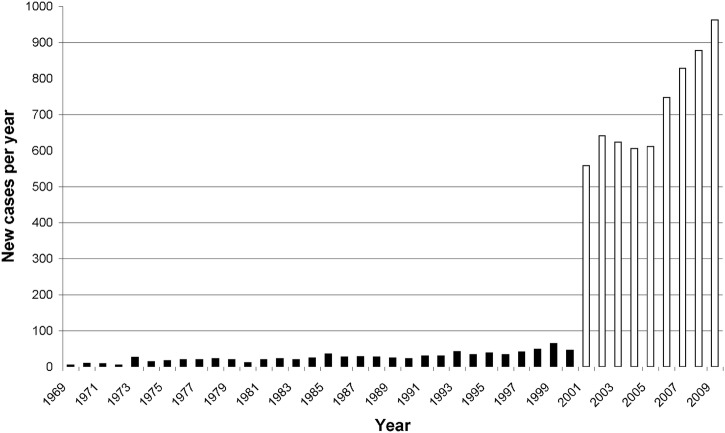
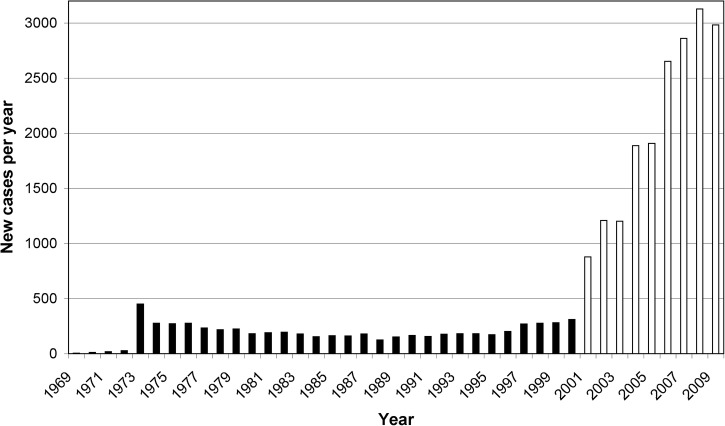
OBJECTIVES: The usefulness of cases diagnosed in administrative registers for research purposes is dependent on diagnostic validity. This study aimed to investigate the validity and inter-rater reliability of recorded diagnoses of tic disorders and obsessive-compulsive disorder (OCD) in the Swedish National Patient Register (NPR). DESIGN: Chart review of randomly selected register cases and controls. METHOD: 100 tic disorder cases and 100 OCD cases were randomly selected from the NPR based on codes from the International Classification of Diseases (ICD) 8th, 9th and 10th editions, together with 50 epilepsy and 50 depression control cases. The obtained psychiatric records were blindly assessed by 2 senior psychiatrists according to the criteria of the fourth edition of the Diagnostic and Statistical Manual of Mental Disorders, Fourth Edition, Text Revision (DSM-IV-TR) and ICD-10. PRIMARY OUTCOME MEASUREMENT: Positive predictive value (PPV; cases diagnosed correctly divided by the sum of true positives and false positives). RESULTS: Between 1969 and 2009, the NPR included 7286 tic disorder and 24,757 OCD cases. The vast majority (91.3% of tic cases and 80.1% of OCD cases) are coded with the most recent ICD version (ICD-10). For tic disorders, the PPV was high across all ICD versions (PPV=89% in ICD-8, 86% in ICD-9 and 97% in ICD-10). For OCD, only ICD-10 codes had high validity (PPV=91-96%). None of the epilepsy or depression control cases were wrongly diagnosed as having tic disorders or OCD, respectively. Inter-rater reliability was outstanding for both tic disorders (κ=1) and OCD (κ=0.98). CONCLUSIONS: The validity and reliability of ICD codes for tic disorders and OCD in the Swedish NPR is generally high. We propose simple algorithms to further increase the confidence in the validity of these codes for epidemiological research.
Overview
CoChat Summary
## TL;DR
This chart-review study found that tic disorder diagnoses in the Swedish National Patient Register were generally valid across ICD-8, ICD-9, and ICD-10, while OCD diagnoses were valid mainly in ICD-10. Inter-rater reliability was outstanding for both conditions.
## Key findings
- The register contained 7,286 tic disorder cases and 24,757 OCD cases between 1969 and 2009; 91.3% of tic cases and 80.1% of OCD cases were coded in ICD-10.
- For tic disorders, the PPV was 89% in ICD-8, 86% in ICD-9, and 97% in ICD-10; overall PPV in the reviewed sample was 0.92 (95% CI 0.82 to 0.97).
- For OCD, overall PPV was 0.72 for rater 1 (95% CI 0.60 to 0.82) and 0.71 for rater 2 (95% CI 0.58 to 0.81); ICD-10 codes alone had PPV 91–96%.
- Inter-rater reliability was κ=1 for tic disorders and κ=0.98 for OCD; none of the epilepsy or depression controls were misclassified as having the disorder of interest.
## Methods
- Design: Chart review of randomly selected register cases and controls; two senior psychiatrists independently reviewed records blind to the register diagnosis.
- Sample/data: 100 tic disorder cases, 100 OCD cases, plus 50 epilepsy controls and 50 depression controls drawn from the Swedish NPR; analyses used the records actually obtained and eligible after exclusions (64 tic cases, 68 OCD cases).
- Analysis: Calculated positive predictive value (PPV) with 95% CIs and Cohen’s κ for inter-rater reliability, using DSM-IV-TR and ICD-10 criteria.
## Limitations
- The paper states the relatively small number of studied cases may have produced random findings.
- The paper states the small number of epilepsy and depression controls meant negative predictive values could not be meaningfully calculated.
- The paper states an inherent limitation of chart review is lack of in-person observations, which are particularly important for diagnosing tic disorders.
Model-written summary. Check it against the paper before relying on it.
Integrity signals
Registry
Cites
Statistics
Figures
Verification
Claims the paper makes
1 Valid · 0 Not valid · 3 Not checked · 42 Own results and interpretations
A result the paper reports from its own data — it cites no other source for it, so there is none to check. The quote shows it is in the paper.
In the paper
“None of the epilepsy or depression control cases were wrongly diagnosed as having tic disorders or OCD, respectively.”
- Also stated in: § False negatives · hedged
“None of the epilepsy control files were diagnosed as having a tic disorder, and none of the depression control files were diagnosed as having OCD, indicating that there were no false negative cases in these randomly selected files.”
§ Validity and reliability of chronic tic disorder and obsessive-compulsive disorder diagnoses in the Swedish National Patient Register > Abstract > Results
plain- Asserted: passes — The authors put it forward as true.
- Checkable: passes — It can be checked against evidence.
- Load-bearing: passes — The paper’s conclusions depend on it.
- Based: passes — The paper gives a reason why it holds.
- Rests on 2 assumptions not shown here.
- Also stated in: § False negatives · hedged
A result the paper reports from its own data — it cites no other source for it, so there is none to check. The quote shows it is in the paper.
In the paper
“When using the DSM-IV-TR criteria instead of ICD-10, there were three cases who were given another third position code in DSM-IV-TR based on an age of onset above 18 years of age.”
§ Validity and reliability of chronic tic disorder and obsessive-compulsive disorder diagnoses in the Swedish National Patient Register > Results > Validity and reliability of tic disorder codes
plainstates a causen = 3- Asserted: passes — The authors put it forward as true.
- Checkable: passes — It can be checked against evidence.
- Load-bearing: unclear — It is unclear whether the paper’s conclusions depend on it.
- Based: passes — The paper gives a reason why it holds.
- Rests on 2 assumptions not shown here.
A result the paper reports from its own data — it cites no other source for it, so there is none to check. The quote shows it is in the paper.
In the paper
“Among 68 patients identified in the NPR as having ICD-8/ICD-9/ICD-10 OCD, 48 (according to rater 1) or 49 (according to rater 2) were true-positive cases”
§ Validity and reliability of chronic tic disorder and obsessive-compulsive disorder diagnoses in the Swedish National Patient Register > Results > Validity and reliability of OCD codes
plainn = 68- Asserted: passes — The authors put it forward as true.
- Checkable: passes — It can be checked against evidence.
- Load-bearing: passes — The paper’s conclusions depend on it.
- Based: passes — The paper gives a reason why it holds.
- Rests on 2 assumptions not shown here.
A result the paper reports from its own data — it cites no other source for it, so there is none to check. The quote shows it is in the paper.
In the paper
“Unspecified tic disorder (F95.9) cases were diagnosed by the raters as either TS (F95.2), CTD (F95.1), unspecified tic disorder (F95.9) or transient tics (F95.0).”
§ Validity and reliability of chronic tic disorder and obsessive-compulsive disorder diagnoses in the Swedish National Patient Register > Results > Validity and reliability of tic disorder codes
plain- Asserted: passes — The authors put it forward as true.
- Checkable: passes — It can be checked against evidence.
- Load-bearing: unclear — It is unclear whether the paper’s conclusions depend on it.
- Based: passes — The paper gives a reason why it holds.
- Rests on 2 assumptions not shown here.
18 more claims
Create a free account to see all 46 claims and to verify the 6 references still open.
- Probably not a substantial claim. 19
- It may state two separate claims as one. 6
Claims other papers make about this one
Each is checked against this paper’s own text: does it say what the citing paper says it does?
The source backs part of the claim, not all of it — or backs it for a different population, condition or comparison.
In the citing paper
“To identify cases, we used the earliest registered F42 ICD-10 OCD diagnosis code in the NPR because this has been shown to be most reliable (39).”
From Maternal Effects as Causes of Risk for Obsessive-Compulsive Disorder (2020) · cites this paper as [39]
Experimental — accuracy not yet measured
Citations
Cites
Diagnostic and Statistical Manual of Mental Disorders
Williams, J. B. W., & First, M. (2013) · Encyclopedia of Social Work · doi:10.1093/acrefore/9780199975839.013.104 · Cited by 109,519
A Coefficient of Agreement for Nominal Scales
Cohen, J. (1960) · Educational and Psychological Measurement · doi:10.1177/001316446002000104 · Cited by 42,398
External review and validation of the Swedish national inpatient register
Ludvigsson, J. F., Andersson, E., Ekbom, A., Feychting, M., Kim, J.-L., Reuterwall, C., Heurgren, M., & Olausson, P. O. (2011) · BMC Public Health · doi:10.1186/1471-2458-11-450 · Cited by 5,055
Diagnostic and Statistical Manual of Mental Disorders ( DSM ‐ IV ‐ TR )
Segal, D. L. (2010) · The Corsini Encyclopedia of Psychology · doi:10.1002/9780470479216.corpsy0271 · Cited by 4,666
The Swedish personal identity number: possibilities and pitfalls in healthcare and medical research
Ludvigsson, J. F., Otterblad-Olausson, P., Pettersson, B. U., & Ekbom, A. (2009) · European Journal of Epidemiology · doi:10.1007/s10654-009-9350-y · Cited by 2,403
Lichtenstein, P., Yip, B. H., Björk, C., Pawitan, Y., Cannon, T. D., Sullivan, P. F., & Hultman, C. M. (2009) · The Lancet · doi:10.1016/s0140-6736(09)60072-6 · Cited by 2,125
Self-citationGenome-wide association study identifies five new schizophrenia loci
The Schizophrenia Psychiatric Genome-Wide Association Study (GWAS) Consortium (2011) · Nature Genetics · doi:10.1038/ng.940 · Cited by 1,919
The Epidemiology of Obsessive-Compulsive Disorder in Five US Communities
Karno, M. (1988) · Archives of General Psychiatry · doi:10.1001/archpsyc.1988.01800360042006 · Cited by 1,351
Most genetic risk for autism resides with common variation
Gaugler, T., Klei, L., Sanders, S. J., Bodea, C. A., Goldberg, A. P., Lee, A. B., Mahajan, M., Manaa, D., Pawitan, Y., Reichert, J., et al. (2014) · Nature Genetics · doi:10.1038/ng.3039 · Cited by 1,239 · cited 1×
“ICD-10 50 36 (72) 4 (11) 32 (89) 34 27 (79) 4 (15) 23 (85)”
Excess Mortality in Bipolar and Unipolar Disorder in Sweden
Ösby, U., Brandt, L., Correia, N., Ekbom, A., & Sparén, P. (2001) · Archives of General Psychiatry · doi:10.1001/archpsyc.58.9.844 · Cited by 1,120 · cited 1×
“ICD-8 325 (5) 325 (5) 3230 (13) 3230 (13) ICD-9 310 (4) 635 (9) 1688 (7) 4918 (20) ICD-10 6651 (91) 7286 (100) 19 839 (80) 24 757 (100)”
Cited by
Suicide in obsessive–compulsive disorder: A population-based study of 36 788 Swedish patients
Fernández de la Cruz, L., Rydell, M., Runeson, B., D'Onofrio, B. M., Brander, G., Rück, C., Lichtenstein, P., Larsson, H., & Mataix-Cols, D. (2017) · Molecular Psychiatry · doi:10.1038/mp.2016.115 · Cited by 210
Self-citationPatterns of nonrandom mating within and across 11 major psychiatric disorders
Nordsletten, A. E., Larsson, H., Crowley, J. J., Almqvist, C., Lichtenstein, P., & Mataix-Cols, D. (2016) · JAMA Psychiatry · doi:10.1001/jamapsychiatry.2015.3192 · Cited by 210
Self-citationCederlöf, M., Thornton, L. M., Baker, J., Lichtenstein, P., Larsson, H., Rück, C., Bulik, C. M., & Mataix‐Cols, D. (2015) · World Psychiatry · doi:10.1002/wps.20251 · Cited by 146
Self-citationFamilial Risks of Tourette Syndrome and Chronic Tic Disorders: A Population-Based Cohort Study
Mataix-Cols, D., Isomura, K., Pérez-Vigil, A., Chang, Z., Rück, C., Larsson, K. J., Leckman, J. F., Serlachius, E., Larsson, H., & Lichtenstein, P. (2015) · JAMA Psychiatry · doi:10.1001/jamapsychiatry.2015.0627 · Cited by 170
Self-citationAnxiety Disorders in Adults with Autism Spectrum Disorder: A Population-Based Study
Nimmo-Smith, V., Heuvelman, H., Dalman, C., Lundberg, M., Idring, S., Carpenter, P., Magnusson, C., & Rai, D. (2020) · Journal of Autism and Developmental Disorders · doi:10.1007/s10803-019-04234-3 · Cited by 128
Mataix-Cols, D., Frans, E., Pérez-Vigil, A., Kuja-Halkola, R., Gromark, C., Isomura, K., Fernández de la Cruz, L., Serlachius, E., Leckman, J. F., Crowley, J. J., et al. (2018) · Molecular Psychiatry · doi:10.1038/mp.2017.215 · Cited by 153
Self-citationSuicide in Tourette’s and Chronic Tic Disorders
de la Cruz, L. F., Rosenqvist, M. A., Runeson, B., Brander, G., Rück, C., D'Onofrio, B. M., Larsson, H., Lichtenstein, P., & Mataix‐Cols, D. (2016) · Biological Psychiatry · doi:10.1016/j.biopsych.2016.08.023 · Cited by 129
Self-citationPérez-Vigil, A., Fernández de la Cruz, L., Brander, G., Isomura, K., Jangmo, A., Feldman, I., Hesselmark, E., Serlachius, E., Lázaro, L., Rück, C., et al. (2018) · JAMA Psychiatry · doi:10.1001/jamapsychiatry.2017.3523 · Cited by 120
Self-citationCesta, C. E., Öberg, A. S., Ibrahimson, A., Yusuf, I., Larsson, H., Almqvist, C., D'Onofrio, B. M., Bulik, C. M., Fernández de la Cruz, L., Mataix-Cols, D., et al. (2020) · Psychological Medicine · doi:10.1017/s0033291719000424 · Cited by 112
“2, 307C; ICD-10: F95), shown to have excellent positive predictive value when compared with clinical records (Ruck et al., 2015).”
Self-citationFamily history of mental and neurological disorders and risk of autism
Xie, S., Karlsson, H., Dalman, C., Widman, L., Rai, D., Gardner, R. M., Magnusson, C., Schendel, D. E., Newschaffer, C. J., & Lee, B. K. (2019) · JAMA Network Open · doi:10.1001/jamanetworkopen.2019.0154 · Cited by 111
“The median (interquartile range) family size of index persons was 15 (10-19) relatives.”
BackgroundSidorchuk, A., Isomura, K., Molero, Y., Hellner, C., Lichtenstein, P., Chang, Z., Franck, J., de la Cruz, L. F., & Mataix‐Cols, D. (2018) · PLoS Medicine · doi:10.1371/journal.pmed.1002635 · Cited by 103
Self-citationBrander, G., Rydell, M., Kuja-Halkola, R., Fernández de la Cruz, L., Lichtenstein, P., Serlachius, E., Rück, C., Almqvist, C., D’Onofrio, B. M., Larsson, H., et al. (2016) · JAMA Psychiatry · doi:10.1001/jamapsychiatry.2016.2095 · Cited by 99
Self-citationIsomura, K., Brander, G., Chang, Z., Kuja-Halkola, R., Rück, C., Hellner, C., Lichtenstein, P., Larsson, H., Mataix-Cols, D., & Fernández de la Cruz, L. (2018) · Biological Psychiatry · doi:10.1016/j.biopsych.2017.12.003 · Cited by 88
Self-citationBrander, G., Rydell, M., Kuja-Halkola, R., Fernández de la Cruz, L., Lichtenstein, P., Serlachius, E., Rück, C., Almqvist, C., D'Onofrio, B. M., Larsson, H., et al. (2018) · Molecular Psychiatry · doi:10.1038/mp.2017.31 · Cited by 87
Self-citationTic disorders revisited: introduction of the term “tic spectrum disorders”
Müller‐Vahl, K., Sambrani, T., & Jakubovski, E. (2019) · European Child & Adolescent Psychiatry · doi:10.1007/s00787-018-01272-7 · Cited by 92
Lebwohl, B., Haggård, L., Emilsson, L., Söderling, J., Roelstraete, B., Butwicka, A., Green, P. H. R., & Ludvigsson, J. F. (2021) · Clinical Gastroenterology and Hepatology · doi:10.1016/j.cgh.2020.08.018 · Cited by 88
Increased Risk for Neurodevelopmental Disorders in Children With Orofacial Clefts
Tillman, K. K., Hakelius, M. M., Höijer, J., Ramklint, M., Ekselius, L., Nowinski, D. J., & Papadopoulos, F. C. (2018) · Journal of the American Academy of Child & Adolescent Psychiatry · doi:10.1016/j.jaac.2018.06.024 · Cited by 84
Latvala, A., Kuja-Halkola, R., Rück, C., D’Onofrio, B. M., Jernberg, T., Almqvist, C., Mataix-Cols, D., Larsson, H., & Lichtenstein, P. (2016) · JAMA Psychiatry · doi:10.1001/jamapsychiatry.2016.2717 · Cited by 82
Self-citationNevriana, A., Pierce, M., Dalman, C., Wicks, S., Hasselberg, M., Hope, H. F., Abel, K. M., & Kosidou, K. (2020) · BMJ · doi:10.1136/bmj.m853 · Cited by 80
Pérez-Vigil, A., de la Cruz, L. F., Brander, G., Isomura, K., Jangmo, A., Kuja‐Halkola, R., Hesselmark, E., D'Onofrio, B. M., Larsson, H., & Mataix‐Cols, D. (2018) · JAMA Neurology · doi:10.1001/jamaneurol.2018.1194 · Cited by 80
Self-citationLudvigsson, J. F., Olén, O., Larsson, H., Halfvarson, J., Almqvist, C., Lichtenstein, P., & Butwicka, A. (2021) · Journal of Crohn s and Colitis · doi:10.1093/ecco-jcc/jjab039 · Cited by 76
Self-citationKendler, K. S., Ohlsson, H., Sundquist, J., & Sundquist, K. (2021) · Translational Psychiatry · doi:10.1038/s41398-021-01454-z · Cited by 76
Brander, G., Isomura, K., Chang, Z., Kuja‐Halkola, R., Almqvist, C., Larsson, H., Mataix‐Cols, D., & de la Cruz, L. F. (2019) · JAMA Neurology · doi:10.1001/jamaneurol.2018.4279 · Cited by 71
“TheSwedishTSand CTD codes have been previously validated.(26) As in previous works,(27-30)weused an algorithm tominimize the inclusionof individuals with only transient tics.”
MethodSelf-citationThe Autism–Tics, ADHD and other Comorbidities inventory (A-TAC): previous and predictive validity
Mårland, C., Lichtenstein, P., Degl’Innocenti, A., Larson, T., Råstam, M., Anckarsäter, H., Gillberg, C., Nilsson, T., & Lundström, S. (2017) · BMC Psychiatry · doi:10.1186/s12888-017-1563-0 · Cited by 65
Self-citationThe familial risk of autism spectrum disorder with and without intellectual disability
Xie, S., Karlsson, H., Dalman, C., Widman, L., Rai, D., Gardner, R. M., Magnusson, C., Sandin, S., Tabb, L. P., Newschaffer, C. J., et al. (2020) · Autism Research · doi:10.1002/aur.2417 · Cited by 64
“Validation studies on the diagnoses of ASD+ID and ASD−ID in the Stockholm Youth Cohort and diagnoses in the National Patient Register showed that these diagnoses had high test/retest reliability [Dalman, Broms, Cullberg, & Allebeck, 2002; Idring et al., 2012; Rück et al., 2015; Sellgren, Landén, Lichtenstein, Hultman,…”
BackgroundPrenatal Maternal Smoking and Increased Risk for Tourette Syndrome and Chronic Tic Disorders
Browne, H. A., Modabbernia, A., Buxbaum, J. D., Hansen, S. N., Schendel, D., Parner, E. T., Reichenberg, A., & Grice, D. E. (2016) · Journal of the American Academy of Child & Adolescent Psychiatry · doi:10.1016/j.jaac.2016.06.010 · Cited by 64
“Finally, it is important to note that diagnoses of TS/CT and OCD have yet to be fully validated in Danish registries, although the validity of tic disorders and OCD in similar systems, such as the Swedish national registries, is strong.(56) In conclusion, our results show that heavy prenatal maternal smoking is associ…”
BackgroundPérez-Vigil, A., Mittendorfer-Rutz, E., Helgesson, M., Fernández de la Cruz, L., & Mataix-Cols, D. (2019) · Psychological Medicine · doi:10.1017/s0033291718001691 · Cited by 54
Self-citationBergdahl, C., Nilsson, F., Wennergren, D., Ekholm, C., & Möller, M. (2021) · Clinical Epidemiology · doi:10.2147/clep.s307762 · Cited by 51
Ahlström, G., Wallén, E. F., Tideman, M., & Holmgren, M. (2021) · Journal of Intellectual Disabilities · doi:10.1177/17446295211037170 · Cited by 51
“Also, the NPR register for specialist healthcare has been validated in several studies and has demonstrated high validity and sensitivity (Ludvigsson et al., 2011; Rück et al., 2015).”
de la Cruz, L. F., Isomura, K., Lichtenstein, P., Larsson, H., Kuja‐Halkola, R., Chang, Z., D'Onofrio, B. M., Brikell, I., Rück, C., Sidorchuk, A., et al. (2024) · BMJ · doi:10.1136/bmj-2023-077564 · Cited by 50
Self-citationKendler, K. S., Abrahamsson, L., Ohlsson, H., Sundquist, J., & Sundquist, K. (2023) · JAMA Psychiatry · doi:10.1001/jamapsychiatry.2022.4777 · Cited by 51
Paleczny, S., Osagie, N., Sethi, J., & Cusimano, M. D. (2024) · PLoS ONE · doi:10.1371/journal.pone.0298411 · Cited by 47
Kuja-Halkola, R., Lind Juto, K., Skoglund, C., Rück, C., Mataix-Cols, D., Pérez-Vigil, A., Larsson, J., Hellner, C., Långström, N., Petrovic, P., et al. (2021) · Molecular Psychiatry · doi:10.1038/s41380-018-0248-5 · Cited by 38
Self-citationSariaslan, A., Leucht, S., Zetterqvist, J., Lichtenstein, P., & Fazel, S. (2021) · Psychological Medicine · doi:10.1017/s0033291721000556 · Cited by 46
“(Rück et al., 2015), personality disorders (concordance of 93”
Self-citationJanecka, M., Hansen, S. N., Modabbernia, A., Browne, H. A., Buxbaum, J. D., Schendel, D., Reichenberg, A., Parner, E. T., & Grice, D. E. (2019) · Journal of the American Academy of Child & Adolescent Psychiatry · doi:10.1016/j.jaac.2018.09.447 · Cited by 43
A population-based family clustering study of tic-related obsessive-compulsive disorder
Brander, G., Kuja-Halkola, R., Rosenqvist, M. A., Rück, C., Serlachius, E., Fernández de la Cruz, L., Lichtenstein, P., Crowley, J. J., Larsson, H., & Mataix-Cols, D. (2021) · Molecular Psychiatry · doi:10.1038/s41380-019-0532-z · Cited by 39
Self-citationVirtanen, S., Kuja‐Halkola, R., Sidorchuk, A., de la Cruz, L. F., Rück, C., Lundström, S., Suvisaari, J., Larsson, H., Lichtenstein, P., Mataix‐Cols, D., et al. (2022) · JAMA Network Open · doi:10.1001/jamanetworkopen.2022.14779 · Cited by 40
Self-citationMortality risk in a nationwide cohort of individuals with tic disorders and with tourette syndrome
Meier, S. M., Dalsgaard, S., Mortensen, P. B., Leckman, J. F., & Plessen, K. J. (2017) · Movement Disorders · doi:10.1002/mds.26939 · Cited by 40
“A recent study in Sweden, however, showed that the validity and interrater reliability of tic disorders was high in a comparable registry.(38) Finally, we only included persons with a diagnosis of tics derived in psychiatric and somatic hospitals and outpatient clinics, which generally convey a higher rate of mortalit…”
ResultCederlöf, M., Maughan, B., Larsson, H., D'Onofrio, B. M., & Plomin, R. J. (2017) · Journal of Psychiatric Research · doi:10.1016/j.jpsychires.2017.03.014 · Cited by 38
Maternal Effects as Causes of Risk for Obsessive-Compulsive Disorder
Mahjani, B., Klei, L., Hultman, C. M., Larsson, H., Devlin, B., Buxbaum, J. D., Sandin, S., & Grice, D. E. (2020) · Biological Psychiatry · doi:10.1016/j.biopsych.2020.01.006 · Cited by 36
“To identify cases, we used the earliest registered F42 ICD-10 OCD diagnosis code in the NPR because this has been shown to be most reliable (39).”
MethodAnorexia nervosa and autism: a prospective twin cohort study
Dinkler, L., Taylor, M. J., Råstam, M., Hadjikhani, N. K., Bulik, C. M., Lichtenstein, P., Gillberg, C., & Lundström, S. (2020) · Journal of Child Psychology and Psychiatry · doi:10.1111/jcpp.13265 · Cited by 36
Self-citationLichtenstein, P., Cederlöf, M., Lundström, S., D'Onofrio, B. M., Anckarsäter, H. S., Larsson, H., & Pettersson, E. (2019) · Journal of Child Psychology and Psychiatry · doi:10.1111/jcpp.13169 · Cited by 36
“Validation studies have shown that psychiatric diagnoses in the NPR are generally accurate (Lichtenstein et al., 2006; Ludvigsson et al., 2011; Ruck et al., 2015; Sellgren, Landen, Lichtenstein, Hultman, & Langstrom, 2011).”
BackgroundSelf-citationInsomnia in obsessive-compulsive disorder: A Swedish population-based cohort study
Sevilla‐Cermeño, L., Isomura, K., Larsson, H., Åkerstedt, T., Vilaplana-Pérez, A., Lahera, G., Mataix‐Cols, D., & de la Cruz, L. F. (2020) · Journal of Affective Disorders · doi:10.1016/j.jad.2020.01.122 · Cited by 35
Self-citationRisk of specific cardiovascular diseases in obsessive-compulsive disorder
Isomura, K., Sidorchuk, A., Brander, G., Jernberg, T., Rück, A., Song, H., Valdimarsdóttir, U. A., Lichtenstein, P., Larsson, H., Rück, C., et al. (2020) · Journal of Psychiatric Research · doi:10.1016/j.jpsychires.2020.12.066 · Cited by 36
Self-citationNissen, J. B., Powell, S. G., Koch, S. V., Crowley, J. J., Matthiesen, M., Grice, D. E., Thomsen, P. H., & Parner, E. T. (2017) · BMJ Open · doi:10.1136/bmjopen-2017-017172 · Cited by 34
“This is consistent with the results from a recent Swedish study examining the ICD-10 codes for OCD showing an excellent validity.(17) Most of the 11 files that were excluded in this study gave only limited descriptions of the experienced obsessions and compulsions.”
ResultVirtanen, S., Sidorchuk, A., de la Cruz, L. F., Brander, G., Lichtenstein, P., Latvala, A., & Mataix‐Cols, D. (2020) · Biological Psychiatry · doi:10.1016/j.biopsych.2020.09.014 · Cited by 34
Self-citationValidity of eating disorder diagnoses in the Swedish national patient register
Birgegård, A., Mantilla, E. F., Dinkler, L., Hedlund, E. L., Savva, A., Larsson, H., & Bulik, C. M. (2022) · Journal of Psychiatric Research · doi:10.1016/j.jpsychires.2022.03.064 · Cited by 31
Early‐Life and Family Risk Factors for Tic Disorder Persistence into Adulthood
Mataix‐Cols, D., Isomura, K., Brander, G., Brikell, I., Lichtenstein, P., Chang, Z., Larsson, H., Kuja‐Halkola, R., BLACK, K. J., Sidorchuk, A., et al. (2023) · Movement Disorders · doi:10.1002/mds.29454 · Cited by 31
“36 Unlike research-active tic disorder clinics, our naturalistic design means that no active efforts were made to retain and follow up participants, thus theoretically providing less biased estimates.”
BackgroundSelf-citationFredricson, A. S., Weiner, C. K., Adami, J., Rosén, A., Lund, B. K., Hedenberg‐Magnusson, B., Fredriksson, L., & Naimi‐Akbar, A. (2022) · Journal of Pain Research · doi:10.2147/jpr.s381333 · Cited by 29
Larsson, J., Israelsson, H., Eklund, A., & Malm, J. (2017) · Journal of neurosurgery · doi:10.3171/2017.3.jns162453 · Cited by 29
Sidorchuk, A., Kuja‐Halkola, R., Runeson, B., Lichtenstein, P., Larsson, H., Rück, C., D'Onofrio, B. M., Mataix‐Cols, D., & de la Cruz, L. F. (2019) · Molecular Psychiatry · doi:10.1038/s41380-019-0417-1 · Cited by 29
Self-citationMataix‐Cols, D., Virtanen, S., Sidorchuk, A., de la Cruz, L. F., Larsson, H., Lichtenstein, P., & Latvala, A. (2022) · JAMA Neurology · doi:10.1001/jamaneurol.2022.0167 · Cited by 29
Self-citationKendler, K. S., Ohlsson, H., Sundquist, J., & Sundquist, K. (2021) · Psychological Medicine · doi:10.1017/s0033291721003317 · Cited by 28
Zhang, T., Brander, G., Isung, J., Isomura, K., Sidorchuk, A., Larsson, H., Chang, Z., Mataix‐Cols, D., & de la Cruz, L. F. (2022) · Biological Psychiatry · doi:10.1016/j.biopsych.2022.07.004 · Cited by 28
“From the NPR, we identified maternal and paternal psychiatric history prior to the birth of the index person to control for parental psychopathology, using ICD-8 and ICD-9 codes 290–315 and ICD-10 codes F00-F99.”
MethodInfluentialSelf-citationMrayyan, N. E., Eberhard, J., & Ahlström, G. (2019) · BMC Psychiatry · doi:10.1186/s12888-019-2151-2 · Cited by 28
Serious Transport Accidents in Tourette Syndrome or Chronic Tic Disorder
Mataix‐Cols, D., Brander, G., Chang, Z., Larsson, H., D'Onofrio, B. M., Lichtenstein, P., Sidorchuk, A., & de la Cruz, L. F. (2020) · Movement Disorders · doi:10.1002/mds.28301 · Cited by 28
“The Swedish codes for TS/CTD diagnoses have been previously validated, with a reported positive predictive value of 97% for ICD-10.(20) For the main analysis, the records of injuries or”
BackgroundSelf-citationValidity of the personality disorder diagnosis in the Swedish National Patient Register
Kouppis, E., & Ekselius, L. (2020) · Acta Psychiatrica Scandinavica · doi:10.1111/acps.13166 · Cited by 27
“The validity and reliability of chronic tic disorder and obsessive-compulsive disorder have also been confirmed (6).”
BackgroundVilaplana-Pérez, A., Isung, J., Krig, S., Vigerland, S., Jolstedt, M., Bjureberg, J., Högström, J., Isomura, K., Rautio, D., Serlachius, E., et al. (2020) · BMC Psychiatry · doi:10.1186/s12888-020-02644-7 · Cited by 27
Self-citationNonsyndromic Craniosynostosis Is Associated with Increased Risk for Psychiatric Disorders
Tillman, K. K., Höijer, J., Ramklint, M., Ekselius, L., Nowinski, D. J., & Papadopoulos, F. C. (2020) · Plastic & Reconstructive Surgery · doi:10.1097/prs.0000000000007009 · Cited by 25
Nevriana, A., Pierce, M., Abel, K. M., Rossides, M., Wicks, S., Dalman, C., & Kosidou, K. (2022) · Journal of Psychiatric Research · doi:10.1016/j.jpsychires.2022.04.017 · Cited by 25
Heritability of Clinically Diagnosed Obsessive-Compulsive Disorder Among Twins
Mataix‐Cols, D., de la Cruz, L. F., Beucke, J. C., de Schipper, E. J., Kuja‐Halkola, R., Lichtenstein, P., & Pol-Fuster, J. (2024) · JAMA Psychiatry · doi:10.1001/jamapsychiatry.2024.0299 · Cited by 24
Self-citationDiagnoses of common mental disorders among social workers in Sweden: A register-based cohort study
de Camargo, C. K., Falkstedt, D., Pan, K., Almroth, M., & Nevriana, A. (2024) · Journal of Affective Disorders · doi:10.1016/j.jad.2024.03.170 · Cited by 22
“As for the outcome, the data available through the National Patient Register has been deemed valid for use in psychiatric research, diminishing concerns around outcome misclassification (Kouppis and Ekselius, 2020; Ruck et al., 2015; Vilaplana-P ´ erez et al., 2020).”
Andersson, J., & Thiblin, I. (2017) · Acta Paediatrica · doi:10.1111/apa.14138 · Cited by 22
“The validity and reliability of ICD codes for certain diagnoses in the Swedish national patient registry are generally high (30).”
BackgroundHamad, A. F., Vasylkiv, V., Yan, L., Sanusi, R. A., Ayilara, O. F., Delaney, J. A., Wall‐Wieler, E., Jozani, M. J., Hu, P., Banerji, S. O., et al. (2021) · International Journal for Population Data Science · doi:10.23889/ijpds.v6i1.1406 · Cited by 22
Åström, H., Shang, Y., Hagström, H., & Wester, A. (2024) · Liver International · doi:10.1111/liv.16019 · Cited by 20
“…rather than by symptom assessment (e.g. outcome definition) has been validated in the Swedish NPR with a high positive predictive value of 91%–96%, 41 and, to the best of our knowledge, there has been no validation of the specific administrative coding for depression in the Swedish NPR.…”
Genome-Wide Association Study Meta-Analysis of 9619 Cases With Tic Disorders
Strom, N. I., Halvorsen, M., Grove, J., Ásbjörnsdóttir, B., Lúðvígsson, P., Thorarensen, Ó., de Schipper, E. J., Bäckman, J., Andrén, P., Tian, C., et al. (2024) · Biological Psychiatry · doi:10.1016/j.biopsych.2024.07.025 · Cited by 21
“Other TDs are likely to be miscoded as TS or CTD cases [see (42)].”
Mahjani, B., Dellenvall, K., Grahnat, A.-C. S., Karlsson, G., Tuuliainen, A., Reichert, J. G., Mahjani, C. G., Klei, L., Rubeis, S. D., Reichenberg, A., et al. (2020) · Social Psychiatry and Psychiatric Epidemiology · doi:10.1007/s00127-019-01822-7 · Cited by 20
Pharmacoepidemiology of obsessive–compulsive disorder: A Swedish nationwide cohort study
Isomura, K., Nordsletten, A. E., Rück, C., Ljung, R., Ivarsson, T., Larsson, H., & Mataix‐Cols, D. (2016) · European Neuropsychopharmacology · doi:10.1016/j.euroneuro.2016.02.004 · Cited by 20
Self-citationCai, N., Verhulst, B., Andreassen, O. A., Buitelaar, J. K., Edenberg, H. J., Hettema, J. M., Gandal, M. J., Grotzinger, A. D., Jonas, K. G., Lee, P., et al. (2024) · Molecular Psychiatry · doi:10.1038/s41380-024-02878-x · Cited by 19
“For example, several follow-up clinical studies of cases [84, 85] of SZ [86, 87], BD [31], and obsessive compulsive disorder (OCD) [88] in Swedish and Danish registries and American EHRs have demonstrated strong validation against DSM criteria.”
de la Cruz, L. F., Joseph, K. S., Wen, Q., Stephansson, O., Mataix‐Cols, D., & Razaz, N. (2023) · JAMA Network Open · doi:10.1001/jamanetworkopen.2023.18212 · Cited by 18
Self-citationKendler, K. S., Ohlsson, H., Sundquist, J., & Sundquist, K. (2022) · JAMA Psychiatry · doi:10.1001/jamapsychiatry.2022.2873 · Cited by 18
Pharmacoepidemiology of Tourette and Chronic Tic Disorders in Sweden 2005–2013
Carulla‐Roig, M., Isomura, K., Pérez-Vigil, A., Larsson, H., Hellner, C., Mataix‐Cols, D., & de la Cruz, L. F. (2018) · Journal of Child and Adolescent Psychopharmacology · doi:10.1089/cap.2017.0169 · Cited by 18
“A previously validated algorithm, described in detail in Ru¨ck et al. (2015) was used.”
Self-citationRautio, D., Vilaplana-Pérez, A., Gumpert, M., Ivanov, V. Z., Linde, J., Österman, S., Flygare, O., Isung, J., Isomura, K., Krig, S., et al. (2021) · BMJ Open · doi:10.1136/bmjopen-2021-051853 · Cited by 17
Self-citationAxmon, A., Ahlström, G., Persson, R. G., & Eberhard, J. (2019) · Social Psychiatry and Psychiatric Epidemiology · doi:10.1007/s00127-019-01695-w · Cited by 16
Isung, J., Isomura, K., Larsson, H., Sidorchuk, A., de la Cruz, L. F., & Mataix‐Cols, D. (2021) · JAMA Neurology · doi:10.1001/jamaneurol.2021.2798 · Cited by 15
Self-citationSariaslan, A., Larsson, H., Lichtenstein, P., & Fazel, S. (2017) · Schizophrenia Bulletin · doi:10.1093/schbul/sbx071 · Cited by 15
Self-citationVerifying Feighner’s Hypothesis; Anorexia Nervosa Is Not a Psychiatric Disorder
Södersten, P., Brodin, U., Zandian, M., & Bergh, C. E. K. (2019) · Frontiers in Psychology · doi:10.3389/fpsyg.2019.02110 · Cited by 15
Kendler, K. S., Ohlsson, H., Sundquist, J., & Sundquist, K. (2021) · Psychological Medicine · doi:10.1017/s0033291721004268 · Cited by 14
“The validity of the FGRS score is dependent on the quality of the available diagnoses in the Swedish national registries which has been well demonstrated for SZ, BD and OCD (Ekholm et al., 2005; Lichtenstein et al., 2006; Rück et al., 2015; Sellgren, Landen, Lichtenstein, Hultman, & Langstrom, 2011).”
BackgroundFarhat, L. C., Isomura, K., de la Cruz, L. F., Sidorchuk, A., Kuja‐Halkola, R., Brikell, I., Chang, Z., D'Onofrio, B. M., Larsson, H., Lichtenstein, P., et al. (2025) · Scientific Reports · doi:10.1038/s41598-025-95416-w · Cited by 15
“We did not conduct a formal assessment of validity of the diagnoses (e.g., through evaluation of medical records) as previously done for other conditions 50–52 .”
Self-citationThe genetic epidemiology of schizotypal personality disorder
Kendler, K. S., Ohlsson, H., Sundquist, J., & Sundquist, K. (2024) · Psychological Medicine · doi:10.1017/s0033291724000230 · Cited by 13
“The validity of SZ and OCD has been explicitly examined and supported (Ekholm et al., 2005; Lichtenstein et al., 2006; Rück et al., 2015).”
BackgroundAll‐Cause and Cause‐Specific Mortality in Tourette Syndrome and Chronic Tic Disorder
de la Cruz, L. F., Isomura, K., Kuja‐Halkola, R., Lichtenstein, P., Larsson, H., Chang, Z., D'Onofrio, B. M., Brikell, I., Sidorchuk, A., & Mataix‐Cols, D. (2024) · Movement Disorders · doi:10.1002/mds.30084 · Cited by 13
Self-citationLeone, M., Kuja‐Halkola, R., Lagerberg, T., Bjureberg, J., Butwicka, A., Chang, Z., Larsson, H., D'Onofrio, B. M., Levál, A., & Bergen, S. E. (2023) · Journal of Child Psychology and Psychiatry · doi:10.1111/jcpp.13785 · Cited by 13
Rück, C., Larsson, J. K., Mataix‐Cols, D., & Ljung, R. (2017) · BMJ Open · doi:10.1136/bmjopen-2016-013133 · Cited by 13
Self-citationNordsletten, A. E., Brander, G., Larsson, H., Lichtenstein, P., Crowley, J. J., Sullivan, P. F., Wray, N. R., & Mataix‐Cols, D. (2019) · Biological Psychiatry · doi:10.1016/j.biopsych.2019.06.025 · Cited by 12
“The majority of ICD codes underlying all key outcomes have been subjected to validation studies.(21,22)”
Self-citationStrand, M., Zhang, R., Thornton, L. M., Birgegård, A., D'Onofrio, B. M., & Bulik, C. M. (2020) · Epidemiology and Psychiatric Sciences · doi:10.1017/s2045796020000451 · Cited by 11
“The diagnostic validity in these registers has been shown to be high for psychiatric disorders such as schizophrenia (Dalman et al., 2002), bipolar disorder (Sellgren et al., 2011), and OCD (Rück et al., 2015).”
BackgroundDinkler, L., Taylor, M. J., Råstam, M., Hadjikhani, N. K., Bulik, C. M., Lichtenstein, P., Gillberg, C., & Lundström, S. (2019) · Psychological Medicine · doi:10.1017/s0033291719003672 · Cited by 11
“…in the NPR have not yet been subjected to formal reliability/validity testing; however high validity of the NPR has been reported for a range of other psychiatric disorders (Idring et al., 2012; Ludvigsson et al., 2011; Rück et al., 2015; Sellgren, Landen, Lichtenstein, Hultman, & Langstrom, 2011).”
Self-citationMataix‐Cols, D., de la Cruz, L. F., Brander, G., Andersson, E., D'Onofrio, B. M., Rück, C., Larsson, H., Lichtenstein, P., & Sidorchuk, A. (2021) · Social Psychiatry and Psychiatric Epidemiology · doi:10.1007/s00127-021-02182-x · Cited by 9
Self-citationPol-Fuster, J., de la Cruz, L. F., Isomura, K., Sidorchuk, A., Kuja‐Halkola, R., Lichtenstein, P., D'Onofrio, B. M., Brikell, I., Larsson, H., de Schipper, E. J., et al. (2024) · Molecular Psychiatry · doi:10.1038/s41380-024-02849-2 · Cited by 8
“The ICD-10 code for OCD in the NPR has been validated by comparing registered diagnosis and information in clinical records, showing excellent inter-rater reliability and validity [35].”
Self-citationWanga, V., Danielson, M. L., Hong, K., Hutchins, H. J., Mathews, C. A., Mink, J. W., Gonzalez, M. G., Grosse, S. D., & Bitsko, R. H. (2025) · Psychiatric Services · doi:10.1176/appi.ps.20240615 · Cited by 8
Is an elevated family-genetic risk for major psychiatric disorders specific to creative occupations?
Kendler, K. S., Ohlsson, H., Sundquist, J., & Sundquist, K. (2022) · Psychological Medicine · doi:10.1017/s0033291722001349 · Cited by 8
“…but not all, of our diagnosis and generally performed well (Ekholm et al., 2005; Kendler, Ohlsson, Lichtenstein, Sundquist, & Sundquist, 2018; Lichtenstein et al., 2006; Ludvigsson et al., 2011; Rück et al., 2015; Sellgren, Landen, Lichtenstein, Hultman, & Langstrom, 2011; Sundquist et al., 2017).”
Pol-Fuster, J., de la Cruz, L. F., Beucke, J. C., Hesselmark, E., Crowley, J. J., de Schipper, E. J., Brikell, I., Chang, Z., D'Onofrio, B. M., Larsson, H., et al. (2024) · Biological Psychiatry · doi:10.1016/j.biopsych.2024.09.004 · Cited by 7
“Moreover, the diagnostic codes for OCD have been validated previously (25).”
InfluentialSelf-citationWhy Some Individuals With Tourette Syndrome Experience Assault and Perpetrate Criminal Behavior
Martino, D., Leckman, J. F., & Okun, M. S. (2022) · JAMA Neurology · doi:10.1001/jamaneurol.2021.5541 · Cited by 7
Wu, C., Si, Q., Su, B., Mu, L., Gao-wa, B., Ji, M., & Ao, D. (2021) · Contrast Media & Molecular Imaging · doi:10.1155/2021/8997105 · Cited by 6
Campbell, I. M., Lundström, S., Larsson, H., Lichtenstein, P., & Lubke, G. H. (2018) · European Child & Adolescent Psychiatry · doi:10.1007/s00787-018-1250-9 · Cited by 6
Self-citationThe risks for major psychiatric disorders in the siblings of probands with major depressive disorder
Rhee, S. J., Abrahamsson, L., Sundquist, J., Sundquist, K., & Kendler, K. S. (2024) · Molecular Psychiatry · doi:10.1038/s41380-024-02650-1 · Cited by 5
Zöller, B., Sundquist, J., Sundquist, K., & Ohlsson, H. (2025) · Research and Practice in Thrombosis and Haemostasis · doi:10.1016/j.rpth.2025.102692 · Cited by 5
“%) usually have high validity [69].”
Direct additive genetics and maternal effect contribute to the risk of Tourette disorder
Mahjani, B., Klei, L., Grice, A. B., Larsson, H., Hultman, C. M., Sandin, S., Devlin, B., Buxbaum, J. D., & Grice, D. E. (2023) · Journal of Neurology Neurosurgery & Psychiatry · doi:10.1136/jnnp-2022-330239 · Cited by 5
Zhou, M., Larsson, H., D'Onofrio, B. M., Landén, M., Kuja‐Halkola, R., Chang, Z., Brikell, I., Lichtenstein, P., & Pettersson, E. (2025) · PLoS Medicine · doi:10.1371/journal.pmed.1004784 · Cited by 5
“Specifically, the corresponding PPV was 81% for bipolar disorder [51], 72% for OCD [52], and 92% for tic disorders [52].”
Self-citationPol-Fuster, J., de la Cruz, L. F., Kuja‐Halkola, R., de Schipper, E. J., Lichtenstein, P., Chang, Z., Brikell, I., D'Onofrio, B. M., Larsson, H., Rück, C., et al. (2026) · Nature Mental Health · doi:10.1038/s44220-026-00639-z · Cited by 4
“Biological kinships were identified using the Multi-Generation Register, which contains information on individuals registered as residents in Sweden after 1960, and those born from 1932 47 .”
InfluentialSelf-citationPol-Fuster, J., Kuja‐Halkola, R., de la Cruz, L. F., Brikell, I., Chang, Z., D'Onofrio, B. M., Larsson, H., Lichtenstein, P., Beucke, J. C., de Schipper, E. J., et al. (2024) · BMJ Mental Health · doi:10.1136/bmjment-2024-301203 · Cited by 4
Self-citation
Metadata
- Authors
- Rück, C., Larsson, K. J., Lind, K., Perez-Vigil, A., Isomura, K., Sariaslan, A., Lichtenstein, P., & Mataix-Cols, D.
- Affiliations
- Karolinska Institutet (SE)
- Department of Clinical Neuroscience, Karolinska Institutet, Stockholm, Sweden
- Corresponding author
- Rück, Christian
- Venue
- BMJ Open
- Publisher
- BMJ
- Published
- 2015-06
- Volume
- 5
- Issue
- 6
- Pages
- e007520
- ISSN
- 2044-6055 (ISSN-L)
- PMC
- PMC4480012
- OpenAlex
- W2278089714
- Cited by
- 115
- References
- 19
- Citations by year
- 2026: 2 · 2025: 10 · 2024: 13 · 2023: 6 · 2022: 11 · 2021: 12 · 2020: 16 · 2019: 15 · 2018: 8 · 2017: 12 · 2016: 7 · 2015: 2
- FWCI
- 11.99
- Type
- journal article
- Language
- en
- Open access
- gold
- doi.org
- Licence
- cc-by-nc
- Locations
- BMJ Open (publishedVersion, cc-by-nc)
- Europe PMC (PubMed Central) (publishedVersion, cc-by-nc)
- PubMed Central (publishedVersion, cc-by-nc)
- PubMed (publishedVersion)
- Funders
- Vetenskapsrådet (K2013‐61P‐22168)
- Topics
- Social Sciences › Psychology › Clinical Psychology › Obsessive-Compulsive Spectrum Disorders
- Health Sciences › Health Professions › Health Information Management › Medical Coding and Health Information
- Social Sciences › Decision Sciences › Statistics, Probability and Uncertainty › Reliability and Agreement in Measurement
- Keywords
- tic disorders, obsessive-compulsive disorder, Swedish National Patient Register, diagnostic validity, inter-rater reliability, ICD-10, ICD-9, ICD-8, positive predictive value, DSM-IV-TR
- MeSH terms
- Adolescent, Adult, Female, Humans, Male, Obsessive-Compulsive Disorder, Registries, Sweden, Tic Disorders, Reproducibility of Results, Observer Variation, Incidence, Case-Control Studies, International Classification of Diseases, Diagnostic and Statistical Manual of Mental Disorders
About these checks
Registry, retraction, Cites and statistics results are computed, not judged, with one exception: a printed reference that no index lists is read once by a model before it counts as a citation error. Claims are extracted by a model and kept only when their quote appears verbatim in the text; each cited source is then checked, with a model’s help, for whether it says what the claim relies on. Those verdicts can be wrong — read the claim’s quote and the cited source before relying on one.
A language model drew the claims from the paper on 2026-10-11, under version 3 of the claim definition (model deepseek-v4.1-flash, prompt extract-v3).
A second model labelled each claim on 2026-10-11 (model jev-1.13-20260917, definition revision gold-guideline-v0.2).
Statistics and arithmetic are recomputed, not judged.
Confidence bands are shown only for fields calibrated on our annotated test set. None is calibrated yet, so no band is shown.
What counts as a claim ›How we measure confidence ›How we check this ›
Are you an author, or do you see a problem with this page? Request a review
Data sources
Bibliographic data: Semantic Scholar, OpenAlex, Crossref.
Contains information from the Semantic Scholar Academic Graph Datasets, made available under the ODC Attribution License (ODC-BY 1.0).
Semantic Scholar’s data is described in: Kinney, R., et al. (2023). The Semantic Scholar Open Data Platform. arXiv:2301.10140.
