

Menstrual hygiene management among adolescent girls in India: a systematic review and meta-analysis
Open accessThe DOI matches its Crossref record; 79 of the 82 references it cites were found in a registry or an index.
Abstract
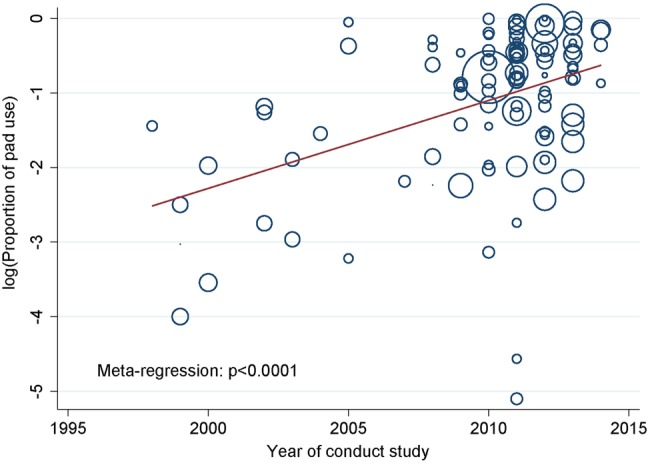
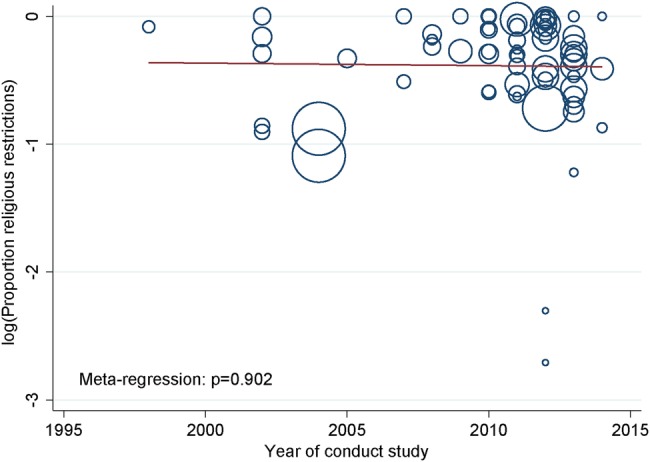
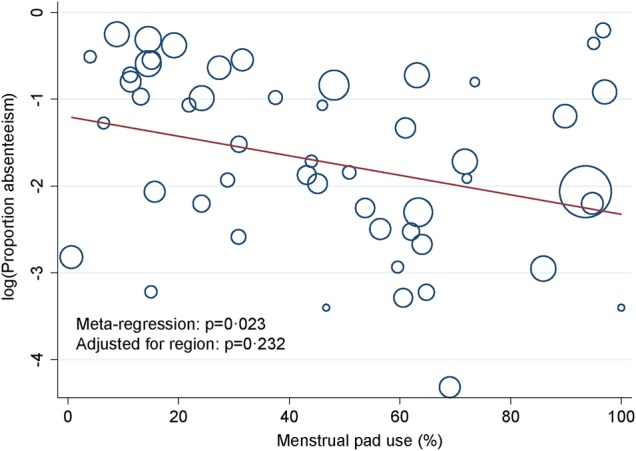
Objectives: To assess the status of menstrual hygiene management (MHM) among adolescent girls in India to determine unmet needs. Design: Systematic review and meta-analysis. We searched PubMed, The Global Health Database, Google Scholar and references for studies published from 2000 to September 2015 on girls’ MHM. Setting: India. Participants: Adolescent girls. Outcome measures: Information on menarche awareness, type of absorbent used, disposal, hygiene, restrictions and school absenteeism was extracted from eligible materials; a quality score was applied. Meta-analysis was used to estimate pooled prevalence (PP), and meta-regression to examine the effect of setting, region and time. Results: Data from 138 studies involving 193 subpopulations and 97 070 girls were extracted. In 88 studies, half of the girls reported being informed prior to menarche (PP 48%, 95% CI 43% to 53%, I 2 98.6%). Commercial pad use was more common among urban (PP 67%, 57% to 76%, I 2 99.3%, n=38) than rural girls (PP 32%, 25% to 38%, I 2 98.6%, n=56, p<0.0001), with use increasing over time (p<0.0001). Inappropriate disposal was common (PP 23%, 16% to 31%, I 2 99.0%, n=34). Menstruating girls experienced many restrictions, especially for religious activities (PP 0.77, 0.71 to 0.83, I 2 99.1%, n=67). A quarter (PP 24%, 19% to 30%, I 2 98.5%, n=64) reported missing school during periods. A lower prevalence of absenteeism was associated with higher commercial pad use in univariate (p=0.023) but not in multivariate analysis when adjusted for region (p=0.232, n=53). Approximately a third of girls changed their absorbents in school facilities (PP 37%, 29% to 46%, I 2 97.8%, n=17). Half of the girls’ homes had a toilet (PP 51%, 36% to 67%, I 2 99.4%, n=21). The quality of studies imposed limitations on analyses and the interpretation of results (mean score 3 on a scale of 0–7). Conclusions: Strengthening of MHM programmes in India is needed. Education on awareness, access to hygienic absorbents and disposal of MHM items need to be addressed. Trial registration number: CRD42015019197.
Overview
The claims and statistics of this paper haven’t been checked yet.
Free: it reads the open-access text and checks the first 5 claims that cite a source we can check. Create a free account to check every claim.
Integrity signals
Registry
Cites
Statistics
Figures
Verification
Claims the paper makes
The claims and statistics of this paper haven’t been checked yet.
Free: it reads the open-access text and checks the first 5 claims that cite a source we can check. Create a free account to check every claim.
Claims other papers make about this one
Each is checked against this paper’s own text: does it say what the citing paper says it does?
The source backs part of the claim, not all of it — or backs it for a different population, condition or comparison.
In the citing paper
“Ascertainment of intermediate outcomes such as school absence (i.e. which may contribute to dropout or failure to achieve) has been mixed (14, 31)”
From Menstrual hygiene management among adolescent schoolgirls in low- and middle-income countries: research priorities (2016) · cites this paper as [14]
Experimental — accuracy not yet measuredThe source backs part of the claim, not all of it — or backs it for a different population, condition or comparison.
In the citing paper
“inadequate social support, ongoing gender inequality, and social and hygiene taboos around menstruation in numerous countries leave girls experiencing shame, fear, and confusion when trying to cope with their menstrual flow (9–15, 20, 21).”
From Menstrual hygiene management among adolescent schoolgirls in low- and middle-income countries: research priorities (2016) · cites this paper as [14]
Experimental — accuracy not yet measuredThe source backs part of the claim, not all of it — or backs it for a different population, condition or comparison.
In the citing paper
“Studies to date, predominantly using school registers, have not shown a strong association between absence and menstrual intervention with varying duration of follow-up ranging between 1-month and 1-year.10 12–16”
From Menstrual cups and sanitary pads to reduce school attrition, and sexually transmitted and reproductive tract infections: a cluster randomised controlled feasibility study in rural Western Kenya (2016) · cites this paper as [12]
Experimental — accuracy not yet measuredThe source backs part of the claim, not all of it — or backs it for a different population, condition or comparison.
In the citing paper
“Women and girls in lower and middle-income countries (LMICs) face a multitude of barriers to safe and comfortable menstrual hygiene management (MHM).”
From ’It’s like a burden on the head’: Redefining adequate menstrual hygiene management throughout women’s varied life stages in Odisha, India. (2019) · cites this paper as [8]
Experimental — accuracy not yet measuredThe source backs part of the claim, not all of it — or backs it for a different population, condition or comparison.
In the citing paper
“In addition to these structural and resource barriers, women and girls face information and social support challenges: girls are often unprepared, uninformed, misinformed, and lack adequate support for understanding and managing menarche, menstruation, and puberty, resulting in fear, uncertainty, and potentially harmful behaviors, like risky sex, reduced bathing, and limited food and water intake”
From ’It’s like a burden on the head’: Redefining adequate menstrual hygiene management throughout women’s varied life stages in Odisha, India. (2019) · cites this paper as [8]
Experimental — accuracy not yet measured
21 more claims about this paper
Create a free account to see every claim other papers make about this one.
Self-check
Percentages, sums and reported differences re-computed from the paper’s own numbers.
The self-check needs the paper’s full text.
Citations
Cites
Measuring inconsistency in meta-analyses
Higgins, J. P. T., Thompson, S. G., Deeks, J. J., & Altman, D. G. (2003) · BMJ · doi:10.1136/bmj.327.7414.557 · Cited by 63,139 · cited 1×
“22 The extent of heterogeneity was measured using the I(2), a measure of the proportion of total variability explained by heterogeneity rather than chance expressed as a percentage.(23) To explore determinants of prevalence, we examined sources of heterogeneity across studies of the pooled”
MethodBarendregt, J. J., Doi, S. A., Lee, Y. Y., Norman, R. E., & Vos, T. (2013) · Journal of Epidemiology and Community Health · doi:10.1136/jech-2013-203104 · Cited by 2,169 · cited 1×
“21 22 The extent of heterogeneity was measured using the I 2 , a measure of the proportion of total variability explained by heterogeneity rather than chance expressed as a percentage.”
MethodMetaprop: a Stata command to perform meta-analysis of binomial data
Nyaga, V. N., Arbyn, M., & Aerts, M. (2014) · Archives of Public Health · doi:10.1186/2049-3258-72-39 · Cited by 2,139 · cited 1×
“21 22 The extent of heterogeneity was measured using the I 2 , a measure of the proportion of total variability explained by heterogeneity rather than chance expressed as a percentage.”
MethodImproved tests for a random effects meta‐regression with a single covariate
Knapp, G., & Hartung, J. (2003) · Statistics in Medicine · doi:10.1002/sim.1482 · Cited by 2,075 · cited 2×
“We estimated between-study variance ( τ 2 ) using the algorithm of residual (restricted) maximum likelihood and calculated p values, and 95% CI for coef fi cients using the modi fi cation by Knapp and Hartung.”
MethodAnalysing Data and Undertaking Meta‐Analyses
Deeks, J. J., Higgins, J. P., & Altman, D. G. (2008) · Cochrane Handbook for Systematic Reviews of Interventions · doi:10.1002/9780470712184.ch9 · Cited by 1,800
Harbord, R. M., & Higgins, J. P. T. (2008) · The Stata Journal: Promoting communications on statistics and Stata · doi:10.1177/1536867x0800800403 · Cited by 897 · cited 1×
“prevalence (PP) estimates using random-effects meta-regression.(24) Regression coefficients were presented as ORs with corresponding 95% CIs.”
MethodMenstrual hygiene: How hygienic is the adolescent girl?
Dasgupta, A., & Sarkar, M. (2008) · Indian Journal of Community Medicine · doi:10.4103/0970-0218.40872 · Cited by 592
A systematic review of the health and social effects of menstrual hygiene management
Sumpter, C., & Torondel, B. (2013) · PLoS ONE · doi:10.1371/journal.pone.0062004 · Cited by 518
Das, P., Baker, K. K., Dutta, A., Swain, T., Sahoo, S., Das, B. S., Panda, B., Nayak, A., Bara, M., Bilung, B., et al. (2015) · PLOS ONE · doi:10.1371/journal.pone.0130777 · Cited by 441
Mason, L., Nyothach, E., Alexander, K., Odhiambo, F. O., Eleveld, A., Vulule, J., Rheingans, R., Laserson, K. F., Mohammed, A., & Phillips-Howard, P. A. (2013) · PLoS ONE · doi:10.1371/journal.pone.0079132 · Cited by 375
Self-citation
Research works printed but not linked: 5
- Sommer M , Vasquez E , Worthington N , et al . WASH in schools empowers girls’ education. Proceedings of the Menstrual Hygiene Management in Schools Virtual Conference; 2012. New York, USA: UNICEF and Colombia University, 2013.
- Arunmozhi, 2013, A cross sectional study to assess the levels of knowledge practices of menstrual hygiene among adolescent girls of Chennai Higher Secondary Schools, Tamil Nadu, 2013, Med ej, 3, 211
- Reddy, 2005, Reproductive health constraints of adolescent school girls, Indian J Soc Work, 66, 431
- Venkatesh, 2011, Preceptions and practices during menstruation among adolescent girls in and around Bangalore city, Indian J Matern Child Health, 13, 1
- Gupta, 2001, Adolescents and menstruation, J Family Welf, 47, 1
Cited by
Items 101–200 of 509
Sassone, S. C., Silva, S. G., Metzger, J. W., Fisher, N., Mohan, A., & Felsman, I. C. (2022) · Global Health Promotion · doi:10.1177/17579759221082065 · Cited by 24
Menstrual dirt: An exploration of contemporary menstrual hygiene practices in Sweden
Persdotter, J. (2022) · Arkiv förlag eBooks · doi:10.13068/9789179243685 · Cited by 36
Almeida-Velasco, A. A.-V. A., & Sivakami, M. (2019) · Waterlines · doi:10.3362/1756-3488.18-00032 · Cited by 24
Self-citationPsychosocial Problems of Adolescent Girls during Menstruation.
-, T. T. S., George, A. J., & Sinu, E. (2022) · PubMed · Cited by 66
Yang, Y.-T., & Chen, D. (2023) · Journal of Public Health in Africa · doi:10.4081/jphia.2023.1971 · Cited by 29
Expanding Research on Working Women More Globally: Identifying and Remediating Current Blindspots
Traylor, A., Ng, L. C., Corrington, A. R., Skorinko, J. L. M., & Hebl, M. R. (2020) · Journal of Social Issues · doi:10.1111/josi.12395 · Cited by 25
Reese, H. E., Routray, P., Torondel, B., Sclar, G. D., Delea, M. G., Sinharoy, S. S., Zambrano, L. D., Caruso, B. A., Mishra, S. R., Chang, H. H., et al. (2017) · BMJ Open · doi:10.1136/bmjopen-2016-012719 · Cited by 22
What can existing data on water and sanitation tell us about menstrual hygiene management?
Libbet C. Loughnan, L. C. L., Rob Bain, R. B., Rosemary Rop, R. R., Marni Sommer, M. S., & Tom Slaymaker, T. S. (2016) · Waterlines · doi:10.3362/1756-3488.2016.019 · Cited by 19
“…the many challenges faced by adolescent girls: around half were informed prior to menarche and only a quarter knew the source of the bleeding (van eijk et al., 2016). across 64 studies, a quarter of girls reported missing school during their periods, with reasons including physical pain, fear of…”
BackgroundTalukdar, I. H., Rifat, M. A., Sarkar, P., Saha, N., Tessma, M. K., & Miah, M. I. (2023) · International Journal of Hygiene and Environmental Health · doi:10.1016/j.ijheh.2023.114268 · Cited by 22
Ahmed, T., Hasan, M. K., Aunto, T. K., Ahmed, T., & Zahid, D. (2025) · Reproductive Health · doi:10.1186/s12978-025-02041-x · Cited by 27
Manisha, M., Verma, K., Ramesh, N., Anirudha, T. P., Santrupt, R. M., & Rao, L. (2023) · The Science of The Total Environment · doi:10.1016/j.scitotenv.2023.166631 · Cited by 23
Wasan, Y., Baxter, J. B., Rizvi, A., Shaheen, F., Junejo, Q., Abro, M. A., Hussain, A., Ahmed, I., Soofi, S. B., & Bhutta, Z. A. (2022) · Journal of Global Health · doi:10.7189/jogh.12.04059 · Cited by 28
Angeli, F., Jaiswal, A., & Shrivastava, S. (2022) · Social Science & Medicine · doi:10.1016/j.socscimed.2022.115427 · Cited by 21
Durairaj, T., Aparnavi, P., Narayanan, S., Mahantshetti, S., Dhandapani, S., Shanmugam, J., Rathinamoorthy, R., & Mohan Kumar, M. (2024) · BMC Women s Health · doi:10.1186/s12905-024-02915-5 · Cited by 21
“The study found that only two studies reported use of tampons (one from urban Tamil Nadu and the other from urban Karnataka) and none reported menstrual cups [21].”
Ajeel, L. Y. A., Chong, M. C., Tang, L. Y., Wong, L. P., & Raimi, A. M. A. (2020) · The Journal for Nurse Practitioners · doi:10.1016/j.nurpra.2020.07.025 · Cited by 19
Torondel, B., Ferma, J., Francis, S. C., Caruso, B. A., Routray, P., Reese, H. E., & Clasen, T. (2021) · International Journal of Hygiene and Environmental Health · doi:10.1016/j.ijheh.2021.113866 · Cited by 22
Garg, S., Singh, M. M., Basu, S., Bhatnagar, N., Dabi, Y., Azmi, F., Bala, I., Marimuthu, Y., & Borle, A. L. (2021) · PubMed Central · doi:10.4103/ijcm.ijcm_137_20 · Cited by 17
“[4,5] Menstruation is also associated with reduced school and college participation and may inversely affect learning outcomes, although the evidence in this regard is mixed.[6,7]”
BackgroundA Review on Initiatives for Promoting Better Menstrual Hygiene Practices and Management in India
Kumari, S., & Muneshwar, K. N. (2023) · Cureus · doi:10.7759/cureus.47156 · Cited by 26
“Ejik AM van et al. [12] Review India Different categories of menstrual products.”
BackgroundBleeding in Public? Rethinking Narratives of Menstrual Management from Delhi’s Slums
McCarthy, A., & Lahiri‐Dutt, K. (2020) · Springer eBooks · doi:10.1007/978-981-15-0614-7_3 · Cited by 28
“Noting this lack of knowledge, many of these studies go on to comment on the source and ‘quality’ of the knowledge these women and girls do possess (see Van Eijk et al. 2016; Dasgupta and Sarkar 2008).”
BackgroundMenstrual Hygiene Practices of Adolescent Girls in Rural Maharashtra
Aggarwal, S. S., Ambalkar, D., Madhumathi, J., Badge, V. L., & Humne, A. (2021) · Indian Journal of Gender Studies · doi:10.1177/0971521520974879 · Cited by 20
“Earlier studies have reported poor awareness among adolescent girls, especially in North India and in slum settings (van Eijk et al., 2016).”
BackgroundA Structured Review of Emotional Barriers to WASH Provision for Schoolgirls Post-Disaster
Royo, M. G., Parrott, E., Pacheco, E.-M., Ahmed, I., Meilianda, E., Kumala, I. D., Oktari, R. S., Joffé, H., & Parikh, P. (2022) · Sustainability · doi:10.3390/su14042471 · Cited by 19
Singh, N., Rajput, S., & Jaiswar, S. (2022) · Journal of Cancer Research and Therapeutics · doi:10.4103/jcrt.jcrt_1021_21 · Cited by 16
Plesons, M., Torondel, B., Caruso, B. A., Hennegan, J. M., Sommer, M., Haver, J., Keiser, D., van Eijk, A. M., Zulaika, G., Mason, L., et al. (2023) · Global Health Action · doi:10.1080/16549716.2023.2279396 · Cited by 18
“…evidence on menstrual health has been consolidated into a growing body of systematic reviews, including reviews focused on specific geographies [32–34], populations (e.g. girls with disabilities [35], and those who are displaced [32,36]), measures of exposures and outcomes [30,37], interventions…”
BackgroundSelf-citationMaking Menstruation Matter in the Global South: Mapping a Critical History
Bobel, C. (2018) · Springer eBooks · doi:10.1007/978-3-319-89414-0_3 · Cited by 17
Chandar, D., Vaishnavi, Y., Priyan, S., & Ganesh Kumar, S. (2018) · International Journal of Adolescent Medicine and Health · doi:10.1515/ijamh-2017-0221 · Cited by 19
Divakar, H., Singh, R., Narayanan, P., Divakar, G. V., & Suvarna, R. (2020) · Journal of Evidence Based Medicine and Healthcare · doi:10.18410/jebmh/2020/80 · Cited by 21
Ganguly, M., Ganguly, A., Chattaraj, S., & Midya, D. K. (2025) · Discover Public Health · doi:10.1186/s12982-025-00485-x · Cited by 20
“Van Eijk et al. [11] reported that a quarter of girls in India miss school during their menstruation.”
InfluentialJoshi, K., & Mendhe, D. M. (2025) · Journal of Pharmacy And Bioallied Sciences · doi:10.4103/jpbs.jpbs_1636_24 · Cited by 16
“[2] Educational interventions have been identified as one of the most effective strategies for improving MHH among adolescent girls.”
Shenkman, J., Neubauer, L. C., Mason, L., Oruko, K., Alexander, K., Phillips‐Howard, P. A., & Nyothach, E. (2023) · Frontiers in Public Health · doi:10.3389/fpubh.2023.1206069 · Cited by 16
Self-citationChakrabarty, M., & Singh, A. (2023) · PeerJ · doi:10.7717/peerj.16430 · Cited by 19
“Unfortunately, in low-middle income countries like India, due to a lack of access to water, sanitation and hygiene facilities, proper cleaning and drying cloths can be challenging ( Van Eijk et al., 2016 ).”
BackgroundTohit, N. F. M., & Haque, M. (2024) · Cureus · doi:10.7759/cureus.62499 · Cited by 33
“Additionally, the study's reliance on self-reported data from individuals affected by period poverty may introduce response bias or underreporting due to the topic's sensitive nature [62,63].”
BackgroundSingh, A., & Chakrabarty, M. (2023) · PeerJ · doi:10.7717/peerj.15026 · Cited by 14
Neelkanth, N., Singh, D., & Bhatia, P. (2017) · International Journal of Community Medicine and Public Health · doi:10.18203/2394-6040.ijcmph20175323 · Cited by 17
Haver, J., Long, J. L., Caruso, B. A., & Dreibelbis, R. (2018) · Studies in Social Justice · doi:10.26522/ssj.v12i2.1947 · Cited by 18
“Girls report reducing participation in class and non-class activities, feeling distracted, isolating themselves or being isolated by others, missing class time to manage their needs, or even leaving school for the remainder of the day (Haver et al., 2013; Long et al., 2013; Miiro et al., 2018; Van Eijk et al., 2016).”
BackgroundInfluentialBhagwat, A., & Jijina, P. (2020) · Social Work in Public Health · doi:10.1080/19371918.2020.1738972 · Cited by 18
“Studies in India (Deo & Ghattargi, 2007; Eijk et al., 2016) report that lack of menstrual hygiene facilities in school leads to a sense of anxiety, and embarrassment in young girls and contributes to absenteeism and poor performance at school.”
BackgroundTime to talk about menstruation: a response
Hennegan, J. M., Torondel, B., Phillips‐Howard, P. A., Sommer, M., & Montgomery, P. (2017) · The Lancet · doi:10.1016/s0140-6736(17)31950-5 · Cited by 15
Self-citationImproved menstrual health and the workplace: An RCT with female Bangladeshi garment workers
Czura, K., Menzel, A., & Miotto, M. (2023) · Journal of Development Economics · doi:10.1016/j.jdeveco.2023.103174 · Cited by 19
Physical properties of menstrual hygiene waste as feedstock for onsite disposal technologies
Sasidaran, S., Kachoria, P., Raj, A., Ramalingam, S., Stoner, B. R., Sellgren, K. L., & Grego, S. (2021) · Journal of Water Sanitation and Hygiene for Development · doi:10.2166/washdev.2021.262 · Cited by 15
Reusable sanitary napkins—time to revisit
Mehta, S., Grover, A., Mittal, N., Nanda, P., Khatuja, R., & Naseem, A. (2020) · Journal of Public Health · doi:10.1093/pubmed/fdaa192 · Cited by 17
Ajgaonkar, V., Shyam, R., Shaikh, N., Rajan, S., Karandikar, N., & Jayaraman, A. (2022) · Journal of Adolescent Research · doi:10.1177/07435584221091780 · Cited by 15
Maharaj, T., & Winkler, I. T. (2021) · Culture Health & Sexuality · doi:10.1080/13691058.2021.1887938 · Cited by 20
“…reviews and meta-analyses (Hennegan et al. 2019, covering 76 studies dealing with women’s and girls’ experiences of menstruation globally; and van Eijk et al. 2016, covering 138 studies focused on menstrual hygiene in India) found the researchers’ use of the language of restrictions to be…”
BackgroundGruer, C., Goss, T., Schmitt, M. L., & Sommer, M. (2021) · Frontiers in Reproductive Health · doi:10.3389/frph.2021.787277 · Cited by 12
Sahiledengle, B., Atlaw, D., Kumie, A., Beressa, G., Tekalegn, Y., Zenbaba, D., Woldeyohannes, D., Desta, F., Assefa, T., Odo, D. B., et al. (2022) · BMC Women s Health · doi:10.1186/s12905-022-01855-2 · Cited by 12
Sarwar, U., & Rauf, U. (2021) · Khyber Medical University Journal · doi:10.35845/kmuj.2021.21373 · Cited by 12
Amery, F., Channon, M. D., Puri, M. C., & Thomson, J. (2023) · Sexual and Reproductive Health Matters · doi:10.1080/26410397.2023.2204025 · Cited by 14
Roy, D., Kasemi, N., Halder, M., & Majumder, M. (2024) · Heliyon · doi:10.1016/j.heliyon.2024.e29731 · Cited by 18
“Globally, the availability and use of MHM among adolescent girls vary across countries and regions [6 – 8].”
BackgroundSupportive therapy for dysmenorrhea: Time to look beyond mefenamic acid in primary care
Gomathy, N., Dhanasekar, K. R., Dutta, T., & Amirtha, R. (2019) · Journal of Family Medicine and Primary Care · doi:10.4103/jfmpc.jfmpc_717_19 · Cited by 12
“Journal of Family Medicine and Primary Care 3488 Volume 8 : Issue 11 : November 2019 implementing primary social health care for adolescents or women with menstrual disorders, India has been a country of contrasts, with gender‐related disparities, resulting in significant variation in health and social indicators amon…”
BackgroundInthaphatha, S., Louangpradith, V., Xiong, L. I., Xiong, V., Ly, L., Xaitengcha, V., Phengsavanh, A., Hamajima, N., & Yamamoto, E. (2021) · PLoS ONE · doi:10.1371/journal.pone.0261268 · Cited by 13
“In the worst case, girls drop out of school because they cannot manage their menstrual hygiene when they are at school [19, 20].”
BackgroundAppiah-Agyekum, N. N., Nyamekye, M. A., Agbenu, I. A., & Otoo, D. D. (2025) · BMC Public Health · doi:10.1186/s12889-025-22836-8 · Cited by 11
The Menarche Journey: Embodied Connections and Disconnections
Piran, N. (2020) · Springer eBooks · doi:10.1007/978-981-15-0614-7_18 · Cited by 23
“Van Eijk, Anna Maria., M. Sivakami, Mamita Bora Thakhar, Ashley Bauman, Kayla F. Laserson, Susanne Coates, and Penelope A. Phillips-Howard.”
BackgroundInfluentialAhmed, F., Ahmad, G., Brand, T., & Zeeb, H. (2020) · Global Health Action · doi:10.1080/16549716.2020.1830555 · Cited by 15
Shanmugham, V., Murugesan, A., & Vijayakrishnan, G. (2023) · Clinical Epidemiology and Global Health · doi:10.1016/j.cegh.2023.101473 · Cited by 12
Muralidharan, A. (2017) · Springer eBooks · doi:10.1007/978-981-10-5999-5_9 · Cited by 11
Mazokopakis, E. E., & Samonis, G. (2018) · Europe PMC (PubMed Central) · doi:10.26574/maedica.2018.13.3.183 · Cited by 17
There can be no gender equality without menstrual justice
Bagala, L., Mahon, T., Muralidharan, A., & Wilson, E. (2023) · BMJ · doi:10.1136/bmj.p2079 · Cited by 11
Global Health Priorities and the Neglect of Menstrual Health and Hygiene
Jalali, R. (2023) · Sociology of Development · doi:10.1525/sod.2023.9.4.317 · Cited by 18
Achuthan, K., Khobragade, S., & Kolil, V. K. (2024) · Health Policy and Planning · doi:10.1093/heapol/czae117 · Cited by 10
“Current estimates indicate that more than half of girls are unaware of menstruation when they first experience it (Van Eijk et al. 2016, UNICEF, n.d.b).”
Sembiah, S., Bali, S., Jain, A., Alok, Y., Burman, J., & Parida, D. (2021) · Indian Journal of Community Medicine · doi:10.4103/ijcm.ijcm_73_21 · Cited by 10
Wunsch, N., Green, S. J., Adam, S., Hampton, J., Phillips‐Howard, P. A., & Mehta, S. D. (2022) · International Journal of Environmental Research and Public Health · doi:10.3390/ijerph19031450 · Cited by 10
Self-citationBabbar, K., Rustagi, N., & Dev, P. (2022) · Journal of Social Issues · doi:10.1111/josi.12533 · Cited by 13
“The economic impact includes lowered participation of girls and women in schools and offices and is also associated with poor health outcomes, includingurinary tract infections (UTIs) and reproductive tract infections (RTIs) (Almeida-Velasco & Sivakami, 2019; Anand et al., 2015; Eijk et al., 2016; Traylor et al., 2020…”
BackgroundInfluentialFlores-Medina, M. D. R., Váldez-Martínez, E., & Márquez-González, H. (2022) · Healthcare · doi:10.3390/healthcare10091690 · Cited by 12
Prasad, R. R., Dwivedi, H., & Shetye, M. (2024) · Journal of Family Medicine and Primary Care · doi:10.4103/jfmpc.jfmpc_1604_23 · Cited by 10
“[5,6] There is an increased realization of the importance of menstrual health for adolescent girls’ well‑being and empowerment.”
BackgroundExploring determinants of school dropout across regions in India: a comprehensive meta-analysis
Venkatesan, R. G., Karmegam, D., & Mappillairaju, B. (2024) · Journal of Computational Social Science · doi:10.1007/s42001-024-00285-4 · Cited by 13
“This finding is consistent with a larger body of research, including a comprehensive quantitative synthesis of 138 Indian studies, which revealed that 24% of females discontinue their education due to menstrual-related issues [70].”
Ssesanga, T., Thomas, K. A., Nelson, K. A., Oenen, E., Kansiime, C., Lagony, S., Enomut, J. R., Mayanja, Y., & Weiss, H. A. (2024) · Child and Adolescent Psychiatry and Mental Health · doi:10.1186/s13034-024-00829-6 · Cited by 12
“This could be due to the convenience in using disposable products compared to more complex management of reusable menstrual products, which require access to water and a private space to dry and hang the products [37, 38].”
BackgroundNormality, Freedom, and Distress: Listening to the Menopausal Experiences of Indian Women of Haryana
Singh, V., & Sivakami, M. (2020) · Springer eBooks · doi:10.1007/978-981-15-0614-7_70 · Cited by 10
Self-citationBasu, S., Garg, S., Marimuthu, Y., Bhatnagar, N., Singh, M. C., Borle, A. L., Azmi, F., Dabi, Y., & Bala, I. (2021) · Indian Journal of Community Medicine · doi:10.4103/ijcm.ijcm_183_20 · Cited by 11
“Our study has found that social restrictions were there in 28% of the study participants which was similar to other Indian studies.[18] A qualitative study done in Fiji, Papua New Guinea, and the Solomon Islands also reported the presence of similar menstruation-related restrictions.”
BackgroundResult(2021) · Tanta Scientific Nursing Journal · doi:10.21608/tsnj.2021.171341 · Cited by 10
Sreeja, S., Garikapati, K., Sharmila, V., & Yamini, M. (2023) · The Journal of Obstetrics and Gynecology of India · doi:10.1007/s13224-023-01825-0 · Cited by 12
“Menstrual health management (MHM) needs to be strengthened in India by providing proper education on MHM items, spreading awareness about the usage, providing access to menstrual hygienic products and safe disposal [1].”
BackgroundMcCarthy, A., & Lahiri‐Dutt, K. (2020) · Gender Place & Culture · doi:10.1080/0966369x.2020.1748873 · Cited by 11
“In their survey of 88 studies undertaken in India, van Eijk et al. (2016, 4) note that the pooled pre-menarche awareness was 48 per cent.”
InfluentialAwareness of pubertal changes and reproductive health in adolescent girls: a comparative study
Jain, R., & Anand, P. (2016) · International Journal of Community Medicine and Public Health · doi:10.18203/2394-6040.ijcmph20164061 · Cited by 15
Menstrual cup adoption among reproductive age women in India: a systematic review and meta-analysis
Negi, S., Tripathy, S., Sahoo, K. C., Shamim, M. A., Kumar, D., Mehta, V., & Behera, D. (2024) · Women & Health · doi:10.1080/03630242.2024.2394772 · Cited by 10
“Teachers were a less common source of information about menstruation for girls (Eijk et al. 2016; Sharma et al. 2020).”
Behera, M. R., Dehury, R. K., Behera, D., & Panda, B. (2024) · Clinical Epidemiology and Global Health · doi:10.1016/j.cegh.2024.101804 · Cited by 9
Barini, G. O., Amima, S., Mulwa, D. F., & Mogeni, P. (2024) · PLOS Global Public Health · doi:10.1371/journal.pgph.0003145 · Cited by 10
Chokhandre, P. K., Vatavati, S. R., Pundappanavar, B. I., & Hallad, J. S. (2024) · International Journal of Adolescent Medicine and Health · doi:10.1515/ijamh-2024-0101 · Cited by 10
Basit, A., Antu, O. S., Mithun, M., & Islam, M. S. (2025) · Journal of Biosocial Science · doi:10.1017/s0021932024000415 · Cited by 10
“Studies on MH in underdeveloped and developing countries have found that most women and girls fail to maintain proper hygiene practices (Hennegan et al ., 2016; Van Eijk et al ., 2016).”
Shah, V., Schmidt, W., Sonko, B. J., Sinjanka, E., Mendy, F., Hennegan, J. M., Phillips‐Howard, P. A., & Torondel, B. (2025) · Journal of Adolescent Health · doi:10.1016/j.jadohealth.2024.12.018 · Cited by 12
Self-citationSaldon, N. (2023) · Women s Health Science Journal · doi:10.23880/whsj-16000177 · Cited by 8
Yari, A., Kabiri, B., Harsini, P. A., & Jeihooni, A. K. (2023) · Women & Health · doi:10.1080/03630242.2023.2294970 · Cited by 8
“In this period, girls face taboos like restriction on mobility and daily activities (Chandra-Mouli and Patel 2020; Van Eijk et al. 2016), fear of infecting others (Kabir, Chandrasekar, and Tahiliani 2016; Malhotra et al. 2016), and even they are considered impure during menstruation (Alam et al.…”
BackgroundMenstrual waste behaviour of young adolescents: a theory of planned behaviour approach
Sreekumar, S., & Pandey, A. (2024) · Journal of Water Sanitation and Hygiene for Development · doi:10.2166/washdev.2024.090 · Cited by 10
Prevention for Genitourinary Tract Infection among Female Adolescents Students
Mohamed, H. A., Elbahnasawy, H. T., El Nagar Samia, A., & Ghabyen Nadin, S. (2016) · IOSR Journal of Nursing and health Science · doi:10.9790/1959-0504031218 · Cited by 8
“Lack of adequate knowledge may lead to various genitourinary diseases among adolescent girls[4] Genitourinary tract infection is a bacterial infection that affects any part of the genital and urinary tract.”
BackgroundDeshmukh, V. L., Sandhu, G. K., Rachakonda, L., Kakde, M., & Andurkar, S. P. (2019) · International Journal of Reproduction Contraception Obstetrics and Gynecology · doi:10.18203/2320-1770.ijrcog20190868 · Cited by 14
Shaikh, Z., Panda, M., & Gaur, D. (2019) · International Journal of Community Medicine and Public Health · doi:10.18203/2394-6040.ijcmph20191417 · Cited by 9
Sivakami, M., & Rai, S. (2019) · Springer eBooks · doi:10.1007/978-981-13-6593-5_5 · Cited by 9
Self-citationMenstrual health management: Knowledge and practices among adolescent girls
Dinani, B., Khatuja, R., Mehta, S., Chawla, D., & Mehta, S. (2019) · Tropical Journal of Obstetrics and Gynaecology · doi:10.4103/tjog.tjog_93_18 · Cited by 10
“All these lead to ineffective and unhygienic menstrual health of these young girls which predispose them to reproductive tract infections which can lead to various disabilities later on.[1-3] Based on this background, we conducted a study to assess the knowledge, attitude, and practices of adolescent girls regarding m…”
Sommer, M., Zulaika, G., Schmitt, M. L., Khandakji, S., Neudorf, K., Gellis, L., & Phillips‐Howard, P. A. (2020) · Journal of Global Health Reports · doi:10.29392/001c.12105 · Cited by 17
Self-citationSood, S., Kostizak, K., Ramaiya, A., & Cronin, C. (2020) · Global Public Health · doi:10.1080/17441692.2020.1826048 · Cited by 41
“In the first approach, norms exist at the intersection of an individual’s beliefs, expectancies, and behaviours, and provide socially-determined guidelines that influence what people do (Bicchieri, 2015, 2016; Bicchieri & Muldoon, 2014; Brown et al., 2016; Mackie et al., 2015; Vogt et al., 2016).”
BackgroundBarriers to Puberty Talk between Mothers and Daughters: A Qualitative Study
Mirzaee, F., Pouredalati, M., Ahmadi, A., & Ghazanfarpour, M. (2021) · Revista Brasileira Ginecologia e Obstetrícia · doi:10.1055/s-0041-1729148 · Cited by 8
Menstruation Hygiene Practices Among Girl Students in Kathmandu Valley
Upadhya, S., & Adhikari, A. (2023) · Pragyaratna प्रज्ञारत्न · doi:10.3126/pragyaratna.v5i1.59275 · Cited by 8
“Poor water, sanitation, and hygiene (WASH) facilities in schools, coupled with inadequate puberty education and limited access to Menstrual Hygiene Management (MHM) items, contribute to girls experiencing menstruation as shameful and uncomfortable (Anna Maria van et al., 2016) .”
BackgroundGupta, N., Kariwala, P., Dixit, A. M., Govil, P., Mahima, M., & Jain, P. K. (2018) · International Journal of Community Medicine and Public Health · doi:10.18203/2394-6040.ijcmph20184010 · Cited by 8
“A meta-analysis was done by Eijk etal which involves data from 138 studies involving 193 subpopulations and 97,070 girls.(12) This meta-analysis shows that in 88 studies, half of the girls reported being informed prior to menarche (PP 48%, 95% CI 43% to 53%, I2 98.”
MethodSharma, S., Akhtar, F., Singh, R. K., & Mehra, S. (2021) · Healthcare · doi:10.3390/healthcare9080980 · Cited by 9
“Girls lack water, privacy, and a drying place, and hence, washing and drying pose a great problem [27].”
BackgroundNeighborhood disorganization and women’s sanitation utilization practices in Mathare Valley, Kenya.
Winter, S., Barchi, F., & Dzombo, M. N. (2019) · Environment and Behavior · doi:10.1177/0013916518782577 · Cited by 7
Yogesh, M., Trivedi, N., Shah, V., Lakhtaria, M., Ladani, H., & Trivedi, D. (2024) · Journal of Education and Health Promotion · doi:10.4103/jehp.jehp_1875_23 · Cited by 7
Menstrual health and endometriosis: costs incurred by women, health systems and society
Narasimhan, M., Rasanathan, J., Remme, M., Kennedy, C. E., Barre-Quick, M., Allotey, P. A., Odey, G. O., & Rueda, S. T. (2025) · npj Women s Health · doi:10.1038/s44294-025-00094-8 · Cited by 8
A qualitative study regarding menstrual hygiene in a rural community of Haryana, India
Parija, P. P., Sharma, N., Salve, H. R., Kumar, R., Yadav, K., & Mandal, S. (2022) · Journal of Tropical Pediatrics · doi:10.1093/tropej/fmac083 · Cited by 7
Menstruation-Related School Absenteeism: An Urban Centre Study in the Northern Region of Ghana
Asumah, M. N., Adnani, Q. E. S., Dzantor, E. K., Beig, M. A., Wuffele, G. M., Donkor, D. R., Abdulai, A.-M., Azanu, W. K., Parsa, A. D., Kabir, R., et al. (2023) · Women · doi:10.3390/women3040038 · Cited by 7
Singh, G., Gupta, A., Anand, N., & Kumar, R. (2023) · Journal of Family Medicine and Primary Care · doi:10.4103/jfmpc.jfmpc_891_23 · Cited by 12
Angeline Grace, G., Arunkumar, M., & Umadevi, R. (2019) · International Journal of Community Medicine and Public Health · doi:10.18203/2394-6040.ijcmph20191414 · Cited by 7
“A systematic review on menstrual hygiene among adolescent girls in India by Van Ejik et al, reported various restrictions faced by adolescent girls especially for religious activities.(11) Restrictions have been practiced for so long and are deeply embedded in the society and intensified health education is needed to…”
BackgroundAdam, M. U., Kpeebi, Y., Adam, B. U., Adams, A., & Sahabi, S. (2022) · Journal of Adolescence · doi:10.1002/jad.12136 · Cited by 11
Do Sanitary Pads Improve Girls’ Educational Outcomes?
Agarwal, S. D., Chia, L. E., & Ghosh, P. (2026) · The Review of Economics and Statistics · doi:10.1162/rest_a_01479 · Cited by 14
Adolescent Reproductive Health in South Asia: Issues and Challenges
Biswas, U. N. (2021) · Encyclopedia of the UN sustainable development goals · doi:10.1007/978-3-319-95687-9_47 · Cited by 11
Metadata
- Authors
- van Eijk, A. M., Sivakami, M., Thakkar, M. B., Bauman, A., Laserson, K. F., Coates, S., & Phillips-Howard, P. A.
- Affiliations
- Department of Clinical Sciences, Liverpool school of Tropical Medicine, Liverpool, UK
- Tata Institute of Social Sciences (IN)
- United Nations Children's Fund India (IN)
- Liverpool School of Tropical Medicine (GB)
- Centers for Disease Control and Prevention (US)
- ORCID
- Sivakami, M
- Venue
- BMJ Open
- Publisher
- BMJ
- Published
- 2016-03
- Volume
- 6
- Issue
- 3
- Pages
- e010290
- ISSN
- 2044-6055 (ISSN-L)
- PMC
- PMC4785312
- OpenAlex
- W2292933427
- Cited by
- 471
- References
- 82
- Citations by year
- 2026: 53 · 2025: 60 · 2024: 57 · 2023: 74 · 2022: 44 · 2021: 51 · 2020: 47 · 2019: 38 · 2018: 24 · 2017: 16 · 2016: 7
- FWCI
- 4.20
- Type
- journal article
- Language
- en
- Open access
- gold
- doi.org
- Licence
- cc-by-nc
- Locations
- BMJ Open (publishedVersion, cc-by-nc)
- PubMed Central (publishedVersion, cc-by-nc)
- PubMed (publishedVersion)
- LSTM Online Archive (Liverpool School of Tropical Medicine) (acceptedVersion)
- HighWire Press Open Archive (submittedVersion)
- Topics
- Health Sciences › Medicine › Public Health, Environmental and Occupational Health › Menstrual Health and Disorders
- Health Sciences › Medicine › Reproductive Medicine › Hypothalamic control of reproductive hormones
- Health Sciences › Medicine › Public Health, Environmental and Occupational Health › Adolescent Sexual and Reproductive Health
- Keywords
- menstrual hygiene management, adolescent girls, menstrual product disposal, school absenteeism, urban-rural disparities, India, unmet needs, menstrual health education, menstrual health policy, menstrual health advocacy
- MeSH terms
- Absenteeism, Adolescent, Female, Humans, Hygiene, India, Health Knowledge, Attitudes, Practice, Menarche, Menstruation, Rural Population, Schools, Urban Population
About these checks
Registry, retraction, Cites and statistics results are computed, not judged, with one exception: a printed reference that no index lists is read once by a model before it counts as a citation error. Claims are extracted by a model and kept only when their quote appears verbatim in the text; each cited source is then checked, with a model’s help, for whether it says what the claim relies on. Those verdicts can be wrong — read the claim’s quote and the cited source before relying on one.
Statistics and arithmetic are recomputed, not judged.
Confidence bands are shown only for fields calibrated on our annotated test set. None is calibrated yet, so no band is shown.
What counts as a claim ›How we measure confidence ›How we check this ›
Are you an author, or do you see a problem with this page? Request a review
Data sources
Bibliographic data: Semantic Scholar, OpenAlex, Crossref.
Contains information from the Semantic Scholar Academic Graph Datasets, made available under the ODC Attribution License (ODC-BY 1.0).
Semantic Scholar’s data is described in: Kinney, R., et al. (2023). The Semantic Scholar Open Data Platform. arXiv:2301.10140.
