

Menstrual hygiene management among adolescent girls in India: a systematic review and meta-analysis
Open accessThe DOI matches its Crossref record; 79 of the 82 references it cites were found in a registry or an index.
Abstract
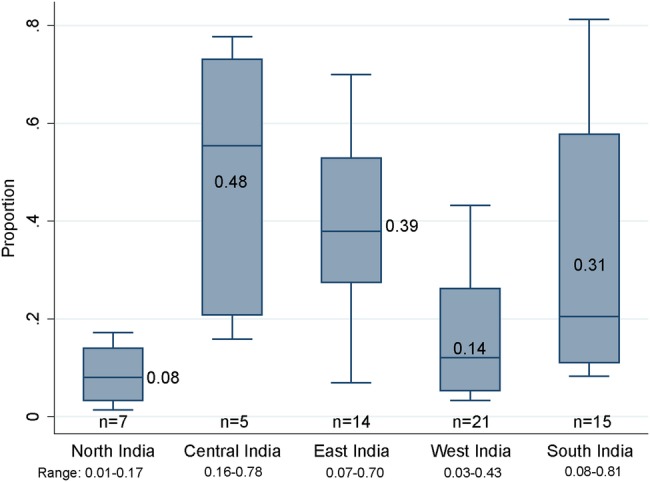
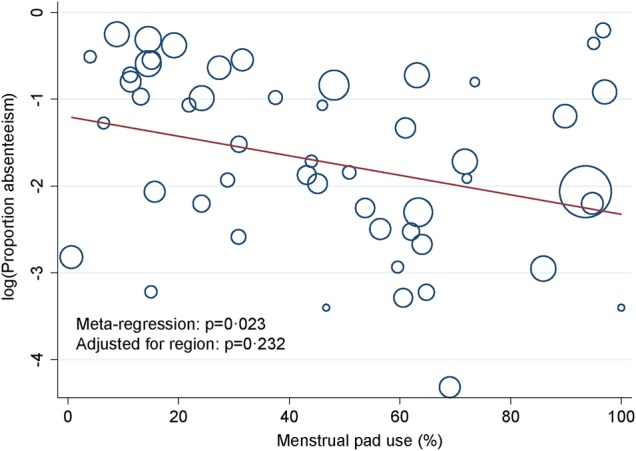
Objectives: To assess the status of menstrual hygiene management (MHM) among adolescent girls in India to determine unmet needs. Design: Systematic review and meta-analysis. We searched PubMed, The Global Health Database, Google Scholar and references for studies published from 2000 to September 2015 on girls’ MHM. Setting: India. Participants: Adolescent girls. Outcome measures: Information on menarche awareness, type of absorbent used, disposal, hygiene, restrictions and school absenteeism was extracted from eligible materials; a quality score was applied. Meta-analysis was used to estimate pooled prevalence (PP), and meta-regression to examine the effect of setting, region and time. Results: Data from 138 studies involving 193 subpopulations and 97 070 girls were extracted. In 88 studies, half of the girls reported being informed prior to menarche (PP 48%, 95% CI 43% to 53%, I 2 98.6%). Commercial pad use was more common among urban (PP 67%, 57% to 76%, I 2 99.3%, n=38) than rural girls (PP 32%, 25% to 38%, I 2 98.6%, n=56, p<0.0001), with use increasing over time (p<0.0001). Inappropriate disposal was common (PP 23%, 16% to 31%, I 2 99.0%, n=34). Menstruating girls experienced many restrictions, especially for religious activities (PP 0.77, 0.71 to 0.83, I 2 99.1%, n=67). A quarter (PP 24%, 19% to 30%, I 2 98.5%, n=64) reported missing school during periods. A lower prevalence of absenteeism was associated with higher commercial pad use in univariate (p=0.023) but not in multivariate analysis when adjusted for region (p=0.232, n=53). Approximately a third of girls changed their absorbents in school facilities (PP 37%, 29% to 46%, I 2 97.8%, n=17). Half of the girls’ homes had a toilet (PP 51%, 36% to 67%, I 2 99.4%, n=21). The quality of studies imposed limitations on analyses and the interpretation of results (mean score 3 on a scale of 0–7). Conclusions: Strengthening of MHM programmes in India is needed. Education on awareness, access to hygienic absorbents and disposal of MHM items need to be addressed. Trial registration number: CRD42015019197.
Overview
The claims and statistics of this paper haven’t been checked yet.
Free: it reads the open-access text and checks the first 5 claims that cite a source we can check. Create a free account to check every claim.
Integrity signals
Registry
Cites
Statistics
Figures
Verification
Claims the paper makes
The claims and statistics of this paper haven’t been checked yet.
Free: it reads the open-access text and checks the first 5 claims that cite a source we can check. Create a free account to check every claim.
Claims other papers make about this one
Each is checked against this paper’s own text: does it say what the citing paper says it does?
The source backs part of the claim, not all of it — or backs it for a different population, condition or comparison.
In the citing paper
“Ascertainment of intermediate outcomes such as school absence (i.e. which may contribute to dropout or failure to achieve) has been mixed (14, 31)”
From Menstrual hygiene management among adolescent schoolgirls in low- and middle-income countries: research priorities (2016) · cites this paper as [14]
Experimental — accuracy not yet measuredThe source backs part of the claim, not all of it — or backs it for a different population, condition or comparison.
In the citing paper
“inadequate social support, ongoing gender inequality, and social and hygiene taboos around menstruation in numerous countries leave girls experiencing shame, fear, and confusion when trying to cope with their menstrual flow (9–15, 20, 21).”
From Menstrual hygiene management among adolescent schoolgirls in low- and middle-income countries: research priorities (2016) · cites this paper as [14]
Experimental — accuracy not yet measuredThe source backs part of the claim, not all of it — or backs it for a different population, condition or comparison.
In the citing paper
“Studies to date, predominantly using school registers, have not shown a strong association between absence and menstrual intervention with varying duration of follow-up ranging between 1-month and 1-year.10 12–16”
From Menstrual cups and sanitary pads to reduce school attrition, and sexually transmitted and reproductive tract infections: a cluster randomised controlled feasibility study in rural Western Kenya (2016) · cites this paper as [12]
Experimental — accuracy not yet measuredThe source backs part of the claim, not all of it — or backs it for a different population, condition or comparison.
In the citing paper
“Women and girls in lower and middle-income countries (LMICs) face a multitude of barriers to safe and comfortable menstrual hygiene management (MHM).”
From ’It’s like a burden on the head’: Redefining adequate menstrual hygiene management throughout women’s varied life stages in Odisha, India. (2019) · cites this paper as [8]
Experimental — accuracy not yet measuredThe source backs part of the claim, not all of it — or backs it for a different population, condition or comparison.
In the citing paper
“In addition to these structural and resource barriers, women and girls face information and social support challenges: girls are often unprepared, uninformed, misinformed, and lack adequate support for understanding and managing menarche, menstruation, and puberty, resulting in fear, uncertainty, and potentially harmful behaviors, like risky sex, reduced bathing, and limited food and water intake”
From ’It’s like a burden on the head’: Redefining adequate menstrual hygiene management throughout women’s varied life stages in Odisha, India. (2019) · cites this paper as [8]
Experimental — accuracy not yet measured
21 more claims about this paper
Create a free account to see every claim other papers make about this one.
Self-check
Percentages, sums and reported differences re-computed from the paper’s own numbers.
The self-check needs the paper’s full text.
Citations
Cites
Measuring inconsistency in meta-analyses
Higgins, J. P. T., Thompson, S. G., Deeks, J. J., & Altman, D. G. (2003) · BMJ · doi:10.1136/bmj.327.7414.557 · Cited by 63,139 · cited 1×
“22 The extent of heterogeneity was measured using the I(2), a measure of the proportion of total variability explained by heterogeneity rather than chance expressed as a percentage.(23) To explore determinants of prevalence, we examined sources of heterogeneity across studies of the pooled”
MethodBarendregt, J. J., Doi, S. A., Lee, Y. Y., Norman, R. E., & Vos, T. (2013) · Journal of Epidemiology and Community Health · doi:10.1136/jech-2013-203104 · Cited by 2,169 · cited 1×
“21 22 The extent of heterogeneity was measured using the I 2 , a measure of the proportion of total variability explained by heterogeneity rather than chance expressed as a percentage.”
MethodMetaprop: a Stata command to perform meta-analysis of binomial data
Nyaga, V. N., Arbyn, M., & Aerts, M. (2014) · Archives of Public Health · doi:10.1186/2049-3258-72-39 · Cited by 2,139 · cited 1×
“21 22 The extent of heterogeneity was measured using the I 2 , a measure of the proportion of total variability explained by heterogeneity rather than chance expressed as a percentage.”
MethodImproved tests for a random effects meta‐regression with a single covariate
Knapp, G., & Hartung, J. (2003) · Statistics in Medicine · doi:10.1002/sim.1482 · Cited by 2,075 · cited 2×
“We estimated between-study variance ( τ 2 ) using the algorithm of residual (restricted) maximum likelihood and calculated p values, and 95% CI for coef fi cients using the modi fi cation by Knapp and Hartung.”
MethodAnalysing Data and Undertaking Meta‐Analyses
Deeks, J. J., Higgins, J. P., & Altman, D. G. (2008) · Cochrane Handbook for Systematic Reviews of Interventions · doi:10.1002/9780470712184.ch9 · Cited by 1,800
Harbord, R. M., & Higgins, J. P. T. (2008) · The Stata Journal: Promoting communications on statistics and Stata · doi:10.1177/1536867x0800800403 · Cited by 897 · cited 1×
“prevalence (PP) estimates using random-effects meta-regression.(24) Regression coefficients were presented as ORs with corresponding 95% CIs.”
MethodMenstrual hygiene: How hygienic is the adolescent girl?
Dasgupta, A., & Sarkar, M. (2008) · Indian Journal of Community Medicine · doi:10.4103/0970-0218.40872 · Cited by 592
A systematic review of the health and social effects of menstrual hygiene management
Sumpter, C., & Torondel, B. (2013) · PLoS ONE · doi:10.1371/journal.pone.0062004 · Cited by 518
Das, P., Baker, K. K., Dutta, A., Swain, T., Sahoo, S., Das, B. S., Panda, B., Nayak, A., Bara, M., Bilung, B., et al. (2015) · PLOS ONE · doi:10.1371/journal.pone.0130777 · Cited by 441
Mason, L., Nyothach, E., Alexander, K., Odhiambo, F. O., Eleveld, A., Vulule, J., Rheingans, R., Laserson, K. F., Mohammed, A., & Phillips-Howard, P. A. (2013) · PLoS ONE · doi:10.1371/journal.pone.0079132 · Cited by 375
Self-citationOvercoming the taboo: advancing the global agenda for menstrual hygiene management for schoolgirls
Sommer, M., & Sahin, M. (2013) · American Journal of Public Health · doi:10.2105/ajph.2013.301374 · Cited by 364 · cited 1×
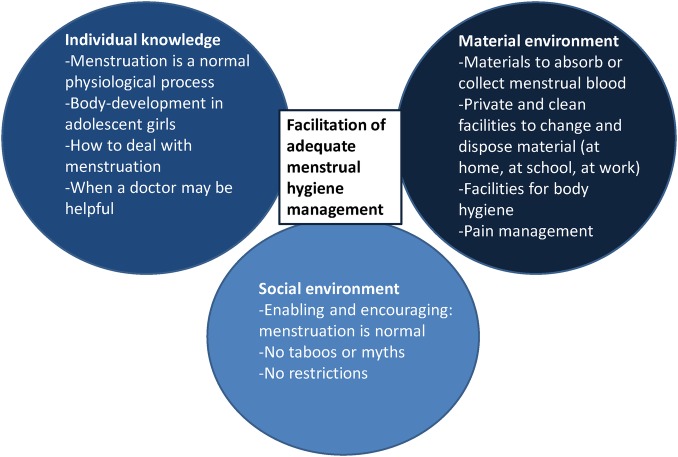
“middle income countries (LMICs), particularly when attending school.(1) Poor water, sanitation and hygiene (WASH) facilities in schools, inadequate puberty education and lack of hygienic MHM items (absorbents) cause girls to experience menstruation as shameful and uncomfortable (figure 1).”
BackgroundMahon, T., & Fernandes, M. (2010) · Gender & Development · doi:10.1080/13552071003600083 · Cited by 321 · cited 1×
“4 million schools, with poor MHM practices and cultural taboos considered to be impediments to their school attendance.(4) 11 20 Recognising the relevance of MHM to the health, wellbeing and educational achievements of girls, the”
BackgroundMcMahon, S. A., Winch, P. J., Caruso, B. A., Obure, A. F., Ogutu, E. A., Ochari, I. A., & Rheingans, R. D. (2011) · BMC International Health and Human Rights · doi:10.1186/1472-698x-11-7 · Cited by 316
Sommer, M. (2010) · Journal of Adolescence · doi:10.1016/j.adolescence.2009.03.008 · Cited by 305
Sahoo, K. C., Hulland, K. R. S., Caruso, B. A., Swain, R., Freeman, M. C., Panigrahi, P., & Dreibelbis, R. (2015) · Social Science & Medicine · doi:10.1016/j.socscimed.2015.06.031 · Cited by 300
Menstruation related myths in India: strategies for combating it
Anand, T., & Garg, S. (2015) · Journal of Family Medicine and Primary Care · doi:10.4103/2249-4863.154627 · Cited by 263 · cited 1×
“While education could dispel some restrictions (eg, of foods or activities), beliefs and negative attitudes are deeply entrenched within Hindu and other religions.(61) 62 Innovative cultural and societal approaches will be required to achieve change.”
BackgroundMenstrual Practices and Reproductive Problems: A Study of Adolescent Girls in Rajasthan
Khanna, A., Goyal, R. S., & Bhawsar, R. (2005) · Journal of Health Management · doi:10.1177/097206340400700103 · Cited by 248
DETERMINANTS OF TECHNOLOGY ADOPTION: PEER EFFECTS IN MENSTRUAL CUP TAKE-UP
Oster, E., & Thornton, R. (2012) · Journal of the European Economic Association · doi:10.1111/j.1542-4774.2012.01090.x · Cited by 233
Menstruation, Sanitary Products, and School Attendance: Evidence from a Randomized Evaluation
Oster, E., & Thornton, R. (2011) · American Economic Journal: Applied Economics · doi:10.1257/app.3.1.91 · Cited by 231
Sanitary Pad Interventions for Girls' Education in Ghana: A Pilot Study
Montgomery, P., Ryus, C. R., Dolan, C. S., Dopson, S., & Scott, L. M. (2012) · PLoS ONE · doi:10.1371/journal.pone.0048274 · Cited by 230
Freeman, M. C., Greene, L. E., Dreibelbis, R., Saboori, S., Muga, R., Brumback, B., & Rheingans, R. (2012) · Tropical Medicine & International Health · doi:10.1111/j.1365-3156.2011.02927.x · Cited by 228
Adukia, A. (2017) · American Economic Journal: Applied Economics · doi:10.1257/app.20150083 · Cited by 214
Cultural and social practices regarding menstruation among adolescent girls
Kumar, A., & Srivastava, K. (2011) · Social Work in Public Health · doi:10.1080/19371918.2010.525144 · Cited by 208
Menstruation and School Absenteeism: Evidence from Rural Malawi
Grant, M., Lloyd, C., & Mensch, B. (2013) · Comparative Education Review · doi:10.1086/669121 · Cited by 201
Ds, D., & Ch, G. (2005) · Indian Journal of Community Medicine · Cited by 196
Mensch, B., & Lloyd, C. B. (1998) · Studies in Family Planning · doi:10.2307/172157 · Cited by 194
Socio-cultural aspects of menstruation in an urban slum in Delhi, India
Garg, S., Sharma, N., & Sahay, R. (2001) · Reproductive Health Matters · doi:10.1016/s0968-8080(01)90004-7 · Cited by 183
Anand, E., Singh, J., & Unisa, S. (2015) · Sexual & Reproductive Healthcare · doi:10.1016/j.srhc.2015.06.001 · Cited by 177 · cited 2×
“7% among adolescents).(15) 39 Our review may represent persons with a higher socio-”
BackgroundMensch, B., & Lloyd, C. B. (1998) · PubMed · Cited by 158
A comparative study on menstrual hygiene among urban and rural adolescent girls of West Bengal
Paria, B., Bhattacharyya, A., & Das, S. (2014) · Journal of Family Medicine and Primary Care · doi:10.4103/2249-4863.148131 · Cited by 152
Puberty rituals, reproductive knowledge and health of adolescent schoolgirls in South India
Narayan, K. A., Srinivasa, D. K., Pelto, P. J., & Veerammal, S. (2001) · Asia-Pacific Population Journal · doi:10.18356/65d467c6-en · Cited by 149 · cited 2×
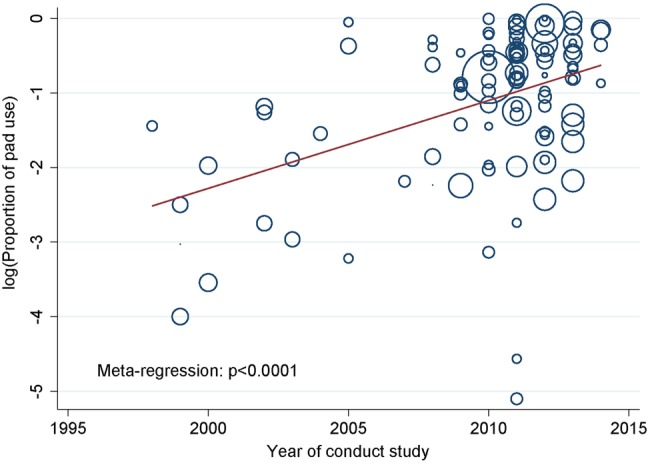
“Cleaning and drying cloths is a problem if girls lack water, privacy and a drying place.(10) 37 Drying Figure 3 Bubble plot with a fitted meta-regression line of the”
BackgroundThakur, H., Aronsson, A., Bansode, S., Stalsby Lundborg, C., Dalvie, S., & Faxelid, E. (2014) · Frontiers in Public Health · doi:10.3389/fpubh.2014.00072 · Cited by 144
Mudey, A. B., Kesharwani, N., Mudey, G. A., & Goyal, R. C. (2010) · Global Journal of Health Science · doi:10.5539/gjhs.v2n2p225 · Cited by 142
Shanbhag, D. N., Shilpa, R., Dsouza, N., Josephine, P., Singh, J., & Br, G. (2012) · International journal of collaborative research on internal medicine & public health · Cited by 141
Knowledge and Practices Related to Menstruation among Tribal (Gujjar) Adolescent Girls
Dhingra, R., Kumar, A., & Kour, M. (2009) · Studies on Ethno-Medicine · doi:10.1080/09735070.2009.11886336 · Cited by 139
Shah, S. P., Nair, R., Shah, P. P., Modi, D. K., Desai, S. A., & Desai, L. (2013) · Reproductive Health Matters · doi:10.1016/s0968-8080(13)41691-9 · Cited by 123
DETERMINANTS OF MENSTRUAL HYGIENE AMONG ADOLESCENT GIRLS: A MULTIVARIATE ANALYSIS
(2012) · DOAJ (DOAJ: Directory of Open Access Journals) · Cited by 120
Place of menstruation in the reproductive lives of women of rural North India
Singh, A. (2006) · Indian Journal of Community Medicine · doi:10.4103/0970-0218.54923 · Cited by 111
Bobhate, P. S., & Saurabh, R. S. (2011) · DOAJ (DOAJ: Directory of Open Access Journals) · Cited by 110
Murat Sahin, M. S., Linda Mason, L. M., Kayla Laserson, K. L., Kelvin Oruko, K. O., Elizabeth Nyothach, E. N., Kelly Alexander, K. A., Frank Odhiambo, F. O., Alie Eleveld, A. E., Emily Isiye, E. I., Isaac Ngere, I. N., et al. (2015) · Waterlines · doi:10.3362/1756-3488.2015.003 · Cited by 108 · cited 2×
“Menstrual cups may be economically advantageous given that one cup can last up to 10 years; they were acceptable for schoolgirls in Nepal 40 and Kenya.”
BackgroundSelf-citationYasmin, S. (2013) · IOSR Journal of Dental and Medical Sciences · doi:10.9790/0853-0562226 · Cited by 93
Hymenal findings in adolescent women: Impact of tampon use and consensual sexual activity
Emans, S. J., Woods, E. R., Allred, E. N., & Grace, E. (1994) · The Journal of Pediatrics · doi:10.1016/s0022-3476(94)70144-x · Cited by 92 · cited 1×
“The low use of insertable products may be related to concerns about virginity, despite invalidation of a connection between virginity and breaking the hymen.(42) Disposal of commercial pads is a matter of concern because of their high content of non-biodegradable components.”
BackgroundAlexander, K., Oduor, C., Nyothach, E., Laserson, K., Amek, N., Eleveld, A., Mason, L., Rheingans, R., Beynon, C., Mohammed, A., et al. (2014) · Water · doi:10.3390/w6051453 · Cited by 90
Self-citationKamath, R., Ghosh, D., Lena, A., & Chandrasekaran (2013) · DOAJ (DOAJ: Directory of Open Access Journals) · Cited by 86
Dube, S., & Sharma, K. (2012) · Studies on Ethno-Medicine · doi:10.1080/09735070.2012.11886424 · Cited by 83
Students’ Perceptions and Doubts About Menstruation in Developing Countries: A Case Study From India
Chothe, V., Khubchandani, J., Seabert, D., Asalkar, M., Rakshe, S., Firke, A., Midha, I., & Simmons, R. (2014) · Health Promotion Practice · doi:10.1177/1524839914525175 · Cited by 82
Menstrual Taboos Among Major Religions
(2008) · The Internet Journal of World Health and Societal Politics · doi:10.5580/1443 · Cited by 80
Knowledge, attitudes and beliefs about menarche of adolescent girls in Anand district, Gujarat.
Tiwari, H., Oza, U., & Tiwari, R. (2006) · PubMed · Cited by 76
Keeping the Promise: Five Benefits of Girls' Secondary Education
Ma, R., Kays, L., & Psaki, S. R. (2006) · Cited by 74
Socioeconomic Dynamics of Gender Disparity in Childhood Immunization in India, 1992–2006
Prusty, R. K., & Kumar, A. (2014) · PLoS ONE · doi:10.1371/journal.pone.0104598 · Cited by 67 · cited 1×
“and poverty and gender-related disparities, resulting in significant variation in health and social indicators among girls and women.(19) Of the 113 million adolescent girls, 68 million attend about 1.”
BackgroundMurat Sahin, M. S., Arundati Muralidharan, A. M., Hemalatha Patil, H. P., & Sweta Patnaik, S. P. (2015) · Waterlines · doi:10.3362/1756-3488.2015.008 · Cited by 56 · cited 2×
“Government of India has initiated an array of policies and programmes, implemented at state level.(20) Numerous MHM studies have been independently con-”
BackgroundArora, A., Mittal, A., Pathania, D., Singh, J., Mehta, C. C., & Bunger, R. (2013) · Indian Journal of Community Health · Cited by 55
Elementary education in India : progress towards UEE : analytical report, 2006-07
Mehta, A. C. (2008) · Medical Entomology and Zoology · Cited by 53
Nallari, A. (2015) · Environment and Urbanization · doi:10.1177/0956247814563514 · Cited by 49
Murat Sahin, M. S. (2015) · Waterlines · doi:10.3362/1756-3488.2015.001 · Cited by 47
Comparative study on menstrual hygiene in rural and urban adolescent girls
Patle, R., & Kubde, S. S. (2014) · International Journal of Medical Science and Public Health · doi:10.5455/ijmsph.2013.161020133 · Cited by 46
Annual Status of Education Report (Rural) 2014Preprint
., P. (2015) · RePEc: Research Papers in Economics · Cited by 43
Misra, P., Upadhyay, R. P., Sharma, V., Krishnan, A., & Gupta, V. (2013) · PubMed · Cited by 42
School Absenteeism During Menstruation Among Rural Adolescent Girls in Pune
Bodat, S., Ghate, M. M., & Majumdar, J. (2013) · DOAJ (DOAJ: Directory of Open Access Journals) · Cited by 33
Taboos and Myths Associated with Womens Health among Rural and Urban Adolescent Girls in Punjab
Puri, S., & Kapoor, S. (2006) · DOAJ (DOAJ: Directory of Open Access Journals) · Cited by 30
Knowledge And Practices About Menstrual Hygiene Among Higher Secondary School Girls
Verma, P., Ahmad, S., & Srivastava, R. (2013) · Indian Journal of Community Health (Indian Association of Preventive and Social Medicine) · Cited by 29
Pokhrel, S. (2014) · IOSR Journal of Nursing and health Science · doi:10.9790/1959-03413844 · Cited by 29 · cited 1×
“Only one study (in urban Karnataka) mentioned tampons, with five girls reportedly using them.(27) No studies reported menstrual cups.”
BackgroundDatta, A., Manna, N., Datta, M., Sarkar, J., Baur, B., & Datta, S. (2012) · DOAJ (DOAJ: Directory of Open Access Journals) · Cited by 27
Menstrual hygiene and practices of rural adolescent girls of raichur
Ade, A. D., & Patil, R. S. (2013) · Cited by 22
Zaidi, S., Sivakami, A., & Ramasamy, D. (2015) · International Journal of Community Medicine and Public Health · doi:10.5455/2394-6040.ijcmph20150524 · Cited by 22
Rani, P. S. (2014) · IOSR Journal of Nursing and health Science · doi:10.9790/1959-03210615 · Cited by 22
Knowledge and practices regarding menstruation among adolescent girls in an urban slum, Bijapur.
Udgiri, R. S., Angadi, M. M., Patil, S. S., & Sorganvi, V. M. (2010) · PubMed · Cited by 18
Bathija, G. V., Bant, D. D., & Itagimath, S. R. (2013) · International Journal of Biomedical Research · doi:10.7439/ijbr.v4i2.233 · Cited by 13
Adolescent attitudes and relevance to family life education programs
Unni, J. (2009) · Indian Pediatrics · doi:10.1007/s13312-010-0029-y · Cited by 13
Knowledge, attitude and practices about menstruation among adolescent female in Uttarakhand
Singh, A., Bandhani, A., & Malik, N. (2014) · Panacea Journal of Medical Sciences · Cited by 11
A School Survey to Assess Menstrual Hygiene Practices Among Teenage Girls in Chennai, India
Cynthia, S., Abiselvi, A., & Sultan, S. I. (2014) · Cited by 9
Rana, B. M., Prajapati, A. C., Sonaliya, K. N., Shah, V., Patel, M. M., & Solanki, A. K. (2015) · Healthline · Cited by 8
Reproductive Health and Hygiene among Adolescents
Kavitha, V. R. S., & Phil, M. (2012) · Cited by 7
Hymenal findings in adolescent women: impact of tampon use and consensual sexual activity
Emans, S. J., Woods, E. R., Allred, E. N., & Grace, E. (1995) · Journal of Clinical Forensic Medicine · doi:10.1016/1353-1131(95)90087-x · Cited by 6
Gosavi, S. V., Almale, B., Gujarathi, A. P., Vankundre, A., Dhakane, S., Patil, R., Mahale, M., Borade-Gedam, P., & Pawar, S. (2015) · International Journal of Scientific Reports · doi:10.18203/issn.2454-2156.intjscirep20150219 · Cited by 4
Singh, A., & Sinha, S. (2013) · Journal of Postgraduate Medicine Education and Research · doi:10.5005/jp-journals-10028-1069 · Cited by 4
Study on Knowledge Attitudes and Practices Regarding Menstrual Hygiene among Rural Women in Kerala
Bhat, I. S. D. S., & Samal, I. (2014) · Journal of medical research/The journal of medical research · Cited by 3
Menstruation issues among adolescent girls in Jaipur district.
Jain, R., & Singh, R. (2012) · ASIAN JOURNAL OF HOME SCIENCE · Cited by 1
USM KLE, B., Dugani, V. S., Angolkar, M., JNMC, B., Baliga, S. S., JNMC, B., Mallapur, M. D., JNMC, B., Katti, S. M., & JNMC, B. (2015) · Indian Journal of Preventive Medicine · doi:10.21088/ijpm.2321.5917.3115.1 · Cited by 1
Research works printed but not linked: 5
- Sommer M , Vasquez E , Worthington N , et al . WASH in schools empowers girls’ education. Proceedings of the Menstrual Hygiene Management in Schools Virtual Conference; 2012. New York, USA: UNICEF and Colombia University, 2013.
- Arunmozhi, 2013, A cross sectional study to assess the levels of knowledge practices of menstrual hygiene among adolescent girls of Chennai Higher Secondary Schools, Tamil Nadu, 2013, Med ej, 3, 211
- Reddy, 2005, Reproductive health constraints of adolescent school girls, Indian J Soc Work, 66, 431
- Venkatesh, 2011, Preceptions and practices during menstruation among adolescent girls in and around Bangalore city, Indian J Matern Child Health, 13, 1
- Gupta, 2001, Adolescents and menstruation, J Family Welf, 47, 1
Cited by
Hennegan, J., Shannon, A. K., Rubli, J., Schwab, K. J., & Melendez-Torres, G. J. (2019) · PLOS Medicine · doi:10.1371/journal.pmed.1002803 · Cited by 577
van Eijk, A. M., Zulaika, G., Lenchner, M., Mason, L., Sivakami, M., Nyothach, E., Unger, H., Laserson, K., & Phillips-Howard, P. A. (2019) · The Lancet Public Health · doi:10.1016/s2468-2667(19)30111-2 · Cited by 287
Self-citationAlam, M.-U., Luby, S. P., Halder, A. K., Islam, K., Opel, A., Shoab, A. K., Ghosh, P. K., Rahman, M., Mahon, T., & Unicomb, L. (2017) · BMJ Open · doi:10.1136/bmjopen-2016-015508 · Cited by 283
Sivakami, M., Maria van Eijk, A., Thakur, H., Kakade, N., Patil, C., Shinde, S., Surani, N., Bauman, A., Zulaika, G., Kabir, Y., et al. (2019) · Journal of Global Health · doi:10.7189/jogh.09.010408 · Cited by 234
Self-citationPhillips-Howard, P. A., Caruso, B., Torondel, B., Zulaika, G., Sahin, M., & Sommer, M. (2016) · Global Health Action · doi:10.3402/gha.v9.33032 · Cited by 236
“which may contribute to dropout or failure to achieve) has been mixed (14, 31), with no strong impact shown after provision of menstrual products (15, 32).”
BackgroundSelf-citation
Metadata
- Authors
- van Eijk, A. M., Sivakami, M., Thakkar, M. B., Bauman, A., Laserson, K. F., Coates, S., & Phillips-Howard, P. A.
- Affiliations
- Department of Clinical Sciences, Liverpool school of Tropical Medicine, Liverpool, UK
- Tata Institute of Social Sciences (IN)
- United Nations Children's Fund India (IN)
- Liverpool School of Tropical Medicine (GB)
- Centers for Disease Control and Prevention (US)
- ORCID
- Sivakami, M
- Venue
- BMJ Open
- Publisher
- BMJ
- Published
- 2016-03
- Volume
- 6
- Issue
- 3
- Pages
- e010290
- ISSN
- 2044-6055 (ISSN-L)
- PMC
- PMC4785312
- OpenAlex
- W2292933427
- Cited by
- 471
- References
- 82
- Citations by year
- 2026: 53 · 2025: 60 · 2024: 57 · 2023: 74 · 2022: 44 · 2021: 51 · 2020: 47 · 2019: 38 · 2018: 24 · 2017: 16 · 2016: 7
- FWCI
- 4.20
- Type
- journal article
- Language
- en
- Open access
- gold
- doi.org
- Licence
- cc-by-nc
- Locations
- BMJ Open (publishedVersion, cc-by-nc)
- PubMed Central (publishedVersion, cc-by-nc)
- PubMed (publishedVersion)
- LSTM Online Archive (Liverpool School of Tropical Medicine) (acceptedVersion)
- HighWire Press Open Archive (submittedVersion)
- Topics
- Health Sciences › Medicine › Public Health, Environmental and Occupational Health › Menstrual Health and Disorders
- Health Sciences › Medicine › Reproductive Medicine › Hypothalamic control of reproductive hormones
- Health Sciences › Medicine › Public Health, Environmental and Occupational Health › Adolescent Sexual and Reproductive Health
- Keywords
- menstrual hygiene management, adolescent girls, menstrual product disposal, school absenteeism, urban-rural disparities, India, unmet needs, menstrual health education, menstrual health policy, menstrual health advocacy
- MeSH terms
- Absenteeism, Adolescent, Female, Humans, Hygiene, India, Health Knowledge, Attitudes, Practice, Menarche, Menstruation, Rural Population, Schools, Urban Population
About these checks
Registry, retraction, Cites and statistics results are computed, not judged, with one exception: a printed reference that no index lists is read once by a model before it counts as a citation error. Claims are extracted by a model and kept only when their quote appears verbatim in the text; each cited source is then checked, with a model’s help, for whether it says what the claim relies on. Those verdicts can be wrong — read the claim’s quote and the cited source before relying on one.
Statistics and arithmetic are recomputed, not judged.
Confidence bands are shown only for fields calibrated on our annotated test set. None is calibrated yet, so no band is shown.
What counts as a claim ›How we measure confidence ›How we check this ›
Are you an author, or do you see a problem with this page? Request a review
Data sources
Bibliographic data: Semantic Scholar, OpenAlex, Crossref.
Contains information from the Semantic Scholar Academic Graph Datasets, made available under the ODC Attribution License (ODC-BY 1.0).
Semantic Scholar’s data is described in: Kinney, R., et al. (2023). The Semantic Scholar Open Data Platform. arXiv:2301.10140.
