

Menstrual hygiene management among adolescent girls in India: a systematic review and meta-analysis
Open accessThe DOI matches its Crossref record; 79 of the 82 references it cites were found in a registry or an index.
Abstract
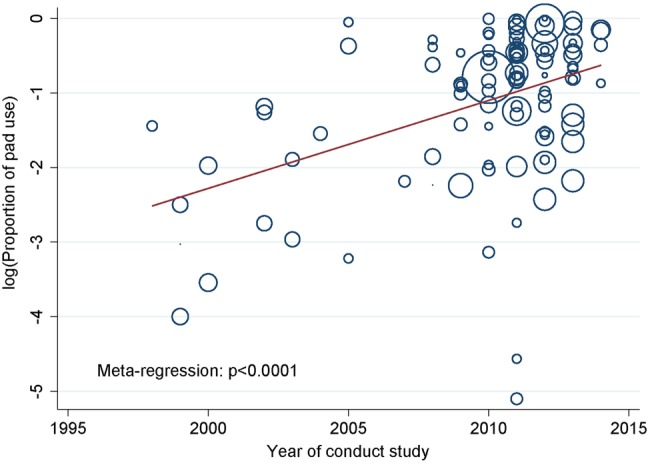
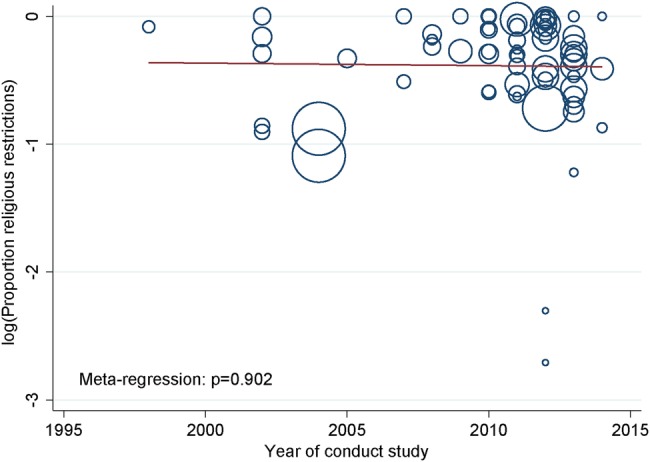
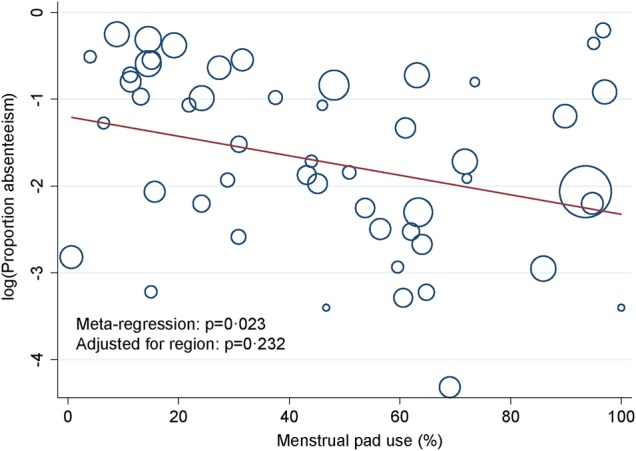
Objectives: To assess the status of menstrual hygiene management (MHM) among adolescent girls in India to determine unmet needs. Design: Systematic review and meta-analysis. We searched PubMed, The Global Health Database, Google Scholar and references for studies published from 2000 to September 2015 on girls’ MHM. Setting: India. Participants: Adolescent girls. Outcome measures: Information on menarche awareness, type of absorbent used, disposal, hygiene, restrictions and school absenteeism was extracted from eligible materials; a quality score was applied. Meta-analysis was used to estimate pooled prevalence (PP), and meta-regression to examine the effect of setting, region and time. Results: Data from 138 studies involving 193 subpopulations and 97 070 girls were extracted. In 88 studies, half of the girls reported being informed prior to menarche (PP 48%, 95% CI 43% to 53%, I 2 98.6%). Commercial pad use was more common among urban (PP 67%, 57% to 76%, I 2 99.3%, n=38) than rural girls (PP 32%, 25% to 38%, I 2 98.6%, n=56, p<0.0001), with use increasing over time (p<0.0001). Inappropriate disposal was common (PP 23%, 16% to 31%, I 2 99.0%, n=34). Menstruating girls experienced many restrictions, especially for religious activities (PP 0.77, 0.71 to 0.83, I 2 99.1%, n=67). A quarter (PP 24%, 19% to 30%, I 2 98.5%, n=64) reported missing school during periods. A lower prevalence of absenteeism was associated with higher commercial pad use in univariate (p=0.023) but not in multivariate analysis when adjusted for region (p=0.232, n=53). Approximately a third of girls changed their absorbents in school facilities (PP 37%, 29% to 46%, I 2 97.8%, n=17). Half of the girls’ homes had a toilet (PP 51%, 36% to 67%, I 2 99.4%, n=21). The quality of studies imposed limitations on analyses and the interpretation of results (mean score 3 on a scale of 0–7). Conclusions: Strengthening of MHM programmes in India is needed. Education on awareness, access to hygienic absorbents and disposal of MHM items need to be addressed. Trial registration number: CRD42015019197.
Overview
The claims and statistics of this paper haven’t been checked yet.
Free: it reads the open-access text and checks the first 5 claims that cite a source we can check. Create a free account to check every claim.
Integrity signals
Registry
Cites
Statistics
Figures
Verification
Claims the paper makes
The claims and statistics of this paper haven’t been checked yet.
Free: it reads the open-access text and checks the first 5 claims that cite a source we can check. Create a free account to check every claim.
Claims other papers make about this one
Each is checked against this paper’s own text: does it say what the citing paper says it does?
The source backs part of the claim, not all of it — or backs it for a different population, condition or comparison.
In the citing paper
“Ascertainment of intermediate outcomes such as school absence (i.e. which may contribute to dropout or failure to achieve) has been mixed (14, 31)”
From Menstrual hygiene management among adolescent schoolgirls in low- and middle-income countries: research priorities (2016) · cites this paper as [14]
Experimental — accuracy not yet measuredThe source backs part of the claim, not all of it — or backs it for a different population, condition or comparison.
In the citing paper
“inadequate social support, ongoing gender inequality, and social and hygiene taboos around menstruation in numerous countries leave girls experiencing shame, fear, and confusion when trying to cope with their menstrual flow (9–15, 20, 21).”
From Menstrual hygiene management among adolescent schoolgirls in low- and middle-income countries: research priorities (2016) · cites this paper as [14]
Experimental — accuracy not yet measuredThe source backs part of the claim, not all of it — or backs it for a different population, condition or comparison.
In the citing paper
“Studies to date, predominantly using school registers, have not shown a strong association between absence and menstrual intervention with varying duration of follow-up ranging between 1-month and 1-year.10 12–16”
From Menstrual cups and sanitary pads to reduce school attrition, and sexually transmitted and reproductive tract infections: a cluster randomised controlled feasibility study in rural Western Kenya (2016) · cites this paper as [12]
Experimental — accuracy not yet measuredThe source backs part of the claim, not all of it — or backs it for a different population, condition or comparison.
In the citing paper
“Women and girls in lower and middle-income countries (LMICs) face a multitude of barriers to safe and comfortable menstrual hygiene management (MHM).”
From ’It’s like a burden on the head’: Redefining adequate menstrual hygiene management throughout women’s varied life stages in Odisha, India. (2019) · cites this paper as [8]
Experimental — accuracy not yet measuredThe source backs part of the claim, not all of it — or backs it for a different population, condition or comparison.
In the citing paper
“In addition to these structural and resource barriers, women and girls face information and social support challenges: girls are often unprepared, uninformed, misinformed, and lack adequate support for understanding and managing menarche, menstruation, and puberty, resulting in fear, uncertainty, and potentially harmful behaviors, like risky sex, reduced bathing, and limited food and water intake”
From ’It’s like a burden on the head’: Redefining adequate menstrual hygiene management throughout women’s varied life stages in Odisha, India. (2019) · cites this paper as [8]
Experimental — accuracy not yet measured
21 more claims about this paper
Create a free account to see every claim other papers make about this one.
Self-check
Percentages, sums and reported differences re-computed from the paper’s own numbers.
The self-check needs the paper’s full text.
Citations
Cites
Measuring inconsistency in meta-analyses
Higgins, J. P. T., Thompson, S. G., Deeks, J. J., & Altman, D. G. (2003) · BMJ · doi:10.1136/bmj.327.7414.557 · Cited by 63,139 · cited 1×
“22 The extent of heterogeneity was measured using the I(2), a measure of the proportion of total variability explained by heterogeneity rather than chance expressed as a percentage.(23) To explore determinants of prevalence, we examined sources of heterogeneity across studies of the pooled”
MethodBarendregt, J. J., Doi, S. A., Lee, Y. Y., Norman, R. E., & Vos, T. (2013) · Journal of Epidemiology and Community Health · doi:10.1136/jech-2013-203104 · Cited by 2,169 · cited 1×
“21 22 The extent of heterogeneity was measured using the I 2 , a measure of the proportion of total variability explained by heterogeneity rather than chance expressed as a percentage.”
MethodMetaprop: a Stata command to perform meta-analysis of binomial data
Nyaga, V. N., Arbyn, M., & Aerts, M. (2014) · Archives of Public Health · doi:10.1186/2049-3258-72-39 · Cited by 2,139 · cited 1×
“21 22 The extent of heterogeneity was measured using the I 2 , a measure of the proportion of total variability explained by heterogeneity rather than chance expressed as a percentage.”
MethodImproved tests for a random effects meta‐regression with a single covariate
Knapp, G., & Hartung, J. (2003) · Statistics in Medicine · doi:10.1002/sim.1482 · Cited by 2,075 · cited 2×
“We estimated between-study variance ( τ 2 ) using the algorithm of residual (restricted) maximum likelihood and calculated p values, and 95% CI for coef fi cients using the modi fi cation by Knapp and Hartung.”
MethodAnalysing Data and Undertaking Meta‐Analyses
Deeks, J. J., Higgins, J. P., & Altman, D. G. (2008) · Cochrane Handbook for Systematic Reviews of Interventions · doi:10.1002/9780470712184.ch9 · Cited by 1,800
Harbord, R. M., & Higgins, J. P. T. (2008) · The Stata Journal: Promoting communications on statistics and Stata · doi:10.1177/1536867x0800800403 · Cited by 897 · cited 1×
“prevalence (PP) estimates using random-effects meta-regression.(24) Regression coefficients were presented as ORs with corresponding 95% CIs.”
MethodMenstrual hygiene: How hygienic is the adolescent girl?
Dasgupta, A., & Sarkar, M. (2008) · Indian Journal of Community Medicine · doi:10.4103/0970-0218.40872 · Cited by 592
A systematic review of the health and social effects of menstrual hygiene management
Sumpter, C., & Torondel, B. (2013) · PLoS ONE · doi:10.1371/journal.pone.0062004 · Cited by 518
Das, P., Baker, K. K., Dutta, A., Swain, T., Sahoo, S., Das, B. S., Panda, B., Nayak, A., Bara, M., Bilung, B., et al. (2015) · PLOS ONE · doi:10.1371/journal.pone.0130777 · Cited by 441
Mason, L., Nyothach, E., Alexander, K., Odhiambo, F. O., Eleveld, A., Vulule, J., Rheingans, R., Laserson, K. F., Mohammed, A., & Phillips-Howard, P. A. (2013) · PLoS ONE · doi:10.1371/journal.pone.0079132 · Cited by 375
Self-citation
Research works printed but not linked: 5
- Sommer M , Vasquez E , Worthington N , et al . WASH in schools empowers girls’ education. Proceedings of the Menstrual Hygiene Management in Schools Virtual Conference; 2012. New York, USA: UNICEF and Colombia University, 2013.
- Arunmozhi, 2013, A cross sectional study to assess the levels of knowledge practices of menstrual hygiene among adolescent girls of Chennai Higher Secondary Schools, Tamil Nadu, 2013, Med ej, 3, 211
- Reddy, 2005, Reproductive health constraints of adolescent school girls, Indian J Soc Work, 66, 431
- Venkatesh, 2011, Preceptions and practices during menstruation among adolescent girls in and around Bangalore city, Indian J Matern Child Health, 13, 1
- Gupta, 2001, Adolescents and menstruation, J Family Welf, 47, 1
Cited by
Items 301–400 of 509
Private Sanitation and Psychosocial Health in Adolescent Girls
Miller, R., Mudenda, L. D., Sedai, A. K., & Vilims, L. (2024) · The World Bank Economic Review · doi:10.1093/wber/lhae049 · Cited by 5
Kewlani, J., & Saharan, K. (2025) · Journal of Humanities and Education Development · doi:10.22161/jhed.7.1.4 · Cited by 2
Khound, M., Bhattacharyya, H., & Ghosh, S. (2025) · Indian Journal of Community Medicine · doi:10.4103/ijcm.ijcm_513_24 · Cited by 5
“[9] Despite the relatively high availability of menstrual materials and access to water reported by participants, the persistent concerns about leakage, disposal, and social stigma indicate that merely providing sanitary products is insufficient.”
Mamuk, R., Parlan, H., ASİF, E., Deveci, M., & AKDENİZ, E. (2022) · Clinical and Experimental Health Sciences · doi:10.33808/clinexphealthsci.909836 · Cited by 3
Sadaria, R. G., Vasava, S. N., Gosai, D., & Singh, A. (2022) · International Journal of Health Sciences · doi:10.53730/ijhs.v6ns6.11222 · Cited by 3
“There is an absence of standardized technique for discarding of pads, so most of the time they are thrown with regular domestic waste or thrown in the open space or buried or burned openly (4).”
BackgroundRavindranath, W., Ravindranath, V., & Chopade, R. (2023) · International Journal of Reproduction Contraception Obstetrics and Gynecology · doi:10.18203/2320-1770.ijrcog20232469 · Cited by 2
Period products during the pandemic: The impact of lockdown on period products usage
Babbar, K., & Dev, P. (2023) · Applied Economics · doi:10.1080/00036846.2023.2257035 · Cited by 2
“There was already a gap in the provisioning of period products and adequate sanitation facilities to fulfil menstrual needs, which has been further exacerbated during the pandemic (Sharma et al. 2020; van et al. 2016).”
Exploring the salient factors influencing menstrual health and hygiene: a review
Lakshmi, V., M., J. M. C., Johnson, A., Sabu, J., & Narmadha, M. P. (2023) · International Journal of Reproduction Contraception Obstetrics and Gynecology · doi:10.18203/2320-1770.ijrcog20233326 · Cited by 2
Meshram, P., Ratta, A. K., & Kumar, V. (2020) · International Journal of Community Medicine and Public Health · doi:10.18203/2394-6040.ijcmph20201034 · Cited by 2
“Awareness needs a baseline assessment for rectifying the issues.(7-9) With this background, we conducted a cross sectional study to assess the perception and practices about menstrual hygiene among tribal adolescents in an administrative area of a tertiary care hospital in Mumbai, Maharashtra.”
BackgroundA descriptive study of menstrual hygiene practices among women at the rural area of Haryana
Lata, H. H., Sheoran, P., Kaur, S., & Sarin, J. (2020) · Journal of Nursing and Midwifery Sciences · doi:10.4103/jnms.jnms_18_20 · Cited by 3
Achyut, P., Andrew, A., Das, M., Gautam, A., Huepe, M., Krutikova, S., Kumar, S., Sharma, S., Soni, R., Verma, H., et al. (2016) · doi:10.1920/re.ifs.2024.0388 · Cited by 4
Hygienic Sanitary Items Usage and Ovulatory Cycle Knowledge in IndiaPreprint
Babbar, K., & Saluja, D. (2020) · Research Square · doi:10.21203/rs.3.rs-33957/v1 · Cited by 3
“Page 12/25 Previous studies have shown that mothers were the most frequent source of information for awareness about menarche and building girls' knowledge and perception about menstruation [46].”
BackgroundResultInfluentialMenstrual Hygiene Management and Sustainable Development
Patterson, J. J. (2021) · Encyclopedia of the UN sustainable development goals · doi:10.1007/978-3-319-95687-9_11 · Cited by 2
Gelo, A., Geleto, A. B., Demena, M., & Tura, A. K. (2023) · Research Square · doi:10.21203/rs.3.rs-3700784/v1 · Cited by 2
Awareness and practices about menstruation among adolescent girls: A cross-sectional study
Parmar, P. R., & DESHPANDE, S. S. (2022) · Current Medicine Research and Practice · doi:10.4103/cmrp.cmrp_92_22 · Cited by 1
Suru, M. H., & Riwa, A. N. (2023) · Advances in medical diagnosis, treatment, and care (AMDTC) book series · doi:10.4018/978-1-6684-5088-8.ch007 · Cited by 1
Firm-created content on YouTube for product promotion - A thematic analysis for menstrual cup
Dave, A. C., & Behrani, P. (2024) · Health Marketing Quarterly · doi:10.1080/07359683.2024.2352189 · Cited by 1
“Several experimental studies have been undertaken to understand adoption/feasibility of menstrual cup (van Eijk et al., 2019; Van Eijk et al., 2016; Kakani and Bhatt, 2017), menstrual cup’s adoption in low socio economic community (Beksinska et al., 2015; Madziyire et al., 2018; Mason et al., 2015)…”
Seetharaman, S. (2024) · Springer eBooks · doi:10.1007/978-981-97-5870-8_13 · Cited by 1
Chakrabarty, M., Singh, A., Let, S., & Singh, S. (2024) · Journal of Biosocial Science · doi:10.1017/s0021932024000312 · Cited by 1
“…heightened levels of comfort and convenience compared to their counterparts using disposable sanitary pads, while also exhibiting a lower risk of vaginal infections in comparison to alternative absorbents such as pads and cloth (van Eijk et al ., 2016; MacRae et al ., 2019; Singh et al ., 2022a).”
Crasta, I., & Madhushree, M. (2024) · Asian Journal of Nursing Education and Research · doi:10.52711/2349-2996.2024.00037 · Cited by 1
Healthy menstruation: Myth or reality? Insights into urban slums of Vishakhapatnam city, India
Pandey, G., Darbhamulla, T., Athe, R., & Dwivedi, R. (2025) · Journal of Water Sanitation and Hygiene for Development · doi:10.2166/washdev.2025.247 · Cited by 3
Digital Platforms and Educational Tools for Enhancing Menstrual Health: A Scoping Review
Jimenez, S., Lent, A., Kaleem, S., Eldawy, N., Mendonca, J., Etzel, M., Brinzo, P., Burgoa, S., Zerrouki, Y., Follin, T. A., et al. (2025) · International Journal of Sexual Health · doi:10.1080/19317611.2025.2496218 · Cited by 3
“Numerous studies in India, Bangladesh, Ghana, and Kenya have shown the relationship between poor menstrual infrastructure and increased rates of absenteeism, poor grades, and dropout in schools (Alam et al., 2017; Montgomery et al., 2012; Mucherah & Thomas, 2017; van Eijk et al., 2016).”
Desaraju, S., Panda, N., Panigrahy, R. P., & Panda, B. (2025) · Health Research Policy and Systems · doi:10.1186/s12961-025-01316-w · Cited by 4
“Hence, serious efforts need to be initiated to promote such products in a phased manner [53].”
Menstrual Hygiene of School-going Adolescent Girls in Kolkata, West Bengal: A Cross-sectional Study
Arif, W., Mitra, S., Majumdar, K. K., Dasgupta, S., & Joardar, G. K. (2025) · Indian Journal of Public Health · doi:10.4103/ijph.ijph_112_24 · Cited by 2
WASH Coverage and Awareness of Menstrual Hygiene Management Among Schoolchildren in Rural Sri Lanka
Dassanayake, D. M. L. J., Udayanga, S., Bellanthudawa, B. K. A., Mendis, B. I. L. M., Darshana, W. D., Lansakara, L. M. A. P., Nawalage, N. M. S. K., Neththipola, M. M. T. D., & Perera, I. J. J. U. N. (2026) · The International Journal of Community and Social Development · doi:10.1177/25166026261417498 · Cited by 1
“A global trend in rural areas highlights that the lack of proper MHM negatively impacts female students’ school participation (Sivakami et al., 2019; Van Eijk et al., 2016).”
Shaping hygiene: the role of mass media in menstrual health among young Indian women
Trivedy, A., & Khatun, M. (2026) · SN Social Sciences · doi:10.1007/s43545-026-01487-5 · Cited by 1
Gnanasekar, S., Srinivasan, T. S., Karam, M., & Thulasingam, M. (2026) · International Journal of Reproduction Contraception Obstetrics and Gynecology · doi:10.18203/2320-1770.ijrcog20262105 · Cited by 1
Sarangi, S., Lakra, M. V., Gautam, S., Mondal, S., & Bandhu, R. (2024) · International Journal of Current Research and Review · doi:10.31782/ijcrr.2024.162001 · Cited by 2
“23, 24 A higher percentage of girls from GSGAG (16.6”
InfluentialRajput, K. B., Mangla, V., Bhargava, A., Tawar, S., & Singh, P. (2025) · International Journal of Community Medicine and Public Health · doi:10.18203/2394-6040.ijcmph20252109 · Cited by 2
Jayakumar, T., & Arora, S. V. (2025) · South Asian Journal of Management · doi:10.62206/sajm.32.2.2025.213-230 · Cited by 1
Anapana, G. (2025) · International Journal of Zoology and Applied Biosciences · doi:10.55126/ijzab.2025.v10.i05.014 · Cited by 1
Kumar, B. P., Jasrotia, R., Singh, J., Mittal, S., & Singh, H. (2025) · Environmental Science and Pollution Research · doi:10.1007/s11356-025-36806-5 · Cited by 1
“A systematic review by Van Eijk et al. (2016) found that although many women were aware of sanitary pads, societal pressures and cultural norms often led them to prefer traditional methods like cloth or ash, despite the associated health risks.”
Namuwonge, F., Namatovu, P., Kizito, S., Ssentumbwe, V., Tutlam, N. T., Nabunya, P., McKay, M. M., & Ssewamala, F. M. (2025) · International Journal of Women s Health · doi:10.2147/ijwh.s536692 · Cited by 1
A Narrative Review of Interventions on Menstrual Health for Adolescent Girls in Rural India
Chaliawala, K. S., & Dubey, P. (2025) · Boston Congress of Public Health Review (BCPHR Formerly HPHR) · doi:10.54111/001c.138060 · Cited by 4
Sari, R. H., & Nurhapipah, N. (2025) · Prosiding Hang Tuah Pekanbaru · doi:10.25311/prosiding.vol2.iss1.135 · Cited by 1
Barba, E. C., & Ramirez-Alvarez, C. G. (2025) · Springer eBooks · doi:10.1007/978-981-96-7979-9_3 · Cited by 1
Beaulah Mercy Mary, T., Pritika, Sharma, S., Th, R., Selvi, R., Devi, K. C., Kavitha, G., Yashodamma, R., Suhashini, Shanmugam, Y., et al. (2025) · International Journal of Reproduction Contraception Obstetrics and Gynecology · doi:10.18203/2320-1770.ijrcog20254318 · Cited by 1
Çamur, D., Bilgin, A. C., İnandı, T., Savaş, N., Turunc, O., Yalçın, B. N. B., Kılınç, Z., & Kılıç, B. (2026) · Frontiers in Public Health · doi:10.3389/fpubh.2025.1706038 · Cited by 1
Towards improved menstrual health: the impact of period products on reproductive tract infections
Babbar, K., & Ojha, M. (2026) · Oxford Development Studies · doi:10.1080/13600818.2026.2613965 · Cited by 2
Kaur, R. (2019) · International Journal of Social Science and Humanity · doi:10.18178/ijssh.2018.v9.973 · Cited by 2
“Girls/women are considered impure and untouchable on their periods [3], [4].”
BackgroundWitte, J. (2021) · Glocality · doi:10.5334/glo.33 · Cited by 1
Banerjee, S. P., & Gupta, R. K. (2022) · Springer eBooks · doi:10.1007/978-981-16-6433-5_8 · Cited by 1
(2024) · Journal of Research Innovation and Implications in Education · doi:10.59765/836irgb · Cited by 1
Saldon, N. (2023) · International Journal of Science and Research (IJSR) · doi:10.21275/sr23813190821 · Cited by 1
“[14 ] 15) A community based descriptive cross - sectional study to assess menstrual hygiene and related personal hygiene practices was conducted in rural field of Puducherry among 502 adolescent girls of age between 10 - 19 years by using a semi - structured questionnaire.”
Background-, S. D. H., & -, P. A. A. J. (2024) · International Journal for Research in Applied Science and Engineering Technology · doi:10.22214/ijraset.2024.62430 · Cited by 1
Khadar, A. A., Kansra, P., & Lodh, K. (2024) · Advances in electronic government, digital divide, and regional development book series · doi:10.4018/979-8-3693-5976-1.ch012 · Cited by 2
Perspectives Regarding the Menstrual Cup
Prince, L., & Kumar, A. V. (2024) · doi:10.52711/jnmr.2024.22 · Cited by 1
AKBAR, S., KHALIL, A., Hameed, R., Khaleel, F. F., TASLEEM, F., ZAFAR, M., & Firdous, U. (2024) · Biological and Clinical Sciences Research Journal · doi:10.54112/bcsrj.v2024i1.1352 · Cited by 1
Rodríguez, A., Campero, L., Estrada, F., & Romero-Pérez, I. (2024) · Health Care For Women International · doi:10.1080/07399332.2024.2435959 · Cited by 1
“Compared to low-and middle-income countries in Asia and Africa, in Mexico, the recognition and study of the topic of menstruation are still incipient (Alam et al., 2017; Benshaul et al., 2020; Van Eijk et al., 2016).”
Haroon, A., Rizvi, S. A., Jafri, A., Rab, S. A., Shamim, F., & Shoaib, N. (2024) · Pakistan Journal of Public Health · doi:10.32413/pjph.v14i4.1437 · Cited by 1
Cognizance about Menstruation among Urban Young Women of Delhi-NCR: A Socio-Cultural Perception
Yadav, M. K., Khan, A., Goel, S., & Pervez, A. (2018) · Journal of Basic and Clinical Reproductive Sciences · Cited by 2
Menstrual restrictions among young females in urban slums of Cochin
Chacko, M., Retnakumar, C., Ramakrishnan, D., George, L. S., & Vijayakumar, K. (2019) · International Journal of Community Medicine and Public Health · doi:10.18203/2394-6040.ijcmph20195864 · Cited by 1
Sahu, I. (2020) · i-manager’s Journal on Nursing · doi:10.26634/jnur.9.4.16646 · Cited by 1
Creating equality for girls: on the right track but still a long way to go
Rao, N., Weber, A. M., Ranganathan, N., & Ip, P. (2020) · The Lancet Child & Adolescent Health · doi:10.1016/s2352-4642(20)30171-1 · Cited by 1
Sancheti, P. V., & Shinde, R. D. (2022) · National Journal of Community Medicine · doi:10.5455/njcm.20200702052729 · Cited by 1
Hussain, S., Anand, N., Kumar, N., Perween, G., & Kumar, M. A. (2020) · International Journal of Medical and Biomedical Studies · doi:10.32553/ijmbs.v4i11.1574 · Cited by 1
Effect of Educational Program on Menstrual Health: An Intervention Study among School Girls in Sudan
Ahmed, W. A. M., Mohammed, A. A. R., & Ahmed, R. G. (2021) · Egyptian Journal of Health Care · doi:10.21608/ejhc.2021.205170 · Cited by 1
Babbar, K., Swathysree, S. S., & Nanduri, K. (2023) · Culture Health & Sexuality · doi:10.1080/13691058.2023.2287723 · Cited by 2
“A systemic review of 138 studies involving 97,070 female students in India conducted prior to the COVID-19 epidemic found that approximately half of them did not have accurate information about menstruation before reaching menarche (Eijk et al. 2016).”
Menstrual Hygiene Practices Among Indian Women
Sivakami, M. (2023) · Demographic transformation and socio-economic development · doi:10.1007/978-3-031-47847-5_12 · Cited by 3
Self-citationDatta, M., Yasmin, S., & Guchhait, D. (2024) · Journal of Psychosexual Health · doi:10.1177/26318318241255775 · Cited by 1
Aluko, O. O., Udechukwu, J. N., Loto, O. A., Orisawayi, A. O., Ojogba, G. O., & Arowosafe, P. O. (2020) · Research Square · doi:10.21203/rs.3.rs-42447/v1 · Cited by 1
Mensural Hygiene Management in Schools of Oromia Region, EthiopiaPreprint
Kaba, M., & Geletu, Z. A. (2020) · Research Square · doi:10.21203/rs.3.rs-55327/v1 · Cited by 2
Teenage Girls’ Interpersonal Communication with Mothers after Experiencing Menarche in BangladeshPreprint
Onia, M. A., Zakaria, M., Jahan, N., Akter, D., Zhou, Y., Cheng, F., & Xu, J. (2022) · Research Square · doi:10.21203/rs.3.rs-1607111/v1 · Cited by 2
Narratives of Bodily Functions
Prakash, K. K. (2019) · Indian Journal of Gender Studies · doi:10.1177/0971521518812113
IJAR, & Raju, A. (2019) · International Journal of Advanced Research · doi:10.21474/ijar01/8985
Percepção das mulheres sobre o impacto da menstruação no cotidiano de vida
Moraes, P. A., Barbieri, M., Tanaka, L. H., & Gabrielloni, M. C. (2019) · Saúde (Santa Maria) · doi:10.5902/2236583437215
Menstrual Hygiene Management and Sustainable Development
Patterson, J. J. (2019) · Encyclopedia of the UN sustainable development goals · doi:10.1007/978-3-319-70060-1_11-1
B., S. R. B., Ks, V., Aishwarya, D., Shefali, & Iyengar, K. (2019) · Research Journal of Medical and Allied Health Sciences · doi:10.46319/rjmahs.2019.v02i02.004
Kumar, P. (2020) · National Journal of Community Medicine · doi:10.5455/njcm.20200204084244 · Cited by 1
“These results are in line with the studies conducted by Tegegne and Sisay 13 and van Eijk et al. 16.”
ResultGundi, M., & Subramanyam, M. A. (2020) · medRxiv · doi:10.1101/2020.08.04.20167924 · Cited by 3
“…from Haryana (n=582) could not afford sanitary napkins ((V. Sharma et al., 2013); about one in four Indian girls miss at least a day in school during menstruation (van Eijk et al., 2016) and 43.46% older adolescent girls from Sikkim (n=1031) reported menstrual illness (Mishra & Mukhopadhyay, 2012).”
BackgroundInfluentialThe Development and Evaluation of a Culturewise Instrument for Menstrual Hygiene
Mohammadinia, N., Rezaei, M. A., Najafi, K., & Morowatisharifabad, M. A. (2021) · DOAJ (DOAJ: Directory of Open Access Journals) · doi:10.22038/ijp.2020.51383.4084
Sharma, S., Maheshwari, S., Kuwatada, J., Shekhar, C., & Mehra, S. (2021) · Research Square · doi:10.21203/rs.3.rs-349512/v1
“Cloths are commonly used as absorbents in rural areas compared to sanitary napkins in the urban areas [42].”
BackgroundAluko, O. O., Udechukwu, J. N., Loto, O. A., Orisawayi, A. O., Ojogba, G. O., & Arowosafe, P. O. (2020) · Research Square · doi:10.21203/rs.3.rs-32272/v1 · Cited by 1
“They have accepted menstruation and its management as a routine that should happen monthly despite being negatively affected by friction burns on their thighs during journeys to school (57) and experiences of cramps, fatigue and feeling discomfort, backache and types of absorbents used could affect their attitude and…”
BackgroundMenstruation Hygiene Management among Adolescent School Girls of Inaruwa Municipality
Shrestha, R. B., & Bhatta, A. (2022) · MedS Alliance Journal of Medicine and Medical Sciences · doi:10.3126/mjmms.v2i3.47754
“The same study also demonstrated widespread misconceptions about menstrual physiology not only amongst adolescents, but also their teachers and health workers [12].”
BackgroundImpact of Menstrual Distress During Menstruation to Promote Coping Strategies
Karmakar, M., Panduragan, S. L., Said, F. M., & Poddar, S. (2023) · Advances in medical diagnosis, treatment, and care (AMDTC) book series · doi:10.4018/978-1-6684-5088-8.ch012
Novel tools to solve menstrual health crisis targeted at rural India
Mavinkurve, I., Guruprasad, M., Irshath, A. A., & Rajan, A. P. (2023) · International Journal of Science and Research Archive · doi:10.30574/ijsra.2023.9.1.0380
“In the current Indian setting, however, the availability and accessibility of clean and safe menstrual absorbents for all women seems like a pipe dream [1].”
BackgroundReddy, T. A., Sreevidhya, J. S., & Duggirala, L. (2023) · International Journal of Research and Review · doi:10.52403/ijrr.20230620
Sarkar, P. A. (2023) · Acta Scientific Medical Sciences · doi:10.31080/asms.2023.07.1598 · Cited by 1
Samani, L. N., Khanjari, S., Mirmohammadi, F., Esfahan, M. M., Haghani, S., & Tehrani, F. J. (2023) · Journal of Child and Adolescent Psychiatric Nursing · doi:10.1111/jcap.12434
MENSTRUAL HYGIENE PRACTICE AND EXPERIENCE AMONG SCHOOL GIRLS IN SOKOTO, NORTHWESTERN NIGERIA
Ahmed, Y., & Umar, A. (2022) · Caliphate Medical Journal · doi:10.47837/cmj.2022101.8
Oshineye, A. O., Olayanju, O. A., Adeami, T., Azi, K., James, A., Onifade, P., & Benedicta, O. (2023) · Fountain Journal of Natural and Applied Sciences · doi:10.53704/fujnas.v12i2.417
Ravindra, B. N., Madhu, M., K, R. D., M, S. A., & Surabhi, K. S. (2023) · International Journal of Pharmaceutical Sciences Review and Research · doi:10.47583/ijpsrr.2023.v83i01.013
Holla, R., Shetty, S. S., Rao, M., & Jose, J. (2023) · Universal Journal of Public Health · doi:10.13189/ujph.2023.110604
Tripathy, A., Tripathy, T., Das, S., Singh, D. P., Sahu, D. R., Dwivedi, R. K., & Gautam, M. (2023) · International Journal of Science and Research (IJSR) · doi:10.21275/sr23830104822
Menstrual Management in U.S. Public Schools: A Qualitative Case Study
Powley, C. (2023) · Women s Reproductive Health · doi:10.1080/23293691.2023.2287527
"Practices Regarding Menstrual Hygiene Among Adolescent Girls in Railway Slum Area of Khulna City"
Khanum, H. (2023) · Biomedical Journal of Scientific & Technical Research · doi:10.26717/bjstr.2023.52.008311
Thakur, R., & Gupta, V. (2023) · Asian Man (The) - An International Journal · doi:10.5958/0975-6884.2023.00008.7
Menstruation: Myths, Mechanisms, Models and Malfunctions
Cousins, F. L., & Saunders, P. T. K. (2024) · Frontiers research topics · doi:10.3389/978-2-8325-4935-3
Oumara, M., Diaouga, H. S., Amadou, I. A., Binta, O. M., Hadiza, M., Adama, A., Yacouba, M. C., Garba, S. O., Garba, R. M., & Nayama, M. (2024) · European Scientific Journal ESJ · doi:10.19044/esj.2024.v20n21p152
KARKI, B. N., Bhandari, K., & DAHAL, R. (2024) · International Journal of Research in Education Humanities and Commerce · doi:10.37602/ijrehc.2024.5435 · Cited by 1
“…their long-term economic and other potentials, significantly affecting sexual and reproductive health outcomes (Mason et al., 2013; Sommer, 2010b; van Eijk et al., 2016) While our study primarily focused on immediate consequences, such as class repetition, dropout, and psychological impact,…”
BackgroundExploring Menstrual Awareness And Practices Among Adolescent Girls: A Scoping Review
Kondamudi, S. S. (2024) · African Journal of Biomedical Research · doi:10.53555/ajbr.v27i3s.3192
Awareness and perception towards menstrual panties: Identifying challenges and potential solutions
Roy, A., & Gupta, P. (2024) · International Journal of Multidisciplinary Trends · doi:10.22271/multi.2024.v6.i10a.491
Asia Valores y familia vistos por el cine
Becerra, M. L., Delgado, J. E. R., Romero, M. E., Núñez, G. E. Q., Navejas, F. J. H., Juárez, J. Ó. Á., Muro, C. T., & Sánchez, J. R. V. (2024) · Universidad de Colima eBooks · doi:10.53897/li.2024.0049.ucol
A Comprehensive Review of Scholarly Perspectives on Period Poverty Among Women
Majid, L. A., Ibrahim, N. S., Rahim, N. C. A., & Kusrin, Z. M. (2024) · Studies in systems, decision and control · doi:10.1007/978-3-031-71526-6_30
Breaking the Taboo: Addressing Menstrual Health Challenges in India
Jadhav, P., Hajare, A. A., Vatsa, M., Sebastian, S., Unnisa, S. A., & Paliwal, M. (2024) · Research Journal of Pharmacy and Technology · doi:10.52711/0974-360x.2024.00861
Metadata
- Authors
- van Eijk, A. M., Sivakami, M., Thakkar, M. B., Bauman, A., Laserson, K. F., Coates, S., & Phillips-Howard, P. A.
- Affiliations
- Department of Clinical Sciences, Liverpool school of Tropical Medicine, Liverpool, UK
- Tata Institute of Social Sciences (IN)
- United Nations Children's Fund India (IN)
- Liverpool School of Tropical Medicine (GB)
- Centers for Disease Control and Prevention (US)
- ORCID
- Sivakami, M
- Venue
- BMJ Open
- Publisher
- BMJ
- Published
- 2016-03
- Volume
- 6
- Issue
- 3
- Pages
- e010290
- ISSN
- 2044-6055 (ISSN-L)
- PMC
- PMC4785312
- OpenAlex
- W2292933427
- Cited by
- 471
- References
- 82
- Citations by year
- 2026: 53 · 2025: 60 · 2024: 57 · 2023: 74 · 2022: 44 · 2021: 51 · 2020: 47 · 2019: 38 · 2018: 24 · 2017: 16 · 2016: 7
- FWCI
- 4.20
- Type
- journal article
- Language
- en
- Open access
- gold
- doi.org
- Licence
- cc-by-nc
- Locations
- BMJ Open (publishedVersion, cc-by-nc)
- PubMed Central (publishedVersion, cc-by-nc)
- PubMed (publishedVersion)
- LSTM Online Archive (Liverpool School of Tropical Medicine) (acceptedVersion)
- HighWire Press Open Archive (submittedVersion)
- Topics
- Health Sciences › Medicine › Public Health, Environmental and Occupational Health › Menstrual Health and Disorders
- Health Sciences › Medicine › Reproductive Medicine › Hypothalamic control of reproductive hormones
- Health Sciences › Medicine › Public Health, Environmental and Occupational Health › Adolescent Sexual and Reproductive Health
- Keywords
- menstrual hygiene management, adolescent girls, menstrual product disposal, school absenteeism, urban-rural disparities, India, unmet needs, menstrual health education, menstrual health policy, menstrual health advocacy
- MeSH terms
- Absenteeism, Adolescent, Female, Humans, Hygiene, India, Health Knowledge, Attitudes, Practice, Menarche, Menstruation, Rural Population, Schools, Urban Population
About these checks
Registry, retraction, Cites and statistics results are computed, not judged, with one exception: a printed reference that no index lists is read once by a model before it counts as a citation error. Claims are extracted by a model and kept only when their quote appears verbatim in the text; each cited source is then checked, with a model’s help, for whether it says what the claim relies on. Those verdicts can be wrong — read the claim’s quote and the cited source before relying on one.
Statistics and arithmetic are recomputed, not judged.
Confidence bands are shown only for fields calibrated on our annotated test set. None is calibrated yet, so no band is shown.
What counts as a claim ›How we measure confidence ›How we check this ›
Are you an author, or do you see a problem with this page? Request a review
Data sources
Bibliographic data: Semantic Scholar, OpenAlex, Crossref.
Contains information from the Semantic Scholar Academic Graph Datasets, made available under the ODC Attribution License (ODC-BY 1.0).
Semantic Scholar’s data is described in: Kinney, R., et al. (2023). The Semantic Scholar Open Data Platform. arXiv:2301.10140.
