

The DOI matches its Crossref record; 35 of the 35 references it cites were found in a registry or an index.
Framework to construct and interpret latent class trajectory modelling
Open accessAbstract
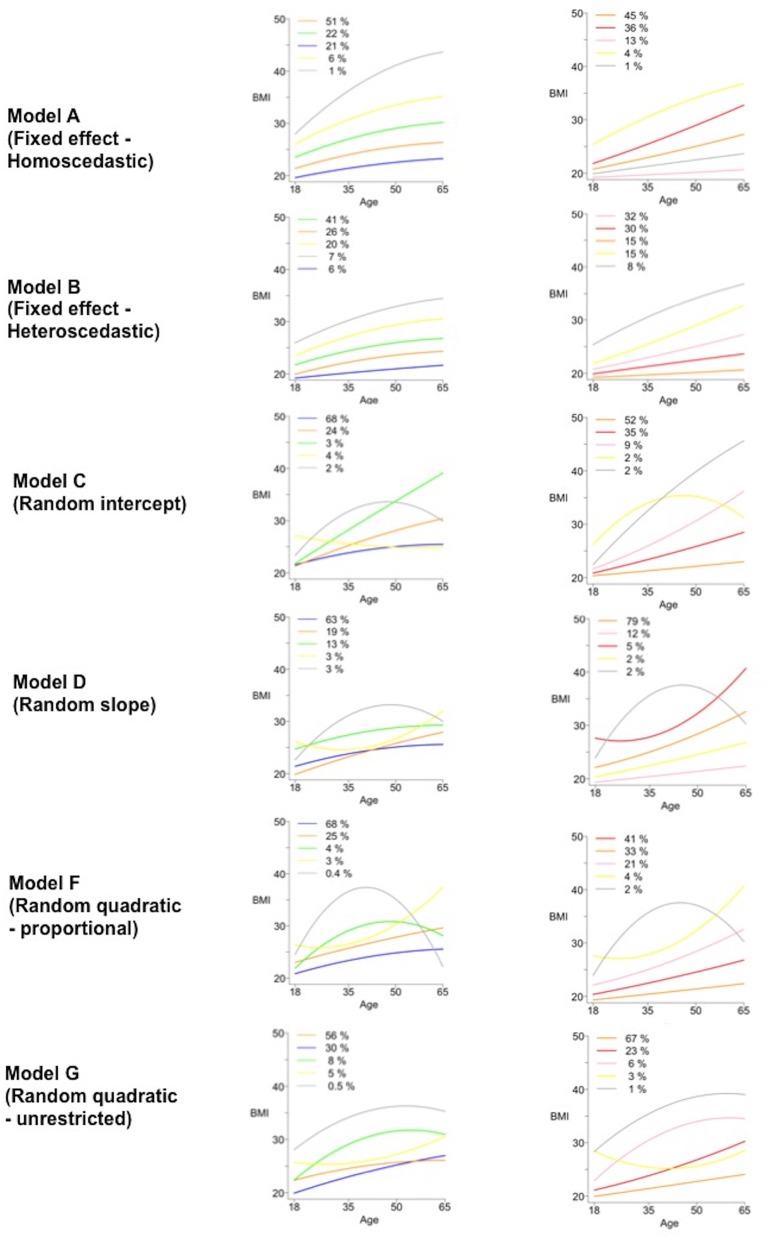
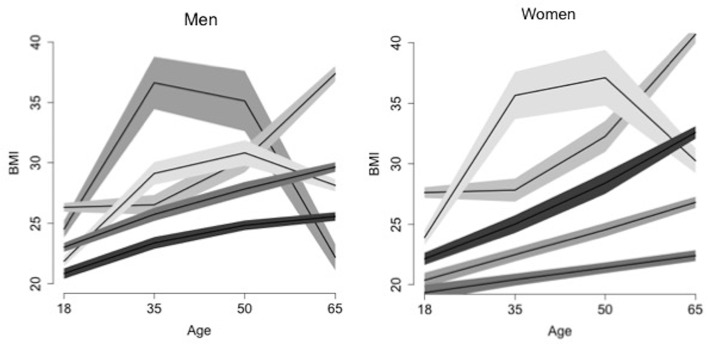
Objectives: Latent class trajectory modelling (LCTM) is a relatively new methodology in epidemiology to describe life-course exposures, which simplifies heterogeneous populations into homogeneous patterns or classes. However, for a given dataset, it is possible to derive scores of different models based on number of classes, model structure and trajectory property. Here, we rationalise a systematic framework to derive a ‘core’ favoured model. Methods: We developed an eight-step framework: step 1: a scoping model; step 2: refining the number of classes; step 3: refining model structure (from fixed-effects through to a flexible random-effect specification); step 4: model adequacy assessment; step 5: graphical presentations; step 6: use of additional discrimination tools (‘degree of separation’; Elsensohn’s envelope of residual plots); step 7: clinical characterisation and plausibility; and step 8: sensitivity analysis. We illustrated these steps using data from the NIH-AARP cohort of repeated determinations of body mass index (BMI) at baseline (mean age: 62.5 years), and BMI derived by weight recall at ages 18, 35 and 50 years. Results: From 288 993 participants, we derived a five-class model for each gender (men: 177 455; women: 111 538). From seven model structures, the favoured model was a proportional random quadratic structure (model F). Favourable properties were also noted for the unrestricted random quadratic structure (model G). However, class proportions varied considerably by model structure—concordance between models F and G were moderate (Cohen κ: men, 0.57; women, 0.65) but poor with other models. Model adequacy assessments, evaluations using discrimination tools, clinical plausibility and sensitivity analyses supported our model selection. Conclusion: We propose a framework to construct and select a ‘core’ LCTM, which will facilitate generalisability of results in future studies.
Overview
The claims and statistics of this paper haven’t been checked yet.
Run the check — free, no account needed. It reads the open-access text and checks the sources it cites.
Integrity signals
Registry
Cites
Statistics
Figures
Verification
Claims the paper makes
The claims and statistics of this paper haven’t been checked yet.
Run the check — free, no account needed. It reads the open-access text and checks the sources it cites.
Claims other papers make about this one
Each is checked against this paper’s own text: does it say what the citing paper says it does?
In the citing paper
“The best-fitting model was identified using the Akaike information criterion, sample adjusted Bayesian information criterion, entropy index, Vuong–Lo–Mendell–Rubin test, and clinical utility of the model [32].”
From Predictors of chronic loneliness during adolescence: a population-based cohort study (2022) · cites this paper as [32]
Self-check
Percentages, sums and reported differences re-computed from the paper’s own numbers.
The self-check needs the paper’s full text.
Citations
Cites
The metabolic phenotype in obesity: Fat mass, body fat distribution, and adipose tissue function
Goossens, G. H. (2017) · Obesity Facts · doi:10.1159/000471488 · Cited by 8,481
Group-Based Modeling of Development
NAGIN, D. (2005) · doi:10.4159/9780674041318 · Cited by 4,164
Body Fatness and Cancer — Viewpoint of the IARC Working Group
Lauby-Secretan, B., Scoccianti, C., Loomis, D., Grosse, Y., Bianchini, F., & Straif, K. (2016) · New England Journal of Medicine · doi:10.1056/nejmsr1606602 · Cited by 3,596
Linear Mixed Models for Longitudinal Data
Verbeke, G. (1997) · Lecture Notes in Statistics · doi:10.1007/978-1-4612-2294-1_3 · Cited by 3,506
Di Angelantonio, E., Bhupathiraju, S. N., Wormser, D., Gao, P., Kaptoge, S., de Gonzalez, A. B., Cairns, B. J., Huxley, R., Jackson, C. L., Joshy, G., et al. (2016) · The Lancet · doi:10.1016/s0140-6736(16)30175-1 · Cited by 2,821
Linear Mixed Models for Longitudinal Data
Molenberghs, G., & Verbeke, G. N. (2000) · Springer series in statistics · doi:10.1007/978-1-4419-0300-6 · Cited by 2,681
The Emerging Risk Factors Collaboration (2011) · The Lancet · doi:10.1016/s0140-6736(11)60105-0 · Cited by 1,216
Advances in Group-Based Trajectory Modeling and an SAS Procedure for Estimating Them
Jones, B. L., & Nagin, D. S. (2007) · Sociological Methods & Research · doi:10.1177/0049124106292364 · Cited by 1,206
Estimation of Extended Mixed Models Using Latent Classes and Latent Processes: The R Package lcmm
Proust‐Lima, C., Philipps, V., & Liquet, B. (2017) · Journal of Statistical Software · doi:10.18637/jss.v078.i02 · Cited by 1,144
Vazquez, G., Duval, S., Jacobs, D. R., & Silventoinen, K. (2007) · Epidemiologic Reviews · doi:10.1093/epirev/mxm008 · Cited by 976 · cited 1×
“Step 7 We assessed for clinical characterisation and plausibility using four approaches: (1) assessing the clinical meaningfulness of the trajectory patterns, aiming to include classes with at least 1% capture of the population; (2) assessing the clinical plausibility of the trajectory classes; (3) tabulation of chara…”
Estimation of extended mixed models using latent classes and latent processes: the R package lcmm
Proust‐Lima, C., Philipps, V., & Liquet, B. (2015) · RePEc: Research Papers in Economics · doi:10.48550/arxiv.1503.00890 · Cited by 764
The GRoLTS-Checklist: Guidelines for Reporting on Latent Trajectory Studies
van de Schoot, R., Sijbrandij, M., Winter, S. D., Depaoli, S., & Vermunt, J. K. (2017) · Structural Equation Modeling: A Multidisciplinary Journal · doi:10.1080/10705511.2016.1247646 · Cited by 721
Design and Serendipity in Establishing a Large Cohort with Wide Dietary Intake Distributions
Schatzkin, A. G., Subar, A. F., Thompson, F. E., Harlan, L. C., Tangrea, J. A., Hollenbeck, A. R., Hurwitz, P. E., Coyle, L. M., Schussler, N., Michaud, D. S., et al. (2001) · American Journal of Epidemiology · doi:10.1093/aje/154.12.1119 · Cited by 608
Distinguishing Between Latent Classes and Continuous Factors: Resolution by Maximum Likelihood?
Lubke, G. H., & Neale, M. C. (2006) · Multivariate Behavioral Research · doi:10.1207/s15327906mbr4104_4 · Cited by 494
Gupta, J. K., Daniels, J. P., Middleton, L. J., Pattison, H. M., Prileszky, G., Roberts, T. E., Sanghera, S., Barton, P., Gray, R., Kai, J., et al. (2015) · Health Technology Assessment · doi:10.3310/hta19880 · Cited by 399
Simmonds, M. C., Burch, J., Llewellyn, A., Griffiths, C., Yang, H., Owen, C. G., Duffy, S., & Woolacott, N. F. (2015) · Health Technology Assessment · doi:10.3310/hta19430 · Cited by 384
Trajectories of lung function during childhood
Belgrave, D. C. M., Buchan, I., Bishop, C., Lowe, L., Simpson, A., & Custovic, A. (2014) · American Journal of Respiratory and Critical Care Medicine · doi:10.1164/rccm.201309-1700oc · Cited by 184
Self-citationTrajectory of body shape across the lifespan and cancer risk
Song, M., Willett, W. C., Hu, F. B., Spiegelman, D. L., Must, A., Wu, K., Chan, A. T., & Giovannucci, E. L. (2015) · International Journal of Cancer · doi:10.1002/ijc.29981 · Cited by 144
Song, M., Hu, F. B., Wu, K., Must, A., Chan, A. T., Willett, W. C., & Giovannucci, E. L. (2016) · BMJ · doi:10.1136/bmj.i2195 · Cited by 134
That the effects of smoking should be measured in pack-years: misconceptions 4
Peto, J. (2012) · British Journal of Cancer · doi:10.1038/bjc.2012.97 · Cited by 96
Klijn, S. L., Weijenberg, M. P., Lemmens, P. H. H. M., van den Brandt, P. A., & Passos, V. L. (2015) · Statistical Methods in Medical Research · doi:10.1177/0962280215598665 · Cited by 90
Renehan, A. G., Flood, A. P., Adams, K. F., Olden, M., Hollenbeck, A. R., Cross, A. J., & Leitzmann, M. F. (2012) · American Journal of Epidemiology · doi:10.1093/aje/kws192 · Cited by 88
Self-citationKelly, S. P., Graubard, B. I., Andreotti, G., Younes, N., Cleary, S. D., & Cook, M. B. (2016) · JNCI Journal of the National Cancer Institute · doi:10.1093/jnci/djw225 · Cited by 82
Self-citationPeugh, J., & Fan, X. (2012) · Structural Equation Modeling A Multidisciplinary Journal · doi:10.1080/10705511.2012.659618 · Cited by 81
Disaggregating asthma: big investigation versus big data
Belgrave, D., Henderson, J., Simpson, A., Buchan, I., Bishop, C., & Custovic, A. (2017) · Journal of Allergy and Clinical Immunology · doi:10.1016/j.jaci.2016.11.003 · Cited by 67
Self-citationSperrin, M., Marshall, A. D., Higgins, V., Buchan, I. E., & Renehan, A. G. (2013) · International Journal of Obesity · doi:10.1038/ijo.2013.161 · Cited by 54
Self-citationPetrick, J. L., Kelly, S. P., Liao, L. M., Freedman, N. D., Graubard, B. I., & Cook, M. B. (2017) · British Journal of Cancer · doi:10.1038/bjc.2017.29 · Cited by 48
Self-citationGilthorpe, M., Dahly, D. L., Tu, Y.-K., Kubzansky, L., & Goodman, E. (2014) · Journal of Developmental Origins of Health and Disease · doi:10.1017/s2040174414000130 · Cited by 32
Cassell, J., Dodds, J. P., Estcourt, C. S., Llewellyn, C. D., Lanza, S., Richens, J., Smith, H. E., Symonds, M., Copas, A. J., Roberts, T. E., et al. (2015) · Health Technology Assessment · doi:10.3310/hta19050 · Cited by 25
Statistical Thinking in Epidemiology
Tu, Y., & Gilthorpe, M. S. (2011) · Chapman & Hall/CRC eBooks · doi:10.1201/b11045 · Cited by 18
Measures of discrimination for latent group-based trajectory models
Shah, N., Hipwell, A. E., Stepp, S. D., & Chang, C. H. (2014) · Journal of Applied Statistics · doi:10.1080/02664763.2014.928849 · Cited by 18
Mental Health of Preschool Children and their Mothers in a Mixed Urban/Rural Population
Stevenson, J., Thompson, M. J. J., & Sonuga-Barke, E. J. S. (1996) · The British Journal of Psychiatry · doi:10.1192/bjp.168.1.26 · Cited by 17
Saunders, J. M. (2010) · Journal of Drug Issues · doi:10.1177/002204261004000111 · Cited by 13
A graphical method to assess distribution assumption in group-based trajectory models
Elsensohn, M., Klich, A., Écochard, R., Bastard, M., Genolini, C., Étard, J.-F., & Gustin, M. (2013) · Statistical Methods in Medical Research · doi:10.1177/0962280213475643 · Cited by 12
Latent Patient Cluster Discovery for Robust Future Forecasting and New-Patient Generalization
Qian, T., & Masino, A. J. (2016) · PLoS ONE · doi:10.1371/journal.pone.0162812 · Cited by 7
Cited by
Sorted by citations
Nguefack, H. L. N., Pagé, M. G., Katz, J. D., Choinière, M., Vanasse, A., Dorais, M., Samb, O. M., & Lacasse, A. (2020) · Clinical Epidemiology · doi:10.2147/clep.s265287 · Cited by 533
van der Nest, G., Passos, V. L., Candel, M. J. J. M., & van Breukelen, G. (2020) · Advances in Life Course Research · doi:10.1016/j.alcr.2019.100323 · Cited by 311
Vistisen, D., Andersen, G. S., Hulman, A., Persson, F., Rossing, P., & Jørgensen, M. E. (2019) · Diabetes Care · doi:10.2337/dc19-0349 · Cited by 167
Trajectories of mothers’ and fathers’ depressive symptoms from pregnancy to 24 months postpartum
Kiviruusu, O., Pietikäinen, J. T., Kylliäinen, A., Pölkki, P., Saarenpää-Heikkilä, O., Marttunen, M., Paunio, T., & Paavonen, E. J. (2020) · Journal of Affective Disorders · doi:10.1016/j.jad.2019.09.038 · Cited by 143
Does group-based trajectory modeling estimate spurious trajectories?
Mésidor, M., Rousseau, M., O’Loughlin, J. L., & Sylvestre, M. (2022) · BMC Medical Research Methodology · doi:10.1186/s12874-022-01622-9 · Cited by 104
Metadata
- Authors
- Lennon, H., Kelly, S., Sperrin, M., Buchan, I., Cross, A. J., Leitzmann, M., Cook, M. B., & Renehan, A. G.
- Affiliations
- University of Manchester (GB)
- National Institutes of Health (US)
- Imperial College London (GB)
- University of Regensburg (DE)
- Corresponding author
- Lennon, Hannah
- Renehan, Andrew G
- ORCID
- Venue
- BMJ Open
- Publisher
- BMJ
- Published
- 2018-07
- Volume
- 8
- Issue
- 7
- Pages
- e020683
- ISSN
- 2044-6055 (ISSN-L)
- PMC
- PMC6042544
- OpenAlex
- W2794722104
- Cited by
- 419
- References
- 34
- Citations by year
- 2026: 73 · 2025: 107 · 2024: 86 · 2023: 47 · 2022: 44 · 2021: 36 · 2020: 15 · 2019: 10
- FWCI
- 12.66
- Type
- journal article
- Language
- en
- Open access
- gold
- doi.org
- Licence
- cc-by
- Locations
- BMJ Open (publishedVersion, cc-by)
- Europe PMC (PubMed Central) (publishedVersion, other-oa)
- PubMed Central (publishedVersion, cc-by)
- PubMed (publishedVersion)
- University of Regensburg Publication Server (University of Regensburg) (submittedVersion)
- HighWire Press Open Archive (submittedVersion)
- Research Explorer (The University of Manchester) (submittedVersion, cc-by)
- Spiral (Imperial College London) (submittedVersion, cc-by)
- Funders
- Cancer Research UK
- Topics
- Physical Sciences › Mathematics › Statistics and Probability › Statistical Methods in Epidemiology
- Social Sciences › Decision Sciences › Management Science and Operations Research › Psychometric Methodologies and Testing
- Physical Sciences › Mathematics › Statistics and Probability › Statistical Methods and Bayesian Inference
- Keywords
- life course exposure, model selection, number of classes, model adequacy assessment, degree of separation, residual plots, body mass index trajectories, sensitivity analysis
- MeSH terms
- Latent Class Analysis, Adolescent, Adult, Body Weight, Diet, Female, Humans, Life Style, Male, Middle Aged, Surveys and Questionnaires, Mental Recall, Risk Factors, United States, Cohort Studies, Body Mass Index, Young Adult
About these checks
Registry, retraction, Cites and statistics results are computed, not judged, with one exception: a printed reference that no index lists is read once by a model before it counts as a citation error. Claims are extracted by a model and kept only when their quote appears verbatim in the text; each cited source is then checked, with a model’s help, for whether it says what the claim relies on. Those verdicts can be wrong — read the claim’s quote and the cited source before relying on one.
Statistics and arithmetic are recomputed, not judged.
Confidence bands are shown only for fields calibrated on our annotated test set. None is calibrated yet, so no band is shown.
What counts as a claim ›How we measure confidence ›How we check this ›
Are you an author, or do you see a problem with this page? Request a review
