

Are noise and air pollution related to the incidence of dementia? A cohort study in London, England
Open accessThe DOI matches its Crossref record; 49 of the 49 references it cites were found in a registry or an index.
Abstract
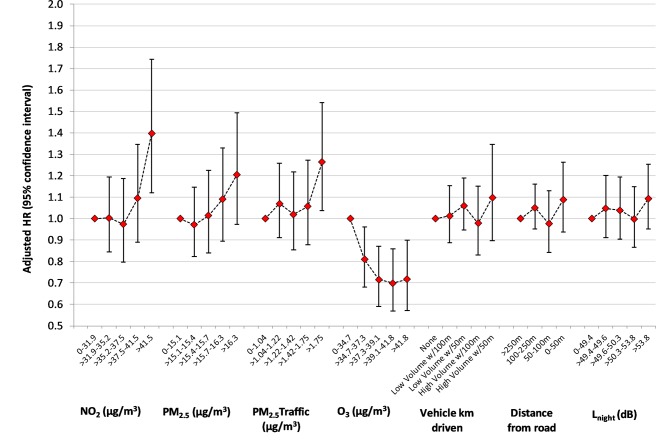
Objective: To investigate whether the incidence of dementia is related to residential levels of air and noise pollution in London. Design: Retrospective cohort study using primary care data. Setting: 75 Greater London practices. Participants: 130 978 adults aged 50–79 years registered with their general practices on 1 January 2005, with no recorded history of dementia or care home residence. Primary and secondary outcome measures: A first recorded diagnosis of dementia and, where specified, subgroups of Alzheimer’s disease and vascular dementia during 2005–2013. The average annual concentrations during 2004 of nitrogen dioxide (NO 2), particulate matter with a median aerodynamic diameter ≤2.5 µm (PM 2.5) and ozone (O 3) were estimated at 20×20 m resolution from dispersion models. Traffic intensity, distance from major road and night-time noise levels (L night) were estimated at the postcode level. All exposure measures were linked anonymously to clinical data via residential postcode. HRs from Cox models were adjusted for age, sex, ethnicity, smoking and body mass index, with further adjustments explored for area deprivation and comorbidity. Results: 2181 subjects (1.7%) received an incident diagnosis of dementia (39% mentioning Alzheimer’s disease, 29% vascular dementia). There was a positive exposure response relationship between dementia and all measures of air pollution except O 3, which was not readily explained by further adjustment. Adults living in areas with the highest fifth of NO 2 concentration (>41.5 µg/m 3) versus the lowest fifth (<31.9 µg/m 3) were at a higher risk of dementia (HR=1.40, 95% CI 1.12 to 1.74). Increases in dementia risk were also observed with PM 2.5, PM 2.5 specifically from primary traffic sources only and L night, but only NO 2 and PM 2.5 remained statistically significant in multipollutant models. Associations were more consistent for Alzheimer’s disease than vascular dementia. Conclusions: We have found evidence of a positive association between residential levels of air pollution across London and being diagnosed with dementia, which is unexplained by known confounding factors.
Overview
The claims and statistics of this paper haven’t been checked yet.
Free: it reads the open-access text and checks the first 5 claims that cite a source we can check. Create a free account to check every claim.
Integrity signals
Registry
Cites
Statistics
Figures
Verification
Claims the paper makes
The claims and statistics of this paper haven’t been checked yet.
Free: it reads the open-access text and checks the first 5 claims that cite a source we can check. Create a free account to check every claim.
Claims other papers make about this one
Each is checked against this paper’s own text: does it say what the citing paper says it does?
The source backs part of the claim, not all of it — or backs it for a different population, condition or comparison.
In the citing paper
“High nitrogen dioxide (NO2) concentration (>41·5 μg/m3; adjusted HR 1·2, 95% CI 1·0–1·3), fine ambient particulate matter (PM)2·5 from traffic exhaust (1·1, 1·0–1·2)127, 128, 129 and PM2·5 from residential wood burning (HR=1·6, 95% CI 1·0–2·4 for a 1 μg/m3 increase) are associated with increased dementia incidence.”
From Dementia prevention, intervention, and care: 2020 report of the Lancet Commission (2020) · cites this paper as [129]
Experimental — accuracy not yet measuredThe source backs part of the claim, not all of it — or backs it for a different population, condition or comparison.
In the citing paper
“although evidence for additive effects of different pollutants exists.”
From Dementia prevention, intervention, and care: 2020 report of the Lancet Commission (2020) · cites this paper as [129]
Experimental — accuracy not yet measuredThe cited source says what the claim attributes to it.
In the citing paper
“To date, studies with data on noise and air pollution have not found noise to be a substantial source of confounding (Andersson et al. 2018; Carey et al. 2018; Tzivian et al. 2016).”
From Exposure to Air Pollution in Relation to Risk of Dementia and Related Outcomes: An Updated Systematic Review of the Epidemiological Literature (2021) · cites this paper as Carey et al. 2018
Self-check
Percentages, sums and reported differences re-computed from the paper’s own numbers.
The self-check needs the paper’s full text.
Citations
Cites
Cohen, A. J., Brauer, M., Burnett, R., Anderson, H. R., Frostad, J., Estep, K., Balakrishnan, K., Brunekreef, B., Dandona, L., Dandona, R., et al. (2017) · The Lancet · doi:10.1016/s0140-6736(17)30505-6 · Cited by 6,583 · cited 1×
“6 While air pollution is a well-established risk factor for cardiovascular and respiratory disease, 7 its role in relation to dementia is less well considered and understood.”
Self-citationThe global prevalence of dementia: a systematic review and metaanalysis.
Prince, M., Bryce, R., Albanese, E., Wimo, A., Ribeiro, W., & Ferri, C. P. (2013) · Alzheimer's & Dementia · doi:10.1016/j.jalz.2012.11.007 · Cited by 4,941 · cited 1×
“Therefore, primary prevention of all dementia is a major global public health concern for the coming decades.(3) For Alzheimer’s disease for example, while it has been estimated that small delays in its onset and progression could significantly reduce its estimated future burden,(4) research has primarily focused on l…”
BackgroundForecasting the global burden of Alzheimer's disease
Brookmeyer, R., Johnson, E., Ziegler‐Graham, K., & Arrighi, H. M. (2007) · Alzheimer's & Dementia · doi:10.1016/j.jalz.2007.04.381 · Cited by 3,370 · cited 1×
“There would be significant public health gains even if the impact was only to delay the progression of dementia.(4) With the future global burden of dementia likely to be substantial,(3) further epidemiological work is urgently needed to confirm and understand better recent findings linking air pollution to dementia.”
BackgroundData Resource Profile: Clinical Practice Research Datalink (CPRD)
Herrett, E., Gallagher, A. M., Bhaskaran, K., Forbes, H., Mathur, R., van Staa, T., & Smeeth, L. (2015) · International Journal of Epidemiology · doi:10.1093/ije/dyv098 · Cited by 2,667 · cited 2×
“It has been shown to be broadly representative of the UK population, with about 7% of all people in the UK actively registered on it in 2011.(14) Approximately three-quarters of contributing CPRD practices in England have consented to their data being linked to external sources.”
BackgroundMethodPotential for primary prevention of Alzheimer's disease: an analysis of population-based data
Norton, S., Matthews, F. E., Barnes, D. E., Yaffe, K., & Brayne, C. (2014) · The Lancet Neurology · doi:10.1016/s1474-4422(14)70136-x · Cited by 2,466 · cited 1×
“For Alzheimer’s disease for example, while it has been estimated that small delays in its onset and progression could significantly reduce its estimated future burden,(4) research has primarily focused on lifestyle factors, where a large systematic review estimated that about a third of Alzheimer’s disease may be attr…”
BackgroundCalderón-Garcidueñas, L., Solt, A. C., Henríquez-Roldán, C., Torres-Jardón, R., Nuse, B., Herritt, L., Villarreal-Calderón, R., Osnaya, N., Stone, I., García, R., et al. (2008) · Toxicologic Pathology · doi:10.1177/0192623307313011 · Cited by 937
Expert position paper on air pollution and cardiovascular disease
Newby, D. E., Mannucci, P. M., Tell, G. S., Baccarelli, A. A., Brook, R. D., Donaldson, K., Forastiere, F., Franchini, M., Franco, O. H., Graham, I., et al. (2015) · European Heart Journal · doi:10.1093/eurheartj/ehu458 · Cited by 869 · cited 1×
“Context The established body of epidemiological evidence linking long-term concentrations of air pollution to adverse health effects has mainly focused on cardiovascular disease.(36) The Global Burden of Disease studies, which have described the worldwide impact of air pollution, considered a wide range of outcomes (I…”
BackgroundChen, H., Kwong, J. C., Copes, R., Tu, K., Villeneuve, P. J., van Donkelaar, A., Hystad, P., Martin, R. V., Murray, B. J., Jessiman, B., et al. (2017) · The Lancet · doi:10.1016/s0140-6736(16)32399-6 · Cited by 776 · cited 3×
“Research linking air pollution exposure to neurocognitive function has gradually increased from observational findings in 2002 from dogs in Mexico City,(37) to larger studies which assessed cognitive decline,(38) 39 and large population cohorts that specifically investigated the association in relation to diagnoses of…”
BackgroundSunyer, J., Esnaola, M., Alvarez-Pedrerol, M., Forns, J., Rivas, I., López-Vicente, M., Suades-González, E., Foraster, M., Garcia-Esteban, R., Basagaña, X., et al. (2015) · PLOS Medicine · doi:10.1371/journal.pmed.1001792 · Cited by 590 · cited 1×
“8 30 46 Traffic-related air pollution has been linked to poorer cognitive development in young children, 47 and continued significant exposure may produce neuroinflammation and altered brain innate immune responses in early adulthood.”
BackgroundThe outdoor air pollution and brain health workshop
Block, M. L., Elder, A., Auten, R. L., Bilbo, S. D., Chen, H., Chen, J.-C., Cory-Slechta, D. A., Costa, D., Diaz-Sanchez, D., Dorman, D. C., et al. (2012) · NeuroToxicology · doi:10.1016/j.neuro.2012.08.014 · Cited by 539 · cited 1×
“8 30 46 Traffic-related air pollution has been linked to poorer cognitive development in young children, 47 and continued significant exposure may produce neuroinflammation and altered brain innate immune responses in early adulthood.”
BackgroundAir Pollution and Brain Damage
Calderón-Garcidueñas, L., Azzarelli, B., Acuna, H., Garcia, R., Gambling, T. M., Osnaya, N., Monroy, S., Del Rosario Tizapantzi, M., Carson, J. L., Villarreal-Calderon, A., et al. (2002) · Toxicologic Pathology · doi:10.1080/01926230252929954 · Cited by 507 · cited 2×
“…linking air pollution exposure to neurocognitive function has gradually increased from observational findings in 2002 from dogs in Mexico City, 37 to larger studies which assessed cognitive decline, 38 39 and large population cohorts that specifically investigated the association in relation…”
BackgroundA Tutorial on Multilevel Survival Analysis: Methods, Models and Applications
Austin, P. C. (2017) · International Statistical Review · doi:10.1111/insr.12214 · Cited by 483 · cited 1×
“To account for the clustering by practice (homogeneity between patients from the same practice), we fitted models with a shared frailty (at practice level), which are the survival data equivalent to random effects.(23) We adjusted cumulatively for (1) age, sex, ethnicity, smoking and BMI (recorded alcohol consumption…”
Long-term PM 2.5 Exposure and Neurological HospitalAdmissions in the Northeastern United States
Kioumourtzoglou, M.-A., Schwartz, J. D., Weisskopf, M. G., Melly, S. J., Wang, Y., Dominici, F., & Zanobetti, A. (2016) · Environmental Health Perspectives · doi:10.1289/ehp.1408973 · Cited by 466 · cited 2×
“The largest cohort studies to date investigating dementia and long-term exposure to air pollution are from North America[10,11,43].”
Environmental risk factors for dementia: a systematic review
Killin, L. O. J., Starr, J. M., Shiue, I. J., & Russ, T. C. (2016) · BMC Geriatrics · doi:10.1186/s12877-016-0342-y · Cited by 434 · cited 2×
“However, there was a significant variation in the size and quality of the studies involved, reiterating the noted lack of robust longitudinal or population-based studies.(6) 8 Subsequently, a large population-based study in Ontario, Canada, reported that living close to major roads was associated with a higher inciden…”
BackgroundCacciottolo, M., Wang, X., Driscoll, I., Woodward, N., Saffari, A., Reyes, J., Serre, M. L., Vizuete, W., Sioutas, C., Morgan, T. E., et al. (2017) · Translational Psychiatry · doi:10.1038/tp.2016.280 · Cited by 432 · cited 1×
“In later life, the risk for accelerated cognitive decline may involve gene–environment interactions, such as that with apolipoprotein E,(49) where evidence comes from findings in neurotoxicological experiments with mice.(50) Our observation of an association of air pollution with new dementia diagnoses among older adu…”
ResultPower, M. C., Adar, S. D., Yanosky, J. D., & Weuve, J. (2016) · NeuroToxicology · doi:10.1016/j.neuro.2016.06.004 · Cited by 422 · cited 1×
“A recent systematic review of the epidemiological evidence linking air pollution to dementia-related outcomes identified 18 studies, with most reporting adverse associations.(9) However, there was a significant variation in the size and quality of the studies involved, reiterating the noted lack of robust longitudinal…”
BackgroundExposure to ambient air pollution and the incidence of dementia: a population-based cohort study
Chen, H., Kwong, J. C., Copes, R., Hystad, P., van Donkelaar, A., Tu, K., Brook, J. R., Goldberg, M. S., Martin, R. V., Murray, B. J., et al. (2017) · Environment International · doi:10.1016/j.envint.2017.08.020 · Cited by 394 · cited 2×
“1% of their total dementia cases were attributable to elevated air pollution exposure.(11) In our study, a theoretical shift of all patients to the bottom 20% of NO2 exposure produces an attributable fraction of 7% (data not shown).”
Jung, C.-R., Lin, Y.-T., & Hwang, B.-F. (2015) · Journal of Alzheimer's Disease · doi:10.3233/jad-140855 · Cited by 380 · cited 1×
“There have been recent cohort studies from Taiwan: Jung et al 40 showed long-term exposure to O 3 and PM 2.5 was shown to increase the risk of Alzheimer’s disease, while Chang et al 42 found associations between dementia and NO 2 and carbon monoxide.”
InfluentialTraffic-related air pollution and dementia incidence in northern Sweden: a longitudinal study
Oudin, A., Forsberg, B., Adolfsson, A. N., Lind, N., Modig, L., Nordin, M., Nordin, S., Adolfsson, R., & Nilsson, L.-G. (2016) · Environmental Health Perspectives · doi:10.1289/ehp.1408322 · Cited by 358 · cited 1×
“In Europe, a 15-year longitudinal study in northern Swedish city found evidence of positive associations with both vascular dementia and Alzheimer’s disease and nitrogen oxide using a land-use regression model with a spatial resolution of 50×50 m.(41) Comparison between participants in the highest quartile of resident…”
BackgroundNewton, J. N., Briggs, A. D. M., Murray, C. J. L., Dicker, D., Foreman, K. J., Wang, H., Naghavi, M., Forouzanfar, M. H., Ohno, S. L., Barber, R. M., et al. (2015) · The Lancet · doi:10.1016/s0140-6736(15)00195-6 · Cited by 345
Self-citationConnolly, A., Gaehl, E., Martin, H., Morris, J., & Purandare, N. (2011) · Aging & Mental Health · doi:10.1080/13607863.2011.596805 · Cited by 307 · cited 1×
“24 28 In our Open access study we observed a wide range of incident rates by practice (0.2%–8.4%), and since the majority of air pollution variation was between practices we cannot discount unmeasured practice characteristics as a possible explanation for our findings.”
BackgroundInfluentialLong-Term Exposure to Outdoor Air Pollution and Incidence of Cardiovascular Diseases
Atkinson, R. W., Carey, I. M., Kent, A. J., van Staa, T. P., Anderson, H. R., & Cook, D. G. (2013) · Epidemiology · doi:10.1097/ede.0b013e318276ccb8 · Cited by 292 · cited 1×
“In our study, lower O3 was negatively associated with risk of dementia, primarily as a result of the strong negative correlation with the other modelled air pollutants.(45)”
BackgroundSelf-citationFine Particulate Matter Air Pollution and Cognitive Function Among Older US Adults
Ailshire, J. A., & Crimmins, E. M. (2014) · American Journal of Epidemiology · doi:10.1093/aje/kwu155 · Cited by 291 · cited 1×
“[7] Research linking air pollution exposure to neurocognitive function has gradually increased from observational findings in 2002 from dogs in Mexico City,[37] to larger studies which assessed cognitive decline,[38,39] and large population cohorts that specifically investigated the association in relation to diagnose…”
Tzivian, L., Winkler, A., Dlugaj, M., Schikowski, T., Vossoughi, M., Fuks, K., Weinmayr, G., & Hoffmann, B. (2015) · International Journal of Hygiene and Environmental Health · doi:10.1016/j.ijheh.2014.08.002 · Cited by 268 · cited 1×
“11 40–43 A 2015 review on the effect of long-term exposure to outdoor air pollution (15 studies) and noise (8 studies) on cognitive and psychological functions in adults showed that both exposures were separately shown to be associated with one or several measures of global cognitive function, but no study considered…”
BackgroundAir Pollution, Oxidative Stress, and Alzheimer's Disease
Moulton, P. V., & Yang, W. (2012) · Journal of Environmental and Public Health · doi:10.1155/2012/472751 · Cited by 265 · cited 4×
“While air pollution is a well-established risk factor for cardiovascular and respiratory disease,(7) its role in relation to dementia is less well considered and understood.(8) A recent systematic review of the epidemiological evidence linking air pollution to dementia-related outcomes identified 18 studies, with most…”
BackgroundInfluentialJoyce, A., Dixon, S., Comfort, J., & Hallett, J. (2012) · Journal of Environmental and Public Health · doi:10.1155/2012/978672 · Cited by 235
Quality and Outcomes Framework: what have we learnt?:
Roland, M., & Guthrie, B. (2016) · BMJ · doi:10.1136/bmj.i4060 · Cited by 215
M. Bakulski, K., S. Rozek, L., C. Dolinoy, D., L. Paulson, H., & Hu, H. (2012) · Current Alzheimer Research · doi:10.2174/156720512800617991 · Cited by 197 · cited 1×
“For example, it could be that recent exposure levels are acting as a proxy for other historical environmental factors linked to pollution, such as lead from petrol,(32) where cumulative exposure has been linked to cognitive decline in later life.(33) A novel aspect of our analysis was the ability to simultaneously stu…”
Association between air pollutants and dementia risk in the elderly
Wu, Y., Lin, Y., Yu, H., Chen, J., Chen, T., Sun, Y., Wen, L., Yip, P., Chu, Y., & Chen, Y. (2015) · Alzheimer's & Dementia: Diagnosis, Assessment & Disease Monitoring · doi:10.1016/j.dadm.2014.11.015 · Cited by 189 · cited 1×
“A smaller case–control study by Wu et al 44 linked PM 10 and O 3 to an increased risk of Alzheimer’s disease and (vascular) dementia.”
Chang, K.-H., Chang, M.-Y., Muo, C.-H., Wu, T.-N., Chen, C.-Y., & Kao, C.-H. (2014) · PLoS ONE · doi:10.1371/journal.pone.0103078 · Cited by 172 · cited 1×
“There have been recent cohort studies from Taiwan: Jung et al 40 showed long-term exposure to O 3 and PM 2.5 was shown to increase the risk of Alzheimer’s disease, while Chang et al 42 found associations between dementia and NO 2 and carbon monoxide.”
BackgroundInfluentialSchikowski, T., Vossoughi, M., Vierkötter, A., Schulte, T., Teichert, T., Sugiri, D., Fehsel, K., Tzivian, L., Bae, I.-S., Ranft, U., et al. (2015) · Environmental Research · doi:10.1016/j.envres.2015.06.009 · Cited by 171 · cited 1×
“48 In later life, the risk for accelerated cognitive decline may involve gene–environment interactions, such as that with apoli-poprotein E, 49 where evidence comes from findings in neurotoxicological experiments with mice.”
BackgroundDevelopment of an open-source road traffic noise model for exposure assessment
Gulliver, J., Morley, D. W., Vienneau, D., Fabbri, F., Bell, M. C., Goodman, P. S., Beevers, S. D., Dajnak, D., Kelly, F. J., & Fecht, D. (2015) · Environmental Modelling & Software · doi:10.1016/j.envsoft.2014.12.022 · Cited by 162 · cited 1×
“Road traffic noise levels were estimated using the TRAffic Noise EXposure (TRANEX) model.(19) This uses information on road traffic flows and speeds, road geography, land cover, and building heights to estimate average sound pressure level (LAeq) in decibels (dB) over different time periods.”
MethodSelf-citationFecht, D., Hansell, A., Morley, D. W., Dajnak, D., Vienneau, D., Beevers, S. D., Toledano, M. B., Kelly, F. J., Anderson, H. R., & Gulliver, J. (2016) · Environment International · doi:10.1016/j.envint.2015.12.001 · Cited by 162 · cited 2×
“34 Previous validation of the pollution models used in this study had shown low roadside correlation between them, suggesting that the independent effects of traffic pollution and road noise can be investigated.(20) However, a potential limitation is that by being based within Greater London, our air pollution exposur…”
MethodSelf-citationDahl, A. K., Löppönen, M., Isoaho, R., Berg, S., & Kivelä, S. (2008) · Journal of the American Geriatrics Society · doi:10.1111/j.1532-5415.2008.01958.x · Cited by 118 · cited 1×
“While mid-life obesity is a risk factor for Alzheimer’s disease,(5) the BMI measures we extracted around baseline showed that the risk declined with obesity in later life, a finding which has been observed elsewhere.(35) However, further adjustment for IHD, stroke, diabetes and heart failure, which would be associated…”
ResultAir pollution dispersion models for human exposure predictions in London
Beevers, S. D., Kitwiroon, N., Williams, M. L., Kelly, F. J., ANDERSON, H. R., & Carslaw, D. C. (2013) · Journal of Exposure Science & Environmental Epidemiology · doi:10.1038/jes.2013.6 · Cited by 114 · cited 4×
“However, we were able to make use of a dispersion model with exceptionally fine resolution (20×20 m) to estimate significant changes in exposure of air pollution such as NO2, between major roads and suburban background locations.(17) Despite this, the reality was that subtle roadside changes predicted by the model wer…”
MethodInfluentialSelf-citationTzivian, L., Jokisch, M., Winkler, A., Weimar, C., Hennig, F., Sugiri, D., Soppa, V. J., Dragano, N., Erbel, R., Jöckel, K.-H., et al. (2017) · Environment International · doi:10.1016/j.envint.2017.03.018 · Cited by 103 · cited 1×
“11 These findings raise questions around the mechanisms for the early development of neuroinflammation and neurodegeneration,(12) and require further exploration and replication in other large population cohorts with different exposure models, including traffic noise which has been linked to cognitive decline in adult…”
Traffic pollution and the incidence of cardiorespiratory outcomes in an adult cohort in London
Carey, I. M., Anderson, H. R., Atkinson, R. W., Beevers, S. D., Cook, D. G., Dajnak, D., Gulliver, J., & Kelly, F. J. (2016) · Occupational and Environmental Medicine · doi:10.1136/oemed-2015-103531 · Cited by 87 · cited 3×
“For this study, we selected 75 (linked) practices that lay within the study area bounded geographically by the orbital M25 motorway around Greater London (60 were in outer London boroughs, 15 were in inner London boroughs) that were continually recording data between 2004 and 2010.(16) estimates of air and noise pollu…”
BackgroundMethodInfluentialSelf-citationCarey, I. M., Shah, S. M., Harris, T. J., DeWilde, S., & Cook, D. G. (2013) · Journal of Clinical Epidemiology · doi:10.1016/j.jclinepi.2012.10.012 · Cited by 75 · cited 1×
“In addition, we extracted information on comorbidity recorded at baseline, based on a list of conditions we have previously shown to be independently predictive of mortality.(22) Patients (n=391) with an existing diagnosis of dementia by 1 January 2005 were excluded.”
MethodSelf-citationLiving close to heavy traffic roads, air pollution, and dementia
Calderón‐Garcidueñas, L., & Villarreal-Ríos, R. (2017) · The Lancet · doi:10.1016/s0140-6736(16)32596-x · Cited by 70 · cited 1×
“implications The implications of linking exposure to air pollution such as NO2 to the development of dementia, specifically Alzheimer’s disease, raise many questions.(12) The cause of these neurodegenerative diseases is still largely unknown and may be multifactorial.”
BackgroundTaghva, A., Farsi, Z., Javanmard, Y., Atashi, A., Hajebi, A., & Noorbala, A. A. (2017) · BMC Psychiatry · doi:10.1186/s12888-016-1169-y · Cited by 70
Is air pollution associated with increased risk of cognitive decline? A systematic review
Peters, R., Peters, J., Booth, A., & Mudway, I. (2015) · Age and Ageing · doi:10.1093/ageing/afv087 · Cited by 65 · cited 1×
“[7] Research linking air pollution exposure to neurocognitive function has gradually increased from observational findings in 2002 from dogs in Mexico City,[37] to larger studies which assessed cognitive decline,[38,39] and large population cohorts that specifically investigated the association in relation to diagnose…”
Sibbett, R. A., Russ, T. C., Deary, I. J., & Starr, J. M. (2017) · BMC Psychiatry · doi:10.1186/s12888-017-1401-4 · Cited by 49 · cited 2×
“strengths and weaknesses While we were able to link pollution exposures to the primary care record to obtain diagnoses of dementia, there are concerns around the variability of dementia diagnoses in UK primary care,(24) and a recent review has concluded that dementia diagnoses on primary care databases may not be an a…”
BackgroundRussell, P., Banerjee, S., Watt, J., Adleman, R., Agoe, B., Burnie, N., Carefull, A., Chandan, K., Constable, D., Daniels, M., et al. (2013) · BMJ Open · doi:10.1136/bmjopen-2013-004023 · Cited by 38 · cited 2×
“Under-recording is thought to be a common issue, as the diagnosis is associated with a stigma for many, and GPs may be reluctant to diagnose dementia unless highly certain.(26) A recent study across 23 London practices increased the prevalence on their QOF dementia registers by 9% by a simple coding review.”
BackgroundImagining the Future City: London 2062
Bell, S. J., & Paskins, J. (2013) · Ubiquity Press eBooks · doi:10.5334/bag · Cited by 26 · cited 1×
“We did not have any information relating to previous address or location, and the London population is thought to be mobile and dynamic over time.(31) Thus, we are making an assumption that an annual estimate for a single year (2004) represents long-term exposure, based on the last known address for the patient at tha…”
BackgroundWeuve, J. (2014) · American Journal of Epidemiology · doi:10.1093/aje/kwu153 · Cited by 22 · cited 2×
“This may be pertinent for Alzheimer’s disease where the pathogenesis of the disease may take place over many years.(30) We did not have any information relating to previous address or location, and the London population is thought to be mobile and dynamic over time.”
BackgroundVariations in dementia diagnosis in England and association with general practice characteristics
Walker, I., Lord, P. A., & Farragher, T. M. (2017) · Primary Health Care Research & Development · doi:10.1017/s146342361700007x · Cited by 21 · cited 1×
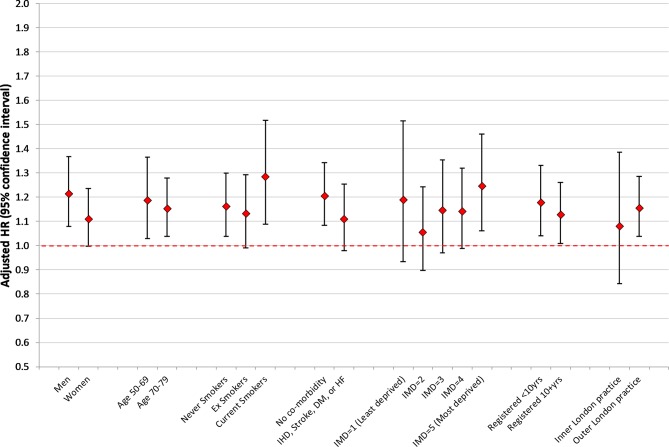
“Under-recording in our study could be problematic if it was related to key practice characteristics such as deprivation, as dementia recording has been shown to be lower among more affluent practices.(24) 28 In our Figure 1 Adjusted HRs for all incident dementia during 2005–2013 by air and noise pollution fifths and t…”
Barnhart, C. E., McClymont, K. M., Smith, A., Au‐Yeung, A., & Lee, S. J. (2016) · BMC Geriatrics · doi:10.1186/s12877-016-0199-0 · Cited by 10
Exposure to lead in petrol and increased incidence of dementia
Laidlaw, M. A. S., Poropat, A. E., Ball, A., & Mielke, H. W. (2017) · The Lancet · doi:10.1016/s0140-6736(17)31466-6 · Cited by 10 · cited 1×
“For example, it could be that recent exposure levels are acting as a proxy for other historical environmental factors linked to pollution, such as lead from petrol,[32] where cumulative exposure has been linked to cognitive decline in later life.”
BackgroundBell, S. J., & Paskins, J. (2020) · Cited by 5
Cited by
Dementia prevention, intervention, and care: 2020 report of the Lancet Commission
Livingston, G., Huntley, J., Sommerlad, A., Ames, D., Ballard, C., Banerjee, S., Brayne, C., Burns, A., Cohen-Mansfield, J., Cooper, C., et al. (2020) · The Lancet · doi:10.1016/s0140-6736(20)30367-6 · Cited by 10,430
RetractedAir Pollution and Dementia: A Systematic Review
Peters, R., Ee, N., Peters, J., Booth, A., Mudway, I., & Anstey, K. J. (2019) · Journal of Alzheimer’s Disease · doi:10.3233/jad-180631 · Cited by 548
“/A ir Pollution and D em entia Table 2 Continued Authors Pollutants Results Main findings Carey et al., 2018 [24] PM2.”
BackgroundInfluentialLawrance, E. L., Thompson, R., Newberry Le Vay, J., Page, L., & Jennings, N. (2022) · International Review of Psychiatry · doi:10.1080/09540261.2022.2128725 · Cited by 500
Hahad, O., Lelieveld, J., Birklein, F., Lieb, K., Daiber, A., & Münzel, T. (2020) · International Journal of Molecular Sciences · doi:10.3390/ijms21124306 · Cited by 432
Delgado-Saborit, J. M., Guercio, V., Gowers, A. M., Shaddick, G., Fox, N. C., & Love, S. (2021) · Science of The Total Environment · doi:10.1016/j.scitotenv.2020.143734 · Cited by 246
“They are, however, not notably weaker than other associations in the air pollution field, and the potential risks are considerable, as highlighted by a recent cohort study in London: subjects in the upper quartile of NO2 exposure (>41.5 μg/m3) were at a 40% greater risk of dementia (95%CI 1.12–1.74) compared to those…”
BackgroundInfluential
Metadata
- Authors
- Carey, I. M., Anderson, H. R., Atkinson, R. W., Beevers, S. D., Cook, D. G., Strachan, D. P., Dajnak, D., Gulliver, J., & Kelly, F. J.
- Affiliations
- University of London (GB)
- King's College London (GB)
- MRC Centre for Environment and Health (GB)
- Corresponding author
- Carey, Iain M
- ORCID
- Venue
- BMJ Open
- Publisher
- BMJ
- Published
- 2018-09
- Volume
- 8
- Issue
- 9
- Pages
- e022404
- ISSN
- 2044-6055 (ISSN-L)
- PMC
- PMC6144407
- OpenAlex
- W2891597364
- Cited by
- 302
- References
- 49
- Citations by year
- 2026: 19 · 2025: 50 · 2024: 43 · 2023: 39 · 2022: 50 · 2021: 39 · 2020: 45 · 2019: 13 · 2018: 3
- FWCI
- 12.35
- Type
- journal article
- Language
- en
- Open access
- gold
- doi.org
- Licence
- cc-by-nc
- Locations
- BMJ Open (publishedVersion, cc-by-nc)
- Europe PMC (PubMed Central) (publishedVersion, other-oa)
- PubMed Central (publishedVersion, cc-by-nc)
- PubMed (publishedVersion)
- St George's Online Research Archive (St George's University of London) (acceptedVersion)
- DOAJ (DOAJ: Directory of Open Access Journals) (submittedVersion)
- Figshare (submittedVersion, cc-by-nc)
- Research Portal (King's College London) (submittedVersion, other-oa)
- Leicester Research Archive (University of Leicester) (submittedVersion, cc-by-nc)
- HighWire Press Open Archive (submittedVersion)
- Spiral (Imperial College London) (submittedVersion, other-oa)
- Funders
- Wellcome Trust
- National Institute for Health Research Health Protection Research Unit
- National Institute for Health and Care Research (NE/I008039/1, NE/I007806/1, NE/I00789X/1)
- Imperial College London
- King's College London
- Public Health England
- Medical Research Council (MR/L01341X/1)
- Economic and Social Research Council
- Natural Environment Research Council (NE/I008039/1, NE/I00789X/1, NE/I007857/1)
- Health Technology Assessment Programme
- Topics
- Physical Sciences › Environmental Science › Health, Toxicology and Mutagenesis › Air Quality and Health Impacts
- Physical Sciences › Physics and Astronomy › Acoustics and Ultrasonics › Noise Effects and Management
- Health Sciences › Medicine › Psychiatry and Mental health › Dementia and Cognitive Impairment Research
- Keywords
- dementia, air pollution, noise pollution, nitrogen dioxide, PM2.5, ozone, night-time noise, Alzheimer's disease, vascular dementia, traffic-related pollution, residential exposure, area deprivation, London
- MeSH terms
- Aged, Air Pollution, Alzheimer Disease, Vehicle Emissions, Environmental Exposure, Female, Humans, London, Male, Middle Aged, Nitrogen Dioxide, Noise, Primary Health Care, Residence Characteristics, Risk Factors, Dementia, Vascular, Particulate Matter
About these checks
Registry, retraction, Cites and statistics results are computed, not judged, with one exception: a printed reference that no index lists is read once by a model before it counts as a citation error. Claims are extracted by a model and kept only when their quote appears verbatim in the text; each cited source is then checked, with a model’s help, for whether it says what the claim relies on. Those verdicts can be wrong — read the claim’s quote and the cited source before relying on one.
Statistics and arithmetic are recomputed, not judged.
Confidence bands are shown only for fields calibrated on our annotated test set. None is calibrated yet, so no band is shown.
What counts as a claim ›How we measure confidence ›How we check this ›
Are you an author, or do you see a problem with this page? Request a review
Data sources
Bibliographic data: Semantic Scholar, OpenAlex, Crossref.
Contains information from the Semantic Scholar Academic Graph Datasets, made available under the ODC Attribution License (ODC-BY 1.0).
Semantic Scholar’s data is described in: Kinney, R., et al. (2023). The Semantic Scholar Open Data Platform. arXiv:2301.10140.
