

Barriers to healthcare and self-reported adverse outcomes for autistic adults: a cross-sectional study
Open accessPublished version of a preprint
The DOI matches its Crossref record; 28 of the 28 references it cites were found in a registry or an index.
Abstract
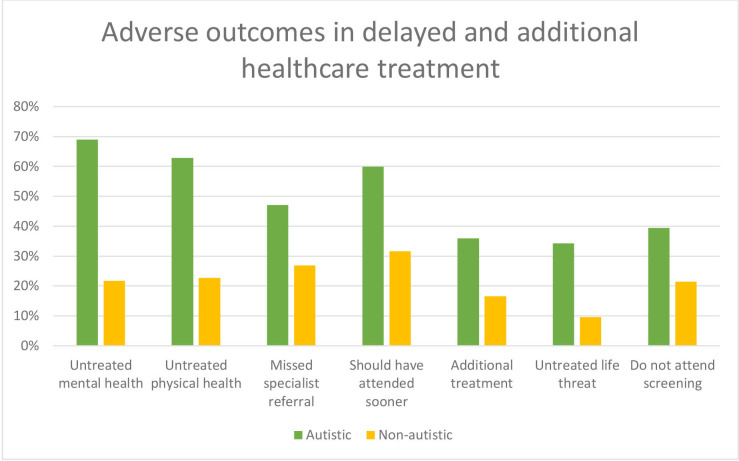
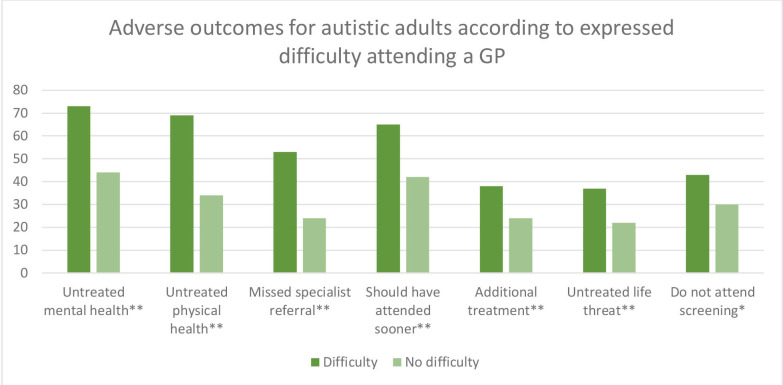
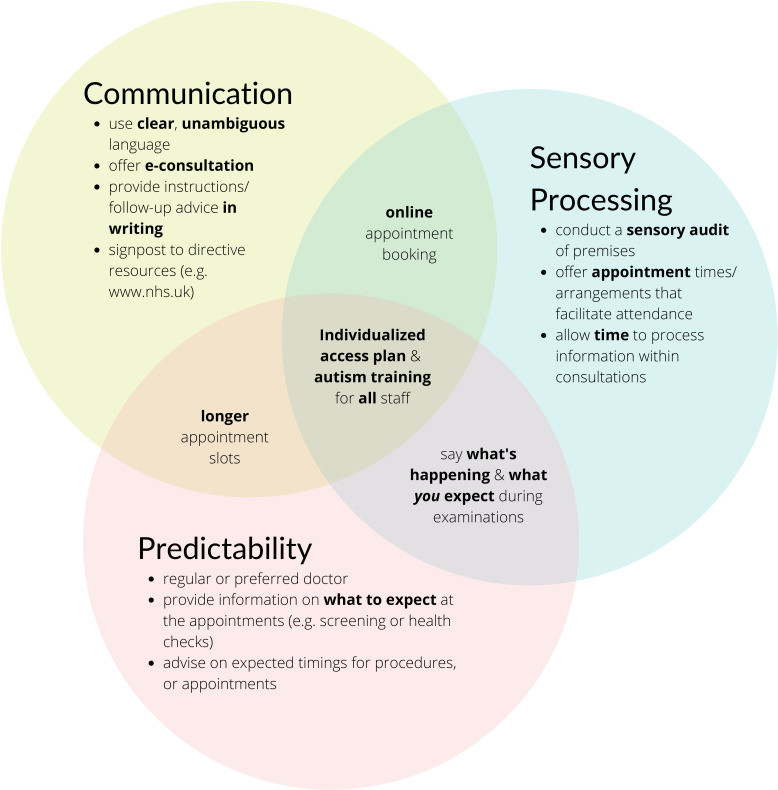
Objectives: Autistic people experience poor physical and mental health along with reduced life expectancy compared with non-autistic people. Our aim was to identify self-reported barriers to primary care access by autistic adults compared with non-autistic adults and to link these barriers to self-reported adverse health consequences. Design: Following consultation with the autistic community at an autistic conference, Autscape , we developed a self-report survey, which we administered online through social media platforms. Setting: A 52-item, international, online survey. Participants: 507 autistic adults and 157 non-autistic adults. Primary and secondary outcome measures: Self-reported barriers to accessing healthcare and associated adverse health outcomes. Results: Eighty per cent of autistic adults and 37% of non-autistic respondents reported difficulty visiting a general practitioner (GP). The highest-rated barriers by autistic adults were deciding if symptoms warrant a GP visit (72%), difficulty making appointments by telephone (62%), not feeling understood (56%), difficulty communicating with their doctor (53%) and the waiting room environment (51%). Autistic adults reported a preference for online or text-based appointment booking, facility to email in advance the reason for consultation, the first or last clinic appointment and a quiet place to wait. Self-reported adverse health outcomes experienced by autistic adults were associated with barriers to accessing healthcare. Adverse outcomes included untreated physical and mental health conditions, not attending specialist referral or screening programmes, requiring more extensive treatment or surgery due to late presentations and untreated potentially life-threatening conditions. There were no significant differences in difficulty attending, barriers experienced or adverse outcomes between formally diagnosed and self-identified autistic respondents. Conclusions: Reduction of healthcare inequalities for autistic people requires that healthcare providers understand autistic perspectives, communication needs and sensory sensitivities. Adjustments for autism-specific needs are as necessary as ramps for wheelchair users.
Overview
The claims and statistics of this paper haven’t been checked yet.
Free: it reads the open-access text and checks the first 5 claims that cite a source we can check. Create a free account to check every claim.
Integrity signals
Registry
Cites
Statistics
Figures
Verification
Claims the paper makes
The claims and statistics of this paper haven’t been checked yet.
Free: it reads the open-access text and checks the first 5 claims that cite a source we can check. Create a free account to check every claim.
Claims other papers make about this one
Each is checked against this paper’s own text: does it say what the citing paper says it does?
The source backs part of the claim, not all of it — or backs it for a different population, condition or comparison.
In the citing paper
“Waiting is difficult for autistic people, especially for an unknown duration in the sensory stress of a typical healthcare waiting-room, emergency department or inpatient ward (Doherty et al, 2022).”
From Autistic SPACE: a novel framework for meeting the needs of autistic people in healthcare settings (2023) · cites this paper as Doherty et al, 2022
Experimental — accuracy not yet measuredThe source backs part of the claim, not all of it — or backs it for a different population, condition or comparison.
In the citing paper
“Proximity to others, particularly within touching distance, is often difficult to tolerate (Doherty et al, 2022; Strömberg et al, 2022).”
From Autistic SPACE: a novel framework for meeting the needs of autistic people in healthcare settings (2023) · cites this paper as Doherty et al, 2022
Experimental — accuracy not yet measuredThe source backs part of the claim, not all of it — or backs it for a different population, condition or comparison.
In the citing paper
“Interacting with unknown people is also challenging (Doherty et al, 2022).”
From Autistic SPACE: a novel framework for meeting the needs of autistic people in healthcare settings (2023) · cites this paper as Doherty et al, 2022
Experimental — accuracy not yet measuredThe source backs part of the claim, not all of it — or backs it for a different population, condition or comparison.
In the citing paper
“Most autistic people have difficulty using telephones, so a flexible approach to appointment booking or services such as preoperative assessment facilitates access (Doherty et al, 2022).”
From Autistic SPACE: a novel framework for meeting the needs of autistic people in healthcare settings (2023) · cites this paper as Doherty et al, 2022
Experimental — accuracy not yet measuredThe cited source says what the claim attributes to it.
In the citing paper
“Barriers to accessing healthcare are associated with adverse health outcomes (Doherty et al, 2022).”
From Autistic SPACE: a novel framework for meeting the needs of autistic people in healthcare settings (2023) · cites this paper as Doherty et al, 2022
Self-check
Percentages, sums and reported differences re-computed from the paper’s own numbers.
The self-check needs the paper’s full text.
Citations
Cites
On the ontological status of autism: the ‘double empathy problem’
Milton, D. E. M. (2012) · Disability & Society · doi:10.1080/09687599.2012.710008 · Cited by 2,082
The health status of adults on the autism spectrum
Croen, L. A., Zerbo, O., Qian, Y., Massolo, M. L., Rich, S., Sidney, S., & Kripke, C. (2015) · Autism · doi:10.1177/1362361315577517 · Cited by 1,110
Premature mortality in autism spectrum disorder
Hirvikoski, T., Mittendorfer-Rutz, E., Boman, M., Larsson, H., Lichtenstein, P., & Bölte, S. (2016) · British Journal of Psychiatry · doi:10.1192/bjp.bp.114.160192 · Cited by 1,011
Epidemiology of Autism Spectrum Disorders in Adults in the Community in England
Brugha, T. S., McManus, S., Bankart, J., Scott, F., Purdon, S., Smith, J., Bebbington, P., Jenkins, R., & Meltzer, H. (2011) · Archives of General Psychiatry · doi:10.1001/archgenpsychiatry.2011.38 · Cited by 903
Corbett, B. A., Constantine, L. J., Hendren, R., Rocke, D., & Ozonoff, S. (2009) · Psychiatry Research · doi:10.1016/j.psychres.2008.02.005 · Cited by 584
Nicolaidis, C., Raymaker, D. M., Ashkenazy, E., McDonald, K. E., Dern, S., Baggs, A. E., Kapp, S. K., Weiner, M., & Boisclair, W. C. (2015) · Autism · doi:10.1177/1362361315576221 · Cited by 513
Nicolaidis, C., Raymaker, D., McDonald, K., Dern, S., Boisclair, W. C., Ashkenazy, E., & Baggs, A. (2013) · Journal of General Internal Medicine · doi:10.1007/s11606-012-2262-7 · Cited by 419
Mason, D., Ingham, B., Urbanowicz, A., Michael, C., Birtles, H., Woodbury-Smith, M., Brown, T., James, I., Scarlett, C., Nicolaidis, C., et al. (2019) · Journal of Autism and Developmental Disorders · doi:10.1007/s10803-019-04049-2 · Cited by 291
Autism spectrum disorders: Concurrent clinical disorders
Ming, X., Brimacombe, M., Chaaban, J., Zimmerman-Bier, B., & Wagner, G. C. (2008) · Journal of Child Neurology · doi:10.1177/0883073807307102 · Cited by 266
Zerbo, O., Massolo, M. L., Qian, Y., & Croen, L. A. (2015) · Journal of Autism and Developmental Disorders · doi:10.1007/s10803-015-2579-2 · Cited by 244
Cited by
Items 201–258 of 258
Correa‐Morales, J. E., Umbacia, M. A., Mantilla-Manoslava, N., Herrera-Carrasco, K. D., Amorocho-Morales, J. D., Zapata, C., León, M. X., & Hocaoğlu, M. (2026) · Journal of Pain and Symptom Management · doi:10.1016/j.jpainsymman.2025.08.021
How do autistic adults experience ageing? A qualitative interview study
Aitken, R., Berry, K., Gowen, E., & BROWN, L. J. E. (2026) · Autism · doi:10.1177/13623613261422937 · Cited by 2
“Aligned with previous research (Ali et al., 2023; Doherty et al., 2022; Gilburt et al., 2008), autism-informed adaptations, easier-to-navigate services and a greater understanding of autistic adults’ needs were expressed as important.”
InfluentialFoster, S. D., Bock, J. E., & Herrell, C. T. (2026) · Research in Autism · doi:10.1016/j.reia.2026.202899
School Anxiety Experienced by Autistic Children: A Systematic Review of Contributing Factors
Fisher, E., Rob, P., MacLennan, K., Mullally, S. L., Rodgers, J., & Tzemou, E. (2026) · School Mental Health · doi:10.1007/s12310-026-09852-8 · Cited by 3
“These CYP also face systemic barriers to support, with only one in four receiving support when sought (Ashworth et al., 2025; Doherty et al., 2022).”
Pidcock, J., Dallison, A., & Rehman, N. (2026) · Nursing Children and Young People · doi:10.7748/ncyp.2026.e1579 · Cited by 1
Newey, C., Lewtas, J. F., & Voller, M. E. (2026) · BDJ · doi:10.1038/s41415-025-9346-3 · Cited by 1
“24,25 Creating a workplace culture in dentistry where clinicians feel safe to disclose their autism without fear of discrimination has clear positive implications for autistic patients.”
Towards AI-Mediated Bidirectional Communication Support for Cross-Neurotype Interactions
Haroon, R. (2026) · ACM SIGACCESS Accessibility and Computing · doi:10.1145/3803767.3803779
Autismusspektrumstörungen – Transition vom Jugend- in das Erwachsenenalter
Freitag, C. M., & van Elst, L. T. (2026) · Der Nervenarzt · doi:10.1007/s00115-026-01960-9
Scenna, M. S., Bej, E., Cesare, P., Persichitti, I., Cimini, A., d’Angelo, M., & Castelli, V. (2026) · Frontiers in Pharmacology · doi:10.3389/fphar.2026.1783888 · Cited by 2
“…the clinical literature exhibits heterogeneity in design, dosing, duration, and outcome measures, frequent reliance on parent reported scales without uniform blinding, and underpowered samples that hinder strong inference and guideline development (Doherty et al., 2022; Vasconcelos et al., 2025).”
Improving communication in pregnancy: a neurodivergent-responsive approach
Grünebaum, A., Coverdale, J., Gordon, M. R., McLeod‐Sordjan, R., Pollet, S. L., Kirby, A., & Chervenak, F. A. (2026) · American Journal of Obstetrics and Gynecology · doi:10.1016/j.ajog.2026.04.020
Psychometric Analysis of the German Version of the Barriers to Healthcare Checklist—Short Form
Peth, J., David, N., Dückert, S., Gewohn, P., Schöttle, D., Rahlff, P., Konnopka, A., König, H., Vogeley, K. T., Nicolaidis, C., et al. (2026) · Autism in Adulthood · doi:10.1177/25739581261441229
Murdoch, S., Donaghy, B., Grant, A., Sheen, K., & Moore, D. J. (2026) · Autism · doi:10.1177/13623613261439937
“This potentially plays into the expectation of poorer quality healthcare that we found here and in previous studies (Doherty et al., 2022).”
Enhancing adaptation and learning in educational environments (SENSE project): a case series study
Maggio, R., Pino, C., Catalfamo, L., Gregorio, M. A., Martina, A., Rao, G., Cara, M. D., Quattrocchi, G. L. J. E., & Cucinotta, F. (2026) · Frontiers in Psychiatry · doi:10.3389/fpsyt.2026.1810785
“This represents a notable gap, particularly in light of consistent evidence that autistic people experience many common settings as overwhelming and restrictive to participation (92 – 96).”
Eide, L. S. P., Jorem, G. T., & Titlestad, K. B. (2026) · Review Journal of Autism and Developmental Disorders · doi:10.1007/s40489-026-00563-z
Appointments aren’t Access: The Hidden Work of Getting Care
Jerjes, W., & Majeed, A. (2026) · Journal of Primary Care & Community Health · doi:10.1177/21501319261453255
“9 The clinical implication is that access difficulty is not merely an inconvenience; it can operate as a clinical hazard.”
Rigney, F., Kinsella, S., Moylan, M., Dooly, Z., Doherty, M., Rinehart, N., & Gooney, M. (2026) · Journal of Health and Rehabilitation Sciences · doi:10.33700/jhrs.5.1.224
Self-citationGreen, C. F., Cominotti, A., & O’Mara, A. (2026) · Journal of Substance Use · doi:10.1080/14659891.2026.2679105
Staff Training on Sensory Accommodations in Acute and Inpatient Care: A Scoping Review
Quon, S., Truong, I., Moroz, L., & Zheng, K. (2026) · Occupational Therapy In Health Care · doi:10.1080/07380577.2026.2685516 · Cited by 1
Taylor, M. J., Martini, M. I., Kuja‐Halkola, R., Cassidy, S., Ronald, A., Tideman, M., Brikell, I., Chang, Z., D'Onofrio, B. M., Lichtenstein, P., et al. (2026) · The British Journal of Psychiatry · doi:10.1192/bjp.2026.10696
“30 However, the increased risk of premature mortality in autistic people without psychiatric diagnoses was largely attributable to natural causes.”
Kalandadze, T., Gabunia, M., Javakhishvili, N., Kobuladze, T., & Tchintcharauli, T. (2026) · Journal of Autism and Developmental Disorders · doi:10.1007/s10803-026-07422-0
Martini, M. I., Kuja‐Halkola, R., Butwicka, A., Rietz, E. D., Kanina, A., Larsson, H., Liu, S., Brikell, I., Chang, Z., Lichtenstein, P., et al. (2026) · The Lancet Child & Adolescent Health · doi:10.1016/s2352-4642(26)00124-0 · Cited by 1
Bokor, L. J., Happe, F. G. E., Weir, E. M., Lu, D., Stewart, G. R., Martini, M. I., & Taylor, M. J. (2026) · Women s Health · doi:10.1177/17455057261465645
“21,25 Existing research has primarily focused on general healthcare access and experiences, 25 with limited attention to specific reproductive health needs of autistic people AFAB.”
InfluentialCominotti, A., & Green, C. F. (2026) · Health Services Insights · doi:10.1177/11786329261465576
Courcy, I., Bélanger, M., Rivières‐Pigeon, C. D., Guerrero, L., & Soulières, I. (2026) · Santé mentale au Québec · doi:10.7202/1126816ar
Shukla, V., Jaswal, V. K., & Arunachalam, S. (2026) · Acta Psychologica · doi:10.1016/j.actpsy.2026.107434
Autism, ADHD and the menopause
Moseley, R. L., Turner‐Cobb, J. M., Kim, E., & Spencer, C. (2026) · Post Reproductive Health · doi:10.1080/20533691.2026.2631222 · Cited by 3
“Autistic people and ADHDers face multiple barriers to successfully accessing healthcare [56,57].”
Gender Differences in Nonverbal Communication Barriers Across Everyday Contexts
Brown, M., Cheng, H. S., Smith, P. H., Raymaker, D., Strang, J. F., & de Marchena, A. (2026) · Autism in Adulthood · doi:10.1177/25739581261467976
Hamad, O., Klara, S. M., Elmadani, M., Limungi, G. M., Tóth, L., Horvath, E., Mesmar, A., & Máté, O. (2026) · Frontiers in Health Services · doi:10.3389/frhs.2026.1835710 · Cited by 1
“Several studies indicate that autistic people frequently encounter barriers to accessing routine healthcare, including difficulties communicating with providers, feeling misunderstood, challenges navigating appointment systems, and inadequate care coordination (26, 27).”
Autism and hypermobile Ehlers-Danlos syndrome (hEDS): A challenging combination
Clark, S. L., Portch, E., Moseley, R. L., & Arden-Close, E. J. (2026) · Research in Autism · doi:10.1016/j.reia.2026.202989
Autistic traits and mental health support service use among parents of young children with autism
van Rensburg, M. J., Hock, R., Twum, E. A., Cooper, R.-M., Jameson, A. K. R., Conway, C. A., & Feinberg, M. E. (2026) · Research in Neurodiversity · doi:10.1016/j.rin.2026.100057
“This pattern is consistent with research suggesting that autistic individuals may prefer more structured and formalized systems of care, while facing barriers to engaging with less structured or socially mediated forms of support such as peer groups (Adams & Young, 2021; M. Doherty et al., 2022).”
Srinivasan, H. (2026) · Autism in Adulthood · doi:10.1177/25739581261477976
Perry, R., & Knight, R. (2026) · Psychology of Women and Equalities Section Review · doi:10.53841/bpspowe.2026.9.1.6
Autistic experiences of breast cancer: an interpretative phenomenological analysis
Goodwin, C. W., Shaw, S. C. K., Turner, E. J., Russell, G., Doherty, M., & Barreto, M. (2026) · Psychology and Health · doi:10.1080/08870446.2026.2716038
Self-citationGörmez, A., Elbay, R. Y., Yıldız, F. B. P., Öztürk, B., & Saral, E. (2026) · International Journal of Developmental Disabilities · doi:10.1080/20473869.2026.2724019
Cheng, T., Lee, S. Y., Sehres, G., Anderson, J. E., & Kohler, J. E. (2026) · Journal of Pediatric Surgery · doi:10.1016/j.jpedsurg.2026.163460
Keiner, C. M., Dallas, K. B., Pariser, J. J., Kuhlmann, P., Eilber, K., Scott, V., Reyblat, P., & Anger, J. T. (2026) · Transgender Health · doi:10.1177/26884887261475629
Smout, S., Jung, S., Bergink, V., & Mahjani, B. (2026) · European Child & Adolescent Psychiatry · doi:10.1007/s00787-026-03186-1
Hedlund, Å., Lindberg, M., & Jordal, M. (2026) · Advances in Autism · doi:10.1108/aia-03-2026-0030
Menhenett, T., Evans, S., Seymour, M., & Pecora, L. A. (2026) · Research in Neurodiversity · doi:10.1016/j.rin.2026.100077
Soussa, P., Kamper, S. J., Boulton, K., Montgomery, L. R. C., Kilgour, S., & Yamato, T. P. (2026) · Journal of Pain · doi:10.1016/j.jpain.2026.106447
Supported communication is a donor‐safety intervention, not an eligibility exception
Hung, Y., & Wei, L. (2026) · Transfusion · doi:10.1111/trf.70416
Neurodivergent Needs from the Outside, Social Work with Neurodivergent Populations from a Distance
Rosqvist, H. B., Deacon, L., & Guthrie, J. (2026) · Springer eBooks · doi:10.1007/978-3-032-18034-6_3
Autism and Puberty: A Mixed Methods Systematic Review
Axbey, H., Ellis, R., Sinfield, M., Firth, E., Shaw, S. C. K., Peeroo, A., Carter, B., & Grant, A. (2026) · Wellcome Open Research · doi:10.12688/wellcomeopenres.27647.1
Self-citationDavidson, C. J., Quinton, K., Raoof, A., Westgate, V., & Alexander, R. (2026) · BJPsych Bulletin · doi:10.1192/bjb.2026.10286
Comparing mental health treatment outcomes for autistic and non-autistic people: a systematic reviewPreprint
Griffiths, J., Elise, F., Thompson, J., Li, S., Olive, R. R., Bhutta, A., Liu, W., Holden, M., Mandiangu, M., Baptiste, D., et al. (2026) · medRxiv · doi:10.64898/2026.10.08.26364831
Nowak, A. C., Stern, A., Esser, A.-L., & Razum, O. (2026) · Psychiatrische Praxis · doi:10.1055/a-2955-5875
“Dies kann die Gesundheit negativ beeinflussen [10] oder Ver - sorgungsabbrüche zur Folge haben [11].”
Play as epistemic practice: neuroaffirming therapeutic knowing
Perri, N. (2026) · Subjectivity · doi:10.1057/s41286-026-00258-0
Negotiating Ableism and Co-Producing Fit: Neurodivergent Inclusion in Mainstream Archery
Christiaens, M., Gaston, L., Hansen, M., Claudia, M., Dixon, L., & Kilby, B. (2026) · Societies · doi:10.3390/soc16100354
Health Care Professionals' Competencies in Caring for the Neurodivergent Population
Barcelos, C. D. C., Mendes, D. D. S., Mendes, G. M. D. S., Tavares, R. D. O. P., de Oliveira, J., Fagundes, M. D. D. M., Maciel, J. N. B. D. N., & Gonçalves, P. R. G. (2026) · Revista Saúde dos Vales · doi:10.66104/eadmhj46
Gonçalves, P. R. G., Mendes, G. M. D. S., Tavares, R. D. O. P., Fernandes, P. C. C., Fernandes, D. D. S., Felix, L. F., Brito, G. M., & Mendes, D. D. S. (2026) · Revista Saúde dos Vales · doi:10.66104/yc9efm78
“Humanized management should map the patient journey, identify points at which individuals disengage from care, and provide alternative communication channels, with advance information about the location, duration, professionals involved, and stages of the appointment (DOHERTY et al., 2022).”
InfluentialBabalola, T. T., Moss, R., Dipper, L. T., & Botting, N. (2026) · Journal of Autism and Developmental Disorders · doi:10.1007/s10803-026-07533-8 · Cited by 1
Gray, L. J., Nieminen, J. H., Woodman, J., Evans, S. M., McNeill, B. A., Dawson, P., & Tai, J. (2026) · Advances in Health Sciences Education · doi:10.1007/s10459-026-10592-2
The Impact of Mental Health Networks on the Inclusion and Well-Being of Neurodivergent Individuals
de Souza, N. M., Baptista, R. L., Tavares, R. D. O. P., Bohórquez, K. D. F. F., Fagundes, M. D. D. M., Wermelinger, M. W., Oliveira, B. C. S., & Rodrigues, J. E. (2026) · Revista Saúde dos Vales · doi:10.66104/15fkbw98
Kim, E., Moseley, R. L., Stewart, R., WATTS, D. L., & Gamble-Turner, J. (2026) · Autism in Adulthood · doi:10.1177/25739581261497860
Neurodivergence and Public Health: Contemporary Challenges in Comprehensive Care
Platon, N., Maciel, J. N. B. D. N., Nascimento, E. A., Bohórquez, K. D. F. F., Tavares, R. D. O. P., Gomes, R. A., Oliveira, B. C. S., & Fernandes, P. C. C. (2026) · Revista Saúde dos Vales · doi:10.66104/7dara933
Erin, B., Shaw, S. C. K., Quadt, L., & Eccles, J. (2026) · PLoS ONE · doi:10.1371/journal.pone.0359079
Self-citationThang, J., & Zhou, X. (2026) · Journal of Racial and Ethnic Health Disparities · doi:10.1007/s40615-026-03252-z
Metadata
- Authors
- Doherty, M., Neilson, S., O'Sullivan, J., Carravallah, L., Johnson, M., Cullen, W., & Shaw, S. C. K.
- Affiliations
- Our Lady's Hospital (IE)
- Independent Researcher, Cork, Ireland
- Department of Anaesthesia, Mater Private Hospital, Dublin, Leinster, Ireland
- Michigan State University (US)
- NHS Digital (GB)
- University College Dublin (IE)
- Department of Medical Education, Brighton and Sussex Medical School, Brighton, Brighton and Hove, UK
- Corresponding author
- Doherty, Mary
- Venue
- BMJ Open
- Publisher
- BMJ
- Published
- 2022-02
- Volume
- 12
- Issue
- 2
- Pages
- e056904
- ISSN
- 2044-6055 (ISSN-L)
- PMC
- PMC8883251
- OpenAlex
- W4213379370
- Cited by
- 257
- References
- 25
- Citations by year
- 2026: 82 · 2025: 61 · 2024: 61 · 2023: 34 · 2022: 15
- FWCI
- 22.05
- Type
- journal article
- Language
- en
- Open access
- gold
- doi.org
- Licence
- Locations
- BMJ Open (publishedVersion, cc-by-nc)
- medRxiv (acceptedVersion, cc-by-nc-nd)
- PubMed Central (publishedVersion, cc-by-nc)
- PubMed (publishedVersion)
- Research Open (London South Bank University) (acceptedVersion, cc-by-nc)
- Sussex Research Online (University of Sussex) (submittedVersion, cc-by-nc)
- DOAJ (DOAJ: Directory of Open Access Journals) (submittedVersion, cc-by-sa)
- Figshare (submittedVersion, cc-by-nc)
- Funders
- AsIAm, Ireland National Autism Charity and Scally's Supervalu, Clonakilty, Cork, Ireland (N/A)
- Topics
- Life Sciences › Neuroscience › Cognitive Neuroscience › Autism Spectrum Disorder Research
- Health Sciences › Health Professions › General Health Professions › Patient-Provider Communication in Healthcare
- Health Sciences › Medicine › Public Health, Environmental and Occupational Health › Down syndrome and intellectual disability research
- Keywords
- autism spectrum disorder, autistic adults, barriers to health care access, primary care, general practitioner visits, adverse health effects, delayed presentation, health care disparities, physician-patient communication, sensory sensitivity, waiting room environment
- MeSH terms
- Adult, Autistic Disorder, Cross-Sectional Studies, Health Services Accessibility, Humans, Healthcare Disparities, Self Report
About these checks
Registry, retraction, Cites and statistics results are computed, not judged, with one exception: a printed reference that no index lists is read once by a model before it counts as a citation error. Claims are extracted by a model and kept only when their quote appears verbatim in the text; each cited source is then checked, with a model’s help, for whether it says what the claim relies on. Those verdicts can be wrong — read the claim’s quote and the cited source before relying on one.
Statistics and arithmetic are recomputed, not judged.
Confidence bands are shown only for fields calibrated on our annotated test set. None is calibrated yet, so no band is shown.
What counts as a claim ›How we measure confidence ›How we check this ›
Are you an author, or do you see a problem with this page? Request a review
Data sources
Bibliographic data: Semantic Scholar, OpenAlex, Crossref.
Contains information from the Semantic Scholar Academic Graph Datasets, made available under the ODC Attribution License (ODC-BY 1.0).
Semantic Scholar’s data is described in: Kinney, R., et al. (2023). The Semantic Scholar Open Data Platform. arXiv:2301.10140.
