

Barriers to healthcare and self-reported adverse outcomes for autistic adults: a cross-sectional study
Open accessPublished version of a preprint
The DOI matches its Crossref record; 28 of the 28 references it cites were found in a registry or an index.
Abstract
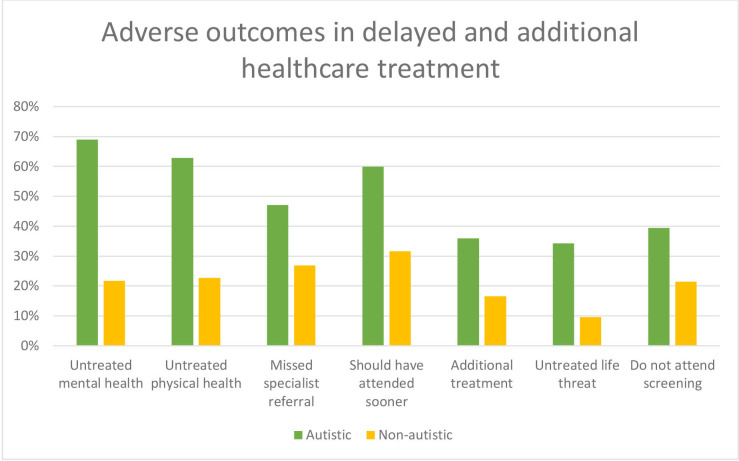
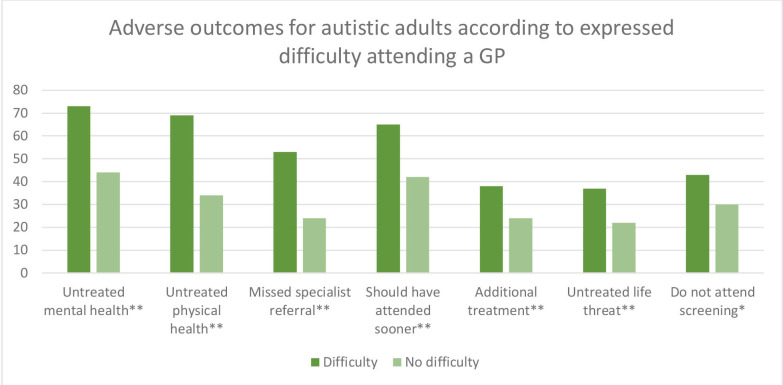
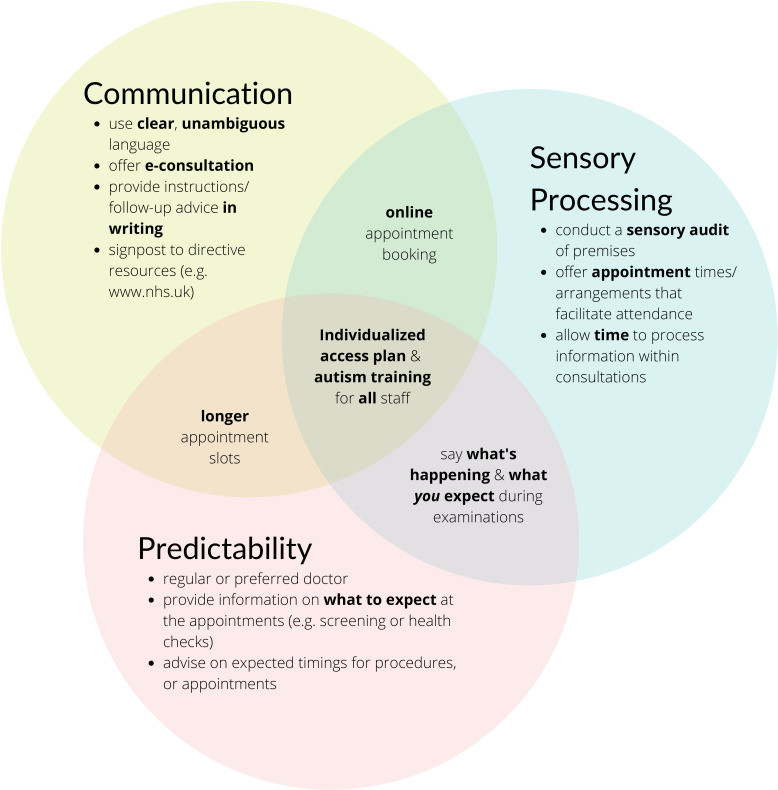
Objectives: Autistic people experience poor physical and mental health along with reduced life expectancy compared with non-autistic people. Our aim was to identify self-reported barriers to primary care access by autistic adults compared with non-autistic adults and to link these barriers to self-reported adverse health consequences. Design: Following consultation with the autistic community at an autistic conference, Autscape , we developed a self-report survey, which we administered online through social media platforms. Setting: A 52-item, international, online survey. Participants: 507 autistic adults and 157 non-autistic adults. Primary and secondary outcome measures: Self-reported barriers to accessing healthcare and associated adverse health outcomes. Results: Eighty per cent of autistic adults and 37% of non-autistic respondents reported difficulty visiting a general practitioner (GP). The highest-rated barriers by autistic adults were deciding if symptoms warrant a GP visit (72%), difficulty making appointments by telephone (62%), not feeling understood (56%), difficulty communicating with their doctor (53%) and the waiting room environment (51%). Autistic adults reported a preference for online or text-based appointment booking, facility to email in advance the reason for consultation, the first or last clinic appointment and a quiet place to wait. Self-reported adverse health outcomes experienced by autistic adults were associated with barriers to accessing healthcare. Adverse outcomes included untreated physical and mental health conditions, not attending specialist referral or screening programmes, requiring more extensive treatment or surgery due to late presentations and untreated potentially life-threatening conditions. There were no significant differences in difficulty attending, barriers experienced or adverse outcomes between formally diagnosed and self-identified autistic respondents. Conclusions: Reduction of healthcare inequalities for autistic people requires that healthcare providers understand autistic perspectives, communication needs and sensory sensitivities. Adjustments for autism-specific needs are as necessary as ramps for wheelchair users.
Overview
The claims and statistics of this paper haven’t been checked yet.
Free: it reads the open-access text and checks the first 5 claims that cite a source we can check. Create a free account to check every claim.
Integrity signals
Registry
Cites
Statistics
Figures
Verification
Claims the paper makes
The claims and statistics of this paper haven’t been checked yet.
Free: it reads the open-access text and checks the first 5 claims that cite a source we can check. Create a free account to check every claim.
Claims other papers make about this one
Each is checked against this paper’s own text: does it say what the citing paper says it does?
The source backs part of the claim, not all of it — or backs it for a different population, condition or comparison.
In the citing paper
“Waiting is difficult for autistic people, especially for an unknown duration in the sensory stress of a typical healthcare waiting-room, emergency department or inpatient ward (Doherty et al, 2022).”
From Autistic SPACE: a novel framework for meeting the needs of autistic people in healthcare settings (2023) · cites this paper as Doherty et al, 2022
Experimental — accuracy not yet measuredThe source backs part of the claim, not all of it — or backs it for a different population, condition or comparison.
In the citing paper
“Proximity to others, particularly within touching distance, is often difficult to tolerate (Doherty et al, 2022; Strömberg et al, 2022).”
From Autistic SPACE: a novel framework for meeting the needs of autistic people in healthcare settings (2023) · cites this paper as Doherty et al, 2022
Experimental — accuracy not yet measuredThe source backs part of the claim, not all of it — or backs it for a different population, condition or comparison.
In the citing paper
“Interacting with unknown people is also challenging (Doherty et al, 2022).”
From Autistic SPACE: a novel framework for meeting the needs of autistic people in healthcare settings (2023) · cites this paper as Doherty et al, 2022
Experimental — accuracy not yet measuredThe source backs part of the claim, not all of it — or backs it for a different population, condition or comparison.
In the citing paper
“Most autistic people have difficulty using telephones, so a flexible approach to appointment booking or services such as preoperative assessment facilitates access (Doherty et al, 2022).”
From Autistic SPACE: a novel framework for meeting the needs of autistic people in healthcare settings (2023) · cites this paper as Doherty et al, 2022
Experimental — accuracy not yet measuredThe cited source says what the claim attributes to it.
In the citing paper
“Barriers to accessing healthcare are associated with adverse health outcomes (Doherty et al, 2022).”
From Autistic SPACE: a novel framework for meeting the needs of autistic people in healthcare settings (2023) · cites this paper as Doherty et al, 2022
Self-check
Percentages, sums and reported differences re-computed from the paper’s own numbers.
The self-check needs the paper’s full text.
Citations
Cites
On the ontological status of autism: the ‘double empathy problem’
Milton, D. E. M. (2012) · Disability & Society · doi:10.1080/09687599.2012.710008 · Cited by 2,082
The health status of adults on the autism spectrum
Croen, L. A., Zerbo, O., Qian, Y., Massolo, M. L., Rich, S., Sidney, S., & Kripke, C. (2015) · Autism · doi:10.1177/1362361315577517 · Cited by 1,110
Premature mortality in autism spectrum disorder
Hirvikoski, T., Mittendorfer-Rutz, E., Boman, M., Larsson, H., Lichtenstein, P., & Bölte, S. (2016) · British Journal of Psychiatry · doi:10.1192/bjp.bp.114.160192 · Cited by 1,011
Epidemiology of Autism Spectrum Disorders in Adults in the Community in England
Brugha, T. S., McManus, S., Bankart, J., Scott, F., Purdon, S., Smith, J., Bebbington, P., Jenkins, R., & Meltzer, H. (2011) · Archives of General Psychiatry · doi:10.1001/archgenpsychiatry.2011.38 · Cited by 903
Corbett, B. A., Constantine, L. J., Hendren, R., Rocke, D., & Ozonoff, S. (2009) · Psychiatry Research · doi:10.1016/j.psychres.2008.02.005 · Cited by 584
Nicolaidis, C., Raymaker, D. M., Ashkenazy, E., McDonald, K. E., Dern, S., Baggs, A. E., Kapp, S. K., Weiner, M., & Boisclair, W. C. (2015) · Autism · doi:10.1177/1362361315576221 · Cited by 513
Nicolaidis, C., Raymaker, D., McDonald, K., Dern, S., Boisclair, W. C., Ashkenazy, E., & Baggs, A. (2013) · Journal of General Internal Medicine · doi:10.1007/s11606-012-2262-7 · Cited by 419
Mason, D., Ingham, B., Urbanowicz, A., Michael, C., Birtles, H., Woodbury-Smith, M., Brown, T., James, I., Scarlett, C., Nicolaidis, C., et al. (2019) · Journal of Autism and Developmental Disorders · doi:10.1007/s10803-019-04049-2 · Cited by 291
Autism spectrum disorders: Concurrent clinical disorders
Ming, X., Brimacombe, M., Chaaban, J., Zimmerman-Bier, B., & Wagner, G. C. (2008) · Journal of Child Neurology · doi:10.1177/0883073807307102 · Cited by 266
Zerbo, O., Massolo, M. L., Qian, Y., & Croen, L. A. (2015) · Journal of Autism and Developmental Disorders · doi:10.1007/s10803-015-2579-2 · Cited by 244
Cited by
The ‘double empathy problem’: Ten years on
Milton, D., Gurbuz, E., & López, B. (2022) · Autism · doi:10.1177/13623613221129123 · Cited by 301
“We already know that interpretations about autistic sociality from observations alone may not be accurate (Doherty et al., 2022; Mitchell et al., 2021).”
BackgroundAutistic SPACE: a novel framework for meeting the needs of autistic people in healthcare settings
Doherty, M., McCowan, S., & Shaw, S. C. (2023) · British Journal of Hospital Medicine · doi:10.12968/hmed.2023.0006 · Cited by 188
“Most autistic people have difficulty using telephones, so a flexible approach to appointment booking or services such as preoperative assessment facilitates access (Doherty et al, 2022).”
BackgroundInfluentialSelf-citationAutistic Perspectives on the Future of Clinical Autism Research
Pukki, H., Bettin, J., Outlaw, A. G., Hennessy, J., Brook, K., Dekker, M., Doherty, M., Shaw, S. C. K., Bervoets, J., Rudolph, S., et al. (2022) · Autism in Adulthood · doi:10.1089/aut.2022.0017 · Cited by 130
Self-citationShaw, S. C. K., Carravallah, L. A., Johnson, M. M., O’Sullivan, J., Chown, N., Neilson, S., & Doherty, M. (2023) · Autism · doi:10.1177/13623613231205629 · Cited by 170
“In keeping with minority stress theory, autistic people also live with poorer physical and mental health, more co-occurring conditions and on average die younger than non-autistic people (Doherty et al., 2022; Hirvikoski et al., 2016; Royal College of Psychiatrists, 2020; Wallen et al., 2018).”
BackgroundMethodResultInfluentialSelf-citationOakley, B. F., Tillmann, J., Ahmad, J., Crawley, D., San José Cáceres, A., Holt, R., Charman, T., Banaschewski, T., Buitelaar, J., Simonoff, E., et al. (2021) · Autism · doi:10.1177/1362361320959959 · Cited by 133
Payne, R. E., Clarke, A., Swann, N., van Dael, J., Brenman, N. F., Rosen, R., Mackridge, A. J., Moore, L., Kalin, A., Ladds, E. C., et al. (2023) · BMJ Quality & Safety · doi:10.1136/bmjqs-2023-016674 · Cited by 109
“…shown that patients with pre-existing illness, complex comorbidities or high-risk states, 58 59 language non-concordance, 13 35 inability to describe their symptoms (eg, due to autism 60 ), extremes of age 61 and those with low health or system literacy 30 are more difficult to assess remotely.”
Self-citationSex Differences in Mental Health Problems and Psychiatric Hospitalization in Autistic Young Adults
Martini, M. I., Kuja‐Halkola, R., Butwicka, A., Rietz, E. D., D'Onofrio, B. M., Happe, F. G. E., Kanina, A., Larsson, H., Lundström, S., Martin, J., et al. (2022) · JAMA Psychiatry · doi:10.1001/jamapsychiatry.2022.3475 · Cited by 106
Brice, S., Rodgers, J., Ingham, B., Mason, D., Wilson, C., Freeston, M., Le Couteur, A., & Parr, J. R. (2021) · BMJ Open · doi:10.1136/bmjopen-2020-043336 · Cited by 79
Ward, J. H., Weir, E., Allison, C., & Baron-Cohen, S. (2023) · Molecular Autism · doi:10.1186/s13229-023-00565-2 · Cited by 60
“This may be due to biological contributors (e.g., genetic or hormonal) to risk of these physical health conditions and/or due to social/economic issues related to negative life experiences, stigma, as well as poorer self-reported healthcare quality [23, 24, 37, 68– 72].”
BackgroundCrompton, C. J., Hallett, S., McAuliffe, C., Stanfield, A. C., & Fletcher‐Watson, S. (2022) · Frontiers in Psychology · doi:10.3389/fpsyg.2022.831628 · Cited by 69
O’Nions, E., Lewer, D., Petersen, I., Brown, J. M., Buckman, J. E. J., Charlton, R. A., Cooper, C., Baou, C. E., Happe, F. G. E., Manthorpe, J., et al. (2023) · The Lancet Regional Health - Europe · doi:10.1016/j.lanepe.2023.100776 · Cited by 79
“For example, dif fi culties accessing care or communicating with healthcare providers 21 can lead to delayed identi fi cation of common conditions such as constipation or depression, increasing the risk of mortality.”
The experiences of autistic medical students: A phenomenological study
Shaw, S. C. K., Doherty, M., & Anderson, J. L. (2023) · Medical Education · doi:10.1111/medu.15119 · Cited by 71
Self-citationExperiences of interpersonal victimization and abuse among autistic people
Douglas, S., & Sedgewick, F. (2023) · Autism · doi:10.1177/13623613231205630 · Cited by 64
“…appear unusual to professionals who are not knowledgeable about autism could become a barrier to accessing support, as has been seen in physical health settings (Doherty et al., 2022), and policies for working with neurodivergent victims are needed to improve care and potential prosecution rates.”
BackgroundBarriers and Facilitators of Healthcare Access for Autistic Children in the UK: a Systematic Review
Babalola, T. T., Sanguedolce, G., Dipper, L. T., & Botting, N. (2024) · Review Journal of Autism and Developmental Disorders · doi:10.1007/s40489-023-00420-3 · Cited by 77
“Although there is a considerable body of evidence on healthcare access for autistic individuals in the USA (Doherty et al., 2022; Mazurek et al., 2020; Walsh et al., 2021), disparities in access to healthcare services for autistic children in the UK have not been systematically examined in the literature.”
Bruce, H., Munday, K., & Kapp, S. K. (2023) · Autism in Adulthood · doi:10.1089/aut.2023.0003 · Cited by 52
“Untreated physical and mental health conditions, difficulty in attending specialist referrals, and the need for more extensive treatment due to late presentation of significant conditions have caused or exacerbated autistic adults’ self-reported adverse health outcomes.(26) Increased demand for GIH services(27) highli…”
BackgroundHealth Care Needs, Experiences, and Perspectives of Autistic Adults
Mazurek, M. O., Sadikova, E., Cheak‐Zamora, N., Hardin, A., Sohl, K., & Malow, B. A. (2023) · Autism in Adulthood · doi:10.1089/aut.2021.0069 · Cited by 61
Autistic women’s diagnostic experiences: Interactions with identity and impacts on well-being
Harmens, M., Sedgewick, F., & Hobson, H. (2022) · Women s Health · doi:10.1177/17455057221137477 · Cited by 60
COVID-19 health and social care access for autistic people: European policy review
Oakley, B., Tillmann, J., Ruigrok, A., Baranger, A., Takow, C., Charman, T., Jones, E., Cusack, J., Doherty, M., Violland, P., et al. (2021) · BMJ Open · doi:10.1136/bmjopen-2020-045341 · Cited by 38
Self-citationPrevalence of bias against neurodivergence‐related terms in artificial intelligence language models
Brandsen, S., Chandrasekhar, T., Franz, L., Grapel, J., Dawson, G., & Carlson, D. (2024) · Autism Research · doi:10.1002/aur.3094 · Cited by 31
“Such biases could contribute to the barriers that neurodivergent individuals face, ranging from difficulty in accessing healthcare (Doherty et al., 2022) to high rates of unemployment and underemployment (Ohl, 2017).”
BackgroundLindsay, S., Li, Y., Joneja, S., & Hsu, S. (2024) · Disability and Rehabilitation · doi:10.1080/09638288.2024.2364823 · Cited by 38
“Barriers to accessing health care services are often a consequence of racism because racism can create disadvantaged situations that negatively impact access to health care services [73,74].”
Sensory-inclusive spaces for autistic people: we need to build the evidence base
Manning, C., Williams, G., & MacLennan, K. (2023) · Autism · doi:10.1177/13623613231183541 · Cited by 31
“Yet, autistic people have told us that sensory environments can be extremely overwhelming and can present barriers for accessing certain places like supermarkets, eateries, large shops, schools and medical settings (Doherty et al., 2022; Howe & Stagg, 2016; MacLennan et al., 2022; Parmar et al., 2021; Williams et al.,…”
BackgroundAutism and the ‘double empathy problem’
Milton, D. E. M., Waldock, K. E., & Keates, N. (2023) · Routledge eBooks · doi:10.4324/9781003189978-6 · Cited by 54
Ethical challenges in autism genomics: Recommendations for researchers
Natri, H. M., Chapman, C. R., Heraty, S., Dwyer, P. S. R., Walker, N., Kapp, S. K., Dron, H. A., Martínez-Agosto, J. A., Mikkola, L., & Doherty, M. (2023) · European Journal of Medical Genetics · doi:10.1016/j.ejmg.2023.104810 · Cited by 30
Self-citationLiu, S., Larsson, H., Kuja‐Halkola, R., Lichtenstein, P., Butwicka, A., & Taylor, M. J. (2023) · The Lancet Healthy Longevity · doi:10.1016/s2666-7568(23)00067-3 · Cited by 35
Impact of the COVID-19 Pandemic on Autistic Adults: a Scoping Review
Scheeren, A. M., Crane, L., Heyworth, M., & Pellicano, E. (2023) · Current Developmental Disorders Reports · doi:10.1007/s40474-023-00268-6 · Cited by 26
“The barriers to accessing health-care, which were already excessive for many Autistic people prior to the pandemic [38, 39, 40], were deemed even greater during the pandemic [41 • ].”
BackgroundBeck, K. B., MacKenzie, K. T., Kumar, T., Breitenfeldt, K. E., Chang, J. C., Conner, C. M., Mandell, D. L., White, S. W., & Mazefsky, C. A. (2024) · Autism in Adulthood · doi:10.1089/aut.2023.0214 · Cited by 49
“43 Themes of social rejection and low self-worth are consistent with existing literature.”
Autism-Friendly Healthcare: A Narrative Review of the Literature
Hamdan, S. Z., & Bennett, A. (2024) · Cureus · doi:10.7759/cureus.64108 · Cited by 50
“Providers should also accept the literal interpretation of information shared by autistic people [19,39].”
BackgroundInfluentialFeatherstone, C., Sharpe, R. A., Axford, N., Asthana, S., & Husk, K. (2021) · Health & Social Care in the Community · doi:10.1111/hsc.13635 · Cited by 33
Williams, G., Corbyn, J., & Hart, A. (2023) · Child Care in Practice · doi:10.1080/13575279.2022.2126437 · Cited by 31
“Significant sensory barriers to accessing GP services were identified among adult autistic respondents to a recent large-scale survey in the UK (Doherty et al., 2022); it would be prudent to further investigate the negative effects of in-patient and out-patient hospital environments on access to services and autistic…”
Background“A perfect storm”: Autistic experiences of menopause and midlife
Brady, M. J., Jenkins, C. A., Turner‐Cobb, J. M., Moseley, R. L., van Rensburg, M. J., & Matthews, R. J. (2024) · Autism · doi:10.1177/13623613241244548 · Cited by 32
“Our findings were also consistent with reports about problems of accessibility for autistic people with health-care (Doherty et al., 2022; Mason et al., 2019; Nicolaidis et al., 2013; Unigwe et al., 2017; Zerbo et al., 2019).”
BackgroundResultStogiannos, N., Harvey-Lloyd, J. M., Brammer, A., Cleaver, K., McNulty, J. P., dos Reis, C. S., Nugent, B., Simcock, C. M., O’Regan, T., Bowler, D., et al. (2023) · Autism in Adulthood · doi:10.1089/aut.2022.0051 · Cited by 30
“3,21,48 Poor patient-health care provider communication leads to lower satisfaction for autistic patients because of more unmet needs during their care compared to non-autistic users.”
Larkin, F., Ralston, B., Dinsdale, S. J., Kimura, S., & Hayiou‐Thomas, M. E. (2022) · Autism · doi:10.1177/13623613221109717 · Cited by 27
O’Nions, E., Brown, J. M., Buckman, J. E. J., Charlton, R. A., Cooper, C., Baou, C. E., Happe, F. G. E., Hoare, S., Lewer, D., Manthorpe, J., et al. (2024) · The Lancet Regional Health - Europe · doi:10.1016/j.lanepe.2024.100907 · Cited by 33
“15 It is therefore essential that practitioners engage with autistic people to obtain information about suicidal thoughts.”
Mansour, H., Gillions, A., Brown, J. M., Pattenden, A., HARTLEY, S. H., Patel, S., James, S., Styles, M., Mandy, W., Stott, J. C. H., et al. (2024) · Autism · doi:10.1177/13623613241291081 · Cited by 25
“Autistic adults face patient, provider and system-level barriers when accessing healthcare services (Doherty et al., 2022; Walsh et al., 2020).”
Shaw, S. C., Davis, L.-J., & Doherty, M. (2022) · BJGP Open · doi:10.3399/bjgpo.2021.0174 · Cited by 23
Self-citationGrant, A., Turner, S. E., Shaw, S. C. K., Williams, K., Morgan, H., Ellis, R., & Brown, A. (2024) · PLoS ONE · doi:10.1371/journal.pone.0303873 · Cited by 26
Self-citationA qualitative interview study on quality of life and ageing experiences of autistic adults
Viner, H. E., Yuill, N., Costa, A. P., Radford, H., & Kornadt, A. E. (2024) · Communications Psychology · doi:10.1038/s44271-024-00142-0 · Cited by 24
Autistic and transgender/gender diverse people’s experiences of health and healthcare
Green, K., Weir, E. M., Wright, L., Allison, C. L., & Baron‐Cohen, S. (2025) · Molecular Autism · doi:10.1186/s13229-024-00634-0 · Cited by 28
“Barriers specific to autistic individuals’ needs have also been identified, such as diagnostic overshadowing [25] and difficulties with communication, sensory sensitivities, bodily awareness, and information processing within healthcare [19, 35, 37, 38].”
Hersh, L., Dwyer, P., Kapp, S. K., Shevchuk-Hill, S., Gurba, A. N., Kilgallon, E., Mair, A. P. A., Chang, D. S., Rivera, S. M., & Gillespie‐Lynch, K. (2024) · Autism in Adulthood · doi:10.1089/aut.2023.0202 · Cited by 23
“This may be due to the lack of resources for adults with ID to navigate employment issues, 133 health care issues, 134 bereavement, 135 and other problems that could become increasingly prevalent with age.”
Newton, A., Flinn, A., Downs, J. L., & Richmond, L. (2025) · Frontiers in Child and Adolescent Psychiatry · doi:10.3389/frcha.2025.1682129 · Cited by 20
“Some of the reasons provided by autistic adults around why they found visiting the GP difficult were: not feeling understood, difficulty communicating with their doctor and the waiting room environment (7).”
Adams, N., Jacobsen, K., Li, L., Francino, M., Rutherford, L. L., Tei, C., Scheim, A. I., & Bauer, G. R. (2024) · Autism in Adulthood · doi:10.1089/aut.2023.0024 · Cited by 19
“12,16 Most mentions of self-identified autistic individuals in the literature appear to relate to either exploring the phenomenon of autistic self-identification itself 17,18 or indicate excluding or cleaning these participants from data sets.”
More than noise: Lived experiences of autistic people in real-life acoustic environments
Rosas-Pérez, C., Galbrun, L., Payne, S. R., Dickson, A., & Stewart, M. E. (2025) · Applied Acoustics · doi:10.1016/j.apacoust.2025.110581 · Cited by 24
Professionals’ perspectives on neurodiversity-affirmative autism diagnostic assessment
Pritchard-Rowe, E., & Gibson, J. L. (2024) · Neurodiversity · doi:10.1177/27546330241274674 · Cited by 19
“…research that has highlighted the importance of professionals providing transparency, clarity and accessible physical environments within diagnostic assessment (Crane et al., 2018; Murphy et al., 2023) and healthcare environments more generally (e.g. Doherty et al., 2022, 2023; Shaw et al., 2024).”
BackgroundFeatherstone, C., Sharpe, R. A., Axford, N., Asthana, S., Ball, S., & Husk, K. (2022) · Primary Health Care Research & Development · doi:10.1017/s1463423622000755 · Cited by 18
“…difficulties (such as problems using telephones), sensory issues in the healthcare environment, lack of provider knowledge about autism that may lead to misinter-pretation and intra-personal factors such as executive dysfunction (Raymaker et al. , 2017; Mason et al. , 2019; Doherty et al. , 2022).”
BackgroundAutism and anaesthesia: a simple framework for everyday practice
Brown, S., Rabenstein, K., & Doherty, M. (2024) · BJA Education · doi:10.1016/j.bjae.2024.01.002 · Cited by 18
“9,45”
InfluentialSelf-citationGarcía-Molina, I., & Cortés-Calvo, M. (2024) · Autism in Adulthood · doi:10.1089/aut.2023.0013 · Cited by 19
Autistic Women’s Experiences of the Perinatal Period: A Systematic Mixed Methods Review
Westgate, V., Sewell, O., Caramaschi, D., & O’Mahen, H. (2024) · Review Journal of Autism and Developmental Disorders · doi:10.1007/s40489-024-00461-2 · Cited by 19
“Such barriers to accessing healthcare can lead to adverse outcomes for autistic people (Doherty et al., 2022).”
Eccles, J., Quadt, L., Garfinkel, S. N., & Critchley, H. (2024) · Philosophical Transactions of the Royal Society B Biological Sciences · doi:10.1098/rstb.2023.0247 · Cited by 13
Unmet need for autism-aware care for gynaecological, menstrual and sexual wellbeing
de Visser, R. O., Moseley, R. L., Turner‐Cobb, J. M., Hull, L., Sedgewick, F., Featherstone, C., Quint, C., Freeman, E., & Karavidas, M. (2024) · Autism · doi:10.1177/13623613241290628 · Cited by 20
“…consultations in the general population (de Visser et al., in press), and many of the comments about healthcare in general corroborate the findings of previous studies of autistic people (Black et al., 2022; Corden et al., 2022; Doherty et al., 2022; Malik-Soni et al., 2022; Mason et al., 2019).”
InfluentialLifetime stressor exposure is related to suicidality in autistic adults: A multinational study
Moseley, R. L., Hedley, D., Turner‐Cobb, J. M., Uljarević, M., Bury, S. M., Shields, G. S., Trollor, J. N., Stokes, M. A., & Slavich, G. M. (2024) · Autism · doi:10.1177/13623613241299872 · Cited by 17
“…and of these, stressors from eight domains 5 were previously associated with STB in autistic people (Black et al., 2022; Chou et al., 2020; Cooper et al., 2022; Doherty et al., 2022; Hedley and Uljarević, 2018; Holden et al., 2020; Pearson et al., 2023; Weir et al., 2022; Yew et al., 2021).”
“Struggling for Years”: An international survey on Autistic experiences of menopause
Jenkins, C. A., Moseley, R. L., Matthews, R. J., van Rensburg, M. J., Turner‐Cobb, J. M., & Brady, M. J. (2024) · Neurodiversity · doi:10.1177/27546330241299366 · Cited by 13
“…private and public healthcare sectors (19.3% and 27.8% respectively), qualitative data corroborate the many healthcare barriers Autistic people face, including lack of physician training, infrastructural issues, and time constraints (Corden et al., 2022; Doherty et al., 2022; Zerbo et al., 2019).”
InfluentialBenedetto, M. S. (2024) · Autism in Adulthood · doi:10.1089/aut.2024.0105 · Cited by 17
Procyshyn, T. L., Moseley, R. L., Marsden, S. J. E., Allison, C. L., Parsons, T. A., Cassidy, S., Pelton, M., Weir, E. M., Chikaura, T., Hodges, H., et al. (2025) · Autism · doi:10.1177/13623613251370789 · Cited by 17
“…making appointments by telephone or interacting with doctors and the waiting room environment were the most common barriers to accessing healthcare, with participants reporting that these barriers resulted in both their physical and mental health conditions going untreated (Doherty et al., 2022).”
Norris, J. E., Lei, J., & Maras, K. (2024) · Neurodiversity · doi:10.1177/27546330241266723 · Cited by 11
Gibbs, V., Cai, R. Y., Love, A. M. A., Edwards, C., & Ansari, M. A. (2024) · Autism in Adulthood · doi:10.1089/aut.2024.0272 · Cited by 13
“…seeking to better understand the perspectives and lived experiences of autistic adults across a range of life domains, such as education and higher education, 72,73 employment, 74,75 health care, 76 and relationships, 77,78 these studies have largely excluded those with intellectual disability.”
Mental wellbeing and psychosocial working conditions of autistic veterinary surgeons in the UK
Smits, F., Houdmont, J., Hill, B., & Pickles, K. J. (2023) · Veterinary Record · doi:10.1002/vetr.3311 · Cited by 10
Comparative Analysis of Autistic Women Across the Lifespan: Childhood vs. Adulthood Diagnosis
Diemer, M. C., Ros‐Demarize, R., Bradley, C. C., Kanne, S. M., Kim, S. H., Parish‐Morris, J., Snyder, L. G., Wodka, E. L., & Carpenter, L. A. (2025) · Autism Research · doi:10.1002/aur.70073 · Cited by 14
“It is important to note that these data are likely under-estimates of true co-occurring prevalences, as they include official diagnoses by a medical provider, and women and NBP may be coping with undiagnosed difficulties due to barriers in access to care (Doherty et al. 2022).”
Overcoming barriers to autistic health care: towards autism-friendly practices
Johnson, M. M., Doherty, M., & Shaw, S. C. K. (2022) · British Journal of General Practice · doi:10.3399/bjgp22x719513 · Cited by 14
Self-citationDavid, N., Rahlff, P., König, H., Dückert, S., Gewohn, P., Erik, F., Vogeley, K. T., Schöttle, D., Konnopka, A., Schulz, H., et al. (2024) · Autism · doi:10.1177/13623613241275406 · Cited by 10
“In fact, barriers to accessing primary care in autism were significantly associated with not attending specialist referral when needed, requiring more intense treatment (e.g., surgery), or with serious health conditions due to delayed utilization of services (Doherty et al., 2022).”
Influential“A Wild and Inaccessible Place”: The Lived Experiences of Autistic Pregnancy and Birth
Grahame, C., Thompson, A. R., & Freeth, M. (2024) · Autism in Adulthood · doi:10.1089/aut.2024.0033 · Cited by 12
“32”
Grant, A., Griffiths, C., Williams, K., & Brown, A. (2025) · Autism in Adulthood · doi:10.1089/aut.2024.0275 · Cited by 14
Manopetchkasem, A., Srimaneekarn, N., Leelataweewud, P., & Smutkeeree, A. (2023) · BMC Oral Health · doi:10.1186/s12903-023-02716-6 · Cited by 12
“In 2019, 80% of autistic adults reported difficulty visiting a general practitioner [9].”
BackgroundBianco, T. D., Estrin, G. L., Tillmann, J., Oakley, B. F. M., Crawley, D., Cáceres, A. S. J., Hayward, H., Potter, M., Mackay, W., Smit, P., et al. (2023) · Autism · doi:10.1177/13623613231200297 · Cited by 13
“…within study populations, it becomes possible to start exploring hypotheses on why people on the autism spectrum from low resource settings gain limited access to support (Eilenberg et al., 2019; Lockwood Estrin et al., 2021) and how this impacts their mental health outcomes (Doherty et al., 2022).”
BackgroundSelf-citationSinclair, J., Aslan, B., Agabio, R., Anilkumar, A., Brosnan, M., Day, E., Dowling, N. A., Flood, C., Grant, J. E., Halliday, R., et al. (2023) · Comprehensive Psychiatry · doi:10.1016/j.comppsych.2023.152393 · Cited by 12
“…domains listed in the top-10 list of priorities comprise the training of professionals to enable them to better support autistic people with SABA [50], and adaptations of screening/ diagnostic tools to enhance their utility for the diagnosis of SABA in autistic people, as per parallel efforts to…”
“Retirement Is One Hell of a Change”: Autistic People's Experiences of Retiring
Davies, J., Matthews, R. J., Romualdez, A. M., Pellicano, E., & Remington, A. (2024) · Autism in Adulthood · doi:10.1089/aut.2023.0155 · Cited by 9
“4,5 Yet, access to appropriate health care becomes increasingly important in later life.”
Munday, K., Papadopoulos, C., Adkin, T., & Gray-Hammond, D. (2025) · Autism in Adulthood · doi:10.1089/aut.2024.0213 · Cited by 10
“23,30 Providing clients with choices of communication methods would improve client-professional communication 36 enhanced by allowing extra time for autistic clients to process information and ask questions.”
Autistic People's Experiences With Mental Health Services: Intersectionality Matters
Adams, D., Malone, S. A., Lawson, W. B., Breasley, J., Girdler, S. J., & Carroll, A. (2025) · Neurodiversity · doi:10.1177/27546330251369785 · Cited by 9
“They may not be aware of previous work showing 62% of autistic people cite calling to make an appointment as a barrier to accessing primary healthcare, and experiencing that barrier was associated with a range of adverse health outcomes (Doherty et al., 2022).”
Ten questions concerning autism and auditory accessibility in buildings
Masiero, B. S., Caldas, F., Underwood, S. H., Rosas-Pérez, C., Algargoosh, A. S., Bettarello, F., Caniato, M., Davies, W. J., Manley, D., Remington, A., et al. (2025) · Building and Environment · doi:10.1016/j.buildenv.2025.113634 · Cited by 7
Why We Need More Autistic Health Care Professionals and How to Support Them
Woods, S. E. O. (2024) · Autism in Adulthood · doi:10.1089/aut.2023.0099 · Cited by 10
“More than half of autistic adults report feeling misun-derstood by their doctors, 50 and because of the low level of expertise in autism among general therapists, autistic adults are often turned away or receive less satisfactory treatment.”
Golder, J. E., Adams, R., Calleja, S., Templeton, M., & Foster, A. M. (2024) · Journal of Policy and Practice in Intellectual Disabilities · doi:10.1111/jppi.12528 · Cited by 6
Grant, A., Williams, G., Axbey, H., Wilkins, A., Firth, E., Lim, H., Cave, H., Williams, K., Ribbons, K., Sinfield, M., et al. (2024) · BMJ Open · doi:10.1136/bmjopen-2024-088343 · Cited by 9
“19 Furthermore, Autistic people are more likely to have experiences of trauma.”
Central Sensitivity Symptoms and Autistic Traits in Autistic and Non‐Autistic Adults
Grant, S., Norton, S., & Hoekstra, R. A. (2025) · Autism Research · doi:10.1002/aur.3297 · Cited by 10
“…a broad range of chronic illness and disease (Croen et al. 2015; Rydzewska et al. 2019; Ward et al. 2023; Weir et al. 2021; Williams and Gotham 2022), and that there are also significant barriers to healthcare for autistic people (Doherty et al. 2022; Nicolaidis et al. 2015; Shaw et al. 2024 2020).”
Reasonable adjustments for autistic clinicians: A qualitative study
Smith, H., Shaw, S. C. K., Doherty, M., & Ives, J. (2025) · PLoS ONE · doi:10.1371/journal.pone.0319082 · Cited by 14
Self-citationPotts, B., Skelton, E., Pavlopoulou, G., Karaminis, T. N., & Malamateniou, C. (2025) · Journal of medical imaging and radiation sciences · doi:10.1016/j.jmir.2025.102009 · Cited by 9
Smith, L. T., Kirton, J. A., West, H., Jackson, L., Herron, K., & Cherry, M. G. (2025) · Journal of Reproductive and Infant Psychology · doi:10.1080/02646838.2025.2526492 · Cited by 9
“A recent UK study found that 80% of autistic people, compared to 37% of non-autistic adults, had difficulty visiting their general practitioner (GP; Doherty et al., 2022).”
InfluentialHarada, N., Pellicano, E., Kumagaya, S., Ayaya, S., Asada, K., & Senju, A. (2025) · Autism · doi:10.1177/13623613251355303 · Cited by 10
“…contexts and time points, including on relationships between autistic and neurotypical people (Crompton et al., 2020), social cam-ouflaging (Hull et al., 2017), barriers to healthcare (Doherty et al., 2022; Mason et al., 2021) and mental health issues (Crane et al., 2019; Robertson et al., 2018).”
Verity, L., Stewart, S. L., Houghton, S. J., Qualter, P., Macqueen, L., & Hunter, S. C. (2025) · Children · doi:10.3390/children12101285 · Cited by 10
“A recent meta-analysis (n = 15) found that ADHD youth report significantly higher levels of loneliness than non-ADHD youth [14].”
Davies, J., Remington, A., Buckley, C., Crane, L., & Smalley, K. R. (2023) · Autism · doi:10.1177/13623613231182011 · Cited by 6
“As a result, some autistic people avoid seeking medical advice until their health has deteriorated (Coleman-Fountain et al., 2020; Doherty et al., 2020; Doherty et al., 2022).”
BackgroundResultInfluentialOlder Autistic People, Access and Experiences of Services, and the Factors That Affect This
Hersh, M. A., Mery, P., & Dawson, M. (2024) · International Journal of Environmental Research and Public Health · doi:10.3390/ijerph21111535 · Cited by 10
“Suggestions for improving autistic adults’ access to and experience of healthcare services cover the healthcare environment, appointments, communication, and taking account of sensory issues and body awareness in physical examinations [23,24,31,32].”
InfluentialBillington, J., Knott, F. J., & Craythorne, S. (2025) · International Journal of Qualitative Methods · doi:10.1177/16094069251346839 · Cited by 21
“A recent study into barriers to healthcare for autistic adults found that 30% of respondents avoided face to face verbal communication, and 40% remarked that it was easier for them to communicate in writing (Doherty et al., 2022).”
Access to services for autistic people across Europe
Ikhsan, S. N. B. M., Holt, R., Man, J., Parsons, T. A., Schalbroeck, R., Ruigrok, A. N. V., Baranger, A., Allison, C. L., Doherty, M., den Bosch, K. V., et al. (2025) · Molecular Autism · doi:10.1186/s13229-025-00664-2 · Cited by 8
Self-citationWestgate, V., Thompson, C., Caramaschi, D., & O’Mahen, G. (2025) · BMC Psychiatry · doi:10.1186/s12888-025-07497-6 · Cited by 6
“…by telephone, communicating with clinicians due to the double empathy problem (which suggests that communication breaks down between autistic and non-autistic people due to mutual misunderstanding [17]), and struggles with the waiting room environment due to individual sensory needs [18].”
A US national update of health condition prevalence among privately-insured autistic adults
Longo, A., Radford, D., & Hand, B. N. (2024) · Journal of Comparative Effectiveness Research · doi:10.57264/cer-2023-0051 · Cited by 7
Lunsky, Y., Balogh, R. S., Chung, H., Durbin, A., Lai, M., Tint, A., Weiss, J. A., Isaacs, B. J., & Lin, E. H. B. (2024) · Autism · doi:10.1177/13623613241299285 · Cited by 6
“Autistic adults also use health services more frequently than their non-autistic peers (Weiss et al., 2018; Zerbo et al., 2019) and various qualitative studies have highlighted the stress they experience in doing so (Doherty et al., 2022; McLean et al., 2024).”
Bond, L., Frawley, T., Moore, K., Gavin, B. E., & McNicholas, F. (2024) · Irish Journal of Medical Science (1971 -) · doi:10.1007/s11845-024-03850-y · Cited by 7
Birtwell, K., Bramwell, D., Gowen, E., BROWN, L. J. E., Hulme, L., Corsellis, E., & Rowland, C. (2025) · Autism in Adulthood · doi:10.1089/aut.2024.0028 · Cited by 6
“12 The aim of this study was to explore the experiences and views of autistic adults across all ages, in relation to growing older.”
Duker, L. I. S., Giffin, W., Taylor, E. E., Shkhyan, L., Pomponio, A. D., & Mosqueda, L. A. (2025) · Frontiers in Medicine · doi:10.3389/fmed.2025.1481953 · Cited by 8
Bernard, S., Teasdale, N., Harris, C. J., & Girdler, S. J. (2025) · Neurodiversity · doi:10.1177/27546330251317807 · Cited by 6
“Healthcare professionals ’ knowledge about reducing access barriers and reducing bias is therefore important to the pursuit of autistic people ’ s health equity (Doherty et al., 2022, 2023, 2024).”
Bray, L., Kiernan, J., Nielson, S., Cooper, L., Mulvey-Oates, M., Wright, M., Phipps, D., & Knighting, K. (2025) · Child Care in Practice · doi:10.1080/13575279.2025.2544841 · Cited by 7
Haroon, R., Wigdor, K., Yang, K., Toumanios, N., Crehan, E. T., & Dogar, F. R. (2025) · International ACM SIGACCESS Conference on Computers and Accessibility (ASSETS) · doi:10.1145/3663547.3746337 · Cited by 11
“Communication breakdowns caused by these differences can lead to adverse consequences for autistic individuals, such as social exclusion in online and physical social spaces [5, 6, 14, 15], professional setbacks [16, 17], and barriers to quality healthcare [18, 19].”
Wohn, C., Carik, B., Ding, X., Lee, S. W., Kim, Y., & Rho, E. H. R. (2026) · CHI Conference on Human Factors in Computing Systems · doi:10.1145/3772318.3791319 · Cited by 8
Integrating tailored approaches in perioperative care strategies for neurodivergent individuals
Moreno‐Duarte, I., Brandsen, S., Dawson, G., Einhorn, L. M., & Swaminathan, M. (2024) · EClinicalMedicine · doi:10.1016/j.eclinm.2024.102846 · Cited by 9
“10 Strategies include limiting the number of operating room personnel, mindful noise control, dimming lighting, comfortable positioning, and minimizing unexpected touch.”
BackgroundGrant, A., Griffiths, C., Williams, K., & Brown, A. (2024) · Midwifery · doi:10.1016/j.midw.2024.104266 · Cited by 11
Developing Therapeutically Attuned Relationships with Autistic Children and Their Caregivers
Bernhard, F. B., Howell, D., & Bray, L. M. P. (2024) · Occupational Therapy In Health Care · doi:10.1080/07380577.2024.2437554 · Cited by 7
“Researchers, as well as autistic adults, have identified relational and environmental barriers to healthcare that result in decreased utilization of medical care or unmet healthcare needs after seeking care (Doherty et al., 2022; Nicolaidis et al., 2013).”
Staras, C. O., Wakefield, J. R. H., McDermott, D. T., & Jones, B. (2025) · International Journal of Qualitative Methods · doi:10.1177/16094069251371463 · Cited by 15
“By way of illustration, individuals with chronic illness (Doherty et al., 2022; Natafgi et al., 2022), ethnic minorities (Gaya-Sancho et al., 2021), and broader LGBTQ + communities (Damery et al., 2025; Hascher et al., 2024) all report similar challenges to TGD youth in relation to the perceived…”
Barnsley, H., Robertson, S., Cruickshank, S., & McNair, H. A. (2024) · Radiography · doi:10.1016/j.radi.2024.03.009 · Cited by 5
Short report: Prison-reported rates of autism in female prisons in England
Payne, K.-L., & Gooding, E. (2024) · Autism · doi:10.1177/13623613241275477 · Cited by 4
Autistic women's experiences of the antenatal, intrapartum and early postnatal periods
Stuart, V., & Kitson-Reynolds, E. (2024) · British Journal of Midwifery · doi:10.12968/bjom.2024.32.4.180 · Cited by 7
French, B., Newell, V., Nalbant, G., Wright, H., Daley, D., & Cassidy, S. (2026) · Frontiers in Psychiatry · doi:10.3389/fpsyt.2026.1702822 · Cited by 4
“This is particularly pertinent, given that many autistic people report unmet needs and barriers to accessing healthcare (189, 190).”
Oakley, B. F. M., Boatman, C. A., Doswell, S., Dittner, A. J., Clarke, A. D., Ozsivadjian, A., Kent, R., Judd, A., Baldoza, S. M., Hearn, A., et al. (2023) · PLoS ONE · doi:10.1371/journal.pone.0286792 · Cited by 3
“, changes in practitioner and/ or service) and sensory difficulties in the clinic environment [40, 41].”
Background
Metadata
- Authors
- Doherty, M., Neilson, S., O'Sullivan, J., Carravallah, L., Johnson, M., Cullen, W., & Shaw, S. C. K.
- Affiliations
- Our Lady's Hospital (IE)
- Independent Researcher, Cork, Ireland
- Department of Anaesthesia, Mater Private Hospital, Dublin, Leinster, Ireland
- Michigan State University (US)
- NHS Digital (GB)
- University College Dublin (IE)
- Department of Medical Education, Brighton and Sussex Medical School, Brighton, Brighton and Hove, UK
- Corresponding author
- Doherty, Mary
- Venue
- BMJ Open
- Publisher
- BMJ
- Published
- 2022-02
- Volume
- 12
- Issue
- 2
- Pages
- e056904
- ISSN
- 2044-6055 (ISSN-L)
- PMC
- PMC8883251
- OpenAlex
- W4213379370
- Cited by
- 257
- References
- 25
- Citations by year
- 2026: 82 · 2025: 61 · 2024: 61 · 2023: 34 · 2022: 15
- FWCI
- 22.05
- Type
- journal article
- Language
- en
- Open access
- gold
- doi.org
- Licence
- Locations
- BMJ Open (publishedVersion, cc-by-nc)
- medRxiv (acceptedVersion, cc-by-nc-nd)
- PubMed Central (publishedVersion, cc-by-nc)
- PubMed (publishedVersion)
- Research Open (London South Bank University) (acceptedVersion, cc-by-nc)
- Sussex Research Online (University of Sussex) (submittedVersion, cc-by-nc)
- DOAJ (DOAJ: Directory of Open Access Journals) (submittedVersion, cc-by-sa)
- Figshare (submittedVersion, cc-by-nc)
- Funders
- AsIAm, Ireland National Autism Charity and Scally's Supervalu, Clonakilty, Cork, Ireland (N/A)
- Topics
- Life Sciences › Neuroscience › Cognitive Neuroscience › Autism Spectrum Disorder Research
- Health Sciences › Health Professions › General Health Professions › Patient-Provider Communication in Healthcare
- Health Sciences › Medicine › Public Health, Environmental and Occupational Health › Down syndrome and intellectual disability research
- Keywords
- autism spectrum disorder, autistic adults, barriers to health care access, primary care, general practitioner visits, adverse health effects, delayed presentation, health care disparities, physician-patient communication, sensory sensitivity, waiting room environment
- MeSH terms
- Adult, Autistic Disorder, Cross-Sectional Studies, Health Services Accessibility, Humans, Healthcare Disparities, Self Report
About these checks
Registry, retraction, Cites and statistics results are computed, not judged, with one exception: a printed reference that no index lists is read once by a model before it counts as a citation error. Claims are extracted by a model and kept only when their quote appears verbatim in the text; each cited source is then checked, with a model’s help, for whether it says what the claim relies on. Those verdicts can be wrong — read the claim’s quote and the cited source before relying on one.
Statistics and arithmetic are recomputed, not judged.
Confidence bands are shown only for fields calibrated on our annotated test set. None is calibrated yet, so no band is shown.
What counts as a claim ›How we measure confidence ›How we check this ›
Are you an author, or do you see a problem with this page? Request a review
Data sources
Bibliographic data: Semantic Scholar, OpenAlex, Crossref.
Contains information from the Semantic Scholar Academic Graph Datasets, made available under the ODC Attribution License (ODC-BY 1.0).
Semantic Scholar’s data is described in: Kinney, R., et al. (2023). The Semantic Scholar Open Data Platform. arXiv:2301.10140.
