

Systematic review of the application of the plan–do–study–act method to improve quality in healthcare
Open accessThe DOI matches its Crossref record; 79 of the 81 references it cites were found in a registry or an index.
Abstract
Background: Plan–do–study–act (PDSA) cycles provide a structure for iterative testing of changes to improve quality of systems. The method is widely accepted in healthcare improvement; however there is little overarching evaluation of how the method is applied. This paper proposes a theoretical framework for assessing the quality of application of PDSA cycles and explores the consistency with which the method has been applied in peer-reviewed literature against this framework. Methods: NHS Evidence and Cochrane databases were searched by three independent reviewers. Empirical studies were included that reported application of the PDSA method in healthcare. Application of PDSA cycles was assessed against key features of the method, including documentation characteristics, use of iterative cycles, prediction-based testing of change, initial small-scale testing and use of data over time. Results: 73 of 409 individual articles identified met the inclusion criteria. Of the 73 articles, 47 documented PDSA cycles in sufficient detail for full analysis against the whole framework. Many of these studies reported application of the PDSA method that failed to accord with primary features of the method. Less than 20% (14/73) fully documented the application of a sequence of iterative cycles. Furthermore, a lack of adherence to the notion of small-scale change is apparent and only 15% (7/47) reported the use of quantitative data at monthly or more frequent data intervals to inform progression of cycles. Discussion: To progress the development of the science of improvement, a greater understanding of the use of improvement methods, including PDSA, is essential to draw reliable conclusions about their effectiveness. This would be supported by the development of systematic and rigorous standards for the application and reporting of PDSAs.
Overview
The claims and statistics of this paper haven’t been checked yet.
Free: it reads the open-access text and checks the first 5 claims that cite a source we can check. Create a free account to check every claim.
Integrity signals
Registry
Cites
Statistics
Figures
Verification
Claims the paper makes
The claims and statistics of this paper haven’t been checked yet.
Free: it reads the open-access text and checks the first 5 claims that cite a source we can check. Create a free account to check every claim.
Claims other papers make about this one
Each is checked against this paper’s own text: does it say what the citing paper says it does?
The source backs part of the claim, not all of it — or backs it for a different population, condition or comparison.
In the citing paper
“Drawing on impact evaluation research from the TSBM (5), CQI (6–8, 16), and team science (9–12), we develop a theory-driven, team-based approach to CQI and impact evaluation.”
From Building on the Translational Science Benefits Model to include team science: a practical and theory-based approach to continuous quality improvement and impact evaluation for Clinical and Translational Science Award programs (2025) · cites this paper as [8]
Experimental — accuracy not yet measuredThe cited source says what the claim attributes to it.
In the citing paper
“The Plan-Do-Study/Check-Act (PDSA/PDCA) cycle of CQI is one of the most widely used methods within health care and considered a key foundational approach to quality improvement (6–8).”
The cited source says what the claim attributes to it.
In the citing paper
“Rooted in the scientific method, CQI methods have been used to iteratively improve health care (8, 15) and more recently encouraged to enhance CTSA efforts toward translational science (1–3).”
In the citing paper
“Without a good theoretical grasp of the underlying theory and its critical components (‘active ingredients’), improvers may adopt the label or outward appearance attached to a successful intervention, which does not permit them to reproduce its impact.46”
From Demystifying theory and its use in improvement (2015) · cites this paper as [46]
Self-check
Percentages, sums and reported differences re-computed from the paper’s own numbers.
The self-check needs the paper’s full text.
Citations
Cites
Liberati, A., Altman, D. G., Tetzlaff, J., Mulrow, C., Gøtzsche, P. C., Ioannidis, J. P. A., Clarke, M., Devereaux, P. J., Kleijnen, J., & Moher, D. (2009) · PLoS Medicine · doi:10.1371/journal.pmed.1000100 · Cited by 28,164
Damschroder, L. J., Aron, D. C., Keith, R. E., Kirsh, S. R., Alexander, J. A., & Lowery, J. C. (2009) · Implementation Science · doi:10.1186/1748-5908-4-50 · Cited by 14,496
Diffusion of Innovations in Service Organizations: Systematic Review and Recommendations
GREENHALGH, T., ROBERT, G., MACFARLANE, F., BATE, P., & KYRIAKIDOU, O. (2004) · The Milbank Quarterly · doi:10.1111/j.0887-378x.2004.00325.x · Cited by 7,448
Deming, W. E. (1982) · Medical Entomology and Zoology · Cited by 7,297
An Intervention to Decrease Catheter-Related Bloodstream Infections in the ICU
Pronovost, P., Needham, D., Berenholtz, S., Sinopoli, D., Chu, H., Cosgrove, S., Sexton, B., Hyzy, R., Welsh, R., Roth, G., et al. (2006) · New England Journal of Medicine · doi:10.1056/nejmoa061115 · Cited by 4,387
The Improvement Guide: A Practical Approach to Enhancing Organizational Performance
(1997) · Quality Management Journal · doi:10.1080/10686967.1998.11919154 · Cited by 2,895
The improvement guide : a practical approach to enhancing organizational performance
Langley, G. J. (1996) · Jossey-Bass Publishers eBooks · Cited by 875
Getting evidence into practice: the meaning of `context'
McCormack, B., Kitson, A., Harvey, G., Rycroft‐Malone, J., Titchen, A., & Seers, K. (2002) · Journal of Advanced Nursing · doi:10.1046/j.1365-2648.2002.02150.x · Cited by 765
Complexity, leadership, and management in healthcare organisations
Plsek, P. E., & Wilson, T. (2001) · BMJ · doi:10.1136/bmj.323.7315.746 · Cited by 754
KAPLAN, H. C., BRADY, P. W., DRITZ, M. C., HOOPER, D. K., LINAM, W. M., FROEHLE, C. M., & MARGOLIS, P. (2010) · Milbank Quarterly · doi:10.1111/j.1468-0009.2010.00611.x · Cited by 714 · cited 1×
“5 Research findings highlight the influential effect that local context can have on the success of an intervention 6 7 and, as such, ‘ single-bullet ’ interventions are not anticipated to deliver consistent improvements.”
Background
Research works printed but not linked: 5
- 13. Powell AE, Rushmer RK, Davies HTO. A systematic narrative review of quality improvement models in health care: NHS Quality Improvement Scotland. 2009. Report No. 1844045242.
- 27. Systematic review Taylor MJ, et al. BMJ Qual Saf 2014;23:290-298. doi:10.1136/bmjqs-2013-001862
- 30. Imai M. The key to Japan's competitive success. New York: McGraw-Hill, 1986.
- 40. Moen R, Norman C. Circling back: clearing up the myths about the Deming cycle and seeing how it keeps evolving. Qual Progress 2010;42:23-8.
- 42. Berwick DM. Developing and testing changes in delivery of care. Ann Intern Med 1998;128:651. · DOI · Paper page
Cited by
Items 901–1,000 of 1,000
Kelly, J., Owen, K., Tyrell, K., Clemente, K., Steffens, M., Sinclair, N., Reynolds, S., Allan, W., & AKction – Aboriginal Kidney Care Together - Improving Outcomes Now project (2024) · BMC Oral Health · doi:10.1186/s12903-024-04617-8 · Cited by 6
“Often clinically based action research processes involve repeated cycles of plan, do study act [36].”
BackgroundThusini, S., Soukup, T., & Henderson, C. (2024) · International Journal of Health Governance · doi:10.1108/ijhg-04-2024-0045 · Cited by 5
Reid, M. J., Kramer, E. F., Iakovidis, A., Harris, J. B., Kronlage, R., Stanley, A., & Holland, C. K. (2024) · Cureus · doi:10.7759/cureus.66511 · Cited by 5
“By using a standardized format continuously informed by data, PDSA cycles minimize risks associated with change [20].”
BackgroundMethodHurley, V. B., Brewster, A. L., DePuccio, M. J., Hung, D. Y., O’Malley, A. J., & Schifferdecker, K. E. (2025) · Social Science & Medicine · doi:10.1016/j.socscimed.2025.117826 · Cited by 5
Governance standards: A roadmap for increasing safety at care transitions
Mitchell, J. I., Shenas, S. A. I., & Kuziemsky, C. E. (2015) · Healthcare Management Forum · doi:10.1177/0840470414551894 · Cited by 5
“This cycle is similar to Deming’s Plan-Do-Check-Act cycle, also known as the PDSA cycle.(30) Use of the Accreditation Canada GFT, which can be deployed on-line as often as the organization chooses, is among the 11 critical governance elements.”
MethodEliminate slogans and remove barriers to pride in work
Reed, J. E. (2016) · Journal of Health Services Research & Policy · doi:10.1177/1355819616635682 · Cited by 5
Self-citationWard, M. E., McAuliffe, É., Wakai, A., Geary, Ú., Browne, J. P., Deasy, C., Schull, M. J., Boland, F., McDaid, F., Coughlan, E., et al. (2017) · BMC Health Services Research · doi:10.1186/s12913-017-2014-9 · Cited by 5
“[44] will be used as a constant check to ensure that the PDSA cycles are correctly executed.”
BackgroundMethodInfluentialEvaluation of the Implementation of an Integrated Program for Musculoskeletal System Care
Larrañaga, I., Soto‐Gordoa, M., Arrospide, A., Jauregi, M. L., Millas, J., Vicente, R. S., Aguirrebeña, J., & Mar, J. (2017) · Reumatología Clínica (English Edition) · doi:10.1016/j.reumae.2016.04.013 · Cited by 7
Chandra, P., Tewari, R., Dolma, Y., Das, D., & Kumawat, D. (2018) · Indian Pediatrics · doi:10.1007/s13312-018-1379-0 · Cited by 5
Chandra, P., Kumawat, D., Tewari, R., Panyala, R., & Sreeshankar, S. S. (2018) · Indian Pediatrics · doi:10.1007/s13312-018-1380-7 · Cited by 5
Curran, M. L., Martin, E. E., Thomas, E. C., Singh, R. P., Armana, S., Kauser, A., Zaheer, E. A., & Sherry, D. D. (2019) · Pediatric Rheumatology · doi:10.1186/s12969-019-0308-7 · Cited by 5
Sakonidou, S., Andrzejewska, I., Kotzamanis, S., Carnegie, W., Nakubulwa, M. A., Woodcock, T., Modi, N., Bell, D., & Gale, C. P. (2019) · BMJ Paediatrics Open · doi:10.1136/bmjpo-2019-000515 · Cited by 5
Self-citationImproving Throughput in Interventional Radiology: A Team Collaboration
Sattler, M., Morrison, T. L., Powell, T., & Steele, D. (2019) · Journal of Radiology Nursing · doi:10.1016/j.jradnu.2019.06.001 · Cited by 5
Martinez, J. A. (2020) · Journal of School Violence · doi:10.1080/15388220.2020.1729780 · Cited by 6
“Importantly, science must determine whether directly addressing an organization ’ s reported weaknesses could lead to a reduction in the number of incidents at the school (an organizational exercise that is rarely carried out empirically; see Shackleton et al., 2016; Taylor et al., 2014).”
BackgroundEricson, Å., Wenngren, J., & Wenngren, J. (2020) · International Journal of Product Development · doi:10.1504/ijpd.2020.106446 · Cited by 5
The Diagnostic–Therapeutic Care Pathway in Psoriasis: Towards ISO 9001:2015 Certification
Veronese, F., Graziola, F., Cammarata, E., Andreassi, M., Mazzoletti, V., Taglietti, C., Navarra, G., Savoia, P., & Tiberio, R. (2020) · Medicina · doi:10.3390/medicina56050253 · Cited by 5
Asarbakhsh, M., Smith, O., Chitsabesan, P., MacLeod, T., Lim, P., & Chintapatla, S. (2020) · Hernia · doi:10.1007/s10029-020-02260-0 · Cited by 5
“The PDSA method is a four-stage cyclic learning approach to facilitate quality improvement (QI) [14] (Fig.”
MethodLessans, S., Vega, X., Foley, B., Bossan, A., Baker, A., McElroy, M., Crouse, E., & Pasarica, M. (2020) · Family Practice · doi:10.1093/fampra/cmaa057 · Cited by 5
Pediatric hospital screening for suicide risk in adolescents referred for maltreatment
Azzopardi, C., Greenblatt, A., Korczak, D. J., & Smith, T. D. (2020) · Children and Youth Services Review · doi:10.1016/j.childyouth.2020.105500 · Cited by 5
Roush, K., Opsahl, A. G., Parker, K. M., & Davis, J. (2021) · Nurse Leader · doi:10.1016/j.mnl.2021.01.003 · Cited by 5
Quality Improvement: origins, purpose and the future for veterinary practice
Rooke, F., Burford, J. H., Freeman, S. L., Mair, T. S., Suthers, J. M., & Brennan, M. L. (2021) · Veterinary Evidence · doi:10.18849/ve.v6i2.358 · Cited by 9
Klein, M. D., Hershey, G. K. K., Devarajan, P., Muglia, L. J., Wikenheiser‐Brokamp, K. A., Loch, J., Hostetter, M. K., Strauss, A. W., & DeWitt, T. G. (2015) · The Journal of Pediatrics · doi:10.1016/j.jpeds.2015.05.053 · Cited by 5
“As currently developed, the OPCF contains elements to assist fellowship directors in: (1) recruitment; (2) research education; (3) fostering interdisciplinary research; (4) implementing standardized assessment tools (eg, individualized development plans, scholarship oversight committee documents); and (5) tracking out…”
BackgroundOptimizing postoperative handover to the intensive care unit at a tertiary centre
Kumar, S., McKean, A. R., Ramwell, A., Johnston, C., & Leaver, S. K. (2017) · British Journal of Hospital Medicine · doi:10.12968/hmed.2017.78.1.12 · Cited by 5
Venugopal, U., Kasubhai, M., & Paruchuri, V. (2017) · Journal of Community Hospital Internal Medicine Perspectives · doi:10.1080/20009666.2016.1265288 · Cited by 5
“implementation of safety measures and providing quality care has been felt by all institutions [6,7].”
BackgroundOvercoming our nature and nurture
Rosenthal, M., Austin, Z., Farrell, J., & Tsuyuki, R. T. (2016) · Canadian Pharmacists Journal / Revue des Pharmaciens du Canada · doi:10.1177/1715163516682438 · Cited by 5
Improving flow along care pathways
Crisp, H., Watt, A., Jones, B., Amevenu, D., & Warburton, W. (2020) · doi:10.37829/hf-2020-i04 · Cited by 8
Ranade, M., Jain, S. M., Shivkumar, P., Gupta, S. S., & Jain, M. (2024) · BMJ Open Quality · doi:10.1136/bmjoq-2022-001870 · Cited by 5
Veteran suicide prevention learning collaborative: implementation strategy and processes
Mignogna, J., Russell, P. D., Borah, E. V., Bryan, C. J., Monteith, L. L., Bongiovanni, K., VILLARREAL, E. J., Hoffmire, C. A., Peterson, A. L., Heise, J., et al. (2024) · Frontiers in Psychiatry · doi:10.3389/fpsyt.2024.1392218 · Cited by 4
Veney, D. J., Wei, L. Y., Toland, A. E., Presley, C. J., Hampel, H. L., Padamsee, T. J., Lee, C. N., Irvin, W. J., Bishop, M. J., Kim, J. J., et al. (2024) · Cancer Medicine · doi:10.1002/cam4.70095 · Cited by 4
“18,19 Within that PDSA cycle, published guidelines related to pre-TGT provider-patient education were reviewed; a provider QI survey highlighted inconsistency in pre-TGT discussion practice across providers; and patient focus groups and interviews revealed important themes and opportunities.”
BackgroundEnding PJ paralysis for hospitalised patients: a quality improvement initiative
Carr, F., Mathura, P. V., & Symon, J. (2025) · BMJ Open Quality · doi:10.1136/bmjoq-2024-003195 · Cited by 4
“This framework enabled the trial of an innovative modified intervention and, through successive iterations, 19 allowed for continuous modification and reimplementation of the intervention, making this approach an excellent fit for our QI initiative.”
Sykora, M., Ramsaran, A., Blankenship, S., & Hawrylak, A. (2025) · American Journal of Infection Control · doi:10.1016/j.ajic.2025.08.037 · Cited by 4
The use of healthcare simulation to identify and address latent safety threats: a scoping review
Lounsbury, O., Tomlinson, A., Wakeling, J., Bowie, P., & Higham, H. (2025) · Frontiers in Health Services · doi:10.3389/frhs.2025.1682629 · Cited by 5
CSANZ and ACRA Position Statement on Quality Use of Telehealth in Cardiovascular Care
Cartledge, S. H., Rawstorn, J. C., Bourne, C., Astley, C. M., Akbar, H. G., Bardsley, K., Bart, N., Driscoll, A. L., Eddington, R., Goodman, A., et al. (2026) · Heart Lung and Circulation · doi:10.1016/j.hlc.2025.12.001 · Cited by 4
The MediVoice implementation journey: ambient artificial intelligence for clinical documentation
Sumner, J., Lim, Y. W., Tan, T., Makmur, A., Forbes, P., Phua, J., Quek, L. S., & Ngoh, C. L. Y. (2026) · Frontiers in Digital Health · doi:10.3389/fdgth.2026.1764465 · Cited by 4
Making quality improvement simple: The Model for Improvement
Raymond, M., & Dawda, P. (2016) · InnovAiT Education and inspiration for general practice · doi:10.1177/1755738016659515 · Cited by 4
Wild, J., Siegrist, B., Hobohm, L., Münzel, T. F., Schwanz, T., & Sagoschen, I. (2022) · Antibiotics · doi:10.3390/antibiotics11030402 · Cited by 4
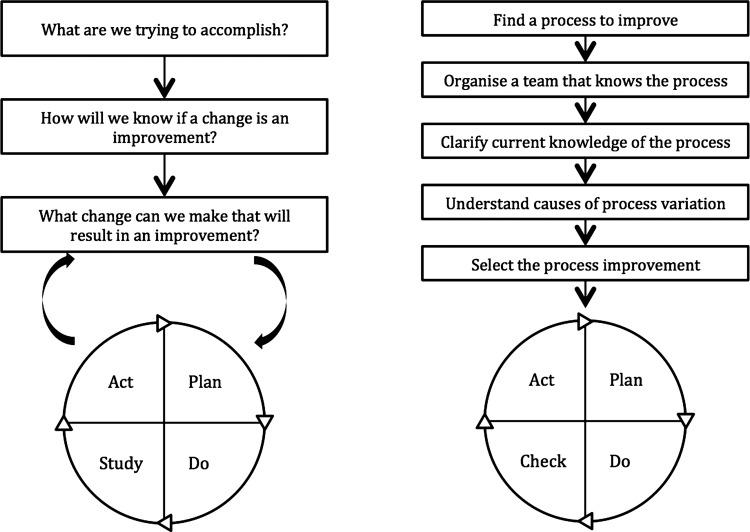
“It can further be expanded by the so-called FOCUS approach (find a process to improve, organize a team, clarify knowledge, understand causes of process variation, and select the process improvement) [25], which complements the planning phase of the PDCA cycle.”
BackgroundGruen, J., Gandhi, P. U., Gillespie-Heyman, S., Shamas, T. L., Adelman, S., Ruskin, A., Bauer, M. R., & Merchant, N. B. (2023) · BMJ Supportive & Palliative Care · doi:10.1136/spcare-2022-004118 · Cited by 5
Development and evaluation of the Rural and Northern Community Focused Model of COPD Care (RaNCoM)
Freeman, S., Peach, L., Ross, C. F. J., Marchal, K., Meyer, A., & Skinner, K. A. (2023) · BMC Pulmonary Medicine · doi:10.1186/s12890-023-02683-2 · Cited by 4
Closing the Loop for Patients with Chronic Diseases - from Problems to a Solution Architecture
Färber, A., de Spindler, A., Moser, A., & Schwabe, G. (2023) · IEEE International Conference on Healthcare Informatics (ICHI) · doi:10.1109/ichi57859.2023.00055 · Cited by 7
“The concept found its way into quality management with the Plan-Do-Study-Act (PDSA) cycle [29] and also in the healthcare domain [30].”
BackgroundCarroll, J. C., Nguyen, T. Q., Ciraolo, J., Drake, E., Rothey, A., & Nightingale, B. S. (2024) · Journal of the American Pharmacists Association · doi:10.1016/j.japh.2024.102222 · Cited by 4
Potthoff, S., Brendryen, H., Bosnic, H., Njå, A. L. M., Finch, T. L., & Lid, T. G. (2024) · Frontiers in Health Services · doi:10.3389/frhs.2024.1343568 · Cited by 4
The Well-being Coaching Program: An Innovative Approach to Support and Empower Healthcare Workers
Dent, A., Sieg, D., Munn, L. T., Rose, R., & Swick, M. (2024) · JONA The Journal of Nursing Administration · doi:10.1097/nna.0000000000001529 · Cited by 4
Kaur, R., Singh, U., Srinath, K., Ranjith, A., & Nongkynrih, B. (2025) · BMC Pediatrics · doi:10.1186/s12887-024-05373-y · Cited by 4
Wangdi, S., Pema, D., Dorji, K. S., Choden, J., Drakpa, L., Tshering, P., Tshering, K., Tashi, T., Dorji, U., & Tshering, U. (2025) · BMJ Open Quality · doi:10.1136/bmjoq-2024-003132 · Cited by 4
Battles, A. R., Curland, R. A., & Cruitt, P. J. (2025) · International Journal of Group Psychotherapy · doi:10.1080/00207284.2025.2454666 · Cited by 5
“The evaluation employed four Plan-Do-Study-Act (PDSA; Taylor et al., 2013) cycles, an evidence-based quality improvement method involving small tests of change and subsequent examination of group modifications.”
Diagnostic uncertainty in physicians’ reasoning: a structured approach using BANI and GRACE 2
Shimizu, T. (2025) · Diagnosis · doi:10.1515/dx-2025-0059 · Cited by 4
“Agility, derived from adaptive expertise and sense-making frameworks, enables rapid and iterative recalibration of diagnostic pathways [24 – 28].”
Implementation and adaptation of WASH FIT in healthcare facilities: A systematic scoping review
Kpodzro, S., Cronk, R., Lineberger, H., Lansing, L., & Anderson, D. M. (2026) · World Development Sustainability · doi:10.1016/j.wds.2026.100291 · Cited by 4
“While CQI has been applied in the healthcare sector for decades, systematic reviews from the past five years still deem the evidence of its effectiveness “uncertain” [46], with other reviews suggesting that CQI may only be appropriate for specific contexts [44,47].”
Time and change in health care
Waterworth, S. (2017) · Leadership in health services · doi:10.1108/lhs-08-2016-0038 · Cited by 4
“Using Plan Do Study Act (PDSA) cycles is common in health care quality improvement (Taylor et al., 2014).”
MethodQuality Improvement and applied behavior analysis: Another name for a rose that smells just as sweet
Maragakis, A., Vriesman, M., LaLonde, L., Richling, S. M., & Lancaster, B. M. (2019) · Journal of Contextual Behavioral Science · doi:10.1016/j.jcbs.2019.02.003 · Cited by 4
Carr, T., Turner, M. W., & Ramaswamy, R. (2019) · BMJ Open · doi:10.1136/bmjopen-2019-034302 · Cited by 4
Vallabhan, M. K., Jimenez, E. Y., McCauley, G. L., Willyard, H., & Kong, A. S. (2020) · American Journal of Medical Quality · doi:10.1177/1062860620946838 · Cited by 4
Evaluation of the implementation of Armeo®Spring in a specialized neurorehabilitation center
Christensen, K. B., Rindom, H. K., Jensen, D. R., Fabricius, J., & Spaich, E. G. (2022) · International Conference on Rehabilitation Robotics · doi:10.1109/icorr55369.2022.9896403 · Cited by 4
“Performing iterations of the cycle described by the PDSA-model could be advantageous to reach this goal [25].”
MethodEvolution of a Simulation Design Template at a Canadian Academic Hospital
Dale-Tam, J., & Thompson, K. (2022) · Clinical Simulation in Nursing · doi:10.1016/j.ecns.2022.10.001 · Cited by 4
Publishing quality improvement studies: learning to share and sharing to learn
Wagstaff, D., & Moonesinghe, R. (2023) · BJA Open · doi:10.1016/j.bjao.2023.100123 · Cited by 4
“When reports succeed in being published, they often omit crucial details of the intervention, QI method, context, or unintended consequences, therefore inhibiting replication.(15,19,21,22) Fortunately, guidance exists onwhat constitutes a ‘good’QI report.”
Sports Medicine Curricular Recommendations for Undergraduate Medical Education
Ferderber, M. L., Wilson, K., Buchanan, B. K., Callender, S. S., Deck, J. W., Kerr, H. A., Lemmen, B., Stafford, C. D., Wang, D. A., & Waterbrook, A. L. (2023) · Current Sports Medicine Reports · doi:10.1249/jsr.0000000000001064 · Cited by 4
“Plan-dostudy-act cycles are one example of a system that fosters quality improvement, or audit (46).”
BackgroundHilton, C. E. (2023) · Health Psychology Open · doi:10.1177/20551029231198938 · Cited by 6
“The popularity of the Model for Improvement within healthcare settings has justi fi ed a systematic review which highlighted discrepancies in understanding and application and often inadequate depth of reporting which challenged clarity regarding utility (Taylor et al., 2014).”
BackgroundMethodYousef, Y. A., Bagchee-Clark, A., Walters, K., Green, M., Salib, M., Chander, A., Law, M. P., & Refaei, M. (2024) · Quality Management in Health Care · doi:10.1097/qmh.0000000000000442 · Cited by 4
Geiselman, E. L., Hendricks, S. M., & Swenty, C. F. (2024) · Journal of Health Organization and Management · doi:10.1108/jhom-02-2024-0040 · Cited by 4
Nurse performed bladder ultrasound: a clinical quality improvement initiative
Liptrott, S. J., Saliquni, A., Giau, L., Pecora, R., Cimino, C., Piccolo, A. L., Palermo, A., Vidovic, B., Cheda, E., Imhof, S. A., et al. (2024) · Contemporary Nurse · doi:10.1080/10376178.2024.2406350 · Cited by 4
“This iterative approach allows PDSA users to test and learn from changes implemented and the flexibility to adapt the change to ensure it is fit for purpose (Taylor et al., 2014).”
Burrell, D. N., Askarova, S., Morin, S. L., Mondala-Duncan, M. R., Springs, D., Aridi, A. S., & Finch, A. (2025) · Brazilian Journal of Business · doi:10.34140/bjbv7n1-005 · Cited by 4
Trahan, M., Plourde, M., Clouatre, A., Wou, K., Pavilanis, A. D. S., Fortune, R.-L., Haas, S., Pepin, J., Kapellas, S., Morency, A., et al. (2025) · Pregnancy Hypertension · doi:10.1016/j.preghy.2025.101192 · Cited by 4
Arvidsson, J., Alkhatib, Y., Egen, M., Elofsson, U. M., Millqvist‐Fureby, A., López‐Cabezas, C., Wahlgren, M., Rosenberger, M., & Paulsson, M. (2025) · Journal of Pharmaceutical Sciences · doi:10.1016/j.xphs.2025.103704 · Cited by 4
Optimising pharmacy processes in medication delivery service through digitalisation and automation
Ng, K. K., Tiew, W. J., Yook Ting, A. W., Wei Xiong, N. L., Tou Teik, G. L., & Baskaran, A. S. (2025) · BMJ Open Quality · doi:10.1136/bmjoq-2024-003150 · Cited by 4
“19 The intent was to fully digitise the delivery order details in the upstream processes in the first phase, then observe the impact on the downstream processes before formulating new interventions.”
Staten, T., Liu, P., Holt, C., & Alismail, A. (2025) · Respiratory Medicine · doi:10.1016/j.rmed.2025.108071 · Cited by 4
McNab, D., McKay, J., & Bowie, P. (2015) · Scottish Medical Journal · doi:10.1177/0036933015606586 · Cited by 4
Building skills in organizational and systems changes: A DNP-FNP clinical curriculum
Hoyle, C., & Johnson, G. E. (2015) · The Nurse Practitioner · doi:10.1097/01.npr.0000461948.38539.fc · Cited by 4
Richmond, G., Kenny, C., Ahmed, J. F., Stephenson, L., Lindsay, J., Earls, P., Mullin, D. S., & Ryland, H. (2017) · BMJ Quality Improvement Reports · doi:10.1136/bmjquality.u205156.w3484 · Cited by 5
Use of quality indicators by obstetric caregivers in the Netherlands: A descriptive study
Cellissen, E., Franx, A., & Roes, K. C. B. (2017) · European Journal of Obstetrics & Gynecology and Reproductive Biology · doi:10.1016/j.ejogrb.2017.02.016 · Cited by 4
“This structure is widely accepted in healthcare improvement and the principles underpin the PDSA-cycle for use in a pragmatic healthcare setting [16].”
BackgroundBetter patient safety: implementing exploration and exploitation learning in daily medical practice
Kobo-Greenhut, A., Magnezi, R., & Ben‐Shlomo, I. (2017) · BMJ Open Quality · doi:10.1136/bmjoq-2017-000015 · Cited by 4
Li, W. W., Appiah, S., Hill, C., Becker, N., Catton, C., Chung, P. W. M., Shultz, D. B., Ferguson, P., O’Sullivan, B., & Dickie, C. I. (2018) · Technical Innovations & Patient Support in Radiation Oncology · doi:10.1016/j.tipsro.2018.01.001 · Cited by 4
“The aim of this study was to develop standardized STS IGRT guidelines for four anatomic sites including lower extremity, retroperitoneal, pelvis and thorax using the plan-do-study-act (PDSA) cycle to facilitate change [13].”
MethodMind the (support) gap: supporting academic trainees through peer networks
Soto, C., & Walsh, V. (2018) · Archives of Disease in Childhood · doi:10.1136/archdischild-2018-315050 · Cited by 4
Mortality alerts, actions taken and declining mortality: true effect or regression to the mean?
de Mheen, P. J. M., Abel, G., & Shojania, K. G. (2018) · BMJ Quality & Safety · doi:10.1136/bmjqs-2018-007984 · Cited by 4
“Many improvement efforts do not work, do not adhere to basic principles of improvement science 16 and often do not even have a clear rationale for the intervention.”
BackgroundA Comparative Analysis of AS/NZS 4801, ISO 45000 and OHSAS 18001 Safety Management Systems
Pillay, M. (2018) · Advances in intelligent systems and computing · doi:10.1007/978-3-030-02053-8_121 · Cited by 4
Age and Ageing to introduce a new category of paper: healthcare improvement science
Parker, S. G., Downes, T., Godfrey, M., Matthews, R., & Martin, F. C. (2018) · Age and Ageing · doi:10.1093/ageing/afy175 · Cited by 4
Enhancing clinical trial enrollment at MD Anderson Cancer Center satellite community campuses
Ludmir, E. B., Adlakha, E. K., Chun, S. G., Reed, V. K., Arzu, I., Ahmad, N. R., Bloom, E. S., Chronowski, G. M., Delclos, M. E., Mayo, L. L., et al. (2019) · Acta Oncologica · doi:10.1080/0284186x.2019.1600019 · Cited by 4
Huq, J.-L., & Woiceshyn, J. (2019) · BMJ Quality & Safety · doi:10.1136/bmjqs-2018-008898 · Cited by 5
Improving On‐time Discharge in Otolaryngology Admissions
Gordon, S. A., Garber, D., Taufique, Z. M., Shao, Q., Amin, M. R., Roland, J. T., & Givi, B. (2020) · Otolaryngology · doi:10.1177/0194599819898910 · Cited by 4
“The 4 steps of the PDSA cycle correspond with the scientific method of formulating a hypothesis and making predictions, collecting data and comparing against the hypothesis, analyzing results, and iterating upon the theory.(7) Therefore, while many potential barriers to discharging patients early in the day exist,(8)…”
MethodThe Ability of Practices to Report Clinical Quality Measures: More Evidence of the Size Paradox?
Parchman, M. L., Anderson, M. L., Penfold, R. B., Kuo, E., & Dorr, D. A. (2020) · The Journal of the American Board of Family Medicine · doi:10.3122/jabfm.2020.04.190369 · Cited by 4
“These processes require iterative tests of change and rapid assessment using these data to ensure solutions are a good fit and result in the desired improvement.(6) A growing proportion of primary care physicians in the United States are now employed by hospitals or larger health care systems.”
MethodContinuous quality improvement in statistical code: avoiding errors and improving transparency
Valley, T. S., Kamdar, N. S., Wiitala, W. L., Ryan, A. M., Seelye, S. M., Waljee, A. K., & Nallamothu, B. K. (2020) · BMJ Quality & Safety · doi:10.1136/bmjqs-2020-012387 · Cited by 4
Decision Science for Future Earth: A Conceptual Framework
Yahara, T., Tanaka, W., Inoue, Y., Lee, J., Qian, K., Javadi, F., Onda, N., Yokota, F., Eguchi, K., Nishikitani, M., et al. (2021) · Springer eBooks · doi:10.1007/978-981-15-8632-3_1 · Cited by 5
“First, IDEA cycle is a modification of the PDCA or PDSA cycle widely used in the quality management initiatives of the mass production industry (Moen and Norman 2009) and healthcare (Taylor et al. 2013).”
MethodSelby, K. J., Cardinaux, R., Metry, B., de Rougemont, S., Chabloz, J., Meier-Herrmann, V., Stoller, J., Durand, M., & Auer, R. (2021) · Research Involvement and Engagement · doi:10.1186/s40900-021-00283-0 · Cited by 4
Аrtyukhov, А., Lyeonov, S., Vasylieva, T., & Polcyn, J. (2021) · E3S Web of Conferences · doi:10.1051/e3sconf/202130706004 · Cited by 4
Harnessing the full potential of hospital-based data to support surgical quality improvement
Leung, S. M., Al-Omran, M. A., Greco, E., Hughes, B., Qadura, M., Wheatcroft, M., Murray, J., Mamdani, M., & de Mestral, C. (2021) · BMJ Open Quality · doi:10.1136/bmjoq-2020-001178 · Cited by 4
Using Improvement Cycles to Improve Implementation of Evidence-Based Practices
Kittelman, A., Rowe, D. A., & McIntosh, K. (2021) · Teaching Exceptional Children · doi:10.1177/00400599211060053 · Cited by 6
“There are a number of structured continuous improvement models used in education to evaluate and improve ongoing implementation of core components of effective practices and desired school outcomes (Horner et al., 2018; Taylor et al., 2014).”
BackgroundInfluentialHill, R. (2022) · British Journal of Nursing · doi:10.12968/bjon.2022.31.4.s42 · Cited by 5
Gyekye-Mensah, H., Watkins, A., Wenden, J., Horn, I. V., Beardwood, J., Jones, M. M., & Metters, E. (2022) · BJGP Open · doi:10.3399/bjgpo.2022.0002 · Cited by 4
“The PDSA framework is widely used in health care, and its very pragmatic approach allows testing of smallscale interventions and rapid assessment of their impact.(26) This approach was chosen as there were no specific resources available beyond student time.”
MethodRPA Implementation and the Digitalization of Logistics Operations in the COVID-19 Era: A Case Study
Lambourdière, É., Corbin, E., & Ledru, H. (2022) · Advances in logistics, operations, and management science book series · doi:10.4018/978-1-7998-9715-6.ch005 · Cited by 6
Sansone, G. R., & Bravo, E. (2022) · American Journal of Infection Control · doi:10.1016/j.ajic.2022.08.015 · Cited by 4
Before-After Study of a Checklist to Improve Acute Care to ICU Handoffs
Hicks, K. G., Downey, L., Elketami, A., Nielsen, E. L., Engelberg, R. A., & Jennerich, A. L. (2022) · American Journal of Medical Quality · doi:10.1097/jmq.0000000000000091 · Cited by 4
Model for the systematic implementation of therapeutic play in pediatric hospital units
Miranda, C. B., Maia, E. B. S., & Almeida, F. D. A. (2022) · Escola Anna Nery · doi:10.1590/2177-9465-ean-2022-0136en · Cited by 4
Sachar, Y., Alamr, A., Gob, A., Tang, E. S.-T., Teriaky, A., Qumosani, K. M., Weernink, C., Dodds, M., Thomas, K., Sinclair, L. B., et al. (2023) · BMJ Open Quality · doi:10.1136/bmjoq-2022-002149 · Cited by 4
System Action Learning: Reorientating Practice for System Change in Preventive Health
Riley, T., Hopkins, L., Gomez, M., Davidson, S., & Jacob, J. (2023) · Systemic Practice and Action Research · doi:10.1007/s11213-023-09638-y · Cited by 5
“Systemic learning is not a one-off event! The cyclic nature of these approaches is consistent with continuous quality improvement and the PDSA (Plan Do Study Act) cycle popular in health care (Taylor et al. 2014).”
Garcia, A. K. A., Conchon, M. F., Pierotti, I., & Fonseca, L. F. (2023) · Texto & Contexto - Enfermagem · doi:10.1590/1980-265x-tce-2022-0032en · Cited by 6
“For its systematization, PDSA was used, which allows for a quick and flexible evaluation to adapt the change according to the feedback, in addition to measuring the impact of an intervention on the result of interest 25 .”
MethodTrapani, D., Jin, Q., Block, C. C., Freedman, R. A., Lin, N., Tarantino, P., Mittendorf, E. A., King, T. A., Lester, S. C., Brock, J. E., et al. (2023) · JCO Oncology Practice · doi:10.1200/op.22.00731 · Cited by 4
“In this analysis, we used process improvement methodologies, as framed in Plan-Do-Study-Act (PDSA) cycles.(19) Data were extracted from the prospectively maintained institutional database, hosted in (REDCap, Vanderbilt University, Nashville, TN), which collects data on all patients who undergo breast surgery within th…”
MethodQuality improvement review of O positive blood in emergency transfusion
Chowdhury, R., Williams, B. A., Williams, S., & Casey, J. (2023) · Transfusion · doi:10.1111/trf.17537 · Cited by 4
“The project will form the ‘Study’ part of the Plan–Do–Study– Act cycle of healthcare improvement.(8) Specifically, it will investigate the effectiveness of the policy uptake across the several health districts in the state of Queensland (Australia), any areas of concern regarding patient safety or adverse events and i…”
MethodHatharaliyadda, B., Schmitz, M. M., Mørk, A., Osman, F., Heise, C. P., Safdar, N., & Pop-Vicas, A. E. (2024) · Journal for Healthcare Quality · doi:10.1097/jhq.0000000000000412 · Cited by 5
“23,24 Using the implementation strategies described above, our colorectal Strike Team essentially facilitated clinicians ’ engagement in the PDSA cycles needed to improve bundle workflows and target adherence to key infection control elements.”
MethodXing, X., Qu, H., Wang, L., Hao, X., Zhong, Y., & Jing, F. (2024) · Advances in Therapy · doi:10.1007/s12325-024-02814-z · Cited by 4
“In this study, we initiated a quality improvement (QI) project within our institution’s department of anesthesiology, employing the Plan-Do-Study-Act (PDSA) cycle to confront these challenges [14].”
Achu-Lopes, R. A., Tsen, L. C., Ovsak, G., Raheel, N. A., Farber, M. K., & Maeda, A. (2024) · International Journal of Obstetric Anesthesia · doi:10.1016/j.ijoa.2024.104255 · Cited by 4
Improving the use of phlebotomy services in a paediatric inpatient setting
Pitchforth, J., & Lemer, C. (2014) · BMJ Quality Improvement Reports · doi:10.1136/bmjquality.u202230.w1115 · Cited by 4
“The Plan, Do,Study, Act (PDSA) cycle is an important tool in the Quality Improvement process (3).”
MethodBrimhall, K. C., Kuhfeldt, K., Kotton, D. N., & Jones, M. R. (2025) · Frontiers in Public Health · doi:10.3389/fpubh.2025.1581205 · Cited by 6
“The Plan-Do-Study/ Check-Act (PDSA/PDCA) cycle of CQI is one of the most widely used methods within health care and considered a key foundational approach to quality improvement (6–8).”
Influential
Metadata
- Authors
- Taylor, M. J., McNicholas, C., Nicolay, C., Darzi, A., Bell, D., & Reed, J. E.
- Affiliations
- National Institute for Health and Care Research (GB)
- Imperial College London (GB)
- Corresponding author
- Taylor, Michael J
- Venue
- BMJ Quality & Safety
- Publisher
- BMJ
- Published
- 2013-09-11
- Volume
- 23
- Issue
- 4
- Pages
- 290-298
- ISSN
- 1475-3898 (ISSN-L)
- 2044-5415
- 2044-5423
- PMC
- PMC3963536
- OpenAlex
- W2115133509
- Semantic Scholar
- 661ab1c69e92f60884b5e1a143dc17c90020de3c
- Cited by
- 1,871
- References
- 81
- Citations by year
- 2026: 176 · 2025: 225 · 2024: 178 · 2023: 172 · 2022: 173 · 2021: 200 · 2020: 188 · 2019: 143 · 2018: 120 · 2017: 113 · 2016: 84 · 2015: 63 · 2014: 27 · 2013: 2
- FWCI
- 9.85
- Type
- journal article
- Language
- en
- Open access
- hybrid
- doi.org
- Licence
- cc-by-nc
- Locations
- BMJ Quality & Safety (publishedVersion, cc-by-nc)
- Europe PMC (PubMed Central) (publishedVersion, other-oa)
- PubMed Central (publishedVersion, cc-by-nc)
- PubMed (publishedVersion)
- HighWire Press Open Archive (acceptedVersion)
- Spiral (Imperial College London) (submittedVersion, other-oa)
- Funders
- National Institute for Health and Care Research (NF-SI-0510-10186)
- Topics
- Health Sciences › Medicine › Public Health, Environmental and Occupational Health › Healthcare Quality and Management
- Health Sciences › Health Professions › General Health Professions › Health Policy Implementation Science
- Social Sciences › Business, Management and Accounting › Organizational Behavior and Human Resource Management › Appreciative Inquiry and Organizational Change
- Keywords
- PDSA cycle, healthcare quality improvement, methodological quality assessment
- MeSH terms
- Humans, Organizational Innovation, Quality of Health Care, Quality Indicators, Health Care, Quality Improvement
About these checks
Registry, retraction, Cites and statistics results are computed, not judged, with one exception: a printed reference that no index lists is read once by a model before it counts as a citation error. Claims are extracted by a model and kept only when their quote appears verbatim in the text; each cited source is then checked, with a model’s help, for whether it says what the claim relies on. Those verdicts can be wrong — read the claim’s quote and the cited source before relying on one.
Statistics and arithmetic are recomputed, not judged.
Confidence bands are shown only for fields calibrated on our annotated test set. None is calibrated yet, so no band is shown.
What counts as a claim ›How we measure confidence ›How we check this ›
Are you an author, or do you see a problem with this page? Request a review
Data sources
Bibliographic data: Semantic Scholar, OpenAlex, Crossref.
Contains information from the Semantic Scholar Academic Graph Datasets, made available under the ODC Attribution License (ODC-BY 1.0).
Semantic Scholar’s data is described in: Kinney, R., et al. (2023). The Semantic Scholar Open Data Platform. arXiv:2301.10140.
