

Systematic review of the application of the plan–do–study–act method to improve quality in healthcare
Open accessThe DOI matches its Crossref record; 79 of the 81 references it cites were found in a registry or an index.
Abstract
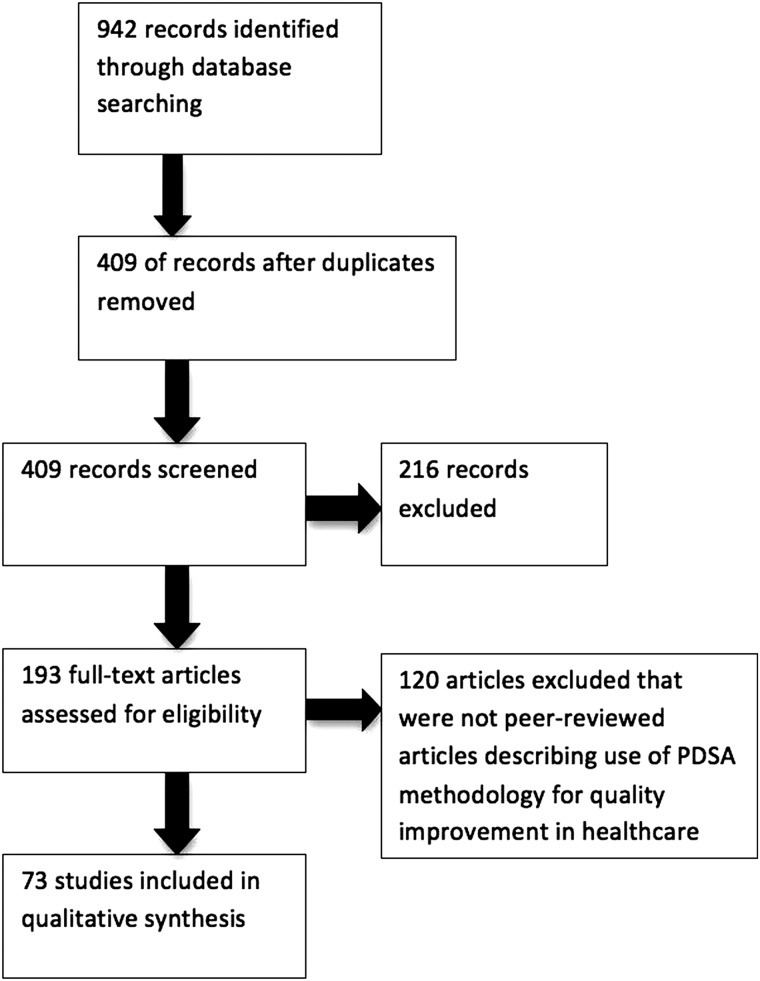
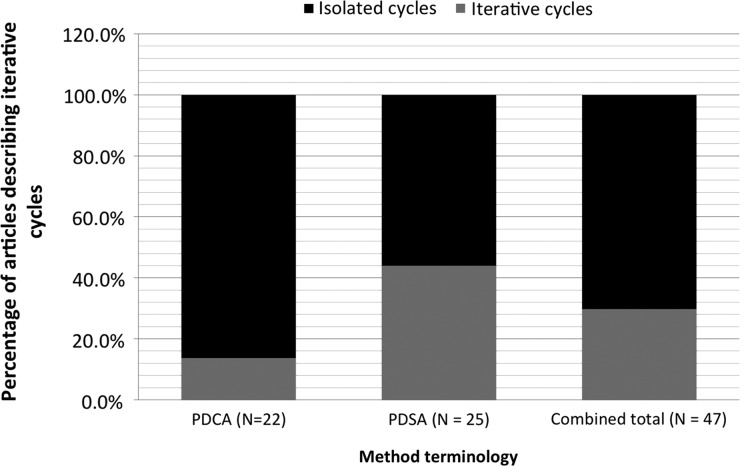
Background: Plan–do–study–act (PDSA) cycles provide a structure for iterative testing of changes to improve quality of systems. The method is widely accepted in healthcare improvement; however there is little overarching evaluation of how the method is applied. This paper proposes a theoretical framework for assessing the quality of application of PDSA cycles and explores the consistency with which the method has been applied in peer-reviewed literature against this framework. Methods: NHS Evidence and Cochrane databases were searched by three independent reviewers. Empirical studies were included that reported application of the PDSA method in healthcare. Application of PDSA cycles was assessed against key features of the method, including documentation characteristics, use of iterative cycles, prediction-based testing of change, initial small-scale testing and use of data over time. Results: 73 of 409 individual articles identified met the inclusion criteria. Of the 73 articles, 47 documented PDSA cycles in sufficient detail for full analysis against the whole framework. Many of these studies reported application of the PDSA method that failed to accord with primary features of the method. Less than 20% (14/73) fully documented the application of a sequence of iterative cycles. Furthermore, a lack of adherence to the notion of small-scale change is apparent and only 15% (7/47) reported the use of quantitative data at monthly or more frequent data intervals to inform progression of cycles. Discussion: To progress the development of the science of improvement, a greater understanding of the use of improvement methods, including PDSA, is essential to draw reliable conclusions about their effectiveness. This would be supported by the development of systematic and rigorous standards for the application and reporting of PDSAs.
Overview
The claims and statistics of this paper haven’t been checked yet.
Free: it reads the open-access text and checks the first 5 claims that cite a source we can check. Create a free account to check every claim.
Integrity signals
Registry
Cites
Statistics
Figures
Verification
Claims the paper makes
The claims and statistics of this paper haven’t been checked yet.
Free: it reads the open-access text and checks the first 5 claims that cite a source we can check. Create a free account to check every claim.
Claims other papers make about this one
Each is checked against this paper’s own text: does it say what the citing paper says it does?
The source backs part of the claim, not all of it — or backs it for a different population, condition or comparison.
In the citing paper
“Drawing on impact evaluation research from the TSBM (5), CQI (6–8, 16), and team science (9–12), we develop a theory-driven, team-based approach to CQI and impact evaluation.”
From Building on the Translational Science Benefits Model to include team science: a practical and theory-based approach to continuous quality improvement and impact evaluation for Clinical and Translational Science Award programs (2025) · cites this paper as [8]
Experimental — accuracy not yet measuredThe cited source says what the claim attributes to it.
In the citing paper
“The Plan-Do-Study/Check-Act (PDSA/PDCA) cycle of CQI is one of the most widely used methods within health care and considered a key foundational approach to quality improvement (6–8).”
The cited source says what the claim attributes to it.
In the citing paper
“Rooted in the scientific method, CQI methods have been used to iteratively improve health care (8, 15) and more recently encouraged to enhance CTSA efforts toward translational science (1–3).”
In the citing paper
“Without a good theoretical grasp of the underlying theory and its critical components (‘active ingredients’), improvers may adopt the label or outward appearance attached to a successful intervention, which does not permit them to reproduce its impact.46”
From Demystifying theory and its use in improvement (2015) · cites this paper as [46]
Self-check
Percentages, sums and reported differences re-computed from the paper’s own numbers.
The self-check needs the paper’s full text.
Citations
Cites
Liberati, A., Altman, D. G., Tetzlaff, J., Mulrow, C., Gøtzsche, P. C., Ioannidis, J. P. A., Clarke, M., Devereaux, P. J., Kleijnen, J., & Moher, D. (2009) · PLoS Medicine · doi:10.1371/journal.pmed.1000100 · Cited by 28,164
Damschroder, L. J., Aron, D. C., Keith, R. E., Kirsh, S. R., Alexander, J. A., & Lowery, J. C. (2009) · Implementation Science · doi:10.1186/1748-5908-4-50 · Cited by 14,496
Diffusion of Innovations in Service Organizations: Systematic Review and Recommendations
GREENHALGH, T., ROBERT, G., MACFARLANE, F., BATE, P., & KYRIAKIDOU, O. (2004) · The Milbank Quarterly · doi:10.1111/j.0887-378x.2004.00325.x · Cited by 7,448
Deming, W. E. (1982) · Medical Entomology and Zoology · Cited by 7,297
An Intervention to Decrease Catheter-Related Bloodstream Infections in the ICU
Pronovost, P., Needham, D., Berenholtz, S., Sinopoli, D., Chu, H., Cosgrove, S., Sexton, B., Hyzy, R., Welsh, R., Roth, G., et al. (2006) · New England Journal of Medicine · doi:10.1056/nejmoa061115 · Cited by 4,387
The Improvement Guide: A Practical Approach to Enhancing Organizational Performance
(1997) · Quality Management Journal · doi:10.1080/10686967.1998.11919154 · Cited by 2,895
The improvement guide : a practical approach to enhancing organizational performance
Langley, G. J. (1996) · Jossey-Bass Publishers eBooks · Cited by 875
Getting evidence into practice: the meaning of `context'
McCormack, B., Kitson, A., Harvey, G., Rycroft‐Malone, J., Titchen, A., & Seers, K. (2002) · Journal of Advanced Nursing · doi:10.1046/j.1365-2648.2002.02150.x · Cited by 765
Complexity, leadership, and management in healthcare organisations
Plsek, P. E., & Wilson, T. (2001) · BMJ · doi:10.1136/bmj.323.7315.746 · Cited by 754
KAPLAN, H. C., BRADY, P. W., DRITZ, M. C., HOOPER, D. K., LINAM, W. M., FROEHLE, C. M., & MARGOLIS, P. (2010) · Milbank Quarterly · doi:10.1111/j.1468-0009.2010.00611.x · Cited by 714 · cited 1×
“5 Research findings highlight the influential effect that local context can have on the success of an intervention 6 7 and, as such, ‘ single-bullet ’ interventions are not anticipated to deliver consistent improvements.”
Background
Research works printed but not linked: 5
- 13. Powell AE, Rushmer RK, Davies HTO. A systematic narrative review of quality improvement models in health care: NHS Quality Improvement Scotland. 2009. Report No. 1844045242.
- 27. Systematic review Taylor MJ, et al. BMJ Qual Saf 2014;23:290-298. doi:10.1136/bmjqs-2013-001862
- 30. Imai M. The key to Japan's competitive success. New York: McGraw-Hill, 1986.
- 40. Moen R, Norman C. Circling back: clearing up the myths about the Deming cycle and seeing how it keeps evolving. Qual Progress 2010;42:23-8.
- 42. Berwick DM. Developing and testing changes in delivery of care. Ann Intern Med 1998;128:651. · DOI · Paper page
Cited by
Items 201–300 of 1,000
Addressing student diversity to improve mathematics achievement through differentiated instruction
Insorio, A. O. (2024) · International Journal of Professional Development Learners and Learning · doi:10.30935/ijpdll/14462 · Cited by 44
“The study relied on Edward Deming and Walter Shewhart ’ s plan-do-study-act model (Taylor et al., 2014).”
MethodTan, R. S. Y. C., Met‐Domestici, M., Zhou, K., Guzman, A. B., Lim, S. T., Soo, K. C., Feeley, T. W., & Ngeow, J. Y. Y. (2016) · Journal of Oncology Practice · doi:10.1200/jop.2015.007765 · Cited by 34
Flynn, A., Macaluso, M., D’Empaire, I., & Troutman, M. (2015) · The Primary Care Companion For CNS Disorders · doi:10.4088/pcc.14r01738 · Cited by 42
Alarm safety and oxygen saturation targets in the Vermont Oxford Network iNICQ 2015 collaborative
Hagadorn, J. I., Sink, D. W., Buus‐Frank, M. E., Edwards, E. M., Morrow, K. A., Horbar, J. D., Ferrelli, K. R., & Soll, R. F. (2016) · Journal of Perinatology · doi:10.1038/jp.2016.219 · Cited by 34
Toma, M., Dreischulte, T., Gray, N. M., Campbell, D. K., & Guthrie, B. (2017) · BMJ Quality & Safety · doi:10.1136/bmjqs-2017-006554 · Cited by 34
Cadilhac, D. A.-M., Grimley, R., Kilkenny, M. F., Andrew, N. E., Lannin, N. A., Hill, K. M., Grabsch, B. E., Levi, C. R., Thrift, A. G., Faux, S. G., et al. (2019) · Stroke · doi:10.1161/strokeaha.118.023075 · Cited by 38
Lette, M., Boorsma, M., Lemmens, L. C., Stoop, A., Nijpels, G., Baan, C. A., & de Bruin, S. R. (2019) · Health & Social Care in the Community · doi:10.1111/hsc.12901 · Cited by 40
Dückers, M., & Thormar, S. B. (2014) · Nursing and Health Sciences · doi:10.1111/nhs.12162 · Cited by 41
“A typical quality-improvement strategy seeks to stimulate or maintain improvement based on the ongoing application of so-called “plan–do–study–act cycles” (Berwick, 1998; Taylor et al., 2014).”
BackgroundTranslation and Adaptation of the Genetic Counselling Outcome Scale (GCOS‐24) for Use in Denmark
Diness, B. R., Overbeck, G., Hjortshøj, T. D., Hammer, T. B., Timshel, S., Sørensen, E., & McAllister, M. (2017) · Journal of Genetic Counseling · doi:10.1007/s10897-017-0086-7 · Cited by 37
“PROMs data can contribute to continuous quality improvement (e.g. by using the data to inform plan-do-study-act cycles, that otherwise might not be possible due to lack of measurable patient outcomes (Taylor et al. 2014)).”
The REFINEMENT Glossary of Terms: An International Terminology for Mental Health Systems Assessment
Montagni, I., Salvador‐Carulla, L., McDaid, D., Straßmayr, C., Endel, F., Näätänen, P., Kalseth, J., Kalseth, B., Matosevic, T., Donisi, V., et al. (2017) · Administration and Policy in Mental Health and Mental Health Services Research · doi:10.1007/s10488-017-0826-x · Cited by 34
“The format of a EU Research Framework project where the European added value of cooperation is crucial, helped to perform the “on the ground approach”, and to foster “learning by doing”, similar to the well-known but rarely used “Plan-Do-Study-Act (PDSA)” approach (Taylor et al. 2013).”
MethodLagha, R. R., Burningham, Z. R., Sauer, B. C., Leng, J., Peters, C. B., Huynh, T., Patel, S. A., Halwani, A. S., & Kramer, B. J. (2020) · Applied Clinical Informatics · doi:10.1055/s-0040-1714693 · Cited by 35
“Employing a Plan Do Study Act framework, 16 the dashboard development process involved identifying target geriatric clinical practice guidelines for dashboard realization, engaging subject matter experts, and consulting with clinical experts.”
Leone, R. M., & Adams, R. J. (2015) · Rehabilitation Nursing · doi:10.1002/rnj.250 · Cited by 34
“Similar to traditional health care scientific research methods, the plan-dostudy-act (PDSA) process promotes prediction of the outcome of a proposed change and subsequent measurement over time to evaluate the impact of an intervention on the process or outcomes being studied (Taylor et al., 2013).”
BackgroundInfluentialUse of Process Improvement Tools in Radiology
Rawson, J. V., Kannan, A., & Furman, M. (2015) · Current Problems in Diagnostic Radiology · doi:10.1067/j.cpradiol.2015.09.004 · Cited by 38
First-Case Operating Room Delays: Patterns Across Urban Hospitals of a Single Health Care System
Bauer, C. M. C., Greer, D. M., Wyst, K. B. V., & Kamelle, S. (2016) · Journal of patient-centered research and reviews · doi:10.17294/2330-0698.1265 · Cited by 33
O Planejamento e a construção das Redes de Atenção à Saúde no DF, Brasil
Evangelista, M. J. D. O., Guimarães, A. M. D. N., Dourado, E. M. R., do Vale, F. L. B., Lins, M. Z. S., de Matos, M. A. B., Silva, R. B. M. D. P. M., & Schwartz, S. A. (2019) · Ciência & Saúde Coletiva · doi:10.1590/1413-81232018246.08882019 · Cited by 33
Gimbel, S., Mocumbi, A. O., Ásbjörnsdóttir, K., Coutinho, J., Andela, L., Cebola, B. R., Craine, H., Crocker, J., Hicks, L., Holte, S., et al. (2020) · Implementation Science · doi:10.1186/s13012-020-0973-4 · Cited by 35
Symbiotic types of systems thinking with systematic management in occupational health & safety
Karanikas, N., Popovich, A., Steele, S. E., Horswill, N., Laddrak, V., & Roberts, T. (2020) · Safety Science · doi:10.1016/j.ssci.2020.104752 · Cited by 39
Implementing Evidence Based Practice nursing using the PDSA model: Process, lessons and implications
Katowa-Mukwato, P., Mwiinga-Kalusopa, V., Chitundu, K., Kanyanta, M., Chanda, D., Mwelwa, M. M., Wahila, R., Mundia, P., & Carrier, J. (2020) · International Journal of Africa Nursing Sciences · doi:10.1016/j.ijans.2020.100261 · Cited by 41
“In the ‘plan’ stage a change aimed at improvement is identified, the ‘do’ stage sees this change tested, the ‘study’ stage examines the success of the change and the ‘act’ stage identifies adaptations and next steps to inform a new cycle (Taylor et al., 2014).”
BackgroundMethodNelson, J. A., Chu, J. J., Dabic, S., Kenworthy, E. O., Shamsunder, M. G., McCarthy, C. M., Mehrara, B. J., & Pusic, A. L. (2022) · Quality of Life Research · doi:10.1007/s11136-022-03213-z · Cited by 36
“In this initiative, we utilized the Plan Do Study Act (PDSA) framework [29, 30].”
MethodJames, B., Beattie, M., Shepherd, A. J., Armstrong, L., & Wilkinson, J. E. (2016) · Nurse Education in Practice · doi:10.1016/j.nepr.2016.05.004 · Cited by 33
“It includes, for example, analysis of how Plan Do Study Act cycles are used (Taylor et al. 2013).”
MethodDzidowska, M., Lee, K. S., Wylie, C. E., Bailie, J., Percival, N., Conigrave, J. H., Hayman, N. E., & Conigrave, K. M. (2020) · BMC Family Practice · doi:10.1186/s12875-020-1101-x · Cited by 34
“Originating from industrial process improvement approaches, this approach has been used in health care since the 1990s [14, 15].”
BackgroundMethodInfluentialInvolving Health Care Professionals in the Development of Electronic Health Records: Scoping Review
Busse, T. S., Jux, C., Laser, J., Rasche, P., Vollmar, H. C., Ehlers, J. P., & Kernebeck, S. (2023) · JMIR Human Factors · doi:10.2196/45598 · Cited by 35
Laur, C. V., & Keller, H. (2015) · Journal of Multidisciplinary Healthcare · doi:10.2147/jmdh.s93103 · Cited by 35
“PDSA and other cyclical frameworks can be repeatedly applied to both small and larger phases of implementation.(13) The steps do not necessarily need to be completed in order, as work done at various steps can be complementary.”
Ramaswamy, R., Shidhaye, R. R., & Nanda, S. (2018) · International Journal of Mental Health Systems · doi:10.1186/s13033-018-0181-7 · Cited by 38
“Rapid improvement PDSA cycles [28] were conducted in the implementation phase for local adaptation of the design.”
MethodInfluentialThe educators’ experience: Learning environments that support the master adaptive learner
Auerbach, L., Santen, S. A., Cutrer, W. B., Daniel, M. M., Wilson‐Delfosse, A. L., & Roberts, N. K. (2020) · Medical Teacher · doi:10.1080/0142159x.2020.1801998 · Cited by 32
Eco-Normalization: Evaluating the Longevity of an Innovation in Context
Hamza, D. M., & Regehr, G. (2021) · Academic Medicine · doi:10.1097/acm.0000000000004318 · Cited by 33
Lugtenberg, M., van Beurden, K. M., Brouwers, E. P. M., Terluin, B., van Weeghel, J., van der Klink, J. J. L., & Joosen, M. C. W. (2016) · BMC Health Services Research · doi:10.1186/s12913-016-1530-3 · Cited by 34
“Small-scale settings are usually promoted within this approach, as this enables rapid assessment and provides flexibility to adapt the change according to feedback, to ensure that fit-forpurpose solutions are developed [29].”
BackgroundMethodSavage, C., Parke, L., von Knorring, M., & Mazzocato, P. (2016) · BMC Health Services Research · doi:10.1186/s12913-016-1838-z · Cited by 41
“The literature seems to support this—eventually staff can become familiar with a QI idea, even if the full implications have not been understood [4, 6].”
BackgroundNix, J., & Comans, T. A. (2017) · International Journal of Telerehabilitation · doi:10.5195/ijt.2017.6218 · Cited by 32
Lim, M. S. Y., Riggs, E., Shankumar, R., Marwaha, P., & Kilpatrick, N. M. (2018) · Australian Dental Journal · doi:10.1111/adj.12611 · Cited by 32
Wilson, J. A., Bak, A., Tingle, A., Greene, C., Tsiami, A. A., Canning, D., Myron, R., & Loveday, H. P. (2018) · Clinical Nutrition · doi:10.1016/j.clnu.2018.07.020 · Cited by 35
Efficacy of quality improvement and patient safety workshops for students: a pilot study
Shah, K. P., Goyal, S. P., Ramachandran, V., Kohn, J. R., Go, J. A., Wiley, Z. C., Moturu, A., Namireddy, M. K., Kumar, A. M., Jacobs, R. C., et al. (2020) · BMC Medical Education · doi:10.1186/s12909-020-1982-3 · Cited by 32
Bohnenkamp, J. H., Patel, C., Connors, E. H., Orenstein, S., Ereshefsky, S., Lever, N. A., & Hoover, S. (2022) · Journal of Applied School Psychology · doi:10.1080/15377903.2022.2077875 · Cited by 31
How to attribute causality in quality improvement: lessons from epidemiology
Poots, A. J., Reed, J. E., Woodcock, T., Bell, D., & Goldmann, D. A. (2017) · BMJ Quality & Safety · doi:10.1136/bmjqs-2017-006756 · Cited by 32
Self-citationAdapting Translational Research Methods to Water, Sanitation, and Hygiene
Setty, K., Cronk, R., George, S., Anderson, D. M., O’Flaherty, G., & Bartram, J. (2019) · International Journal of Environmental Research and Public Health · doi:10.3390/ijerph16204049 · Cited by 35
“While SQUIRE reporting standards have been developed for quality improvement [91,92], as well as StaRI and WHO standards for implementation and operational research [93,94], they are relatively new and, as yet, little used [95].”
MethodChapman, L. R., Molloy, L., Wright, F. A., Oswald, C., Adnum, K., O'Brien, T. A., & Mitchell, R. (2019) · Journal of Pediatric Nursing · doi:10.1016/j.pedn.2019.10.016 · Cited by 31
Hostage, J. C., Brock, J., Craig, W. Y., & Sepulveda, D. (2020) · Maternal and Child Health Journal · doi:10.1007/s10995-020-02892-9 · Cited by 31
Using virtual worlds as a platform for collaborative meetings in healthcare: a feasibility study
Taylor, M. J., Shikaislami, C., McNicholas, C., Taylor, D., Reed, J. E., & Vlaev, I. (2020) · BMC Health Services Research · doi:10.1186/s12913-020-05290-7 · Cited by 33
“Each participant was provided with a document explaining recommended PDSA cycle reporting and conduct according to healthcare research literature [25].”
BackgroundMethodInfluentialSelf-citationChadborn, N., Devi, R., Hinsliff‐Smith, K., Banerjee, J., & Gordon, A. L. (2020) · European Geriatric Medicine · doi:10.1007/s41999-020-00389-w · Cited by 31
“Articles describing specific quality improvement strategies, such as quality improvement collaboratives (QICs) [20], or plan-do-study-act (PDSA) cycles [21] were included.”
BackgroundShaping our worldviews: a conversation about and of theory
Varpio, L., & Ellaway, R. (2021) · Advances in Health Sciences Education · doi:10.1007/s10459-021-10033-2 · Cited by 32
Frameworks for Integrating Learning Analytics With the Electronic Health Record
Pusic, M. V., Birnbaum, R. J., Thoma, B., Hamstra, S. J., Cavalcanti, R. B., Warm, E. J., Janssen, A. L., & Shaw, T. J. (2022) · Journal of Continuing Education in the Health Professions · doi:10.1097/ceh.0000000000000444 · Cited by 34
“26,27 The target for learning is the clinical system.”
BackgroundEvaluasi Sistem Pelaporan Insiden Keselamatan Pasien Dengan Metode HMN Di Rumah Sakit
Toyo, E. M., Leki, K. G. B., Indarsari, F., & Woro, S. (2022) · Majalah Farmasetika · doi:10.24198/mfarmasetika.v8i1.41357 · Cited by 31
Goodman, L., Khemani, E., Cacao, F., Yoon, J., Burkoski, V., Jarrett, S., Collins, B. E., & Hall, T. N. T. (2018) · BMJ Open Quality · doi:10.1136/bmjoq-2018-000425 · Cited by 31
Clinton, E., & Minehart, R. D. (2019) · Comprehensive healthcare simulation · doi:10.1007/978-3-030-26849-7_18 · Cited by 30
Using the Model for Improvement and Plan‐Do‐Study‐Act to effect SMART change and advance quality
Chen, Y., VanderLaan, P. A., & Heher, Y. (2020) · Cancer Cytopathology · doi:10.1002/cncy.22319 · Cited by 30
“This experimental learning process ensures that reliable conclusions are drawn regarding the effectiveness of each intervention.(7)”
BackgroundVoltz, R., Dust, G., Schippel, N., Hamacher, S., Payne, S. A., Scholten, N., Pfaff, H., Rietz, C., & Strupp, J. (2020) · BMJ Open · doi:10.1136/bmjopen-2019-035988 · Cited by 33
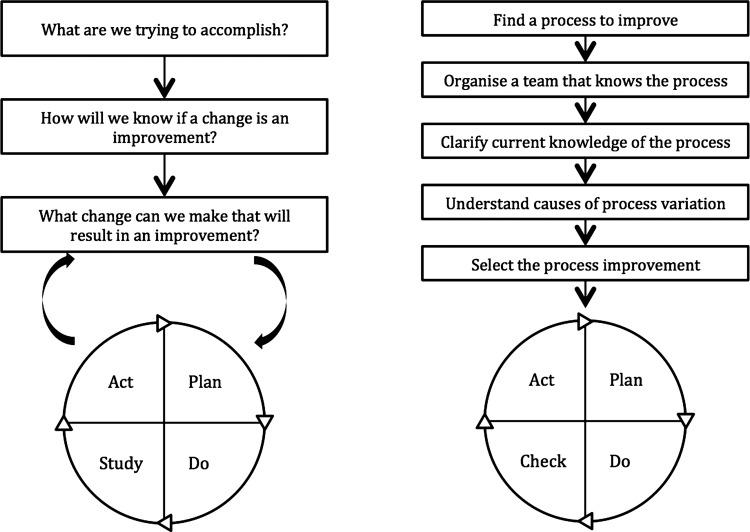
“20 The fundamental principle is iteration (figure 1).”
Ebekozien (2020) · Journal of Clinical Outcomes Management · doi:10.12788/jcom.0031 · Cited by 30
Reducing Implicit Bias in Maternity Care: A Framework for Action
Siden, J. Y., Carver, A. R., Mmeje, O. O., & Townsel, C. (2021) · Women s Health Issues · doi:10.1016/j.whi.2021.10.008 · Cited by 32
Gage, A. D., Gotsadze, T., Seid, E., Mutasa, R. U., & Friedman, J. (2022) · Social Science & Medicine · doi:10.1016/j.socscimed.2022.114831 · Cited by 32
Wanzira, H., Muyinda, R., Lochoro, P., Putoto, G., Segafredo, G., Wamani, H., & Lazzerini, M. (2018) · BMC Health Services Research · doi:10.1186/s12913-018-3366-5 · Cited by 35
Shafran, R., Bennett, S. D., Coughtrey, A. E., Welch, A., Walji, F., Cross, J. H., Heyman, I., Sibelli, A., Smith, J. S., Ross, J., et al. (2020) · Clinical Child and Family Psychology Review · doi:10.1007/s10567-019-00310-3 · Cited by 35
“This is a key quality improvement method that is highly individualised and aims to maximise the feasibility and acceptability of interventions through providing a framework for developing, testing and implementing change (Taylor et al. 2014).”
MethodDuncan, E., Charani, E., Clarkson, J., Francis, J., Gillies, K., Grimshaw, J., Kern, W. V., Lorencatto, F., Marwick, C., McEwen, J., et al. (2020) · Journal of Antimicrobial Chemotherapy · doi:10.1093/jac/dkaa001 · Cited by 36
Savage, M., Storkholm, M. H., Mazzocato, P., & Savage, C. (2018) · BMJ Leader · doi:10.1136/leader-2017-000050 · Cited by 30
“35 We could not find any study that linked educational level with healthcare leadership effectiveness and can therefore only speculate that since 13 of the 20 participants had doctoral degrees, the research skills they had developed may have influenced their leadership practice.”
BackgroundScott, V. C., Alia, K. A., Scaccia, J., Ramaswamy, R., Saha, S., Leviton, L. C., & Wandersman, A. (2019) · American Journal of Evaluation · doi:10.1177/1098214019868022 · Cited by 29
“This is a common implementation issue, even in more controlled health-care settings (Taylor et al., 2013).”
BackgroundTolf, S., Mesterton, J., Söderberg, D., Amer‐Wåhlin, I., & Mazzocato, P. (2020) · BMC Health Services Research · doi:10.1186/s12913-020-05622-7 · Cited by 29
“Feedback on performance may increase health care professionals ’ and managers ’ learning in ways that can result in changes in practice that can be retained, modified, or rejected [1 – 4].”
BackgroundMethodInfluentialBlomaard, L. C., de Groot, B., Lucke, J. A., de Gelder, J., Booijen, A. M., Gussekloo, J., & Mooijaart, S. P. (2021) · Zeitschrift für Gerontologie und Geriatrie · doi:10.1007/s00391-020-01837-9 · Cited by 31
Thakur, A., Pereira, C., Hardy, J., Bobbette, N., Sockalingam, S., & Lunsky, Y. (2021) · JMIR Mental Health · doi:10.2196/28933 · Cited by 29
“A rapid design thinking approach [17] over 2 weeks, similar to plan-do-study-act cycles [18], guided our development process.”
MethodJessurun, J. G., Hunfeld, N., van Rosmalen, J., van Dijk, M., & van den Bemt, P. M. L. A. (2021) · International Journal for Quality in Health Care · doi:10.1093/intqhc/mzab142 · Cited by 41
Improving and Sustaining Interpreter Use Over 5 Years in a Pediatric Emergency Department
Hartford, E. A., Rutman, L., Fenstermacher, S., Eaton, K., Ramos, J. L., Carlin, K. E., & Lion, K. C. (2023) · PEDIATRICS · doi:10.1542/peds.2022-058579 · Cited by 29
Toma, M., Davey, P. G., Marwick, C., & Guthrie, B. (2017) · Journal of Antimicrobial Chemotherapy · doi:10.1093/jac/dkx312 · Cited by 31
Documentation framework for healthcare simulation quality improvement activities
Barlow, M., Dickie, R., Morse, C. Y., Bonney, D., & Simon, R. (2017) · Advances in Simulation · doi:10.1186/s41077-017-0053-2 · Cited by 30
“benefit of the PDSA methodology was that it provided the required flexibility for testing within this context [10, 11].”
MethodWhat is improvement science, and what makes it different? An outline of the field and its frontiers
Reed, J. E., Antonacci, G., Armstrong, N., Baker, G. R., Crowe, S., Härenstam, K. P., Hargreaves, D. S., Jani, Y. H., Provost, L., Rejler, M., et al. (2025) · Frontiers in Health Services · doi:10.3389/frhs.2024.1454658 · Cited by 28
“Evidence also demonstrates that quality improvement approaches are not used with high fi delity, but it is not yet clear how to reliably improve the fi delity of their use in diverse settings (15).”
Self-citationSampling methods and considerations in quality improvement: a scoping review
Lizarondo, L. M., Bochkezanian, V., McArthur, A., Królikowska, A., Prill, R., & Lockwood, C. S. (2025) · International Journal of Evidence-Based Healthcare · doi:10.1097/xeb.0000000000000547 · Cited by 28
Mudumbai, S. C., Walters, T. L., Howard, S. K., Kim, T. E., Lochbaum, G. M., Memtsoudis, S. G., Kain, Z. N., Kou, A., King, R., & Mariano, E. R. (2016) · Healthcare · doi:10.1016/j.hjdsi.2016.03.002 · Cited by 28
Zamboni, K., Singh, S., Tyagi, M., Hill, Z. E., Hanson, C., & Schellenberg, J. (2021) · Implementation Science · doi:10.1186/s13012-020-01058-z · Cited by 32
“Limited fidelity in application of PDSA approaches has been found in high-income settings as well [33], and high attrition is a common implementation challenge [34].”
BackgroundAntimicrobial stewardship in Australia: the role of qualitative research in programme development
Thursky, K., Hardefeldt, L. Y., Rajkhowa, A., Ierano, C., Bishop, J. L., Hawes, L. A., Biezen, R., Saha, S. K., Dowson, L., Bailey, K. E., et al. (2021) · JAC-Antimicrobial Resistance · doi:10.1093/jacamr/dlab166 · Cited by 32
Social Justice in Nursing Education: A Way Forward
Roy, K., Hunt, K., Sakai, K., & Fletcher, K. (2022) · Journal of Nursing Education · doi:10.3928/01484834-20220602-05 · Cited by 28
Wandersman, A., Alia, K. A., Cook, B. S., & Ramaswamy, R. (2015) · BMJ Quality & Safety · doi:10.1136/bmjqs-2014-003525 · Cited by 36
Garner, B. R., Zehner, M. E., Roosa, M. R., Martino, S., Gotham, H. J., Ball, E. L., Stilen, P., Speck, K. J., Vandersloot, D., Rieckmann, T. R., et al. (2017) · Addiction Science & Clinical Practice · doi:10.1186/s13722-017-0096-7 · Cited by 28
Myron, R., French, C. E., Sullivan, P., Sathyamoorthy, G., Barlow, J., & Pomeroy, L. (2017) · Journal of Interprofessional Care · doi:10.1080/13561820.2017.1392935 · Cited by 29
Effects of interactive-mobile learning modules in students’ engagement and understanding in genetics
Errabo, D. D. R., & Ongoco, A. A. (2024) · Journal of Research in Innovative Teaching & Learning · doi:10.1108/jrit-01-2024-0023 · Cited by 32
Storkholm, M. H., Mazzocato, P., & Savage, C. (2019) · BMC Health Services Research · doi:10.1186/s12913-019-4705-x · Cited by 30
Hein, S., Clouser, B., Tamim, M. M., Lockett, D., Brauer, K., & Cooper, L. (2020) · Advances in Neonatal Care · doi:10.1097/anc.0000000000000824 · Cited by 29
Weinstock, R. S., Prahalad, P., Rioles, N. A., & Ebekozien, O. A. (2021) · Clinical Diabetes · doi:10.2337/cd21-0032 · Cited by 27
Acquisto, N. M., Beavers, C. J., Bolesta, S., Buckley, M. S., Dobbins, K. F., Finch, C. K., Hayes, S. M., Holdren, D. B., Johnson, S. T., Kane‐Gill, S. L., et al. (2021) · JACCP JOURNAL OF THE AMERICAN COLLEGE OF CLINICAL PHARMACY · doi:10.1002/jac5.1559 · Cited by 27
Clinical Decision Support for Laboratory Testing
Hughes, A. E. O., & Jackups, R. (2022) · Clinical Chemistry · doi:10.1093/clinchem/hvab201 · Cited by 28
Schultes, M.-T., Albers, B., Caci, L., Nyantakyi, E., & Clack, L. (2022) · Frontiers in Public Health · doi:10.3389/fpubh.2022.836552 · Cited by 27
“Furthermore, and similar to the logic of plan-do-study-act cycles (22), the evaluation protocol can describe iterations of the five steps of Implementation Mapping allowing for a continuous improvement of implementation strategies.”
MethodVázquez‐Ortiz, M., Gore, C., Alviani, C., Angier, E., Blümchen, K., Comberiati, P., Duca, B., DunnGalvin, A., Garriga‐Baraut, T., Gowland, M. H., et al. (2022) · Allergy · doi:10.1111/all.15533 · Cited by 29
Building knowledge, asking questions
Ogrinc, G. S., & Shojania, K. G. (2013) · BMJ Quality & Safety · doi:10.1136/bmjqs-2013-002703 · Cited by 31
Data Quality–Driven Improvement in Health Care: Systematic Literature Review
Lighterness, A., Adcock, M., Scanlon, L. A., & Price, G. (2024) · Journal of Medical Internet Research · doi:10.2196/57615 · Cited by 26
“In a review of PDSA cycles aimed at improving treatment standards, Taylor et al [60] demonstrated that 20% of implementations comply with the core features including running multiple iterative learning cycles, the notion of small-scale change, and the use of quantitative data at monthly or more…”
Last, B. S., Buttenheim, A. M., Futterer, A. C., Livesey, C., Jaeger, J. R., Stewart, R. E., Reilly, M. E., Press, M. J., Peifer, M. K., Wolk, C. B., et al. (2021) · BMC Family Practice · doi:10.1186/s12875-021-01550-5 · Cited by 28
“Rapid prototyping is done iteratively and cyclically, much like Plan-Do-Study-Act cycles frequently used in quality improvement studies [58].”
MethodDückers, M., van Hoof, W., Willems, A., & Brake, H. T. (2022) · International Journal of Environmental Research and Public Health · doi:10.3390/ijerph19137798 · Cited by 31
Byabagambi, J. B., Marks, P., Megere, H., Karamagi, E., Byakika, S., Opio, A., Calnan, J., & Njeuhmeli, E. (2015) · PLoS ONE · doi:10.1371/journal.pone.0133369 · Cited by 26
“Our approach applied CQI in a collaborative improvement structure, organizing teams of providers to conduct site-level tests of change in care processes through repeated application of a Plan-Do-Study-Act (PDSA) cycle and linking their efforts through deliberate mechanisms for sharing learning across all sites [14,15].”
MethodA Primer on Population Health Management and Its Perioperative Application
Boudreaux, A. M., & Vetter, T. R. (2016) · Anesthesia & Analgesia · doi:10.1213/ane.0000000000001357 · Cited by 27
A Role for Antimicrobial Stewardship in Clinical Sepsis Pathways: a Prospective Interventional Study
Burston, J., Adhikari, S., Hayen, A. D., Doolan, H., Kelly, M. L., Fu, K., Jensen, T. Ø., & Koneçny, P. (2017) · Infection Control and Hospital Epidemiology · doi:10.1017/ice.2017.139 · Cited by 27
Cadilhac, D. A.-M., Andrew, N. E., Stroil-Salama, E., Hill, K. M., Middleton, S., Horton, E., Meade, I., Kuhle, S., Nelson, M. R., & Grimley, R. (2017) · BMJ Open · doi:10.1136/bmjopen-2017-016010 · Cited by 27
“Intervention design phase The intervention was designed using complementary knowledge translation concepts and theory including elements of the ‘Promoting Action on Research Implementation in Health Services’ (PARIHS) framework, transtheoretical model of change; the plan–do–study– act method and the Ottawa model of re…”
InfluentialHow to Write Up Your Quality Improvement Initiatives for Publication
Wong, B. M., & Sullivan, G. M. (2016) · Journal of Graduate Medical Education · doi:10.4300/jgme-d-16-00086.1 · Cited by 26
Learning to walk the walk: Incorporating praxis for decolonization in global health education
Sridhar, S., Alizadeh, F., Ratner, L., Russ, C. M., Sun, S. W., Sundberg, M. A., & Rosman, S. L. (2023) · Global Public Health · doi:10.1080/17441692.2023.2193834 · Cited by 29
“Similar to a ‘ Plan-Do-Study-Act ’ cycle in the fi eld of Quality Improvement (Taylor et al., 2014), learners then cycle back to the critical pedagogy to continue to discover how their own actions may be perpetuating inequities, and how to address these power imbalances both individually and…”
Rabin, B. A., Cain, K. L., & Glasgow, R. E. (2024) · Annual Review of Public Health · doi:10.1146/annurev-publhealth-071321-041652 · Cited by 25
Atiqzai, F., Manalai, P., Amin, S. S., Edmond, K. M., Naziri, M., Soroush, M. S., Sultana, S., Yousufi, K., van den Akker, T., Stekelenburg, J., et al. (2019) · BMJ Open · doi:10.1136/bmjopen-2019-030496 · Cited by 25
Ohrling, M., Carlsson, K. S., & Brommels, M. (2022) · BMC Health Services Research · doi:10.1186/s12913-022-07716-w · Cited by 29
“The experience of lean in healthcare is ambiguous [6, 7].”
BackgroundA process approach to quality management doubles NEON sensor data quality
Sturtevant, C., DeRego, E., Metzger, S., Ayres, E., Allen, D., Burlingame, T., Catolico, N., Cawley, K. M., Csavina, J., Durden, D., et al. (2022) · Methods in Ecology and Evolution · doi:10.1111/2041-210x.13943 · Cited by 33
“The combined application of the principles is also expressed in the Plan- Do- Check- Act cycle (Taylor et al., 2014), an iterative cycle to control and continuously improve operational processes and products.”
MethodOluwole, A. S., Bettee, A., Nganda, M. M., Piotrowski, H., Fapohunda, V. O., Adejobi, J. B., Soneye, I. Y., Kafil-Emiola, M., Soyinka, F. O., Nebe, O. J., et al. (2023) · International Health · doi:10.1093/inthealth/ihac056 · Cited by 26
After the fall: improving osteoporosis treatment following hip fracture
Kuiper, B. W., Graybill, S. D., Tate, J. M., Kaufman, N., & Bersabe, D. K. (2018) · Osteoporosis International · doi:10.1007/s00198-018-4416-x · Cited by 27
“We then implemented a tool for health care quality improvement, the Plan-Do-Study-Act (PDSA) method [10].”
MethodVerheul, M. L., Dückers, M., Visser, B. B., Beerens, R. J. J., & Bierens, J. J. L. M. (2018) · Prehospital and Disaster Medicine · doi:10.1017/s1049023x18000584 · Cited by 25
Quality improvement and healthcare: The Mayo Clinic quality Academy experience
Comfere, N. I., Matulis, J. C., & O’Horo, J. C. (2020) · Journal of Clinical Tuberculosis and Other Mycobacterial Diseases · doi:10.1016/j.jctube.2020.100170 · Cited by 25
Øyri, S. F., Braut, G. S., Macrae, C., & Wiig, S. (2020) · BMJ Open · doi:10.1136/bmjopen-2020-042847 · Cited by 28
Process improvement in surgery
Minami, C. A., Sheils, C. R., Bilimoria, K. Y., Johnson, J. K., Berger, E. R., Berian, J. R., Englesbe, M. J., Guillamondegui, O. D., Hines, L. H., Cofer, J. B., et al. (2015) · Current Problems in Surgery · doi:10.1067/j.cpsurg.2015.11.001 · Cited by 25
Fernando, M., Abell, B., Tyack, Z. F., Donovan, T., McPhail, S., & Naicker, S. (2023) · Journal of Medical Internet Research · doi:10.2196/45163 · Cited by 27
“The frequent use of models is not unexpected, given that the use of such models is common in quality improvement, which is familiar to many working in hospital settings [147].”
BackgroundMarvin, V., Kuo, S., Poots, A. J., Woodcock, T. M., Vaughan, L., & Bell, D. (2016) · BMJ Open · doi:10.1136/bmjopen-2015-010230 · Cited by 24
“Plan Do Study Act (PDSA) cycles further informed the project from the beginning and as it progressed (see online supplementary appendix table 1).(9) Stakeholders received feedback through emails and personal communications when the process maps were finalised.”
BackgroundSelf-citation
Metadata
- Authors
- Taylor, M. J., McNicholas, C., Nicolay, C., Darzi, A., Bell, D., & Reed, J. E.
- Affiliations
- National Institute for Health and Care Research (GB)
- Imperial College London (GB)
- Corresponding author
- Taylor, Michael J
- Venue
- BMJ Quality & Safety
- Publisher
- BMJ
- Published
- 2013-09-11
- Volume
- 23
- Issue
- 4
- Pages
- 290-298
- ISSN
- 1475-3898 (ISSN-L)
- 2044-5415
- 2044-5423
- PMC
- PMC3963536
- OpenAlex
- W2115133509
- Semantic Scholar
- 661ab1c69e92f60884b5e1a143dc17c90020de3c
- Cited by
- 1,871
- References
- 81
- Citations by year
- 2026: 176 · 2025: 225 · 2024: 178 · 2023: 172 · 2022: 173 · 2021: 200 · 2020: 188 · 2019: 143 · 2018: 120 · 2017: 113 · 2016: 84 · 2015: 63 · 2014: 27 · 2013: 2
- FWCI
- 9.85
- Type
- journal article
- Language
- en
- Open access
- hybrid
- doi.org
- Licence
- cc-by-nc
- Locations
- BMJ Quality & Safety (publishedVersion, cc-by-nc)
- Europe PMC (PubMed Central) (publishedVersion, other-oa)
- PubMed Central (publishedVersion, cc-by-nc)
- PubMed (publishedVersion)
- HighWire Press Open Archive (acceptedVersion)
- Spiral (Imperial College London) (submittedVersion, other-oa)
- Funders
- National Institute for Health and Care Research (NF-SI-0510-10186)
- Topics
- Health Sciences › Medicine › Public Health, Environmental and Occupational Health › Healthcare Quality and Management
- Health Sciences › Health Professions › General Health Professions › Health Policy Implementation Science
- Social Sciences › Business, Management and Accounting › Organizational Behavior and Human Resource Management › Appreciative Inquiry and Organizational Change
- Keywords
- PDSA cycle, healthcare quality improvement, methodological quality assessment
- MeSH terms
- Humans, Organizational Innovation, Quality of Health Care, Quality Indicators, Health Care, Quality Improvement
About these checks
Registry, retraction, Cites and statistics results are computed, not judged, with one exception: a printed reference that no index lists is read once by a model before it counts as a citation error. Claims are extracted by a model and kept only when their quote appears verbatim in the text; each cited source is then checked, with a model’s help, for whether it says what the claim relies on. Those verdicts can be wrong — read the claim’s quote and the cited source before relying on one.
Statistics and arithmetic are recomputed, not judged.
Confidence bands are shown only for fields calibrated on our annotated test set. None is calibrated yet, so no band is shown.
What counts as a claim ›How we measure confidence ›How we check this ›
Are you an author, or do you see a problem with this page? Request a review
Data sources
Bibliographic data: Semantic Scholar, OpenAlex, Crossref.
Contains information from the Semantic Scholar Academic Graph Datasets, made available under the ODC Attribution License (ODC-BY 1.0).
Semantic Scholar’s data is described in: Kinney, R., et al. (2023). The Semantic Scholar Open Data Platform. arXiv:2301.10140.
