

Systematic review of the application of the plan–do–study–act method to improve quality in healthcare
Open accessThe DOI matches its Crossref record; 79 of the 81 references it cites were found in a registry or an index.
Abstract
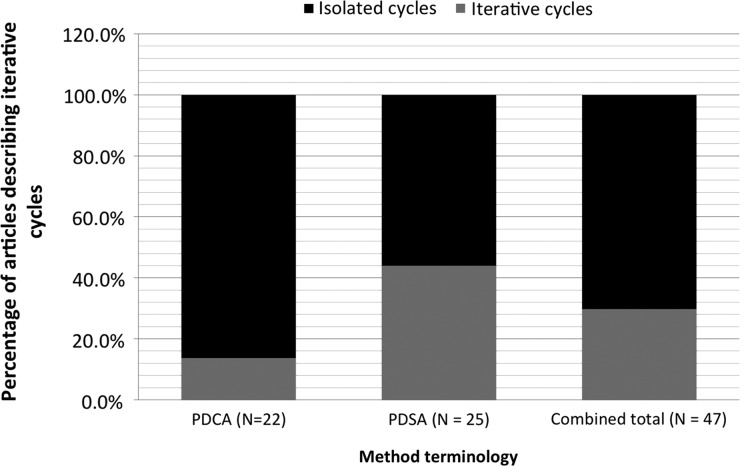
Background: Plan–do–study–act (PDSA) cycles provide a structure for iterative testing of changes to improve quality of systems. The method is widely accepted in healthcare improvement; however there is little overarching evaluation of how the method is applied. This paper proposes a theoretical framework for assessing the quality of application of PDSA cycles and explores the consistency with which the method has been applied in peer-reviewed literature against this framework. Methods: NHS Evidence and Cochrane databases were searched by three independent reviewers. Empirical studies were included that reported application of the PDSA method in healthcare. Application of PDSA cycles was assessed against key features of the method, including documentation characteristics, use of iterative cycles, prediction-based testing of change, initial small-scale testing and use of data over time. Results: 73 of 409 individual articles identified met the inclusion criteria. Of the 73 articles, 47 documented PDSA cycles in sufficient detail for full analysis against the whole framework. Many of these studies reported application of the PDSA method that failed to accord with primary features of the method. Less than 20% (14/73) fully documented the application of a sequence of iterative cycles. Furthermore, a lack of adherence to the notion of small-scale change is apparent and only 15% (7/47) reported the use of quantitative data at monthly or more frequent data intervals to inform progression of cycles. Discussion: To progress the development of the science of improvement, a greater understanding of the use of improvement methods, including PDSA, is essential to draw reliable conclusions about their effectiveness. This would be supported by the development of systematic and rigorous standards for the application and reporting of PDSAs.
Overview
The claims and statistics of this paper haven’t been checked yet.
Free: it reads the open-access text and checks the first 5 claims that cite a source we can check. Create a free account to check every claim.
Integrity signals
Registry
Cites
Statistics
Figures
Verification
Claims the paper makes
The claims and statistics of this paper haven’t been checked yet.
Free: it reads the open-access text and checks the first 5 claims that cite a source we can check. Create a free account to check every claim.
Claims other papers make about this one
Each is checked against this paper’s own text: does it say what the citing paper says it does?
The source backs part of the claim, not all of it — or backs it for a different population, condition or comparison.
In the citing paper
“Drawing on impact evaluation research from the TSBM (5), CQI (6–8, 16), and team science (9–12), we develop a theory-driven, team-based approach to CQI and impact evaluation.”
From Building on the Translational Science Benefits Model to include team science: a practical and theory-based approach to continuous quality improvement and impact evaluation for Clinical and Translational Science Award programs (2025) · cites this paper as [8]
Experimental — accuracy not yet measuredThe cited source says what the claim attributes to it.
In the citing paper
“The Plan-Do-Study/Check-Act (PDSA/PDCA) cycle of CQI is one of the most widely used methods within health care and considered a key foundational approach to quality improvement (6–8).”
The cited source says what the claim attributes to it.
In the citing paper
“Rooted in the scientific method, CQI methods have been used to iteratively improve health care (8, 15) and more recently encouraged to enhance CTSA efforts toward translational science (1–3).”
In the citing paper
“Without a good theoretical grasp of the underlying theory and its critical components (‘active ingredients’), improvers may adopt the label or outward appearance attached to a successful intervention, which does not permit them to reproduce its impact.46”
From Demystifying theory and its use in improvement (2015) · cites this paper as [46]
Self-check
Percentages, sums and reported differences re-computed from the paper’s own numbers.
The self-check needs the paper’s full text.
Citations
Cites
Liberati, A., Altman, D. G., Tetzlaff, J., Mulrow, C., Gøtzsche, P. C., Ioannidis, J. P. A., Clarke, M., Devereaux, P. J., Kleijnen, J., & Moher, D. (2009) · PLoS Medicine · doi:10.1371/journal.pmed.1000100 · Cited by 28,164
Damschroder, L. J., Aron, D. C., Keith, R. E., Kirsh, S. R., Alexander, J. A., & Lowery, J. C. (2009) · Implementation Science · doi:10.1186/1748-5908-4-50 · Cited by 14,496
Diffusion of Innovations in Service Organizations: Systematic Review and Recommendations
GREENHALGH, T., ROBERT, G., MACFARLANE, F., BATE, P., & KYRIAKIDOU, O. (2004) · The Milbank Quarterly · doi:10.1111/j.0887-378x.2004.00325.x · Cited by 7,448
Deming, W. E. (1982) · Medical Entomology and Zoology · Cited by 7,297
An Intervention to Decrease Catheter-Related Bloodstream Infections in the ICU
Pronovost, P., Needham, D., Berenholtz, S., Sinopoli, D., Chu, H., Cosgrove, S., Sexton, B., Hyzy, R., Welsh, R., Roth, G., et al. (2006) · New England Journal of Medicine · doi:10.1056/nejmoa061115 · Cited by 4,387
The Improvement Guide: A Practical Approach to Enhancing Organizational Performance
(1997) · Quality Management Journal · doi:10.1080/10686967.1998.11919154 · Cited by 2,895
The improvement guide : a practical approach to enhancing organizational performance
Langley, G. J. (1996) · Jossey-Bass Publishers eBooks · Cited by 875
Getting evidence into practice: the meaning of `context'
McCormack, B., Kitson, A., Harvey, G., Rycroft‐Malone, J., Titchen, A., & Seers, K. (2002) · Journal of Advanced Nursing · doi:10.1046/j.1365-2648.2002.02150.x · Cited by 765
Complexity, leadership, and management in healthcare organisations
Plsek, P. E., & Wilson, T. (2001) · BMJ · doi:10.1136/bmj.323.7315.746 · Cited by 754
KAPLAN, H. C., BRADY, P. W., DRITZ, M. C., HOOPER, D. K., LINAM, W. M., FROEHLE, C. M., & MARGOLIS, P. (2010) · Milbank Quarterly · doi:10.1111/j.1468-0009.2010.00611.x · Cited by 714 · cited 1×
“5 Research findings highlight the influential effect that local context can have on the success of an intervention 6 7 and, as such, ‘ single-bullet ’ interventions are not anticipated to deliver consistent improvements.”
Background
Research works printed but not linked: 5
- 13. Powell AE, Rushmer RK, Davies HTO. A systematic narrative review of quality improvement models in health care: NHS Quality Improvement Scotland. 2009. Report No. 1844045242.
- 27. Systematic review Taylor MJ, et al. BMJ Qual Saf 2014;23:290-298. doi:10.1136/bmjqs-2013-001862
- 30. Imai M. The key to Japan's competitive success. New York: McGraw-Hill, 1986.
- 40. Moen R, Norman C. Circling back: clearing up the myths about the Deming cycle and seeing how it keeps evolving. Qual Progress 2010;42:23-8.
- 42. Berwick DM. Developing and testing changes in delivery of care. Ann Intern Med 1998;128:651. · DOI · Paper page
Cited by
Items 301–400 of 1,000
Worksite Walkthrough Intervention: Data-driven Prevention of Workplace Violence on Hospital Units
Hamblin, L. E., Essenmacher, L., LUBORSKY, M. R., Russell, J., Janisse, J. J., Upfal, M. J., & Arnetz, J. E. (2017) · Journal of Occupational and Environmental Medicine · doi:10.1097/jom.0000000000001081 · Cited by 31
“24,25 Other improved elements included the use of a setting-specific, data-driven process in order to emphasize relevant problem areas for each unit; a randomized-controlled design; analysis of documented incident reports; and efforts to minimize disruption of worker productivity and clinical care.”
Integrating the social sciences into the COVID-19 response in Alberta, Canada
Leslie, M., Fadaak, R., Davies, J. M., Blaak, M. J., Forest, P., Green, L. A., & Conly, J. M. (2020) · BMJ Global Health · doi:10.1136/bmjgh-2020-002672 · Cited by 30
“31 Our situated interventions have focused on cross-referencing reactions to these predictable and unpredictable changes in different sectors, applying our expertise and knowledge to the challenges, and joining in local negotiations to prototype and pilot solutions.”
Price, G. J., Mackay, R. I., Aznar, M. C., McWilliam, A., Johnson‐Hart, C., van Herk, M., & Finn, C. F. (2021) · Radiotherapy and Oncology · doi:10.1016/j.radonc.2021.09.030 · Cited by 25
Modelo de implementação sistemática do brinquedo terapêutico em unidades pediátricas hospitalares
Miranda, C. B., Maia, E. B. S., & Almeida, F. D. A. (2022) · Escola Anna Nery · doi:10.1590/2177-9465-ean-2022-0136pt · Cited by 24
Huber, J. F., Loh, A., Monga, S., Esufali, J., & Shouldice, M. (2022) · Children · doi:10.3390/children10010057 · Cited by 27
“This initiative aims to improve care, decrease barriers and health care inequities, and ultimately improve long-term physical and mental health outcomes in individuals with ASD/IDD through a Plan-Do-Study-Act (PDSA) model of health care quality improvement [24].”
BackgroundPfeiffer, P. N., Ganoczy, D. A., Zivin, K., Gerlach, L. B., Damschroder, L. J., & Ulmer, C. S. (2023) · Sleep Health · doi:10.1016/j.sleh.2023.07.002 · Cited by 24
Desai, V. R., Raskin, J. S., Mohan, A., Montojo, J., Briceño, V., Curry, D. J., & Lam, S. K. (2018) · Journal of Neurosurgery Pediatrics · doi:10.3171/2017.10.peds17248 · Cited by 24
Willging, C. E., Kano, M. A., Green, A. E., Sturm, R., Sklar, M., Davies, S., & Eckstrand, K. (2020) · BMJ Open · doi:10.1136/bmjopen-2019-032787 · Cited by 29
Guss, C. E., Eiduson, R., Khan, A., Dumont, O., Forman, S. F., & Gordon, A. R. (2020) · Journal of Adolescent Health · doi:10.1016/j.jadohealth.2020.03.030 · Cited by 25
Lynch, J., Cope, V. C., & Murray, M. (2020) · Intensive and Critical Care Nursing · doi:10.1016/j.iccn.2020.103001 · Cited by 24
Rozanec, N., Lavergne, C., & Harnett, N. (2021) · Technical Innovations & Patient Support in Radiation Oncology · doi:10.1016/j.tipsro.2021.01.003 · Cited by 24
Joughin, A., Ibitoye, S., Crees, A., Shipway, D., & Braude, P. (2021) · Age and Ageing · doi:10.1093/ageing/afab066 · Cited by 24
“A theoretical framework based on key features of PDSA was followed and documented in a single results table [6]:”
MethodKok, N., Zegers, M., van der Hoeven, H., Hoedemaekers, C., & van Gurp, J. L. P. (2022) · Journal of Medical Ethics · doi:10.1136/medethics-2021-107943 · Cited by 25
Pomey, M., Clavel, N., Amar, C., Sabogale-Olarte, J. C., Sanmartin, C., Coster, C. D., & Noseworthy, T. (2017) · BMC Health Services Research · doi:10.1186/s12913-017-2568-6 · Cited by 25
“As far as change implementation strategies are concerned, our interviews did not reveal any that were based on the literature, except in case 4, where the WTMS was based on Plan/Do/Check/Act methodology that provided a structure for implementing changes to improve the quality of the process/care pathway [33].”
MethodRevisiting unplanned extubation in the pediatric intensive care unit: What's new?
da Silva, P. S. L., Farah, D., & Fonseca, M. C. M. (2017) · Heart & Lung · doi:10.1016/j.hrtlng.2017.08.006 · Cited by 23
Using Health Information Technology to Support Use of Patient-Reported Outcomes in Rheumatology
Gandrup, J., & Yazdany, J. (2019) · Rheumatic Disease Clinics of North America · doi:10.1016/j.rdc.2019.01.007 · Cited by 25
“22 Based on our review, few studies have used human-centered design thinking and few report systematic redesign or quality improvement methodologies.”
BackgroundJohnston, D. R., Lavin, J. M., Hammer, A. R., Studer, A., Harding, C., & Thompson, D. M. (2020) · Otolaryngology · doi:10.1177/0194599820957254 · Cited by 23
“The authors used a Plan, Do, Study, Act (PDSA) methodology to design and study the initiative, consistent with the Institute for Healthcare Improvement’s model of improvement.(3) At project outset, a focus group with families of Spanishspeaking patients identified gaps and opportunities.”
MethodMurray, S., Augustyniak, M., Murase, J. E., Fischer‐Betz, R., Nelson‐Piercy, C., Peniuta, M., & Vlaev, I. (2021) · BMJ Open · doi:10.1136/bmjopen-2020-043960 · Cited by 23
Carter, H. E., Lee, X. J., Farrington, A., Shield, C., Graves, N., Cyarto, E., Parkinson, L., Oprescu, F., Meyer, C., Rowland, J. T. J., et al. (2021) · BMC Geriatrics · doi:10.1186/s12877-021-02294-8 · Cited by 23
Rajwani, A., Clark, N., & Montalvo, C. (2022) · Journal of the American Psychiatric Nurses Association · doi:10.1177/10783903221114335 · Cited by 23
“It allows teams to test the change by planning the intervention, testing the method, observing the results, and acting on what is learned with the goal of expansion throughout an organization (Taylor et al., 2014).”
MethodMaw, A., Morris, M. A., Glasgow, R. E., Barnard, J. G., Ho, P. M., Ortiz‐Lopez, C., Fleshner, M., Kramer, H. R., Grimm, E., Ytell, K., et al. (2022) · Implementation Science Communications · doi:10.1186/s43058-022-00334-x · Cited by 25
“Future work should compare it to alternative implementation science approaches or quality improvement tools like Plan-Do-Study-Act cycles [41] to see if the perceived advantages of this approach can be demonstrated using rigorous evaluation and objective metrics.”
MethodBaltaxe, E., Cano, I., Risco, R., Sebio-Garcia, R., Dana, F., Laxe, S., Martínez, R., Ozores, F., Roca, J., & Martínez‐Palli, G. (2022) · International Journal of Integrated Care · doi:10.5334/ijic.6503 · Cited by 23
Deilkås, E. C. T., Rosta, J., Bååthe, F., Søfteland, E., Lexberg, Å. S., Røise, O., & Rø, K. I. (2022) · BMC Family Practice · doi:10.1186/s12875-022-01878-6 · Cited by 23
Nganda, M. M., Bettee, A., Kollie, K., Nallo, G. E., Juabeh, M., Wright, A., Thomson, R., & Dean, L. (2023) · International Health · doi:10.1093/inthealth/ihad006 · Cited by 23
Paton, F., Chambers, D., Wilson, P. M., Eastwood, A. J., Craig, D., Fox, D., Jayne, D. G., & McGinnes, E. (2014) · Health Services and Delivery Research · doi:10.3310/hsdr02210 · Cited by 23
“The recent review on the application plan-do-study-act methods offers a timely overview of the reporting limitations that undermine wider understanding.(130) Evidence on the experience of patients in relation to ERAS programmes is also lacking and further research on the experiences of patients and their families/care…”
Wagner, A. D., Mugo, C., Bluemer-Miroite, S., Mutiti, P. M., Wamalwa, D. C., Bukusi, D. E., Neary, J., Njuguna, I. N., O’Malley, G., John-Stewart, G. C., et al. (2017) · AIDS · doi:10.1097/qad.0000000000001531 · Cited by 24
Becan, J. E., Fisher, J. H., Johnson, I. D., Bartkowski, J. P., Seaver, R., Gardner, S. K., Aarons, G. A., Renfro, T. L., Muiruri, R., Blackwell, L., et al. (2020) · Administration and Policy in Mental Health and Mental Health Services Research · doi:10.1007/s10488-019-01007-z · Cited by 23
Health Promotion Interventions: Lessons from the Transfer of Good Practices in CHRODIS-PLUS
Barnfield, A., Savolainen, N., & Lounamaa, A. (2020) · International Journal of Environmental Research and Public Health · doi:10.3390/ijerph17041281 · Cited by 26
A systematic review and proposed framework for sustainable learning healthcare systems
Golburean, O., Nordheim, E. S., Faxvaag, A., Pedersen, R., Lintvedt, O., & Marco-Ruiz, L. (2024) · International Journal of Medical Informatics · doi:10.1016/j.ijmedinf.2024.105652 · Cited by 25
Aggarwal, A. K., Cromwell, D. A., Nossiter, J., van der Meulen, J., Walker, K., Almilaji, O., Bahl, A., Barber, E., Blacker, S., Boudour, J., et al. (2025) · The Lancet Oncology · doi:10.1016/s1470-2045(24)00665-x · Cited by 22
de Wet, C., Black, C., Luty, S., McKay, J., O’Donnell, C. A., & Bowie, P. (2016) · BMJ Quality & Safety · doi:10.1136/bmjqs-2015-004093 · Cited by 27
Logan, R., Davey, P. G., Davie, A., Grant, S., Tully, V., Valluri, A., & Bell, S. (2018) · BMJ Open Quality · doi:10.1136/bmjoq-2018-000392 · Cited by 23
“PDSA cycles allow for rapid assessment of small-scale changes, and enable continuous improvement and adaptation of an intervention.(19) We used the Theoretical Domains Framework to understand barriers to implementation.”
MethodLevonyak, N. S., Hodges, M. P., Haaf, N., Brown, T. J., Hardy, S., Mhoon, V., Kainthla, R., Beg, M. S., & Kazmi, S. M. A. (2021) · Nutrition in Clinical Practice · doi:10.1002/ncp.10753 · Cited by 28
Brima, N., Morhason-Bello, I. O., Charles, V., Davies, J. I., & Leather, A. J. M. (2022) · BMJ Open · doi:10.1136/bmjopen-2022-062616 · Cited by 26
Solomon, D. H., Lee, S. B., Zak, A., Corrigan, C., Agosti, J., Bitton, A., Harrold, L. R., Losina, E., Lü, B., Pincus, T., et al. (2016) · Seminars in Arthritis and Rheumatism · doi:10.1016/j.semarthrit.2016.02.009 · Cited by 23
“(The PDSA cycles refer to tests of change, using four stages, that are performed as part of a quality improvement process [21].”
MethodMcAullay, D. R., McAuley, K., Bailie, R. S., Mathews, V., Jacoby, P., Gardner, K., Sibthorpe, B. M., Strobel, N., & Edmond, K. M. (2017) · Journal of Paediatrics and Child Health · doi:10.1111/jpc.13673 · Cited by 25
Kamity, R., Grella, M., Kim, M. L., Akerman, M. B., & Quintos-Alagheband, M. L. (2020) · BMJ Quality & Safety · doi:10.1136/bmjqs-2019-010666 · Cited by 22
Trauma-Informed Pediatric Primary Care: Facilitators and Challenges to the Implementation Process
Sala‐Hamrick, K., Isakson, B. L., Gonzalez, S. D. C. D., Cooper, A., Buchan, J., Aceves, J., Orton, E. V., Holtz, J., & Waggoner, D. M. (2021) · The Journal of Behavioral Health Services & Research · doi:10.1007/s11414-020-09741-1 · Cited by 25
Zia, N., Latif, A., Mashreky, S. R., Al-Ibran, E., Hashmi, M., Rahman, A., Khondoker, S., Quraishy, M. S., & Hyder, A. A. (2019) · BMC Research Notes · doi:10.1186/s13104-019-4063-0 · Cited by 21
“It will allow observation of the variations in burn types and associated care over a period of time [29].”
BackgroundMethodInfluentialImplementation of lung cancer multidisciplinary teams: a review of evidence-practice gaps
Rankin, N. M., Fradgley, E. A., & Barnes, D. J. (2020) · Translational Lung Cancer Research · doi:10.21037/tlcr.2019.11.32 · Cited by 23
“While QI initiatives are highly relevant to MDC practice, these approaches may offer limited insights about how to successfully implement an innovation across multiple teams, as many studies appear to only be effective in specific settings (110,112).”
BackgroundLloyd, H. M., Ekman, I., Rogers, H. L., Raposo, V., Melo, P., Marinkovic, V. D., Buttiġieġ, S. C., Srulovici, E., Lewandowski, R. A., & Britten, N. (2020) · International Journal of Environmental Research and Public Health · doi:10.3390/ijerph17093050 · Cited by 35
Allaham, S., Kumar, A., Morriss, F., Lakhanpaul, M., Wilson, E., Sikorski, C., Martin, J., Costello, A. M. D. L., Manikam, L., & Heys, M. (2022) · BMJ Open · doi:10.1136/bmjopen-2021-050784 · Cited by 21
Clinical Workflow Analysis, Process Redesign, and Quality Improvement
Ozkaynak, M., Unertl, K. M., Johnson, S. A., Brixey, J. J., & Haque, S. N. (2022) · Springer eBooks · doi:10.1007/978-3-030-93765-2_8 · Cited by 26
Designing and Conducting Scholarly Quality Improvement: A Practical Guide for Improvers Everywhere
Carroll, A. R., Smith, C. M., Frazier, S. B., Weiner, J. G., & Johnson, D. (2022) · Hospital Pediatrics · doi:10.1542/hpeds.2022-006717 · Cited by 21
Streamlining and Consistency in Surgery: Lean Six Sigma to Improve Operating Room Efficiency
Tanna, N., Clappier, M., Barnett, S. L., Talamini, M. A., Coppa, G. F., Cifu, K., Bianculli, A. R., Drummond, D., Bello, S., & Smith, M. L. (2023) · Plastic & Reconstructive Surgery · doi:10.1097/prs.0000000000010240 · Cited by 24
Rigorous evaluations of evolving interventions: can we have our cake and eat it too?
Burke, R. E., & Shojania, K. G. (2018) · BMJ Quality & Safety · doi:10.1136/bmjqs-2017-007554 · Cited by 23
“…(PDSA) cycles offer the most familiar and accessible way to iteratively improve an intervention, but this approach has two main challenges: (1) it requires specialised expertise and effort to do well, 15–17 and (2) improvers may struggle to successfully pair this with a rigorous evaluative design.”
BackgroundSibthorpe, B. M., Gardner, K., Chan, M., Dowden, M., Sargent, G. M., & McAullay, D. R. (2018) · Journal of Health Organization and Management · doi:10.1108/jhom-02-2018-0056 · Cited by 21
Faecal immunochemical testing implementation to increase colorectal cancer screening in primary care
Bakhai, S., Ahluwalia, G., Nallapeta, N. S., Mangat, A., & Reynolds, J. L. (2018) · BMJ Open Quality · doi:10.1136/bmjoq-2018-000400 · Cited by 21
“design We designed this QI based on the Plan–Do–Study–Act (PDSA) model of healthcare improvement.(30) 31 The QI team included a physician champion, nursing and ancillary staff, residents, attending physicians, a social worker, gastroenterolgy (GI) nurse practitioner (NP), a patient navigator, patients, administrative…”
MethodQualitätsindikatoren in der Intensivmedizin: Hintergrund und praktischer Nutzen
Kumpf, O. (2019) · Medizinische Klinik - Intensivmedizin und Notfallmedizin · doi:10.1007/s00063-019-00630-w · Cited by 22
Healthcare middle managers’ capacity and capability to quality improvement
Hartviksen, T. A., Aspfors, J., & Uhrenfeldt, L. (2020) · Leadership in health services · doi:10.1108/lhs-11-2019-0072 · Cited by 22
Huang, W., Chang, C., Stuart, E. A., Daumit, G. L., Wang, N., McGinty, E. E., Dickerson, F., & Igusa, T. (2021) · Implementation Research and Practice · doi:10.1177/26334895211010664 · Cited by 23
“Models for more complex interventions involving implementation processes at the provider, site, and policy levels would typically be selected from those in the upper portion of this conceptual map.”
MethodInfluentialSystematic Review of Quality Improvement Projects Related to Intershift Nursing Handover
Cho, S., Lee, J. L., Kim, K. S., & Kim, E. M. (2021) · Journal of Nursing Care Quality · doi:10.1097/ncq.0000000000000576 · Cited by 21
Cano, I., Dueñas-Espín, I., Hernández, C., de Batlle, J., Benavent, J., Contel, J. C., Baltaxe, E., Escarrabill, J., Fernández, J. M., García‐Aymerich, J., et al. (2017) · npj Primary Care Respiratory Medicine · doi:10.1038/s41533-017-0043-9 · Cited by 23
Role enactment of facilitation in primary care – a qualitative study
Due, T. D., Thorsen, T., Waldorff, F. B., & Kousgaard, M. B. (2017) · BMC Health Services Research · doi:10.1186/s12913-017-2537-0 · Cited by 21
“During this period they were updated on the central elements of the chronic disease management programmes, the Data Capture Module (DCM) (see below), and introduced to various implementation and facilitation tools such as the Plan-Do-Study-Act (PDSA) circle [39] and the brown paper method (a visual display of a proces…”
MethodMaking, A. H. I. P. C. F. D. U. F. D. (2022) · Global Health Science and Practice · doi:10.9745/ghsp-d-21-00666 · Cited by 24
Camaradou, J., & Hogg, H. D. J. (2023) · Advances in Therapy · doi:10.1007/s12325-023-02511-3 · Cited by 25
“Similarly, there are lessons to be learnt from healthcare improvement methodologies including Lean, Six Sigma and PDSA [28–30].”
BackgroundLoewenthal, J., Dyer, N. L., Lipsyc-Sharf, M., Borden, S., Mehta, D. H., Dusek, J. A., & Khalsa, S. B. S. (2021) · Global Advances in Health and Medicine · doi:10.1177/21649561211001038 · Cited by 20
Narrowing the Digital Divide: Framework for Creating Telehealth Equity Dashboards
Luke, M. J., Craig, S., Pak-Gorstein, S., Arellano, M., Zhang, J., Wright, S. M., Chuo, J., & Scribano, P. V. (2024) · Interactive Journal of Medical Research · doi:10.2196/57435 · Cited by 21
“This process, akin to the plan-do-study-act cycle in improvement science, can ensure the adaptability and continual advancement of a dashboard to meet the demands of a dynamic health system [21].”
MethodKasujja, H., Waswa, J. P., Kiggundu, R., Murungi, M., Kwikiriza, G., Bahatungire, R. R., Kajumbula, H., Alombah, F., Joshi, M. P., & Konduri, N. (2024) · Frontiers in Public Health · doi:10.3389/fpubh.2024.1465439 · Cited by 20
Baltaxe, E., Embid, C., Aumatell, E., Martínez, M., Barberán-García, A., Kelly, J., Eaglesham, J., Herranz, C., Vargiu, E., Montserrat, J. M., et al. (2020) · JMIR mhealth and uhealth · doi:10.2196/16395 · Cited by 22
“Finally, stakeholders play an important role in the design and evaluation of digital health tools [53,54] and, as such, their input should be taken into account when evaluating a service in which there is considerable interplay between patients, different health care tiers, and social and technical services [55].”
BackgroundAn integrative learning approach: combining improvement methods and ambidexterity
Avby, G. (2022) · The Learning Organization · doi:10.1108/tlo-10-2021-0127 · Cited by 22
“Others would argue that the method’s problem lies not in its limitations but in its oversimplification and fidelity of application (Reed and Card, 2016; Taylor et al., 2014).”
BackgroundWong, J., Young, E., Hung, L., Mann, J., & Jackson, L. (2023) · BMC Health Services Research · doi:10.1186/s12913-023-09741-9 · Cited by 20
“The last stage is ‘Act’, the team will decide what changes to be made in the next cycle or not to proceed with more interactive cycles [11].”
BackgroundLöfqvist, N. (2024) · BMJ Open Quality · doi:10.1136/bmjoq-2023-002566 · Cited by 20
“23 Having capability means being able to perform the actions that are needed to reach desired goals.”
BackgroundAbdelhalim, A., Zargoush, M., Archer, N., & Roham, M. (2024) · Health Expectations · doi:10.1111/hex.14050 · Cited by 29
Is implementation science a science? Not yet
Fixsen, D. L., Dyke, M. K. V., & Blasé, K. A. (2024) · Frontiers in Public Health · doi:10.3389/fpubh.2024.1454268 · Cited by 22
Improving person-centered mobility care in nursing homes: A feasibility study
Taylor, J., Barker, A. L., Hill, H., & Haines, T. P. (2015) · Geriatric Nursing · doi:10.1016/j.gerinurse.2014.11.002 · Cited by 22
Shahnazarian, V., Karu, E., & Mehta, P. H. (2015) · BMJ Quality Improvement Reports · doi:10.1136/bmjquality.u208549.w3409 · Cited by 20
“improve the quality of healthcare systems.[6] The cycle is as follows: in the “plan” step, objectives are stated and a detailed plan is formulated.”
BackgroundEncouraging Reflection and Change in Clinical Practice: Evolution of a Tool
Armson, H., Elmslie, T., Roder, S., & Wakefield, J. G. (2015) · Journal of Continuing Education in the Health Professions · doi:10.1002/chp.21299 · Cited by 23
Threats to safety during sedation outside of the operating room and the death of Michael Jackson
Webster, C. S., Mason, K. P., & Shafer, S. L. (2016) · Current Opinion in Anaesthesiology · doi:10.1097/aco.0000000000000318 · Cited by 23
“It is also important not to stop collecting data after initial success at reducing the occurrence of an adverse event, because inevitable changes in supplies, staff and related procedures may lead to the safety initiative becoming less effective and adverse events again increasing in frequency [13,57,69,76].”
BackgroundJennings, F. L., & Mitchell, M. L. (2017) · Intensive and Critical Care Nursing · doi:10.1016/j.iccn.2017.01.002 · Cited by 28
“Taylor et al. (2014) describes PDSA as a four stage cycle that an be used when structuring a study or intervention for change nd improvement.”
BackgroundRostami, P., Ashcroft, D. M., & Tully, M. P. (2018) · PLoS ONE · doi:10.1371/journal.pone.0192224 · Cited by 21
Lyon, A. R., Stanick, C., & Pullmann, M. D. (2018) · Clinical Psychology Science and Practice · doi:10.1111/cpsp.12265 · Cited by 21
Wai, J. M., Aloezos, C., Mowrey, W. B., Baron, S. W., Cregin, R., & Forman, H. L. (2019) · Journal of Substance Abuse Treatment · doi:10.1016/j.jsat.2019.01.017 · Cited by 22
“Additionally, our study is only the first step of a traditional, step-wise quality improvement project which relies on multiple interventions and review over time to ensure a continued improvement in quality of care (Taylor et al., 2014).”
BackgroundZáhumenský, J., Pšenková, P., Doležal, P., Otapkova, P., Papcun, P., Ferianec, V., & Krizko, M. (2020) · International Journal of Gynecology & Obstetrics · doi:10.1002/ijgo.13345 · Cited by 22
Connors, E., Lawson, G. M., Wheatley-Rowe, D., & Hoover, S. (2020) · Administration and Policy in Mental Health and Mental Health Services Research · doi:10.1007/s10488-020-01082-7 · Cited by 21
Moser, A., Melchior, I., Veenstra, M. Y., Stoffers, E., Derks, E., & Jie, K. G. (2021) · Health Expectations · doi:10.1111/hex.13189 · Cited by 28
An ontology knowledge inspection methodology for quality assessment and continuous improvement
Roldán-Molina, G. R., Ruano-Ordás, D., Basto-Fernandes, V., & Méndez, J. R. (2021) · Data & Knowledge Engineering · doi:10.1016/j.datak.2021.101889 · Cited by 20
Akmal, A., Podgorodnichenko, N., Stokes, T., Foote, J., Greatbanks, R., & Gauld, R. D. C. (2022) · BMC Health Services Research · doi:10.1186/s12913-021-07433-w · Cited by 23
Hoy‐Ellis, C. P., Fredriksen‐Goldsen, K. I., & Kim, H. (2022) · Journal of Aging and Health · doi:10.1177/08982643211068557 · Cited by 20
Douglas, P. S., Mack, M. J., Acosta, D. A., Benjamin, E. J., Biga, C., Hayes, S. N., Ijioma, N., Jay-Fuchs, L., Khandelwal, A. K., McPherson, J., et al. (2022) · Journal of the American College of Cardiology · doi:10.1016/j.jacc.2022.03.006 · Cited by 20
A Quality Assessment of a Collaborative Model of a Pediatric Antimicrobial Stewardship Program
Nguyen-Ha, P.-T., Howrie, D. L., Crowley, K. L., Vetterly, C. G., McGhee, W., Berry, D., Ferguson, E. H., Polischuk, E., Brooks, M. M., Goff, J., et al. (2016) · PEDIATRICS · doi:10.1542/peds.2015-0316 · Cited by 20
Clinical Workflow Analysis, Process Redesign, and Quality Improvement
Ozkaynak, M., Unertl, K. M., Johnson, S. A., Brixey, J. J., & Haque, S. N. (2015) · Springer eBooks · doi:10.1007/978-3-319-22753-5_7 · Cited by 20
Auraaen, A., Saar, K., & Klazinga, N. (2020) · OECD health working papers · doi:10.1787/2abdd834-en · Cited by 45
Davis, M. A., Lim, N., Jordan, J., Yee, J., Gichoya, J. W., & Lee, R. (2023) · American Journal of Roentgenology · doi:10.2214/ajr.22.28802 · Cited by 19
Fidelity, not adaptation, is essential for implementation
Fixsen, D. L. (2025) · Frontiers in Health Services · doi:10.3389/frhs.2025.1575179 · Cited by 19
Doan, A., Vu, C. M. H., Nguyen, T. T., Green, K. E., Phan, H. T. T., Janamnuaysook, R., Ngoc, B. V., Le, T. M., Khang, Q., Tran, T. T., et al. (2022) · Journal of the International AIDS Society · doi:10.1002/jia2.25996 · Cited by 19
Yaseen, S. J., Taha, S., Alkaiyat, A. S., & Zyoud, S. H. (2025) · BMC Health Services Research · doi:10.1186/s12913-025-12288-6 · Cited by 23
Strenk, M. L., Kiger, M. A., Hawke, J. L., Mischnick, A., & Quatman‐Yates, C. C. (2017) · Physical Therapy · doi:10.1093/ptj/pzx029 · Cited by 19
Harle, I. A., Karim, S., Raskin, W., Hopman, W. M., & Booth, C. M. (2017) · Current Oncology · doi:10.3747/co.24.3754 · Cited by 19
Skolarus, L. E., Sales, A. E., Zimmerman, M. A., Corches, C. L., Landis‐Lewis, Z., Robles, M. C., McBride, A. C., Rehman, N., Oliver, A., Islam, N., et al. (2019) · Implementation Science · doi:10.1186/s13012-019-0869-3 · Cited by 20
Peden, C. J., Stephens, T., Martin, G. P., Kahan, B. C., Thomson, A., Everingham, K., Kocman, D., Lourtie, J., Drake, S., Girling, A. J., et al. (2019) · Health Services and Delivery Research · doi:10.3310/hsdr07320 · Cited by 23
SISTEM PELAPORAN INSIDEN KESELAMATAN PASIEN DI SEBUAH RUMAH SAKIT SWASTA DI KUDUS
Lestari, E. S., Dwiantoro, L., & Denny, H. M. (2019) · Jurnal Keperawatan dan Kesehatan Masyarakat Cendekia Utama · doi:10.31596/jcu.v8i2.416 · Cited by 19
Poor, A. D., Acquah, S. O., Wells, C. M., Sevillano, M., Strother, C. G., Oldenburg, G., & Hsieh, S.-J. J. (2020) · American Journal of Critical Care · doi:10.4037/ajcc2020992 · Cited by 19
Standardized Feeding Approach Mitigates Weight Loss in Infants with Congenital Heart Disease
Lisanti, A. J., Savoca, M. L., Gaynor, J. W., Mascarenhas, M. R., Ravishankar, C., Sullivan, E., Pieciak, K., Costarino, A. T., Chen, J., Kennedy, A. T., et al. (2020) · The Journal of Pediatrics · doi:10.1016/j.jpeds.2020.12.047 · Cited by 22
Jones, A., Tay, C. T., Melder, A., Vincent, A. J., & Teede, H. J. (2020) · Seminars in Reproductive Medicine · doi:10.1055/s-0041-1726131 · Cited by 19
Malone, S. M., McKay, V., Krucylak, C., Powell, B. J., Liu, J., Terrill, C. M., Saito, J. M., Rangel, S. J., & Newland, J. G. (2021) · Implementation Science · doi:10.1186/s13012-021-01096-1 · Cited by 20
Knight, D. K., Belenko, S. R., Dennis, M. L., Wasserman, G. A., Joe, G. W., Aarons, G. A., Bartkowski, J. P., Becan, J. E., Elkington, K. S., Hogue, A., et al. (2022) · BMC Health Services Research · doi:10.1186/s12913-022-08902-6 · Cited by 19
“A common form, Plan-Do-Study-Act (PDSA) [35], includes an iterative process involving small-scale testing and is most effective when teams utilize data that are highly relevant to the target outcomes.”
BackgroundDeveloping and Testing a Checklist to Enhance Quality in Clinical Ethics Consultation
Flicker, L. S., Rose, S. L., Eves, M. M., Flamm, A. L., Sanghani, R. M., & Smith, M. L. (2014) · The Journal of Clinical Ethics · doi:10.1086/jce201425403 · Cited by 20
Building capacity for continuous quality improvement (CQI): A pilot study
Hunter, S. B., Rutter, C. M., Ober, A. J., & Booth, M. S. (2017) · Journal of Substance Abuse Treatment · doi:10.1016/j.jsat.2017.07.014 · Cited by 20
“One review examined studies of Plan-Do-Study-Act (PDSA) cycles and found few studies adhered to an iterative cycle framework, prediction-based and small-scale testing, use of data over time, and documentation (Taylor et al., 2014).”
BackgroundJesus, T. S., Papadimitriou, C., Pinho, C. S., & Hoenig, H. (2017) · Archives of Physical Medicine and Rehabilitation · doi:10.1016/j.apmr.2017.08.491 · Cited by 19
Metadata
- Authors
- Taylor, M. J., McNicholas, C., Nicolay, C., Darzi, A., Bell, D., & Reed, J. E.
- Affiliations
- National Institute for Health and Care Research (GB)
- Imperial College London (GB)
- Corresponding author
- Taylor, Michael J
- Venue
- BMJ Quality & Safety
- Publisher
- BMJ
- Published
- 2013-09-11
- Volume
- 23
- Issue
- 4
- Pages
- 290-298
- ISSN
- 1475-3898 (ISSN-L)
- 2044-5415
- 2044-5423
- PMC
- PMC3963536
- OpenAlex
- W2115133509
- Semantic Scholar
- 661ab1c69e92f60884b5e1a143dc17c90020de3c
- Cited by
- 1,871
- References
- 81
- Citations by year
- 2026: 176 · 2025: 225 · 2024: 178 · 2023: 172 · 2022: 173 · 2021: 200 · 2020: 188 · 2019: 143 · 2018: 120 · 2017: 113 · 2016: 84 · 2015: 63 · 2014: 27 · 2013: 2
- FWCI
- 9.85
- Type
- journal article
- Language
- en
- Open access
- hybrid
- doi.org
- Licence
- cc-by-nc
- Locations
- BMJ Quality & Safety (publishedVersion, cc-by-nc)
- Europe PMC (PubMed Central) (publishedVersion, other-oa)
- PubMed Central (publishedVersion, cc-by-nc)
- PubMed (publishedVersion)
- HighWire Press Open Archive (acceptedVersion)
- Spiral (Imperial College London) (submittedVersion, other-oa)
- Funders
- National Institute for Health and Care Research (NF-SI-0510-10186)
- Topics
- Health Sciences › Medicine › Public Health, Environmental and Occupational Health › Healthcare Quality and Management
- Health Sciences › Health Professions › General Health Professions › Health Policy Implementation Science
- Social Sciences › Business, Management and Accounting › Organizational Behavior and Human Resource Management › Appreciative Inquiry and Organizational Change
- Keywords
- PDSA cycle, healthcare quality improvement, methodological quality assessment
- MeSH terms
- Humans, Organizational Innovation, Quality of Health Care, Quality Indicators, Health Care, Quality Improvement
About these checks
Registry, retraction, Cites and statistics results are computed, not judged, with one exception: a printed reference that no index lists is read once by a model before it counts as a citation error. Claims are extracted by a model and kept only when their quote appears verbatim in the text; each cited source is then checked, with a model’s help, for whether it says what the claim relies on. Those verdicts can be wrong — read the claim’s quote and the cited source before relying on one.
Statistics and arithmetic are recomputed, not judged.
Confidence bands are shown only for fields calibrated on our annotated test set. None is calibrated yet, so no band is shown.
What counts as a claim ›How we measure confidence ›How we check this ›
Are you an author, or do you see a problem with this page? Request a review
Data sources
Bibliographic data: Semantic Scholar, OpenAlex, Crossref.
Contains information from the Semantic Scholar Academic Graph Datasets, made available under the ODC Attribution License (ODC-BY 1.0).
Semantic Scholar’s data is described in: Kinney, R., et al. (2023). The Semantic Scholar Open Data Platform. arXiv:2301.10140.
