

Artificial intelligence, bias and clinical safety
Open accessThe DOI matches its Crossref record; 53 of the 54 references it cites were found in a registry or an index.
Abstract
This is the final version. Available on open access from BMJ Publishing group via the DOI in this record
Overview
The claims and statistics of this paper haven’t been checked yet.
Free: it reads the open-access text and checks the first 5 claims that cite a source we can check. Create a free account to check every claim.
Integrity signals
Registry
Cites
Statistics
Figures
Verification
Claims the paper makes
The claims and statistics of this paper haven’t been checked yet.
Free: it reads the open-access text and checks the first 5 claims that cite a source we can check. Create a free account to check every claim.
Claims other papers make about this one
Each is checked against this paper’s own text: does it say what the citing paper says it does?
The source backs part of the claim, not all of it — or backs it for a different population, condition or comparison.
In the citing paper
“Most of the health literature on AI is biased towards its potential benefits, and discussions about its potential harms tend to be focused on the misapplication of AI in clinical settings.”
From Threats by artificial intelligence to human health and human existence (2023) · cites this paper as [11]
Experimental — accuracy not yet measuredThe source backs part of the claim, not all of it — or backs it for a different population, condition or comparison.
In the citing paper
“AI applications have vulnerabilities that could be hacked or maliciously tampered with and produce unsafe outcomes”
From Ethics and governance of trustworthy medical artificial intelligence (2023) · cites this paper as [56]
Experimental — accuracy not yet measuredThe source backs part of the claim, not all of it — or backs it for a different population, condition or comparison.
In the citing paper
“are likely only be exacerbated in more complex domains, such as healthcare diagnostics, where there may be a virtually unlimited number of individual, group, and social factors that can be relevant, from lifestyle and eating habits, to weather and chemical exposure, and particularities regarding where one lives [24,59,119].”
From Out of Context: Investigating the Bias and Fairness Concerns of “Artificial Intelligence as a Service” (2023) · cites this paper as [24]
Experimental — accuracy not yet measuredThe cited source says what the claim attributes to it.
In the citing paper
“Poor-quality data can result in AI models that incorrectly predict outcomes based on artifacts in the data rather than actual clinical results [21].”
From Proposing a Principle-Based Approach for Teaching AI Ethics in Medical Education (2024) · cites this paper as [21]
The cited source says what the claim attributes to it.
In the citing paper
“Issues such as amplification of biases present in the training data, failure to generalize effectively beyond specific populations, or errors in classification can affect reliability [ 2 - 7 ].”
3 more claims about this paper
Create a free account to see every claim other papers make about this one.
Self-check
Percentages, sums and reported differences re-computed from the paper’s own numbers.
The self-check needs the paper’s full text.
Citations
Cites
Mastering the game of Go with deep neural networks and tree search
Silver, D., Huang, A., Maddison, C. J., Guez, A., Sifre, L., van den Driessche, G., Schrittwieser, J., Antonoglou, I., Panneershelvam, V., Lanctot, M., et al. (2016) · Nature · doi:10.1038/nature16961 · Cited by 15,612
Dermatologist-level classification of skin cancer with deep neural networks
Esteva, A., Kuprel, B., Novoa, R. A., Ko, J., Swetter, S. M., Blau, H. M., & Thrun, S. (2017) · Nature · doi:10.1038/nature21056 · Cited by 14,362
Gulshan, V., Peng, L., Coram, M., Stumpe, M. C., Wu, D., Narayanaswamy, A., Venugopalan, S., Widner, K., Madams, T., Cuadros, J., et al. (2016) · JAMA · doi:10.1001/jama.2016.17216 · Cited by 7,697
AUC: A misleading measure of the performance of predictive distribution models
Lobo, J. M., Jiménez‐Valverde, A., & Real, R. (2008) · Global Ecology and Biogeography · doi:10.1111/j.1466-8238.2007.00358.x · Cited by 3,499
Clinically applicable deep learning for diagnosis and referral in retinal disease
De Fauw, J., Ledsam, J. R., Romera-Paredes, B., Nikolov, S., Tomasev, N., Blackwell, S., Askham, H., Glorot, X., O’Donoghue, B., Visentin, D., et al. (2018) · Nature Medicine · doi:10.1038/s41591-018-0107-6 · Cited by 2,639
Learning from class-imbalanced data: Review of methods and applications
Haixiang, G., Yijing, L., Shang, J., Mingyun, G., Yuanyue, H., & Bing, G. (2017) · Expert Systems with Applications · doi:10.1016/j.eswa.2016.12.035 · Cited by 2,377 · cited 1×
“ML systems perform best when index cases and controls are approximately equal in the training set, 37 and this is not common in medicine.”
Role of Computerized Physician Order Entry Systems in Facilitating Medication Errors
Koppel, R. (2005) · JAMA · doi:10.1001/jama.293.10.1197 · Cited by 2,126
Implementing Machine Learning in Health Care — Addressing Ethical Challenges
Char, D. S., Shah, N. H., & Magnus, D. (2018) · New England Journal of Medicine · doi:10.1056/nejmp1714229 · Cited by 1,857 · cited 1×
“11 This analysis is written with the dual aim of helping clinical safety professionals to critically appraise current medical AI research from a quality and safety perspective, and supporting research and development in AI by highlighting some of the clinical safety questions that must be…”
Complacency and Bias in Human Use of Automation: An Attentional Integration
Parasuraman, R., & Manzey, D. H. (2010) · Human Factors: The Journal of the Human Factors and Ergonomics Society · doi:10.1177/0018720810376055 · Cited by 1,710 · cited 2×
“25 Automation bias 48 describes the phenomenon whereby clinicians accept the guidance of an automated system and cease searching for confirmatory evidence (eg, see Tsai et al 49 ), perhaps transferring responsibility for decision-making onto the machine—an effect reportedly strongest when a machine…”
Intelligible Models for HealthCare: Predicting Pneumonia Risk and Hospital 30-day Readmission
Caruana, R., Lou, Y., Gehrke, J., Koch, P., Sturm, M., & Elhadad, N. (2015) · Proceedings of the 21th ACM SIGKDD International Conference on Knowledge Discovery and Data Mining · doi:10.1145/2783258.2788613 · Cited by 1,685 · cited 1×
“44 45 Unsafe failure mode The concept of confidence of prediction was mentioned in the context of distributional shift above.”
Cited by
Items 401–500 of 1,002
SoK: Blockchain-Based Decentralized AI (DeAI)
Lui, E., Sun, R., Shah, V., Xiong, X., Sun, J., Crapis, D., Knottenbelt, W. J., & Wang, Z. (2026) · IEEE Conference on Secure and Trustworthy Machine Learning (SaTML) · doi:10.1109/satml68715.2026.00022 · Cited by 20
“• RQ4: What are the key security risks across the DeAI lifecycle, and how effective are representative mitigations when evaluated empirically?”
Roach, M., Zhang, J., Mohamad, O., van der Wal, D., Simko, J., DeVries, S., Huang, H.-C. R., Joun, S., Schaeffer, E. M., Morgan, T. M., et al. (2025) · JCO Clinical Cancer Informatics · doi:10.1200/cci-24-00284 · Cited by 20
Netherton, T., Rhee, D. J., Cárdenas, C., Chung, C. D., Klopp, A. H., Peterson, C. B., Howell, R. M., Balter, P. A., & Court, L. E. (2020) · Medical Physics · doi:10.1002/mp.14415 · Cited by 20
“Avoiding automation bias and improving clinical safety when applying deep learning models to medicine is paramount.(52) This work, when paired with a secondary vertebral labeling approach and automatic quality assurance can greatly improve efficiency in radiotherapy treatment planning.”
MethodFuture of Surgery: Technology Enhanced Surgical Training: Report of the FOS:TEST Commission
Adebayo, O., Aldoori, J., Allum, W., Aruparayil, N., Badran, A., Beatty, J. W., Bhatia, S., Bolton, W., Giwa, L., Burke, J., et al. (2022) · doi:10.1308/fos2.2022 · Cited by 21
AI-driven innovation in healthcare product development : challenges and ethical implications
Kanagarajah, A. (2024) · LUTPub (LUT University) · Cited by 20
Tao, L., Wan, J., & Wen, B. (2025) · Public Management Review · doi:10.1080/14719037.2024.2411632 · Cited by 18
“Despite its profound impact, algorithmic bias is particularly difficult to detect, which makes AI systems highly likely to make indiscernible errors (Challen et al. 2019).”
Alkhatib, S., Katmah, R., Kosaji, D., Afzal, S. U. B., Tariq, M., Simsekler, M. C. E., & Ellahham, S. H. (2025) · Journal of Multidisciplinary Healthcare · doi:10.2147/jmdh.s528612 · Cited by 18
Representational ethical model calibration
Carruthers, R., Straw, I., Ruffle, J. K., Herron, D., Nelson, A., Bzdok, D., Fernández-Reyes, D., Rees, G. E., & Nachev, P. (2022) · npj Digital Medicine · doi:10.1038/s41746-022-00716-4 · Cited by 18
Informing a position statement on the use of artificial intelligence in dermatology in Australia
Caffery, L. J., Janda, M., Miller, R. E., Abbott, L. M., Arnold, C., Caccetta, T. P., Guitera, P., Shumack, S. P., Fernández‐Peñas, P., Mar, V., et al. (2022) · Australasian Journal of Dermatology · doi:10.1111/ajd.13946 · Cited by 19
“16 One such example of automation bias was demonstrated when clinicians altered their initial diagnosis of a skin lesion after seeing deliberately inaccurate AI risk predictions scores.”
MethodShu, L., Pandit, S., Tritsch, T., Levy, A., & Shoja, M. M. (2024) · Cureus · doi:10.7759/cureus.54448 · Cited by 18
“Second, societal AI bias can arise from cultural assumptions and norms that can create blind spots and preconceived expectations in the AI responses [4].”
BackgroundAldowah, O., Almakrami, A., Alghuwaynim, Y., Al-Hutaylah, M. H. M., Almansour, A., Al-Swedan, A. D., Alshahrani, F., Alqarni, S., & Alkasi, Y. (2024) · The Journal of Contemporary Dental Practice · doi:10.5005/jp-journals-10024-3633 · Cited by 19
Evaluating and mitigating unfairness in multimodal remote mental health assessments
Jiang, Z., Seyedi, S. S., Griner, E. L., Abbasi, A., Rad, A. B., Kwon, H., Cotes, R. O., & Clifford, G. D. (2024) · PLOS Digital Health · doi:10.1371/journal.pdig.0000413 · Cited by 18
“More specifically, those automated systems face challenges, including the lack of a consensus on standards of fairness, the lack of contextual specificity, and the difficulty in clearly communicating and describing the characteristics of black-box models [26].”
BackgroundNovak, A., Hollowday, M., Morgado, A. T. E., Oke, J. L., Shelmerdine, S. C., Woznitza, N., Metcalfe, D., Costa, M. L., Wilson, S., Kiam, J. S., et al. (2024) · BMJ Open · doi:10.1136/bmjopen-2024-086061 · Cited by 18
“Automation bias (the propensity for humans to favour suggestions from automated decision-making systems) is a known source of error in human-machine interaction 16 and has been one of a number of causes for concern regarding the increasing usage of AI in radiology.”
BackgroundMultiscale Modeling and Simulation of Zwitterionic Anti-fouling Materials
Miao, Z., & Zhou, J. W. (2025) · Langmuir · doi:10.1021/acs.langmuir.5c00001 · Cited by 18
Current perspectives and challenges of using artificial intelligence in immunodeficiencies
Riviere, J. G., Cantenys-Saba, R., Carot-Sans, G., Piera-Jiménez, J., Butte, M. J., Soler‐Palacín, P., & Peng, X. P. (2025) · Journal of Allergy and Clinical Immunology · doi:10.1016/j.jaci.2025.06.015 · Cited by 18
“125,126 Encouragingly, significant efforts are underway to develop interpretability techniques that mitigate the accuracy–interpretability trade-off.”
Is there a civic duty to support medical AI development by sharing electronic health records?
Müller, S. (2022) · BMC Medical Ethics · doi:10.1186/s12910-022-00871-z · Cited by 19
“There can be an automation bias in the process of AI use, which is caused by the empirical fact that caregivers are less likely to question algorithmically generated diagnostic results [76, 77].”
BackgroundCorazza, P., Maddison, J., Bonetti, P., Guo, L., Luong, V., Garfinkel, A., Younis, S., & Cordeiro, M. F. (2020) · Expert Review of Molecular Diagnostics · doi:10.1080/14737159.2020.1865806 · Cited by 18
“through the use of ‘saliency maps’ [38].”
Failure Detection in Medical Image Classification: A Reality Check and Benchmarking Testbed
Bernhardt, M., Ribeiro, F. D. S., & Glocker, B. (2022) · Transactions on machine learning research · doi:10.48550/arxiv.2205.14094 · Cited by 18
“1 Introduction In safety-critical applications such as clinical decision making, it is important to implement safeguards preventing the use of incorrect predictions from computational models (Band et al., 2021; Challen et al., 2019).”
BackgroundTowards Trustworthy AI in Healthcare: Epistemic Uncertainty Estimation for Clinical Decision Support
Lindenmeyer, A., Blattmann, M., Franke, S., Neumuth, T., & Schneider, D. (2025) · Journal of Personalized Medicine · doi:10.3390/jpm15020058 · Cited by 17
von Groote, T., Ghoreishi, N., Björklund, M., Porschen, C., & Puljak, L. (2022) · Systematic Reviews · doi:10.1186/s13643-022-01984-7 · Cited by 17
“One is the potential risk of bias [4].”
BackgroundShanmugam, U., Rajendran, M. K., Natarajan, J., & Karri, V. V. S. R. (2026) · Journal of Clinical Medicine · doi:10.3390/jcm15051937 · Cited by 17
“[13] indicates that bias within the training data sets may lead to dangerous situations unless these are corrected, thus obliging an explicit delineation of responsibility amongst developers, clinicians, and regulators alike.”
InfluentialMachine Learning in Precision Medicine Revolutionizing Healthcare in the Post-COVID-19 Era
Samanta, D. P. S., & Anh, P. T. N. (2023) · Advances in medical technologies and clinical practice book series · doi:10.4018/979-8-3693-0876-9.ch028 · Cited by 17
Wong, C., Liu, T., Zhang, C., Li, M., Zhang, H., Wang, Q., & Fu, Y. (2023) · Medical Physics · doi:10.1002/mp.16821 · Cited by 17
Trusting the bot: Addressing the ethical challenges of consumer digital mental health therapy
Martinez‐Martin, N. (2020) · Developments in neuroethics and bioethics · doi:10.1016/bs.dnb.2020.03.003 · Cited by 18
Discrepancies in Stroke Distribution and Dataset Origin in Machine Learning for Stroke
Velagapudi, L., Mouchtouris, N., Baldassari, M. P., Nauheim, D. O., Khanna, O., Saiegh, F. A., Herial, N. A., Gooch, M. R., Tjoumakaris, S. I., Rosenwasser, R. H., et al. (2021) · Journal of Stroke and Cerebrovascular Diseases · doi:10.1016/j.jstrokecerebrovasdis.2021.105832 · Cited by 17
Intellectual property and data ownership in the age of video recording in the operating room
Filicori, F., & Addison, P. (2021) · Surgical Endoscopy · doi:10.1007/s00464-021-08692-8 · Cited by 17
Human versus machine in medicine: can scientific literature answer the question?
Cook, T. S. (2019) · The Lancet Digital Health · doi:10.1016/s2589-7500(19)30124-4 · Cited by 17
A Novel Lung Cancer Detection Method Using Wavelet Decomposition and Convolutional Neural Network
Sarhan, A. M. (2020) · Journal of Biomedical Science and Engineering · doi:10.4236/jbise.2020.135008 · Cited by 17
A comprehensive introspection on AI risks: taxonomy, challenges, and future directions
Ray, P. P. (2026) · Iran Journal of Computer Science · doi:10.1007/s42044-025-00370-5 · Cited by 18
“Decision bias in foundation models emerges when algorithmic outputs systematically favor certain demographic groups at the expense of others, perpetuating or amplifying preexisting inequities [128].”
Kim, R. Y. (2024) · Cancer Biomarkers · doi:10.3233/cbm-230360 · Cited by 16
“As AI tools use an automated approach to independent learning, concerns have been raised regarding the “black-box” nature of which factors drive AI decision-making and risk estimation [68].”
Beyond participation: Towards a community-led approach to value alignment of AI in medicine
Kellmeyer, P. (2024) · Developments in neuroethics and bioethics · doi:10.1016/bs.dnb.2024.02.011 · Cited by 16
A review of explainable AI in medical imaging: implications and applications
Kinger, S., & Kulkarni, V. Y. (2024) · International Journal of Computers and Applications · doi:10.1080/1206212x.2024.2404082 · Cited by 17
Penner, S. B., Mercado, N. R., Bernstein, S., Erickson, E. N., DuBois, M. A., & Dreisbach, C. (2025) · MCN The American Journal of Maternal/Child Nursing · doi:10.1097/nmc.0000000000001083 · Cited by 16
Integrating Transformative AI for Next-Level Predictive Analytics in Healthcare
Tarafder, M. T. R., Ahmed, N., Hossain, Z., Rahman, M. M., Rahman, T.-U., & Ahamed, A. (2024) · IEEE Conference on Engineering Informatics (ICEI) · doi:10.1109/icei64305.2024.10912195 · Cited by 16
Mansoor, M. A., Ibrahim, A. M., Grindem, D. J., & Baig, A. (2025) · JMIRx Med · doi:10.2196/65263 · Cited by 17
Revolutionizing healthcare with an in-depth analysis of AI's transformative impact in India
Gnana Sanga Mithra, S., & Srinivasan, B. (2025) · Social Sciences & Humanities Open · doi:10.1016/j.ssaho.2025.101467 · Cited by 16
Ethical and regulatory considerations in AI-driven medical imaging: A perspective overview
Odezuligbo, I., Alade, O., & Chukwurah, E. F. (2024) · International Journal of Science and Research Archive · doi:10.30574/ijsra.2024.13.1.1739 · Cited by 17
Chen, D. C., Arnold, K., Sukhdeo, R., Alla, J. F., & Raman, S. (2025) · BMJ Oncology · doi:10.1136/bmjonc-2025-000733 · Cited by 16
Clinical deployment of AI for prostate cancer diagnosis
Janowczyk, A. R., Leo, P., & Rubin, M. A. (2020) · The Lancet Digital Health · doi:10.1016/s2589-7500(20)30163-1 · Cited by 16
“5 Additionally, concerns regarding alert fatigue in the case of poorly performing systems might be warranted 6 and thus require dedicated long-term study.”
BackgroundAnalysis of Robotics, Artificial intelligence and Machine learning in the field of healthcare sector
Boddu, R. S. K., Ahamad, S., Kumar, K. V. P., Ramalingam, M., Pallathadka, L. K., & Tupas, F. P. (2021) · Materials Today Proceedings · doi:10.1016/j.matpr.2021.12.016 · Cited by 16
Risk management of smart healthcare systems: Delimitation, state-of-arts, process, and perspectives
Liu, Y. (2022) · Journal of Patient Safety and Risk Management · doi:10.1177/25160435221102242 · Cited by 16
“given that humans rely more on AI with the development such technologies.(56) Attentions should be paid from now for associated risk modeling, analysis methods and governance policies in parallel with rapid technical advancement and spreading applications.”
BackgroundLove, C. S. (2023) · The Linacre Quarterly · doi:10.1177/00243639231162431 · Cited by 16
“The reliance on complex, black-box-derived diagnostic data can lead to medical errors and raises important questions about patient safety as these systems become more ubiquitous in medicine (Challen et al. 2019, 231 – 37).”
BackgroundThe Risk to Population Health Equity Posed by Automated Decision Systems: A Narrative Review
Burger, M. (2020) · arXiv (Cornell University) · doi:10.48550/arxiv.2001.06615 · Cited by 20
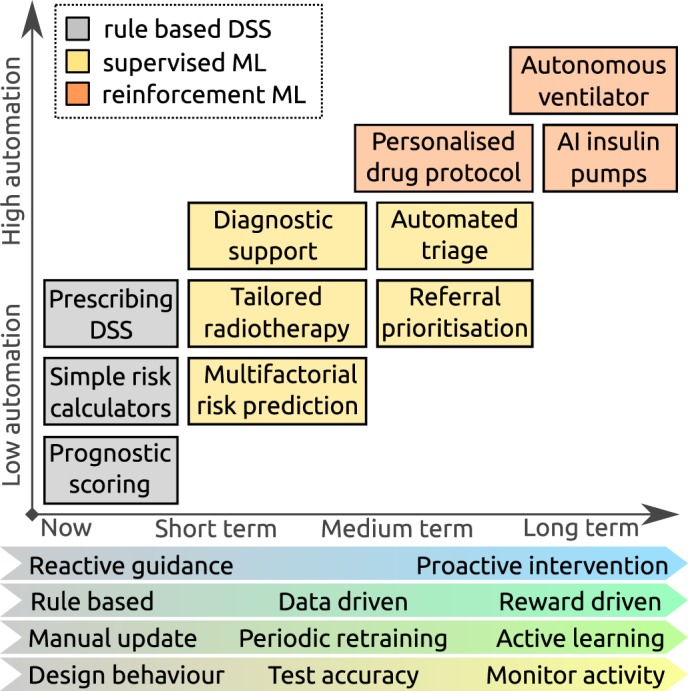
“Challen and colleagues [85] plotted the current state of adoption of machine learning in healthcare as at 2019, and projected future applications in terms of increasing levels of automation.”
BackgroundChatGPT: A Supplemental Tool for Efficiency and Improved Communication in Rural Dermatology
Baker, M. N., Burruss, C. P., & Wilson, C. L. (2023) · Cureus · doi:10.7759/cureus.43812 · Cited by 16
“There is also the risk of automation bias [4], whereby clinicians may unquestioningly follow the AI-generated guidance without critical evaluation.”
BackgroundFong, N., Langnas, E. M., Law, T. J., Reddy, M. P., Lipnick, M. S., & Pirracchio, R. (2023) · Anaesthesia Critical Care & Pain Medicine · doi:10.1016/j.accpm.2023.101248 · Cited by 15
Li, M., Xiong, X., Xu, B., & Dickson, C. (2024) · JMIR Formative Research · doi:10.2196/53918 · Cited by 15
“Fourth, misuse by health care providers lacking appropriate training on AI could lead to suboptimal patient outcomes [23].”
BackgroundHatherley, J. J. (2025) · Ethics and Information Technology · doi:10.1007/s10676-025-09829-2 · Cited by 15
“Finally, section 3.4 summarises and concludes section 3.”
InfluentialBrown, J. L., Burke, J., & Sauciuc, Á. (2021) · Journal of Management Accounting Research · doi:10.2308/jmar-2024-009 · Cited by 15
Konstantinou, G. Ν., Anderson, W. C., Bagkis, E., Brown, Z., Karatzas, K. D., Kassandros, T., Sardeli, C., Singla, R., & Nyenhuis, S. M. (2025) · The Journal of Allergy and Clinical Immunology In Practice · doi:10.1016/j.jaip.2025.09.013 · Cited by 15
Decision making for safety and risk in healthcare and process systems
Sontakke, M., Okpanum, J., Yerimah, L. E., Rebmann, A., Ghosh, S., & Bequette, B. W. (2023) · Chemical Engineering Science · doi:10.1016/j.ces.2023.118866 · Cited by 15
The perils of artificial intelligence in healthcare: Disease diagnosis and treatment
Jung, C. L. (2019) · Journal of Computational Biology and Bioinformatics Research · doi:10.5897/jcbbr2019.0122 · Cited by 15
“…on the level of quality of and bias in healthcare data, today‟s ML and DL algorithms, supervised and unsupervised, will inherently learn and replicate the same deeper-seated biases as we have, inevitably and unintendedly failing to make fair decisions (Challen et al., 2019; Canetti et al., 2019).”
BackgroundHow to Design a Governable Digital Health Ecosystem
Morley, J., & Floridi, L. (2019) · Digital ethics lab yearbook · doi:10.1007/978-3-030-80083-3_8 · Cited by 15
What does it mean to provide decision support to a responsible and competent expert?
Richard, A., Mayag, B., Talbot, F., Tsoukiàs, A., & Meinard, Y. (2020) · EURO Journal on Decision Processes · doi:10.1007/s40070-020-00116-7 · Cited by 15
AUR-RRA Review: Logistics of Academic-Industry Partnerships in Artificial Intelligence
Spilseth, B., McKnight, C. D., Li, M., Park, C. J., Fried, J. G., Yi, P. H., Brian, J. M., Lehman, C. D., Wang, X., Phalke, V., et al. (2021) · Academic Radiology · doi:10.1016/j.acra.2021.08.002 · Cited by 16
Pseudo AI BiasPreprint
Zhaı, X., & Krajcik, J. S. (2022) · arXiv (Cornell University) · doi:10.48550/arxiv.2210.08141 · Cited by 15
Mehlich, J., & Woopen, C. (2025) · Journal of Responsible Innovation · doi:10.1080/23299460.2025.2459451 · Cited by 14
“…and assessment of influencing factors in which these groups are often overlooked and ignored, but also the consideration of the special needs and requirements of these groups when interacting with technology, which as such are subject to significant dynamics (Celi et al. 2022; Challen et al. 2019).”
Improving the trial efficiency of criminal cases with the assistance of artificial intelligence
Chen, Q. (2025) · Discover Artificial Intelligence · doi:10.1007/s44163-025-00353-2 · Cited by 14
“For example, when dealing with complex cases, adjusting the weight of the model to specific data features can make the system more precise in identifying case processing bottle-necks [13].”
AI-DRIVEN INNOVATIONS IN EMERGENCY AND DISASTER RESPONSE: STRATEGIES FOR EFFECTIVE PLANNING
Sudhi, M., Aishwarya, T. R., Shetty, D. K., Balakrishnan, J. M., Ahmad, S., & Sankaran, P. P. (2025) · Proceedings on Engineering Sciences · doi:10.24874/pes07.02c.009 · Cited by 15
Fang, Z., Johnston, A., Cheuy, L. Y., Na, H. S., Paschali, M., González, C., Armstrong, B. A., Koirala, A., Laurel, D., Campion, A., et al. (2025) · npj Digital Medicine · doi:10.1038/s41746-025-02007-0 · Cited by 14
“Such inaccurate predictions force meticulous veri fi cation of each AI result to avoid cognitive pitfalls such as automation and con fi rmation biases 2,3 , ultimately adding to the user ’ s cognitive workload rather than ful fi lling AI ’ s promise to enhance clinical ef fi ciency 4 .”
Spiegler, S. V., Hoda, R., & Pant, A. (2025) · Technology in Society · doi:10.1016/j.techsoc.2025.103109 · Cited by 14
Artificial Intelligence in Digestive Endoscopy Training—The Past, Present, and Future
Ho, J. C. L., Qian, Z., Lau, L. H. S., Yip, H. C., & Chiu, P. W. Y. (2025) · Digestive Endoscopy · doi:10.1111/den.70047 · Cited by 15
“This could reduce trainees' awareness and exposure to rarer pathologies, limiting their readiness for real-life encounters with uncommon and complex findings [58].”
Sirago, G., Vinci, A., Visci, P., Solarino, B., Dell'Erba, A. S., & Ferorelli, D. (2026) · Journal of Medical Systems · doi:10.1007/s10916-026-02382-5 · Cited by 14
Meta‐research publications in dentistry: a review
Faggion, C. M., Listl, S., & Smits, K. P. J. (2021) · European Journal Of Oral Sciences · doi:10.1111/eos.12748 · Cited by 14
Artificial Intelligence, Machine Learning, and Natural Language Processing
Shoenbill, K. A., Kasthurirathne, S. N., & Mendonça, E. A. (2023) · Springer eBooks · doi:10.1007/978-3-031-29171-5_36 · Cited by 15
Identifying Patients With Peripheral Artery Disease Using the Electronic Health Record
Sonderman, M., Aday, A. W., Farber‐Eger, E. H., Mai, Q., Freiberg, M. S., Liebovitz, D., Greenland, P., McDermott, M. M., Beckman, J. A., & Wells, Q. S. (2023) · JACC Advances · doi:10.1016/j.jacadv.2023.100566 · Cited by 14
“15,16 Receiver operating characteristic (ROC) curves were built using predictions from the logistic regression and area under the curve (AUC) calculations were performed using the pROC package.”
MethodRoberfroid, B., Lee, J. A., Geets, X., Sterpin, E., & Montero, A. M. B. (2024) · Radiotherapy and Oncology · doi:10.1016/j.radonc.2024.110108 · Cited by 14
Bias and Discrimination in Artificial Intelligence: Emergence and Impact in E-Business
Weyerer, J. C., & Langer, P. F. (2020) · Advances in e-business research series · doi:10.4018/978-1-7998-1879-3.ch011 · Cited by 14
Ethical implications of emotion mining in medicine
Straw, I. (2020) · Health Policy and Technology · doi:10.1016/j.hlpt.2020.11.006 · Cited by 14
Madar, R., Ugon, A., Ivanković, D., & Tsopra, R. (2021) · Journal of Medical Internet Research · doi:10.2196/25741 · Cited by 14
“This type of presentation suffers from “the black box effect” [45] and may make GPs passive in their decision-making process, simply accepting the decision suggested by the CDSS.”
BackgroundSwitched on: How do we get the best out of automation and AI in health care?
Hardie, T., Horton, T., & Warburton, W. (2021) · doi:10.37829/hf-2021-i03 · Cited by 14
Barriers to Artificial Intelligence Adoption in Healthcare Management: A Systematic Review
Assadullah, M. M. (2019) · SSRN Electronic Journal · doi:10.2139/ssrn.3530598 · Cited by 13
AI and Liability in Medicine: The Case of Assistive-Diagnostic AI
Rimkutė, D. (2024) · Baltic Journal of Law & Politics · doi:10.2478/bjlp-2023-0013 · Cited by 13
SoK: How Artificial-Intelligence Incidents Can Jeopardize Safety and Security
May, R., Krüger, J., & Leich, T. (2024) · International Conference on Availability, Reliability and Security (ARES) · doi:10.1145/3664476.3664510 · Cited by 14
“The latter refers more to potential risks, challenges, and incidents related to AI, for example, security attack vectors of AI systems [63] or critical patient safety in AI-driven medical environments [12].”
Zhang, Y., Huang, Y., Rosen, A., Jiang, L. G., McCarty, M., RoyChoudhury, A., Han, J. H., Wright, A. T., Ancker, J. S., & Steel, P. A. D. (2024) · PLOS Digital Health · doi:10.1371/journal.pdig.0000606 · Cited by 13
Bolten, J.-H., Neugebauer, D., Grott, C. A., Weykamp, F., Ristau, J., Mende, S., Sandrini, E., Meixner, E., Navarro, V., Tonndorf‐Martini, E., et al. (2025) · Clinical and Translational Radiation Oncology · doi:10.1016/j.ctro.2025.100933 · Cited by 13
“That is scary!”: consumer perceptions and discourses on ChatGPT
Fares, O. H. (2025) · Qualitative Market Research An International Journal · doi:10.1108/qmr-07-2024-0122 · Cited by 13
Pérez-Esteve, C., Guilabert, M., Matarredona, V., Srulovici, E., Tella, S., Strametz, R., & Mira, J. J. (2025) · PubMed Central · doi:10.2196/70703 · Cited by 13
“Caregivers can ask additional questions to clarify instructions or request helpful visual aids, improving understanding and confidence [17].”
Chou, Y.-H., Hsiao, K., Lu, Y.-T., & Su, Y.-S. (2025) · Chinese Management Studies · doi:10.1108/cms-10-2024-0746 · Cited by 13
Artificial General Intelligence and Its Threat to Public Health
Armitage, R. C. (2025) · Journal of Evaluation in Clinical Practice · doi:10.1111/jep.70269 · Cited by 13
Unveiling the Algorithm: The Role of Explainable Artificial Intelligence in Modern Surgery
Lopes, S., Mascarenhas, M., Fonseca, J., Fernandes, G., & Leite-Moreira, A. F. (2025) · Healthcare · doi:10.3390/healthcare13243208 · Cited by 15
“Risk-sharing frameworks may become essential as AI systems increase in autonomy and influence on surgical outcomes [42,43] [Figure 14].”
ARTIFICIAL INTELLIGENCE IN PHARMACY DRUG DESIGN
Kalayil, N., D'Souza, S. S., Khan, S., & PAUL, P. (2022) · Asian Journal of Pharmaceutical and Clinical Research · doi:10.22159/ajpcr.2022.v15i4.43890 · Cited by 14
KNOWLEDGE DISCOVERY IN DATA OF PROSTATE CANCER BY APPLYING ENSEMBLE LEARNING
Manikandan, G., & Bhuvaneswari, G. (2022) · Indian Journal of Computer Science and Engineering · doi:10.21817/indjcse/2022/v13i3/221303182 · Cited by 14
“AI algorithms have shown promise for grading prostate cancer [1-3], specifically in prostatectomy samples [4,5] and biopsies[6-9] and by assisting pathologists in the microscopic reviews[10-12].”
BackgroundData-driven machine learning: A new approach to process and utilize biomedical data
., K., Srivastava, A., & Jha, S. S. (2022) · Elsevier eBooks · doi:10.1016/b978-0-323-99864-2.00017-2 · Cited by 13
Rozario, S. Y., Sarkar, M., Farlie, M. K., & Lazarus, M. D. (2023) · Anatomical Sciences Education · doi:10.1002/ase.2260 · Cited by 13
Assessment of angle closure disease in the age of artificial intelligence: A review
Soh, Z. D., Tan, M., Nongpiur, M. E., Xu, B. Y., Friedman, D. S., Zhang, X., Leung, C. K.-S., Liu, Y., Koh, V., Aung, T., et al. (2023) · Progress in Retinal and Eye Research · doi:10.1016/j.preteyeres.2023.101227 · Cited by 13
Implementation and design of artificial intelligence in abdominal imaging
Choi, H. H., Chang, S. D., & Kohli, M. D. (2020) · Abdominal Radiology · doi:10.1007/s00261-020-02471-0 · Cited by 14
“, blood oxygenation or glucose concentration) [11].”
The Debate on the Ethics of AI in Health Care: a Reconstruction and Critical ReviewPreprint
Morley, J. (2019) · OSF Preprints (OSF Preprints) · doi:10.31219/osf.io/n7y2g · Cited by 13
“…not (or vice versa) or, an HCP relying on clinical decision support software (CDSS) (Ruckenstein & Schüll, 2017) could be given an inaccurate diagnosis or recommendation which they do not question due to a tendency to uncritically accept the decisions of automated systems (Challen et al., 2019).”
BackgroundCounterfactual harmPreprint
Richens, J. G., Beard, R., & Thompson, D. H. (2022) · arXiv (Cornell University) · doi:10.48550/arxiv.2204.12993 · Cited by 13
“There very real potential for algorithms to cause harm have been widely studied (see for example [105, 106, 107, 108, 109] for reviews).”
BackgroundBane and boon of hallucinations in context of generative AIPreprint
Patel, H. (2024) · doi:10.36227/techrxiv.171198062.20183635/v1 · Cited by 13
AI for a Planet Under PressurePreprint
Galaz, V., Schewenius, M., Donges, J. F., Fetzer, I., Zhivkoplias, E., Barfuß, W., Delannoy, L., Wang‐Erlandsson, L., Gelbrecht, M., Heitzig, J., et al. (2025) · arXiv (Cornell University) · doi:10.48550/arxiv.2510.24373 · Cited by 13
Artificial Intelligence in Imaging in the First Trimester of Pregnancy: A Systematic Review
Umans, E., Dewilde, K., Williams, H., Deprest, J. A., & den Bosch, T. V. (2024) · Fetal Diagnosis and Therapy · doi:10.1159/000538243 · Cited by 12
“This phenomenon is called distributional shift and can lead to a decrease in performance of the algorithm [34, 35].”
de Reus, D. C., Kuijten, R. H., Saha, P., Lastoria, D. A. A., Warr-Esser, A., Taylor, C. F. C., Groot, O. Q., Lui, D. F., Verlaan, J., & Tobert, D. G. (2025) · The Spine Journal · doi:10.1016/j.spinee.2025.03.018 · Cited by 12
Exploring the impact of generative AI tools on healthcare delivery in Tanzania
Shidende, N., & Mwogosi, A. (2025) · Journal of Health Organization and Management · doi:10.1108/jhom-01-2025-0007 · Cited by 12
AIArena : A Blockchain-Based Decentralized AI Training Platform
Wang, Z., Sun, R. Q., Lui, E., Zhou, T., Wen, Y., & Sun, J. (2025) · International World Wide Web Conference (WWW) · doi:10.1145/3701716.3715484 · Cited by 12
“This concentration of power increases bias in AI systems [1] and reduces public involvement in important decisions.”
Kesgin, K. (2025) · Uluslararası Yönetim Bilişim Sistemleri ve Bilgisayar Bilimleri Dergisi · doi:10.33461/uybisbbd.1691218 · Cited by 12
Ghenimi, N., Govender, R. D., & Moodley, K. (2025) · AI & Society · doi:10.1007/s00146-025-02418-3 · Cited by 13
“Additionally, reliance on AI-generated responses introduces risks related to misin-formation, algorithmic bias, and potential threats to patient safety, particularly when the underlying data lack quality and reliability (Challen et al. 2019; Yu and Kohane 2019).”
Towards an autonomous clinical decision support system
Gershov, S., Raz, A., Karpas, E., & Laufer, S. (2023) · Engineering Applications of Artificial Intelligence · doi:10.1016/j.engappai.2023.107215 · Cited by 13
Chan, J. Y., Nagashima, T., & Closser, A. H. (2023) · Cognitive Science · doi:10.1111/cogs.13365 · Cited by 12
Reese, T. J., Domenico, H. J., Hernandez, A., Byrne, D. W., Moore, R. P., Williams, J. B., Douthit, B. J., Russo, E. M., McCoy, A. B., Ivory, C. H., et al. (2024) · JMIR Medical Informatics · doi:10.2196/51842 · Cited by 12
“Enhancing data infrastructure, promoting data standardization, and developing robust privacy and security frameworks are crucial steps toward facilitating the implementation of these models [62].”
Background
Metadata
- Authors
- Challen, R., Denny, J., Pitt, M., Gompels, L., Edwards, T., & Tsaneva-Atanasova, K.
- Affiliations
- University of Exeter (GB)
- Vanderbilt University Medical Center (US)
- Taunton & Somerset NHS Foundation Trust (GB)
- Corresponding author
- Challen, Robert
- Venue
- BMJ Quality & Safety
- Publisher
- BMJ
- Published
- 2019-01-12
- Volume
- 28
- Issue
- 3
- Pages
- 231-237
- ISSN
- 1475-3898 (ISSN-L)
- 2044-5415
- 2044-5423
- PMC
- PMC6560460
- OpenAlex
- W2910707576
- Cited by
- 956
- References
- 52
- Citations by year
- 2026: 150 · 2025: 171 · 2024: 146 · 2023: 136 · 2022: 122 · 2021: 108 · 2020: 92 · 2019: 30
- FWCI
- 27.99
- Type
- journal article
- Language
- en
- Open access
- hybrid
- doi.org
- Licence
- cc-by
- Locations
- BMJ Quality & Safety (publishedVersion, cc-by)
- Europe PMC (PubMed Central) (publishedVersion, cc-by)
- PubMed Central (publishedVersion, cc-by)
- PubMed (publishedVersion)
- Figshare (submittedVersion, cc-by)
- HighWire Press Open Archive (submittedVersion)
- Open Research Exeter (University of Exeter) (submittedVersion, cc-by)
- Funders
- Engineering and Physical Sciences Research Council (EP/N014391/1)
- Topics
- Health Sciences › Medicine › Health Informatics › Artificial Intelligence in Healthcare and Education
- Physical Sciences › Computer Science › Artificial Intelligence › Ethics and Social Impacts of AI
- Physical Sciences › Engineering › Safety, Risk, Reliability and Quality › Safety Systems Engineering in Autonomy
- Keywords
- artificial intelligence, algorithmic bias, clinical safety, health care AI, algorithmic fairness
- MeSH terms
- Algorithms, Artificial Intelligence, Humans, Quality of Health Care, Bias, Patient Safety
About these checks
Registry, retraction, Cites and statistics results are computed, not judged, with one exception: a printed reference that no index lists is read once by a model before it counts as a citation error. Claims are extracted by a model and kept only when their quote appears verbatim in the text; each cited source is then checked, with a model’s help, for whether it says what the claim relies on. Those verdicts can be wrong — read the claim’s quote and the cited source before relying on one.
Statistics and arithmetic are recomputed, not judged.
Confidence bands are shown only for fields calibrated on our annotated test set. None is calibrated yet, so no band is shown.
What counts as a claim ›How we measure confidence ›How we check this ›
Are you an author, or do you see a problem with this page? Request a review
Data sources
Bibliographic data: Semantic Scholar, OpenAlex, Crossref.
Contains information from the Semantic Scholar Academic Graph Datasets, made available under the ODC Attribution License (ODC-BY 1.0).
Semantic Scholar’s data is described in: Kinney, R., et al. (2023). The Semantic Scholar Open Data Platform. arXiv:2301.10140.
