

Artificial intelligence, bias and clinical safety
Open accessThe DOI matches its Crossref record; 53 of the 54 references it cites were found in a registry or an index.
Abstract
This is the final version. Available on open access from BMJ Publishing group via the DOI in this record
Overview
The claims and statistics of this paper haven’t been checked yet.
Free: it reads the open-access text and checks the first 5 claims that cite a source we can check. Create a free account to check every claim.
Integrity signals
Registry
Cites
Statistics
Figures
Verification
Claims the paper makes
The claims and statistics of this paper haven’t been checked yet.
Free: it reads the open-access text and checks the first 5 claims that cite a source we can check. Create a free account to check every claim.
Claims other papers make about this one
Each is checked against this paper’s own text: does it say what the citing paper says it does?
The source backs part of the claim, not all of it — or backs it for a different population, condition or comparison.
In the citing paper
“Most of the health literature on AI is biased towards its potential benefits, and discussions about its potential harms tend to be focused on the misapplication of AI in clinical settings.”
From Threats by artificial intelligence to human health and human existence (2023) · cites this paper as [11]
Experimental — accuracy not yet measuredThe source backs part of the claim, not all of it — or backs it for a different population, condition or comparison.
In the citing paper
“AI applications have vulnerabilities that could be hacked or maliciously tampered with and produce unsafe outcomes”
From Ethics and governance of trustworthy medical artificial intelligence (2023) · cites this paper as [56]
Experimental — accuracy not yet measuredThe source backs part of the claim, not all of it — or backs it for a different population, condition or comparison.
In the citing paper
“are likely only be exacerbated in more complex domains, such as healthcare diagnostics, where there may be a virtually unlimited number of individual, group, and social factors that can be relevant, from lifestyle and eating habits, to weather and chemical exposure, and particularities regarding where one lives [24,59,119].”
From Out of Context: Investigating the Bias and Fairness Concerns of “Artificial Intelligence as a Service” (2023) · cites this paper as [24]
Experimental — accuracy not yet measuredThe cited source says what the claim attributes to it.
In the citing paper
“Poor-quality data can result in AI models that incorrectly predict outcomes based on artifacts in the data rather than actual clinical results [21].”
From Proposing a Principle-Based Approach for Teaching AI Ethics in Medical Education (2024) · cites this paper as [21]
The cited source says what the claim attributes to it.
In the citing paper
“Issues such as amplification of biases present in the training data, failure to generalize effectively beyond specific populations, or errors in classification can affect reliability [ 2 - 7 ].”
3 more claims about this paper
Create a free account to see every claim other papers make about this one.
Self-check
Percentages, sums and reported differences re-computed from the paper’s own numbers.
The self-check needs the paper’s full text.
Citations
Cites
Mastering the game of Go with deep neural networks and tree search
Silver, D., Huang, A., Maddison, C. J., Guez, A., Sifre, L., van den Driessche, G., Schrittwieser, J., Antonoglou, I., Panneershelvam, V., Lanctot, M., et al. (2016) · Nature · doi:10.1038/nature16961 · Cited by 15,612
Dermatologist-level classification of skin cancer with deep neural networks
Esteva, A., Kuprel, B., Novoa, R. A., Ko, J., Swetter, S. M., Blau, H. M., & Thrun, S. (2017) · Nature · doi:10.1038/nature21056 · Cited by 14,362
Gulshan, V., Peng, L., Coram, M., Stumpe, M. C., Wu, D., Narayanaswamy, A., Venugopalan, S., Widner, K., Madams, T., Cuadros, J., et al. (2016) · JAMA · doi:10.1001/jama.2016.17216 · Cited by 7,697
AUC: A misleading measure of the performance of predictive distribution models
Lobo, J. M., Jiménez‐Valverde, A., & Real, R. (2008) · Global Ecology and Biogeography · doi:10.1111/j.1466-8238.2007.00358.x · Cited by 3,499
Clinically applicable deep learning for diagnosis and referral in retinal disease
De Fauw, J., Ledsam, J. R., Romera-Paredes, B., Nikolov, S., Tomasev, N., Blackwell, S., Askham, H., Glorot, X., O’Donoghue, B., Visentin, D., et al. (2018) · Nature Medicine · doi:10.1038/s41591-018-0107-6 · Cited by 2,639
Learning from class-imbalanced data: Review of methods and applications
Haixiang, G., Yijing, L., Shang, J., Mingyun, G., Yuanyue, H., & Bing, G. (2017) · Expert Systems with Applications · doi:10.1016/j.eswa.2016.12.035 · Cited by 2,377 · cited 1×
“ML systems perform best when index cases and controls are approximately equal in the training set, 37 and this is not common in medicine.”
Role of Computerized Physician Order Entry Systems in Facilitating Medication Errors
Koppel, R. (2005) · JAMA · doi:10.1001/jama.293.10.1197 · Cited by 2,126
Implementing Machine Learning in Health Care — Addressing Ethical Challenges
Char, D. S., Shah, N. H., & Magnus, D. (2018) · New England Journal of Medicine · doi:10.1056/nejmp1714229 · Cited by 1,857 · cited 1×
“11 This analysis is written with the dual aim of helping clinical safety professionals to critically appraise current medical AI research from a quality and safety perspective, and supporting research and development in AI by highlighting some of the clinical safety questions that must be…”
Complacency and Bias in Human Use of Automation: An Attentional Integration
Parasuraman, R., & Manzey, D. H. (2010) · Human Factors: The Journal of the Human Factors and Ergonomics Society · doi:10.1177/0018720810376055 · Cited by 1,710 · cited 2×
“25 Automation bias 48 describes the phenomenon whereby clinicians accept the guidance of an automated system and cease searching for confirmatory evidence (eg, see Tsai et al 49 ), perhaps transferring responsibility for decision-making onto the machine—an effect reportedly strongest when a machine…”
Intelligible Models for HealthCare: Predicting Pneumonia Risk and Hospital 30-day Readmission
Caruana, R., Lou, Y., Gehrke, J., Koch, P., Sturm, M., & Elhadad, N. (2015) · Proceedings of the 21th ACM SIGKDD International Conference on Knowledge Discovery and Data Mining · doi:10.1145/2783258.2788613 · Cited by 1,685 · cited 1×
“44 45 Unsafe failure mode The concept of confidence of prediction was mentioned in the context of distributional shift above.”
Cited by
Items 501–600 of 1,002
Esquerda, M., & Pifarré-Esquerda, F. (2024) · Medicina Clínica · doi:10.1016/j.medcli.2024.03.003 · Cited by 12
Monica, M., Patel, S., Ramanaiah, G., Manoharan, S., & Taufiq-Hail, G. A.-M. (2024) · Advances in computational intelligence and robotics book series · doi:10.4018/979-8-3693-5380-6.ch007 · Cited by 12
Citizenship as the exception to the rule: an addendum
Jaynes, T. L. (2020) · AI & Society · doi:10.1007/s00146-020-01105-9 · Cited by 12
Digital Transformation of Healthcare and Medical Education, Within, and Beyond Pandemic COVID-19
Pauzi, M. F., & Juhari, S. N. (2020) · Asian Journal of Medicine and Biomedicine · doi:10.37231/ajmb.2020.4.2.363 · Cited by 12
“Thus, AI has the potential to enhance the quality of care through unique workflows and decreased medical errors ([7]).”
BackgroundHow are hospitals using artificial intelligence in strategic decision- making?—a scoping review
Leggat, S. G., & Yap, K. Y. (2020) · Journal of Hospital Management and Health Policy · doi:10.21037/jhmhp-20-92 · Cited by 12
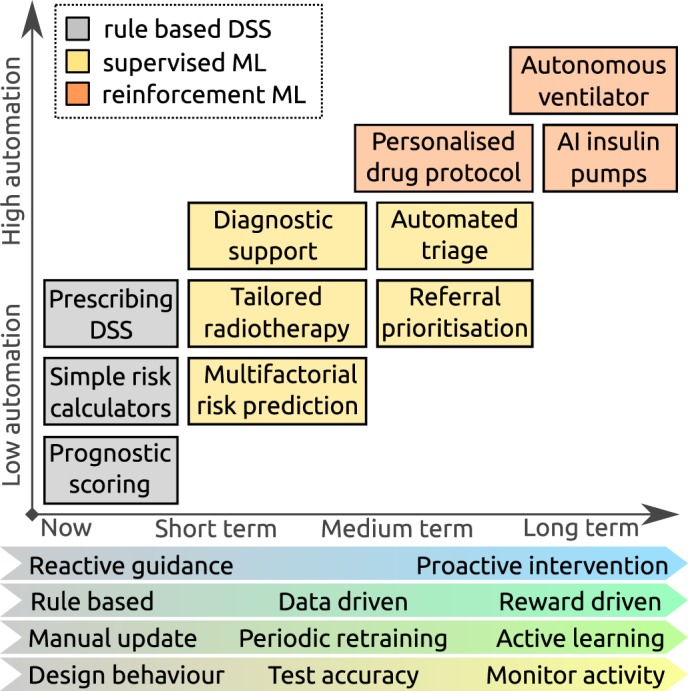
“Developments in automation have enabled progression from relatively simple rules-based decision support to supervised and unsupervised machine learning (3).”
BackgroundResultNagayasu, Y., Fujita, D., Ohmichi, M., & Hayashi, Y. (2021) · International Journal of Gynecology & Obstetrics · doi:10.1002/ijgo.13888 · Cited by 12
A Framework for Assurance of Medication Safety using Machine LearningPreprint
Jia, Y., Lawton, T., McDermid, J. A., Rojas, E., & Habli, I. (2021) · arXiv (Cornell University) · doi:10.48550/arxiv.2101.05620 · Cited by 12
“ML-based clinical decision support systems are being developed to provide guidance on the safe prescription of medicines, guideline adherence, diagnostic decision support and prognostic scoring [25].”
BackgroundKuhlberg, J., Headen, I. E., Ballard, E., & Martin, D. (2023) · arXiv (Cornell University) · doi:10.48550/arxiv.2305.13485 · Cited by 12
Clinical decision-making and algorithmic inequality
Challen, R., & Danon, L. (2023) · BMJ Quality & Safety · doi:10.1136/bmjqs-2022-015874 · Cited by 12
Self-citationEli, A. A., & Ali, A. (2024) · arXiv (Cornell University) · doi:10.48550/arxiv.2410.14131 · Cited by 12
“In the case of deep learning (DL) models, for example, underperformance when applied to underrepresented populations could result in incorrect diagnoses or insufficient treatment if the models are trained mostly on data from those groups [15].”
BackgroundApplication of Predictive Analytics in Pregnancy, Birth, and Postpartum Nursing Care
Dreisbach, C., Barcelona, V., Turchioe, M. R., Bernstein, S., & Erickson, E. N. (2025) · MCN The American Journal of Maternal/Child Nursing · doi:10.1097/nmc.0000000000001082 · Cited by 11
AI versus the spinal surgeons in the management of controversial spinal surgery scenarios
Mehmet, S., Elmarawany, M. N., Harding, I., Bowey, A. J., Andrews, J., Chan, D., Jayasuriya, R. L., Srinivas, S., Tomlinson, J. E., Bayley, E. J., et al. (2025) · European Spine Journal · doi:10.1007/s00586-025-08825-w · Cited by 11
Bak, M., Hartman, L. A., Graafland, C. H., Korfage, I. J., Buyx, A., & Schermer, M. (2025) · JMIR Cancer · doi:10.2196/65566 · Cited by 11
“…models are often programmed to prioritize sensitivity (fewer false negatives) over specificity (fewer false positives) because this reflects the existing tendency of human clinicians to better be safe than sorry (ie, to prefer the risk of overtreatment to the risk of undertreatment) [15].”
Olawade, D. B., David-Olawade, A. C., Aderinto, N., & Wada, O. Z. (2025) · International Journal of Medical Informatics · doi:10.1016/j.ijmedinf.2025.106140 · Cited by 11
A multimodal uncertainty-aware AI system optimizes ovarian cancer risk assessment workflow
Wang, X., Lv, X., Wang, J., Zou, L., Chen, Z., Zhao, R., Zhao, L., Zhao, M., Zhang, X., Zhang, B., et al. (2025) · npj Digital Medicine · doi:10.1038/s41746-025-01986-4 · Cited by 11
“A primary barrier to clinical translation, however, is the “ black box ” nature of these models, which introduces potential clinical risks and limits clinical trust 19 .”
Artificial Intelligence and Medication Management
Motulsky, A., Nikiema, J. N., & Bosson-Rieutort, D. (2021) · Lecture notes in bioengineering · doi:10.1007/978-3-030-67303-1_8 · Cited by 11
A review of artificial intelligence applications in anterior segment ocular diseases
Heidari, Z., Baharinia, M., Ebrahimi-Besheli, K., & Ahmadi, H. (2022) · Medical Hypothesis Discovery & Innovation in Optometry · doi:10.51329/mehdioptometry146 · Cited by 11
“To fully trust the results of a model and avoid automation bias [82], models should be periodically retrained with new and different data to reduce the possibility of errors.”
MethodDoria, A. S. (2023) · Expert Review of Hematology · doi:10.1080/17474086.2023.2192474 · Cited by 11
“The behavior of an ML algorithm outside the scope of training data can be unpredictable and potentially unsafe if the imaging examination presented for assessment is dissimilar to the training data [52,53].”
MethodTeeple, S., Chivers, C., Linn, K. A., Halpern, S. D., Eneanya, N. D., Draugelis, M. E., & Courtright, K. R. (2023) · BMJ Quality & Safety · doi:10.1136/bmjqs-2022-015173 · Cited by 11
Artificial Intelligence in Healthcare: Doctor as a Stakeholder
Bhavaraju, S. (2023) · Artificial intelligence · doi:10.5772/intechopen.111490 · Cited by 11
Wang, B., Dohopolski, M. J., Bai, T., Wu, J., Hannan, R., Desai, N. B., Garant, A., Yang, D. X., Nguyen, D. T. D., Lin, M., et al. (2024) · Machine Learning Science and Technology · doi:10.1088/2632-2153/ad580f · Cited by 12
Artificial intelligence in urology: Revolutionizing diagnostics and treatment planning
Eskandar, K. (2024) · Arab Journal of Urology · doi:10.1080/20905998.2024.2443334 · Cited by 11
“AI models trained on outdated or non-representative data may fail to perform adequately in real-world clinical environments, necessitating continuous monitoring and retraining of these models to maintain their efficacy [19].”
Giorda, C. B., Pisani, F., Micheli, A. D., Ponzani, P., Russo, G. T., Guaita, G., Zilich, R., & Musacchio, N. (2020) · BMJ Open Diabetes Research & Care · doi:10.1136/bmjdrc-2020-001362 · Cited by 11
Claver, A., & van de Meeberg, H. M. (2021) · Intelligence & National Security · doi:10.1080/02684527.2021.1946951 · Cited by 11
Yan, T. D., Yuan, P. H., Saha, T., Lebel, K., Spalluto, L. B., & Yong-Hing, C. J. (2022) · Canadian Association of Radiologists Journal · doi:10.1177/08465371221122637 · Cited by 11
“22,23 It is thus important that a wide diversity of voices be heard and valued when developing AI-related radiology technologies.”
BackgroundArtificial Intelligence in Medicine: A Double-edged Sword or a Pandora’s Box?
Kashoub, M. S., Abdali, M. A., Shibli, E. A., Hamrashdi, H. A., Busaidi, S. A., Rawahi, M. A., Rasbi, S. A., & Alawi, A. A. (2023) · Oman Medical Journal · doi:10.5001/omj.2023.129 · Cited by 12
Machine learning in neuroimaging of epilepsy: a narrative review
Perillo, T., Perillo, S., & Pinto, A. (2024) · Journal of Medical Imaging and Interventional Radiology · doi:10.1007/s44326-024-00041-y · Cited by 10
“Widespread acceptance of ML models in medicine is still low as ML algorithms work with a ‘black box’ nature; therefore, it is not simple to interpret their work, especially when it is complex [84].”
Dunnmon, J. (2021) · Radiologic Clinics of North America · doi:10.1016/j.rcl.2021.07.006 · Cited by 10
Basic Issues and Challenges on Explainable Artificial Intelligence (XAI) in Healthcare Systems
Oladipo, I. D., Awotunde, J. B., AbdulRaheem, M., & Salihu, S. A. (2022) · Advances in medical technologies and clinical practice book series · doi:10.4018/978-1-6684-3791-9.ch011 · Cited by 10
Santos, G. N. M., da Silva, H. E. C., Figueiredo, P. T. D. S., Mesquita, C. R. M., de Melo, N. S., Stefani, C. M., & Leite, A. F. (2022) · International Journal of Artificial Intelligence in Education · doi:10.1007/s40593-022-00324-z · Cited by 11
“Radiology students and trainees are susceptible to automation bias, which refers to the notion that the computer is more reliable than humans because it is a machine (Challen et al., 2019 ; Obermeyer & Emanuel, 2016 ; Raymond Geis et al., 2019 ; Reyes et al., 2020 ).”
Ten misconceptions regarding decision-making in critical care
Ramaswamy, T., Sparling, J. L., Chang, M. G., & Bittner, E. A. (2024) · World Journal of Critical Care Medicine · doi:10.5492/wjccm.v13.i2.89644 · Cited by 10
Sargent, S. L. (2021) · Canadian Journal of Bioethics · doi:10.7202/1077639ar · Cited by 10
“In addition to emerging applications, AI is already used in a variety of ways including medical imaging, parsing and collating electronic medical records, optimizing care trajectories, diagnosing, improving enrollment in clinical trials, and even in reducing medical errors (1-4).”
BackgroundTraining Private Models That Know What They Don’t Know
Rabanser, S., Thudi, A., Thakurta, A., Dvijotham, K., & Papernot, N. (2023) · neural information processing systems · doi:10.52202/075280-2337 · Cited by 10
A Reputation Game Simulation: Emergent Social Phenomena from Information Theory
Enßlin, T. A., Kainz, V., & Bœhm, C. (2022) · Annalen der Physik · doi:10.1002/andp.202100277 · Cited by 10
Naddeo, K., Koutsoubis, N., Krish, R., Rasool, G., Bouaynaya, N. C., O’Sullivan, T., & Krish, R. (2025) · arXiv (Cornell University) · doi:10.48550/arxiv.2507.23736 · Cited by 11
“However, the effectiveness of AI-based systems is significantly hindered by the lack of available training data and proper uncertainty quantification [14, 15, 16].”
Hutto, A., Zikry, T. M., Bohac, B., Rose, T. L., Staebler, J., Slay, J., Cheever, C. R., Kosorok, M. R., & Nash, R. P. (2024) · Health Informatics Journal · doi:10.1177/14604582241296411 · Cited by 9
An Integrated Algorithm with Feature Selection, Data Augmentation, and XGBoost for Ovarian Cancer
Cai, J., Lee, Z.-J., Lin, Z., Hsu, C.-H., & Lin, Y. (2024) · Mathematics · doi:10.3390/math12244041 · Cited by 9
“Number of estimators for feature selection layers: [64, 32 This procedure was executed five times, with a distinct subset as the test set, while the other four subsets functioned as the training set in each iteration.”
How Large Language Models Transform Urban Planning and Shape Tomorrow’s Cities?
Agrawal, K., & Göktaş, P. (2025) · The Springer series in applied machine learning · doi:10.1007/978-3-031-86039-3_8 · Cited by 9
Hamer, M. K., Alasmar, A. Y., Huber, K., Fischer, S. M., Fink, R. M., & DeCamp, M. W. (2025) · PubMed · doi:10.1177/10966218251363753 · Cited by 9
“49 Future studies should examine real-world clinical decision making alongside these tools from both the clinician and patient/family caregiver perspective.”
ROMA: Run-Time Object Detection To Maximize Real-Time Accuracy
Lee, J., Varghese, B., & Vandierendonck, H. (2023) · IEEE Winter Conference on Applications of Computer Vision · doi:10.1109/wacv56688.2023.00634 · Cited by 9
“Obtaining high real-time detection accuracy is often challenging due to domain shift issues [6, 9, 10, 4] and real-time latency constraints [14].”
BackgroundYang, Y., Li, F., Wei, Y., Zhao, Y., Fu, J., Xiao, X., & Bu, H. (2024) · Medinformatics · doi:10.47852/bonviewmedin42024108 · Cited by 9
“However, it has been a commonly known problem that the AI models constructed for medical prediction numerically have better performances in internal validation than in external validation, which significantly affects the clinical safety of using AI models [23].”
BackgroundAn Overview of Medical Electronic Hardware Security and Emerging Solutions
Taheri, S., & Asadizanjani, N. (2022) · Electronics · doi:10.3390/electronics11040610 · Cited by 9
Bimczok, S. P., Godynyuk, E. A., Pierey, J., Roppel, M. S., & Scholz, M. L. (2023) · South Eastern European Journal of Public Health · doi:10.56801/seejph.vi.239 · Cited by 9
Zhou, Z., Dai, A., Yan, Y., Jin, Y., Zou, D., Xu, X., Xiang, L., Guo, L., Xiang, L., Jiang, F., et al. (2023) · Neurological Sciences · doi:10.1007/s10072-023-07003-4 · Cited by 9
“However, in the face of potentially serious consequences, this behavior alteration is critical to safety, which the ML models must attentive to this [28].”
Moral judgements of errors by AI systems and humans in civil and criminal law
Parlangeli, O., Currò, F., Palmitesta, P., & Guidi, S. (2023) · Behaviour and Information Technology · doi:10.1080/0144929x.2023.2283622 · Cited by 9
“E ffi cient as they are, arti fi cial intelligence systems are, nonetheless, systems that can lead to discriminatory results (Tischbirek 2020) or, in many cases, without producing con fi dence estimates (Challen et al. 2019).”
Habli, I., Sujan, M. A., & Lawton, T. (2024) · Future Healthcare Journal · doi:10.1016/j.fhj.2024.100179 · Cited by 9
Antimicrobial Dosing in Specific Populations and Novel Clinical Methodologies: Kidney Function
Pai, M. P. (2021) · Clinical Pharmacology & Therapeutics · doi:10.1002/cpt.2179 · Cited by 9
“The complexity of multiple source information integration will likely lead us in the medium term to a path that is informed by machine learning and emerging artificial intelligence methods.(64) In the interim, broader education on the nuances of kidney function estimation are necessary along with systems to manage cas…”
BackgroundHo, T. K., Luo, Y.-F., & Guido, R. C. (2022) · IEEE Signal Processing Magazine · doi:10.1109/msp.2022.3155906 · Cited by 9
Advances in artificial intelligence based diagnosis and treatment of liver diseases – Correspondence
Chakraborty, S., Chandran, D., Chopra, H., Akash, S., & Dhama, K. (2023) · International Journal of Surgery · doi:10.1097/js9.0000000000000548 · Cited by 9
“It is almost certain that there will be a substantial impact of machine learning health care applications on processes, cost, standard and access to hepatol-ogy related health care ultimately modifying the relationship between physician and patient [7,8] .”
Achieving Compositional Language in a Population of Iterated Learners
Brace, L., Bullock, S., & Noble, J. (2015) · doi:10.7551/978-0-262-33027-5-ch064 · Cited by 9
Char, D. S., Abràmoff, M. D., & Feudtner, C. (2020) · The American Journal of Bioethics · doi:10.1080/15265161.2020.1827695 · Cited by 9
Five principles for the intelligent use of AI in medical imaging
Colak, E., Moreland, R., & Ghassemi, M. (2021) · Intensive Care Medicine · doi:10.1007/s00134-020-06316-8 · Cited by 9
Morley, J. (2023) · Oxford University Research Archive (ORA) (University of Oxford) · doi:10.5287/ora-jxprn9ry5 · Cited by 9
Emerging technologies in corneal transplantation: innovations, challenges, and global implications
Al‐Shami, K., Almurabi, S., Pop, A., Vincent, C., Popescu, A., Pop, I. C., Bader, N. S., Faour, H., Barhoush, R., & Karaja, S. (2025) · Transplantation Reports · doi:10.1016/j.tpr.2025.100180 · Cited by 8
Hassan, A. M., Coert, J. H., Clemens, M. W., Hassanein, A. H., Waljee, J. F., Nelson, J. A., Mehrara, B. J., & Selber, J. C. (2026) · Journal of the American College of Surgeons · doi:10.1097/xcs.0000000000001834 · Cited by 8
Cartwright, J., Kipp, K., & Ng, A. V. (2023) · International Journal of MS Care · doi:10.7224/1537-2073.2022-076 · Cited by 8
Ajuwon, B. I., Awotundun, O. N., Richardson, A., Roper, K. G., Sheel, M., Rahman, N., Salako, A. O., & Lidbury, B. A. (2023) · International Journal of Medical Informatics · doi:10.1016/j.ijmedinf.2023.105244 · Cited by 8
Lachenmaier, C., Lumer, E., Buschmeier, H., & Zarrieß, S. (2024) · ACM/IEEE International Conference on Human-Robot Interaction (HRI) · doi:10.1145/3610978.3640736 · Cited by 8
Bane and Boon of Hallucinations in the Context of Generative AI
Sakib, S. M. N. (2024) · Advances in business information systems and analytics book series · doi:10.4018/979-8-3693-2643-5.ch016 · Cited by 9
Kale, A. U., Hogg, H. D. J., Pearson, R. V., Glocker, B., Golder, S., Coombe, A., Waring, J. J., Liu, X., Moore, D., & Denniston, A. K. (2024) · JMIR Research Protocols · doi:10.2196/51614 · Cited by 8
“The translation of AI medical devices from “code to clinic” is complex and, if planned poorly, can lead to serious safety concerns [13,14].”
BackgroundEsquerda, M., & Pifarré-Esquerda, F. (2024) · Medicina Clínica (English Edition) · doi:10.1016/j.medcle.2024.03.005 · Cited by 8
Pseudo Artificial Intelligence Bias
Zhaı, X., & Krajcik, J. S. (2024) · Oxford University Press eBooks · doi:10.1093/oso/9780198882077.003.0025 · Cited by 8
Artificial intelligence in healthcare: A focus on the best practices
Haddiya, I., & Ramdani, S. (2024) · ITM Web of Conferences · doi:10.1051/itmconf/20246902010 · Cited by 8
“Longitudinal mixed-method studies and the development of "AI delivery science" are necessary to optimize AI implementation while addressing safety, ethical concerns, and medico-legal impacts [33,34].”
Gong, M., Jiang, Y., Sun, Y., Liao, R., Liu, Y., Yan, Z., He, A., Zhou, M., Yang, J., Wu, Y., et al. (2025) · International Journal of Medical Informatics · doi:10.1016/j.ijmedinf.2024.105782 · Cited by 8
Muluk, E. (2025) · Cureus · doi:10.7759/cureus.76745 · Cited by 8
Velez, T., Ibrahim, Z., Duru, K., Velez, D., Triantafyllou, M., McKinley, K. W., Saif, P., Kratimenos, P., Clark, A., & Koutroulis, I. (2025) · International Journal of Medical Informatics · doi:10.1016/j.ijmedinf.2025.105905 · Cited by 8
Kelshiker, M. A., Bächtiger, P., Mansell, J., Kramer, D. B., Nakhare, S., Almonte, M. T., Alrumayh, A., Petri, C. F., Peters, A., Costelloe, C., et al. (2025) · BMJ Open · doi:10.1136/bmjopen-2024-098030 · Cited by 8
“32 33 The objective of the TRICORDER study is therefore to conduct a real-world, decentralised cluster-randomised controlled trial and implementation study to determine if providing primary care teams with an AI stethoscope improves early diagnosis of HFrEF, AF and VHD. Secondary objectives include…”
The right to contestation: Towards repairing our interactions with algorithmic decision systems
Collins, R. P., Redström, J., & Rozendaal, M. C. (2024) · DiVA at Umeå University (Umeå University) · doi:10.57698/v18i1.06 · Cited by 8
Policy strategies for personalising medicine “in the data moment”
Neethu, R. (2020) · Health Policy and Technology · doi:10.1016/j.hlpt.2020.07.003 · Cited by 8
Monitoring Approaches for a Pediatric Chronic Kidney Disease Machine Learning Model
Morse, K., Brown, C., Fleming, S. L., Todd, I., Powell, A., Russell, W. A., Scheinker, D., Sutherland, S. M., Lu, J., Watkins, B., et al. (2022) · Applied Clinical Informatics · doi:10.1055/s-0042-1746168 · Cited by 8
Informationstechnologie und E-Health zur Verbesserung der Patientensicherheit
Müller, T. (2020) · Der Internist · doi:10.1007/s00108-020-00780-6 · Cited by 8
Diagnostic Imaging and Mechanical Objectivity in Medicine
Kerr, M. V., Bryden, P., & Nguyen, E. T. (2021) · Academic Radiology · doi:10.1016/j.acra.2020.12.017 · Cited by 8
Afnan, M., Afnan, M. A. M., Liu, Y., Savulescu, J., Mishra, A., Conitzer, V., & Rudin, C. D. (2022) · Reproductive BioMedicine Online · doi:10.1016/j.rbmo.2022.03.015 · Cited by 8
L’intelligence artificielle et les algorithmes prédictifs en médecine: Promesses et problèmes
Phillips, S. P., Spithoff, S. M., & Simpson, A. L. (2022) · Canadian Family Physician · doi:10.46747/cfp.6808e230 · Cited by 9
Künstliche Intelligenz in der internistischen Versorgung
Eckstein, J. (2023) · Die Innere Medizin · doi:10.1007/s00108-023-01604-z · Cited by 9
The domino effect of artificial intelligence on students' scientific writing quality
Pratiwi, W. R., Arifin, A. H., Sultan, Z., Acfira, L. G., & Andriyansah, A. (2023) · Multidisciplinary Reviews · doi:10.31893/multirev.2024036 · Cited by 8
“However, research conducted by (Challen et al., 2019; Köbis & Mossink, 2021) states that products produced using AI have a meaning bias, so personal control is needed to suit their goals.”
Narindrarangkura, P., Kim, M. S., & Boren, S. A. (2021) · ACI Open · doi:10.1055/s-0041-1735470 · Cited by 9
Privacy-Preserving Synthetic Medical Data Generation with Deep Learning
Torfi, A. (2020) · VTechWorks (Virginia Tech) · Cited by 8
Distributional Shift-Aware Off-Policy Interval Estimation: A Unified Error Quantification FrameworkPreprint
Zhou, W., Li, Y., Zhu, R., & Qu, A. (2023) · arXiv (Cornell University) · doi:10.48550/arxiv.2309.13278 · Cited by 10
“Practically, in fields such as precision medicine, shifts in treatment regimens may produce arbitrary and sometimes harmful effects that are costly to diagnose and treat [6].”
BackgroundMarey, A., Serdysnki, K. C., Killeen, B. D., Unberath, M., & Umair, M. (2024) · BJR|Artificial Intelligence · doi:10.1093/bjrai/ubae008 · Cited by 7
Artificial intelligence medical scribes in allied health: a solution in search of evidence?
Ryan, L., & Hattingh, L. (2025) · Australian Health Review · doi:10.1071/ah25064 · Cited by 7
Dung, H. V., Tan, V. M., Ðiê̹u, N. T., Linh, P. V., Khai, N. V., Ngan, T. T., & Phương, N. T. T. (2025) · BMC Medical Informatics and Decision Making · doi:10.1186/s12911-025-03107-3 · Cited by 7
“Such threshold customization supports a context-aware deployment strategy aligned with institutional priorities [36, 37].”
Severity of error in hierarchical datasets
Srivastava, S., & Mishra, D. (2023) · Scientific Reports · doi:10.1038/s41598-023-49185-z · Cited by 7
The Pop-Out Effect of Rarer Occurring Stimuli Shapes the Effectiveness of AI Explainability
Pithayarungsarit, P., Rieger, T., Onnasch, L., & Roesler, E. (2024) · Proceedings of the Human Factors and Ergonomics Society Annual Meeting · doi:10.1177/10711813241261284 · Cited by 9
“A strong case study for the potential advantages of providing passive information about the system’s characteristics can be illustrated in the medical field (Challen et al., 2019).”
A Framework for Managing Quality Requirements for Machine Learning-Based Software Systems
Habibullah, K. M., Gay, G., & Horkoff, J. (2024) · Communications in computer and information science · doi:10.1007/978-3-031-70245-7_1 · Cited by 8
“…the capabilities of such systems, it also makes the systems and their development more complex— introducing challenges related to the impossibility of exhaustive testing [20], non-determinism and potentially unsafe operations [10], unfair or unexplainable results [9], and unintended bias [28].”
BackgroundGunawan, A., & Wiputra, R. (2024) · IEEE Conference on Systems, Process and Control · doi:10.1109/icspc63060.2024.10862569 · Cited by 7
Ethics and Regulations in Generative AI
ZadZiabari, A., & Tabatabaei, A. (2025) · Springer eBooks · doi:10.1007/978-3-031-82963-5_8 · Cited by 7
Mohd Shith Putera, N. S. F., Saripan, H., Abu Hassan, R., & Prihandono, I. (2024) · Asian Journal of University Education · doi:10.24191/ajue.v20i3.27862 · Cited by 7
Artificial intelligence and advanced practice nursing
Sun, G., & Hopkins, L. W. (2025) · The Nurse Practitioner · doi:10.1097/01.npr.0000000000000334 · Cited by 7
Documentation of social determinants of health for patients with type 2 diabetes in Epic Cosmos
Kukhareva, P., O’Brien, M. J., Malone, D. C., Kawamoto, K., Gouripeddi, R., Reddy, D., Zhang, M., Deshmukh, V. G., Danks, D., & Facelli, J. C. (2025) · JAMIA Open · doi:10.1093/jamiaopen/ooaf095 · Cited by 7
“36,37 Additionally, AI-driven risk stratification and clinical decision support tools may reinforce disparities if SDoH data are inconsis-tently captured across populations.”
Subgroup performance of a commercial digital breast tomosynthesis model for breast cancer detection
Brown-Mulry, B., Isaac, R., Lee, S. H., Seth, A., Min, K., Dapamede, T., Frank Weikai, L. I., Mansuri, A., Woo, M., Fauria-Robinson, C. A., et al. (2026) · Nature Communications · doi:10.1038/s41467-026-70637-3 · Cited by 7
Poulios, P., Serlis, A., Groumpos, P. P., & Gliatis, I. (2021) · MOJ Orthopedics & Rheumatology · doi:10.15406/mojor.2021.13.00544 · Cited by 7
Assuring safe artificial intelligence in critical ambulance service response: study protocol
Sujan, M. A., Thimbleby, H., Habli, I., Cleve, A., Maaløe, L., & Rees, N. (2022) · British Paramedic Journal · doi:10.29045/14784726.2022.06.7.1.36 · Cited by 7
“Some of the challenges associated with the use of AI in healthcare are summarised in Table 1 (Challen et al., 2019; Jeter et al., 2019; Ross & Spates, 2020; Saria et al., 2018).”
BackgroundOrr, M., van Kessel, K., & Parry, D. (2022) · Workshop on Computational Linguistics and Clinical Psychology (CLPsych) · doi:10.18653/v1/2022.clpsych-1.2 · Cited by 7
“AI algorithms are subject to bias, misuse, undue trust, and unintended consequences and require continuous ethically based and sociocultural aware research, co-design, and governance (Yu, 2020; Floridi et al., 2020; Stein and Reed, 2019; Challen et al., 2019).”
BackgroundFranken, K., ten Klooster, P. M., Bohlmeijer, E. T., Westerhof, G. J., & Kraiss, J. T. (2023) · Frontiers in Psychiatry · doi:10.3389/fpsyt.2023.1236551 · Cited by 7
“After all, at present ML approaches cannot yet contribute to specific individualized clinical judgments (135).”
BackgroundCancer immunotherapy efficacy and machine learning
Fang, Y., Chen, X., & Cao, C. (2024) · Expert Review of Anticancer Therapy · doi:10.1080/14737140.2024.2311684 · Cited by 7
“Fortunately, some researchers are already working on this and a number of existing and emerging tools are improving interpretability [68–71].”
BackgroundHorizon of Healthcare: AI's Evolutionary Journey and Future Implications
Khanday, S., shaloob, A., muzammil, F. M., shehzad, H., Shriya, A. R., & Khan, S. D. (2024) · World Journal of Advanced Engineering Technology and Sciences · doi:10.30574/wjaets.2024.11.2.0118 · Cited by 8
The perception of artificial intelligence: Insights from MRI technologists in radiology practices
Alghamdi, S. A. (2024) · Journal of Radiation Research and Applied Sciences · doi:10.1016/j.jrras.2024.101020 · Cited by 8
Wurtz, H. M., Manchester, M., Valteau, T., Hanson, H., Scipion, C. E. A., Federman, A. D., & Arias, J. J. (2025) · Alzheimer s & Dementia Behavior & Socioeconomics of Aging · doi:10.1002/bsa3.70005 · Cited by 7
“9 There are also concerns specific to the context of cognitive impairment; for example, breaches of patient privacy and/or the occurrence of a false positive diagnosis of cognitive impairment could result in a range of social and legal consequences related to insurance coverage, decisions about…”
Artificial intelligence, machine learning and deep learning for eye care specialists
Sayres, R., Hammel, N., & Liu, Y. (2020) · Annals of Eye Science · doi:10.21037/aes.2020.02.05 · Cited by 7
“As AI systems are deployed, another consideration will be preventing unintended bias in the performance of these systems (76,77).”
Background
Metadata
- Authors
- Challen, R., Denny, J., Pitt, M., Gompels, L., Edwards, T., & Tsaneva-Atanasova, K.
- Affiliations
- University of Exeter (GB)
- Vanderbilt University Medical Center (US)
- Taunton & Somerset NHS Foundation Trust (GB)
- Corresponding author
- Challen, Robert
- Venue
- BMJ Quality & Safety
- Publisher
- BMJ
- Published
- 2019-01-12
- Volume
- 28
- Issue
- 3
- Pages
- 231-237
- ISSN
- 1475-3898 (ISSN-L)
- 2044-5415
- 2044-5423
- PMC
- PMC6560460
- OpenAlex
- W2910707576
- Cited by
- 956
- References
- 52
- Citations by year
- 2026: 150 · 2025: 171 · 2024: 146 · 2023: 136 · 2022: 122 · 2021: 108 · 2020: 92 · 2019: 30
- FWCI
- 27.99
- Type
- journal article
- Language
- en
- Open access
- hybrid
- doi.org
- Licence
- cc-by
- Locations
- BMJ Quality & Safety (publishedVersion, cc-by)
- Europe PMC (PubMed Central) (publishedVersion, cc-by)
- PubMed Central (publishedVersion, cc-by)
- PubMed (publishedVersion)
- Figshare (submittedVersion, cc-by)
- HighWire Press Open Archive (submittedVersion)
- Open Research Exeter (University of Exeter) (submittedVersion, cc-by)
- Funders
- Engineering and Physical Sciences Research Council (EP/N014391/1)
- Topics
- Health Sciences › Medicine › Health Informatics › Artificial Intelligence in Healthcare and Education
- Physical Sciences › Computer Science › Artificial Intelligence › Ethics and Social Impacts of AI
- Physical Sciences › Engineering › Safety, Risk, Reliability and Quality › Safety Systems Engineering in Autonomy
- Keywords
- artificial intelligence, algorithmic bias, clinical safety, health care AI, algorithmic fairness
- MeSH terms
- Algorithms, Artificial Intelligence, Humans, Quality of Health Care, Bias, Patient Safety
About these checks
Registry, retraction, Cites and statistics results are computed, not judged, with one exception: a printed reference that no index lists is read once by a model before it counts as a citation error. Claims are extracted by a model and kept only when their quote appears verbatim in the text; each cited source is then checked, with a model’s help, for whether it says what the claim relies on. Those verdicts can be wrong — read the claim’s quote and the cited source before relying on one.
Statistics and arithmetic are recomputed, not judged.
Confidence bands are shown only for fields calibrated on our annotated test set. None is calibrated yet, so no band is shown.
What counts as a claim ›How we measure confidence ›How we check this ›
Are you an author, or do you see a problem with this page? Request a review
Data sources
Bibliographic data: Semantic Scholar, OpenAlex, Crossref.
Contains information from the Semantic Scholar Academic Graph Datasets, made available under the ODC Attribution License (ODC-BY 1.0).
Semantic Scholar’s data is described in: Kinney, R., et al. (2023). The Semantic Scholar Open Data Platform. arXiv:2301.10140.
