

Artificial intelligence, bias and clinical safety
Open accessThe DOI matches its Crossref record; 53 of the 54 references it cites were found in a registry or an index.
Abstract
This is the final version. Available on open access from BMJ Publishing group via the DOI in this record
Overview
The claims and statistics of this paper haven’t been checked yet.
Free: it reads the open-access text and checks the first 5 claims that cite a source we can check. Create a free account to check every claim.
Integrity signals
Registry
Cites
Statistics
Figures
Verification
Claims the paper makes
The claims and statistics of this paper haven’t been checked yet.
Free: it reads the open-access text and checks the first 5 claims that cite a source we can check. Create a free account to check every claim.
Claims other papers make about this one
Each is checked against this paper’s own text: does it say what the citing paper says it does?
The source backs part of the claim, not all of it — or backs it for a different population, condition or comparison.
In the citing paper
“Most of the health literature on AI is biased towards its potential benefits, and discussions about its potential harms tend to be focused on the misapplication of AI in clinical settings.”
From Threats by artificial intelligence to human health and human existence (2023) · cites this paper as [11]
Experimental — accuracy not yet measuredThe source backs part of the claim, not all of it — or backs it for a different population, condition or comparison.
In the citing paper
“AI applications have vulnerabilities that could be hacked or maliciously tampered with and produce unsafe outcomes”
From Ethics and governance of trustworthy medical artificial intelligence (2023) · cites this paper as [56]
Experimental — accuracy not yet measuredThe source backs part of the claim, not all of it — or backs it for a different population, condition or comparison.
In the citing paper
“are likely only be exacerbated in more complex domains, such as healthcare diagnostics, where there may be a virtually unlimited number of individual, group, and social factors that can be relevant, from lifestyle and eating habits, to weather and chemical exposure, and particularities regarding where one lives [24,59,119].”
From Out of Context: Investigating the Bias and Fairness Concerns of “Artificial Intelligence as a Service” (2023) · cites this paper as [24]
Experimental — accuracy not yet measuredThe cited source says what the claim attributes to it.
In the citing paper
“Poor-quality data can result in AI models that incorrectly predict outcomes based on artifacts in the data rather than actual clinical results [21].”
From Proposing a Principle-Based Approach for Teaching AI Ethics in Medical Education (2024) · cites this paper as [21]
The cited source says what the claim attributes to it.
In the citing paper
“Issues such as amplification of biases present in the training data, failure to generalize effectively beyond specific populations, or errors in classification can affect reliability [ 2 - 7 ].”
3 more claims about this paper
Create a free account to see every claim other papers make about this one.
Self-check
Percentages, sums and reported differences re-computed from the paper’s own numbers.
The self-check needs the paper’s full text.
Citations
Cites
Mastering the game of Go with deep neural networks and tree search
Silver, D., Huang, A., Maddison, C. J., Guez, A., Sifre, L., van den Driessche, G., Schrittwieser, J., Antonoglou, I., Panneershelvam, V., Lanctot, M., et al. (2016) · Nature · doi:10.1038/nature16961 · Cited by 15,612
Dermatologist-level classification of skin cancer with deep neural networks
Esteva, A., Kuprel, B., Novoa, R. A., Ko, J., Swetter, S. M., Blau, H. M., & Thrun, S. (2017) · Nature · doi:10.1038/nature21056 · Cited by 14,362
Gulshan, V., Peng, L., Coram, M., Stumpe, M. C., Wu, D., Narayanaswamy, A., Venugopalan, S., Widner, K., Madams, T., Cuadros, J., et al. (2016) · JAMA · doi:10.1001/jama.2016.17216 · Cited by 7,697
AUC: A misleading measure of the performance of predictive distribution models
Lobo, J. M., Jiménez‐Valverde, A., & Real, R. (2008) · Global Ecology and Biogeography · doi:10.1111/j.1466-8238.2007.00358.x · Cited by 3,499
Clinically applicable deep learning for diagnosis and referral in retinal disease
De Fauw, J., Ledsam, J. R., Romera-Paredes, B., Nikolov, S., Tomasev, N., Blackwell, S., Askham, H., Glorot, X., O’Donoghue, B., Visentin, D., et al. (2018) · Nature Medicine · doi:10.1038/s41591-018-0107-6 · Cited by 2,639
Learning from class-imbalanced data: Review of methods and applications
Haixiang, G., Yijing, L., Shang, J., Mingyun, G., Yuanyue, H., & Bing, G. (2017) · Expert Systems with Applications · doi:10.1016/j.eswa.2016.12.035 · Cited by 2,377 · cited 1×
“ML systems perform best when index cases and controls are approximately equal in the training set, 37 and this is not common in medicine.”
Role of Computerized Physician Order Entry Systems in Facilitating Medication Errors
Koppel, R. (2005) · JAMA · doi:10.1001/jama.293.10.1197 · Cited by 2,126
Implementing Machine Learning in Health Care — Addressing Ethical Challenges
Char, D. S., Shah, N. H., & Magnus, D. (2018) · New England Journal of Medicine · doi:10.1056/nejmp1714229 · Cited by 1,857 · cited 1×
“11 This analysis is written with the dual aim of helping clinical safety professionals to critically appraise current medical AI research from a quality and safety perspective, and supporting research and development in AI by highlighting some of the clinical safety questions that must be…”
Complacency and Bias in Human Use of Automation: An Attentional Integration
Parasuraman, R., & Manzey, D. H. (2010) · Human Factors: The Journal of the Human Factors and Ergonomics Society · doi:10.1177/0018720810376055 · Cited by 1,710 · cited 2×
“25 Automation bias 48 describes the phenomenon whereby clinicians accept the guidance of an automated system and cease searching for confirmatory evidence (eg, see Tsai et al 49 ), perhaps transferring responsibility for decision-making onto the machine—an effect reportedly strongest when a machine…”
Intelligible Models for HealthCare: Predicting Pneumonia Risk and Hospital 30-day Readmission
Caruana, R., Lou, Y., Gehrke, J., Koch, P., Sturm, M., & Elhadad, N. (2015) · Proceedings of the 21th ACM SIGKDD International Conference on Knowledge Discovery and Data Mining · doi:10.1145/2783258.2788613 · Cited by 1,685 · cited 1×
“44 45 Unsafe failure mode The concept of confidence of prediction was mentioned in the context of distributional shift above.”
Cited by
Items 301–400 of 1,002
Küper, A., Lodde, G. C., Livingstone, E., Schadendorf, D., & Krämer, N. (2025) · Journal of Medical Internet Research · doi:10.2196/58660 · Cited by 31
Current and Potential Applications of Ambient Artificial Intelligence
Nahar, J. K., & Kachnowski, S. (2023) · Mayo Clinic Proceedings Digital Health · doi:10.1016/j.mcpdig.2023.05.003 · Cited by 31
Lewicki, K., Lee, M. S. A., Cobbe, J., & Singh, J. (2023) · Proceedings of the 2023 CHI Conference on Human Factors in Computing Systems · doi:10.1145/3544548.3581463 · Cited by 30
“The challenges of representativeness are likely only be exacerbated in more complex domains, such as healthcare diagnostics, where there may be a virtually unlimited number of individual, group, and social factors that can be relevant, from lifestyle and eating habits, to weather and chemical exposure, and particulari…”
BackgroundIs There a Place for Responsible Artificial Intelligence in Pandemics? A Tale of Two Countries
El-Haddadeh, R., Fadlalla, A. M., & Hindi, N. M. (2021) · Information Systems Frontiers · doi:10.1007/s10796-021-10140-w · Cited by 30
“Challen et al. (2019) and He et al. (2019) claimed that while establishing rules and regulatory measures can offer some governance and compliance mechanisms, observing end-user ethical rights and appreciating the societal value remain a challenge.”
BackgroundLi, X., Tian, D., Li, W., Hu, Y., Dong, B., Wang, H., Yuan, J., Li, B., Mei, H., Tong, S., et al. (2022) · Frontiers in Pediatrics · doi:10.3389/fped.2022.929834 · Cited by 30
Leveraging law and ethics to promote safe and reliable AI/ML in healthcare
Drabiak, K. (2022) · Frontiers in Nuclear Medicine · doi:10.3389/fnume.2022.983340 · Cited by 30
“Frontiers in Nuclear Medicine 05 treatments, reinforcing poor prognosis outcomes (12).”
BackgroundMethodInfluentialAutomation in Contemporary Clinical Information Systems: a Survey of AI in Healthcare Settings
Magrabi, F., Lyell, D., & Coiera, E. W. (2023) · Yearbook of Medical Informatics · doi:10.1055/s-0043-1768733 · Cited by 30
“Even for restricted tasks like image interpretation, AI can make erroneous diagnoses because of differences in the training and real-world populations, as well as differences in image capture work-flows [12].”
BackgroundExpected‐value bias in routine third‐trimester growth scans
Drukker, L., Droste, R., Chatelain, P., Noble, J. A., & Papageorghiou, A. T. (2020) · Ultrasound in Obstetrics & Gynecology · doi:10.1002/uog.21929 · Cited by 29
Relief in Sight? Chatbots, In-baskets, and the Overwhelmed Primary Care Clinician
Matulis, J., & McCoy, R. (2023) · Journal of General Internal Medicine · doi:10.1007/s11606-023-08271-8 · Cited by 29
Akinwale, O. E., Kuye, O. L., & Doddanavar, I. (2024) · Journal of Systems and Information Technology · doi:10.1108/jsit-08-2024-0297 · Cited by 29
Palma, G. D., Scendoni, R., Tambone, V., Alloni, R., & Micco, F. D. (2025) · Journal of Healthcare Risk Management · doi:10.1002/jhrm.70000 · Cited by 29
“20 Moreover, unlike humans, AI cannot quickly adapt to unforeseen circumstances in clinical settings; for example, artifacts in a radiographic image can generate false positives if assessed by an intelligent sys-tem.”
Ethical Considerations for Generative Artificial Intelligence in Plastic Surgery
Dhawan, R., Brooks, K. D., Shauly, O., Shay, D., & Losken, A. (2025) · Plastic & Reconstructive Surgery Global Open · doi:10.1097/gox.0000000000006825 · Cited by 29
Transforming clinical reasoning—the role of AI in supporting human cognitive limitations
Greengrass, C. J. (2026) · Frontiers in Digital Health · doi:10.3389/fdgth.2025.1715440 · Cited by 31
Clinical narrative-aware deep neural network for emergency department critical outcome prediction
Chen, M.-C., Huang, T.-Y., Chen, T., Boonyarat, P., & Chang, Y. (2023) · Journal of Biomedical Informatics · doi:10.1016/j.jbi.2023.104284 · Cited by 29
Judicial Decision-Making in the Age of Artificial Intelligence
Gravett, W. H. (2023) · Law, governance and technology series · doi:10.1007/978-3-031-41264-6_15 · Cited by 29
Clinical assessment of deep learning-based uncertainty maps in lung cancer segmentation
Maruccio, F. C., Eppinga, W. S. C., Laves, M.-H., Fonollà, R., Salvi, M., Molinari, F., & Papaconstadopoulos, P. (2024) · Physics in Medicine and Biology · doi:10.1088/1361-6560/ad1a26 · Cited by 31
Trustworthy and Responsible AI for Human-Centric Autonomous Decision-Making Systems
Dehghani, F., Dibaji, M., Anzum, F., Dey, L., Basdemir, A., Bayat, S., Boucher, J.-C., Drew, S., Eaton, S. E., Frayne, R., et al. (2025) · Transactions on machine learning research · doi:10.48550/arxiv.2408.15550 · Cited by 30
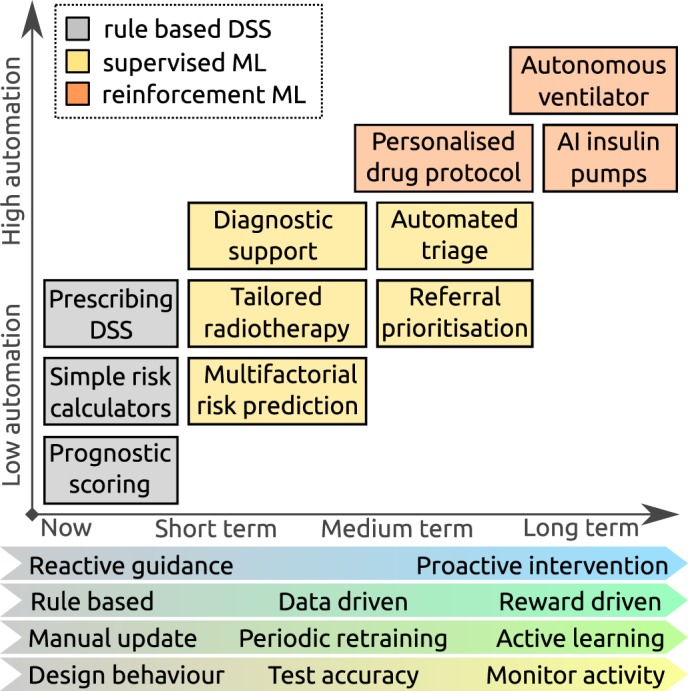
“Challen et al. (Challen et al 2019) proposed a general framework for considering clinical AI quality and safety issues, containing several short-term, medium-term, and long-term issues.”
BackgroundSalvi, S., Vu, G. T., Gurupur, V. P., & King, C. (2025) · Electronics · doi:10.3390/electronics14163278 · Cited by 28
CALSTER, B. V., van Smeden, M., van Amsterdam, W. A. C., Coemans, M., Wynants, L., & Steyerberg, E. W. (2025) · Annual Review of Statistics and Its Application · doi:10.1146/annurev-statistics-042324-123749 · Cited by 29
Stress Testing Pathology Models with Generated Artifacts
Wang, N. C., Kaplan, J. B., Lee, J., Hodgin, J. B., Udager, A. M., & Rao, A. (2021) · Journal of Pathology Informatics · doi:10.4103/jpi.jpi_6_21 · Cited by 28
Cross-Cultural Implications of Large Language Models: An Extended Comparative Analysis
Shan, X., Xu, Y., Wang, Y., Lin, Y.-S., & Bao, Y. (2024) · Lecture notes in computer science · doi:10.1007/978-3-031-76806-4_8 · Cited by 28
Artificial Intelligence in Healthcare: Lost In Translation?Preprint
Madai, V. I., & Higgins, D. (2021) · arXiv (Cornell University) · doi:10.48550/arxiv.2107.13454 · Cited by 28
“Constantly shifting medical standards must be accounted for early in the development process [57].”
Stroud, A. M., Anzabi, M. D., Wise, J. L., Barry, B. A., Malik, M. M., McGowan, M. L., & Sharp, R. R. (2024) · Mayo Clinic Proceedings Digital Health · doi:10.1016/j.mcpdig.2024.100189 · Cited by 27
Triberti, S., Durosini, I., Curigliano, G., & Pravettoni, G. (2020) · Public Health Genomics · doi:10.1159/000506014 · Cited by 27
Reliability of eXplainable Artificial Intelligence in Adversarial Perturbation Scenarios
Galli, A., Marrone, S., Moscato, V., & Sansone, C. (2021) · Lecture notes in computer science · doi:10.1007/978-3-030-68796-0_18 · Cited by 28
Radiological education in the era of artificial intelligence: A review [RETRACTED]
Wang, C., Xie, H., Wang, S., Yang, S., & Hu, L. (2023) · Medicine · doi:10.1097/md.0000000000032518 · Cited by 27
“[32]”
BackgroundRetractedCarter, S. M., Carolan, L., Aquino, Y. S. J., Frazer, H. M. L., Rogers, W., Hall, J. E., Degeling, C., Braunack‐Mayer, A., & Houssami, N. (2023) · Digital Health · doi:10.1177/20552076231191057 · Cited by 28
Bulley, J., & Şahin, Ö. (2021) · Goldsmiths Research Online · doi:10.23636/1347 · Cited by 28
Quantum Gradient Optimized Drug Repurposing Prototype for Omics Data
Roosan, D., Nirzhor, S., Khan, R. I., & Hai, F. (2025) · International Conference on Data Science, Technology and Applications (DATA) · doi:10.5220/0013524900003967 · Cited by 26
“In pandemics, AI-driven analytics, augmented by quantum-inspired methods, expedite identifying existing drugs for new pathogens (Challen et al., 2019; Roosan, Chok, et al., 2020; Roosan et al., 2023).”
Kantrowitz, A. B., Ben‐David, K., Morris, M., Wittels, H. L., Wishon, M. J., McDonald, S. M., Renaghan, E., Feigenbaum, L. A., & Wittels, S. H. (2025) · Frontiers in Physiology · doi:10.3389/fphys.2025.1630032 · Cited by 26
“Given this, using properly labeled HRV data only derived from highly accurate methodologies (i.e., ECG) could not be more imminent and necessary (Challen et al., 2019).”
Artificial intelligence and clinical deterioration
Malycha, J., Bacchi, S., & Redfern, O. (2022) · Current Opinion in Critical Care · doi:10.1097/mcc.0000000000000945 · Cited by 27
Abd-Rouf, M. S. K., Adigun, P. O., Faniyi, A. J., Oladapo, B. G., Abd-Rouf, A. B., Alalade, E. O., Awopejo, T. E., Adegoke, O. S., Oyekanmi, T. T., Jamiu, A. B., et al. (2024) · International Journal of Science Research and Technology · doi:10.15662/ijsrat.2024.0703003 · Cited by 31
Clinical considerations when applying machine learning to decision-support tasks versus automation
Jamieson, T., & Goldfarb, A. (2019) · BMJ Quality & Safety · doi:10.1136/bmjqs-2019-009514 · Cited by 22
Kuo, N. I.-H., Jorm, L. R., & Barbieri, S. (2023) · arXiv (Cornell University) · doi:10.48550/arxiv.2303.12281 · Cited by 26
“Both phenomena cause GANs to generate ill-represented patient states; and this would negatively impact the utility of the synthetic dataset, causing downstream machine learning models to learn biases that may inflict patient harm (Challen et al., 2019).”
BackgroundFang, C., Zhou, P., Zhang, X., He, Y., & Yang, Q. (2025) · Frontiers in Oncology · doi:10.3389/fonc.2025.1609827 · Cited by 25
Machine Learning Approaches for the Frailty Screening: A Narrative Review
Oliosi, E., Guede-Fernández, F., & Londral, A. R. M. (2022) · International Journal of Environmental Research and Public Health · doi:10.3390/ijerph19148825 · Cited by 25
Khan, A. A. R., Akram, M. U., & Nazir, S. (2023) · PLoS ONE · doi:10.1371/journal.pone.0280352 · Cited by 25
“The improvement in healthcare AI has been demonstrated by many studies but the clinical value is yet to be realised [32, 51].”
BackgroundInfluentialLiu, Y., Joly, R., Turchioe, M. R., Benda, N. C., Hermann, A. D., Beecy, A., Pathak, J., & Zhang, Y. (2024) · Journal of the American Medical Informatics Association · doi:10.1093/jamia/ocae056 · Cited by 25
“10 The first gap is concerned with the need for clinicians to make well-informed decisions about adopting interventions, carefully determining the circumstances in which utilizing a model for clinical decision-making would be advantageous.”
BackgroundMethodSelective Prediction via Training Dynamics
Rabanser, S., Thudi, A., Hamidieh, K., Dziedzic, A., Bahceci, I., Sediq, A. B., Sokun, H., & Papernot, N. (2025) · Transactions on machine learning research · doi:10.48550/arxiv.2205.13532 · Cited by 26
“…particularly important when deploying deep neural networks (DNNs) for applications with low tolerances for false-positives (i.e., classifying with a wrong label), such as healthcare (Challen et al., 2019; Mozannar & Sontag, 2020), self-driving (Ghodsi et al., 2021), and law (Vieira et al., 2021).”
The Agentic Regulator: Risks for AI in Finance and a Proposed Agent-based Framework for GovernancePreprint
Kurshan, E., Balch, T. R., & Byrd, D. (2026) · SSRN Electronic Journal · doi:10.2139/ssrn.6970398 · Cited by 28
Approaches for the Use of AI in Workplace Health Promotion and Prevention: Systematic Scoping Review
Lange, M., Löwe, A., Kayser, I., & Schaller, A. (2024) · JMIR AI · doi:10.2196/53506 · Cited by 24
“For future AI models, longitudinal data are of utmost importance, as cross-sectional data can only reflect on a specific stage of that life cycle [70,71].”
How Many Are in This Image A Safety Evaluation Benchmark for Vision LLMs
Tu, H., Cui, C., Wang, Z., Zhou, Y., Zhao, B., Han, J., Zhou, W., Yao, H., & Xie, C. (2024) · Lecture notes in computer science · doi:10.1007/978-3-031-72983-6_3 · Cited by 24
Wen, Q., Qiu, L., Qiu, C., Che, K., Zeng, R., Wang, X., Cao, P., Xing, L., Yang, Z., & Yu, J. (2025) · Cancer Letters · doi:10.1016/j.canlet.2025.217881 · Cited by 25
ASHP Statement on Artificial Intelligence in Pharmacy
Bastow, S. S., Greszler, C. A., Hartell, E., Kalichira, A. L., Mathew, S., Rhodes, D., Zhan, S., & Anderson, S. V. (2025) · American Journal of Health-System Pharmacy · doi:10.1093/ajhp/zxaf107 · Cited by 24
Liu, J., Varghese, B. A., Taravat, F., Eibschutz, L. S., & Gholamrezanezhad, A. (2022) · Diagnostics · doi:10.3390/diagnostics12061351 · Cited by 24
“Distributional shift can also greatly impact AI technology and lead to erroneous predictions [72].”
BackgroundMethodInfluentialStress-testing pelvic autosegmentation algorithms using anatomical edge cases
Kanwar, A., Merz, B., Claunch, C. J., Rana, S. R., Hung, A., & Thompson, R. F. (2023) · Physics and Imaging in Radiation Oncology · doi:10.1016/j.phro.2023.100413 · Cited by 24
“However, as autosegmentation algorithms proliferate in both their existence and use in the clinic, the potential for real world harm increases [10].”
BackgroundCagliero, D., Deuitch, N. T., Shah, N. H., Feudtner, C., & Char, D. S. (2023) · Journal of the American Medical Informatics Association · doi:10.1093/jamia/ocad022 · Cited by 24
Ingole, B. S., Ramineni, V., Pulipeta, N. K., Kathiriya, M. J., Krishnappa, M. S., & Jayaram, V. (2024) · European Journal of Computer Science and Information Technology · doi:10.37745/ejcsit.2013/vol12n63545 · Cited by 24
Human Factors: Bridging Artificial Intelligence and Patient Safety
Choudhury, A., & Asan, O. (2020) · Proceedings of the International Symposium on Human Factors and Ergonomics in Health Care · doi:10.1177/2327857920091007 · Cited by 23
“However, the dependence of AI systems on data and algorithms makes them susceptible to biased and uncertain results which might deter patient safety (Challen et al., 2019; Parikh, Obermeyer, & Navathe, 2019).”
BackgroundMethodSensitivity of neural networks to corruption of image classification
Kaplan, S., Handelman, D., & Handelman, A. (2021) · AI and Ethics · doi:10.1007/s43681-021-00049-0 · Cited by 23
Artificial intelligence in cardiology: the debate continues
Asselbergs, F. W., & Fraser, A. G. (2021) · European Heart Journal - Digital Health · doi:10.1093/ehjdh/ztab090 · Cited by 23
“28 Algorithmic bias is a major concern (and potential danger) unless test and independent validation cohorts are representative of all populations in which the method will be applied.”
Lustig, M., Schwartz, D., Bryant, R. A., & Gefen, A. (2022) · International Wound Journal · doi:10.1111/iwj.13728 · Cited by 24
“26,27 38-43 To date, no methods or studies have integrated AI/ML with the diagnostic abilities of the SEM Scanner technology, to detect the formation of DTIs before they are diagnosed visually through STAs.”
MethodMonteith, S., Glenn, T., Geddes, J. R., Achtyes, E. D., Whybrow, P. C., & Bauer, M. (2023) · Pharmacopsychiatry · doi:10.1055/a-2142-9325 · Cited by 23
“The implementation of any new technology, including AI, results in unintended consequences [36, 51, 52].”
BackgroundChatGPT's performance before and after teaching in mass casualty incident triage
Gan, R. K., Uddin, H., Gan, A. Z., Yew, Y. Y., & González, P. I. A. (2023) · Scientific Reports · doi:10.1038/s41598-023-46986-0 · Cited by 23
“Moreover, unintended outcomes for patients may appear due to hacking of the system 49,50 and it is also highly challenging to verify the AI-related intervention due to the scarcity of immediately available peer-reviewed studies and the interdisciplinary nature of the field 51 .”
Generative AI in Terms of Its Ethical Problems for Both Teachers and Learners: Striking a Balance
Le-Nguyen, H.-T., & Tran, T. T. (2023) · Advances in educational technologies and instructional design book series · doi:10.4018/979-8-3693-0074-9.ch006 · Cited by 24
A Smart Motor Rehabilitation System Based on the Internet of Things and Humanoid Robotics
Moghbelan, Y., Esposito, A., Zyrianoff, I., Spaletta, G., Stefano Borgo, A., Masolo, C., Ballarin, F., Seidita, V., Toni, R., Barbaro, F., et al. (2024) · Applied Sciences · doi:10.3390/app142411489 · Cited by 23
Radiomics in Cardiovascular Disease Imaging: from Pixels to the Heart of the Problem
Spadarella, G., Perillo, T., Ugga, L., & Cuocolo, R. (2022) · Current Cardiovascular Imaging Reports · doi:10.1007/s12410-022-09563-z · Cited by 23
“This may be due to excessive tailoring of the ML model to the training population, poor quality of data, or its ineffective preprocessing and results in low ability to generalize [93].”
BackgroundOptimizing Equity: Working towards Fair Machine Learning Algorithms in Laboratory Medicine
Azimi, V., & Zaydman, M. A. (2023) · The Journal of Applied Laboratory Medicine · doi:10.1093/jalm/jfac085 · Cited by 25
An Investigation of Critical Issues in Bias Mitigation Techniques
Shrestha, R., Kafle, K., & Kanan, C. (2022) · 2022 IEEE/CVF Winter Conference on Applications of Computer Vision (WACV) · doi:10.1109/wacv51458.2022.00257 · Cited by 22
Challenges for implementing generative artificial intelligence ( GenAI ) into clinical healthcare
Roberts, L. J., Jayasena, R., Khanna, S., Arnott, L., Lane, P., & Bain, C. (2025) · Internal Medicine Journal · doi:10.1111/imj.70035 · Cited by 22
Winkler, P. W., Zsidai, B., Senorski, E. H., Pruneski, J. A., Hirschmann, M. T., Ley, C., Tischer, T., Herbst, E., Pareek, A., Musahl, V., et al. (2025) · Journal of Experimental Orthopaedics · doi:10.1002/jeo2.70247 · Cited by 23
“Distributional shift, also known as data ‐ drift, refers to erroneous predictions of ML models caused by a mismatch between training data and operational data (Table 2) [2, 46].”
InfluentialIterative Quality Control Strategies for Expert Medical Image Labeling
Freeman, B., Hammel, N., Phene, S., Huang, A. E., Ackermann, R., Kanzheleva, O., Hutson, M., Taggart, C., Duong, Q., & Sayres, R. (2021) · Proceedings of the AAAI Conference on Human Computation and Crowdsourcing · doi:10.1609/hcomp.v9i1.18940 · Cited by 22
“But if deployed in real-world clinical settings, poorly-performing or poorly-generalizing models may lead to patient harm (Zou and Schiebinger 2018; Challen et al. 2019).”
BackgroundTCNN: A Transformer Convolutional Neural Network for artifact classification in whole slide images
Shakarami, A., Nicolè, L., Terreran, M., Tos, A. P. D., & Ghidoni, S. (2023) · Biomedical Signal Processing and Control · doi:10.1016/j.bspc.2023.104812 · Cited by 22
Information governance as a socio-technical process in the development of trustworthy healthcare AI
Rees, N., Holding, K., & Sujan, M. A. (2023) · Frontiers in Computer Science · doi:10.3389/fcomp.2023.1134818 · Cited by 23
“Development and retrospective evaluation of healthcare AI are typically performed with a technology-centric focus, with an emphasis on technical issues such as data quality and the potential for bias in the data (Challen et al., 2019).”
BackgroundChallenges of Machine Learning and AI (What Is Next?), Responsible and Ethical AI
Gkontra, P., Quaglio, G., Garmendia, A. T., & Lekadir, K. (2023) · Springer eBooks · doi:10.1007/978-3-031-36678-9_17 · Cited by 22
The impact of artificial intelligence on Ukrainian medicine: benefits and challenges for the future
Sofilkanych, N., Vesova, O., Kaminskyy, V., & Kryvosheieva, A. (2023) · Futurity Medicine. · doi:10.57125/fem.2023.12.30.04 · Cited by 23
Shlobin, N. A., Ward, M., Shah, H. A., Brown, E. D. L., Sciubba, D. M., Langer, D. J., & D’Amico, R. S. (2024) · World Neurosurgery · doi:10.1016/j.wneu.2024.04.165 · Cited by 22
Can ChatGPT-4o provide new systematic review ideas to oral and maxillofacial surgeons?
Balel, Y., Zogo, A., Yıldız, S., & Tanyeri, H. (2024) · Journal of Stomatology Oral and Maxillofacial Surgery · doi:10.1016/j.jormas.2024.101979 · Cited by 22
Wang, Y., Liang, L., Li, R., Wang, Y., & Hao, C. (2024) · Journal of Multidisciplinary Healthcare · doi:10.2147/jmdh.s473680 · Cited by 22
Zhang, Y., Joly, R., Beecy, A., Principe, S., Satpathy, S., Gore, A., Reilly, T., Lang, M., Sathi, N., Uy, C., et al. (2024) · PubMed Central · Cited by 22
Application of Artificial Intelligence in the Diagnosis and Management of Corneal Diseases
Tahvildari, M., Singh, R. B., & Saeed, H. N. (2021) · Seminars in Ophthalmology · doi:10.1080/08820538.2021.1893763 · Cited by 22
“64 Increasing new insights and subsequent protocol changes in medicine may require constant updates, reducing the cost-effectiveness of these systems.”
Mauer, E. A., Lee, J., Choi, J. J., Zhang, H., Hoffman, K. L., Easthausen, I. J., Rajan, M., Weiner, M. G., Kaushal, R., Safford, M. M., et al. (2021) · Journal of Biomedical Informatics · doi:10.1016/j.jbi.2021.103794 · Cited by 22
The Impact of Artificial Intelligence on Jobs and Work in New Zealand
Gavaghan, C., Knott, A., & MacLaurin, J. (2021) · PhilPapers (PhilPapers Foundation) · doi:10.25455/wgtn.32600091 · Cited by 22
Babker, A. M. A. (2026) · Journal of Applied Hematology · doi:10.4103/joah.joah_33_26 · Cited by 22
Sciarretta, E., Mancini, R., & Greco, E. (2022) · Sustainability · doi:10.3390/su142416464 · Cited by 23
Saleh, D. S., & Othman, M. S. (2024) · Baghdad Science Journal · doi:10.21123/bsj.2023.8544 · Cited by 21
“One of the possible limitations of ML and deep learning (DL)-based solutions is that they frequently involve sophisticated algorithms that require a large amount of data to train This can make it hard for doctors to evaluate the algorithm's diagnosis and raises bias and reliability concerns 20 .”
BackgroundChoudhury, A., Asan, O., & Mansouri, M. (2019) · IEEE International Symposium on Systems Engineering · doi:10.1109/isse46696.2019.8984573 · Cited by 21
“In medicine, AI research is burgeoning rapidly, allowing computers to make data driven predictions [6].”
BackgroundInfluentialde Carvalho, C. M., Seixas, F. L., Conci, A., Muchaluat-Saade, D. C., Laks, J., & Boechat, Y. E. M. (2020) · Computers in Biology and Medicine · doi:10.1016/j.compbiomed.2020.104010 · Cited by 21
OnRAMP for Regulating Artificial Intelligence in Medical Products
Higgins, D. C. (2021) · Advanced Intelligent Systems · doi:10.1002/aisy.202100042 · Cited by 21
The automation of doctors and machines: A classification for AI in medicine (ADAM framework)
Kazzazi, F. (2021) · Future Healthcare Journal · doi:10.7861/fhj.2020-0189 · Cited by 21
“Insensitivity to impact 22 Inconsideration of the consequence of the outcome in the decision-making process.”
BackgroundDuke, S. A. (2022) · Ethics and Information Technology · doi:10.1007/s10676-022-09627-0 · Cited by 21
“Indeed, experts in the medical AI field identify several such problems which either have had some manifestation already, or loom as a future prospect (e.g. Challen et al., 2019; Choy et al., 2018; Coiera, 2015; Macrae, 2019; Recht & Bryan, 2017; Topol, 2019; Yu & Kohane, 2019).”
BackgroundInfluentialMasi, D., Risi, R., Biagi, F., Vasquez Barahona, D., Watanabe, M., Zilich, R., Gabrielli, G., Santin, P., Mariani, S., Lubrano, C., et al. (2022) · Nutrients · doi:10.3390/nu14020373 · Cited by 20
“…rules expressed in the form “ if premise . . . , then consequence . . . ” , where “ premise ” refers to the combination of conditions (conditional clauses) on the input variables, and “ consequence ” contains information about the target function (yes or no/presence or absence of disease) [2,32].”
BackgroundExplainable AI-Driven Analysis of Radiology Reports Using Text and Image Data: Experimental Study
Zamir, M. T., Khan, S. U., Gelbukh, A. F., Riverón, E. M. F., & Gelbukh, I. (2025) · JMIR Formative Research · doi:10.2196/77482 · Cited by 20
“This emphasizes the need to adapt AI tools for specialized medical applications, ensuring their safety and effectiveness in clinical practice [42].”
In the Frame: the Language of AI
Bones, H., Ford, S., Hendery, R., Richards, K., & Swist, T. (2020) · Philosophy & Technology · doi:10.1007/s13347-020-00422-7 · Cited by 22
“” (Didier et al. 2015: 1064); on the dangers for medicine see e.g. Cabitza et al. (2017); see also Challen et al. (2019). discourses and practices are privileged, or marginalised, by whom, how — and to what effect.”
BackgroundArtificial intelligence in gastric cancer: a translational narrative review
Yu, C., & Helwig, E. J. (2021) · Annals of Translational Medicine · doi:10.21037/atm-20-6337 · Cited by 20
“As for long term issues, we can only aim to include safeguards in algorithms to prevent any independent activity or creating a system to oversee any changes the ML modality may be implementing (63,65).”
BackgroundNeurological update: neuro-otology 2023
Halmagyi, G. M., Akdal, G., Welgampola, M. S., & Wang, C. (2023) · Journal of Neurology · doi:10.1007/s00415-023-11922-9 · Cited by 21
“Clinicians must familiarise themselves with the limitations of machine learning models and the risks associated with their use [282, 283], as the implementation of these technologies is inevitable.”
BackgroundMdladla, L. T. S., Wider, W., Thanathanchuchot, T., & Hossain, S. F. A. (2024) · Journal of Infrastructure Policy and Development · doi:10.24294/jipd.v8i9.5436 · Cited by 20
“Challen et al. (2019) highlight that AI can exhibit biases due to the data it is trained on, leading to biases in areas such as hiring practices where gender bias might result in fewer women being hired for specific positions.”
BackgroundBiju, P. R., & Gayathri, O. (2025) · AI & Society · doi:10.1007/s00146-025-02381-z · Cited by 20
Moëll, B., Farestam, F., & Beskow, J. (2025) · Frontiers in Artificial Intelligence · doi:10.3389/frai.2025.1557920 · Cited by 20
Automated STI/HIV risk assessments: Testing an online clinical algorithm in Ottawa, Canada
O’Byrne, P., Musten, A., Orser, L., & Buckingham, S. (2021) · International Journal of STD & AIDS · doi:10.1177/09564624211031322 · Cited by 20
“While research 24 – 26 has shown that some algorithms formalize ethnic biases and consequently impede access to care for racialized communities, we designed ours so that the thresholds to qualify for care were more easily surpassed by members of these groups.”
BackgroundWinter, P., & Carusi, A. (2022) · Journal of Responsible Technology · doi:10.1016/j.jrt.2022.100052 · Cited by 20
INTERACTION: A Generative XAI Framework for Natural Language Inference Explanations
Yu, J., Cristea, A. I., Harit, A., Sun, Z., Aduragba, O. T., Shi, L., & Moubayed, N. A. (2022) · International Joint Conference on Neural Networks (IJCNN) · doi:10.1109/ijcnn55064.2022.9892336 · Cited by 20
“Hence, concerns have been raised on whether deep neural networks can make reasonable judgements [3], [4], which further triggers an interest in explainable artificial intelligence (XAI) research [5].”
BackgroundAI and sustainable business model innovation: A systematic literature review
Sharma, A., Khokhar, M., Duan, Y., Bibi, M., Sharma, R., & Muhammad, B. (2025) · Sustainable Futures · doi:10.1016/j.sftr.2025.101204 · Cited by 19
Your Prompt is My Command: On Assessing the Human-Centred Generality of Multimodal Models
Schellaert, W., Martínez-Plumed, F., Vold, K., Burden, J., A. M. Casares, P., Sheng Loe, B., Reichart, R., Ó hÉigeartaigh, S., Korhonen, A., & Hernández-Orallo, J. (2023) · Journal of Artificial Intelligence Research · doi:10.1613/jair.1.14157 · Cited by 19
“Consequences of incorrect or unsafe results ( − ) Cost measured in terms of the wide consequences of its use, including side effects or harmful stereotypes (Challen et al., 2019; Kocielnik et al., 2019; Russell et al., 2015; Venkatesh & Goyal, 2010; Vig et al., 2020).”
BackgroundWaldock, W. J., Guni, A., Darzi, A. W., & Ashrafian, H. (2026) · PLOS Digital Health · doi:10.1371/journal.pdig.0001310 · Cited by 23
“The question of accountability remains unresolved in most healthcare systems [38,39].”
Alaqra, A. S., Kane, B. T., & Fischer‐Hübner, S. (2021) · JMIR Human Factors · doi:10.2196/21810 · Cited by 19
“Previous studies have addressed physicians’ perspectives on ML tools and trusting the outcomes, showing that physicians desire to understand the logic of the ML tool in order to trust the results [55-57].”
BackgroundSafeConv: Explaining and Correcting Conversational Unsafe Behavior
Zhang, M., Jin, L., Song, L., Mi, H., Chen, W., & Yu, D. (2023) · Proceedings of the conference - Association for Computational Linguistics. Meeting · doi:10.18653/v1/2023.acl-long.2 · Cited by 19
“Safety of artificial intelligence models is a topic that attracts mounting attention and concerns from the community (Challen et al., 2019).”
BackgroundHealthcare AI: A Revised Quebec Framework for Nursing Education
Lattuca, M., Maratta, D., Beffert, U., Chevrier, A. S., & Winer, L. R. (2023) · Quality Advancement in Nursing Education - Avancées en formation infirmière · doi:10.17483/2368-6669.1408 · Cited by 19
Guo, G., Deng, L., Tandon, A. A., Endert, A., & Kwon, B. C. (2024) · ACM Conference on Fairness, Accountability, and Transparency (FAccT) · doi:10.1145/3630106.3659011 · Cited by 19
“At the same time, the potentially significant legal and ethical consequences of medical AI classification models [10, 44, 65] have led to concerns about their trustworthiness, trans-parency, and interpretability [3, 64, 71].”
BackgroundData Quality, Bias, and Strategic Challenges in Reinforcement Learning for Healthcare: A Survey
Rahman, A. U., Saqia, B., Alsenani, Y. S., & Ullah, I. (2024) · International Journal of Data Informatics and Intelligent Computing · doi:10.59461/ijdiic.v3i3.128 · Cited by 20
Metadata
- Authors
- Challen, R., Denny, J., Pitt, M., Gompels, L., Edwards, T., & Tsaneva-Atanasova, K.
- Affiliations
- University of Exeter (GB)
- Vanderbilt University Medical Center (US)
- Taunton & Somerset NHS Foundation Trust (GB)
- Corresponding author
- Challen, Robert
- Venue
- BMJ Quality & Safety
- Publisher
- BMJ
- Published
- 2019-01-12
- Volume
- 28
- Issue
- 3
- Pages
- 231-237
- ISSN
- 1475-3898 (ISSN-L)
- 2044-5415
- 2044-5423
- PMC
- PMC6560460
- OpenAlex
- W2910707576
- Cited by
- 956
- References
- 52
- Citations by year
- 2026: 150 · 2025: 171 · 2024: 146 · 2023: 136 · 2022: 122 · 2021: 108 · 2020: 92 · 2019: 30
- FWCI
- 27.99
- Type
- journal article
- Language
- en
- Open access
- hybrid
- doi.org
- Licence
- cc-by
- Locations
- BMJ Quality & Safety (publishedVersion, cc-by)
- Europe PMC (PubMed Central) (publishedVersion, cc-by)
- PubMed Central (publishedVersion, cc-by)
- PubMed (publishedVersion)
- Figshare (submittedVersion, cc-by)
- HighWire Press Open Archive (submittedVersion)
- Open Research Exeter (University of Exeter) (submittedVersion, cc-by)
- Funders
- Engineering and Physical Sciences Research Council (EP/N014391/1)
- Topics
- Health Sciences › Medicine › Health Informatics › Artificial Intelligence in Healthcare and Education
- Physical Sciences › Computer Science › Artificial Intelligence › Ethics and Social Impacts of AI
- Physical Sciences › Engineering › Safety, Risk, Reliability and Quality › Safety Systems Engineering in Autonomy
- Keywords
- artificial intelligence, algorithmic bias, clinical safety, health care AI, algorithmic fairness
- MeSH terms
- Algorithms, Artificial Intelligence, Humans, Quality of Health Care, Bias, Patient Safety
About these checks
Registry, retraction, Cites and statistics results are computed, not judged, with one exception: a printed reference that no index lists is read once by a model before it counts as a citation error. Claims are extracted by a model and kept only when their quote appears verbatim in the text; each cited source is then checked, with a model’s help, for whether it says what the claim relies on. Those verdicts can be wrong — read the claim’s quote and the cited source before relying on one.
Statistics and arithmetic are recomputed, not judged.
Confidence bands are shown only for fields calibrated on our annotated test set. None is calibrated yet, so no band is shown.
What counts as a claim ›How we measure confidence ›How we check this ›
Are you an author, or do you see a problem with this page? Request a review
Data sources
Bibliographic data: Semantic Scholar, OpenAlex, Crossref.
Contains information from the Semantic Scholar Academic Graph Datasets, made available under the ODC Attribution License (ODC-BY 1.0).
Semantic Scholar’s data is described in: Kinney, R., et al. (2023). The Semantic Scholar Open Data Platform. arXiv:2301.10140.
