

Effect of a machine learning-based severe sepsis prediction algorithm on patient survival and hospital length of stay: A randomised clinical trial.
Open accessThe DOI matches its Crossref record; 33 of the 33 references it cites were found in a registry or an index.
Abstract
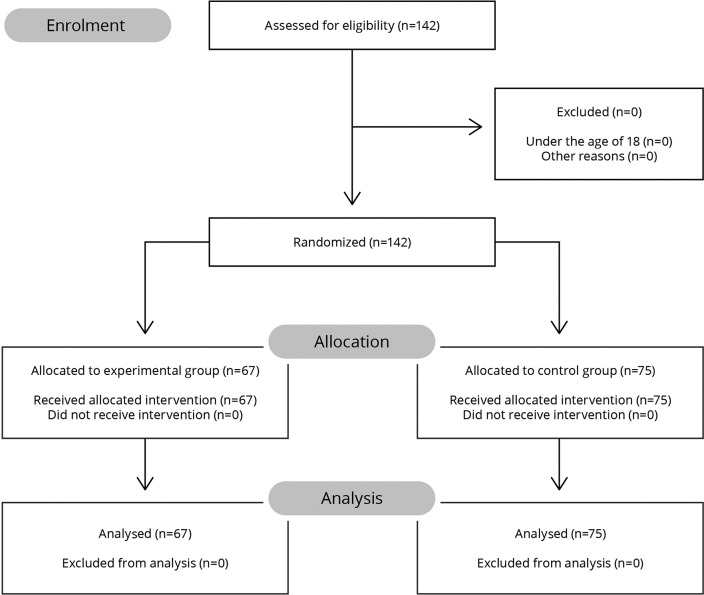
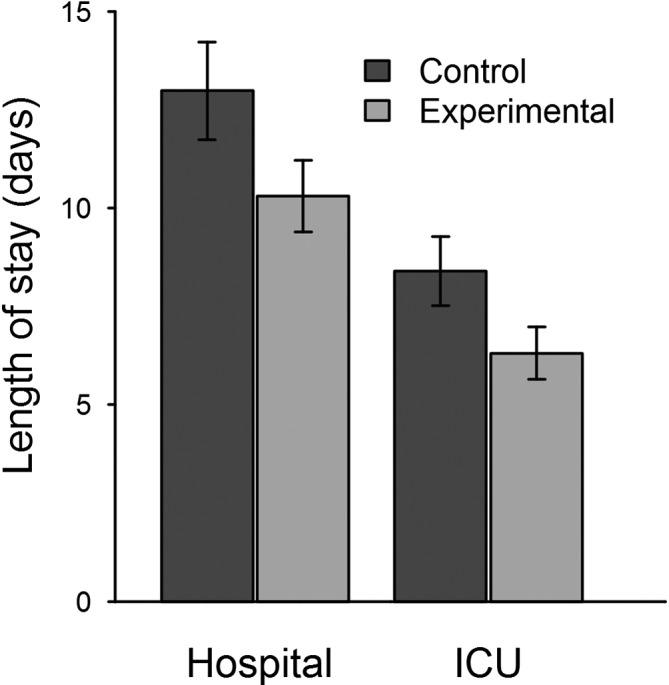
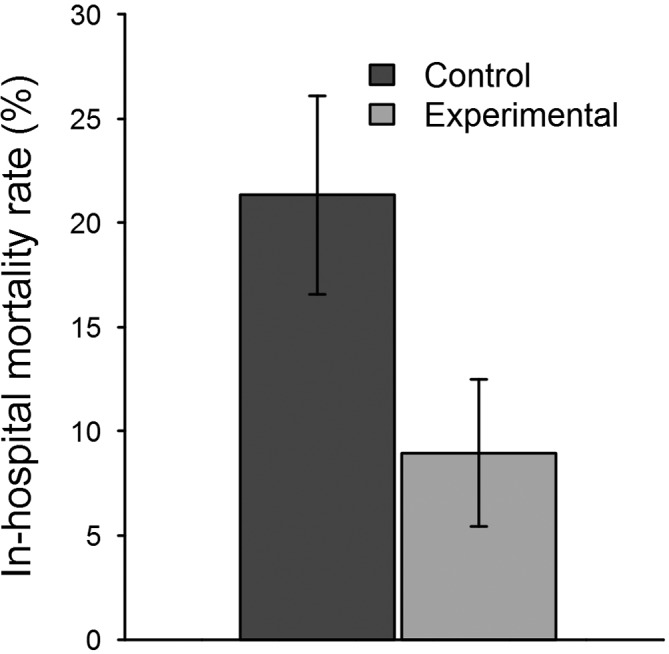
Introduction: Several methods have been developed to electronically monitor patients for severe sepsis, but few provide predictive capabilities to enable early intervention; furthermore, no severe sepsis prediction systems have been previously validated in a randomised study. We tested the use of a machine learning-based severe sepsis prediction system for reductions in average length of stay and in-hospital mortality rate. Methods: We conducted a randomised controlled clinical trial at two medical-surgical intensive care units at the University of California, San Francisco Medical Center, evaluating the primary outcome of average length of stay, and secondary outcome of in-hospital mortality rate from December 2016 to February 2017. Adult patients (18+) admitted to participating units were eligible for this factorial, open-label study. Enrolled patients were assigned to a trial arm by a random allocation sequence. In the control group, only the current severe sepsis detector was used; in the experimental group, the machine learning algorithm (MLA) was also used. On receiving an alert, the care team evaluated the patient and initiated the severe sepsis bundle, if appropriate. Although participants were randomly assigned to a trial arm, group assignments were automatically revealed for any patients who received MLA alerts. Results: Outcomes from 75 patients in the control and 67 patients in the experimental group were analysed. Average length of stay decreased from 13.0 days in the control to 10.3 days in the experimental group (p=0.042). In-hospital mortality decreased by 12.4 percentage points when using the MLA (p=0.018), a relative reduction of 58.0%. No adverse events were reported during this trial. Conclusion: The MLA was associated with improved patient outcomes. This is the first randomised controlled trial of a sepsis surveillance system to demonstrate statistically significant differences in length of stay and in-hospital mortality. Trial registration: NCT03015454.
Overview
The claims and statistics of this paper haven’t been checked yet.
Free: it reads the open-access text and checks the first 5 claims that cite a source we can check. Create a free account to check every claim.
Integrity signals
Registry
Cites
Statistics
Figures
Verification
Claims the paper makes
The claims and statistics of this paper haven’t been checked yet.
Free: it reads the open-access text and checks the first 5 claims that cite a source we can check. Create a free account to check every claim.
Claims other papers make about this one
Each is checked against this paper’s own text: does it say what the citing paper says it does?
The cited source doesn’t support the claim as written.
In the citing paper
“A pooled analysis of three RCTs did not demonstrate a mortality benefit of active screening (RR 0.90; 95% CI 0.51–1.58) [33–35].”
From Surviving sepsis campaign: international guidelines for management of sepsis and septic shock 2021 (2021) · cites this paper as [35]
Checked by a reasoning model — may be wrong.
Experimental — accuracy not yet measuredThe source backs part of the claim, not all of it — or backs it for a different population, condition or comparison.
In the citing paper
“A pooled analysis of three RCTs did not demonstrate a mortality benefit of active screening (RR, 0.90; 95% CI, 0.51-1.58)(33-35).”
From Surviving Sepsis Campaign: International Guidelines for Management of Sepsis and Septic Shock 2021. (2021) · cites this paper as [35]
Experimental — accuracy not yet measuredThe source backs part of the claim, not all of it — or backs it for a different population, condition or comparison.
In the citing paper
“Most (66%) post-implementation studies did not report real-world MLA performance (Figure 2), and of the 3 that did, one reported improved MLA performance58 while the other 2 showed marked declines,34,50”
From Deployment of machine learning algorithms to predict sepsis: systematic review and application of the SALIENT clinical AI implementation framework (2023) · cites this paper as [58]
Experimental — accuracy not yet measuredThe source backs part of the claim, not all of it — or backs it for a different population, condition or comparison.
In the citing paper
“Three papers using their own hospital data reported inquiries for data sharing were possible [28, 32, 35], two papers reported data would not be shared [25, 31].”
From Machine learning for the prediction of sepsis: a systematic review and meta-analysis of diagnostic test accuracy (2020) · cites this paper as [32]
Experimental — accuracy not yet measuredThe source backs part of the claim, not all of it — or backs it for a different population, condition or comparison.
In the citing paper
“Despite the rise in competing models and products for early sepsis detection [5], few machine learning models have been implemented as part of clinical care [6-8].”
From Integrating a Machine Learning System Into Clinical Workflows: Qualitative Study (2020) · cites this paper as [8]
Experimental — accuracy not yet measured
10 more claims about this paper
Create a free account to see every claim other papers make about this one.
Self-check
Percentages, sums and reported differences re-computed from the paper’s own numbers.
The self-check needs the paper’s full text.
Citations
Cites
The third international consensus definitions for sepsis and septic shock (Sepsis-3).
Singer, M., Deutschman, C. S., Seymour, C. W., Shankar-Hari, M., Annane, D., Bauer, M., Bellomo, R., Bernard, G. R., Chiche, J.-D., Coopersmith, C. M., et al. (2016) · JAMA · doi:10.1001/jama.2016.0287 · Cited by 28,250
Vincent, J. L., Moreno, R., Takala, J., Willatts, S., De Mendonça, A., Bruining, H., Reinhart, C. K., Suter, P. M., & Thijs, L. G. (1996) · Intensive Care Medicine · doi:10.1007/bf01709751 · Cited by 11,674
Early goal-directed therapy in the treatment of severe sepsis and septic shock
Rivers, E., Nguyen, B., Havstad, S., Ressler, J., Muzzin, A., Knoblich, B., Peterson, E., & Tomlanovich, M. (2001) · New England Journal of Medicine · doi:10.1056/nejmoa010307 · Cited by 10,743 · cited 1×
“Specifically, the prediction algorithm’s ability to identify patients with severe sepsis before onset provided the opportunity for early intervention, which has been widely shown to decrease patient mortality.(23) 24 Kumar et al 7 found that survival decreased by 7.”
MethodAngus, D. C., Linde-Zwirble, W. T., Lidicker, J., Clermont, G., Carcillo, J., & Pinsky, M. R. (2001) · Critical Care Medicine · doi:10.1097/00003246-200107000-00002 · Cited by 8,503
The Surviving Sepsis Campaign Guidelines Committee including The Pediatric Subgroup*, Dellinger, R. P., Levy, M. M., Rhodes, A., Annane, D., Gerlach, H., Opal, S. M., Sevransky, J. E., Sprung, C. L., Douglas, I. S., et al. (2013) · Intensive Care Medicine · doi:10.1007/s00134-012-2769-8 · Cited by 7,290
Kumar, A., Roberts, D., Wood, K. E., Light, B., Parrillo, J. E., Sharma, S., Suppes, R., Feinstein, D., Zanotti, S., Taiberg, L., et al. (2006) · Critical Care Medicine · doi:10.1097/01.ccm.0000217961.75225.e9 · Cited by 6,109 · cited 2×
“Although there is some controversy about the conclusions drawn by Kumar et al about the linear relationship between antibiotic timing and survival, as well as concerns that the researchers did not properly consider confounding factors in reporting their outcomes, conflicting evidence has largely shown that waiting to…”
BackgroundInfluentialA randomized trial of protocol-based care for early septic shock.
The ProCESS Investigators (2014) · New England Journal of Medicine · doi:10.1056/nejmoa1401602 · Cited by 2,414
Churpek, M. M., Snyder, A., Han, X., Sokol, S., Pettit, N., Howell, M. D., & Edelson, D. P. (2017) · American Journal of Respiratory and Critical Care Medicine · doi:10.1164/rccm.201604-0854oc · Cited by 689
Two Decades of Mortality Trends Among Patients With Severe Sepsis: A Comparative Meta-Analysis*
Stevenson, E. K., Rubenstein, A. R., Radin, G. T., Wiener, R. S., & Walkey, A. J. (2014) · Critical Care Medicine · doi:10.1097/ccm.0000000000000026 · Cited by 648
Monitor Alarm Fatigue : An Integrative Review
Cvach, M. (2012) · Biomedical Instrumentation & Technology · doi:10.2345/0899-8205-46.4.268 · Cited by 632
A targeted real-time early warning score (TREWScore) for septic shock.
Henry, K. E., Hager, D. N., Pronovost, P. J., & Saria, S. (2015) · Science Translational Medicine · doi:10.1126/scitranslmed.aab3719 · Cited by 598 · cited 1×
“2 While sepsis definitions vary, including the recent third international consensus definitions, 3 here we define severe sepsis as ‘organ dysfunction caused by sepsis’, 4 and sepsis as a dysregulated host response to infection.”
BackgroundNguyen, H. B., Corbett, S. W., Steele, R., Banta, J., Clark, R. T., Hayes, S. R., Edwards, J., Cho, T. W., & Wittlake, W. A. (2007) · Critical Care Medicine · doi:10.1097/01.ccm.0000259463.33848.3d · Cited by 555
Sepsis: definition, epidemiology, and diagnosis
Lever, A., & Mackenzie, I. (2007) · BMJ · doi:10.1136/bmj.39346.495880.ae · Cited by 510
Desautels, T., Calvert, J., Hoffman, J., Jay, M., Kerem, Y., Shieh, L., Shimabukuro, D., Chettipally, U., Feldman, M. D., Barton, C., et al. (2016) · JMIR Medical Informatics · doi:10.2196/medinform.5909 · Cited by 509 · cited 3×
“These classifiers analysed multidimensional patterns and time-series trends to improve severe sepsis forecasting.(11) The resulting risk score ranged between 0 and 100 for each patient, and if it exceeded the preset threshold of 80, the charge nurse was called.”
BackgroundInfluentialSelf-citationMachine learning, medical diagnosis, and biomedical engineering research - commentary
Foster, K. R., Koprowski, R., & Skufca, J. D. (2014) · BioMedical Engineering OnLine · doi:10.1186/1475-925x-13-94 · Cited by 385
SEVERE SEPSIS AND SEPTIC SHOCK
Balk, R. A. (2000) · Critical Care Clinics · doi:10.1016/s0749-0704(05)70106-8 · Cited by 277
A computational approach to early sepsis detection
Calvert, J. S., Price, D. A., Chettipally, U. K., Barton, C. W., Feldman, M. D., Hoffman, J. L., Jay, M., & Das, R. (2016) · Computers in Biology and Medicine · doi:10.1016/j.compbiomed.2016.05.003 · Cited by 244 · cited 1×
“respectively.(9) Although these disease severity scoring systems were designed to predict patient risk, rather than specifically to identify sepsis, they are commonly used in severe sepsis diagnostic criteria due to their designed purposes of identifying systemic inflammation as a sign of possible infection and detect…”
BackgroundSelf-citationImplementation of a real-time computerized sepsis alert in nonintensive care unit patients*
Sawyer, A. M., Deal, E. N., Labelle, A. J., Witt, C., Thiel, S. W., Heard, K., Reichley, R. M., Micek, S. T., & Kollef, M. H. (2011) · Critical Care Medicine · doi:10.1097/ccm.0b013e318205df85 · Cited by 169
Validation of physiological scoring systems in the accident and emergency department
Subbe, C. P., Slater, A., Menon, D., & Gemmell, L. (2006) · Emergency Medicine Journal · doi:10.1136/emj.2006.035816 · Cited by 162
Antibiotics for Sepsis: Does Each Hour Really Count, or Is It Incestuous Amplification?
Singer, M. (2017) · American Journal of Respiratory and Critical Care Medicine · doi:10.1164/rccm.201703-0621ed · Cited by 132
Hooper, M. H., Weavind, L., Wheeler, A. P., Martin, J. B., Gowda, S. S., Semler, M. W., Hayes, R. M., Albert, D. W., Deane, N. B., Nian, H., et al. (2012) · Critical Care Medicine · doi:10.1097/ccm.0b013e318250a887 · Cited by 121 · cited 3×
“30 33 There is likely a relationship between this algorithm’s significant improvements in patient outcomes and its design to predict severe sepsis up to 4 hours in advance.”
BackgroundResultChalupka, A. N., & Talmor, D. S. (2011) · Critical Care Clinics · doi:10.1016/j.ccc.2011.09.003 · Cited by 109
Autoregressive Hidden Markov Models for the Early Detection of Neonatal Sepsis
Stanculescu, I., Williams, C. K. I., & Freer, Y. (2014) · IEEE Journal of Biomedical and Health Informatics · doi:10.1109/jbhi.2013.2294692 · Cited by 92
Manaktala, S., & Claypool, S. R. (2017) · Journal of the American Medical Informatics Association · doi:10.1093/jamia/ocw056 · Cited by 89
Semler, M. W., Weavind, L., Hooper, M. H., Rice, T. W., Gowda, S. S., Nadas, A., Song, Y., Martin, J. B., Bernard, G. R., & Wheeler, A. P. (2015) · Critical Care Medicine · doi:10.1097/ccm.0000000000001020 · Cited by 86
Scoring systems for the characterization of sepsis and associated outcomes
McLymont, N., & Glover, G. W. (2016) · Annals of Translational Medicine · doi:10.21037/atm.2016.12.53 · Cited by 82
Calvert, J., Mao, Q., Hoffman, J. L., Jay, M., Desautels, T., Mohamadlou, H., Chettipally, U., & Das, R. (2016) · Annals of Medicine & Surgery · doi:10.1016/j.amsu.2016.09.002 · Cited by 77
Self-citationHigh-performance detection and early prediction of septic shock for alcohol-use disorder patients
Calvert, J., Desautels, T., Chettipally, U., Barton, C., Hoffman, J., Jay, M., Mao, Q., Mohamadlou, H., & Das, R. (2016) · Annals of Medicine & Surgery · doi:10.1016/j.amsu.2016.04.023 · Cited by 62 · cited 1×
“In addition to the algorithm’s predictive nature, improvements in patient outcomes likely reflected the MLA’s combination of high sensitivity and high specificity.(10) 11 This reasoning is in close alignment with Manaktala and Claypool’s study.”
ResultSelf-citationEarly detection of sepsis in the emergency department using Dynamic Bayesian Networks.
Nachimuthu, S., & Haug, P. J. (2012) · PubMed · Cited by 57
Birnbaum, A., Bijur, P., Kuperman, G., Gennis, P., & Berger, T. (2010) · Applied Clinical Informatics · doi:10.4338/aci-2010-09-ra-0054 · Cited by 37
Learning (predictive) risk scores in the presence of censoring due to interventions
Dyagilev, K., & Saria, S. (2016) · Machine Learning · doi:10.1007/s10994-015-5527-7 · Cited by 36
Stanculescu, I., Williams, C. K. I., & Freer, Y. (2014) · Edinburgh Research Explorer (University of Edinburgh) · Cited by 32
A computational approach to mortality prediction of alcohol use disorder inpatients
Calvert, J. S., Mao, Q., Rogers, A. J., Barton, C., Jay, M., Desautels, T., Mohamadlou, H., Jan, J., & Das, R. (2016) · Computers in Biology and Medicine · doi:10.1016/j.compbiomed.2016.05.015 · Cited by 16
Self-citation
Cited by
Surviving sepsis campaign: international guidelines for management of sepsis and septic shock 2021
Evans, L., Rhodes, A., Alhazzani, W., Antonelli, M., Coopersmith, C. M., French, C., Machado, F. R., Mcintyre, L., Ostermann, M., Prescott, H. C., et al. (2021) · Intensive Care Medicine · doi:10.1007/s00134-021-06506-y · Cited by 5,082
The potential for artificial intelligence in healthcare
Davenport, T., & Kalakota, R. (2019) · Future Healthcare Journal · doi:10.7861/futurehosp.6-2-94 · Cited by 3,800
Surviving Sepsis Campaign: International Guidelines for Management of Sepsis and Septic Shock 2021.
Evans, L., Rhodes, A., Alhazzani, W., Antonelli, M., Coopersmith, C. M., French, C., Machado, F. R., Mcintyre, L., Ostermann, M., Prescott, H. C., et al. (2021) · Critical Care Medicine · doi:10.1097/ccm.0000000000005337 · Cited by 2,935
Artificial intelligence, bias and clinical safety
Challen, R., Denny, J., Pitt, M., Gompels, L., Edwards, T., & Tsaneva-Atanasova, K. (2019) · BMJ Quality & Safety · doi:10.1136/bmjqs-2018-008370 · Cited by 956
“42 53 As with all clinical safety discussions we need to maintain a realistic perspective.”
Fleuren, L. M., Klausch, T. L. T., Zwager, C. L., Schoonmade, L. J., Guo, T., Roggeveen, L. F., Swart, E. L., Girbes, A. R. J., Thoral, P., Ercole, A., et al. (2020) · Intensive Care Medicine · doi:10.1007/s00134-019-05872-y · Cited by 755
Metadata
- Authors
- Shimabukuro, D. W., Barton, C. W., Feldman, M. D., Mataraso, S. J., & Das, R.
- Affiliations
- University of California, San Francisco (US)
- University of California, Berkeley (US)
- Dascena (United States) (US)
- Corresponding author
- Das, Ritankar
- Venue
- BMJ Open Respiratory Research
- Publisher
- BMJ
- Published
- 2017-11
- Volume
- 4
- Issue
- 1
- Pages
- e000234
- ISSN
- 2052-4439 (ISSN-L)
- PMC
- PMC5687546
- OpenAlex
- W2768083064
- Semantic Scholar
- 04df1188faf6674173ea875ce187a32c8992e911
- Cited by
- 382
- References
- 33
- Citations by year
- 2026: 38 · 2025: 38 · 2024: 60 · 2023: 46 · 2022: 50 · 2021: 48 · 2020: 60 · 2019: 34 · 2018: 7 · 2017: 1
- FWCI
- 21.84
- Type
- journal article
- Language
- en
- Open access
- gold
- doi.org
- Licence
- cc-by-nc
- Locations
- BMJ Open Respiratory Research (publishedVersion, cc-by-nc)
- Europe PMC (PubMed Central) (publishedVersion, cc-by-nc)
- PubMed Central (publishedVersion, cc-by-nc)
- PubMed (publishedVersion)
- eScholarship (California Digital Library) (submittedVersion)
- eScholarship (California Digital Library) (submittedVersion, cc-by-nc)
- Funders
- National Institute of Nursing Research
- National Science Foundation
- Topics
- Health Sciences › Medicine › Critical Care and Intensive Care Medicine › Sepsis Diagnosis and Treatment
- Physical Sciences › Computer Science › Artificial Intelligence › Machine Learning in Healthcare
- Health Sciences › Medicine › Surgery › Healthcare Technology and Patient Monitoring
- Keywords
- severe sepsis, sepsis prediction, machine learning algorithms, electronic surveillance, early warning alerts, in-hospital mortality, length of hospital stay, intensive care unit, sepsis bundle, clinical decision support
About these checks
Registry, retraction, Cites and statistics results are computed, not judged, with one exception: a printed reference that no index lists is read once by a model before it counts as a citation error. Claims are extracted by a model and kept only when their quote appears verbatim in the text; each cited source is then checked, with a model’s help, for whether it says what the claim relies on. Those verdicts can be wrong — read the claim’s quote and the cited source before relying on one.
Statistics and arithmetic are recomputed, not judged.
Confidence bands are shown only for fields calibrated on our annotated test set. None is calibrated yet, so no band is shown.
What counts as a claim ›How we measure confidence ›How we check this ›
Are you an author, or do you see a problem with this page? Request a review
Data sources
Bibliographic data: Semantic Scholar, OpenAlex, Crossref.
Contains information from the Semantic Scholar Academic Graph Datasets, made available under the ODC Attribution License (ODC-BY 1.0).
Semantic Scholar’s data is described in: Kinney, R., et al. (2023). The Semantic Scholar Open Data Platform. arXiv:2301.10140.
