

Physical activity and exercise in youth mental health promotion: a scoping review
Open accessThe DOI matches its Crossref record; 82 of the 84 references it cites were found in a registry or an index; 14 of the 93 sources its claims cite were checked for support.
Abstract
Background/Aim: This scoping review examined the breadth and outcomes of controlled trials testing the effect of physical activity and exercise interventions across all mental health outcomes for mental health promotion and indicated prevention studies in young people. Methods: The literature search was conducted using ‘Evidence Finder’. Results: Thirty publications were included. Available evidence suggested that interventions of varying intensity may lead to a reduction in depression symptoms and that moderate-to-vigorous-intensity and light-intensity interventions may reduce anxiety symptoms. Effects of physical activity/exercise interventions on additional mental health outcomes were also shown; however, the number of studies was small, indicating a limited evidence base. Robust research regarding the effects of physical activity/exercise on mental health promotion and as an indicated prevention strategy in young people is lacking. Conclusion: The available evidence suggests that physical activity/exercise is a promising mental health promotion and early intervention strategy and warrants further investigation.
Overview
CoChat Summary
TL;DR
This scoping review found that physical activity/exercise is a promising mental health promotion and early intervention strategy for young people, with the strongest signals for reducing depression and anxiety symptoms. However, the evidence base is limited, heterogeneous, and lacks robust long-term prevention data.
Key findings
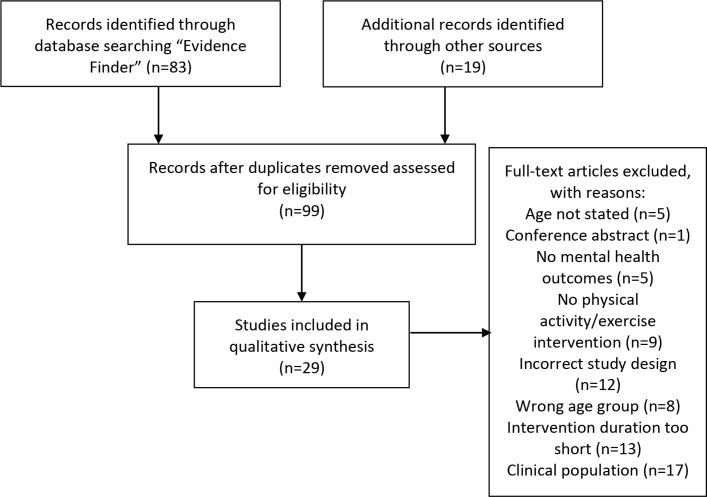
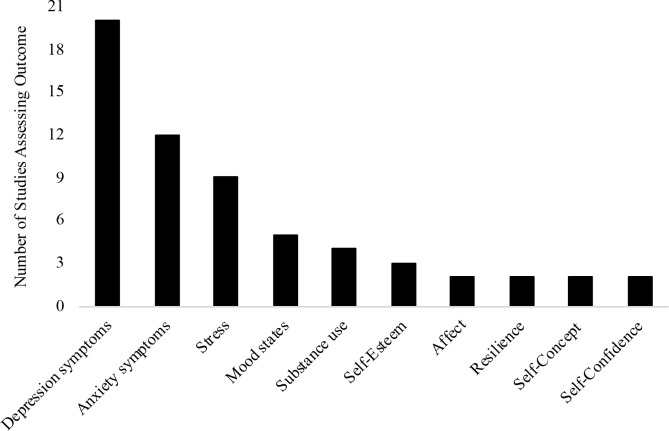
- The review included 29 studies (the abstract says 30 publications); 20 assessed depression symptoms, 12 anxiety symptoms, 9 stress, and 5 mood states.
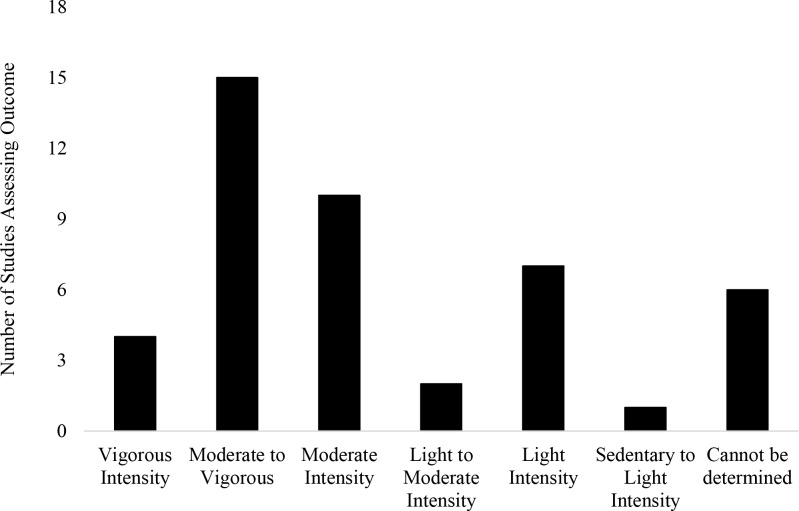
- Moderate-to-vigorous-intensity interventions showed beneficial effects for depression in 83% (5/6) of studies and for anxiety in 66% (4/6); light-intensity interventions showed beneficial effects for anxiety in 75% (3/4).
- Of 8 studies recruiting participants with elevated mental disorder symptoms at baseline, 5 demonstrated reductions in depression symptoms or high substance use; of 22 studies not recruiting on elevated symptoms, 17 showed improvements in at least one mental health outcome.
- Only 12 studies provided sufficient information to confidently assess intervention intensity, and the authors conclude that robust research on PA/exercise for mental health promotion and indicated prevention in young people is lacking.
Methods
- Scoping review conducted per PRISMA-ScR and Arksey and O’Malley’s five-stage framework; no review protocol was published.
- Searches used ‘Evidence Finder’ in July 2018 (updated April 2019), plus reference-list screening; eligibility required mean age 12–25.9 years, publication 1980–2017, a PA/exercise intervention with a comparison condition, duration >3 weeks, controlled trial design, English, and at least one quantitative mental health symptom outcome.
- Data were charted descriptively and synthesized using a descriptive-analytical method focused on mental health outcome; intervention intensity was classified by objective/subjective measures where possible, and no critical appraisal of individual sources was conducted.
Limitations
- The paper states that only five studies included follow-up assessments, none assessed whether PA/exercise prevented onset of future threshold mental disorder, only nine studies used an active comparison group, and only 12 studies provided sufficient information to confidently assess intervention intensity.
- The paper also states that no quality appraisal of individual trials was undertaken, and future work should search a wider range of databases and grey literature.
- Evident from the text: the abstract reports 30 publications while the results report 29 included studies; the review is limited to studies indexed in ‘Evidence Finder’ and does not contact authors for missing intervention details.
Model-written summary. Check it against the paper before relying on it.
Integrity signals
Registry
Cites
Statistics
Figures
Verification
Claims the paper makes
6 Valid · 2 Not valid · 54 Not checked · 61 Own results and interpretations
Some cited sources support this claim and some don’t — read each source’s verdict below.
In the paper
“Moderate-to-vigorous-intensity interventions showed improvements in depression symptoms,40 47 52–55 anxiety symptoms,40 47 52 55 59 60 self-esteem40 52 and mood states.52 62”
§ Physical activity and exercise in youth mental health promotion: a scoping review > Results > Intensity of interventions
What the sources say
- Disputedcites [40] Bonhauser M, Fernandez G, Püschel K, et al Improving physical fitness and emotional well-being in adolescents of low socioeconomic status in Chile: results of a school-based controlled trial. Health Promot Int 2005; 20: 113– 22. 10.1093/heapro/dah603 15788528 sourceExperimental — accuracy not yet measured
The Outcome measures section reports no statistically significant difference in depressive symptom scores between the intervention and control groups. The paper reports improvements in anxiety and self-esteem, but not in depressive symptoms. (LLM, conf=0.90)
Checked by a reasoning model — may be wrong.
- Not checked yetcites [47] Khorvash M, Askari A, Rafiemanzelat F, et al An investigation on the effect of strength and endurance training on depression, anxiety, and C-reactive protein's inflammatory biomarker changes. J Res Med Sci 2012; 17: 1072– 6. 23833584 PMC3702091
- Not checked yetcites [52] Hilyer JC et al Physical fitness training and counseling as treatment for youthful offenders. J Couns Psychol 1982; 29: 292– 303. 10.1037/0022-0167.29.3.292 source
- Supportedcites [53] O'Dougherty M, Hearst MO, Syed M, et al Life events, perceived stress and depressive symptoms in a physical activity intervention with young adult women. Ment Health Phys Act 2012; 5: 148– 54. 10.1016/j.mhpa.2012.05.001 23189088 PMC3505451 source
The Methods describe an aerobic exercise intervention progressing from 65–70% to 80–85% of maximum heart rate. The Results report that, after adjustment for baseline symptoms and other covariates, controls had significantly higher depressive-symptom scores than intervention participants at follow-up. This supports the cited paper as an example of improvement associated with a moderate-to-vigorous-intensity intervention. (LLM, conf=0.90)
- Supportedcites [54] Robledo-Colonia AF, Sandoval-Restrepo N, Mosquera-Valderrama YF, et al Aerobic exercise training during pregnancy reduces depressive symptoms in nulliparous women: a randomised trial. J Physiother 2012; 58: 9– 15. 10.1016/S1836-9553(12)70067-X 22341377 source
The Intervention section describes aerobic exercise prescribed at moderate-to-vigorous intensity. The Effect of intervention section reports that, after three months, depressive symptoms improved significantly more in the exercise group than in the control group. The finding applies to the pregnant women studied. (LLM, conf=0.93)
- Not checked yetcites [55] Wipfli B, Landers D, Nagoshi C, et al An examination of serotonin and psychological variables in the relationship between exercise and mental health. Scand J Med Sci Sports 2011; 21: 474– 81. 10.1111/j.1600-0838.2009.01049.x 20030777 source
plainstates a cause- Asserted: passes — The authors put it forward as true.
- Checkable: passes — It can be checked against evidence.
- Load-bearing: passes — The paper’s conclusions depend on it.
- Based: passes — The paper gives a reason why it holds.
- Disputed
The cited sources support only part of this claim — read each source’s verdict below.
In the paper
“Moderate-to-vigorous-intensity interventions showed improvements in depression symptoms,40 47 52–55 anxiety symptoms,40 47 52 55 59 60 self-esteem40 52 and mood states.52 62”
§ Physical activity and exercise in youth mental health promotion: a scoping review > Results > Intensity of interventions
What the sources say
- Partly supportedcites [40] Bonhauser M, Fernandez G, Püschel K, et al Improving physical fitness and emotional well-being in adolescents of low socioeconomic status in Chile: results of a school-based controlled trial. Health Promot Int 2005; 20: 113– 22. 10.1093/heapro/dah603 15788528 sourceExperimental — accuracy not yet measured
The Outcome measures section reports a significantly greater improvement in anxiety scores in the intervention group than in controls. The Intervention condition section describes fast walking, running, jumping and sports, but also low-intensity activities; it does not establish that the intervention as a whole was moderate-to-vigorous intensity. (LLM, conf=0.82)
- Not checked yetcites [47] Khorvash M, Askari A, Rafiemanzelat F, et al An investigation on the effect of strength and endurance training on depression, anxiety, and C-reactive protein's inflammatory biomarker changes. J Res Med Sci 2012; 17: 1072– 6. 23833584 PMC3702091
- Not checked yetcites [52] Hilyer JC et al Physical fitness training and counseling as treatment for youthful offenders. J Couns Psychol 1982; 29: 292– 303. 10.1037/0022-0167.29.3.292 source
plainstates a cause- Asserted: passes — The authors put it forward as true.
- Checkable: passes — It can be checked against evidence.
- Load-bearing: unclear — It is unclear whether the paper’s conclusions depend on it.
- Based: passes — The paper gives a reason why it holds.
- Partly supported
The cited sources support only part of this claim — read each source’s verdict below.
In the paper
“There was less support for moderate-intensity interventions in reducing depression symptoms, with only two positive studies from seven39 42 and only one positive study for anxiety59 and stress59 from the four that measured these outcomes.”
§ Physical activity and exercise in youth mental health promotion: a scoping review > Results > Intensity of interventions
What the sources say
- Partly supportedcites [39] Nabkasorn C, Miyai N, Sootmongkol A, et al Effects of physical exercise on depression, neuroendocrine stress hormones and physiological fitness in adolescent females with depressive symptoms. Eur J Public Health 2006; 16: 179– 84. 10.1093/eurpub/cki159 16126743 sourceExperimental — accuracy not yet measured
The Results report a significant reduction in depressive symptoms after jogging, so this paper supports counting it as a positive study. The Intervention section describes the exercise as mild intensity, not moderate intensity; as a single trial, it also does not establish the citing paper’s two-of-seven tally. (LLM, conf=0.86)
- Partly supportedcites [42] Melnyk BM, Jacobson D, Kelly S, et al Promoting healthy lifestyles in high school adolescents: a randomized controlled trial. Am J Prev Med 2013; 45: 407– 15. 24050416 PMC4285557 sourceExperimental — accuracy not yet measured
The Results (Immediate Post-intervention Outcomes and 6-Month Post-Intervention Outcomes) report no significant difference in depression symptoms between the COPE and Healthy Teens groups, consistent with limited evidence of benefit in this trial. This paper does not provide the claimed tally of two positive studies out of seven or classify interventions by moderate intensity. (LLM, conf=0.83)
plain- Asserted: passes — The authors put it forward as true.
- Checkable: passes — It can be checked against evidence.
- Load-bearing: passes — The paper’s conclusions depend on it.
- Based: passes — The paper gives a reason why it holds.
- Partly supported
Every source the paper cites for this claim was checked and supports it.
In the paper
“Only five studies included follow-up assessments39 42 46 50 56 and none assessed whether PA/exercise prevented the onset of future episodes of threshold mental disorder, rendering longer-term preventive effects unknown.”
§ Physical activity and exercise in youth mental health promotion: a scoping review > Discussion > Strengths and limitations
What the sources say
- Supportedcites [39] Nabkasorn C, Miyai N, Sootmongkol A, et al Effects of physical exercise on depression, neuroendocrine stress hormones and physiological fitness in adolescent females with depressive symptoms. Eur J Public Health 2006; 16: 179– 84. 10.1093/eurpub/cki159 16126743 source
The Results report that participants who exercised first had their depressive symptoms assessed again during the subsequent daily-activity phase, so this paper supports its identification as a study with a follow-up assessment. The total of five studies is the citing paper’s count, not a count this individual trial could establish. (LLM, conf=0.88)
- Supportedcites [42] Melnyk BM, Jacobson D, Kelly S, et al Promoting healthy lifestyles in high school adolescents: a randomized controlled trial. Am J Prev Med 2013; 45: 407– 15. 24050416 PMC4285557 source
The Results (6-Month Post-Intervention Outcomes) explicitly report a six-month follow-up assessment. As a citation to one of the five studies said to have follow-up assessments, this paper supports the attributed point; it does not itself establish the total of five across the citing paper's included studies. (LLM, conf=0.92)
- Supportedcites [46] Cecchini-Estrada J-A, Méndez-Giménez A, Cecchini C, et al Exercise and Epstein's target for treatment of depressive symptoms: a randomized study. Int J Clin Health Psychol 2015; 15: 191– 9. 10.1016/j.ijchp.2015.05.001 30487836 PMC6225030 source
This citation identifies the paper as one of the studies with a follow-up assessment; it is not offered as evidence for the review's count of five. The Results (Analysis of clinical efficacy) report depressive-symptom assessments at eight weeks and six months later, and the Discussion describes the six-month follow-up. (LLM, conf=0.91)
plain- Asserted: passes — The authors put it forward as true.
- Checkable: passes — It can be checked against evidence.
- Load-bearing: passes — The paper’s conclusions depend on it.
- Based: passes — The paper gives a reason why it holds.
- Supported
The sources with a verdict support this claim; the rest weren’t checked yet, have no full text we could read, or their verdicts aren’t rated yet.
In the paper
“In adults, mental health benefits are associated with lower levels of PA than required for physical health benefits,80–82 and it is possible that this relationship also holds for younger people; however, this would require additional rigorous empirical support.”
§ Physical activity and exercise in youth mental health promotion: a scoping review > Conclusions
What the sources say
- Supportedcites [80] Craike MJ, Mosely K, Browne JL, et al Associations between physical activity and depressive symptoms by weight status among adults with type 2 diabetes: results from diabetes MILES–Australia. J Phys Act Health 2017; 14: 195– 202. 10.1123/jpah.2016-0196 27918698 source
The Discussion explicitly states that population-based research has found mental-health benefits at lower PA levels than those required for physical health. It also reports that, in this study’s adults with type 2 diabetes, PA below the recommended level for physical-health benefit was associated with fewer depressive symptoms. (LLM, conf=0.92)
- Not checked yetcites [81] Vallance JK, Winkler EAH, Gardiner PA, et al Associations of objectively-assessed physical activity and sedentary time with depression: NHANES (2005–2006). Prev Med 2011; 53: 284– 8. 10.1016/j.ypmed.2011.07.013 21820466 source
- Not checked yetcites [82] Brunes A, Augestad LB, Gudmundsdottir SL Personality, physical activity, and symptoms of anxiety and depression: the HUNT study. Soc Psychiatry Psychiatr Epidemiol 2013; 48: 745– 56. 10.1007/s00127-012-0594-6 23052425 source
plainstates an association- Asserted: passes — The authors put it forward as true.
- Checkable: passes — It can be checked against evidence.
- Load-bearing: passes — The paper’s conclusions depend on it.
- Based: passes — The paper gives a reason why it holds.
- Supported
83 more claims
Create a free account to see all 123 claims and to verify the 79 references still open.
- Probably not a substantial claim. 23
- It may state two separate claims as one. 18
- The quote only partly states this claim. 2
Claims other papers make about this one
Each is checked against this paper’s own text: does it say what the citing paper says it does?
The cited source says what the claim attributes to it.
In the citing paper
“Two systematic reviews and one scoping review have approached this topic and improved our understanding of the effect of exercise on anxiety in mostly healthy, non-clinical young people and children (Carter 2021;Larun 2006;Pascoe 2020).”
From Exercise for the treatment of anxiety in children and adolescents (2022) · cites this paper as Pascoe 2020
In the citing paper
“although another possible explanation is that regular exercise may be associated with some improvement in mental well-being. [16,17].”
From Wearable devices for anxiety & depression: A scoping review (2023) · cites this paper as [17]
Self-check
Percentages, sums and reported differences re-computed from the paper’s own numbers.
Each contradiction between two passages listed here was confirmed by an independent check.
Rated minor: it would not touch a result — a value no result rests on, a p-value that stays on the same side of the significance level, or a conflict that is clerical, resolved elsewhere in the paper, or outside its own findings.
In the paper
§ Physical activity and exercise in youth mental health promotion: a scoping review > Discussion > Summary of evidence
“five demonstrated the effect of PA/exercise interventions in reducing symptoms of depression38 39 46 47 and high substance use,49”
§ Physical activity and exercise in youth mental health promotion: a scoping review > Results > Synthesis of results
“Two studies did not provide sufficient information to assess intervention intensity, and neither showed reductions in depression symptoms.36 46”
Rated minor: it would not touch a result — a value no result rests on, a p-value that stays on the same side of the significance level, or a conflict that is clerical, resolved elsewhere in the paper, or outside its own findings.
In the paper
§ Physical activity and exercise in youth mental health promotion: a scoping review > Results > Intensity of interventions
“Of the studies that examined vigorous-intensity interventions, a considerable proportion found positive outcomes on depression symptoms,35 50 51 stress43 and mood states,61 but not for anxiety.50”
§ Physical activity and exercise in youth mental health promotion: a scoping review > Results > Synthesis of results
“In the third study, a vigorous-intensity intervention did not improve depression symptoms in unemployed young men, compared with a wait-list group.51”
Rated minor: it would not touch a result — a value no result rests on, a p-value that stays on the same side of the significance level, or a conflict that is clerical, resolved elsewhere in the paper, or outside its own findings.
In the paper
§ Physical activity and exercise in youth mental health promotion: a scoping review > Results > Intensity of interventions
“Moderate-to-vigorous-intensity interventions showed improvements in depression symptoms,40 47 52–55 anxiety symptoms,40 47 52 55 59 60 self-esteem40 52 and mood states.52 62”
§ Physical activity and exercise in youth mental health promotion: a scoping review > Results > Synthesis of results
“The sixth study compared two moderate-to-vigorous-intensity interventions and found no effect of either on depression symptoms.40”
Rated minor: it would not touch a result — a value no result rests on, a p-value that stays on the same side of the significance level, or a conflict that is clerical, resolved elsewhere in the paper, or outside its own findings.
In the paper
§ Physical activity and exercise in youth mental health promotion: a scoping review > Results > Synthesis of results
“| Moderate-intensity intervention | 28% (n=2 out of 7)39 42 | 25% (n=1 out of 4)59 | 33% (n=1 out of 3)59 | 0% (n=0 out of 2) |”
§ Physical activity and exercise in youth mental health promotion: a scoping review > Results > Synthesis of results
“One study of a moderate-intensity intervention found that it decreased stress in adolescents, compared with no intervention,61 and a further three did not specify intervention intensity but were likely moderate.43 57 59 In one of these, both the moderate-intensity intervention and the psychological treatment condition decreased stress in university students, compared with no intervention, as stated above.59”
Rated minor: it would not touch a result — a value no result rests on, a p-value that stays on the same side of the significance level, or a conflict that is clerical, resolved elsewhere in the paper, or outside its own findings.
In the paper
“Eight studies included young people with elevated mental disorder symptoms at baseline, including anxiety sensitivity,45 anxiety or depression symptoms,37–39 46 47 or high substance use,48 49 and the remaining 22 involved young people without mental health symptoms.”
§ Physical activity and exercise in youth mental health promotion: a scoping review > Results > Characteristics of sources of evidence
Reported 29 · recomputed 30
2 more findings
Create a free account to see every finding of this check.
Citations
Cites
Ryan, R. M., & Deci, E. L. (2000) · American Psychologist · doi:10.1037//0003-066x.55.1.68 · Cited by 54,599
PRISMA Extension for Scoping Reviews (PRISMA-ScR): Checklist and Explanation
Tricco, A. C., Lillie, E., Zarin, W., O'Brien, K. K., Colquhoun, H., Levac, D., Moher, D., Peters, M. D. J., Horsley, T., Weeks, L., et al. (2018) · Annals of Internal Medicine · doi:10.7326/m18-0850 · Cited by 43,565
Scoping studies: towards a methodological framework
Arksey, H., & O'Malley, L. (2005) · International Journal of Social Research Methodology · doi:10.1080/1364557032000119616 · Cited by 36,742
The structure of psychological well-being revisited.
Ryff, C. D., & Keyes, C. L. M. (1995) · Journal of Personality and Social Psychology · doi:10.1037//0022-3514.69.4.719 · Cited by 10,285
The Physical Activity Guidelines for Americans
Piercy, K. L., Troiano, R. P., Ballard, R. M., Carlson, S. A., Fulton, J. E., Galuska, D. A., George, S. M., & Olson, R. D. (2018) · JAMA · doi:10.1001/jama.2018.14854 · Cited by 9,755
Garber, C. E., Blissmer, B., Deschenes, M. R., Franklin, B. A., Lamonte, M. J., Lee, I.-M., Nieman, D. C., & Swain, D. P. (2011) · Medicine & Science in Sports & Exercise · doi:10.1249/mss.0b013e318213fefb · Cited by 9,319
(1985) · Europe PMC (PubMed Central) · Cited by 9,143
Compendium of physical activities: an update of activity codes and MET intensities
AINSWORTH, B. E., HASKELL, W. L., WHITT, M. C., IRWIN, M. L., SWARTZ, A. M., STRATH, S. J., O???BRIEN, W. L., BASSETT, D. R., SCHMITZ, K. H., EMPLAINCOURT, P. O., et al. (2000) · Medicine & Science in Sports & Exercise · doi:10.1097/00005768-200009001-00009 · Cited by 8,497
Moral Identity and Developmental Theory
Lapsley, D. (2015) · Human Development · doi:10.1159/000435926 · Cited by 3,819
Age of onset of mental disorders: a review of recent literature
Kessler, R. C., Amminger, G. P., Aguilar-Gaxiola, S., Alonso, J., Lee, S., & ??st??n, T. B. (2007) · Current Opinion in Psychiatry · doi:10.1097/yco.0b013e32816ebc8c · Cited by 3,457
Research works printed but not linked: 3
- Bull FtEWG Physical activity guidelines in the U.K. review and recommendations. Loughborough University, 2010.
- Aras D, Ewert AW The effects of eight weeks sport rock climbing training on anxiety. Acta Medica Mediterranea 2016; 32: 223– 30.
- Berger BG, Friedman E Comparison of jogging, the relaxation response, and group interaction for stress reduction. J Sport Exerc Psychol 1988; 10: 431– 47. 10.1123/jsep.10.4.431 · DOI · Paper page
Cited by
Items 101–200 of 413
de Oliveira, L. M. F. T., da Silva, A. O., Farah, B. Q., Leão, I. C. S., de Souza, F. T. C., Santiago, F. L., Machado, L., & Diniz, P. R. B. (2023) · Salud Mental · doi:10.17711/sm.0185-3325.2023.022 · Cited by 22
“Recent research indicates the existence of a positive relationship between physical activity and mental health (Pascoe et al., 2020), placing physical activity as a possible protective factor against mental health problems in adolescents (Guo, Tomson, Keller, & Söderqvist, 2018; Lourenço, Peres,…”
Wang, K., & Qian, J. (2024) · Behavioral Sciences · doi:10.3390/bs14060512 · Cited by 13
“…the World Health Organi-Behav zation (WHO) [10], sports participation, as a non-invasive and easily accessible method, effectively alleviates anxiety by aiding individuals in managing and coping with their anxious emotions [11,12], including test anxiety [13,14], enhancing their well-being [15,16].”
BackgroundZhu, W., Du, Z., Feng, Z., & Lv, K. (2025) · Scientific Reports · doi:10.1038/s41598-025-02706-4 · Cited by 16
“The positive impact of physical activity on physical and psychological health has been confirmed 49 .”
Toward Socially Meaningful Case Conceptualization: The Risk-Driven Approach
Taylor, R. S., Colombo, R. A., Wallace, M. D., Heimann, B., Benedickt, A., & Moore, A. (2023) · Behavior Analysis in Practice · doi:10.1007/s40617-023-00812-1 · Cited by 12
“…have shown improvements in quality of life particularly for those who have experienced trauma (Atezaz Saeed et al., 2019; Gothe et al., 2019; Pascoe et al., 2020) and for some, successfully accessing these benefits may necessitate increasing risk (e.g., introducing risks associated with…”
BackgroundHuang, I. S., Cheung, Y. W. Y., & Hoorn, J. F. (2023) · International Journal of Human-Computer Studies · doi:10.1016/j.ijhcs.2023.103107 · Cited by 16
Pippi, R., Buratta, L., Germani, A., Fanelli, C. G., & Mazzeschi, C. (2020) · International Journal of Environmental Research and Public Health · doi:10.3390/ijerph17176067 · Cited by 17
“PA is associated with mental health, and cognitive and general psychological functioning both in children and youth [11].”
BackgroundAssociation of Eating Alone with Depressive Symptoms and Suicidal Ideation among Korean Adults
Park, J., & Lee, G. (2021) · Korean Journal of Family Medicine · doi:10.4082/kjfm.20.0128 · Cited by 12
Alshallal, A. D., Alliott, O., Brage, S., van Sluijs, E. M. F., Wilkinson, P. O., Corder, K. L., & Winpenny, E. M. (2024) · International Journal of Behavioral Nutrition and Physical Activity · doi:10.1186/s12966-023-01553-8 · Cited by 12
“Further research exploring whether sex differences exist for the association between the distribution of physical activity volume and mental wellbeing is warranted [31].”
BackgroundAlrushud, A. S. (2024) · BMC Musculoskeletal Disorders · doi:10.1186/s12891-024-07733-2 · Cited by 17
“In addition to the benefits of activity/exercise for physical health, PA can also promote individuals’ mental health [4, 5].”
BackgroundTuersun, Y., Xie, Y., Zhou, Q., Yu, Y., Wang, W., Wang, C., Liu, S., Song, Y., Liang, Z., & Qian, Y. (2025) · Frontiers in Psychiatry · doi:10.3389/fpsyt.2025.1639959 · Cited by 12
“The negative correlation between exercise and anxiety has been demonstrated in both urban and rural college students, especially in urban college students, where good exercise habits may play an important role in alleviating anxiety symptoms (59).”
Integrating Physical Activity Into Routine Psychiatric Care: A Review
Stubbs, B., Ma, R., Teychenne, M. J., Kinnafick, F., Mossaheb, N., Korman, N., Trott, M., Rosenbaum, S., Schuch, F. B., Firth, J., et al. (2026) · JAMA Psychiatry · doi:10.1001/jamapsychiatry.2026.0026 · Cited by 12
The Perspective of Acquired Immunity to Combat against Infectious Diseases: An Overview
Islam, M. S., Chaudhuri, I., Mobin, M. A., Islam, M., Mahmud, M. S., KutubUddin, M., Kabir, K. M. A., & Kamrujjaman, M. (2021) · Health · doi:10.4236/health.2021.139077 · Cited by 12
Groß, D., Schröder, I., Wasserfall, N., Eschenbeck, H., & Kohlmann, C. (2022) · Applied Psychology Health and Well-Being · doi:10.1111/aphw.12396 · Cited by 12
Leahy, A. A., Diallo, T., Eather, N., Duncan, M. J., Smith, J. J., Morgan, P. J., & Lubans, D. R. (2023) · Scandinavian Journal of Medicine and Science in Sports · doi:10.1111/sms.14463 · Cited by 12
“33 In the scoping review conducted by Pascoe and colleagues, 33 yoga interventions did not significantly decrease stress in comparison to regular physical education lessons, however, an aerobic physical activity intervention (of vigorous intensity) significantly decreased adolescents' stress in…”
BackgroundDementyev, F., Fish, B., Opoku, N. S., Tesfaye, L., Chan, J., Ortiz, L., Montgomery, S., Walker, E. J., & Wilson, S. M. (2023) · Frontiers in Sports and Active Living · doi:10.3389/fspor.2023.1255514 · Cited by 13
Santos, P. C., Bernardo, D. F. S., Abdalla, P. P., Leirós‐Rodríguez, R., da Silva, L. S. L., Mesquita, C., Mota, J. A. P. S., & Machado, D. R. L. (2024) · Women · doi:10.3390/women4040026 · Cited by 11
Ma, J., Ding, J., Hu, J., Wang, K., Xiao, S., Luo, T., Yu, S., Liu, C., Xu, Y., Liu, Y., et al. (2021) · Journal of Psychiatry and Brain Science · doi:10.20900/jpbs.20210020 · Cited by 14
“…though these studies used relatively qualitative methods [39,40]; many previous studies have suggested that lower exercise intensity is related to more symptoms of depression and anxiety in adolescents, though these studies were conducted outside the context of the COVID-19 pandemic [41–44].”
Wang, M., Scanlon, C. L., Hua, M., Belmont, A. M., Zhang, A. L., & Toro, J. D. (2021) · Academic Pediatrics · doi:10.1016/j.acap.2021.10.008 · Cited by 15
“Exercise is a coping strategy that has been associated with reductions in internalizing symptoms (ie, stress, anxiety, depression) and increases in positive affect.(14) While COVID-19-related closures of schools and other exercise facilities imposed certain restrictions on adolescents’ engagement in physical activity,…”
BackgroundCatling, J. C., Michail, M., Lakhani, N., & Devine, R. T. (2022) · The Journal of Mental Health Training Education and Practice · doi:10.1108/jmhtep-08-2021-0092 · Cited by 14
Groffik, D., Frömel, K., Ziemba, M., & Mitáš, J. (2023) · Annals of Agricultural and Environmental Medicine · doi:10.26444/aaem/162040 · Cited by 12
Arashi, M., Webster, C. A., Mîndrilă, D., Duda, J. L., Stankić, D., Perić, D., Banićević, I., & Banićević, Ž. (2025) · Research Quarterly for Exercise and Sport · doi:10.1080/02701367.2024.2446545 · Cited by 10
“…in promoting a wide range of MH outcomes in adolescents (e.g., reduced anxiety and depression, improved mood states, improved social skills; Pascoe et al., 2020) In an umbrella systematic review of 26 previous reviews, Dale et al. (2019) found that PA was associated with or led to reduced…”
Carcelén‐Fraile, M. D. C., Aibar‐Almazán, A., & Hita‐Contreras, F. (2025) · Applied Sciences · doi:10.3390/app15179572 · Cited by 12
Lenze, L., Benzing, V., Schmid, J., Minder, B., Henn, R.-E., & Frahsa, A. (2025) · International Journal of Behavioral Nutrition and Physical Activity · doi:10.1186/s12966-025-01834-4 · Cited by 10
Jeftic, I., Furzer, B. J., Dimmock, J. A., Wright, K. E., Budden, T., Boyd, C., Simpson, A., Rosenberg, M., Sabiston, C. M., deJonge, M. L., et al. (2023) · Psychology of sport and exercise · doi:10.1016/j.psychsport.2023.102507 · Cited by 11
Mohamed, N. A., Mohamed, Y. A., Ali, T. A., Gabow, A. A., & Hilowle, F. M. (2024) · Risk Management and Healthcare Policy · doi:10.2147/rmhp.s488303 · Cited by 11
“As 50–52 In this study, we found that healthcare professionals who regularly participated in physical activity had a considerably lower likelihood of experiencing depressive symptoms, which is comparable with the study conducted in Jordan.”
La covid-19: una carrera de fondo para avanzar en educación física
Gil‐Espinosa, F. J. (2020) · Journal of Physical Education and Human Movement · doi:10.24310/jpehmjpehmjpehm.v2i29849 · Cited by 10
Tian, J., Kong, Q., Yu, H., Liu, P., Shen, L., & Luo, Y. (2024) · Scandinavian Journal of Medicine and Science in Sports · doi:10.1111/sms.14735 · Cited by 11
“Currently, exercise interventions are gaining attention as non-stigmatizing and accessible treatment options for anxiety and other mental health issues [11], even in resource-limited settings [12].”
Gurung, J., Turner, J., Freeman, E., Coleman, C., Iacovou, S., & Hemingway, S. (2023) · Nursing Reports · doi:10.3390/nursrep13010042 · Cited by 10
“’s [19] review on prevention of depression in young people aged 12 to 25 described PA as a MH ‘protective factor’, as an opportunity to build coping strategies, reduce stigma and encourage social community.”
BackgroundHalladay, J., Ogrodnik, M., Alla, J. F., Sunderland, M., Gardner, L. A., & Georgiades, K. (2023) · Drug and Alcohol Dependence · doi:10.1016/j.drugalcdep.2023.111039 · Cited by 11
Shams, L., Shafiei, F., & Sadremomtaz, Z. (2024) · BMC Nutrition · doi:10.1186/s40795-024-00822-4 · Cited by 10
“And finally, motivation and desire are determinants of our health-related behaviors [13, 14].”
BackgroundLodovica, L. M. F., Mastorci, F., Piaggi, P., Gabriele, T., Casu, A., Devine, C., Doveri, C., Marinaro, I., & Pingitore, A. (2024) · European Journal of Pediatrics · doi:10.1007/s00431-024-05661-w · Cited by 9
“In the literature, the evidence on the role of physical activity in promoting well-being is clear, improving internalizing and externalizing symptoms and reducing depression, anxiety, and substance use disorders in youth [32, 33].”
BackgroundMohamed, N. A., Mohamud, R. Y. H., Hilowle, F. H., Mohamed, Y. A., & Mohamed, H. N. (2024) · Diabetes Metabolic Syndrome and Obesity · doi:10.2147/dmso.s479583 · Cited by 9
“53,54 In the present study, we found that a lack of regular physical exercise was a significant predictor of depression, anxiety, and stress among TIIDM patients.”
BackgroundHennessy, T., McMahon, J., & Doody, O. (2024) · British Journal of Learning Disabilities · doi:10.1111/bld.12626 · Cited by 10
Wang, W. J., Yu, L., Huang, L., & Gao, X. (2025) · Frontiers in Psychology · doi:10.3389/fpsyg.2025.1535214 · Cited by 12
Barinas, J. L., McDermott, R. C., Williams, S. G., Fruh, S., Hauff, C., Hudson, G. M., Graves, R., & Melnyk, B. M. (2022) · Journal of Professional Nursing · doi:10.1016/j.profnurs.2022.07.017 · Cited by 10
Infusing wellness opportunities into integrated youth services
Glowacki, K., Affolder, J., Macnab, B., Ewert, A., Tee, K. A., Wenger, M., Chan, G., Mathias, S., & Barbic, S. P. (2023) · BMC Psychiatry · doi:10.1186/s12888-023-04809-6 · Cited by 8
“Perhaps this is due to program aspects (such as physical activity) having the potential to reduce anxiety and depression symptoms for young people [20] and potential to be a valuable mental health promotion tool [41].”
BackgroundZhu, D., & Li, Y. (2024) · PLoS ONE · doi:10.1371/journal.pone.0309291 · Cited by 9
RetractedCornett, K. A., Michael, S. L., Sliwa, S. A., Chen, T. J., Kissler, C. J., McKinnon, I. I., & Krause, K. H. (2024) · MMWR Supplements · doi:10.15585/mmwr.su7304a11 · Cited by 8
Song, C., Ge, S., & Zhang, W. (2025) · Frontiers in Psychology · doi:10.3389/fpsyg.2025.1501720 · Cited by 10
Zuleta, K. M. P., Corrales, M. M., Farías, F. J. M., Lozano, C. C. S., Rodríguez, J. L. T., Pappous, A. S., & Walle, J. M. L. (2021) · The Arts in Psychotherapy · doi:10.1016/j.aip.2021.101857 · Cited by 8
Dębiec-Bąk, A., Skrzek, A., Podbielska, H., Golubnitschaja, O., & Stefańska, M. (2021) · The EPMA Journal · doi:10.1007/s13167-021-00262-1 · Cited by 8
“Positive impacts towards mental health are also observed [7].”
BackgroundAmes, M. E., Robillard, C. L., Turner, B. J., García-Barrera, M. A., Rush, J., & Craig, S. G. (2022) · Psychology and Health · doi:10.1080/08870446.2022.2127718 · Cited by 8
“Research typically shows small to moderate negative associations between physical activity with anxiety and depression among children and youth (for reviews, see Carter et al., 2016, 2021; Dale et al., 2019; Pascoe et al., 2020).”
Pascoe, M. C., Bailey, A. P., Craike, M. J., Carter, T., Patten, R. K., Stepto, N. K., & Parker, A. G. (2020) · Early Intervention in Psychiatry · doi:10.1111/eip.13045 · Cited by 8
“We conducted a series of three scoping reviews (M. Pascoe et al., 2020; M. C. Pascoe et al., 2020a; M. C. Pascoe et al., Under Review) in line with PRISMA-ScR guidelines (Tricco et al., 2018) and following the five stage framework outlined by Arksey and O'Malley (2005).”
BackgroundMethodSelf-citationLyzwinski, L., Zwicker, J. D., Mcdonald, S., & Tough, S. (2024) · JMIR Pediatrics and Parenting · doi:10.2196/59171 · Cited by 7
Yue, Y., Zhu, D., Zeng, Q., Hu, C., & Xu, B. (2026) · Frontiers in Psychology · doi:10.3389/fpsyg.2026.1881725 · Cited by 8
“…levels of physical activity are closely associated with lower levels of depression, anxiety, and stress, and that students who engage in regular physical activity tend to report better emotional states and psychological adjustment (Zhang et al., 2022; Pascoe et al., 2020; Zhang L. et al., 2025).”
Challenges accessing physical activity from a transgender perspective: A systematic review
Pattinson, E. M., Newman, H. J. H., & Kiemle-Gabbay, L. (2022) · Sport & Exercise Psychology Review · doi:10.53841/bpssepr.2022.17.2.19 · Cited by 7
“…amounts of physical activity have been shown to lower the risk of mental health issues in adults (Teychenne et al., 2020) and a scoping review demonstrated that physical activity interventions of varying intensities reduced anxiety and depressive symptoms in young people (Pascoe et al., 2020).”
BackgroundSabo, A., Kuan, G., & Kueh, Y. C. (2024) · BMC Psychology · doi:10.1186/s40359-024-01825-3 · Cited by 9
“Furthermore, regular physical activity promotes school students’ academic performance, quality of life, and lifetime activity levels [25, 26].”
BackgroundMateo‐Orcajada, A., Vaquero‐Cristóbal, R., & Abenza‐Cano, L. (2024) · Human Behavior and Emerging Technologies · doi:10.1155/2024/4687827 · Cited by 10
“In addition to peer attachment and school connected-ness, the practice of physical activity also has bene fi cial e ff ects on the mental health of adolescents [10, 11].”
deJonge, M. L., Sabiston, C. M., Hamza, C. A., & Darnell, S. C. (2025) · Psychology of sport and exercise · doi:10.1016/j.psychsport.2025.102846 · Cited by 9
Begdache, L., Kianmehr, H., Najjar, H., Witt, D. F., & Sabounchi, N. S. (2021) · Frontiers in Nutrition · doi:10.3389/fnut.2021.676604 · Cited by 7
Executive function, perceived stress and eating behaviours among Chinese young adults
Chen, M., Lam, W., Yuan, J., Dong, M., Yang, L., Chan, D. K. C., & Liao, Q. (2024) · Stress and Health · doi:10.1002/smi.3397 · Cited by 7
Perceptions of young adults’ problematic technology use among Australian youth professionals
Keen, B., & Gainsbury, S. (2021) · Cyberpsychology Journal of Psychosocial Research on Cyberspace · doi:10.5817/cp2021-1-8 · Cited by 9
“…associated with psychological distress and poor self-care; however, there is insufficient evidence to suggests they qualify as mental disorders (Kuss et al., 2014; Kuss & Griffiths, 2011; McNicol & Thorsteinsson, 2017; Petry et al., 2018; Pontes, 2017; Pontes & Griffiths, 2017; Sohn et al., 2019).”
BackgroundArabzadeh, E., Ebrahimi, S., Gholami, M., Moiniafshari, K., Sohrabi, A., Armannia, F., & Shahba, M. (2023) · Sport Sciences for Health · doi:10.1007/s11332-023-01056-w · Cited by 7
“Studies have suggested that physical activity is an effective intervention for mental health and related problems including depression improvement [9–11].”
Physical Exercise and Mental Health in Adolescents: Scoping Review
Tello, N. C., Ordóñez, A. S., Oñate, H. A. B., & Mosquera, J. D. H. (2024) · Revista de Investigación e Innovación en Ciencias de la Salud · doi:10.46634/riics.328 · Cited by 6
Bellido-Esteban, A., Ruisoto, P., Tornero-Aguilera, J. F., & Clemente‐Suárez, V. J. (2022) · Sustainability · doi:10.3390/su14052792 · Cited by 7
“Yet, authors conclude that terms of reducing anxiety and other negative emotional states, HIIT exercise seems the most appropriate tool [6,25].”
BackgroundYılmaz, A. S., & Camcıoğlu, B. (2024) · Bingöl Üniversitesi Sağlık Dergisi · doi:10.58605/bingolsaglik.1481178 · Cited by 7
de Freitas, F., Zago, M. R., Antônio, M. Â. R. D. G. M., Videira‐Silva, A., & Bellomo‐Brandão, M. A. (2025) · Obesity Pillars · doi:10.1016/j.obpill.2025.100197 · Cited by 6
“Physical activity (PA) may play a relevant role in obesity treatment, not only to energy expenditure, but also due to improved physical, psychological, and social wellness, that are independent of the effect on weight/obesity [4,5].”
Almaged, S., Zeyad, L., Sharaf, A., & Yasir, S. (2025) · Biomedical Human Kinetics · doi:10.2478/bhk-2025-0025 · Cited by 6
“This result is in accordance with the results of numerous studies that have explored exercise’s effectiveness in alleviating symptoms of depression, with the vast majority confirming its positive impact (Pascoe et al., 2020).”
Zhuang, L., Wang, Q., Liu, Y., Shi, Y., Lv, R., Liang, J., Zhou, Y., & Lipowski, M. (2026) · Frontiers in Sports and Active Living · doi:10.3389/fspor.2026.1757784 · Cited by 7
“Psychosocially, exercise provides experiences of mastery and social connection that enhance self-efficacy, self-esteem, and support from peers (11, 32, 33).”
The Level of Anxiety among Medical University Students with Physical Activity of Different Intensity
Khusainov, A., Рахимьянович, З. Т., Agafonov, A., Анатольевна, П. Е., Mochalkin, P. A., & Shamsutdinova, A. (2022) · ЗДОРОВЬЕ НАСЕЛЕНИЯ И СРЕДА ОБИТАНИЯ - ЗНиСО / PUBLIC HEALTH AND LIFE ENVIRONMENT · doi:10.35627/2219-5238/2022-30-4-39-43 · Cited by 5
English, M., Wallace, L., Caperchione, C. M., & Williams, P.-J. (2022) · Sport in Society · doi:10.1080/17430437.2022.2117616 · Cited by 5
“suggests that physical activity and sport enhances adolescent psychosocial and mental wellbeing, improving self-esteem, self-efficacy and self-knowledge and decreases psychological distress (Eime et al. 2013; Pascoe et al. 2020).”
BackgroundWilson, N., Cale, L., & Casey, A. (2023) · International Journal of Environmental Research and Public Health · doi:10.3390/ijerph20105880 · Cited by 6
Childhood physical activity and pubertal timing: findings from the LEGACY girls study
Kehm, R. D., Knight, J. A., Houghton, L. C., McDonald, J. A., Schwartz, L. A., Goldberg, M., Chung, W. K., Frost, C. J., Wei, Y., Bradbury, A. R., et al. (2024) · International Journal of Epidemiology · doi:10.1093/ije/dyad193 · Cited by 5
Adolescent mental health and cardiorespiratory fitness: A comparison of two cohorts 12 years apart
Birgisson, O., Eriksen, H. R., Hysing, M., Jóhannsson, E., & Gestsdóttir, S. (2024) · PLoS ONE · doi:10.1371/journal.pone.0300810 · Cited by 5
The Association between Vigorous Physical Activity and Stress in Adolescents with Asthma
Kong, S., So, W.-Y., & Jang, S. (2021) · International Journal of Environmental Research and Public Health · doi:10.3390/ijerph18073467 · Cited by 5
“Our results cannot suggest that regular vigorous PA actually had an antioxidant effect on adolescents; however, clinically, progressive vigorous PA will be helpful in reinforcing cardiorespiratory function in adolescents [27], reducing oxidative stress [43], and improving physical and psychological stress [44].”
BackgroundVenkatraman, T. M., Honeyford, K., Ram, B., van Sluijs, E. M. F., Costelloe, C., & Saxena, S. K. (2021) · Journal of Public Health · doi:10.1093/pubmed/fdab138 · Cited by 6
Key service components for age‐appropriate mental health service planning for young adults
Gossip, K., John, J., Comben, C., Page, I. S., Erskine, H. E., Scott, J. G., & Diminic, S. (2021) · Early Intervention in Psychiatry · doi:10.1111/eip.13253 · Cited by 5
“…groups and service settings, including indicated prevention populations receiving services through primary care and individuals with severe mental disorders receiving specialist inpatient and outpatient care (Carney et al., 2020; Lederman et al., 2019; Pascoe et al., 2020; Teasdale et al., 2019).”
BackgroundPreliminary Effectiveness of a Strategy to Promote Healthy Lifestyle Habits in Schoolchildren
Carrascal, G. C., Chinchilla-Salcedo, T. C., Hernández, C. A. N., González, P. S., Romero, A. M. O., & Herrera, B. S. (2022) · Children · doi:10.3390/children9091402 · Cited by 6
“skills [10,12,14]; adequate nutrition, hydration, and food intake [13,15]; physical activity and rest [11,16,17]; relationship of schoolchildren with the environment and the promotion of pro-environmental behaviors [18]; and the strengthening of mental health through the identification of a life project and good compa…”
BackgroundKim, I., & Ahn, H.-Y. (2023) · Healthcare · doi:10.3390/healthcare11222997 · Cited by 6
“Generally, physical activity and sports participation are known as methods to enhance the mental health of adolescents, with minimal adverse effects [3].”
BackgroundHealthy Lifestyle Components and Mental Health among Undergraduate Students
Rahman, Z. A., Razali, S., Shahibi, M. S., Amin, M. N. M., Kamal, A. A., Asih, S. R., Rashidi, H. H., & Shahril, M. I. (2025) · Unnes Journal of Public Health · doi:10.15294/ujph.v14i1.6267 · Cited by 4
“There are great concerns about this group’s high depression involving a variety of groups (Singh et al., 2023; McKeon et al., 2022; Pascoe et al., 2020).”
Youth sport participation, injury history, and current physical activity among young adults
Gadd, N., Hoch, J. M., McKay, C., Tinsley, J., & Dlugonski, D. (2023) · Journal of American College Health · doi:10.1080/07448481.2023.2230303 · Cited by 4
“Higher levels of physical activity among youth are associated with increased cardiorespiratory and muscular fitness, bone health, and reduced risk of excessive weight gain 4 and may also improve mental health 5,6 and academic achievement and cognitive outcomes.”
Effects of psychological symptoms on life adjustment among survivors of humidifier disinfectants
Lee, M.-J., Hong, S., Jung, Y., Lee, H.-J., & Lee, S. M. (2023) · International Journal of Occupational Medicine and Environmental Health · doi:10.13075/ijomeh.1896.02000 · Cited by 4
Exploring BMX as a tool for wellbeing promotion
Camilleri, D., Williams, R., Hyde, C. L., Sallis, R. J. T., & Quach, J. (2024) · Leisure Studies · doi:10.1080/02614367.2024.2436189 · Cited by 4
“…the benefits of physical activity and social connections for positive mental health outcomes (Blum et al., 2022; Gilchrist & Wheaton, 2017; Pascoe et al., 2020), consideration has been given to the multidimensional aspects of wellbeing, encompassing physical, mental, and social domains,…”
Xiang, J. H., Guo, K., Gao, J., Gao, Y., & Liu, S. (2025) · Frontiers in Psychology · doi:10.3389/fpsyg.2025.1387475 · Cited by 5
“Recent studies highlight physical activity as a crucial factor influencing adolescents’ overall well-being (Sun et al., 2021), demonstrating positive effects on both their physical and mental health (Pascoe et al., 2020).”
Pardilla, H., Suhairi, M., & Henjilito, R. (2025) · Реабілітаційні та фізкультурно-рекреаційні аспекти розвитку людини (Rehabilitation & recreation) · doi:10.32782/2522-1795.2025.19.1.15 · Cited by 4
Individual differences in affect in response to physical activity
Takahashi, S., Sakairi, Y., & Grove, P. M. (2025) · Frontiers in Psychology · doi:10.3389/fpsyg.2025.1575189 · Cited by 4
“Numerous studies indicate that regular physical activity or physical activity intervention effectively promotes mental health (Biddle et al., 2019; Carter et al., 2021; Nuzum et al., 2020; Pascoe et al., 2020; Maynou et al., 2021).”
Hale, G. E., Lancastle, D., Lewis, N., & Tyson, P. J. (2025) · Perspectives in Public Health · doi:10.1177/17579139251335284 · Cited by 4
de Souza-Lima, J., Ferrari, G., Sepulveda, R. A. Y., Giakoni-Ramírez, F., Muñoz-Strale, C., Alarcón-Aguilar, J., Parra-Saldías, M., Bastías, D. M. D., Godoy-Cumillaf, A. E. R., Merellano-Navarro, E., et al. (2025) · Children · doi:10.3390/children12101282 · Cited by 4
“Beyond frequency, prior research highlights that moderate-intensity aerobic activity is particularly effective for reducing negative emotions, whereas very high-intensity or competitive activity may yield smaller mental health benefits [7,11].”
Hamilton, C. N. B., Ylitalo, K. R., Wende, M. E., Sharkey, J. R., & Meyer, M. R. U. (2023) · Family & Community Health · doi:10.1097/fch.0000000000000388 · Cited by 4
Slekiene, J., Chidziwisano, K., & Tilley, E. (2024) · BMC Psychology · doi:10.1186/s40359-024-01562-7 · Cited by 4
“The available evidence from a recent review [27] suggests that physical activity/exercise among youth is a promising mental health intervention.”
BackgroundPajaujienė, S., & Petrigna, L. (2024) · Healthcare · doi:10.3390/healthcare12060631 · Cited by 4
“In this way, it is possible to obtain important benefits in cardiorespiratory and musculoskeletal fitness, dyslipidemia, glucose and insulin resistance, cognitive outcomes (such as academic performance and executive function), and mental health [21,23].”
Backgroundvan den Broek, N., Maran, P. L., Beckers, D., Burk, W. J., Verhagen, M., Vink, J. M., & Larsen, J. K. (2024) · Mental health and physical activity · doi:10.1016/j.mhpa.2024.100618 · Cited by 5
Dias, L. A., de Jesus, G. M., & Vieira, G. O. (2025) · BMC Pediatrics · doi:10.1186/s12887-025-05522-x · Cited by 4
“…among Brazilian schoolchildren: analysis based on types of behavior Background Physical activity (PA) is associated with benefits for children and adolescents, such as improved cardiorespiratory fitness [1], mental [2] and musculoskeletal health, as well as obesity prevention and control [3].”
Green, R., Bergmeier, H. J., Chung, A., & Skouteris, H. (2021) · Nutrition Reviews · doi:10.1093/nutrit/nuab056 · Cited by 4
“Among the general population, there is strong evidence that health promotion, that is, 21 enabling individuals to increase control over their health, is effective in yielding positive 22 change across various domains of health.(16) Health promotion focuses on promoting health 23 and preventing disease, using strategie…”
BackgroundHeads-up: Effective Strategies for Promoting Mental Health Literacy in Youth Fitness Programs
Faigenbaum, A. D., Rebullido, T. R., & Zaichkowsky, L. D. (2022) · ACSMʼs Health & Fitness Journal · doi:10.1249/fit.0000000000000765 · Cited by 7
“, anxiety symptoms) as well as youth with a low baseline level of fitness whomay be less likely to adhere tomore intense exercise programs (13).”
BackgroundInfluentialRahlin, N. A., Suriawaty, A., Bahkiar, S. A. B., Turan, S., & Fauzi, S. N. M. (2023) · Studies in systems, decision and control · doi:10.1007/978-3-031-35828-9_27 · Cited by 3
Pires, F., Vigário, M. I., Ferreira, S. S., & Vicente, A. (2025) · Sports · doi:10.3390/sports13100363 · Cited by 3
Murillo, S., Philipsheck, A. P., Dementyev, F., Bello-Soto, B., Bhatt, E., Wilson, H., Madison, K., Schuck, L., Wiafe, S., Brown, C. L., et al. (2025) · Frontiers in Sports and Active Living · doi:10.3389/fspor.2025.1646805 · Cited by 4
Zhan, W. (2025) · Frontiers in Psychology · doi:10.3389/fpsyg.2025.1611657 · Cited by 3
“The sense of achievement that comes with regular physical activity enhances psychological resilience and self-efficacy, contributing to overall well-being by reducing anxiety and depression (Pascoe et al., 2020).”
Nyam, G., Lander, N., Ayala, A. M. C., Strugnell, C., & Salmon, J. (2025) · Journal of Activity Sedentary and Sleep Behaviors · doi:10.1186/s44167-025-00094-8 · Cited by 3
“While MVPA is often linked to better adolescent mental health [57, 58], our findings suggest that greater MVPA relative to other behaviours may not necessarily mean greater perceived wellbeing.”
Xian, J., Hu, Q., & Jiang, B. (2026) · Frontiers in Physiology · doi:10.3389/fphys.2025.1744254 · Cited by 4
“Due to the limitations of mainstream treatments for anxiety, exercise has gradually attracted attention as an intervention with no social stigma and low cost (Pascoe et al., 2020).”
Behn, S., Napp, A.-K., Reiß, F., Kaman, A., Barkmann, C., Erhart, M., & Ravens‐Sieberer, U. (2026) · Frontiers in Sports and Active Living · doi:10.3389/fspor.2026.1776510 · Cited by 3
“Although PA is well established as a modifiable factor associated with better mental health through neurobiological, behavioral, and psychosocial pathways (22, 23, 29), the relationship is likely bidirectional.”
Jee, H. (2023) · Journal of Exercise Rehabilitation · doi:10.12965/jer.2346352.176 · Cited by 4
“For example, vigorous PA showed mixed results in depression symptoms (Pascoe et al., 2020).”
Backgroundde Oliveira, V. A., Gomes, L. M. D., Freitas, P. H. C., Silva, R. Q., & Ferreira, J. B. (2024) · Research Society and Development · doi:10.33448/rsd-v13i5.45827 · Cited by 3
Suicide and suicidality among collegiate student-athletes: A scoping review
Orlins, E. R., Slack, A. J., Essel, B., & Chatfield, S. (2024) · Journal of American College Health · doi:10.1080/07448481.2024.2382428 · Cited by 3
de Sousa, G. S., Monteiro, M. A. M., Chaves, M. M. G., & Reinaldo, A. M. D. S. (2024) · Cadernos de Pesquisa · doi:10.18764/2178-2229v31n3.2024.52 · Cited by 3
A Pilot and Feasibility Study on a Mindfulness-Based Intervention Adapted for LGBTQ+ Adolescents
Klimo, K. D., Wilson, J. W., Farewell, C. V., Grose, R. G., Puma, J. E., Brittain, D. R., Shomaker, L. B., & Quirk, K. M. (2024) · International Journal of Environmental Research and Public Health · doi:10.3390/ijerph21101364 · Cited by 3
“Stress is a normative experience for many adolescents [4]; however, the intensity, frequency and various ways in which stressors are experienced varies [5–7].”
BackgroundGutiérrez-Hervás, A., Nova, E., Izquierdo‐Gómez, R., Veiga, Ó. L., Moledo, C. P., Castro‐Piñero, J., Marcos, A., & Gómez‐Martínez, S. (2024) · Nutrients · doi:10.3390/nu16223884 · Cited by 4
“In addition, there is also evidence that limited screen time, usually paired with better compliance with MVPA recommendations, has mental health benefits among youth [71].”
Lane, A., Donnelly, P., Horgan, P., & McKay, M. T. (2024) · Women in Sport and Physical Activity Journal · doi:10.1123/wspaj.2024-0028 · Cited by 3
Lundström, S., Gunnarsdóttir, H., & Tengelin, E. (2024) · Scandinavian Journal of Public Health · doi:10.1177/14034948241302392 · Cited by 4
“Physical activity is well known to enhance mental health [37] in terms of better self-esteem, more positive thinking and meaningfulness among young people with mental illness [38]. nature has been described as a calm place where one can be oneself, feel relaxed, and rest from worries and demands…”
Metadata
- Authors
- Pascoe, M., Bailey, A. P., Craike, M., Carter, T., Patten, R., Stepto, N., & Parker, A.
- Affiliations
- Peter MacCallum Cancer Centre (AU)
- The University of Melbourne (AU)
- Victoria University (AU)
- University of Nottingham (GB)
- Corresponding author
- Pascoe, Michaela
- ORCID
- Venue
- BMJ Open Sport & Exercise Medicine
- Publisher
- BMJ
- Published
- 2020-01
- Volume
- 6
- Issue
- 1
- Pages
- e000677
- ISSN
- 2055-7647 (ISSN-L)
- PMC
- PMC7010991
- OpenAlex
- W3001994494
- Cited by
- 332
- References
- 84
- Citations by year
- 2026: 46 · 2025: 53 · 2024: 61 · 2023: 67 · 2022: 43 · 2021: 44 · 2020: 17
- FWCI
- 5.48
- Type
- journal article
- Language
- en
- Open access
- gold
- doi.org
- Licence
- Locations
- BMJ Open Sport & Exercise Medicine (publishedVersion, cc-by-nc)
- PubMed Central (publishedVersion, cc-by-nc)
- PubMed (publishedVersion)
- Victoria University Research Repository (Victoria University) (submittedVersion, cc-by-nc)
- Minerva Access (University of Melbourne) (submittedVersion, cc-by)
- DOAJ (DOAJ: Directory of Open Access Journals) (submittedVersion, cc-by-sa)
- Topics
- Health Sciences › Medicine › Public Health, Environmental and Occupational Health › Physical Activity and Health
- Social Sciences › Psychology › Clinical Psychology › Child and Adolescent Psychosocial and Emotional Development
- Social Sciences › Life-span and Life-course Studies › Recreational Sport and Physical Activity
- Keywords
- physical activity, exercise intervention, youth mental health, mental health promotion, depressive symptoms, anxiety symptoms, prevention, early intervention, adolescents
About these checks
Registry, retraction, Cites and statistics results are computed, not judged, with one exception: a printed reference that no index lists is read once by a model before it counts as a citation error. Claims are extracted by a model and kept only when their quote appears verbatim in the text; each cited source is then checked, with a model’s help, for whether it says what the claim relies on. Those verdicts can be wrong — read the claim’s quote and the cited source before relying on one.
The claim verdicts this report counts are experimental: their accuracy is not yet measured.
A language model drew the claims from the paper on 2026-10-05, under version 3 of the claim definition (model deepseek-v4.1-flash, prompt extract-v3).
A second model labelled each claim on 2026-10-05 (model jev-1.13-20260917, definition revision gold-guideline-v0.2).
Cited sources are checked with a language model’s help (gpt-6-sol).
Statistics and arithmetic are recomputed, not judged.
Confidence bands are shown only for fields calibrated on our annotated test set. None is calibrated yet, so no band is shown.
What counts as a claim ›How we measure confidence ›How we check this ›
Are you an author, or do you see a problem with this page? Request a review
Data sources
Bibliographic data: Semantic Scholar, OpenAlex, Crossref.
Contains information from the Semantic Scholar Academic Graph Datasets, made available under the ODC Attribution License (ODC-BY 1.0).
Semantic Scholar’s data is described in: Kinney, R., et al. (2023). The Semantic Scholar Open Data Platform. arXiv:2301.10140.
