

Physical activity and exercise in youth mental health promotion: a scoping review
Open accessThe DOI matches its Crossref record; 82 of the 84 references it cites were found in a registry or an index; 14 of the 93 sources its claims cite were checked for support.
Abstract
Background/Aim: This scoping review examined the breadth and outcomes of controlled trials testing the effect of physical activity and exercise interventions across all mental health outcomes for mental health promotion and indicated prevention studies in young people. Methods: The literature search was conducted using ‘Evidence Finder’. Results: Thirty publications were included. Available evidence suggested that interventions of varying intensity may lead to a reduction in depression symptoms and that moderate-to-vigorous-intensity and light-intensity interventions may reduce anxiety symptoms. Effects of physical activity/exercise interventions on additional mental health outcomes were also shown; however, the number of studies was small, indicating a limited evidence base. Robust research regarding the effects of physical activity/exercise on mental health promotion and as an indicated prevention strategy in young people is lacking. Conclusion: The available evidence suggests that physical activity/exercise is a promising mental health promotion and early intervention strategy and warrants further investigation.
Overview
CoChat Summary
TL;DR
This scoping review found that physical activity/exercise is a promising mental health promotion and early intervention strategy for young people, with the strongest signals for reducing depression and anxiety symptoms. However, the evidence base is limited, heterogeneous, and lacks robust long-term prevention data.
Key findings
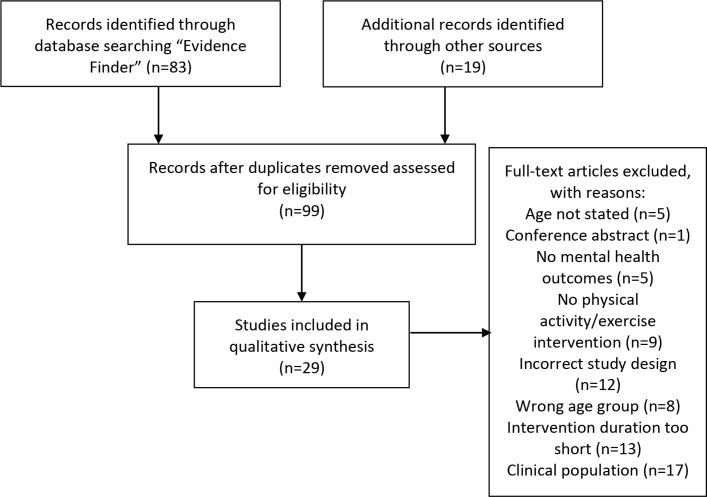
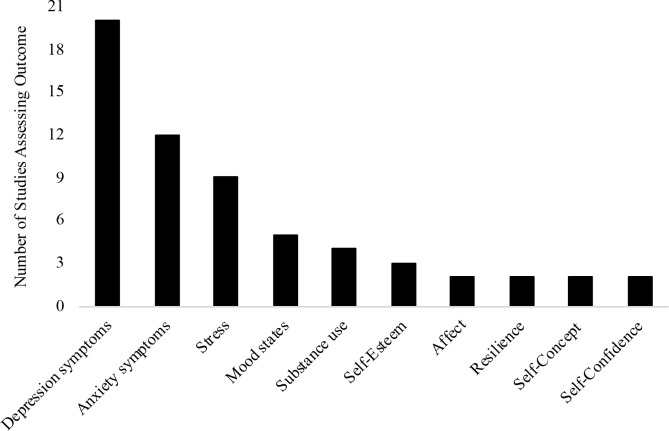
- The review included 29 studies (the abstract says 30 publications); 20 assessed depression symptoms, 12 anxiety symptoms, 9 stress, and 5 mood states.
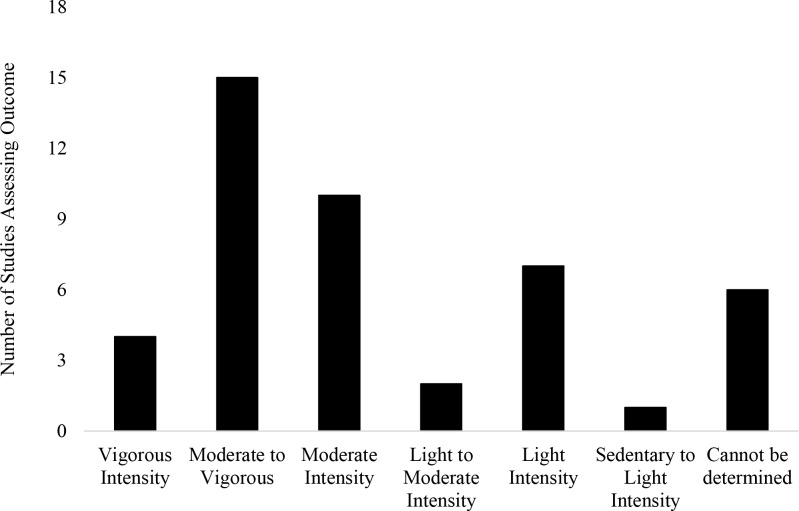
- Moderate-to-vigorous-intensity interventions showed beneficial effects for depression in 83% (5/6) of studies and for anxiety in 66% (4/6); light-intensity interventions showed beneficial effects for anxiety in 75% (3/4).
- Of 8 studies recruiting participants with elevated mental disorder symptoms at baseline, 5 demonstrated reductions in depression symptoms or high substance use; of 22 studies not recruiting on elevated symptoms, 17 showed improvements in at least one mental health outcome.
- Only 12 studies provided sufficient information to confidently assess intervention intensity, and the authors conclude that robust research on PA/exercise for mental health promotion and indicated prevention in young people is lacking.
Methods
- Scoping review conducted per PRISMA-ScR and Arksey and O’Malley’s five-stage framework; no review protocol was published.
- Searches used ‘Evidence Finder’ in July 2018 (updated April 2019), plus reference-list screening; eligibility required mean age 12–25.9 years, publication 1980–2017, a PA/exercise intervention with a comparison condition, duration >3 weeks, controlled trial design, English, and at least one quantitative mental health symptom outcome.
- Data were charted descriptively and synthesized using a descriptive-analytical method focused on mental health outcome; intervention intensity was classified by objective/subjective measures where possible, and no critical appraisal of individual sources was conducted.
Limitations
- The paper states that only five studies included follow-up assessments, none assessed whether PA/exercise prevented onset of future threshold mental disorder, only nine studies used an active comparison group, and only 12 studies provided sufficient information to confidently assess intervention intensity.
- The paper also states that no quality appraisal of individual trials was undertaken, and future work should search a wider range of databases and grey literature.
- Evident from the text: the abstract reports 30 publications while the results report 29 included studies; the review is limited to studies indexed in ‘Evidence Finder’ and does not contact authors for missing intervention details.
Model-written summary. Check it against the paper before relying on it.
Integrity signals
Registry
Cites
Statistics
Figures
Verification
Claims the paper makes
6 Valid · 2 Not valid · 54 Not checked · 61 Own results and interpretations
Some cited sources support this claim and some don’t — read each source’s verdict below.
In the paper
“Moderate-to-vigorous-intensity interventions showed improvements in depression symptoms,40 47 52–55 anxiety symptoms,40 47 52 55 59 60 self-esteem40 52 and mood states.52 62”
§ Physical activity and exercise in youth mental health promotion: a scoping review > Results > Intensity of interventions
What the sources say
- Disputedcites [40] Bonhauser M, Fernandez G, Püschel K, et al Improving physical fitness and emotional well-being in adolescents of low socioeconomic status in Chile: results of a school-based controlled trial. Health Promot Int 2005; 20: 113– 22. 10.1093/heapro/dah603 15788528 sourceExperimental — accuracy not yet measured
The Outcome measures section reports no statistically significant difference in depressive symptom scores between the intervention and control groups. The paper reports improvements in anxiety and self-esteem, but not in depressive symptoms. (LLM, conf=0.90)
Checked by a reasoning model — may be wrong.
- Not checked yetcites [47] Khorvash M, Askari A, Rafiemanzelat F, et al An investigation on the effect of strength and endurance training on depression, anxiety, and C-reactive protein's inflammatory biomarker changes. J Res Med Sci 2012; 17: 1072– 6. 23833584 PMC3702091
- Not checked yetcites [52] Hilyer JC et al Physical fitness training and counseling as treatment for youthful offenders. J Couns Psychol 1982; 29: 292– 303. 10.1037/0022-0167.29.3.292 source
- Supportedcites [53] O'Dougherty M, Hearst MO, Syed M, et al Life events, perceived stress and depressive symptoms in a physical activity intervention with young adult women. Ment Health Phys Act 2012; 5: 148– 54. 10.1016/j.mhpa.2012.05.001 23189088 PMC3505451 source
The Methods describe an aerobic exercise intervention progressing from 65–70% to 80–85% of maximum heart rate. The Results report that, after adjustment for baseline symptoms and other covariates, controls had significantly higher depressive-symptom scores than intervention participants at follow-up. This supports the cited paper as an example of improvement associated with a moderate-to-vigorous-intensity intervention. (LLM, conf=0.90)
- Supportedcites [54] Robledo-Colonia AF, Sandoval-Restrepo N, Mosquera-Valderrama YF, et al Aerobic exercise training during pregnancy reduces depressive symptoms in nulliparous women: a randomised trial. J Physiother 2012; 58: 9– 15. 10.1016/S1836-9553(12)70067-X 22341377 source
The Intervention section describes aerobic exercise prescribed at moderate-to-vigorous intensity. The Effect of intervention section reports that, after three months, depressive symptoms improved significantly more in the exercise group than in the control group. The finding applies to the pregnant women studied. (LLM, conf=0.93)
- Not checked yetcites [55] Wipfli B, Landers D, Nagoshi C, et al An examination of serotonin and psychological variables in the relationship between exercise and mental health. Scand J Med Sci Sports 2011; 21: 474– 81. 10.1111/j.1600-0838.2009.01049.x 20030777 source
plainstates a cause- Asserted: passes — The authors put it forward as true.
- Checkable: passes — It can be checked against evidence.
- Load-bearing: passes — The paper’s conclusions depend on it.
- Based: passes — The paper gives a reason why it holds.
- Disputed
The cited sources support only part of this claim — read each source’s verdict below.
In the paper
“Moderate-to-vigorous-intensity interventions showed improvements in depression symptoms,40 47 52–55 anxiety symptoms,40 47 52 55 59 60 self-esteem40 52 and mood states.52 62”
§ Physical activity and exercise in youth mental health promotion: a scoping review > Results > Intensity of interventions
What the sources say
- Partly supportedcites [40] Bonhauser M, Fernandez G, Püschel K, et al Improving physical fitness and emotional well-being in adolescents of low socioeconomic status in Chile: results of a school-based controlled trial. Health Promot Int 2005; 20: 113– 22. 10.1093/heapro/dah603 15788528 sourceExperimental — accuracy not yet measured
The Outcome measures section reports a significantly greater improvement in anxiety scores in the intervention group than in controls. The Intervention condition section describes fast walking, running, jumping and sports, but also low-intensity activities; it does not establish that the intervention as a whole was moderate-to-vigorous intensity. (LLM, conf=0.82)
- Not checked yetcites [47] Khorvash M, Askari A, Rafiemanzelat F, et al An investigation on the effect of strength and endurance training on depression, anxiety, and C-reactive protein's inflammatory biomarker changes. J Res Med Sci 2012; 17: 1072– 6. 23833584 PMC3702091
- Not checked yetcites [52] Hilyer JC et al Physical fitness training and counseling as treatment for youthful offenders. J Couns Psychol 1982; 29: 292– 303. 10.1037/0022-0167.29.3.292 source
plainstates a cause- Asserted: passes — The authors put it forward as true.
- Checkable: passes — It can be checked against evidence.
- Load-bearing: unclear — It is unclear whether the paper’s conclusions depend on it.
- Based: passes — The paper gives a reason why it holds.
- Partly supported
The cited sources support only part of this claim — read each source’s verdict below.
In the paper
“There was less support for moderate-intensity interventions in reducing depression symptoms, with only two positive studies from seven39 42 and only one positive study for anxiety59 and stress59 from the four that measured these outcomes.”
§ Physical activity and exercise in youth mental health promotion: a scoping review > Results > Intensity of interventions
What the sources say
- Partly supportedcites [39] Nabkasorn C, Miyai N, Sootmongkol A, et al Effects of physical exercise on depression, neuroendocrine stress hormones and physiological fitness in adolescent females with depressive symptoms. Eur J Public Health 2006; 16: 179– 84. 10.1093/eurpub/cki159 16126743 sourceExperimental — accuracy not yet measured
The Results report a significant reduction in depressive symptoms after jogging, so this paper supports counting it as a positive study. The Intervention section describes the exercise as mild intensity, not moderate intensity; as a single trial, it also does not establish the citing paper’s two-of-seven tally. (LLM, conf=0.86)
- Partly supportedcites [42] Melnyk BM, Jacobson D, Kelly S, et al Promoting healthy lifestyles in high school adolescents: a randomized controlled trial. Am J Prev Med 2013; 45: 407– 15. 24050416 PMC4285557 sourceExperimental — accuracy not yet measured
The Results (Immediate Post-intervention Outcomes and 6-Month Post-Intervention Outcomes) report no significant difference in depression symptoms between the COPE and Healthy Teens groups, consistent with limited evidence of benefit in this trial. This paper does not provide the claimed tally of two positive studies out of seven or classify interventions by moderate intensity. (LLM, conf=0.83)
plain- Asserted: passes — The authors put it forward as true.
- Checkable: passes — It can be checked against evidence.
- Load-bearing: passes — The paper’s conclusions depend on it.
- Based: passes — The paper gives a reason why it holds.
- Partly supported
Every source the paper cites for this claim was checked and supports it.
In the paper
“Only five studies included follow-up assessments39 42 46 50 56 and none assessed whether PA/exercise prevented the onset of future episodes of threshold mental disorder, rendering longer-term preventive effects unknown.”
§ Physical activity and exercise in youth mental health promotion: a scoping review > Discussion > Strengths and limitations
What the sources say
- Supportedcites [39] Nabkasorn C, Miyai N, Sootmongkol A, et al Effects of physical exercise on depression, neuroendocrine stress hormones and physiological fitness in adolescent females with depressive symptoms. Eur J Public Health 2006; 16: 179– 84. 10.1093/eurpub/cki159 16126743 source
The Results report that participants who exercised first had their depressive symptoms assessed again during the subsequent daily-activity phase, so this paper supports its identification as a study with a follow-up assessment. The total of five studies is the citing paper’s count, not a count this individual trial could establish. (LLM, conf=0.88)
- Supportedcites [42] Melnyk BM, Jacobson D, Kelly S, et al Promoting healthy lifestyles in high school adolescents: a randomized controlled trial. Am J Prev Med 2013; 45: 407– 15. 24050416 PMC4285557 source
The Results (6-Month Post-Intervention Outcomes) explicitly report a six-month follow-up assessment. As a citation to one of the five studies said to have follow-up assessments, this paper supports the attributed point; it does not itself establish the total of five across the citing paper's included studies. (LLM, conf=0.92)
- Supportedcites [46] Cecchini-Estrada J-A, Méndez-Giménez A, Cecchini C, et al Exercise and Epstein's target for treatment of depressive symptoms: a randomized study. Int J Clin Health Psychol 2015; 15: 191– 9. 10.1016/j.ijchp.2015.05.001 30487836 PMC6225030 source
This citation identifies the paper as one of the studies with a follow-up assessment; it is not offered as evidence for the review's count of five. The Results (Analysis of clinical efficacy) report depressive-symptom assessments at eight weeks and six months later, and the Discussion describes the six-month follow-up. (LLM, conf=0.91)
plain- Asserted: passes — The authors put it forward as true.
- Checkable: passes — It can be checked against evidence.
- Load-bearing: passes — The paper’s conclusions depend on it.
- Based: passes — The paper gives a reason why it holds.
- Supported
The sources with a verdict support this claim; the rest weren’t checked yet, have no full text we could read, or their verdicts aren’t rated yet.
In the paper
“In adults, mental health benefits are associated with lower levels of PA than required for physical health benefits,80–82 and it is possible that this relationship also holds for younger people; however, this would require additional rigorous empirical support.”
§ Physical activity and exercise in youth mental health promotion: a scoping review > Conclusions
What the sources say
- Supportedcites [80] Craike MJ, Mosely K, Browne JL, et al Associations between physical activity and depressive symptoms by weight status among adults with type 2 diabetes: results from diabetes MILES–Australia. J Phys Act Health 2017; 14: 195– 202. 10.1123/jpah.2016-0196 27918698 source
The Discussion explicitly states that population-based research has found mental-health benefits at lower PA levels than those required for physical health. It also reports that, in this study’s adults with type 2 diabetes, PA below the recommended level for physical-health benefit was associated with fewer depressive symptoms. (LLM, conf=0.92)
- Not checked yetcites [81] Vallance JK, Winkler EAH, Gardiner PA, et al Associations of objectively-assessed physical activity and sedentary time with depression: NHANES (2005–2006). Prev Med 2011; 53: 284– 8. 10.1016/j.ypmed.2011.07.013 21820466 source
- Not checked yetcites [82] Brunes A, Augestad LB, Gudmundsdottir SL Personality, physical activity, and symptoms of anxiety and depression: the HUNT study. Soc Psychiatry Psychiatr Epidemiol 2013; 48: 745– 56. 10.1007/s00127-012-0594-6 23052425 source
plainstates an association- Asserted: passes — The authors put it forward as true.
- Checkable: passes — It can be checked against evidence.
- Load-bearing: passes — The paper’s conclusions depend on it.
- Based: passes — The paper gives a reason why it holds.
- Supported
83 more claims
Create a free account to see all 123 claims and to verify the 79 references still open.
- Probably not a substantial claim. 23
- It may state two separate claims as one. 18
- The quote only partly states this claim. 2
Claims other papers make about this one
Each is checked against this paper’s own text: does it say what the citing paper says it does?
The cited source says what the claim attributes to it.
In the citing paper
“Two systematic reviews and one scoping review have approached this topic and improved our understanding of the effect of exercise on anxiety in mostly healthy, non-clinical young people and children (Carter 2021;Larun 2006;Pascoe 2020).”
From Exercise for the treatment of anxiety in children and adolescents (2022) · cites this paper as Pascoe 2020
In the citing paper
“although another possible explanation is that regular exercise may be associated with some improvement in mental well-being. [16,17].”
From Wearable devices for anxiety & depression: A scoping review (2023) · cites this paper as [17]
Self-check
Percentages, sums and reported differences re-computed from the paper’s own numbers.
Each contradiction between two passages listed here was confirmed by an independent check.
Rated minor: it would not touch a result — a value no result rests on, a p-value that stays on the same side of the significance level, or a conflict that is clerical, resolved elsewhere in the paper, or outside its own findings.
In the paper
§ Physical activity and exercise in youth mental health promotion: a scoping review > Discussion > Summary of evidence
“five demonstrated the effect of PA/exercise interventions in reducing symptoms of depression38 39 46 47 and high substance use,49”
§ Physical activity and exercise in youth mental health promotion: a scoping review > Results > Synthesis of results
“Two studies did not provide sufficient information to assess intervention intensity, and neither showed reductions in depression symptoms.36 46”
Rated minor: it would not touch a result — a value no result rests on, a p-value that stays on the same side of the significance level, or a conflict that is clerical, resolved elsewhere in the paper, or outside its own findings.
In the paper
§ Physical activity and exercise in youth mental health promotion: a scoping review > Results > Intensity of interventions
“Of the studies that examined vigorous-intensity interventions, a considerable proportion found positive outcomes on depression symptoms,35 50 51 stress43 and mood states,61 but not for anxiety.50”
§ Physical activity and exercise in youth mental health promotion: a scoping review > Results > Synthesis of results
“In the third study, a vigorous-intensity intervention did not improve depression symptoms in unemployed young men, compared with a wait-list group.51”
Rated minor: it would not touch a result — a value no result rests on, a p-value that stays on the same side of the significance level, or a conflict that is clerical, resolved elsewhere in the paper, or outside its own findings.
In the paper
§ Physical activity and exercise in youth mental health promotion: a scoping review > Results > Intensity of interventions
“Moderate-to-vigorous-intensity interventions showed improvements in depression symptoms,40 47 52–55 anxiety symptoms,40 47 52 55 59 60 self-esteem40 52 and mood states.52 62”
§ Physical activity and exercise in youth mental health promotion: a scoping review > Results > Synthesis of results
“The sixth study compared two moderate-to-vigorous-intensity interventions and found no effect of either on depression symptoms.40”
Rated minor: it would not touch a result — a value no result rests on, a p-value that stays on the same side of the significance level, or a conflict that is clerical, resolved elsewhere in the paper, or outside its own findings.
In the paper
§ Physical activity and exercise in youth mental health promotion: a scoping review > Results > Synthesis of results
“| Moderate-intensity intervention | 28% (n=2 out of 7)39 42 | 25% (n=1 out of 4)59 | 33% (n=1 out of 3)59 | 0% (n=0 out of 2) |”
§ Physical activity and exercise in youth mental health promotion: a scoping review > Results > Synthesis of results
“One study of a moderate-intensity intervention found that it decreased stress in adolescents, compared with no intervention,61 and a further three did not specify intervention intensity but were likely moderate.43 57 59 In one of these, both the moderate-intensity intervention and the psychological treatment condition decreased stress in university students, compared with no intervention, as stated above.59”
Rated minor: it would not touch a result — a value no result rests on, a p-value that stays on the same side of the significance level, or a conflict that is clerical, resolved elsewhere in the paper, or outside its own findings.
In the paper
“Eight studies included young people with elevated mental disorder symptoms at baseline, including anxiety sensitivity,45 anxiety or depression symptoms,37–39 46 47 or high substance use,48 49 and the remaining 22 involved young people without mental health symptoms.”
§ Physical activity and exercise in youth mental health promotion: a scoping review > Results > Characteristics of sources of evidence
Reported 29 · recomputed 30
2 more findings
Create a free account to see every finding of this check.
Citations
Cites
Ryan, R. M., & Deci, E. L. (2000) · American Psychologist · doi:10.1037//0003-066x.55.1.68 · Cited by 54,599
PRISMA Extension for Scoping Reviews (PRISMA-ScR): Checklist and Explanation
Tricco, A. C., Lillie, E., Zarin, W., O'Brien, K. K., Colquhoun, H., Levac, D., Moher, D., Peters, M. D. J., Horsley, T., Weeks, L., et al. (2018) · Annals of Internal Medicine · doi:10.7326/m18-0850 · Cited by 43,565
Scoping studies: towards a methodological framework
Arksey, H., & O'Malley, L. (2005) · International Journal of Social Research Methodology · doi:10.1080/1364557032000119616 · Cited by 36,742
The structure of psychological well-being revisited.
Ryff, C. D., & Keyes, C. L. M. (1995) · Journal of Personality and Social Psychology · doi:10.1037//0022-3514.69.4.719 · Cited by 10,285
The Physical Activity Guidelines for Americans
Piercy, K. L., Troiano, R. P., Ballard, R. M., Carlson, S. A., Fulton, J. E., Galuska, D. A., George, S. M., & Olson, R. D. (2018) · JAMA · doi:10.1001/jama.2018.14854 · Cited by 9,755
Garber, C. E., Blissmer, B., Deschenes, M. R., Franklin, B. A., Lamonte, M. J., Lee, I.-M., Nieman, D. C., & Swain, D. P. (2011) · Medicine & Science in Sports & Exercise · doi:10.1249/mss.0b013e318213fefb · Cited by 9,319
(1985) · Europe PMC (PubMed Central) · Cited by 9,143
Compendium of physical activities: an update of activity codes and MET intensities
AINSWORTH, B. E., HASKELL, W. L., WHITT, M. C., IRWIN, M. L., SWARTZ, A. M., STRATH, S. J., O???BRIEN, W. L., BASSETT, D. R., SCHMITZ, K. H., EMPLAINCOURT, P. O., et al. (2000) · Medicine & Science in Sports & Exercise · doi:10.1097/00005768-200009001-00009 · Cited by 8,497
Moral Identity and Developmental Theory
Lapsley, D. (2015) · Human Development · doi:10.1159/000435926 · Cited by 3,819
Age of onset of mental disorders: a review of recent literature
Kessler, R. C., Amminger, G. P., Aguilar-Gaxiola, S., Alonso, J., Lee, S., & ??st??n, T. B. (2007) · Current Opinion in Psychiatry · doi:10.1097/yco.0b013e32816ebc8c · Cited by 3,457
Research works printed but not linked: 3
- Bull FtEWG Physical activity guidelines in the U.K. review and recommendations. Loughborough University, 2010.
- Aras D, Ewert AW The effects of eight weeks sport rock climbing training on anxiety. Acta Medica Mediterranea 2016; 32: 223– 30.
- Berger BG, Friedman E Comparison of jogging, the relaxation response, and group interaction for stress reduction. J Sport Exerc Psychol 1988; 10: 431– 47. 10.1123/jsep.10.4.431 · DOI · Paper page
Cited by
Mental health in elite athletes: International Olympic Committee consensus statement (2019)
Reardon, C. L., Hainline, B., Aron, C. M., Baron, D., Baum, A. L., Bindra, A., Budgett, R., Campriani, N., Castaldelli-Maia, J. M., Currie, A., et al. (2019) · British Journal of Sports Medicine · doi:10.1136/bjsports-2019-100715 · Cited by 1,277
Savage, M. J., James, R., Magistro, D., Donaldson, J., Healy, L. C., Nevill, M., & Hennis, P. J. (2020) · Mental Health and Physical Activity · doi:10.1016/j.mhpa.2020.100357 · Cited by 366
Belcher, B. R., Zink, J., Azad, A., Campbell, C. E., Chakravartti, S. P., & Herting, M. M. (2021) · Biological Psychiatry: Cognitive Neuroscience and Neuroimaging · doi:10.1016/j.bpsc.2020.08.005 · Cited by 281
“Several recent reviews and meta-analyses of study samples ranging from 10 to 779 participants concluded that PA and exercise can improve internalizing and externalizing symptoms in youth (23–26), with depression and anxiety the two most-studied outcomes (27).”
BackgroundStudies of Physical Activity and COVID-19 During the Pandemic: A Scoping Review
Caputo, E. L., & Reichert, F. F. (2020) · Journal of Physical Activity and Health · doi:10.1123/jpah.2020-0406 · Cited by 302
Carter, T., Pascoe, M., Bastounis, A., Morres, I. D., Callaghan, P., & Parker, A. G. (2021) · Journal of Affective Disorders · doi:10.1016/j.jad.2021.02.026 · Cited by 190
Self-citationHuang, K., Beckman, E. M., Ng, N., Dingle, G. A., Han, R., James, K. E., WINKLER, E. A. H., Stylianou, M., & Gomersall, S. R. (2024) · Health Promotion International · doi:10.1093/heapro/daae054 · Cited by 204
Li, Z., Li, J., Kong, J., Li, Z., Wang, R., & Jiang, F. (2024) · Frontiers in Psychology · doi:10.3389/fpsyg.2024.1433698 · Cited by 144
“Furthermore, the frequency and intensity of participation in Physical Activity are positively correlated with the degree of improvement in psychological health (Pascoe et al., 2020; Marconcin et al., 2022; Peng et al., 2022).”
BackgroundFactors Protecting against a Decline in Physical Activity during the COVID-19 Pandemic
Fearnbach, S. N., Flanagan, E. W., Höchsmann, C., Beyl, R. A., Altazan, A. D., Martin, C. K., & Redman, L. M. (2021) · Medicine & Science in Sports & Exercise · doi:10.1249/mss.0000000000002602 · Cited by 105
Scoping reviews and rapid reviews
Sabiston, C. M., Vani, M., de Jonge, M., & Nesbitt, A. (2022) · International Review of Sport and Exercise Psychology · doi:10.1080/1750984x.2021.1964095 · Cited by 74
“…therapy, or recreational sport programs among: emerging adults (Orr et al., 2020) and adults (Castro et al., 2018) with disabilities, mental health (Pascoe et al., 2020) and mental illness (Anthony et al., 2020), musculoskeletal conditions (Holt et al., 2020), older people living with HIV (Chetty…”
BackgroundGobbi, E., Maltagliati, S., Sarrazin, P. G., di Fronso, S., Colangelo, A., Cheval, B., Boulley, G. E., Tessier, D. P., Demirhan, G., Erturan, G., et al. (2020) · International Journal of Environmental Research and Public Health · doi:10.3390/ijerph17249431 · Cited by 76
Mavilidi, M. F., Pesce, C., Benzing, V., Schmidt, M., PAAS, F. G. W. C., Okely, A. D., & Vazou, S. (2022) · Educational Research Review · doi:10.1016/j.edurev.2022.100478 · Cited by 76
Peng, J., Liu, Y., Wang, X., Yi, Z., Xu, L., & Zhang, F. (2025) · Scientific Reports · doi:10.1038/s41598-025-85943-x · Cited by 68
Effects of physical activity on the mood states of young students
Gaia, J. W. P., Ferreira, R. W., & Pires, D. A. (1989) · journal of physical education · doi:10.4025/jphyseduc.v32i1.3233 · Cited by 59
Filia, K., Eastwood, O., Herniman, S. E., & Badcock, P. B. (2021) · Translational Psychiatry · doi:10.1038/s41398-021-01406-7 · Cited by 61
Yang, M.-B., Si, S., Zhang, K., Xi, M., & Zhang, W. (2024) · PsyCh Journal · doi:10.1002/pchj.756 · Cited by 59
“Adolescents who engage in regular physical exercise have a significantly lower risk of experiencing anxiety and depression (Pascoe et al., 2020), and certain aspects of physical exercise are negatively associated with overall symptom-scale scores, including on the Youth Self-Rating Insomnia Scale…”
BackgroundD’Alessio, L., Korman, G. P., Sarudiansky, M., Guelman, L. R., Scévola, L., Pastore, A., Obregón, A., & Ej, R. (2020) · Frontiers in Psychiatry · doi:10.3389/fpsyt.2020.00501 · Cited by 63
Kolovelonis, A., & Γούδας, Μ. (2023) · European Journal of Investigation in Health Psychology and Education · doi:10.3390/ejihpe13050060 · Cited by 60
“Participating in regular physical activity is related to important health-related benefits, including physical, mental, and socio-emotional health [1,2] and academic performance [3].”
BackgroundThe Potential for Outdoor Nature-Based Interventions in the Treatment and Prevention of Depression
Owens, M., & Bunce, H. L. I. (2022) · Frontiers in Psychology · doi:10.3389/fpsyg.2022.740210 · Cited by 59
Sonza, A., de Sá-Caputo, D. D. C., Sartório, A., Tamini, S., Seixas, A., Sañudo, B., Süßenbach, J., Provenza, M. M., Xavier, V. L., Taïar, R., et al. (2021) · International Journal of Environmental Research and Public Health · doi:10.3390/ijerph18073810 · Cited by 61
Zhihao, D., Wang, T., Yingjie, S., & Feng, Z. (2024) · BMC Public Health · doi:10.1186/s12889-024-18474-1 · Cited by 55
“The positive effects of physical activity on the body and mind have been confirmed [51], and individuals who often engage in physical activity have higher level of self-esteem and positive psychological emotions and states [52], while those with low self-esteem are often prone to fall into doubt…”
BackgroundVancini, R. L., Andrade, M. S., Viana, R. B., Nikolaidis, P. Τ., Knechtle, B., Campanharo, C. R. V., de Almeida, A. A., Gentil, P., & de Lira, C. A. B. (2021) · Sports Medicine and Health Science · doi:10.1016/j.smhs.2021.04.004 · Cited by 62
“According to the WHO,(17) regular physical exercise participation is essential for preventing and treating non-communicable diseases which can improve and maintain mental health, quality of life, wellbeing, and improve the quality of the aging process.(14,15,18,19) However, during the COVID-19 outbreak, the levels of…”
Figueroa, C. A., Deliu, N., Chakraborty, B., Modiri, A., Xu, J., Aggarwal, J., Williams, J. J., Lyles, C. R., & Aguilera, A. (2021) · Annals of Behavioral Medicine · doi:10.1093/abm/kaab028 · Cited by 56
“In another review, PA interventions decreased depression and anxiety in young people [13].”
BackgroundWearable devices for anxiety & depression: A scoping review
Ahmed, A., Aziz, S., Alzubaidi, M., Schneider, J., Irshaidat, S., Abu Serhan, H., Abd-alrazaq, A. A., Solaiman, B., & Househ, M. (2023) · Computer Methods and Programs in Biomedicine Update · doi:10.1016/j.cmpbup.2023.100095 · Cited by 50
Effects of Physical Exercise on Prosocial Behavior of Junior High School Students
Wan, Y., Zhao, Y., & Hong-lian, S. (2021) · Children · doi:10.3390/children8121199 · Cited by 56
Cao, R., Gao, T., Hu, Y., Qin, Z., Ren, H., Liang, L., Li, C., & Mei, S. (2020) · Journal of Affective Disorders · doi:10.1016/j.jad.2020.05.064 · Cited by 46
Jerome, G. J., Fink, T., Brady, T. M., Young, D. R., Dickerson, F., Goldsholl, S., Findling, R. L., Stepanova, E. A., Scheimann, A. O., Dalcin, A., et al. (2022) · International Journal of Environmental Research and Public Health · doi:10.3390/ijerph19042261 · Cited by 52
“Determining the most effective mode and dose of physical activity in order to improve the mental health and physical health of youth, particularly among those with diagnosed mental illness, deserves further investigation [13,32,33].”
BackgroundInfluentialThe Impact of Community Mental Health Programs for Australian Youth: A Systematic Review
Savaglio, M., O’Donnell, R., Hatzikiriakidis, K., Vicary, D., & Skouteris, H. (2022) · Clinical Child and Family Psychology Review · doi:10.1007/s10567-022-00384-6 · Cited by 48
“International exercise interventions for youth with mental health concerns have shown strong engagement with components of self-monitoring, positive reinforcement, or rewards (Pascoe et al., 2020).”
BackgroundMalagodi, F., Dommett, E. J., Findon, J. L., & Gardner, B. (2023) · Mental health and physical activity · doi:10.1016/j.mhpa.2023.100563 · Cited by 50
Liu, L., Xin, X., Wang, H., & Zhang, Y. (2025) · Frontiers in Psychology · doi:10.3389/fpsyg.2025.1612408 · Cited by 44
“For instance, Pascoe et al. (2014) found that physical activity interventions appeared to effectively reduce certain symptoms of poor mental health, particularly when the interventions involved higher-intensity physical activities.”
Exercise interventions for mental disorders in young people: a scoping review
Pascoe, M. C., Bailey, A. P., Craike, M. J., Carter, T., Patten, R. K., Stepto, N. K., & Parker, A. G. (2020) · BMJ Open Sport & Exercise Medicine · doi:10.1136/bmjsem-2019-000678 · Cited by 47
“…a likely disorder, as we have examined the impact of PA/exercise as a treatment for mental disorder in non-clinical samples in our companion paper to this article 28 ; dissertations; and studies published before 1980 as youth mental health was not considered a discrete field prior to 1980.”
Self-citationZhang, Y., Zhang, B., Gan, L., Ke, L., Fu, Y., Di, Q., & Ma, X. (2021) · International Journal of Environmental Research and Public Health · doi:10.3390/ijerph18010302 · Cited by 37
An empirical study of physical activity and sports affecting mental health of university students
congsheng, L., Kayani, S., & Khalid, A. (2022) · Frontiers in Psychology · doi:10.3389/fpsyg.2022.917503 · Cited by 50
Ferguson, K. N., Coen, S. E., Tobin, D., Martin, G., Seabrook, J. A., & Gilliland, J. (2021) · CMAJ Open · doi:10.9778/cmajo.20210042 · Cited by 48
“38 Additionally, many participants used safe peer interactions by connecting with friends and loved ones, both virtually and in person (while maintaining physical distance) as a coping strategy.”
BackgrounddeJonge, M. L., Jain, S., Faulkner, G., & Sabiston, C. M. (2021) · Mental health and physical activity · doi:10.1016/j.mhpa.2021.100391 · Cited by 37
Assessing the impact of physical activity on reducing depressive symptoms: a rapid review
Samsudin, N., Bailey, R. P., Ríes, F., Hashim, S. N. A., & Fernandez, J. A. (2024) · BMC Sports Science Medicine and Rehabilitation · doi:10.1186/s13102-024-00895-5 · Cited by 39
Mudenda, S., Mukosha, M., Mwila, C., Saleem, Z., Kalungia, A. C., Munkombwe, D., Daka, V., Witika, B. A., Kampamba, M., Hikaambo, C. N., et al. (2021) · International Journal of Basic & Clinical Pharmacology · doi:10.18203/2319-2003.ijbcp20211010 · Cited by 39
Hubungan Olahraga Dan Kesehatan Mental
Saufi, F. M., Nurkadri, N., Sitopu, G. S., & Habeahan, G. F. (2024) · Cerdas Sifa Pendidikan · doi:10.22437/csp.v13i1.33728 · Cited by 34
Promoting Athlete Mental Health: The Role of Emotion Regulation
Bird, G. A., Quinton, M. L., & Cumming, J. (2021) · Journal of Clinical Sport Psychology · doi:10.1123/jcsp.2021-0022 · Cited by 40
Austin, F., Wright, K. E., Jackson, B., Lin, A. P., Schweizer, K. W., & Furzer, B. J. (2024) · Mental health and physical activity · doi:10.1016/j.mhpa.2024.100576 · Cited by 31
School Medical Service: Strategies to Promote Psycho-Physiological Well-Being
Tafuri, F., & Latino, F. (2024) · Pediatric Reports · doi:10.3390/pediatric16010019 · Cited by 37
“In this way, children develop their cognitive and social skills, as well as motor skills [20].”
BackgroundDahlstrand, J., Friberg, P., Fridolfsson, J., Börjesson, M., Arvidsson, D., Ekblom, Ö. B., & Chen, Y. (2021) · BMC Public Health · doi:10.1186/s12889-021-11158-0 · Cited by 32
“Depression is mostly studied, while stress and negative affect are much less studied (for review, see [9, 10]).”
BackgroundMasini, A., Marini, S., Ceciliani, A., Barone, G., Lanari, M., Gori, D., Bragonzoni, L., Toselli, S., Stagni, R., Bisi, M. C., et al. (2023) · Journal of Public Health · doi:10.1093/pubmed/fdad102 · Cited by 33
Carney, R., & Firth, J. (2021) · JCPP Advances · doi:10.1002/jcv2.12031 · Cited by 30
“Exercise interventions showed some efficacy for improving depressive symptoms, self‐esteem, social functioning, cognition, mood states, quality of life, eating disorder symptoms, and achieving remission of anxiety (Biddle et al., 2019; Pascoe et al., 2020).”
BackgroundInfluentialSinring, A., Aryani, F., & Umar, N. F. (2022) · International Journal of Instruction · doi:10.29333/iji.2022.15227a · Cited by 40
Seo, J.-M., Kim, S., Na, H., Kim, J.-H., & Lee, H. (2022) · Healthcare · doi:10.3390/healthcare10112185 · Cited by 40
“Several studies have reported that as physical activity, social exchange, and relaxation times increase, sleep quality improves [45] and depression decreases [46].”
BackgroundHu, C., Huang, W., & Zhang, W. (2025) · Frontiers in Psychiatry · doi:10.3389/fpsyt.2025.1660164 · Cited by 29
“Through neurotransmitters such as endorphins, it improves mood, and, with sustained engagement, it enhances self-ef fi cacy and coping skills, thereby reducing the risk of suicidal ideation (67 – 72).”
Pascoe, M. C., Bailey, A. P., Craike, M. J., Carter, T., Patten, R. K., Stepto, N. K., & Parker, A. G. (2021) · Sports Medicine - Open · doi:10.1186/s40798-021-00358-y · Cited by 31
Self-citationBurgueño, R., Bonet-Medina, A., Cerván-Cantón, Á., Espejo, R., Fernández-Berguillo, F. B., Gordo-Ruiz, F., Linares-Martínez, H., Montenegro-Lozano, S., Ordoñez-Tejero, N., Vergara-Luque, J. J., et al. (2020) · Retos · doi:10.47197/retos.v0i39.78792 · Cited by 29
Ganjeh, P., Hagmayer, Y., Meyer, T., Kuhnert, R., Ravens‐Sieberer, U., von Steinbüchel, N., Rothenberger, A., & Becker, A. (2022) · Frontiers in Behavioral Neuroscience · doi:10.3389/fnbeh.2022.933139 · Cited by 29
“Physical activity (PA) may be a promising factor within this context (Larun et al., 2006; Brown et al., 2013; Wu et al., 2017; Bélair et al., 2018; Bell et al., 2019; Biddle et al., 2019; Parker et al., 2019; Andermo et al., 2020; Ma et al., 2020; Pascoe et al., 2020; Wegner et al., 2020; Bourke et al., 2021; Heinze e…”
BackgroundEngels, E. S., Mutz, M., Demetriou, Y., & Reimers, A. K. (2021) · Archives of Public Health · doi:10.1186/s13690-021-00651-y · Cited by 27
“However, whether or not light physical activity positively influences mental health during the pandemic is not yet clarified [34].”
BackgroundEnglish, M., Wallace, L., Evans, J. R., Diamond, S., & Caperchione, C. M. (2021) · Preventive Medicine Reports · doi:10.1016/j.pmedr.2021.101676 · Cited by 27
Draper, C. E., Cook, C. J., Redinger, S., Rochat, T., Prioreschi, A., Rae, D. E., Ware, L. J., Lye, S. J., & Norris, S. A. (2022) · International Journal of Behavioral Nutrition and Physical Activity · doi:10.1186/s12966-022-01325-w · Cited by 30
Gaia, J. W. P., Schuch, F. B., Ferreira, R. W., Souza, E. D. L., Ferreira, V. M. S., & Pires, D. A. (2024) · Scandinavian Journal of Medicine & Science in Sports · doi:10.1111/sms.14618 · Cited by 26
“5,6 However, the nature of the exercise likely influences the association between physical exercise and mental health.”
Wang, M., Chen, H., Yang, F., Xu, X., & Li, J. (2023) · Journal of Affective Disorders · doi:10.1016/j.jad.2023.06.057 · Cited by 25
Tafuri, F., Martínez-Roig, R., Susanto, N., Setyawan, H., & Latino, F. (2024) · Retos · doi:10.47197/retos.v58.106154 · Cited by 29
“Perception and the ability to act on perceptions significantly influence knowledge acquisition (Pascoe et al., 2020).”
BackgroundVajravelu, M. E., & Arslanian, S. A. (2021) · Current Obesity Reports · doi:10.1007/s13679-021-00456-8 · Cited by 29
Telford, D. M., Meiring, R. M., & Gusso, S. (2023) · Frontiers in Sports and Active Living · doi:10.3389/fspor.2023.1282482 · Cited by 25
“However, very little is known about the impact of physical activity of different intensities on other important outcomes, including mental health (56, 57) and quality of life (58, 59) where few studies have focused on LPA.”
BackgroundMalagodi, F., Findon, J. L., Gardner, B., & Dommett, E. J. (2025) · Journal of College Student Mental Health · doi:10.1080/28367138.2025.2566914 · Cited by 28
Favieri, F., French, M. N., Casagrande, M., & Chen, E. Y. (2022) · Journal of American College Health · doi:10.1080/07448481.2021.1998070 · Cited by 25
“23,24 Finally, a recent review by Pascoe and Motl 25 highlights how exercise interventions may help promote psychological well-being in young adults.”
BackgroundExploring the Relationship between Walking and Emotional Health in China
Zhu, Z., Chen, H., Ma, J., He, Y., Chen, J., & Sun, J. (2020) · International Journal of Environmental Research and Public Health · doi:10.3390/ijerph17238804 · Cited by 25
Tran, T. V., Nguyen, H. T. L., Tran, X. M. T., Tashiro, Y., Seino, K., Vo, T. V., & Nakamura, K. (2024) · Journal of Rural Medicine · doi:10.2185/jrm.2024-012 · Cited by 27
“Some studies have reported that physical activity plays a significant role in reducing the stress associated with school and various manifestations of youth development 43, 55) .”
BackgroundHuda, M. N., Billah, M., Sharmin, S., Amanullah, A. S. M., & Hossin, M. Z. (2021) · BMC Psychology · doi:10.1186/s40359-021-00587-6 · Cited by 25
“Thus, individuals’ SEP may influence health risk and protective behaviors which in turn may affect their mental health [25, 26].”
BackgroundMoustaka, E., Bacopoulou, F., Manousou, K., Kanaka‐Gantenbein, C., Chrousos, G. P., & Darviri, C. (2023) · International Journal of Environmental Research and Public Health · doi:10.3390/ijerph20064692 · Cited by 22
“This important finding confirms several interventional studies in the adolescent population, showing that exercise plays a key part in reducing the stress that is related to school and to the various manifestations of this developmental stage [10].”
BackgroundPatel, J., Katapally, T. R., Khadilkar, A. V., & Bhawra, J. (2023) · Health & Place · doi:10.1016/j.healthplace.2023.103167 · Cited by 23
Kong, S., Koo, J., & Lim, S. K. (2020) · International Journal of Environmental Research and Public Health · doi:10.3390/ijerph17218175 · Cited by 25
“Among various measures to manage mental health, regular PA is known to contribute to improving physical function and mental stress [15,16].”
BackgroundFiedler, R., Geber, J., Reichert, M., & Kellmann, M. (2024) · Scientific Reports · doi:10.1038/s41598-024-77418-2 · Cited by 25
“This may be attributed to both indirect effects on recovery 5,9,31 , as well as on direct stress caused by TikTok through increased cognitive and emotional negative arousal 55,56 .”
BackgroundTao, B., Lu, T., Chen, H., & Yan, J. (2023) · Healthcare · doi:10.3390/healthcare11050695 · Cited by 21
“However, strenuous exercise does not affect state rumination, perceived difficulty engaging in goal-directed behavior, or acquisition of post-stress emotion regulation strategies [15].”
BackgroundIs Brisk Walking an Effective Physical Activity for promoting Taiwanese Adolescents' Mental Health?
Hsu, M., Lee, S., Yang, H., & Chao, H.-J. (2021) · Journal of Pediatric Nursing · doi:10.1016/j.pedn.2021.03.012 · Cited by 22
Khan, A., & Burton, N. W. (2021) · International Journal of Environmental Research and Public Health · doi:10.3390/ijerph18168877 · Cited by 20
“Physical activity has previously been positively associated with adult mental health [16,17], and the evidence for its benefits for adolescent mental health is promising [18,19].”
BackgroundZhang, Y., Liu, J., Zhang, Y., Ke, L., & Liu, R. (2022) · International Journal of Environmental Research and Public Health · doi:10.3390/ijerph191912323 · Cited by 22
Acosta, D., Fujii, Y., Joyce‐Beaulieu, D., Jacobs, K. D., Maurelli, A. T., Nelson, E. J., & McKune, S. L. (2021) · International Journal of Environmental Research and Public Health · doi:10.3390/ijerph18168564 · Cited by 24
Li, Q., Li, L., Li, C., & Wang, H. (2024) · Frontiers in Psychology · doi:10.3389/fpsyg.2024.1477018 · Cited by 19
El ejercicio físico para prevenir la depresión en los adolescentes: Revisión Sistemática
Brito, G. A., & Mancheno, F. D. B. (2023) · MENTOR revista de investigación educativa y deportiva · doi:10.56200/mried.v2i4.4176 · Cited by 22
Mawer, T., Kent, K., Williams, A. D., McGowan, C. J., Murray, S. L., Bird, M., Hardcastle, S., & Bridgman, H. (2022) · BMC Health Services Research · doi:10.1186/s12913-022-08182-0 · Cited by 20
“Thus, further integration of different types of physical activity (inclusive of moderate and/or vigorous intensity tasks) into the treatment and support for young people with mental health issues as an early intervention strategy would be important for supporting physical and mental health outcomes for this group [55].”
BackgroundWoods, C. B., Crowley, E., Powell, C., O’Brien, W., MURPHY, M. H., Belton, S., Saunders, J. A., Connolly, S., Farmer, O., & Ng, K. (2021) · Preventive Medicine Reports · doi:10.1016/j.pmedr.2021.101472 · Cited by 19
Penno, J., Hetrick, S. E., & Christie, G. (2022) · International Journal of Mental Health Promotion · doi:10.32604/ijmhp.2022.020090 · Cited by 19
Year-round longitudinal health surveillance in UK Olympic Summer Sport Athletes 2016–2019
Ranson, C., Wootten, M., Biswas, A., Herrington, L. C., Gallimore, D., Jackson, P. D., Taylor, A., Spencer, S., Hull, J. H., & McCaig, S. (2023) · British Journal of Sports Medicine · doi:10.1136/bjsports-2022-105992 · Cited by 18
Núñez-Rodríguez, S., Burgos-González, D., Mínguez-Mínguez, L. A., Menéndez-Vega, F., Antoñanzas-Laborda, J. L., Gonzalez-Bernal, J. J., & González‐Santos, J. (2025) · European Journal of Investigation in Health Psychology and Education · doi:10.3390/ejihpe15040049 · Cited by 19
“In addition, due to the correlation seen in this review of the disorder with depression, future research and/or reviews could focus on this.”
Hu, Y., Zhao, L., Sui, W., & Gao, Y. F. (2025) · Frontiers in Psychology · doi:10.3389/fpsyg.2025.1577987 · Cited by 19
“In addition, relevant studies have shown that the amount of PA among adolescents has a significant positive impact on their life satisfaction and self-efficacy (Pascoe et al., 2020).”
Yue, X., Cao, H., Wang, Y., Zhu, D. Y., & Hu, C. (2025) · Frontiers in Psychology · doi:10.3389/fpsyg.2025.1663439 · Cited by 19
Integrative Prevention at Work: A Concept Analysis and Meta-Narrative Review
Lecours, A., Major, M.-È., Lederer, V., Vincent, C., Lamontagne, M., & Drolet, A.-A. (2022) · Journal of Occupational Rehabilitation · doi:10.1007/s10926-022-10073-4 · Cited by 17
“For example, physical activity as a means of promotion and prevention is an avenue that is increasingly used to prevent the onset of mental health problems and reduce depressive and anxiety symptoms, particularly among young adults [58, 59].”
BackgroundMoustaka, E., Bacopoulou, F., Manousou, K., Kanaka‐Gantenbein, C., Chrousos, G. P., & Darviri, C. (2023) · Children · doi:10.3390/children10020292 · Cited by 17
“Adolescents who exhibited low levels of self-esteem scored higher on the educational stress scale, which is consistent with the existing literature and research hypotheses [11].”
ResultClément, J.-F., Gallant, F., Hudon, C., Montiel, C., Riglea, T., Berbiche, D., Doré, I., Sylvestre, M., O’Loughlin, J. L., & Bélanger, M. F. (2024) · Mental health and physical activity · doi:10.1016/j.mhpa.2024.100612 · Cited by 18
Exercise Biomechanics for Health: Evaluating Lifelong Activities for Well-Being
Forte, P. M., & Teixeira, J. E. (2023) · Healthcare · doi:10.3390/healthcare11060900 · Cited by 20
“By analyzing these patterns and the mechanics of human movement, individuals can better understand how their physical activity and exercise habits affect their health and physical condition, as well as how they contribute to general well-being [12].”
BackgroundCarcelén‐Fraile, M. D. C., Hita‐Contreras, F., Mesas-Aróstegui, M. A., & Aibar‐Almazán, A. (2025) · Healthcare · doi:10.3390/healthcare13192415 · Cited by 18
“A recent review by Pascoe et al. [68] on exercise and psychological stress in adolescents showed that physical activity acts as a buffer against chronic stress, reducing anxiety symptoms and improving emotional resilience.”
Correlates of Active Commuting to School among Portuguese Adolescents: An Ecological Model Approach
Loureiro, N., Loureiro, V., Grao‐Cruces, A., Martins, J., & de Matos, M. G. (2022) · International Journal of Environmental Research and Public Health · doi:10.3390/ijerph19052733 · Cited by 16
“Several studies have provided compelling evidence that regular PA produces health benefits, such as mental health benefits [2], reduction in cardiovascular risk factors [3], physical fitness and well-being [4], and social health benefits [5].”
BackgroundKnowledge and participation in exercise and physical activity among pregnant women in Ho, Ghana
Asante, D. O., Osei, F., Abdul-Samed, F., & Nanevie, V. D. (2022) · Frontiers in Public Health · doi:10.3389/fpubh.2022.927191 · Cited by 18
“Exercise is PA that is planned, structured and repetitive for conditioning the body (2).”
BackgroundAmes, M. E., Robillard, C. L., Ryan, J. E. H., Merrin, G. J., & Turner, B. J. (2023) · Mental health and physical activity · doi:10.1016/j.mhpa.2023.100513 · Cited by 16
Grebosz‐Haring, K., Thun‐Hohenstein, L., Schuchter-Wiegand, A. K., Bathke, A. C., & Clift, S. M. (2023) · Annals of the New York Academy of Sciences · doi:10.1111/nyas.15006 · Cited by 18
A grounded theory exploration of programme theory within Waves of Wellness surf therapy intervention
Marshall, J., Ferrier, B. K., Martindale, R. J. J., & Ward, P. B. (2023) · Psychology and Health · doi:10.1080/08870446.2023.2214590 · Cited by 18
“For example, physical activity interventions have been shown to have promising positive effects on youth depression (Bailey et al., 2018; Carter et al., 2016) and across other mental health challenges such as anxiety and mood (Pascoe et al., 2020).”
Masini, A., Salussolia, A., Anastasia, A., Grao‐Cruces, A., Soldà, G., Zanutto, G., Riegger, S., Mulato, R., Sánchez‐Oliva, D., Ceciliani, A., et al. (2024) · Journal of Public Health · doi:10.1007/s10389-024-02239-6 · Cited by 15
An, R., Liu, J., & Liu, R. (2020) · Journal of sport and health science/Journal of Sport and Health Science · doi:10.1016/j.jshs.2020.09.004 · Cited by 16
Stojanović, S., Валеріївна, А. О., & Trajković, N. (2024) · BMC Public Health · doi:10.1186/s12889-024-20835-9 · Cited by 17
Li, J., Zhang, L., & Yu, F. (2025) · BMC Psychology · doi:10.1186/s40359-025-03009-z · Cited by 19
“Furthermore, some studies suggest that the effectiveness of long-term exercise interventions may be influenced by the exercise program itself, such as exercise intensity and duration [20].”
Harbec, M.-J., Goldfield, G. S., & Pagani, L. S. (2021) · Preventive Medicine Reports · doi:10.1016/j.pmedr.2021.101581 · Cited by 17
“Physical and cognitive activity through sport represent two key components of health promotion in youth (Griebler et al., 2017; Pascoe et al., 2020).”
BackgroundXiu, X., Qian, Q., & Wu, S. (2022) · International Journal of Environmental Research and Public Health · doi:10.3390/ijerph19148478 · Cited by 16
“However, with regard to the frequency or intensity of PA, most studies only classify it into high, moderate, and low levels based on activity type and activity duration [11,12].”
BackgroundZhang, H., & Xu, Z. (2023) · Mathematical Biosciences & Engineering · doi:10.3934/mbe.2023290 · Cited by 15
Chao, Y., Huang, W., Hu, C., Zhang, W. W., Chen, B., Zhou, C., Zhu, D. H., & Xu, B. (2026) · Frontiers in Public Health · doi:10.3389/fpubh.2025.1704120 · Cited by 13
Rufo-Tavares, W., de Lira, C. A. B., Andrade, M. S., Zimerer, C., Leopoldo, A. S., Sarro, K. J., Gentil, P., Nikolaidis, P. Τ., Rosemann, T. J., Knechtle, B., et al. (2020) · Journal of Bodywork and Movement Therapies · doi:10.1016/j.jbmt.2020.07.006 · Cited by 16
Sánchez‐Rodríguez, E., Ferreira-Valente, A., Pimenta, F., Ciaramella, A., & Miró, J. (2022) · International Journal of Environmental Research and Public Health · doi:10.3390/ijerph19020854 · Cited by 15
Metadata
- Authors
- Pascoe, M., Bailey, A. P., Craike, M., Carter, T., Patten, R., Stepto, N., & Parker, A.
- Affiliations
- Peter MacCallum Cancer Centre (AU)
- The University of Melbourne (AU)
- Victoria University (AU)
- University of Nottingham (GB)
- Corresponding author
- Pascoe, Michaela
- ORCID
- Venue
- BMJ Open Sport & Exercise Medicine
- Publisher
- BMJ
- Published
- 2020-01
- Volume
- 6
- Issue
- 1
- Pages
- e000677
- ISSN
- 2055-7647 (ISSN-L)
- PMC
- PMC7010991
- OpenAlex
- W3001994494
- Cited by
- 332
- References
- 84
- Citations by year
- 2026: 46 · 2025: 53 · 2024: 61 · 2023: 67 · 2022: 43 · 2021: 44 · 2020: 17
- FWCI
- 5.48
- Type
- journal article
- Language
- en
- Open access
- gold
- doi.org
- Licence
- Locations
- BMJ Open Sport & Exercise Medicine (publishedVersion, cc-by-nc)
- PubMed Central (publishedVersion, cc-by-nc)
- PubMed (publishedVersion)
- Victoria University Research Repository (Victoria University) (submittedVersion, cc-by-nc)
- Minerva Access (University of Melbourne) (submittedVersion, cc-by)
- DOAJ (DOAJ: Directory of Open Access Journals) (submittedVersion, cc-by-sa)
- Topics
- Health Sciences › Medicine › Public Health, Environmental and Occupational Health › Physical Activity and Health
- Social Sciences › Psychology › Clinical Psychology › Child and Adolescent Psychosocial and Emotional Development
- Social Sciences › Life-span and Life-course Studies › Recreational Sport and Physical Activity
- Keywords
- physical activity, exercise intervention, youth mental health, mental health promotion, depressive symptoms, anxiety symptoms, prevention, early intervention, adolescents
About these checks
Registry, retraction, Cites and statistics results are computed, not judged, with one exception: a printed reference that no index lists is read once by a model before it counts as a citation error. Claims are extracted by a model and kept only when their quote appears verbatim in the text; each cited source is then checked, with a model’s help, for whether it says what the claim relies on. Those verdicts can be wrong — read the claim’s quote and the cited source before relying on one.
The claim verdicts this report counts are experimental: their accuracy is not yet measured.
A language model drew the claims from the paper on 2026-10-05, under version 3 of the claim definition (model deepseek-v4.1-flash, prompt extract-v3).
A second model labelled each claim on 2026-10-05 (model jev-1.13-20260917, definition revision gold-guideline-v0.2).
Cited sources are checked with a language model’s help (gpt-6-sol).
Statistics and arithmetic are recomputed, not judged.
Confidence bands are shown only for fields calibrated on our annotated test set. None is calibrated yet, so no band is shown.
What counts as a claim ›How we measure confidence ›How we check this ›
Are you an author, or do you see a problem with this page? Request a review
Data sources
Bibliographic data: Semantic Scholar, OpenAlex, Crossref.
Contains information from the Semantic Scholar Academic Graph Datasets, made available under the ODC Attribution License (ODC-BY 1.0).
Semantic Scholar’s data is described in: Kinney, R., et al. (2023). The Semantic Scholar Open Data Platform. arXiv:2301.10140.
