

Physical activity and exercise in youth mental health promotion: a scoping review
Open accessThe DOI matches its Crossref record; 82 of the 84 references it cites were found in a registry or an index; 14 of the 93 sources its claims cite were checked for support.
Abstract
Background/Aim: This scoping review examined the breadth and outcomes of controlled trials testing the effect of physical activity and exercise interventions across all mental health outcomes for mental health promotion and indicated prevention studies in young people. Methods: The literature search was conducted using ‘Evidence Finder’. Results: Thirty publications were included. Available evidence suggested that interventions of varying intensity may lead to a reduction in depression symptoms and that moderate-to-vigorous-intensity and light-intensity interventions may reduce anxiety symptoms. Effects of physical activity/exercise interventions on additional mental health outcomes were also shown; however, the number of studies was small, indicating a limited evidence base. Robust research regarding the effects of physical activity/exercise on mental health promotion and as an indicated prevention strategy in young people is lacking. Conclusion: The available evidence suggests that physical activity/exercise is a promising mental health promotion and early intervention strategy and warrants further investigation.
Overview
CoChat Summary
TL;DR
This scoping review found that physical activity/exercise is a promising mental health promotion and early intervention strategy for young people, with the strongest signals for reducing depression and anxiety symptoms. However, the evidence base is limited, heterogeneous, and lacks robust long-term prevention data.
Key findings
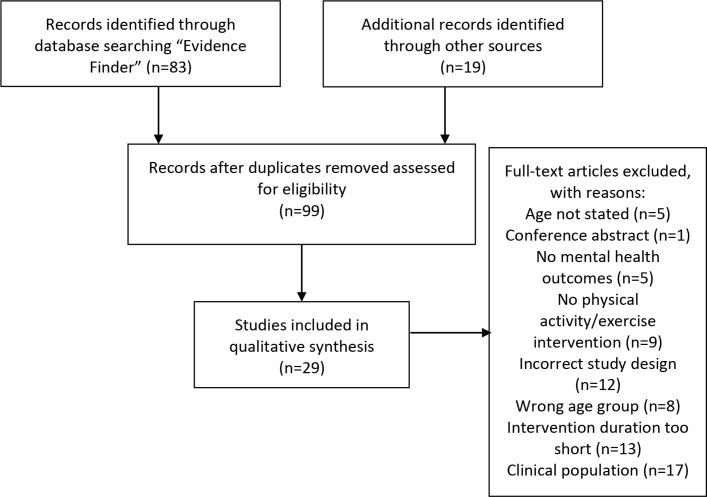
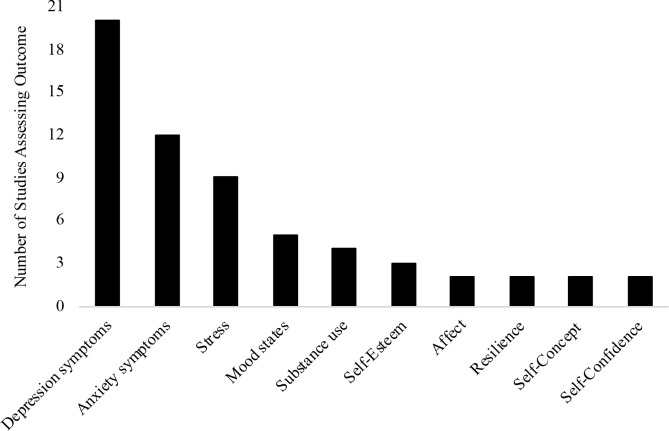
- The review included 29 studies (the abstract says 30 publications); 20 assessed depression symptoms, 12 anxiety symptoms, 9 stress, and 5 mood states.
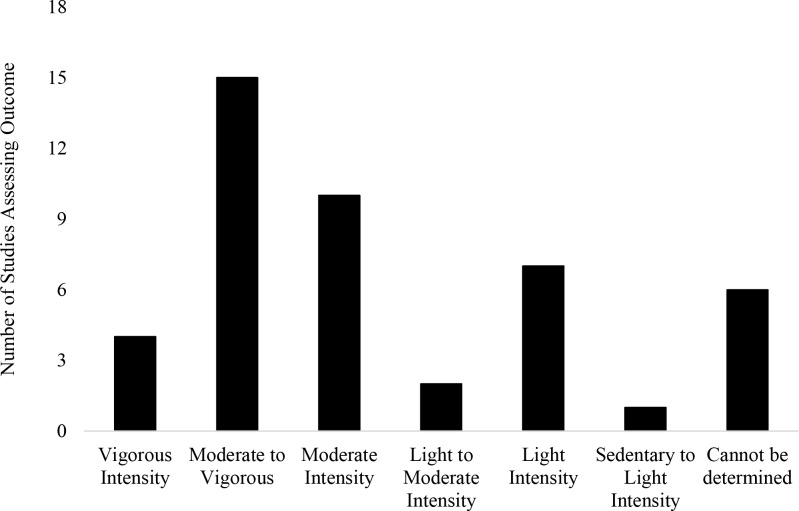
- Moderate-to-vigorous-intensity interventions showed beneficial effects for depression in 83% (5/6) of studies and for anxiety in 66% (4/6); light-intensity interventions showed beneficial effects for anxiety in 75% (3/4).
- Of 8 studies recruiting participants with elevated mental disorder symptoms at baseline, 5 demonstrated reductions in depression symptoms or high substance use; of 22 studies not recruiting on elevated symptoms, 17 showed improvements in at least one mental health outcome.
- Only 12 studies provided sufficient information to confidently assess intervention intensity, and the authors conclude that robust research on PA/exercise for mental health promotion and indicated prevention in young people is lacking.
Methods
- Scoping review conducted per PRISMA-ScR and Arksey and O’Malley’s five-stage framework; no review protocol was published.
- Searches used ‘Evidence Finder’ in July 2018 (updated April 2019), plus reference-list screening; eligibility required mean age 12–25.9 years, publication 1980–2017, a PA/exercise intervention with a comparison condition, duration >3 weeks, controlled trial design, English, and at least one quantitative mental health symptom outcome.
- Data were charted descriptively and synthesized using a descriptive-analytical method focused on mental health outcome; intervention intensity was classified by objective/subjective measures where possible, and no critical appraisal of individual sources was conducted.
Limitations
- The paper states that only five studies included follow-up assessments, none assessed whether PA/exercise prevented onset of future threshold mental disorder, only nine studies used an active comparison group, and only 12 studies provided sufficient information to confidently assess intervention intensity.
- The paper also states that no quality appraisal of individual trials was undertaken, and future work should search a wider range of databases and grey literature.
- Evident from the text: the abstract reports 30 publications while the results report 29 included studies; the review is limited to studies indexed in ‘Evidence Finder’ and does not contact authors for missing intervention details.
Model-written summary. Check it against the paper before relying on it.
Integrity signals
Registry
Cites
Statistics
Figures
Verification
Claims the paper makes
6 Valid · 2 Not valid · 54 Not checked · 61 Own results and interpretations
Some cited sources support this claim and some don’t — read each source’s verdict below.
In the paper
“Moderate-to-vigorous-intensity interventions showed improvements in depression symptoms,40 47 52–55 anxiety symptoms,40 47 52 55 59 60 self-esteem40 52 and mood states.52 62”
§ Physical activity and exercise in youth mental health promotion: a scoping review > Results > Intensity of interventions
What the sources say
- Disputedcites [40] Bonhauser M, Fernandez G, Püschel K, et al Improving physical fitness and emotional well-being in adolescents of low socioeconomic status in Chile: results of a school-based controlled trial. Health Promot Int 2005; 20: 113– 22. 10.1093/heapro/dah603 15788528 sourceExperimental — accuracy not yet measured
The Outcome measures section reports no statistically significant difference in depressive symptom scores between the intervention and control groups. The paper reports improvements in anxiety and self-esteem, but not in depressive symptoms. (LLM, conf=0.90)
Checked by a reasoning model — may be wrong.
- Not checked yetcites [47] Khorvash M, Askari A, Rafiemanzelat F, et al An investigation on the effect of strength and endurance training on depression, anxiety, and C-reactive protein's inflammatory biomarker changes. J Res Med Sci 2012; 17: 1072– 6. 23833584 PMC3702091
- Not checked yetcites [52] Hilyer JC et al Physical fitness training and counseling as treatment for youthful offenders. J Couns Psychol 1982; 29: 292– 303. 10.1037/0022-0167.29.3.292 source
- Supportedcites [53] O'Dougherty M, Hearst MO, Syed M, et al Life events, perceived stress and depressive symptoms in a physical activity intervention with young adult women. Ment Health Phys Act 2012; 5: 148– 54. 10.1016/j.mhpa.2012.05.001 23189088 PMC3505451 source
The Methods describe an aerobic exercise intervention progressing from 65–70% to 80–85% of maximum heart rate. The Results report that, after adjustment for baseline symptoms and other covariates, controls had significantly higher depressive-symptom scores than intervention participants at follow-up. This supports the cited paper as an example of improvement associated with a moderate-to-vigorous-intensity intervention. (LLM, conf=0.90)
- Supportedcites [54] Robledo-Colonia AF, Sandoval-Restrepo N, Mosquera-Valderrama YF, et al Aerobic exercise training during pregnancy reduces depressive symptoms in nulliparous women: a randomised trial. J Physiother 2012; 58: 9– 15. 10.1016/S1836-9553(12)70067-X 22341377 source
The Intervention section describes aerobic exercise prescribed at moderate-to-vigorous intensity. The Effect of intervention section reports that, after three months, depressive symptoms improved significantly more in the exercise group than in the control group. The finding applies to the pregnant women studied. (LLM, conf=0.93)
- Not checked yetcites [55] Wipfli B, Landers D, Nagoshi C, et al An examination of serotonin and psychological variables in the relationship between exercise and mental health. Scand J Med Sci Sports 2011; 21: 474– 81. 10.1111/j.1600-0838.2009.01049.x 20030777 source
plainstates a cause- Asserted: passes — The authors put it forward as true.
- Checkable: passes — It can be checked against evidence.
- Load-bearing: passes — The paper’s conclusions depend on it.
- Based: passes — The paper gives a reason why it holds.
- Disputed
The cited sources support only part of this claim — read each source’s verdict below.
In the paper
“Moderate-to-vigorous-intensity interventions showed improvements in depression symptoms,40 47 52–55 anxiety symptoms,40 47 52 55 59 60 self-esteem40 52 and mood states.52 62”
§ Physical activity and exercise in youth mental health promotion: a scoping review > Results > Intensity of interventions
What the sources say
- Partly supportedcites [40] Bonhauser M, Fernandez G, Püschel K, et al Improving physical fitness and emotional well-being in adolescents of low socioeconomic status in Chile: results of a school-based controlled trial. Health Promot Int 2005; 20: 113– 22. 10.1093/heapro/dah603 15788528 sourceExperimental — accuracy not yet measured
The Outcome measures section reports a significantly greater improvement in anxiety scores in the intervention group than in controls. The Intervention condition section describes fast walking, running, jumping and sports, but also low-intensity activities; it does not establish that the intervention as a whole was moderate-to-vigorous intensity. (LLM, conf=0.82)
- Not checked yetcites [47] Khorvash M, Askari A, Rafiemanzelat F, et al An investigation on the effect of strength and endurance training on depression, anxiety, and C-reactive protein's inflammatory biomarker changes. J Res Med Sci 2012; 17: 1072– 6. 23833584 PMC3702091
- Not checked yetcites [52] Hilyer JC et al Physical fitness training and counseling as treatment for youthful offenders. J Couns Psychol 1982; 29: 292– 303. 10.1037/0022-0167.29.3.292 source
plainstates a cause- Asserted: passes — The authors put it forward as true.
- Checkable: passes — It can be checked against evidence.
- Load-bearing: unclear — It is unclear whether the paper’s conclusions depend on it.
- Based: passes — The paper gives a reason why it holds.
- Partly supported
The cited sources support only part of this claim — read each source’s verdict below.
In the paper
“There was less support for moderate-intensity interventions in reducing depression symptoms, with only two positive studies from seven39 42 and only one positive study for anxiety59 and stress59 from the four that measured these outcomes.”
§ Physical activity and exercise in youth mental health promotion: a scoping review > Results > Intensity of interventions
What the sources say
- Partly supportedcites [39] Nabkasorn C, Miyai N, Sootmongkol A, et al Effects of physical exercise on depression, neuroendocrine stress hormones and physiological fitness in adolescent females with depressive symptoms. Eur J Public Health 2006; 16: 179– 84. 10.1093/eurpub/cki159 16126743 sourceExperimental — accuracy not yet measured
The Results report a significant reduction in depressive symptoms after jogging, so this paper supports counting it as a positive study. The Intervention section describes the exercise as mild intensity, not moderate intensity; as a single trial, it also does not establish the citing paper’s two-of-seven tally. (LLM, conf=0.86)
- Partly supportedcites [42] Melnyk BM, Jacobson D, Kelly S, et al Promoting healthy lifestyles in high school adolescents: a randomized controlled trial. Am J Prev Med 2013; 45: 407– 15. 24050416 PMC4285557 sourceExperimental — accuracy not yet measured
The Results (Immediate Post-intervention Outcomes and 6-Month Post-Intervention Outcomes) report no significant difference in depression symptoms between the COPE and Healthy Teens groups, consistent with limited evidence of benefit in this trial. This paper does not provide the claimed tally of two positive studies out of seven or classify interventions by moderate intensity. (LLM, conf=0.83)
plain- Asserted: passes — The authors put it forward as true.
- Checkable: passes — It can be checked against evidence.
- Load-bearing: passes — The paper’s conclusions depend on it.
- Based: passes — The paper gives a reason why it holds.
- Partly supported
Every source the paper cites for this claim was checked and supports it.
In the paper
“Only five studies included follow-up assessments39 42 46 50 56 and none assessed whether PA/exercise prevented the onset of future episodes of threshold mental disorder, rendering longer-term preventive effects unknown.”
§ Physical activity and exercise in youth mental health promotion: a scoping review > Discussion > Strengths and limitations
What the sources say
- Supportedcites [39] Nabkasorn C, Miyai N, Sootmongkol A, et al Effects of physical exercise on depression, neuroendocrine stress hormones and physiological fitness in adolescent females with depressive symptoms. Eur J Public Health 2006; 16: 179– 84. 10.1093/eurpub/cki159 16126743 source
The Results report that participants who exercised first had their depressive symptoms assessed again during the subsequent daily-activity phase, so this paper supports its identification as a study with a follow-up assessment. The total of five studies is the citing paper’s count, not a count this individual trial could establish. (LLM, conf=0.88)
- Supportedcites [42] Melnyk BM, Jacobson D, Kelly S, et al Promoting healthy lifestyles in high school adolescents: a randomized controlled trial. Am J Prev Med 2013; 45: 407– 15. 24050416 PMC4285557 source
The Results (6-Month Post-Intervention Outcomes) explicitly report a six-month follow-up assessment. As a citation to one of the five studies said to have follow-up assessments, this paper supports the attributed point; it does not itself establish the total of five across the citing paper's included studies. (LLM, conf=0.92)
- Supportedcites [46] Cecchini-Estrada J-A, Méndez-Giménez A, Cecchini C, et al Exercise and Epstein's target for treatment of depressive symptoms: a randomized study. Int J Clin Health Psychol 2015; 15: 191– 9. 10.1016/j.ijchp.2015.05.001 30487836 PMC6225030 source
This citation identifies the paper as one of the studies with a follow-up assessment; it is not offered as evidence for the review's count of five. The Results (Analysis of clinical efficacy) report depressive-symptom assessments at eight weeks and six months later, and the Discussion describes the six-month follow-up. (LLM, conf=0.91)
plain- Asserted: passes — The authors put it forward as true.
- Checkable: passes — It can be checked against evidence.
- Load-bearing: passes — The paper’s conclusions depend on it.
- Based: passes — The paper gives a reason why it holds.
- Supported
The sources with a verdict support this claim; the rest weren’t checked yet, have no full text we could read, or their verdicts aren’t rated yet.
In the paper
“In adults, mental health benefits are associated with lower levels of PA than required for physical health benefits,80–82 and it is possible that this relationship also holds for younger people; however, this would require additional rigorous empirical support.”
§ Physical activity and exercise in youth mental health promotion: a scoping review > Conclusions
What the sources say
- Supportedcites [80] Craike MJ, Mosely K, Browne JL, et al Associations between physical activity and depressive symptoms by weight status among adults with type 2 diabetes: results from diabetes MILES–Australia. J Phys Act Health 2017; 14: 195– 202. 10.1123/jpah.2016-0196 27918698 source
The Discussion explicitly states that population-based research has found mental-health benefits at lower PA levels than those required for physical health. It also reports that, in this study’s adults with type 2 diabetes, PA below the recommended level for physical-health benefit was associated with fewer depressive symptoms. (LLM, conf=0.92)
- Not checked yetcites [81] Vallance JK, Winkler EAH, Gardiner PA, et al Associations of objectively-assessed physical activity and sedentary time with depression: NHANES (2005–2006). Prev Med 2011; 53: 284– 8. 10.1016/j.ypmed.2011.07.013 21820466 source
- Not checked yetcites [82] Brunes A, Augestad LB, Gudmundsdottir SL Personality, physical activity, and symptoms of anxiety and depression: the HUNT study. Soc Psychiatry Psychiatr Epidemiol 2013; 48: 745– 56. 10.1007/s00127-012-0594-6 23052425 source
plainstates an association- Asserted: passes — The authors put it forward as true.
- Checkable: passes — It can be checked against evidence.
- Load-bearing: passes — The paper’s conclusions depend on it.
- Based: passes — The paper gives a reason why it holds.
- Supported
83 more claims
Create a free account to see all 123 claims and to verify the 79 references still open.
- Probably not a substantial claim. 23
- It may state two separate claims as one. 18
- The quote only partly states this claim. 2
Claims other papers make about this one
Each is checked against this paper’s own text: does it say what the citing paper says it does?
The cited source says what the claim attributes to it.
In the citing paper
“Two systematic reviews and one scoping review have approached this topic and improved our understanding of the effect of exercise on anxiety in mostly healthy, non-clinical young people and children (Carter 2021;Larun 2006;Pascoe 2020).”
From Exercise for the treatment of anxiety in children and adolescents (2022) · cites this paper as Pascoe 2020
In the citing paper
“although another possible explanation is that regular exercise may be associated with some improvement in mental well-being. [16,17].”
From Wearable devices for anxiety & depression: A scoping review (2023) · cites this paper as [17]
Self-check
Percentages, sums and reported differences re-computed from the paper’s own numbers.
Each contradiction between two passages listed here was confirmed by an independent check.
Rated minor: it would not touch a result — a value no result rests on, a p-value that stays on the same side of the significance level, or a conflict that is clerical, resolved elsewhere in the paper, or outside its own findings.
In the paper
§ Physical activity and exercise in youth mental health promotion: a scoping review > Discussion > Summary of evidence
“five demonstrated the effect of PA/exercise interventions in reducing symptoms of depression38 39 46 47 and high substance use,49”
§ Physical activity and exercise in youth mental health promotion: a scoping review > Results > Synthesis of results
“Two studies did not provide sufficient information to assess intervention intensity, and neither showed reductions in depression symptoms.36 46”
Rated minor: it would not touch a result — a value no result rests on, a p-value that stays on the same side of the significance level, or a conflict that is clerical, resolved elsewhere in the paper, or outside its own findings.
In the paper
§ Physical activity and exercise in youth mental health promotion: a scoping review > Results > Intensity of interventions
“Of the studies that examined vigorous-intensity interventions, a considerable proportion found positive outcomes on depression symptoms,35 50 51 stress43 and mood states,61 but not for anxiety.50”
§ Physical activity and exercise in youth mental health promotion: a scoping review > Results > Synthesis of results
“In the third study, a vigorous-intensity intervention did not improve depression symptoms in unemployed young men, compared with a wait-list group.51”
Rated minor: it would not touch a result — a value no result rests on, a p-value that stays on the same side of the significance level, or a conflict that is clerical, resolved elsewhere in the paper, or outside its own findings.
In the paper
§ Physical activity and exercise in youth mental health promotion: a scoping review > Results > Intensity of interventions
“Moderate-to-vigorous-intensity interventions showed improvements in depression symptoms,40 47 52–55 anxiety symptoms,40 47 52 55 59 60 self-esteem40 52 and mood states.52 62”
§ Physical activity and exercise in youth mental health promotion: a scoping review > Results > Synthesis of results
“The sixth study compared two moderate-to-vigorous-intensity interventions and found no effect of either on depression symptoms.40”
Rated minor: it would not touch a result — a value no result rests on, a p-value that stays on the same side of the significance level, or a conflict that is clerical, resolved elsewhere in the paper, or outside its own findings.
In the paper
§ Physical activity and exercise in youth mental health promotion: a scoping review > Results > Synthesis of results
“| Moderate-intensity intervention | 28% (n=2 out of 7)39 42 | 25% (n=1 out of 4)59 | 33% (n=1 out of 3)59 | 0% (n=0 out of 2) |”
§ Physical activity and exercise in youth mental health promotion: a scoping review > Results > Synthesis of results
“One study of a moderate-intensity intervention found that it decreased stress in adolescents, compared with no intervention,61 and a further three did not specify intervention intensity but were likely moderate.43 57 59 In one of these, both the moderate-intensity intervention and the psychological treatment condition decreased stress in university students, compared with no intervention, as stated above.59”
Rated minor: it would not touch a result — a value no result rests on, a p-value that stays on the same side of the significance level, or a conflict that is clerical, resolved elsewhere in the paper, or outside its own findings.
In the paper
“Eight studies included young people with elevated mental disorder symptoms at baseline, including anxiety sensitivity,45 anxiety or depression symptoms,37–39 46 47 or high substance use,48 49 and the remaining 22 involved young people without mental health symptoms.”
§ Physical activity and exercise in youth mental health promotion: a scoping review > Results > Characteristics of sources of evidence
Reported 29 · recomputed 30
2 more findings
Create a free account to see every finding of this check.
Citations
Cites
Ryan, R. M., & Deci, E. L. (2000) · American Psychologist · doi:10.1037//0003-066x.55.1.68 · Cited by 54,599
PRISMA Extension for Scoping Reviews (PRISMA-ScR): Checklist and Explanation
Tricco, A. C., Lillie, E., Zarin, W., O'Brien, K. K., Colquhoun, H., Levac, D., Moher, D., Peters, M. D. J., Horsley, T., Weeks, L., et al. (2018) · Annals of Internal Medicine · doi:10.7326/m18-0850 · Cited by 43,565
Scoping studies: towards a methodological framework
Arksey, H., & O'Malley, L. (2005) · International Journal of Social Research Methodology · doi:10.1080/1364557032000119616 · Cited by 36,742
The structure of psychological well-being revisited.
Ryff, C. D., & Keyes, C. L. M. (1995) · Journal of Personality and Social Psychology · doi:10.1037//0022-3514.69.4.719 · Cited by 10,285
The Physical Activity Guidelines for Americans
Piercy, K. L., Troiano, R. P., Ballard, R. M., Carlson, S. A., Fulton, J. E., Galuska, D. A., George, S. M., & Olson, R. D. (2018) · JAMA · doi:10.1001/jama.2018.14854 · Cited by 9,755
Garber, C. E., Blissmer, B., Deschenes, M. R., Franklin, B. A., Lamonte, M. J., Lee, I.-M., Nieman, D. C., & Swain, D. P. (2011) · Medicine & Science in Sports & Exercise · doi:10.1249/mss.0b013e318213fefb · Cited by 9,319
(1985) · Europe PMC (PubMed Central) · Cited by 9,143
Compendium of physical activities: an update of activity codes and MET intensities
AINSWORTH, B. E., HASKELL, W. L., WHITT, M. C., IRWIN, M. L., SWARTZ, A. M., STRATH, S. J., O???BRIEN, W. L., BASSETT, D. R., SCHMITZ, K. H., EMPLAINCOURT, P. O., et al. (2000) · Medicine & Science in Sports & Exercise · doi:10.1097/00005768-200009001-00009 · Cited by 8,497
Moral Identity and Developmental Theory
Lapsley, D. (2015) · Human Development · doi:10.1159/000435926 · Cited by 3,819
Age of onset of mental disorders: a review of recent literature
Kessler, R. C., Amminger, G. P., Aguilar-Gaxiola, S., Alonso, J., Lee, S., & ??st??n, T. B. (2007) · Current Opinion in Psychiatry · doi:10.1097/yco.0b013e32816ebc8c · Cited by 3,457
Research works printed but not linked: 3
- Bull FtEWG Physical activity guidelines in the U.K. review and recommendations. Loughborough University, 2010.
- Aras D, Ewert AW The effects of eight weeks sport rock climbing training on anxiety. Acta Medica Mediterranea 2016; 32: 223– 30.
- Berger BG, Friedman E Comparison of jogging, the relaxation response, and group interaction for stress reduction. J Sport Exerc Psychol 1988; 10: 431– 47. 10.1123/jsep.10.4.431 · DOI · Paper page
Cited by
Items 301–400 of 413
Masini, A., Sanmarchi, F., & Dallolio, L. (2024) · Elsevier eBooks · doi:10.1016/b978-0-323-95650-5.00006-9
Nurrochmah, S., Supriyadi, S., & Pebriani, L. N. (2023) · Gelanggang Pendidikan Jasmani Indonesia/Gelanggang · doi:10.17977/um040v7i2p134-143
Sabourin, C., Turgeon, S., & Camiré, M. (2024) · Research Square · doi:10.21203/rs.3.rs-4669837/v1
Efstratopoulou, M., Habeeb, H., Abdulla, J. O., & Shen, D. (2024) · Advances in educational marketing, administration, and leadership book series · doi:10.4018/979-8-3693-5325-7.ch005
Bai, D., Hashim, A. H. M., Chen, Z., & Xu, M. (2024) · Retos · doi:10.47197/retos.v62.109473
“Nevertheless, Pascoe et al. (2020) suggested that moderate-to-vigorous-intensity and light-intensity interventions may reduce anxiety symptoms.”
BackgroundLeisure Satisfaction as a Predictor of Job Satisfaction and Performance Among Male Police OfficersPreprint
Akçakese, A., Tükel, Y., Demirel, M., & Çalış, M. (2024) · Research Square · doi:10.21203/rs.3.rs-5408150/v1 · Cited by 1
Investigation of Physical Activity and Barriers Of High School Students
APAYDIN, M. B., Süel, E., & Atici, A. R. (2024) · Spor Eğitim Dergisi · doi:10.55238/seder.1587383
Suzanna, S., Haryanto, D., Yuniza, Y., Bustam, I. G., & Faizal, K. M. (2024) · JURNAL KREATIVITAS PENGABDIAN KEPADA MASYARAKAT (PKM) · doi:10.33024/jkpm.v8i1.17908
Correlation Between Mental Health, Physical Activity And Sleep Quality In College Going Students
Haripriya, S., Roshan, P., & Um, A. A. (2024) · African Journal of Biomedical Research · doi:10.53555/ajbr.v27i4s.4770
Wahyudiansyah, R., Yudiana, Y., & Mahendra, A. (2022) · JURNAL ILMU KEOLAHRAGAAN · doi:10.24114/jik.v21i1.34456
Moreira, O. M. (2025) · Revista Chilena de Rehabilitación y Actividad Física · doi:10.32457/reaf1.2817
Chekuri, S., Siddiqui, A., & Boron, J. B. (2025) · Psychology International · doi:10.3390/psycholint7020054
The No Limits project: a pilot experience for promoting sports activities among gifted youth
Marcén, C., Urriés-López, B., Estevan, M. L. R., & García-Giménez, A. (2025) · Journal of Sport and Health Research · doi:10.58727/jshr.114100 · Cited by 1
Sindiani, M., Hamuda, Y., & Hutzler, Y. S. (2025) · Baltic Journal of Sport and Health Sciences · doi:10.33607/bjshs.v2i135.1615
Zahra, Z. F., Sumpena, A., & Jajat Darajat, K. N. (2025) · Jurnal Pedagogik Olahraga · doi:10.24114/jpor.v11i1.67578
Physical activity interventions for adolescent suicide ideation and behavior: a rapid review
Bailey, R. P., Samsudin, N., Ríes, F., & Fernandez, J. A. (2025) · International Journal of Public Health Science (IJPHS) · doi:10.11591/ijphs.v14i3.25128
Demirdağ, B., & Aliyev, R. (2025) · Psychological Reports · doi:10.1177/00332941251365240
Uwineza, T., & Iyamuremye, J. D. (2025) · Global Journal of Health Ethics · doi:10.63101/gjhe.v1i3.025
Psychosocial profile of adolescents at a community-based urban boxing and mindfulness programme
Tripp, J. L., Marcus, F., & Marais, B. (2025) · African Journal for Physical Activity and Health Sciences (AJPHES) · doi:10.37597/ajphes.2025.31.2.1
Logan, N., Morgan, A. J., Ross, A., Tsiamis, E., & Reavley, N. J. (2025) · Journal of Prevention · doi:10.1007/s10935-025-00872-9
“Similar small effects on mental health symptoms have been reported in other exercise-based mental health promotion interventions for the general population across diverse age groups (Pascoe et al., 2020; Rosenbaum & Sherrington, 2011 ).”
Bennett, R., & Atkinson, C. (2025) · Pastoral Care in Education · doi:10.1080/02643944.2025.2554601
Iranmanesh, A., Pourranjbar, M., Pourranjbar, S., Soveini, F. M., Pourranjbar, S., & Rahimizadeh, M. (2025) · Majallah-i dānishgāh-i ̒ulum-i pizishkī-i Kirmān. · doi:10.34172/jkmu.4017
Participação esportiva e níveis de ansiedade, estado e traço em adolescentes
Soares, V. D. S., & Pinto, J. C. B. D. L. (2025) · Caderno de Educação Física e Esporte · doi:10.36453/cefe.2025.35234
Personalidad y emociones en el trastorno del juego patológico y de otras adicciones
González, D. B. (2025) · Repositorio Institucional de la Universidad de Burgos (University of Burgos) · doi:10.36443/10259/11079
Physical Activity Applied to Learning and Psycho-social Variables in Young People
Ruiz‐Ariza, A., LOUREIRO, V., García, J. E. M., & Sibold, J. (2025) · Frontiers research topics · doi:10.3389/978-2-8325-7140-8
Influência do comportamento sedentário na prática de atividade física em mulheres climatéricas
Freitas, R. F., Fonseca, A. A., De Carvalho Braule Pinto, A. L., & Rocha, J. S. B. (2022) · Scientific Repository of Open Access of Portugal (RCAAP) · doi:10.6063/motricidade.26937
Newman, H., & Brady, L. (2023) · University of Hertfordshire Research Archive (University of Hertfordshire) · doi:10.18745/pb.26334
Mawer, T., Kent, K., Williams, A. D., McGowan, C. J., Murray, S. L., Bird, M.-L., Hardcastle, S., & Bridgman, H. (2022) · Figshare · doi:10.6084/m9.figshare.20098265
Draper, C. E., Cook, C. J., Redinger, S., Rochat, T., Prioreschi, A., Rae, D. E., Ware, L. J., Lye, S., & Norris, S. A. (2022) · Figshare · doi:10.6084/m9.figshare.20291007
Slekiene, J., Chidziwisano, K., & Tilley, E. (2024) · Figshare · doi:10.6084/m9.figshare.25200620
Additional file 1 of Infusing wellness opportunities into integrated youth services
Glowacki, K., Affolder, J., Macnab, B., Ewert, A., Tee, K. A., Wenger, M., Chan, G., Mathias, S., & Barbic, S. (2024) · Figshare · doi:10.6084/m9.figshare.26594192
Mawer, T., Kent, K., Williams, A. D., McGowan, C. J., Murray, S. L., Bird, M.-L., Hardcastle, S., & Bridgman, H. (2022) · Figshare · doi:10.6084/m9.figshare.20098262
Ganem, F. (2024) · Tesis Doctorals en Xarxa (Consorci de Serveis Universitaris de Catalunya)
Matorras Alonso, P. (2024) · Buleria (Universidad de León)
Designing Knowledge Economies for Disaster Resilience : Case Studies from the African Diaspora
Waldron-Moore, P. (2024) · BiblioBoard Library Catalog (Open Research Library)
Korkeakouluopiskelijoiden fyysinen aktiivisuus ja mielenterveysoireilu koronapandemian aikana
Appelqvist‐Schmidlechner, K., Kangasniemi, A. M., Ikonen, J., Lahti, J., & Parikka, S. (2025) · Theseus (Ammattikorkeakoulujen) · Cited by 7
Mäkinen, R. (2023) · Jyväskylä University Digital Archive (University of Jyväskylä)
Shepherd, K. (2023) · Massey Research Online (Massey University) · Cited by 1
Chattha, H. (2023) · Brock University Digital Repository (Brock University)
A systemic, mixed-method exploration of resilience factors for rural indigenous youth
Klassen, G. A. H. (2023) · eScholarship@McGill (McGill) · doi:10.82308/52173
Exploring Acute Low Back Pain: Connections Between Neuroscience, Biomechanics, and Psychology
Parolini, F. C. S. (2025) · Portuguese National Funding Agency for Science, Research and Technology (RCAAP Project by FCT)
Cowdrey, K. (2025) · Lincoln (University of Nebraska)
(2025) · Frontiers research topics · doi:10.3389/978-2-8325-6613-8
Lifelong influence of sports and physical activity
(2025) · Frontiers research topics · doi:10.3389/978-2-8325-6371-7
Hampel, K., Ucieklak-Jez, P., Bem, A., Kubicka, J., Wolny, J., & Івашко, О. (2025) · EUROPEAN RESEARCH STUDIES JOURNAL · doi:10.35808/ersj/4186
Matroud, M., & Halvarsson, Z. (2025) · Diva portal (Dalarna University Library)
Workload, chronic pain, and mental health among university teachers in ChinaPreprint
Wang, X., Fu, K., zhang, Y., & Tang, C. (2025) · Research Square · doi:10.21203/rs.3.rs-7601292/v1
Crack, D. (2025) · Carleton University's Institutional Repository (MacOdrum Library, Carleton University) · doi:10.22215/etd/2025-16755
Borelli, J. L., Russo, L. N., Kazmierski, K. F. M., Zhou, E., Rowley, C., & Garcia, J. (2026) · Journal of Latinx Psychology · doi:10.1037/lat0000312
Ergenlerde psikolojik iyi oluş ve durumluk kaygı arasındaki ilişkide sakin benliğin düzenleyici rolü
Demirdağ, B. (2024) · Hasan Kalyoncu University Institutional Repository (Hasan Kalyoncu University)
Puma, J. P. L., & Ponluisa, D. A. P. (2025) · Universidad Politécnica Salesiana Repositorio Digital (Universidad Politécnica Salesiana)
Physical exercise and loneliness in higher education: a national study of Norwegian students
Blindheim, S., Johnsen, T. L., Grasdalsmoen, M., Sivertsen, B., & Eriksen, H. R. (2026) · BMC Psychology · doi:10.1186/s40359-026-04183-4 · Cited by 1
“Physical exercise is a low-cost intervention with minimal side effects and has shown promising benefits for mental health outcomes in young people [21].”
Awareness of Physical Activity as an Antidepressant Mechanism: A Literature Review
Pratama, A. D., & Nisrinaa, N. N. (2025) · Jurnal Kesehatan Vokasional · doi:10.22146/jkesvo.106242
Gomes, R., Furtado, G. E., Pinto, J. R., Dias, G., & Mendes, R. (2024) · Scientific Repository of Open Access of Portugal (RCAAP) · doi:10.6063/motricidade.38881
Luo, Y., Chen, J., Yang, Q., Li, X., Li, M., Dong, W., Chen, J., & Lu, C. (2026) · Frontiers in Psychology · doi:10.3389/fpsyg.2026.1733845
“This pattern is consistent with international evidence indicating that intermittent physical activity can enhance emotional well-being and reduce anxiety in children and adolescents (Lubans et al., 2016; Pascoe et al., 2020; Singh et al., 2025).”
deJonge, M. L. (2025) · TSpace (University of Toronto)
Edukasi Olahraga dan Gaya Hidup Sehat bagi Siswa dan Guru di SMKS YPK Betlehem Papua
Ita, S., Sutoro, S., Asri, A., Kardi, I. S., & Mubarak, M. F. (2026) · ABDIKAN Jurnal Pengabdian Masyarakat Bidang Sains dan Teknologi · doi:10.55123/abdikan.v5i1.7645
“Olahraga juga memiliki dampak positif terhadap kesehatan mental, seperti mengurangi stres, meningkatkan suasana hati, dan meningkatkan kepercayaan diri (Pascoe et al., 2020).”
Roldán-Ramos, F. J., Sillero, J. D. D. B., Rodríguez-Cano, A., & Raya-González, J. (2026) · Healthcare · doi:10.3390/healthcare14070960
“…defined as a psychobiological state characterized by feelings of tiredness, exhaustion, reduced energy, or a diminished desire to continue with a task [3], not only impairs academic performance but is also linked to health risks of psychological disorders such as anxiety and depression [4].”
Skučaitė, P. (2022) · Lithuanian University of Health Sciences · Cited by 1
Association of Dietary Acid Load and Mental Health in Adults: Pilot Study
Atabılen, B. (2026) · Süleyman Demirel Üniversitesi Sağlık Bilimleri Dergisi · doi:10.22312/sdusbed.1596235
Mommaerts, K., Johnson, R., Varner, S. J., & Marchese, N. (2026) · Sports · doi:10.3390/sports14050166
“Physical activity has been increasingly recognized as an important protective factor for youth mental health, offering both physiological and psychosocial benefits that may support emotional well-being during adolescence [4].”
Łopatka, M., Bronikowski, M., Bronikowska, M., Korcz, A., Khorkova, M., Adamczak, D., & Krzysztoszek, J. (2026) · Biomedical Human Kinetics · doi:10.2478/bhk-2026-0011
“Allowing participants to choose activity type and intensity enhances tolerance and engagement, even at higher intensities (Pascoe et al., 2020).”
InfluentialLarsson, E. H., & Westergren, A. (2026) · Journal of research in nursing · doi:10.1177/17449871261442365
Michalski, N., & Chmielarska, A. (2026) · Health Problems of Civilization · doi:10.29316/hpc/221195
“Meta-analyses of randomized controlled trials confirm the significant effect of exercise interventions on reducing the severity of depressive symptoms [6-8, 17, 18 ].”
InfluentialZhang, B.-H., Wen, L. S., Wu, T., & Chen, Z. (2026) · International journal of Rural Development Environment and Health Research · doi:10.22161/ijreh.9.2.3
“Engaging in regular physical activity has been shown to serve as a vital protective buffer, fostering positive mental health, improving sleep quality, and alleviating depressive symptoms through neurobiological and psychosocial mechanisms[12,13].”
Motives for engaging in physical activity of adolescents
Grže, R. (2026) · Repository of the University of Primorsk (University of Primorska)
Rifat, A. H., Bithi, I. J., & Hasan, M. (2026) · Research Square · doi:10.21203/rs.3.rs-9315300/v1
Blindheim, S., Johnsen, T. L., Gundersen, H. S., Opsahl, J., Fyhn, T., & Eriksen, H. R. (2026) · Journal of Further and Higher Education · doi:10.1080/0309877x.2026.2675458
“Although interventions addressing various health risk behaviours (e.g. alcohol and drug use) are essential for improving students’ health (Whatnall et al. 2020), PA offers an accessible, low-cost alternative with minimal side effects (Pascoe et al. 2020).”
Grao‐Cruces, A., Camiletti‐Moirón, D., & Sánchez‐Oliva, D. (2026) · doi:10.36006/09768-1
Rahmatika, Q. T., Aditya, R. S., Santi, N. F., Solikhah, F. K., Ramadhan, M. P., Masfi, A., Afiani, N., Evi, N., Laili, N. R., & Mutairi, R. I. A. (2026) · Discover Public Health · doi:10.1186/s12982-026-02004-y
Exam anxiety and associated factors among Palestinian university students
Abuiram, I., Mohamed, N. H., & Palasuberniam, P. (2026) · Frontiers in Psychology · doi:10.3389/fpsyg.2026.1776930
“Additionally, these findings align with research by Pascoe et al. (2020), which found a link between physical activity and improved mental health outcomes.”
Dillon, G., Naumann, F., Mullins, R., Bentley, S., Steggell, J., & Holland, J. (2026) · International Journal of Inclusive Education · doi:10.1080/13603116.2026.2666654
Edukasi Fisioterapi untuk Mengendalikan Emosi Remaja
Atikah, E., Rahayu, Y. S., Rahma, M., Fadilla, S., & Fauziah, A. (2025) · Jurnal Abdi Masyarakat Multidisiplin · doi:10.56127/jammu.v4i01.2779
Yılmaz, S., GÜNDEM, S., & Kara, S. B. (2026) · BMC Public Health · doi:10.1186/s12889-026-27950-9
“Among young people, PA supports healthy growth and psychological well-being but is hindered by screen time, safety concerns, and rising childhood obesity [2–4, 16–”
deJonge, M. L., Nesbitt, A. E., Darnell, S. C., Hamza, C. A., & Sabiston, C. M. (2026) · JMIR Mental Health · doi:10.2196/92076 · Cited by 1
“These results further address the limited research examining social outcomes in PA-based mental health interventions [23,34,80], suggesting that improvements may also extend to social inclusion outcomes with moderate effects.”
Roldán-Ramos, F. J., Sillero, J. D. D. B., Rodríguez-Cano, A., & Raya-González, J. (2026) · International Journal of Sport and Exercise Psychology · doi:10.1080/1612197x.2026.2687401
Hommery-Boucher, D., & Verret, C. (2026) · Apprendre et enseigner aujourd’hui Revue du Conseil pédagogique interdisciplinaire du Québec · doi:10.7202/1125831ar
Tekin, M., & Outayanik, B. (2025) · Akademisyen Kitabevi eBooks · doi:10.37609/akya.3663
Cui, T., Ariffin, R. B., & Mahaidhar, M. S. (2026) · International Journal of Research and Innovation in Social Science · doi:10.47772/ijriss.2026.100600386
EFEK FOREST WALKING TERHADAP TINGKAT SUASANA HATI MAHASISWA: ULASAN SISTEMATIS
Putri, F. F., Noviana, M., Djawas, F. A., Saragih, H. L. W., & Akbar, A. J. A. (2026) · Media Fisioterapi Politeknik Kesehatan Makassar · doi:10.32382/fis.v18i1.2109
Du, Y., Zhang, K., Wu, W. W., & Liu, M. (2026) · BMC Psychology · doi:10.21203/rs.3.rs-9877980/v1
de Souza, G. R., Assis, A. M. D. A., de Araújo, J. A., & Castro, A. D. M. (2026) · Revista Científica da Escola Estadual de Saúde Pública de Goiás *Cândido Santiago* · doi:10.65027/2447-3405.2026.1055
Khoirunnisa, A. N., & Hadiono, H. (2026) · Kinestetik Jurnal Ilmiah Pendidikan Jasmani · doi:10.33369/jk.v10i2.49868
Tarnawska, K., Strózik, A., Syguda, A., Szczesniak, A., & Matyja, W. (2026) · Quality in Sport · doi:10.12775/qs.2026.67.74361
Family and state intervention in youth gaming behaviours and effects on family relationships
Wang, D. (2026) · Enlighten: Theses (The University of Glasgow) · doi:10.5525/gla.thesis.86183
Exercise and the Mind: Exploring the Link Between Regular Physical Activity and Mental Well-Being
Exclamado, B. J., Bana-ag, S. D., Gallamaso, R. J., Berbosidad, K. D., Guevarra, G., Co, R. L., Jr., Vergara, F. A., & Taja-on, E. P. (2026) · Global Journal of Sport and Exercise Science · doi:10.63750/88xdba25
Wang, J., Chen, J.-W., Shi-jun, J., & Zhu, K. (2026) · European Journal of Pediatrics · doi:10.1007/s00431-026-07371-x
Hao, L., Ahmadd, M., & Ludin, A. F. M. (2026) · Humanities and Social Sciences Communications · doi:10.1057/s41599-026-08528-7
Young minds in distress: Exploring the global rise in youth mental health diagnoses
Chiang, H., Chien, Y., & Gau, S. S. (2026) · Molecular Psychiatry · doi:10.1038/s41380-026-03884-x
Silva, T. M. D. S., da Costa, B. G. G., dos Santos, G. C., & Neto, A. S. (2026) · Journal of Mental Health · doi:10.1080/09638237.2026.2732881
Chen, M.-J., Lee, M., Huang, J., Lee, S.-H., & Lee, S.-S. (2026) · Journal of Indian Association for Child and Adolescent Mental Health · doi:10.1177/09731342261479796
Gómez, C. A. V. (2025) · Deposito de Investigacion Universidad de Sevilla (University of Seville)
Tinch, J., Thomson, P., & Rakesh, D. (2026) · Developmental Cognitive Neuroscience · doi:10.1016/j.dcn.2026.101827
“…and better mental health (Astill et al., 2012; Biddle et al., 2019; Boelens et al., 2022; de Greeff et al., 2018; Hosker et al., 2019; Ishiguro et al., 2023; Musshafen et al., 2021; Pascoe et al., 2020; Rom ´ an-Caballero et al., 2022; Zar-azaga-Pel ´ aez et al., 2024; Zheng et al., 2025).”
Kiani, M. S., & Nazari, L. (2026) · Sport i Turystyka Środkowoeuropejskie Czasopismo Naukowe · doi:10.16926/sit.2026.03.03
“Evidence from a scoping review indicates that physical activity and exercise interventions show promising effects for youth mental health, including reduced symptoms of depression and anxiety (Pascoe et al., 2020).”
MOVIMIENTO CON SENTIDO: YOGA, EJERCICIO FÍSICO Y BIENESTAR MENTAL EN UNIVERSITARIOS
Pérez, M. Y. C., & Landgrave, G. C. (2026) · Revista Pensamiento Científico Latinoamericano
Zhao, W., Dong, G., 刘, 东., & Yan, C. (2026) · Frontiers in Public Health · doi:10.3389/fpubh.2026.1904111
“First, regular physical activity has been associated with better physical health, lower levels of stress, more positive emotional experiences, and greater subjective well-being (65, 66).”
Metadata
- Authors
- Pascoe, M., Bailey, A. P., Craike, M., Carter, T., Patten, R., Stepto, N., & Parker, A.
- Affiliations
- Peter MacCallum Cancer Centre (AU)
- The University of Melbourne (AU)
- Victoria University (AU)
- University of Nottingham (GB)
- Corresponding author
- Pascoe, Michaela
- ORCID
- Venue
- BMJ Open Sport & Exercise Medicine
- Publisher
- BMJ
- Published
- 2020-01
- Volume
- 6
- Issue
- 1
- Pages
- e000677
- ISSN
- 2055-7647 (ISSN-L)
- PMC
- PMC7010991
- OpenAlex
- W3001994494
- Cited by
- 332
- References
- 84
- Citations by year
- 2026: 46 · 2025: 53 · 2024: 61 · 2023: 67 · 2022: 43 · 2021: 44 · 2020: 17
- FWCI
- 5.48
- Type
- journal article
- Language
- en
- Open access
- gold
- doi.org
- Licence
- Locations
- BMJ Open Sport & Exercise Medicine (publishedVersion, cc-by-nc)
- PubMed Central (publishedVersion, cc-by-nc)
- PubMed (publishedVersion)
- Victoria University Research Repository (Victoria University) (submittedVersion, cc-by-nc)
- Minerva Access (University of Melbourne) (submittedVersion, cc-by)
- DOAJ (DOAJ: Directory of Open Access Journals) (submittedVersion, cc-by-sa)
- Topics
- Health Sciences › Medicine › Public Health, Environmental and Occupational Health › Physical Activity and Health
- Social Sciences › Psychology › Clinical Psychology › Child and Adolescent Psychosocial and Emotional Development
- Social Sciences › Life-span and Life-course Studies › Recreational Sport and Physical Activity
- Keywords
- physical activity, exercise intervention, youth mental health, mental health promotion, depressive symptoms, anxiety symptoms, prevention, early intervention, adolescents
About these checks
Registry, retraction, Cites and statistics results are computed, not judged, with one exception: a printed reference that no index lists is read once by a model before it counts as a citation error. Claims are extracted by a model and kept only when their quote appears verbatim in the text; each cited source is then checked, with a model’s help, for whether it says what the claim relies on. Those verdicts can be wrong — read the claim’s quote and the cited source before relying on one.
The claim verdicts this report counts are experimental: their accuracy is not yet measured.
A language model drew the claims from the paper on 2026-10-05, under version 3 of the claim definition (model deepseek-v4.1-flash, prompt extract-v3).
A second model labelled each claim on 2026-10-05 (model jev-1.13-20260917, definition revision gold-guideline-v0.2).
Cited sources are checked with a language model’s help (gpt-6-sol).
Statistics and arithmetic are recomputed, not judged.
Confidence bands are shown only for fields calibrated on our annotated test set. None is calibrated yet, so no band is shown.
What counts as a claim ›How we measure confidence ›How we check this ›
Are you an author, or do you see a problem with this page? Request a review
Data sources
Bibliographic data: Semantic Scholar, OpenAlex, Crossref.
Contains information from the Semantic Scholar Academic Graph Datasets, made available under the ODC Attribution License (ODC-BY 1.0).
Semantic Scholar’s data is described in: Kinney, R., et al. (2023). The Semantic Scholar Open Data Platform. arXiv:2301.10140.
