

Physical activity and exercise in youth mental health promotion: a scoping review
Open accessThe DOI matches its Crossref record; 82 of the 84 references it cites were found in a registry or an index; 14 of the 93 sources its claims cite were checked for support.
Abstract
Background/Aim: This scoping review examined the breadth and outcomes of controlled trials testing the effect of physical activity and exercise interventions across all mental health outcomes for mental health promotion and indicated prevention studies in young people. Methods: The literature search was conducted using ‘Evidence Finder’. Results: Thirty publications were included. Available evidence suggested that interventions of varying intensity may lead to a reduction in depression symptoms and that moderate-to-vigorous-intensity and light-intensity interventions may reduce anxiety symptoms. Effects of physical activity/exercise interventions on additional mental health outcomes were also shown; however, the number of studies was small, indicating a limited evidence base. Robust research regarding the effects of physical activity/exercise on mental health promotion and as an indicated prevention strategy in young people is lacking. Conclusion: The available evidence suggests that physical activity/exercise is a promising mental health promotion and early intervention strategy and warrants further investigation.
Overview
CoChat Summary
TL;DR
This scoping review found that physical activity/exercise is a promising mental health promotion and early intervention strategy for young people, with the strongest signals for reducing depression and anxiety symptoms. However, the evidence base is limited, heterogeneous, and lacks robust long-term prevention data.
Key findings
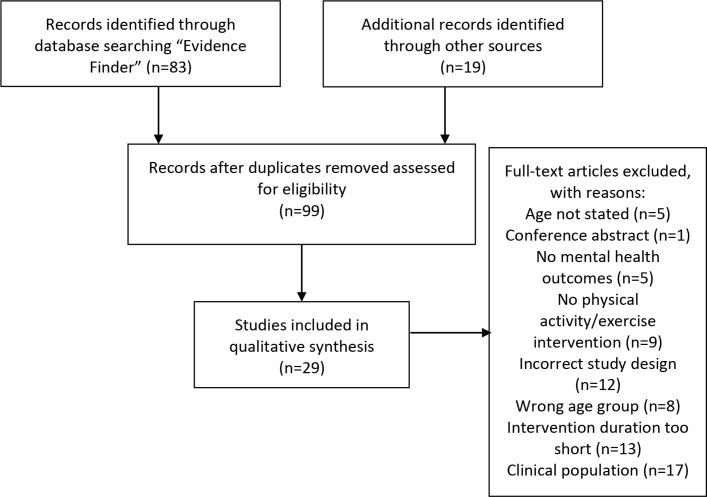
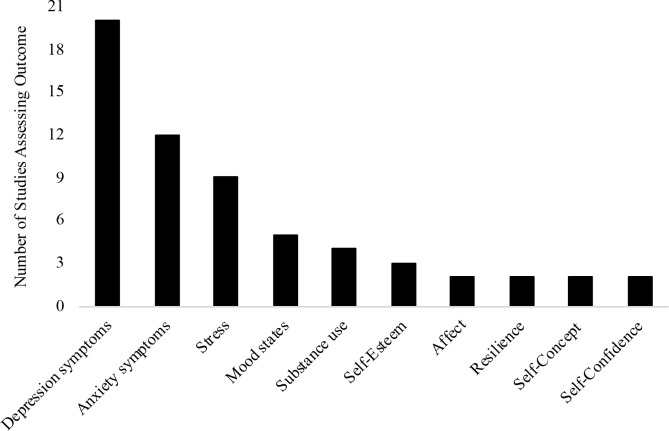
- The review included 29 studies (the abstract says 30 publications); 20 assessed depression symptoms, 12 anxiety symptoms, 9 stress, and 5 mood states.
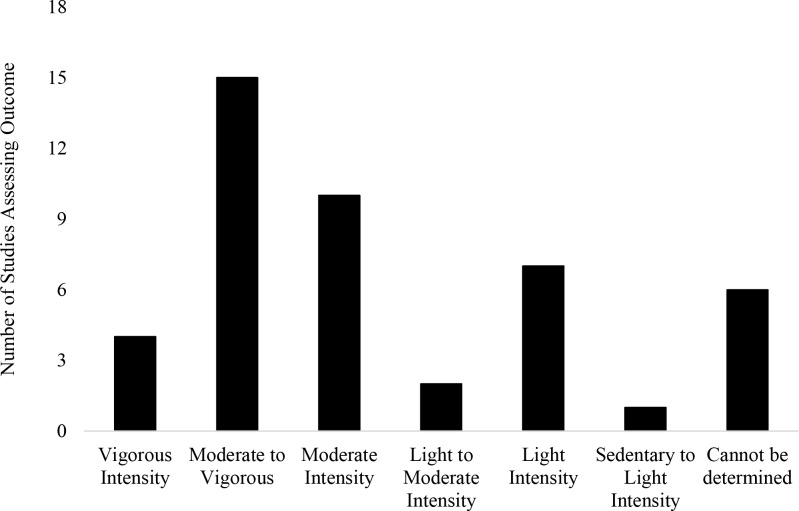
- Moderate-to-vigorous-intensity interventions showed beneficial effects for depression in 83% (5/6) of studies and for anxiety in 66% (4/6); light-intensity interventions showed beneficial effects for anxiety in 75% (3/4).
- Of 8 studies recruiting participants with elevated mental disorder symptoms at baseline, 5 demonstrated reductions in depression symptoms or high substance use; of 22 studies not recruiting on elevated symptoms, 17 showed improvements in at least one mental health outcome.
- Only 12 studies provided sufficient information to confidently assess intervention intensity, and the authors conclude that robust research on PA/exercise for mental health promotion and indicated prevention in young people is lacking.
Methods
- Scoping review conducted per PRISMA-ScR and Arksey and O’Malley’s five-stage framework; no review protocol was published.
- Searches used ‘Evidence Finder’ in July 2018 (updated April 2019), plus reference-list screening; eligibility required mean age 12–25.9 years, publication 1980–2017, a PA/exercise intervention with a comparison condition, duration >3 weeks, controlled trial design, English, and at least one quantitative mental health symptom outcome.
- Data were charted descriptively and synthesized using a descriptive-analytical method focused on mental health outcome; intervention intensity was classified by objective/subjective measures where possible, and no critical appraisal of individual sources was conducted.
Limitations
- The paper states that only five studies included follow-up assessments, none assessed whether PA/exercise prevented onset of future threshold mental disorder, only nine studies used an active comparison group, and only 12 studies provided sufficient information to confidently assess intervention intensity.
- The paper also states that no quality appraisal of individual trials was undertaken, and future work should search a wider range of databases and grey literature.
- Evident from the text: the abstract reports 30 publications while the results report 29 included studies; the review is limited to studies indexed in ‘Evidence Finder’ and does not contact authors for missing intervention details.
Model-written summary. Check it against the paper before relying on it.
Integrity signals
Registry
Cites
Statistics
Figures
Verification
Claims the paper makes
6 Valid · 2 Not valid · 54 Not checked · 61 Own results and interpretations
Some cited sources support this claim and some don’t — read each source’s verdict below.
In the paper
“Moderate-to-vigorous-intensity interventions showed improvements in depression symptoms,40 47 52–55 anxiety symptoms,40 47 52 55 59 60 self-esteem40 52 and mood states.52 62”
§ Physical activity and exercise in youth mental health promotion: a scoping review > Results > Intensity of interventions
What the sources say
- Disputedcites [40] Bonhauser M, Fernandez G, Püschel K, et al Improving physical fitness and emotional well-being in adolescents of low socioeconomic status in Chile: results of a school-based controlled trial. Health Promot Int 2005; 20: 113– 22. 10.1093/heapro/dah603 15788528 sourceExperimental — accuracy not yet measured
The Outcome measures section reports no statistically significant difference in depressive symptom scores between the intervention and control groups. The paper reports improvements in anxiety and self-esteem, but not in depressive symptoms. (LLM, conf=0.90)
Checked by a reasoning model — may be wrong.
- Not checked yetcites [47] Khorvash M, Askari A, Rafiemanzelat F, et al An investigation on the effect of strength and endurance training on depression, anxiety, and C-reactive protein's inflammatory biomarker changes. J Res Med Sci 2012; 17: 1072– 6. 23833584 PMC3702091
- Not checked yetcites [52] Hilyer JC et al Physical fitness training and counseling as treatment for youthful offenders. J Couns Psychol 1982; 29: 292– 303. 10.1037/0022-0167.29.3.292 source
- Supportedcites [53] O'Dougherty M, Hearst MO, Syed M, et al Life events, perceived stress and depressive symptoms in a physical activity intervention with young adult women. Ment Health Phys Act 2012; 5: 148– 54. 10.1016/j.mhpa.2012.05.001 23189088 PMC3505451 source
The Methods describe an aerobic exercise intervention progressing from 65–70% to 80–85% of maximum heart rate. The Results report that, after adjustment for baseline symptoms and other covariates, controls had significantly higher depressive-symptom scores than intervention participants at follow-up. This supports the cited paper as an example of improvement associated with a moderate-to-vigorous-intensity intervention. (LLM, conf=0.90)
- Supportedcites [54] Robledo-Colonia AF, Sandoval-Restrepo N, Mosquera-Valderrama YF, et al Aerobic exercise training during pregnancy reduces depressive symptoms in nulliparous women: a randomised trial. J Physiother 2012; 58: 9– 15. 10.1016/S1836-9553(12)70067-X 22341377 source
The Intervention section describes aerobic exercise prescribed at moderate-to-vigorous intensity. The Effect of intervention section reports that, after three months, depressive symptoms improved significantly more in the exercise group than in the control group. The finding applies to the pregnant women studied. (LLM, conf=0.93)
- Not checked yetcites [55] Wipfli B, Landers D, Nagoshi C, et al An examination of serotonin and psychological variables in the relationship between exercise and mental health. Scand J Med Sci Sports 2011; 21: 474– 81. 10.1111/j.1600-0838.2009.01049.x 20030777 source
plainstates a cause- Asserted: passes — The authors put it forward as true.
- Checkable: passes — It can be checked against evidence.
- Load-bearing: passes — The paper’s conclusions depend on it.
- Based: passes — The paper gives a reason why it holds.
- Disputed
The cited sources support only part of this claim — read each source’s verdict below.
In the paper
“Moderate-to-vigorous-intensity interventions showed improvements in depression symptoms,40 47 52–55 anxiety symptoms,40 47 52 55 59 60 self-esteem40 52 and mood states.52 62”
§ Physical activity and exercise in youth mental health promotion: a scoping review > Results > Intensity of interventions
What the sources say
- Partly supportedcites [40] Bonhauser M, Fernandez G, Püschel K, et al Improving physical fitness and emotional well-being in adolescents of low socioeconomic status in Chile: results of a school-based controlled trial. Health Promot Int 2005; 20: 113– 22. 10.1093/heapro/dah603 15788528 sourceExperimental — accuracy not yet measured
The Outcome measures section reports a significantly greater improvement in anxiety scores in the intervention group than in controls. The Intervention condition section describes fast walking, running, jumping and sports, but also low-intensity activities; it does not establish that the intervention as a whole was moderate-to-vigorous intensity. (LLM, conf=0.82)
- Not checked yetcites [47] Khorvash M, Askari A, Rafiemanzelat F, et al An investigation on the effect of strength and endurance training on depression, anxiety, and C-reactive protein's inflammatory biomarker changes. J Res Med Sci 2012; 17: 1072– 6. 23833584 PMC3702091
- Not checked yetcites [52] Hilyer JC et al Physical fitness training and counseling as treatment for youthful offenders. J Couns Psychol 1982; 29: 292– 303. 10.1037/0022-0167.29.3.292 source
plainstates a cause- Asserted: passes — The authors put it forward as true.
- Checkable: passes — It can be checked against evidence.
- Load-bearing: unclear — It is unclear whether the paper’s conclusions depend on it.
- Based: passes — The paper gives a reason why it holds.
- Partly supported
The cited sources support only part of this claim — read each source’s verdict below.
In the paper
“There was less support for moderate-intensity interventions in reducing depression symptoms, with only two positive studies from seven39 42 and only one positive study for anxiety59 and stress59 from the four that measured these outcomes.”
§ Physical activity and exercise in youth mental health promotion: a scoping review > Results > Intensity of interventions
What the sources say
- Partly supportedcites [39] Nabkasorn C, Miyai N, Sootmongkol A, et al Effects of physical exercise on depression, neuroendocrine stress hormones and physiological fitness in adolescent females with depressive symptoms. Eur J Public Health 2006; 16: 179– 84. 10.1093/eurpub/cki159 16126743 sourceExperimental — accuracy not yet measured
The Results report a significant reduction in depressive symptoms after jogging, so this paper supports counting it as a positive study. The Intervention section describes the exercise as mild intensity, not moderate intensity; as a single trial, it also does not establish the citing paper’s two-of-seven tally. (LLM, conf=0.86)
- Partly supportedcites [42] Melnyk BM, Jacobson D, Kelly S, et al Promoting healthy lifestyles in high school adolescents: a randomized controlled trial. Am J Prev Med 2013; 45: 407– 15. 24050416 PMC4285557 sourceExperimental — accuracy not yet measured
The Results (Immediate Post-intervention Outcomes and 6-Month Post-Intervention Outcomes) report no significant difference in depression symptoms between the COPE and Healthy Teens groups, consistent with limited evidence of benefit in this trial. This paper does not provide the claimed tally of two positive studies out of seven or classify interventions by moderate intensity. (LLM, conf=0.83)
plain- Asserted: passes — The authors put it forward as true.
- Checkable: passes — It can be checked against evidence.
- Load-bearing: passes — The paper’s conclusions depend on it.
- Based: passes — The paper gives a reason why it holds.
- Partly supported
Every source the paper cites for this claim was checked and supports it.
In the paper
“Only five studies included follow-up assessments39 42 46 50 56 and none assessed whether PA/exercise prevented the onset of future episodes of threshold mental disorder, rendering longer-term preventive effects unknown.”
§ Physical activity and exercise in youth mental health promotion: a scoping review > Discussion > Strengths and limitations
What the sources say
- Supportedcites [39] Nabkasorn C, Miyai N, Sootmongkol A, et al Effects of physical exercise on depression, neuroendocrine stress hormones and physiological fitness in adolescent females with depressive symptoms. Eur J Public Health 2006; 16: 179– 84. 10.1093/eurpub/cki159 16126743 source
The Results report that participants who exercised first had their depressive symptoms assessed again during the subsequent daily-activity phase, so this paper supports its identification as a study with a follow-up assessment. The total of five studies is the citing paper’s count, not a count this individual trial could establish. (LLM, conf=0.88)
- Supportedcites [42] Melnyk BM, Jacobson D, Kelly S, et al Promoting healthy lifestyles in high school adolescents: a randomized controlled trial. Am J Prev Med 2013; 45: 407– 15. 24050416 PMC4285557 source
The Results (6-Month Post-Intervention Outcomes) explicitly report a six-month follow-up assessment. As a citation to one of the five studies said to have follow-up assessments, this paper supports the attributed point; it does not itself establish the total of five across the citing paper's included studies. (LLM, conf=0.92)
- Supportedcites [46] Cecchini-Estrada J-A, Méndez-Giménez A, Cecchini C, et al Exercise and Epstein's target for treatment of depressive symptoms: a randomized study. Int J Clin Health Psychol 2015; 15: 191– 9. 10.1016/j.ijchp.2015.05.001 30487836 PMC6225030 source
This citation identifies the paper as one of the studies with a follow-up assessment; it is not offered as evidence for the review's count of five. The Results (Analysis of clinical efficacy) report depressive-symptom assessments at eight weeks and six months later, and the Discussion describes the six-month follow-up. (LLM, conf=0.91)
plain- Asserted: passes — The authors put it forward as true.
- Checkable: passes — It can be checked against evidence.
- Load-bearing: passes — The paper’s conclusions depend on it.
- Based: passes — The paper gives a reason why it holds.
- Supported
The sources with a verdict support this claim; the rest weren’t checked yet, have no full text we could read, or their verdicts aren’t rated yet.
In the paper
“In adults, mental health benefits are associated with lower levels of PA than required for physical health benefits,80–82 and it is possible that this relationship also holds for younger people; however, this would require additional rigorous empirical support.”
§ Physical activity and exercise in youth mental health promotion: a scoping review > Conclusions
What the sources say
- Supportedcites [80] Craike MJ, Mosely K, Browne JL, et al Associations between physical activity and depressive symptoms by weight status among adults with type 2 diabetes: results from diabetes MILES–Australia. J Phys Act Health 2017; 14: 195– 202. 10.1123/jpah.2016-0196 27918698 source
The Discussion explicitly states that population-based research has found mental-health benefits at lower PA levels than those required for physical health. It also reports that, in this study’s adults with type 2 diabetes, PA below the recommended level for physical-health benefit was associated with fewer depressive symptoms. (LLM, conf=0.92)
- Not checked yetcites [81] Vallance JK, Winkler EAH, Gardiner PA, et al Associations of objectively-assessed physical activity and sedentary time with depression: NHANES (2005–2006). Prev Med 2011; 53: 284– 8. 10.1016/j.ypmed.2011.07.013 21820466 source
- Not checked yetcites [82] Brunes A, Augestad LB, Gudmundsdottir SL Personality, physical activity, and symptoms of anxiety and depression: the HUNT study. Soc Psychiatry Psychiatr Epidemiol 2013; 48: 745– 56. 10.1007/s00127-012-0594-6 23052425 source
plainstates an association- Asserted: passes — The authors put it forward as true.
- Checkable: passes — It can be checked against evidence.
- Load-bearing: passes — The paper’s conclusions depend on it.
- Based: passes — The paper gives a reason why it holds.
- Supported
83 more claims
Create a free account to see all 123 claims and to verify the 79 references still open.
- Probably not a substantial claim. 23
- It may state two separate claims as one. 18
- The quote only partly states this claim. 2
Claims other papers make about this one
Each is checked against this paper’s own text: does it say what the citing paper says it does?
The cited source says what the claim attributes to it.
In the citing paper
“Two systematic reviews and one scoping review have approached this topic and improved our understanding of the effect of exercise on anxiety in mostly healthy, non-clinical young people and children (Carter 2021;Larun 2006;Pascoe 2020).”
From Exercise for the treatment of anxiety in children and adolescents (2022) · cites this paper as Pascoe 2020
In the citing paper
“although another possible explanation is that regular exercise may be associated with some improvement in mental well-being. [16,17].”
From Wearable devices for anxiety & depression: A scoping review (2023) · cites this paper as [17]
Self-check
Percentages, sums and reported differences re-computed from the paper’s own numbers.
Each contradiction between two passages listed here was confirmed by an independent check.
Rated minor: it would not touch a result — a value no result rests on, a p-value that stays on the same side of the significance level, or a conflict that is clerical, resolved elsewhere in the paper, or outside its own findings.
In the paper
§ Physical activity and exercise in youth mental health promotion: a scoping review > Discussion > Summary of evidence
“five demonstrated the effect of PA/exercise interventions in reducing symptoms of depression38 39 46 47 and high substance use,49”
§ Physical activity and exercise in youth mental health promotion: a scoping review > Results > Synthesis of results
“Two studies did not provide sufficient information to assess intervention intensity, and neither showed reductions in depression symptoms.36 46”
Rated minor: it would not touch a result — a value no result rests on, a p-value that stays on the same side of the significance level, or a conflict that is clerical, resolved elsewhere in the paper, or outside its own findings.
In the paper
§ Physical activity and exercise in youth mental health promotion: a scoping review > Results > Intensity of interventions
“Of the studies that examined vigorous-intensity interventions, a considerable proportion found positive outcomes on depression symptoms,35 50 51 stress43 and mood states,61 but not for anxiety.50”
§ Physical activity and exercise in youth mental health promotion: a scoping review > Results > Synthesis of results
“In the third study, a vigorous-intensity intervention did not improve depression symptoms in unemployed young men, compared with a wait-list group.51”
Rated minor: it would not touch a result — a value no result rests on, a p-value that stays on the same side of the significance level, or a conflict that is clerical, resolved elsewhere in the paper, or outside its own findings.
In the paper
§ Physical activity and exercise in youth mental health promotion: a scoping review > Results > Intensity of interventions
“Moderate-to-vigorous-intensity interventions showed improvements in depression symptoms,40 47 52–55 anxiety symptoms,40 47 52 55 59 60 self-esteem40 52 and mood states.52 62”
§ Physical activity and exercise in youth mental health promotion: a scoping review > Results > Synthesis of results
“The sixth study compared two moderate-to-vigorous-intensity interventions and found no effect of either on depression symptoms.40”
Rated minor: it would not touch a result — a value no result rests on, a p-value that stays on the same side of the significance level, or a conflict that is clerical, resolved elsewhere in the paper, or outside its own findings.
In the paper
§ Physical activity and exercise in youth mental health promotion: a scoping review > Results > Synthesis of results
“| Moderate-intensity intervention | 28% (n=2 out of 7)39 42 | 25% (n=1 out of 4)59 | 33% (n=1 out of 3)59 | 0% (n=0 out of 2) |”
§ Physical activity and exercise in youth mental health promotion: a scoping review > Results > Synthesis of results
“One study of a moderate-intensity intervention found that it decreased stress in adolescents, compared with no intervention,61 and a further three did not specify intervention intensity but were likely moderate.43 57 59 In one of these, both the moderate-intensity intervention and the psychological treatment condition decreased stress in university students, compared with no intervention, as stated above.59”
Rated minor: it would not touch a result — a value no result rests on, a p-value that stays on the same side of the significance level, or a conflict that is clerical, resolved elsewhere in the paper, or outside its own findings.
In the paper
“Eight studies included young people with elevated mental disorder symptoms at baseline, including anxiety sensitivity,45 anxiety or depression symptoms,37–39 46 47 or high substance use,48 49 and the remaining 22 involved young people without mental health symptoms.”
§ Physical activity and exercise in youth mental health promotion: a scoping review > Results > Characteristics of sources of evidence
Reported 29 · recomputed 30
2 more findings
Create a free account to see every finding of this check.
Citations
Cites
Ryan, R. M., & Deci, E. L. (2000) · American Psychologist · doi:10.1037//0003-066x.55.1.68 · Cited by 54,599
PRISMA Extension for Scoping Reviews (PRISMA-ScR): Checklist and Explanation
Tricco, A. C., Lillie, E., Zarin, W., O'Brien, K. K., Colquhoun, H., Levac, D., Moher, D., Peters, M. D. J., Horsley, T., Weeks, L., et al. (2018) · Annals of Internal Medicine · doi:10.7326/m18-0850 · Cited by 43,565
Scoping studies: towards a methodological framework
Arksey, H., & O'Malley, L. (2005) · International Journal of Social Research Methodology · doi:10.1080/1364557032000119616 · Cited by 36,742
The structure of psychological well-being revisited.
Ryff, C. D., & Keyes, C. L. M. (1995) · Journal of Personality and Social Psychology · doi:10.1037//0022-3514.69.4.719 · Cited by 10,285
The Physical Activity Guidelines for Americans
Piercy, K. L., Troiano, R. P., Ballard, R. M., Carlson, S. A., Fulton, J. E., Galuska, D. A., George, S. M., & Olson, R. D. (2018) · JAMA · doi:10.1001/jama.2018.14854 · Cited by 9,755
Garber, C. E., Blissmer, B., Deschenes, M. R., Franklin, B. A., Lamonte, M. J., Lee, I.-M., Nieman, D. C., & Swain, D. P. (2011) · Medicine & Science in Sports & Exercise · doi:10.1249/mss.0b013e318213fefb · Cited by 9,319
(1985) · Europe PMC (PubMed Central) · Cited by 9,143
Compendium of physical activities: an update of activity codes and MET intensities
AINSWORTH, B. E., HASKELL, W. L., WHITT, M. C., IRWIN, M. L., SWARTZ, A. M., STRATH, S. J., O???BRIEN, W. L., BASSETT, D. R., SCHMITZ, K. H., EMPLAINCOURT, P. O., et al. (2000) · Medicine & Science in Sports & Exercise · doi:10.1097/00005768-200009001-00009 · Cited by 8,497
Moral Identity and Developmental Theory
Lapsley, D. (2015) · Human Development · doi:10.1159/000435926 · Cited by 3,819
Age of onset of mental disorders: a review of recent literature
Kessler, R. C., Amminger, G. P., Aguilar-Gaxiola, S., Alonso, J., Lee, S., & ??st??n, T. B. (2007) · Current Opinion in Psychiatry · doi:10.1097/yco.0b013e32816ebc8c · Cited by 3,457
Research works printed but not linked: 3
- Bull FtEWG Physical activity guidelines in the U.K. review and recommendations. Loughborough University, 2010.
- Aras D, Ewert AW The effects of eight weeks sport rock climbing training on anxiety. Acta Medica Mediterranea 2016; 32: 223– 30.
- Berger BG, Friedman E Comparison of jogging, the relaxation response, and group interaction for stress reduction. J Sport Exerc Psychol 1988; 10: 431– 47. 10.1123/jsep.10.4.431 · DOI · Paper page
Cited by
Items 201–300 of 413
Gan, Y., Zhao, Z., & Mao, Z. (2025) · Journal of Health Psychology · doi:10.1177/13591053251345583 · Cited by 3
“Firstly, we found that groups with higher levels of physical activity tended to have better overall mental health, which was relatively consistent with previous research findings (Booth et al., 2023; Martland et al., 2022; Pascoe et al., 2020).”
Spora katılımın ergenlik dönemindeki depresyon ve kaygı düzeylerine etkisi
Şenışık, S., & Kayış, H. (2021) · Ege Tıp Dergisi · doi:10.19161/etd.990261 · Cited by 6
“Çocuklarda ve ergenlerde kaygı bozuklukları ve depresyona yönelik yapılan randomize kontrollü egzersiz çalışmalarının sistematik derlemesinde, düzenli yapılan egzersizin depresyon ve kaygı düzeylerini azalttığını destekleyen bulgular bildirilmiştir (38, 39).”
The Knowledge, Attitude and Practices of Pregnant Women Regarding Physical Activity in Turbat, Kech
Yaseen, M. (2022) · ANNALS OF SOCIAL SCIENCES AND PERSPECTIVE · doi:10.52700/assap.v3i2.176 · Cited by 4
Literasi Kesehatan Mental di Institusi Kesehatan
Gani, A., Kusumawaty, I., & Yunike, Y. (2023) · Journal of Telenursing (JOTING) · doi:10.31539/joting.v5i1.5831 · Cited by 3
“…terdapat beberapa bukti bahwa aktivitas fisik yang efektif Aperribai et al., (2020); Kleszczewska et al., (2019) dan relaksasi Hardayati & Mustikasari (2019); Kusumawaty & Yunike (2021) berkaitan dengan pengobatan depresi (Pascoe et al., 2020; Ramirez-Garcia et al., 2020; Zacharis et al., 2020).”
BackgroundShima, T., Kawabata‐Iwakawa, R., Onishi, H., Yoshikawa, T., Yoshii, K., & Yoshikawa, Y. (2023) · Sport Sciences for Health · doi:10.1007/s11332-023-01111-6 · Cited by 3
“Exercise, encompassing physical activities and sports, not only improves peripheral organs but also benefits the brain, resulting in improved social skills [5–8].”
Masini, A., Rossi, C., Dallolio, L., & Mascherini, G. (2024) · The Journal of Sports Medicine and Physical Fitness · doi:10.23736/s0022-4707.24.15915-4 · Cited by 3
Camilleri, D., & Katz, S. (2025) · International Journal of Emotional Education · doi:10.56300/spde9108 · Cited by 3
Cebamanos, M. A., & Gil‐Espinosa, F. J. (2022) · Sportis Scientific Journal of School Sport Physical Education and Psychomotricity · doi:10.17979/sportis.2022.8.3.9042 · Cited by 4
D’Agostino, E., & Neshteruk, C. D. (2023) · Journal of Adolescent Health · doi:10.1016/j.jadohealth.2023.03.009 · Cited by 4
Şenel, A., Birinci, T., İpekçioğlu, D., Yeşilkaya, Ü. H., & Mutlu, E. K. (2022) · Türk fizyoterapi ve rehabilitasyon dergisi · doi:10.21653/tjpr.1028157 · Cited by 2
How Does Physical Activity Affect the Quality of Life of University Students
Gür, F., & Ayan, V. (2024) · İnternational Journal of Contemporary Educational Studies(IntJCES) · doi:10.61087/intjces.2025.18 · Cited by 3
Ojukwu, C. P., Ozioko, C. A., & Ebulum, G. C. (2025) · International Journal of Medicine and Health Development · doi:10.4103/ijmh.ijmh_48_24 · Cited by 2
Gossip, K., John, J., Comben, C., Page, I. S., Erskine, H. E., Scott, J. G., & Diminic, S. (2025) · International Journal of Mental Health Nursing · doi:10.1111/inm.70034 · Cited by 2
“However, there is a growing body of evidence that people with common mental disorders (such as depression and anxiety) and less severe presentations should also be provided with lifestyle interventions (Bailey et al. 2018; Pascoe et al. 2020).”
Encarnação, S., Teixeira, J. E., Forte, P. M., Leite, L. B., Sortwell, A., Branquinho, L., Ferraz, R. M. P., Afonso, P., Vaz, P., & Monteiro, A. M. (2025) · Frontiers in Sports and Active Living · doi:10.3389/fspor.2025.1509959 · Cited by 3
Hwang, J., & Kim, I. (2025) · Frontiers in Psychology · doi:10.3389/fpsyg.2025.1634387 · Cited by 2
“Creativity and self-esteem are both positively influenced by physical activity (Bollimbala and James, 2023; Oppezzo and Schwartz, 2014; Pascoe et al., 2020; Vasilopoulos et al., 2023; Wu et al., 2024) and have been independently associated with reduced smartphone dependence (Barbot, 2020; Joinson,…”
InfluentialBaiden, P., Hall, A. J., LaBrenz, C. A., Awua, J., Glikpo, R. M., & Nartey, P. (2025) · Journal of Affective Disorders · doi:10.1016/j.jad.2025.120626 · Cited by 2
Boutros, P. H., Papazian, T., Tawtah, L., Merhi, S., Salameh, E., & Fares, J. E. H. (2025) · BMC Public Health · doi:10.1186/s12889-025-25664-y · Cited by 2
“A reduction in inflammation, oxidative stress, and a boost in immune function may be responsible for this amelioration in depression [63, 64].”
Chen, Z., Wang, H., Wei, B., Xu, C., & Guo, Y. (2025) · BMC Psychology · doi:10.1186/s40359-025-03787-6 · Cited by 4
“Existing research has confirmed that physical exercise not only enhances the tendency to use cognitive reappraisal [43], but also promotes the optimal matching between positive and negative emotions, enhancing flexibility development [44].”
Goh, K., Rachdan, S., Altenburg, T. M., & Chinapaw, M. J. M. (2026) · Cities · doi:10.1016/j.cities.2026.106891 · Cited by 2
Gu, X. Y., Gan, X. H., & Zhang, B. G. (2026) · BMC Psychology · doi:10.1186/s40359-026-04308-9 · Cited by 2
“Relevant studies indicate that systematic and organized physical exercise can enhance students’ awareness of rules, foster team collaboration skills, and thereby promote the development of prosocial behavior [44–46].”
Zhou, L., Tao, Y., Zhang, Z., Chen, Y., Li, J., Pan, S., Aikeremu, A., Werneck, A. O., Stubbs, B., Lubans, D. R., et al. (2026) · Applied Psychology Health and Well-Being · doi:10.1111/aphw.70147 · Cited by 2
Does Sports Industry Matter in Human Wellbeing: Evidence From China?
Wang, D. P., & Lin, J. (2022) · Frontiers in Public Health · doi:10.3389/fpubh.2022.872506 · Cited by 3
Sanmarchi, F., Scheier, L. M., Dallolio, L., Ricci, M., Longo, G., Ceciliani, A., & Masini, A. (2023) · Healthcare · doi:10.3390/healthcare11142092 · Cited by 2
Towards an explanatory model of the enjoyment of physical activity based on physical self-concept
Sillero, J. D. D. B., Corredor-Corredor, D., Portela-Pino, I., & González, J. R. (2024) · International Journal of Sport and Exercise Psychology · doi:10.1080/1612197x.2024.2335230 · Cited by 2
“Engaging in regular physical activity is associated with numerous psychological, social, and physical benefits for children and adolescents (Mygind et al., 2019; Pascoe et al., 2020; Rodriguez-Ayllon et al., 2019).”
Gaia, J. W. P., Marinho, P. H. A., Ferreira, R. W., & Pires, D. A. (2024) · American Journal of Health Education · doi:10.1080/19325037.2024.2338455 · Cited by 2
“…there is still a need for more consistent evidence regarding the effects of physical activity on the mental health of youth (Neill et al., 2020; Pascoe et al., 2020) and undergraduates (Dogra et al., 2018) due to the limited evidence available to support a dose-response relationship (Biddle et…”
Konijnenberg, C. (2024) · Journal of Public Health · doi:10.1007/s10389-024-02371-3 · Cited by 2
“Furthermore, physical activity serves as one of the main mediators in the relationship between physical and mental health (Pascoe et al. 2020).”
Silva, T. M. D. S., dos Santos, G. C., Barbosa, R. D. O., da Silva, J. M., Dias, P. H. G., Francisquini, M. C. J., da Costa, B. G. G., & Neto, A. S. (2025) · Sport Sciences for Health · doi:10.1007/s11332-024-01311-8 · Cited by 2
“The findings of the present study underscore the importance of PA in enhancing adolescents’ mental health, and provide additional support for the notion that PA can serve as a strategy for promoting mental health [36], showing promising impacts on depression and related outcomes [37].”
PENERAPAN HIDUP SEHAT MELALUI PENYULUHAN OLAHRAGA DALAM KEHIDUPAN SEHARI HARI
Lontoh, S. O., & Graciela, Y. (2021) · Prosiding SENAPENMAS · doi:10.24912/psenapenmas.v0i0.15028 · Cited by 2
Badmintonun Sürekli Kaygı Üzerine Etkisi: Deneysel Bir Çalışma
Efek, E., & Eryiğit, H. (2022) · Akdeniz Spor Bilimleri Dergisi · doi:10.38021/asbid.1113497 · Cited by 3
Li, L., Lin, X., & Zhu, Y. (2024) · Journal of the Knowledge Economy · doi:10.1007/s13132-024-01776-5 · Cited by 2
“Exercise significantly promotes BE, so the level of BE of female students is lower than male students (Pascoe et al., 2020).”
Denieffe, Matthews, E., Banville, Mulhare, Harrison, M., O'Riordan, Egan, & Cowman (2022) · Zenodo (CERN European Organization for Nuclear Research) · doi:10.5281/zenodo.5971791 · Cited by 2
Exercise for the treatment of anxiety in children and adolescents
Bailey, A. P., Castellano, G., & Aleman, A. (2022) · Cochrane Database of Systematic Reviews · doi:10.1002/14651858.cd014426 · Cited by 1
Self-citationMatthews, E., Cowman, M., Mulhare, B., Banville, E., Kissane, S., Lederman, O., Lowney, P., Ronan, F., & Denieffe, S. (2022) · Irish Journal of Psychological Medicine · doi:10.1017/ipm.2022.45 · Cited by 1
“Studies that have utilised PA interventions in youth with mental disorders have demonstrated beneficial effects on symptoms of depression, anxiety, improved cognition and quality of life across diagnostic groups (Pascoe et al .”
BackgroundMeasurment Of Youth Physical Fitness In Pontianak City Using TKPN Instruments
Hidasari, F. P. (2023) · Journal Physical Health Recreation · doi:10.55081/jphr.v3i2.987 · Cited by 1
Chau, K., Gauchard, G. C., Belbraouet, S., Perrin, P., & Chau, N. (2023) · Psychiatry · doi:10.1080/00332747.2023.2222639 · Cited by 1
“INTRODUCTION Physical activity generally improves academic performance, cognitive performance, and physical and mental health (Janssen & Leblanc, 2010; Lubans et al., 2016; Malm et al., 2019; Pascoe et al., 2020; Singh et al., 2019; World Health Organization, 2010).”
BackgroundYang, W., Zhao, Z., Gao, P., Guo, X., Jia, X., & Białas, M. (2025) · Frontiers in Public Health · doi:10.3389/fpubh.2025.1556246 · Cited by 2
Effects of an in-school physical activity–based lifestyle intervention on mental well-being
Kirschner, M., Golsteijn, R. H. J., Kikkert, R., Savelberg, H. H. C. M., & de Groot, R. H. M. (2025) · Health Education Journal · doi:10.1177/00178969251352401 · Cited by 1
“…symptoms and greater self-esteem (Biddle et al., 2019; Booth et al., 2023; Jensen et al., 2022; Koch et al., 2020), with interventions showing moderate to large effects in reducing depressive symptoms and potentially increasing self-esteem in youth (Biddle et al., 2019; Pascoe et al., 2020).”
Austin, F., Lin, A. P., Wright, K. E., Jackson, B., Moore, J. K., Saunders, L., Ferguson, G., Skeldon, S., Simpson, A., & Furzer, B. J. (2025) · Translational Exercise Biomedicine · doi:10.1515/teb-2025-0020 · Cited by 1
“Increasing levels of exercise, and adolescents ’ motivation and con fi dence to be active, is a widely advocated approach to optimise physical and mental health [14, 15].”
DIY or institutionalised: Does it matter when it comes to belonging in BMX?
Camilleri, D., & Katz, S. (2025) · DIY Alternative Cultures & Society · doi:10.1177/27538702251378553 · Cited by 1
“Mental health research has demonstrated the extensive bene fi ts of being active and social belonging to positive outcomes for youth (Blum et al., 2022; Pascoe et al., 2020).”
Exploring the factors that influence college students’ participation in group fitness
Cioletti, A. C., Lower‐Hoppe, L. M., & Pastore, D. L. (2025) · Leisure/Loisir · doi:10.1080/14927713.2025.2578484 · Cited by 1
Linden, M., Arnold, C., Lieberei, B., Rose, M., & Muschalla, B. (2025) · Scandinavian Journal of Psychology · doi:10.1111/sjop.70043 · Cited by 1
“This then can start a vicious circle, as inactivity can further impair mental well-being (Pascoe et al. 2020; Teychenne et al. 2020; Wolf et al. 2021).”
Nuzzolo, R., Speckman, J., & Greer, R. D. (2025) · Behavioral Interventions · doi:10.1002/bin.70068 · Cited by 1
Li, L., Wei, T., Zhang, F., & Zhou, T. (2026) · Scientific Reports · doi:10.1038/s41598-026-36447-9 · Cited by 1
“Research indicates that reduced physical activity leads to decreased secretion of endorphins and brain-derived neurotrophic factor (BDNF), diminishing the body’s ability to regulate emotions and triggering the onset of psychological symptoms 50 .”
Study on Physical Health and Exercise Prescription Intervention for College Students
Huang, W. (2026) · International Journal of Healthcare Information Systems and Informatics · doi:10.4018/ijhisi.400900 · Cited by 1
Shields, N. L., Cleary, S. L., McKenzie, G., Hawke, L. J., Bury, S. M., & Taylor, N. F. (2026) · Disability and Rehabilitation · doi:10.1080/09638288.2026.2627626 · Cited by 1
“While the connection between exercise and psychosocial wellbeing is well established in the general population [40,41], this represents an emerging and important trend within Autistic populations.”
Траверсе, Г. М., & Горошко, В. І. (2025) · Health & Education · doi:10.32782/health-2025.4.27 · Cited by 1
Sari, N. W. P., Wiratama, B. S., Kusumaningrum, F. M., & Huriyati, E. (2026) · Clinical Practice and Epidemiology in Mental Health · doi:10.2174/0117450179460389260309082837 · Cited by 1
Oviedo, D. R., Wilches-Mogollon, M. A., Arbelaez, M. J., Duarte, N. V., Sarmiento, O. L., Marquez, S., Dávila, J. D., de Tejada, J. R., Durán, D., Flórez, J., et al. (2026) · African Transport Studies · doi:10.1016/j.aftran.2026.100095 · Cited by 1
Cai, Z., Herold, F., Zhou, L., Lubans, D. R., Gerber, M., Chen, J., Werneck, A. O., Pan, S., Aikeremu, A., Mavilidi, M. F., et al. (2026) · Mental health and physical activity · doi:10.1016/j.mhpa.2026.100795 · Cited by 2
Weng, Z., & Wang, X. (2026) · Frontiers in Education · doi:10.3389/feduc.2026.1862227 · Cited by 1
Firouzjah, M. H., Homayouni, A., Nazari, S., & Pourazar, M. (2022) · Sport Sciences for Health · doi:10.1007/s11332-022-00962-9 · Cited by 1
“According to the conducted studies, physical activity and motor skill development prevent mental illnesses such as depression in students [17].”
BackgroundEvaluation of the Effectiveness of Physical Activity on the Quality of Life among Tobacco Consumers
Zar, A., Ahmadi, F., Alavi, S., & Sadeghipour, H. R. (2022) · Military Caring Sciences · doi:10.52547/mcs.9.2.9 · Cited by 1
Gaia, J. W. P., Ferreira, R. W., & Pires, D. A. (2023) · doi:10.22533/at.ed.54123270610 · Cited by 2
Espinoza, S. M., Adams, K. T., Muentner, L., & Shlafer, R. J. (2023) · Corrections · doi:10.1080/23774657.2023.2233944 · Cited by 3
“In general, higher PA is linked to improved holistic well-being, including decreased risk and severity of anxiety and depression (Biddle et al., 2019; Pascoe et al., 2020).”
Varol, M., & Başkan, A. H. (2023) · Özgür Yayınları eBooks · doi:10.58830/ozgur.pub208.c943 · Cited by 1
Wang, Y. (2023) · Applied Mathematics and Nonlinear Sciences · doi:10.2478/amns.2023.2.00486 · Cited by 1
CHAPTER 5 Rwanda: Sociocultural Practices for Resilience and Recovery
Habimana, S., & Biracyaza, E. (2023) · Berghahn Books · doi:10.1515/9781805391715-008 · Cited by 1
Wray, A. J. D., Martin, G., Ferguson, K. N., Coen, S. E., Seabrook, J. A., & Gilliland, J. (2023) · Cities & Health · doi:10.1080/23748834.2023.2282850 · Cited by 1
“2019, Pascoe et al .”
Narloch, G., Mulinari, G., & Machado, T. P. (2024) · OBSERVATÓRIO DE LA ECONOMÍA LATINOAMERICANA · doi:10.55905/oelv22n6-072 · Cited by 1
Homavazir, Z., Jha, A. M., Varma, P., Upadhye, V. J., & Soni, I. (2024) · Multidisciplinary Science Journal · doi:10.31893/multiscience.2024ss0613 · Cited by 1
“Endorphins are naturally occurring substances that function as mood enhancers and encourage emotions of enjoyment and relaxation because adolescents engage in PA (Pascoe et al., 2020).”
BackgroundSystematic review of the evidence on physical activity prescriptions for youth
Budd, E. L., Castro, E., Terral, H. F., Farley, Z. S., & Kelly, N. R. (2024) · Preventive Medicine · doi:10.1016/j.ypmed.2024.108145 · Cited by 1
Beemer, L. R., Eisman, A. B., Templin, T., Robinson, L. E., Miller, A. L., Tackett, W., Marenus, M. W., & Hasson, R. E. (2025) · Journal of Teaching in Physical Education · doi:10.1123/jtpe.2024-0017 · Cited by 1
Zhang, Z., Feng, K., He, Z., & Qi, X. (2025) · Journal of Health Psychology · doi:10.1177/13591053251341788 · Cited by 1
“Accumulated evidence has demonstrated that regular PA can alleviate symptoms of depression and anxiety, reduce stress levels, and improve overall psychological well-being among college students (Pascoe et al., 2020).”
Quality of Life and Physical Conditioning in Women
Milenković, D., Zubić, I., & Nikić, N. (2023) · Спортске науке и здравље - АПЕИРОН · doi:10.7251/ssh2302174m · Cited by 1
Bélanger, M. F. (2025) · Journal of Adolescent Health · doi:10.1016/j.jadohealth.2024.11.009 · Cited by 1
Hainline, B. W., Gouttebarge, V., Kroshus, E., & Reardon, C. L. (2026) · British Journal of Sports Medicine · doi:10.1136/bjsports-2025-111464 · Cited by 1
Pesten op ‘De Gezonde Basisschool van de Toekomst’: een exploratief onderzoek
van Run, S., van Schayck, O. C. P., Urlings, E., Coppens, K. M., Winkens, B., & Willeboordse, M. (2020) · Pedagogiek · doi:10.5117/ped2020.1.006.vanr
Gale, J. T. (2021) · Otago University Research Archive (University of Otago)
ACTIVITIES FOR PHYSICALLY DISABLED IN ISOLATION OF COVID-19 PANDEMIC
Yar, U. B. (2021) · Journal of University Medical & Dental College · doi:10.37723/jumdc.v12i3.544
“Doing exercise alleviates symptoms and maintains physical-health as well as mental-health [24].”
BackgroundChildren and teens moving towards mental health
Pires, S. X., Vieira, D. B., & Castello-Branco, M. (2020) · Scientific Repository of Open Access of Portugal (RCAAP) · doi:10.25753/birthgrowthmj.v30.i3.20048
WE MOTION (MOVE AND NUTRITION)
Rinalda, A. R., Anwar, K., Wulanningsih, N., MAGDALENA, K. R., & Ningsih, R. W. M. (2021) · ICCD · doi:10.33068/iccd.vol3.iss1.405
Anxiety Management at the Time of COVID-19: the Contribution of Physical Activity in Childhood
Valentini, M., & Giardina, G. (2021) · Lubelski Rocznik Pedagogiczny · doi:10.17951/lrp.2021.40.4.43-61
Expenditure from the municipality budget on physical culture in the form of a subsidy
Żołądkiewicz, A. (2021) · Journal of Physical Education and Sport · doi:10.7752/jpes.2021.s5412
Gasparotto, G. D. S., & Gasparotto, L. P. R. (2022) · Revista Brasileira de Ciências do Esporte · doi:10.1590/rbce.44.e004722
Kim, G., & Lee, C. G. (2022) · Research Square · doi:10.21203/rs.3.rs-2269725/v1
Is exercising better for your Mental Health?Preprint
Desai, D. H., Shukla, A. A., & Desai, H. (2023) · medRxiv · doi:10.1101/2023.03.28.23287187
Bethell, H. J. N., & Brodie, D. A. (2023) · CABI eBooks · doi:10.1079/9781800621855.0019
Afonso, A. D. Q., SILVA, D. J. F. D., & Barreto, J. G. (2023) · doi:10.22533/at.ed.54123270611
OCLUSÃO VASCULAR: APTIDÃO E REABILITAÇÃO
Júnior, D. B. L., de MORAES, L. C. P., & SILVA, M. P. M. E. (2023) · doi:10.22533/at.ed.5412327069
Moraes, A. A. D. C., Almeida, G. C. D. S., Duarte, M. B., & Callegari, B. (2023) · doi:10.22533/at.ed.5412327068
Tópicos em ciências do movimento humano
Penna, E. M., & Coswig, V. S. (2023) · doi:10.22533/at.ed.541232706
AVALIAÇÕES OBJETIVAS DO NÍVEL DE ATIVIDADE FÍSICA
de Sá, K. S. G., Santos, F. G. D., & SILVA, A. D. A. C. E. (2023) · doi:10.22533/at.ed.5412327062
COSTA, N. S. D., Costa, T. D. L., & Neto, J. S. D. M. (2023) · doi:10.22533/at.ed.54123270612
TRINDADE, F. P. P., SILVA, L. M. D., & NETO, J. B.-T. (2023) · doi:10.22533/at.ed.5412327066
VARIÁVEIS DE PRESCRIÇÃO DE EXERCÍCIO
Castanheira, L. F. D. S., Moda, T. E. D. R., FARACHE, W. L. P., & Coswig, V. S. (2023) · doi:10.22533/at.ed.5412327063
Penna, E. M., & Coswig, V. S. (2023) · doi:10.22533/at.ed.5412327061
Tomás, A. M., Moraes, P. M., & Bento-Torres, N. V. O. (2023) · doi:10.22533/at.ed.5412327067
MÉTODOS DE AVALIAÇÃO NEUROMUSCULAR
Noronha, Á. S. N., de Azevedo, A. B. C., Dias, R. K. N., & Coswig, V. S. (2023) · doi:10.22533/at.ed.5412327065
MÉTODOS DE AVALIAÇÃO CARDIORRESPIRATÓRIA
Cruz, S. D. J. V., Moraes, W. R. A., de Castro, V. L., Almeida, C. N. S., Ribeiro, B. C., & Neves, L. M. T. (2023) · doi:10.22533/at.ed.5412327064
Kettlebell Egzersizlerinin Psikolojik ve Fizyolojik Etkileri
Sarıkaya, M. (2023) · Özgür Yayınları eBooks · doi:10.58830/ozgur.pub208.c946
Huizenga, H. M., Ammerlaan, F. E., Zandstra, I., & Larsen, H. (2023) · Research Square · doi:10.21203/rs.3.rs-3357805/v1
Ganjeh, P. (2023) · eDiss (Georg-August-Universität Göttingen) · doi:10.53846/goediss-10106
Monte, F. T. P., Ávila, R. E. L., da Ponte, H. M. S., & Catanio, P. A. G. (2023) · Psicologia e Saúde em Debate · doi:10.22289/2446-922x.v9n2a39
Efstratopoulou, M., & AlQahtani, O. (2023) · Advances in psychology, mental health, and behavioral studies (APMHBS) book series · doi:10.4018/978-1-6684-6040-5.ch009
The Philosophy of Exercise Professional Education.
Gray, J. (2023) · doi:10.46289/ww24j5a4
DESIGNING KNOWLEDGE ECONOMIES FOR DISASTER RESILIENCE
Waldron-Moore, P. N. (2023) · Berghahn Books · doi:10.3167/9781805391708
Dahlstrand, J., Friberg, P., Fridolfsson, J., Börjesson, M., Arvidsson, D., Ekblom, Ö. B., & Chen, Y. (2021) · Figshare · doi:10.6084/m9.figshare.14759348
Gómez‐Gómez, I., Rodero‐Cosano, M. L., Bellón, J. Á., Zabaleta‐del‐Olmo, E., Maderuelo-Fernández, J. Á., Moreno-Peral, P., Magallón-Botaya, R. M., Oliván‐Blázquez, B., Casajuana‐Closas, M., López‐Jiménez, T., et al. (2024) · Journal of Health Psychology · doi:10.1177/13591053241241015
Valeriani, F., Masini, A., Baldelli, G., Dallolio, L., Eid, L., Lovecchio, N., Stefanizzi, P., Ursino, S., & Gallé, F. (2024) · Annali di Igiene Medicina Preventiva e di Comunità · doi:10.7416/ai.2024.2627
Physical activity and symptoms of depression and anxiety in children and adolescents
Orlović, K. K. (2024) · Napredak · doi:10.59549/n.165.1-2.6
Metadata
- Authors
- Pascoe, M., Bailey, A. P., Craike, M., Carter, T., Patten, R., Stepto, N., & Parker, A.
- Affiliations
- Peter MacCallum Cancer Centre (AU)
- The University of Melbourne (AU)
- Victoria University (AU)
- University of Nottingham (GB)
- Corresponding author
- Pascoe, Michaela
- ORCID
- Venue
- BMJ Open Sport & Exercise Medicine
- Publisher
- BMJ
- Published
- 2020-01
- Volume
- 6
- Issue
- 1
- Pages
- e000677
- ISSN
- 2055-7647 (ISSN-L)
- PMC
- PMC7010991
- OpenAlex
- W3001994494
- Cited by
- 332
- References
- 84
- Citations by year
- 2026: 46 · 2025: 53 · 2024: 61 · 2023: 67 · 2022: 43 · 2021: 44 · 2020: 17
- FWCI
- 5.48
- Type
- journal article
- Language
- en
- Open access
- gold
- doi.org
- Licence
- Locations
- BMJ Open Sport & Exercise Medicine (publishedVersion, cc-by-nc)
- PubMed Central (publishedVersion, cc-by-nc)
- PubMed (publishedVersion)
- Victoria University Research Repository (Victoria University) (submittedVersion, cc-by-nc)
- Minerva Access (University of Melbourne) (submittedVersion, cc-by)
- DOAJ (DOAJ: Directory of Open Access Journals) (submittedVersion, cc-by-sa)
- Topics
- Health Sciences › Medicine › Public Health, Environmental and Occupational Health › Physical Activity and Health
- Social Sciences › Psychology › Clinical Psychology › Child and Adolescent Psychosocial and Emotional Development
- Social Sciences › Life-span and Life-course Studies › Recreational Sport and Physical Activity
- Keywords
- physical activity, exercise intervention, youth mental health, mental health promotion, depressive symptoms, anxiety symptoms, prevention, early intervention, adolescents
About these checks
Registry, retraction, Cites and statistics results are computed, not judged, with one exception: a printed reference that no index lists is read once by a model before it counts as a citation error. Claims are extracted by a model and kept only when their quote appears verbatim in the text; each cited source is then checked, with a model’s help, for whether it says what the claim relies on. Those verdicts can be wrong — read the claim’s quote and the cited source before relying on one.
The claim verdicts this report counts are experimental: their accuracy is not yet measured.
A language model drew the claims from the paper on 2026-10-05, under version 3 of the claim definition (model deepseek-v4.1-flash, prompt extract-v3).
A second model labelled each claim on 2026-10-05 (model jev-1.13-20260917, definition revision gold-guideline-v0.2).
Cited sources are checked with a language model’s help (gpt-6-sol).
Statistics and arithmetic are recomputed, not judged.
Confidence bands are shown only for fields calibrated on our annotated test set. None is calibrated yet, so no band is shown.
What counts as a claim ›How we measure confidence ›How we check this ›
Are you an author, or do you see a problem with this page? Request a review
Data sources
Bibliographic data: Semantic Scholar, OpenAlex, Crossref.
Contains information from the Semantic Scholar Academic Graph Datasets, made available under the ODC Attribution License (ODC-BY 1.0).
Semantic Scholar’s data is described in: Kinney, R., et al. (2023). The Semantic Scholar Open Data Platform. arXiv:2301.10140.
