

A randomised trial of ondansetron for the treatment of irritable bowel syndrome with diarrhoea
Open accessThe DOI matches its Crossref record; 39 of the 39 references it cites were found in a registry or an index.
Abstract
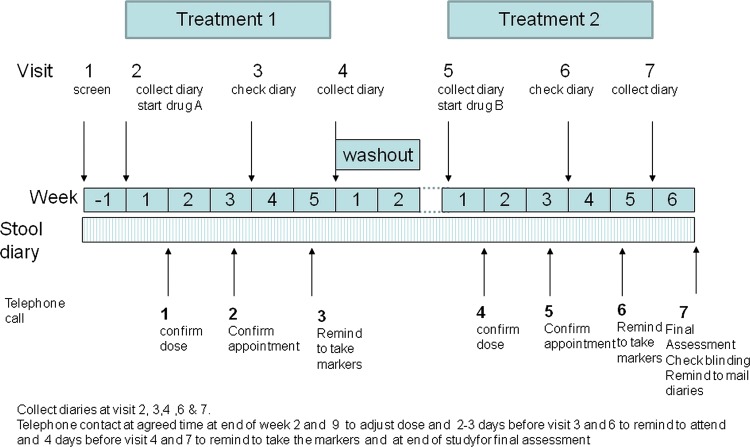
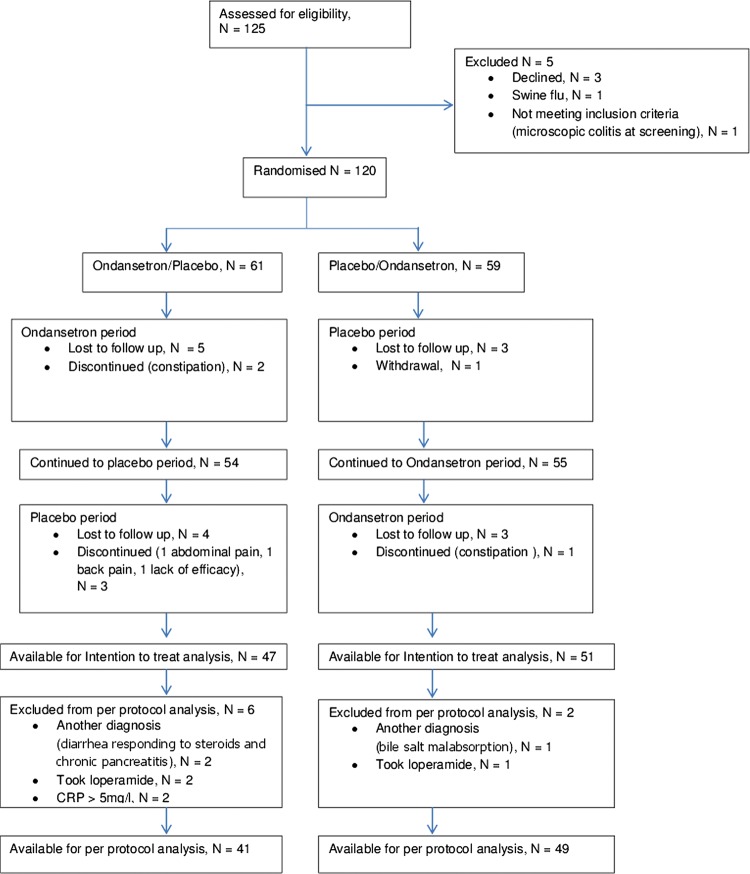
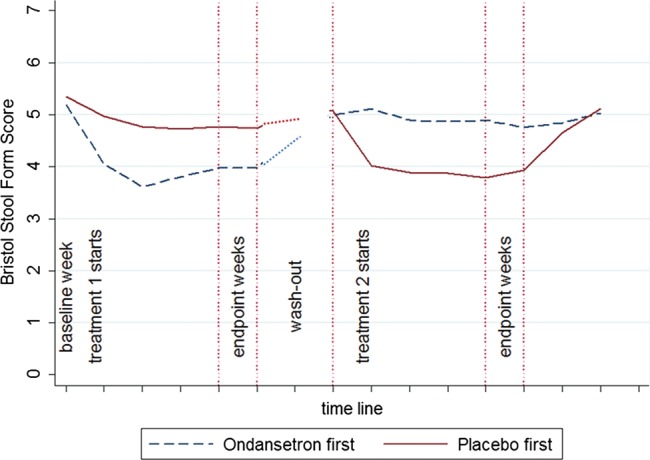
Background: Irritable bowel syndrome with diarrhoea (IBS-D) is particularly debilitating due to urgency and episodic incontinence. Some 5-hydroxytryptamine 3 (5-HT3) receptor antagonists (5-HT3RAs) have proven effective but have serious side effects. Ondansetron, also a 5-HT3RA, has been widely used as an antiemetic with an excellent safety record for over two decades. Our aim was to assess its effectiveness in IBS-D. Methods: 120 patients meeting Rome III criteria for IBS-D entered a randomised, double-blind, placebo-controlled crossover study of 5 weeks of ondansetron 4 mg versus placebo with dose titration allowed, up to two tablets three times daily in the first 3 weeks. Patients completed daily diaries documenting stool consistency using the Bristol Stool Form score. Gut transit was measured in the last week of each treatment. The primary endpoint was average stool consistency in the last 2 weeks of treatment. Results: Ondansetron significantly improved stool consistency (mean difference in stool form between ondansetron and placebo −0.9, 95% CI −1.1 to −0.6, p<0.001). Compared with placebo, patients on ondansetron experienced fewer days with urgency (p<0.001), lower urgency scores (p<0.001), reduced frequency of defaecation (p=0.002) and less bloating (p=0.002), although pain scores did not change significantly. IBS symptom severity score fell more with ondansetron than placebo (83±9.8 vs 37±9.7, p=0.001). 65% reported adequate relief with ondansetron but not placebo compared with 14% reporting relief with placebo but not ondansetron, relative risk 4.7, 95% CI 2.6 to 8.5, p<0.001. Conclusions: Ondansetron relieves some of the most intrusive symptoms of IBS-D, namely loose stools, frequency and urgency.
Overview
The claims and statistics of this paper haven’t been checked yet.
Free: it reads the open-access text and checks the first 5 claims that cite a source we can check. Create a free account to check every claim.
Integrity signals
Registry
Cites
Statistics
Figures
Verification
Claims the paper makes
The claims and statistics of this paper haven’t been checked yet.
Free: it reads the open-access text and checks the first 5 claims that cite a source we can check. Create a free account to check every claim.
Claims other papers make about this one
Each is checked against this paper’s own text: does it say what the citing paper says it does?
The cited source says what the claim attributes to it.
In the citing paper
“A small crossover trial of ondansetron titrated from 4 mg once a day to a maximum of 8 mg three times a day demonstrated significantly higher rates of improvement in urgency, bloating and stool consistency, but not abdominal pain.236”
From British Society of Gastroenterology guidelines on the management of irritable bowel syndrome (2021) · cites this paper as [236]
The cited source says what the claim attributes to it.
In the citing paper
“A crossover placebo-controlled trial of ondansetron, another 5-HT3 antagonist, in 120 patients with IBS-D demonstrated significant improvements in stool consistency and urgency, but not pain”
From Irritable bowel syndrome (2020) · cites this paper as [126]
Self-check
Percentages, sums and reported differences re-computed from the paper’s own numbers.
The self-check needs the paper’s full text.
Citations
Cites
1 retracted
Zhu, J. X., Wu, X. Y., Owyang, C., & Li, Y. (2001) · The Journal of Physiology · doi:10.1111/j.1469-7793.2001.0431k.x · Cited by 226
RetractedLongstreth, G. F., Thompson, W. G., Chey, W. D., Houghton, L. A., Mearin, F., & Spiller, R. C. (2006) · Gastroenterology · doi:10.1053/j.gastro.2005.11.061 · Cited by 4,856
Self-citationThe PHQ-15: Validity of a New Measure for Evaluating the Severity of Somatic Symptoms
Kroenke, K., Spitzer, R. L., & Williams, J. B. W. (2002) · Psychosomatic Medicine · doi:10.1097/00006842-200203000-00008 · Cited by 3,298
FRANCIS, C. Y., MORRIS, J., & WHORWELL, P. J. (1997) · Alimentary Pharmacology & Therapeutics · doi:10.1046/j.1365-2036.1997.142318000.x · Cited by 1,708
Self-citationSpiller, R. C., Jenkins, D., Thornley, J. P., Hebden, J. M., Wright, T., Skinner, M., & Neal, K. R. (2000) · Gut · doi:10.1136/gut.47.6.804 · Cited by 1,155
Self-citationPostinfectious Irritable Bowel Syndrome
Spiller, R., & Garsed, K. (2009) · Gastroenterology · doi:10.1053/j.gastro.2009.02.074 · Cited by 1,024
Self-citationDevelopment of the perceived stress questionnaire: A new tool for psychosomatic research
Levenstein, S., Prantera, C., Varvo, V., Scribano, M. L., Berto, E., Luzi, C., & Andreoli, A. (1993) · Journal of Psychosomatic Research · doi:10.1016/0022-3999(93)90120-5 · Cited by 985
Simplified assessment of segmental colonic transit
Metcalf, A. M., Phillips, S. F., Zinsmeister, A. R., MacCarty, R. L., Beart, R. W., & Wolff, B. G. (1987) · Gastroenterology · doi:10.1016/0016-5085(87)90837-7 · Cited by 928
Dunlop, S. P., Jenkins, D., Neal, K. R., & Spiller, R. C. (2003) · Gastroenterology · doi:10.1053/j.gastro.2003.09.028 · Cited by 583
Self-citationGershon, M. D. (2004) · Alimentary Pharmacology & Therapeutics · doi:10.1111/j.1365-2036.2004.02180.x · Cited by 521
Cited by
Lacy, B. E., Mearin, F., Chang, L., Chey, W. D., Lembo, A. J., Simren, M., & Spiller, R. (2016) · Gastroenterology · doi:10.1053/j.gastro.2016.02.031 · Cited by 2,866
Self-citationIrritable Bowel Syndrome: A Clinical Review
Chey, W. D., Kurlander, J., & Eswaran, S. (2015) · JAMA · doi:10.1001/jama.2015.0954 · Cited by 1,081
Enck, P., Aziz, Q., Barbara, G., Farmer, A. D., Fukudo, S., Mayer, E. A., Niesler, B., Quigley, E. M. M., Rajilić-Stojanović, M., Schemann, M., et al. (2016) · Nature Reviews Disease Primers · doi:10.1038/nrdp.2016.14 · Cited by 997
Self-citationACG Clinical Guideline: Management of Irritable Bowel Syndrome
Lacy, B. E., Pimentel, M., Brenner, D. M., Chey, W. D., Keefer, L. A., Long, M. D., & Moshiree, B. (2021) · American Journal of Gastroenterology · doi:10.14309/ajg.0000000000001036 · Cited by 893
Ford, A. C., Sperber, A. D., Corsetti, M., & Camilleri, M. (2020) · The Lancet · doi:10.1016/s0140-6736(20)31548-8 · Cited by 818
British Society of Gastroenterology guidelines on the management of irritable bowel syndrome
Vasant, D. H., Paine, P. A., Black, C. J., Houghton, L. A., Everitt, H. A., Corsetti, M., Agrawal, A., Aziz, I., Farmer, A. D., Eugenicos, M. P., et al. (2021) · Gut · doi:10.1136/gutjnl-2021-324598 · Cited by 592
Ford, A. C., Lacy, B. E., & Talley, N. J. (2017) · New England Journal of Medicine · doi:10.1056/nejmra1607547 · Cited by 587
Gracie, D. J., Hamlin, P. J., & Ford, A. C. (2019) · The Lancet Gastroenterology & Hepatology · doi:10.1016/s2468-1253(19)30089-5 · Cited by 354
The Intestinal Microenvironment and Functional Gastrointestinal Disorders
Barbara, G., Feinle-Bisset, C., Ghoshal, U. C., Santos, J., Vanner, S. J., Vergnolle, N., Zoetendal, E. G., & Quigley, E. M. (2016) · Gastroenterology · doi:10.1053/j.gastro.2016.02.028 · Cited by 335
Sex-gender differences in irritable bowel syndrome
Kim, Y. S., & Kim, N. (2018) · Journal of Neurogastroenterology and Motility · doi:10.5056/jnm18082 · Cited by 322
“Further research is needed, and these limitations should be considered when evaluating drug therapy.(96,106,107) In contrast to the above treatments, the prescription of another 5-HT3 receptor antagonist, ramosetron, has been limited to men with IBSD, because its clinical efficacy has only been confirmed in men (Table…”
BackgroundInfluentialRome Foundation Working Team Report on Post-Infection Irritable Bowel Syndrome
Barbara, G., Grover, M., Bercik, P., Corsetti, M., Ghoshal, U. C., Ohman, L., & Rajilić-Stojanović, M. (2019) · Gastroenterology · doi:10.1053/j.gastro.2018.07.011 · Cited by 281
Evidence-based clinical practice guidelines for irritable bowel syndrome
Fukudo, S., Kaneko, H., Akiho, H., Inamori, M., Endo, Y., Okumura, T., Kanazawa, M., Kamiya, T., Sato, K., Chiba, T., et al. (2015) · Journal of Gastroenterology · doi:10.1007/s00535-014-1017-0 · Cited by 205
The Enteric Nervous System and Its Emerging Role as a Therapeutic Target
Fleming, M. A., Ehsan, L., Moore, S. R., & Levin, D. E. (2020) · Gastroenterology Research and Practice · doi:10.1155/2020/8024171 · Cited by 157
Black, C. J., Burr, N. E., Camilleri, M., Earnest, D. L., Quigley, E. M., Moayyedi, P., Houghton, L. A., & Ford, A. C. (2020) · Gut · doi:10.1136/gutjnl-2018-318160 · Cited by 191
Defrees, D. N., & Bailey, J. (2017) · Primary Care: Clinics in Office Practice · doi:10.1016/j.pop.2017.07.009 · Cited by 188
Irritable bowel syndrome: the clinical approach
Adriani, A., Ribaldone, D. G., Astegiano, M., Durazzo, M., Saracco, G. M., & Pellicano, R. (2018) · Panminerva Medica · doi:10.23736/s0031-0808.18.03541-3 · Cited by 189
Review of synthetic human faeces and faecal sludge for sanitation and wastewater research
Penn, R., Ward, B. J., Strande, L., & Maurer, M. (2017) · Water Research · doi:10.1016/j.watres.2017.12.063 · Cited by 178
Management of functional gastrointestinal disorders
Fikree, A., & Byrne, P. (2021) · Clinical Medicine · doi:10.7861/clinmed.2020-0980 · Cited by 183
Chumpitazi, B. P., Self, M. M., Czyzewski, D. I., Cejka, S., Swank, P. R., & Shulman, R. J. (2015) · Neurogastroenterology & Motility · doi:10.1111/nmo.12738 · Cited by 169
Evidence-based clinical practice guidelines for irritable bowel syndrome 2020
Fukudo, S., Okumura, T., Inamori, M., Okuyama, Y., Kanazawa, M., Kamiya, T., Sato, K., Shiotani, A., Naito, Y., Fujikawa, Y., et al. (2021) · Journal of Gastroenterology · doi:10.1007/s00535-020-01746-z · Cited by 163
IBS and IBD — separate entities or on a spectrum?
Spiller, R., & Major, G. (2016) · Nature Reviews Gastroenterology & Hepatology · doi:10.1038/nrgastro.2016.141 · Cited by 163
Self-citationNew treatments and therapeutic targets for IBS and other functional bowel disorders
Simrén, M., & Tack, J. F. (2018) · Nature Reviews Gastroenterology & Hepatology · doi:10.1038/s41575-018-0034-5 · Cited by 162
Dietary and pharmacological treatment of abdominal pain in IBS
Camilleri, M., & Boeckxstaens, G. (2017) · Gut · doi:10.1136/gutjnl-2016-313425 · Cited by 158
Savarino, E., Zingone, F., Barberio, B., Marasco, G., Akyuz, F., Akpinar, H., Barboi, O., Bodini, G., Bor, S., Chiarioni, G., et al. (2022) · United European Gastroenterology Journal · doi:10.1002/ueg2.12259 · Cited by 146
Irritable bowel syndrome diagnosis and management: A simplified algorithm for clinical practice
Moayyedi, P., Mearin, F., Azpiroz, F., Andresen, V., Barbara, G., Corsetti, M., Emmanuel, A., Hungin, A. P. S., Layer, P., Stanghellini, V., et al. (2017) · United European Gastroenterology Journal · doi:10.1177/2050640617731968 · Cited by 135
“However, a significant reduction in abdominal pain was not seen.(49) Patients with severe diarrhoea did not respond as well, suggesting that ondansetron Moayyedi et al.”
BackgroundSelf-citationSex- and Gender-Related Differences in Common Functional Gastroenterologic Disorders
Narayanan, S. P., Anderson, B., & Bharucha, A. E. (2021) · Mayo Clinic Proceedings · doi:10.1016/j.mayocp.2020.10.004 · Cited by 131
Second Asian Consensus on Irritable Bowel Syndrome
Gwee, K. A., Gonlachanvit, S., Ghoshal, U. C., Chua, A. S. B., Miwa, H., Wu, J., Bak, Y.-T., Lee, O. Y., Lu, C.-L., Park, H., et al. (2019) · Journal of Neurogastroenterology and Motility · doi:10.5056/jnm19041 · Cited by 112
Diabetes Mellitus and the Colon
Piper, M. S., & Saad, R. J. (2017) · Current Treatment Options in Gastroenterology · doi:10.1007/s11938-017-0151-1 · Cited by 110
Management Options for Irritable Bowel Syndrome
Camilleri, M. (2018) · Mayo Clinic Proceedings · doi:10.1016/j.mayocp.2018.04.032 · Cited by 109
Zheng, Y., Yu, T., Tang, Y., Xiong, W., Shen, X., Jiang, L., & Lin, L. (2017) · PLOS ONE · doi:10.1371/journal.pone.0172846 · Cited by 91
Lam, C., Tan, W., Leighton, M., Hastings, M., Lingaya, M., Falcone, Y., Zhou, X., Xu, L., Whorwell, P., Walls, A. F., et al. (2016) · Gut · doi:10.1136/gutjnl-2015-309122 · Cited by 93
Self-citationBest management of irritable bowel syndrome
Black, C. J., & Ford, A. C. (2020) · Frontline Gastroenterology · doi:10.1136/flgastro-2019-101298 · Cited by 104
Management of the multiple symptoms of irritable bowel syndrome
Simrén, M., Törnblom, H., Palsson, O. S., & Whitehead, W. E. (2017) · The Lancet. Gastroenterology & hepatology · doi:10.1016/s2468-1253(16)30116-9 · Cited by 100
Cangemi, D. J., & Lacy, B. E. (2019) · Therapeutic Advances in Gastroenterology · doi:10.1177/1756284819878950 · Cited by 75
Talley, N. J., Holtmann, G., & Walker, M. M. (2015) · Journal of Gastroenterology · doi:10.1007/s00535-015-1076-x · Cited by 89
Pharmacological Approach for Managing Pain in Irritable Bowel Syndrome: A Review Article
Chen, L., Ilham, S. J., & Feng, B. (2017) · Anesthesiology and Pain Medicine · doi:10.5812/aapm.42747 · Cited by 89
Xie, Y., Zhan, X., Tu, J., Xu, K., Sun, X., Liu, C., Ke, C., Cao, G., Zhou, Z., & Liu, Y. (2021) · Journal of Ethnopharmacology · doi:10.1016/j.jep.2021.113925 · Cited by 88
Italian guidelines for the management of irritable bowel syndrome
Barbara, G., Cremon, C., Bellini, M., Corsetti, M., Nardo, G. D., Falangone, F., Fuccio, L., Galeazzi, F., Iovino, P., Sarnelli, G., et al. (2022) · Digestive and Liver Disease · doi:10.1016/j.dld.2022.11.015 · Cited by 88
Lessons learned — resolving the enigma of genetic factors in IBS
Gazouli, M., Wouters, M. M., Kapur-Pojskić, L., Bengtson, M.-B., Friedman, E., Nikčević, G., Demetriou, C. A., Mulak, A., Santos, J., & Niesler, B. (2016) · Nature Reviews Gastroenterology & Hepatology · doi:10.1038/nrgastro.2015.206 · Cited by 86
Yang, D., Guo, Q., Li, R., Chen, L., & Zheng, B. (2023) · Carbohydrate Polymers · doi:10.1016/j.carbpol.2023.121702 · Cited by 79
Probiotics in Irritable Bowel Syndrome: A Review of Their Therapeutic Role
Kumar, L. S., Pugalenthi, L. S., Ahmad, M., Reddy, S., Barkhane, Z., & Elmadi, J. (2022) · Cureus · doi:10.7759/cureus.24240 · Cited by 81
Layer, P., Andresen, V., Allescher, H., Bischoff, S. C., Claßen, M., Elsenbruch, S., Freitag, M., Frieling, T., Gebhard, M., Goebel-Stengel, M., et al. (2021) · Zeitschrift für Gastroenterologie · doi:10.1055/a-1591-4794 · Cited by 76
Fecal Incontinence: Etiology, Diagnosis, and Management
Alavi, K., Chan, S. Y., Wise, P. E., Kaiser, A. M., Sudan, R., & Bordeianou, L. (2015) · Journal of Gastrointestinal Surgery · doi:10.1007/s11605-015-2905-1 · Cited by 73
Pharmacologic Agents for Chronic Diarrhea
Lee, K. J. (2015) · Intestinal Research · doi:10.5217/ir.2015.13.4.306 · Cited by 73
Psychotropics, Antidepressants, and Visceral Analgesics in Functional Gastrointestinal Disorders
Törnblom, H., & Drossman, D. A. (2018) · Current Gastroenterology Reports · doi:10.1007/s11894-018-0664-3 · Cited by 76
Post-Infectious Irritable Bowel Syndrome
Lee, Y. Y., Chandramouli, A., & Rao, S. S. C. (2017) · Current Gastroenterology Reports · doi:10.1007/s11894-017-0595-4 · Cited by 70
Emerging Treatment Options in Mild to Moderate Ulcerative Colitis.
Lichtenstein, G. R., Hanauer, S. B., & Sandborn, W. J. (2015) · Europe PMC (PubMed Central) · Cited by 70
Xu, Y., Wang, J., Wu, X., Jing, H., Zhang, S., Hu, Z., Rao, L., Chang, Q., Wang, L., & Zhang, Z. (2023) · Gut Microbes · doi:10.1080/19490976.2023.2168101 · Cited by 61
“Besides, the clinical efficacy of other 5-HT3R pharmaceutical agents, such as ondansetron and ramosetron, are also substantiated.(41,42) Likewise, as a selective antagonist for 5-HT4R, GR113808 could inhibit intestinal motility,(43) which indicate its potential in treating diarrhea.”
BackgroundRome Foundation Working Team Report on overlap in disorders of gut–brain interaction
Barbara, G., Aziz, I., Ballou, S., Chang, L., Ford, A. C., Fukudo, S., Nurko, S., Olano, C., Saps, M., Sayuk, G. S., et al. (2025) · Nature Reviews Gastroenterology & Hepatology · doi:10.1038/s41575-024-01033-9 · Cited by 61
Pharmacological Therapies and Their Clinical Targets in Irritable Bowel Syndrome With Diarrhea
Colomier, E., Algera, J. P., & Melchior, C. (2021) · Frontiers in Pharmacology · doi:10.3389/fphar.2020.629026 · Cited by 61
Treatment of abdominal pain in irritable bowel syndrome
Vanuytsel, T., Tack, J. F., & Boeckxstaens, G. E. (2014) · Journal of Gastroenterology · doi:10.1007/s00535-014-0966-7 · Cited by 61
Advances in IBS 2016: A Review of Current and Emerging Data.
Jacobson, I. M. (2016) · PubMed Central · Cited by 59
Rotavirus and Serotonin Cross-Talk in Diarrhoea
Bialowas, S., Hagbom, M., Nordgren, J., Karlsson, T., Sharma, S., Magnusson, K., & Svensson, L. (2016) · PLoS ONE · doi:10.1371/journal.pone.0159660 · Cited by 58
Decraecker, L., Looze, D. A. D., Hirsch, D. P., Schepper, H. U. D., Arts, J., Caenepeel, P., Bredenoord, A. J., Kolkman, J. J., Bellens, K., Beek, K. V., et al. (2024) · Gut · doi:10.1136/gutjnl-2023-331634 · Cited by 57
Pharmacotherapy for Irritable Bowel Syndrome
Camilleri, M., & Ford, A. (2017) · Journal of Clinical Medicine · doi:10.3390/jcm6110101 · Cited by 46
Czigle, S., Fialová, S. B., Tóth, J., Mučaji, P., Nagy, M., & OEMONOM, O. B. O. T. (2022) · Molecules · doi:10.3390/molecules27092881 · Cited by 57
Review article: biomarkers and personalised therapy in functional lower gastrointestinal disorders
Camilleri, M. (2015) · Alimentary Pharmacology & Therapeutics · doi:10.1111/apt.13351 · Cited by 51
Lucak, S., Chang, L., Halpert, A., & Harris, L. A. (2017) · Therapeutic Advances in Gastroenterology · doi:10.1177/1756283x16663396 · Cited by 47
Irritable bowel syndrome: new and emerging treatments
Halland, M., & Saito, Y. A. (2015) · BMJ · doi:10.1136/bmj.h1622 · Cited by 53
Nee, J. W., & Lembo, A. J. (2021) · Alimentary Pharmacology & Therapeutics · doi:10.1111/apt.16625 · Cited by 52
Keszthelyi, D., Troost, F. J., Jonkers, D. M., van Eijk, H. M., Dekker, J., Buurman, W. A., & Masclee, A. A. M. (2015) · Neurogastroenterology & Motility · doi:10.1111/nmo.12600 · Cited by 41
Lacy, B. E. (2018) · Alimentary Pharmacology & Therapeutics · doi:10.1111/apt.14948 · Cited by 50
Gunn, D., Garsed, K. C., Lam, C., Singh, G., Lingaya, M. R., Wahl, V., Niesler, B., Henry, A. P., Hall, I. P., Whorwell, P. J., et al. (2019) · Alimentary Pharmacology & Therapeutics · doi:10.1111/apt.15420 · Cited by 51
Self-citationIrritable bowel syndrome: diagnosis and management
Masuy, I., Pannemans, J., & Tack, J. F. (2020) · Minerva Gastroenterologica e Dietologica · doi:10.23736/s1121-421x.19.02640-0 · Cited by 50
Foxx–Orenstein, A. E. (2016) · Therapeutic Advances in Gastroenterology · doi:10.1177/1756283x16633050 · Cited by 48
Pharmacologic, Pharmacokinetic, and Pharmacogenomic Aspects of Functional Gastrointestinal Disorders
Camilleri, M., Bueno, L. P., Andresen, V., Ponti, F. D., Choi, M., & Lembo, A. J. (2016) · Gastroenterology · doi:10.1053/j.gastro.2016.02.029 · Cited by 51
Review article: current and future treatment approaches for pain in IBS
Paine, P. (2021) · Alimentary Pharmacology & Therapeutics · doi:10.1111/apt.16550 · Cited by 46
Global Research Trends in Irritable Bowel Syndrome: A Bibliometric and Visualized Study
Zhang, T., Ma, X., Tian, W., Zhang, J., Wei, Y., Zhang, B., Wang, F., & Tang, X. (2022) · Frontiers in Medicine · doi:10.3389/fmed.2022.922063 · Cited by 47
Intestinal Secretory Mechanisms in Irritable Bowel Syndrome–Diarrhea
Camilleri, M. (2014) · Clinical Gastroenterology and Hepatology · doi:10.1016/j.cgh.2014.07.020 · Cited by 45
Irritable bowel syndrome: new insights into symptom mechanisms and advances in treatment
Spiller, R. (2016) · F1000Research · doi:10.12688/f1000research.7992.1 · Cited by 41
Self-citationManagement of Diarrhea in Patients With Carcinoid Syndrome
Naraev, B. G., Halland, M., Halperin, D. M., Purvis, A. J., O’Dorisio, T. M., & Halfdanarson, T. R. (2019) · Pancreas · doi:10.1097/mpa.0000000000001384 · Cited by 44
Gunn, D., Topan, R., Barnard, L., Fried, R., Holloway, I., Brindle, R., Corsetti, M., Scott, S. M., Farmer, A. D., Kapur, K. C., et al. (2023) · Alimentary Pharmacology & Therapeutics · doi:10.1111/apt.17426 · Cited by 44
Self-citationWu, H., Zhan, K., Rao, K., Zheng, H., Qin, S., Tang, X., & Huang, S. (2022) · Biomedicine & Pharmacotherapy · doi:10.1016/j.biopha.2022.112811 · Cited by 42
Plasse, T. F., Barton, G., Davidson, E., Abramson, D., Kalfus, I., Fathi, R., Raday, G., & Harris, M. S. (2020) · American Journal of Gastroenterology · doi:10.14309/ajg.0000000000000727 · Cited by 40
“Statistical analysis Based on responses rates of 70% and 40% in the ondansetron and placebo groups, as suggested in an earlier study (12) and 3:2 randomization,104 patients were required to demonstrate significance with 80% power and a two-sided significance level of a5 0.”
MethodIrritable Bowel Syndrome: Pathophysiology and Current Therapeutic Approaches
Camilleri, M., & Ford, A. C. (2016) · Handbook of experimental pharmacology · doi:10.1007/164_2016_102 · Cited by 42
Pharmacologic Therapies in Gastrointestinal Diseases
Fox, R. K., & Muniraj, T. (2016) · Medical Clinics of North America · doi:10.1016/j.mcna.2016.03.009 · Cited by 41
Howell, C. A., Kemppinen, A., Allgar, V. L., Dodd, M., Knowles, C. H., McLaughlin, J. T., Pandya, P., Whorwell, P. J., Markaryan, E., & Yiannakou, Y. (2022) · Gut · doi:10.1136/gutjnl-2022-327293 · Cited by 38
Self-citationDiagnosis and Management of Fecal Incontinence
Wald, A. M. (2018) · Current Gastroenterology Reports · doi:10.1007/s11894-018-0614-0 · Cited by 37
Ondansetron-induced QT prolongation among various age groups: a systematic review and meta-analysis
Singh, K., Jain, A., Panchal, I., Madan, H., Gupta, A., Sharma, A., Gupta, S., Kostojchin, A., Singh, A., Sandhu, I. S., et al. (2023) · The Egyptian Heart Journal · doi:10.1186/s43044-023-00385-y · Cited by 36
Aliu, A., Bosch, D. H. C. A., Keszthelyi, D., Ardabili, A. R., Colombel, J., Sawyer, R., Törnblom, H., Hart, A. L., Jonkers, D. M. A. E., Pierik, M. J., et al. (2024) · Alimentary Pharmacology & Therapeutics · doi:10.1111/apt.17988 · Cited by 36
Consenso mexicano sobre el síndrome de intestino irritable
Carmona-Sánchez, R., Icaza-Chávez, M. E., Bielsa-Fernández, M. V., Gomez-Escudero, O., Bosques‐Padilla, F., Coss‐Adame, E., Esquivel-Ayanegui, F., Flores-Rendón, Á. R., González-Martínez, M. A., Huerta-Iga, F. M., et al. (2016) · Revista de Gastroenterología de México · doi:10.1016/j.rgmx.2016.01.004 · Cited by 36
Rifaximin for the treatment of diarrhea-predominant irritable bowel syndrome
Kane, J. S., & Ford, A. C. (2016) · Expert Review of Gastroenterology & Hepatology · doi:10.1586/17474124.2016.1140571 · Cited by 37
Irritable Bowel Syndrome: News from an Old Disorder
Ferreira, A. I., Garrido, M., & Castro-Poças, F. (2019) · GE Portuguese Journal of Gastroenterology · doi:10.1159/000503757 · Cited by 40
Riggott, C., Ford, A. C., & Gracie, D. J. (2024) · Alimentary Pharmacology & Therapeutics · doi:10.1111/apt.18192 · Cited by 35
Identifying, Understanding, and Managing Fecal Urgency in Inflammatory Bowel Diseases
Caron, B., Ghosh, S., Danese, S., & Peyrin‐Biroulet, L. (2023) · Clinical Gastroenterology and Hepatology · doi:10.1016/j.cgh.2023.02.029 · Cited by 33
Mousavi, T., Nikfar, S., & Abdollahi, M. R. (2020) · Expert Opinion on Drug Metabolism & Toxicology · doi:10.1080/17425255.2020.1767067 · Cited by 32
Hagbom, M., Novák, D., Ekström, M., Khalid, Y., Andersson, M., Lindh, M., Nordgren, J., & Svensson, L. (2017) · PLoS ONE · doi:10.1371/journal.pone.0186824 · Cited by 32
Min, Y. W., & Rhee, P.-L. (2015) · Therapeutic Advances in Gastroenterology · doi:10.1177/1756283x15572580 · Cited by 30
“Recently, a large RCT of 120 patients with IBS-D showed that ondansetron of 4 mg for 5 weeks improves stool consistency, reduced urgency, frequency, and bloating, but does not reduce abdominal pain [Garsed et al. 2014].”
BackgroundNovel pharmacological therapies for irritable bowel syndrome
Corsetti, M., & Whorwell, P. J. (2016) · Expert Review of Gastroenterology & Hepatology · doi:10.1586/17474124.2016.1158099 · Cited by 28
Self-citationHowden, C. W., Korvick, J. A., Harinstein, L. M., Weissfeld, J. L., Moayyedi, P., Vakil, N. B., & Harris, M. S. (2019) · Gastroenterology · doi:10.1053/j.gastro.2019.10.014 · Cited by 27
Fukudo, S., Matsueda, K., Haruma, K., Ida, M., Hayase, H., Akiho, H., Nakashima, Y., & Hongo, M. (2017) · Neurogastroenterology & Motility · doi:10.1111/nmo.13023 · Cited by 25
Akiba, Y., Maruta, K., Narimatsu, K., Said, H., Kaji, I., Kuri, A., Iwamoto, K., Kuwahara, A., & Kaunitz, J. D. (2017) · American Journal of Physiology-Gastrointestinal and Liver Physiology · doi:10.1152/ajpgi.00041.2017 · Cited by 26
Eluxadoline in irritable bowel syndrome with diarrhea: rationale, evidence and place in therapy
Barshop, K., & Staller, K. (2017) · Therapeutic Advances in Chronic Disease · doi:10.1177/2040622317714389 · Cited by 25
The Mexican consensus on irritable bowel syndrome
Carmona-Sánchez, R., Icaza-Chávez, M. E., Bielsa-Fernández, M. V., Gomez-Escudero, O., Bosques‐Padilla, F., Coss‐Adame, E., Esquivel-Ayanegui, F., Flores-Rendón, Á. R., González-Martínez, M. A., Huerta-Iga, F. M., et al. (2016) · Revista de Gastroenterología de México (English Edition) · doi:10.1016/j.rgmxen.2016.01.004 · Cited by 25
Understanding and managing patients with overlapping disorders of gut–brain interaction
Balsiger, L. M., Carbone, F., Raymenants, K., Scarpellini, E., & Tack, J. F. (2023) · The Lancet. Gastroenterology & hepatology · doi:10.1016/s2468-1253(22)00435-6 · Cited by 24
Current and Emerging Pharmacotherapeutic Options for Irritable Bowel Syndrome
Barboza, J., Talley, N. J., & Moshiree, B. (2014) · Drugs · doi:10.1007/s40265-014-0292-7 · Cited by 24
Sałaga, M., Storr, M., Martemyanov, K. A., & Fichna, J. (2016) · BioEssays · doi:10.1002/bies.201500118 · Cited by 24
El-Ayache, N. C., & Galligan, J. J. (2018) · American Journal of Physiology-Gastrointestinal and Liver Physiology · doi:10.1152/ajpgi.00131.2018 · Cited by 25
Dellschaft, N. S., Hoad, C. L., Marciani, L., Gowland, P. A., & Spiller, R. E. (2021) · Alimentary Pharmacology & Therapeutics · doi:10.1111/apt.16673 · Cited by 24
Self-citationThe 5-HT 3 Receptor Affects Rotavirus-Induced Motility
Hagbom, M., Hellysaz, A., Istrate, C., Nordgren, J., Sharma, S., de‐Faria, F. M., Magnusson, K.-E., & Svensson, L. (2021) · Journal of Virology · doi:10.1128/jvi.00751-21 · Cited by 23
Metadata
- Authors
- Garsed, K., Chernova, J., Hastings, M., Lam, C., Marciani, L., Singh, G., Henry, A., Hall, I., Whorwell, P., & Spiller, R.
- Affiliations
- NIHR Nottingham Digestive Diseases Biomedical Research Unit (GB)
- Nottingham Digestive Diseases Biomedical Research Unit, Queens Medical Centre, Nottingham, UK
- Wythenshawe Hospital (GB)
- University of Nottingham (GB)
- Venue
- Gut
- Publisher
- BMJ
- Published
- 2013-12-12
- Volume
- 63
- Issue
- 10
- Pages
- 1617-1625
- ISSN
- 0017-5749 (ISSN-L)
- 1468-3288
- PMC
- PMC4173656
- OpenAlex
- W2129997920
- Cited by
- 246
- References
- 39
- Citations by year
- 2026: 10 · 2025: 24 · 2024: 16 · 2023: 18 · 2022: 19 · 2021: 24 · 2020: 22 · 2019: 17 · 2018: 20 · 2017: 22 · 2016: 26 · 2015: 16 · 2014: 11
- FWCI
- 16.66
- Type
- journal article
- Language
- en
- Open access
- hybrid
- doi.org
- Licence
- cc-by
- Locations
- Gut (publishedVersion, cc-by)
- PubMed Central (publishedVersion, cc-by)
- PubMed (publishedVersion)
- Repository@Nottingham (University of Nottingham) (publishedVersion, other-oa)
- Nottingham ePrints (University of Nottingham) (submittedVersion, cc-by)
- Repository@Nottingham (University of Nottingham) (submittedVersion, cc-by)
- HighWire Press Open Archive (submittedVersion)
- Funders
- National Institute for Health and Care Research (PB-PG-0107-12127)
- Topics
- Health Sciences › Medicine › Gastroenterology › Gastrointestinal motility and disorders
- Health Sciences › Medicine › Gastroenterology › Inflammatory Bowel Disease
- Health Sciences › Medicine › Pediatrics, Perinatology and Child Health › Infant Health and Development
- Keywords
- ondansetron, irritable bowel syndrome with diarrhea, 5-HT3 receptor antagonists, stool consistency, bowel urgency, bloating, symptom severity
- MeSH terms
- Adult, Diarrhea, Double-Blind Method, Feces, Female, Humans, Male, Middle Aged, Serotonin Antagonists, Treatment Outcome, Ondansetron, Cross-Over Studies, Irritable Bowel Syndrome
About these checks
Registry, retraction, Cites and statistics results are computed, not judged, with one exception: a printed reference that no index lists is read once by a model before it counts as a citation error. Claims are extracted by a model and kept only when their quote appears verbatim in the text; each cited source is then checked, with a model’s help, for whether it says what the claim relies on. Those verdicts can be wrong — read the claim’s quote and the cited source before relying on one.
Statistics and arithmetic are recomputed, not judged.
Confidence bands are shown only for fields calibrated on our annotated test set. None is calibrated yet, so no band is shown.
What counts as a claim ›How we measure confidence ›How we check this ›
Are you an author, or do you see a problem with this page? Request a review
Data sources
Bibliographic data: Semantic Scholar, OpenAlex, Crossref.
Contains information from the Semantic Scholar Academic Graph Datasets, made available under the ODC Attribution License (ODC-BY 1.0).
Semantic Scholar’s data is described in: Kinney, R., et al. (2023). The Semantic Scholar Open Data Platform. arXiv:2301.10140.
