

Dysbiosis of maternal and neonatal microbiota associated with gestational diabetes mellitus
Open accessThe DOI matches its Crossref record; 42 of the 42 references it cites were found in a registry or an index.
Abstract
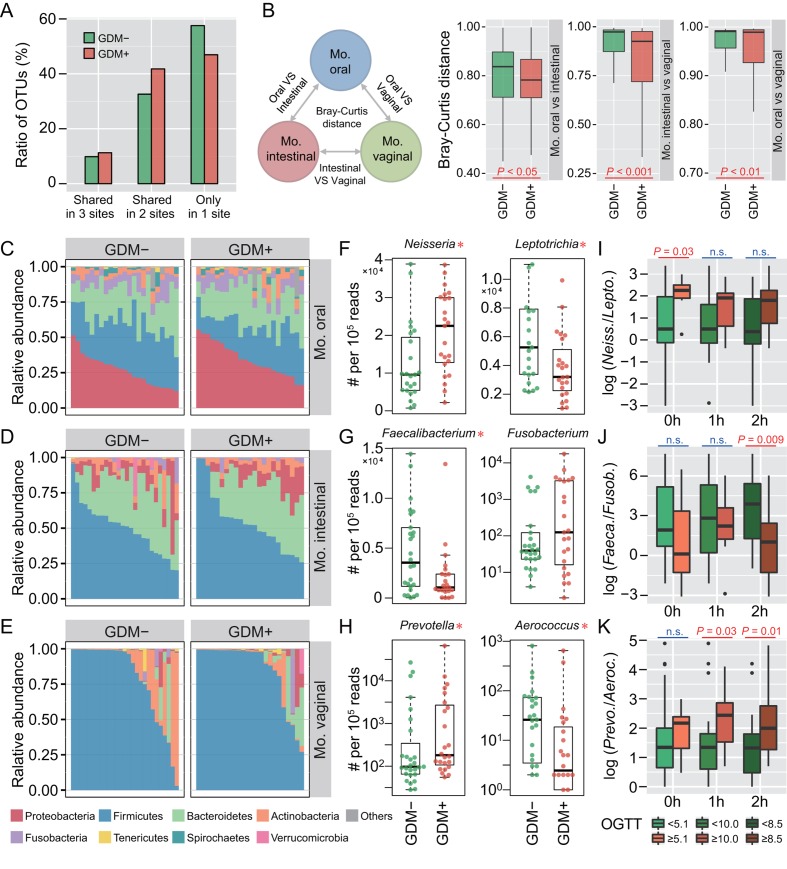
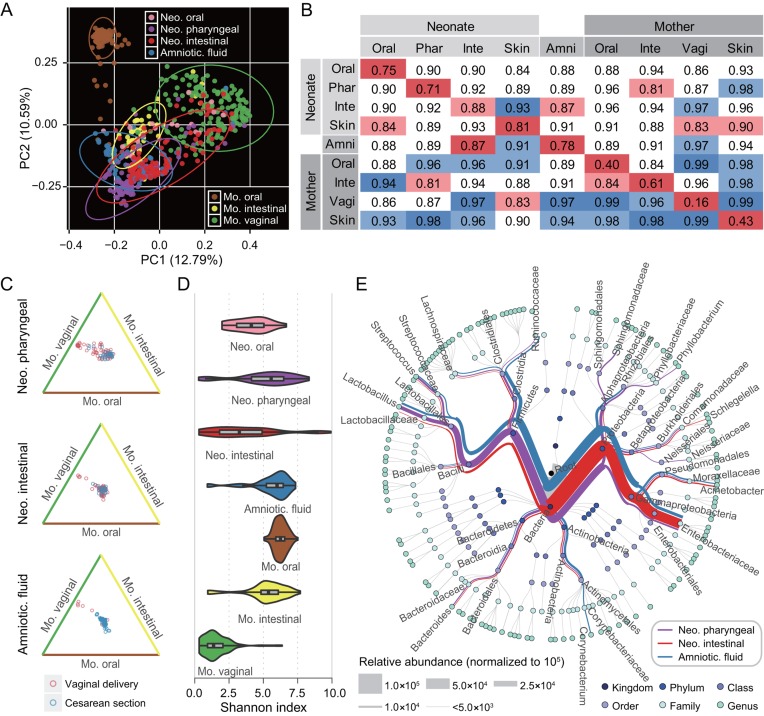
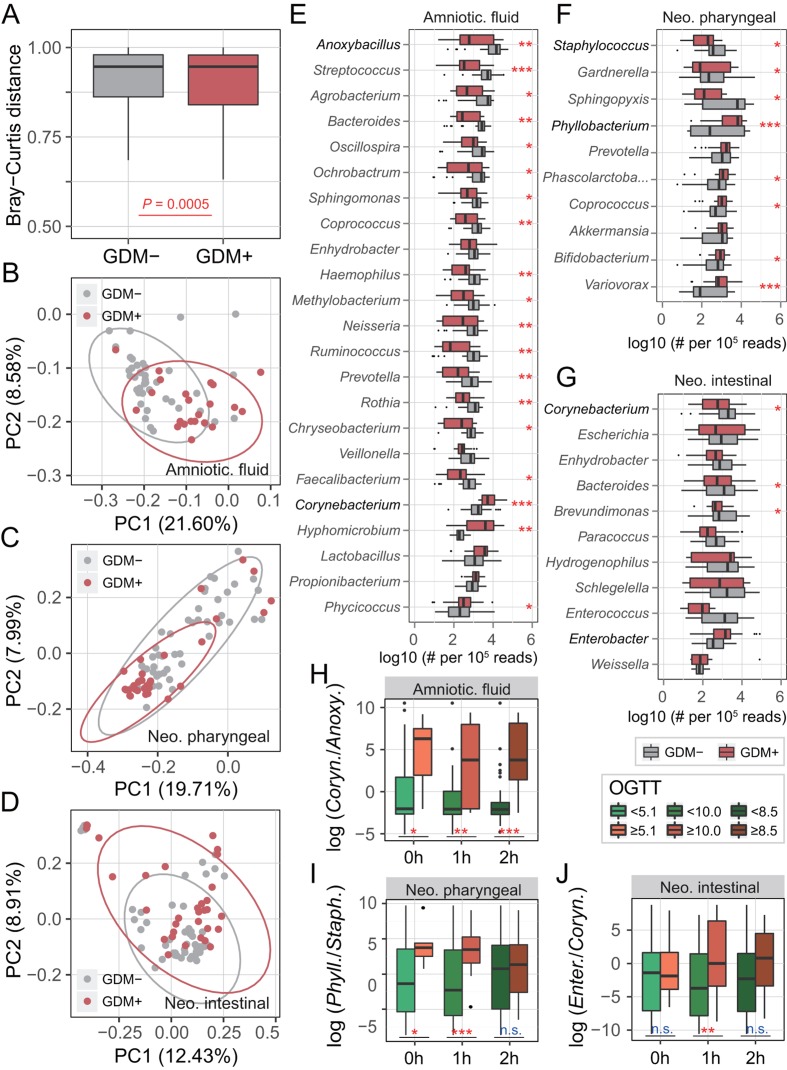
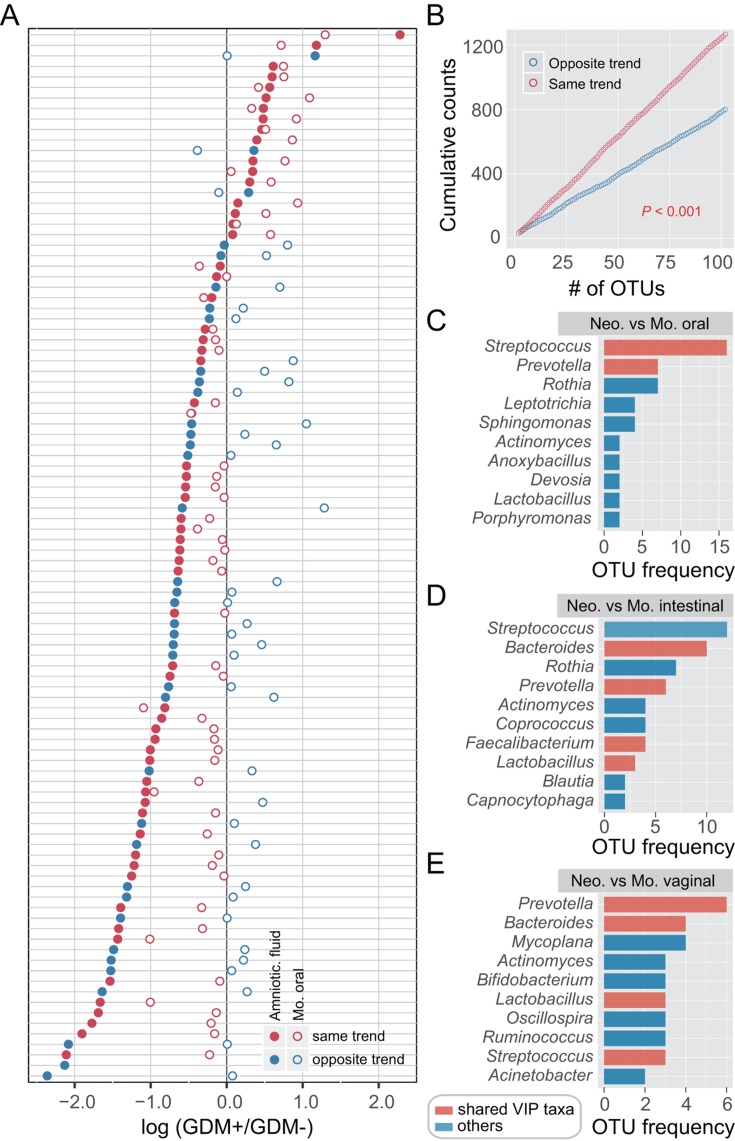
Objective: The initial colonisation of the human microbiota and the impact of maternal health on neonatal microbiota at birth remain largely unknown. The aim of our study is to investigate the possible dysbiosis of maternal and neonatal microbiota associated with gestational diabetes mellitus (GDM) and to estimate the potential risks of the microbial shift to neonates. Design: Pregnant women and neonates suffering from GDM were enrolled and 581 maternal (oral, intestinal and vaginal) and 248 neonatal (oral, pharyngeal, meconium and amniotic fluid) samples were collected. To avoid vaginal bacteria contaminations, the included neonates were predominantly delivered by C-section, with their samples collected within seconds of delivery. Results: Numerous and diverse bacterial taxa were identified from the neonatal samples, and the samples from different neonatal body sites were grouped into distinct clusters. The microbiota of pregnant women and neonates was remarkably altered in GDM, with a strong correlation between certain discriminatory bacteria and the oral glucose tolerance test. Microbes varying by the same trend across the maternal and neonatal microbiota were observed, revealing the intergenerational concordance of microbial variation associated with GDM. Furthermore, lower evenness but more depletion of KEGG orthologues and higher abundance of some viruses (eg, herpesvirus and mastadenovirus) were observed in the meconium microbiota of neonates associated with GDM. Conclusion: GDM can alter the microbiota of both pregnant women and neonates at birth, which sheds light on another form of inheritance and highlights the importance of understanding the formation of early-life microbiome.
Overview
The claims and statistics of this paper haven’t been checked yet.
Free: it reads the open-access text and checks the first 5 claims that cite a source we can check. Create a free account to check every claim.
Integrity signals
Registry
Cites
Statistics
Figures
Verification
Claims the paper makes
The claims and statistics of this paper haven’t been checked yet.
Free: it reads the open-access text and checks the first 5 claims that cite a source we can check. Create a free account to check every claim.
Claims other papers make about this one
Each is checked against this paper’s own text: does it say what the citing paper says it does?
In the citing paper
“Most studies to date have not noted a reproducible microbial colonization already occurring in utero,25”
From Interaction between microbiota and immunity in health and disease (2020) · cites this paper as [25]
Self-check
Percentages, sums and reported differences re-computed from the paper’s own numbers.
The self-check needs the paper’s full text.
Citations
Cites
Trimmomatic: a flexible trimmer for Illumina sequence data
Bolger, A. M., Lohse, M., & Usadel, B. (2014) · Bioinformatics · doi:10.1093/bioinformatics/btu170 · Cited by 65,548
Fast and accurate short read alignment with Burrows-Wheeler transform
Li, H., & Durbin, R. (2009) · Bioinformatics · doi:10.1093/bioinformatics/btp324 · Cited by 58,607
QIIME allows analysis of high-throughput community sequencing data
Caporaso, J. G., Kuczynski, J., Stombaugh, J., Bittinger, K., Bushman, F. D., Costello, E. K., Fierer, N., Peña, A. G., Goodrich, J. K., Gordon, J. I., et al. (2010) · Nature Methods · doi:10.1038/nmeth.f.303 · Cited by 34,887
Prokka: rapid prokaryotic genome annotation
Seemann, T. (2014) · Bioinformatics · doi:10.1093/bioinformatics/btu153 · Cited by 18,818
Metagenomic biomarker discovery and explanation
Segata, N., Izard, J., Waldron, L., Gevers, D., Miropolsky, L., Garrett, W. S., & Huttenhower, C. (2011) · Genome Biology · doi:10.1186/gb-2011-12-6-r60 · Cited by 16,192
Fast and sensitive protein alignment using DIAMOND
Buchfink, B., Xie, C., & Huson, D. H. (2015) · Nature Methods · doi:10.1038/nmeth.3176 · Cited by 14,201
Hyperglycemia and adverse pregnancy outcomes
(2008) · New England Journal of Medicine · doi:10.1056/nejmoa0707943 · Cited by 5,563
McDonald, D., Price, M. N., Goodrich, J., Nawrocki, E. P., DeSantis, T. Z., Probst, A., Andersen, G. L., Knight, R., & Hugenholtz, P. (2012) · The ISME Journal · doi:10.1038/ismej.2011.139 · Cited by 5,064
Host-gut microbiota metabolic interactions
Nicholson, J. K., Holmes, E., Kinross, J., Burcelin, R., Gibson, G., Jia, W., & Pettersson, S. (2012) · Science · doi:10.1126/science.1223813 · Cited by 4,760
metaSPAdes: a new versatile metagenomic assembler
Nurk, S., Meleshko, D., Korobeynikov, A., & Pevzner, P. A. (2017) · Genome Research · doi:10.1101/gr.213959.116 · Cited by 4,496
Cited by
Items 301–400 of 466
Dunton, M., Inglett, S., & Marin, T. (2020) · The Journal of Perinatal & Neonatal Nursing · doi:10.1097/jpn.0000000000000504 · Cited by 7
“particular, type 1 diabetes, autoimmune disease, and obesity.(2,33) In humans, it is suggested that early microbial patterns may predict excessive weight gain in”
BackgroundLiu, Y., Dong, J., Zhang, Z., Liu, Y., & Wang, Y. (2022) · Frontiers in Neuroscience · doi:10.3389/fnins.2022.877937 · Cited by 7
“…with gestational diabetes was also changed, and early stage oligosaccharide consumption was positively correlated with the abundance of infant Ruminococcus, indicating the existence of a maternal microbial imprinting along glucose intake (Su et al., 2018; Wang et al., 2018; Ponzo et al., 2019).”
BackgroundResultSelf-citationLi, X., Zhang, B., Zheng, J., Chen, H., Zheng, J., Xu, X., Wang, W., Sun, C. M., Lin, W., Chen, K., et al. (2022) · Microbiology Spectrum · doi:10.1128/spectrum.01076-22 · Cited by 6
Self-citationAthalye‐Jape, G., Rath, C. P., Panchal, H., Mishra, A., Graham, D., & Patole, S. (2025) · Microorganisms · doi:10.3390/microorganisms13010112 · Cited by 5
Characterization of the oral virome in patients with diabetes mellitus
Zhang, Y., Zhang, Y., Xing, G., Mei, T., Wang, M., Huang, C., Yi, H., Zhan, Y., Yang, S. X., Yan, Q., et al. (2025) · Frontiers in Cellular and Infection Microbiology · doi:10.3389/fcimb.2025.1607798 · Cited by 5
“…pro-in fl ammatory cytokine production (e.g., IFN-g , IL - 12, and TNF-g ) and oxidative stress, initiating in fl ammatory cascades that worsen systemic in fl ammation in diabetic individuals and potentially impair pancreatic islet function (Wang et al., 2018; Li et al., 2023; Lv et al., 2024).”
Self-citationVertical Transmission of Gut Dysbiosis From Mothers With Gestational Diabetes to Infants
Low, J. M., Gupta, A., Toh, R., Lim, S. L., Chan, S., Swarup, S., & Lee, L. Y. (2025) · Journal of Diabetes · doi:10.1111/1753-0407.70148 · Cited by 6
“This observation is in concordance with previous reports where meconium samples of infants born to non-GDM mothers or healthy mothers mainly constituted Proteobacteria with predominance of Escherichia-Shigella, Enterococcus, Pseudomonas, and Klebsiella [24–27].”
Qiu, X., Zhang, M., Zhang, L. J., Chen, H., Gao, M., Li, W., Yu, Z., & Hou, Z. (2025) · Annals of Clinical Microbiology and Antimicrobials · doi:10.1186/s12941-025-00828-1 · Cited by 5
“However, most current researches on the vaginal microbiota in diabetes focuses on the mechanisms and treatments of vaginal microbiota dysbiosis in women with gestational diabetes [15, 16].”
Xia, D., Wang, H., & Wang, W. (2025) · BMC Pregnancy and Childbirth · doi:10.1186/s12884-025-08324-2 · Cited by 5
“It may affect nutrient absorption and immune response in the neonatal period [25].”
Pathogenic mechanisms and therapeutic potential of the microbiome in premature ovarian insufficiency
Ma, S., Zheng, L., Zhuang, X., Wang, M., & Zou, Y. (2025) · Frontiers in Immunology · doi:10.3389/fimmu.2025.1734367 · Cited by 6
“The abundance of oral Neisseria/Fimbriella species correlated positively with glucose levels in pregnant women, suggesting that the oral microbiota could serve as a biomarker for predicting pregnancy complications (105).”
Revolutionizing salivary biomarkers through machine learning and artificial intelligence
Sun, J., Jia, Y., Wang, X., Cao, Z., & Zhu, G. (2025) · Clinica Chimica Acta · doi:10.1016/j.cca.2025.120809 · Cited by 7
Exploring the influence of microbiota on gestational diabetes and its potential as a biomarker
Bokoliya, S. C., McClellan, S., Zhou, Y., & Fan, N. (2024) · Frontiers in Bacteriology · doi:10.3389/fbrio.2024.1352227 · Cited by 6
Dong, C., Liu, Z., Zhu, C., Zhang, Y., Xu, Y., Xu, X., Guan, Q., & Xia, Y. (2023) · Journal of Hazardous Materials · doi:10.1016/j.jhazmat.2023.133383 · Cited by 6
Self-citationMan, B., Koenig, M. D., Bernabé, B. P., Nagelli, U., & Tussing-Humphreys, L. M. (2020) · The Journal of Perinatal & Neonatal Nursing · doi:10.1097/jpn.0000000000000497 · Cited by 6
“Several randomized clinical trials have examined the role of probiotics and synbiotics (prebiotic combined with probiotic) in the prevention and management of GDM.26,28–30 In 2009, a trial of 256 women found that diet counseling combined with a probiotic (Lactobacillus rhamnosus and Bifidobacterium lactis) significant…”
BackgroundInfluentialMetagenomic Diversity of Gut Microbiota of Gestational Diabetes Mellitus of Pregnant Women
Minarti, M., Triananinsi, N., Nurqalbi, N., Sumarni, S., & Kamaruddin, M. (2020) · Biomedika · doi:10.31001/biomedika.v13i1.747 · Cited by 5
Koerner, R., Groer, M. E., & Prescott, S. M. (2022) · Journal of Obstetric, Gynecologic & Neonatal Nursing · doi:10.1016/j.jogn.2022.06.037 · Cited by 7
Yang, H., He, Z., Lai, J., Yang, J., Huang, Q., Chang, Y., Tian, M., & Huang, H. (2025) · Frontiers in Microbiology · doi:10.3389/fmicb.2025.1567721 · Cited by 4
Wei, R., Long, J., Xia, H., Sun, Y., Zhang, L., Li, X., Zhang, H., Wang, R., Gao, S., Chen, Y., et al. (2025) · Science China Life Sciences · doi:10.1007/s11427-024-2934-8 · Cited by 5
“Women with GDM exhibit dysbiosis of the gut microbiota (Pinto et al., 2023; Wang et al., 2018).”
Self-citationGut-Immune Interplay: Decoding the Microbiome’s Impact on Immunity and Diseases
Khazi, A. I., & Ahmad, A. (2025) · Journal of Pharmacy And Bioallied Sciences · doi:10.4103/jpbs.jpbs_1377_25 · Cited by 4
Zheng, W., Huang, Y., Li, D., Hu, D., Jin, C., Sadykova, A., Cai, W., Liao, C., & Pan, S. (2022) · Medicine in Microecology · doi:10.1016/j.medmic.2022.100074 · Cited by 4
The state of the colon microbiome in women with gestational diabetes
Dzhuriak, V., Mikheev, A., Sydorchuk, L. I., & Pankiv, І. V. (2023) · INTERNATIONAL JOURNAL OF ENDOCRINOLOGY (Ukraine) · doi:10.22141/2224-0721.19.4.2023.1287 · Cited by 5
Arianejad, M., Tajeddini, F., Zareardalan, M., Hosseinpour-Soleimani, F., Sisakht, M., Tajbakhsh, A., Pirsalehi, M.-T., & Negahdaripour, M. (2024) · Food Bioscience · doi:10.1016/j.fbio.2024.105498 · Cited by 4
Zhong, L., Yan, Y., Chen, L., Sun, N., Li, H., Wang, Y., Liu, H., Jia, Y., Lu, Y., Liu, X., et al. (2024) · Heliyon · doi:10.1016/j.heliyon.2024.e28163 · Cited by 5
Self-citationOral Microbiota of Infants in Maternal Gestational Diabetes: A Systematic Review
Camoni, N., Conti, G., Majorana, A., Bardellini, E., Salerno, C., Wolf, T. G., Campus, G., & Cagetti, M. G. (2024) · Children · doi:10.3390/children11040421 · Cited by 4
“The type of delivery was declared in only six studies [30–32, Regarding data on newborns (Table 1), the four studies that analyzed their microbiota found a depletion in Firmicutes and an enrichment in Proteobacteria [30,31,35,36].”
BackgroundResultInfluentialRold, L. S., Jensen, A.-M., Arenholt, L. T. S., Leutscher, P. D. C., Ovesen, P., Hagstrøm, S., & Sørensen, S. (2024) · BMJ Open · doi:10.1136/bmjopen-2023-083358 · Cited by 5
A scientometric visualization analysis of the gut microbiota and gestational diabetes mellitus
Su, Z., Liu, L., Zhang, J., Guo, J., Wang, G., & Zeng, X. (2025) · Frontiers in Microbiology · doi:10.3389/fmicb.2025.1485560 · Cited by 4
“Research has also revealed a consistent trend in microbial variation across the microbiota in both mothers and neonates affected by GDM (Wang et al., 2018).”
Zhang, Y., Xu, Y., Dong, C., Zhang, M., Guan, Q., Chang, H., Hang, B., Mao, J., Snijders, A. M., & Xia, Y. (2025) · Environmental Science & Technology · doi:10.1021/acs.est.4c11640 · Cited by 5
Self-citationZinina, T. A., Tiselko, A. V., & Yarmolinskaya, M. I. (2020) · Journal of obstetrics and women s diseases · doi:10.17816/jowd69441-50 · Cited by 5
Yu, L., Zhang, Y., Xu, L., Long, W., Shan, C., Ding, H., You, L., Zhao, C. L., & Shi, Z. (2021) · Endocrine Connections · doi:10.1530/ec-20-0584 · Cited by 4
“Similarly, the neonates of pregnant women with GDM tend to have more mastadenovirus and papillomavirus in their intestinal flora (35).”
Self-citationRelationship between vaginal microbiota and chorioamnionitis: A prospective cohort study.
Guo, X., Hong, X., Qian, H., Qiao, D.-Y., Wang, B., & Yu, H. (2023) · Microbial Pathogenesis · doi:10.1016/j.micpath.2023.106458 · Cited by 4
Silvano, A., Niccolai, E., Baldi, S., Seravalli, V., Strambi, N., Nannini, G., Pallecchi, M., Bartolucci, G., Parenti, A., Amedei, A., et al. (2023) · International Journal of Molecular Sciences · doi:10.3390/ijms241713653 · Cited by 3
Xu, W., Li, L., Kang, H., Wang, M., Liu, Y., Wang, G., Yu, P., Liang, J., & Liu, Z. (2025) · BMC Pregnancy and Childbirth · doi:10.1186/s12884-025-07218-7 · Cited by 3
Liu, C., Zheng, W., Wang, J., Aili, W. A. N. G., Zhang, Y., Wang, Y., Wang, Y., Ma, X., & Li, G. (2025) · mSphere · doi:10.1128/msphere.00914-24 · Cited by 3
“Many studies have revealed differences in gut dysbiosis in the offspring of GDM patients (14–16).”
InfluentialSelf-citationParity influences postpartum adaptations in the maternal gut microbiota
Jarmukhanov, Z., Vinogradova, E. B., Mukhanbetzhanov, N., Kozhakhmetov, S., Khassenbekova, D., & Kushugulova, A. R. (2025) · Scientific Reports · doi:10.1038/s41598-025-02013-y · Cited by 3
“Evidence for this phenomenon comes from observations of distinct microbial signatures in multiparous women, suggesting that the maternal microbiome retains aspects of its pregnancy-adapted state 10 .”
Chen, A., Luo, Z., & Zhang, J. (2025) · Frontiers in Microbiology · doi:10.3389/fmicb.2025.1708359 · Cited by 3
Yan, Z., Pu, J., Li, D., Liu, M., Xu, Z., & Tang, J. (2026) · Journal of Personalized Medicine · doi:10.3390/jpm16010019 · Cited by 3
“GDM could alter the microbiota of the infants during the first year of life [149,150].”
Maternal provisions in type 1 diabetes: Evidence for both protective & pathogenic potential
Strachan, E. R., Clemente‐Casares, X., & Tsai, S. J. (2023) · Frontiers in Immunology · doi:10.3389/fimmu.2023.1146082 · Cited by 3
“Furthermore, these same trends were observed in the meconium of their infants (95).”
BackgroundStinson, L. F., Berman, Y. E., Li, S., Keelan, J. A., Dickinson, J. E., Doherty, D. A., Newnham, J. P., & Payne, M. S. (2023) · Microorganisms · doi:10.3390/microorganisms11071698 · Cited by 3
Human gut microbiota, nutrition and health
Bi, Y., & Yang, R. (2018) · Chinese Science Bulletin (Chinese Version) · doi:10.1360/n972018-00641 · Cited by 7
Early Life Microbiota—Impact of Delivery Mode and Infant Feeding
Ouyang, R., Korpela, K., Liu, X., Xu, G., de Vos, W. M., & Kovatcheva‐Datchary, P. (2021) · Elsevier eBooks · doi:10.1016/b978-0-12-819265-8.00064-4 · Cited by 3
Sembiring, Y. S., & Zuhra, C. F. (2021) · Biomedika · doi:10.31001/biomedika.v14i1.1164 · Cited by 3
Characteristics of Intestinal Flora in Pregnant Women with Mild Thalassemia Revealed by Metagenomics
Lun, Y., Qiu, W., Zhao, W., Lin, H., Zhong, M., & Jie, S. (2021) · Jundishapur Journal of Microbiology · doi:10.5812/jjm.119925 · Cited by 5
Recent research on the effect of preeclampsia on maternal-infant intestinal flora interactions.
Yang, Y. J. (2022) · PubMed · doi:10.7499/j.issn.1008-8830.2110034 · Cited by 4
Maternal Macro- and Micronutrient Intake During Pregnancy
Stumpf, K., & Mirpuri, J. (2022) · Immunology and Allergy Clinics of North America · doi:10.1016/j.iac.2022.07.006 · Cited by 3
Paneth Cell, Gut Microbiota Dysbiosis and Diabetes Mellitus
Luvhengo, T. E., Mabasa, S., Molepo, E., Taunyane, I., & Palweni, S. T. (2023) · Applied Sciences · doi:10.3390/app13116605 · Cited by 3
Li, S., Liang, Q., Wei, Q., Fang, Z., Yuan, C., Pan, S., Xie, H., Li, X., Chen, M., He, Y., et al. (2024) · Annals of Medicine · doi:10.1080/07853890.2024.2442070 · Cited by 3
“…this phenomenon may be attributed to the shaping of gut microbial assembly in naturally born infants by the maternal vaginal microbiota [19,23,44–46]. this intricate interplay may further impact offspring metabolism, immunity and growth [20]. in conclusion, our findings propose that maternal…”
Editorial: Gut virome and human health
Gao, Y., Sohn, M. B., & Wang, J. (2022) · Frontiers in Cellular and Infection Microbiology · doi:10.3389/fcimb.2022.1043256 · Cited by 4
“, 2015), gestational diabetes (Wang et al., 2018), and cancer (Nakatsu et al.”
BackgroundSelf-citationImpacts of Delivery Mode and Maternal Factors on Neonatal Oral Microbiota
Xu, T., Yan, L., Sun, B., Xu, Q., Zhang, J., Zhu, W., Zhang, Q., Chen, N., Liu, G., & Chen, F. (2022) · Frontiers in Microbiology · doi:10.3389/fmicb.2022.915423 · Cited by 2
“The microbiota of GDM pregnant women could vertically transmit to the offspring (Wang et al., 2018).”
BackgroundRafat, D., Agrawal, A., Singh, S. D., Khalid, S., Khan, A. U., & Nawab, T. (2025) · The Journal of Obstetrics and Gynecology of India · doi:10.1007/s13224-024-02095-0 · Cited by 2
“Similar to us few other investigations evaluating association of vaginal dysbiosis with GDM have found increased prevalence of dysbiotic flora among the hyperglycemic group [12, 29] while others have failed to demonstrate such association [18, 25].”
Vorobjova, T., Tagoma, A., Peterson, C., Talja, I., Bärenson, A., Alnek, K., Janson, H., Metsküla, K., Kirss, A., Sepp, E., et al. (2025) · Frontiers in Immunology · doi:10.3389/fimmu.2025.1613002 · Cited by 2
“Increased gut permeability can result from gut dysbiosis, which is characteristic of mothers with GDM and can be transferred to their offspring (33, 34).”
A bibliometric and visual analysis of global gestational diabetes mellitus over the past 24 years
Sun, Y., Zhu, L.-M., Wei, C.-X., & Ren, Y.-J. (2025) · Journal of Diabetes & Metabolic Disorders · doi:10.1007/s40200-025-01752-z · Cited by 2
“The imbalance of gut microbiota in women with GDM is related to the mechanism of lipid metabolism and may contribute to the pathogenesis of GDM [67, 68 ].”
Arnadottir, A. T., Skírnisdóttir, S., Knobloch, S., Corral‐Jara, K. F., Klonowski, A. M., Gunnarsdóttir, I., & Marteinsson, V. (2025) · mSphere · doi:10.1128/msphere.00745-25 · Cited by 2
“Emerging evidence suggests that GDM may be linked to long-term variation of offspring microbiome composition through vertical transmission or metabolic program ming (69, 70).”
Gut microbiome modulation by cricket, pea, and whey protein using the SHIME in vitro simulator
Franciosa, I., Castelnuovo, G., Cantele, C., Cardenia, V., Bo, S., Ponzo, V., Goitre, I., Pontonio, E., Tortarolo, D., Verni, M., et al. (2026) · npj Science of Food · doi:10.1038/s41538-026-00785-9 · Cited by 3
“However, potentially detrimental taxa such as Enterococcus 52,53 , Sutterella , which has been positively correlated with HOMA-IR 54,55 , Fusobacterium 56,57 and Alistipes were also associated with pea consumption.”
Rethinking gestational diabetes: a microbiome-informed preventive framework
Turjeman, S., Riumin, A., Louzoun, Y., & Koren, O. (2026) · The Lancet Obstetrics Gynaecology & Women s Health · doi:10.1016/s3050-5038(26)00044-0 · Cited by 2
Oral microbiome modulation mitigates hyperglycemia exacerbation in gestational diabetes mellitus
Gao, S., Yin, N., Wei, R., Li, X., Cheng, Q., Zhula, A., Zhou, W., Zhang, Y., Li, S., Wei, Z., et al. (2026) · Nature Communications · doi:10.1038/s41467-026-74917-w · Cited by 2
“Previous studies examining the oral microbiota of GDM patients have primarily relied on cross-sectional analyses conducted during mid-to-late pregnancy, after GDM diagnosis 28 – 30 .”
Self-citationMaternal and infant gut microbiome
Wang, H., Tin, F., Chen, H., Jiao, F., Wu, M., Sun, S., Lin, L., Li, D., Zheng, H., Niu, Z., et al. (2026) · iMeta · doi:10.1002/imt2.70151 · Cited by 3
Self-citationAulia, V., Pachira, P., Olvi, M., & Simamora, C. J. K. (2021) · BIOEDUSCIENCE · doi:10.22236/j.bes/536899 · Cited by 4
“The microbiota is needed to maintain the health of the human body (Wang et al., 2018).”
BackgroundThe gut microbiome, human nutrition, and immunity: visualizing the future
Luikham, S., & Bhattacharyya, J. (2022) · Elsevier eBooks · doi:10.1016/b978-0-12-822238-6.00029-7 · Cited by 3
Diabetes During Pregnancy: Neonatal and Childhood Complications
van der Beek, E. M. (2022) · Springer eBooks · doi:10.1007/978-3-030-89243-2_17 · Cited by 2
Clinical Applications of the Microbiome in Obstetrics
Pyeon, S. Y., Kang, D. Y., Kim, S. Y., Choi, S. W., Hwang, M. Y., & Lee, Y. J. (2023) · Neonatal Medicine · doi:10.5385/nm.2023.30.4.89 · Cited by 2
“Furthermore, a study analy zing oral microbiomes in pregnant women with gestational dia betes mellitus (GDM) reported a positive correlation between Neisseria and Leptotrichia abundance and blood glucose levels 11) .”
BackgroundAbdelwahab, S. İ., Taha, M. M. E., El-Amin, E. I., Fadlalmola, H. A., Chourasia, U. H., Abdelmageed, M. M., Hakami, A., Khormi, A. H., Altraifi, A. A. A., Medani, I. E., et al. (2025) · Critical Public Health · doi:10.1080/09581596.2025.2466019 · Cited by 2
Diet and Microbiota During Pregnancy
Gueimonde, M., Collado, M. C., & Rodríguez, J. M. (2021) · Elsevier eBooks · doi:10.1016/b978-0-12-819265-8.00087-5 · Cited by 3
Logroño, I. E. N., Coronel, A. A. N., Macías, A. C. C., & Pozo, C. A. Z. (2021) · ESPOCH Congresses The Ecuadorian Journal of S T E A M · doi:10.18502/espoch.v1i6.9639 · Cited by 2
Gut Microbiome and Virome: Anti-Aging Interventions
Singh, B., Mal, G., Sharma, D., Nakshabandi, A., & Marotta, F. (2023) · Healthy ageing and longevity · doi:10.1007/978-3-031-14023-5_4 · Cited by 2
Ma, G., Yang, P. C., Lu, T., Chen, Z., Zhou, J., Tye, K. D., & Xiao, X. (2024) · Journal of obstetrics and gynaecology research · doi:10.1111/jog.16180 · Cited by 2
Gámez-Valdez, J. S., García-Mazcorro, J. F., Rincón, A. H. M., Reyes, D. L. R., Blanco, G. J., Rodriguez, M. T. A., de Vaca, R. P., Alcorta-García, M. R., Brunck, M. E. G., Díaz, V. J. L., et al. (2020) · Research Square · doi:10.21203/rs.3.rs-48912/v2 · Cited by 2
Gut microbiota and maternal immune transfer at birth influence pre-allergic clinical outcomePreprint
Villette, R., Traore, D., Dhilly, E., Foucault, P., Parisel, E., Sauce, D., Gorochov, G., Kayem, G., Schuhmacher, M., Annesi‐Maesano, I., et al. (2023) · bioRxiv (Cold Spring Harbor Laboratory) · doi:10.1101/2023.04.25.537372 · Cited by 2
The Controversial Interplay of Gut Microbiome and Reproductive Function in Humans
CHRISTOPOULOS, P. F., Tsarna, E., & Domali, E. (2021) · The microbiomes of humans, animals, plants, and the environment · doi:10.1007/978-3-030-59642-2_9 · Cited by 1
Study of altered gut microbial dynamics and their association with gestational diabetes mellitus
Srivastava, A., Prabhakar, M. R., Mohanty, A., & Meena, S. S. (2023) · Systems Microbiology and Biomanufacturing · doi:10.1007/s43393-022-00156-x · Cited by 1
“…Porphyromonas, Campylobacter, Faecalibacterium, Sneathia, Roseburia, and Fusobacterium were all linked to gestational diabetes when Wang et al. [42] studied stool samples from The overall improved quality of the plots can be seen in truncated reads pregnant women 1–2 days before delivery.”
Набока, Ю. Л., Vorobyeva, N. V., Гудима, И. А., Sinyavskaya, T., Ismailov, R. S., Naber, K. G., & Коган, М. И. (2024) · Urology Herald · doi:10.21886/2308-6424-2024-12-5-12-23 · Cited by 1
Nasiri, M., Mousavi, S. N., Rad, Z. A., & Heidarzadeh, S. (2025) · International Journal of Diabetes in Developing Countries · doi:10.1007/s13410-025-01491-0 · Cited by 1
“Bacterial composition effect on human metabolism, mainly glucose homeostasis, directly [10].”
Microbiome-based dietary supplements for better development and healthy brain
Upadhyay, R., Mani, S., & Sevanan, M. (2025) · International review of neurobiology · doi:10.1016/bs.irn.2025.03.009 · Cited by 1
Sen, D., Datta, S., Biswas, S., Samadder, A., & Nandi, S. (2025) · Current Cancer Drug Targets · doi:10.2174/0115680096373099250709100217 · Cited by 1
Chen, J., Peng, H., Shao, Y., & Wu, Z. (2025) · Frontiers in Endocrinology · doi:10.3389/fendo.2025.1610534 · Cited by 1
“As an integral component of human biology, the microbiota may directly or indirectly modulate cancer susceptibility and tumor progression (5, 6).”
Exploratory study of the oral microbiota in pregnant women with hypothyroidism and their infants
Ohmichi-Tomiwa, M., Kato‐Kogoe, N., Kudo, A., Fujita, D., Sakaguchi, S., Tsuda, K., Omori, M., Hayashi, E., Nakamura, S., Nakano, T., et al. (2025) · BMC Pregnancy and Childbirth · doi:10.1186/s12884-025-08421-2 · Cited by 1
Yao, T., Xiong, Y., Hu, Q., Chen, Y., Li, D., Yan, J., Yang, J., Wang, Y., Cao, H., Zhang, F., et al. (2026) · BMC Microbiology · doi:10.1186/s12866-025-04591-3 · Cited by 2
“For example, a study by Wang et al. found that the gut, oral, and vaginal microbiota of mothers with GDM differed significantly from those of healthy mothers, and the microbial composition of their offspring closely resembled that of their mothers [8].”
Self-citationIntegrating multi-omics and digital phenotyping for precision care in gestational diabetes
Xega, V., & Liu, J.-L. (2026) · Metabolism and Diseases · doi:10.1016/j.metdis.2026.100002 · Cited by 1
Bartáková, V., Ambrožová, E., Žák, P., & Kaňková, K. (2026) · Frontiers in Physiology · doi:10.3389/fphys.2026.1778006 · Cited by 2
“It remains unclear if the changes in the gut microbiota contribute to or are a consequence of the development of GDM. Finally, the microbiota of GDM patients can be transmitted to the offspring and colonisation before birth by specific taxa associated with GDM occurs (Wang et al., 2018).”
Jiang, F., Zhu, J., Liu, F., Chen, X., Zheng, L., Jian-xiu, Y., & Chen, W. (2026) · Frontiers in Microbiology · doi:10.3389/fmicb.2026.1789594 · Cited by 1
“Early evidence demonstrated GDM-associated dysbiosis in both maternal and neonatal microbiota, suggesting shared microbial features potentially driven by vertical transmission (Wang et al., 2018).”
Sun, Z., He, C., Ma, X., Wu, P., Wang, T., Yuan, J., Pu, Y., Zhou, X., Mei, Z., Song, H., et al. (2026) · iMeta · doi:10.1002/imt2.70166 · Cited by 1
Self-citationThe microbiome and pregnancy complications
Fuhler, G. M. (2020) · Elsevier eBooks · doi:10.1016/b978-0-12-818097-6.00002-x · Cited by 1
Gestational Diabetes Mellitus and Maternal Microbiome Alterations
Rafat, D. (2022) · IntechOpen eBooks · doi:10.5772/intechopen.101868 · Cited by 1
“Some researchers have indicated that GDM has no clear effect on the microbial composition [14] while others have found that the microbiota of GDM patients and normal pregnant women differs significantly [5, 13, 15].”
Samayoa, J. A. M., Benítez, L. E. H., Joya, M. G. V., & Meléndez, Z. G. G. (2022) · ALERTA Revista Científica del Instituto Nacional de Salud · doi:10.5377/alerta.v5i1.12563 · Cited by 1
Diabetes Mellitus and Microbiota: Knowledge and Perspectives
Rizzo, G. E., Rizzi, A., Tartaglione, L., Leo, M. L., Viti, L., Leo, M. A. S. D., & Pitocco, D. (2023) · Healthy ageing and longevity · doi:10.1007/978-3-031-14023-5_7 · Cited by 1
Pregnant women with gestational diabetes mellitus exhibit unique features in oral microbiomePreprint
Li, X., Zheng, J., Ma, X., Zhang, B., Zhang, J., Wang, W., Sun, C. M., Wang, Y., Zheng, J., Chen, H., et al. (2019) · Research Square · doi:10.21203/rs.2.17469/v1 · Cited by 2
“In our previous study, comparing the microbial composition of vagina, intestinal tract and oral saliva between normal pregnant women and GDM patients, we found that microbiota in different body sites of GDM patients were distinct [14].”
ResultSelf-citationPregnant women with gestational diabetes mellitus exhibit unique features in oral microbiomePreprint
Li, X., Zheng, J., Ma, X., Zhang, B., Zhang, J., Wang, W., Sun, C. M., Wang, Y., Zheng, J., Chen, H., et al. (2019) · Research Square · doi:10.21203/rs.2.17469/v2 · Cited by 1
Self-citationGeng, H., Zhou, W., Zhu, B., Deng, S., Yang, J., Zhao, S., Wang, D., & Wang, Z. (2024) · Research Square · doi:10.21203/rs.3.rs-5276950/v1 · Cited by 1
Resende, A. D. S. (2019) · Digital Library of Theses and Dissertations (Universidade de São Paulo) · doi:10.11606/d.39.2019.tde-13062019-161054
Liu, Z., Mi, K., Xu, Z. Z., Zhang, Q., & Liu, X. (2020) · bioRxiv (Cold Spring Harbor Laboratory) · doi:10.1101/2020.04.09.033688
“[22] J.”
MethodBlostein, F., & Foxman, B. (2021) · Current Epidemiology Reports · doi:10.1007/s40471-021-00263-8
“By contrast, the maternal gut microbiome is of interest for investigations of gestational diabetes [17, 18], as gut microbiota interact with the breakdown of food and subsequent metabolism.”
BackgroundHarder, J. W. (2021) · ThinkIR: The University of Louisville's Institutional Repository (University of Louisville) · doi:10.18297/etd/3585 · Cited by 1
Yadufashije, C., Grace, I. G., Mwanzia, L. N., Muhimpundu, L., Munyeshyaka, E., Mucumbitsi, J., Sangano, G. B., & Habyarimana, T. (2022) · Advances in Human Biology · doi:10.4103/aihb.aihb_117_21
Maternal Microbiota as a Therapeutic Target
Saraçoğlu, F. (2022) · Wiley eBooks · doi:10.1002/9783527825462.ch9
Collecting samples for metagenomics
Jia, H. (2022) · Elsevier eBooks · doi:10.1016/b978-0-323-91369-0.00001-7
Jia, H. (2022) · Elsevier eBooks · doi:10.1016/b978-0-323-91369-0.00005-4
Hall, L. J. (2020) · Faculty Opinions – Post-Publication Peer Review of the Biomedical Literature · doi:10.3410/f.735440779.793574633
Hall, L. J. (2020) · Faculty Opinions – Post-Publication Peer Review of the Biomedical Literature · doi:10.3410/f.735907003.793574630
Impact of early nutrition on gut microbiota: Effects on immunity and long-term health
Laitinen, K., Mokkala, K., & Kalliomäki, M. A. (2022) · Elsevier eBooks · doi:10.1016/b978-0-12-824389-3.00005-2 · Cited by 1
Gut dysbiosis: A pathway to glucose dysregulation?
Lawal, Y. (2022) · Journal of Current Research in Scientific Medicine · doi:10.4103/jcrsm.jcrsm_48_21
Welche Rolle spielt das Mikrobiom der Mutter?
Sontag, I., & Adamek, H. E. (2023) · Info Diabetologie · doi:10.1007/s15034-023-4543-0
Analysis of the gut microflora in women with gestational diabetes mellitus
Wang, X., Bian, B., Du, F.-M., Xiang, C., Liu, Y., Li, N., & Duan, B. (2023) · International Journal of Diabetes in Developing Countries · doi:10.1007/s13410-023-01262-9
“Interestingly, GDM has also been shown to alter neonatal microbiota [11].”
Metadata
- Authors
- Wang, J., Zheng, J., Shi, W., Du, N., Xu, X., Zhang, Y., Ji, P., Zhang, F., Jia, Z., Wang, Y., Zheng, Z., Zhang, H., & Zhao, F.
- Affiliations
- Chinese Academy of Sciences (CN)
- Wenzhou City People's Hospital (CN)
- Corresponding author
- Zhao, Fangqing
- ORCID
- Venue
- Gut
- Publisher
- BMJ
- Published
- 2018-05-14
- Volume
- 67
- Issue
- 9
- Pages
- 1614-1625
- ISSN
- 0017-5749 (ISSN-L)
- 1468-3288
- PMC
- PMC6109274
- OpenAlex
- W2801262515
- Cited by
- 452
- References
- 42
- Citations by year
- 2026: 36 · 2025: 53 · 2024: 59 · 2023: 63 · 2022: 77 · 2021: 73 · 2020: 54 · 2019: 33 · 2018: 4
- FWCI
- 15.39
- Type
- journal article
- Language
- en
- Open access
- hybrid
- doi.org
- Licence
- cc-by-nc
- Locations
- Gut (publishedVersion, cc-by-nc)
- Europe PMC (PubMed Central) (publishedVersion, cc-by-nc)
- PubMed Central (publishedVersion, cc-by-nc)
- PubMed (publishedVersion)
- HighWire Press Open Archive (submittedVersion)
- Funders
- the Key Research Program of the Chinese Academy of Sciences
- National Key R&D Program
- National Natural Science Foundation of China
- Topics
- Life Sciences › Biochemistry, Genetics and Molecular Biology › Molecular Biology › Gut microbiota and health
- Health Sciences › Medicine › Obstetrics and Gynecology › Gestational Diabetes Research and Management
- Health Sciences › Dentistry › Periodontics › Oral microbiology and periodontitis research
- Keywords
- gestational diabetes mellitus, maternal microbiota, neonatal microbiome, dysbiosis, oral microbiota, vaginal microbiota, early-life microbiota, oral glucose tolerance test, viral microbiome, cesarean section
- MeSH terms
- Adult, Blood Glucose, Cesarean Section, Female, Glucose Tolerance Test, Humans, Infant, Newborn, Pregnancy, Diabetes, Gestational, Microbiota, Dysbiosis
About these checks
Registry, retraction, Cites and statistics results are computed, not judged, with one exception: a printed reference that no index lists is read once by a model before it counts as a citation error. Claims are extracted by a model and kept only when their quote appears verbatim in the text; each cited source is then checked, with a model’s help, for whether it says what the claim relies on. Those verdicts can be wrong — read the claim’s quote and the cited source before relying on one.
Statistics and arithmetic are recomputed, not judged.
Confidence bands are shown only for fields calibrated on our annotated test set. None is calibrated yet, so no band is shown.
What counts as a claim ›How we measure confidence ›How we check this ›
Are you an author, or do you see a problem with this page? Request a review
Data sources
Bibliographic data: Semantic Scholar, OpenAlex, Crossref.
Contains information from the Semantic Scholar Academic Graph Datasets, made available under the ODC Attribution License (ODC-BY 1.0).
Semantic Scholar’s data is described in: Kinney, R., et al. (2023). The Semantic Scholar Open Data Platform. arXiv:2301.10140.
