

Dysbiosis of maternal and neonatal microbiota associated with gestational diabetes mellitus
Open accessThe DOI matches its Crossref record; 42 of the 42 references it cites were found in a registry or an index.
Abstract
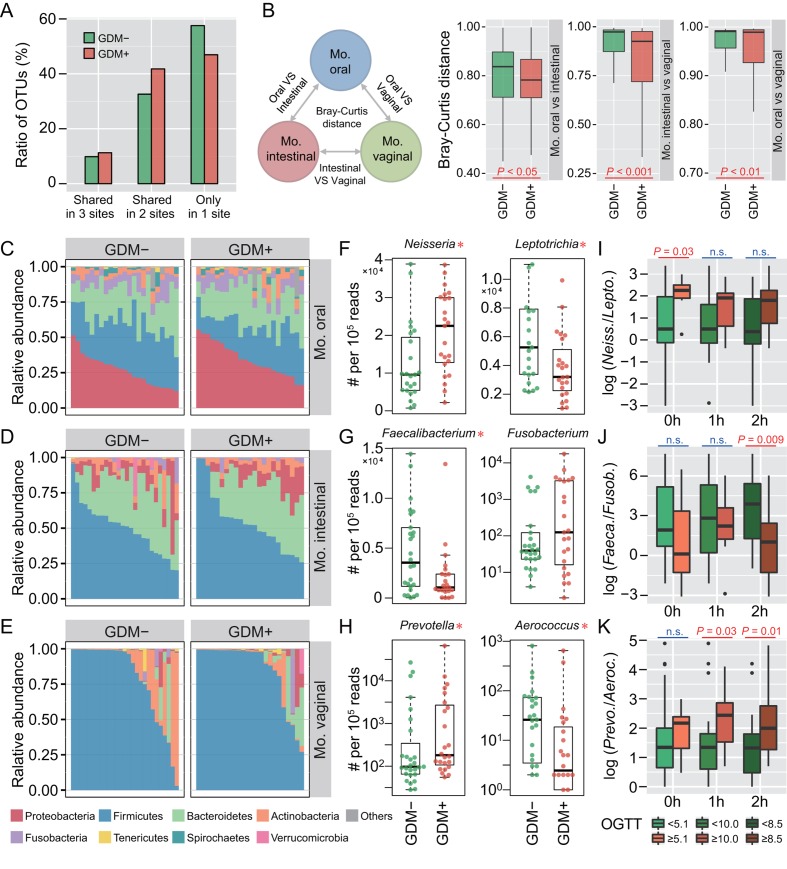
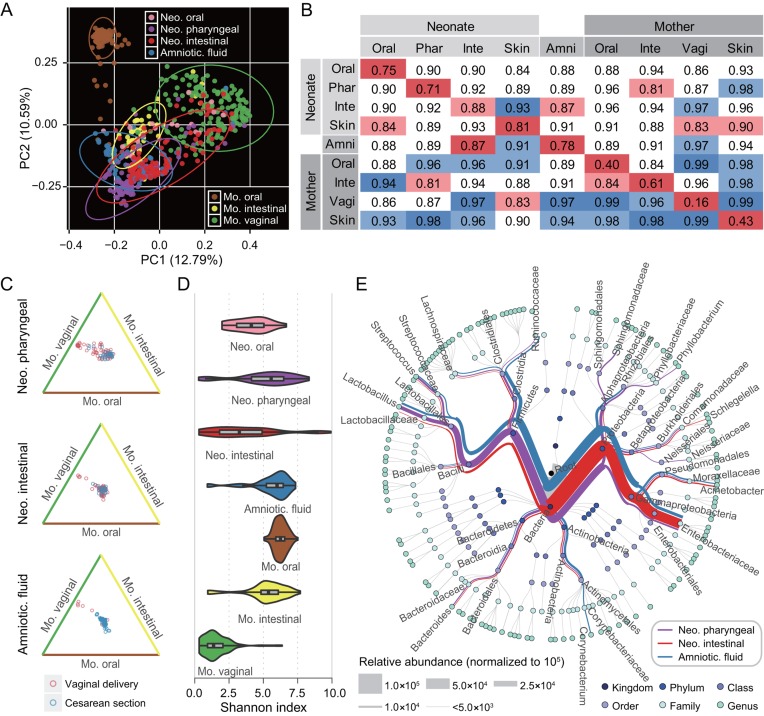
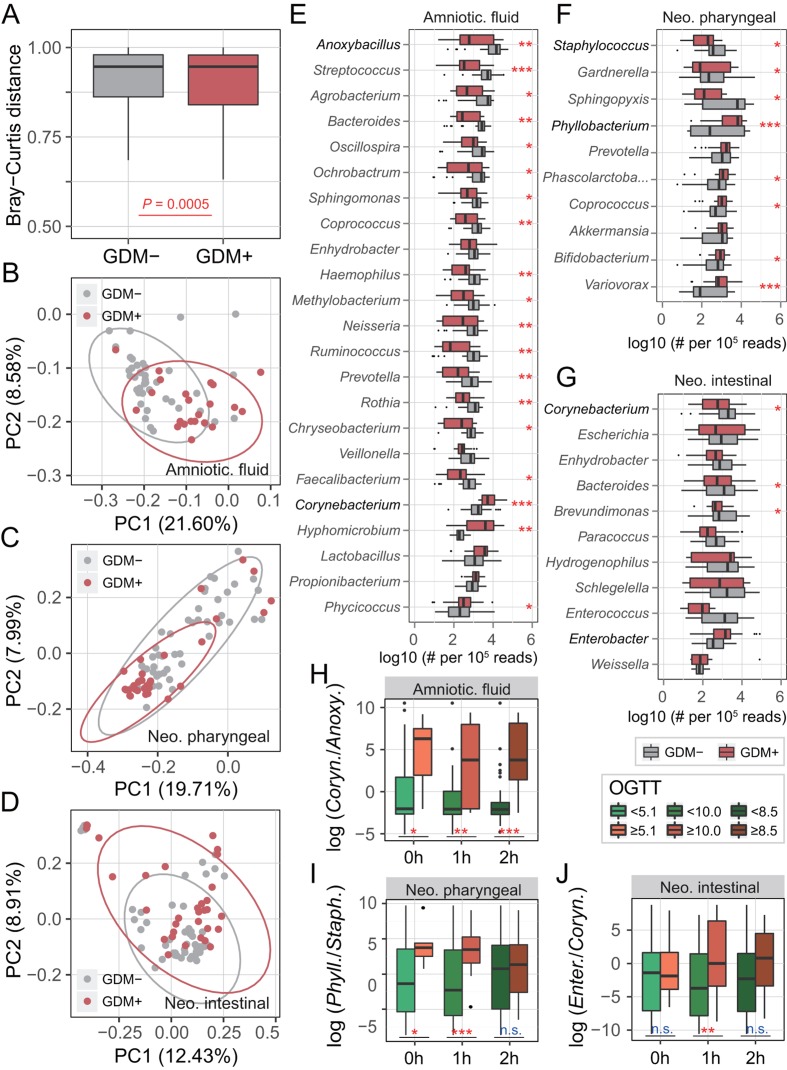
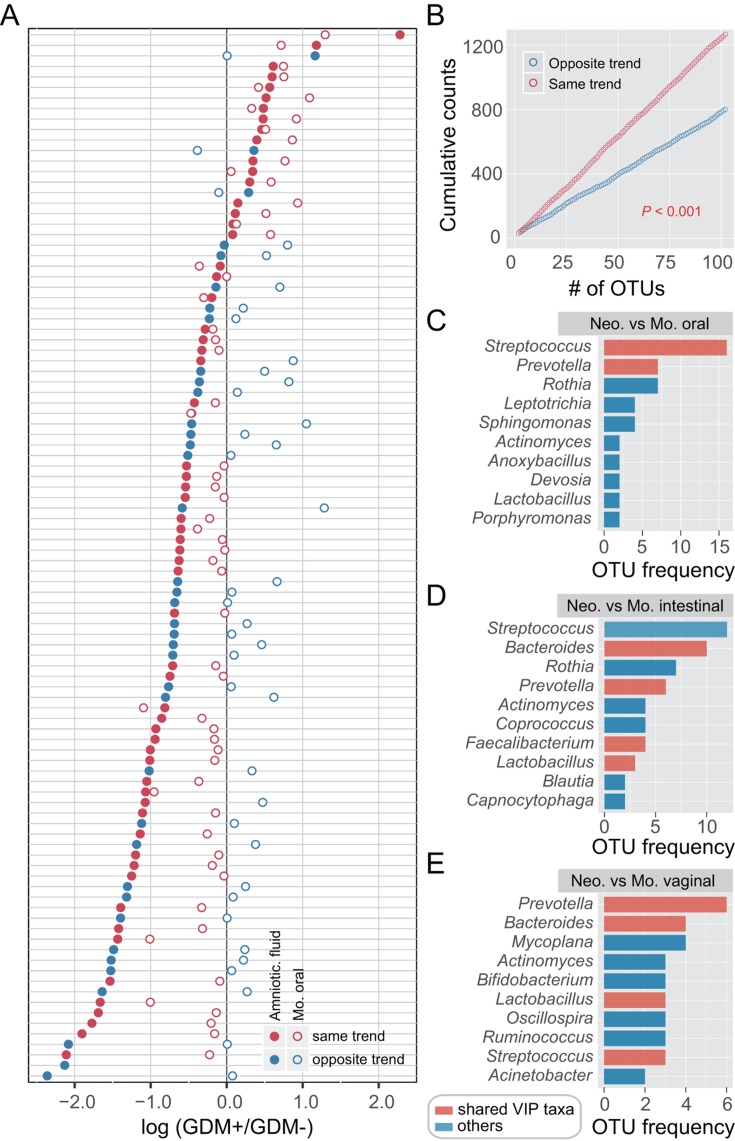
Objective: The initial colonisation of the human microbiota and the impact of maternal health on neonatal microbiota at birth remain largely unknown. The aim of our study is to investigate the possible dysbiosis of maternal and neonatal microbiota associated with gestational diabetes mellitus (GDM) and to estimate the potential risks of the microbial shift to neonates. Design: Pregnant women and neonates suffering from GDM were enrolled and 581 maternal (oral, intestinal and vaginal) and 248 neonatal (oral, pharyngeal, meconium and amniotic fluid) samples were collected. To avoid vaginal bacteria contaminations, the included neonates were predominantly delivered by C-section, with their samples collected within seconds of delivery. Results: Numerous and diverse bacterial taxa were identified from the neonatal samples, and the samples from different neonatal body sites were grouped into distinct clusters. The microbiota of pregnant women and neonates was remarkably altered in GDM, with a strong correlation between certain discriminatory bacteria and the oral glucose tolerance test. Microbes varying by the same trend across the maternal and neonatal microbiota were observed, revealing the intergenerational concordance of microbial variation associated with GDM. Furthermore, lower evenness but more depletion of KEGG orthologues and higher abundance of some viruses (eg, herpesvirus and mastadenovirus) were observed in the meconium microbiota of neonates associated with GDM. Conclusion: GDM can alter the microbiota of both pregnant women and neonates at birth, which sheds light on another form of inheritance and highlights the importance of understanding the formation of early-life microbiome.
Overview
The claims and statistics of this paper haven’t been checked yet.
Free: it reads the open-access text and checks the first 5 claims that cite a source we can check. Create a free account to check every claim.
Integrity signals
Registry
Cites
Statistics
Figures
Verification
Claims the paper makes
The claims and statistics of this paper haven’t been checked yet.
Free: it reads the open-access text and checks the first 5 claims that cite a source we can check. Create a free account to check every claim.
Claims other papers make about this one
Each is checked against this paper’s own text: does it say what the citing paper says it does?
In the citing paper
“Most studies to date have not noted a reproducible microbial colonization already occurring in utero,25”
From Interaction between microbiota and immunity in health and disease (2020) · cites this paper as [25]
Self-check
Percentages, sums and reported differences re-computed from the paper’s own numbers.
The self-check needs the paper’s full text.
Citations
Cites
Trimmomatic: a flexible trimmer for Illumina sequence data
Bolger, A. M., Lohse, M., & Usadel, B. (2014) · Bioinformatics · doi:10.1093/bioinformatics/btu170 · Cited by 65,548
Fast and accurate short read alignment with Burrows-Wheeler transform
Li, H., & Durbin, R. (2009) · Bioinformatics · doi:10.1093/bioinformatics/btp324 · Cited by 58,607
QIIME allows analysis of high-throughput community sequencing data
Caporaso, J. G., Kuczynski, J., Stombaugh, J., Bittinger, K., Bushman, F. D., Costello, E. K., Fierer, N., Peña, A. G., Goodrich, J. K., Gordon, J. I., et al. (2010) · Nature Methods · doi:10.1038/nmeth.f.303 · Cited by 34,887
Prokka: rapid prokaryotic genome annotation
Seemann, T. (2014) · Bioinformatics · doi:10.1093/bioinformatics/btu153 · Cited by 18,818
Metagenomic biomarker discovery and explanation
Segata, N., Izard, J., Waldron, L., Gevers, D., Miropolsky, L., Garrett, W. S., & Huttenhower, C. (2011) · Genome Biology · doi:10.1186/gb-2011-12-6-r60 · Cited by 16,192
Fast and sensitive protein alignment using DIAMOND
Buchfink, B., Xie, C., & Huson, D. H. (2015) · Nature Methods · doi:10.1038/nmeth.3176 · Cited by 14,201
Hyperglycemia and adverse pregnancy outcomes
(2008) · New England Journal of Medicine · doi:10.1056/nejmoa0707943 · Cited by 5,563
McDonald, D., Price, M. N., Goodrich, J., Nawrocki, E. P., DeSantis, T. Z., Probst, A., Andersen, G. L., Knight, R., & Hugenholtz, P. (2012) · The ISME Journal · doi:10.1038/ismej.2011.139 · Cited by 5,064
Host-gut microbiota metabolic interactions
Nicholson, J. K., Holmes, E., Kinross, J., Burcelin, R., Gibson, G., Jia, W., & Pettersson, S. (2012) · Science · doi:10.1126/science.1223813 · Cited by 4,760
metaSPAdes: a new versatile metagenomic assembler
Nurk, S., Meleshko, D., Korobeynikov, A., & Pevzner, P. A. (2017) · Genome Research · doi:10.1101/gr.213959.116 · Cited by 4,496
KAAS: an automatic genome annotation and pathway reconstruction server
Moriya, Y., Itoh, M., Okuda, S., Yoshizawa, A. C., & Kanehisa, M. (2007) · Nucleic Acids Research · doi:10.1093/nar/gkm321 · Cited by 4,153
The impact of the gut microbiota on human health: an integrative view
Clemente, J. C., Ursell, L. K., Parfrey, L. W., & Knight, R. (2012) · Cell · doi:10.1016/j.cell.2012.01.035 · Cited by 3,710
The human microbiome: at the interface of health and disease
Cho, I., & Blaser, M. J. (2012) · Nature Reviews Genetics · doi:10.1038/nrg3182 · Cited by 3,449
Inferring Correlation Networks from Genomic Survey Data
Friedman, J., & Alm, E. J. (2012) · PLoS Computational Biology · doi:10.1371/journal.pcbi.1002687 · Cited by 2,706
Human nutrition, the gut microbiome and the immune system
Kau, A. L., Ahern, P. P., Griffin, N. W., Goodman, A. L., & Gordon, J. I. (2011) · Nature · doi:10.1038/nature10213 · Cited by 2,588
The Placenta Harbors a Unique Microbiome
Aagaard, K., Ma, J., Antony, K. M., Ganu, R., Petrosino, J., & Versalovic, J. (2014) · Science Translational Medicine · doi:10.1126/scitranslmed.3008599 · Cited by 2,494
MetaPhlAn2 for enhanced metagenomic taxonomic profiling
Truong, D. T., Franzosa, E. A., Tickle, T. L., Scholz, M., Weingart, G., Pasolli, E., Tett, A., Huttenhower, C., & Segata, N. (2015) · Nature Methods · doi:10.1038/nmeth.3589 · Cited by 2,185
Host Remodeling of the Gut Microbiome and Metabolic Changes during Pregnancy
Koren, O., Goodrich, J. K., Cullender, T. C., Spor, A., Laitinen, K., Kling Bäckhed, H., Gonzalez, A., Werner, J. J., Angenent, L. T., Knight, R., et al. (2012) · Cell · doi:10.1016/j.cell.2012.07.008 · Cited by 2,165
The microbiome in early life: Implications for health outcomes
Tamburini, S., Shen, N., Wu, H. C., & Clemente, J. C. (2016) · Nature Medicine · doi:10.1038/nm.4142 · Cited by 1,213
Neonatal gut microbiota associates with childhood multisensitized atopy and T cell differentiation
Fujimura, K. E., Sitarik, A. R., Havstad, S., Lin, D. L., Levan, S., Fadrosh, D., Panzer, A. R., LaMere, B., Rackaityte, E., Lukacs, N. W., et al. (2016) · Nature Medicine · doi:10.1038/nm.4176 · Cited by 1,159
Perez-Muñoz, M. E., Arrieta, M.-C., Ramer-Tait, A. E., & Walter, J. (2017) · Microbiome · doi:10.1186/s40168-017-0268-4 · Cited by 1,096
Chu, D. M., Ma, J., Prince, A. L., Antony, K. M., Seferovic, M. D., & Aagaard, K. M. (2017) · Nature Medicine · doi:10.1038/nm.4272 · Cited by 1,063
Maternal gut bacteria promote neurodevelopmental abnormalities in mouse offspring
Kim, S., Kim, H., Yim, Y. S., Ha, S., Atarashi, K., Tan, T. G., Longman, R. S., Honda, K., Littman, D. R., Choi, G. B., et al. (2017) · Nature · doi:10.1038/nature23910 · Cited by 678
Calypso: a user-friendly web-server for mining and visualizing microbiome–environment interactions
Zakrzewski, M., Proietti, C., Ellis, J. J., Hasan, S., Brion, M.-J., Berger, B., & Krause, L. (2017) · Bioinformatics · doi:10.1093/bioinformatics/btw725 · Cited by 567
Cesarean Section and Chronic Immune Disorders
Sevelsted, A., Stokholm, J., Bønnelykke, K., & Bisgaard, H. (2015) · PEDIATRICS · doi:10.1542/peds.2014-0596 · Cited by 482
Antibiotic Exposure and IBD Development Among Children: A Population-Based Cohort Study
Kronman, M. P., Zaoutis, T. E., Haynes, K., Feng, R., & Coffin, S. E. (2012) · Pediatrics · doi:10.1542/peds.2011-3886 · Cited by 445
Pérez‐Enciso, M., & Tenenhaus, M. (2003) · PubMed · doi:10.1007/s00439-003-0921-9 · Cited by 421
Callahan, B. J., DiGiulio, D. B., Goltsman, D. S. A., Sun, C. L., Costello, E. K., Jeganathan, P., Biggio, J. R., Wong, R. J., Druzin, M. L., Shaw, G. M., et al. (2017) · Proceedings of the National Academy of Sciences · doi:10.1073/pnas.1705899114 · Cited by 391
Microbial Vertical Transmission during Human Pregnancy
Arora, N., Sadovsky, Y., Dermody, T. S., & Coyne, C. B. (2017) · Cell Host & Microbe · doi:10.1016/j.chom.2017.04.007 · Cited by 382
Kindinger, L. M., Bennett, P. R., Lee, Y. S., Marchesi, J. R., Smith, A., Cacciatore, S., Holmes, E., Nicholson, J. K., Teoh, T. G., & MacIntyre, D. A. (2017) · Microbiome · doi:10.1186/s40168-016-0223-9 · Cited by 372
Dabelea, D., & Pettitt, D. J. (2001) · Journal of Pediatric Endocrinology and Metabolism · doi:10.1515/jpem-2001-0803 · Cited by 269
Diversified Microbiota of Meconium Is Affected by Maternal Diabetes Status
Hu, J., Nomura, Y., Bashir, A., Fernandez-Hernandez, H., Itzkowitz, S., Pei, Z., Stone, J., Loudon, H., & Peter, I. (2013) · PLoS ONE · doi:10.1371/journal.pone.0078257 · Cited by 257
At the crossroads of vaginal health and disease, the genome sequence of Lactobacillus iners AB-1
Macklaim, J. M., Gloor, G. B., Anukam, K. C., Cribby, S., & Reid, G. (2011) · Proceedings of the National Academy of Sciences · doi:10.1073/pnas.1000086107 · Cited by 218
OmicCircos: A Simple-to-Use R Package for the Circular Visualization of Multidimensional Omics Data
Hu, Y., Yan, C., Hsu, C.-H., Chen, Q.-R., Niu, K., Komatsoulis, G. A., & Meerzaman, D. (2014) · Cancer Informatics · doi:10.4137/cin.s13495 · Cited by 200
Kindinger, L. M., MacIntyre, D. A., Lee, Y. S., Marchesi, J. R., Smith, A., McDonald, J. A. K., Terzidou, V., Cook, J. R., Lees, C., Israfil-Bayli, F., et al. (2016) · Science Translational Medicine · doi:10.1126/scitranslmed.aag1026 · Cited by 194
The Human Microbiome before Birth
Blaser, M. J., & Dominguez-Bello, M. G. (2016) · Cell Host & Microbe · doi:10.1016/j.chom.2016.10.014 · Cited by 123
Phage–bacteria interaction network in human oral microbiome
Wang, J., Gao, Y., & Zhao, F. (2016) · Environmental Microbiology · doi:10.1111/1462-2920.12923 · Cited by 118
Self-citationIranmanesh, S. M., & Guo, N. L. (2014) · Cancer Informatics · doi:10.4137/cin.s14055 · Cited by 69
MetaSort untangles metagenome assembly by reducing microbial community complexity
Ji, P., Zhang, Y., Wang, J., & Zhao, F. (2017) · Nature Communications · doi:10.1038/ncomms14306 · Cited by 64
Self-citationVirtanen, S. M., Takkinen, H.-M., Nwaru, B. I., Kaila, M., Ahonen, S., Nevalainen, J., Niinistö, S., Siljander, H., Simell, O., Ilonen, J., et al. (2014) · JAMA Pediatrics · doi:10.1001/jamapediatrics.2014.296 · Cited by 45
Diagnosis of diabetes using the oral glucose tolerance test
Olabi, B., & Bhopal, R. S. (2009) · BMJ · doi:10.1136/bmj.b4354 · Cited by 23
Therapy for gestational diabetes mellitus—time for a change?
Damm, P., & Mathiesen, E. R. (2015) · Nature Reviews Endocrinology · doi:10.1038/nrendo.2015.54 · Cited by 12
Cited by
Interaction between microbiota and immunity in health and disease
Zheng, D., Liwinski, T., & Elinav, E. (2020) · Cell Research · doi:10.1038/s41422-020-0332-7 · Cited by 3,947
Microbiota in health and diseases
Hou, K., Wu, Z.-X., Chen, X.-Y., Wang, J.-Q., Zhang, D., Xiao, C., Zhu, D., Koya, J. B., Wei, L., Li, J., et al. (2022) · Signal Transduction and Targeted Therapy · doi:10.1038/s41392-022-00974-4 · Cited by 3,171
“Other studies confirmed this finding that the GDM infants had lower α-diversity compared with the control group, and the abundance of certain lactic acid bacteria may be affected by maternal GDM status.(193) Therefore, gut microbiota may play a critical role in the development of GDM and may also affect GDM infants.”
ResultSelf-citationA practical guide to amplicon and metagenomic analysis of microbiome data
Liu, Y.-X., Qin, Y., Chen, T., Lu, M., Qian, X., Guo, X., & Bai, Y. (2021) · Protein & Cell · doi:10.1007/s13238-020-00724-8 · Cited by 864
“3F) and/or modules (Jiao et al., 2016) Colors highlight important features Highlighting important features and showing their positions and connections (Wang et al., 2018b)”
BackgroundThe Not-so-Sterile Womb: Evidence That the Human Fetus Is Exposed to Bacteria Prior to Birth
Stinson, L. F., Boyce, M. C., Payne, M. S., & Keelan, J. A. (2019) · Frontiers in Microbiology · doi:10.3389/fmicb.2019.01124 · Cited by 389
Gut dysbiosis induces the development of pre-eclampsia through bacterial translocation
Chen, X., Li, P., Liu, M., Zheng, H., He, Y., Chen, M.-X., Tang, W., Yue, X., Huang, Y., Zhuang, L., et al. (2020) · Gut · doi:10.1136/gutjnl-2019-319101 · Cited by 351
Metadata
- Authors
- Wang, J., Zheng, J., Shi, W., Du, N., Xu, X., Zhang, Y., Ji, P., Zhang, F., Jia, Z., Wang, Y., Zheng, Z., Zhang, H., & Zhao, F.
- Affiliations
- Chinese Academy of Sciences (CN)
- Wenzhou City People's Hospital (CN)
- Corresponding author
- Zhao, Fangqing
- ORCID
- Venue
- Gut
- Publisher
- BMJ
- Published
- 2018-05-14
- Volume
- 67
- Issue
- 9
- Pages
- 1614-1625
- ISSN
- 0017-5749 (ISSN-L)
- 1468-3288
- PMC
- PMC6109274
- OpenAlex
- W2801262515
- Cited by
- 452
- References
- 42
- Citations by year
- 2026: 36 · 2025: 53 · 2024: 59 · 2023: 63 · 2022: 77 · 2021: 73 · 2020: 54 · 2019: 33 · 2018: 4
- FWCI
- 15.39
- Type
- journal article
- Language
- en
- Open access
- hybrid
- doi.org
- Licence
- cc-by-nc
- Locations
- Gut (publishedVersion, cc-by-nc)
- Europe PMC (PubMed Central) (publishedVersion, cc-by-nc)
- PubMed Central (publishedVersion, cc-by-nc)
- PubMed (publishedVersion)
- HighWire Press Open Archive (submittedVersion)
- Funders
- the Key Research Program of the Chinese Academy of Sciences
- National Key R&D Program
- National Natural Science Foundation of China
- Topics
- Life Sciences › Biochemistry, Genetics and Molecular Biology › Molecular Biology › Gut microbiota and health
- Health Sciences › Medicine › Obstetrics and Gynecology › Gestational Diabetes Research and Management
- Health Sciences › Dentistry › Periodontics › Oral microbiology and periodontitis research
- Keywords
- gestational diabetes mellitus, maternal microbiota, neonatal microbiome, dysbiosis, oral microbiota, vaginal microbiota, early-life microbiota, oral glucose tolerance test, viral microbiome, cesarean section
- MeSH terms
- Adult, Blood Glucose, Cesarean Section, Female, Glucose Tolerance Test, Humans, Infant, Newborn, Pregnancy, Diabetes, Gestational, Microbiota, Dysbiosis
About these checks
Registry, retraction, Cites and statistics results are computed, not judged, with one exception: a printed reference that no index lists is read once by a model before it counts as a citation error. Claims are extracted by a model and kept only when their quote appears verbatim in the text; each cited source is then checked, with a model’s help, for whether it says what the claim relies on. Those verdicts can be wrong — read the claim’s quote and the cited source before relying on one.
Statistics and arithmetic are recomputed, not judged.
Confidence bands are shown only for fields calibrated on our annotated test set. None is calibrated yet, so no band is shown.
What counts as a claim ›How we measure confidence ›How we check this ›
Are you an author, or do you see a problem with this page? Request a review
Data sources
Bibliographic data: Semantic Scholar, OpenAlex, Crossref.
Contains information from the Semantic Scholar Academic Graph Datasets, made available under the ODC Attribution License (ODC-BY 1.0).
Semantic Scholar’s data is described in: Kinney, R., et al. (2023). The Semantic Scholar Open Data Platform. arXiv:2301.10140.
