

Human gut microbiome: hopes, threats and promises
Open accessThe DOI matches its Crossref record; 136 of the 138 references it cites were found in a registry or an index.
Abstract
The microbiome has received increasing attention over the last 15 years. Although gut microbes have been explored for several decades, investigations of the role of microorganisms that reside in the human gut has attracted much attention beyond classical infectious diseases. For example, numerous studies have reported changes in the gut microbiota during not only obesity, diabetes, and liver diseases but also cancer and even neurodegenerative diseases. The human gut microbiota is viewed as a potential source of novel therapeutics. Between 2013 and 2017, the number of publications focusing on the gut microbiota was, remarkably, 12 900, which represents four-fifths of the total number of publications over the last 40 years that investigated this topic. This review discusses recent evidence of the impact of the gut microbiota on metabolic disorders and focus on selected key mechanisms. This review also aims to provide a critical analysis of the current knowledge in this field, identify putative key issues or problems and discuss misinterpretations. The abundance of metagenomic data generated on comparing diseased and healthy subjects can lead to the erroneous claim that a bacterium is causally linked with the protection or the onset of a disease. In fact, environmental factors such as dietary habits, drug treatments, intestinal motility and stool frequency and consistency are all factors that influence the composition of the microbiota and should be considered. The cases of the bacteria Prevotella copri and Akkermansia muciniphila will be discussed as key examples.
Overview
The claims and statistics of this paper haven’t been checked yet.
Free: it reads the open-access text and checks the first 5 claims that cite a source we can check. Create a free account to check every claim.
Integrity signals
Registry
Cites
Statistics
Figures
Verification
Claims the paper makes
The claims and statistics of this paper haven’t been checked yet.
Free: it reads the open-access text and checks the first 5 claims that cite a source we can check. Create a free account to check every claim.
Claims other papers make about this one
Each is checked against this paper’s own text: does it say what the citing paper says it does?
The cited source doesn’t support the claim as written.
In the citing paper
“Akkermansia is a mucin-degrading bacterium and investigations on mice have found that Akkermansia can deplete the intestinal mucosal layer, decrease the number of goblet cells, produce drier stools, slow colonic transit, and impair intestinal barrier function [106–108].”
From The gut–brain axis in early Parkinson’s disease: from prodrome to prevention (2025) · cites this paper as [108]
Checked by a reasoning model — may be wrong.
Experimental — accuracy not yet measuredThe source backs part of the claim, not all of it — or backs it for a different population, condition or comparison.
In the citing paper
“In fact, it has been widely studied that the gut microbiota may produce or transform molecules affecting several aspects of human health, including: host’s metabolism modulation, gut barrier integrity maintenance, xenobiotics and drug metabolism, protection against gastro-intestinal pathogens and host’s immune system modulation [31,32,33,34].”
From Gut Microbiota and Cancer: From Pathogenesis to Therapy (2019) · cites this paper as [34]
Experimental — accuracy not yet measuredThe source backs part of the claim, not all of it — or backs it for a different population, condition or comparison.
In the citing paper
“In particular, these approaches are crucial for non-traditional probiotic candidates derived from gut commensals that lack a long history of safe use—such as Akkermansia, Faecalibacterium, Bacteroides, and Clostridium species—where in silico analyses complement phenotypic testing to accelerate safe development [153,162].”
From Current Concepts in Probiotic Safety and Efficacy (2026) · cites this paper as [162]
Experimental — accuracy not yet measuredThe cited source says what the claim attributes to it.
In the citing paper
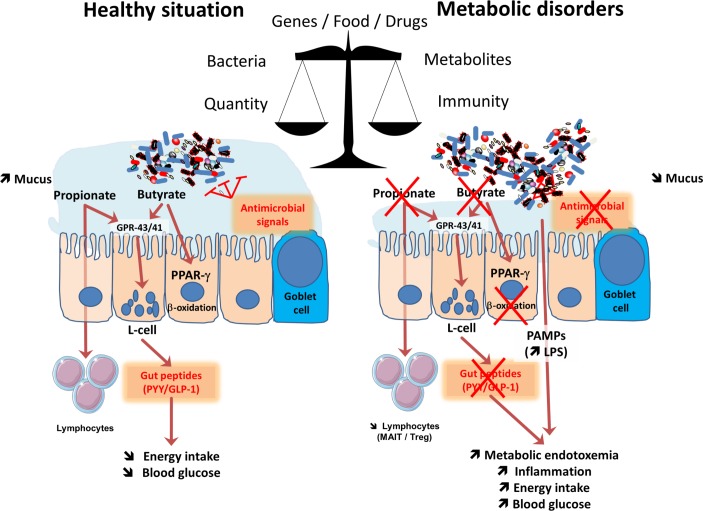
“Butyrate activates PPAR-γ leading to beta-oxidation and oxygen consumption, a phenomenon contributing to maintaining anaerobic condition in the gut lumen [239].”
From Gut-pancreas-liver Axis as a target for treatment of NAFLD/NASH (2020) · cites this paper as [239]
The cited source says what the claim attributes to it.
In the citing paper
“Dysbiosis is associated with increased intestinal permeability, which is known as the “leaky gut syndrome” (Figure 3) [112,113,114,115,116].”
From Bone diseases in patients with chronic liver disease (2019) · cites this paper as [116]
Self-check
Percentages, sums and reported differences re-computed from the paper’s own numbers.
The self-check needs the paper’s full text.
Citations
Cites
An obesity-associated gut microbiome with increased capacity for energy harvest
Turnbaugh, P. J., Ley, R. E., Mahowald, M. A., Magrini, V., Mardis, E. R., & Gordon, J. I. (2006) · Nature · doi:10.1038/nature05414 · Cited by 12,444 · cited 1×
“60 Since this discovery, not all papers have been able to replicate this finding, which gives rise to the following question: should we focus only on the general composition at the phylum level or should we go deeper (ie, the genus and species levels)?”
BackgroundHill (2014) · doi:10.1038/nrgastro.2014.66 · Cited by 9,592 · cited 1×
“129 Prebiotics : These are substrates that are selectively utilised by host microorganisms conferring health benefits.”
BackgroundA metagenome-wide association study of gut microbiota in type 2 diabetes
Qin, J., Li, Y., Cai, Z., Li, S., Zhu, J., Zhang, F., Liang, S., Zhang, W., Guan, Y., Shen, D., et al. (2012) · Nature · doi:10.1038/nature11450 · Cited by 6,762 · cited 1×
“118 122 Thus, one may argue that we should take into account of such confounding factor for all the future studies, including neurodegenerative disorders.”
BackgroundMetabolic Endotoxemia Initiates Obesity and Insulin Resistance
Cani, P. D., Amar, J., Iglesias, M. A., Poggi, M., Knauf, C., Bastelica, D., Neyrinck, A. M., Fava, F., Tuohy, K. M., Chabo, C., et al. (2007) · Diabetes · doi:10.2337/db06-1491 · Cited by 6,638
Self-citationGut microbiome influences efficacy of PD-1-based immunotherapy against epithelial tumors
Routy, B., Le Chatelier, E., Derosa, L., Duong, C. P. M., Alou, M. T., Daillère, R., Fluckiger, A., Messaoudene, M., Rauber, C., Roberti, M. P., et al. (2018) · Science · doi:10.1126/science.aan3706 · Cited by 5,671
Gibson, G. R., Hutkins, R., Sanders, M. E., Prescott, S. L., Reimer, R. A., Salminen, S. J., Scott, K., Stanton, C., Swanson, K. S., Cani, P. D., et al. (2017) · Nature Reviews Gastroenterology & Hepatology · doi:10.1038/nrgastro.2017.75 · Cited by 5,634
Self-citationCross-talk between Akkermansia muciniphila and intestinal epithelium controls diet-induced obesity
Everard, A., Belzer, C., Geurts, L., Ouwerkerk, J. P., Druart, C., Bindels, L. B., Guiot, Y., Derrien, M., Muccioli, G. G., Delzenne, N. M., et al. (2013) · Proceedings of the National Academy of Sciences · doi:10.1073/pnas.1219451110 · Cited by 4,511
Self-citationIntestinal microbiota metabolism of l-carnitine, a nutrient in red meat, promotes atherosclerosis
Koeth, R. A., Wang, Z., Levison, B. S., Buffa, J. A., Org, E., Sheehy, B. T., Britt, E. B., Fu, X., Wu, Y., Li, L., et al. (2013) · Nature Medicine · doi:10.1038/nm.3145 · Cited by 4,386
Anticancer immunotherapy by CTLA-4 blockade relies on the gut microbiota
Vétizou, M., Pitt, J. M., Daillère, R., Lepage, P., Waldschmitt, N., Flament, C., Rusakiewicz, S., Routy, B., Roberti, M. P., Duong, C. P. M., et al. (2015) · Science · doi:10.1126/science.aad1329 · Cited by 3,488
Regulation of inflammatory responses by gut microbiota and chemoattractant receptor GPR43
Maslowski, K. M., Vieira, A. T., Ng, A., Kranich, J., Sierro, F., Yu, D., Schilter, H. C., Rolph, M. S., Mackay, F., Artis, D., et al. (2009) · Nature · doi:10.1038/nature08530 · Cited by 3,241 · cited 1×
“53 Notably, propionate also regulates immune cells to produce antimicrobial factors and, therefore, may act as an immune regulator, 54 including a reduction of cancer cell proliferation.”
Background
Research works printed but not linked: 1
- 10.2337/diabetes · doi:10.2337/diabetes · Paper page
Cited by
Items 401–500 of 1,000
Yan, S., Tian, S., Meng, Z., Yan, J., Jia, M., Li, R., Zhou, Z., & Zhu, W. (2020) · Chemosphere · doi:10.1016/j.chemosphere.2020.127506 · Cited by 42
Yu, L., Gao, Y., Ye, Z., Duan, H., Zhao, J., Zhang, H., Narbad, A., Tian, F., Zhai, Q., & Chen, W. (2023) · Critical Reviews in Food Science and Nutrition · doi:10.1080/10408398.2023.2217727 · Cited by 42
Human OMICs and Computational Biology Research in Africa: Current Challenges and Prospects
Hamdi, Y., Zass, L. J., Othman, H., Radouani, F., Allali, I., Hanachi, M., Okeke, C. J., Chaouch, M., Tendwa, M. B., Samtal, C., et al. (2021) · OMICS A Journal of Integrative Biology · doi:10.1089/omi.2021.0004 · Cited by 42
Mass spectrometry-based fecal metabolome analysis
Xu, J., Zhang, Q., Zheng, J., Yuan, B., & Feng, Y. (2019) · TrAC Trends in Analytical Chemistry · doi:10.1016/j.trac.2018.12.027 · Cited by 42
Traversi, D., Rabbone, I., Scaioli, G., Vallini, C., Carletto, G., Racca, I., Ala, U., Durazzo, M., Collo, A., Ferro, A., et al. (2020) · Scientific Reports · doi:10.1038/s41598-020-74678-6 · Cited by 42
Metabolic networks of the human gut microbiota
Selber‐Hnatiw, S., Sultana, T., Tse, W., Abdollahi, N., Abdullah, S., Rahbani, J. A., Alazar, D., Alrumhein, N. J., Aprikian, S., Arshad, R., et al. (2019) · Microbiology · doi:10.1099/mic.0.000853 · Cited by 41
Role of Intestinal Microbes in Chronic Liver Diseases
Xu, M., Luo, K., Li, J., Li, Y., Zhang, Y., Yuan, Z., Xu, Q., & Wu, X. (2022) · International Journal of Molecular Sciences · doi:10.3390/ijms232012661 · Cited by 41
Fecal Microbiome Composition Does Not Predict Diet‐Induced TMAO Production in Healthy Adults
Ferrell, M., Bazeley, P. S., Wang, Z., Levison, B. S., Li, X. S., Jia, X., Krauss, R. M., Knight, R. D., Lusis, A. J., García-García, J. C., et al. (2021) · Journal of the American Heart Association · doi:10.1161/jaha.121.021934 · Cited by 41
Mancabelli, L., Milani, C., Lugli, G. A., Fontana, F., Turroni, F., van Sinderen, D., & Ventura, M. (2020) · Microorganisms · doi:10.3390/microorganisms8010131 · Cited by 41
Cortés-Martín, A., Colmenarejo, G., Selma, M. V., & Espín, J. C. (2020) · Scientific Reports · doi:10.1038/s41598-020-64833-4 · Cited by 41
Xu, M.-Y., Guo, C.-C., Li, M., Lou, Y.-H., Chen, Z., Liu, B., & Lan, L. (2022) · Frontiers in Cellular and Infection Microbiology · doi:10.3389/fcimb.2022.1040749 · Cited by 41
Ikeda, T., Aida, M., Yoshida, Y., Matsumoto, S., Tanaka, M., Nakayama, J., Nagao, Y., Nakata, R., Oki, E., Akahoshi, T., et al. (2020) · British journal of surgery · doi:10.1002/bjs.11654 · Cited by 41
The Role of Gut Microbiome in Irritable Bowel Syndrome: Implications for Clinical Therapeutics
Zhao, Y., Zhu, S., Dong, Y., Xie, T., Chai, Z., Gao, X., Dai, Y., & Wang, X. (2024) · Biomolecules · doi:10.3390/biom14121643 · Cited by 41
Bhandarkar, N. S., Mouatt, P., Goncalves, P., Thomas, T., Brown, L., & Panchal, S. K. (2020) · The FASEB Journal · doi:10.1096/fj.201902416rr · Cited by 41
Yarmohammadi, M., Yadegar, A., Ebrahimi, M. T., & Zali, M. R. (2020) · Probiotics and Antimicrobial Proteins · doi:10.1007/s12602-020-09721-z · Cited by 41
The Aged Intestine: Performance and Rejuvenation
Wang, Q., Qi, Y., Shen, W., Xu, J., Wang, L., Chen, S., Hou, T., & Si, J. (2021) · Aging and Disease · doi:10.14336/ad.2021.0202 · Cited by 40
Pinto, F., Silva, A. A. M., & de Souza, S. L. (2022) · Nutrition Reviews · doi:10.1093/nutrit/nuab108 · Cited by 40
Sun, J., Zhao, F., Lin, B., Feng, J., Wu, X. F., Liu, Y., Zhao, L., Zhu, B., & Wei, Y. (2020) · Frontiers in Pharmacology · doi:10.3389/fphar.2020.598170 · Cited by 40
Bush, J., & Alfa, M. J. (2020) · BMC Nutrition · doi:10.1186/s40795-020-00398-9 · Cited by 40
Carbohydrate-Based Prebiotics in Targeted Modulation of Gut Microbiome
Lam, K., & Cheung, P. C. K. (2019) · Journal of Agricultural and Food Chemistry · doi:10.1021/acs.jafc.9b04811 · Cited by 40
Proanthocyanidins in grape seeds and their role in gut microbiota-white adipose tissue axis
Ferreira, Y. A. M., Jamar, G., Estadella, D., & Pisani, L. P. (2022) · Food Chemistry · doi:10.1016/j.foodchem.2022.134405 · Cited by 40
The Effect of Radiation and Chemoradiation Therapy on the Head and Neck Mucosal Microbiome: A Review
Zagury‐Orly, I., Khaouam, N., Noujaim, J. C., Desrosiers, M. Y., & Maniakas, A. (2021) · Frontiers in Oncology · doi:10.3389/fonc.2021.784457 · Cited by 40
Abedi, R., Raoof, J. B., Hashkavayi, A. B., Darbandi, Z. J., Abedi, P., & Darband, G. B. (2025) · Talanta · doi:10.1016/j.talanta.2025.128330 · Cited by 40
Hawkins, K. G., Casolaro, T. C., Brown, J. A., Edwards, D. A., & Wikswo, J. P. (2020) · Clinical Pharmacology & Therapeutics · doi:10.1002/cpt.1870 · Cited by 39
Fecal microbiota transplantation: present and future
Cha, R. R., & Sonu, I. S. (2025) · Clinical Endoscopy · doi:10.5946/ce.2024.270 · Cited by 39
Rauch, C., Mika, A. S., McCubbin, A. J., Huschtscha, Z., & Costa, R. J. S. (2022) · Frontiers in Nutrition · doi:10.3389/fnut.2022.1003620 · Cited by 39
Biosensors for point-of-care testing and personalized monitoring of gastrointestinal microbiota
Ngashangva, L., & Chattopadhyay, S. (2023) · Frontiers in Microbiology · doi:10.3389/fmicb.2023.1114707 · Cited by 39
Research Progress of Fecal Microbiota Transplantation in Liver Diseases
Zhao, Y., Chen, G., Xu, J., Chen, D., Yang, B., Chen, Z., & Wei, L. (2023) · Journal of Clinical Medicine · doi:10.3390/jcm12041683 · Cited by 39
Gut Microbiota Regulation of AHR Signaling in Liver Disease
Wang, B., Zhou, Z., & Li, L. (2022) · Biomolecules · doi:10.3390/biom12091244 · Cited by 39
Recent review on selected xenobiotics and their impacts on gut microbiome and metabolome
Jin, Y., Chi, J., LoMonaco, K., Boon, A., & Gu, H. (2023) · TrAC Trends in Analytical Chemistry · doi:10.1016/j.trac.2023.117155 · Cited by 39
The gut microbiome in subclinical atherosclerosis: a population-based multiphenotype analysis
Zhu, S., Xu, K., Jiang, Y., Zhu, C., Suo, C., Cui, M., Wang, Y., Yuan, Z., Xue, J., Wang, J., et al. (2021) · Rheumatology · doi:10.1093/rheumatology/keab309 · Cited by 39
Gut Microbiota and Human Body Interactions; Its Impact on Health: A Review
Hajiagha, M. N., Taghizadeh, S., Asgharzadeh, M., Dao, S., Ganbarov, K., Köse, Ş., & Kafil, H. S. (2021) · Current Pharmaceutical Biotechnology · doi:10.2174/1389201022666210104115836 · Cited by 39
Lou, F., Luo, S., Kang, N., Yan, L., Long, H., Yang, L., Wang, H., Liu, Y., Pu, J., Xie, P. P., et al. (2024) · Pharmacological Research · doi:10.1016/j.phrs.2024.107214 · Cited by 38
Groot, H. E., van de Vegte, Y. J., Verweij, N., Lipšic, E., Karper, J. C., & van der Harst, P. (2020) · Scientific Reports · doi:10.1038/s41598-020-70724-5 · Cited by 38
An efficient and scalable top-down method for predicting structures of microbial communities
Ansari, A. F., Reddy, Y. B. S., Raut, J. S., & Dixit, N. M. (2021) · Nature Computational Science · doi:10.1038/s43588-021-00131-x · Cited by 38
How we decide what to eat: Toward an interdisciplinary model of gut–brain interactions
Plaßmann, H., Schelski, D. S., Simon, M., & Koban, L. (2021) · Wiley Interdisciplinary Reviews Cognitive Science · doi:10.1002/wcs.1562 · Cited by 38
Modulatory role of the endocannabinoidome in the pathophysiology of the gastrointestinal tract
Lian, J., Casari, I., & Falasca, M. (2021) · Pharmacological Research · doi:10.1016/j.phrs.2021.106025 · Cited by 38
Sexual Dimorphism in Lipid Metabolism and Gut Microbiota in Mice Fed a High-Fat Diet
Zhu, Q., Qi, N., Shen, L., Lo, C. C., Xu, M., Duan, Q., Ollberding, N. J., Wu, Z. B., Hui, D. Y., Tso, P., et al. (2023) · Nutrients · doi:10.3390/nu15092175 · Cited by 38
Connecting the Human Microbiome and Pancreatic Cancer
Sexton, R. E., Uddin, M. H., Bannoura, S. F., Khan, H. Y., Mzannar, Y., Li, Y., Aboukameel, A., Al-Hallak, M. N., Al-Share, B. A., Mohamed, A., et al. (2022) · Cancer and Metastasis Reviews · doi:10.1007/s10555-022-10022-w · Cited by 38
Luo, C., Xia, B., Zhong, R., Shen, D., Li, J., Chen, L., & Zhang, H. (2022) · Frontiers in Nutrition · doi:10.3389/fnut.2021.783688 · Cited by 38
Poolchanuan, P., Unagul, P., Thongnest, S., Wiyakrutta, S., Ngamrojanavanich, N., Mahidol, C., Ruchirawat, S., & Kittakoop, P. (2020) · Scientific Reports · doi:10.1038/s41598-020-66251-y · Cited by 37
Rodrigues, V. C. D. C., Duque, A. L. R. F., Fino, L. D. C., Simabuco, F. M., Sartoratto, A., Cabral, L., Noronha, M. F., Sivieri, K., & Antunes, A. E. C. (2020) · British Journal Of Nutrition · doi:10.1017/s0007114520000896 · Cited by 37
Polystyrene microplastics induce potential toxicity through the gut-mammary axis
Wang, Z., Wang, S., Liu, S., Wang, Z., Li, F., Bu, Q., & An, X. (2025) · npj Science of Food · doi:10.1038/s41538-025-00517-5 · Cited by 37
Sardá, F. A. H., Giuntini, E. B., de Oliveira, A. F., de Souza, G. S. F., do Prado, S. B. R., Taddei, C. R., TADINI, C. C., Bittinger, K. L., Bushman, F. D., de Menezes, E. W., et al. (2025) · npj Biofilms and Microbiomes · doi:10.1038/s41522-025-00817-4 · Cited by 37
The Role of Gut Microbiota in Hypertension Pathogenesis and the Efficacy of Antihypertensive Drugs
Xiong, Y., Xiong, Y., Zhu, P., Wang, Y., Yang, H., Zhou, R., Shu, Y., Zhou, H., & Li, Q. (2021) · Current Hypertension Reports · doi:10.1007/s11906-021-01157-2 · Cited by 37
Hypoxia-tolerant apical-out intestinal organoids to model host-microbiome interactions
Kakni, P., Jutten, B., Carvalho, D. J., Penders, J., Truckenmüller, R. K., Habibović, P., & Giselbrecht, S. (2023) · Journal of Tissue Engineering · doi:10.1177/20417314221149208 · Cited by 37
Lipid A heterogeneity and its role in the host interactions with pathogenic and commensal bacteria
Saha, S., Pupo, E., Zariri, A., & van der Ley, P. (2022) · microLife · doi:10.1093/femsml/uqac011 · Cited by 37
Characteristics of the gut microbiome profile in obese patients with colorectal cancer
Shoji, M., Sasaki, Y., Abe, Y., Nishise, S., Yaoita, T., Yagi, M., Mizumoto, N., Kon, T., Onozato, Y., Sakai, T., et al. (2021) · JGH Open · doi:10.1002/jgh3.12529 · Cited by 37
Du, M., Liu, X., Ji, X., Wang, Y., Liu, X., Zhao, C., Jin, E., Gu, Y., Wang, H., & Zhang, F. (2025) · Frontiers in Nutrition · doi:10.3389/fnut.2024.1494348 · Cited by 37
Does the Gut Microbiota Modulate Host Physiology through Polymicrobial Biofilms?
Yang, J., Yang, Y., Ishii, M., Nagata, M., Aw, W., Obana, N., Tomita, M., Nomura, N., & Fukuda, S. (2020) · Microbes and Environments · doi:10.1264/jsme2.me20037 · Cited by 36
Wang, L., Chen, J., Chen, Q., Song, H., Wang, Z., Wen, X., Jin, S., Song, X., Yang, H., & Zhao, W. (2023) · Oxidative Medicine and Cellular Longevity · doi:10.1155/2023/6480848 · Cited by 36
The application of ‘omics’ to pulmonary arterial hypertension
Harbaum, L., Rhodes, C. J., Otero‐Núñez, P., Wharton, J., & Wilkins, M. R. (2020) · British Journal of Pharmacology · doi:10.1111/bph.15056 · Cited by 36
Gut microbiota and obesity: causally linked?
Cani, P. D., & Hul, M. V. (2020) · Expert Review of Gastroenterology & Hepatology · doi:10.1080/17474124.2020.1758064 · Cited by 36
Self-citationBone Homeostasis and Gut Microbial-Dependent Signaling Pathways
Zhong, X., Zhang, F., Yin, X., Cao, H., Wang, X., Liu, D., Chen, J., & Chen, X. (2021) · Journal of Microbiology and Biotechnology · doi:10.4014/jmb.2104.04016 · Cited by 36
Prakriti phenotypes as a stratifier of gut microbiome: A new frontier in personalized medicine?
Jnana, A., Murali, T. S., Guruprasad, K. P., & Satyamoorthy, K. (2020) · Journal of Ayurveda and Integrative Medicine · doi:10.1016/j.jaim.2020.05.013 · Cited by 36
Comparative analysis of oral-gut microbiota between captive and wild long-tailed macaque in Thailand
Sawaswong, V., Praianantathavorn, K., Chanchaem, P., Khamwut, A., Kemthong, T., Hamada, Y., Malaivijitnond, S., & Payungporn, S. (2021) · Scientific Reports · doi:10.1038/s41598-021-93779-4 · Cited by 36
Żebrowska-Różańska, P., Łaczmańska, I., & Łaczmański, Ł. (2021) · Frontiers in Cellular and Infection Microbiology · doi:10.3389/fcimb.2021.630052 · Cited by 36
Modification of Gut Microbiota in Inflammatory Arthritis: Highlights and Future Challenges
Horta‐Baas, G., Sandoval-Cabrera, A., & Romero‐Figueroa, M. D. S. (2021) · Current Rheumatology Reports · doi:10.1007/s11926-021-01031-9 · Cited by 35
Hou, K., Zhang, S., Wu, Z., Zhu, D., Chen, F., Lei, Z.-N., Liu, W., Xiao, C., & Chen, Z.-S. (2022) · Biomolecules and Biomedicine · doi:10.17305/bjbms.2021.6323 · Cited by 35
Microbes with higher metabolic independence are enriched in human gut microbiomes under stress
Veseli, I., Chen, Y. T., Schechter, M. S., Vanni, C., Fogarty, E. C., Watson, A. R., Jabrì, B., Blekhman, R., Willis, A. D., Yu, M., et al. (2025) · eLife · doi:10.1101/2023.05.10.540289 · Cited by 35
It takes guts to learn: machine learning techniques for disease detection from the gut microbiome
Curry, K. D., Nute, M., & Treangen, T. J. (2021) · Emerging Topics in Life Sciences · doi:10.1042/etls20210213 · Cited by 35
Jin, J. B., Cha, J. W., Shin, I., Jeon, J. Y., Hyun, K., & Pan, C. (2020) · Journal of the Science of Food and Agriculture · doi:10.1002/jsfa.10321 · Cited by 35
Ogden, H. B., Fallowfield, J. L., Child, R. B., Davison, G., Fleming, S. C., Edinburgh, R. M., Delves, S. K., Millyard, A., Westwood, C. S., & Layden, J. D. (2020) · Physiological Reports · doi:10.14814/phy2.14374 · Cited by 35
Martellet, M. C., Majolo, F., Ducati, R. G., de Souza, C. F. V., & Goettert, M. I. (2022) · Nutrition · doi:10.1016/j.nut.2022.111772 · Cited by 35
The gut–bone axis in osteoporosis: a multifaceted interaction with implications for bone health
Gu, C., Du, H., Li, N., Zhou, Y., Li, S., Sun, Y., Han, Y., Xu, X., & Li, X. (2025) · Frontiers in Endocrinology · doi:10.3389/fendo.2025.1569152 · Cited by 35
Li, X., Wang, Y., Jiang, Y., Liu, C., Zhang, W., Chen, W., Tian, L., Sun, J., Lai, C., & Bai, W. (2024) · Food Research International · doi:10.1016/j.foodres.2024.114082 · Cited by 35
Hou, F., Tang, J., Liu, Y., Tan, Y., Wang, Y., Zheng, L., Liang, D., Lin, Y., Wang, L., Pan, Z., et al. (2023) · Microbiology Spectrum · doi:10.1128/spectrum.03361-22 · Cited by 34
Hul, M. V., Karnik, K., Canene‐Adams, K., de Souza, M., den Abbeele, P. V., Marzorati, M., Delzenne, N. M., Everard, A., & Cani, P. D. (2020) · American Journal of Physiology-Endocrinology and Metabolism · doi:10.1152/ajpendo.00108.2020 · Cited by 34
Self-citationTargeting gut microbiota with a complex mix of dietary fibers improves metabolic diseases
Cani, P. D. (2018) · Kidney International · doi:10.1016/j.kint.2018.11.012 · Cited by 34
Self-citationGut-lung immunometabolic crosstalk in sepsis: from microbiota to respiratory failure
Li, Q., Song, X.-C., Li, K., & Wang, J. (2025) · Frontiers in Medicine · doi:10.3389/fmed.2025.1685044 · Cited by 34
Free fatty acid receptor 4 modulates dietary sugar preference via the gut microbiota
Zhang, T., Wang, W., Li, J., Ye, X., Wang, Z., Cui, S., Shen, S., Liang, X., Chen, Y. Q., & Zhu, S. (2025) · Nature Microbiology · doi:10.1038/s41564-024-01902-8 · Cited by 34
Transcriptomic microRNA Profiling of Dendritic Cells in Response to Gut Microbiota-Secreted Vesicles
Díaz‐Garrido, N., Bonnin, S., Riera, M., Gíménez, R., Badía, J., & Baldomà, L. (2020) · Cells · doi:10.3390/cells9061534 · Cited by 34
Liu, C., Liu, J., Wang, W., Yang, M., Chi, K., Xu, Y., & Guo, N. (2023) · Journal of Agricultural and Food Chemistry · doi:10.1021/acs.jafc.3c04526 · Cited by 34
Nada, H. G., Sudha, T., Darwish, N. H. E., & Mousa, S. A. (2020) · PharmaNutrition · doi:10.1016/j.phanu.2020.100219 · Cited by 34
Faecal (or intestinal) microbiota transplant: a tool for repairing the gut microbiome
Ghani, R., Chrysostomou, D., Roberts, L. A., Pandiaraja, M., Marchesi, J. R., & Mullish, B. H. (2024) · Gut Microbes · doi:10.1080/19490976.2024.2423026 · Cited by 33
Popa, A. D., Niță, O., Gherasim, A., Enache, A. I., Caba, L., Mihalache, L., & Arhire, L. I. (2023) · Nutrients · doi:10.3390/nu15092095 · Cited by 33
Singh, V., Muthuramalingam, K., Kim, Y., Park, S., Kim, S. H., Lee, J., Hyun, C. L., Unno, T., & Cho, M. (2021) · Applied Biological Chemistry · doi:10.1186/s13765-020-00572-4 · Cited by 33
Ilie, O., Ciobica, A. S., McKenna, J., Doroftei, B., & Mavroudis, I. A. (2020) · Oxidative Medicine and Cellular Longevity · doi:10.1155/2020/4518023 · Cited by 33
Ullah, H., Товчига, О. В., Daglia, M., & Khan, H. Z. (2021) · Current Neuropharmacology · doi:10.2174/1570159x19666210217084827 · Cited by 33
Wang, Q., Han, Y., Pang, L., Zhou, Z., & Lijuan, D. (2025) · Frontiers in Medicine · doi:10.3389/fmed.2025.1620247 · Cited by 33
Kim, M., Lee, Y. J., Kim, T., & Won, E. J. (2021) · Microorganisms · doi:10.3390/microorganisms10010034 · Cited by 33
Kabwe, M., Meehan-Andrews, T., Ku, H., Petrovski, S., Batinovic, S., Chan, H. T., & Tucci, J. (2021) · Frontiers in Microbiology · doi:10.3389/fmicb.2021.650849 · Cited by 33
Chen, X., Zhao, H., Meng, F., Zhou, L., Lu, Z., & Lu, Y. (2023) · Food Science and Human Wellness · doi:10.1016/j.fshw.2023.03.012 · Cited by 33
Crichton, M., Marshall, S., Marx, W., Isenring, E. A., Vázquez-Campos, X., Dawson, S. L., & Lohning, A. E. (2023) · Journal of Nutrition · doi:10.1016/j.tjnut.2023.09.002 · Cited by 32
The Human Microbiome: History and Future
Hayes, A. W., & Sahu, S. C. (2020) · Journal of Pharmacy & Pharmaceutical Sciences · doi:10.18433/jpps31525 · Cited by 32
Zhou, F., Liu, B.-D., Liu, X., Li, Y., Wang, L., Huang, J., Luo, G., & Wang, X. (2021) · Metabolites · doi:10.3390/metabo11050298 · Cited by 32
Toxico‐Metabolomics of Engineered Nanomaterials: Progress and Challenges
Ahmad, F., Wang, X., & Li, W. (2019) · Advanced Functional Materials · doi:10.1002/adfm.201904268 · Cited by 32
Paul, P., Kaul, R., & Châari, A. (2022) · International Journal of Molecular Sciences · doi:10.3390/ijms232314838 · Cited by 32
Washed microbiota transplantation improves patients with high blood glucose in South China
Wu, L., Li, M.-Q., Xie, Y.-T., Zhang, Q., Lu, X., Liu, T., Lin, W.-Y., Xu, J., Wu, Q., & He, X. (2022) · Frontiers in Endocrinology · doi:10.3389/fendo.2022.985636 · Cited by 32
Recovery of human gut microbiota genomes with third-generation sequencing
Li, Y., Jin, Y., Zhang, J., Pan, H., Wu, L., Liu, D., Liu, J., Hu, J., & Shen, J. (2021) · Cell Death and Disease · doi:10.1038/s41419-021-03829-y · Cited by 32
Prado, C. E., Espinoza, A., Martínez, E., Petrosino, J. F., Riquelme, E. M., Martín, A. J. M., & Pacheco, R. (2023) · Journal of Neuroinflammation · doi:10.1186/s12974-023-02815-9 · Cited by 32
Gao, J., Mao, K., Wang, X., Mi, S., Fu, M., Li, X., Xiao, J., Simal‐Gándara, J., & Sang, Y. (2021) · Journal of Agricultural and Food Chemistry · doi:10.1021/acs.jafc.1c02430 · Cited by 32
Zhang, J., Zhang, H., Wang, L., Zhang, K., Qiu, Z., Zhang, K., Yue, C., Zhang, Y., Zhao, X., & Li, J. (2021) · Annals of Microbiology · doi:10.1186/s13213-021-01630-y · Cited by 32
Current Concepts in Probiotic Safety and Efficacy
Churin, A. A., Sokolyanskaya, L. O., Lukina, A. P., & Karnachuk, O. V. (2026) · Nutrients · doi:10.3390/nu18040696 · Cited by 31
“…are crucial for non-traditional probiotic candidates derived from gut commensals that lack a long history of safe use—such as Akkermansia , Faecalibacterium , Bacteroides , and Clostridium species—where in silico analyses complement phenotypic testing to accelerate safe development [153,162].”
Association between Helicobacter py lori infection and Guillain‐Barré Syndrome: A meta‐analysis
Dardiotis, E., Sokratous, M., Tsouris, Z., Siokas, V., Mentis, A. A., Aloizou, A., Michalopoulou, A., Bogdanos, D. P., Xiromerisiou, G., Deretzi, G., et al. (2020) · European Journal of Clinical Investigation · doi:10.1111/eci.13218 · Cited by 31
Rocks, T., West, M. L., Hockey, M., Aslam, H., Lane, M. M., Loughman, A., Jacka, F. N., & Ruusunen, A. A. (2020) · Progress in Neuro-Psychopharmacology and Biological Psychiatry · doi:10.1016/j.pnpbp.2020.110201 · Cited by 31
Novel insights on gut microbiota manipulation and immune checkpoint inhibition in cancer (Review)
Vivarelli, S., Falzone, L., Leonardi, G. C., Salmeri, M., & Libra, M. (2021) · International Journal of Oncology · doi:10.3892/ijo.2021.5255 · Cited by 31
Lin, D. M., Howard, A., Raihane, A. S., Napoli, M. D., Cáceres, E. L., Ortiz, M., Davis, J., Abdelrahman, A. N., & Divani, A. A. (2025) · Current Neurology and Neuroscience Reports · doi:10.1007/s11910-025-01410-0 · Cited by 31
Ding, Q., Tian, J., Li, M., Lian, F., Zhao, L., Wei, X., Han, L., Zheng, Y., Gao, Z., Yang, H., et al. (2020) · Frontiers in Cellular and Infection Microbiology · doi:10.3389/fcimb.2020.530160 · Cited by 31
Material Engineering in Gut Microbiome and Human Health
Yang, L., Hung, L. Y., Zhu, Y., Ding, S., Margolis, K. G., & Leong, K. W. (2022) · Research · doi:10.34133/2022/9804014 · Cited by 31
Metadata
- Authors
- Cani, P. D.
- Affiliations
- Walloon Excellence in Lifesciences and Biotechnology (BE)
- Corresponding author
- Cani, Patrice D
- ORCID
- Cani, Patrice D
- Venue
- Gut
- Publisher
- BMJ
- Published
- 2018-06-22
- Volume
- 67
- Issue
- 9
- Pages
- 1716-1725
- ISSN
- 0017-5749 (ISSN-L)
- 1468-3288
- PMC
- PMC6109275
- OpenAlex
- W2809439583
- Cited by
- 1,386
- References
- 138
- Citations by year
- 2026: 95 · 2025: 134 · 2024: 181 · 2023: 179 · 2022: 188 · 2021: 204 · 2020: 244 · 2019: 139 · 2018: 21
- FWCI
- 14.84
- Type
- journal article
- Language
- en
- Open access
- hybrid
- doi.org
- Licence
- cc-by-nc
- Locations
- Gut (publishedVersion, cc-by-nc)
- Europe PMC (PubMed Central) (publishedVersion, cc-by-nc)
- PubMed Central (publishedVersion, cc-by-nc)
- PubMed (publishedVersion)
- Digital Access to Libraries (Université catholique de Louvain (UCL), l'Université de Namur (UNamur) and the Université Saint-Louis (USL-B)) (submittedVersion, other-oa)
- HighWire Press Open Archive (submittedVersion)
- Funders
- FP7 Ideas: European Research Council
- Funds Baillet-Latour
- Fonds De La Recherche Scientifique - FNRS
- WELBIO
- Topics
- Life Sciences › Biochemistry, Genetics and Molecular Biology › Molecular Biology › Gut microbiota and health
- Health Sciences › Dentistry › Periodontics › Oral microbiology and periodontitis research
- Health Sciences › Medicine › Gastroenterology › Gastrointestinal motility and disorders
- Keywords
- gut microbiota, human gut microbiome, metabolic disorders, obesity, diabetes mellitus, liver disease, cancer, neurodegenerative diseases, microbiota-based therapy, metagenomics, dietary factors, intestinal motility, stool consistency, Prevotella copri, Akkermansia muciniphila
- MeSH terms
- Gastrointestinal Microbiome, Diabetes Mellitus, Humans, Liver Diseases, Metabolic Diseases, Neoplasms, Obesity, Prevotella, Evidence-Based Medicine, Neurodegenerative Diseases, Verrucomicrobia, Dysbiosis
About these checks
Registry, retraction, Cites and statistics results are computed, not judged, with one exception: a printed reference that no index lists is read once by a model before it counts as a citation error. Claims are extracted by a model and kept only when their quote appears verbatim in the text; each cited source is then checked, with a model’s help, for whether it says what the claim relies on. Those verdicts can be wrong — read the claim’s quote and the cited source before relying on one.
Statistics and arithmetic are recomputed, not judged.
Confidence bands are shown only for fields calibrated on our annotated test set. None is calibrated yet, so no band is shown.
What counts as a claim ›How we measure confidence ›How we check this ›
Are you an author, or do you see a problem with this page? Request a review
Data sources
Bibliographic data: Semantic Scholar, OpenAlex, Crossref.
Contains information from the Semantic Scholar Academic Graph Datasets, made available under the ODC Attribution License (ODC-BY 1.0).
Semantic Scholar’s data is described in: Kinney, R., et al. (2023). The Semantic Scholar Open Data Platform. arXiv:2301.10140.
