

Human gut microbiome: hopes, threats and promises
Open accessThe DOI matches its Crossref record; 136 of the 138 references it cites were found in a registry or an index.
Abstract
The microbiome has received increasing attention over the last 15 years. Although gut microbes have been explored for several decades, investigations of the role of microorganisms that reside in the human gut has attracted much attention beyond classical infectious diseases. For example, numerous studies have reported changes in the gut microbiota during not only obesity, diabetes, and liver diseases but also cancer and even neurodegenerative diseases. The human gut microbiota is viewed as a potential source of novel therapeutics. Between 2013 and 2017, the number of publications focusing on the gut microbiota was, remarkably, 12 900, which represents four-fifths of the total number of publications over the last 40 years that investigated this topic. This review discusses recent evidence of the impact of the gut microbiota on metabolic disorders and focus on selected key mechanisms. This review also aims to provide a critical analysis of the current knowledge in this field, identify putative key issues or problems and discuss misinterpretations. The abundance of metagenomic data generated on comparing diseased and healthy subjects can lead to the erroneous claim that a bacterium is causally linked with the protection or the onset of a disease. In fact, environmental factors such as dietary habits, drug treatments, intestinal motility and stool frequency and consistency are all factors that influence the composition of the microbiota and should be considered. The cases of the bacteria Prevotella copri and Akkermansia muciniphila will be discussed as key examples.
Overview
The claims and statistics of this paper haven’t been checked yet.
Free: it reads the open-access text and checks the first 5 claims that cite a source we can check. Create a free account to check every claim.
Integrity signals
Registry
Cites
Statistics
Figures
Verification
Claims the paper makes
The claims and statistics of this paper haven’t been checked yet.
Free: it reads the open-access text and checks the first 5 claims that cite a source we can check. Create a free account to check every claim.
Claims other papers make about this one
Each is checked against this paper’s own text: does it say what the citing paper says it does?
The cited source doesn’t support the claim as written.
In the citing paper
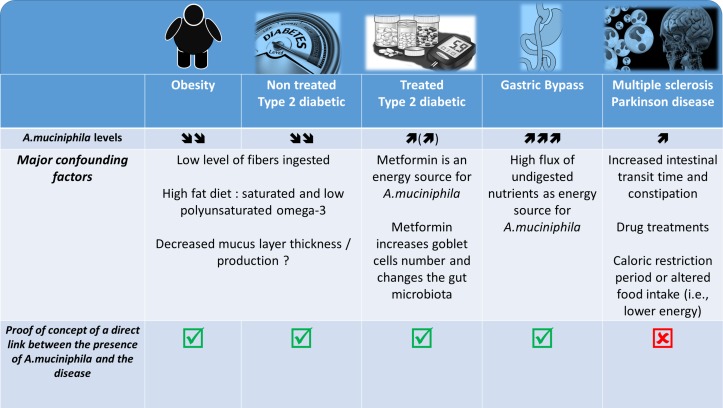
“Akkermansia is a mucin-degrading bacterium and investigations on mice have found that Akkermansia can deplete the intestinal mucosal layer, decrease the number of goblet cells, produce drier stools, slow colonic transit, and impair intestinal barrier function [106–108].”
From The gut–brain axis in early Parkinson’s disease: from prodrome to prevention (2025) · cites this paper as [108]
Checked by a reasoning model — may be wrong.
Experimental — accuracy not yet measuredThe source backs part of the claim, not all of it — or backs it for a different population, condition or comparison.
In the citing paper
“In fact, it has been widely studied that the gut microbiota may produce or transform molecules affecting several aspects of human health, including: host’s metabolism modulation, gut barrier integrity maintenance, xenobiotics and drug metabolism, protection against gastro-intestinal pathogens and host’s immune system modulation [31,32,33,34].”
From Gut Microbiota and Cancer: From Pathogenesis to Therapy (2019) · cites this paper as [34]
Experimental — accuracy not yet measuredThe source backs part of the claim, not all of it — or backs it for a different population, condition or comparison.
In the citing paper
“In particular, these approaches are crucial for non-traditional probiotic candidates derived from gut commensals that lack a long history of safe use—such as Akkermansia, Faecalibacterium, Bacteroides, and Clostridium species—where in silico analyses complement phenotypic testing to accelerate safe development [153,162].”
From Current Concepts in Probiotic Safety and Efficacy (2026) · cites this paper as [162]
Experimental — accuracy not yet measuredThe cited source says what the claim attributes to it.
In the citing paper
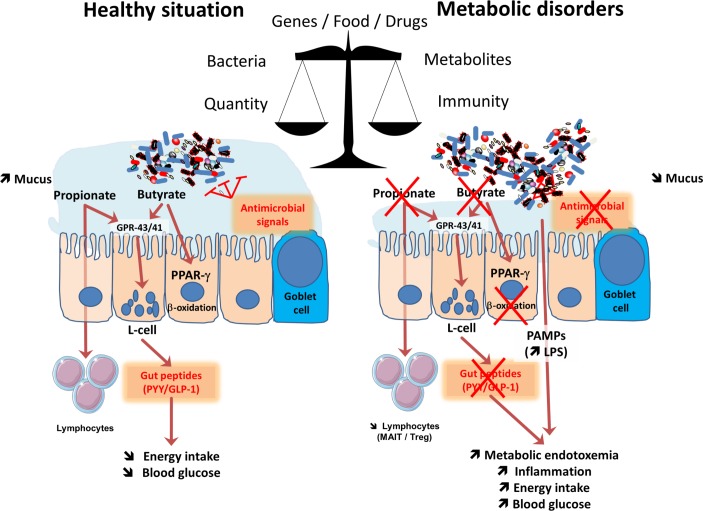
“Butyrate activates PPAR-γ leading to beta-oxidation and oxygen consumption, a phenomenon contributing to maintaining anaerobic condition in the gut lumen [239].”
From Gut-pancreas-liver Axis as a target for treatment of NAFLD/NASH (2020) · cites this paper as [239]
The cited source says what the claim attributes to it.
In the citing paper
“Dysbiosis is associated with increased intestinal permeability, which is known as the “leaky gut syndrome” (Figure 3) [112,113,114,115,116].”
From Bone diseases in patients with chronic liver disease (2019) · cites this paper as [116]
Self-check
Percentages, sums and reported differences re-computed from the paper’s own numbers.
The self-check needs the paper’s full text.
Citations
Cites
An obesity-associated gut microbiome with increased capacity for energy harvest
Turnbaugh, P. J., Ley, R. E., Mahowald, M. A., Magrini, V., Mardis, E. R., & Gordon, J. I. (2006) · Nature · doi:10.1038/nature05414 · Cited by 12,444 · cited 1×
“60 Since this discovery, not all papers have been able to replicate this finding, which gives rise to the following question: should we focus only on the general composition at the phylum level or should we go deeper (ie, the genus and species levels)?”
BackgroundHill (2014) · doi:10.1038/nrgastro.2014.66 · Cited by 9,592 · cited 1×
“129 Prebiotics : These are substrates that are selectively utilised by host microorganisms conferring health benefits.”
BackgroundA metagenome-wide association study of gut microbiota in type 2 diabetes
Qin, J., Li, Y., Cai, Z., Li, S., Zhu, J., Zhang, F., Liang, S., Zhang, W., Guan, Y., Shen, D., et al. (2012) · Nature · doi:10.1038/nature11450 · Cited by 6,762 · cited 1×
“118 122 Thus, one may argue that we should take into account of such confounding factor for all the future studies, including neurodegenerative disorders.”
BackgroundMetabolic Endotoxemia Initiates Obesity and Insulin Resistance
Cani, P. D., Amar, J., Iglesias, M. A., Poggi, M., Knauf, C., Bastelica, D., Neyrinck, A. M., Fava, F., Tuohy, K. M., Chabo, C., et al. (2007) · Diabetes · doi:10.2337/db06-1491 · Cited by 6,638
Self-citationGut microbiome influences efficacy of PD-1-based immunotherapy against epithelial tumors
Routy, B., Le Chatelier, E., Derosa, L., Duong, C. P. M., Alou, M. T., Daillère, R., Fluckiger, A., Messaoudene, M., Rauber, C., Roberti, M. P., et al. (2018) · Science · doi:10.1126/science.aan3706 · Cited by 5,671
Gibson, G. R., Hutkins, R., Sanders, M. E., Prescott, S. L., Reimer, R. A., Salminen, S. J., Scott, K., Stanton, C., Swanson, K. S., Cani, P. D., et al. (2017) · Nature Reviews Gastroenterology & Hepatology · doi:10.1038/nrgastro.2017.75 · Cited by 5,634
Self-citationCross-talk between Akkermansia muciniphila and intestinal epithelium controls diet-induced obesity
Everard, A., Belzer, C., Geurts, L., Ouwerkerk, J. P., Druart, C., Bindels, L. B., Guiot, Y., Derrien, M., Muccioli, G. G., Delzenne, N. M., et al. (2013) · Proceedings of the National Academy of Sciences · doi:10.1073/pnas.1219451110 · Cited by 4,511
Self-citationIntestinal microbiota metabolism of l-carnitine, a nutrient in red meat, promotes atherosclerosis
Koeth, R. A., Wang, Z., Levison, B. S., Buffa, J. A., Org, E., Sheehy, B. T., Britt, E. B., Fu, X., Wu, Y., Li, L., et al. (2013) · Nature Medicine · doi:10.1038/nm.3145 · Cited by 4,386
Anticancer immunotherapy by CTLA-4 blockade relies on the gut microbiota
Vétizou, M., Pitt, J. M., Daillère, R., Lepage, P., Waldschmitt, N., Flament, C., Rusakiewicz, S., Routy, B., Roberti, M. P., Duong, C. P. M., et al. (2015) · Science · doi:10.1126/science.aad1329 · Cited by 3,488
Regulation of inflammatory responses by gut microbiota and chemoattractant receptor GPR43
Maslowski, K. M., Vieira, A. T., Ng, A., Kranich, J., Sierro, F., Yu, D., Schilter, H. C., Rolph, M. S., Mackay, F., Artis, D., et al. (2009) · Nature · doi:10.1038/nature08530 · Cited by 3,241 · cited 1×
“53 Notably, propionate also regulates immune cells to produce antimicrobial factors and, therefore, may act as an immune regulator, 54 including a reduction of cancer cell proliferation.”
Background
Research works printed but not linked: 1
- 10.2337/diabetes · doi:10.2337/diabetes · Paper page
Cited by
Items 701–800 of 1,000
Skrzypecki, J., Niewęgłowska, K., & Samborowska, E. (2020) · Nutrients · doi:10.3390/nu12020387 · Cited by 18
In-silico computational approaches to study microbiota impacts on diseases and pharmacotherapy
Garjan, H. S., Omidi, Y., Asghari, M. P., & Ferdousi, R. (2023) · Gut Pathogens · doi:10.1186/s13099-023-00535-2 · Cited by 18
Decoding the impact of gut microbiota on heart failure
Zhao, S., Dan, L.-X., Huang, R. S., Shen, Z., Huang, D., Wu, P., & Ma, Z. (2025) · Genes & Diseases · doi:10.1016/j.gendis.2025.101592 · Cited by 18
Appiah-Twum, F., Akorli, J. E. B., Okyere, L., Sagoe, K., Osabutey, D., Cappello, M., & Wilson, M. D. (2023) · Scientific Reports · doi:10.1038/s41598-023-38376-3 · Cited by 18
Lee, F., Moore, J., Markouli, M., & Ghusn, W. (2025) · Biomedicines · doi:10.3390/biomedicines13071571 · Cited by 18
Chen, C., Liang, Z., He, Y., Gao, Y., Ouyang, S., Wang, L., Liu, J., & Cao, J. (2024) · Advanced Science · doi:10.1002/advs.202410495 · Cited by 18
Mostafaei, H., Salehi‐Pourmehr, H., Rahnama’i, M. S., Mostafaei, H., Shariat, S. F., & Hajebrahimi, S. (2023) · Life · doi:10.3390/life13020552 · Cited by 18
Ramos, F. M. M., Ribeiro, C. B., Cesar, T. B., Milenkovic, D., Cabral, L., Noronha, M. F., & Sivieri, K. (2023) · Food Science & Nutrition · doi:10.1002/fsn3.3654 · Cited by 17
“Reversal of prediabetic intestinal dysbiosis may be a strategy to combat the development of type 2 diabetes mellitus (Cani, 2018).”
BackgroundUse of the microbiome in the management of children with type 2 diabetes mellitus
Brar, P. C., & Kohn, B. (2019) · Current Opinion in Pediatrics · doi:10.1097/mop.0000000000000781 · Cited by 17
Food systems and future directions
Zeece, M. (2020) · Elsevier eBooks · doi:10.1016/b978-0-12-809434-1.00009-8 · Cited by 17
Son, M. J., Yang, G.-J., Eun-Heui, J., Shim, Y.-H., Kang, S.-J., Hong, J.-E., Kim, Y., Lee, J. E., Chun, J., Park, S., et al. (2019) · Medicine · doi:10.1097/md.0000000000016527 · Cited by 17
Cabello-Olmo, M., Oneca, M., Urtasun, R., Pajares, M. J., Goñi, S., Riezu‐Boj, J. I., Milagro, F. I., Ayo, J., Encío, I., Barajas, M. A., et al. (2023) · Pharmaceutics · doi:10.3390/pharmaceutics15041203 · Cited by 17
Zhang, F., Wang, Y., Wang, M., Tan, C., Huang, S. Q., Mou, H., Wu, K., Peng, L., Fang, Z., Tian, Y., et al. (2024) · Food Chemistry · doi:10.1016/j.foodchem.2024.141317 · Cited by 17
Xue, B., Dai, K., Zhang, X., Wang, S., Li, C., Chen, Z., Yang, X., Xi, Z., Qiu, Z., Shen, Z., et al. (2020) · Chemosphere · doi:10.1016/j.chemosphere.2020.127067 · Cited by 17
Gut microbiota associated with cryptococcal meningitis and dysbiosis caused by anti-fungal treatment
Li, H., Zhang, L., Zhang, K., Huang, Y., Liu, Y., Lu, X., Liao, W., Liu, X., Zhang, Q., & Pan, W. (2023) · Frontiers in Microbiology · doi:10.3389/fmicb.2022.1086239 · Cited by 17
Zhang, J., Hou, L., Lei, S., Li, Y., & Xu, G. (2024) · Ecotoxicology and Environmental Safety · doi:10.1016/j.ecoenv.2024.117522 · Cited by 17
Kim, M., Jung, D.-R., Lee, J.-M., Kim, I., Son, H., Kim, E. S., & Shin, J. (2023) · iScience · doi:10.1016/j.isci.2023.108657 · Cited by 17
Lactobacillus acidophilus DDS-1 Modulates the Gut Microbial Co-Occurrence Networks in Aging Mice
Vemuri, R., Martoni, C., Kavanagh, K., & Eri, R. D. (2022) · Nutrients · doi:10.3390/nu14050977 · Cited by 17
Han, H., Choi, Y. H., Kim, S. Y., Park, J. H., Chung, J., & Na, H. S. (2024) · Frontiers in Microbiology · doi:10.3389/fmicb.2024.1485073 · Cited by 17
Huang, C., Liu, H., Yang, W., Li, Y., Wu, B., Chen, J., Yang, Z., Liao, C., Liu, L., & Zhang, X. (2022) · International Journal of Endocrinology · doi:10.1155/2022/7175250 · Cited by 17
Trivial, Interesting, or Overselling? The Microbiome and “What It Means to Be Human”
Parke, E. C. (2021) · BioScience · doi:10.1093/biosci/biab009 · Cited by 17
Groer, M. E., Miller, E. M., Sarkar, A., Dishaw, L. J., Dutra, S. V. O., Yoo, J. Y., Morgan, K. H., Ji, M., & Ho, T. T. B. (2020) · Nutrients · doi:10.3390/nu12051345 · Cited by 17
Harnessing the therapeutic potential of bacterial extracellular vesicles via functional peptides
Shi, Y., Zheng, Z., Wang, W., & Hu, H. (2025) · Interdisciplinary medicine · doi:10.1002/inmd.20240125 · Cited by 17
Lim, S. Y., Selvaraji, S., Lau, H., & Li, S. F. Y. (2021) · Computers in Biology and Medicine · doi:10.1016/j.compbiomed.2021.105069 · Cited by 16
Ethanol: striking the cardiovascular system by harming the gut microbiota
da Silva, C. B. P., Elias‐Oliveira, J., McCarthy, C. G., Wenceslau, C. F., Carlos, D., & Tostes, R. C. (2021) · American Journal of Physiology-Heart and Circulatory Physiology · doi:10.1152/ajpheart.00225.2021 · Cited by 16
The Microbiome and Metabolic Dysfunction-Associated Steatotic Liver Disease
Beyoğlu, D., & Idle, J. R. (2025) · International Journal of Molecular Sciences · doi:10.3390/ijms26072882 · Cited by 16
Prevention of excessive exercise‐induced adverse effects in rats withBacillus subtilisBSB3
Ducray, H. A. G., Globa, L. P., Pustovyy, O. M., Roberts, M. D., Rudisill, M. E., Vodyanoy, V. J., & Sorokulova, I. B. (2019) · Journal of Applied Microbiology · doi:10.1111/jam.14544 · Cited by 16
Telmisartan induces a specific gut microbiota signature which may mediate its antiobesity effect
Beckmann, L., Künstner, A., Freschi, M. L., Huber, G., Stölting, I., Ibrahim, S. M., Hirose, M., Freitag, M., Langan, E. A., Matschl, U., et al. (2021) · Pharmacological Research · doi:10.1016/j.phrs.2021.105724 · Cited by 16
Influence of the Microbiome Metagenomics and Epigenomics on Gastric Cancer
Mathebela, P., Damane, B. P., Mulaudzi, T. V., Mkhize‐Kwitshana, Z. L., Gaudji, G. R., & Dlamini, Z. (2022) · International Journal of Molecular Sciences · doi:10.3390/ijms232213750 · Cited by 16
Almeida, D., Machado, D., Sousa, S. C., Seabra, C. L., Barbosa, J. C., Andrade, J. C., Gomes, A., & Freitas, A. C. (2022) · Food Hydrocolloids for Health · doi:10.1016/j.fhfh.2022.100084 · Cited by 16
Hu, X., Kissmann, A., Raber, H. F., Krämer, M., Amann, V., Kohn, K., Weil, T., & Rosenau, F. (2021) · Microorganisms · doi:10.3390/microorganisms9112284 · Cited by 16
JACOB, T. K., Sindhu, S. T. A. K., Hasan, A., Malik, M. Z., Arefanian, H., Al‐Rashed, F., Nizam, R., Kochumon, S., Thomas, R., Bahman, F., et al. (2024) · Frontiers in Microbiology · doi:10.3389/fmicb.2024.1407258 · Cited by 16
Munyaka, P. M., Blanc, F., Estellé, J., Lemonnier, G., Leplat, J. J. J. J., Rossignol, M., Jardet, D., Plastow, G. S., Billon, Y., Willing, B. P., et al. (2020) · Microorganisms · doi:10.3390/microorganisms8081151 · Cited by 16
Patel, P. G., Patel, A. C., Chakraborty, P., & Gosai, H. B. (2023) · Springer eBooks · doi:10.1007/978-981-99-1463-0_1 · Cited by 16
Sehrawat, N., Yadav, M. K., Sharma, A. K., Sharma, V., Chandran, D., Chakraborty, S., Dey, A., Chauhan, S. C., & Dhama, K. (2024) · Food Science and Biotechnology · doi:10.1007/s10068-023-01495-8 · Cited by 16
Zhang, X., Yao, Z., Sun, X., & Zhang, G. (2021) · International Journal of Biological Macromolecules · doi:10.1016/j.ijbiomac.2021.02.048 · Cited by 16
Liao, W., Li, W., Liu, S., Tang, D., Chen, Y., Wang, Y., Xie, Z., & Huang, J. (2022) · Food Science and Human Wellness · doi:10.1016/j.fshw.2021.12.022 · Cited by 16
Metagenetic Analysis of the Pregnant Microbiome in Horses
Beckers, K. F., Gomes, V. C. L., Crissman, K. R., Liu, C., Schulz, C. J., Childers, G. W., & Sones, J. L. (2023) · Animals · doi:10.3390/ani13121999 · Cited by 16
The Molecular Link from Diet to Cancer Cell Metabolism
Bose, S., Allen, A. E., & Locasale, J. W. (2020) · Molecular Cell · doi:10.1016/j.molcel.2020.10.006 · Cited by 16
Janket, S., Ackerson, L. K., & Diamandis, E. P. (2019) · Clinical Chemistry and Laboratory Medicine (CCLM) · doi:10.1515/cclm-2019-0605 · Cited by 15
A benzoxazole derivative as an inhibitor of anaerobic choline metabolism by human gut microbiota
Gabr, M. T., Machalz, D., Pach, S., & Wolber, G. (2020) · RSC Medicinal Chemistry · doi:10.1039/d0md00218f · Cited by 15
Ageing, proteostasis, and the gut: Insights into neurological health and disease
Akbar, M., Toppo, P., & Nazir, A. (2024) · Ageing Research Reviews · doi:10.1016/j.arr.2024.102504 · Cited by 15
Hsu, C.-Y., Ahmad, I., Maya, R. W., Abass, M. A., Gupta, J., Singh, A., Joshi, K. K., Premkumar, J., Sahoo, S., & Khosravi, M. (2025) · Journal of Translational Medicine · doi:10.1186/s12967-025-06527-x · Cited by 15
Essential phospholipids for people with non-alcoholic fatty liver disease
Varganova, D. L., Pavlov, C. S., Casazza, G., Nikolova, D., & Gluud, C. N. (2019) · Cochrane Database of Systematic Reviews · doi:10.1002/14651858.cd013301 · Cited by 15
Jayasinghe, T. N., Vatanen, T., Chiavaroli, V., Jayan, S., McKenzie, E. J., Adriaenssens, E. M., Derraik, J. G. B., Ekblad, C., Schierding, W. S., BATTIN, M. R., et al. (2020) · Frontiers in Cellular and Infection Microbiology · doi:10.3389/fcimb.2020.00276 · Cited by 15
The Roles of Cytoplasmic Lipid Droplets in Modulating Intestinal Uptake of Dietary Fat
Zembroski, A. S., Xiao, C., & Buhman, K. K. (2021) · Annual Review of Nutrition · doi:10.1146/annurev-nutr-110320-013657 · Cited by 15
Advances of Mechanisms-Related Metabolomics in Parkinson’s Disease
Zhang, Y., Li, J., Zhang, X. L., Song, D., & Tian, T. (2021) · Frontiers in Neuroscience · doi:10.3389/fnins.2021.614251 · Cited by 15
Dysbiosis and liver diseases (Review)
Nishikawa, H., Fukunishi, S., Asai, A., Yokohama, K., Ohama, H., Nishiguchi, S., & Higuchi, K. (2021) · International Journal of Molecular Medicine · doi:10.3892/ijmm.2021.5016 · Cited by 15
Chemosensory and biointeractive landscapes of food: Bridging flavour chemistry and gut ecology
Bhuiyan, M. N. I. (2026) · Food and Humanity · doi:10.1016/j.foohum.2026.101003 · Cited by 15
Messina, N. L., Williamson, D. A., Robins-Browne, R. M., Bryant, P. A., & Curtis, N. C. (2020) · The Pediatric Infectious Disease Journal · doi:10.1097/inf.0000000000002532 · Cited by 15
Fusobacterium nucleatum load in MSI colorectal cancer subtypes
Ono, T., Yamaguchi, T., Takao, M., Kojika, E., Iijima, T., & Horiguchi, S. (2022) · International Journal of Clinical Oncology · doi:10.1007/s10147-022-02218-5 · Cited by 15
Bishehsari, F., & Keshavarzian, A. (2019) · Science · doi:10.1126/science.aaz0224 · Cited by 15
The effect of different prebiotics on intestinal probiotics in newly diagnosed diabetic patients
Zhang, Y., Yang, L., Wu, Y., He, H., Zeng, Y., An, Z., & Jia, W. (2023) · Food Science & Nutrition · doi:10.1002/fsn3.3709 · Cited by 15
Serrated lesions of the colon and rectum: Emergent epidemiological data and molecular pathways
Sacco, M., Palma, F. D. E. D., Guadagno, E., Giglio, M. C., Peltrini, R., Marra, E., Manfreda, A., Amendola, A., Cassese, G., Dinuzzi, V. P., et al. (2020) · Open Medicine · doi:10.1515/med-2020-0226 · Cited by 15
Chavira-Suárez, E., Ramírez-Mendieta, A. J., Martínez-Gutiérrez, S., Zárate-Segura, P. B., Beltrán‐Montoya, J., Espinosa-Maldonado, N. C., la Cerda-Ángeles, J. C. D., & Vadillo‐Ortega, F. (2019) · PLoS ONE · doi:10.1371/journal.pone.0226010 · Cited by 15
Robust Accurate Identification and Biomass Estimates of Microorganisms via Tandem Mass Spectrometry
Alves, G., & Yu, Y. (2019) · Journal of the American Society for Mass Spectrometry · doi:10.1021/jasms.9b00035 · Cited by 15
Shao, L., Wang, L., Shi, Y., Zhang, W., Tan, L., Wan, J., & Huang, W. (2023) · Journal of Separation Science · doi:10.1002/jssc.202200803 · Cited by 15
Clinical helminth infections alter host gut and saliva microbiota
Gobert, G. N., Atkinson, L. E., Lokko, A., Yoonuan, T., Phuphisut, O., Poodeepiyasawat, A., Homsuwan, N., Mousley, A., & Adisakwattana, P. (2022) · PLoS neglected tropical diseases · doi:10.1371/journal.pntd.0010491 · Cited by 14
Tews, H. C., Elger, T., Gunawan, S., Fererberger, T., Sommersberger, S., Loibl, J., Huss, M., Liebisch, G., Müller, M., Kandulski, A., et al. (2023) · Lipids in Health and Disease · doi:10.1186/s12944-023-01929-6 · Cited by 14
Heinken, A., Kouche, S. E., Guéant‐Rodriguez, R., & Guéant, J. (2023) · Metabolism · doi:10.1016/j.metabol.2023.155738 · Cited by 14
Zheng, S., Chang, W., Liu, W., Liang, G., Xu, Y., & Fu, L. (2018) · Journal of Chemical Information and Modeling · doi:10.1021/acs.jcim.8b00600 · Cited by 14
Viruses and immunosenescence – more players in the game
Hurme, M. (2019) · Immunity & Ageing · doi:10.1186/s12979-019-0152-0 · Cited by 14
Gabbiadini, R., Buono, A. D., Correale, C., Spinelli, A., Repici, A., Armuzzi, A., & Roda, G. (2022) · Nutrients · doi:10.3390/nu14132610 · Cited by 14
Kimono, D. A. (2021) · Military Medical Research · doi:10.1186/s40779-021-00341-4 · Cited by 14
Yahiro, T., Hara, T., Matsumoto, T., Ikebe, E., Fife-Koshinomi, N., Xu, Z., Hiratsuka, T., Iha, H., & Inomata, M. (2019) · Evidence-based Complementary and Alternative Medicine · doi:10.1155/2019/2710587 · Cited by 14
Shi, J., Shen, H., Huang, H., Zhan, L., Chen, W., Zhou, Z., Lv, Y., Xiong, K., Jiang, Z., Chen, Q., et al. (2024) · Frontiers in Microbiology · doi:10.3389/fmicb.2024.1395514 · Cited by 14
Zhang, C., Jiang, S.-J., Cao, J., Xu, Y. J., Wang, X., Li, R., & Miao, Z. (2024) · Frontiers in Microbiology · doi:10.3389/fmicb.2024.1420167 · Cited by 14
PACT - Prediction of amyloid cross-interaction by threading
Wojciechowski, J. W., Szczurek, W., Szulc, N., Szefczyk, M., & Kotulska, M. (2023) · Scientific Reports · doi:10.1038/s41598-023-48886-9 · Cited by 14
Lehr, K., Lange, U. G., Hipler, N. M., Vilchez‐Vargas, R., Hoffmeister, A., Feisthammel, J., Buchloh, D., Schanze, D., Zenker, M., Gockel, I., et al. (2024) · Scientific Reports · doi:10.1038/s41598-024-65320-w · Cited by 14
Ismail, A. S., Sreedharan, D. K., Ng, Z. J., & Tan, J. S. (2025) · International Journal of Biological Macromolecules · doi:10.1016/j.ijbiomac.2025.143971 · Cited by 14
Possible Interactions between Malaria, Helminthiases and the Gut Microbiota: A Short Review
Mutoni, J. D., Coutelier, J., Rujeni, N., Mutesa, L., & Cani, P. D. (2022) · Microorganisms · doi:10.3390/microorganisms10040721 · Cited by 14
Self-citationImpact of Agrochemicals on Beneficial Microorganisms and Human Health
Buch, K., Saikanth, D. R. K., Singh, B. V., Mallick, B., Pandey, S. K., Prabhavathi, N. M., & Satapathy, S. N. (2023) · International Journal of Environment and Climate Change · doi:10.9734/ijecc/2023/v13i102763 · Cited by 14
Improving causality in microbiome research: can human genetic epidemiology help?
Wade, K. H., & Hall, L. J. (2020) · Wellcome Open Research · doi:10.12688/wellcomeopenres.15628.2 · Cited by 13
Cimadamore, A., Scarpelli, M., Santoni, M., Massari, F., Tartari, F., Cerqueti, R., López-Beltrán, A., Cheng, L., & Montironi, R. (2019) · Current Drug Metabolism · doi:10.2174/1389200220666190225124352 · Cited by 13
A hundred spotlights on microbiology: how microorganisms shape our lives
Carmona‐Gutiérrez, D., Kainz, K., Zimmermann, A., Hofer, S. J., Bauer, M. A., Ruckenstuhl, C., Kroemer, G., & Madeo, F. (2022) · Microbial Cell · doi:10.15698/mic2022.04.773 · Cited by 13
Gut Microbes Regulate Innate Immunity and Epilepsy
Zhang, L., Li, S., Tai, Z., Yu, C., & Xu, Z. (2022) · Frontiers in Neuroscience · doi:10.3389/fnins.2022.870197 · Cited by 13
Domingues, C., Cabral, C., Jarak, I., Veiga, F., Dourado, M., & Figueiras, A. (2023) · Vaccines · doi:10.3390/vaccines11030492 · Cited by 13
Exercise and microbiome: From big data to therapy
Meng, D., Ai, S., Spanos, M., Shi, X., Li, G., Crețoiu, D., Zhou, Q., & Xiao, J. (2023) · Computational and Structural Biotechnology Journal · doi:10.1016/j.csbj.2023.10.034 · Cited by 13
Zhong, Y., Liu, Z., Wang, Y., Cai, S., Qiao, Z., Hu, X., Wang, T., & Yi, J. (2024) · Food Reviews International · doi:10.1080/87559129.2024.2414908 · Cited by 13
El‐Sehrawy, A. A. M. A., Ayoub, I. I., Uthirapathy, S., Ballal, S., Gabble, B. C., Singh, A., Kavitha, V., Panigrahi, R., Kamali, M., & Khosravi, M. (2025) · European Journal of Translational Myology · doi:10.4081/ejtm.2025.13690 · Cited by 13
Human gut microbiome: A primer for the clinician
Kedia, S., & Ahuja, V. (2023) · JGH Open · doi:10.1002/jgh3.12902 · Cited by 13
Recent advances in flavonoids benefiting intestinal homeostasis
Luo, Y., Li, Y., Shi, C., Min, S., Li, B., Lu, Y., BingHai, C., Su, H., & He, Y. (2025) · Trends in Food Science & Technology · doi:10.1016/j.tifs.2025.105311 · Cited by 13
Canivet, C. M., David, N., Pailhories, H., Briand, M., Guy, C. D., Bouchez, O., Hunault, G., Fizanne, L., Lannes, A., Oberti, F., et al. (2021) · Alimentary Pharmacology & Therapeutics · doi:10.1111/apt.16262 · Cited by 13
张, 晗., & 邓, 洋. (2020) · 实用医学研究 · doi:10.36012/pmr.v2i6.2964 · Cited by 13
Potential Clinical Value of Curcumin and Its Therapeutic Benefits in Cancer and Human Health
Rashad, S. E. (2025) · IntechOpen eBooks · doi:10.5772/intechopen.1009798 · Cited by 13
Balmant, B. D., Torrinhas, R. S., da Rocha, I. M. G., Fonseca, D. C., Formiga, F. F. C., Bonfá, E., Borba, E. F., & Waitzberg, D. L. (2020) · Nutrition · doi:10.1016/j.nut.2020.111115 · Cited by 13
Khan, S., Ahmad, F., & Khalid, N. (2024) · Molecular Nutrition & Food Research · doi:10.1002/mnfr.202300675 · Cited by 13
Microbial Endocrinology: Host metabolism and appetite hormones interaction with gut microbiome
Ashraf, A., & Hassan, M. I. (2024) · Molecular and Cellular Endocrinology · doi:10.1016/j.mce.2024.112281 · Cited by 13
Methyl Diet Enhanced Sepsis-Induced Mortality Through Altering Gut Microbiota
Yu, C. J., Zhu, X., Zheng, C., Luo, Y., Wang, F., Gao, Y., Wu, H., Sun, X., & Kong, X. (2021) · Journal of Inflammation Research · doi:10.2147/jir.s305202 · Cited by 13
Lu, H., Xie, L., Guo, L., Gu, X., Zhu, R., Yang, Y., Tang, F., Li, M., Liu, C., Wang, D., et al. (2024) · Radiotherapy and Oncology · doi:10.1016/j.radonc.2024.110608 · Cited by 13
Cui, Y., Peng, L., Hu, Y., & Lai, H. J. (2021) · Journal of the Royal Statistical Society Series C (Applied Statistics) · doi:10.1111/rssc.12497 · Cited by 13
Liu, Y., Wu, X., & Jiang, H. (2019) · The Prostate · doi:10.1002/pros.23760 · Cited by 13
Martínez‐Martínez, M. U., Vázquez-Maldonado, D., Ratering, S., Godínez-Hernández, C. I., Ortiz‐Basurto, R. I., Soria‐Guerra, R. E., Schneider, B., Juárez-Flores, B. I., Portales‐Pérez, D. P., Schnell, S., et al. (2021) · Food Bioscience · doi:10.1016/j.fbio.2021.101516 · Cited by 13
A reappraisal on amyloid cascade hypothesis: The role of chronic infection in Alzheimer’s disease
Phuna, Z. X., & Madhavan, P. (2023) · International Journal of Neuroscience · doi:10.1080/00207454.2022.2045290 · Cited by 12
Nakano, S., Kawamoto, Y., Komatsu, Y., Saito, R., Ito, K., Yamamura, T., Harada, K., Yuki, S., Kawakubo, K., Sugiura, R., et al. (2022) · Pancreas · doi:10.1097/mpa.0000000000002028 · Cited by 12
Systematic Review and Meta‐Analysis: Taurine and Its Association With Colorectal Carcinoma
Sinha, A., Griffith, L., & Acharjee, A. (2024) · Cancer Medicine · doi:10.1002/cam4.70424 · Cited by 12
Complex Role of Microbiome in Pancreatic Tumorigenesis: Potential Therapeutic Implications
Amara, S., Yang, L. V., Tiriveedhi, V., & Muzaffar, M. (2022) · Cells · doi:10.3390/cells11121900 · Cited by 12
Urinary Microbiota and Serum Metabolite Analysis in Patients with Diabetic Kidney Disease
Yang, Y. H., Ma, C., Li, S., Cai, W., Dai, W., Zhang, X., Yin, L., Tang, D., Liu, F., & Dai, Y. (2022) · Heliyon · doi:10.1016/j.heliyon.2023.e17040 · Cited by 12
Kandalgaonkar, M. R., Kumar, V., & Vijay–Kumar, M. (2024) · Physiological Reports · doi:10.14814/phy2.16114 · Cited by 12
Metadata
- Authors
- Cani, P. D.
- Affiliations
- Walloon Excellence in Lifesciences and Biotechnology (BE)
- Corresponding author
- Cani, Patrice D
- ORCID
- Cani, Patrice D
- Venue
- Gut
- Publisher
- BMJ
- Published
- 2018-06-22
- Volume
- 67
- Issue
- 9
- Pages
- 1716-1725
- ISSN
- 0017-5749 (ISSN-L)
- 1468-3288
- PMC
- PMC6109275
- OpenAlex
- W2809439583
- Cited by
- 1,386
- References
- 138
- Citations by year
- 2026: 95 · 2025: 134 · 2024: 181 · 2023: 179 · 2022: 188 · 2021: 204 · 2020: 244 · 2019: 139 · 2018: 21
- FWCI
- 14.84
- Type
- journal article
- Language
- en
- Open access
- hybrid
- doi.org
- Licence
- cc-by-nc
- Locations
- Gut (publishedVersion, cc-by-nc)
- Europe PMC (PubMed Central) (publishedVersion, cc-by-nc)
- PubMed Central (publishedVersion, cc-by-nc)
- PubMed (publishedVersion)
- Digital Access to Libraries (Université catholique de Louvain (UCL), l'Université de Namur (UNamur) and the Université Saint-Louis (USL-B)) (submittedVersion, other-oa)
- HighWire Press Open Archive (submittedVersion)
- Funders
- FP7 Ideas: European Research Council
- Funds Baillet-Latour
- Fonds De La Recherche Scientifique - FNRS
- WELBIO
- Topics
- Life Sciences › Biochemistry, Genetics and Molecular Biology › Molecular Biology › Gut microbiota and health
- Health Sciences › Dentistry › Periodontics › Oral microbiology and periodontitis research
- Health Sciences › Medicine › Gastroenterology › Gastrointestinal motility and disorders
- Keywords
- gut microbiota, human gut microbiome, metabolic disorders, obesity, diabetes mellitus, liver disease, cancer, neurodegenerative diseases, microbiota-based therapy, metagenomics, dietary factors, intestinal motility, stool consistency, Prevotella copri, Akkermansia muciniphila
- MeSH terms
- Gastrointestinal Microbiome, Diabetes Mellitus, Humans, Liver Diseases, Metabolic Diseases, Neoplasms, Obesity, Prevotella, Evidence-Based Medicine, Neurodegenerative Diseases, Verrucomicrobia, Dysbiosis
About these checks
Registry, retraction, Cites and statistics results are computed, not judged, with one exception: a printed reference that no index lists is read once by a model before it counts as a citation error. Claims are extracted by a model and kept only when their quote appears verbatim in the text; each cited source is then checked, with a model’s help, for whether it says what the claim relies on. Those verdicts can be wrong — read the claim’s quote and the cited source before relying on one.
Statistics and arithmetic are recomputed, not judged.
Confidence bands are shown only for fields calibrated on our annotated test set. None is calibrated yet, so no band is shown.
What counts as a claim ›How we measure confidence ›How we check this ›
Are you an author, or do you see a problem with this page? Request a review
Data sources
Bibliographic data: Semantic Scholar, OpenAlex, Crossref.
Contains information from the Semantic Scholar Academic Graph Datasets, made available under the ODC Attribution License (ODC-BY 1.0).
Semantic Scholar’s data is described in: Kinney, R., et al. (2023). The Semantic Scholar Open Data Platform. arXiv:2301.10140.
