

Human gut microbiome: hopes, threats and promises
Open accessThe DOI matches its Crossref record; 136 of the 138 references it cites were found in a registry or an index.
Abstract
The microbiome has received increasing attention over the last 15 years. Although gut microbes have been explored for several decades, investigations of the role of microorganisms that reside in the human gut has attracted much attention beyond classical infectious diseases. For example, numerous studies have reported changes in the gut microbiota during not only obesity, diabetes, and liver diseases but also cancer and even neurodegenerative diseases. The human gut microbiota is viewed as a potential source of novel therapeutics. Between 2013 and 2017, the number of publications focusing on the gut microbiota was, remarkably, 12 900, which represents four-fifths of the total number of publications over the last 40 years that investigated this topic. This review discusses recent evidence of the impact of the gut microbiota on metabolic disorders and focus on selected key mechanisms. This review also aims to provide a critical analysis of the current knowledge in this field, identify putative key issues or problems and discuss misinterpretations. The abundance of metagenomic data generated on comparing diseased and healthy subjects can lead to the erroneous claim that a bacterium is causally linked with the protection or the onset of a disease. In fact, environmental factors such as dietary habits, drug treatments, intestinal motility and stool frequency and consistency are all factors that influence the composition of the microbiota and should be considered. The cases of the bacteria Prevotella copri and Akkermansia muciniphila will be discussed as key examples.
Overview
The claims and statistics of this paper haven’t been checked yet.
Free: it reads the open-access text and checks the first 5 claims that cite a source we can check. Create a free account to check every claim.
Integrity signals
Registry
Cites
Statistics
Figures
Verification
Claims the paper makes
The claims and statistics of this paper haven’t been checked yet.
Free: it reads the open-access text and checks the first 5 claims that cite a source we can check. Create a free account to check every claim.
Claims other papers make about this one
Each is checked against this paper’s own text: does it say what the citing paper says it does?
The cited source doesn’t support the claim as written.
In the citing paper
“Akkermansia is a mucin-degrading bacterium and investigations on mice have found that Akkermansia can deplete the intestinal mucosal layer, decrease the number of goblet cells, produce drier stools, slow colonic transit, and impair intestinal barrier function [106–108].”
From The gut–brain axis in early Parkinson’s disease: from prodrome to prevention (2025) · cites this paper as [108]
Checked by a reasoning model — may be wrong.
Experimental — accuracy not yet measuredThe source backs part of the claim, not all of it — or backs it for a different population, condition or comparison.
In the citing paper
“In fact, it has been widely studied that the gut microbiota may produce or transform molecules affecting several aspects of human health, including: host’s metabolism modulation, gut barrier integrity maintenance, xenobiotics and drug metabolism, protection against gastro-intestinal pathogens and host’s immune system modulation [31,32,33,34].”
From Gut Microbiota and Cancer: From Pathogenesis to Therapy (2019) · cites this paper as [34]
Experimental — accuracy not yet measuredThe source backs part of the claim, not all of it — or backs it for a different population, condition or comparison.
In the citing paper
“In particular, these approaches are crucial for non-traditional probiotic candidates derived from gut commensals that lack a long history of safe use—such as Akkermansia, Faecalibacterium, Bacteroides, and Clostridium species—where in silico analyses complement phenotypic testing to accelerate safe development [153,162].”
From Current Concepts in Probiotic Safety and Efficacy (2026) · cites this paper as [162]
Experimental — accuracy not yet measuredThe cited source says what the claim attributes to it.
In the citing paper
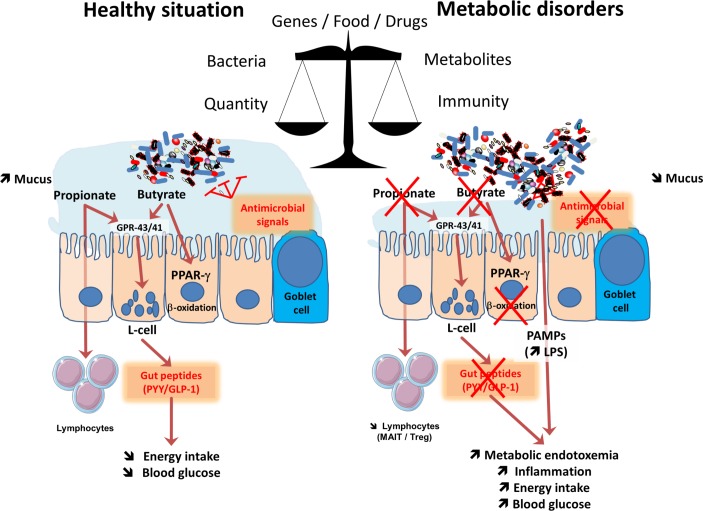
“Butyrate activates PPAR-γ leading to beta-oxidation and oxygen consumption, a phenomenon contributing to maintaining anaerobic condition in the gut lumen [239].”
From Gut-pancreas-liver Axis as a target for treatment of NAFLD/NASH (2020) · cites this paper as [239]
The cited source says what the claim attributes to it.
In the citing paper
“Dysbiosis is associated with increased intestinal permeability, which is known as the “leaky gut syndrome” (Figure 3) [112,113,114,115,116].”
From Bone diseases in patients with chronic liver disease (2019) · cites this paper as [116]
Self-check
Percentages, sums and reported differences re-computed from the paper’s own numbers.
The self-check needs the paper’s full text.
Citations
Cites
An obesity-associated gut microbiome with increased capacity for energy harvest
Turnbaugh, P. J., Ley, R. E., Mahowald, M. A., Magrini, V., Mardis, E. R., & Gordon, J. I. (2006) · Nature · doi:10.1038/nature05414 · Cited by 12,444 · cited 1×
“60 Since this discovery, not all papers have been able to replicate this finding, which gives rise to the following question: should we focus only on the general composition at the phylum level or should we go deeper (ie, the genus and species levels)?”
BackgroundHill (2014) · doi:10.1038/nrgastro.2014.66 · Cited by 9,592 · cited 1×
“129 Prebiotics : These are substrates that are selectively utilised by host microorganisms conferring health benefits.”
BackgroundA metagenome-wide association study of gut microbiota in type 2 diabetes
Qin, J., Li, Y., Cai, Z., Li, S., Zhu, J., Zhang, F., Liang, S., Zhang, W., Guan, Y., Shen, D., et al. (2012) · Nature · doi:10.1038/nature11450 · Cited by 6,762 · cited 1×
“118 122 Thus, one may argue that we should take into account of such confounding factor for all the future studies, including neurodegenerative disorders.”
BackgroundMetabolic Endotoxemia Initiates Obesity and Insulin Resistance
Cani, P. D., Amar, J., Iglesias, M. A., Poggi, M., Knauf, C., Bastelica, D., Neyrinck, A. M., Fava, F., Tuohy, K. M., Chabo, C., et al. (2007) · Diabetes · doi:10.2337/db06-1491 · Cited by 6,638
Self-citationGut microbiome influences efficacy of PD-1-based immunotherapy against epithelial tumors
Routy, B., Le Chatelier, E., Derosa, L., Duong, C. P. M., Alou, M. T., Daillère, R., Fluckiger, A., Messaoudene, M., Rauber, C., Roberti, M. P., et al. (2018) · Science · doi:10.1126/science.aan3706 · Cited by 5,671
Gibson, G. R., Hutkins, R., Sanders, M. E., Prescott, S. L., Reimer, R. A., Salminen, S. J., Scott, K., Stanton, C., Swanson, K. S., Cani, P. D., et al. (2017) · Nature Reviews Gastroenterology & Hepatology · doi:10.1038/nrgastro.2017.75 · Cited by 5,634
Self-citationCross-talk between Akkermansia muciniphila and intestinal epithelium controls diet-induced obesity
Everard, A., Belzer, C., Geurts, L., Ouwerkerk, J. P., Druart, C., Bindels, L. B., Guiot, Y., Derrien, M., Muccioli, G. G., Delzenne, N. M., et al. (2013) · Proceedings of the National Academy of Sciences · doi:10.1073/pnas.1219451110 · Cited by 4,511
Self-citationIntestinal microbiota metabolism of l-carnitine, a nutrient in red meat, promotes atherosclerosis
Koeth, R. A., Wang, Z., Levison, B. S., Buffa, J. A., Org, E., Sheehy, B. T., Britt, E. B., Fu, X., Wu, Y., Li, L., et al. (2013) · Nature Medicine · doi:10.1038/nm.3145 · Cited by 4,386
Anticancer immunotherapy by CTLA-4 blockade relies on the gut microbiota
Vétizou, M., Pitt, J. M., Daillère, R., Lepage, P., Waldschmitt, N., Flament, C., Rusakiewicz, S., Routy, B., Roberti, M. P., Duong, C. P. M., et al. (2015) · Science · doi:10.1126/science.aad1329 · Cited by 3,488
Regulation of inflammatory responses by gut microbiota and chemoattractant receptor GPR43
Maslowski, K. M., Vieira, A. T., Ng, A., Kranich, J., Sierro, F., Yu, D., Schilter, H. C., Rolph, M. S., Mackay, F., Artis, D., et al. (2009) · Nature · doi:10.1038/nature08530 · Cited by 3,241 · cited 1×
“53 Notably, propionate also regulates immune cells to produce antimicrobial factors and, therefore, may act as an immune regulator, 54 including a reduction of cancer cell proliferation.”
Background
Research works printed but not linked: 1
- 10.2337/diabetes · doi:10.2337/diabetes · Paper page
Cited by
Items 301–400 of 1,000
L., K., Ng, T. K. S., Wee, H. N., & Ching, J. (2023) · Mechanisms of Ageing and Development · doi:10.1016/j.mad.2023.111787 · Cited by 58
Colosimo, R., Warren, F. J., Edwards, C. H., Ryden, P., Dyer, P. S., Finnigan, T. J. A., & Wilde, P. J. (2021) · Trends in Food Science & Technology · doi:10.1016/j.tifs.2021.02.001 · Cited by 58
Bennett, C., Henry, R., Snipe, R. M. J., & Costa, R. J. S. (2020) · Journal of science and medicine in sport · doi:10.1016/j.jsams.2020.06.002 · Cited by 58
Wang, Y., Ablimit, N., Zhang, Y., Li, J., Wang, X., Liu, J., Miao, T., Wu, L., Wang, H., Wang, Z., et al. (2021) · International Journal of Biological Macromolecules · doi:10.1016/j.ijbiomac.2021.09.150 · Cited by 58
Advancing precision medicine with personalized drug screening
Gorshkov, K., Chen, C. Z., Marshall, R. E., Mihatov, N., Choi, Y., Nguyễn, Ð.-T., Southall, N. T., Chen, K. G., Park, J. K., & Zheng, W. (2018) · Drug Discovery Today · doi:10.1016/j.drudis.2018.08.010 · Cited by 58
Benefits of using probiotics as adjuvants in anticancer therapy (Review)
Vivarelli, S., Falzone, L., Basile, M. S., Nicolosi, D., Genovese, C., Libra, M., & Salmeri, M. (2019) · World Academy of Sciences Journal · doi:10.3892/wasj.2019.13 · Cited by 57
Challenges in Human Skin Microbial Profiling for Forensic Science: A Review
Neckovic, A., van Oorschot, R. A. H., Szkuta, B., & Durdle, A. (2020) · Genes · doi:10.3390/genes11091015 · Cited by 57
Gallardo-Navarro, Ó. A., Aguilar-Salinas, B., Rocha, J., & Olmedo‐Álvarez, G. (2024) · Heliyon · doi:10.1016/j.heliyon.2024.e33896 · Cited by 57
Seaweed and seaweed-derived metabolites as prebiotics
Charoensiddhi, S., Abraham, R. E., Su, P. H., & Zhang, W. Y. (2019) · Advances in food and nutrition research · doi:10.1016/bs.afnr.2019.10.001 · Cited by 57
DeepNOG: fast and accurate protein orthologous group assignment
Feldbauer, R., Gosch, L., Lüftinger, L., Hyden, P., Flexer, A., & Rattei, T. (2020) · Bioinformatics · doi:10.1093/bioinformatics/btaa1051 · Cited by 57
Gut Dysbiosis and IL-21 Response in Patients with Severe COVID-19
Khan, M., Mathew, B. J., Gupta, P., Garg, G., Khadanga, S., Vyas, A. K., & Singh, A. K. (2021) · Microorganisms · doi:10.3390/microorganisms9061292 · Cited by 57
Díaz‐Garrido, N., Badía, J., & Baldomà, L. (2022) · Nutrients · doi:10.3390/nu14020344 · Cited by 57
Hassan, R., Allali, I., Agamah, F. E., Elsheikh, S. S. M., Thomford, N. E., Dandara, C., & Chimusa, E. R. (2020) · Briefings in Bioinformatics · doi:10.1093/bib/bbaa292 · Cited by 56
Beneficial insights into postbiotics against colorectal cancer
Song, D., Wang, X., Ma, Y., Liu, N., & Wang, H. (2023) · Frontiers in Nutrition · doi:10.3389/fnut.2023.1111872 · Cited by 56
Yang, X., Dong, B., An, L., Zhang, Q., Chen, Y., Wang, H., & Song, Z. (2021) · Frontiers in Pharmacology · doi:10.3389/fphar.2021.756491 · Cited by 56
Sharma, R., & Padwad, Y. S. (2020) · Nutrition · doi:10.1016/j.nut.2020.110785 · Cited by 56
Mediterranean diet, gut microbiota and health: when age and calories do not add up!
Cani, P. D., & Van Hul, M. (2020) · Gut · doi:10.1136/gutjnl-2020-320781 · Cited by 55
Self-citationKaltsas, A., Zachariou, A., Markou, E., Dimitriadis, F., Sofikitis, N., & Pournaras, S. (2023) · Journal of Personalized Medicine · doi:10.3390/jpm13101491 · Cited by 55
Xie, C., & Prasad, A. A. (2020) · Microorganisms · doi:10.3390/microorganisms8111661 · Cited by 55
Depommier, C., Everard, A., Druart, C., Maiter, D., Thissen, J.-P., Loumaye, A., Hermans, M. P., Delzenne, N. M., de Vos, W. M., & Cani, P. D. (2021) · Gut Microbes · doi:10.1080/19490976.2021.1994270 · Cited by 55
Self-citationConnecting the Gut Microbiota and Neurodegenerative Diseases: the Role of Bile Acids
Wang, S., Xu, C., Liu, H., Wei, W., Zhou, X., Qian, H., Zhou, L., Zhang, H., Wu, L. M., Chen, Z., et al. (2023) · Molecular Neurobiology · doi:10.1007/s12035-023-03340-9 · Cited by 55
Farnesoid X Receptor Agonists as Therapeutic Target for Cardiometabolic Diseases
Li, C., Yang, J., Wang, Y., Qi, Y., Yang, W., & Li, Y. (2020) · Frontiers in Pharmacology · doi:10.3389/fphar.2020.01247 · Cited by 55
Abnormal food timing and predisposition to weight gain: Role of barrier dysfunction and microbiota
Bishehsari, F., Engen, P. A., Adnan, D., Sarrafi, S., Wilber, S., Shaikh, M. W., Green, S. J., Naqib, A. D., Giron, L. B., Abdel‐Mohsen, M., et al. (2020) · Translational research · doi:10.1016/j.trsl.2020.11.007 · Cited by 55
Gut microbiota and their metabolites in cardiovascular disease
Jansen, V. L. B. I., Gerdes, V. E. A., Middeldorp, S., & van Mens, T. E. (2021) · Best Practice & Research Clinical Endocrinology & Metabolism · doi:10.1016/j.beem.2021.101492 · Cited by 54
Gut microbiota and regulation of myokine-adipokine function
Suriano, F., Hul, M. V., & Cani, P. D. (2020) · Current Opinion in Pharmacology · doi:10.1016/j.coph.2020.03.006 · Cited by 54
Self-citationActivation of ectopic olfactory receptor 544 induces GLP-1 secretion and regulates gut inflammation
Wu, C., Jeong, M.-Y., Kim, J. Y., Lee, G., Kim, J., Cheong, Y. E., Kang, H., Cho, C. H., Kim, J., Park, M. K., et al. (2021) · Gut Microbes · doi:10.1080/19490976.2021.1987782 · Cited by 54
The source of the fat significantly affects the results of high-fat diet intervention
An, J., Wang, Q., Yi, S., Liu, X., Jin, H., Xu, J., Wen, G., Zhu, J., & Tuo, B. (2022) · Scientific Reports · doi:10.1038/s41598-022-08249-2 · Cited by 54
The Microbiome in Health and Disease from the Perspective of Modern Medicine and Ayurveda
Wallace, R. K. (2020) · Medicina · doi:10.3390/medicina56090462 · Cited by 53
Vaginal microbiomes and ovarian cancer: a review.
Xu, J., Peng, J.-J., Yang, W., Fu, K., & Zhang, Y. (2020) · PubMed Central · Cited by 53
Treatment of Drug-Induced Liver Injury
Teschke, R. (2022) · Biomedicines · doi:10.3390/biomedicines11010015 · Cited by 53
Jensen, B. A. H., Holm, J. B., Larsen, I., von Burg, N., Derer, S., Sonne, S. B., Pærregaard, S. I., Damgaard, M. V., Indrelid, S., Rivollier, A., et al. (2021) · Nature Communications · doi:10.1038/s41467-021-21408-9 · Cited by 53
The Potential Utility of Prebiotics to Modulate Alzheimer’s Disease: A Review of the Evidence
Kang, J. W., & Zivkovic, A. M. (2021) · Microorganisms · doi:10.3390/microorganisms9112310 · Cited by 52
Yang, S., Hu, T., Liu, H., Lv, Y., Zhang, W., Han, L., Xuan, L., Gong, L., & Liu, L. (2021) · Biomedicine & Pharmacotherapy · doi:10.1016/j.biopha.2021.111441 · Cited by 52
Li, H., & Li, C. (2023) · Frontiers in Microbiology · doi:10.3389/fmicb.2023.1184734 · Cited by 52
The ecology of wine fermentation: a model for the study of complex microbial ecosystems
Conacher, C. G., Luyt, N. A., Naidoo-Blassoples, R. K., Rossouw, D., Setati, M. E., & Bauer, F. F. (2021) · Applied Microbiology and Biotechnology · doi:10.1007/s00253-021-11270-6 · Cited by 52
Wang, L., Yu, X., Xu, X., Ming, J., Wang, Z., Gao, B., Xing, Y., Zhou, J., Fu, J., Liu, T., et al. (2021) · Frontiers in Cellular and Infection Microbiology · doi:10.3389/fcimb.2021.598672 · Cited by 52
Changes in the Microbiome of Vaginal Fluid after Menopause in Korean Women
Kim, S., Seo, H., Rahim, M. A., Lee, S., Kim, Y., & Song, H. (2021) · Journal of Microbiology and Biotechnology · doi:10.4014/jmb.2106.06022 · Cited by 52
Williams, A. R., Myhill, L. J., Stolzenbach, S., Nejsum, P. L., Mejer, H., Nielsen, D. S., & Thamsborg, S. M. (2021) · BMC Veterinary Research · doi:10.1186/s12917-021-02752-w · Cited by 52
Robinson, K., Xiao, Y., Johnson, T. J., Chen, B., Yang, Q., Lyu, W., Wang, J., Fansler, N., Becker, S. R., Liu, J., et al. (2020) · Applied and Environmental Microbiology · doi:10.1128/aem.00304-20 · Cited by 52
Zebrafish model for human gut microbiome-related studies: advantages and limitations
Lu, H., Li, P., Huang, X., Wang, C. H., Li, M., & Xu, Z. Z. (2021) · Medicine in Microecology · doi:10.1016/j.medmic.2021.100042 · Cited by 52
Li, X., Khan, I., Huang, G., Lu, Y., Wang, L., Liu, Y., Lu, L., Hsiao, W. L. W., & Liu, Z. (2022) · European Journal of Pharmacology · doi:10.1016/j.ejphar.2022.174773 · Cited by 51
Exploring Therapeutic Advances: A Comprehensive Review of Intestinal Microbiota Modulators
Pires, L., Gonzaléz‐Paramás, A. M., Heleno, S. A., & Calhelha, R. C. (2024) · Antibiotics · doi:10.3390/antibiotics13080720 · Cited by 51
Lefebvre, C., Tiffay, A., Breemeersch, C.-E., Dreux, V., Bôle‐Feysot, C., Guérin, C., Breton, J., Maximin, E., Monnoye, M., Déchelotte, P., et al. (2024) · Scientific Reports · doi:10.1038/s41598-024-70931-4 · Cited by 51
Wang, Y., Zhao, W., Shi, J.-X., Wang, J., Hao, J., Pang, X., Huang, X., Chen, X., Li, Y., Jin, R., et al. (2019) · The FASEB Journal · doi:10.1096/fj.201900238rr · Cited by 51
Crosstalk Between the Gut Microbiome and Bioactive Lipids: Therapeutic Targets in Cognitive Frailty
Baptista, L. C. P., Sun, Y., Carter, C. S., & Buford, T. W. (2020) · Frontiers in Nutrition · doi:10.3389/fnut.2020.00017 · Cited by 51
A novel hypothesis for COVID-19 pathogenesis: Retinol depletion and retinoid signaling disorder
Sarohan, A. R., Kızıl, M., İnkaya, A. Ç., Mahmud, S. O., Akram, M., & Çen, O. (2021) · Cellular Signalling · doi:10.1016/j.cellsig.2021.110121 · Cited by 51
Wang, Y., Jia, X., & Cong, B. (2024) · Frontiers in Microbiology · doi:10.3389/fmicb.2024.1396031 · Cited by 51
Xiao, L., Zuo, Z., & Zhao, F. (2023) · Genomics Proteomics & Bioinformatics · doi:10.1093/gpbjnl/qzad005 · Cited by 51
Trends, challenges, and advances in optical sensing for pathogenic bacteria detection (PathoBactD)
Kaur, B., Kumar, S., & Kaushik, B. K. (2023) · Biosensors and Bioelectronics X · doi:10.1016/j.biosx.2023.100352 · Cited by 51
Pancreas–Microbiota Cross Talk in Health and Disease
Adolph, T. E., Mayr, L., Grabherr, F., Schwärzler, J., & Tilg, H. (2019) · Annual Review of Nutrition · doi:10.1146/annurev-nutr-082018-124306 · Cited by 50
Possible role of microbiome in the pathogenesis of endometriosis
D’Alterio, M. N., GIULIANI, C., Scicchitano, F., Laganà, A. S., Oltolina, N., Sorrentino, F., Nappi, L., Orrù, G., & Angioni, S. L. (2021) · Minerva Obstetrics and Gynecology · doi:10.23736/s2724-606x.21.04788-2 · Cited by 50
Amos, G. C. A., Sergaki, C., Logan, A., Iriarte, R., Bannaga, A., Chandrapalan, S., Wellington, E. M. H., Rijpkema, S. G. T., & Arasaradnam, R. P. (2021) · Scientific Reports · doi:10.1038/s41598-021-96942-z · Cited by 50
Gut microbiota contributes to the methionine metabolism in host
Wu, X., Han, Z., Liu, B., Yu, D., Sun, J., Ge, L., Tang, W., & Liu, S. (2022) · Frontiers in Microbiology · doi:10.3389/fmicb.2022.1065668 · Cited by 50
Oral and Systemic Effects of Xylitol Consumption
Janket, S., Benwait, J., Isaac, P., Ackerson, L. K., & Meurman, J. H. (2019) · Caries Research · doi:10.1159/000499194 · Cited by 50
Stachyose modulates gut microbiota and alleviates DSS-induced ulcerative colitis in mice
Wang, C., Bai, J., Wang, B., Yu, L., Tian, F., Zhao, J., Zhang, H., Suo, H., Chen, W., & Zhai, Q. (2023) · Food Science and Human Wellness · doi:10.1016/j.fshw.2023.03.041 · Cited by 50
Stearic acid prevent alcohol-induced liver damage by regulating the gut microbiota
Nie, W., Xu, F., Zhou, K., Yang, X., Zhou, H. M., & Xu, B. (2022) · Food Research International · doi:10.1016/j.foodres.2022.111095 · Cited by 50
Ding, L.-N., Ding, W.-Y., Ning, J., Wang, Y., Yan, Y., & Wang, Z.-B. (2021) · Frontiers in Pharmacology · doi:10.3389/fphar.2021.770861 · Cited by 49
“Currently, as a potential source of new therapeutics that work by regulating the gut microbiota, probiotics are commonly used to prevent and improve diabetes by altering the gut microbiota and its metabolites (Cani, 2018; Gurung et al., 2020).”
BackgroundWang, Y., Uffelman, C. N., Bergia, R. E., Clark, C. M., Reed, J. B., Cross, T.-W., Lindemann, S. R., Tang, M., & Campbell, W. W. (2022) · Advances in Nutrition · doi:10.1016/j.advnut.2022.10.005 · Cited by 49
Amedei, A., & Boem, F. (2018) · International Journal of Molecular Sciences · doi:10.3390/ijms19123756 · Cited by 49
Shen, J. X., Youhanna, S., Zandi Shafagh, R., Kele, J., & Lauschke, V. M. (2020) · Chemical Research in Toxicology · doi:10.1021/acs.chemrestox.9b00245 · Cited by 49
Intermittent fasting supports the balance of the gut microbiota composition
Teker, H. T., & Ceylani, T. (2022) · International Microbiology · doi:10.1007/s10123-022-00272-7 · Cited by 49
Yang-Jensen, S. K., Nägele, N. S., & Jensen, B. A. H. (2025) · American Journal of Physiology-Cell Physiology · doi:10.1152/ajpcell.00704.2025 · Cited by 49
Oral Bacterial Microbiota in Digestive Cancer Patients: A Systematic Review
Reitano, E., de’Angelis, N., Gavriilidis, P., Gaiani, F., Memeo, R., Inchingolo, R., Bianchi, G., de’Angelis, G. L., & Carra, M. C. (2021) · Microorganisms · doi:10.3390/microorganisms9122585 · Cited by 49
Zhong, Y., Song, B., Zheng, C., Zhang, S., Yan, Z., Tang, Z., Kong, X., Duan, Y., & Li, F. (2020) · Microorganisms · doi:10.3390/microorganisms8060860 · Cited by 49
Improving causality in microbiome research: can human genetic epidemiology help?
Wade, K. H., & Hall, L. J. (2020) · Wellcome Open Research · doi:10.12688/wellcomeopenres.15628.3 · Cited by 48
Zhang, K., Zhang, Q., Qiu, H., Ma, Y., Hou, N., Zhang, J., Kan, C., Han, F., Sun, X., & Shi, J. (2024) · Heliyon · doi:10.1016/j.heliyon.2024.e37609 · Cited by 48
Gut microbiota: a promising target against cardiometabolic diseases
Warmbrunn, M. V., Herrema, H., Aron-Wisnewsky, J., Soeters, M. R., Van Raalte, D. H., & Nieuwdorp, M. (2020) · Expert Review of Endocrinology & Metabolism · doi:10.1080/17446651.2020.1720511 · Cited by 47
Harnessing the microbiota for therapeutic purposes
Liwinski, T., & Elinav, E. (2019) · American Journal of Transplantation · doi:10.1111/ajt.15753 · Cited by 47
Scassellati, C., Marizzoni, M., Cattane, N., Lopizzo, N., Mombelli, E., Riva, M. A., & Cattaneo, A. (2021) · Frontiers in Psychiatry · doi:10.3389/fpsyt.2021.722335 · Cited by 47
Altered diversity and composition of gut microbiota in Wilson's disease
Cai, X., Deng, L., Ma, X., Guo, Y., Feng, Z., Liu, M., Guan, Y., Huang, Y., Deng, J., Li, H., et al. (2020) · Scientific Reports · doi:10.1038/s41598-020-78988-7 · Cited by 47
Type, Intensity, and Duration of Exercise as Regulator of Gut Microbiome Profile
Suryani, D., Alfaqih, M. S., Gunadi, J. W., Sylviana, N., Goenawan, H., Megantara, I., & Lesmana, R. (2022) · Current Sports Medicine Reports · doi:10.1249/jsr.0000000000000940 · Cited by 46
Martinez, T. M., Meyer, R. K., & Duca, F. A. (2021) · Nutrients · doi:10.3390/nu13103470 · Cited by 46
Low particle concentrations of nanoplastics impair the gut health of medaka
Zhou, Y., Gui, L., Wei, W., Xu, E. G., Zhou, W., Sokolova, I. M., Li, M., & Wang, Y. (2023) · Aquatic Toxicology · doi:10.1016/j.aquatox.2023.106422 · Cited by 46
Photoperiod modulates the gut microbiome and aggressive behavior in Siberian hamsters
Ren, C. C., Sylvia, K. E., Munley, K. M., Deyoe, J. E., Henderson, S. G., Vu, M. P., & Demas, G. E. (2019) · Journal of Experimental Biology · doi:10.1242/jeb.212548 · Cited by 46
Modulation of antibiotic effects on microbial communities by resource competition
Newton, D., Ho, P.-Y., & Huang, K. C. (2023) · Nature Communications · doi:10.1038/s41467-023-37895-x · Cited by 46
The Microbiome, an Important Factor That Is Easily Overlooked in Male Infertility
Wang, H., Xu, A., Gong, L., Chen, Z., Zhang, B., & Li, X. (2022) · Frontiers in Microbiology · doi:10.3389/fmicb.2022.831272 · Cited by 46
Willis, H. J., & Slavin, J. L. (2019) · Journal of the Academy of Nutrition and Dietetics · doi:10.1016/j.jand.2019.09.017 · Cited by 45
Cancer Resistance to Immunotherapy: Molecular Mechanisms and Tackling Strategies
Vu, S. H., Vetrivel, P., Kim, J., & Lee, M. (2022) · International Journal of Molecular Sciences · doi:10.3390/ijms231810906 · Cited by 45
Kurt, F., Leventhal, G. E., Spalinger, M. R., Anthamatten, L., von Bieberstein, P. R., Menzi, C., Reichlin, M., Meola, M., Rosenthal, F., Rogler, G., et al. (2023) · Gut Microbes · doi:10.1080/19490976.2023.2177486 · Cited by 45
Rahman, Z., Bhale, N. A., Dikundwar, A. G., & Dandekar, M. P. (2023) · Probiotics and Antimicrobial Proteins · doi:10.1007/s12602-023-10109-y · Cited by 45
Mood and microbes: a comprehensive review of intestinal microbiota’s impact on depression
Luqman, A., He, M., Hassan, A., Ullah, M., Zhang, L., Khan, M. R., Din, A. U., Ullah, K., Wang, W. J., & Wang, G. (2024) · Frontiers in Psychiatry · doi:10.3389/fpsyt.2024.1295766 · Cited by 44
Adiponectin Role in Neurodegenerative Diseases: Focus on Nutrition Review
Polito, R., Meo, I. D., Barbieri, M., Daniele, A., Paolisso, G., & Rizzo, M. R. (2020) · International Journal of Molecular Sciences · doi:10.3390/ijms21239255 · Cited by 44
An intravital window to image the colon in real time
Rakhilin, N., Garrett, A., Eom, C., Chavez, K. R., Small, D. M., Daniel, A. R., Kaelberer, M. M., Mejooli, M. A., Huang, Q., Ding, S., et al. (2019) · Nature Communications · doi:10.1038/s41467-019-13699-w · Cited by 44
Th17 cells sense microbiome to promote depressive-like behaviors
Medina-Rodriguez, E. M., Watson, J., Reyes, J., Trivedi, M. H., & Beurel, E. (2023) · Microbiome · doi:10.1186/s40168-022-01428-3 · Cited by 44
Clausen, U., Vital, S.-T., Lambertus, P., Gehler, M., Scheve, S., Wöhlbrand, L., & Rabus, R. (2024) · Microbial Physiology · doi:10.1159/000536327 · Cited by 44
Yuan, H., Wu, X., Wang, X., Zhou, J., & Park, S. (2024) · International Journal of Molecular Sciences · doi:10.3390/ijms25042183 · Cited by 44
Fecal microbiota transplantation alters the susceptibility of obese rats to type 2 diabetes mellitus
Zhang, L., Zhou, W., Zhan, L., Hou, S., Zhao, C., Bi, T., & Lu, X. (2020) · Aging · doi:10.18632/aging.103756 · Cited by 43
Rewiring host–microbe interactions and barrier function during gastrointestinal inflammation
Yang-Jensen, S. K., Pærregaard, S. I., Brandum, E. P., Jørgensen, A. S., Hjortø, G. M., & Jensen, B. A. H. (2022) · Gastroenterology report · doi:10.1093/gastro/goac008 · Cited by 43
Fungal β-glucan-facilitated cross-feeding activities between Bacteroides and Bifidobacterium species
Fernandez-Julia, P., Black, G. W., Cheung, W., van Sinderen, D., & Muñoz-Muñoz, J. (2023) · Communications Biology · doi:10.1038/s42003-023-04970-4 · Cited by 43
Reconstitution and Transmission of Gut Microbiomes and Their Genes between Generations
Rosenberg, E., & Zilber-Rosenberg, I. (2021) · Microorganisms · doi:10.3390/microorganisms10010070 · Cited by 43
Zhang, X., Pan, Z., Wang, Y., Liu, P., & Hu, K. (2023) · Biomedicine & Pharmacotherapy · doi:10.1016/j.biopha.2023.114572 · Cited by 43
The gut–brain axis in early Parkinson’s disease: from prodrome to prevention
Oliver, P. J., Civitelli, L., & Hu, M. T. (2025) · Journal of Neurology · doi:10.1007/s00415-025-13138-5 · Cited by 42
“Akkermansia is a mucin-degrading bacterium and investigations on mice have found that Akkermansia can deplete the intestinal mucosal layer, decrease the number of goblet cells, produce drier stools, slow colonic transit, and impair intestinal barrier function [106–108].”
Shuwen, H., Miao, D., Quan, Q., Wei, W., Zhongshan, Z., Chun, Z., & Xi, Y. (2019) · Journal of Cancer Research and Clinical Oncology · doi:10.1007/s00432-019-02997-x · Cited by 42
“2018; Cani 2018).”
Pérez-Matute, P., Íñiguez, M., de Toro, M., Recio-Fernández, E., & Oteo, J. A. (2020) · Scientific Reports · doi:10.1038/s41598-020-64961-x · Cited by 42
Deng, Z., Yang, J., Huang, Y., Zhao, L., Zheng, J., Xu, Q., Guan, L. L., & Sun, L. (2023) · Science China Life Sciences · doi:10.1007/s11427-022-2320-y · Cited by 42
Microbiome-based stratification to guide dietary interventions to improve human health
Liu, Z., de Vries, B., Gerritsen, J., Smidt, H., & Zoetendal, E. G. (2020) · Nutrition Research · doi:10.1016/j.nutres.2020.07.004 · Cited by 42
Gut microbiota therapy in gastrointestinal diseases
Ullah, H., Arbab, S., Chang, C., Bibi, S., Muhammad, N., Rehman, S. U., Suleman, S., Ullah, I., Hassan, I. U., Tian, Y., et al. (2025) · Frontiers in Cell and Developmental Biology · doi:10.3389/fcell.2025.1514636 · Cited by 42
Role of Gut Microbiota in the Pharmacological Effects of Natural Products
Pan, C., Qing-long, G., & Lu, N. (2019) · Evidence-based Complementary and Alternative Medicine · doi:10.1155/2019/2682748 · Cited by 42
Gut microbiota and epigenetic choreography: Implications for human health: A review
Kim, B., Song, A., Son, A., & Shin, Y. (2024) · Medicine · doi:10.1097/md.0000000000039051 · Cited by 42
Tai, Y. K., Ng, C., Purnamawati, K., Yap, J. L. Y., Yin, J. N., Wong, C. J. K., Patel, B. K., Soong, P. L., Pelczar, P., Fröhlich, J., et al. (2020) · The FASEB Journal · doi:10.1096/fj.201903005rr · Cited by 42
Metadata
- Authors
- Cani, P. D.
- Affiliations
- Walloon Excellence in Lifesciences and Biotechnology (BE)
- Corresponding author
- Cani, Patrice D
- ORCID
- Cani, Patrice D
- Venue
- Gut
- Publisher
- BMJ
- Published
- 2018-06-22
- Volume
- 67
- Issue
- 9
- Pages
- 1716-1725
- ISSN
- 0017-5749 (ISSN-L)
- 1468-3288
- PMC
- PMC6109275
- OpenAlex
- W2809439583
- Cited by
- 1,386
- References
- 138
- Citations by year
- 2026: 95 · 2025: 134 · 2024: 181 · 2023: 179 · 2022: 188 · 2021: 204 · 2020: 244 · 2019: 139 · 2018: 21
- FWCI
- 14.84
- Type
- journal article
- Language
- en
- Open access
- hybrid
- doi.org
- Licence
- cc-by-nc
- Locations
- Gut (publishedVersion, cc-by-nc)
- Europe PMC (PubMed Central) (publishedVersion, cc-by-nc)
- PubMed Central (publishedVersion, cc-by-nc)
- PubMed (publishedVersion)
- Digital Access to Libraries (Université catholique de Louvain (UCL), l'Université de Namur (UNamur) and the Université Saint-Louis (USL-B)) (submittedVersion, other-oa)
- HighWire Press Open Archive (submittedVersion)
- Funders
- FP7 Ideas: European Research Council
- Funds Baillet-Latour
- Fonds De La Recherche Scientifique - FNRS
- WELBIO
- Topics
- Life Sciences › Biochemistry, Genetics and Molecular Biology › Molecular Biology › Gut microbiota and health
- Health Sciences › Dentistry › Periodontics › Oral microbiology and periodontitis research
- Health Sciences › Medicine › Gastroenterology › Gastrointestinal motility and disorders
- Keywords
- gut microbiota, human gut microbiome, metabolic disorders, obesity, diabetes mellitus, liver disease, cancer, neurodegenerative diseases, microbiota-based therapy, metagenomics, dietary factors, intestinal motility, stool consistency, Prevotella copri, Akkermansia muciniphila
- MeSH terms
- Gastrointestinal Microbiome, Diabetes Mellitus, Humans, Liver Diseases, Metabolic Diseases, Neoplasms, Obesity, Prevotella, Evidence-Based Medicine, Neurodegenerative Diseases, Verrucomicrobia, Dysbiosis
About these checks
Registry, retraction, Cites and statistics results are computed, not judged, with one exception: a printed reference that no index lists is read once by a model before it counts as a citation error. Claims are extracted by a model and kept only when their quote appears verbatim in the text; each cited source is then checked, with a model’s help, for whether it says what the claim relies on. Those verdicts can be wrong — read the claim’s quote and the cited source before relying on one.
Statistics and arithmetic are recomputed, not judged.
Confidence bands are shown only for fields calibrated on our annotated test set. None is calibrated yet, so no band is shown.
What counts as a claim ›How we measure confidence ›How we check this ›
Are you an author, or do you see a problem with this page? Request a review
Data sources
Bibliographic data: Semantic Scholar, OpenAlex, Crossref.
Contains information from the Semantic Scholar Academic Graph Datasets, made available under the ODC Attribution License (ODC-BY 1.0).
Semantic Scholar’s data is described in: Kinney, R., et al. (2023). The Semantic Scholar Open Data Platform. arXiv:2301.10140.
