

Human gut microbiome: hopes, threats and promises
Open accessThe DOI matches its Crossref record; 136 of the 138 references it cites were found in a registry or an index.
Abstract
The microbiome has received increasing attention over the last 15 years. Although gut microbes have been explored for several decades, investigations of the role of microorganisms that reside in the human gut has attracted much attention beyond classical infectious diseases. For example, numerous studies have reported changes in the gut microbiota during not only obesity, diabetes, and liver diseases but also cancer and even neurodegenerative diseases. The human gut microbiota is viewed as a potential source of novel therapeutics. Between 2013 and 2017, the number of publications focusing on the gut microbiota was, remarkably, 12 900, which represents four-fifths of the total number of publications over the last 40 years that investigated this topic. This review discusses recent evidence of the impact of the gut microbiota on metabolic disorders and focus on selected key mechanisms. This review also aims to provide a critical analysis of the current knowledge in this field, identify putative key issues or problems and discuss misinterpretations. The abundance of metagenomic data generated on comparing diseased and healthy subjects can lead to the erroneous claim that a bacterium is causally linked with the protection or the onset of a disease. In fact, environmental factors such as dietary habits, drug treatments, intestinal motility and stool frequency and consistency are all factors that influence the composition of the microbiota and should be considered. The cases of the bacteria Prevotella copri and Akkermansia muciniphila will be discussed as key examples.
Overview
The claims and statistics of this paper haven’t been checked yet.
Free: it reads the open-access text and checks the first 5 claims that cite a source we can check. Create a free account to check every claim.
Integrity signals
Registry
Cites
Statistics
Figures
Verification
Claims the paper makes
The claims and statistics of this paper haven’t been checked yet.
Free: it reads the open-access text and checks the first 5 claims that cite a source we can check. Create a free account to check every claim.
Claims other papers make about this one
Each is checked against this paper’s own text: does it say what the citing paper says it does?
The cited source doesn’t support the claim as written.
In the citing paper
“Akkermansia is a mucin-degrading bacterium and investigations on mice have found that Akkermansia can deplete the intestinal mucosal layer, decrease the number of goblet cells, produce drier stools, slow colonic transit, and impair intestinal barrier function [106–108].”
From The gut–brain axis in early Parkinson’s disease: from prodrome to prevention (2025) · cites this paper as [108]
Checked by a reasoning model — may be wrong.
Experimental — accuracy not yet measuredThe source backs part of the claim, not all of it — or backs it for a different population, condition or comparison.
In the citing paper
“In fact, it has been widely studied that the gut microbiota may produce or transform molecules affecting several aspects of human health, including: host’s metabolism modulation, gut barrier integrity maintenance, xenobiotics and drug metabolism, protection against gastro-intestinal pathogens and host’s immune system modulation [31,32,33,34].”
From Gut Microbiota and Cancer: From Pathogenesis to Therapy (2019) · cites this paper as [34]
Experimental — accuracy not yet measuredThe source backs part of the claim, not all of it — or backs it for a different population, condition or comparison.
In the citing paper
“In particular, these approaches are crucial for non-traditional probiotic candidates derived from gut commensals that lack a long history of safe use—such as Akkermansia, Faecalibacterium, Bacteroides, and Clostridium species—where in silico analyses complement phenotypic testing to accelerate safe development [153,162].”
From Current Concepts in Probiotic Safety and Efficacy (2026) · cites this paper as [162]
Experimental — accuracy not yet measuredThe cited source says what the claim attributes to it.
In the citing paper
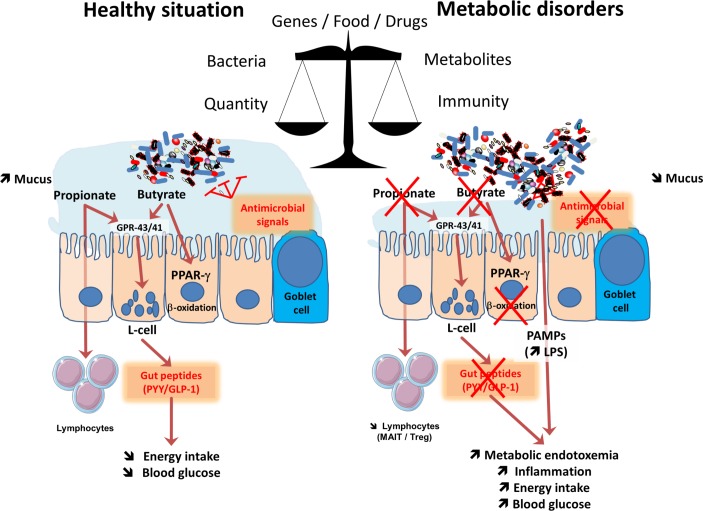
“Butyrate activates PPAR-γ leading to beta-oxidation and oxygen consumption, a phenomenon contributing to maintaining anaerobic condition in the gut lumen [239].”
From Gut-pancreas-liver Axis as a target for treatment of NAFLD/NASH (2020) · cites this paper as [239]
The cited source says what the claim attributes to it.
In the citing paper
“Dysbiosis is associated with increased intestinal permeability, which is known as the “leaky gut syndrome” (Figure 3) [112,113,114,115,116].”
From Bone diseases in patients with chronic liver disease (2019) · cites this paper as [116]
Self-check
Percentages, sums and reported differences re-computed from the paper’s own numbers.
The self-check needs the paper’s full text.
Citations
Cites
An obesity-associated gut microbiome with increased capacity for energy harvest
Turnbaugh, P. J., Ley, R. E., Mahowald, M. A., Magrini, V., Mardis, E. R., & Gordon, J. I. (2006) · Nature · doi:10.1038/nature05414 · Cited by 12,444 · cited 1×
“60 Since this discovery, not all papers have been able to replicate this finding, which gives rise to the following question: should we focus only on the general composition at the phylum level or should we go deeper (ie, the genus and species levels)?”
BackgroundHill (2014) · doi:10.1038/nrgastro.2014.66 · Cited by 9,592 · cited 1×
“129 Prebiotics : These are substrates that are selectively utilised by host microorganisms conferring health benefits.”
BackgroundA metagenome-wide association study of gut microbiota in type 2 diabetes
Qin, J., Li, Y., Cai, Z., Li, S., Zhu, J., Zhang, F., Liang, S., Zhang, W., Guan, Y., Shen, D., et al. (2012) · Nature · doi:10.1038/nature11450 · Cited by 6,762 · cited 1×
“118 122 Thus, one may argue that we should take into account of such confounding factor for all the future studies, including neurodegenerative disorders.”
BackgroundMetabolic Endotoxemia Initiates Obesity and Insulin Resistance
Cani, P. D., Amar, J., Iglesias, M. A., Poggi, M., Knauf, C., Bastelica, D., Neyrinck, A. M., Fava, F., Tuohy, K. M., Chabo, C., et al. (2007) · Diabetes · doi:10.2337/db06-1491 · Cited by 6,638
Self-citationGut microbiome influences efficacy of PD-1-based immunotherapy against epithelial tumors
Routy, B., Le Chatelier, E., Derosa, L., Duong, C. P. M., Alou, M. T., Daillère, R., Fluckiger, A., Messaoudene, M., Rauber, C., Roberti, M. P., et al. (2018) · Science · doi:10.1126/science.aan3706 · Cited by 5,671
Gibson, G. R., Hutkins, R., Sanders, M. E., Prescott, S. L., Reimer, R. A., Salminen, S. J., Scott, K., Stanton, C., Swanson, K. S., Cani, P. D., et al. (2017) · Nature Reviews Gastroenterology & Hepatology · doi:10.1038/nrgastro.2017.75 · Cited by 5,634
Self-citationCross-talk between Akkermansia muciniphila and intestinal epithelium controls diet-induced obesity
Everard, A., Belzer, C., Geurts, L., Ouwerkerk, J. P., Druart, C., Bindels, L. B., Guiot, Y., Derrien, M., Muccioli, G. G., Delzenne, N. M., et al. (2013) · Proceedings of the National Academy of Sciences · doi:10.1073/pnas.1219451110 · Cited by 4,511
Self-citationIntestinal microbiota metabolism of l-carnitine, a nutrient in red meat, promotes atherosclerosis
Koeth, R. A., Wang, Z., Levison, B. S., Buffa, J. A., Org, E., Sheehy, B. T., Britt, E. B., Fu, X., Wu, Y., Li, L., et al. (2013) · Nature Medicine · doi:10.1038/nm.3145 · Cited by 4,386
Anticancer immunotherapy by CTLA-4 blockade relies on the gut microbiota
Vétizou, M., Pitt, J. M., Daillère, R., Lepage, P., Waldschmitt, N., Flament, C., Rusakiewicz, S., Routy, B., Roberti, M. P., Duong, C. P. M., et al. (2015) · Science · doi:10.1126/science.aad1329 · Cited by 3,488
Regulation of inflammatory responses by gut microbiota and chemoattractant receptor GPR43
Maslowski, K. M., Vieira, A. T., Ng, A., Kranich, J., Sierro, F., Yu, D., Schilter, H. C., Rolph, M. S., Mackay, F., Artis, D., et al. (2009) · Nature · doi:10.1038/nature08530 · Cited by 3,241 · cited 1×
“53 Notably, propionate also regulates immune cells to produce antimicrobial factors and, therefore, may act as an immune regulator, 54 including a reduction of cancer cell proliferation.”
BackgroundHuman Genetics Shape the Gut Microbiome
Goodrich, J. K., Waters, J. L., Poole, A. C., Sutter, J. L., Koren, O., Blekhman, R., Beaumont, M., Van Treuren, W., Knight, R., Bell, J. T., et al. (2014) · Cell · doi:10.1016/j.cell.2014.09.053 · Cited by 3,164
Gut metagenome in European women with normal, impaired and diabetic glucose control
Karlsson, F. H., Tremaroli, V., Nookaew, I., Bergström, G., Behre, C. J., Fagerberg, B., Nielsen, J., & Bäckhed, F. (2013) · Nature · doi:10.1038/nature12198 · Cited by 3,115
The commensal microbiome is associated with anti-PD-1 efficacy in metastatic melanoma patients
Matson, V., Fessler, J., Bao, R., Chongsuwat, T., Zha, Y., Alegre, M.-L., Luke, J. J., & Gajewski, T. F. (2018) · Science · doi:10.1126/science.aao3290 · Cited by 3,107
Personalized nutrition by prediction of glycemic responses
Zeevi, D., Korem, T., Zmora, N., Israeli, D., Rothschild, D., Weinberger, A., Ben-Yacov, O., Lador, D., Avnit-Sagi, T., Lotan-Pompan, M., et al. (2015) · Cell · doi:10.1016/j.cell.2015.11.001 · Cited by 2,929 · cited 2×
“69 However, this has required the use of machine-learning algorithm that integrates many parameters, such as in this case the week-long glucose levels, dietary habits, anthropometrics, physical activity and gut microbiota from more than 800 individuals and more than 45 000 meals.”
BackgroundBrown, A. J., Goldsworthy, S. M., Barnes, A. A., Eilert, M. M., Tcheang, L., Daniels, D., Muir, A. I., Wigglesworth, M. J., Kinghorn, I., Fraser, N. J., et al. (2003) · Journal of Biological Chemistry · doi:10.1074/jbc.m211609200 · Cited by 2,409 · cited 1×
“48 The stimulation of these receptors triggers the secretion of intestinal peptides involved in glucose metabolism or food intake, such as glucagon-like peptide-1 or peptide YY (PYY) 49 50 (figure 2).”
BackgroundPlovier, H., Everard, A., Druart, C., Depommier, C., Van Hul, M., Geurts, L., Chilloux, J., Ottman, N., Duparc, T., Lichtenstein, L., et al. (2017) · Nature Medicine · doi:10.1038/nm.4236 · Cited by 2,204 · cited 1×
“105 Recently identified on the outer membrane of this bacteria, this protein has been shown to play immunomodulatory roles both in vivo and in vitro, 105 109 and this effect of A. muciniphila on the immune system is important because A. muciniphila has recently been shown to delay the onset of type…”
BackgroundSelf-citationMicrobiota-Generated Metabolites Promote Metabolic Benefits via Gut-Brain Neural Circuits
De Vadder, F., Kovatcheva-Datchary, P., Goncalves, D., Vinera, J., Zitoun, C., Duchampt, A., Bäckhed, F., & Mithieux, G. (2014) · Cell · doi:10.1016/j.cell.2013.12.016 · Cited by 2,200
Disentangling type 2 diabetes and metformin treatment signatures in the human gut microbiota
MetaHIT consortium, Forslund, K., Hildebrand, F., Nielsen, T., Falony, G., Le Chatelier, E., Sunagawa, S., Prifti, E., Vieira-Silva, S., Gudmundsdottir, V., et al. (2015) · Nature · doi:10.1038/nature15766 · Cited by 2,116
Human gut microbes impact host serum metabolome and insulin sensitivity
Pedersen, H. K., Gudmundsdottir, V., Nielsen, H. B., Hyotylainen, T., Nielsen, T., Jensen, B. A. H., Forslund, K., Hildebrand, F., Prifti, E., Falony, G., et al. (2016) · Nature · doi:10.1038/nature18646 · Cited by 2,116 · cited 3×
“76 Among the bacteria linked with this observation, both P. copri and Bacteroides vulgatus were identified.”
BackgroundResultInfluentialAkkermansia muciniphila gen. nov., sp. nov., a human intestinal mucin-degrading bacterium
Derrien, M., Vaughan, E. E., Plugge, C. M., & de Vos, W. M. (2004) · International Journal of Systematic and Evolutionary Microbiology · doi:10.1099/ijs.0.02873-0 · Cited by 2,094 · cited 1×
“77 78–81 The case of Akkermansia in cardiometabolic disorders It was described that A. muciniphila was less abundant in the intestinal microbiota of genetically obese and diabetic mice as well as of mice in which these conditions were dietarily induced.”
BackgroundMetabolic Syndrome and Altered Gut Microbiota in Mice Lacking Toll-Like Receptor 5
Vijay-Kumar, M., Aitken, J. D., Carvalho, F. A., Cullender, T. C., Mwangi, S., Srinivasan, S., Sitaraman, S. V., Knight, R., Ley, R. E., & Gewirtz, A. T. (2010) · Science · doi:10.1126/science.1179721 · Cited by 2,068
Serotonin, tryptophan metabolism and the brain-gut-microbiome axis
O’Mahony, S. M., Clarke, G., Borre, Y. E., Dinan, T. G., & Cryan, J. F. (2015) · Behavioural Brain Research · doi:10.1016/j.bbr.2014.07.027 · Cited by 2,012
Milani, C., Duranti, S., Bottacini, F., Casey, E., Turroni, F., Mahony, J., Belzer, C., Delgado Palacio, S., Arboleya Montes, S., Mancabelli, L., et al. (2017) · Microbiology and Molecular Biology Reviews · doi:10.1128/mmbr.00036-17 · Cited by 1,950
Blundell, J. E., Baker, J. L., Boyland, E., Blaak, E., Charzewska, J., de Henauw, S., Frühbeck, G., Gonzalez-Gross, M., Hebebrand, J., Holm, L., et al. (2017) · Obesity Facts · doi:10.1159/000455952 · Cited by 1,945
Dao, M. C., Everard, A., Aron-Wisnewsky, J., Sokolovska, N., Prifti, E., Verger, E. O., Kayser, B. D., Levenez, F., Chilloux, J., Hoyles, L., et al. (2016) · Gut · doi:10.1136/gutjnl-2014-308778 · Cited by 1,931
Self-citationThe history of toll-like receptors - redefining innate immunity
O'Neill, L. A. J., Golenbock, D., & Bowie, A. G. (2013) · Nature reviews. Immunology · doi:10.1038/nri3446 · Cited by 1,765
Regional specialization within the intestinal immune system
Mowat, A. M., & Agace, W. W. (2014) · Nature Reviews Immunology · doi:10.1038/nri3738 · Cited by 1,756
Gut microbiota dysbiosis contributes to the development of hypertension
Li, J., Zhao, F., Wang, Y., Chen, J., Tao, J., Tian, G., Wu, S., Liu, W., Cui, Q., Geng, B., et al. (2017) · Microbiome · doi:10.1186/s40168-016-0222-x · Cited by 1,685
Shin, N.-R., Lee, J.-C., Lee, H.-Y., Kim, M.-S., Whon, T. W., Lee, M.-S., & Bae, J.-W. (2014) · Gut · doi:10.1136/gutjnl-2012-303839 · Cited by 1,550
Immune adaptations that maintain homeostasis with the intestinal microbiota
Hooper, L. V., & Macpherson, A. J. (2010) · Nature Reviews Immunology · doi:10.1038/nri2710 · Cited by 1,454
Proton pump inhibitors affect the gut microbiome
Imhann, F., Bonder, M. J., Vich Vila, A., Fu, J., Mujagic, Z., Vork, L., Tigchelaar, E. F., Jankipersadsing, S. A., Cenit, M. C., Harmsen, H. J. M., et al. (2016) · Gut · doi:10.1136/gutjnl-2015-310376 · Cited by 1,371 · cited 1×
“118 122 Thus, one may argue that we should take into account of such confounding factor for all the future studies, including neurodegenerative disorders.”
BackgroundCulturing of ‘unculturable’ human microbiota reveals novel taxa and extensive sporulation
Browne, H. P., Forster, S. C., Anonye, B. O., Kumar, N., Neville, B. A., Stares, M. D., Goulding, D., & Lawley, T. D. (2016) · Nature · doi:10.1038/nature17645 · Cited by 1,299
Quantitative microbiome profiling links gut community variation to microbial load
Vandeputte, D., Kathagen, G., D’hoe, K., Vieira-Silva, S., Valles-Colomer, M., Sabino, J., Wang, J., Tito, R. Y., De Commer, L., Darzi, Y., et al. (2017) · Nature · doi:10.1038/nature24460 · Cited by 1,218 · cited 2×
“63 This study strongly argues that most previous studies, which have primarily been based on the investigation of the relative proportions of microbes, have probably not been able to capture the essence of the problem.”
BackgroundResultMicrobiota-activated PPAR-γ signaling inhibits dysbiotic Enterobacteriaceae expansion
Byndloss, M. X., Olsan, E. E., Rivera-Chávez, F., Tiffany, C. R., Cevallos, S. A., Lokken, K. L., Torres, T. P., Byndloss, A. J., Faber, F., Gao, Y., et al. (2017) · Science · doi:10.1126/science.aam9949 · Cited by 1,215
Gut Microbiota and Metabolic Endotoxemia in Young Obese Mexican Subjects
Radilla-Vázquez, R. B., Parra-Rojas, I., Martínez-Hernández, N. E., Márquez-Sandoval, Y. F., Illades-Aguiar, B., & Castro-Alarcón, N. (2016) · Obesity Facts · doi:10.1159/000442479 · Cited by 1,196
Anhê, F. F., Roy, D., Pilon, G., Dudonné, S., Matamoros, S., Varin, T. V., Garofalo, C., Moine, Q., Desjardins, Y., Levy, E., et al. (2015) · Gut · doi:10.1136/gutjnl-2014-307142 · Cited by 1,137 · cited 2×
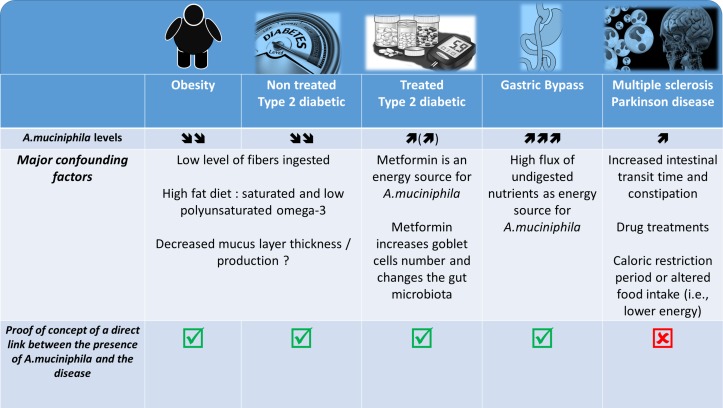
“82 85 91–93 Importantly, in humans, the abundance of A. muciniphila was seen to be decreased in several pathological conditions, such as obesity, type 2 diabetes, hypertension, hyper-cholesterolaemia and liver disease 94–100 (figure 3).”
BackgroundDiet dominates host genotype in shaping the murine gut microbiota
Carmody, R. N., Gerber, G. K., Luevano, J. M., Gatti, D. M., Somes, L., Svenson, K. L., & Turnbaugh, P. J. (2015) · Cell Host & Microbe · doi:10.1016/j.chom.2014.11.010 · Cited by 1,103 · cited 1×
“90 91 Conversely, it has also been widely demonstrated that prebiotic feeding (eg, with inulin-type fructans and some polyphenols) strongly increases the presence of A. muciniphila and improves metabolic disorders associated with obesity, including decreased fat mass, insulin resistance, lower…”
BackgroundEverard, A., Lazarevic, V., Derrien, M., Girard, M., Muccioli, G. G., Neyrinck, A. M., Possemiers, S., Van Holle, A., François, P., de Vos, W. M., et al. (2011) · Diabetes · doi:10.2337/db11-0227 · Cited by 1,076
Self-citationNext-Generation Beneficial Microbes: The Case of Akkermansia muciniphila
Cani, P. D., & de Vos, W. M. (2017) · Frontiers in Microbiology · doi:10.3389/fmicb.2017.01765 · Cited by 1,058
Self-citationCekanaviciute, E., Yoo, B. B., Runia, T. F., Debelius, J. W., Singh, S., Nelson, C. A., Kanner, R., Bencosme, Y., Lee, Y. K., Hauser, S. L., et al. (2017) · Proceedings of the National Academy of Sciences · doi:10.1073/pnas.1711235114 · Cited by 1,036
Vandeputte, D., Falony, G., Vieira-Silva, S., Tito, R. Y., Joossens, M., & Raes, J. (2016) · Gut · doi:10.1136/gutjnl-2015-309618 · Cited by 1,028
Human Gut Microbiota Changes Reveal the Progression of Glucose Intolerance
Zhang, X., Shen, D., Fang, Z., Jie, Z., Qiu, X., Zhang, C., Chen, Y., & Ji, L. (2013) · PLoS ONE · doi:10.1371/journal.pone.0071108 · Cited by 946
Gut microorganisms, mammalian metabolism and personalized health care
Nicholson, J. K., Holmes, E., & Wilson, I. D. (2005) · Nature Reviews Microbiology · doi:10.1038/nrmicro1152 · Cited by 945
Berer, K., Gerdes, L. A., Cekanaviciute, E., Jia, X., Xiao, L., Xia, Z., Liu, C., Klotz, L., Stauffer, U., Baranzini, S. E., et al. (2017) · Proceedings of the National Academy of Sciences · doi:10.1073/pnas.1711233114 · Cited by 933
Proton pump inhibitors alter the composition of the gut microbiota
Jackson, M. A., Goodrich, J. K., Maxan, M.-E., Freedberg, D. E., Abrams, J. A., Poole, A. C., Sutter, J. L., Welter, D., Ley, R. E., Bell, J. T., et al. (2016) · Gut · doi:10.1136/gutjnl-2015-310861 · Cited by 895
Postler, T. S., & Ghosh, S. (2017) · Cell Metabolism · doi:10.1016/j.cmet.2017.05.008 · Cited by 876
Hill‐Burns, E. M., Debelius, J. W., Morton, J. T., Wissemann, W. T., Lewis, M. R., Wallen, Z. D., Peddada, S. D., Factor, S. A., Molho, E., Zabetian, C. P., et al. (2017) · Movement Disorders · doi:10.1002/mds.26942 · Cited by 874 · cited 1×
“117 Indeed, a similar comparison can be made with some seminal studies published a couple of years ago, which showed differences in the compositions of the gut microbiota of type 2 diabetic and non-diabetic patients including an increase in A. muciniphila .”
ResultXenobiotics shape the physiology and gene expression of the active human gut microbiome
Maurice, C. F., Haiser, H. J., & Turnbaugh, P. J. (2013) · Cell · doi:10.1016/j.cell.2012.10.052 · Cited by 811 · cited 1×
“64 65 More recently, Schirmer et al profiled the gut microbiomes of more than a hundred individuals, including patients with Crohn’s disease, ulcerative colitis and non-IBD control patients and analysed both the metagenomes and the metatranscriptomes of these individuals.”
BackgroundSchneeberger, M., Everard, A., Gómez-Valadés, A. G., Matamoros, S., Ramírez, S., Delzenne, N. M., Gomis, R., Claret, M., & Cani, P. D. (2015) · Scientific Reports · doi:10.1038/srep16643 · Cited by 798
Self-citationHuman Intestinal Barrier Function in Health and Disease
König, J., Wells, J., Cani, P. D., García-Ródenas, C. L., MacDonald, T., Mercenier, A., Whyte, J., Troost, F., & Brummer, R.-J. (2016) · Clinical and Translational Gastroenterology · doi:10.1038/ctg.2016.54 · Cited by 780
Self-citationThe Intestinal Microbiota in Colorectal Cancer.
Tilg, H., Adolph, T. E., Gerner, R. R., & Moschen, A. R. (2018) · Cancer Cell · doi:10.1016/j.ccell.2018.03.004 · Cited by 777
Li, J., Lin, S., Vanhoutte, P. M., Woo, C. W., & Xu, A. (2016) · Circulation · doi:10.1161/circulationaha.115.019645 · Cited by 775
Microbiota-Produced Succinate Improves Glucose Homeostasis via Intestinal Gluconeogenesis
De Vadder, F., Kovatcheva-Datchary, P., Zitoun, C., Duchampt, A., Bäckhed, F., & Mithieux, G. (2016) · Cell Metabolism · doi:10.1016/j.cmet.2016.06.013 · Cited by 754
An opportunistic pathogen isolated from the gut of an obese human causes obesity in germfree mice
Fei, N., & Zhao, L. (2013) · The ISME Journal · doi:10.1038/ismej.2012.153 · Cited by 750
Sequencing and beyond: integrating molecular 'omics' for microbial community profiling
Franzosa, E. A., Hsu, T., Sirota-Madi, A., Shafquat, A., Abu-Ali, G., Morgan, X. C., & Huttenhower, C. (2015) · Nature Reviews Microbiology · doi:10.1038/nrmicro3451 · Cited by 719
de la Cuesta-Zuluaga, J., Mueller, N. T., Corrales-Agudelo, V., Velásquez-Mejía, E. P., Carmona, J. A., Abad, J. M., & Escobar, J. S. (2017) · Diabetes Care · doi:10.2337/dc16-1324 · Cited by 704
Gastric microbial community profiling reveals a dysbiotic cancer-associated microbiota
Ferreira, R. M., Pereira-Marques, J., Pinto-Ribeiro, I., Costa, J. L., Carneiro, F., Machado, J. C., & Figueiredo, C. (2018) · Gut · doi:10.1136/gutjnl-2017-314205 · Cited by 697
Ponziani, F. R., Bhoori, S., Castelli, C., Putignani, L., Rivoltini, L., Del Chierico, F., Sanguinetti, M., Morelli, D., Paroni Sterbini, F., Petito, V., et al. (2019) · Hepatology · doi:10.1002/hep.30036 · Cited by 654
Innate immune recognition of the microbiota promotes host-microbial symbiosis
Chu, H., & Mazmanian, S. K. (2013) · Nature Immunology · doi:10.1038/ni.2635 · Cited by 630
Homeostasis of the gut barrier and potential biomarkers
Wells, J. M., Brummer, R. J., Derrien, M., MacDonald, T. T., Troost, F., Cani, P. D., Theodorou, V., Dekker, J., Méheust, A., de Vos, W. M., et al. (2017) · American Journal of Physiology-Gastrointestinal and Liver Physiology · doi:10.1152/ajpgi.00048.2015 · Cited by 620
Self-citationRecovery of ethanol-induced Akkermansia muciniphila depletion ameliorates alcoholic liver disease
Grander, C., Adolph, T. E., Wieser, V., Lowe, P., Wrzosek, L., Gyongyosi, B., Ward, D. V., Grabherr, F., Gerner, R. R., Pfister, A., et al. (2018) · Gut · doi:10.1136/gutjnl-2016-313432 · Cited by 618
Microbiome of prebiotic-treated mice reveals novel targets involved in host response during obesity
Everard, A., Lazarevic, V., Gaïa, N., Johansson, M., Ståhlman, M., Backhed, F., Delzenne, N. M., Schrenzel, J., François, P., & Cani, P. D. (2014) · The ISME Journal · doi:10.1038/ismej.2014.45 · Cited by 598
Self-citationEnergy intake is associated with endotoxemia in apparently healthy men
Amar, J., Burcelin, R., Ruidavets, J. B., Cani, P. D., Fauvel, J., Alessi, M. C., Chamontin, B., & Ferriéres, J. (2008) · The American Journal of Clinical Nutrition · doi:10.1093/ajcn/87.5.1219 · Cited by 594
Self-citationGPCR-Mediated Signaling of Metabolites
Husted, A. S., Trauelsen, M., Rudenko, O., Hjorth, S. A., & Schwartz, T. W. (2017) · Cell Metabolism · doi:10.1016/j.cmet.2017.03.008 · Cited by 590
Dynamics of metatranscription in the inflammatory bowel disease gut microbiome
Schirmer, M., Franzosa, E. A., Lloyd-Price, J., McIver, L. J., Schwager, R., Poon, T. W., Ananthakrishnan, A. N., Andrews, E., Barron, G., Lake, K., et al. (2018) · Nature Microbiology · doi:10.1038/s41564-017-0089-z · Cited by 573
Heintz‐Buschart, A., Pandey, U., Wicke, T., Sixel‐Döring, F., Janzen, A., Sittig‐Wiegand, E., Trenkwalder, C., Oertel, W. H., Mollenhauer, B., & Wilmes, P. (2018) · Movement Disorders · doi:10.1002/mds.27105 · Cited by 554 · cited 1×
“116 More specifically, recent papers have characterised the gut microbiome of patients with MS and have identified variations in specific microbes.”
BackgroundGut microbiome and liver diseases
Tilg, H., Cani, P. D., & Mayer, E. A. (2016) · Gut · doi:10.1136/gutjnl-2016-312729 · Cited by 525 · cited 1×
“42 51 61 62 Indeed, as briefly described in the previous chapter of this perspective, there are numerous metabolites produced by the gut microbiome that can influence our metabolism.”
BackgroundSelf-citationThe gut microbiota influences anticancer immunosurveillance and general health
Routy, B., Gopalakrishnan, V., Daillère, R., Zitvogel, L., Wargo, J. A., & Kroemer, G. (2018) · Nature Reviews Clinical Oncology · doi:10.1038/s41571-018-0006-2 · Cited by 523 · cited 1×
“19 The TLRs are transmembrane receptors expressed on cell surfaces (ie, TLR-2, 4, 5) or in endo-lysosomal compartments (ie, TLR-3, 7, 8, 9 or 13), whereas NOD receptors are cytosolic proteins.”
BackgroundOttman, N., Reunanen, J., Meijerink, M., Pietilä, T. E., Kainulainen, V., Klievink, J., Huuskonen, L., Aalvink, S., Skurnik, M., Boeren, S., et al. (2017) · PLOS ONE · doi:10.1371/journal.pone.0173004 · Cited by 520
Microbial modulation of cardiovascular disease
Brown, J. M., & Hazen, S. L. (2018) · Nature Reviews Microbiology · doi:10.1038/nrmicro.2017.149 · Cited by 440
Role of priority effects in the early-life assembly of the gut microbiota
Sprockett, D., Fukami, T., & Relman, D. A. (2018) · Nature Reviews Gastroenterology & Hepatology · doi:10.1038/nrgastro.2017.173 · Cited by 419
Lassenius, M. I., Pietiläinen, K. H., Kaartinen, K., Pussinen, P. J., Syrjänen, J., Forsblom, C., Pörsti, I., Rissanen, A., Kaprio, J., Mustonen, J., et al. (2011) · Diabetes Care · doi:10.2337/dc10-2197 · Cited by 413
Endotoxemia Is Associated With an Increased Risk of Incident Diabetes
Pussinen, P. J., Havulinna, A. S., Lehto, M., Sundvall, J., & Salomaa, V. (2011) · Diabetes Care · doi:10.2337/dc10-1676 · Cited by 406
Cani, P. D., Knauf, C., Iglesias, M. A., Drucker, D. J., Delzenne, N. M., & Burcelin, R. (2006) · Diabetes · doi:10.2337/db05-1360 · Cited by 405
Self-citationGut microbiota, enteroendocrine functions and metabolism
Cani, P. D., Everard, A., & Duparc, T. (2013) · Current Opinion in Pharmacology · doi:10.1016/j.coph.2013.09.008 · Cited by 378
Self-citationThe Microbiome and Human Biology
Knight, R., Callewaert, C., Marotz, C., Hyde, E. R., Debelius, J. W., McDonald, D., & Sogin, M. L. (2017) · Annual Review of Genomics and Human Genetics · doi:10.1146/annurev-genom-083115-022438 · Cited by 373
Hänninen, A., Toivonen, R., Pöysti, S., Belzer, C., Plovier, H., Ouwerkerk, J. P., Emani, R., Cani, P. D., & De Vos, W. M. (2018) · Gut · doi:10.1136/gutjnl-2017-314508 · Cited by 359
Self-citationJayashree, B., Bibin, Y. S., Prabhu, D., Shanthirani, C. S., Gokulakrishnan, K., Lakshmi, B. S., Mohan, V., & Balasubramanyam, M. (2014) · Molecular and Cellular Biochemistry · doi:10.1007/s11010-013-1911-4 · Cited by 353
Zuo, T., Wong, S. H., Lam, K., Lui, R., Cheung, K., Tang, W., Ching, J. Y. L., Chan, P. K. S., Chan, M. C. W., Wu, J. C. Y., et al. (2018) · Gut · doi:10.1136/gutjnl-2017-313952 · Cited by 346
Metabolic endotoxemia and diabetes mellitus: A systematic review
Gomes, J. M. G., Costa, J. D. A., & Alfenas, R. D. C. G. (2017) · Metabolism · doi:10.1016/j.metabol.2016.12.009 · Cited by 334
Chassaing, B., Ley, R. E., & Gewirtz, A. T. (2014) · Gastroenterology · doi:10.1053/j.gastro.2014.08.033 · Cited by 326
Oxygen as a driver of gut dysbiosis
Rivera-Chávez, F., Lopez, C. A., & Bäumler, A. J. (2017) · Free Radical Biology and Medicine · doi:10.1016/j.freeradbiomed.2016.09.022 · Cited by 320
Mucosal-associated invariant T cell alterations in obese and type 2 diabetic patients
Magalhaes, I., Pingris, K., Poitou, C., Bessoles, S., Venteclef, N., Kiaf, B., Beaudoin, L., Da Silva, J., Allatif, O., Rossjohn, J., et al. (2015) · Journal of Clinical Investigation · doi:10.1172/jci78941 · Cited by 316
Pallister, T., Jackson, M. A., Martin, T. C., Zierer, J., Jennings, A., Mohney, R. P., MacGregor, A., Steves, C. J., Cassidy, A., Spector, T. D., et al. (2017) · Scientific Reports · doi:10.1038/s41598-017-13722-4 · Cited by 313
Gut microbiota-derived propionate reduces cancer cell proliferation in the liver
Bindels, L. B., Porporato, P., Dewulf, E. M., Verrax, J., Neyrinck, A. M., Martin, J. C., Scott, K. P., Buc Calderon, P., Feron, O., Muccioli, G. G., et al. (2012) · British Journal of Cancer · doi:10.1038/bjc.2012.409 · Cited by 305
Self-citationThe SCFA Receptor GPR43 and Energy Metabolism
Kimura, I., Inoue, D., Hirano, K., & Tsujimoto, G. (2014) · Frontiers in Endocrinology · doi:10.3389/fendo.2014.00085 · Cited by 296
Emulsified lipids increase endotoxemia: possible role in early postprandial low-grade inflammation
Laugerette, F., Vors, C., Géloën, A., Chauvin, M.-A., Soulage, C., Lambert-Porcheron, S., Peretti, N., Alligier, M., Burcelin, R., Laville, M., et al. (2011) · The Journal of Nutritional Biochemistry · doi:10.1016/j.jnutbio.2009.11.011 · Cited by 290
Sub-clinical detection of gut microbial biomarkers of obesity and type 2 diabetes
Yassour, M., Lim, M. Y., Yun, H. S., Tickle, T. L., Sung, J., Song, Y.-M., Lee, K., Franzosa, E. A., Morgan, X. C., Gevers, D., et al. (2016) · Genome Medicine · doi:10.1186/s13073-016-0271-6 · Cited by 284
Akkermansia muciniphila mediates negative effects of IFNγ on glucose metabolism
Greer, R. L., Dong, X., Moraes, A. C. F., Zielke, R. A., Fernandes, G. R., Peremyslova, E., Vasquez-Perez, S., Schoenborn, A. A., Gomes, E. P., Pereira, A. C., et al. (2016) · Nature Communications · doi:10.1038/ncomms13329 · Cited by 279
Gut microbiota modulate T cell trafficking into human colorectal cancer
Cremonesi, E., Governa, V., Garzon, J. F. G., Mele, V., Amicarella, F., Muraro, M. G., Trella, E., Galati-Fournier, V., Oertli, D., Däster, S. R., et al. (2018) · Gut · doi:10.1136/gutjnl-2016-313498 · Cited by 275
Microbiome at the Frontier of Personalized Medicine
Kashyap, P. C., Chia, N., Nelson, H., Segal, E., & Elinav, E. (2017) · Mayo Clinic Proceedings · doi:10.1016/j.mayocp.2017.10.004 · Cited by 274
The nutrition‐gut microbiome‐physiology axis and allergic diseases
McKenzie, C., Tan, J., Macia, L., & Mackay, C. R. (2017) · Immunological Reviews · doi:10.1111/imr.12556 · Cited by 270
Fermentable carbohydrate stimulates FFAR2-dependent colonic PYY cell expansion to increase satiety
Brooks, L., Viardot, A., Tsakmaki, A., Stolarczyk, E., Howard, J. K., Cani, P. D., Everard, A., Sleeth, M. L., Psichas, A., Anastasovskaj, J., et al. (2017) · Molecular Metabolism · doi:10.1016/j.molmet.2016.10.011 · Cited by 258
Self-citationEverard, A., Geurts, L., Caesar, R., Van Hul, M., Matamoros, S., Duparc, T., Denis, R. G. P., Cochez, P., Pierard, F., Castel, J., et al. (2014) · Nature Communications · doi:10.1038/ncomms6648 · Cited by 237
Self-citationCapturing the diversity of the human gut microbiota through culture-enriched molecular profiling
Lau, J. T., Whelan, F. J., Herath, I., Lee, C. H., Collins, S. M., Bercik, P., & Surette, M. G. (2016) · Genome Medicine · doi:10.1186/s13073-016-0327-7 · Cited by 218
A bacteriophages journey through the human body
Barr, J. J. (2017) · Immunological Reviews · doi:10.1111/imr.12565 · Cited by 216
Ichinose, K., Maeshima, Y., Yamamoto, Y., Kinomura, M., Hirokoshi, K., Kitayama, H., Takazawa, Y., Sugiyama, H., Yamasaki, Y., Agata, N., et al. (2006) · Diabetes · doi:10.2337/db05-1367 · Cited by 215
Reproducible protocols for metagenomic analysis of human faecal phageomes
Shkoporov, A. N., Ryan, F. J., Draper, L. A., Forde, A., Stockdale, S. R., Daly, K. M., McDonnell, S. A., Nolan, J. A., Sutton, T. D. S., Dalmasso, M., et al. (2018) · Microbiome · doi:10.1186/s40168-018-0446-z · Cited by 200
Denou, E., Lolmède, K., Garidou, L., Pomie, C., Chabo, C., Lau, T. C., Fullerton, M. D., Nigro, G., Zakaroff‐Girard, A., Luche, E., et al. (2015) · EMBO Molecular Medicine · doi:10.15252/emmm.201404169 · Cited by 191
Gut Microbes and Health: A Focus on the Mechanisms Linking Microbes, Obesity, and Related Disorders
Rastelli, M., Knauf, C., & Cani, P. D. (2018) · Obesity · doi:10.1002/oby.22175 · Cited by 187
Self-citationExploiting gut bacteriophages for human health
Dalmasso, M., Hill, C., & Ross, R. P. (2014) · Trends in Microbiology · doi:10.1016/j.tim.2014.02.010 · Cited by 179
Duparc, T., Plovier, H., Marrachelli, V. G., Van Hul, M., Essaghir, A., Ståhlman, M., Matamoros, S., Geurts, L., Pardo-Tendero, M. M., Druart, C., et al. (2017) · Gut · doi:10.1136/gutjnl-2015-310904 · Cited by 177
Self-citationJejunal T Cell Inflammation in Human Obesity Correlates with Decreased Enterocyte Insulin Signaling
Monteiro-Sepulveda, M., Touch, S., Mendes-Sá, C., André, S., Poitou, C., Allatif, O., Cotillard, A., Fohrer-Ting, H., Hubert, E.-L., Remark, R., et al. (2015) · Cell Metabolism · doi:10.1016/j.cmet.2015.05.020 · Cited by 170
Integrative analysis of exogenous, endogenous, tumour and immune factors for precision medicine
Ogino, S., Nowak, J. A., Hamada, T., Phipps, A. I., Peters, U., Milner Jr, D. A., Giovannucci, E. L., Nishihara, R., Giannakis, M., Garrett, W. S., et al. (2018) · Gut · doi:10.1136/gutjnl-2017-315537 · Cited by 169
Intestinal Permeability Is Associated With Visceral Adiposity in Healthy Women
Gummesson, A., Carlsson, L. M. S., Storlien, L. H., Bäckhed, F., Lundin, P., Löfgren, L., Stenlöf, K., Lam, Y. Y., Fagerberg, B., & Carlsson, B. (2011) · Obesity · doi:10.1038/oby.2011.251 · Cited by 165
The gut microbiome and elevated cardiovascular risk in obesity and autoimmunity
Kasselman, L. J., Vernice, N. A., DeLeon, J., & Reiss, A. B. (2018) · Atherosclerosis · doi:10.1016/j.atherosclerosis.2018.02.036 · Cited by 161
Feeding the microbiota: Transducer of nutrient signals for the host
Shanahan, F., van Sinderen, D., O’Toole, P. W., & Stanton, C. (2017) · Gut · doi:10.1136/gutjnl-2017-313872 · Cited by 157
Song, H., Chu, Q., Yan, F., Yang, Y., Han, W., & Zheng, X. (2016) · Journal of Gastroenterology and Hepatology · doi:10.1111/jgh.13278 · Cited by 154
Singh, D. P., Singh, J., Boparai, R. K., Zhu, J., Mantri, S. S., Khare, P., Khardori, R. K., Kondepudi, K. K., Chopra, K., & Bishnoi, M. (2017) · Pharmacological Research · doi:10.1016/j.phrs.2017.06.015 · Cited by 144
Monte, S. V., Caruana, J. A., Ghanim, H., Sia, C. L., Korzeniewski, K., Schentag, J. J., & Dandona, P. (2012) · Surgery · doi:10.1016/j.surg.2011.09.038 · Cited by 143
Remely, M., Hippe, B., Geretschlaeger, I., Stegmayer, S., Hoefinger, I., & Haslberger, A. (2015) · Wiener klinische Wochenschrift · doi:10.1007/s00508-015-0755-1 · Cited by 142
The path towards microbiome-based metabolite treatment
Suez, J., & Elinav, E. (2017) · Nature Microbiology · doi:10.1038/nmicrobiol.2017.75 · Cited by 140
Sivaprakasam, S., Gurav, A., Paschall, A. V., Coe, G. L., Chaudhary, K., Cai, Y., Kolhe, R., Martin, P., Browning, D., Huang, L., et al. (2016) · Oncogenesis · doi:10.1038/oncsis.2016.38 · Cited by 134
Precision medicine using microbiota
Jobin, C. (2018) · Science · doi:10.1126/science.aar2946 · Cited by 133
Akkermansia muciniphila: a novel functional microbe with probiotic properties
Gómez-Gallego, C., Pohl, S., Salminen, S., De Vos, W. M., & Kneifel, W. (2016) · Beneficial Microbes · doi:10.3920/bm2016.0009 · Cited by 130
Atorvastatin Treatment Modulates the Gut Microbiota of the Hypercholesterolemic Patients
Khan, T. J., Ahmed, Y. M., Zamzami, M. A., Siddiqui, A. M., Khan, I., Baothman, O. A. S., Mehanna, M. G., Kuerban, A., Mohammed, K., & Yasir, M. (2018) · OMICS A Journal of Integrative Biology · doi:10.1089/omi.2017.0130 · Cited by 125
Increased intestinal permeability to oral chromium (51Cr) ‐EDTA in human Type 2 diabetes
Horton, F., Wright, J., Smith, L., Hinton, P. J., & Robertson, M. D. (2014) · Diabetic Medicine · doi:10.1111/dme.12360 · Cited by 112
Novel insight into the role of microbiota in colorectal surgery
Bachmann, R., Léonard, D., Delzenne, N. M., Kartheuser, A. H., & Cani, P. D. (2017) · Gut · doi:10.1136/gutjnl-2016-312569 · Cited by 109
Self-citationDevelopment of Microbiota in Infants and its Role in Maturation of Gut Mucosa and Immune System
Ximénez, C., & Torres, J. (2017) · Archives of Medical Research · doi:10.1016/j.arcmed.2017.11.007 · Cited by 107
Leal-Díaz, A. M., Noriega, L. G., Torre-Villalvazo, I., Torres, N., Alemán-Escondrillas, G., López-Romero, P., Sánchez-Tapia, M., Aguilar-López, M., Furuzawa-Carballeda, J., Velázquez-Villegas, L. A., et al. (2016) · Scientific Reports · doi:10.1038/srep34242 · Cited by 92
Gut microbiome differences between metformin‐ and liraglutide‐treated T2 DM subjects
Wang, Z., Saha, S., Van Horn, S., Thomas, E., Traini, C., Sathe, G., Rajpal, D. K., & Brown, J. R. (2018) · Endocrinology, Diabetes & Metabolism · doi:10.1002/edm2.9 · Cited by 82
Shen, J., Tong, X., Sud, N., Khound, R., Song, Y., Maldonado-Gomez, M. X., Walter, J., & Su, Q. (2016) · Arteriosclerosis, Thrombosis, and Vascular Biology · doi:10.1161/atvbaha.116.307597 · Cited by 81
Ojo, B. A., El-Rassi, G. D., Payton, M. E., Perkins-Veazie, P. M., Clarke, S. L., Smith, B. J., & Lucas, E. A. (2016) · Journal of Nutrition · doi:10.3945/jn.115.226688 · Cited by 72
Gut cell metabolism shapes the microbiome
Cani, P. D. (2017) · Science · doi:10.1126/science.aao2202 · Cited by 66
Self-citationIntestinal Ralstonia pickettii augments glucose intolerance in obesity
Udayappan, S. D., Kovatcheva-Datchary, P., Bakker, G. J., Havik, S. R., Herrema, H., Cani, P. D., Bouter, K. E., Belzer, C., Witjes, J. J., Vrieze, A., et al. (2017) · PLOS ONE · doi:10.1371/journal.pone.0181693 · Cited by 66
Self-citationPersonalized nutrition by prediction of glycaemic responses: fact or fantasy?
Wolever, T. M. S. (2016) · European Journal of Clinical Nutrition · doi:10.1038/ejcn.2016.31 · Cited by 56
Proton pump inhibitor use associated with changes in gut microbiota composition
Reveles, K. R., Ryan, C. N., Chan, L., Cosimi, R. A., & Haynes, W. L. (2018) · Gut · doi:10.1136/gutjnl-2017-315306 · Cited by 52
Innovation in microbiome-based strategies for promoting metabolic health
Romaní‐Pérez, M., Agustí, A., & Sanz, Y. (2017) · Current Opinion in Clinical Nutrition & Metabolic Care · doi:10.1097/mco.0000000000000419 · Cited by 43
Phages of life – the path to pharma
Forde, A., & Hill, C. (2018) · British Journal of Pharmacology · doi:10.1111/bph.14106 · Cited by 40
Does Akkermansia muciniphila play a role in type 1 diabetes?
Mithieux, G. (2018) · Gut · doi:10.1136/gutjnl-2017-315732 · Cited by 36
Cabinian, A., Sinsimer, D., Tang, M., Jang, Y., Choi, B., Laouar, Y., & Laouar, A. (2017) · Gut · doi:10.1136/gutjnl-2016-313214 · Cited by 34
Methods for Culturing Anaerobes from Human Specimen
Guilhot, E., Khelaifia, S., Scola, B. L., Raoult, D., & Dubourg, G. (2018) · Future Microbiology · doi:10.2217/fmb-2017-0170 · Cited by 32
Bakhshinejad, B., & Ghiasvand, S. (2017) · Virus Research · doi:10.1016/j.virusres.2017.07.013 · Cited by 29
Nutrition and aging successfully
Morley, J. E., & Bauer, J. M. (2016) · Current Opinion in Clinical Nutrition & Metabolic Care · doi:10.1097/mco.0000000000000330 · Cited by 24
Getting Personal About Nutrition
Noecker, C. A., & Borenstein, E. (2016) · Trends in Molecular Medicine · doi:10.1016/j.molmed.2015.12.010 · Cited by 13
Ethanol-induced depletion of Akkermansia muciniphila drives alcoholic liver disease
Grander, C., Grabherr, F., Adolph, T., Perlemuter, G., Szabó, G., Cassard, A., & Tilg, H. (2017) · Journal of Hepatology · doi:10.1016/s0168-8278(17)31027-9 · Cited by 5
Research works printed but not linked: 1
- 10.2337/diabetes · doi:10.2337/diabetes · Paper page
Cited by
Gut microbiome and health: mechanistic insights
de Vos, W. M., Tilg, H., Van Hul, M., & Cani, P. D. (2022) · Gut · doi:10.1136/gutjnl-2021-326789 · Cited by 2,388
Self-citationSwanson, K. S., Gibson, G. R., Hutkins, R., Reimer, R. A., Reid, G., Verbeke, K., Scott, K. P., Holscher, H. D., Azad, M. B., Delzenne, N. M., et al. (2020) · Nature Reviews Gastroenterology & Hepatology · doi:10.1038/s41575-020-0344-2 · Cited by 2,196
Mucus barrier, mucins and gut microbiota: the expected slimy partners?
Paone, P., & Cani, P. D. (2020) · Gut · doi:10.1136/gutjnl-2020-322260 · Cited by 1,578
Self-citationAkkermansia muciniphila: paradigm for next-generation beneficial microorganisms
Cani, P. D., Depommier, C., Derrien, M., Everard, A., & de Vos, W. M. (2022) · Nature Reviews Gastroenterology & Hepatology · doi:10.1038/s41575-022-00631-9 · Cited by 1,192
Self-citationThe intestinal microbiota fuelling metabolic inflammation
Tilg, H., Zmora, N., Adolph, T. E., & Elinav, E. (2020) · Nature Reviews Immunology · doi:10.1038/s41577-019-0198-4 · Cited by 1,089
Metadata
- Authors
- Cani, P. D.
- Affiliations
- Walloon Excellence in Lifesciences and Biotechnology (BE)
- Corresponding author
- Cani, Patrice D
- ORCID
- Cani, Patrice D
- Venue
- Gut
- Publisher
- BMJ
- Published
- 2018-06-22
- Volume
- 67
- Issue
- 9
- Pages
- 1716-1725
- ISSN
- 0017-5749 (ISSN-L)
- 1468-3288
- PMC
- PMC6109275
- OpenAlex
- W2809439583
- Cited by
- 1,386
- References
- 138
- Citations by year
- 2026: 95 · 2025: 134 · 2024: 181 · 2023: 179 · 2022: 188 · 2021: 204 · 2020: 244 · 2019: 139 · 2018: 21
- FWCI
- 14.84
- Type
- journal article
- Language
- en
- Open access
- hybrid
- doi.org
- Licence
- cc-by-nc
- Locations
- Gut (publishedVersion, cc-by-nc)
- Europe PMC (PubMed Central) (publishedVersion, cc-by-nc)
- PubMed Central (publishedVersion, cc-by-nc)
- PubMed (publishedVersion)
- Digital Access to Libraries (Université catholique de Louvain (UCL), l'Université de Namur (UNamur) and the Université Saint-Louis (USL-B)) (submittedVersion, other-oa)
- HighWire Press Open Archive (submittedVersion)
- Funders
- FP7 Ideas: European Research Council
- Funds Baillet-Latour
- Fonds De La Recherche Scientifique - FNRS
- WELBIO
- Topics
- Life Sciences › Biochemistry, Genetics and Molecular Biology › Molecular Biology › Gut microbiota and health
- Health Sciences › Dentistry › Periodontics › Oral microbiology and periodontitis research
- Health Sciences › Medicine › Gastroenterology › Gastrointestinal motility and disorders
- Keywords
- gut microbiota, human gut microbiome, metabolic disorders, obesity, diabetes mellitus, liver disease, cancer, neurodegenerative diseases, microbiota-based therapy, metagenomics, dietary factors, intestinal motility, stool consistency, Prevotella copri, Akkermansia muciniphila
- MeSH terms
- Gastrointestinal Microbiome, Diabetes Mellitus, Humans, Liver Diseases, Metabolic Diseases, Neoplasms, Obesity, Prevotella, Evidence-Based Medicine, Neurodegenerative Diseases, Verrucomicrobia, Dysbiosis
About these checks
Registry, retraction, Cites and statistics results are computed, not judged, with one exception: a printed reference that no index lists is read once by a model before it counts as a citation error. Claims are extracted by a model and kept only when their quote appears verbatim in the text; each cited source is then checked, with a model’s help, for whether it says what the claim relies on. Those verdicts can be wrong — read the claim’s quote and the cited source before relying on one.
Statistics and arithmetic are recomputed, not judged.
Confidence bands are shown only for fields calibrated on our annotated test set. None is calibrated yet, so no band is shown.
What counts as a claim ›How we measure confidence ›How we check this ›
Are you an author, or do you see a problem with this page? Request a review
Data sources
Bibliographic data: Semantic Scholar, OpenAlex, Crossref.
Contains information from the Semantic Scholar Academic Graph Datasets, made available under the ODC Attribution License (ODC-BY 1.0).
Semantic Scholar’s data is described in: Kinney, R., et al. (2023). The Semantic Scholar Open Data Platform. arXiv:2301.10140.
