

The DOI matches its Crossref record; 30 of the 30 references it cites were found in a registry or an index.
Image-based consensus molecular subtype (imCMS) classification of colorectal cancer using deep learning
Open accessPublished version of a preprint
Abstract
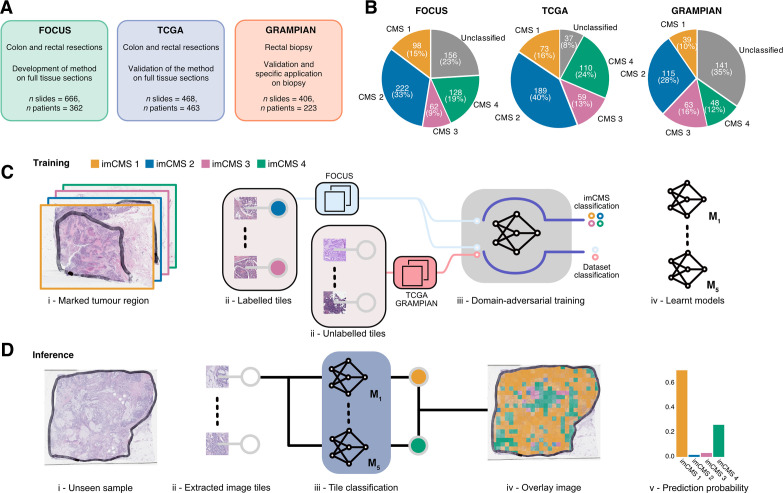
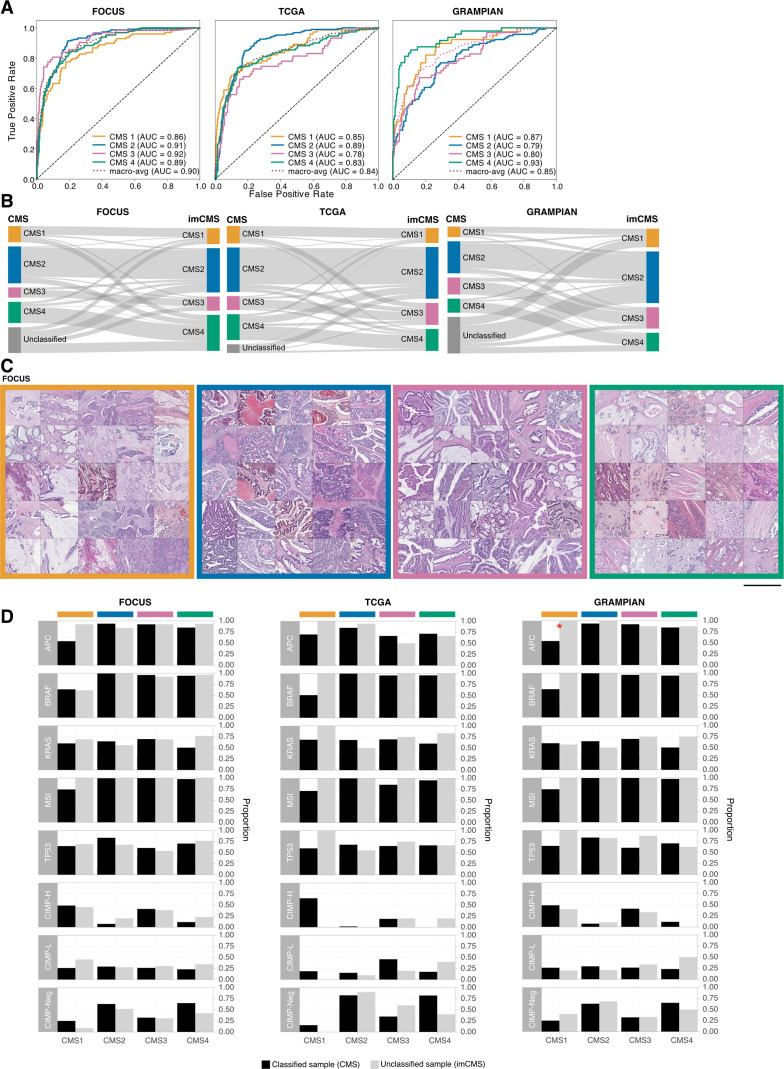
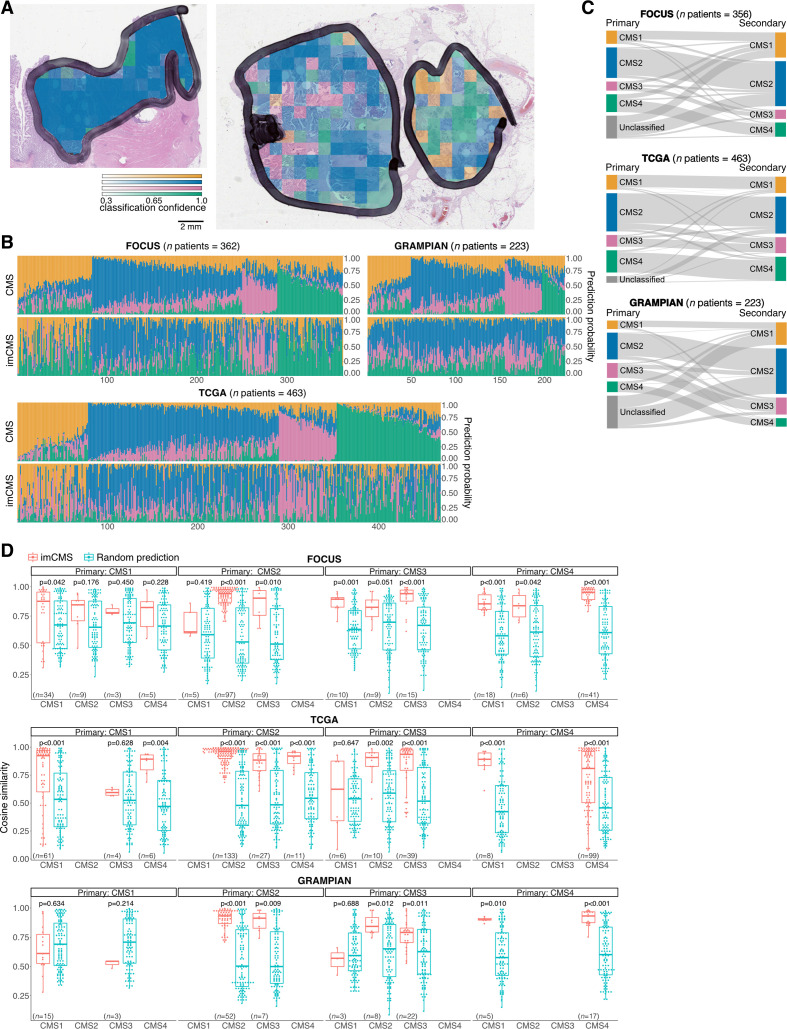
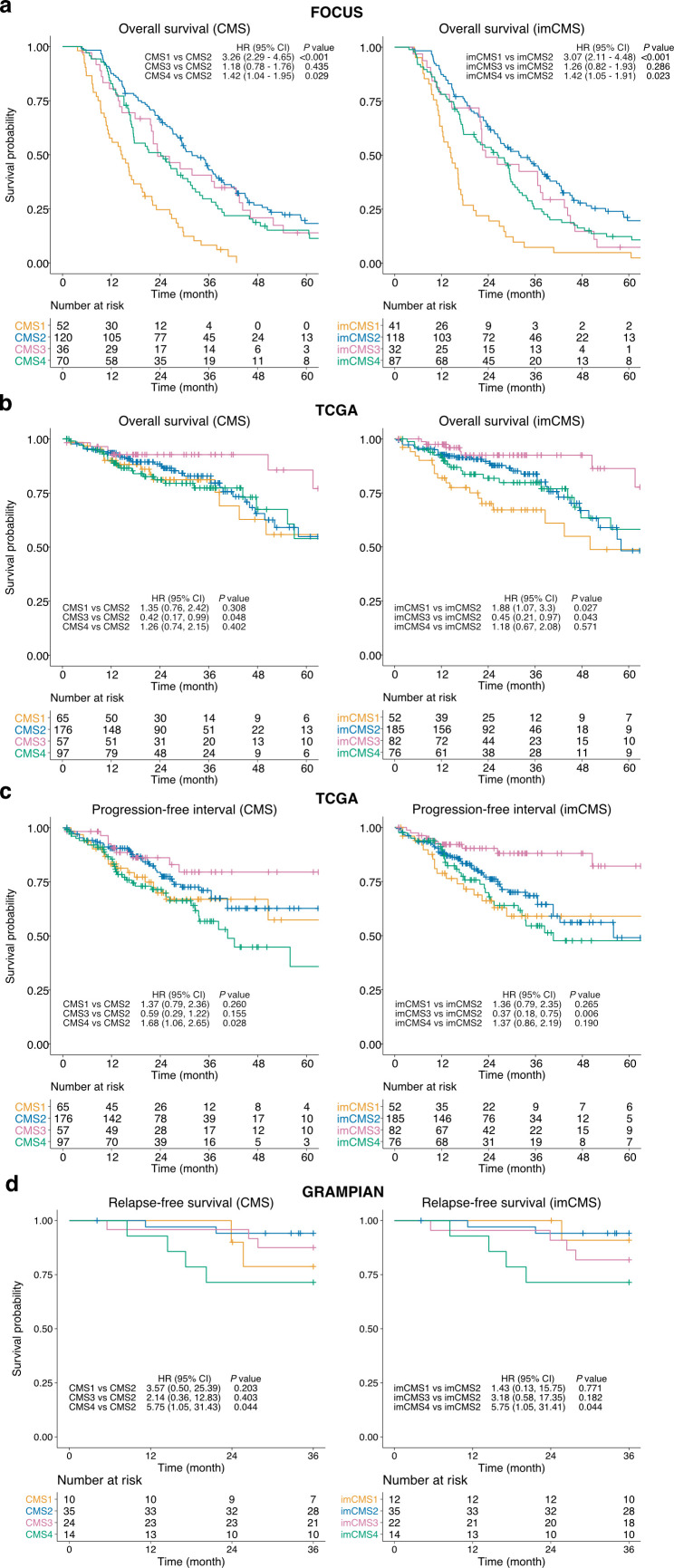
Objective: Complex phenotypes captured on histological slides represent the biological processes at play in individual cancers, but the link to underlying molecular classification has not been clarified or systematised. In colorectal cancer (CRC), histological grading is a poor predictor of disease progression, and consensus molecular subtypes (CMSs) cannot be distinguished without gene expression profiling. We hypothesise that image analysis is a cost-effective tool to associate complex features of tissue organisation with molecular and outcome data and to resolve unclassifiable or heterogeneous cases. In this study, we present an image-based approach to predict CRC CMS from standard H&E sections using deep learning. Design: Training and evaluation of a neural network were performed using a total of n=1206 tissue sections with comprehensive multi-omic data from three independent datasets (training on FOCUS trial, n=278 patients; test on rectal cancer biopsies, GRAMPIAN cohort, n=144 patients; and The Cancer Genome Atlas (TCGA), n=430 patients). Ground truth CMS calls were ascertained by matching random forest and single sample predictions from CMS classifier. Results: Image-based CMS (imCMS) accurately classified slides in unseen datasets from TCGA (n=431 slides, AUC)=0.84) and rectal cancer biopsies (n=265 slides, AUC=0.85). imCMS spatially resolved intratumoural heterogeneity and provided secondary calls correlating with bioinformatic prediction from molecular data. imCMS classified samples previously unclassifiable by RNA expression profiling, reproduced the expected correlations with genomic and epigenetic alterations and showed similar prognostic associations as transcriptomic CMS. Conclusion: This study shows that a prediction of RNA expression classifiers can be made from H&E images, opening the door to simple, cheap and reliable biological stratification within routine workflows.
Overview
The claims and statistics of this paper haven’t been checked yet.
Run the check — free, no account needed. It reads the open-access text and checks the sources it cites.
Integrity signals
Registry
Cites
Statistics
Figures
Verification
Claims the paper makes
The claims and statistics of this paper haven’t been checked yet.
Run the check — free, no account needed. It reads the open-access text and checks the sources it cites.
Claims other papers make about this one
Each is checked against this paper’s own text: does it say what the citing paper says it does?
In the citing paper
“A second outstanding and undisputed hallmark of CMS4 tumors is their stromal enrichment, which emerged both from transcriptomic signature (2) and histologic analyses (29).”
From Clinical Challenges of Consensus Molecular Subtype CMS4 Colon Cancer in the Era of Precision Medicine (2024) · cites this paper as [29]
In the citing paper
“several studies have documented an association between the CMS4 subtype and tumor budding, defined as a single tumor cell or tumor cluster of up to four cells at the invasive margin (29–31)”
From Clinical Challenges of Consensus Molecular Subtype CMS4 Colon Cancer in the Era of Precision Medicine (2024) · cites this paper as [29]
In the citing paper
“artificial intelligence is now opening up new avenues for colorectal cancer classification, with a high degree of robustness (29).”
From Clinical Challenges of Consensus Molecular Subtype CMS4 Colon Cancer in the Era of Precision Medicine (2024) · cites this paper as [29]
Self-check
Percentages, sums and reported differences re-computed from the paper’s own numbers.
The self-check needs the paper’s full text.
Citations
Cites
Rethinking the Inception Architecture for Computer Vision
Szegedy, C., Vanhoucke, V., Ioffe, S., Shlens, J., & Wojna, Z. (2016) · 2016 IEEE Conference on Computer Vision and Pattern Recognition (CVPR) · doi:10.1109/cvpr.2016.308 · Cited by 32,138
DeLong, E. R., DeLong, D. M., & Clarke-Pearson, D. L. (1988) · Biometrics · doi:10.2307/2531595 · Cited by 22,649
TNM Classification of Malignant Tumours
Hermanek, P., & Sobin, L. H. (1987) · Springer eBooks · doi:10.1007/978-3-642-82982-6 · Cited by 16,077
Domain-Adversarial Training of Neural Networks
Ganin, Y., Ustinova, E., Ajakan, H., Germain, P., Larochelle, H., Laviolette, F., Marchand, M., & Lempitsky, V. (2017) · Advances in Computer Vision and Pattern Recognition · doi:10.1007/978-3-319-58347-1_10 · Cited by 8,318
The consensus molecular subtypes of colorectal cancer
Guinney, J., Dienstmann, R., Wang, X., de Reyniès, A., Schlicker, A., Soneson, C., Marisa, L., Roepman, P., Nyamundanda, G., Angelino, P., et al. (2015) · Nature Medicine · doi:10.1038/nm.3967 · Cited by 5,170
WHO Classification of Tumours of the Digestive System
Bosman, F. T. (2010) · Medical Entomology and Zoology · Cited by 5,041
Cetuximab and Chemotherapy as Initial Treatment for Metastatic Colorectal Cancer
Van Cutsem, E., Köhne, C.-H., Hitre, E., Zaluski, J., Chang Chien, C.-R., Makhson, A., D'Haens, G., Pintér, T., Lim, R., Bodoky, G., et al. (2009) · New England Journal of Medicine · doi:10.1056/nejmoa0805019 · Cited by 3,877
Tumour heterogeneity and resistance to cancer therapies
Dagogo-Jack, I., & Shaw, A. T. (2018) · Nature Reviews Clinical Oncology · doi:10.1038/nrclinonc.2017.166 · Cited by 3,846
Striving for Simplicity: The All Convolutional Net
Springenberg, J. T., Dosovitskiy, A., Brox, T., & Riedmiller, M. (2014) · arXiv · doi:10.48550/arxiv.1412.6806 · Cited by 3,447
Coudray, N., Ocampo, P. S., Sakellaropoulos, T., Narula, N., Snuderl, M., Fenyö, D., Moreira, A. L., Razavian, N., & Tsirigos, A. (2018) · Nature Medicine · doi:10.1038/s41591-018-0177-5 · Cited by 2,930
Research works printed but not linked: 1
- Popovici, 2018, 30(th) European congress of pathology: recognising molecular subtypes of colon cancer from virtual slides, Virchows Arch, 473, 1
Cited by
Sorted by citations
Items 101–200 of 265
Rao, J., Li, W., & Chen, C. (2021) · Frontiers in Cell and Developmental Biology · doi:10.3389/fcell.2021.766503 · Cited by 18
Escorcia‐Gutierrez, J., Gamarra, M., Ariza-Colpas, P., Roncallo, G. Y. B., Leal, N., Soto-Díaz, R., & Mansour, R. F. (2022) · Computers & Electrical Engineering · doi:10.1016/j.compeleceng.2022.108462 · Cited by 19
The Applications of Artificial Intelligence in Digestive System Neoplasms: A Review
Zhang, S., Mu, W., Dong, D., Wei, J., Fang, M., Shao, L., Zhou, Y., He, B., Zhang, S., Liu, Z., et al. (2022) · Health Data Science · doi:10.34133/hds.0005 · Cited by 18
“…that deep-learning-based models in histopathology have potential for predicting microsatellite instability [135,136], the status of key molecular pathways and key mutations [137], and molecular subtypes [138], which could be an alternative and results in time and cost savings in clinical workflow.”
BackgroundLi, C., Cai, D., Zhong, M., Lv, M., Huang, Z.-P., Zhu, Q., Hu, C., Qi, H., Wu, X., & Gao, F. (2022) · Frontiers in Genetics · doi:10.3389/fgene.2022.880093 · Cited by 18
Development of a miRNA‐based classifier for detection of colorectal cancer molecular subtypes
Adam, R., Poel, D., Moreno, L. F., Spronck, J., de Back, T. R., Torang, A., Barila, P. M. G., ten Hoorn, S., Markowetz, F. M., Wang, X., et al. (2022) · Molecular Oncology · doi:10.1002/1878-0261.13210 · Cited by 17
Hu, T., Gong, J., Sun, Y., Li, M., Cai, C., Li, X., Cui, Y., Zhang, X., & Tong, T. (2024) · MedComm · doi:10.1002/mco2.609 · Cited by 17
“Finally, deep learning (DL) technology characterized by a convolutional artificial neural network have proven to be exceptionally effective in the fields of tumor subtype recognition, 54 diagnosis, 55 prognosis, 21,56 and treatment prediction.”
BackgroundTranscriptomic subtyping of gastrointestinal malignancies
de Back, T. R., van Hooff, S. R., Sommeijer, D. W., & Vermeulen, L. (2024) · Trends in cancer · doi:10.1016/j.trecan.2024.06.007 · Cited by 19
Stahler, A., Hoppe, B., Na, I.-K., Keilholz, L., Müller, L., Karthaus, M., Fruehauf, S., Graeven, U., Fischer von Weikersthal, L., Goekkurt, E., et al. (2023) · Journal of Clinical Oncology · doi:10.1200/jco.22.02582 · Cited by 16
Reitsam, N. G., Grosser, B., Steiner, D. F., Grozdanov, V., Wulczyn, E., L’Imperio, V., Plass, M., Müller, H., Zatloukal, K., Muti, H. S., et al. (2024) · Communications Medicine · doi:10.1038/s43856-024-00589-6 · Cited by 16
Halawani, R., Büchert, M., & Chen, Y. P. (2023) · Computers in Biology and Medicine · doi:10.1016/j.compbiomed.2023.107274 · Cited by 16
Towards a national strategy for digital pathology in Switzerland
Janowczyk, A. R., Baumhoer, D., Dirnhofer, S., et al. (2022) · Archiv für Pathologische Anatomie und Physiologie und für Klinische Medicin · doi:10.1007/s00428-022-03345-0 · Cited by 15
Self-citationApplication of Deep Learning in Cancer Prognosis Prediction Model
Zhang, H., Xi, Q., Zhang, F., Li, Q., Jiao, Z., & Ni, X. (2023) · Technology in Cancer Research & Treatment · doi:10.1177/15330338231199287 · Cited by 16
“The above study showed that CNN can be a good guide for survival prediction of cancer, and it can learn detailed features from image data that cannot be recognized by human eyes; the prognosis results of CNN can also be used as independent prognostic indicators.(35) The feasibility of combining CNN prediction results…”
ResultDeepSpot: Leveraging Spatial Context for Enhanced Spatial Transcriptomics Prediction from H&E ImagesPreprint
Nonchev, K., Dawo, S., Siliņa, K., Moch, H., Andani, S., Koelzer, V. H., & Rätsch, G. (2025) · medRxiv · doi:10.1101/2025.02.09.25321567 · Cited by 20
“Recent advances in deep learning demonstrated that high-resolution hematoxylin and eosin (H&E)-stained slides can be used as input for computational models to efficiently predict bulk RNA expression [11–13].”
Self-citationBell, P. D., & Pai, R. K. (2022) · Histopathology · doi:10.1111/his.14713 · Cited by 14
A consensus molecular subtypes classification strategy for clinical colorectal cancer tissues
de Back, T. R., Wu, T., Schafrat, P. J. M., ten Hoorn, S., Tan, M., He, L., van Hooff, S. R., Köster, J., Nijman, L. E., Vink, G. R., et al. (2024) · Life Science Alliance · doi:10.26508/lsa.202402730 · Cited by 19
“Please also note that we have included the unedited text of the reviewers, but in places we have split and renumbered the queries for clarity.”
Chang, H., Xu, Y., Moore, J., et al. (2022) · Frontiers in Oncology · doi:10.3389/fonc.2021.819565 · Cited by 14
“Indeed, a comparable approach in colorectal cancer was used to predict clinically relevant RNA expression classifiers from H&E images, providing feasible, cost-efficient biological stratification within routine workflows (23).”
MethodKouzu, K., Nearchou, I. P., Kajiwara, Y., Tsujimoto, H., Lillard, K., Kishi, Y., & Ueno, H. (2022) · Histopathology · doi:10.1111/his.14708 · Cited by 14
Song, Z., Du, P., Yan, J., Li, K. Y., Shou, J., Lai, M., Fan, Y., & Xu, Y. L. (2023) · IEEE Transactions on Medical Imaging · doi:10.1109/tmi.2023.3309971 · Cited by 13
“In the field of computer-aided pathologic diagnosis (CAPD), fully supervised deep models dominate various pathology-related tasks, including cancer classification [3], nuclei segmentation [4], and molecular subtype identification [5].”
BackgroundJiang, Y., Chan, C. K. W., Chan, R., Wang, X., Wong, N., To, K. F., Ng, S. S. M., Lau, J. Y. W., & Poon, C. C. Y. (2022) · IEEE Open Journal of Engineering in Medicine and Biology · doi:10.1109/ojemb.2022.3192103 · Cited by 14
“Deep learning has also been used to classify histopathology images of breast cancer [5], lung cancer [6], and pan-cancer [7]–[9], as well as to classify Consensus Molecular Subtypes (CMS) and predict prognosis of CRC patients [10], [11].”
InfluentialSehring, J., Dohmen, H., Selignow, C., Schmid, K., Grau, S., Stein, M., Uhl, E., Mukhopadhyay, A., Németh, A., Amsel, D., et al. (2023) · Cancers · doi:10.3390/cancers15215190 · Cited by 13
Arslan, S., Mehrotra, D. G., Schmidt, J., Geraldes, A., Singhal, S., Hense, J., Li, X., Bass, C., Kather, J. N., Pandya, P., et al. (2022) · bioRxiv (Cold Spring Harbor Laboratory) · doi:10.1101/2022.01.21.477189 · Cited by 13
“DL-based methods have been used to infer molecular alterations in various cancer types, including breast [10], [17]–[19], colorectal [14], [16], [20], [21], lung [13], [22], prostate [23], liver [24], skin [25], and thyroid [26].”
MethodWu, P., Wu, K., Li, Z., Liu, H., Yang, K., Zhou, R., Zhou, Z., Xing, N., & Wu, S. (2023) · Quantitative Imaging in Medicine and Surgery · doi:10.21037/qims-22-679 · Cited by 12
“(33) showed that four molecular subtypes defined by RNA expression profiles in colorectal cancer could be predicted using WSI images with a deep learning model.”
BackgroundUmemoto, M., Mariya, T., Nambu, Y., Nagata, M., Horimai, T., Sugita, S., Kanaseki, T., Takenaka, Y., Shinkai, S., Matsuura, M., et al. (2024) · Cancers · doi:10.3390/cancers16101810 · Cited by 13
Tumour purity assessment with deep learning in colorectal cancer and impact on molecular analysis
Schoenpflug, L. A., Chatzipli, A., Sirinukunwattana, K., Richman, S. D., Blake, A., Robineau, J., Mertz, K. D., Verrill, C. L., Leedham, S. J., Hardy, C. W., et al. (2024) · The Journal of Pathology · doi:10.1002/path.6376 · Cited by 12
Self-citationArtificial intelligence methods available for cancer research
Murmu, A., & Győrffy, B. (2024) · Frontiers of Medicine · doi:10.1007/s11684-024-1085-3 · Cited by 15
Islam, M. R., Ahamed, M. F., Islam, M. R., Nahiduzzaman, M., & Ahsan, M. (2025) · Biomedical Signal Processing and Control · doi:10.1016/j.bspc.2025.108202 · Cited by 12
AI-Driven Digital Pathology: Deep Learning and Multimodal Integration for Precision Oncology
Jang, H., & Lee, S. H. (2025) · International Journal of Molecular Sciences · doi:10.3390/ijms27010379 · Cited by 13
“Addressing domain shifts, Sirinukun-wattana et al. employed domain adversarial training to classify four consensus molecular subtypes (CMS1 to 4) in colorectal cancer, disentangling robust signals from cohort-specific noise [25].”
Mahmood, U., Blake, A., Rathee, S., Samuel, L. M., Murray, G. I., Sebag‐Montefiore, D., Gollins, S., West, N. P., Begum, R., Bach, S. P., et al. (2024) · Cancer Research Communications · doi:10.1158/2767-9764.crc-23-0502 · Cited by 10
“This is fully consistent with the independent association of imCMS1 and imCMS4, which are derived from histopathology images (10), with pCR and lack of pCR in the same cohorts (11).”
BackgroundMethodSelf-citationDeep learning model with pathological knowledge for detection of colorectal neuroendocrine tumor
Zheng, K., Duan, J., Wang, R., Chen, H., He, H., Zheng, X., Zhao, Z., Jing, B., Zhang, Y., Liu, S., et al. (2024) · Cell Reports Medicine · doi:10.1016/j.xcrm.2024.101785 · Cited by 13
Le, T. T., Nguyen-Truong, V.-T., Nhat, Q. D. V., Phan, N. T. L., Dao, P. N. T., Mavuso, M. F., Nguyen, H. N. A., Mai, T. T., & Quang, K. T. (2025) · Biology Methods and Protocols · doi:10.1093/biomethods/bpaf077 · Cited by 14
“(2021) went further by predicting molecular consensus subtypes (CMS1-4) directly from H&E slides using an Inception V3-based model, reporting AUCs up to 0.88 [12].”
InfluentialTowards computationally efficient prediction of molecular signatures from routine histology images
Lafarge, M. W., & Koelzer, V. H. (2021) · The Lancet Digital Health · doi:10.1016/s2589-7500(21)00232-6 · Cited by 10
Self-citationRao, S. R., Verrill, C. L., Cerundolo, L., Alham, N. K., Kaya, Z., O’Hanlon, M., Hayes, A. A., Lambert, A. G., James, M., Tullis, I. D. C., et al. (2024) · Genome Medicine · doi:10.1186/s13073-024-01302-x · Cited by 10
Self-citationHu, Y., Sirinukunwattana, K., Li, B., Gaitskell, K. L., Domingo, E., Bonnaffé, W., Wojciechowska, M., Wood, R., Alham, N. K., Malacrino, S., et al. (2025) · Medical Image Analysis · doi:10.1016/j.media.2024.103437 · Cited by 12
Self-citationDefining a ‘cells to society’ research framework for appendiceal tumours
Holowatyj, A. N., Overman, M. J., Votanopoulos, K. I., Lowy, A. M., Wagner, P., Washington, M. K., Eng, C., Foo, W. C., Goldberg, R. M., Hosseini, M., et al. (2025) · Nature reviews. Cancer · doi:10.1038/s41568-024-00788-2 · Cited by 10
Towards computationally efficient prediction of molecular signatures from routine histology images
Lafarge, M. W., & Koelzer, V. H. (2021) · Zurich Open Repository and Archive (University of Zurich) · doi:10.5167/uzh-208553 · Cited by 9
Self-citationUse of Personalized Biomarkers in Metastatic Colorectal Cancer and the Impact of AI
Volovăț, S. R., Augustin, I. G., Zob, D., Boboc, D., Amurariti, F., Volovat, C. D., Ştefănescu, C., Stolniceanu, C. R., Ciocoiu, M., Dumitras, E. A., et al. (2022) · Cancers · doi:10.3390/cancers14194834 · Cited by 10
Automated exploitation of deep learning for cancer patient stratification across multiple types
Sun, P., Fan, S., Li, S., Zhao, Y., Lu, C. F., Wong, K., & Li, X. (2023) · Bioinformatics · doi:10.1093/bioinformatics/btad654 · Cited by 9
Valdeolivas, A., Amberg, B., Giroud, N., Richardson, M., Gálvez, E. J. C., Badillo, S., Julien-Laferrière, A., Túrós, D., von Voithenberg, L. V., Wells, I., et al. (2023) · bioRxiv (Cold Spring Harbor Laboratory) · doi:10.1101/2023.01.23.525135 · Cited by 9
Cancer molecular subtyping using limited multi-omics data with missingness
Bu, Y., Liang, J., Li, Z., Wang, J., Wang, J., & Yu, G. (2024) · PLoS Computational Biology · doi:10.1371/journal.pcbi.1012710 · Cited by 10
Minciuna, C.-E., Tanase, M., Manuc, T. E., Tudor, Ș., Herlea, V., Dragomir, M. P., Călin, G. A., & Vasilescu, C. (2022) · Computational and Structural Biotechnology Journal · doi:10.1016/j.csbj.2022.09.010 · Cited by 8
“[92] provided an image-based classification of CMS of CRC using DL that seems to be a cost effective and reliable tool.”
BackgroundMethodJakab, A., Patai, Á. V., & Micsík, T. (2022) · Human Pathology · doi:10.1016/j.humpath.2022.07.003 · Cited by 8
Arslan, S., Li, X., Schmidt, J., Hense, J., Geraldes, A., Bass, C., Brown, K., Marcia, A., Dewhirst, T., Pandya, P., et al. (2022) · bioRxiv (Cold Spring Harbor Laboratory) · doi:10.1101/2022.01.04.474882 · Cited by 6
“Several studies have shown the effectiveness of deep learning (DL) methods, in particular, convolutional neural networks (CNNs), to reveal histopathological patterns in routine H&E images that are correlated with the status of molecular biomarkers in various cancer types, including colorectal [6, 8], lung [5, 9], pros…”
BackgroundArtificial intelligence in haematopathology: current perspective and future directions
Pescia, C., Sozanska, A. M., Thomas, E., & Cooper, R. A. (2025) · Diagnostic histopathology · doi:10.1016/j.mpdhp.2025.03.002 · Cited by 7
Zang, X., Xia, Y., Xiao, H., Luo, H., Si, M., Hou, N., Haoni, A., Chen, T., Liu, Z., Pu, X., et al. (2025) · npj Digital Medicine · doi:10.1038/s41746-025-02034-x · Cited by 7
Eminağa, O., Leyh‐Bannurah, S., Shariat, S. F., Krabbe, L., Lau, H. D., Xing, L., & Abbas, M. (2023) · Cancers · doi:10.3390/cancers15204998 · Cited by 8
Wang, Y., Liu, Y., Zhu, C., Zhang, X., & Li, G. (2022) · Frontiers in Molecular Biosciences · doi:10.3389/fmolb.2021.775700 · Cited by 6
“Rectal cancer has the features of heterogeneous molecular subtypes and a variable clinical course as well as clinical outcomes (Sirinukunwattana et al., 2021).”
BackgroundWu, X., Ye, Y., Vega, K. J., & Yao, J. (2022) · Cancers · doi:10.3390/cancers14153740 · Cited by 6
“from less economical gene expression signatures to highly economical neural convolutional networks that can predict CMS status from simple H&E images [50].”
BackgroundInfluentialWhite, B. S., Woo, X. Y., Koc, S., Sheridan, T., Neuhauser, S. B., Wang, S., Evrard, Y. A., Chen, L., pour, A. F., Landua, J. D., et al. (2024) · Cancer Research · doi:10.1158/0008-5472.can-23-1349 · Cited by 5
“DL-based analyses of human data are capable of predicting metastases (10), gene mutations (11) and expression (12), survival (13), cancer types (14), molecular (15), clinical (16), and histologic (17) tumor subtypes, and response to both chemotherapy (18) and immune checkpoint inhibitors (19).”
BackgroundTang, L., Zhao, X., Wang, G., Huang, J., Zhang, M., & Xu, W. (2025) · Frontiers in Oncology · doi:10.3389/fonc.2025.1723546 · Cited by 5
“Multi-stain deep learning models (MSDLM) analysing tumour immune microenvironments outperform traditional indices in survival prediction (83); models based on H&E images can identify consensus molecular subtypes (CMS), informing personalised therapy (84).”
Lynch, S. M., Heeran, A. B., Burke, C., Lynam‐Lennon, N., Eustace, A. J., Dean, K. A., Robson, T., Rahman, A., & Marcone, S. (2024) · Cancers · doi:10.3390/cancers16111989 · Cited by 6
“Stroma-rich tumours can be easily and rapidly identified [64,65].”
BackgroundOptimized Deep Learning Model for Colorectal Cancer Detection and Classification Model
Ragab, M., Eljaaly, K., Sabir, M. F. S., Ashary, E. B., Abo-Dahab, S. M., & Khalil, E. M. (2022) · Computers, materials & continua/Computers, materials & continua (Print) · doi:10.32604/cmc.2022.024658 · Cited by 5
Lin, Q., Liang, J., Li, Z., Xi, S., Lai, Y., Gao, F., Zhang, X., Wang, D., Hu, M.-T., Cao, Y., et al. (2023) · iScience · doi:10.1016/j.isci.2023.107702 · Cited by 6
ARTIFICIAL INTELLIGENCE AND NEXT GENERATION PATHOLOGY: TOWARDS PERSONALIZED MEDICINE
Dudin, O., Mintser, O. P., & Sulaieva, O. (2021) · Proceedings of the Shevchenko Scientific Society Medical Sciences · doi:10.25040/ntsh2021.02.07 · Cited by 6
Clinical Applications of Artificial Intelligence in Gastroenterology: Excitement and Evidence
Ahuja, A., & Kefalakes, H. (2022) · Gastroenterology · doi:10.1053/j.gastro.2022.04.025 · Cited by 5
Predicting Molecular Traits from Tissue Morphology Through Self-interactive Multi-instance Learning
Hu, Y., Sirinukunwattana, K., Gaitskell, K. L., Wood, R., Verrill, C. L., & Rittscher, J. (2022) · Lecture notes in computer science · doi:10.1007/978-3-031-16434-7_13 · Cited by 5
Self-citationJain, T., & Lynn, A. M. (2025) · Bioinformation · doi:10.6026/973206300211836 · Cited by 4
Kour, T., Raina, J. K., Gondhi, N. K., Sharma, A. K., Banerjee, S., Kumar, P., Sharma, R., & Panjaliya, R. K. (2025) · Archives of Computational Methods in Engineering · doi:10.1007/s11831-025-10401-w · Cited by 5
A hybrid framework for enhanced segmentation and classification of colorectal cancer histopathology
Aaseegha, M. D., & Venkataramana, B. (2025) · Frontiers in Artificial Intelligence · doi:10.3389/frai.2025.1647074 · Cited by 5
Reitsam, N. G., Jiang, X., Liang, J., Grosser, B., Grozdanov, V., Loeffler, C. M. L., Gustav, M., Lenz, T., Muti, H. S., Carrero, Z. I., et al. (2026) · The Journal of Pathology · doi:10.1002/path.70039 · Cited by 4
Self-citationDeep Learning and Colon Cancer Interpretation
McHugh, K. E., & Pai, R. K. (2023) · Surgical pathology clinics · doi:10.1016/j.path.2023.05.003 · Cited by 4
A Review and Update on Therapy of Gastrointestinal Tract Tumors: From the Bench to Clinical Practice
Fernández‐Aceñero, M. J., Hernández, D., & del Arco, C. D. (2024) · Journal of Clinical and Translational Pathology · doi:10.14218/jctp.2024.00007 · Cited by 5
Pai, R. K., Eslinger, C. R., Lee, K. S., Farchoukh, L. O., Walden, D. M., Emiloju, O. E., Storandt, M. H., Hagen, C. E., Pfeiffer, A., Sonbol, M. B., et al. (2025) · Laboratory Investigation · doi:10.1016/j.labinv.2025.104187 · Cited by 4
Self-citationOncogenic mutations of clinical significance in colorectal cancer
Lea, V., Lim, S. H.-S., & Lee, C. S. (2025) · Pathology · doi:10.1016/j.pathol.2025.05.001 · Cited by 4
A quantitative tumor‐wide analysis of morphological heterogeneity of colorectal adenocarcinoma
Dragomir, M. P., Popovici, V. C., Schallenberg, S., et al. (2025) · The Journal of Pathology Clinical Research · doi:10.1002/2056-4538.70034 · Cited by 4
“Such studies have already con fi rmed the high degree of intratumoral heterogeneity, and new links between morphology and underlying molecular programs have been established [6,7,24].”
Snake Optimization with deep learning enabled disease detection model for colorectal cancer
Al-Attabi, K. (2022) · Journal of Smart Internet of Things · doi:10.2478/jsiot-2022-0012 · Cited by 4
Gupta, A. A., Bajaj, S., Nema, P., Purohit, A., Kashaw, V., Soni, V., & Kashaw, S. K. (2025) · Computers in Biology and Medicine · doi:10.1016/j.compbiomed.2025.109918 · Cited by 5
Douget, J.-E. L., Jacob, P. M., Lepage, C., Gallois, C., Sroussi, M., de Reyniès, A., Cazelles, A., Gonzalez, D., Maussion, C., Bouché, O., et al. (2025) · Modern Pathology · doi:10.1016/j.modpat.2025.100877 · Cited by 4
van de Weerd, S., Smit, M. A., Roelands, J. P., Mesker, W. E., Bedognetti, D., Kuppen, P. J. K., Putter, H., Tollenaar, R. A. �. �., Roodhart, J. M. L., Hendrickx, W., et al. (2022) · International Journal of Molecular Sciences · doi:10.3390/ijms232012707 · Cited by 4
Jafri, H. S. M. O., Mushtaq, S., Baig, S., et al. (2023) · Saudi Journal of Gastroenterology · doi:10.4103/sjg.sjg_85_23 · Cited by 4
Enhancing Local Context of Histology Features in Vision Transformers
Wood, R., Sirinukunwattana, K., Domingo, E., Sauer, A., Lafarge, M. W., Koelzer, V. H., Maughan, T., & Rittscher, J. (2022) · Lecture notes in computer science · doi:10.1007/978-3-031-19660-7_15 · Cited by 4
Self-citationDeep learning-based morphological assessment of myelodysplastic syndrome on bone marrow smears
Kaji, S., Kawai, H., Shimbo, K., Maeda, T., Matsuda, A., & Mori, J. (2025) · Leukemia Research · doi:10.1016/j.leukres.2025.107923 · Cited by 3
Stahler, A., Modest, D. P., Stintzing, S., Borelli, B., Keller, T., Held, S., von Weikersthal, L. F., Müller, L., Graeven, U., Decker, T. W., et al. (2025) · Journal of Clinical Oncology · doi:10.1200/jco-25-00596 · Cited by 4
Integrated single‑cell and spatial transcriptomics reveal the colorectal cancer microenvironment
Yang, R., Hu, S., Li, K., Wang, H., Zhou, X., Han, T., & Guan, L. (2026) · Critical Reviews in Oncology/Hematology · doi:10.1016/j.critrevonc.2026.105311 · Cited by 5
Liu, Z., Gu, W., Liu, L., Wu, S., Yao, Z., Sun, Y., Huang, D., & Tong, T. (2026) · Radiology · doi:10.1148/radiol.251719 · Cited by 3
Multi-omic biomarkers of neoadjuvant treatment response in rectal cancer: A narrative review
Maerten, P., Wolthuis, A. M., D’Hoore, A. J. L., Bislenghi, G., Hertogh, G. D., Sagaert, X., Dresen, R. C., Broeckhoven, V., Rasschaert, G., Tejpar, S., et al. (2026) · European Journal of Surgical Oncology · doi:10.1016/j.ejso.2026.111910 · Cited by 3
Yuan, M., Ding, H., Guo, B., Yang, M., Yang, Y., & Xu, S. X. (2024) · JCO Clinical Cancer Informatics · doi:10.1200/cci.23.00154 · Cited by 3
From CMS to iCMS/IMF: Developing Roadmap to Precision Therapy in Colorectal Cancer
Jung, S. (2025) · International Journal of Molecular Sciences · doi:10.3390/ijms262211086 · Cited by 3
“…further clarifies that bulk mesenchymal calls often reflect CAF-and immune-enriched neighborhoods adjacent to epithelial islands of other classes, explaining site-to-site and block-to-block variability [26]. imCMS complements this workflow by mapping subtype probabilities directly on slides [8].”
InfluentialSynchronous biliary gallstones and colorectal cancer: A single center analysis
Zărnescu, N. O., Zarnescu, E. C., Dumitrascu, I., Chirca, A., Sanda, N., Ilieşiu, A., & Costea, R. (2021) · Experimental and Therapeutic Medicine · doi:10.3892/etm.2021.11061 · Cited by 3
Wood, R., Domingo, E., Sirinukunwattana, K., Lafarge, M. W., Koelzer, V. H., Maughan, T., & Rittscher, J. (2023) · Lecture notes in computer science · doi:10.1007/978-3-031-43904-9_73 · Cited by 3
Self-citationOmar, M., Xu, Z., Rand, S. B., Alexanderani, M. K., Salles, D. C., Valencia, I., Schaeffer, E. M., Robinson, B. D., Lotan, T. L., Loda, M. F., et al. (2024) · Molecular Cancer Research · doi:10.1158/1541-7786.mcr-23-0639 · Cited by 5
Bareja, C., Dwivedi, K., Uboveja, A., Mathur, A., Kumar, N., V, & Saluja, D. (2024) · Scientific Reports · doi:10.1038/s41598-024-60715-1 · Cited by 3
Cai, Y., Chen, X., Cai, Y., Chen, X.-J., Han, M., Lin, D., Hong, X., Hu, H., Hu, J., Liu, W., et al. (2024) · Surgical Endoscopy · doi:10.1007/s00464-024-11426-1 · Cited by 3
Le, D. T. P., & Pham, T. D. (2025) · Exploration of Medicine · doi:10.37349/emed.2025.1001371 · Cited by 4
Integrating artificial intelligence ( AI ) into colorectal cancer reporting
Bräutigam, K., Baker, A., Koelzer, V. H., Kather, J. N., & Graham, T. A. (2026) · The Journal of Pathology · doi:10.1002/path.70029 · Cited by 2
“AI can predict a variety of factors in CRC, e.g. prognosis [28], treatment response [17], and tumour recurrence [29] (also for liver metastases [30]), and can accurately read microsatellite instability [31 – 35] and CRC consensus molecular subtypes (CMSs) [36] from slides.”
Self-citationNateghi, R., Sun, A., Dang, H., Handa, N., Schnauss, M., Michael, J., Jang, J. W., Nezami, B. G., Saft, M., Neill, C., et al. (2026) · npj Precision Oncology · doi:10.1038/s41698-026-01335-y · Cited by 2
The evolving role of OMICS in gastrointestinal tumor biology and clinical practice
Li, Q., Zhang, J., Chen, J., Zhang, Q., Liu, R., Zhu, J., Qing, Y., Wei, X., & Sheng, J. (2026) · Molecular Cancer · doi:10.1186/s12943-026-02658-x · Cited by 3
“Integration of transcriptomic data in CRC has resulted in the development of the consensus molecular subtype (CMS) classification system, which identifies four distinct categories of CRC tumors with unique biological and clinical characteristics [65, 81, 82].”
Understanding tumor heterogeneity: Implications for precision oncology and therapeutic strategies
Lv, Y., He, C., Xie, Q., Long, F., & Fan, C. (2026) · Biochimica et Biophysica Acta (BBA) - Reviews on Cancer · doi:10.1016/j.bbcan.2026.189617 · Cited by 3
An explainable transformer capsule hybrid model framework for colorectal diseases classification
Moon, M. M. H., Assaduzzaman, M., Ferdous, J., Fahad, N., Liew, T. H., & Ohidujjaman (2026) · Discover Artificial Intelligence · doi:10.1007/s44163-026-01732-z · Cited by 2
“Sirinukunwattana et al. [25] developed an image-based molecular subtype classification with 84% AUC on TCGA and 85% on rectal biopsies, based on morphological-correlate learning.”
Zhao, Q., Li, H., Li, W., et al. (2023) · Frontiers in Cell and Developmental Biology · doi:10.3389/fcell.2023.1161667 · Cited by 2
“Patients with colorectal cancer can be classified by molecular classification such as CMS in the modeling of prognostic prediction and therapeutic target prediction to increase accuracy (Guinney et al., 2015; Sirinukunwattana et al., 2021).”
Artificial Intelligence-Based Learning Approaches for Medical Imaging
Kumar, Y., Wadhwa, S., Rani, J., et al. (2023) · International Conference on Contemporary Computing and Informatics (IC3I) · doi:10.1109/ic3i59117.2023.10398104 · Cited by 2
Künstliche Intelligenz in der Pathologie: Status quo und Zukunftsperspektiven
Foersch, S., & Schulz, S. (2024) · Die Onkologie · doi:10.1007/s00761-024-01482-6 · Cited by 2
Chen, Y., Liu, J., Wang, L., Jiang, P., Pang, B., & Cao, D. (2024) · Multimedia Tools and Applications · doi:10.1007/s11042-024-20160-8 · Cited by 2
“Sirinukunwattana et al. [34] also selected tumor area patches to predict the molecular sub-type in the colorectal cancer pathological image.”
Liu, Y., Qian, S., Jia, W. P., He, J., Li, M., Gao, X., Cai, H., Wang, Y., Han, Y., Tan, T., et al. (2025) · Biomedicines · doi:10.3390/biomedicines13051217 · Cited by 2
“Diagnosis of CMS4 CRC relies on gene sequencing, which limits the availability of tissue samples [34,35].”
He, S., Chen, J., Liu, Y. F., Xiao, Y., Li, M., Zhang, Q., Jiang, D., Yin, M., Jiang, X., Cui, N., et al. (2025) · International Journal of Surgery · doi:10.1097/js9.0000000000002667 · Cited by 2
Artificial intelligence in pathological evaluation of gastrointestinal cancers
Alpsoy, A., Yavuz, A., & Elpek, G. Ö. (2021) · Artificial Intelligence in Gastroenterology · doi:10.35712/aig.v2.i6.141 · Cited by 2
Brown, L. C., Fisher, D. J., Adams, R., Seligmann, J. F., Seymour, M., Kaplan, R. S., Richman, S. D., Quirke, P., Butler, R., Roberts, H. C., et al. (2022) · Efficacy and Mechanism Evaluation · doi:10.3310/htnb6908 · Cited by 2
Self-citationKasai, S., Kagawa, H., Hatakeyama, K., Shiomi, A., Manabe, S., Yamaoka, Y., Tanaka, Y., Igaki, T., Nagashima, T., Ohshima, K., et al. (2024) · International Journal of Clinical Oncology · doi:10.1007/s10147-024-02626-9 · Cited by 1
“…in daily clinical practice regarding classification methods and costs, the application of the CMS classification is an important effort to improve the prognosis of patients with CRC. Recently, a study has reported the effectiveness of image-based CMS classification using deep learning [33].”
Ruane, S., Sirinukunwattana, K., Kotańska, A., & Aberdeen, A. (2025) · Diagnostic histopathology · doi:10.1016/j.mpdhp.2025.03.003 · Cited by 1
Self-citationJeong, I.-S., Seo, J.-W., Park, S., Kim, S., Kim, S., & Baek, S.-W. (2025) · Genes & Genomics · doi:10.1007/s13258-025-01677-0 · Cited by 1
“…advancement of digital pathology and the emergence of deep learning-based computational tools, these WSIs can be mined to extract high-dimensional features that reflect not only cellular morphology but also the spatial organization of the tumor microenvironment (TME) (Sirinukunwattana et al. 2021).”
Okotel, M., & Huang, C. (2025) · Critical Reviews™ in Oncogenesis · doi:10.1615/critrevoncog.2025060830 · Cited by 1
Metadata
- Authors
- Sirinukunwattana, K., Domingo, E., Richman, S. D., Redmond, K. L., Blake, A., Verrill, C., Leedham, S. J., Chatzipli, A., Hardy, C., Whalley, C. M., Wu, C.-H., Beggs, A. D., McDermott, U., Dunne, P. D., Meade, A., Walker, S. M., Murray, G. I., Samuel, L., Seymour, M., Tomlinson, I., Quirke, P., Maughan, T., Rittscher, J., & Koelzer, V. H.
- Affiliations
- University of Oxford (GB)
- University of Leeds (GB)
- Queen's University Belfast (GB)
- Centre for Human Genetics (GB)
- Wellcome Sanger Institute (GB)
- University of Birmingham (GB)
- MRC Clinical Trials Unit at UCL (GB)
- Almac (United Kingdom) (GB)
- University of Aberdeen (GB)
- Aberdeen Royal Infirmary (GB)
- Department of Oncology, Leeds Institute of Cancer and Pathology, Leeds, UK
- Edinburgh Cancer Research (GB)
- Department of Pathology and Tumour Biology, Leeds Institute of Cancer and Pathology, Leeds, UK
- CRUK/MRC Oxford Institute for Radiation Oncology, University of Oxford, Oxford, UK
- University of Zurich (CH)
- Corresponding author
- Koelzer, Viktor H
- ORCID
- Sirinukunwattana, Korsuk
- Domingo, Enric
- Richman, Susan D
- Redmond, Keara L
- Blake, Andrew
- Verrill, Clare
- Leedham, Simon J
- Chatzipli, Aikaterini
- Whalley, Celina M
- Wu, Chieh-hsi
- Beggs, Andrew D
- McDermott, Ultan
- Dunne, Philip D
- Meade, Angela
- Walker, Steven M
- Murray, Graeme I
- Samuel, Leslie
- Tomlinson, Ian
- Maughan, Timothy
- Rittscher, Jens
- Koelzer, Viktor H
- Venue
- Gut
- Publisher
- BMJ
- Published
- 2020-07-20
- Volume
- 70
- Issue
- 3
- Pages
- 544-554
- ISSN
- 0017-5749 (ISSN-L)
- 1468-3288
- PMC
- PMC7873419
- OpenAlex
- W3043602140
- Semantic Scholar
- 9531fb91f6876c57e3cf9bcb77ec79cc6f2a84d3
- Cited by
- 264
- References
- 30
- Citations by year
- 2026: 35 · 2025: 40 · 2024: 63 · 2023: 37 · 2022: 57 · 2021: 28 · 2020: 4
- FWCI
- 12.37
- Type
- journal article
- Language
- en
- Open access
- hybrid
- doi.org
- Locations
- Gut (publishedVersion, cc-by)
- PubMed Central (publishedVersion, cc-by)
- PubMed (publishedVersion)
- Research Portal (Queen's University Belfast) (publishedVersion, cc-by)
- ePrints Soton (University of Southampton) (acceptedVersion)
- Zurich Open Repository and Archive (University of Zurich) (acceptedVersion, cc-by)
- Aberdeen University Research Archive (Aberdeen University) (submittedVersion)
- UCL Discovery (University College London) (submittedVersion)
- University of Birmingham Research Portal (University of Birmingham) (submittedVersion)
- University of Birmingham Research Portal (University of Birmingham) (submittedVersion, cc-by)
- Edinburgh Research Explorer (University of Edinburgh) (submittedVersion, cc-by)
- Zurich Open Repository and Archive (University of Zurich) (submittedVersion, cc-by)
- Zurich Open Repository and Archive (University of Zurich)
- Greater South Information System
- Funders
- National Institute for Health Research (NIHR) Oxford Biomedical Research Centre
- Engineering and Physical Sciences Research Council (EP/M013774/1)
- Medical Research Council UK
- Cancer Research UK
- Promedica Foundation (F-87701-41-01)
- Schweizerischer Nationalfonds zur Förderung der Wissenschaftlichen Forschung (P2SKP3_168322/1)
- Topics
- Physical Sciences › Computer Science › Artificial Intelligence › AI in cancer detection
- Health Sciences › Medicine › Radiology, Nuclear Medicine and Imaging › Radiomics and Machine Learning in Medical Imaging
- Health Sciences › Medicine › Pathology and Forensic Medicine › Genetic factors in colorectal cancer
- Keywords
- colorectal cancer, consensus molecular subtypes, image classification, H&E histology, deep learning, intratumoral heterogeneity, rectal cancer, histopathology, molecular classification, prognostic stratification, epigenetic modifications
- MeSH terms
- Deep Learning, Biopsy, Humans, Phenotype, Predictive Value of Tests, Prognosis, RNA, Biomarkers, Tumor, Colorectal Neoplasms, Gene Expression Regulation, Neoplastic, Disease Progression, Gene Expression Profiling, Consensus, Neoplasm Grading, Datasets as Topic
About these checks
Registry, retraction, Cites and statistics results are computed, not judged, with one exception: a printed reference that no index lists is read once by a model before it counts as a citation error. Claims are extracted by a model and kept only when their quote appears verbatim in the text; each cited source is then checked, with a model’s help, for whether it says what the claim relies on. Those verdicts can be wrong — read the claim’s quote and the cited source before relying on one.
Statistics and arithmetic are recomputed, not judged.
Confidence bands are shown only for fields calibrated on our annotated test set. None is calibrated yet, so no band is shown.
What counts as a claim ›How we measure confidence ›How we check this ›
Are you an author, or do you see a problem with this page? Request a review
